Amy Rae Durreson's Blog
February 20, 2020
All the Titles I’ve Released Before ;)
I’ve just rereleased two more works from my backlist, so it felt like a good time to sum up everything that I’ve rescued from Dreamspinner’s ashes over the last few months.
First of all, here are Aunt Adeline’s Bequest, a Valentine’s short story set in a sweet shop in post-WW1 Chester, and Lord Heliodor’s Retirement, in which Lord Heliodor, traumatised and forced into early retirement, finds his life isn’t quite as over with as he assumed.
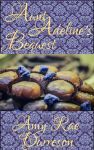
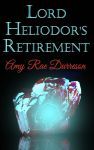
And then here’s the rest, including two non-DSP titles which have been treated to new covers. Click on the covers to find out more 


December 16, 2019
It’s Christmas, So Be Afraid!
Christmas is traditionally ghost story time here in the UK, so I’ve got a spooky story for you! My 2019 Christmas novella A Distant Drum is up for pre-order.
[image error]
This fab cover art is by TL Bland
September 29, 2019
All change, all change, please!
Wow, it’s been a while and I have a lot of news to cover in one post (which is what happens after an almost two year hiatus, I guess).
So, first and foremost, book-related news. As most of you will know by now, Dreamspinner Press, who have published virtually all of my backlist, are facing significant financial difficulties. With that in mind, I have requested the rights back for all but one of my books. The Reawakening trilogy, my three Christmas novellas (Gaudete, The Holly Groweth Green, and The Ghost of Mistletoe Lock), my ghost stories Spindrift and A Frost of Cares, my Valentines Day novella Aunt Adeline’s Bequest, and my standalone fantasy novella Lord Heliodor’s Retirement are all due to come down from the Dreamspinner and DSPP websites on October 1st and will start to disappear from other vendors after that. The five anthologies I was part of with Dreamspinner and DSPP have already gone out of print.
So is the news all bad?
No. I’m planning to rerelease all these books over the next few years. As most of you know, I teach full time and the work involved in self-publishing is not going to happen in term time. I’ve worked out a rough schedule for the school holidays for the foreseeable future so I can gradually get these books back out there. I’ve already rereleased four of the short stories I wrote in my early years with Dreamspinner. I have a final release from DSPP, the supernatural mystery Something Wicked This Way Comes due out on October 29. I’m in the process of revising a Christmas novella, and have two WIPs, a light-hearted contemporary fantasy with a nerdy dragon (just because you have a Viking hoard in the vault, it doesn’t mean you can’t also have Doctor Who memorabilia in the penthouse, right?) and a ghost novella set in Cornwall.
Something Wicked This Way Comes is the next big excitement. This has been a long time coming and I am incredibly grateful to everyone who cheered me on, beta read, or kept bugging me about it even when I was ready to give up. I’m aware I haven’t been very good about getting back to all of you and I’m very sorry–life has steamrollered me a lot over the last couple of years.
The book is set in the Scottish Borders, where a wartime orphanage was once evacuated to a grim old house, Vainguard. The story of what happened next has stayed a secret for decades. Even the charity that once run the orphanage has evolved, turning into a modern children’s charity. When the last owner of Vainguard leaves the dilapidated old house to the now London-based charity, Leon is sent north to assess its use. There he starts to discover not only the terrible truth behind what happened in the war, but its connection to his own family tragedy and a string of deaths that continues into the modern day.
There’s some dark themes in here, so trigger warnings for historic child abuse, and bereavement (loss of both parents and a child).
[image error]
Amazon.com Amazon.uk Amazon.de
The four short stories I’ve rereleased are Granddad’s Cup of Tea, Philip Collyer vs. the Cola Thief, The Clockwork Nightingale’s Song, and Humming a Different Tune. Rather than weigh this post down with even more links, I’m going to point you towards my short stories page which has information and links for all four.
For those of you who signed up to my newsletter, I must apologise. In a spirit of great optimism, I went to log in to it this week, only to discover that it had been deleted because disuse (oops). I’ll be trying to sort that out over the next few weeks, but the best place for updates at the moment is my Facebook group, Here Be Dragons.
So, what have I been doing whilst I’ve been quiet?
Both too much and too little. Three years ago, I took on a new role at work. It was a lot of extra responsibility and the amount of support I was given dwindled steadily over time, to the extent that when my second in command took on another role, the powers that be refused to replace her. A job I was determined to do well at gradually sucked up all my energy and both my physical and emotional health suffered for it. Every passing cold turned into full blown flu. I weigh almost twice my ideal BMI. All my creativity was poured into solving other people’s problems. I was arriving at work at 6:45, after an hour’s commute, working until 17:30 and still never ever on top of anything. I scraped Something Wicked out of my brain a few lines at a time, but after that my creativity had to go on the back burner. I apologised above and I’ll do it here again. I’m sorry for anything I didn’t get to. No one great crisis was tearing my life apart, but I was running on empty for too long and I don’t even have a list of all the things I missed or let slide. Sorry.
I asked to step down from that role in May. The change didn’t take effect until September, but by then I’d spent the summer holidays trying to come up for a plan to cope with the DSP mess. It’s a month into term now and very slowly I can feel the weight lifting from my shoulders. I’ve written on the bus three days this week. My imagination is stirring and I’m sleeping better. To my surprise, rather than feeling heartbroken by the DSP mess, I am galvanised (hey, I may yet find the energy to get poor Kastrian off the desert island I marooned him on back in 2016 after finishing the first draft of Recovery. Poor bastard must be sick of talking to lizards by now).
What else have I done since I last posted? I’ve welcomed a new nephew and niece to the world. I’ve helped my parents move from the village next to mine across the country to be closer to my sister and those babies (and their three big brothers). I’ve roamed the rain-soaked fields of mid-Wales in search of dragons. I’ve seen my work team through the most challenging government-imposed curriculum changes in over a generation and led the effort to turn our initial bad results round. I’ve put a book on indefinite hold because the central tragedy was too close to a friend’s personal nightmare. I’ve read a hell of a lot of books. I’ve bought a lot of silly t-shirts and several pairs of really awesome shoes (and made myself promise not to buy any more until I finish a book because I’m no longer making enough money to have a sparkly shoes budget. Alas.). I’ve watched Tower Bridge open (a lifelong ambition made all the more delightful by my older nephews’ ecstatic glee as they watched in with me). I learned a few more of my own limits and I’ve learned how not to let myself be railroaded by other people’s expectations.
I’ve been puked on in a planetarium by a six month old by the light of a auditorium wide projected moon.
I’ve found new friends out of the collapse of a publisher I once trusted.
I’ve written the first few chapters of a book where the banter makes me giggle more than anything I’ve written in years.
I’ve chosen to abandon the familiar grind in favour of the unknown.
All change. Let’s see where we go now.
[image error]
September 23, 2018
Looking for advice
I'm posting this on both Facebook and Goodreads in the hope someone can help. I'm in the early stages of a book where the love interest (mid-twenties, overachiever, hot and knows it) is Deaf (severe hearing loss following meningitis when he was four). I'll be looking for a paid sensitivity reader once I've got the first draft hammered out, but for now I'd really like to just chat to someone who is willing and comfortable to make sure I'm not cocking things up before I even start.
I'm interested in:
1. What really pisses you off when authors get it wrong? Or even just the most cringeworthy cliches...
2. Use/non-use of hearing aids in different circumstances.
3. Different strategies/confidence levels in different scenarios--the main setting is a big country house he's known since childhood, but I've got a major scene pencilled in for a night out clubbing (this is my Orpheus retelling--bring on the Maenads!).
4. Any relationship pitfalls I should be aware of between a Deaf and a hearing character. By the end of the book, these two are going to need a flaming row to deal with all the lies and manipulation they use on each other, and I'd like to establish that this relationship is feasible in every other way once they've finally got to a point of emotional honesty. If there's stuff I need to address to make that plausible, it would be helpful to know.
I'd love to talk to someone in more detail, but any comments, passing thoughts, or rants are welcome. If anyone is willing to have an in-depth chat or read through a plot summary, I can compensate you for the time and effort (I have no idea of the going rate for this, but again, DM me and we'll work something out).
December 28, 2017
From Lambeth Marsh to Southwark Priory: a Meander
In Temse whan it was flowende
As I be bote cam rowende,
So as fortune hir tyme sette,
My liege lord par chaunce I mette;
So wrote one of my favourite poets, John Gower, in the 1390s, when a poet rowing down the Thames really could meet his monarch by chance and be summoned aboard the royal barge and commissioned to write one of the first great poems in the English language. It was to Gower’s London we went today, wandering along the South Bank from Waterloo Station, built in the 19th century on what had been, in Gower’s time, Lambeth Marshe, to Southwark Cathedral, once the priory where the poet lived out the last thirty years of his life.
[image error]
Here, outside the back entrance of the Royal Festival Hall, we spotted thus marvellous miscellany of Christmas trees. We also stopped here for a cup of tea overlooking the Thames on the other side of the building.
[image error]
Looking over the Thames towards Somerset House.
[image error]
Towards the City, St Pauls, and Blackfriars Bridge, with bonus bird.
[image error]
More shots of the City and some of the more bonkers buildings of the last two decades, including the Walkie-Talkie and the Cheesegrater.
[image error]
Ferry going under Blackfriars bridge, which is itself a railway station.
[image error]
Inside the Tate Modern, where the current exhibition in the Turbine Hall is lots of three-seater swings made out of orange piping. I have no idea what the artistic significance is, but great fun was being had by all 
December 22, 2017
Lost in the Hampshire Hills: my inspirations for The Holly Groweth Green
Many of you will have noticed that I have a new Christmas short story out. In fact, those of you who have signed up to the Dreamspinner Advent Calendar should have received your copy today
October 15, 2017
Fog and Marsh (Essex Walks 2/2)
After an evening of shimmering mist in March, we emerged from our hotel to thick fog to continue our walk east of Southend, back out into the marshes and islands of the Essex coast. Our final destination was only a few miles north as the crow flies, but the coast here curls around creeks and inlets.
[image error]
Looking towards the first stage of our walk from just outside our hotel on the edge of Southend.
[image error]
And out to sea from the same spot. Not only the far side of the estuary but even the edge of the water were completely invisible.
[image error]
Beach huts at Thorpe Bay, still closed up for the winter.
[image error]
Cutting inland to buy sandwiches for lunch, we found ourselves picking our way around and over this railway depot. Shoeburyness is the end of the line along the north bank of the Thames. I’m always vaguely fascinated by quiet rural termini and the way they are such an inverse of the great city behemoths at the far end of their lines.
[image error]
Winding out way back towards the water, we passed a rather striking scarecrow O_O
[image error]
Unfortunately the red flags were flying when we reached the edge of the military land which runs along the water’s edge, so we had to cut inland and meet the coast further up. As we did, the mist began to lift.
[image error]
And here’s the view from the seawall, once we reached it. Islands of mud barely rise above the tide. Most are uninhabited, or have a lone farm, or belong to the army. A network of low bridges now joins them to the mainland, but once the only routes in were along causeways at low tide. The most infamous is the Broomway, which connects distant Foulness with the mainland–running along a sandbank a mile out to sea, it is separated from the land by deep mud flats except for three narrow and unmarked paths to shore. If the army land had been open, we would have passed the end of the path. It was last used by vehicles to get aid to Foulness after the 1952 flood left the island nearly underwater and cut off from the road.
[image error] [image error]
[image error]
Here, in the distance, you can see one of the military bridges carrying the road across the inner islands towards Foulness. I think this is the one between Rushey Island and Havengore Island, but it’s hard to pick out enough landmarks to place anything on the map.
[image error]
Inland, looking back at the farm by the seawall. The light was soft and hazy all day, even after the thick fog lifted.
[image error]
Further along the coast lies this community of houseboats, few of them seaworthy, and only accessible via a rough road–or by boat.
[image error]
[image error]
The coast winds in and out of creeks. Here we were staring ahead at our next walk, still several hours away.
[image error]
As the afternoon came on, the tide rose up between the islets and tussocks of marsh.
[image error]
And here, at last, the creek narrowed and we came back to land, in the village of Little Wakering.
Our plan was to return to Little Wakering in August and continue the walk back to the town of Rochford. Unfortunately it all went a little wrong. The first setback was in getting back to the start. We’d stayed in Rochford the night before and decided to get a taxi back to the end of the creek. The path comes out in the middle of a suburban street and you have to know exactly where to look, but our taxi driver was confident he could get us to the right road, and we didn’t mind walking down a bit.
His confidence was misplaced. It wasn’t until we’d spent a couple of minutes trying to spot something familiar that we realised he had dropped us off in the wrong village–not Little Wakering, but Great Wakering, a couple of miles south. We cut across the fields to get back to the start, but by that point the heat of the day was settling onto us. It was almost as hazy as it had been in April, but that day’s haze came with a late heatwave. If you’ve never tried walking around a marsh during the first really hot day after a week of rain: don’t. Just don’t.
[image error]
We left the road at Barling church, where the graveyard was full of wildflowers.
[image error]
[image error]
The headland where the river met the waters coming out from behind the islands of the last walk. Those dots are midges.
[image error]
View inland from our lunch spot, a couple of miles out of Rochford. Also the spot where we decided to give up and head inland in search of a bus stop. One arrived just as we did and so we headed back towards Southend. We’ve worked out that it’s a landscape best walked in spring, so we’ll be back next year.


September 3, 2017
Back to the Sea Again (Essex walks 1/2)
It’s been a while since I wrote about our walk along the coast of Essex, but we’ve actually come quite a long way since my last post, about the miseries of redirected footpaths through endless marshes, so I thought it time to catch up. After staggering our way to Pitsea station in July 2016, we returned a few weeks later to continue our walk. This time, things went much more smoothly. Our path led alongside the railway line, through summer fields. We were aiming for Southend, or at the very least Leigh-on-Sea, on the outskirts of the town, where our estuary walk would finally meet the sea again.
[image error]
Alongside the railway, already warm, but with pleasant views to compensate.
[image error]
The little church of St Margaret’s, near Bowers Gifford, stands alone in the fields by the railway. Originally built to serve the local manor house, it still supports a small rural congregation. When we arrived, volunteers were mowing and cleaning and they welcomed us inside to show off their church and its history, including a lovely little sculpture of St Margaret with a dragon.
[image error]
Low, softly rolling fields rise very gently from the railway–a lovely contrast to the marshes of the previous walks. From here, we made our way into the little town of South Benfleet, a peaceful little place, and out into the fields beyond. Although this was supposedly a coastal walk, we had yet to glimpse water.
[image error]
Here, above Benfleet, we stopped for lunch in the shade, and found ourselves gazing down at the Thames estuary and over the housing estates of Canvey Island. Our rule is that we don’t walk around islands and cross every river at the first available crossing, whether it’s a ferry or a bridge. To see the estuary again, and the distant blur of the Isle of Sheppey, galvanised us.
[image error]
Our walk then led us into the Hadleigh Country Park, a quiet place with a fascinating history. The area once belonged to the Salvation Army, who ran three farms here. They used the land to offer poor and destitute Londoners a chance to learn farming skills and then find jobs, either in the UK or in various British colonies. They also ran a huge brickworks. More recently, the country park hosted the Mountain Biking events of the 2012 Olympics, which delighted me, as I once wrote a short story about a Welsh Olympic Mountain Biker (if you’ve been to UK Meet recently, it’s on the USB. If you haven’t and you want it, email me).
Find out more about Hadleigh Colony.
[image error]
On the edge of the country park stand the ruins of Hadleigh Castle, the beloved summer retreat of Edward III. Built in 1215, it was once a watchtower over the approaches to London, but declined in status over the centuries. Only a few battered walls remain, but the site was heaving with people as we passed through. Unfortunately, the last person I lent my copy of Anya Seton’s Katherine to didn’t give it back, but I’ve got a vague feeling this castle may have featured, as Katherine starts the novel by journeying from a nunnery on Canvey Island to the royal court.
[image error]
On the path below the castle, we could finally see the coast again, as well as the railway line which divides the dark and light fields (we could have followed it all the way, but decided on the steeper route past country park and castle instead). This was also the hottest and most shadeless part of the walk and when we finally made it to Leigh-on-Sea station, we decided enough was enough. We finished our summer’s walking there.
We returned to the Essex coast at the end of March 2017. Without the pressure of the heat over the marshes, we had a couple of glorious days walking. From Leigh-on-Sea station, we turned down a flight of steps and found ourselves on the water’s edge.
[image error]
And, oh, what a difference the season makes…
[image error]
We strolled slowly along the water’s edge to the seaside resort of Southend, first past fish huts and then through the narrow lanes of Old Leigh, where the water front is crammed between the railway and the tide. We stopped for a pub lunch where I dared a bowl of superb chowder made from locally caught fish and presented in a slanting bowl, much to Mum’s fascination (she’s allergic to fish). If you look very closely at this picture, you may see some small legs extended out over the water. They belonged to an entire class from a local primary school who had been escorted down here for a art lesson drawing boats, and were having a brilliant time.
We had intended to stop in Southend to walk along the pier which, at 1.34 miles, is the longest pleasure pier in the world. We had planned our trip for the first opening day of the summer season but arrived to find it was closed for staff training. Disappointed, we trailed on along the seafront to our hotel, dropped our bags and headed inland in search of sandwiches for tea. When we came back to the seafront to eat those sandwiches, the weather had changed and the mist was rising as the sun set.
[image error] [image error] [image error]
It wasn’t until August that we finally made our way along the pier. Although it’s out of sequence, I thought I’d share my pier pictures here, as the next two walks go beyond Southend.
[image error]
We caught the train to the end of the pier, where there’s a cluster of brghtly painted beach huts which serve snacks and a heftier cafe right at the end by the lifeboat station. Reinforced with tea and cake, we began to walk back.
[image error]
Here’s the train heading back towards land.
[image error]
The view from the pier, looking back towards Leigh on Sea. Although it doesn’t show on this picture, we could just see the tiny silhouette of Hadleigh Castle in the distance.
[image error]
Back on land, here’s a final glance back at the pier before we turned our back on Southend.


August 12, 2017
At the Top of the Harbour (Portchester Castle)
About a month ago, I posted this picture of the mouth of Portsmouth Harbour on Facebook. I was standing on a meeting place of old and new, on the edge of a modern outlet shopping centre, Gunwharf Quays, but below the figure head of HMS Marlborough, a nineteenth century navy ship. As the name suggests, the site has a long history and remnants of that past are tucked between the designer outlets and cafes–there’s another figurehead, from HMS Vernon who, like Marlborough, ended her long service as an accommodation hulk moored just off the edge of the quays. The torpedo school which stood on this site once also took the name of HMS Vernon, and there are other little echoes here and there–an old crane, a grand military gate, a little low guardhouse tucked in the shadows of the modern blocks of flats which rise above the shops now.
Portsmouth has always been the home of the Royal Navy–even today, two-thirds of their surface fleet is based here. Looking at the narrow harbour mouth below, you can see why–the existing shape of the land here has been refined and fortified so much over the centuries that by the early nineteenth century it was believed to be the most fortified city in the world. The city itself is built on an island (although several major roads now cross the narrow channel dividing it from the mainland). It’s a huge, vital, and often rowdy city.
[image error]
Much of the more recent history of the city is focussed around the harbour mouth, which is where you can also find the historic dockyards, home to the Tudor Mary Rose and Nelson’s flagship HMS Victory. A couple of weeks ago, though, Mum and I went in search of a much older part of Portsmouth’s history. The harbour has been defended for a very, very long time–the first known fort here was the Roman Portus Adurni, built at the top of the harbour in the third century.
Portus Adurni still stands, albeit in a modified form. For the last thousand years or so, it has been known as Portchester Castle. The old Roman walls form the outer bailey of the later Norman castle and are pretty much as the Romans left them, beyond various later repairs. Below you can see the east wall and one of the towers by the Watergate. Here is the very top of the harbour and from the keep within you can survey the whole harbour–no wonder the fort has stayed in use for sixteen centuries.
[image error]
The water would have once come up to the walls, of course, but is now a rather breezy path around the outside (built in the 1920s as an employment scheme during the Great Depression). Looking north, you can see the chalk pits on Portsdown Hill and the faint outlines of Fort Southwick, another 19th century fort. It was from Southwick House, up on that hill, that the D-Day landings were planned.
[image error]
The south wall, where we found a bench and managed to eat our lunch without any of it blowing away.
[image error]
When the Normans took over the fort in the eleventh century, they built a castle of their own in the north west corner. The stone keep dates from the 12th century and is over 100ft tall (and, yes, you can climb all the way up it, and yes, of course we did). The lower complex to the side were royal apartments built for Richard II–Portsmouth was a favoured royal port. Shakespeare lovers might also appreciate that it was in this keep that Henry V was informed of the Southampton plot to depose him–the conspirators had failed to realise that Edmund Mortimer, the man they planned to crown in his place was loyal to Henry. Mortimer informed Henry of the plot, and the three traitors were tried and executed in nearby Southampton before Henry set sail to invade France. Shakespeare’s version of the confrontation is a fabulous piece of character work–here is the cold, ruthless Henry of the start of the play, showing why you do not fuck with Plantagenets.
(Here’s Kenneth Branagh giving it his all, if you don’t know the scene).
There’s more to the history of the keep than medieval glories, though. Although the castle remained in use as a fort until the seventeenth century, technology was overtaking it. With modern fortifications now guarding the harbour mouth, it was becoming obsolete. Then, of course, came the Napoleonic wars and the castle was given a new purpose, as a prison. The top of Portsmouth Harbour was one of the three major British sites for prison hulks where captured soldiers and sailors from Napoleon’s armies were held (the other major sites were at the two other great navy bases of the UK–Chatham and Plymouth). Accounts disagree about how appalling the conditions on the hulks were–some claimed prisoners were kept in squalor, others that the conditions were far superior to non-military prisons of the time.
A lot of prisoners were held at sites across the world, and one of the rooms in the keep has a map of the world showing where the British held their prisoners. It was also an international war, and the prisoners were not all French–other nationalities included the Spanish, Danes, Americans, and over 2000 black and mixed race prisoners of war from the Caribbean, who were held at Portchester Castle. Their story began with the capture of Guadeloupe by the French in 1794, during the Revolutionary Wars. The French ended slavery on the island and promptly recruited many of the newly free to fight against Britain, which still embraced slavery. They fought in racially integrated units across the Caribbean, embracing the ideals of the French Revolution, and when the British took a large fort on St Lucia, they sent the entire garrison back to Portsmouth as prisoners. Notable captives of colour included General Marinier, commander-in-chief of the French on St Lucia, and his wife, and Captains Lambert and Delgrès, the latter of whom deserves a multi-season costume drama all of his own–he went on to be released back to the French, and was sent to Guadeloupe where he continued to fight the British until Napoleon announced that he planned to reinstate slavery. Delgrès then led the resistance against the French in Guadeloupe until 1802 when, trapped and refusing to surrender, he deliberately blew himself, his surrounded garrison, and as many French troops as he could take with him.
[image error]
Displays in the keep tell the stories of some of the black prisoners and what their lives during and after their imprisonment. They were not treated with the same respect as other soldiers. In particular, the officers were not released on parole to live in British towns, as white officers generally were, but kept in the castle and on the hulks. Many struggled with the cold, damp conditions in the castle, not least because none of them had arrived with warm enough clothes for an English winter and concerns about their health eventually led the authorities to move most of them onto two prison hulks which were thought to offer warmer quarters.
English Heritage has a detailed article about the Caribbean prisoners at Portchester which is worth a read.
More about Louis Delgrès
[image error]
Looking down from the top of the keep, the original Roman layout is more apparent. You can also see the parish church of St Mary. During the early years of the Norman castle, there was a monastery within the walls. It moved to a more salubrious spot within thirty years, but the church remained. Above its tower, you can see the harbour mouth, where this post began.
[image error]
The keep from the churchyard. There’s a little tearoom behind the church and so we sat here with a cup of tea and enjoyed the sunshine.
[image error]
The church door.
It was a fascinating place, with so much history associated with these quiet ruins, but I’m going to end with a story which Mum told me. We had made it to the top of the keep, and had the place to ourselves–and the wind. Although we’ve both been to the other end of the harbour countless times, we’d never seen it from here, so we were busy trying to pick out familiar landmarks. Then Mum turned back to the north, waving inland, and said, out of nowhere, “Of course, what you have to imagine now is Uncle Bob–my Uncle Bob, not yours–coming over Portsdown hill up there one night during the war and seeing the whole of Portsmouth burning in front of him.”
Even the best fortified port in the world isn’t safe against bombing from the air. Portsmouth was hit hard during the Blitz–I don’t know which night it was when my great uncle saw it burning, but Mum did tell me why he was there. Uncle Bob was a fireman in Haslemere, thirty miles inland. They didn’t have a motorised fire engine, but when they got the call that night, they loaded all the firemen in the town into the back of someone’s truck, and drove south as fast as they could to relieve the local firefighters who had been working through the night to put the flames out. Between June 1940 and May 1944, Portsmouth was bombed 67 times. 900 people died and about 3000 were wounded. 6625 houses were destroyed and another 6549 severely damaged.
After the war, they rebuilt, of course. These days it is still a navy city, but the old historic dockyards are now a tourist attraction. The formidable sea defences built and rebuilt to defend against threats from the French after Agincourt to the French led by Napoleon (and a few others in between, but mostly the French) now form a pleasant wall top walk from the harbour mouth to the seaside attractions along the coast at Southsea. When we arrived in the old Roman fort of Portus Adurni, there were families picnicking in the shade of the Roman walls and a lunchtime concert was playing in the church built and abandoned by twelfth century monks.


May 13, 2017
Meet the Characters: Recovery: Kastrian
One last meet the characters post, this time for a certain pirate prince. Recovery is now out!
[image error]
The wind, at least, was honest.
It blew clean towards Aliann and the north, carrying Kastrian and his ship away from the Isles as the sails strained above him and Conquest cut through the water as sharply as the weapon she was under the trappings of diplomacy.
Kastrian stood by her rail, half listening to the calls and banter of his crew, half recalling the islands they had just left—their bare golden cliffs, the forests of pine that crept across their hill tops, the pirates that lurked in their bays, demanding tribute of the fisher folk and the farmers.
Poor foolish land folk, he thought bitterly, who had still not learned to run as soon as the black ships came into sight.
“You going to open that?”
He hadn’t heard Rinor approach and he jumped a little.
“Sorry.” Rinor offered him an easy grin of apology and came to lean against the rail, breathing in easily. The wind caught his hair, lifting it off his forehead, and he laughed. “Good to heading home, isn’t it?”
Kastrian managed a careless-seeming shrug of his own. His secretary was only a few years his junior but sometimes he made Kastrian feel very old and very weary. “Aren’t the isles our home, our true and first hearth?”
Rinor’s smile didn’t fade but he met Kastrian’s gaze squarely. “I don;t know. Are they, Prince of the Sea?”
Young, yes, but the boy wasn’t stupid either. Kastrian stared back at him, neither of them speaking, until Rinor’s gaze fell away.
And wasn’t that something to be proud of—that he could still intimidate his closest employee, the only soul in Aliann who still had any trust in him.
“What’s the box, Kas?” Rinor asked again.
Kastrian looked again at the same wooden chest by his feet, the one Gorlan had taken out of the safebox in his cabin and gifted to him with such a smile that Kastrian knew whatever it contained was a taunt, not the reward he craved most. He didn’t want to open it—didn’t want to see what his king had commanded this time. He said, because Rinor was also the only person left that he had even a scrap of trust in himself, “‘Beware of the gifts of kings.’”
“‘They come bound in expectations,’” Rinor said back. “Stop quoting the Book of the Dragon and get it over with.”
Kastrian couldn’t stop his mouth from twisting up in amusement. Before his nerve failed him again, he reached down and flicked the box open.
Inside a fold of leathery cloth covered something. A note sat atop it. It said simply, Wear this.
“Is that—?” Rinor started, his voice shaking.
Kastrian shook his head. “Goatskin. Look at the colour.”
Rinor relaxed slowly. “I thought.”
“Our king likes to play games.” Kastrian tossed the note overboard, watching in satisfaction as the wind snatched it away. Then he folded back the goatskin and recoiled.
A mask looked up at him—a festival mask for a winter in Aliann, but one whose like he had never seen before, a blue-green monster with fangs and bulbous eyes, half-fish, half-lizard, all vile. Kastrian’s hands tightened around the coverings, every instinct telling him to hurl the thing overboard.
“Don’t!” Rinor said sharply. “We’re still on open sea. He’ll know.”
That was true, and Kastrian took three long breaths, forcing back decades worth of rage and hate again. He did not want to wear this thing—did not want to carry it into Aliann, the city which had always welcomed him.
“What is it?” Rinor asked, his distaste showing in his voice.
“A hydra,” Kastrian said, closing the lid of the box so he didn’t have to look at it. “You know the stories they tell of such things in Aliann.”
“He wants you to attend balls masked as their legendary foe? Is it meant as a threat?” Rinor looked puzzled. “That’s indirect, even for him.”
“A threat, yes,” Kastrian said, but did not elaborate. Rinor was still a relative innocent, a minor player in this dangerous game that he and Gorlan played in regard to the floating city. Rinor did not need to know that this was more than a threat to Aliann. It was a promise, one that could be already swimming in their wake or clinging to their hull, a promise Gorlan would force Kastrian to keep.
One which would destroy Aliann, if he couldn’t find someone to do what he could not. He could never be a hero for Aliann—would always be the monster from the sea.
Kastrian looked up, north to where the first hazy hint of the lagoon bar showed against the horizon, and hoped with all his heart, that someone there would be ready to fight him.
Every monster had its matching hero, after all.
Didn’t it?
Amazon.com Amazon.co.uk DSP Publications