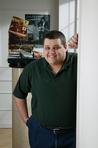
Lee Warren's Blog
May 1, 2026
Waiting Room Heartbreak
Beneath the silence, the screens and the uncertainty of waiting rooms lies a truth about what it means to be human.  ...
...
...


April 24, 2026
What the Camera Saw
A house came into our lives this week, but the story isn’t really about the house. 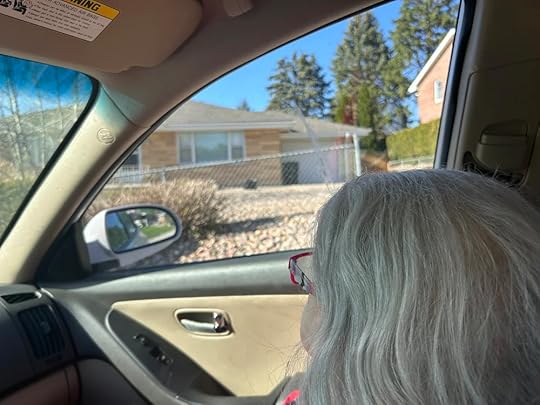 ...
...
...
April 17, 2026
Passive Contemplation
A lonely cabin along Highway 17 sparked questions, then something more. Sometimes reflection finds you while you’re simply paying attention.  ...
...
...
April 10, 2026
Rain Delay
Rain slowed the traffic, schedules and the day itself. And that didn’t feel like a problem. 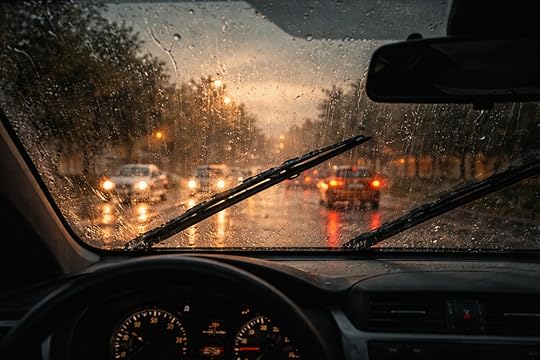 ...
...
...
April 3, 2026
Suffering Well for God’s Glory
Holy Week brings suffering into focus. Here’s one story about a pastor in prison, a faith that won't bend and a reminder that some things are worth enduring. 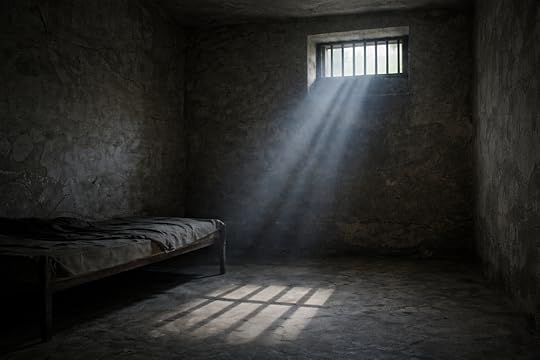 ...
...
...
March 27, 2026
42 Minutes of Better Noise
The noise isn’t going anywhere, but we can choose which kind we live in.  I...
I...
I...
March 20, 2026
What Pain Makes You Notice
Pain has a way of shrinking your world. But it can also help you see what matters most. 
Photo by Sasun Bughdaryan on Unsplash
I missed my massage therapy appointment last weekend due to weather and scheduling conflicts. And I paid for it.By early Tuesday night, I was lying motionless in bed with my eyes closed, suffering from the effects of a pinched nerve in my neck and in both elbows. Adjusting my position didn’t help, so I stopped trying.Moments like that make my limits hard to ignore.Later that night, I got up and went in to check on my 89-year-old mom. She had lost her TV remote control, and I had to get down on all fours to check under her bed. I felt every bit of that. I eventually found it wrapped in her covers, of course.A few days earlier, I had a conversation with a friend, and it got real. I told her that I’ll turn sixty this year. It sounds obvious when you say it out loud, but I told her I’ll be seventy in ten years. I was trying to tell her that I don’t want to wait to do important things. Our limitations generally don’t decrease as we get older.At the time, these felt like distant observations. Lying there on Tuesday night, they didn’t feel distant at all.Pain has a way of shrinking your world. You stop thinking about next year, or even next week. You think about whether turning your head an inch in one direction or another will make the pain better or worse.Even time feels different when you are in pain. You measure in small increments, like how long to stay in one position. Sometimes movement helps, and other times it doesn’t.Getting older isn’t something that waits for us. It creeps up in ways we don’t always notice, like in the way we fail to bounce back as quickly as we used to, the care we can’t afford to skip and the quiet reminders that our bodies won’t let us ignore. We move through life without noticing what’s right in front of us, until something forces us to slow down.Limitations aren’t just problems to solve. Sometimes, they are invitations to pay attention. The reality is, we are not in control. For the Christian, that’s not a bad place to be. We have limits, and often, that’s where God meets us.On Tuesday night, God met me in the gentle prayer my wife uttered over me. And somehow, it transformed the moment. My pain didn’t go away, but it reminded me of God’s loving presence, even in the midst of pain.P. S. I was able to see my massage therapist on Thursday, thankfully, so I’m feeling much better.March 13, 2026
Where the Field Used to Be
A quiet realization about legacy, memory and the families who come after us. 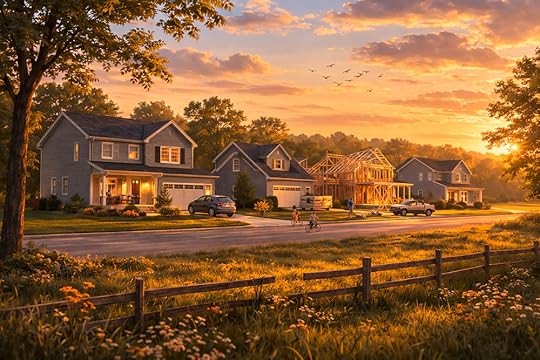 My grandparents once owned five houses on the same corner in my hometown. Just beyond them sat an empty field to the east. When I was young, it felt like that field would always be there.After both of my grandparents passed, the houses slowly changed hands. Eventually, I sold the last remaining home that had been in the family. I knew the buyer was a developer. He already owned the empty field to the east and planned to build forty or fifty houses there. The old house would become his model home. I remember thinking that corner would never look the same again.Earlier this week, I drove past the five homes. The formerly empty lot was full of streets and new homes. I’ve driven past it before, but something struck me this time. It didn’t feel like a loss. It felt like a new beginning.I didn’t see any kids riding their bikes down the newly paved streets, and no one was outside working on their lawns. But I saw signs of life. Cars sat in driveways that didn’t exist until recently. Decks had grills waiting for summer evenings. And new homes were still rising where there had once been nothing but open ground.Every time I drive past that field now, I suspect I’ll smile quietly to myself, knowing my grandparents had a small part in what stands there today. Sometimes the best legacy isn’t preserving things exactly as they were – it’s making room for new life.I say that as a sentimentalist who clings to what was, afraid it might be forgotten. The older I get, though, the more I realize that’s okay. Each generation builds its own memories in the places it inherits.Before long, children will ride bikes down those streets. Someone will drag a basketball hoop to the edge of a driveway. Dogs will bark at passing mail trucks. On warm evenings, families will sit on those decks beside the grills I noticed, talking about their days while the sun sinks behind the houses. Christmas lights will appear along the roofs in December. And in the fall, pumpkins will sit outside front doors.Years from now, some of those families will move away, and others will take their place. The cycle will repeat itself in ways no one can quite predict.They won’t have any idea how the neighborhood came into existence, nor will they know about my grandparents who moved homes onto the land just west of it in the 1960s. And that’s fine. They will simply be doing what my grandparents once did – living their lives the best they know how, enjoying their families and benefiting from the land. And that’s exactly as it should be.But as long as the Lord gives me breath, I’ll remember the way it used to be and be grateful that these families are making new memories where an empty field once sat.
My grandparents once owned five houses on the same corner in my hometown. Just beyond them sat an empty field to the east. When I was young, it felt like that field would always be there.After both of my grandparents passed, the houses slowly changed hands. Eventually, I sold the last remaining home that had been in the family. I knew the buyer was a developer. He already owned the empty field to the east and planned to build forty or fifty houses there. The old house would become his model home. I remember thinking that corner would never look the same again.Earlier this week, I drove past the five homes. The formerly empty lot was full of streets and new homes. I’ve driven past it before, but something struck me this time. It didn’t feel like a loss. It felt like a new beginning.I didn’t see any kids riding their bikes down the newly paved streets, and no one was outside working on their lawns. But I saw signs of life. Cars sat in driveways that didn’t exist until recently. Decks had grills waiting for summer evenings. And new homes were still rising where there had once been nothing but open ground.Every time I drive past that field now, I suspect I’ll smile quietly to myself, knowing my grandparents had a small part in what stands there today. Sometimes the best legacy isn’t preserving things exactly as they were – it’s making room for new life.I say that as a sentimentalist who clings to what was, afraid it might be forgotten. The older I get, though, the more I realize that’s okay. Each generation builds its own memories in the places it inherits.Before long, children will ride bikes down those streets. Someone will drag a basketball hoop to the edge of a driveway. Dogs will bark at passing mail trucks. On warm evenings, families will sit on those decks beside the grills I noticed, talking about their days while the sun sinks behind the houses. Christmas lights will appear along the roofs in December. And in the fall, pumpkins will sit outside front doors.Years from now, some of those families will move away, and others will take their place. The cycle will repeat itself in ways no one can quite predict.They won’t have any idea how the neighborhood came into existence, nor will they know about my grandparents who moved homes onto the land just west of it in the 1960s. And that’s fine. They will simply be doing what my grandparents once did – living their lives the best they know how, enjoying their families and benefiting from the land. And that’s exactly as it should be.But as long as the Lord gives me breath, I’ll remember the way it used to be and be grateful that these families are making new memories where an empty field once sat.
March 6, 2026
A Flutter in the Wild
Shared stories inch us toward one another. 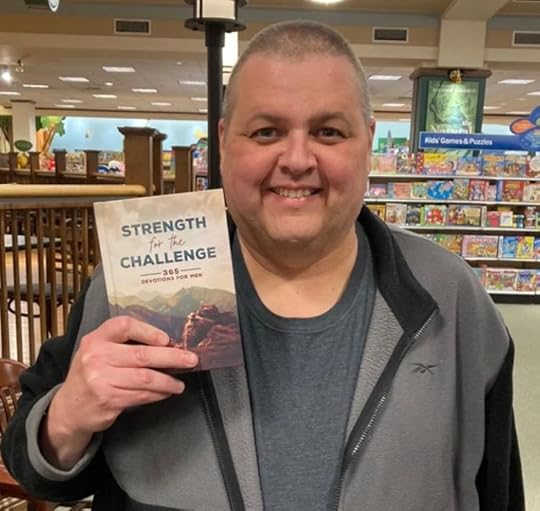
Bumping into a book in the wild in 2022 for which I was a contributor
When an author finds his or her work in a bookstore, library or wherever, a little flutter occurs in the stomach. That’s how I feel anyway when it happens to me. Psychology might refer to that feeling as being validated or seen. I don’t know what to do with all that. I think I’ll stick with flutter.People sometimes refer to the real world as the wild. As in, “I saw my book out in the wild!” I really like that phrase. It resonates with me.Books contain stories just waiting to be experienced. But authors aren’t the only ones with stories. Everyone has them. It’s one of the reasons I love cafes and coffee shops so much. You can hear snippets of people sharing their stories with one another. I wrote a book of thirty essays while sitting in coffee shops that highlight these types of stories.In Common Grounds: Contemplations, Confessions, and (Unexpected) Connections from the Coffee Shop, I wrote this:I pick up on a conversation that two elderly men and two elderly women are having at a nearby table about how a relative helped one of the men to feel alone no longer.“My dad died on a Saturday,” the man says to the group. “The next day a lot of people came over to the house and brought food. I wasn’t feeling comfortable with all that. I went upstairs where the bedrooms were and sat on the steps. It was dark. Somebody must have told Anthony I was sitting up there alone. He came up and put his hand on my knee. It sort of chokes me up.”“How old was he?” the other man says.“About forty, and I was ten.”“It’s the little things like that that make all the difference, isn’t it?” the other man says.Conversations like this are one of the beautiful things about coffee shops. We share our stories, offer comforting words, and we inch closer to one another.Maybe that’s what life in the wild really looks like. People telling their stories in ordinary places. A man remembering a hand on his knee in a dark stairwell just when he needed it. Friends listening across a small table, knowing that a man in their tribe was hurting and vulnerable. Strangers sharing space in a coffee shop, away from the routines and distractions of everyday life.None of it feels extraordinary in the moment, but these small exchanges help us inch toward one another, reminding us that we aren’t alone.February 27, 2026
Maybe This Is the Prying
A caregiver’s reflection on busyness, identity, and the fear that everything will fall apart if we stop. 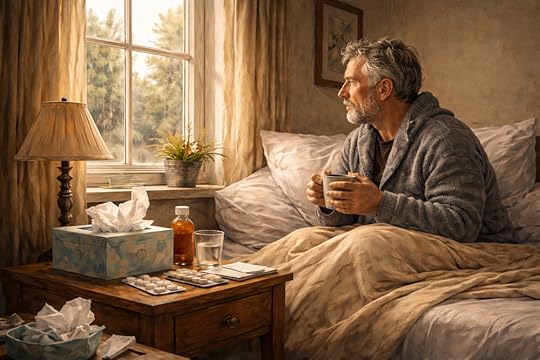 I guess I was overdue for a round of the yucks. The flu or something like it swept through our apartment last weekend. My recovery was quick, except for the lingering cough. The last few times I’ve been sick, the cough stuck around for a couple of months. Hoping that won’t be the case this time.While I was down, I started reading Paul David Tripp’s Journey to the Cross Lenten devotional. On Day 4, he said this, “God intends suffering to pry open our hands so we let go of the things of this earth and hold more tightly to Jesus.” That matches my theological understanding. But the far more important question is, does it match my practice?Over the years, I’ve learned that when I’m sick, God often uses it to get my attention. But other times, I think he uses it to get me to slow down – yes, to listen for his voice, but also to rest, recharge, reconnect with those who are closest to me.As I reflect on it, I ended up saying no to some activities I really enjoy, including worship on Sunday, meeting with a group of guys on Monday night. And it meant skipping a medical appointment.Was God prying open my hands so I would hold more tightly to Jesus?I don’t know.I do know that, as a caregiver, I feel the need to be reliable. And that keeps me running from one activity to the next – doctor appointments, pharmacy runs, laundry, errands, taking care of meals, etc. It all has to be done. Or at least, that’s what I tell myself.As I write that, I realize it makes me sound more like Martha – the responsible one from Luke 10 – than Mary, who chose to sit at the feet of Jesus. “Martha [overly occupied and too busy] was distracted with much serving” (Luke 10:40 AMPC).Overly occupied. Check. Too busy. Check. Distracted with much serving. Check mate.Jesus told Martha that a person only has need of a few things, and that Mary made a wise decision by opting for that which cannot be taken away from her. She trusted that what mattered most would not be undone by her stillness.I can get caught up in production schedules (yes, I actually have one for my writing and editing business), fellowship schedules (yes, I meet with the same guys on the same days each week) and long, unrealistic checklists. None of them are bad, but they can all be taken away when the flu or other illness strikes.Maybe this is the prying Tripp wrote about. It’s not a dramatic revelation but enforced stillness, with tissues on the nightstand and nowhere to be.
I guess I was overdue for a round of the yucks. The flu or something like it swept through our apartment last weekend. My recovery was quick, except for the lingering cough. The last few times I’ve been sick, the cough stuck around for a couple of months. Hoping that won’t be the case this time.While I was down, I started reading Paul David Tripp’s Journey to the Cross Lenten devotional. On Day 4, he said this, “God intends suffering to pry open our hands so we let go of the things of this earth and hold more tightly to Jesus.” That matches my theological understanding. But the far more important question is, does it match my practice?Over the years, I’ve learned that when I’m sick, God often uses it to get my attention. But other times, I think he uses it to get me to slow down – yes, to listen for his voice, but also to rest, recharge, reconnect with those who are closest to me.As I reflect on it, I ended up saying no to some activities I really enjoy, including worship on Sunday, meeting with a group of guys on Monday night. And it meant skipping a medical appointment.Was God prying open my hands so I would hold more tightly to Jesus?I don’t know.I do know that, as a caregiver, I feel the need to be reliable. And that keeps me running from one activity to the next – doctor appointments, pharmacy runs, laundry, errands, taking care of meals, etc. It all has to be done. Or at least, that’s what I tell myself.As I write that, I realize it makes me sound more like Martha – the responsible one from Luke 10 – than Mary, who chose to sit at the feet of Jesus. “Martha [overly occupied and too busy] was distracted with much serving” (Luke 10:40 AMPC).Overly occupied. Check. Too busy. Check. Distracted with much serving. Check mate.Jesus told Martha that a person only has need of a few things, and that Mary made a wise decision by opting for that which cannot be taken away from her. She trusted that what mattered most would not be undone by her stillness.I can get caught up in production schedules (yes, I actually have one for my writing and editing business), fellowship schedules (yes, I meet with the same guys on the same days each week) and long, unrealistic checklists. None of them are bad, but they can all be taken away when the flu or other illness strikes.Maybe this is the prying Tripp wrote about. It’s not a dramatic revelation but enforced stillness, with tissues on the nightstand and nowhere to be.