
Ekaterina Sedia's Blog
October 11, 2017
The semiotics of Rick Owens
(Most fashion photos are from Vogue.com)
I've been eager to talk about Rick Owens for a while now -- not just Rick Owens the designer I adore, not the sharp-profiled patron saint of Goths everywhere, but rather Rick Owens as a cultural force, and an oblique successor to the avant garde of the eighties and the cosmopolitan minimalism of the nineties.
But let's start with his Spring/Summer 2014 collection. It gained a lot of (well deserved) attention by casting American step teams instead of models.
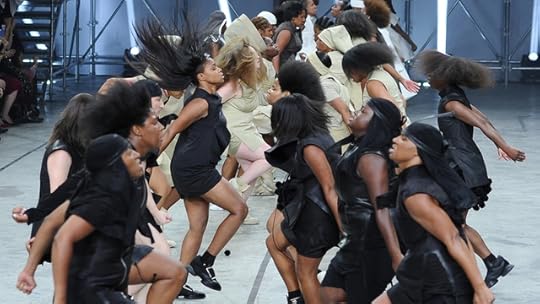
You can watch the full video of this really inspired performance here:
Thing you will notice first is the diversity of the models, which makes sense: they were not selected by a casting director, but came as an entire group of living, breathing American students, with bodies of different heights, builds, weights and of course colors.
Another thing that immediately jumps to mind is how easy these clothes are to move in. And how GOOD they look on these women -- all of them. This is really the quintessential Owens' clothing -- interesting but not imposing or assuming, clothes that are mostly black or white or dust colored, cut in an inspiring and often mind-boggling way, and yet so easy. A disclaimer is perhaps in order: I love Rick Owens' clothes. I wear them a lot; they are blank and anonymous. And yet people who also love him will recognize his clothing immediately -- by the drape, but the flattering skim of unraveling and asymmetrical jersey, by a sharp cant of the shoulder.
The thing about this show is how much it says about fashion as an institution -- how often the barriers we see are artificial; and it also seems to be poking a bit of fun. It's as if it says, you want more diverse runways? You don't need more casting directors or a heavily regulated model industry; you can just grab a group of people from anywhere in the real world, and here you have it. (Of course now casting "real people" in the runway shows is a trend. I will not say that Owens pioneered it -- but he certainly got a lot of attention when he did.)
I would not call Owens clothes derivative by any means, as his aesthetic is all his own; and yet it would be a mistake to argue that he has no antecedents. The palette and the indifference in separating eveningwear from streetwear roots him firmly in the nineties, to the works of the Amsterdam six (especially Ann Demeulemeester), as well Yohji Yamamoto. Yamamoto has become a rarefied legend, and yet he was one of the first avant garde designers to actually look to the street, to the "sneaker culture" as he calls it, and to incorporate some very mundane references into the exquisitely cut clothes.
Of course there are also more direct points of comparison between Yamamoto and Owens: both reject the explicitly feminine silhouettes, tending instead toward the androgyny. It is never tight but skimming, it is boxy but flattering, bizarre and yet utterly enchanting.
From Yohji Yamamoto himself: "Men's clothing is more pure in design. It's more simple and has no decoration. Women want that. When I started designing, I wanted to make men's clothes for women. But there were no buyers for it. Now there are. I always wonder who decided that there should be a difference in the clothes of men and women. Perhaps men decided this."
(Not surprisingly, I adore Yamamoto, even more than Owens.)
But if it was all there were all to Owens -- the reliance on black and the asymmetry, the unraveling seams and the imaginative cuts -- there would be no explanation for his most recent show, Spring 2018.
It starts out mildly enough:
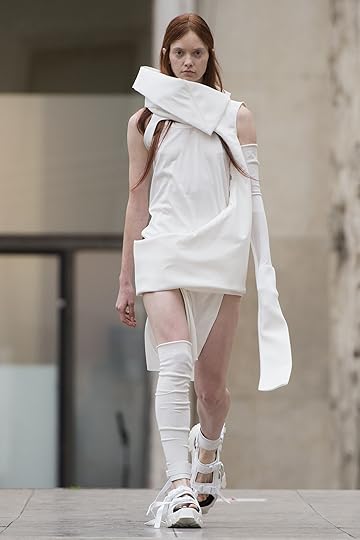
It is a quintessential Owens, and we can see a similarity to a Spring 2014 piece:
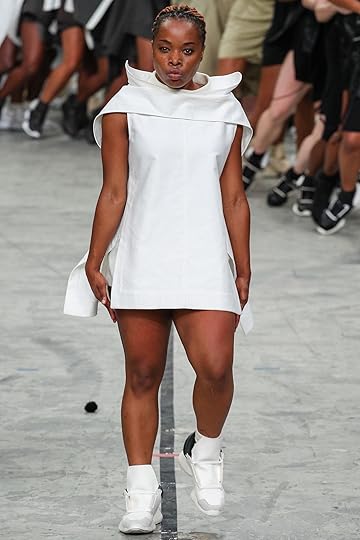
Evolution for sure, but hardly a dramatic leap. As the show progresses, however, Owens abandons his usual skimming/concealing of the body and goes toward the downright distortion:
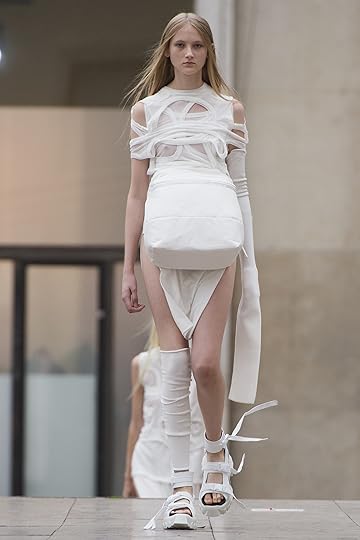
At this point, one has to recognize that this distortive approach, this refusal to enter the flattering/unflattering dichotomy harks back to Rei Kawakubo, another Japanese avant garde designer (who was honored in this year's Met Museum Costume Institute Exhibit), who refused to even consider the question and went straight for the body distortions, like in her famous 1997 collection:
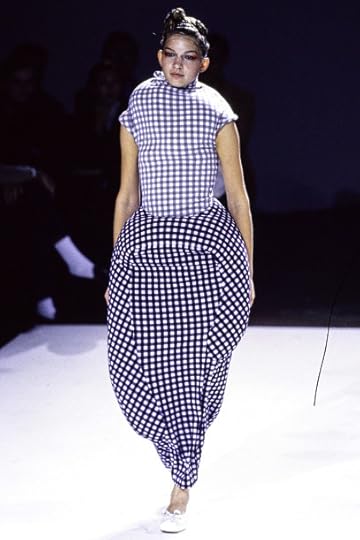
And all doubts disappear when Owens walks out this look:
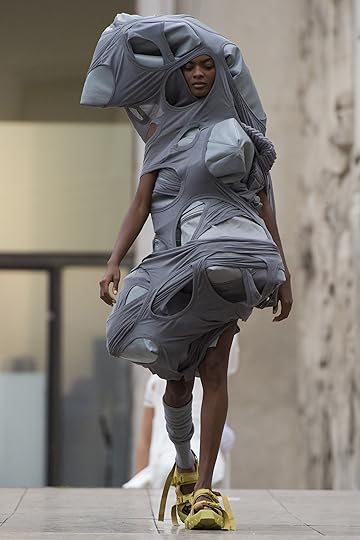
The manipulation of jersey, the color is all Owens but the shape is unmistakably referential of Kawakubo. And listen, I am the first to argue that runway presentations are about art first and commerce second, that complaining about runway looks not being wearable is missing the point -- a bit like judging a painting by how well it matches your living room color scheme. And yet...
[image error]
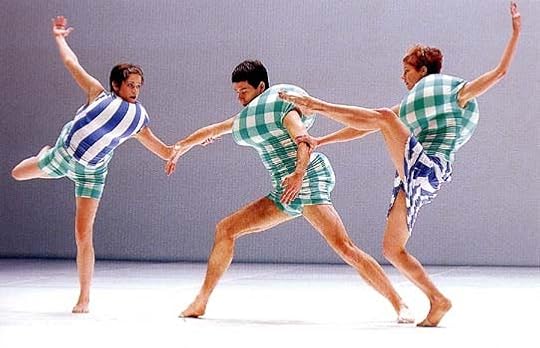
These are professional ballet dancers performing in those lump dresses from Kawakubo's collection. And the attention to the movement, to the three-dimensional reality of clothing and athletes' bodies -- who, unlike models, inhabit the clothes fully instead of walking them down the runway -- brings this all together for me. That Spring 2014 show that was also shown on bodies of dancers.
So to me Rick Owens' 2018 show is a love letter -- to other designers, to the evolution of his vision, and to the bodies that move and inhabit clothes, bodies that revealed and concealed, distorted and embraced. It is a love letter to movement in all senses of it -- dance, time, music, human body -- and I am grateful for it. This letter came at the right time.
I've been eager to talk about Rick Owens for a while now -- not just Rick Owens the designer I adore, not the sharp-profiled patron saint of Goths everywhere, but rather Rick Owens as a cultural force, and an oblique successor to the avant garde of the eighties and the cosmopolitan minimalism of the nineties.
But let's start with his Spring/Summer 2014 collection. It gained a lot of (well deserved) attention by casting American step teams instead of models.
You can watch the full video of this really inspired performance here:
Thing you will notice first is the diversity of the models, which makes sense: they were not selected by a casting director, but came as an entire group of living, breathing American students, with bodies of different heights, builds, weights and of course colors.
Another thing that immediately jumps to mind is how easy these clothes are to move in. And how GOOD they look on these women -- all of them. This is really the quintessential Owens' clothing -- interesting but not imposing or assuming, clothes that are mostly black or white or dust colored, cut in an inspiring and often mind-boggling way, and yet so easy. A disclaimer is perhaps in order: I love Rick Owens' clothes. I wear them a lot; they are blank and anonymous. And yet people who also love him will recognize his clothing immediately -- by the drape, but the flattering skim of unraveling and asymmetrical jersey, by a sharp cant of the shoulder.
The thing about this show is how much it says about fashion as an institution -- how often the barriers we see are artificial; and it also seems to be poking a bit of fun. It's as if it says, you want more diverse runways? You don't need more casting directors or a heavily regulated model industry; you can just grab a group of people from anywhere in the real world, and here you have it. (Of course now casting "real people" in the runway shows is a trend. I will not say that Owens pioneered it -- but he certainly got a lot of attention when he did.)
I would not call Owens clothes derivative by any means, as his aesthetic is all his own; and yet it would be a mistake to argue that he has no antecedents. The palette and the indifference in separating eveningwear from streetwear roots him firmly in the nineties, to the works of the Amsterdam six (especially Ann Demeulemeester), as well Yohji Yamamoto. Yamamoto has become a rarefied legend, and yet he was one of the first avant garde designers to actually look to the street, to the "sneaker culture" as he calls it, and to incorporate some very mundane references into the exquisitely cut clothes.
Of course there are also more direct points of comparison between Yamamoto and Owens: both reject the explicitly feminine silhouettes, tending instead toward the androgyny. It is never tight but skimming, it is boxy but flattering, bizarre and yet utterly enchanting.
From Yohji Yamamoto himself: "Men's clothing is more pure in design. It's more simple and has no decoration. Women want that. When I started designing, I wanted to make men's clothes for women. But there were no buyers for it. Now there are. I always wonder who decided that there should be a difference in the clothes of men and women. Perhaps men decided this."
(Not surprisingly, I adore Yamamoto, even more than Owens.)
But if it was all there were all to Owens -- the reliance on black and the asymmetry, the unraveling seams and the imaginative cuts -- there would be no explanation for his most recent show, Spring 2018.
It starts out mildly enough:
It is a quintessential Owens, and we can see a similarity to a Spring 2014 piece:
Evolution for sure, but hardly a dramatic leap. As the show progresses, however, Owens abandons his usual skimming/concealing of the body and goes toward the downright distortion:
At this point, one has to recognize that this distortive approach, this refusal to enter the flattering/unflattering dichotomy harks back to Rei Kawakubo, another Japanese avant garde designer (who was honored in this year's Met Museum Costume Institute Exhibit), who refused to even consider the question and went straight for the body distortions, like in her famous 1997 collection:
And all doubts disappear when Owens walks out this look:
The manipulation of jersey, the color is all Owens but the shape is unmistakably referential of Kawakubo. And listen, I am the first to argue that runway presentations are about art first and commerce second, that complaining about runway looks not being wearable is missing the point -- a bit like judging a painting by how well it matches your living room color scheme. And yet...
[image error]
These are professional ballet dancers performing in those lump dresses from Kawakubo's collection. And the attention to the movement, to the three-dimensional reality of clothing and athletes' bodies -- who, unlike models, inhabit the clothes fully instead of walking them down the runway -- brings this all together for me. That Spring 2014 show that was also shown on bodies of dancers.
So to me Rick Owens' 2018 show is a love letter -- to other designers, to the evolution of his vision, and to the bodies that move and inhabit clothes, bodies that revealed and concealed, distorted and embraced. It is a love letter to movement in all senses of it -- dance, time, music, human body -- and I am grateful for it. This letter came at the right time.


February 1, 2017
The World is on Fire, Let's Go Shopping
I have been absent -- mostly due to things like family illnesses and my mother's death, and associated travel and mute heartbreak. I won't even talk about the current political events because there is no talking there but only screaming. And yet: no matter what is going on, those of us who continue living carry on with the mundane stuff. We eat, we sleep, we create art, we write blogs. We work out, we tend to the young and the elderly, we feed cats and let them outside. And we shop.
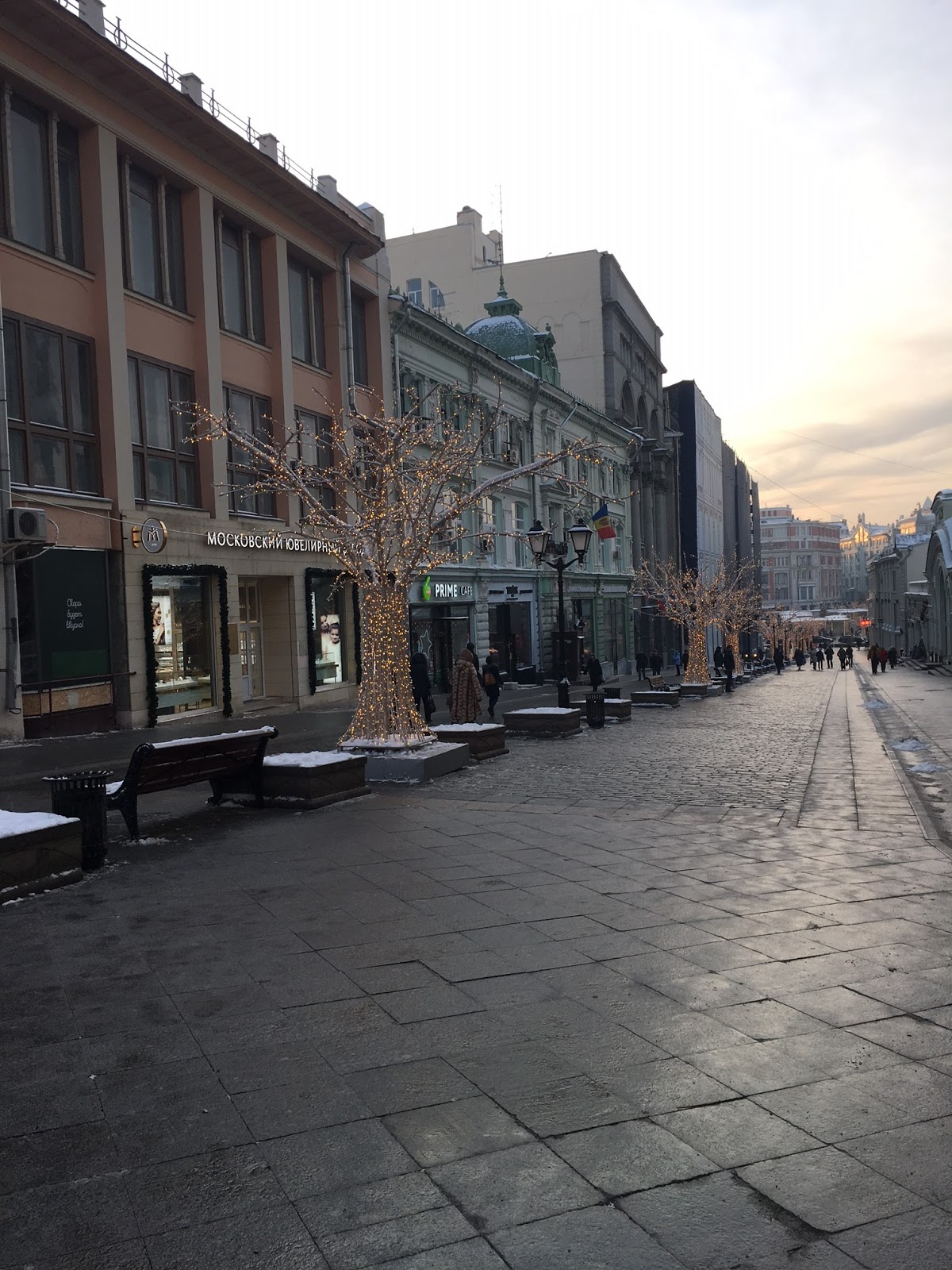
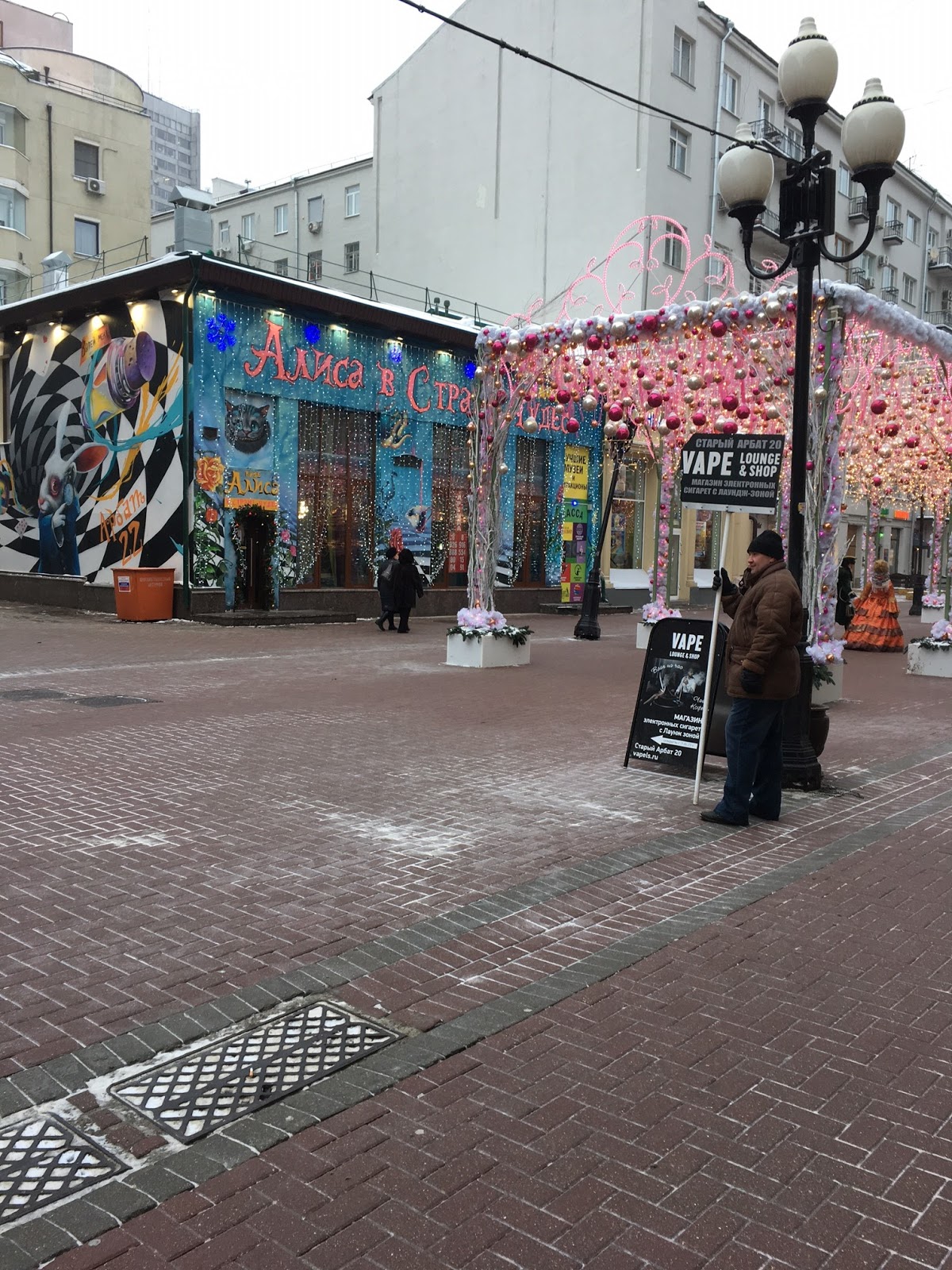
Today I want to give a shoutout to my favorite city, Moscow. And to two favorite shopping destinations there: one old, one new. But first, some street views.
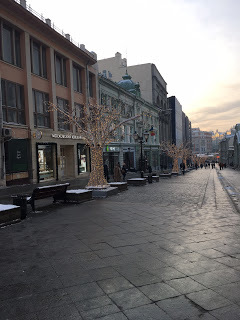

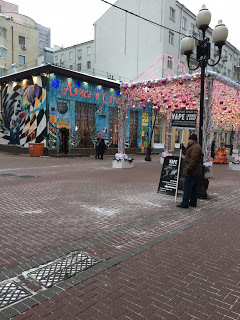



Incidentally, this puffer coat by The Eight Senses saw me beautifully through most of January in Moscow. Respect! The only time I needed something more insulated was during a -20 freeze, which lasted three days and seriously hampered my walking time.
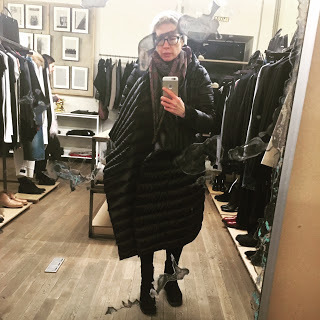
And here's this coat again, in SVMoscow. I wrote about them before, and I keep going back year after year. It's not just the amazing selection and the beautifully curated space, it's not just the fresh collections by The Row, Ann Demeuleemester, Yohji Yamamoto, and Vetements. It's this mirror, it's the quiet interior. It is its sense of sanctuary. I am not the one for churches, but I do find a degree of spiritual contentment trailing my fingers along their racks of black Japanese and Belgian avant garde, drinking tea in the spacious front area, walking around with the wooden floors whispering underfoot.
The greatest treasure of this space and my favorite salesperson in the world is Roman. He is a friend and a confidant, and a person who saved me from myself more times than I can count. Some Roman quotes which always make me laugh:
"No. NO. Take this off IMMEDIATELY."
"I will not let you try this on -- it's too big, it'll swallow you whole and your broad shoulders won't save you."
"I feel I would be doing you a disservice if I let you buy another black dress."
(He is always right, by the way.)
And it is also thanks to Roman that I visited the showroom of two Russian brands, Ruban and Pe for Girls. Both are the brainchildren of Alisa and Yulia Ruban, designer sisters. Pe for Girls is their younger line, much less expensive than their main one, but still exhibiting the same quality -- structured cashmere tops lined in silk, velvet track suits, simple timeless dresses:
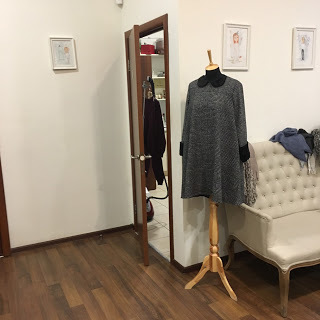
I knew about their main line, RUBAN, which is always exquisitely and inventively constructed, but it took Roman's tip to send me looking at the Pe and its wearable and deceptively simple silhouettes, the sort of thing you can wear to work or to lounge on the couch, and always be secretly delighted by the sweep of the hem or the substantial and smooth hand of the fabric.
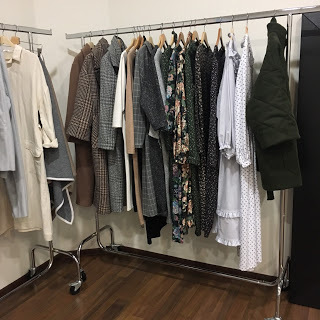
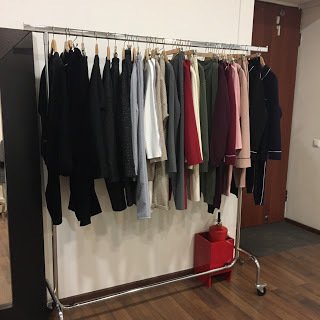
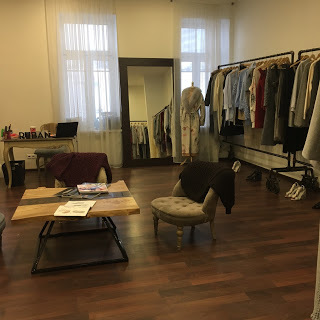
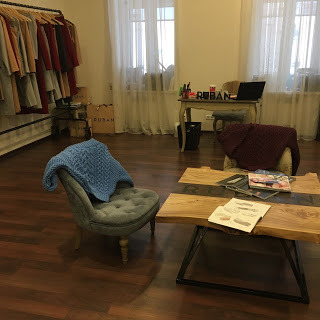
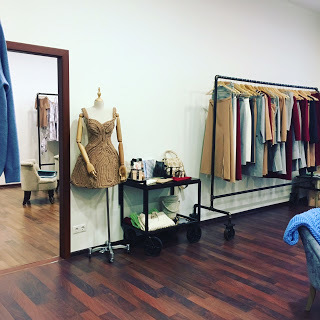
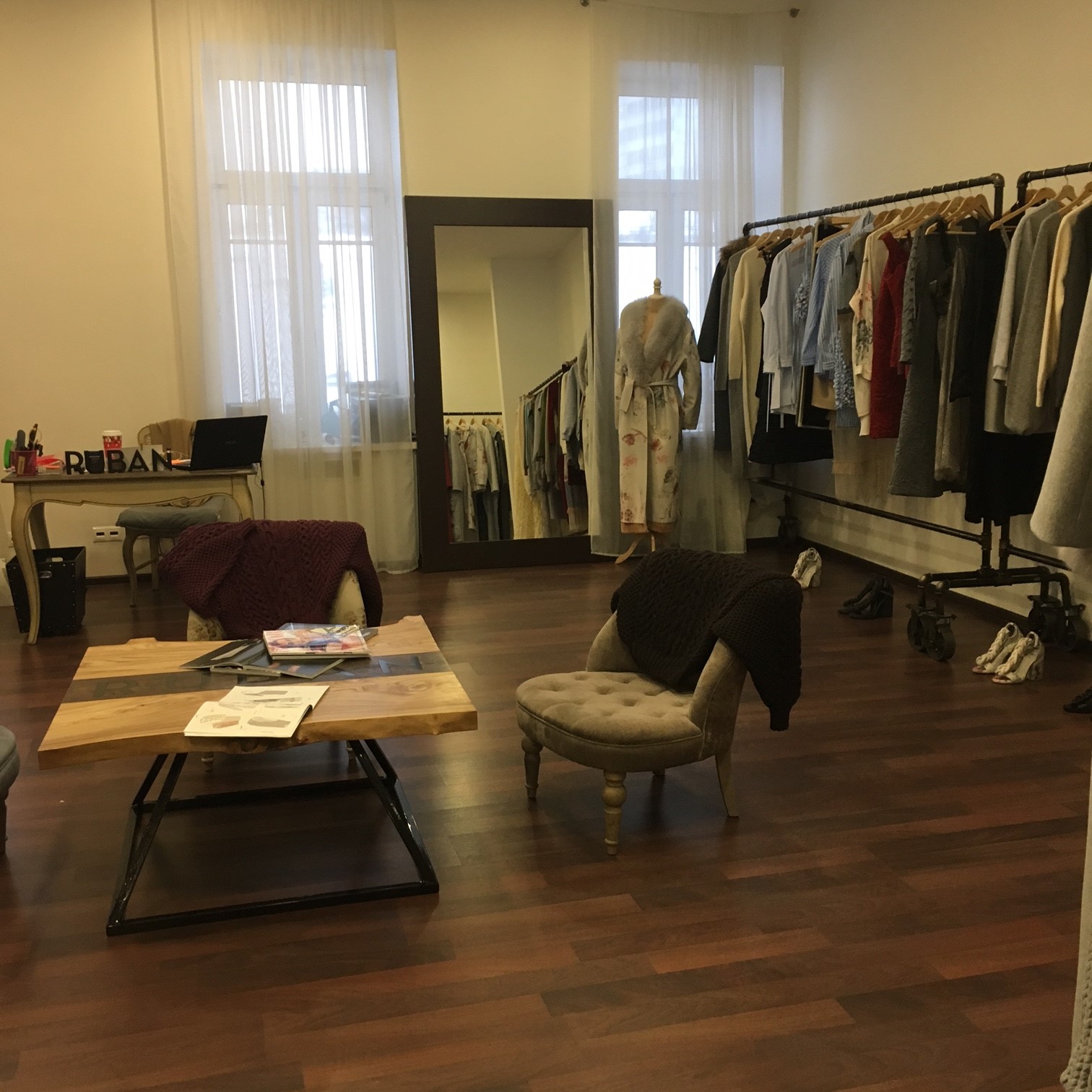
It took me a second visit to venture a look at the main line -- elaborate clothes with couture sensibilities require a certain state of mind. There is always a special energy in designer showspaces -- they tend to be quieter and sparcer than retail, and I especially enjoy the ones that reflect the aesthetics of their creators not only in clothes but in decor. I loved the RUBAN showroom so much -- it is so open and straw-colored, and the clothes are exquisite.
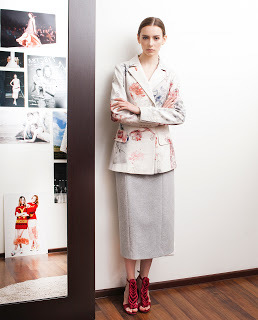
Also they are not exactly cheap, but I lucked out and walked right into their biggest season sale. I am a sucker for structured and tailored clothes as much as I am for Belgian avant garde, and I do firmly believe in supporting domestic manufacturing (both Russian and US -- this is what happens with two homes.) The look below caught my eye right away, and after trying on the skirt I took it home.
And wore it for the first day of the Spring semester, with my trusty Protagonist made in NYC shirt.
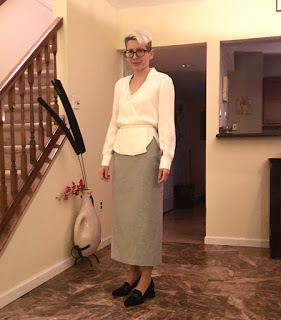
I dress up for my classes because they are important to me, and by dressing up I convey my sense of excitement and respect for the occasion. Or at least I hope I do! I like to wear things made by people I admire and respect. It is importantfor me to support those who are truly creative, who invest in ethical practices, who care about sustainable manufacturing while creating beauty that keeps people warm.
Because we are alive, we must leave our houses, and we must wear clothes. They tell the world of who we are and where we are coming from, of our aesthetics and desires. We chose our clothes because they matter. And we wear these clothes to honor the people who dreamed them up and made them, who put them onto shelves and racks for us to find, and those who showed them to us and talked us into trying them on.
Because even as the world falls apart, we carry on with shopping, dressing, and looking after one another.
Today I want to give a shoutout to my favorite city, Moscow. And to two favorite shopping destinations there: one old, one new. But first, some street views.



Incidentally, this puffer coat by The Eight Senses saw me beautifully through most of January in Moscow. Respect! The only time I needed something more insulated was during a -20 freeze, which lasted three days and seriously hampered my walking time.
And here's this coat again, in SVMoscow. I wrote about them before, and I keep going back year after year. It's not just the amazing selection and the beautifully curated space, it's not just the fresh collections by The Row, Ann Demeuleemester, Yohji Yamamoto, and Vetements. It's this mirror, it's the quiet interior. It is its sense of sanctuary. I am not the one for churches, but I do find a degree of spiritual contentment trailing my fingers along their racks of black Japanese and Belgian avant garde, drinking tea in the spacious front area, walking around with the wooden floors whispering underfoot.
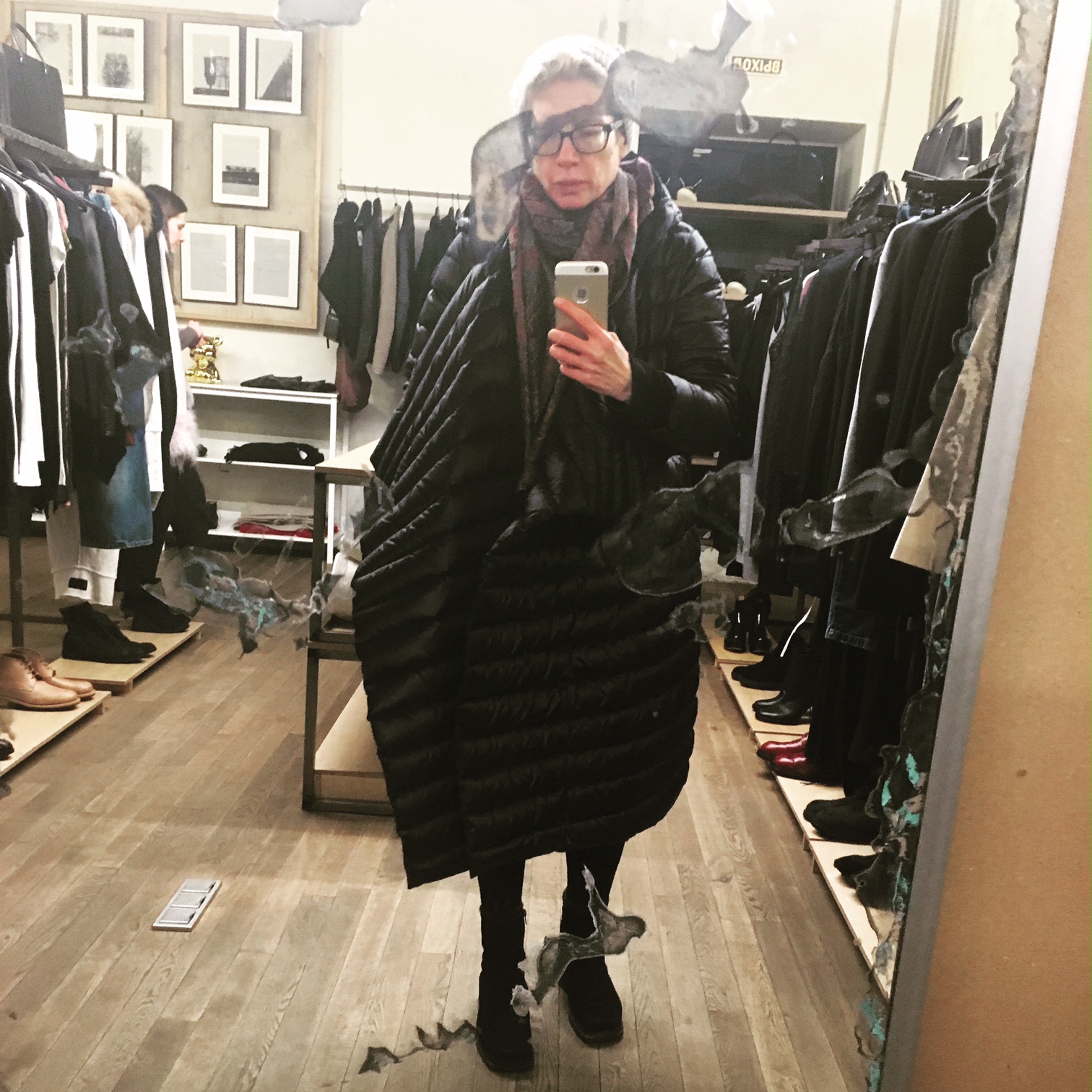
The greatest treasure of this space and my favorite salesperson in the world is Roman. He is a friend and a confidant, and a person who saved me from myself more times than I can count. Some Roman quotes which always make me laugh:
"No. NO. Take this off IMMEDIATELY."
"I will not let you try this on -- it's too big, it'll swallow you whole and your broad shoulders won't save you."
"I feel I would be doing you a disservice if I let you buy another black dress."
(He is always right, by the way.)
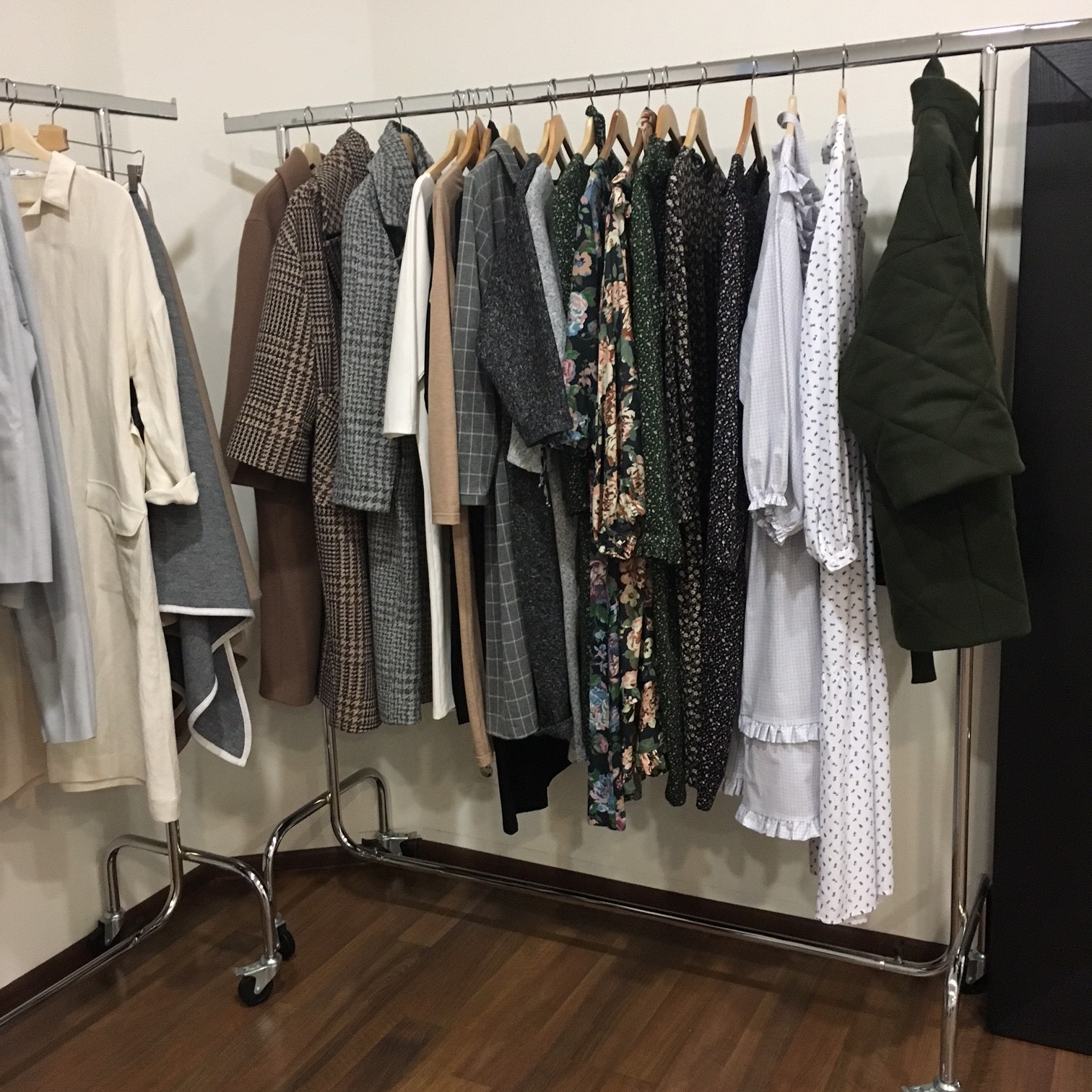
And it is also thanks to Roman that I visited the showroom of two Russian brands, Ruban and Pe for Girls. Both are the brainchildren of Alisa and Yulia Ruban, designer sisters. Pe for Girls is their younger line, much less expensive than their main one, but still exhibiting the same quality -- structured cashmere tops lined in silk, velvet track suits, simple timeless dresses:
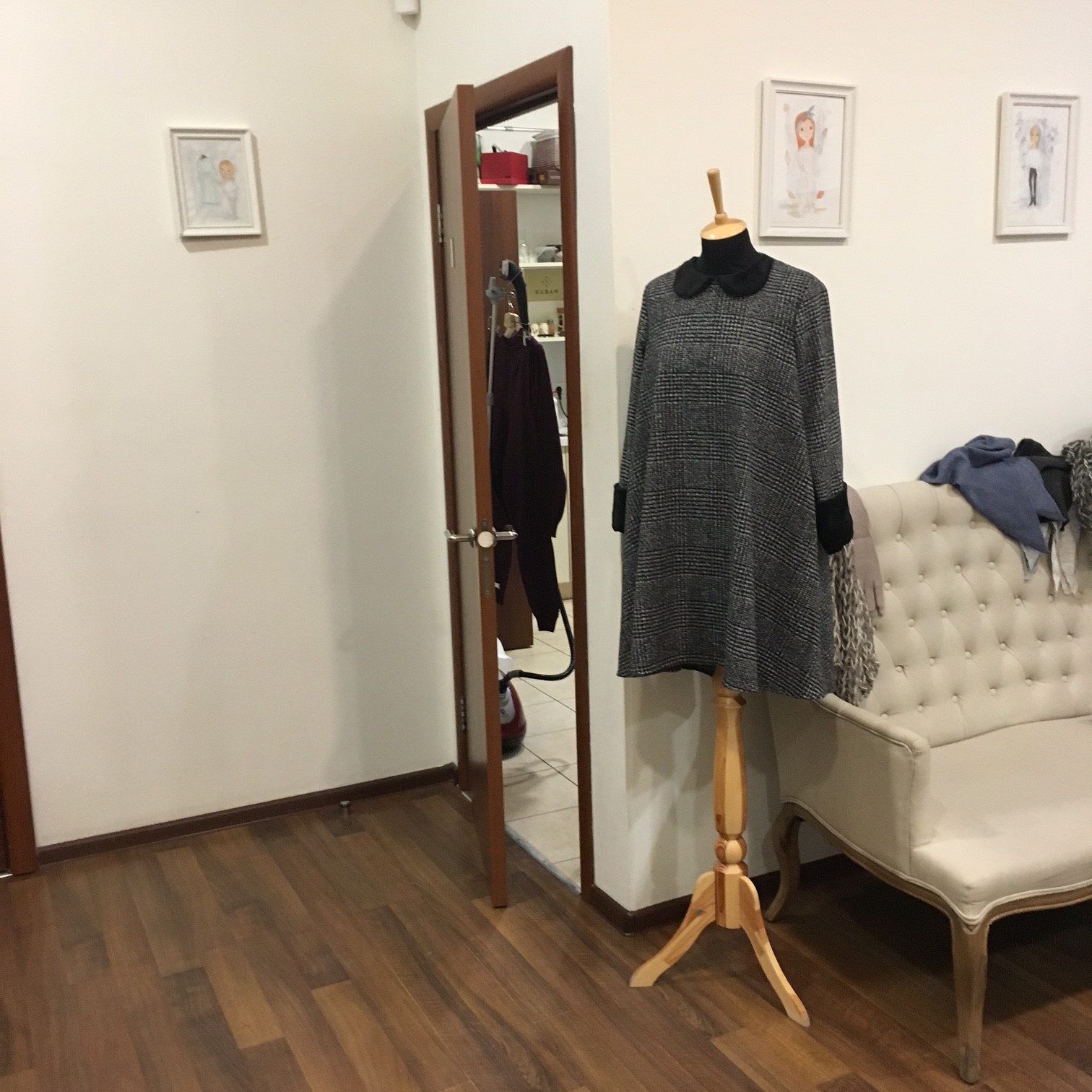
I knew about their main line, RUBAN, which is always exquisitely and inventively constructed, but it took Roman's tip to send me looking at the Pe and its wearable and deceptively simple silhouettes, the sort of thing you can wear to work or to lounge on the couch, and always be secretly delighted by the sweep of the hem or the substantial and smooth hand of the fabric.

It took me a second visit to venture a look at the main line -- elaborate clothes with couture sensibilities require a certain state of mind. There is always a special energy in designer showspaces -- they tend to be quieter and sparcer than retail, and I especially enjoy the ones that reflect the aesthetics of their creators not only in clothes but in decor. I loved the RUBAN showroom so much -- it is so open and straw-colored, and the clothes are exquisite.
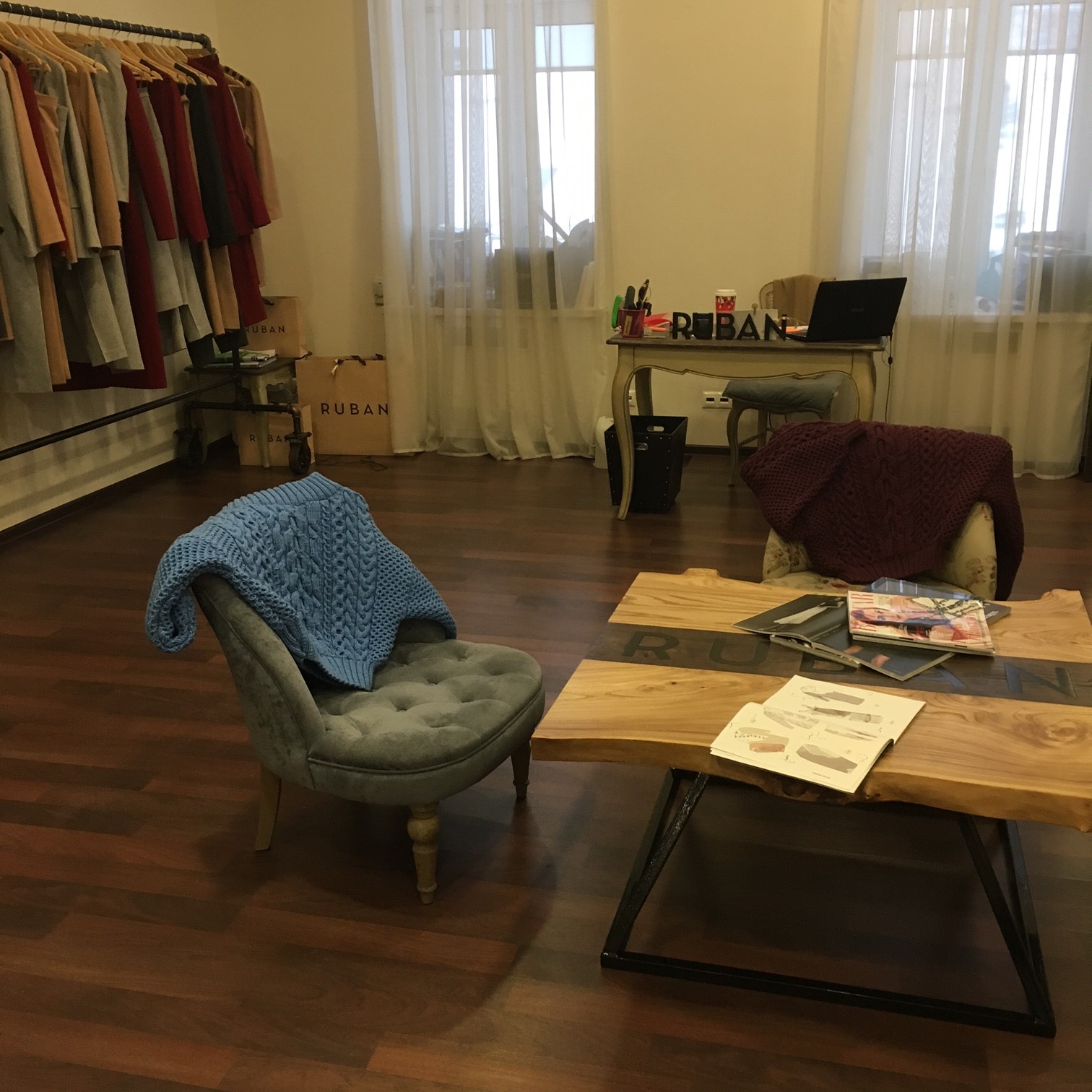

Also they are not exactly cheap, but I lucked out and walked right into their biggest season sale. I am a sucker for structured and tailored clothes as much as I am for Belgian avant garde, and I do firmly believe in supporting domestic manufacturing (both Russian and US -- this is what happens with two homes.) The look below caught my eye right away, and after trying on the skirt I took it home.

And wore it for the first day of the Spring semester, with my trusty Protagonist made in NYC shirt.

I dress up for my classes because they are important to me, and by dressing up I convey my sense of excitement and respect for the occasion. Or at least I hope I do! I like to wear things made by people I admire and respect. It is importantfor me to support those who are truly creative, who invest in ethical practices, who care about sustainable manufacturing while creating beauty that keeps people warm.
Because we are alive, we must leave our houses, and we must wear clothes. They tell the world of who we are and where we are coming from, of our aesthetics and desires. We chose our clothes because they matter. And we wear these clothes to honor the people who dreamed them up and made them, who put them onto shelves and racks for us to find, and those who showed them to us and talked us into trying them on.
Because even as the world falls apart, we carry on with shopping, dressing, and looking after one another.
The World is on Fire, Let's Go Shopping
I have been absent -- mostly due to things like family illnesses and my mother's death, and associated travel and mute heartbreak. I won't even talk about the current political events because there is no talking there but only screaming. And yet: no matter what is going on, those of us who continue living carry on with the mundane stuff. We eat, we sleep, we create art, we write blogs. We work out, we tend to the young and the elderly, we feed cats and let them outside. And we shop.
Today I want to give shoutout to my favorite city, Moscow. And to two favorite shopping destinations there: one old, one new. But first, some street views.
Incidentally, this puffer coat by The Eight Senses saw me beautifully through most of January in Moscow. Respect! The only time I needed something more insulated was during a -20 freeze, which lasted three days and seriously hampered my walking time.
And here's this coat again, in SVMoscow. I wrote about them before, and I keep going back year after year. It's not just the amazing selection and the beautifully curated space, it's not just the fresh collections by The Row, Ann Demeuleemester, Yohji Yamamoto, and Vetements. It's this mirror, it's the quiet interior. It is its sense of sanctuary. I am not the one for churches, but I do find a degree of spiritual contentment trailing my fingers along their racks of black Japanese and Belgian avant garde, drinking tea in the spacious front area, walking around with the wooden floors whispering underfoot.
The greatest treasure of this space and my favorite salesperson in the world is Roman. He is a friend and a confidant, and a person who saved me from myself more times than I can count. Some Roman quotes which always make me laugh:
"No. NO. Take this off IMMEDIATELY."
"I will not let you try this on -- it's too big, it'll swallow you whole and your broad shoulders won't save you."
"I feel I would be doing you a disservice if I let you buy another black dress."
(He is always right, by the way.)
And it is also thanks to Roman that I visited the showroom of two Russian brands, Ruban and Pe for Girls. Both are the brainchildren of Alisa and Yulia Ruban, designer sisters. Pe for Girls is their younger line, much less expensive than their main one, but still exhibiting the same quality -- structured cashmere tops lined in silk, velvet track suits, simple timeless dresses:
I knew about their main line, RUBAN, which is always exquisitely and inventively constructed, but it took Roman's tip to send me looking at the Pe and its wearable and deceptively simple silhouettes, the sort of thing you can wear to work or to lounge on the couch, and always be secretly delighted by the sweep of the hem or the substantial and smooth hand of the fabric.
It took me a second visit to venture a look at the main line -- elaborate clothes with couture sensibilities require a certain state of mind. There is always a special energy in designer showspaces -- they tend to be quieter and sparcer than retail, and I especially enjoy the ones that reflect the aesthetics of their creators not only in clothes but in decor. I loved the RUBAN showroom so much -- it is so open and straw-colored, and the clothes are exquisite.
Also they are not exactly cheap, but I lucked out and walked right into their biggest season sale. I am a sucker for structured and tailored clothes as much as I am for Belgian avant garde, and I do firmly believe in supporting domestic manufacturing (both Russian and US -- this is what happens with two homes.) The look below caught my eye right away, and after trying on the skirt I took it home.
And wore it for the first day of the Spring semester, with my trusty Protagonist made in NYC shirt.
I dress up for my classes because they are important to me, and by dressing up I convey my sense of excitement and respect for the occasion. Or at least I hope I do! I like to wear things made by people I admire and respect. It is importantfor me to support those who are truly creative, who invest in ethical practices, who care about sustainable manufacturing while creating beauty that keeps people warm.
Because we are alive, we must leave our houses, and we must wear clothes. They tell the world of who we are and where we are coming from, of our aesthetics and desires. We chose our clothes because they matter. And we wear these clothes to honor the people who dreamed them up and made them, who put them onto shelves and racks for us to find, and those who showed them to us and talked us into trying them on.
Because even as the world falls apart, we carry on with shopping, dressing, and looking after one another.
Today I want to give shoutout to my favorite city, Moscow. And to two favorite shopping destinations there: one old, one new. But first, some street views.
Incidentally, this puffer coat by The Eight Senses saw me beautifully through most of January in Moscow. Respect! The only time I needed something more insulated was during a -20 freeze, which lasted three days and seriously hampered my walking time.
And here's this coat again, in SVMoscow. I wrote about them before, and I keep going back year after year. It's not just the amazing selection and the beautifully curated space, it's not just the fresh collections by The Row, Ann Demeuleemester, Yohji Yamamoto, and Vetements. It's this mirror, it's the quiet interior. It is its sense of sanctuary. I am not the one for churches, but I do find a degree of spiritual contentment trailing my fingers along their racks of black Japanese and Belgian avant garde, drinking tea in the spacious front area, walking around with the wooden floors whispering underfoot.
The greatest treasure of this space and my favorite salesperson in the world is Roman. He is a friend and a confidant, and a person who saved me from myself more times than I can count. Some Roman quotes which always make me laugh:
"No. NO. Take this off IMMEDIATELY."
"I will not let you try this on -- it's too big, it'll swallow you whole and your broad shoulders won't save you."
"I feel I would be doing you a disservice if I let you buy another black dress."
(He is always right, by the way.)
And it is also thanks to Roman that I visited the showroom of two Russian brands, Ruban and Pe for Girls. Both are the brainchildren of Alisa and Yulia Ruban, designer sisters. Pe for Girls is their younger line, much less expensive than their main one, but still exhibiting the same quality -- structured cashmere tops lined in silk, velvet track suits, simple timeless dresses:
I knew about their main line, RUBAN, which is always exquisitely and inventively constructed, but it took Roman's tip to send me looking at the Pe and its wearable and deceptively simple silhouettes, the sort of thing you can wear to work or to lounge on the couch, and always be secretly delighted by the sweep of the hem or the substantial and smooth hand of the fabric.
It took me a second visit to venture a look at the main line -- elaborate clothes with couture sensibilities require a certain state of mind. There is always a special energy in designer showspaces -- they tend to be quieter and sparcer than retail, and I especially enjoy the ones that reflect the aesthetics of their creators not only in clothes but in decor. I loved the RUBAN showroom so much -- it is so open and straw-colored, and the clothes are exquisite.
Also they are not exactly cheap, but I lucked out and walked right into their biggest season sale. I am a sucker for structured and tailored clothes as much as I am for Belgian avant garde, and I do firmly believe in supporting domestic manufacturing (both Russian and US -- this is what happens with two homes.) The look below caught my eye right away, and after trying on the skirt I took it home.
And wore it for the first day of the Spring semester, with my trusty Protagonist made in NYC shirt.
I dress up for my classes because they are important to me, and by dressing up I convey my sense of excitement and respect for the occasion. Or at least I hope I do! I like to wear things made by people I admire and respect. It is importantfor me to support those who are truly creative, who invest in ethical practices, who care about sustainable manufacturing while creating beauty that keeps people warm.
Because we are alive, we must leave our houses, and we must wear clothes. They tell the world of who we are and where we are coming from, of our aesthetics and desires. We chose our clothes because they matter. And we wear these clothes to honor the people who dreamed them up and made them, who put them onto shelves and racks for us to find, and those who showed them to us and talked us into trying them on.
Because even as the world falls apart, we carry on with shopping, dressing, and looking after one another.
August 28, 2016
New Luxury
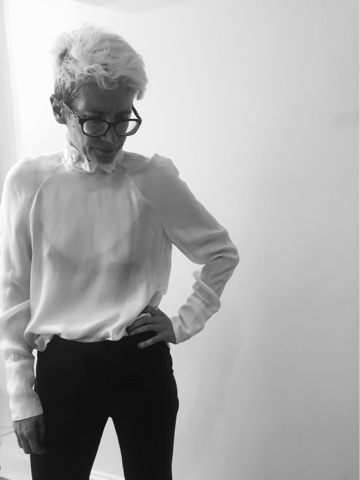
(Photo by Soumountha Keophilavong)
A few months ago I stepped my foot inside Bergdorf Goodman's for the first time. You know the mythology surrounding it: a legendary luxury department store, spanning a whole 5th Avenue block and gazillion floors (or so it seems), that carries every conceivable designer and bag and shoe, and is also home of the inimitable Betty Halbreich whom I adore for her books and for stealing that Scatter My Ashes at Bergdorf flick. It is the most luxurious, excuisite, discerning and just the mostest of all department stores. Its clientelle is also the richest, most sophisticated, hardest to cater to... I was curious to see it in the flesh.
Can you guess? It was disappointing. Too many people, the overall department store atmosphere, owing no doubt to prominent perfume counters, and racks and racks of dresses (expensive dresses, mind, stuffed almost obscenely on a sales rack!)... Add to this indifferent salespeople, and it all amounted to "THIS is what luxury is?" sense. But of course it is not.
We live in the age of this ultimate oxymoron, mass market luxury, where every airport in the world has a Louis Vuitton store as if it were McDonald's, and where every Chanel/Dior/Saint Laurent boutique looks the same no matter where in the world you are. The experience is homogenized in the very opposition to the notion of luxury as something special, unique, something that is just for you - custom, bespoke, made to measure and to order. BG may be better than most department stores because there is only one of it, but the insides of it are as homogenous as elsewhere.
Of course, the truly rich are taken into some secret compartment of the store where they are waited on by personal shoppers and are offered complimentary champagne. But for the rest of us, BG offers only an illusion of luxury. Department stores are to luxury what heavily logoed Vuitton wallets are to wealth: a hollow symbol that functions only because of its mystique propped by advertizing. Brands that once signified quality now only signify themselves.
I suspect that nowadays the experience of true luxury - that is, attentive service, personalized help, custom goods, and above all quality - can be found by regular people but not at the self-designated luxury brands and stores. It exists in smaller spaces - boutiques, online stores, Etsy even - and it is not called "luxury". But the experience of finding true quality, in clothes as well as service, is what luxury is, really - and I thank all the smaller brands and designers who answer my emails and invite me to their spaces. I thank all salespeople in the stores I frequent who email me to let me know when something I might like comes in or give me heads up for new collections or sample sales. And I am happy to pay a bit more for this, and I would much rather do it there than at some mass luxury designation where unless you are super rich you will get a distinct experience of shopping at Macy's but the one you can only afford a scarf and maybe some perfume, which Target also carries.
That was a long lead in to a shout out to such a place - Another Garde, a cool online space founded and helmed by the amazing Soumountha Keophilavong. It seems like the past few months have been so generous in letting me meet great women who are clever, passionate, and committed to making a difference in the fashion world. I met Soumountha last week, and really enjoyed hearing about her philosophy of promoting and supporting women designers, as well as getting to ogle her very tightly curated selection of beautiful and functional clothing.
Here are some pictures from Another Garde's pop up in NYC:


August 10, 2016
Zero Waste Fashion and NYC Shopping
(Disclaimer: Reusing old clothing and upcycling are environmentally friendly and decrease waste and consumption, but here I am more interested in discussing impact of NEW clothing.)
"Ethical fashion" and "sustainable fashion" have become common notions, although often conversations about the future of fashion don't bother differentiating between, or defining the two. Definitions do tend to evolve and shift meanings with the times, but it is useful occasionally to talk about them. Currently it seems "ethical" definitions focus mostly on labor justice issues, such as fair pay for the workers and factory safety, while "sustainable" deals with environmental impacts of textile manufacturing, pesticide and fertilizer use, pollution, waste, and fuel comsumption. One can also argue that "sustainable" should really be subsumed in "ethical", since environmental protection is an issue of ethics.
In my last post I wrote about Greenpeace and its definition of green manufacturing so narrowly focused on avoiding toxic chemicals as to be completely meaningless; on the other end of the spectrum, others tend toward very broad views, setting the bar high enough to include both fair labor practices and minimal environmental impact. Not impossible but challenging, and of course costs will go up. Textiles sourced from sustainable operations and made in mills that pay fair wages, local production, fair labor practices for pattern-makers, cutters, sewers... It adds up. Throw in distribution, warehousing etc etc and the price differential between fast fashion and ethical/sustainable becomes a real hurdle for consumers.
So it is always refreshing to see novel approaches. Zero-waste fashion, for one, focuses on minimizing textile waste, and Tabii Just (by Trinidad-born designer Tabitha St Bernard) takes this concept even further, cutting her garments without leaving any scraps AND using deadstock fabrics, further minimizing impact (and keeping the cost at a low end of the soectrum). Everything is manufactured in NYC, ticking off boxes of fair wages and minimal fossil fuel consumption.
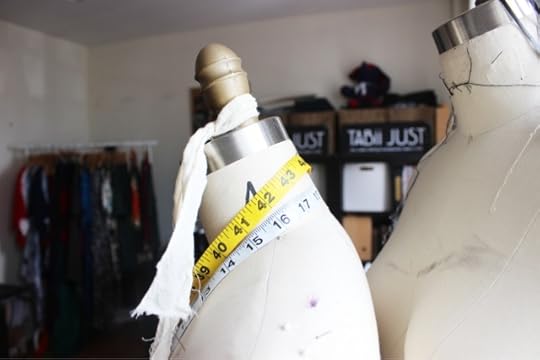
Of course I had to visit! Tabitha was kind and thoughtful, and generous enough to share some professional pictures of her studio. It's a beautiful space filled with gorgeous clothes, and I appreciated Tabitha showing me around!
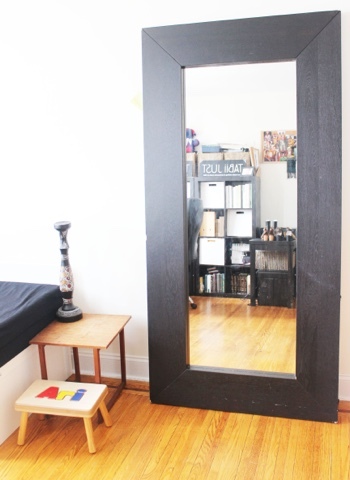
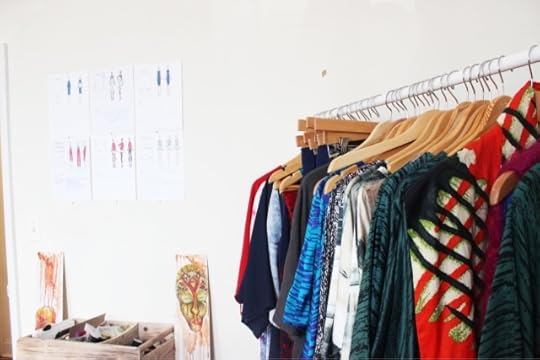
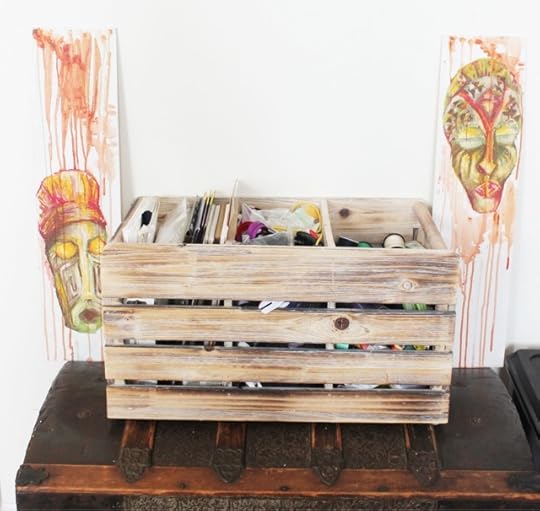
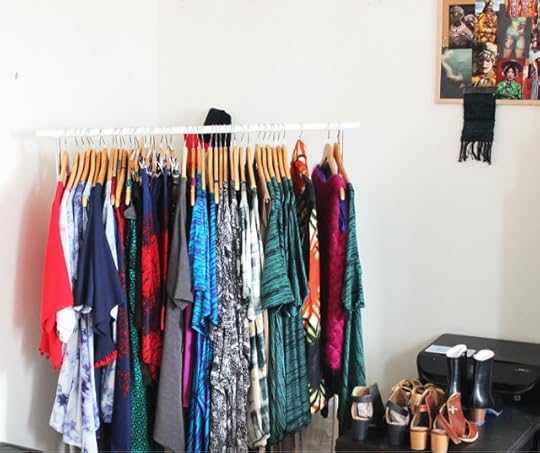
Her pieces are mostly dresses, with a few tops and skirts and vests, most of them patterned in bright colors.
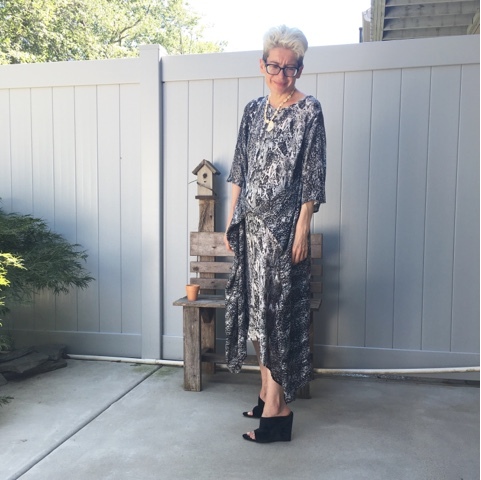
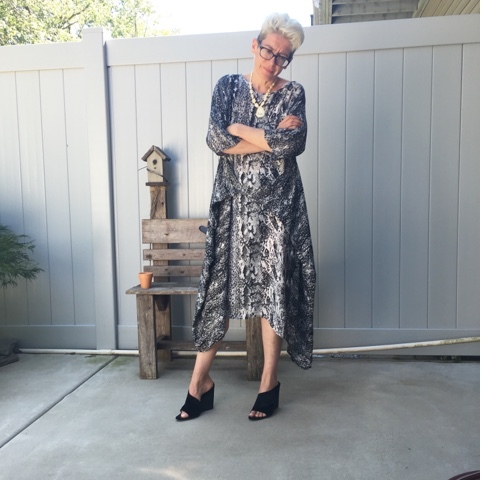
If you know me at all, you can guess I opted for black and white. It's a print (I know, so adventurous of me) - a lovely snake print, worn here with Alexander Wang mules from a few years back, and a family heirloom bone necklace.
I strongly suggest listening to Tabitha and a few other zero-waste designers on American Fashion Podcast - fascinating conversation.
Personally, I feel that a stumbling block to much of ethical consumption is the unfortunate tendency to put onus on the consumers - having them learn about each clothing brand, research their supply chain, etc etc. This is not a reasonable expectation: I feel that the responsibility should lie with the manufacturers and lawmakers, so that we can go to a store, pick up a pair of shoes and be readonably certain that no children were exploited in their making. Until the day comes, we often resort to shortcuts: rather than performing exhaustive research on each product, we have our criteria. For me, domestically made product suggests 1) fair labor practices, especially if made in NYC; 2) low fuel consumption; 3) compliance with the US environmental regulations, which are not perfect but are at least somewhat enforced. European- made textiles do have a higher fuel component but are manufactured under stricter environmental controls, so it's an all right trade-off.
Anyway! It is nice to find small-scale designers who manufacture in the US; even better to find a bunch of them brought together in a cool retail space. I found such in Coterre, a great little pop-up in SoHo.
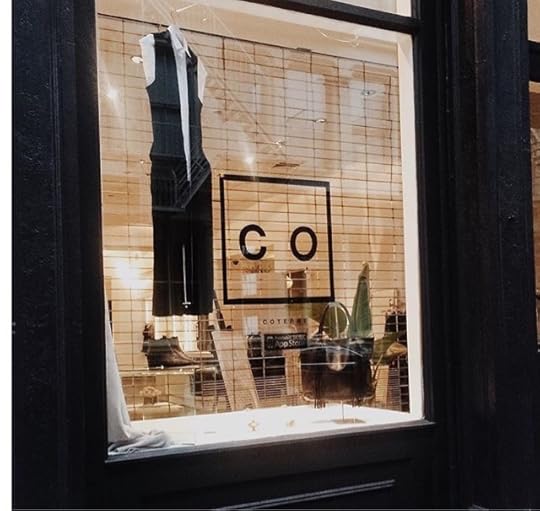
They carry my favorite SCHAI, as well as a few other smallish indie domestically manufactured labels. Of course I had to stop by and try on a few things!
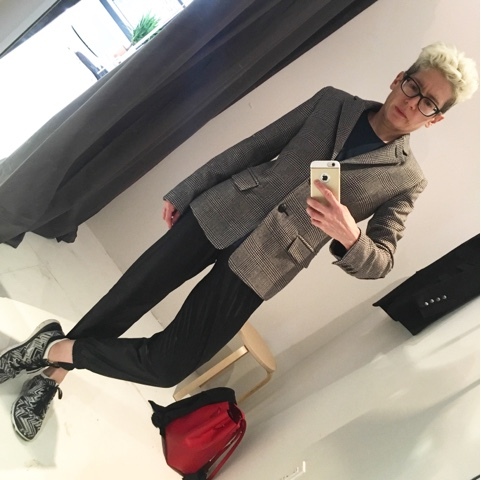
Meet my new blazer, made by Alchemy Detroit. Love the tailoring of their pieces, and their t-shirts are the softest I ever touched. (The pants are by ADAY, and yes, I am coming from the gym.)
There is also jewelry, shoes, cosmetics... And what I found really thrilling while browsing and chatting with Hilary, the woman behind the project, was that I did not have to constantly wonder where and how everything was made. I hope that soon enough it will be the norm: walking into the store and assuming that everything in it was made ethically. Or at least that no one died as a result of making of our clothes - and really, this is not too much to ask!
"Ethical fashion" and "sustainable fashion" have become common notions, although often conversations about the future of fashion don't bother differentiating between, or defining the two. Definitions do tend to evolve and shift meanings with the times, but it is useful occasionally to talk about them. Currently it seems "ethical" definitions focus mostly on labor justice issues, such as fair pay for the workers and factory safety, while "sustainable" deals with environmental impacts of textile manufacturing, pesticide and fertilizer use, pollution, waste, and fuel comsumption. One can also argue that "sustainable" should really be subsumed in "ethical", since environmental protection is an issue of ethics.
In my last post I wrote about Greenpeace and its definition of green manufacturing so narrowly focused on avoiding toxic chemicals as to be completely meaningless; on the other end of the spectrum, others tend toward very broad views, setting the bar high enough to include both fair labor practices and minimal environmental impact. Not impossible but challenging, and of course costs will go up. Textiles sourced from sustainable operations and made in mills that pay fair wages, local production, fair labor practices for pattern-makers, cutters, sewers... It adds up. Throw in distribution, warehousing etc etc and the price differential between fast fashion and ethical/sustainable becomes a real hurdle for consumers.
So it is always refreshing to see novel approaches. Zero-waste fashion, for one, focuses on minimizing textile waste, and Tabii Just (by Trinidad-born designer Tabitha St Bernard) takes this concept even further, cutting her garments without leaving any scraps AND using deadstock fabrics, further minimizing impact (and keeping the cost at a low end of the soectrum). Everything is manufactured in NYC, ticking off boxes of fair wages and minimal fossil fuel consumption.
Of course I had to visit! Tabitha was kind and thoughtful, and generous enough to share some professional pictures of her studio. It's a beautiful space filled with gorgeous clothes, and I appreciated Tabitha showing me around!


Her pieces are mostly dresses, with a few tops and skirts and vests, most of them patterned in bright colors.


If you know me at all, you can guess I opted for black and white. It's a print (I know, so adventurous of me) - a lovely snake print, worn here with Alexander Wang mules from a few years back, and a family heirloom bone necklace.


I strongly suggest listening to Tabitha and a few other zero-waste designers on American Fashion Podcast - fascinating conversation.
Personally, I feel that a stumbling block to much of ethical consumption is the unfortunate tendency to put onus on the consumers - having them learn about each clothing brand, research their supply chain, etc etc. This is not a reasonable expectation: I feel that the responsibility should lie with the manufacturers and lawmakers, so that we can go to a store, pick up a pair of shoes and be readonably certain that no children were exploited in their making. Until the day comes, we often resort to shortcuts: rather than performing exhaustive research on each product, we have our criteria. For me, domestically made product suggests 1) fair labor practices, especially if made in NYC; 2) low fuel consumption; 3) compliance with the US environmental regulations, which are not perfect but are at least somewhat enforced. European- made textiles do have a higher fuel component but are manufactured under stricter environmental controls, so it's an all right trade-off.
Anyway! It is nice to find small-scale designers who manufacture in the US; even better to find a bunch of them brought together in a cool retail space. I found such in Coterre, a great little pop-up in SoHo.

They carry my favorite SCHAI, as well as a few other smallish indie domestically manufactured labels. Of course I had to stop by and try on a few things!

Meet my new blazer, made by Alchemy Detroit. Love the tailoring of their pieces, and their t-shirts are the softest I ever touched. (The pants are by ADAY, and yes, I am coming from the gym.)
There is also jewelry, shoes, cosmetics... And what I found really thrilling while browsing and chatting with Hilary, the woman behind the project, was that I did not have to constantly wonder where and how everything was made. I hope that soon enough it will be the norm: walking into the store and assuming that everything in it was made ethically. Or at least that no one died as a result of making of our clothes - and really, this is not too much to ask!
July 31, 2016
Made in New York, or Go Home, Greenpeace, You're Drunk
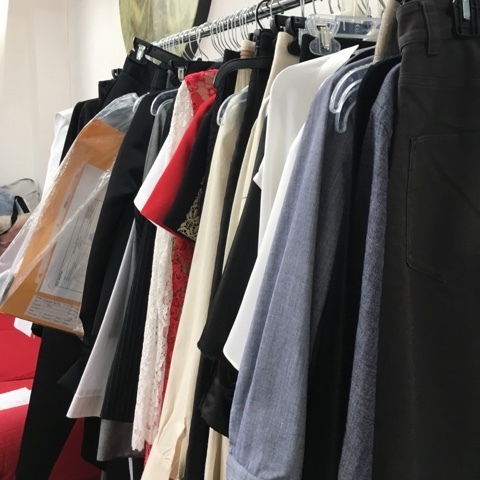
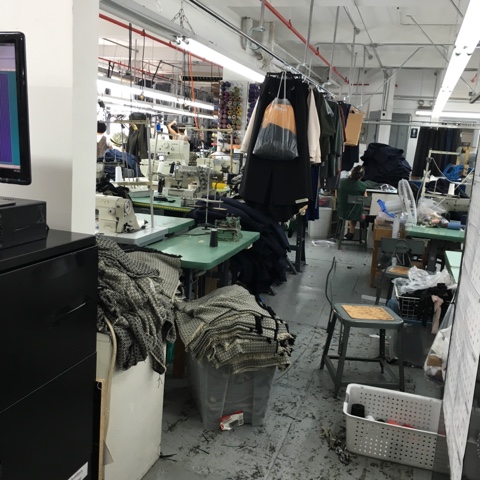
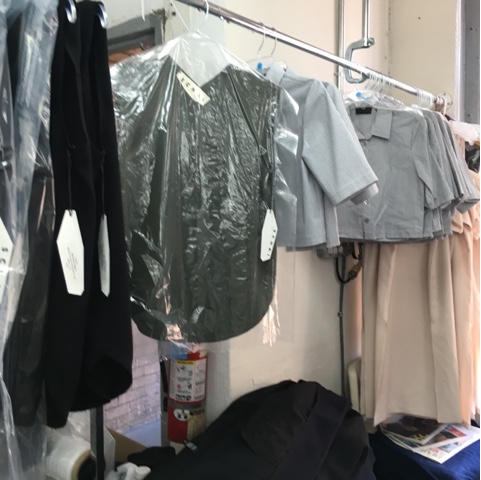
For the first time ever, I got to visit an honest-to-goodness New York City garment factory! With all the talking and teaching about garment industry that I do, it was long overdue.
The factory, Johnny's Studio, manufactures clothing for SCHAI, among others, and it is thanks to SCHAI's founder and designer, Suk Chai, that I got to visit. And to meet Suk, who is smart and funny and gracious, and took time to show me around.
It was amazing to see this vibrant life, mere remnant of the volume of 1950s and 1960s, but so much is the same: the skill and the energy, and the industry that still seems to function (although on a smaller scale) as an engine for getting immigrant workers to middle class and business ownership. The garmentos of yore, the Italian and Jewish workforce of the early days, seem to have been supplanted by Asian and Latinx/Hispanic owners and workers, but the vibe is still there! (Has anyone read The Beatiful Generation by Thuy Linh Nguyen Tu, by the way? It's great, and talks at length about the link between Asian-American fashion designers and Asian workers in the garment industry. Anyway, I babble).
Here are some pics!
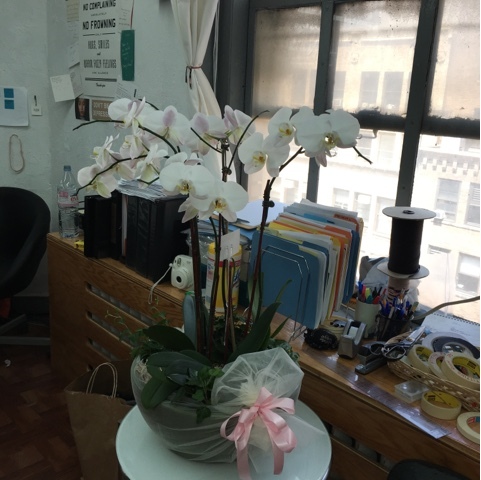


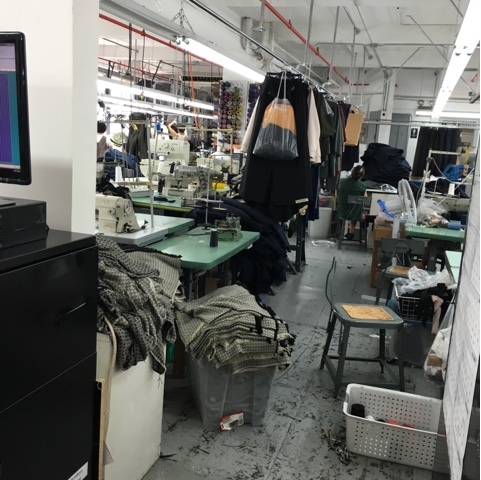
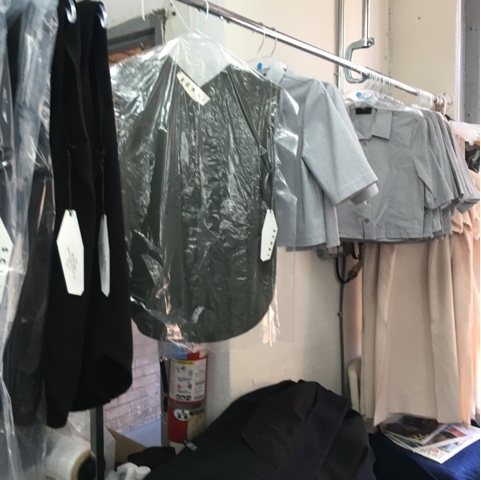
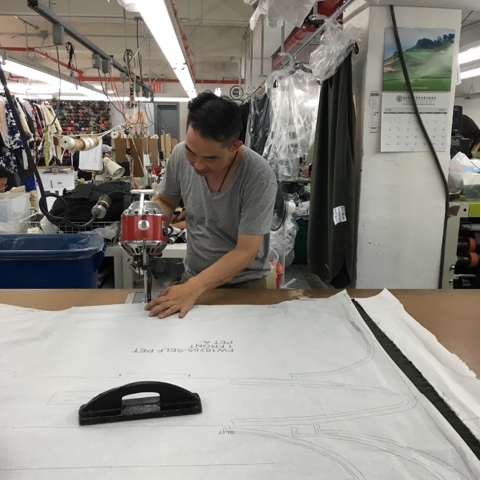 (I was told Ken here was cutting my dress!)
Here's a snapshot of a few of SCHAI's Fall looks, by the way. As you probably guessed, it's yet another obsession.
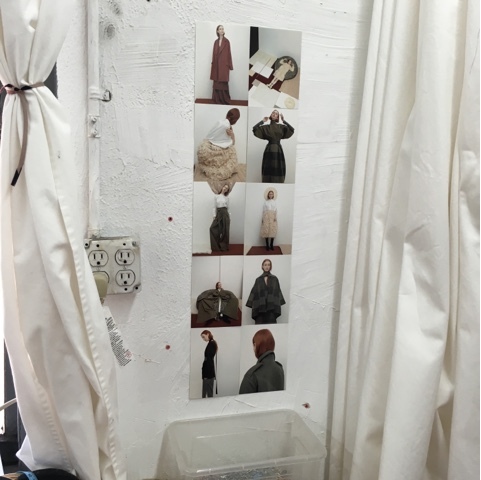
I mean, look at these pants!

As you can guess, I love this label not just because of the tailoring and luxe drape of the textiles, but also because it is domestically made, uses well-sourced, high quality fabrics, and doesn't cut any manufacturing corners. The price point of course reflects this ethos. Which is just another way of saying this: there is no way on earth to make cheap garments sustainable. Of course higher price alone does not guarantee sustainability (in fact, many well-known brands' pricetags reflect little but name recognition), but the opposite is certainly true: a ten dollar dress is inherently problematic. Not only because of the impossibility of paying living wages and buying decent materials with that kind of retail, but also because cheap clothes are disposable, and they will be choking our landfills with their poly blends for centuries to come.
And this is why this Greenpeace -authored rundown is especially puzzling. The criteria are so ridiculously narrow as to completely ignore the irreducible reality of how clothes, physical garments, affect the environment in many complex and intertwining ways, and of which toxic compounds are only one part. H&M and other fast-fashion retailers are a problem, and will continue to be so as long as they continue the current volume of production at current prices, no matter how many toxic chemicals they ban.
The factory, Johnny's Studio, manufactures clothing for SCHAI, among others, and it is thanks to SCHAI's founder and designer, Suk Chai, that I got to visit. And to meet Suk, who is smart and funny and gracious, and took time to show me around.
It was amazing to see this vibrant life, mere remnant of the volume of 1950s and 1960s, but so much is the same: the skill and the energy, and the industry that still seems to function (although on a smaller scale) as an engine for getting immigrant workers to middle class and business ownership. The garmentos of yore, the Italian and Jewish workforce of the early days, seem to have been supplanted by Asian and Latinx/Hispanic owners and workers, but the vibe is still there! (Has anyone read The Beatiful Generation by Thuy Linh Nguyen Tu, by the way? It's great, and talks at length about the link between Asian-American fashion designers and Asian workers in the garment industry. Anyway, I babble).
Here are some pics!

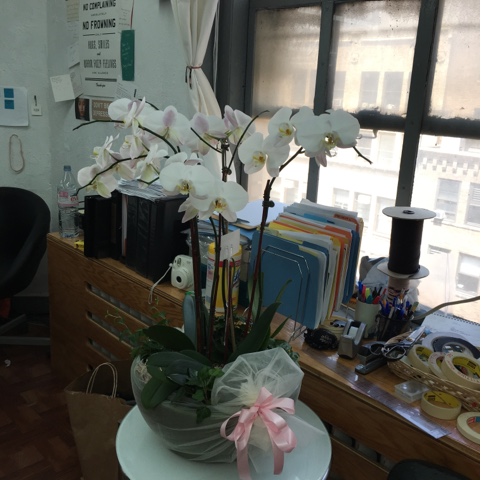
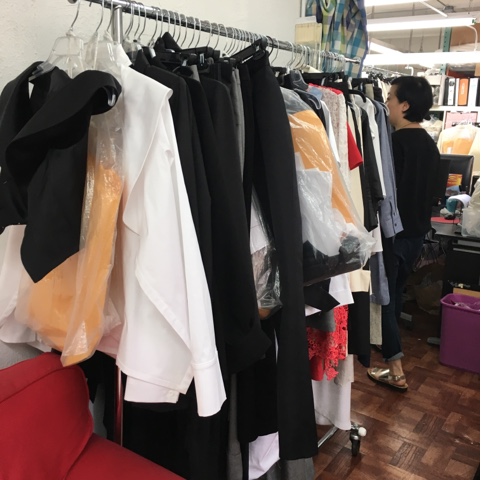
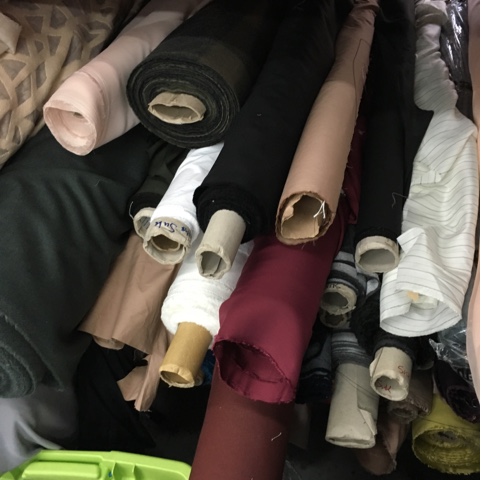
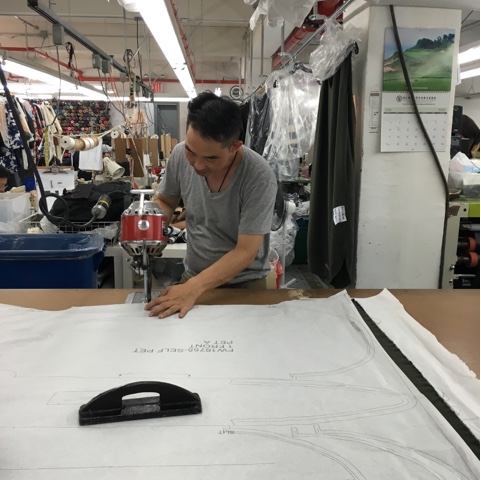 (I was told Ken here was cutting my dress!)
Here's a snapshot of a few of SCHAI's Fall looks, by the way. As you probably guessed, it's yet another obsession.
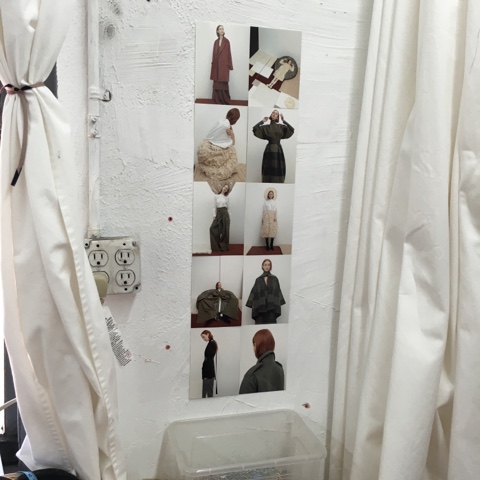
I mean, look at these pants!

As you can guess, I love this label not just because of the tailoring and luxe drape of the textiles, but also because it is domestically made, uses well-sourced, high quality fabrics, and doesn't cut any manufacturing corners. The price point of course reflects this ethos. Which is just another way of saying this: there is no way on earth to make cheap garments sustainable. Of course higher price alone does not guarantee sustainability (in fact, many well-known brands' pricetags reflect little but name recognition), but the opposite is certainly true: a ten dollar dress is inherently problematic. Not only because of the impossibility of paying living wages and buying decent materials with that kind of retail, but also because cheap clothes are disposable, and they will be choking our landfills with their poly blends for centuries to come.
And this is why this Greenpeace -authored rundown is especially puzzling. The criteria are so ridiculously narrow as to completely ignore the irreducible reality of how clothes, physical garments, affect the environment in many complex and intertwining ways, and of which toxic compounds are only one part. H&M and other fast-fashion retailers are a problem, and will continue to be so as long as they continue the current volume of production at current prices, no matter how many toxic chemicals they ban.
Made in New York, or Go Home, Greenpeace, You're Drunk
For the first time ever, I got to visit an honest-to-goodness New York City garment factory! With all the talking and teaching about garment industry that I do, it was long overdue.
The factory, Johnny's Studio, manufactures clothing for SCHAI, among others, and it is thanks to SCHAI's founder and designer, Suk Chai, that I got to visit. And to meet Suk, who is smart and funny and gracious, and took time to show me around.
It was amazing to see this vibrant life, mere remnant of the volume of 1950s and 1960s, but so much is the same: the skill and the energy, and the industry that still seems to function (although on a smaller scale) as an engine for getting immigrant workers to middle class and business ownership. The garmentos of yore, the Italian and Jewish workforce of the early days, seem to have been supplanted by Asian and Latinx/Hispanic owners and workers, but the vibe is still there! (Has anyone read The Beatiful Generation by Thuy Linh Nguyen Tu, by the way? It's great, and talks at length about the link between Asian-American fashion designers and Asian workers in the garment industry. Anyway, I babble).
Here are some pics!
(I was told Ken here was cutting my dress!)
Here's a snapshot of a few of SCHAI's Fall looks, by the way. As you probably guessed, it's yet another obsession.
I mean, look at these pants!
As you can guess, I love this label not just because of the tailoring and luxe drape of the textiles, but also because it is domestically made, uses well-sourced, high quality fabrics, and doesn't cut any manufacturing corners. The price point of course reflects this ethos. Which is just another way of saying this: there is no way on earth to make cheap garments sustainable. Of course higher price alone does not guarantee sustainability (in fact, many well-known brands' pricetags reflect little but name recognition), but the opposite is certainly true: a ten dollar dress is inherently problematic. Not only because of the impossibility of paying living wages and buying decent materials with that kind of retail, but also because cheap clothes are disposable, and they will be choking our landfills with their poly blends for centuries to come.
And this is why this Greenpeace -authored rundown is especially puzzling. The criteria are so ridiculously narrow as to completely ignore the irreducible reality of how clothes, physical garments, affect the environment in many complex and intertwining ways, and of which toxic compounds are only one part. H&M and other fast-fashion retailers are a problem, and will continue to be so as long as they continue the current volume of production at current prices, no matter how many toxic chemicals they ban.
The factory, Johnny's Studio, manufactures clothing for SCHAI, among others, and it is thanks to SCHAI's founder and designer, Suk Chai, that I got to visit. And to meet Suk, who is smart and funny and gracious, and took time to show me around.
It was amazing to see this vibrant life, mere remnant of the volume of 1950s and 1960s, but so much is the same: the skill and the energy, and the industry that still seems to function (although on a smaller scale) as an engine for getting immigrant workers to middle class and business ownership. The garmentos of yore, the Italian and Jewish workforce of the early days, seem to have been supplanted by Asian and Latinx/Hispanic owners and workers, but the vibe is still there! (Has anyone read The Beatiful Generation by Thuy Linh Nguyen Tu, by the way? It's great, and talks at length about the link between Asian-American fashion designers and Asian workers in the garment industry. Anyway, I babble).
Here are some pics!
(I was told Ken here was cutting my dress!)Here's a snapshot of a few of SCHAI's Fall looks, by the way. As you probably guessed, it's yet another obsession.
I mean, look at these pants!
As you can guess, I love this label not just because of the tailoring and luxe drape of the textiles, but also because it is domestically made, uses well-sourced, high quality fabrics, and doesn't cut any manufacturing corners. The price point of course reflects this ethos. Which is just another way of saying this: there is no way on earth to make cheap garments sustainable. Of course higher price alone does not guarantee sustainability (in fact, many well-known brands' pricetags reflect little but name recognition), but the opposite is certainly true: a ten dollar dress is inherently problematic. Not only because of the impossibility of paying living wages and buying decent materials with that kind of retail, but also because cheap clothes are disposable, and they will be choking our landfills with their poly blends for centuries to come.
And this is why this Greenpeace -authored rundown is especially puzzling. The criteria are so ridiculously narrow as to completely ignore the irreducible reality of how clothes, physical garments, affect the environment in many complex and intertwining ways, and of which toxic compounds are only one part. H&M and other fast-fashion retailers are a problem, and will continue to be so as long as they continue the current volume of production at current prices, no matter how many toxic chemicals they ban.
May 5, 2016
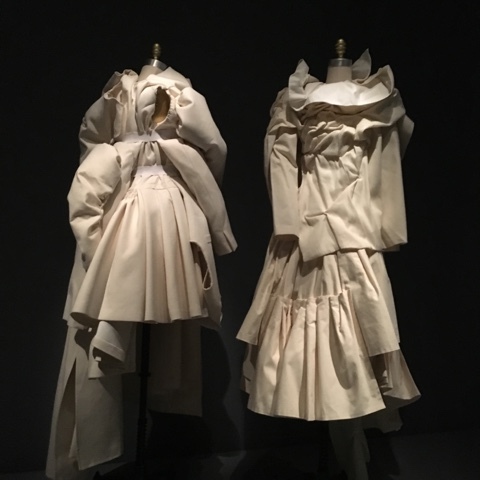
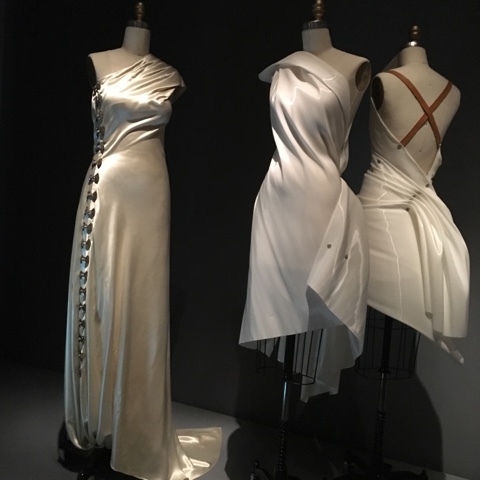
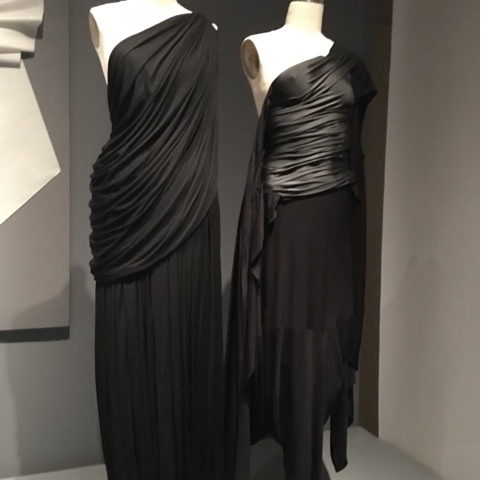
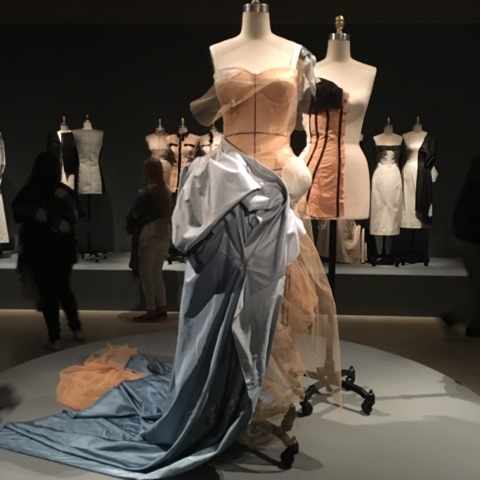
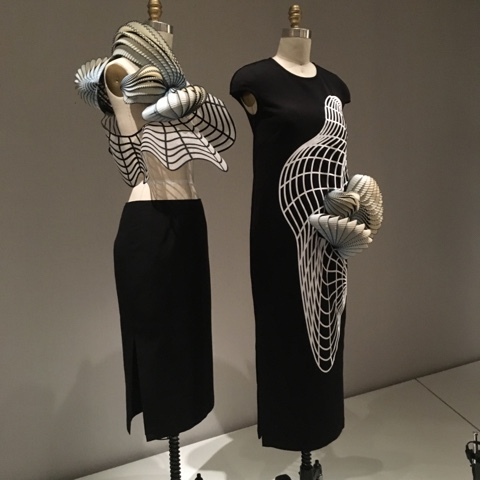
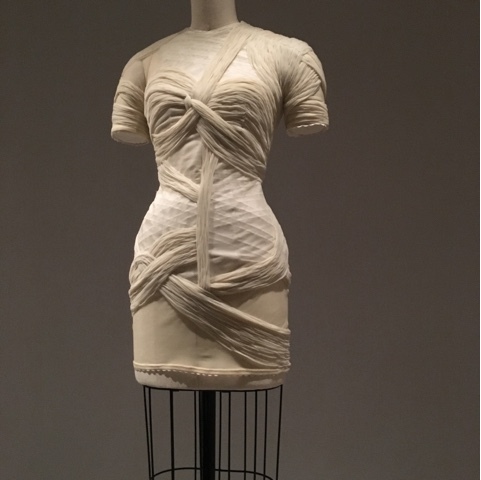
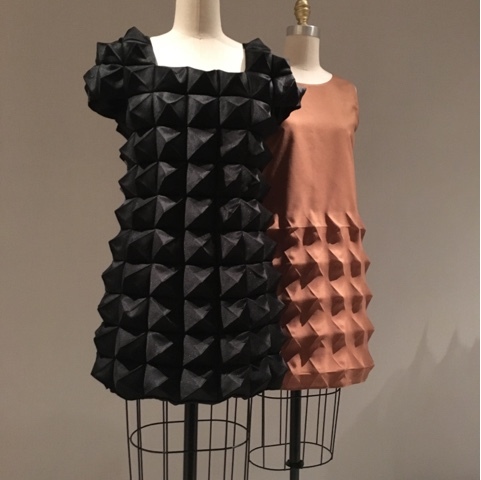
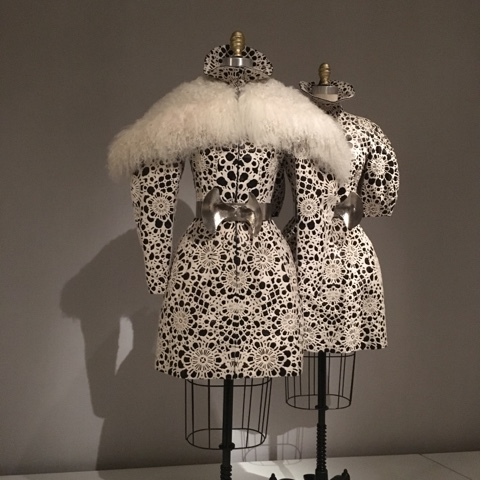
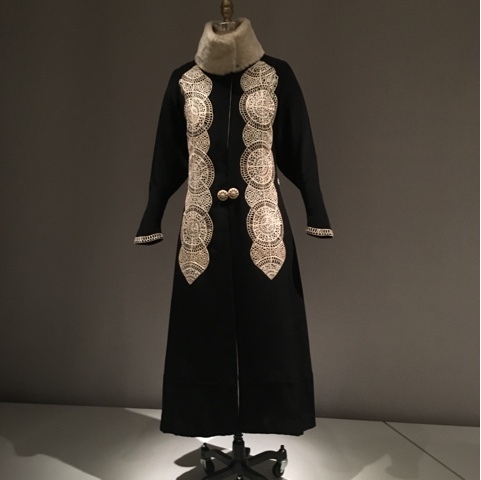
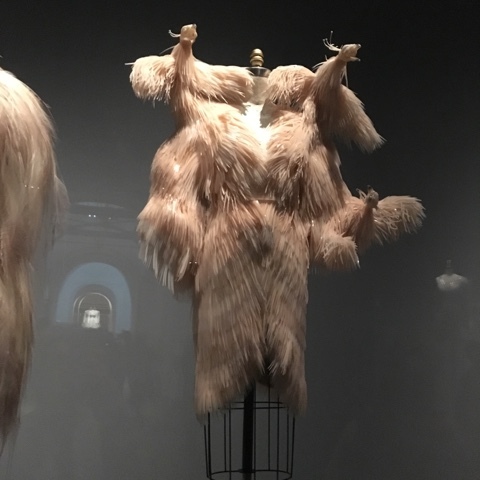
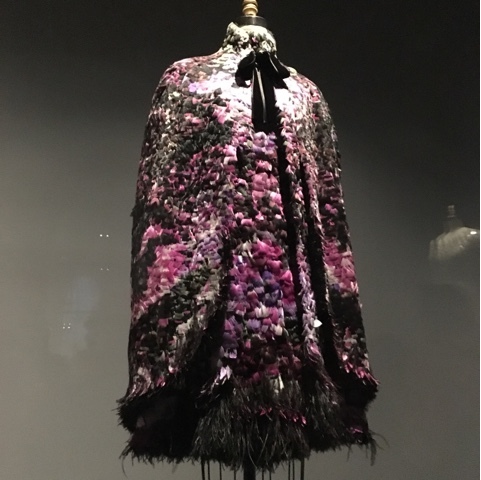
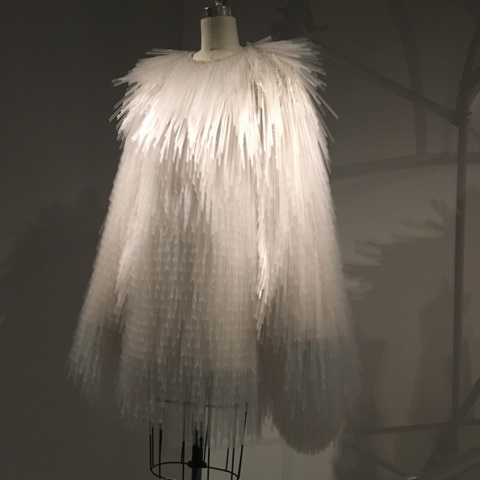
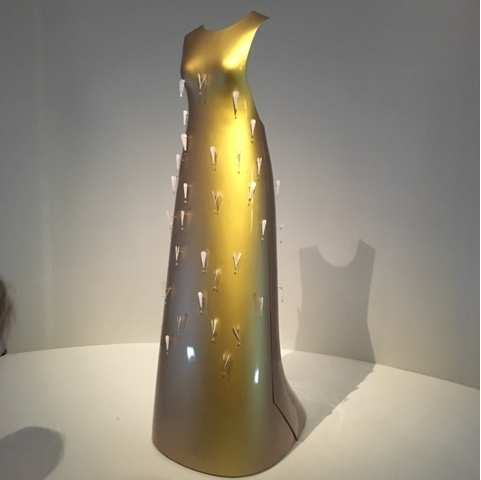
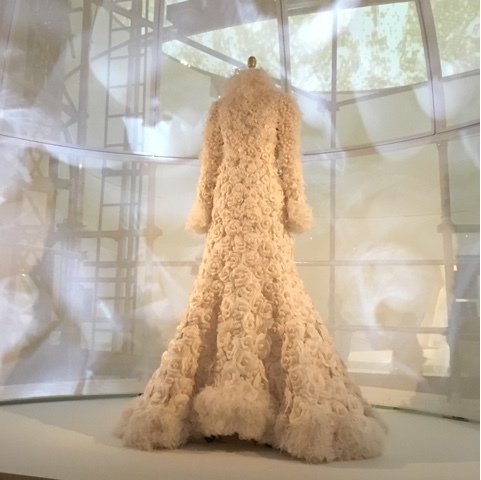
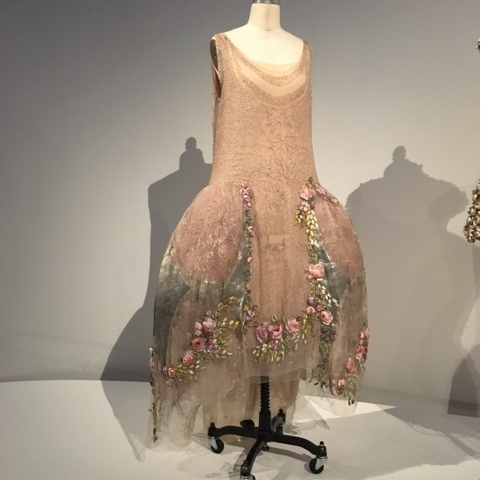
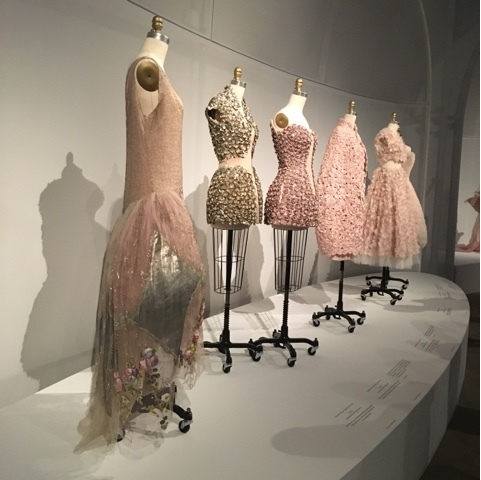
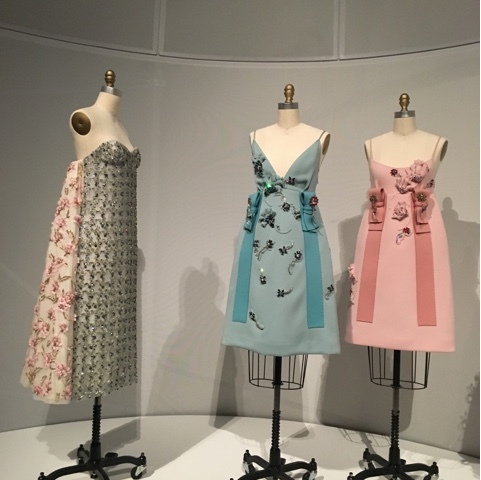
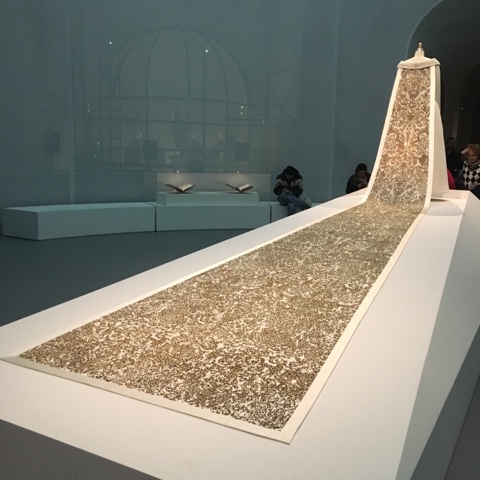
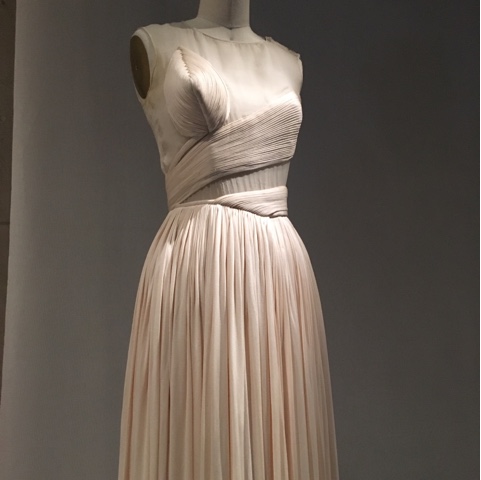
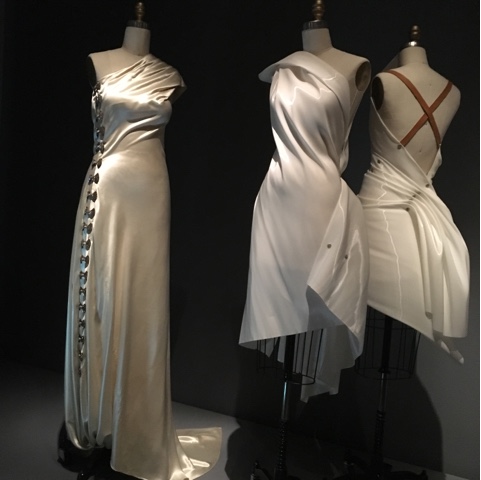
The Met Costume Institute, Manus X Machina Exhibit
Amazing! I could say a lot but instead here are some pictures!

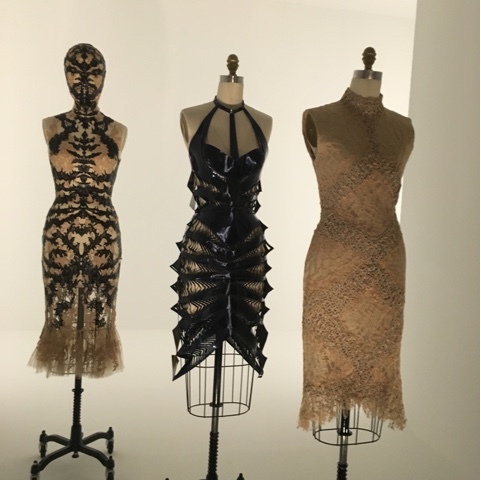

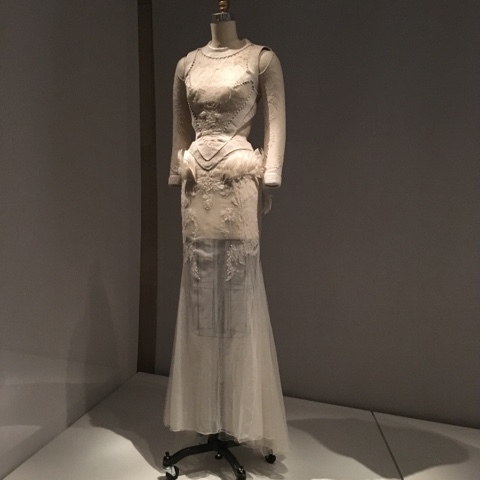
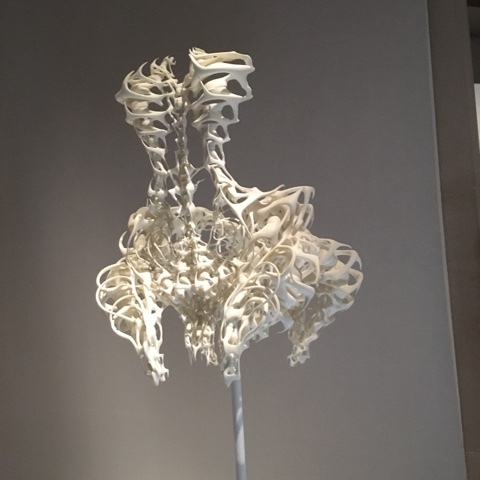
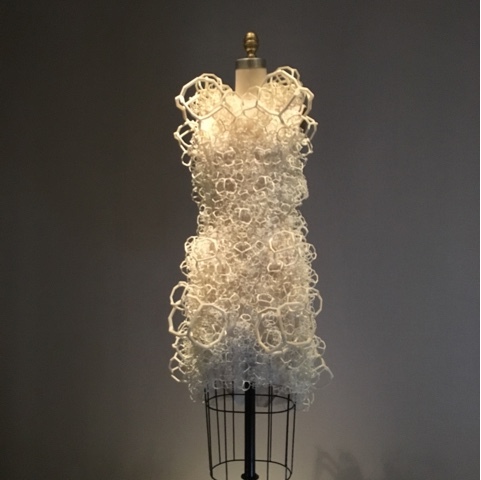
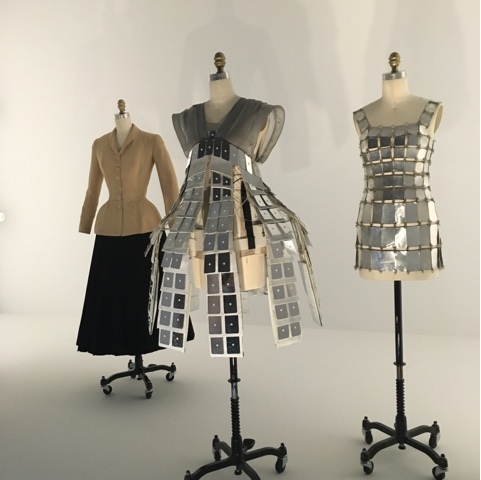
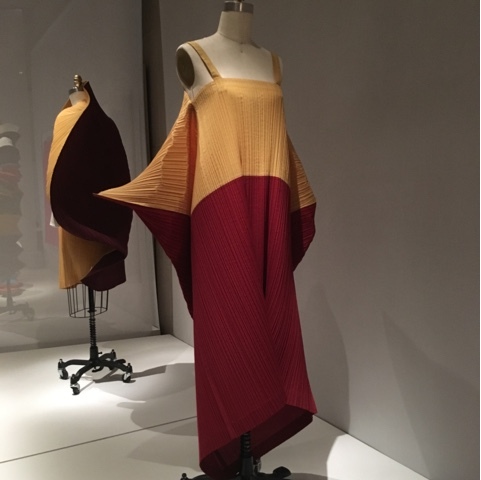
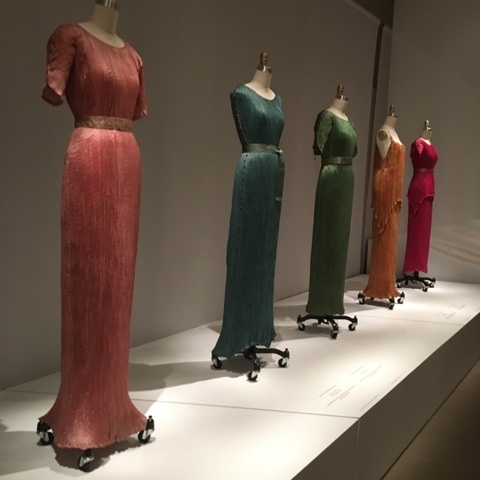
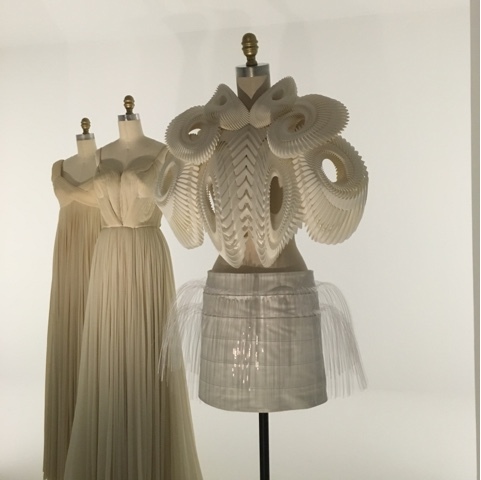











May 4, 2016
Versatility
 (Transferring frames from the nuc box to their forever home.)
This came out of a few talks with various people, but it seems to me that the new luxury nowadays is space -- as witnessed by high-end boutiques with a single rail and a few wispy garments hanging minimalistically on it. Having things is passe; having space isn't. And for one's wardrobe to be like this, pieces have to play many roles: and lately I find that I tend to wear the same things to work, going out, hanging on the weekends... everything but the gym! (If you see me and I am in sneakers and leggings, this means I am coming from the gym or going there. I have my principles.)
So this necessitates clothes that can be worn -- as much as I love intricate textures and delicate fabrics, I wear them to pieces, because in life things stain and snag; good quality clothing though gets ragged and worn in interesting ways, acquiring patina and character, rather than simply falling apart (one more reason to avoid cheap fast fashion, but enough on that.) So even my expensive stuff is worn everywhere... Including work. Mostly work, if I am being honest.
I rarely talk here about work because boundaries, but I just wanted to share a couple of pictures of me working in the apiary on campus. Last week, we were installing a new nuc (short for a nuclear colony, basically a quick and easy way to get a new hive going. A nuc contains a queen, worker bees, brood, and honey frames.)
Here's the frame with the queen. She is the big one with short wings in the middle:

And here's a somewhat better view of my outfit.

The pleated skirt is by Silvae, and the neoprene top is ADAY sample from their recent sample sale. The coat is my favorite INAISCE piece.
Incidentally, Jona Sees of Inaisce greatly influenced my view on what makes a versatile piece: his clothes do not look immediately easy to wear, with their precise cuts and elaborate designs, but trust me, they are. This sleeveless jacket is easily my most-worn piece: I wear it for work, on walks, on the plane (it unbuttons on the back and makes a great plane blanket). Warm weather jacket or winter layering piece - it works for everything, which is really cool considering that it looks like a really complicated and architectural piece.
Now I will only buy clothes I can tend to my hives in.... shoes, however, might be another matter altogether.
October 17, 2015
Bodily Geometries

It's an interesting thing, our relationship with our bodies; even this construction implies them as separate entities our cerebral selves have some uneasy and often tenuous discourse with. And yet of course we are corporeal - the reminder often unpleasant to academics. Is it why they are so often dismissive of fashion, because fashion is so obviously embodied, and thus stands in opposition of intellect and art? It is certainly not artful by the Kantian standards, for it is entirely too immediate, corporeal and female (Kant's aesthetics, on the other hand, sees art as exclusively cerebral, appreciated only by remote senses of vision and hearing, and unambiguously male.) So contempt for fashion, often couched in language of triviality of such pursuits, seem to stem more often than not from the contempt for the feminine and the embodied, illustrating how entwined the two are to this day in collective psyche.So anyway, bodies. I wrote before about how we present, highlight, conceal our bodies through dress; I wrote about flattering and not-sexy dressing. But I don't think I ever talked about my perceptions of my own body and how the idea of it shapes much of what I wear and how I wear it.However, first things first: another designer I recently fell in love with is Lara Khoury who hails from Beirut, Lebanon. Her latest collection is beautiful, softly draped with an occasional punctuation of deconstructed elements and structured shapes. The collection speaks to and of a multitude of experiences - softness and rawness, immigration and staying behind, severity and excess. The pleated dresses juxtaposed against heavy coats, wide woolen pants next to tulle, the plurality of shapes and hemlines. High necks and exposed backs, sweeping and draping, this collection is about cleaving, in both senses of the world: the designer's description speaks of the experiences of the Lebanese diaspora and their families who stayed behind, of tearing away and hugging close. The collection miraculously hangs together (cleaving again) despite its seeming contradictions of pastels and stark black and whites, modest necklines and exposed skin. Leaving and staying, torn raw and sealed in a beautiful lantern of pleated tulle.As I said, in love. Contrary to my instinct, I didn't go for the structured pieces - partly because I wanted to try something new, partly due to my realization that I might have more than a reasonable number of sculpted white tops. Instead, I went for a different shape altogether, softly draped and voluminous.

The piece is beautifully made and constructed, in cotton gauze with subtly arresting unraveling edges and interesting shape. And yet, my first reaction was, "Is it supposed to fit like this?" (The designer was kind enough to reassure me that it was indeed the right fit).

I am no stranger to oversized fits. Figure flattery is not high on the list of my dressing priorities. The top is gorgeous and I love it to bits, but seeing it on myself was an interesting if unfamiliar experience. It felt different somehow. I had to wonder what's going on.

Of course, most of my oversized pieces are quite sculptural, often in stiff woven fabrics like this Cin+Oko top and Litkovskaya pants:


(Shoes are rag&bone mules)
The volume these clothes create is a separate space in which my body exists without filling it.
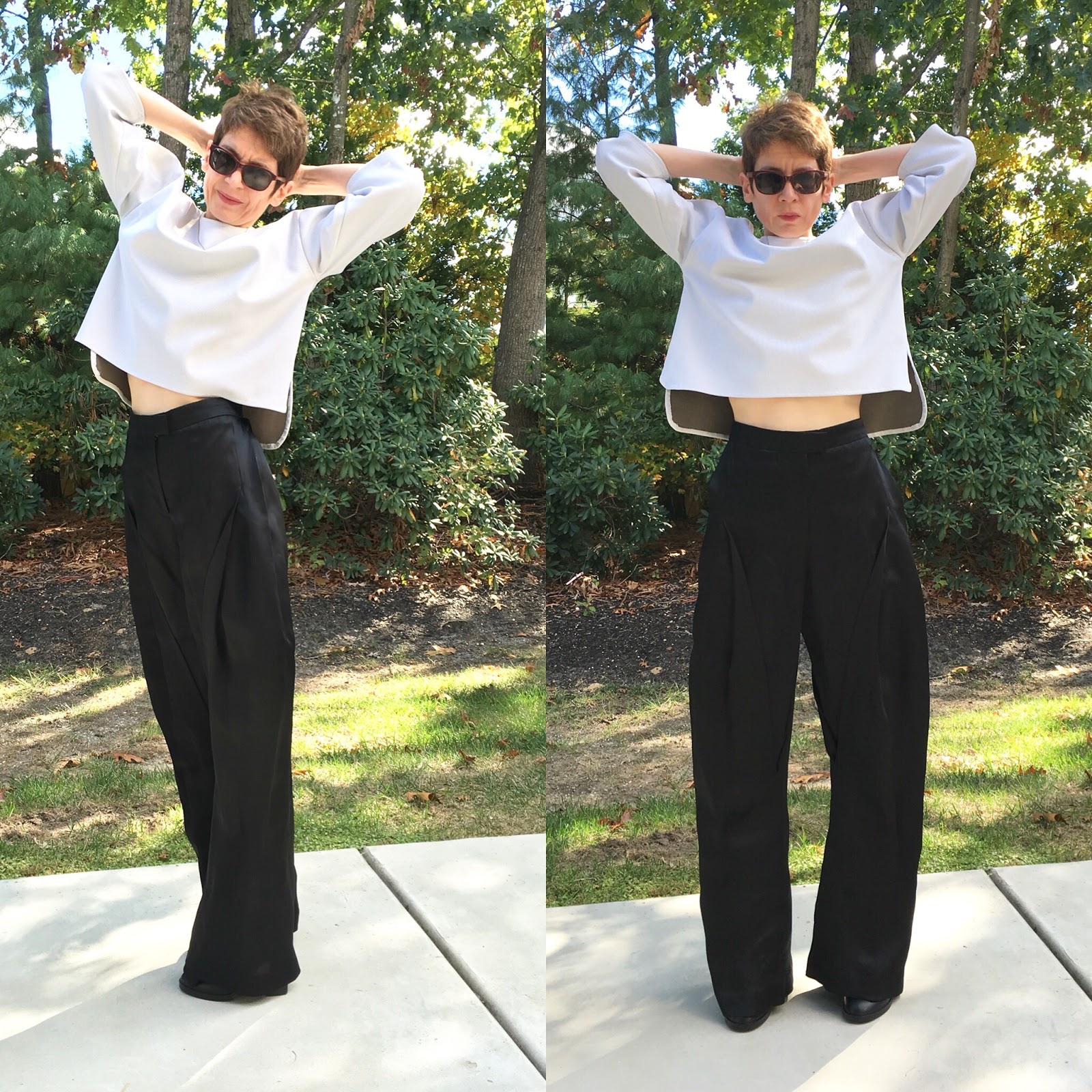
It is a carapace, an exoskeleton, a shell that does not suggest softness. And this angularity is actually what I am used to projecting by the way I dress, and I think it is rooted in self-perception. Conflating femininity and softness is a cliche; I do wonder about it though, only because I perceive my body as fairly sharp, fairly angular, with bone and muscle defining its shape to me rather than breasts or hips. In my self-image, I am never soft (even when I am). I can do slouchy as well:

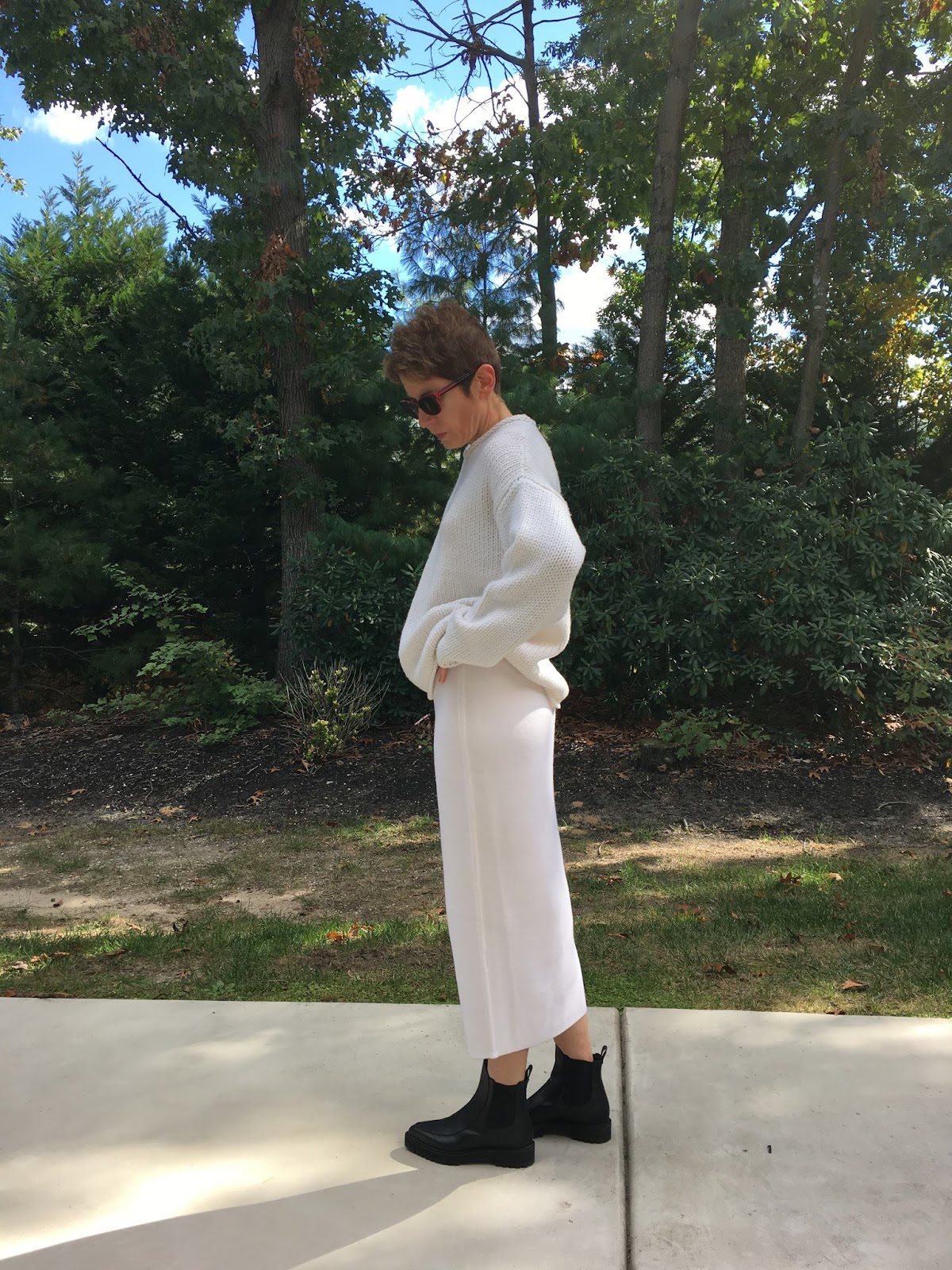

Even though this cashmere sweater by Protagonist is fairly soft, it has enough weight to create its own shape, with my body maintaining its separate distinct identity underneath. The skirt is a nice counterpoint in another substantial knit (merino wool, Iris&Ink). Proenza Schouler boots work here, I think, instead of more expected pumps. They feel more grounded against the shades of white, heavy and flat.

And finally, here's the Lara Khoury top: it is oversized and yet drapes close to my body, neither following its shape precisely as a tailored fit would nor making a shell for it. Instead, it imposes its softness over my contour, and I suspect that this is why it felt so alien at first.

(I'm wearing Lara Khoury blouse with Isabel Marant pants and Carin Wester shoes.)

I love it, and it does something different from my usual clothes. I wanted to try something new but didn't expect the novelty to be so conceptual, so dizzying at first. This single piece made me realize that even though I think of dressing in terms of silhouettes, I have failed to recognize the importance I've assigned to angularity and stiff shapes, basing my entire wardrobe on it. Even the strictly feminine pieces I wear tend to be sharp (such as high heels in the otherwise masculine look) rather than floppy and soft. But now I think I am ready to play a bit with softer versions of femininity.
Ekaterina Sedia's Blog

- Ekaterina Sedia's profile
- 185 followers
Ekaterina Sedia isn't a Goodreads Author
(yet),
but they
do have a blog,
so here are some recent posts imported from
their feed.

