Nancy Herman's Blog
October 14, 2018
The Carnival of the Animals--a Charming Fantasy Romp
You can find The Carnival of the Animals in paperback or ebook at Amazon, Barnes&Noble and other online retailers, or at your favorite independent bookstore.
Here is my review:
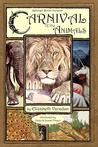 The Carnival of the Animals by Elizabeth Varadan
My rating: 5 of 5 stars
I sometimes have to remind myself that this beautifully written and highly imaginative book is primarily intended for young readers, because it is every bit as enticing to adult readers such as myself. Author Elizabeth Varadan has translated Camille Saint-Saëns' 1886 musical suite of the same name to a collection of original stories based around the animals highlighted in the French composer's enduring musical fantasy. There is Elroy, the lion who longs to escape the confines of a traveling circus to freedom in the shady Bouconne Forest; Nadine, the tortoise from Provence who is determined to teach herself to dance; Tulio, the Spanish burro who strives to mirror the noble deeds of Don Quixote, and Eldwin, the magic bird who seeks the true meaning of friendship, to name just a few.
The book begins and ends with Saint-Saëns himself—first imagining the musical fantasy he’ll compose for a small group of friends, and later conducting the finished suite in his Paris apartment, with magical results. If the reader isn't familiar with Saint-Saëns' suite (I wasn't), Varadan's The Carnival of the Animals also provides an ideal segue to classical music for readers of any age.
View all my reviews
Elizabeth Varadan
The Carnival of the Animals


May 4, 2017
Fact versus truth in historical fiction
Several years ago, an editor who reviewed my first draft of All We Left Behind remarked I seemed to have added a lot of material simply because it was factual. Well, of course! This was history, after all. I couldn’t fail to include a character or flesh out a scene that my research had uncovered. Could I?
Yes. It turns out I could. And many painful drafts later, after shedding beloved (but unnecessary) characters and real (but cluttery) events, I finally uncovered the story I’d been trying to write all along–the “true” story, according to my vision of the first-person protagonist, 13-year-old Virginia Reed.
When writing historical fiction, decisions have to be made.
For instance, Virginia’s father James killed another Donner Party member during a heated argument halfway through their ill-fated journey. That’s a fact, and many witnessed the event. Yet from that day in 1846 to this, people disagree on how the argument started and whether the killing was murder or self-defense. In other words, there are many truths. But since this was Virginia’s story, I chose her family’s truth–her father had been forced to defend himself.
Earlier books on the Donner Party describe the Reed family’s oversize, overweight wagon–partly, I think, a reflection of James Reed’s vanity and wealth. These books claim the family called it their “Pioneer Palace Car,” but in researching my own book I discovered it wasn’t really called this until many years later, when Virginia Reed wrote her memoirs. I dutifully took it out of my first draft. But in my next draft, I put it back in. Why? Because that short name described the Reed family’s vision of themselves better than several pages of description could ever have. It may not have been factual, but it couldn’t have been closer to truth.
One of the hardest cuts for an author to make is a character, especially a real person from the past you grow to love as you describe him, gave him dialogue, and weave him into important scenes–scenes you work for hours or days or more on. But this character, you realize at some point, is simply not necessary. And these particular scenes are dragging down the pace of your story-telling.
October 27, 2014
Why the best YA historical fiction appeals to “not young” adults
 Although I originally wrote All We Left Behind: Virginia Reed and the Donner Party for young readers studying U.S. Westward Migration, the book quickly crossed over to older adult readers who already knew–or thought they knew–the story of the Donner Party. Typical of the comments expressed by these adults: “I realized my knowledge of the event had more holes in it than a piece of Swiss cheese!” and “All We Left Behind filled in blanks I didn’t even know existed.”
I think the best historical fiction for young adults shares this phenomenon. One of my favorites in recent years, The Green Glass Sea, tells the World War II story of Dewey, a young girl who lived in Los Alamos, New Mexico during the secretive creation of the atomic bomb, code-named the “gadget.” Since I’d heard of “the city that didn’t officially exist” here and there through the years, I thought I knew the historical significance of Los Alamos. But Ellen Klages‘ well-researched and beautifully written story of Dewey’s daily struggle to build a normal life within the strange community of covert scientists, one of which is her own father, reveals the impact the secret project, in a race against the enemy, has on her and those around her. Once the scientists understand the power of the “gadget” they’ve created, the moral questions start flying, but by then it is too late.
As a “not young” adult reader, I found Dewey’s story to be a fascinating way to learn about this pivotal time in our history. Just like the quote above, Dewey’s story “filled in blanks I didn’t even know existed,” leading up to an event that changed our world forever.
Hattie Big Sky by Kirby Larsen, The Book Thief by Markus Zusak, and Between Shades of Gray by Ruta Sepetys are also works of YA historical fiction that have become popular with adult readers for the same reason. Each reveals surprisingly little-known and fascinating facts about a time, a place, or an event we thought we knew, but didn’t–and we learn right along with the young protagonists who are living out their stories.
Have you read historical fiction intended for young readers that you couldn’t put down? If so, please share the title, and tell us what it is about the book that kept you reading and engaged.
Why the best YA historical fiction appeals to “not so young” adults
 Although I originally wrote All We Left Behind: Virginia Reed and the Donner Party for young readers studying U.S. Westward Migration, the book quickly crossed over to older adult readers who already knew–or thought they knew–the story of the Donner Party. Typical of the comments expressed by these adults: “I realized my knowledge of the event had more holes in it than a piece of Swiss cheese!” and “All We Left Behind filled in blanks I didn’t even know existed.”
I think the best historical fiction for young adults shares this phenomenon. One of my favorites in recent years, The Green Glass Sea, tells the World War II story of Dewey, a young girl who lived in Los Alamos, New Mexico during the secretive creation of the atomic bomb, code-named the “gadget.” Since I’d heard of “the city that didn’t officially exist” here and there through the years, I thought I knew the historical significance of Los Alamos. But Ellen Klages‘ well-researched and beautifully written story of Dewey’s daily struggle to build a normal life within the strange community of covert scientists, one of which is her own father, reveals the impact the secret project, in a race against the enemy, has on her and those around her. Once the scientists understand the power of the “gadget” they’ve created, the moral questions start flying, but by then it is too late.
As a “not so young” adult reader, I found Dewey’s story to be a fascinating way to learn about this pivotal time in our history. Just like the quote above, Dewey’s story “filled in blanks I didn’t even know existed,” leading up to an event that changed our world forever.
Hattie Big Sky by Kirby Larsen, The Book Thief by Markus Zusak, and Between Shades of Gray by Ruta Sepetys are also works of YA historical fiction that have become popular with adult readers for the same reason. Each reveals surprisingly little-known and fascinating facts about a time, a place, or an event we thought we knew, but didn’t–and we learn right along with the young protagonists who are living out their stories.
Have you read historical fiction intended for young readers that you couldn’t put down? If so, please share the title, and tell us what it is about the book that kept you reading and engaged.
September 12, 2014
The Next Book on Your Reading List
Summer Reading Lists!
From mid-April on we saw them everywhere–in newspapers (NY Times), magazines (Oprah), and websites (GoodReads). No matter how much time we spent poolside, we only got to a tiny fraction of the books on those lists. The official last day of summer–September 21st–is closing in, but so many of those must-read murder mysteries, gripping historical tales, tried-and-true literary classics and of course, trashy-but-fun novels are still calling. For avid readers like us, the choices can be overwhelming.
So, how do you choose the next book on your reading list?
By author: It’s a fair bet if you fall in love with a beautifully written story, you’ll enjoy others by the same author. In the ’80s, after reading Anne Tyler’s Dinner at the Homesick Restaurant, I consecutively read as many of her books as I could get my hands on. Her eccentric yet endearing characters never disappointed me. In the ’90s, I found Jon Krakauer’s riveting non-fiction thriller Into Thin Air nearly impossible to put down, so it’s no surprise I snapped up his next book, the disquieting Into the Wild, as soon as it was published. And Ann Patchett’s 2001 novel Bel Canto, an all-time favorite, encouraged me to read her most recent and original novel yet, State of Wonder.
By genre: Mysteries, historical fiction, romance novels, crime stories, memoirs, fantasy, thrillers and science fiction–these are a few of the genres readers choose from, all with their own sub-genres. Many readers eventually settle into the few sub-genres they enjoy the most. But the writers’ groups and book clubs I’ve been a part of the past few years have encouraged (translate: required) me to read books I was sure wouldn’t interest me, such as dystopian science fiction, British royalty historical fiction, and the memoir of an irritatingly troubled young woman. Instead of boring me, these books opened new dimensions and touched me deeply. The books: Never Let Me Go by Kazuo Ishiguro, Wolf Hall by Hilary Mantel, and Wild: From Lost to Found on the Pacific Crest Trail by Cheryl Strayed. I may still need a nudge now and then to step out of my genre comfort zone, but it’s usually a step worth taking.
By title or cover design: You find yourself browsing a bookstore or library or website for your next book. Maybe you choose a section, like best-sellers or romance or history. Or maybe you look under a particular author’s name. But eventually, it’s the title or cover design that intrigues. A few years ago, I bought what turned out to be a permanent fixture in my bookcase, The Curious Incident of the Dog in the Night by Mark Haddon, based only on the mysterious title. And last month I was drawn into a surprisingly delightful romp, Kevin Kwan’s Crazy Rich Asians, by the enticing illustration of a bejeweled woman in oversized sunglasses.
By recommendation: Recommendations come from every direction–friends, book club members, book sellers and librarians–even casual conversations with strangers. And sometimes I think other readers are the best source of all, because again, I end up gaining valuable insights from books I never would have chosen on my own. I recently finished Josh Hanagarne’s newly-published The World’s Strongest Librarian: A Memoir of Tourette’s, Faith, Strength, and the Power of Family. It was recommended by a friend who is also a librarian, and I found it to be a warm, humorous, and inspiring read that I in turn recommended to others.
Now, if I could only decide what to read next…
What’s the next book on your reading list? How did you choose it, and why?
July 15, 2014
Why Read Historical Fiction?
WELCOME TO MY NEW BLOG! Although I’ll be writing about and reviewing historical fiction for all ages each month, I also plan to use this page to provide a forum for authors, as well as readers, of historical fiction.
Why do readers with no interest in textbook history read historical fiction? Some of my favorite childhood books, such as The Little Princess, which still sits on my bookshelf, The Cornhusk Doll, which is out of print (I’m still seeking a copy), and The Secret Garden would most likely be categorized as young readers’ historical fiction today. Heidi. Hitty. Little Women. These books took me to times and places I’d never been, but I didn’t think about that. I was too engrossed in the characters’ personal stories to realize my world view was expanding as I read.
What makes historical fiction work? Like most Californians, I grew up with only a vague knowledge of the Donner Party. I knew what they endured when trapped in the snowy Sierra during distant “pioneer times.” But in my early 20s I came across a book of poetry about the party members– their hopes and dreams, their confidence and mistakes, their misplaced trust, their courage and, in some cases, cowardice–and realized I’d never known their personal stories. Their stories snagged my heart and sparked my imagination. These were real people. Like me!
The book was The Donner Party by George Keithley. It expanded my world, and years later it was the inspiration for my historical novel about 13-year-old Virginia Reed, who matured into adulthood during the ill-fated journey. What makes historical fiction work? Whenever and wherever a novel is set, it is the characters’ stories–their hopes and fears, failures and triumphs, relationships and life-changing decisions–that bring that history to life for us.
What historical novel expanded your world view? Please share a little about a book you’ve read that, through the characters’ stories, stimulated your interest in historical times and events.