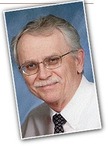
Timothy Bazzett's Blog: Booklover Bits & Pieces
January 12, 2015
Phil, Me and Everyman
I was at an 'in-between-books' impasse for a couple days, then picked up a book I'd found at a library sale last summer. The book is EVERYMAN, Philip Roth's 27th book, published in 2006. It's a grim little tome, with a black dust jacket, the one-word title framed by a thin red-line square, the author's name writ large in white block letters, and a black and white photo of a stern-faced Roth, arms crossed, on the back cover.
I only vaguely remember reading the original EVERYMAN - a 15th century morality play - or some version of it back in graduate school. Its Christian theme of life and death and a final accounting of ones deeds in life to determine whether one deserves salvation - heaven - or not seems an odd thing for Philip Roth to be writing about. I mean, he is Jewish, after all, and, judging from his writing, he puts little stock in any kind of an afterlife. So I was not surprised to find this story a pretty dark one. The unnamed protagonist - Everyman, I presume - is retired to the Jersey shore from a successful career in advertising. He has been a philanderer and hedonist, married and divorced three times, and now, at 71, finds himself alone and in declining health, having survived numerous heart surgeries, with six stents inserted, as well as a defibrillator, and faces more of the same on the immediate horizon. His two sons from the first marriage have little to do with him. His daughter, from the second, is devoted to him, but, divorced with young twins, has problems of her own.
Everyman, alone and sometimes agitated and afraid, reflects back on his life, summing up his many mistakes. He wonders how he's ended up this way, and how it's all gone by so quickly, still mourning the loss of his beloved parents, as well as his own youth and virility.
I don't know if EVERYMAN was a bestseller, but I strongly suspect it would not have been a popular choice for book club discussions among the elderly. It's just too damn dark, too starkly honest about the winding down of life, too sad. But I love the writing of Philip Roth. I'm frustrated too that I've not managed to keep up with his prodigious output. (I felt the same way about Updike's stuff.) The first Roth book I read was PORTNOY'S COMPLAINT, which, at 25, I found howlingly funny. My first year of teaching, I even used it in a literature class, and this was in a pretty conservative, solidly blue-collar sort of community. What was I thinking? I still wonder, over forty years later, how it was that I was never summoned to the Department Chair's office over a complaint from an outraged parent. Nope. Never happened. But I do remember it was kinda hard to get a good class discussion going about Alex Portnoy.
After PORTNOY I went on to read several of Roth's other early books. One of them, LETTING GO, remains a special favorite. Of his later books, I loved AMERICAN PASTORAL and THE HUMAN STAIN.
But this book, EVERYMAN, despite its dark theme, touched me with its truths. I nodded in agreement when I read the following passage, about a trip Everyman makes to the beach community where he spent summers with his parents and brother. He has lost interest in his painting and doesn't know what to do with his time.
"... it was still his beach and at the center of the circles in which his mind revolved when he remembered the best of boyhood. But how much time could a man spend remembering the best of boyhood? What about enjoying the best of old age? Or was the best of old age just that - the longing for the best of boyhood ...[?]"
An interesting question, no? Indeed, I spent five of the most enjoyable years of my own retirement doing that very thing - remembering, and not just my boyhood, but my whole life. And writing it all down, or trying to. Four memoirs in six years, and now nothing for the past five. And I wonder. What's next? Do I have more to write of my own life? Or do I keep on doing only this: writing about other people's books? It's a question I ponder on an almost daily basis, as I continue to read and read and read some more.
Yes, I could relate to Everyman. At a particularly low point near the end, he has just visited his second wife, who has had a crippling stroke; then he made some difficult phone calls to friends who were terminally ill and to the wife of his former boss, newly widowed. And then, "what he wanted to do ... [was] to revive his own esprit by phoning and talking to his mother and father."
His parents by this time are both long dead, of course, but I understood that urge, that 'want.' I've had it myself.
I understood too the sadness of Everyman at no longer possessing "the productive man's male allure." And I nodded sadly yet again at his realization of what was probably left for him -
"But now it appeared that like any number of the elderly, he was in the process of becoming less and less and would have to see his aimless days through to the end as no more than what he was - the aimless days and uncertain nights and the impotently putting up with the physical deterioration and the terminal sadness and the waiting and the waiting for nothing. This is how it works out, he thought, this is what you could not know."
Yes, EVERYMAN is a pretty unrelentingly sad sort of book, full of grim, unwelcome truths about how things really often do turn out. If there really is a final reckoning, as the 15th century EVERYMAN play suggests, then Roth's Everyman would undoubtedly "have some 'splainin' to do" as Ricky Ricardo might say. But Philip Roth? Yeah, I know he's had a couple of wives, and all the scholars and experts say a lot of his work is highly autobiographical. But even so, I think I would LIKE this guy. I think it would be great to sit with him over a coffee and talk about things - about books and writers and writing, and, and well, about life in general.
Roth was featured in a PBS special last year, and, if I remember correctly, he may have said he's done writing. That he is retiring. It's not something you hear very often from writers. Mostly they just keep on writing until, well, until they die. Updike did. A couple friends of mine, Curtis Harnack and Ed Hannibal, did. But then I remember that another author, mystery writer Lawrence Block, recently announced his retirement too. So what the hell, if Philip Roth wants to retire, then he should. But I hope he enjoys it more than his own poor Everyman did. I just wonder what he'll DO, ya know?
So, anyway, if you should happen to read this Phil, and you're bored, call me, okay? We could meet at McDonald's and get our senior coffees, and we could talk books. Seriously.
I only vaguely remember reading the original EVERYMAN - a 15th century morality play - or some version of it back in graduate school. Its Christian theme of life and death and a final accounting of ones deeds in life to determine whether one deserves salvation - heaven - or not seems an odd thing for Philip Roth to be writing about. I mean, he is Jewish, after all, and, judging from his writing, he puts little stock in any kind of an afterlife. So I was not surprised to find this story a pretty dark one. The unnamed protagonist - Everyman, I presume - is retired to the Jersey shore from a successful career in advertising. He has been a philanderer and hedonist, married and divorced three times, and now, at 71, finds himself alone and in declining health, having survived numerous heart surgeries, with six stents inserted, as well as a defibrillator, and faces more of the same on the immediate horizon. His two sons from the first marriage have little to do with him. His daughter, from the second, is devoted to him, but, divorced with young twins, has problems of her own.
Everyman, alone and sometimes agitated and afraid, reflects back on his life, summing up his many mistakes. He wonders how he's ended up this way, and how it's all gone by so quickly, still mourning the loss of his beloved parents, as well as his own youth and virility.
I don't know if EVERYMAN was a bestseller, but I strongly suspect it would not have been a popular choice for book club discussions among the elderly. It's just too damn dark, too starkly honest about the winding down of life, too sad. But I love the writing of Philip Roth. I'm frustrated too that I've not managed to keep up with his prodigious output. (I felt the same way about Updike's stuff.) The first Roth book I read was PORTNOY'S COMPLAINT, which, at 25, I found howlingly funny. My first year of teaching, I even used it in a literature class, and this was in a pretty conservative, solidly blue-collar sort of community. What was I thinking? I still wonder, over forty years later, how it was that I was never summoned to the Department Chair's office over a complaint from an outraged parent. Nope. Never happened. But I do remember it was kinda hard to get a good class discussion going about Alex Portnoy.
After PORTNOY I went on to read several of Roth's other early books. One of them, LETTING GO, remains a special favorite. Of his later books, I loved AMERICAN PASTORAL and THE HUMAN STAIN.
But this book, EVERYMAN, despite its dark theme, touched me with its truths. I nodded in agreement when I read the following passage, about a trip Everyman makes to the beach community where he spent summers with his parents and brother. He has lost interest in his painting and doesn't know what to do with his time.
"... it was still his beach and at the center of the circles in which his mind revolved when he remembered the best of boyhood. But how much time could a man spend remembering the best of boyhood? What about enjoying the best of old age? Or was the best of old age just that - the longing for the best of boyhood ...[?]"
An interesting question, no? Indeed, I spent five of the most enjoyable years of my own retirement doing that very thing - remembering, and not just my boyhood, but my whole life. And writing it all down, or trying to. Four memoirs in six years, and now nothing for the past five. And I wonder. What's next? Do I have more to write of my own life? Or do I keep on doing only this: writing about other people's books? It's a question I ponder on an almost daily basis, as I continue to read and read and read some more.
Yes, I could relate to Everyman. At a particularly low point near the end, he has just visited his second wife, who has had a crippling stroke; then he made some difficult phone calls to friends who were terminally ill and to the wife of his former boss, newly widowed. And then, "what he wanted to do ... [was] to revive his own esprit by phoning and talking to his mother and father."
His parents by this time are both long dead, of course, but I understood that urge, that 'want.' I've had it myself.
I understood too the sadness of Everyman at no longer possessing "the productive man's male allure." And I nodded sadly yet again at his realization of what was probably left for him -
"But now it appeared that like any number of the elderly, he was in the process of becoming less and less and would have to see his aimless days through to the end as no more than what he was - the aimless days and uncertain nights and the impotently putting up with the physical deterioration and the terminal sadness and the waiting and the waiting for nothing. This is how it works out, he thought, this is what you could not know."
Yes, EVERYMAN is a pretty unrelentingly sad sort of book, full of grim, unwelcome truths about how things really often do turn out. If there really is a final reckoning, as the 15th century EVERYMAN play suggests, then Roth's Everyman would undoubtedly "have some 'splainin' to do" as Ricky Ricardo might say. But Philip Roth? Yeah, I know he's had a couple of wives, and all the scholars and experts say a lot of his work is highly autobiographical. But even so, I think I would LIKE this guy. I think it would be great to sit with him over a coffee and talk about things - about books and writers and writing, and, and well, about life in general.
Roth was featured in a PBS special last year, and, if I remember correctly, he may have said he's done writing. That he is retiring. It's not something you hear very often from writers. Mostly they just keep on writing until, well, until they die. Updike did. A couple friends of mine, Curtis Harnack and Ed Hannibal, did. But then I remember that another author, mystery writer Lawrence Block, recently announced his retirement too. So what the hell, if Philip Roth wants to retire, then he should. But I hope he enjoys it more than his own poor Everyman did. I just wonder what he'll DO, ya know?
So, anyway, if you should happen to read this Phil, and you're bored, call me, okay? We could meet at McDonald's and get our senior coffees, and we could talk books. Seriously.


January 11, 2015
Books are still the best entertaiment
 It's Sunday morning and I just finished reading the papers, distinctly disappointed. For the second week in a row there was no book page in the entertainment section of The Grand Rapids Press, so I guess last week was not just an oversight. The largest newspaper in west Michigan has decided books don't matter. Probably one of those 'bottom line' decisions. So I'm depressed. Because to a booklover like me, books are still - and will always be - the best entertainment. And more. Because a good book will always teach you something, about human nature, about the world we live in, about yourself.
Books connect you. In my own last book, BOOKLOVER, they provided a thematic thread connecting all those rambling memories of my life. And books continue to lead me to more truths and wisdom, as well as to other books. Here's an example of my theory of how everything is connected. Several weeks ago I was listening to Scott Simon on NPR and he was interviewing a London cabbie, a guy who loved books. Simon asked the man if he had any new discoveries or recommendations from his reading and the the cabbie talked about a writer out of Colorado, Gary Reilly, who'd written a series of books about a Denver cab driver named Brendan Murphy, or 'Murph.'
Well, I was intrigued, so I looked the guy up. I was sad to learn that Gary Reilly died in 2011, a cancer victim, but - and here's the really astounding, good part - he left behind a pile of pristine manuscripts of TWENTY-FIVE unpublished books, which included nearly a dozen of the 'Murph' novels, as well as a trilogy of military novels from the Vietnam era featuring one 'Private Palmer.' Now I was really interested. Read a bit more about Reilly and found he was not unknown in the literary community around Denver, although he had only published one story in his lifetime, "The Biography Man," which won a Pushcart Prize. Reilly left behind a very short will, giving his two close friends, Mark Stevens and Mike Keefe, permission to publish his work. And they are hard at it. Stevens and Keefe set up their own publishing company, Running Meter Press, and have already published five of the Murphy books (bestsellers in Denver) and the first Private Palmer book, THE ENLISTED MEN'S CLUB, which I have now read, reviewed and enjoyed immensely. In fact, I can't wait to read the other two in the trilogy. And I think I'll have to at least sample the Murph books too. In the meantime, I've also read a book by Mark Stevens, who has enjoyed a very successful career in journalism and TV, and is also writing a series of mysteries set in the Colorado 'outback.' Although I seldom read mysteries, I was quickly caught up in his latest, TRAPLINE, which I reviewed recently.
And here's where another connection comes in. Running Meter Press has thus far published only one other writer besides Reilly, and I've just finished reading that book. PEPPERLAND is Barry Wightman's insightful and imaginative look back at the music of the seventies, the last years and simmering aftermath of the divisive and unpopular Vietnam war, as well as the birth of the personal computer, a development that will move the world from an analog to a digital basis, an "epoch-making paradigm shift, that ... will change the world."
That's a mouthful, I know. But it works in this page-turning rock and roll love story narrated by Martin "Pepper" Porter, a Chicago kid who studied computer science at U of M in Ann Arbor, where he met Susan (Sooz) Frommer, an ahead-of-her-time computer whiz in a field dominated by men. Following a passionate affair between the two at a summer camp, Sooz disappears, becoming part of the notorious Weather Underground, on the run and under cover. She reappears a few years later when Pepper, having rejected employment offers from IBM and other major firms, is just hitting it big with his quirky rock band, Pepperland (which features an insurance-selling accordion player a la Weird Al), co-founded with his brother, Dave. It is 1974, the year of Watergate.
But, putting PCs, politics and protests aside, PEPPERLAND is, perhaps more than anything else, about magic. And not the Lovin' Spoonful kind (although that's in there too), but a more mysterious kind of magic involving unexplained coincidences, a Dark Stranger, an Epsteinian manager named Cool Papa Creach, and a guitar. That guitar - a Felix the Cat model - seemed to have magical qualities of its own. I was reminded of Roy Hobbs's bat, Wonderboy, in Malamud's THE NATURAL, with all of its dark Faustian intimations. And I wondered too if Creach's musical nickname 'Cool Papa' might have been a subtle nod to the famous Negro league pitcher, Cool Papa Bell. Because Wightman adds touches of abundant authenticity to his tale everywhere you look. The small record company that Creach manages, Checkers Records, is obviously a nod to Chess Records, a Chicago Blues scene institution (think Chuck Berry), which actually did have an even smaller subsidiary named Checker Records, whose biggest act was Little Walter, who gets a brief mention. And the bands Pepperland opens for, some coming up, some on the way down, are real ones you might remember: Mott the Hoople, Pavlov's Dog, and even that Houston funk band, Archie Bell and the Drells, who taught us all, back in 1968, how to do the "Tighten Up."
Wightman obviously knows the seventies music scene inside and out, with numerous references to the blander pop acts of the era, with gentle jabs at Tony Orlando, The Archies, Don McLean, and America, and reveals the music of the Carpenters as a secret guilty pleasure of even hip types like Pepper and Sooz, who sing lustily along with "Top of the World" on the car radio.
Chicago in the seventies figures prominently in the plot too. Wightman uses it, wending us through its suburban streets and various downtown places like the Playboy Club, the Quiet Knight saloon, the Martha Washington Apartments for Women, the diners, delis and pizza joints.
PEPPERLAND has nothing to do with the Beatles, but I couldn't help but think of them - the Sergeant Pepper album, the Magical Mystery Tour, and Yellow Submarine (which soundtrack even featured a George Martin orchestral piece called "Pepperland"). And I think Wightman intended us to remember all those things. Because this is a book so rich in reference, so dense in details that you may often find yourself drifting off in memories of your own, memories often triggered by a word, a phrase, a song lyric. And that's not a bad thing. It's good. Good books will do that, you know. They make you think. They make you remember. PEPPERLAND is one of those books. I loved it.
Which brings me back to books, and how they can connect us - to each other, to our past, to the important things. Books are entertainment too, of course, but the best ones are so much more.
So yeah, I am pissed, and deeply disappointed that The Grand Rapids Press has seen fit to drop the book page from the Sunday paper. It may be time to drop my subscription.
December 28, 2014
My favorite reads in 2014
I usually try to come up with a "Best" list at the end of the year, so here goes with my top 25 (or maybe 26) for 2014, which is winding down fast.
I don't follow the pack when it comes to reading. Bestseller lists usually disappoint me, if they don't outright disgust me. I recently read that more people are reading now than ever, that the average American reads 17 books a year. Huh? That's an IMPROVEment?! What it is, I think, is an exaggeration. I doubt very much if the 'average' American reads even a book a month. But I'm a freak when it comes to reading, and I know it. Of course I have an unfair advantage: I'm retired, and I have a great lap dog in my Emmy, another advantage that keeps me planted in my reading chair for extra hours. Can't disturb the dog, don'cha know.
So anyway, here goes. I read 116 books this year, and I just posted my top 25 list on Facebook, and I'll addend it at the end of this here thing, okay?
I continued my "get to know the Canadian authors" campaign this year, and a few of them made the list. Two of them, Brian Fawcett's THE LAST OF THE LUMBERMEN and Richard Wagamese's INDIAN HORSE, are hockey novels, which is kinda odd, because I don't really know shit about hockey, but I loved both books. Wagamese tackled Canadian hockey from the viewpoint of the First Nation (what we call Native Americans, and we used to call Indians when we were kids). Two other Canadians on my list. One was Brian Payton for his latest novel, THE WIND IS NOT A RIVER, a book which caught my attention because it's set largely in the Aleutians during WWII. I 'almost' got stationed there back in 1963, but ended up in Turkey instead. (Payton's first novel, THE HAIL MARY CORNER, is also excellent.) The other was Linden MacIntyre and PUNISHMENT, the latest offering in his Cape Breton series of novels. (I've read all of his novels, as well as his memoir, CAUSEWAY.)
Two Australians also made the list: the late A.B. Facey with his classic memoir of the Australian frontier, A FORTUNATE LIFE. And Felix Calvino, who emigrated to Australia from Spain as a young man over forty years ago. His first novel, ALFONSO, is short but outstanding.
There are a few books here that have Busch connections. To explain: the late Frederick Busch has been one of my favorite authors for nearly 25 years. Fred was a good friend of Hilma Wolitzer, whose recent novel, AN AVAILABLE MAN, was a joy to read. Several years ago it was my good fortune to meet Fred's son, Benjamin Busch, a multi-talented Renaissance man and Marine Corps veteran, who now lives right here in my hometown. Ben's memoir, DUST TO DUST, made my list a couple years ago, and he's turned me on to other equally talented writers who, like him, are veterans of today's wars in Iraq and Afghanistan. Guys like Brian Castner (THE LONG WALK) and Brian Turner, whose memoir, MY LIFE AS A FOREIGN COUNTRY, made this year's list. Turner is something of an anomaly as a war veteran in that he was probably eight to ten years older than most of his army peers when he enlisted, and already a college graduate and a published poet. His book is eloquent and unusual. And I would probably never have read Ismet Prcic's (pronounced PER-sik)fine autobiographical novel, SHARDS, if Ben had not been doing a joint reading with him at Hope College and brought a copy of Prcic's book back for me. Ben Busch did a 48-state book tour (mostly on his own dime) a year or so ago, and he made a lot of important and valuable contacts. So that 'Busch connection' keeps on giving. Another was GATHERING NOISE FROM MY LIFE, a wonderful book-ish memoir from Donald Anderson, a faculty member at the USAF Academy, where Ben was part of a presentation on Literature and War.
I spent over eight years in the Army, so military books continue to interest me. Richard Currey's beautiful little novel of Vietnam, FATAL LIGHT, was a bright spot from that category this year, but my favorite of all was a beautifully written and very personal history of WWI aviators called THE UNSUBSTANTIAL AIR, by my good friend, Samuel Hynes. I've read a few of Sam's many books and he has been kind and generous enough to read all of mine and offer support. Sam was a much decorated Marine Corps pilot in the Pacific Theater during WWII before he was 21, and went on to a very distinguished career as a teacher, writer and scholar at Princeton. I continue to be amazed at this man who published this latest book at the age of 90. Sam has published a few other books about the World Wars, and although he has said he "ain't gwine study war no more," I don't think he's done writing yet, and I'll be watching for his next one.
I've been a fan of Marge Piercy's work for well over 40 years, since I included an early novel of hers, SMALL CHANGES, in a Modern Michigan Authors course (Marge grew up dirt poor in Detroit, but attended U of M, where she excelled) I taught at Monroe County Community College in the early 70s. (My favorite Piercy novel is probably GONE TO SOLDIERS.) Her new book, THE COST OF LUNCH, ETC., is her very first short story collection, and it was worth waiting for.
Bill Roorbach's THE REMEDY FOR LOVE was just a case of compulsive reading late into the night. Funny and moving, great characters and a story that ticks right along. I prepared myself for it by first reading his early memoir, SUMMERS WITH JULIET, which I would also recommend, particularly to anglers and fly fishermen.
I almost NEVER read science fiction, but Andy Weir's novel, THE MARTIAN, made my list simply because it is such a page-turner. And Weir's dry wit and contagious sense of humor makes all the tech stuff that much more palatable. Weir published the book himself originally, but he sold so many copies a major publisher had to pick him up. He's one of the brightest success stories of the book world this year. The novel has been optioned for a film and may already be in production. Way to go, Andy!
Jetta Carleton's THE MOONFLOWER VINE is a fifty-year family saga written many years ago, back in the early sixties, I think. I'd never heard of it, but a writer friend, Don Lystra (SEASONS OF WATER AND ICE) picked it up on a Florida vacation and recommended it. I loved it. It covered the first half of the 20th century about a farming family. My mom would have loved it too.
There were a few novels of the modern American West that caught me up this year. They were: Kim Zupan's THE PLOUGHMEN; and Jeannie Burt's WHEN PATTY WENT AWAY, set in Montana and Oregon, respectively. Both were debut novels and both were stunningly good! As was Wyoming writer Alyson Hagy's SNOW, ASHES. Another novel of the west was set a hundred-plus years ago in Dodge City. DOC is Mary Doria Russell's meticulously researched and beautifully rendered fictional account of the early life of the infamous Doc Holliday. (Its sequel, EPITAPH: A NOVEL OF THE O.K. CORRAL, will be out in March 2015. Read 'em both, I say.)
I discovered Jean Ross Justice's fine new story collection, FAMILY FEELING, through a connection I've established with the very fine University of Iowa Press. I liked it so much I read her earlier collection, THE END OF A GOOD PARTY AND OTHER STORIES, and then the collected poems of her late husband, Donald Justice, for good measure.
Cliff Stoll's THE CUCKOO'S EGG was a fascinating page turner too, an old book I found at a library sale. I'd never heard of it, but it was a bestseller in its time. With all the recent stuff in the news about hackers, it is still surprisingly relevant, if a bit dated.
EX-LIBRIS, Anne Fadiman's little memoir of her fascinating family (her father was Clifton Fadiman) and her life-long love affair with books was a slam-dunk with a booklover like me. (I liked it almost as much as another book-ish fave, Maureen Corrigan's LEAVE ME ALONE, I'M READING.) And Roger Rosenblatt's KAYAK MORNINGS is a thoughtful and moving sequel to his heartbreakingly beautiful memoir, MAKING TOAST.
And last but not least, a book I just finished reading this weekend, LUCKY MAN, LUCKY WOMAN, by Jack Driscoll, a kind of state treasure here in Michigan. It was his first novel, published in 1998. I received it as a Christmas present from that aforementioned Busch connection. Thank you, Ben. I loved it.
And so another year of reading almost over. My resolution for 2015 is to try to resurrect my own writing, dead in the water these last five years. If I keep this resolution, I may read fewer books. I'll save reading as a 'reward' for writing. Wish me luck, okay? My list for 2014 follows. Happy New Year to all of my friends and fellow readers and booklovers. I wish you many interesting adventures in reading.
Anderson, Donald - Gathering Noise from My Life: A Camouflaged Memoir (NF)
Burt, Jeannie - When Patty Went Away (F)
Calvino, Felix - Alfonso (F)
Carleton, Jetta -The Moonflower Vine (F)
Currey, Richard - Fatal Light (F)
Driscoll, Jack - Lucky Man, Lucky Woman (F)
Echenoz, Jean - 1914: A Novel (F)
Facey, A.B. - A Fortunate Life (NF)
Fadiman, Anne - Ex-Libris: Confessions of a Common Reader (NF)
Fawcett, Brian - The Last of the Lumbermen (F)
Hagy, Alyson - Snow, Ashes (F)
Hynes, Samuel - The Unsubstantial Air: American Fliers in the First World War (NF)
Justice, Jean Ross -Family Feeling (F)
MacIntyre, Linden - Punishment (F)
Payton, Brian -The Wind Is Not a River (F)
Piercy, Marge - The Cost of Lunch, Etc.: Short Stories (F)
Prcic, Ismet - Shards (F)
Roorbach, Bill - The Remedy for Love (F)
Rosenblatt, Roger - Kayak Morning: Reflections on Love, Grief and Small Boats (NF)
Russell, Mary Doria -Doc (F)
Stoll, Cliff - The Cuckoo’s Egg: Tracking a Spy through the Maze of Computer Espionage (NF)
Turner, Brian -My Life as a Foreign Country: A Memoir (NF)
Wagamese, Richard -Indian Horse (F)
Weir, Andy - The Martian (F)
Wolitzer, Hilda - An Available Man (F)
Zupan, Kim - The Ploughmen (F)
I don't follow the pack when it comes to reading. Bestseller lists usually disappoint me, if they don't outright disgust me. I recently read that more people are reading now than ever, that the average American reads 17 books a year. Huh? That's an IMPROVEment?! What it is, I think, is an exaggeration. I doubt very much if the 'average' American reads even a book a month. But I'm a freak when it comes to reading, and I know it. Of course I have an unfair advantage: I'm retired, and I have a great lap dog in my Emmy, another advantage that keeps me planted in my reading chair for extra hours. Can't disturb the dog, don'cha know.
So anyway, here goes. I read 116 books this year, and I just posted my top 25 list on Facebook, and I'll addend it at the end of this here thing, okay?
I continued my "get to know the Canadian authors" campaign this year, and a few of them made the list. Two of them, Brian Fawcett's THE LAST OF THE LUMBERMEN and Richard Wagamese's INDIAN HORSE, are hockey novels, which is kinda odd, because I don't really know shit about hockey, but I loved both books. Wagamese tackled Canadian hockey from the viewpoint of the First Nation (what we call Native Americans, and we used to call Indians when we were kids). Two other Canadians on my list. One was Brian Payton for his latest novel, THE WIND IS NOT A RIVER, a book which caught my attention because it's set largely in the Aleutians during WWII. I 'almost' got stationed there back in 1963, but ended up in Turkey instead. (Payton's first novel, THE HAIL MARY CORNER, is also excellent.) The other was Linden MacIntyre and PUNISHMENT, the latest offering in his Cape Breton series of novels. (I've read all of his novels, as well as his memoir, CAUSEWAY.)
Two Australians also made the list: the late A.B. Facey with his classic memoir of the Australian frontier, A FORTUNATE LIFE. And Felix Calvino, who emigrated to Australia from Spain as a young man over forty years ago. His first novel, ALFONSO, is short but outstanding.
There are a few books here that have Busch connections. To explain: the late Frederick Busch has been one of my favorite authors for nearly 25 years. Fred was a good friend of Hilma Wolitzer, whose recent novel, AN AVAILABLE MAN, was a joy to read. Several years ago it was my good fortune to meet Fred's son, Benjamin Busch, a multi-talented Renaissance man and Marine Corps veteran, who now lives right here in my hometown. Ben's memoir, DUST TO DUST, made my list a couple years ago, and he's turned me on to other equally talented writers who, like him, are veterans of today's wars in Iraq and Afghanistan. Guys like Brian Castner (THE LONG WALK) and Brian Turner, whose memoir, MY LIFE AS A FOREIGN COUNTRY, made this year's list. Turner is something of an anomaly as a war veteran in that he was probably eight to ten years older than most of his army peers when he enlisted, and already a college graduate and a published poet. His book is eloquent and unusual. And I would probably never have read Ismet Prcic's (pronounced PER-sik)fine autobiographical novel, SHARDS, if Ben had not been doing a joint reading with him at Hope College and brought a copy of Prcic's book back for me. Ben Busch did a 48-state book tour (mostly on his own dime) a year or so ago, and he made a lot of important and valuable contacts. So that 'Busch connection' keeps on giving. Another was GATHERING NOISE FROM MY LIFE, a wonderful book-ish memoir from Donald Anderson, a faculty member at the USAF Academy, where Ben was part of a presentation on Literature and War.
I spent over eight years in the Army, so military books continue to interest me. Richard Currey's beautiful little novel of Vietnam, FATAL LIGHT, was a bright spot from that category this year, but my favorite of all was a beautifully written and very personal history of WWI aviators called THE UNSUBSTANTIAL AIR, by my good friend, Samuel Hynes. I've read a few of Sam's many books and he has been kind and generous enough to read all of mine and offer support. Sam was a much decorated Marine Corps pilot in the Pacific Theater during WWII before he was 21, and went on to a very distinguished career as a teacher, writer and scholar at Princeton. I continue to be amazed at this man who published this latest book at the age of 90. Sam has published a few other books about the World Wars, and although he has said he "ain't gwine study war no more," I don't think he's done writing yet, and I'll be watching for his next one.
I've been a fan of Marge Piercy's work for well over 40 years, since I included an early novel of hers, SMALL CHANGES, in a Modern Michigan Authors course (Marge grew up dirt poor in Detroit, but attended U of M, where she excelled) I taught at Monroe County Community College in the early 70s. (My favorite Piercy novel is probably GONE TO SOLDIERS.) Her new book, THE COST OF LUNCH, ETC., is her very first short story collection, and it was worth waiting for.
Bill Roorbach's THE REMEDY FOR LOVE was just a case of compulsive reading late into the night. Funny and moving, great characters and a story that ticks right along. I prepared myself for it by first reading his early memoir, SUMMERS WITH JULIET, which I would also recommend, particularly to anglers and fly fishermen.
I almost NEVER read science fiction, but Andy Weir's novel, THE MARTIAN, made my list simply because it is such a page-turner. And Weir's dry wit and contagious sense of humor makes all the tech stuff that much more palatable. Weir published the book himself originally, but he sold so many copies a major publisher had to pick him up. He's one of the brightest success stories of the book world this year. The novel has been optioned for a film and may already be in production. Way to go, Andy!
Jetta Carleton's THE MOONFLOWER VINE is a fifty-year family saga written many years ago, back in the early sixties, I think. I'd never heard of it, but a writer friend, Don Lystra (SEASONS OF WATER AND ICE) picked it up on a Florida vacation and recommended it. I loved it. It covered the first half of the 20th century about a farming family. My mom would have loved it too.
There were a few novels of the modern American West that caught me up this year. They were: Kim Zupan's THE PLOUGHMEN; and Jeannie Burt's WHEN PATTY WENT AWAY, set in Montana and Oregon, respectively. Both were debut novels and both were stunningly good! As was Wyoming writer Alyson Hagy's SNOW, ASHES. Another novel of the west was set a hundred-plus years ago in Dodge City. DOC is Mary Doria Russell's meticulously researched and beautifully rendered fictional account of the early life of the infamous Doc Holliday. (Its sequel, EPITAPH: A NOVEL OF THE O.K. CORRAL, will be out in March 2015. Read 'em both, I say.)
I discovered Jean Ross Justice's fine new story collection, FAMILY FEELING, through a connection I've established with the very fine University of Iowa Press. I liked it so much I read her earlier collection, THE END OF A GOOD PARTY AND OTHER STORIES, and then the collected poems of her late husband, Donald Justice, for good measure.
Cliff Stoll's THE CUCKOO'S EGG was a fascinating page turner too, an old book I found at a library sale. I'd never heard of it, but it was a bestseller in its time. With all the recent stuff in the news about hackers, it is still surprisingly relevant, if a bit dated.
EX-LIBRIS, Anne Fadiman's little memoir of her fascinating family (her father was Clifton Fadiman) and her life-long love affair with books was a slam-dunk with a booklover like me. (I liked it almost as much as another book-ish fave, Maureen Corrigan's LEAVE ME ALONE, I'M READING.) And Roger Rosenblatt's KAYAK MORNINGS is a thoughtful and moving sequel to his heartbreakingly beautiful memoir, MAKING TOAST.
And last but not least, a book I just finished reading this weekend, LUCKY MAN, LUCKY WOMAN, by Jack Driscoll, a kind of state treasure here in Michigan. It was his first novel, published in 1998. I received it as a Christmas present from that aforementioned Busch connection. Thank you, Ben. I loved it.
And so another year of reading almost over. My resolution for 2015 is to try to resurrect my own writing, dead in the water these last five years. If I keep this resolution, I may read fewer books. I'll save reading as a 'reward' for writing. Wish me luck, okay? My list for 2014 follows. Happy New Year to all of my friends and fellow readers and booklovers. I wish you many interesting adventures in reading.
Anderson, Donald - Gathering Noise from My Life: A Camouflaged Memoir (NF)
Burt, Jeannie - When Patty Went Away (F)
Calvino, Felix - Alfonso (F)
Carleton, Jetta -The Moonflower Vine (F)
Currey, Richard - Fatal Light (F)
Driscoll, Jack - Lucky Man, Lucky Woman (F)
Echenoz, Jean - 1914: A Novel (F)
Facey, A.B. - A Fortunate Life (NF)
Fadiman, Anne - Ex-Libris: Confessions of a Common Reader (NF)
Fawcett, Brian - The Last of the Lumbermen (F)
Hagy, Alyson - Snow, Ashes (F)
Hynes, Samuel - The Unsubstantial Air: American Fliers in the First World War (NF)
Justice, Jean Ross -Family Feeling (F)
MacIntyre, Linden - Punishment (F)
Payton, Brian -The Wind Is Not a River (F)
Piercy, Marge - The Cost of Lunch, Etc.: Short Stories (F)
Prcic, Ismet - Shards (F)
Roorbach, Bill - The Remedy for Love (F)
Rosenblatt, Roger - Kayak Morning: Reflections on Love, Grief and Small Boats (NF)
Russell, Mary Doria -Doc (F)
Stoll, Cliff - The Cuckoo’s Egg: Tracking a Spy through the Maze of Computer Espionage (NF)
Turner, Brian -My Life as a Foreign Country: A Memoir (NF)
Wagamese, Richard -Indian Horse (F)
Weir, Andy - The Martian (F)
Wolitzer, Hilda - An Available Man (F)
Zupan, Kim - The Ploughmen (F)
July 23, 2014
From Out of the West, a New Writer to Watch!
I was so impressed by this collection of eleven stories, Wendy J. Fox’s THE SEVEN STAGES OF ANGER AND OTHER STORIES. It is Fox’s first book, but it is obvious she has been working on her craft for years, and working hard. And I was hooked from the very first story, “Apricots,” a tale of growing up dirt poor and hungry in the northeastern Washington desert country, where fire was a constant danger to the native “hill people.” Fox puts us right in the middle of things, as her narrator looks back at a particularly devastating fire that permanently displaced dozens of these interrelated families -
“... the sky opened, electric. Lightning hit the hillsides with the sound and force of an animal coming down: the crack of a shot, smoke gathering, the thud of something living going hard to the ground. My mother let me stay up past midnight to watch the hillside blaze. Even from miles off , I heard trees exploding, a hundred years of pine, gone.”
Years later she wishes “... there could be a way back to a place before the fire, that split our clan as easily as we used to open apricots with our fingers ... I still comb the ground for green.”
A similar theme carries into the second story, “Fauntleroy,” which gives us a similar narrator - perhaps the same one - who made it out to college and beyond, transplanted to urban Seattle, but still very much a product of her hardscrabble childhood as part of a pack of preadolescent kids -
“... even at a young age, country children know something of the ugliness of adults. Country children are not kind. They live close to animals and the dirt, and they turn the idyllic forests and fields into battlegrounds. They learn to handle weapons, to slaughter fowl and four-leggeds ... they have eaten their pet piglets, watched their seedlings die, chopped the heads off of snakes with their barn shovels, and they have not learned to believe that they are any different, any less immune to brutality.”
This kind of hard background breeds distrust, suspicion and anger, which carries over into a relationship the narrator has with Daniel, a childhood friend who seeks her out at college. Disturbed, depressed, and briefly pregnant, she helplessly watches it all go sour.
The title story makes use of seven headings featuring elements and a gemstone (neon, carbon, topaz), animals (peacock, chameleon, lamb’s wool) and “Tongue” to describe the stages of a troubled affair between two women.
One of the most affecting and poignant of the stories, “Maps of the Americas,” features an eleven year-old girl witnessing the end of her parents’ marriage and the bitter, confusing aftermath.
Two sets of stories are linked by characters: “Zinc” with “The House;” and “Even after Fire, the Daylight Comes” with “The Car.” These stories (and others too) often reflect failures in communication between the sexes, dysfunctional families and, of course, anger.
Because anger, repressed or otherwise, is everywhere here, even, to a certain extent, in the final story, “The Eggshells of Everything.” Although this story is also set in rural Washington, it takes place in 1950, giving it a somewhat softer tone, represented in the way kinfolk close ranks to give comfort to a sixteen year-old farm girl who finds herself “in trouble.” The anger is still there - at the young man responsible - but it is muted, made less important by an understanding and supportive family.
If I were forced to pick a favorite, it would be “Eggshells,” but only because it is probably the only one which I felt I fully understood, being from a time and setting closer to my own experience. The prevailing dysfunction in so many of the other stories - the hostility and anger - felt more foreign, and yet, despite their sometimes prickly subjects, I found them all to be thoughtfully rendered and beautifully written. In reading Fox’s stories I was often reminded of the early fiction of Marge Piercy, a feminist writer I have read and admired for over forty years (and who, incidentally, just this year published her very first collection of short stories, the excellent THE COST OF LUNCH, ETC.).
Bottom line? THE SEVEN STAGES OF ANGER is an amazingly thought-provoking and mature accomplishment. Wendy J. Fox is a writer to watch. Highly recommended. http://www.wendyjfox.com/
“... the sky opened, electric. Lightning hit the hillsides with the sound and force of an animal coming down: the crack of a shot, smoke gathering, the thud of something living going hard to the ground. My mother let me stay up past midnight to watch the hillside blaze. Even from miles off , I heard trees exploding, a hundred years of pine, gone.”
Years later she wishes “... there could be a way back to a place before the fire, that split our clan as easily as we used to open apricots with our fingers ... I still comb the ground for green.”
A similar theme carries into the second story, “Fauntleroy,” which gives us a similar narrator - perhaps the same one - who made it out to college and beyond, transplanted to urban Seattle, but still very much a product of her hardscrabble childhood as part of a pack of preadolescent kids -
“... even at a young age, country children know something of the ugliness of adults. Country children are not kind. They live close to animals and the dirt, and they turn the idyllic forests and fields into battlegrounds. They learn to handle weapons, to slaughter fowl and four-leggeds ... they have eaten their pet piglets, watched their seedlings die, chopped the heads off of snakes with their barn shovels, and they have not learned to believe that they are any different, any less immune to brutality.”
This kind of hard background breeds distrust, suspicion and anger, which carries over into a relationship the narrator has with Daniel, a childhood friend who seeks her out at college. Disturbed, depressed, and briefly pregnant, she helplessly watches it all go sour.
The title story makes use of seven headings featuring elements and a gemstone (neon, carbon, topaz), animals (peacock, chameleon, lamb’s wool) and “Tongue” to describe the stages of a troubled affair between two women.
One of the most affecting and poignant of the stories, “Maps of the Americas,” features an eleven year-old girl witnessing the end of her parents’ marriage and the bitter, confusing aftermath.
Two sets of stories are linked by characters: “Zinc” with “The House;” and “Even after Fire, the Daylight Comes” with “The Car.” These stories (and others too) often reflect failures in communication between the sexes, dysfunctional families and, of course, anger.
Because anger, repressed or otherwise, is everywhere here, even, to a certain extent, in the final story, “The Eggshells of Everything.” Although this story is also set in rural Washington, it takes place in 1950, giving it a somewhat softer tone, represented in the way kinfolk close ranks to give comfort to a sixteen year-old farm girl who finds herself “in trouble.” The anger is still there - at the young man responsible - but it is muted, made less important by an understanding and supportive family.
If I were forced to pick a favorite, it would be “Eggshells,” but only because it is probably the only one which I felt I fully understood, being from a time and setting closer to my own experience. The prevailing dysfunction in so many of the other stories - the hostility and anger - felt more foreign, and yet, despite their sometimes prickly subjects, I found them all to be thoughtfully rendered and beautifully written. In reading Fox’s stories I was often reminded of the early fiction of Marge Piercy, a feminist writer I have read and admired for over forty years (and who, incidentally, just this year published her very first collection of short stories, the excellent THE COST OF LUNCH, ETC.).
Bottom line? THE SEVEN STAGES OF ANGER is an amazingly thought-provoking and mature accomplishment. Wendy J. Fox is a writer to watch. Highly recommended. http://www.wendyjfox.com/
May 22, 2014
Richard Currey's Vietnam novel, FATAL LIGHT
Fatal Light This morning I finished reading Richard Currey’s Fatal Light, a novel of the Vietnam War first published more than twenty-five years ago. The edition I have is a handsome 20th anniversary reprint from Santa Fe Writers Project (a small press that has a fascinating story of its own).
Currey’s novel is a slight thing, only 170 pages, but it is perhaps one of the most deeply affecting Vietnam novels I have ever read, and I have read many books to come out of that war, both fiction and memoirs. I often wonder why I am so drawn to books about Vietnam, as well as those about other wars, from World War I all the way to the wars of today. And I think maybe it’s because I feel a certain amount of survivor’s guilt for having missed “my war,” - Vietnam. A “war baby,” born in 1944, I would have been prime cannon fodder for that jungle war. In fact, if I had gone from high school to college I might very well have been drafted after I finished, or dropped out - because there are so many ‘ifs’ in this conversation I continue to have with myself. In any case, I was not drafted. Clueless and ignorant of what was already happening in southeast Asia in 1962, I enlisted in the army right out of high school and spent the next three years doing the innocently disreputable kinds of things most young men do when they are far from home for the first time - growing up, I suppose. I did tours in northern Turkey and southern Germany, where I mostly enjoyed myself and made friendships that have endured to this day. I was discharged from the army in August of 1965, at a time when tens of thousands of additional American troops were being dispatched to the fight in Vietnam.
Richard Currey, five years younger than I, was drafted out of Washington, D.C., in 1968, at the height of the war-protests and marches. Hoping to avoid the ground war, he enlisted in the Navy, but he ended up in the jungle anyway, a combat medic attached to a Marine reconnaissance unit.
Fatal Light is the artistic result of that experience. In an e-mail exchange I had with him, Currey emphasized, however, that his tour in Vietnam -
“... only peripherally informs my novel, First Light, which is completely about the psychological elements of serving in harm’s way. I wanted to tell the time-honored story of Boy-Goes-To-War, but in a different way and with a different voice than more traditional war novels had approached similar material. I tried to dive a little deeper into the personal and emotional in the novel rather than re-play the straight-up tropes of the combat tale.”
Well, he has certainly succeeded on all counts, because the personal, emotional and psychological elements take center stage in this tale told by a young combat medic, unnamed - a useful device in that, being nameless, he becomes Everyman, giving a voice to every young man who served in that green hell and returned home scarred in various and horrific ways.
I should tell you, however, that in choosing to focus on the inner effects of combat, Currey does not - cannot - completely ignore the more traumatic physical aspects. A particularly moving scene, for example, is one where the narrator’s close friend, Linderman, takes a shotgun blast at close range, leaving his chest “a matted heap of bloody meat” -
“He tried to speak. When he did, a whisper. ‘God, man. Don’t let me go.’
I cradled his head.
‘Strange,’ Linderman whispered. ‘I’m young.’
‘Yeah. We all are.’ ...
I reached behind him, lifting his body off the ground, embracing him. He looked at me, his eyes clear and troubled, and he said, ‘Now I’m gonna cry. What a goddam thing.’
‘Go ahead,’ I said. ‘I’ve got you. I’m with you.” ...
And Linderman was dead.”
My own eyes brimmed with tears at reading this passage, and it was not the only time. Because Currey’s vivid descriptions of the destruction of lives so brief, so “young” in a war so ill-conceived cannot help but evoke strong emotional responses.
In another passage, Currey’s medic-narrator, wounded and returned to duty, is later hospitalized with malaria and is tormented by fevered nightmares of all he has seen -
“Dreams careened, haunted, collided, and I was always forced to look: the double amputees, incinerated faces with lips burned off and teeth locked in satanic grins, bodies in decay and distended with gas, fingers and noses and ears rat-gnawed, the ones floating face down in paddies pulled out after days with tongues and eyeballs protruding from macerated skulls, and their gunshot wounds looing so innocent, so simple.”
How does one sanely survive experiences like these? Because Currey’s narrator came from small-town West Virginia on the banks of the Ohio, where he enjoyed a happy, normal childhood and remembers -
“... the voluptuous spread of summer darkness as my brother and sisters and I ran into dusk, the flare of our cries running with the blink of fireflies, careen and cascade of breath, and the bright gasp of lightning behind clouds before thunder began in the distance ... Later, from our beds, we heard the rain begin and grow and rush over the countryside, an intense whisper, and the smell of water and wet earth was everywhere like a destiny, steaming in the moon’s white voice.”.
Gorgeous prose passages like this are not surprising, given that Currey began his writing life as a poet. Glimpses into the narrator’s boyhood on the Ohio, fishing and playing with his brother and friends, evoke images of Tom and Huck and Twain’s Mississippi.
I was also reminded of other Vietnam books I have read over the past forty-plus years, beginning with books like Ron Kovic’s searing memoir, Born on the Fourth of July, or The Big V, William Pelfrey’s ground-breaking first novel by a combat veteran of that war. And another random passage describing a mangy stray dog encountered in a Saigon bar brought to mind Tracy Kidder’s adopted stray in his Vietnam memoir, My Detachment. And one more, because of the young narrator’s final meditative dream of nine men walking, walking in the jungle. It was the nine men that got me, because of the “Old Army Prayer” -
F**k ‘em all but nine -
Six for pall bearers,
Two for roadguards,
And one to count cadence.
One to Count Cadence, James Crumley’s fine cult-favorite novel of the Army Security Agency in early Vietnam, is one I have read more than once, and its dark craziness is complementary to the horror depicted in Currey’s Fatal Light.
One final note, a personal one. Currey’s narrator had a close relationship with his grandfather, Earl McFail, who was the first family member he visited upon his return from Vietnam. I found the chapters on this time to be every bit as moving as the ones in the jungle and Saigon. Because Earl McFail is seventy-one, and he watched his son go off to the Korean War, and then his grandson to Vietnam. When I began reading books about Vietnam and other wars I was young, in my twenties, and I could always relate to what the young protagonists were going through. Now I am seventy, a grandfather. My perspective has changed. “I’ve looked at life from both sides now,” as the song says. I could feel what Earl McFail felt when he embraced his grandson, returned from the war.
Currey waited nearly twenty years to get his novel down on paper. Not quite as long as Karl Marlantes took with Matterhorn, but I think Currey got it right. I concur with Tim O’Brien. Fatal Light is perhaps one of the best damn books to ever come out of Vietnam. I give it my highest recommendation.
Currey’s novel is a slight thing, only 170 pages, but it is perhaps one of the most deeply affecting Vietnam novels I have ever read, and I have read many books to come out of that war, both fiction and memoirs. I often wonder why I am so drawn to books about Vietnam, as well as those about other wars, from World War I all the way to the wars of today. And I think maybe it’s because I feel a certain amount of survivor’s guilt for having missed “my war,” - Vietnam. A “war baby,” born in 1944, I would have been prime cannon fodder for that jungle war. In fact, if I had gone from high school to college I might very well have been drafted after I finished, or dropped out - because there are so many ‘ifs’ in this conversation I continue to have with myself. In any case, I was not drafted. Clueless and ignorant of what was already happening in southeast Asia in 1962, I enlisted in the army right out of high school and spent the next three years doing the innocently disreputable kinds of things most young men do when they are far from home for the first time - growing up, I suppose. I did tours in northern Turkey and southern Germany, where I mostly enjoyed myself and made friendships that have endured to this day. I was discharged from the army in August of 1965, at a time when tens of thousands of additional American troops were being dispatched to the fight in Vietnam.
Richard Currey, five years younger than I, was drafted out of Washington, D.C., in 1968, at the height of the war-protests and marches. Hoping to avoid the ground war, he enlisted in the Navy, but he ended up in the jungle anyway, a combat medic attached to a Marine reconnaissance unit.
Fatal Light is the artistic result of that experience. In an e-mail exchange I had with him, Currey emphasized, however, that his tour in Vietnam -
“... only peripherally informs my novel, First Light, which is completely about the psychological elements of serving in harm’s way. I wanted to tell the time-honored story of Boy-Goes-To-War, but in a different way and with a different voice than more traditional war novels had approached similar material. I tried to dive a little deeper into the personal and emotional in the novel rather than re-play the straight-up tropes of the combat tale.”
Well, he has certainly succeeded on all counts, because the personal, emotional and psychological elements take center stage in this tale told by a young combat medic, unnamed - a useful device in that, being nameless, he becomes Everyman, giving a voice to every young man who served in that green hell and returned home scarred in various and horrific ways.
I should tell you, however, that in choosing to focus on the inner effects of combat, Currey does not - cannot - completely ignore the more traumatic physical aspects. A particularly moving scene, for example, is one where the narrator’s close friend, Linderman, takes a shotgun blast at close range, leaving his chest “a matted heap of bloody meat” -
“He tried to speak. When he did, a whisper. ‘God, man. Don’t let me go.’
I cradled his head.
‘Strange,’ Linderman whispered. ‘I’m young.’
‘Yeah. We all are.’ ...
I reached behind him, lifting his body off the ground, embracing him. He looked at me, his eyes clear and troubled, and he said, ‘Now I’m gonna cry. What a goddam thing.’
‘Go ahead,’ I said. ‘I’ve got you. I’m with you.” ...
And Linderman was dead.”
My own eyes brimmed with tears at reading this passage, and it was not the only time. Because Currey’s vivid descriptions of the destruction of lives so brief, so “young” in a war so ill-conceived cannot help but evoke strong emotional responses.
In another passage, Currey’s medic-narrator, wounded and returned to duty, is later hospitalized with malaria and is tormented by fevered nightmares of all he has seen -
“Dreams careened, haunted, collided, and I was always forced to look: the double amputees, incinerated faces with lips burned off and teeth locked in satanic grins, bodies in decay and distended with gas, fingers and noses and ears rat-gnawed, the ones floating face down in paddies pulled out after days with tongues and eyeballs protruding from macerated skulls, and their gunshot wounds looing so innocent, so simple.”
How does one sanely survive experiences like these? Because Currey’s narrator came from small-town West Virginia on the banks of the Ohio, where he enjoyed a happy, normal childhood and remembers -
“... the voluptuous spread of summer darkness as my brother and sisters and I ran into dusk, the flare of our cries running with the blink of fireflies, careen and cascade of breath, and the bright gasp of lightning behind clouds before thunder began in the distance ... Later, from our beds, we heard the rain begin and grow and rush over the countryside, an intense whisper, and the smell of water and wet earth was everywhere like a destiny, steaming in the moon’s white voice.”.
Gorgeous prose passages like this are not surprising, given that Currey began his writing life as a poet. Glimpses into the narrator’s boyhood on the Ohio, fishing and playing with his brother and friends, evoke images of Tom and Huck and Twain’s Mississippi.
I was also reminded of other Vietnam books I have read over the past forty-plus years, beginning with books like Ron Kovic’s searing memoir, Born on the Fourth of July, or The Big V, William Pelfrey’s ground-breaking first novel by a combat veteran of that war. And another random passage describing a mangy stray dog encountered in a Saigon bar brought to mind Tracy Kidder’s adopted stray in his Vietnam memoir, My Detachment. And one more, because of the young narrator’s final meditative dream of nine men walking, walking in the jungle. It was the nine men that got me, because of the “Old Army Prayer” -
F**k ‘em all but nine -
Six for pall bearers,
Two for roadguards,
And one to count cadence.
One to Count Cadence, James Crumley’s fine cult-favorite novel of the Army Security Agency in early Vietnam, is one I have read more than once, and its dark craziness is complementary to the horror depicted in Currey’s Fatal Light.
One final note, a personal one. Currey’s narrator had a close relationship with his grandfather, Earl McFail, who was the first family member he visited upon his return from Vietnam. I found the chapters on this time to be every bit as moving as the ones in the jungle and Saigon. Because Earl McFail is seventy-one, and he watched his son go off to the Korean War, and then his grandson to Vietnam. When I began reading books about Vietnam and other wars I was young, in my twenties, and I could always relate to what the young protagonists were going through. Now I am seventy, a grandfather. My perspective has changed. “I’ve looked at life from both sides now,” as the song says. I could feel what Earl McFail felt when he embraced his grandson, returned from the war.
Currey waited nearly twenty years to get his novel down on paper. Not quite as long as Karl Marlantes took with Matterhorn, but I think Currey got it right. I concur with Tim O’Brien. Fatal Light is perhaps one of the best damn books to ever come out of Vietnam. I give it my highest recommendation.
May 3, 2014
Gallipoli in print and film; gripping and graphic.
Here's an interesting coincidence. Last night I finished reading A.B. Facey's classic memoir detailing his hardscrabble and eventful life in western Australia, which included his time as an Australian soldier at the battle of Gallipoli. Then, after the Tigers-Royals ball game was over, I surfed over to TCM to see what was playing, and guess what the late movie was. Yup. GALLIPOLI (featuring a very young Mel Gibson). So I watched the last hour of that fine film, which contained many of the same details from Facey's book. A strange convergence of literature and film, no?
Here's my take on the Facey book. I can't remember enjoying a memoir quite this much in some time. (Probably not since the late nonagenarian Harry Bernstein's memoir trilogy: THE INVISIBLE WALL, THE DREAM, and THE GOLDEN WILLOW.)


But back to Facey's book -
I am a sucker for a well-written memoir, and I particularly love those by people I've never heard of. Well, I'd never heard of A.B. (Albert Barnett) Facey, but that's mostly because I don't live in Australia. Because in the past thirty-some years his memoir, A FORTUNATE LIFE, has taken on the status of a classic in that country. And here's another thing that intrigued me: having never gone to school, Facey was functionally illiterate until he was nearly twenty years old, and was over eighty when he began writing down his life story. I love it when old guys write their life stories, maybe because I was sixty when I wrote my first memoir.
Albert Facey's story of his life in frontier Western Australia was a fascinating, even mesmerizing one. Born into a large family in 1894, Facey's father died when he was only a few years old and his mother married again and left him (and other siblings) to be raised by his grandmother and an aunt and uncle. At eight he was literally "farmed out" to another family who abused and neglected him. Forced to do difficult farm labor and living in filth and rags, Facey learned early to be self-sufficient and to work his scrawny little butt off to survive. The family he'd been indentured to turned out to be one of criminals, cattle thieves and drunks. When he managed to escape that situation, Albert's subsequent jobs with other, kinder families, got gradually better, and by the time he was fourteen he was knowledgeable and tough enough to manage a farm by himself. He learned about wheat farming and working with all manner of stock - sheep, pigs, horses, poultry. As a teenager he was cook's helper driving over two thousand head of cattle for hundreds of miles to a railhead for sale. Along the way he became lost in the wilderness for a week following a stampede and would have starved had he not been found and rescued by friendly Aborigines. He drove spikes for a new railroad line for a time. He was also a professional pugilist with a traveling troupe of boxers, possessing a perfect left jab, and he never lost a fight.
In 1914 he volunteered for the army and was badly wounded at the infamous battle of Gallipoli, and was invalided out of the service with a disability pension. Shortly thereafter he married his wife, Evelyn - a marriage that produced several children and lasted fifty-nine years, until his wife's death in 1976. During that time Facey worked numerous jobs despite his war injuries, which often periodically landed him back in hospital, and endured the hardships of the Great Depression of the 1930s. Three of his sons enlisted in the army for service in WWII, and one of them was killed.
And hey, I'm not really giving anything away here. I'm only skimming the surface of Facey's life in the briefest kind of outline. Facey tells his story in the most straightforward manner, filled with fascinating details and anecdotes, with no trace of self-pity anywhere. And he is the most natural of storytellers, obviously a child of the oral tradition. What you are reading in A FORTUNATE LIFE is history - history of the most personal and valuable sort. Because, for his time, Albert Facey was a kind of Everyman. And the reading world is very fortunate indeed that Albert Facey took the time, with the encouragement of his devoted wife, to set it all down for us. A.B. Facey died in 1982, nine months after his book was published. He was 87 years old.
This is simply one helluva good read. VERY highly recommended.
Here's my take on the Facey book. I can't remember enjoying a memoir quite this much in some time. (Probably not since the late nonagenarian Harry Bernstein's memoir trilogy: THE INVISIBLE WALL, THE DREAM, and THE GOLDEN WILLOW.)
But back to Facey's book -
I am a sucker for a well-written memoir, and I particularly love those by people I've never heard of. Well, I'd never heard of A.B. (Albert Barnett) Facey, but that's mostly because I don't live in Australia. Because in the past thirty-some years his memoir, A FORTUNATE LIFE, has taken on the status of a classic in that country. And here's another thing that intrigued me: having never gone to school, Facey was functionally illiterate until he was nearly twenty years old, and was over eighty when he began writing down his life story. I love it when old guys write their life stories, maybe because I was sixty when I wrote my first memoir.
Albert Facey's story of his life in frontier Western Australia was a fascinating, even mesmerizing one. Born into a large family in 1894, Facey's father died when he was only a few years old and his mother married again and left him (and other siblings) to be raised by his grandmother and an aunt and uncle. At eight he was literally "farmed out" to another family who abused and neglected him. Forced to do difficult farm labor and living in filth and rags, Facey learned early to be self-sufficient and to work his scrawny little butt off to survive. The family he'd been indentured to turned out to be one of criminals, cattle thieves and drunks. When he managed to escape that situation, Albert's subsequent jobs with other, kinder families, got gradually better, and by the time he was fourteen he was knowledgeable and tough enough to manage a farm by himself. He learned about wheat farming and working with all manner of stock - sheep, pigs, horses, poultry. As a teenager he was cook's helper driving over two thousand head of cattle for hundreds of miles to a railhead for sale. Along the way he became lost in the wilderness for a week following a stampede and would have starved had he not been found and rescued by friendly Aborigines. He drove spikes for a new railroad line for a time. He was also a professional pugilist with a traveling troupe of boxers, possessing a perfect left jab, and he never lost a fight.
In 1914 he volunteered for the army and was badly wounded at the infamous battle of Gallipoli, and was invalided out of the service with a disability pension. Shortly thereafter he married his wife, Evelyn - a marriage that produced several children and lasted fifty-nine years, until his wife's death in 1976. During that time Facey worked numerous jobs despite his war injuries, which often periodically landed him back in hospital, and endured the hardships of the Great Depression of the 1930s. Three of his sons enlisted in the army for service in WWII, and one of them was killed.
And hey, I'm not really giving anything away here. I'm only skimming the surface of Facey's life in the briefest kind of outline. Facey tells his story in the most straightforward manner, filled with fascinating details and anecdotes, with no trace of self-pity anywhere. And he is the most natural of storytellers, obviously a child of the oral tradition. What you are reading in A FORTUNATE LIFE is history - history of the most personal and valuable sort. Because, for his time, Albert Facey was a kind of Everyman. And the reading world is very fortunate indeed that Albert Facey took the time, with the encouragement of his devoted wife, to set it all down for us. A.B. Facey died in 1982, nine months after his book was published. He was 87 years old.
This is simply one helluva good read. VERY highly recommended.
April 29, 2014
Go, Tigers!
Since my retirement I have become a much more avid fan of the Detroit Tigers. The current Cabrera bunch of Tigers certainly helps. Last season with its close-but-no-cigar ending was, to say the least, disappointing. But I just read a book about the 1968 Tigers, and how they were sooo close to winning it all in 1967, but did not. And then in 1968 they did. It gives me new hope for the 2014 Tigers. Here's my take on the late George Cantor's book about the '68 Tigers.
Reading a book about major league baseball shouldn't be this much FUN, but it was, hence the five gleaming stars awarded here. George Cantor was for decades something of a sports writing legend in Detroit, an extremely talented writer, and this heartfelt telling of the story of THE TIGERS OF '68 shows you why.
The book was first published in 1997. I'm not sure why it was just reprinted, perhaps to cash in on the Detroit Tigers' recent resurgence in Major League Baseball. But Cantor's story is about a very different, almost magical time in baseball - a time when a too-modest Al Kaline turned down a $100,000 salary, saying it was too much. Today, in light of the multi-year, multi-million dollar contracts being paid to sports superstars (and Kaline WAS a superstar), this is simply unthinkable. Cantor himself points out that by the 1980s "individual players were making more money than the entire payroll of the American League in the 1960s." Indeed.
Because in the 60s, the main thing was team loyalty and love of the game, and guys like Al Kaline and Mickey Mantle embodied that principle.
I will be honest and tell you that I was not a rabid sports fan as a kid, but baseball in the summer was a must, whether you were good at it or not. So yeah, I played, but not all that well. But growing up in rural Michigan in the 50s, Tiger Baseball games were as much a part of summer as haying and picking pickles. You could walk for blocks on a summer afternoon and never miss an inning, because Van Patrick's (later Ernie Harwell's) play-by-play radio commentary came wafting out of every open window. And Al Kaline was ... well, he was special. So reading about him and his Tiger teammates the year they won it all, in 1968, was just so damn much fun, and so fascinating. Five stars - hell, TEN!
Remembering and reading about that long ago June day in Cleveland when Northrup hit two grand slams in the same game (and then another one five days later) just gave me goose bumps. I hadn't known, or remembered, that Northrup grew up in little St. Louis, Michigan, or that he attended Alma college. And details like this made the book even better. Another moving moment was pitcher Earl Wilson, years later, talking about that season -
"But almost every day someone comes up to me and wants to talk about that season ... I get grown men who come up to me with a baseball or a scorecard I had signed for them back then, and they tell me how much it meant to them. It's like I'm revered. Man, I get chills. What did I do? All I did was play a game."
All the principle players are in here: Cash, Freehan, Stanley, McAuliffe, Lolich, Kaline, and of course, Denny McLain. Who most fans realized was an egotistical jerk (his teammates didn't even like him), but he did have that magical 31-win season, something that's never been replicated. And it was in a time when pitchers usually finished their own games - arms of iron. And pitchers took their own at-bats too, no designated hitters. So reading about clutch hits and even home runs by guys like Earl Wilson (a good hitter) and Mickey Lolich (NOT) made this tale just that much more magical.
Sadly, George Cantor died in 2010, but this book remains, a major part of his legacy. I don't know who decided to reprint THE TIGERS OF '68 this year, but I, for one, am grateful it happened, since I missed the book its first time around. Thank you to Taylor Trade Publishing. And thank you, George Cantor. Highly recommended, especially if you are a Detroit Tigers fan. (Go, TIGERS!)
Reading a book about major league baseball shouldn't be this much FUN, but it was, hence the five gleaming stars awarded here. George Cantor was for decades something of a sports writing legend in Detroit, an extremely talented writer, and this heartfelt telling of the story of THE TIGERS OF '68 shows you why.
The book was first published in 1997. I'm not sure why it was just reprinted, perhaps to cash in on the Detroit Tigers' recent resurgence in Major League Baseball. But Cantor's story is about a very different, almost magical time in baseball - a time when a too-modest Al Kaline turned down a $100,000 salary, saying it was too much. Today, in light of the multi-year, multi-million dollar contracts being paid to sports superstars (and Kaline WAS a superstar), this is simply unthinkable. Cantor himself points out that by the 1980s "individual players were making more money than the entire payroll of the American League in the 1960s." Indeed.
Because in the 60s, the main thing was team loyalty and love of the game, and guys like Al Kaline and Mickey Mantle embodied that principle.
I will be honest and tell you that I was not a rabid sports fan as a kid, but baseball in the summer was a must, whether you were good at it or not. So yeah, I played, but not all that well. But growing up in rural Michigan in the 50s, Tiger Baseball games were as much a part of summer as haying and picking pickles. You could walk for blocks on a summer afternoon and never miss an inning, because Van Patrick's (later Ernie Harwell's) play-by-play radio commentary came wafting out of every open window. And Al Kaline was ... well, he was special. So reading about him and his Tiger teammates the year they won it all, in 1968, was just so damn much fun, and so fascinating. Five stars - hell, TEN!
Remembering and reading about that long ago June day in Cleveland when Northrup hit two grand slams in the same game (and then another one five days later) just gave me goose bumps. I hadn't known, or remembered, that Northrup grew up in little St. Louis, Michigan, or that he attended Alma college. And details like this made the book even better. Another moving moment was pitcher Earl Wilson, years later, talking about that season -
"But almost every day someone comes up to me and wants to talk about that season ... I get grown men who come up to me with a baseball or a scorecard I had signed for them back then, and they tell me how much it meant to them. It's like I'm revered. Man, I get chills. What did I do? All I did was play a game."
All the principle players are in here: Cash, Freehan, Stanley, McAuliffe, Lolich, Kaline, and of course, Denny McLain. Who most fans realized was an egotistical jerk (his teammates didn't even like him), but he did have that magical 31-win season, something that's never been replicated. And it was in a time when pitchers usually finished their own games - arms of iron. And pitchers took their own at-bats too, no designated hitters. So reading about clutch hits and even home runs by guys like Earl Wilson (a good hitter) and Mickey Lolich (NOT) made this tale just that much more magical.
Sadly, George Cantor died in 2010, but this book remains, a major part of his legacy. I don't know who decided to reprint THE TIGERS OF '68 this year, but I, for one, am grateful it happened, since I missed the book its first time around. Thank you to Taylor Trade Publishing. And thank you, George Cantor. Highly recommended, especially if you are a Detroit Tigers fan. (Go, TIGERS!)
April 13, 2014
Daisy Cecelia (Whalen) Bazzett, 1916-2013
My mom died a year ago last week at the age of 96. I still think of her daily. Particularly when I read a new - or old - book. Because I became the booklover I am today because of my mother. She was someone who loved books and reading all her life. Even six months before she died she could still recite long passages from literature that she had learned more than eighty years ago - “The Vision of Sir Launfal” by James Russell Lowell, or Alfred Noyes’s ”The Highwayman,” a poem she used to recite to us when we were kids. Or pieces from Robert Louis Stevenson’s “A Child’s Garden of Verses.” I can still remember soaring high into the sky on a homemade swing under a towering old elm tree near our house and singing out, “Oh how I love to go up in a swing” from that book, remembering it because Mom had read it to us so many times.
So yes, whenever I’m reading something new, I always consider whether it would have been a book Mom would have liked. And Jean Ross Justice’s new book of stories, FAMILY FEELING, is one I’m sure she would have loved. Another is THE MOONFLOWER VINE, by Jetta Carleton - a bestseller from over fifty years ago that I just discovered a few weeks ago, thanks to the recommendation of a writer friend, Don Lystra. In fact, Mom loved Don’s novel from a few years back, SEASON OF WATER AND ICE, which was set in northern Michigan of the 1950s. And I am certain she would have loved Oregonian Jeannie Burt’s first novel, WHEN PATTY WENT AWAY. Or Canadian Gil Adamson’s western novel, THE OUTLANDER.
Mom’s reading tastes were quite eclectic. Her guilty pleasure, go-to writer was the British author Catherine Cookson, who wrote more than a hundred books which were called, I think, Regency romances. Mom knew the books were formulaic and repetitive, but she didn’t care. Cookson’s books were ‘comfort’ reading for her. And every time we went to a bookstore, she always looked first for a Cookson she hadn’t yet read. I think she probably read at least 75 or 80 of them. Mom probably also admired Cookson’s work ethic and longevity. Cookson died in 1998 at the age of 92.
Ironically, when I was growing up Mom had very little time to read, as I was the fourth of six children, so she had very little time for many pleasurable pursuits. Monday was wash day, Tuesday ironing, Wednesday and Thursday were for housecleaning. Friday was baking day (how we all used to race home from the school bus on Fridays, already tasting that warm, buttered, homemade bread fresh from the oven). Suffice it to say she was always too busy, with very little time to read. But she always made sure that we children got to the library at least once a week, so we were always well supplied with things to read, even down to subscriptions to Boy’s Life and Walt Disney Comics.
Mom made up for it once we had grown and moved away. In her retirement she read constantly, feeling that “dust will always be with us,” and the dishes could wait a while. She also served on the local library board for a term or two and enjoyed that tremendously. Mom’s interest in books and learning should be no surprise. In school she skipped a couple grades and was the valedictorian of Chesaning High School in 1932, not quite sixteen years old. And she had similar successes in college, the top of her class at Central State Teachers College (now Central Michigan University) in 1936. She had already been dating my dad for a few years by then, but at the urging of her parents, she taught high school English at Remus for one year before she married Dad in June of 1937, the day after she turned twenty-one. The babies came fast after that and we became her career. I asked Mom many years later if she ever regretted not ‘working.’ (Ha! Six kids? Not working?). She always said no, that she thought raising us was the most important job she could do.
And I am so grateful to my mom for that, for her constant and caring presence in our lives when we were still growing, and still needed her for so many things. Because she was such a bright and intelligent woman. She could have done so many things. But she chose to be a wife and mother. “And that has made all the difference.”
Thank you so much, Mom. I miss you.
So yes, whenever I’m reading something new, I always consider whether it would have been a book Mom would have liked. And Jean Ross Justice’s new book of stories, FAMILY FEELING, is one I’m sure she would have loved. Another is THE MOONFLOWER VINE, by Jetta Carleton - a bestseller from over fifty years ago that I just discovered a few weeks ago, thanks to the recommendation of a writer friend, Don Lystra. In fact, Mom loved Don’s novel from a few years back, SEASON OF WATER AND ICE, which was set in northern Michigan of the 1950s. And I am certain she would have loved Oregonian Jeannie Burt’s first novel, WHEN PATTY WENT AWAY. Or Canadian Gil Adamson’s western novel, THE OUTLANDER.
Mom’s reading tastes were quite eclectic. Her guilty pleasure, go-to writer was the British author Catherine Cookson, who wrote more than a hundred books which were called, I think, Regency romances. Mom knew the books were formulaic and repetitive, but she didn’t care. Cookson’s books were ‘comfort’ reading for her. And every time we went to a bookstore, she always looked first for a Cookson she hadn’t yet read. I think she probably read at least 75 or 80 of them. Mom probably also admired Cookson’s work ethic and longevity. Cookson died in 1998 at the age of 92.
Ironically, when I was growing up Mom had very little time to read, as I was the fourth of six children, so she had very little time for many pleasurable pursuits. Monday was wash day, Tuesday ironing, Wednesday and Thursday were for housecleaning. Friday was baking day (how we all used to race home from the school bus on Fridays, already tasting that warm, buttered, homemade bread fresh from the oven). Suffice it to say she was always too busy, with very little time to read. But she always made sure that we children got to the library at least once a week, so we were always well supplied with things to read, even down to subscriptions to Boy’s Life and Walt Disney Comics.
Mom made up for it once we had grown and moved away. In her retirement she read constantly, feeling that “dust will always be with us,” and the dishes could wait a while. She also served on the local library board for a term or two and enjoyed that tremendously. Mom’s interest in books and learning should be no surprise. In school she skipped a couple grades and was the valedictorian of Chesaning High School in 1932, not quite sixteen years old. And she had similar successes in college, the top of her class at Central State Teachers College (now Central Michigan University) in 1936. She had already been dating my dad for a few years by then, but at the urging of her parents, she taught high school English at Remus for one year before she married Dad in June of 1937, the day after she turned twenty-one. The babies came fast after that and we became her career. I asked Mom many years later if she ever regretted not ‘working.’ (Ha! Six kids? Not working?). She always said no, that she thought raising us was the most important job she could do.
And I am so grateful to my mom for that, for her constant and caring presence in our lives when we were still growing, and still needed her for so many things. Because she was such a bright and intelligent woman. She could have done so many things. But she chose to be a wife and mother. “And that has made all the difference.”
Thank you so much, Mom. I miss you.
March 12, 2014
Remembering the Raj
Was thinking yesterday of British writer Paul Scott, whose work I discovered back in January of 1980 while living in Augsburg, Germany, during my second army hitch. It was his last book that I found, STAYING ON - a wonderful story about a retired British army colonel, Tusker Smalley, and his wife, Lucy, who 'stayed on' in India after the Brits had mostly left. The book won the Booker Prize in 1977, some belated recognition for Scott, whose RAJ QUARTET later gained considerable fame and, I think, has remained in print as the quintessential literary look at the last days of British rule in India. All of this came too late for Scott, who died of colon cancer in 1978. He was just 58 years old. In any case, I was so struck by STAYING ON, that I sent the book, an Avon paperback, home to my parents in Michigan. I got it back from them and still have it, a small book which has crossed the Atlantic twice. I just pulled it out of my bookcase and found, written in the frontispiece, this note to my parents -
Dear Mom & Dad - Finished this book yesterday - thought it was beautifully written, so am passing it on & hoping you will like it too. I enjoyed Scott's writing so much, would like to read his other books about India & the British there. Please see if you can order the 4-volume boxed set of the Raj Quartet listed in frontispiece herein. Am enclosing $12. Maybe the store in B.R. [Big Rapids] can place the order. Thanks. Hope everyone is well. Love, Tim
Well, the folks did send me the requested books, and probably sent me back my twelve bucks too. The thing is, I still have not read the four books from the RAJ QUARTET. I think I may have read half of the first book, THE DAY OF THE SCORPION, but then got distracted by other things - other books, life (there was a fairly new baby in our lives then) - and never got back to it. Maybe one day. Paul Scott's birthday is two weeks from today. He would be 94. How sad he didn't live to see his books endure and gradually gain respect and such a fine reputation. It happens to so many fine writers. So here's a slightly early happy birthday from me to you, Paul. Thank you for your work.
Dear Mom & Dad - Finished this book yesterday - thought it was beautifully written, so am passing it on & hoping you will like it too. I enjoyed Scott's writing so much, would like to read his other books about India & the British there. Please see if you can order the 4-volume boxed set of the Raj Quartet listed in frontispiece herein. Am enclosing $12. Maybe the store in B.R. [Big Rapids] can place the order. Thanks. Hope everyone is well. Love, Tim
Well, the folks did send me the requested books, and probably sent me back my twelve bucks too. The thing is, I still have not read the four books from the RAJ QUARTET. I think I may have read half of the first book, THE DAY OF THE SCORPION, but then got distracted by other things - other books, life (there was a fairly new baby in our lives then) - and never got back to it. Maybe one day. Paul Scott's birthday is two weeks from today. He would be 94. How sad he didn't live to see his books endure and gradually gain respect and such a fine reputation. It happens to so many fine writers. So here's a slightly early happy birthday from me to you, Paul. Thank you for your work.
March 10, 2014
First entry
I read every day. And today is no different. I read several pages this morning from Anand Gopal's forthcoming book, NO GOOD MEN AMONG THE LIVING, a book that will probably be somewhat controversial in Washington, as it is a look at our current war in Afghanistan through Afghan eyes. I'm only about a quarter of the way through it and find it to be pretty interesting stuff. More later on that book. I also just posted reviews at Amazon, LibraryThing (LT) and Goodreads for Marge Piercy's latest offering, her very first short story collection, titled THE COST OF LUNCH, ETC. It's a book I would recommend without reservation to any reader of serious literature. I first discovered Marge Piercy's work back in the early seventies when I was putting together a college course on Modern Michigan authors. Piercy grew up poor in Detroit's inner city but managed to fight her way out and get to the University of Michigan in Ann Arbor. She has been writing ever since and has also been very active in various women's movements. She lives now on Cape Cod. Her memoir, SLEEPING WITH CATS, will give you a very comprehensive look at her life and career.