
Katherine P. Stillerman's Blog
June 20, 2025
Rouen: A Layered City
 A LAYERED CITY
One of the most interesting stops on our recent Viking Cruise along the Seine River, was Rouen, an ancient city where the remains of bygone eras are layered beneath and alongside the contemporary structures, like this tower,Tour de Saint-André. The church was demolished in the nineteenth century to make room for a public square, but the tower was preserved as an example of gothic architecture.

CATHÉDRAL NOTRE DAME DE ROUEN

Our first major stop was to visit the majestic Cathédral Notre Dame de Rouen where we saw more examples of the layering of architectural structures through the ages. It sits on or near the site of the original cathedral built in 260, when Christianity was established in Rouen, and it was enlarged and visited by Charlemagne in 769.
When the Vikings invaded in 841, the cathedral was seriously damaged. In the 1020’s a new foundation was laid in the Romanesque style of the day, with a choir, crypt and a new trancept.
Reconstruction resumed in 1145 with the Saint Romain tower. Fire in 1200 caused damage requiring further reconstruction and additions.
In the fifteenth century, the West Front and Butter Tower were added.The Butter Tower is on the right and got its name for its funding by local donations in exchange for being allowed to eat butter during Lent. The asymmetrical Western façade reflects ongoing change and evolution over the centuries.
During the French Revolution, the cathedral was repurposed as the Temple of Reason.
Fire destroyed the wooden Renaissance spire in 1822 and was replaced with a cast-iron spire in 1884.
The cathedral sustained damage during WWII from aerial bombing in 1944.
INTERIORThe interior also reflects the transition from Romanesque to Gothic. Flying buttresses built in 1185 allowed for thinner walls and larger windows in the upper nave, bringing in light and creating a soaring effect.
The reconstruction of the nave in the Gothic style was completed in 1204 in time for King Phillip II of France to be received there to celebrate the annexation of Normandy to the Kingdom of France.
Prior to that time, the English kings had controlled the Duchy of Normandy as vassals of the king of France, causing a complex power struggle between the two nations.

l

Claude Monet became fascinated with the cathedral and how different lighting conditions change the perception of the subject when painted at different times and in different seasons. He rented a room across from the cathedral and completed more than thirty paintings in 1892 and 1893.

One of the points that our guide stressed was the role Rouen played in the eventual unification of France as a nation.
Populated by the Gauls since at least the Bronze Age, Rouen was conquered by Rome in 56 BCE. When the Vikings invaded in the ninth century, King Charles of France granted their chieftain Rollo the city of Rouen and its environs in exchange for his protection of the area which later became Normandy. Rollo also agreed to convert to Christianity.
Rollo is buried in Notre Dame de Rouen where he was baptised in 915.

Rollo’s descendants became Dukes of Normandy, and the Norman dynasty which includes Rollo’s great-great-great grandson, Willliam the Conqueror (1028-1087), buried at Rouen, and Richard the Lionheart, whose heart is buried at Rouen Cathedral alongside his brother Henry.

When William the Conquereror won the Battle of Hastings in 1066, he became the first English king of Normandy, setting up a complex relationship between the duchy and the French king. Norman dukes ruled England while also serving as vassals to the French king.
During the Hundred Years War between England and France, Rouen was a major battlefield, as well as the place where Joan of Arc was tried and executed in 1431.
BATTLEFIELD FOR THE LIBERATION OF FRANCERouen sustained damage during WWII from aerial bombing in 1944, prior to the D-Day invasion, as the Allies sought to free France from German occupation under Adolf Hitler. The city was liberated by the Canadians August 30, 1944.
CITY OF TRADE AND COMMERCEAfter viewing Rouen’s seat of religious authority, we walked several blocks to the center of the city to see the secular seat of trade and commerce, which also contains the site where Joan of Arc was burned at the stake as well as the church constructed for her as patron saint of France.


The city has long profited from its distinction as the burial place of Saint Jeanne d’Arc. There is even a local chocolate candy confection, Les Larmes de Jeanne d’Arc (Tears of Joan of Arc) sold in the square and throughout candy stores in France.

Rouen was a major power center with a robust system of trade and commerce. It served as the seat of the Exchequer of Normandy and capital of both the Anglo-Norman and Angevin dynasties. It flourished economically during the Middle Ages with a thriving textile industry and river trade. In 1150, Rouen was one of the first cities to receive its founding charter, which permitted self-government.The oldest hotel in France is located in Rouen.

On our walk from the cathedral to the center city, we turned a corner to see The Great Clock, perched on a Renaissance arch spanning the busy Rue de Gros-Horlage that bears its name.
Le Gros-Horloge is an astronomical clock whose mechanism dates back to 14th century. Through all those years, it has been the city’s official timekeeper, albeit powered by electricity since the 1920’s, despite the fact that the movement is still working efficiently.


The building below is the former Bureau des Finances. Dating back to the sixteenth century, it is the oldest example of Renaissance architecture in Rouen. In 1959, it was designated a historical monument and repurposed as the Office du Tourisme de Rouen.

As we completed our tour and returned to our ship, I marveled at how history has woven itself into the fabric of this city and region for centuries. In Winston Salem where I have lived for forty years, we take pride in being the home of a Moravian settlement that dates back to 1753. School children from all over the state visit Old Salem to see what life was like in those bygone days, to taste the sugar cakes and cookies baked in the wood burning stove at Winkler Bakery and purchase souvenir Moravian stars and beeswax candles. But, my goodness! 1753 is almost yesterday compared to the history that Rouen has experienced.
Travel does tend to put things in perspective, doesn’t it?
The post Rouen: A Layered City appeared first on KATHERINE P. STILLERMAN.


May 28, 2025
Cruising the Seine: Part I

Paris Grenelle
We arrived at Charles deGaulle Airport on the afternoon of May 13, excited to begin our cruise down the Seine River. The staff from the Viking Cruise company met us at the baggage claim area and drove us into Paris to the place where our ship was docked at Port Grenelle, just beneath the Eifel Tower.

We got settled into our quarters and went out to explore the neighborhood. On the nearby bridge, the French Statue of Liberty held her torch high, facing in the direction of her sister statue in New York Harbor, both symbols of friendship between the French and the US.
Just a block away, we found a Monoprix, an all purpose French store that combines groceries, household items, gifts, and pharmaceuticals. Next door was a café to buy crêpes and a candy store called LaDurée, which is famous for their delicious maracrons. We bought a box and devoured them on the spot. My favorite was chocolate and Bill’s was the caramel. We wanted to bring some back home for everyone to sample, but we were told they would crumble and would not hold up for more than a day.
In the very same neighborhood we found the famous Cordon Bleu culinary school where Julia Child learned to make her signature dishes. Many of its graduates go on to open their own restaurants and earn Michelin stars for excellence, like Carmy Berzatto in the fictional The Bear series. Three flights up a set of orange cement stairs got us to the entrance. We visited the gift shop and viewed through a large glass window a cooking class in progress. The chef was teaching the students to bake none other than macarons.
Several blocks down we saw a public high school and next to it an elementary school, where we heard the voices of children playing on the playground surrounded by a high protective wall. The sounds were reminiscent of those we experience everyday in our neighborhood back home, and it made us nostalgic for Winston-Salem.
Jet-lagged and exhausted, we retired to our room after dinner and slept soundly until the light streamed through the curtains, reminding of the adventure ahead.


Before the boat departed Paris, we took a bus tour of the city, where we got to spend an hour or so at Notre Dame Cathedral. When we arrived, the big bell was ringing the hour. I’d visited the cathedral almost twenty years ago before the fire destroyed so much of the structure, and it was amazing to see how much had been rebuilt thanks to the $900 million raised through 340,000 donations made by donors in 150 countries.
The area was crowded with people and we opted not to stand in line to get into the cathedral due to time constraints. Later in the week, would have a chance to view in great detail the interior of another Notre Dame, the one in Rouen. Instead, we wandered around the outside and stopped by a café which I’m pretty sure is the one my daughter-in-law Debbie and I enjoyed our first bowl of soupe à l’oignon on a cold December day years ago.


We returned to our ship for a bon voyage celebration over dinner, to mark the beginning of our cruise. The movement was gentle and soothing and we lay in our bed that night and watched as our vessel departed Paris and made its way down the Seine toward La Roche-Guyon.
https://www.youtube.com/shorts/mFzXvUuET4o
The post Cruising the Seine: Part I appeared first on KATHERINE P. STILLERMAN.
Cruising on the Seine
We arrived at Charles deGaulle Airport on the afternoon of May 13, excited to begin our cruise down the Seine River. The staff from the Viking Cruise company met us at the baggage claim and drove us into Paris to the place where our ship was docked at Port Grenelle, just beneath the Eifel Tower.

We got settled into our quarters and went out to explore the neighborhood. On the nearby bridge, the French Statue of Liberty held her torch high, facing in the direction of her sister statue in New York Harbor, both symbols of friendship between the French and the US.
Just a block away, we found a Monoprix, an all purpose French store that combines groceries, household items, gifts, and pharmaceuticals. Next door was a cafe to buy crepes and a candy store called LaDuree, which is famous for their delicious maracrons. We bought a box and ate them on the spot. My favorite was chocolate and Bill’s was the caramel. We wanted to bring some back, but we were told they would crumble and would not hold up for more than a day.
In the very same neighborhood we found the famous Cordon Bleu school of cuisine. Three flights up a set of orange cement stairs got us to the entrance. We visited the gift shop and viewed through a large glass window a cooking class in progress. The chef was teaching the students to bake none other than macarons.
Several blocks down we saw a public high school and next to it an elementary school, where we heard the voices of children playing on the playground surrounded by a high protective wall.
The post Cruising on the Seine appeared first on KATHERINE P. STILLERMAN.
May 27, 2025
Claude Monet: Colors and Light
[image error] [image error] [image error] [image error]
One of the most extroardinary facts I learned was that the 2.5 acre garden is completely torn up at the end of each blooming season. A new layout of plants is created to replace those from the previous season.This seems to hold true for all of the major gardens in France. Our guide explained that the French like to control their foliage. That’s why the trees along the avenues are cut and shaped and the gardens are not allowed to go to seed, but are replanted at the end of every growing season.Monet’s home has been preserved just as it was when he painted there,with all of the furniture in tact.The Window on the second floor of the house is where Monet had his bedroom.The sofas in the next picture are where he worked and planned. However, the paintings hanging from the walls are not original.They were moved to various museums, and the the ones that remain are copies. Two of my favorites,The Japanese Footbridge and the Watter lily Pool and Poppies are housed at the Musée Dorsay in Paris.After several tries, I stopped taking pictures due to how crowded it was. What I wouldn’t give to go back to Giverny at a less busy time to wander around in a leisurely fashion and to appreciate the light and colors as I think Monet would have intended![image error] [image error] [image error]
On another day, we visited the town of Rouen, where Monet spent time from 1892-1894, working on over thirty paintings of Notre Dame cathedral there. He rented an apartment across from the cathedral and captured its facade in different light and in various weather conditions. The paintings are now scattered around the world. But I’ll write about Rouen in the next installment.The post Claude Monet: Colors and Light appeared first on KATHERINE P. STILLERMAN.
May 25, 2025
Josephine: A Tale for All the Little Princesses
Josephine was loved by a very powerful man. His name was Napoleon Bonaparte. Napoleon was a brave soldier. He won many battles for the country of France. He quickly rose to become king and then emperor.
Napoleon desired great power. He wanted to become ruler of the world. He needed a child to carry on his name.But Josephine could not give him a child. She agreed to divorce Napoleon so that he could marry another woman who could give him a child.
Napoleon was very sad to part with Josephine. He gave her the title of Empress for life before he went away. Josephine stayed at Malmaison for the rest of her life. Napoleon never stopped loving her.Josephine loved flowers. She planted many gardens at Malmaison and they were all very beautiful.
Josephine allso loved pretty things. She collected many fine vases and dishes. She decorated the walls with many fine paintings. She hung many bright and shiny lights from the ceilings at Malmaison.


Malmaison
Josephine’s bedroom was very fancy, and she had many clothes. She had servants who helped her dress and put on her makeup. She always wanted to look beautiful.

Josephine loved animals. She had a pet orangutan named Rose. She dressed Rose in a frilly dress and taught her to eat with a fork and spoon. She also had swans, emus and kangaroos.


The post Josephine: A Tale for All the Little Princesses appeared first on KATHERINE P. STILLERMAN.
May 24, 2025
A Memorial Day Tribute
[image error] The Museum is a repository of material evidence, primary testimony, and historical records around the themes of World War II, the D-Day landings, the Battle of Normandy, and the Cold War. Much of the footage from D-Day is unique and there is an especially interesting section about propaganda distributed by both sides as they demonized the “enemy” and solicited the support of the citizenry in mobilizing their war efforts, and promoted the idea of “total war” based on the notion that war was no longer solely between armies, but between entire societies.
La douleur m’a brisée, la fraternité m’a relevée, de ma blessure a jailli un fleuve de liberté. Pain broke me, brotherhood lifted me up, from my wound a river of freedom sprang forth.
In a chilling display devoted to Hitler’s systematic plan to ensure the supremacy of the Aryan race, I found this quote:
Above the quote is a picture which I will not post of a young man and woman being hanged in the square.Our stop at the Caen Memorial provided an apt prelude to the our visit at the cemetery.
The struggle is one of ideologies and racial differences and will have to be conducted with unmerciful harshness. Adolf Hitler, March 1941.
American Cemetery at Omaha BeachThe site is impeccably maintained and offers a breathtaking view of Normandy Beach below, a fitting repose for those who sacrificed their lives to free the world from authoritarianism and Aryanism. May they forever rest in peace!The graves represent about a third of the lives lost in the D-Day invasion, as the US government allowed families the option of having their loved-one buried where they died, or to have the remains transported home, during the period from 1947-1951 through the Defense POW/MIA Accounting Agency.The impact of the white crosses, arranged in perfectly aligned rows regardless of the angle from which they are viewed, brought forth an intense emotional response that I had not anticipated.6CC096A7-0811-4A3C-96C1-C654A414570EWe attended a short but very moving ceremony for the fallen at the Memorial that included the laying of a wreath, the singing of the Stars Spangled Banner, the recognition of those in the group who had served or were serving in the armed forces, and the playing of Taps.I thought of my father, who served as a Navy chaplain assigned to the Marines in North China, Bill’s dad who served as a captain in the medical corps in the Third Army at Fort McPherson, Bill’s Uncle Bill Mathias who was wounded on the USS Shaw at Pearl Harbor, my Uncle Schaefer who served in the Judge Advocacy on Guam, and many others of that generation, all who were fortunate enough to return home.Though there was surely a range of political ideologies represented in the group attending, our voices blended as we sang our National Anthem, reminding us that unity through diversity of free speech and thought are at the core of whatever greatness our country can hope to achieve. It’s what we fought for, and many died for, alongside our allies in World War II, and it’s what we must continue to strive for today. This experience was a stark reminder that we cannot take our freedom for granted nor can we preserve it in isolation from nations who share our democratic values and goals.After the service, we boarded the buses for Omaha Beach to walk on the shore and touch the water at the exact spot where the troops came ashore in 1941.At the end of our twelve-hour excursion, we returned to our ship docked at Rouen, exhausted but gratified by a day spent in remembrance.
The post A Memorial Day Tribute appeared first on KATHERINE P. STILLERMAN.
April 12, 2025
For What It’s Worth:Describing Trump: Can You Say Patrimonialism
 Jonathan Rauch, in his February 24 article in The Atlantic, hit the nail on the head when he described Donald Trump with the word patrimonialism. I was unfamiliar with the term; but, after explaining its meaning and implications, Rauch opened a new window for me on the way the president thinks about the world, and how he is seeking not only a change of regime, but a change in our system of government.Rauch rejects the terms frequently used to describe Trump’s governing style— classic authoritarianism, autocracy, oligarchy, monarchy. Instead, he argues that Trump is installing an antiquated form of governing that scholars call patrimonialism.The term dates back to Max Weber, the German sociologist, who considered how leaders of states derive legitimacy to rule. Weber identified two choices. The first is bureaucracy in which institutions bestow legitimacy through rules and norms, such as the American system that everyone took for granted until January 2025, where Presidents, federal officials, and military inductees swear loyalty to the Constitution, not to a person.The other source of legitimacy, which was the only form of rule in the premodern world, is one in which the state does not exist as a separate entity, but as an extension of the ruler’s household. Weber called it patrimonialism because the ruler claimed to be the father of the people—the state’s personification and protector. Rauch comments,Exactly that idea was implied in Trump’s own chilling declaration: ‘He who saves his country does not violate any law.’Rauch goes on to say that understanding the source of Trump’s hold on power involves knowing what patrimonialism is not. He says it’s not the same as classic authoritarianism and it is not necessarily antidemocratic. In factIt’s “less a form of government than a style of governing not defined by institutions or rules; rather, it can infect all forms of government by replacing impersonal, formal lines of authority with personalized, informal ones.”It’s based on individual loyalty and connections.It rewards friends and enemies and runs the state as if it were the leader’s personal property or family business.It can be found not only in states but in tribes, street gangs, and criminal organizations.Rauch is quick to point out that patrimonialism is fatally flawed; that the key to defeating it is in understanding it; and that Democrats and other Trump opponents should make it their “primary and relentless line of attack.”He identifies the first weakness as incompetence. With patrimonialism, “the arbitrary whims of the ruler and his personal coterie interfere with the regular functioning of state agencies.”They are simply awful at managing any complex problem of modern governance…At best they supply poorly functioning institutions and at worst they actively prey on the economy. Among numerous other examples of botched management in the Trump administration, Rauch lists the firing of staffers who safeguard nuclear weapons and prevent bird flu.Eventually, the public will become aware of the incompetence without relying on help from the opposition. But Rauch warns that helping the public understand patrimonialism’s other, even greater vulnerability—corruption—requires relentless messaging.”Patrimonialism is corrupt by definition, because its reason for being is to exploit the state for gain—political, personal, and financial. At every turn, it is at war with the rules and institutions that impede rigging, robbing, and gutting the state. Corruption is patrimonialism’s Achilles’ heel because the public understands it and doesn’t like it. It is not an abstraction like “democracy” or “Constitution” or “rule of law.” It conveys that the government is being run for them, not for you.But the assumption the public knows that Trump is corrupt and doesn’t care is not entirely true.Rather, because Trump seems so unfiltered, he benefits from the perception that he is authentic, and because he infuriates elites, he enjoys a reputation of being on the side of the common man.Rauch criticizes Democrats for getting sidetracked on “daily fire drills” rather than driving a strategic coordinated message against Trump’s corruption. He agrees that they need a positive message of their own, but concludes:Right now, when they are out of power and Trump is the capo di tutti capi, the history of patrimonial rule suggests that their most effective approach will be hammering home the message that he is corrupt. One thing is certain: He will give them plenty to work with.I encourage anyone who has access to The Atlantic to read the full article. I, for one, derived great insight from it and I intend to join the relentless campaign to hammer home the incompetence and corruption of the Trump regime. In my next For-What-It’s-Worth post, I’ll write about the search for a Democratic leader and why the Bully model is not the answer.Be sure to leave your comments below or email longer content to kathy.stillerman@gmail.com so that I can post it.
The post For What It’s Worth:Describing Trump: Can You Say Patrimonialism appeared first on KATHERINE P. STILLERMAN.
April 11, 2025
For What It’s Worth

I’ve never shied away from freely sharing my political convictions, as those who know me will attest. But whenever I’ve promoted my brand as an author through the platform of my website, blog, and newsletter, I’ve purposely tried to keep politics out of it.
I want my audience to relate to and enjoy my stories, regardless of the political or religious views they hold. I have confidence that my strong female characters, realistic plots, and hopeful themes of love and family will resonate with a broad spectrum of readers.
And, given that the books in the Barton Family Series unfold amid social movements promoting reforms such as mandatory school attendance, child labor laws, women’s suffrage, and civil rights, I’m pretty sure my readers sense my bias toward equity and justice for all as an end result. Nevertheless, I’ve stuck to my commitment to keep history in the past and let the characters tell their truths for themselves without inserting my views.
That is until the November 5, 2024, when the election results jarred me to the core and left me bewildered, speechless, and disoriented. As if the election of Donald J. Trump to a second term were not surreal enough, the history written since that day has grown progressively stranger and more nightmarish than distopian fiction. If only we could wake up and find that it was all a dream!
But enough! There is no waking up from it; it’s not going away; and I won’t stay neutral on my platform anymore. In my private life, I rarely shrink from controversy when it comes to standing by my political and moral convictions. From now on I’ll do the same through my author platform.
After all, I owe it to my characters. Hattie would never have put up with my neutrality, nor would Alice Rivers or her namesake Alice Barton. Neither would Pauline, Georgia, or Mama, though they would have found a way to serve up their views gently and with a bit of honey.
So, for what it’s worth, I am going to launch out and editorialize for a while. I’ll still promote my novels, post book reviews to support fellow authors, and comment on all things writing and reading, but I’ll also share current articles and opinions that make sense to me and provide constructive solutions.
I can’t filibuster the Senate for twenty-five hours like Cory Booker did so brilliantly on April 1, and my seventy-nine-year-old body lacks the stamina to join the multitude of Anti-Trump demonstrators like those who showed up all over the nation on April 5. However, I can use my modest platform to encourage honest discussion and debate on how to return our country to the values that 74.4 million voters supported in 2024, as well as untold voters suffering buyer’s remorse from having believed the lies and false promises of Donald Trump and the MAGA base.
I hope you’ll respond to my posts with articles and opinions of your own. It’s one small way to participate in a massive campaign of relentless messaging about the incompetence and corruption of Donald Trump’s administration, toward the end of preserving our democracy–a campaign that’s beginning to snowball all over the U.S.
In the interest of transparency and open debate, I welcome supportive as well as opposing opinions,suggestions, and even corrections. Just leave your remarks below, or If you have longer content to share, send it to Kathy.stillerman@gmail.com and I’ll post it.
My first For-What-It’s-Worth post is entitled Describing Trump: Can You Say Patrimonialism. It references an article in The Atlantic by Jonathan Rauch that really opened a window for me onto how Donald Trump thinks and how he is seeking to turn our entire system of representative government on its head and tank the econonmy in the process. It’s also where I picked up the phrase “relentless messaging,” which I have adopted and intend to use frequently.
The post For What It’s Worth appeared first on KATHERINE P. STILLERMAN.
March 1, 2025
Historical Novel Celebrates Women’s History Month

Women’s History Month serves as a powerful reminder of the remarkable contributions women have made throughout history, and what better way to honor this legacy than through the lens of historical fiction? The following captivating narratives not only bring to life the stories of strong female protagonists but also illuminate the struggles and triumphs that have shaped our world.
As we delve into these richly woven tales, we discover the resilience, courage, and determination of women who have forged paths against the odds. This month, let us celebrate the strength of these characters and the real women they represent. Let’s come together as a community of literature lovers to share our favorite historical novels that inspire and empower us. Together, we can appreciate the rich tapestry of women’s history, allowing these stories to uplift our spirits and inspire future generations.
Elizabeth’s Mountain by Lucille Guarino

Elizabeth’s Mountain is a “A wonderful, moving story about love and loss, focusing on two generations: grandmother and granddaughter.” –Marie W. Watts, author of the award-winning trilogy, Warriors for Equal Rights
Elizabeth is a feisty ninety-year-old widow keeping a secret. Developers have tendered a lucrative offer for her beloved Blue Ridge mountain home in Asheville, North Carolina. She knows her children will pressure her to sell it against her own wishes. But any hope of protecting it clashes with her gnawing awareness of the time she has left.
As Elizabeth agonizes over what to do, her granddaughter, Amanda, ends an unhappy relationship and yearns for a fresh start. She moves into the farmhouse with her grandmother, not far from the hospital where she works. Heartened by an exciting new relationship, Amanda examines her desires and intends not to repeat a history of foregoing her dream. She wants forever, but her unwillingness to compromise could mean losing out on a chance at true love.
Part 1950’s historical romance and part contemporary romance, grandmother and granddaughter’s stories unfold and interlace, connecting past with present. As Elizabeth begins to see her younger self reflected in her granddaughter, she wonders if Amanda could hold the key to her legacy. Goodreads review
The Path Beneath Her Feet by Janis Robinson Daly
 Steeped in rich historical detail, The Path Beneath Her Feet is a book about Dr. Eliza Edwards, the ingénue student in The Unlocked Path, who becomes the mature mentor, steadfast in her calling to effect social change by addressing women’s health issues and guiding others to realize their dreams. In 1936, as the Depression ravages careers, Eliza re-defines her abilities, traveling to Georgia and Tennessee as she reclaims her purpose and rediscovers her ambitions. Returning to Boston, she endures heartbreak with the eruption of World War II, bringing chaos to the world and sending her sons into battle. Will her unyielding pursuit to limit suffering and save lives sustain her amid the tumultuous landscapes of 1930s and 1940s America? Amazon Review
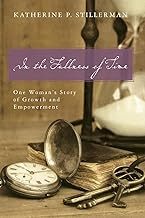
In the Fullness of time It’s 1913. Hattie Robinson has married the widowed Charles Barton and left teaching to raise Charles’s sons and manage the Barton estate. Now she must reconcile her role as mother and wife with her passion for woman’s suffrage.
As Hattie struggles for acceptance in the community and Barton family, Will Kendrick, her first love, appears. Feelings resurface, threatening Hattie’s marriage and casting doubts on Charles’s loyalty.
South Carolina’s reactionary politicians Ben Tillman and “Cotton Ed” Smith thwart suffrage efforts in the state. Even the progressive president Wilson, drags his feet, invoking states rights as the only pathway to an amendment.
A road trip to join the peaceful protests in Washington brings fresh perspective, enabling Hattie to resolve misunderstandings with Charles and convincing her to continue her work for suffrage, with her husband’s blessings. However, the road to suffrage brings additional setbacks before Hattie casts her first vote in 1920.
Let’s Add to the ListWhat novel with strong female characters have you read lately? What protagonist do you think illuminates the struggles and triumphs that have shaped our world?
The post Historical Novel Celebrates Women’s History Month appeared first on KATHERINE P. STILLERMAN.
February 2, 2025
Historical Novel: Aged Like Fine Wine
My website, developed in 2018, recently showed signs of wear and tear when my blog stopped showing up. Thanks to the team at Clever Robot for diagnosing and fixing the problem! They discovered that the code was breaking down. They transferred the content of the website over to a new and improved Word Press Theme. Now I can resume blogging with confidence. First on the list is to update my readers and historical fiction lovers on the marketing of A Piece of My Heart, the latest in the collection of the Barton Family Series. Stay tuned for coming news!
 Aged Like Fine Wine
For the month of February, the Women’s Fiction Writers Association put a spotlight on stories with older narrators as main characters. I’ve been a member of WFWA for several years now and have found it to be a valuable resource as an author of women’s historical fiction. I was delighted to learn that A Piece of My Heart was selected as one of 18 books in that category.
You can read the article HERE, and check out the collection of books. I’ve already bought Elizabeth’s Mountain by Lucille Guarino. I chose it because it is set in the North Carolina mountains around Asheville. I’ll post a review when I finish it. And if you select one to read from the list, please let me know how you liked it and I’ll post your comments on this website. Or, if you have other favorite historical romances that feature older main characters, please share them as well.

Be My Valentine
February is the month for lovers. If your special love is a historical fiction fan, treat them to their very own copy of A Piece of My Heart, as a reminder that love can blossom at any age! Available in Audio, Kindle, and paperback.

The post Historical Novel: Aged Like Fine Wine appeared first on KATHERINE P. STILLERMAN.


![[image error]](https://www.historicalnovel.com/wp-content/uploads/2025/05/39C06651-CF45-4712-96FC-36A519B48ADC.heic)
![[image error]](https://www.historicalnovel.com/wp-content/uploads/2025/05/005E1CFF-1ABB-489B-B2B4-FA4C792FF188.heic)
![[image error]](https://www.historicalnovel.com/wp-content/uploads/2025/05/A775E800-5C0E-46AA-9726-517CFEA18DAD_1_201_a.heic)

![[image error]](https://www.historicalnovel.com/wp-content/uploads/2025/05/2410242D-98F3-4F68-98CA-B8B717AAF495.heic)
![[image error]](https://www.historicalnovel.com/wp-content/uploads/2025/05/184AEB6C-1F1E-430F-9168-5B0AB4711569_1_201_a.heic)
![[image error]](https://www.historicalnovel.com/wp-content/uploads/2025/05/A408C7AF-D72C-4905-9E31-A5F19EFE51C9_1_201_a.heic)
![[image error]](https://www.historicalnovel.com/wp-content/uploads/2025/05/8022DEBA-E9FD-4705-A1F8-A109923A51F7.heic)
![[image error]](https://www.historicalnovel.com/wp-content/uploads/2025/05/D14FB1FA-48B6-410F-A32C-7E36E339F131.heic)
![[image error]](https://www.historicalnovel.com/wp-content/uploads/2025/05/D15A6EF6-3105-4D75-BAAD-44BE225B1979.heic)
![[image error]](https://www.historicalnovel.com/wp-content/uploads/2025/05/4FC28925-25C3-42F8-9192-3FEC7C556A49.heic)
![[image error]](https://www.historicalnovel.com/wp-content/uploads/2025/05/32640315-5081-47A5-82D5-F8C7863EBAAA.heic)
![[image error]](https://www.historicalnovel.com/wp-content/uploads/2025/05/7455FE54-2806-483C-BD35-465F11DB47FE.heic)
![[image error]](https://www.historicalnovel.com/wp-content/uploads/2025/05/8CFFC249-2E23-4420-87D6-FBF6B98E5D17.heic)
![[image error]](https://www.historicalnovel.com/wp-content/uploads/2025/05/D623E0AE-79AC-4E0C-A7D0-42AAD450C06E.heic)
![[image error]](https://www.historicalnovel.com/wp-content/uploads/2025/05/989D318A-FD45-43D0-8383-0613140FB5D6.heic)
![[image error]](https://www.historicalnovel.com/wp-content/uploads/2025/05/E624F4DB-A9DE-4872-9EA5-5E4F25DF2911_1_201_a.heic)
![[image error]](https://www.historicalnovel.com/wp-content/uploads/2025/05/97E43F74-C546-4274-A03E-7D26ABFE38BA_1_201_a.heic)
![[image error]](https://www.historicalnovel.com/wp-content/uploads/2025/05/80B2C23D-0A29-43EE-B681-444A1A87A8B0.heic)
![[image error]](https://www.historicalnovel.com/wp-content/uploads/2025/05/47E7A4B9-659B-438D-8974-71D0A9765CC9-1.heic)
![[image error]](https://www.historicalnovel.com/wp-content/uploads/2025/05/F5C54C13-6C90-42D5-AF78-1322E4D789E8.heic)
![[image error]](https://www.historicalnovel.com/wp-content/uploads/2025/05/9A11BFE5-A6E5-4F07-ADA8-A776C13EA38C_1_201_a.heic)
![[image error]](https://www.historicalnovel.com/wp-content/uploads/2025/05/C79BAC25-0CBE-4E93-A8D2-DB5BD32D9AB2.heic)
![[image error]](https://www.historicalnovel.com/wp-content/uploads/2025/05/8F18422E-EA2D-4650-8950-813BA054C7B9.heic)
![[image error]](https://www.historicalnovel.com/wp-content/uploads/2025/05/5B10A2B7-BAA4-4598-AAB9-FCE71BB0EAA5-1.heic)
![[image error]](https://www.historicalnovel.com/wp-content/uploads/2025/05/A50229CD-99AE-4A5F-A606-406556501D87.heic)
![[image error]](https://www.historicalnovel.com/wp-content/uploads/2025/05/C758F615-B31E-4AAC-9B4A-4DFF7192FC56.heic)
![[image error]](https://www.historicalnovel.com/wp-content/uploads/2025/05/A13FA550-0017-4C97-9BB7-5C1CD4811142.heic)
![[image error]](https://www.historicalnovel.com/wp-content/uploads/2025/05/B8BF51A5-7C77-456D-B818-3E2AB3F73EA1.heic)
![[image error]](https://www.historicalnovel.com/wp-content/uploads/2025/05/A4DF6869-5AC9-4C86-9B67-587BCA2DF2D3.heic)
![[image error]](https://www.historicalnovel.com/wp-content/uploads/2025/05/BC1C7652-5869-4640-8DDF-3D7BB5407415.heic)
![[image error]](https://www.historicalnovel.com/wp-content/uploads/2025/05/5AECCA9C-3139-4CB8-9A94-A869F4B9B8E9.heic)
![[image error]](https://www.historicalnovel.com/wp-content/uploads/2025/05/B296D7FC-F56F-4191-A7AE-7DBC18C6C6A7.heic)
![[image error]](https://www.historicalnovel.com/wp-content/uploads/2025/05/A6B6EF0B-4D85-42A3-A5B1-40A2A4843502.heic)
![[image error]](https://www.historicalnovel.com/wp-content/uploads/2025/05/E8FE8F04-21ED-4EE4-8B42-636967A00113.heic)
![[image error]](https://www.historicalnovel.com/wp-content/uploads/2025/05/D884BB2A-CDA9-417E-8CEA-8FF9B87CE162.heic)
![[image error]](https://www.historicalnovel.com/wp-content/uploads/2025/05/210CCD88-0F18-4D2D-81EE-7710C4754891.heic)
![[image error]](https://www.historicalnovel.com/wp-content/uploads/2025/05/EB310A02-0BB5-4E66-B4A2-CF15061DD5D1.heic)
![[image error]](https://www.historicalnovel.com/wp-content/uploads/2025/05/1B1FB6F8-5BFE-47A8-B679-2AFC6E2D3324_1_201_a.heic)
![[image error]](https://www.historicalnovel.com/wp-content/uploads/2025/05/D2751971-908A-4FA3-BC36-DC4BF76C8739.heic)
![[image error]](https://www.historicalnovel.com/wp-content/uploads/2025/05/6F898A4D-F46C-4B4C-A982-994C2CC8275C.heic)
![[image error]](https://www.historicalnovel.com/wp-content/uploads/2025/05/81D404DE-0F85-452E-80F3-DE3CE418BB1B.heic)
![[image error]](https://www.historicalnovel.com/wp-content/uploads/2025/05/7FF29850-3AC1-4953-B650-C4EC7FEE5C4D.heic)
![[image error]](https://www.historicalnovel.com/wp-content/uploads/2025/05/C6802CC1-51CE-4159-AC52-2DCB44E5AD7B.heic)