Paul Sloane's Blog
April 14, 2026
The Benefits of Being Unpredictable
Unpredictability, when used deliberately rather than recklessly, is one of the most underrated sources of power in human behaviour, strategy, and creativity. The core advantage is straightforward: if others cannot reliably anticipate your next move, they cannot easily counter it. This creates space for innovation and competitive advantage. Across business, sports, art, and even geopolitics, the individuals and organisations that master controlled unpredictability can win.
Unpredictability in Strategy and Business
In competitive environments, predictability is a liability. Companies that follow linear, easily forecastable paths become simple to outmanoeuvre. By contrast, organisations that introduce unexpected moves force rivals into a reactive posture.

Few leaders embodied this better than Steve Jobs. In the early 2000s, analysts expected Apple to refine its computer line. Instead, Jobs launched the iPod, then the iPhone—products that blindsided competitors and redefined entire industries. Apple’s culture of secrecy and sudden pivots made it nearly impossible for rivals to prepare, giving the company a long‑lasting strategic edge.
Tesla has used unpredictability in a different way. While traditional automakers released cautious, incremental electric models, Tesla jumped straight into high‑performance luxury EVs. Then, in a move that shocked the industry, Elon Musk opened Tesla’s patents to competitors. This unexpected decision strengthened Tesla’s ecosystem and positioned the company as the pace‑setter in electric mobility. Competitors were forced to respond to Tesla’s tempo rather than dictate their own.
Another classic example is Nintendo’s Wii strategy. While Sony and Microsoft were locked in a predictable battle over graphics power, Nintendo pivoted toward motion controls and family‑friendly gameplay. The Wii’s success demonstrated how unpredictability can redefine what an industry values.
Unpredictability in Sports and Games
In sports, unpredictability is often the difference between dominance and defeat. A team that always runs the same playbook becomes easy to neutralise; one that varies its approach forces opponents into hesitation—and hesitation creates opportunity.
Football manager Pep Guardiola is famous for this. Although his teams are known for possession‑based play, he frequently introduces unexpected tactical shifts in high‑stakes matches: full‑backs moving into midfield, midfielders dropping into defence, or sudden formation changes. Opponents prepare for one style and find themselves facing another.
In American football, Bill Belichick’s New England Patriots built a dynasty on strategic unpredictability. One week they would run the ball relentlessly; the next week they would barely run at all. Belichick’s game plans were famously opponent‑specific, making it nearly impossible for rivals to anticipate what was coming.
Even individual athletes use unpredictability as a weapon. Serena Williams varied her serve placement in ways that made it extremely difficult for opponents to anticipate where the ball would land. Her ability to break patterns at key moments gave her both a tactical and psychological advantage.
Unpredictability in Creativity and Art
In creative fields, unpredictability is often synonymous with originality. Artists who defy expectations keep audiences engaged because their work resists easy categorisation.
David Bowie is a prime example. His constant reinvention—from Ziggy Stardust to the Berlin era to his late‑career experimental albums—made unpredictability part of his artistic identity. Audiences never knew what he would do next, and that uncertainty became a source of enduring fascination.
Similarly, Jordan Peele’s shift from comedy to socially charged horror with Get Out stunned Hollywood. The unpredictability of the pivot amplified the film’s impact and established him as a major creative force.
Unpredictability in Geopolitics and Negotiation
In geopolitics, unpredictability can be a strategic tool. Richard Nixon’s “Madman Theory” aimed to convince adversaries that he might take extreme actions if provoked. By cultivating an aura of unpredictability, he sought to create uncertainty in opponents’ calculations, giving the U.S. leverage in negotiations.
The Underlying Principle
Across all these domains, the pattern is clear: unpredictability works when it is controlled. It is not randomness or chaos. It is the intentional disruption of expectations. When others cannot map your intentions, you gain room to manoeuvre, innovate, and surprise. In a world that often rewards conformity and routine, a touch of unpredictability becomes a form of strategic freedom.
Based on ideas in this book, The Art of Unexpected Solutions
The post The Benefits of Being Unpredictable appeared first on Destination Innovation.


March 10, 2026
Unlock Ingenuity through Play

The Russian scientist Dmitri Mendeleev (1834 – 1907) loved to play cards. In 1869, he wrote the names and properties of the 63 known elements on individual cards, then arranged and rearranged them like a game of solitaire. He realised that elements with similar properties could be arranged in ‘suits’ ordered by their atomic weights. He saw patterns that weren’t apparent when elements were simply listed. He moved the cards around, grouped similar elements together and saw gaps. He deduced that these gaps represented places where unknown elements should exist. He published his periodic table and boldly predicted the existence and properties of several missing elements, including gallium and germanium, which were later discovered exactly as he had foretold.
Work and play are often treated like oil and water, separate realms with different purposes. One is serious, structured, and goal-driven; the other is spontaneous, joyful, and open-ended. But for innovators like Mendeleev these two worlds overlap. Sometimes integrating play into our daily work rhythms can unlock innovative ideas and surprising solutions. Play is not just for children or leisure. When we can weave it into our work environments, it becomes a catalyst for creativity, risk-taking, and collaboration.
Play taps into our brain’s reward system, releasing dopamine, which boosts motivation and cognitive flexibility. When we play, we’re less afraid to fail, more inclined to take imaginative risks, and better at connecting seemingly unrelated ideas. Neuroscientists and psychologists have long noted that play promotes divergent thinking, the type of thinking that leads to multiple solutions and wild ideas. It breaks us out of linear patterns and encourages exploration over efficiency, which is essential for solving complex or ambiguous problems. Play makes our brains more nimble. And nimble brains are better at sparking insights.
This does not mean turning our office into a playground. Small, intentional infusions of play can have profound effects. Turn brainstorm sessions into fun experiences by using a skilled external facilitator who can use physical play objects like Lego bricks, modelling clay or whiteboard doodles to inspire people to be outlandish and creative.
Look at ways to use gamification in customer marketing and in internal communications and contests. Award points for crazy ideas. Consider asking employees to create and perform a skit, poem or song about say competitors
Ask employees to pitch an idea from a rival company’s perspective or imagine how a superhero might tackle the problem. These thought experiments shake up assumptions. Allow people to pursue playful side projects and innovative ideas.
Play is unpredictable by nature. It disrupts routine thinking and invites the “what if?” question that is often the first spark of innovation. When teams play together, hierarchies soften, collaboration improves, and psychological safety increases. In these moments, people feel more comfortable speaking up, asking absurd questions, or suggesting unconventional ideas. Unexpected solutions often come from unexpected angles, and play creates space for exactly that.
Of course, not every work challenge is suited to games. And people may be initially reluctant to join in. Play must be inclusive, voluntary and non-threatening. Tailor it to team dynamics and create an environment where play feels like a natural and enjoyable part of the creative agenda and not a gimmick or distraction. Leadership plays a crucial role here. When leaders model curiosity, humility, and playfulness, they give others permission to do the same. It shifts the culture from performance to exploration.
Play at work isn’t about being silly for the sake of it. It is about unlocking the freedom of thought that fuels ingenuity. Instead of constantly pursuing productivity, make room for joy and curiosity. It can feel counter-intuitive but the change in perspective can inspire people to be much more creative.
Based on a chapter in The Art of Unexpected Solutions by Paul Sloane
The post Unlock Ingenuity through Play appeared first on Destination Innovation.
March 2, 2026
The Curiosity Hour can Lead to Business Breakthroughs
 Image by Tungart7 on Pixabay
Curiosity is the fuel of creativity, discovery and innovation. As we go through our formal education, a subtle but insidious shift occurs. The open-ended questions that we relentlessly asked as infants are gradually replaced by a demand for definitive answers. We are rewarded for knowing, not for asking. The systematic suppression of curiosity stifles individual potential but also cripples creativity. The pursuit of “knowing” can be the enemy of discovery.
Too often in the corporate world curiosity is discouraged. The emphasis is on efficiency and productivity rather than questioning and experimentation. The prevailing mantra is “focus on what you know works,” rather than “explore what you don’t know.” We are encouraged to specialize, to master a specific skill set, and to remain within the comfortable confines of our expertise. But often the most interesting ideas and the most fruitful innovations lie in the unknown, the unexplored and the unexpected.
The “Curiosity Hour” concept s based on a well-known business philosophy: dedicating protected time for employees to explore intriguing questions, challenge assumptions, and pursue projects outside their immediate duties. It is a development of previous initiatives such as brainstorms, “20% Time,” “Innovation Sprints,” or “Hackathons”. These ideas are built on the principle that self-directed exploration generates employee engagement and is a potent catalyst for breakthrough innovation.
How Curiosity Hours Work
A diverse group is asked to join a Curiosity Hour meeting. They should be from different departments with different levels of experience, skill and seniority. There is a topic for the meeting with a broad but important question such as “How can we double our sales revenue?” or “How can we attract and retain top talent?” Each participant is asked to prepare two questions (related broadly to the topic) that they are curious about. They are encouraged to ask searching and provocative questions.
The meeting is run by a facilitator whose job is to encourage productive discussion and manage the meeting. They set the guidelines and then ask someone to start. That person might say, “I am curious to know this. What would happen if we made our produce much easier to assemble and use?” This leads to a discussion in the group in which ideas are developed and discussed using divergent rather than critical thinking. It might lead to some follow-up action items. Then on to the next person who starts, ‘I am curious to know this……..”
The facilitator keeps the meeting on track and summarizes the main ideas and action points. It is essential that the meeting is held in an atmosphere of psychological safety, where questioning conventional wisdom or asking what might be called silly questions in pursuit of a new idea is not punished but treated as a valuable learning opportunity. No criticism of the initial curiosity question is allowed – everybody must build on it. It is vital that senior figures in the room do not sneer, criticise or close down discussions.
How is a Curiosity Hour different from a brainstorm? A brainstorm (or ideation meeting) starts by generating a large number of ideas. The Curiosity Hour starts with one provocative question which the group explores to see where it might lead. Both of these types of meeting can lead to radical and useful ideas but they take different routes to get there.
By implementing psychological safety, having good facilitators, choosing diverse groups and effective follow-up, you can turn “Curiosity Hours” into a powerful, sustainable engine for growth and adaptation.
Based on a chapter in The Art of Unexpected Solutions by Paul Sloane
The post The Curiosity Hour can Lead to Business Breakthroughs appeared first on Destination Innovation.
February 18, 2026
The World’s Worst Inventions

The Musée des Arts et Métiers in Paris is currently hosting an exhibition called Flops? Dare, Fail, Innovate, which highlights some of the world’s most infamous product failures. One of the most memorable exhibits is the UroClub, a hollow-shafted golf club designed to serve as a portable urinal for men. Marketed as a way to keep golfers “out of the woods” and avoid leaving the course to relieve themselves, the UroClub came with a towel that could be unfurled to preserve modesty. Despite its innovative idea, the product never gained commercial success.
Other notable exhibits include a ping-pong table with a wavy surface that made playing almost impossible, and bizarre food products that failed to win consumer approval, such as green ketchup and Colgate’s ill-fated beef lasagne, which people mistakenly believed contained toothpaste. Another highlight is radioactive face cream, sold in the early 20th century when radium was thought to have health benefits. Many of the items in the exhibit had unintended consequences, such as a plastic bicycle that broke when ridden, dolls with chewable teeth that injured children, and dangerous giant darts that caused numerous injuries. A Barbie doll with flickering rollerblades, which sparked fires, was also part of the display.
Other innovations featured in the exhibition include a spray-on condom that took too long to dry, a vacuum cleaner that required manual pumping before use, and a controversial doll whose breasts grew when its arm was rotated. There were also contraceptive boxer shorts, designed to keep testicles warm, which were ultimately deemed ineffective in preventing sperm production.
While these inventions were commercial failures, the exhibition’s message is clear: fear of failure should not deter innovation. The curators aim to demonstrate that failure is a natural part of the creative process. As they point out, nine out of ten inventions fail, but persistence is key to eventual success. Michèle Antoine, the museum’s director, pointed to videoconferencing as a prime example of a technology that, while developed in the mid-20th century, only became widely adopted during the COVID-19 pandemic.
The exhibition also highlights innovations that were simply ahead of their time, like the Bi-Bop mobile phone. Although it was an early attempt at mobile communication, its limitations—such as the need for proximity to a relay point and dual subscription plans—caused it to be quickly surpassed by more user-friendly models.
While some products failed due to poor design, execution, or timing, others eventually found success in unexpected ways. The DeLorean car, for example, was initially a commercial flop but gained fame through its role in the Back to the Future films. Similarly, iconic products like Google Glass, Amazon Fire, and the Segway also flopped, showing that even large companies experience failures.
Ultimately, the exhibition emphasizes that innovation requires risk-taking, and setbacks should be viewed as opportunities to learn and improve. As the curators note, “success is stumbling from failure to failure with no loss of enthusiasm,” a sentiment often attributed to Winston Churchill.
Based on an article in the Times by David Chazan
The post The World’s Worst Inventions appeared first on Destination Innovation.
January 27, 2026
Wilson Greatbatch – Accidental Inventor
A mistake that ultimately saved millions

Wilson Greatbatch’s life reads like a case study in how curiosity, persistence, and a willingness to embrace mistakes can reshape the world. Born in 1919 in Buffalo, New York, he grew up fascinated by radios and electronics, often taking devices apart just to understand how they worked. That early tinkering spirit never left him, and it ultimately led to one of the most important medical innovations of the twentieth century: the pacemaker. While he held over 325 patents, he is best known for inventing the first practical implantable pacemaker, a device that has since saved millions of lives.
The Serendipitous MistakeAfter serving as a radio operator in World War II, Greatbatch studied electrical engineering at Cornell University. His career initially followed a fairly ordinary path—teaching, research, and small engineering projects but he loved tinkering with problems that in electronics and health. That intersection became his life’s defining focus in 1956, when he made the mistake that changed everything. He was working on a project at the University of Buffalo, building an oscillator to record heart sounds.
While assembling the circuit, he reached for a resistor. He accidentally pulled out a 1-megohm resistor instead of the intended 10-kilohm resistor. When he plugged it into the circuit, the device didn’t behave as a sound recorder. Instead, it emitted a steady, rhythmic electrical pulse.
Greatbatch immediately recognized the rhythm. It pulsed for 1.8 milliseconds and then paused for one second, a pattern that perfectly mimicked the human heartbeat. “I stared at the thing in disbelief,” he later recalled. He realized that if this small circuit could be made reliable and portable, it could jump-start a heart that had lost its natural rhythm.
Overcoming the “Impossible”Turning a bench-top accident into a medical reality was an uphill battle. At the time, the idea of putting a battery-powered machine inside a living human body was seen as science fiction, if not outright dangerous. Early prototypes were bulky, unreliable, and prone to battery failure. Greatbatch spent years experimenting with materials, circuitry, and power sources. Using his won savings he built a clean room in a barn behind his house so he could assemble components without contamination. Many colleagues doubted the project, and funding was scarce. Medical regulators were cautious, surgeons were skeptical, and the technology itself was unproven. Greatbatch had to convince not only the scientific community but also manufacturers and hospitals that his invention could be safe and transformative.
In 1958, Greatbatch teamed up with Dr. William Chardack and Dr. Andrew Gage. After successful animal trials, they performed the first human implant in 1960 on a 77-year-old man, whose heart was about to give out. They implanted a pacemaker device and the man lived for another 18 months.
Greatbatch didn’t stop at the circuit design. Recognizing that the biggest point of failure was still the battery, he later acquired the rights to the lithium-iodine battery in the 1970s. This innovation extended the lifespan of pacemakers from two years to over ten, eliminating the need for frequent, risky replacement surgeries.
His story is a reminder that progress often begins with a mistake, followed by the stubborn belief that the mistake might hold a hidden opportunity. Greatbatch didn’t just build a device; he reshaped the possibilities of modern medicine through sheer determination and an engineer’s instinct to keep pushing until the design finally works.
He died in 2011 at the age of 92.
Based on a chapter in The Art of Unexpected Solutions.
The post Wilson Greatbatch – Accidental Inventor appeared first on Destination Innovation.
January 4, 2026
Accept Productive Boredom
In today’s busy world, we have developed a strong aversion to boredom. The moment our minds begin to wander, we reach for our phones, check email, or find some other distraction. Yet in doing so, we are systematically destroying one of the most powerful stimuli for unexpected solutions: unstructured mental downtime.
The neuroscience is clear. When we’re not actively focused on a task, our brains do not simply shut down. Instead, they enter what researchers call the “default mode network”. This is a state where different regions of the brain begin working in ways that do not happen during focused attention. This is when disparate memories, experiences, and knowledge fragments start making unexpected connections. It is during these moments of apparent mental idleness that our most creative insights often emerge.
The Paradox of Productive ProcrastinationAdam Grant, the organizational psychologist, talks about the power of “productive procrastination”. In his research Grant found that his most original ideas came not when he rushed to complete projects, but when he allowed himself to sit with problems for extended periods. He would start thinking about a research question, then deliberately delay diving into the work, letting his mind wander and explore tangential connections.
The key distinction Grant discovered was between active procrastination, where you consciously delay while your mind continues to work on the problem, and passive procrastination, where you simply avoid the work altogether. Active procrastination creates the conditions for serendipity by keeping the problem alive in your subconscious while your conscious mind explores related territories.
The Default Mode Advantage
Lin-Manuel Miranda’s creation of the musical “Hamilton” perfectly illustrates how boredom can stimulate unexpected solutions. The idea struck him while he was reading Ron Chernow’s biography of Alexander Hamilton during a holiday. He wasn’t trying to write a musical, he was simply allowing his mind to wander while absorbing the story. The unexpected connection between Hamilton’s life and modern hip-hop culture emerged precisely because Miranda’s mind was in a relaxed, receptive state.
This phenomenon occurs because the default mode network excels at making remote associations, connections between seemingly unrelated concepts that our focused attention would never pursue. When we’re actively concentrating on a problem, our brains tend to follow predictable, logical pathways. But when we’re bored, our minds become more likely to make those unexpected leaps that lead to breakthrough insights.
Ways to Find Space for Productive BoredomThe challenge is that genuine boredom has become increasingly rare. We’ve filled every possible moment of downtime with activity. Yet creating space for productive boredom doesn’t require dramatic lifestyle changes. It needs you to deliberately create some space.
The most successful practitioners of productive boredom don’t wait for it to happen accidentally; they deliberately design it into their routines. This requires a fundamental shift in how we think about productivity and time management.
Steve Jobs was famous for his walking meetings, but equally important were his solitary walks. Research shows that walking, particularly in natural settings, activates the brain networks associated with creative insight. The rhythmic, automatic nature of walking frees up cognitive resources for making unexpected connections. I like to walk with earphones and listen to podcasts. But I get my best ideas when I leave the podcast alone and just wander.
Try dedicating one hour each week to completely unstructured time. No agenda, no goals, no devices, just mental freedom to explore wherever your thoughts lead. This isn’t leisure time; it is strategic boredom designed to generate unexpected connections.
The benefits of embracing productive boredom compound over time. As you become more comfortable with unstructured mental time, your brain develops stronger default mode network connections. You become more skilled at recognizing when insights are emerging and less impatient in looking for immediate solutions.
Based on a chapter in The Art of Unexpected Solutions.
The post Accept Productive Boredom appeared first on Destination Innovation.
November 11, 2025
Don’t Take Lunch at Your Desk

Many office workers take lunch at their desks. They grab a sandwich and carry on working. The old habit of going out for a lunch break is in decline. But there are some compelling reasons to go out for lunch with someone instead of eating at your desk:
Eat OutSitting at your desk all day is linked to various health issues. Walking to a cafe or restaurant, even a short distance, gets you moving and can help counteract the negative effects of prolonged sitting. Stepping away from your workspace reduces stress and mental fatigue. A change of scenery and social interaction can improve your mood and help you return to work feeling refreshed and more focused.
Sharing a meal is a great way to build rapport with colleagues, clients, or friends. It fosters trust, encourages open communication, and can lead to stronger professional and personal connections. Furthermore, taking a relaxing lunch with a colleague can stimulate creativity. Discussing ideas outside the office can lead to fresh perspectives and innovative solutions that might not emerge in a typical work setting. Lunch with a larger group can open doors to new opportunities or collaborations. You never know who you might meet or what conversations could lead to.
Eating in a group can encourage engagement and motivation. A study by Kevin Kniffen at Cornell University studied the habits of firemen. It found that those that shared a meal during the working day performed better. A study in the USA by Tork found that people who took a lunch break every day scored higher on job satisfaction.
Don’t sit all day and slump into cognitive decline. Go out and enjoy your lunch break!
The post Don’t Take Lunch at Your Desk appeared first on Destination Innovation.
October 14, 2025
Pioneer and Innovator Steve Shirley
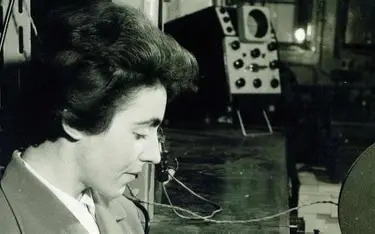
Born Vera Buchthal in 1933 to a Jewish family in Dortmund, Germany, Dame Stephanie “Steve” Shirley’s life began amidst rising persecution. She was the daughter of a Jewish judge who lost his position under the Nazi regime. In 1939, aged five, she and her nine year old sister, Renate, were sent to Britain on a Kindertransport train, escaping the Holocaust as unaccompanied child refugees. She was raised by foster parents in the Midlands and this traumatic uprooting instilled in her a deep gratitude for her adopted country and a lifelong drive to make her life “worth saving”. She developed a passion for mathematics, a subject her all-girls school didn’t teach, forcing her to study it at a local boys’ school.
She worked at the Post Office Research Station, where she built and coded computers from scratch, . She took evening classes for six years to obtain an honours degree in mathematics. In 1959, she moved to CDL Ltd, designers of the ICT 1301 computer. Shirley grew frustrated with the rampant sexism and “glass ceiling” that blocked her progression. In 1962, with just £6, she founded a software company, Freelance Programmers, from her dining room table. Her vision was revolutionary for its time: to provide high-level employment for talented women who had been forced to leave their careers due to marriage or motherhood. The company offered flexible, home-based work decades before it was common practice. To get her foot in the door in the male-dominated business world, she adopted the masculine name “Steve” in her business letters, noting that it helped get her proposals read rather than immediately discarded.
Her company, which eventually became the F.I. Group (and later Xansa), flourished, taking on major projects such as programming the black box for the supersonic Concorde jet. A true innovator in corporate culture, Shirley pioneered co-ownership, eventually transferring a significant portion of her company to the staff, making many of her predominantly female employees millionaires. She challenged the notion that women couldn’t be coders, leaders, or entrepreneurs, and she proved that a business built on trust, flexibility, and female talent could thrive. Her legacy paved the way for generations of women in computing, software and technology.
Shirley’s personal life was marked by a profound challenge: her only son, Giles, was severely autistic. His condition was profoundly disabling, and she cared for him until his tragic death from an epileptic seizure at the age of 37. This deeply personal experience fueled her second career in philanthropy. Upon retiring in 1993, she established The Shirley Foundation, a grant-giving charity dedicated to pioneering projects in the field of autism spectrum disorders. Her foundation has initiated and funded groundbreaking medical research and practical projects using IT to improve the lives of autistic people. Dame Stephanie Shirley’s legacy is that of a tenacious entrepreneur who shattered conventions, a trailblazer who created a new paradigm for women in technology, and a philanthropist whose work has had a lasting impact on autism research and support.
Dame Stephanie “Steve” Shirley was a pioneering force in the world of computing, a fierce advocate for women in tech, and a philanthropist whose life was shaped by resilience, innovation, and compassion. She died in 2025. In 2013, appearing on BBC radio, Shirley discussed why she had given away more than £67 million of her personal wealth to different projects. She said “I do it because of my personal history; I need to justify the fact that my life was saved”.
The post Pioneer and Innovator Steve Shirley appeared first on Destination Innovation.
Go Wide, Go Narrow…..
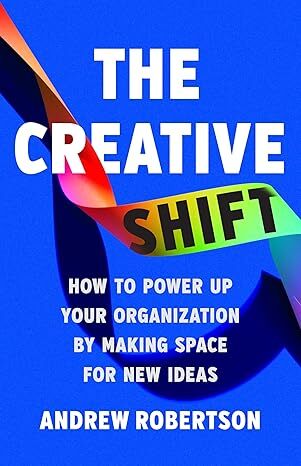
In his book, The Creative Shift, Andrew Robertson, Chairman of advertising giant BBDO, gives this succinct guidance for brainstorms and idea meetings:
Go Wide, Go Narrow, Go Deep, Go Public.
Go Wide. Use divergent thinking to generate a great number of ideas including absurd and silly ideas. No criticism or judgement allowed at this stage.
Go Narrow. Sift the ideas down to a shortlist using some agreed criteria. Shape bizarre ideas into creative, workable proposals. Select the best few.
Go Deep. Examine in detail the handful of promising ideas. What resources and approvals do they need? How could we test them quickly and cheaply?
Go Public. Take your selected ideas and plans to those with authority to approve them. Gain permission and resources to test them.
Good advice.
The post Go Wide, Go Narrow….. appeared first on Destination Innovation.
September 19, 2025
Does Your Organisation Need a Digital Twin?

A digital twin of an organisation is a dynamic, virtual replica of the entire enterprise, encompassing its processes, systems, data, and people. An organisational digital twin provides a complete view of the business, enabling leaders to simulate the impact of decisions before they are implemented in the real world. This powerful tool uses real-time data from various sources to mirror the organisation’s operations, allowing for improved strategic planning, risk management, and operational efficiency.
Here are five examples of organisations using digital twins to enhance their operations:
UnileverThe consumer goods giant Unilever employs digital twins in its factories to create virtual models of its production lines. This allows the company to simulate and test changes to manufacturing processes without disrupting actual production. Unilever can optimise efficiency, reduce waste, and improve product quality. For example, they can virtually test new packaging materials or adjust machine settings to see the impact on output and energy consumption before making physical changes.
RocheIn the pharmaceutical industry, Roche is exploring the use of digital twins to revolutionise clinical trials. By creating virtual replicas of patients and disease progressions, Roche aims to simulate how different individuals might respond to new treatments. This approach has the potential to accelerate the drug development process, reduce the reliance on traditional, large-scale clinical trials, and lead to more personalised medicine.
BoschThe technology and engineering company Bosch utilises digital twins in its manufacturing and industrial operations. By creating virtual representations of their machinery and production facilities, Bosch can predict maintenance needs, prevent equipment failures, and optimise performance. This predictive maintenance approach minimises downtime and extends the lifespan of their assets, leading to significant cost savings.
Virtual SingaporeOn a larger scale, the nation of Singapore has developed a digital twin of its entire city-state. This comprehensive 3D model, known as “Virtual Singapore,” integrates vast amounts of data from various sources, including real-time traffic information, weather patterns, and building schematics. The government uses this digital twin for urban planning, simulating the impact of new infrastructure projects, managing emergency responses, and analysing energy efficiency across the city.
Airservices AustraliaResponsible for managing Australia’s airspace, Airservices Australia is developing a digital twin of the country’s air traffic management network. This virtual representation will allow them to simulate air traffic scenarios, test new procedures, and predict potential congestion or disruptions. The goal is to enhance the safety and efficiency of air travel by proactively identifying and mitigating risks within the complex airspace system.
Building a digital twin can bring some significant benefits to an organisation:
Enhanced Decision-Making and Strategic PlanningOne of the most significant advantages of an organisational digital twin is the ability to conduct virtual “what-if” scenarios. This allows leaders to test the potential impact of big decisions before committing resources in the real world. By simulating changes to business processes, supply chains, or market strategies, organisations can anticipate outcomes, identify potential bottlenecks, and optimise for the best possible results. This approach to planning minimises risks and increases the likelihood of successful initiatives.
Improved Operational Efficiency and Cost ReductionA digital twin provides both a high-level and a detailed view of an organisation’s operations in real-time. This comprehensive oversight allows for the identification of inefficiencies that might otherwise go unnoticed. By analysing the virtual model, businesses can pinpoint areas for process optimisation, streamline workflows, and improve resource allocation. By simulating energy consumption and manning levels, organisations can identify opportunities for significant cost savings.
Accelerated Innovation and Product DevelopmentIn the realm of product development, digital twins revolutionise the innovation cycle. They enable the virtual prototyping and testing of new products and services in a simulated environment. This dramatically reduces the time and cost associated with physical prototypes and allows for rapid iteration and refinement. By understanding how products will perform under various conditions before they are built, companies can bring higher-quality and more resilient products to market faster.
Proactive Risk Management and Increased ResilienceOrganisational digital twins are powerful tools for enhancing business resilience. By simulating various risk scenarios, such as supply chain disruptions, economic downturns, or even cyberattacks, organisations can develop and test robust contingency plans. This proactive approach to risk management allows managers to identify vulnerabilities and implement mitigation strategies before a crisis occurs.
Enhanced Collaboration and Knowledge SharingA digital twin serves as a single source of truth for an organisation, breaking down data silos and fostering greater collaboration between departments. When teams from across the business can access and interact with the same virtual model, it promotes a shared understanding of complex processes and facilitates more effective cross-functional teamwork. This collaborative environment can lead to more innovative solutions and a more agile response to changing market dynamics.
Improved Customer Experience and PersonalisationBy creating digital twins of customer journeys and interactions, organisations can gain deeper insights into consumer behaviour and preferences. This allows for the optimisation of customer service processes, the personalisation of products and services, and the creation of more engaging and effective marketing campaigns. By simulating the customer experience, businesses can identify pain points and areas for improvement, ultimately leading to higher customer satisfaction and loyalty.
The post Does Your Organisation Need a Digital Twin? appeared first on Destination Innovation.