Patrick Ord's Blog
September 9, 2015
THE CURTAIN Recommendation: Roland Robison

I’m always gratified to hear from people who use The Curtain as a teaching tool. Such is the case with Roland and Deanne Robison. Roland sent me a recent email and told me the following (posted with his permission):
“My wife and I have used The Curtain as a teaching tool within our family, with our friends, within our church community, and within our ministry to our local prison.
“I’ve been amazed at the good men that are in prison and how humble and sensitive they are to the things going on in the world. For many prisoners, it was only one or two bad decisions that changed the trajectory of their lives. The Curtain not only entertains but educates readers. The points you bring out in The Curtain hit home for the Prisoners.
“Too often sophisticated marketing schemes profit companies at the expense – not benefit – of their customers. This is certainly the case with products that addict and harm but also applies when marketing glamorizes violence and other destructive behavior.”
Imagine a world where increased knowledge eliminates bad decisions. What would that do to the prison system? What would that do for your children? What would that do for you?
I’m elated that The Curtain is contributing to this discussion.
Filed under: Testimonials, Uncategorized Tagged: #destructionisnotprofit, #peoplearenotproducts, Big Data, books, capitalism, Destruction Is Not Profit, Destructive Marketing, Novels, Patrick Ord, People Are Not Products, The Curtain - A Novel, Thought Provoking Fiction





June 10, 2015
Why Does The Media Bury Stories of Faith?
On Monday, June 1, 2015 a tragedy occurred on Bear Lake on the Utah / Idaho border. As reported by The Salt Lake Tribune, a fast moving storm created 70 mph winds and massive waves, which capsized a ski boat and tossed seven people into the frigid, 53-degree water. All seven people were wearing life preservers.
The group originally tried to stick together but the 10-foot high surging waves ultimately tore them apart.
14-year-olds Tiffany Stoker and Tylinn Tilley tried to swim to shore. After three hours, with the sun setting, and just when they were about to give up hope they saw a boat and started screaming. Both girls were rescued.
Regrettably, Lance Capener, 46; his daughters Kelsey, 13, and Kilee, 7; and their friend, 13 year-old Siera Hadley died. Lance Capener’s wife (and mother of Kelsey and Kilee), Kathryn Capener, 42 was also rescued.
“They said the waves and wind were so loud they literally yelled their prayers so the others could hear their words,” said Tiffany Stoker’s father, Jeff L. Stoker.
Survivor Kathryn Capener recounted that the girls sang Mormon children’s songs and prayed together “to bring comfort and help.”
The incident was so harrowing that ABC’s “Good Morning America” (GMA) asked to retell the story and interview both Tiffany and Tylinn. As LDS Living reports, “The girls agreed on the condition that the fundraising web pages for the families of the deceased be included in the story.”
I’ve included links to the Capener Family’s fundraising page here and Siera Hadley’s fundraising page here.
GMA’s version of the story follows:
Notice anything different about the story? First, GMA failed to include the fundraising pages, which GMA later apologized for and attempted to remedy on it’s website. More shockingly, however, GMA replaced the singing of songs of faith with the “Just Keep Swimming” mantra from Disney’s “Finding Nemo.”
“As much as I like Nemo, it had nothing to do with [their] survival,” Tylinn’s father, Lance said on Facebook. “While they were swimming in the water for hours, they said the noise from the wind and waves were so loud that they had to “scream our prayers to Heavenly Father because (the other person) could not hear them saying their prayers (that doesn’t sound like Nemo). They quoted scriptures to each other, they sang primary childrens songs that they learned at church.”
GMA told Lance that they eliminated the faith elements of Tylinn and Tiffany’s story because of time constraints. They certainly found time to put in a clip of “Finding Nemo,” however.
Why would GMA substitute such moving expressions of faith with such blatant commercialization?
The cynical but hard to ignore reality is that GMA is on ABC. ABC is owned by Disney and Disney owns Pixar Entertainment, the maker of “Finding Nemo.” This amounts to obscene .
The longer and more philosophical reasoning for suppressing faith in the mainstream media can be found in deliberate and destructive marketing strategies.
In short, a person of faith gains their value from their creator. They are less inclined to be defined by material possessions and this makes for a bad marketing demographic. Marketers want spenders not believers.
In the novel THE CURTAIN, Marketing Professor Henry Maddox, gives a lecture to his students where he contrasts the concept of “self esteem” and “self respect.” A portion of this lecture follows:
“The concept of self esteem was brought to light in the 1960s by psychologists who believed a person’s self-worth was derived by the perceptions of others. Spiritualists had long maintained that each person had an intrinsic value because they were a child of God. They encouraged everyone to nurture this self respect by valuing others and seeking out meaningful work. Spiritualists spoke of an individual’s work as their life’s mission. Each person’s work – regardless of compensation – was noble insofar as it was honest and contributed to a greater whole.
“Self esteem ran counter to these principles. The school of self esteem taught that appearance was more important than achievement. The significance of a person’s work was evaluated based upon earnings, not contribution. Therefore, in order to establish value in society, people began to show their wealth, outspending one another trying to impress complete strangers. In the early nineties – for the first time – surveys began to show that young people were more concerned with obtaining and spending wealth than acquiring competency in their profession and contributing to society.
“As our culture grew less religious and individuals lost their sense of self, marketers exploited the opportunity. A person could never look too young, too tan, or too skinny (for example) – regardless of the true measure of that person’s health. This gave advertisers considerable sway over consumer preferences. People became hypersensitive over how they conformed to these arbitrary standards and spent money to bridge the gaps.”
My heart goes out to those lost in such a terrible boating accident. I also mourn for a culture where we diminish that which is most important (faith) in favor of crass commercialization.
Filed under: Uncategorized Tagged: #destructionisnotprofit, #peoplearenotproducts, Bear Lake Boating Accident, Conglomerate Propagandizing, Crass Commercialization, Disney, Faith, Finding Nemo, GMA, Good Morning America, LDS





March 11, 2015
How Many Ways Can You Be Manipulated? Let Me Count The Ways…
THE CURTAIN – A NOVEL explores the many and diverse ways that we are manipulated. So far in this blog, I have written extensively about Big Data (also here), Market Fragmentation (also here), Surveillance (also here), Propaganda, Unfettered Capitalism, and how even our cars can now be Hacked and controlled by others — all subjects touched on in THE CURTAIN. In this post, I’m going to touch on a seldom understood, prevalent, and extremely manipulative tactic called “Astroturfing.”
Chapter 14 of THE CURTAIN contains the following exchange between marketing consultant Henry Maddox and his client Laroy Elden:
“That crowd was a nice touch wasn’t it?”
“What do you mean ‘nice touch?’”
“Oh, I guess I should tell you. I hired a company who specializes in Astroturfing to assemble those people and create all of that ruckus outside the auditorium.”
“Astroturfing?”
“I’m sorry. I sometimes lose track of the line between jargon and real-people language. You know what a grassroots movement is right?”
“Sure. Support for a cause that’s spontaneous and natural.”
“And you know what Astroturf is right?”
“It’s fake grass.”
Astroturfing is thus defined as fake (or contrived) grass roots support. Astroturfing is ubiquitous and usually difficult to detect.
Watch as investigative journalist Sharyl Attkisson talks about the intent, insidiousness, and omnipresence of Astroturfing:
Filed under: Destruction Is Not Profit Tagged: #destructionisnotprofit, #peoplearenotproducts, Astroturf, Big Data, Car Hacking, Government Surveillance, Market Fragmentation, Propaganda, Sharyl Attkisson, The Curtain - A Novel, Unfettered Capitalism


February 25, 2015
The Curtain – A Novel: Truth or Fiction
 How much of The Curtain – A Novel is fact and how much of it is fiction? Certainly many of the assertions are sensationalized or outright fabricated right? Take the following excerpt from Chapter 29 for example:
Henry left his Berkeley office around 7 pm. It was Friday night and he had asked Cheryl to meet him for dinner. He couldn’t remember ever having a night time meal with Cheryl that didn’t consist of take-out food at the conference table while they were putting out some fire or another. Henry asked Cheryl to dinner with the pretense of showing long-overdue appreciation for her years of loyalty at the firm. He hadn’t touched on the real reason though. Cheryl was the only person in the world with whom Henry could confide. He needed to share how he felt with her, before it was too late.
They’d chosen a small restaurant in Walnut Creek named La Dolce. It was family run and had been in business for over twenty years. Henry’s tastes normally ran more toward Kobe beef, white asparagus, and vintage brandy on exclusive rooftop restaurants. But tonight was about Cheryl, and if she wanted pasta and seafood in an informal setting, then so be it. Besides, the indulgence was losing its appeal.
Henry turned his Mercedes G550 and programmed his destination into the OnBoard GPS system. He needed to hurry if he was going to make their eight o’clock reservation.
Within minutes, Henry was swerving through traffic on State Route 24 approaching the Caldecott Tunnel. He slowed to merge as the traffic narrowed to two lanes. The only sound Henry could hear was the faint hum of the road beneath his tires. He used to avoid the quiet and would have had something on the sound system. Now he cherished the time for soul searching. He still had a long ways to go, but he could at last abide his own company, a reward that had taken an entire lifetime –
“Henry, do you really think you can get away with betraying your clients?”
Henry almost swerved off the road, then pivoted in his chair looking for the source of the voice. The back seats were empty.
“You’re smart enough to know you can’t run. And you certainly can’t hide.”
What? The voice was coming through the car’s speaker system. Henry turned off the stereo.
The system turned itself back on. “Approaching the Caldecott Tunnel, Henry? You better hang on tight.”
Henry reached for the radio again. But suddenly all four door locks snapped down with a click. He had a split second to recognize that he was in serious trouble when the car surged forward. Henry slammed on the brakes, but they made no difference.
“What?” the voice said. “You didn’t know the OnBoard system could do that? If we can remotely unlock your doors, we can certainly lock you in the vehicle. If we can diagnose engine problems remotely, we can certainly tap into your car’s computer system. OnBoard doesn’t need your permission to mess with your fuel injection ratios, Henry. Did you really think collecting your data was the most threatening thing we could do?”
Henry kept his hands on the wheel, trying to breathe evenly. He crossed the threshold into the tunnel, where he now only had two lanes and no shoulders. He darted around a slower car in front of him, then leaned on the car’s horn and began flashing his lights to warn the other drivers.
“Oh there you go Henry, I guess the horn still works, eh?”
The blind panic was beginning to fade, and his mind was kicking into high gear. Whoever this was, they were willing to kill him and didn’t care if they took other people with him.
Talk. He needed to talk. It was what he did best.
“So you’re going to kill me and make it look like an accident?” Henry asked. “I expected as much, but I thought you’d have more decency than to take others with me. Or is that collateral damage?”
“You’re destroying billions of dollars of wealth creation, Henry. Certainly people have been killed for much less. Even innocent ones.”
The emergency brake! Henry yanked up on the cable, only to see the RPMs climb on his dash console. He could feel the drag of the brake, but his speed persisted. He tried to jam the gearshift into neutral but the gear stayed frozen in drive.
Henry swerved to avoid another car. The Mercedes was now going ninety miles per hour through traffic flowing at seventy. He snapped the ignition off. No effect.
Up ahead were brake lights in both lanes.
He had to make a call. Henry swerved from left to right in one quick, sudden motion, angling into the inner wall of the tunnel. Sparks flew as he kept the steering wheel turned to the far right. The passenger airbag deployed.
He was only about one hundred yards from the vehicle in front of him and still closing.
Henry straightened the car, then drove it back into the tunnel wall. This time, he increased the angle.
His tires grabbed the asphalt and launched the car into the air. Glass shattered and the driver’s side airbag deployed, knocking Henry back into his seat. The car slid down the highway, driver’s side down. Henry’s left arm burned as the friction heated the driver’s door. He contorted his body away from the pavement sliding less than a foot from his face.
Blood dripped into his eyes, making it hard to see. Pieces of glass from the windshield peppered his face.
The sliding car came to a rest. He heard the screeching from other drivers behind him and braced for impact.
It never came. No other cars crashed. No one else would get hurt.
He felt his mental grasp slipping.
“Cheryl,” he whispered.
Then things went black.
Can someone’s car really be hacked to the point where they lose total control? In July of 2013 I published a blog post titled “Can Hackers Take Control of Your Vehicle?” And just a couple of weeks ago (February 6, 2015), 60 Minutes aired a segment that actually showed correspondent Lesley Stahl driving a vehicle that got hacked. The hackers activated her windshield wipers, honked her horn, and disabled her brakes.
Seeing that the Kindle edition of The Curtain was published on February 24, 2013 — before either of these stories aired — this specific car hacking instance can no longer be viewed as an embellishment or merely hypothetical.
What are some other revelations from The Curtain that have yet to be proven true? I’d love to hear your feedback in the comments below.
Filed under: Destruction Is Not Profit, Excerpts, News, People Are Not Products Tagged: #destructionisnotprofit, #peoplearenotproducts, #WETHEDATA, 60 Minutes, Can Your Car be Hacked?, Car Hacked on 60 Minutes, DARPA, Lesley Stahl, The Curtain - A Novel Audiobook


December 4, 2014
The Road to Hell is Paved with Good Demographics
He calculated that if he could produce content that would attract gullible readers, these same people would also be indiscriminate consumers.
- The Curtain – A Novel p.29
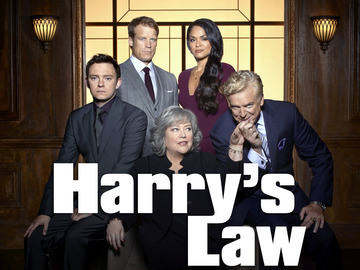
During its first two seasons, the Kathy Bates led legal drama, Harry’s Law drew between 7 and 9 million viewers per episode – qualifying the show as one of NBC’s highest rated (per the Nielson ratings). The show had intelligent plot lines, strong actors, and a loyal following. So in 2012, when the series was abruptly cancelled – after only its second season – it left many people scratching their heads.
What was the problem?
Harry’s Law only scored a 0.8 rating in the coveted 18 to 49 demographic rating. Although the viewers were there, they were the wrong kind. The show’s more mature audience wasn’t consumption hungry enough for advertisers. Harry’s Law viewers were too financially disciplined – too smart – to warrant a prime time television show.
Fast forward to the present…
In August of this year, A&E network announced that they were in talks to buy a 10 percent stake in the Vice network – at a price that would value the upstart company at $2.5 billion. The A&E investment would add to the 5 percent stake in Vice that Fox already bought for $70 million last year (at a $1.4 billion valuation).
Why the attraction?
Per the New York Times “Vice has managed to convince many traditional media executives that it is the gatekeeper to a new generation of millennial viewers, especially the elusive young male.”
Ahh, the “elusive young male,” that species with little to no responsibility, high discretionary income, an unlimited appetite for frivolous consumption, and crude taste.
What programs can you expect from Vice? Their most popular video to date, “First Animal to Survive in Space,” has 12.1 million internet views, followed by “The Biggest Ass in Brazil,” which has been viewed 10.6 million times.
Not exactly entertainment for the refined.
But wait, there’s more.
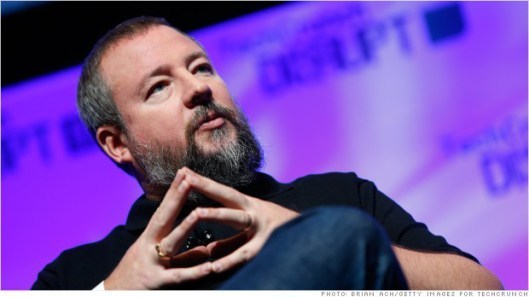
Shane Smith, Vice Network’s Chief Executive
Shane Smith, Vice’s chief executive wants to use the investment from A&E to expand Vice into a 24-hour network. That’s right, 24-hours of quality entertainment – the CNN of international Ass measuring. And to be clear, when we say “Ass” we’re not talking about a donkey.
So next time you turn on the TV or go to the movies and wonder where all the intelligent programming has gone, you can thank market fragmentation and Big Data for helping media programmers exploit the more profitable consumption demographics.
———————————————————————————————————
Patrick Ord is a business consultant and author who writes on themes of Big Data, culture, and faith. His novel, THE CURTAIN, was published in 2013. He blogs at henrymaddox.com.
Filed under: Destruction Is Not Profit Tagged: A&E Network, Big Data, demographics, Fox Network, Harry's Law, Market Fragmentation, Television Ratings, The Curtain - A Novel, Vice Network


November 25, 2014
What Google’s Eric Schmidt Doesn’t Understand
Where is the wisdom we have lost in knowledge? Where is the knowledge we have lost in information?
- T.S. Eliot “The Rock” (1934)

What Google’s Eric Schmidt Doesn’t Understand
Eric Schmidt is at it again, promoting his vision of the future.
It was only a couple of years ago that Schmidt stepped down as Google’s CEO – ostensibly because of blowback from such comments as:
“We don’t need you to type at all. We know where you are. We know where you’ve been. We can more or less know what you’re thinking about.” (Atlantic Monthly forum in October 2010).
and
“If you have something that you don’t want anyone to know, maybe you shouldn’t be doing it in the first place.” (December 2009 interview with CNBC’s Maria Bartiromo)
Presently, Google’s (still) Chairman is continuing to challenge our notions of privacy. In a CNNMoney interview by Logan Whiteside on October 16, 2014 titled “Google: We’ll make you smarter … if you share your data,” Schmidt says:
“The evolution of Google is to go from you asking Google what to search for, to Google helping you anticipate, to make you smarter. You let Google know things, Google will help you.”
Or in other words, surrender your brain to Google.
Google could tell you what and where to eat for example. Where is the harm in that? Google would already know your location, food history preferences, health goals, and budget constraints. Apart from the obvious privacy concerns – malicious hackers obtaining your Google data profile – this would be a perfect decision to outsource to Google. Your food selections would be irrefutably rational.
Schmidt clearly thinks this vision will enhance the human experience – as well as make Google gobs of money.
Google’s paradigm would trade personal experience for digital expedience. We would all be so much more efficient with so many less headaches. Subject to the black box logic of Google’s algorithms, we could lead logically defensible lives. We would never be wrong. After all, Google would have our back.
We would place our faith in Google as our higher power. Our ultimate hope? That Google’s algorithms might be perfected.
Forget that Google currently must defend their search algorithms from accusations of political bias or that clever search engine optimizers still figure out ways to game Google’s search logic for money. By the time Google is making critical life decisions for you, they’ll have it worked out.
That’s the problem. Someone somewhere is coding Google’s algorithms. That someone, who is doing the heavy lifting for your brain, might have faulty logic, unrecognized or deliberate biases, or an incomplete world view.
To be fair, it’s not just Google. Every major corporation wants your data. It just seems that Google’s vision is the most brazen. Where most data gatherers are content with monetizing your data – selling it to marketers in aggregate or on a personal level – Google seems to want to control your decisions. Talk about a power grab.
Save for food allergy concerns, there is only so much harm a Google selected menu option might cause but what about more important decisions? Who and when to marry, how many children to have, what faith to practice, how to find purpose in human suffering…
“That’s preposterous,” you say. “We would never trust Google with those types of decisions.” But how prepared will we be to make the hard decisions when we’ve had no practice making the easy ones? When will we practice human intuition in a supremely rational, increasingly automated, and ultimately thoughtless world?
The Pew Research Center’s recently published document titled “The Next America” (April 10, 2014) provides some foreboding insights about the “Millennial” generation (current ages 18 – 33). The study observes that “Millennials” are “digital natives” who grew up with cell phones and social networking. Millennials are also the least religiously affiliated group in modern American History and are slow to marry and have children.
Evidently, these “digital natives” are punting on life’s most important decisions. Google’s algorithms are already failing them.
Patrick Ord is a business consultant and author who writes on themes of Big Data, culture, and faith. His novel, THE CURTAIN, was published in 2013. He blogs at henrymaddox.com.
Filed under: People Are Not Products Tagged: #destructionisnotprofit, #peoplearenotproducts, Author Patrick Ord, Big Data, Digital Privacy, Eric Schmidt, Google, millenials, Pew Research Center, search algorithms, Social Media, The Curtain - A Novel, The Next America


October 6, 2014
U2’s “Songs of Innocence” a Gift or Malware?

It’s been almost a month since U2 shared the stage with Apple CEO Tim Cook to announce the giveaway of their newest album Songs of Innocence. Bono was quick to clarify that Apple actually bought the album from U2 as a gift for Apple’s more than half a billion iTunes subscribers — reportedly at a cost of $100 million. Bono felt the distinction was important because in his words, “I don’t believe in free music. Music is a sacrament.”
Bono’s censure of free music felt as contrived as his onstage banter with Tim Cook.
The press coverage following the release didn’t get much better. Many iTunes users felt that Apple putting Songs of Innocence on their devices without their permission was invasive and Apple had to scramble to create a U2 removal tool. U2’s LP had officially been relegated to the status of malware.
Then the pundits decided to pile on. Sharon Osbourne (wife of Ozzy Osbourne, talk show host, and former X Factor judge) lashed out on Twitter with such gems as:
“U2 you are business moguls not musicians anymore. No wonder you have to give your mediocre music away for free cause no one wants to buy it.”
And
“Whose political ass are we going to pull you out of today? Or are you front row at another tragic fashion show?…”
 But here’s the thing. Songs of Innocence is good music. And by good I mean both a really solid musical effort and an inspiration. The music is optimistic, thoughtful, and hopeful. The music is the exact opposite of the LP’s insincere, commercial, cynical, and crony-filled promotion.
Bono said that Songs of Innocence is U2’s most personal album.
The song Iris (Hold Me Close) is about Bono’s mother who collapsed (and died) at her father’s graveside 40 years ago, when Bono (Paul Hewson) was only 14. He said, “…I’ve just sent out a love song to her. It’s pretty excruciating stuff.” The lyrics cry:
The star
That gives us light
Has been gone a while
But it’s not an illusion
The ache
In my heart
Is so much a part of who I am
The song “Raised By Wolves” is about a terrorist car bombing in Dublin in 1974. Both the bombing in Dublin and Monaghan were responsible for taking the lives of 33 people and wounding more than 200. Bono would have been 14 at the time (just months before his mother’s passing). Bono said that on that day, he had planned on visiting his favorite record store on Talbot Street but changed his mind at the last moment — personally escaping the disaster.
You can hear the confusion of a 14 year-old Bono in the lyrics as he seeks to reconcile his faith with the terrorism existing during Ireland at the time.
“Boy sees his father crushed under the weight
Of a cross in a passion where the passion is hate.
Blue mink Ford, I’m gonna detonate and you’re dead
Blood in the house,
Blood in the street
The worst things in the world are justified by belief
Registration 1385-WZ
I don’t believe anymore
I don’t believe anymore”
“Song for Someone” is a sentimental song about when Bono first met his wife Ali. Bono was 13 and Ali was 12.
“You’ve got a face not spoiled by beauty
I have some scars from where I’ve been
You’ve got eyes that can see right through me
You’re not afraid of anything they’ve seen.”
(Rolling Stone has a fantastic track-by-track guide to help you better understand the history behind each song here.)
So, take the time to give Songs of Innocence a listen. It’s an effort of substance, it’s worth the effort, and did I mention it’s free?
Filed under: Transcendent Morality Tagged: Apple, bono, Free, Gift, Malware, Songs of Innocence, Tim Cook, track-by-track analysis, U2





U2’s “Song’s of Innocence” a Gift or Malware?
It’s been almost a month since U2 shared the stage with Apple CEO Tim Cook to announce the giveaway of their newest album Songs of Innocence. Bono was quick to clarify that Apple actually bought the album from U2 as a gift for Apple’s more than half a billion iTunes subscribers — reportedly at a cost of $100 million. Bono felt the distinction was important because in his words, “I don’t believe in free music. Music is a sacrament.”
Bono’s censure of free music felt as contrived as his onstage banter with Tim Cook.
The press coverage following the release didn’t get much better. Many iTunes users felt that Apple putting Songs of Innocence on their devices without their permission was invasive and Apple had to scramble to create a U2 removal tool. U2’s LP had officially been relegated to the status of malware.
Then the pundits decided to pile on. Sharon Osbourne (wife of Ozzy Osbourne, talk show host, and former X Factor judge) lashed out on Twitter with such gems as:
“U2 you are business moguls not musicians anymore. No wonder you have to give your mediocre music away for free cause no one wants to buy it.”
And
“Whose political ass are we going to pull you out of today? Or are you front row at another tragic fashion show?…”
But here’s the thing. Songs of Innocence is good music. And by good I mean both a really solid musical effort and an inspiration. The music is optimistic, thoughtful, and hopeful. The music is the exact opposite of the LP’s insincere, commercial, cynical, and crony-filled promotion.
Bono said that Songs of Innocence is U2’s most personal album.
The song Iris (Hold Me Close) is about Bono’s mother who collapsed (and died) at her father’s graveside 40 years ago, when Bono (Paul Hewson) was only 14. He said, “…I’ve just sent out a love song to her. It’s pretty excruciating stuff.” The lyrics cry:
The star
That gives us light
Has been gone a while
But it’s not an illusion
The ache
In my heart
Is so much a part of who I am
The song “Raised By Wolves” is about a terrorist car bombing in Dublin in 1974. Both the bombing in Dublin and Monaghan were responsible for taking the lives of 33 people and wounding more than 200. Bono would have been 14 at the time (just months before his mother’s passing). Bono said that on that day, he had planned on visiting his favorite record store on Talbot Street but changed his mind at the last moment — personally escaping the disaster.
You can hear the confusion of a 14 year-old Bono in the lyrics as he seeks to reconcile his faith with the terrorism existing during Ireland at the time.
“Boy sees his father crushed under the weight
Of a cross in a passion where the passion is hate.
Blue mink Ford, I’m gonna detonate and you’re dead
Blood in the house,
Blood in the street
The worst things in the world are justified by belief
Registration 1385-WZ
I don’t believe anymore
I don’t believe anymore”
“Song for Someone” is a sentimental song about when Bono first met his wife Ali. Bono was 13 and Ali was 12.
“You’ve got a face not spoiled by beauty
I have some scars from where I’ve been
You’ve got eyes that can see right through me
You’re not afraid of anything they’ve seen.”
(Rolling Stone has a fantastic track-by-track guide to help you better understand the history behind each song here.)
So, take the time to give Songs of Innocence a listen. It’s an effort of substance, it’s worth the effort, and did I mention it’s free?
Filed under: Transcendent Morality Tagged: Apple, bono, Free, Gift, Malware, Songs of Innocence, Tim Cook, track-by-track analysis, U2
September 29, 2014
Is Ello a Facebook killer?
Go to the home page of the new social network, Ello, and you will see the following manifesto:
“Your social network is owned by advertisers.
Every post you share, every friend you make and every link you follow is tracked, recorded and converted into data. Advertisers buy your data so they can show you more ads. You are the product that’s bought and sold.
We believe there is a better way. We believe in audacity. We believe in beauty, simplicity and transparency. We believe that the people who make things and the people who use them should be in partnership.
We believe a social network can be a tool for empowerment. Not a tool to deceive, coerce and manipulate — but a place to connect, create and celebrate life.
You are not a product.”
Sounds like Henry Maddox could have written it. #DestructionIsNotProfit #PeopleAreNotProducts
The web is currently abuzz about the prospect of Ello stealing users from Facebook. ZDNet says that 31,000 users per hour are currently joining the site. The Washington Post calls Ello naive, wondering how a social media site with a half-baked (at best) revenue model can survive.
Gizmodo (and others) reported that yesterday, Ello suffered its first Distributed Denial of Service attack (DDoS). So maybe Ello is Naive. How will they fund their growth, finance server security, and pay censors to keep their site clean from smut?
Time will tell. In the meantime, I’ve registered for the site. The idea is worth supporting.

Ello is currently invite only.
Filed under: People Are Not Products Tagged: #destructionisnotprofit, #peoplearenotproducts, Destruction Is Not Profit, Ello, Facebook Killer, Henry Maddox, HenryMaddox.com, People Are Not Products, The Curtain - A Novel





August 5, 2014
Does Capitalism Need Religion to Survive?
On April 10, 2014, The Pew Research Center published a document titled, “The Next America” that explores demographic trends that will inevitably change the United States from what we know today to something very different. The entire document is worth reading. For purposes of this blog post, however, I have decided to concentrate on just one trend that I consider to be potentially, highly transformative.
This trend has to do with the demographic group titled “The Millennials” and their lack of religiosity.
From the Pew Research Study (Bold added for emphasis):
Who Are the Millennials?
Millennial
Ages 18-33
Millennials: Born after 1981
They’re less religiously affiliated, and they’ve been slow to marry and have children.
“Digital natives” who grew up with cellphones and social networking. Highly educated, but because of the economy, struggling financially.
On politics, half identify as independents, more than any generation.
And from another part of the Pew study:
“The generations are divided by more than race and politics. The young are the least religiously affiliated group in modern American history; the old are the most devout believers in the advanced, industrialized world.
“A record one-in-five American adults today – and fully three-in-ten Millennials – do not have any religious affiliation. Of these so-called ‘nones,’ roughly three-in-ten describe themselves as atheists or agnostics; the remainder say they have no particular religion.”
I have many friends who do not identify with any faith — many still who don’t believe in God. I consider them to be good and moral people. But is the morality of the irreligious different from that of the religious? We see from the data that the “Millennials” are slower to marry and have children for example. Is that because they no longer believe in the importance of marriage? The irreligious would certainly be less influenced by the first commandment in the Bible given to Adam and Eve.
27 So God created man in his own image, in the image of God created he him; male and female created he them.
28 And God blessed them, and God said unto them, Be fruitful, and multiply, and replenish the earth, and subdue it: and have dominion over the fish of the sea, and over the fowl of the air, and over every living thing that moveth upon the earth.
One prevalent argument among conservatives is that a nation cannot simultaneously enjoy a limited government — and the associated freedoms — without the stability of solid families. And when families do fail, religious institutions have historically been instrumental in picking up the pieces — from faith based adoption agencies, counseling services, food assistance programs, etc. Under this model, Government programs have been the stop of last resort.
In his book “America: Imagine a World Without Her” Dinesh D’Souza uses the French aristocrat Alexis de Tocqueville’s insights to help us understand the important role that religion plays in the American experiment. Tocqueville traveled widely in America in the early 19th century — only a few decades after the founding.
To quote D’Souza:
“While Americans cherish their freedom, Tocqueville emphasizes that they do not consider themselves immune from moral obligation or moral law. ‘It was never assumed in the United States that the citizen of a free country has a right to do whatever he pleases.’ Americans, however, derive their obligations not from government mandate but from religious morality and social pressure. There are innumerable religious sects in America, but ‘all sects preach the same moral law in the name of God.’ Moreover, religion balances entrepreneurial striving: the latter teaches how to better yourself, for your own good, while the former teaches obligations to others, for the good of the community. Therefore, quite apart from its theological function, Tocqueville writes that for Americans religion ‘must be regarded as the first of their political institutions.’
“Everywhere in America Tocqueville is struck by how Americans look to themselves rather than the government to get things done. Initially people try and do things for themselves. If they can’t, they rely on family. (Tocqueville notes that from the outset it was families, not individuals, who settled America.) Americans also employ what Tocqueville calls the ‘principle of association’ to form countless voluntary groups – religious groups, recreational groups, philanthropic groups, educational institutions and so on. Unlike in Europe, Tocqueville observes that in America ‘when a private individual mediates an undertaking, however directly connected it may be with the welfare of society, he never thinks of soliciting the cooperation of the government; but he publishes his plan, offers to execute it, courts the assistance of other individuals, and struggles manfully against all obstacles. In the end, the sum of these private undertakings far exceeds all that the government could have done.'”
More recently, Harvard Professor, best selling author, and renowned business consultant Clayton Christensen had the following to say about the importance of religion within a democratic, capitalistic, republican form of government.
So what do you think? Is the lack of religiosity among “Millennials” a cause for concern? Can Capitalism thrive without religion?
Patrick Ord is an author who writes on themes of Big Data, privacy, market manipulations, ethics, and culture. With over 60 thousand copies sold to date, his recent novel, THE CURTAIN, has been a break-out success (see Amazon reviews). You can visit his author blog at henrymaddox.com.
If you enjoyed this blog post, you might also enjoy:
“Who Makes Us Who We Are?” and/or “On Joseph Smith, Capitalism, and THE CURTAIN“
Filed under: Transcendent Morality Tagged: Alexis de Tocqueville, capitalism, Clayton Christensen, democracy, demographics, Dinesh D'Souza, Millennials, Pew Research Center, religion, religiosity, The Next America