J.D. Nock's Blog
August 12, 2013
Let The Games Begin
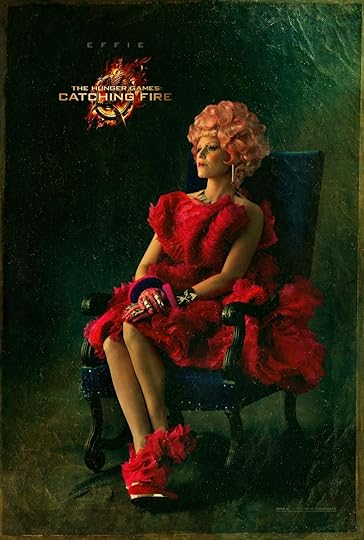
As a Hunger Games enthusiast, I’ve been impatiently waiting the release of the second film. And it’s getting close. Although most of my friends thought that Catching Fire was a bit of a letdown, I think that it’s the strongest of the three novels. The gradual buildup to the anniversary games was all necessary, as the events exposed the deep significance and roots of the rebellion. This set up also complicated the 75th Hunger Games, which were less about entertainment and more about revolution. Based on the trailer, the film will do an excellent job showing this transformation.
Suzanne Collins did a phenomenal job writing the screenplay for Hunger Games. To turn a written story told from the perspective of one character into a movie that shows multiple perspectives must have been beyond difficult. This time around, she’s letting other take the reins. That’s understandable. She helped to make sure that the first film was well done and on the right track.
The impact that this single series has had on young adult literature has been amazing. Dystopian novels are surging in popularity. Studios seem to be snatching up the film rights to various books. The And all of this is driven by the readers. I’ll be in line at the theater on opening day, perhaps wielding a long bow or some sort of mock spear.
Suzanne Collins did a phenomenal job writing the screenplay for Hunger Games. To turn a written story told from the perspective of one character into a movie that shows multiple perspectives must have been beyond difficult. This time around, she’s letting other take the reins. That’s understandable. She helped to make sure that the first film was well done and on the right track.
The impact that this single series has had on young adult literature has been amazing. Dystopian novels are surging in popularity. Studios seem to be snatching up the film rights to various books. The And all of this is driven by the readers. I’ll be in line at the theater on opening day, perhaps wielding a long bow or some sort of mock spear.


March 12, 2013
Thoughts On The Dystopian Fascination
Some of the most popular YA novels are of the dystopian genre. The Hunger Games, Delirium, Legend, Divergent, and Matched are a few of the more recent examples. I welcome this trend (ignited by the success of The Hunger Games), as these sorts of stories raise legitimate questions about human nature and society. This increased popularity has also caused me to wonder why so many desire to read about undesirable worlds.
There is a real fascination that readers have with stories about sinister places and nightmarish scenarios that make us feel uncomfortable, and cause us to question how a just society should function. Sure, a perfect utopian land with an abundance of everything, no crime, and filled with sane people, might be an interesting place to read about. But such a story lacks what many dystopias have; a brutal despotism unchecked by a counterbalance, scarce resources, the obliteration of man’s sovereign mind, and nasty violence around every dark corner. These elements elicit strong emotion, and force us to contemplate many things. And a lot people are drawn to books that provoke such reactions.
Dystopian novels, given their nature, tend to follow some sort of rebellious underground movement that has been persecuted. This story line causes the reader to almost immediately root for the swift overthrow of the oppressors. Whether it is Katniss Everdeen or Winston Smith, we want these characters to eventually succeed in their quest to live a life absent State coercion. But not until we watch them struggle for a while. Because the trouble is how we come to know the characters, their abilities, defects, yearnings, and personalities.
As an adamant reader of dystopias myself, I like to imagine what I would do if trapped in one of these cruel worlds. This thinking is little different than those who vigorously plan how to survive a zombie onslaught. It is fun and interesting. We can debate, guess, and formulate detailed plans in the event that our community devolves into a terrible dictatorship. However distant from reality, it is not pointless to speculate and wonder.
There is also no denying the quality of many dystopias on the shelves. Generally, I believe most of the notable ones are well told stories with relatable characters and startling twists. There is action, romance, and brutality. Villains, heroes, and questionable characters reveal themselves in unique ways. These aspects have lured all sorts of readers. And film adaptations have attracted audiences predisposed to not reading anything, let alone dystopias. A fair amount of students in early high school read The Hunger Games in their English classes. Many of these students loathe reading, but appreciate an opportunity to dive into something current, and engaging.
Finally, dystopias tend to reject conformism in ways that are either subtle, or not so subtle. The protagonist might be overtly fighting the overlords, longing to be different, or at least his own person. Another protagonist might be a proud member of some established order, oblivious to the absurdities he or she must live under. And there are many, many other ways to communicate a similar message. Hopefully, I will soon read some of those stories
There is a real fascination that readers have with stories about sinister places and nightmarish scenarios that make us feel uncomfortable, and cause us to question how a just society should function. Sure, a perfect utopian land with an abundance of everything, no crime, and filled with sane people, might be an interesting place to read about. But such a story lacks what many dystopias have; a brutal despotism unchecked by a counterbalance, scarce resources, the obliteration of man’s sovereign mind, and nasty violence around every dark corner. These elements elicit strong emotion, and force us to contemplate many things. And a lot people are drawn to books that provoke such reactions.
Dystopian novels, given their nature, tend to follow some sort of rebellious underground movement that has been persecuted. This story line causes the reader to almost immediately root for the swift overthrow of the oppressors. Whether it is Katniss Everdeen or Winston Smith, we want these characters to eventually succeed in their quest to live a life absent State coercion. But not until we watch them struggle for a while. Because the trouble is how we come to know the characters, their abilities, defects, yearnings, and personalities.
As an adamant reader of dystopias myself, I like to imagine what I would do if trapped in one of these cruel worlds. This thinking is little different than those who vigorously plan how to survive a zombie onslaught. It is fun and interesting. We can debate, guess, and formulate detailed plans in the event that our community devolves into a terrible dictatorship. However distant from reality, it is not pointless to speculate and wonder.
There is also no denying the quality of many dystopias on the shelves. Generally, I believe most of the notable ones are well told stories with relatable characters and startling twists. There is action, romance, and brutality. Villains, heroes, and questionable characters reveal themselves in unique ways. These aspects have lured all sorts of readers. And film adaptations have attracted audiences predisposed to not reading anything, let alone dystopias. A fair amount of students in early high school read The Hunger Games in their English classes. Many of these students loathe reading, but appreciate an opportunity to dive into something current, and engaging.
Finally, dystopias tend to reject conformism in ways that are either subtle, or not so subtle. The protagonist might be overtly fighting the overlords, longing to be different, or at least his own person. Another protagonist might be a proud member of some established order, oblivious to the absurdities he or she must live under. And there are many, many other ways to communicate a similar message. Hopefully, I will soon read some of those stories