
Aprille Legacy's Blog
November 14, 2017
Chapter Five: Spears and Prayer
Our announcement of engagement was not as shocking to the village as I would’ve liked. My mother had seemed oddly relieved, and I couldn’t help but wonder if negotiations with another village had already begun. Kerul gave the marriage his blessing almost before the words were out of Philben’s father’s mouth. Preparations for the wedding had already begun, despite being a year away.
A week after our intention had been revealed, a villager from an outlying farm came to Kerul with unnerving news. I happened to be nearby, gutting fish from my mother’s most recent catch.
“What did you see?” Kerul asked in an undertone, his voice laced with concern.
“A ship.” The farmer was one I didn’t know, which meant he would usually have stayed on his property. “A big one.”
“How many sails?”
I knew the headman was wondering if the farmer had just seen one of the royal navy ships, patrolling the waters for pirates. But to see a ship on its own, this far from the main island, was rare. My fingers trembled as I filleted deftly. I knew what Kerul was suspecting.
Pirates haunted the waters of the outer Isles. They often attacked small villages, looking for gold, trinkets, women – anything that could be of value to them. They usually left the towns as burnt husks, its people slaughtered. News of a pirate ship in the waters around Ta Raman was extremely worrying.
“Three,” the farmer was saying. “Three sails.”
Kerul glanced up, noticed me watching, and hastily drew the man away. But I’d heard enough. I put down my knife and brushed my hair away with the back of my hand. The farmer had seen a pirate ship – and it seemed to be travelling towards the village.
I found Philben mending nets by the seashore. As I waited for him to finish, I stared out over the bay. It was a natural cove, the land scooping around it, sheltering the inner waters from the larger waves. To the north was a bluff, and around the other side was Dead Man’s Beach. The bluff would provide the best view of the surrounding waters; it would be the best place to spy a ship from.
“Where are we going?” Philben asked as I gripped his hand tightly.
I made sure to smile coyly at him as I whispered my next words. “A farmer has spotted a ship to the north. I want to get a look at it.”
Someone called rudely at us, trying to guess our intentions for sneaking off together. I giggled and steered Phil towards the trail that would take us to the bluff.
“You think it’s a pirate ship?” He asked, once we were surrounding by jungle.
“Kerul questioned the man. He said it had three sails.”
“It could be a navy ship.”
I snorted. “Since when does the Emperor care what happens on the outer islands, Phil? As long as the capital isn’t in danger, he’ll never deploy the navy to help.”
Philben didn’t respond. Instead, he let me lead him towards the bluff. Urgency hurried my footsteps. Since Laru had arrived, Kerul had grown too uncertain to lead. If the villagers had to rely on him to remove them from danger, we were doomed. I wanted my own information, untainted by the men he would undoubtedly send to verify the farmer’s claims.
We passed the turn off for Dead Man’s Beach, continuing up the hill. Philben’s hand grew sweaty in mine, but I didn’t let go. Of all times, I couldn’t let go of him now. Our muscles were burning and our breath shallow by the time we reached the summit. I squinted against the wind as it whipped past us, carrying the salty scent of the sea and faint mist from the waves breaking on the rocks far below.
“There!” I pointed hastily at the blot on the horizon. “That has to be the ship, right?”
Philben looked to where I was pointing. “How did he know it had three sails?”
I’d been wondering that too. “I guess his farm must be further north – he could’ve even spied it going past.”
The black dot didn’t seem to move to us, it was too far out. “Even if it is a pirate ship, how does it know where Ta Raman is?” Philben asked.
I turned back towards our village. Though hidden by the bluff and cove, spirals of smoke rose into the air before being whirled away by the wind. Smaller fishing boats ventured beyond the safety of the bay in favour of larger catches, and it was easy to see them against the sparkling ocean. “They know we’re here, Phil. We have to leave.”
“That’s not your decision to make, Illy.” Philben turned away from the distant ship, facing me and blocking some of the wind. “Kerul has to give the order for us to leave.”
I nodded, though I had a bitter taste in my mouth. Kerul couldn’t be trusted to make such a decision anymore. A leader he had once been, but no more. But the villagers still looked to him, trusted him, to guide them to safety. They couldn’t see past the stoic man who had once been so respected in our community.
They couldn’t see the spineless coward that I did.
We began our descent down the bluff, hands clasped, and I wondered if either of us would make it to our wedding day.
My worst fears had been confirmed; we weren’t leaving Ta Raman.
The men Kerul had sent to see the ship had returned saying that they couldn’t know for sure it was a pirate ship. Instead, the story had been passed around that it was a naval scout, patrolling the islands to keep the peace. The villagers had seemed relieved to receive such an innocent explanation, but I knew what the ship truly was. I couldn’t describe it – I only knew in my heart that death was coming.
Prayer was now called daily, in service to Sarhi, the new, all encompassing god that Laru worshipped. Every morning and every evening, my mother and everyone else who I’d grown up with, knelt on the rough volcanic rock and prayed to his unforgiving statue. Laru was taking advantage of the recent scare, using guilt and fear to frighten people into attending his sermons, denouncing the old gods.
Only I continued to tend the old temple on the cliffs. I knelt on its smooth dirt floors one afternoon, the sea breeze making the beads hung around the room clink together softly. Scented smoke from a fresh stick of incense curled in the air, and the only other noise came from the sea, far below. I prayed at the feet of the Yani idol, hoping that I could make up for the abandonment of the village. I was so engrossed in my prayer that I didn’t hear the footsteps behind me until it was too late.
Strong arms grabbed me, hauling me up. At first I was so shocked at being interrupted that I didn’t resist. Slowly, I realised that the one who held me was Laru, his browned face twisted into a sneer.
“Heathen!” He snarled at me, and I tried to escape his grasp, writhing like a fish on a hook.
“Let go of me!”
He hauled me outside, where I was surprised to see other villagers standing on the worn path, some holding torches in expectance of the coming evening. My surprise soon turned to fear when I noticed that they wore expressions of accusation, matching the one Laru turned on me. He threw me to the ground and I landed hard, feeling sharp stones cut into my skin. My hands stung where they’d slapped the ground.
“This heathen continues to worship false gods!” Laru’s reedy voice had become one of a preacher, strong and determined, reaching out to those who stood back. “She will be the one to bring the wrath of Sarhi, the true god, down upon us if she is not punished for her wicked ways!”
Villagers were nodding in ascent, as though they had not once worshipped the Yani. Fear beat a painful drum in my chest as I searched the crowd for a familiar face, and failed.
“She must be cast out of our community! Let Sarhi see that we do not house sinners in our midst!”
“Hear hear!” The cheer was taken up by the crowd of onlookers, some more vehemently than others. I staggered to my feet, only to have my arm snagged by the furious holy man once again.
“I do not worship false gods!” I snapped angrily. “The Yani are the ones who have always protected us, accepted our willing sacrifices. There can be no other god!”
The preacher’s slap came without warning, and it knocked me to the ground once again. My cheek burning, I looked up through tears at the onlookers. Relief flooded my system as I recognised Philben pushing through.
I fell into his arms gratefully, choking back sobs of fear. “What is the meaning of this?” He demanded angrily, and it was not my childhood friend that spoke, but the voice of my husband-to-be. “Why are you treating my betrothed so?”
Laru launched into his heathen spiel, but Philben was not listening. He wiped away my tears with his thumb, pressing his lips against my forehead. When the preacher reached his reason for me to be banished from Ta Raman, Phil stood angrily, pulling me with him.
“Don’t be ridiculous! You are not our leader – only Kerul can make a decision like that. She will not be leaving the village.”
Laru’s face twisted in anger. He did not like being shown up by Philben, a boy in his eyes. Fear for my betrothed gripped my chest like a vice. When the preacher narrowed his eyes at me in barely repressed hate, I could absorb it, but Phil… no one had ever spoken an unkind word to him in his life.
“Fetch Kerul!” Laru demanded, and a several left the group to do as he bid. Kerul arrived a few moments later, red-faced and short of breath. My mother followed closely on his heels, but unlike Philben, did not make any effort to comfort me. “This woman has returned to worshipping your false gods, even when commanded to turn to the arms of Sarhi! She is a sinner, and must be removed from our community.”
The preacher’s accusation hung in the air, as Kerul looked over me. I was burning to defend our gods, to plead for Kerul to show a little spine for once and stand up to the preacher, but as I looked upon my leader, I knew all hope was lost. I remembered Kerul from my childhood – fit, lean and a dedicated leader, ready to protect our village at any cost. But the man that stood in front of me now was not that man; he was a pale shadow of him.
“My daughter will not be leaving Ta Raman.” My mother finally spoke up, pushing past Kerul to stand beside Philben. “And you, preacher, need to reassess your position within our village. You are a newcomer. My daughter has grown up on these shores, and grown up with the gods you have cast aside. If it is anyone’s fault for her sins, it is mine; I taught her to be a dutiful, spiritual daughter, and I think you will find that many of us are having a hard time forgetting those gods we knew before yours.”
Several villagers were nodding in agreement with her statement, and I felt a pinch of satisfaction to hear the tone she usually used on me directed instead at the vicious man. As I watched, his face twisted into a snarl, and the look of pure hatred on his visage managed to take me by surprise. Never had one had such vile feelings towards me – it was unnerving.
“If you will not make her leave, then there is only one course of action!” Laru snatched a burning torch from a woman nearby, and before anyone could stop him, tossed it into the Yani temple.
At first I thought it wouldn’t catch, but then the torch rolled under one of the beaded curtains, and the flames roared up to the roof with gusto. Fire spread with surprising speed throughout the temple, the dry driftwood offering no resistance to the heat. Before long, the entire temple was burning, the heat of the fire forcing us all back. Tears rolled down my cheeks as the rest of the building caught. With a roar of embers, the roof collapsed, and the Yani temple was destroyed.
Villagers were returning to their homes, heading back down the cliffside path. Laru stayed, a grin on his weathered face as he watched the rest of the flames devouring my holy sanctum. It took all my strength to not shove him off the cliff, to the hungry waves below, so instead I drew on my magic.
But even as I gazed on the face of my most hated enemy, I could not summon my power at will. Forcing down more tears of frustration, I took Philben’s hand and let him lead me back home.
I sheltered in Phil’s hut with his family. One of his little sisters, oblivious to what had happened on the cliffs, started braiding my hair. It felt like a tiny parrot preening me. Philben and his father were muttering darkly in the corner, while Seruni, his mother, cast anxious looks my way.
“Ilsa,” Phil sat next to me, closer than we usually did. I welcomed his comforting warmth. “After our wedding, I think we should leave Ta Raman.”
I squeezed my eyes closed, trying to repel his words. “This is my home,” I whispered.
“As long as Laru remains here, you aren’t safe,” Hekam sat on my other side. His smallest daughter climbed onto his knee, and he absent-mindedly fixed the beaded necklace around her pudgy neck. “He will try again and again to cast you out, to make an example of what happens when you don’t worship Sarhi.”
His words sickened me. I knew hatred for Laru then – raw, pure hatred.
“Is there anywhere in the Empire that still worships the Yani?” Phil asked, and I was surprised. He wasn’t particularly religious; he preferred spearfishing to prayer.
“The islands far to the north might. But Sarhi’s influence is spreading. Ilsa, your safety-”
“- is more important than my religion.” I murmured. “I know. And I would never do anything to put your family at risk.”
I saw then what had to be done, and forced the words through stiff lips.
“Our engagement must end, Phil.”
The room went silent. The comforting tugs on my hair as the sister braided it ceased.
“C’mon, girls,” Seruni said, and led her daughters from the hut. I was left sitting between Philben and his father.
“Ilsa… do you think I asked for your hand because it was the right thing to do?” Phil sought my grip, and I let him pull my limp fingers into my lap. “I asked you because-”
Hekam cleared his throat loudly. “I am going to join your mother and sisters outside. Ilsa… please think carefully about your steps from here.”
We watched his push past the curtain, and suddenly both became very aware that we were alone.
“Phil. I’m putting you at risk of banishment. I’m putting your beautiful family at risk of banishment. I’m the lowest ranked member of the village, you know this. It was wonderful of you to ask me, to try to grant me protection, but-”
My words were cut off by his kiss. His lips against mine felt strange at first, then familiar, all at once. His hands cupped my face, one thumb moving against my jaw.
“Marry me, Ilsa,” he murmured against my mouth. “Marry me and I’ll protect you for an eternity.”
“Yes,” I whispered. “Of course I’ll marry you.”
I felt his smile, the eagerness in my chest as he leant in to kiss me again, wondered how long we’d have before a nosy little sister snuck in-
“Philben!” His father’s voice was harsh. “Ilsa! Come out!”
Fear rocked me to my core. I’d never heard Hekam’s voice like that before. Phil took my hand as we stood, and we wasted a moment with our foreheads pressed together, finding silent understanding in each other’s eyes. As he led me from the hut, I saw him take the spear leaning against the wall. Its razor-sharp point glinted in the midday sun as we emerged outside.
The entire village stood in the square, some on the beach. Other men, like Phil, were armed, and for good reason.
There was a pirate ship in our harbour.


July 11, 2017
Author Interview: Emily Taylor
I met today’s author, Emily Taylor, during the golden days of Goodreads. On April 4th 2017, she released her first novel, a Soul to Take.
The world has changed: demons of legen d now live among humans, integr ated into society through Government programs, wishing for peace.
Elixia Albelin, however, isn’t sold. As an Agent-in-training, she knows firsthand the blood-thirst of demons and isn’t jumping to befriend the monsters plaguing her dreams.
But when a mission sours, Elixia’s sister is caught in the crossfire: taken. Abandoned by those meant to protect her family, Elixia is left with only one option if she wants to retrieve her sister—a taboo option that goes against everything she believes in.
She must sell her soul.
Now, bound to a beast and living on borrowed time, Elixia has to navigate the demonic world to find her sister within a cesspool of human traffickers and serial killers. Enemies control her fate, the simplest truths are questioned, and misperceptions must be shattered. Only one thing remains consistent—Elixia must find her sister before time runs out. Or become the very thing she fears most: a soulless monster.
Gritty, powerful, and exciting, A Soul to Take is a gripping debut that explores prejudice, justice, and the consequences one family faces when those two collide.
Where did you get the idea for this novel?
I’ve always been fascinated by the bonds of sisters and the fact – most relationships – are taken for granted until they’re gone. And I wanted to explore those themes within an urban fantasy setting similar to Kate Daniels by Ilona Andrews (one of my favourite series). The idea of ‘demons’ and contracts was born three years before I started writing when I watched the first season of Black Butler – thus the Sebastian nod. It then grew into something so much more as I built this new world and pushed my characters. Really, in the end, I wanted a novel I would read: a kick ass, pride and prejudice style romance, with fantastical elements. But SOUL turned out so much more than that.
What was your favourite scene to write?
It changed with every draft. But I think, in the end, the garden scene between a certain someone and Elixia. There’s just so much conflict between the two of them: You have Elixia denied the one thing she wants and taunt tension between her and this man as he withholds this opportunity from her, despite wanting to give her everything. It comes down to two people trying to do what they believe is best, really; and sadly, that isn’t the same thing. In the end, it implodes and pushes Elixia over the brink.
The scene is a little tribute to the rain scene in 2005’s Pride and Prejudice, as well. So that makes me a little happy – or a lot. haha
Who was your favourite character and why?
Don’t ask me that! They’re all my babies. But I think Mason has a special place in my heart. He’s another character just trying to do his best with what life’s given him. He’s very misunderstood, but he kind of uses that to his advantage in some cases. I like to think he and Elixia become great friends after SOUL. They’re very similar: stubborn and prideful to a fault.
Did you face any challenges whilst writing? How did you overcome them?
Heaps. SOUL was a very long journey. Every time I learnt something new at university, I wanted to put it in SOUL; this made for many rewrites and delays (on my behalf and the publications side, too). I strived for perfection only to realise it doesn’t exist. But I tried my hardest with my abilities at the time.
Now a little about yourself:
What music do you write to? [image error]
Anything that suits the mood. I’m a musician – I love everything I deem good (such an arrogant statement but ah well). I’ll listen to musical canon one moment, heavy rock the next, then rap or dream pop – it’s good to have a wide taste.
SOUL had a wide variety of songs hahah https://open.spotify.com/user/emilytaylorinkie/playlist/1yrSNj0a8HfQVLb3wU41fI
What is your favourite genre to write, and why?
Try as I might, I can never stick to just plain melodrama. There has to be something fantastical about it. Ordinary folk in (very) extraordinary cases – that always gets me. Despite that, I always try to reason it. So a lot of my stories end up being ‘science fantasy’ in the end, when you correctly classify them. Which amuses me. SOUL is the same. It is urban fantasy, but in my workings I do have (very bad) science justifying the mythology.
What books have you read lately?
FINALLY catching up on Kate Daniels. I was very naughty and fell two books behind. The series is still awfully enjoyable. But I’m also reading a bit of non-fiction for university.
Give us your best tip for beating writer’s block (asking for a friend):
Just write. It sounds stupid but you need to put aside all expectations – that you put on yourself and feel others put on you – and just write. It will be shit. But that’s okay. The flow comes once you get a feel of where you’re going. So brainstorm and focus on themes and conflict. Oh, and grab a notebook and go outside. Sun is good.
What is your number one rule for writing?
You’re not a writer unless you write.
What’s something you know now that you wish you knew when you started out?
If you write, you’re a writer. If people read your work, you’re an author.
What do you do when you’re not writing?
Create epic covers for epic authors.
Create films and other media content for university.
Teach piano.
Drink tea and watch TV.
Read.
Sometimes venture outside.
My favourite section:
What genre do you have no interest in writing?
I love good stories so really ‘genre’ doesn’t have anything to do with that. I think I have a favourite movie or show or book in every genre. IN SAYING THAT, comedy is a rare skill done well – and sadly, I’m not one of the lucky ones.
What is the weirdest thing you’ve had to research?
Let’s just say, I’m probably on multiple Government ‘watch-lists’.
[image error] What is the strangest question or remark you’ve received about your books/writing?
Eeeh. . . I’m disappointed to say nothing comes to mind. I hope someone in future now remarks something utterly bizarre to me hahah
Describe the worst book you’ve ever read without naming it:
Ooh, that’s hard. So many. I think, just in general, trashy teen books that don’t understand the concept of ‘showing’ or unique characteristics. They’re usually published in bulk once a genre code ‘peaks’ – aka, angels, vampires, etc.
Your biggest pet peeve about the writing industry:
Ahahah Don’t have one? I’m a fairly understanding person. Work with what you have.
The cliche you can’t stand:
Bloody love triangles. They have a time and place – but not in every God damn book. YA is the worst. MC is a perfect Mary Sue and decides to ruin everyone’s relationships because she’s perfect and the world resolves around her. . . Bitch please.
The longest you’ve ever gone without writing, and why?
I’m always writing in one form or another. If I’ve gone long periods without NOVEL PROSE – it’s because I’m editing or doing scriptwriting or exploring something else.
But I can go months without novel writing – which is disappointing and a habit I’m trying to break. Months of SOUL edits really broke my good habits, will admit.
Moving on:
Who is your personal cheerleading squad?
My old Inkpop friends and Wattpad fans.
Describe your writing space in three words:
A catastrophic mess.
Do you have any writing buddies?
They come and go. I don’t have anyone set, but am apart some strong communities.
What does the future hold for you?
Trying to get an Agent – cross fingers.
[image error]
Emily Taylor is the debuting author of A Soul to Take from REUTs Publishing and the recent Conservatorium graduate of Music Technology. She’s now in film school, and when she isn’t writing, editing, staring at the ceiling, or teaching piano, enjoys making covers for self-publishing authors through Yonderworldly. She’s a strong addict of chocolate and tea, and loves live music.
A Soul to Take is her first formally published work and Book One of The Soul Stealers Trilogy.
Find Emily and her book!


July 10, 2017
And the new book is…
On June 3rd 2013, I released a very poorly edited, terribly written novel called Soul Fire into the world. I lost my head in the excitement of self-publishing my first book, and made a lot of mistakes that could’ve been easily avoided. Publishing it so recklessly has been one of the biggest regrets of my life.
This isn’t to say that it hasn’t done good things for me. I’ve been very vocal about Soul Fire’s achievements, even quite recently. I just couldn’t stop wondering ‘what if?‘
On June 3rd 2018, I’ll be releasing the entirely re-written, remastered Soul Fire under a new title.
.:You can find the first chapter here:.
FAQ
What does this mean for the rest of the trilogy?
Unfortunately, this means that it is no longer canon (not officially recognised). A Veil of Stars is now the only book that exists in the Lotherian universe… but it won’t be on its own for long.
Will you be releasing a new Soul Blaze and Soul Inferno?
I most certainly will. Ideally on their five year anniversaries as well, which means:
Book 2 – March 2019
Book 3 – May 2020
But as will all things publishing, I’m not locking in those dates until I have the full manuscripts finished.
But whyyyyy?
Because I knew I could be better. The world in my head was not fully realised in Soul Fire. There is so much more.
Also I started writing it and couldn’t stop.
Why are you self-publishing again?
I’ve become slightly addicted to being my own boss. The amount of annual leave I get is amazing, I ain’t giving up this gig.
Will I still be able to buy Soul Blaze and Soul Inferno after June 2018?
This is a question I have to put to those who help me market. I’m leaning towards ‘no’, because as I said above, it’s no longer canon. I’ll announce this when I have a firm decision.
New title and cover will be revealed at a later date.


July 5, 2017
Chapter One…
Content subject to change
When the dreams first started, I thought I was destined for the madhouse. When they started coming true, I thought I was already there.
I stared at the toothbrush in my hand as though challenging it. Carefully, I gripped the sink and moved the brush toward my mouth, already wincing in anticipated pain. The taste of mint surged across my tongue and teeth, and I brushed slowly, meticulously. The hand holding the sink trembled slightly, and I forced myself to concentrate.
After two and a half minutes of careful cleaning, I leant forward and spat triumphant foam into the sink, then pumped one hand into the air, grinning as I did so. I frowned at the mirror when I spotted the sliver of green at the back of my teeth.
“Bastard,” I snapped. This is what did it. Surely.
Nevertheless, I slipped the toothbrush between my lips again and cautiously scrubbed at the trapped vegetable. Heart pounding in my chest, I leant over the sink and –
Three sharp knocks on the door made me leap forward in surprise, and the toothbrush still sticking out of my mouth collided with the mirror, jabbing into my gums. I swore loud enough to summon my knocking mother into the bathroom to deliver an anti-swearing sermon.
“What have I told you about using that word?” She asked angrily as I wiped blood from my mouth and probed the new sore.
“It happened again,” I said by explanation, and hooked a finger under my lips to show her. She moved forward to examine it. “Every night this week, Mum.”
I didn’t tell her I knew it was going to happen. That last night I’d had the excruciatingly boring dream about brushing my teeth again. And every night I felt the toothbrush slam into my gums, and every evening I relived it again.
“You’re going to the dentist. No, don’t make that noise at me. Wipe your face.” She commanded, and I clamped my lips shut, rubbing my mouth on my bath towel. She knew I hated the dentist. “You’re obviously brushing your teeth wrong. I’ll make an appointment for you tomorrow.”
It was a logical explanation, probably one I would’ve suggested myself if one of my friends had come to me with the same problem. But the dreams didn’t stop at my teeth or the injuries accumulated by cleaning the little enamel bastards. The dreams predicted everything from what Mum would serve for dinner, to what grade I’d get on an assignment that I hadn’t even been given yet.
I shuffled in my pink cow pyjamas to my bedroom. My diary was hidden beneath my mattress, and I had to fish amongst discarded gum packets, lost socks, and bobby pins to find it. I pulled it free, leaning back on my heels and flipping the cover open. Inside, I’d written all the instances of the dreams coming true.
29th of April – It had started raining despite the forecast being for sunshine. I’d brought an umbrella to school at the beginning of the day.
5th of May – I knew what book we’d be reading in English before Mr Burgess handed it to us.
14th of May – I’d accidentally started preparing butter chicken for dinner before Mum bought the sauce home for a surprise. She considered it a lucky coincidence – by now, I knew better than to hope it was.
23rd of May – I’d switched off the headlights in my car on purpose – having been forewarned by dreams of a flat battery – and come back to one anyway. Here was my first scribbled sidenote about the dreams being set in place, and unavoidable. It had a question mark. How naive.
I grabbed a sparkly pink pen from my desk and scrawled 26th – 28th May – toothbrush, toothbrush, toothbrush. Setting the diary down on my messy bed, I propped myself up on my elbows and re-read the entries. A frown creased my forehead. The dreams were getting closer together. And stronger, too. I closed the little book with a snap and shoved it back amongst the grave of thousands of hair accessories. With a half-glance at the sleeping laptop on my desk, I ground my teeth, and swore under my breath as it aggravated the new wound on my gum.
In a burst of pain-fuelled frustration, I hoisted myself up, slammed the laptop lid down and switched the light off. As I climbed into bed to roll up into an angry burrito, I considered the half-finished History assignment I’d just given up on.
“Who cares?” I muttered, twisting to tighten the blankets. “I get a C anyway.”
~
I slept fitfully, my mind torn between predicting the future and trying to insert normal dream themes into my subconscious. As a result, I’d experienced a weird fusion of reality and fantasy, and now I was quite concerned that my English teacher was going to fly in on a vacuum and make us split into pairs to grade essays. To be honest, I wasn’t sure which part I was more worried about.
Mr Burgess walked in, half-eating a sandwich and reading something on his phone. It wasn’t an unusual sight – he taught at least a third of the classes in my little high school and practically ran the place. Yet despite this, he still managed to be one of my favourite people in the world by being completely chill and laidback. He was a good teacher, someone you’d listen to even if you weren’t interested.
Distracted as he was, he didn’t notice that he was dangerously close to The Jar, which took prime position on his desk, full of jellybeans that were handed out when we did well or when we needed an energy boost. Too late, half the class realised this and stood, shouting, in an effort to protect the only thing worth living for – sugar.
Mr Burgess jumped half a foot in the air, dropping the phone. His elbow knocked The Jar and we waited with baited breath as it rocked forward, tilting dangerously over the edge of his desk. No one moved as time came to a still, and then despair sank in as the heavy glass lost its battle to gravity and fell slowly, like the dreams of all who watched its path. The Jar shattered, sending colourful waves of beans across the faded and stained gray carpet.
“Damn.” Mr Burgess said simply, and then tried to tuck the sandwich into his pocket as he lifted his phone to his mouth. “Sorry, everyone.”
“I’ll get those for you, Mr B,” I said loudly from the back, and those who got my meaning tittered, including the teacher who rolled his eyes.
“If you think I’m letting you eat anything off this fifty year old carpet, Rose Evermore, you’re going to have to bribe me.”
I smirked. “You’re in luck – it just so happens that I’ve come into some jellybeans.”
He just shook his head and opened a cabinet. My joking manner evaporated and icy dread filled me when he took out the little hand vacuum.
“I think this will be a lot more effective at cleaning up the beans than you, Rose.”
I clenched my jaw, swore internally at the pain, then made an effort to smile. “You’ve never seen me eat floor candy before, have you?”
Amused at our banter and the pocket sandwich, the class was in a good mood, and we mucked around more than anything, our essays lying forgotten on the desks. I went about the rest of the school day like any other, but I kept forgetting to ignore the predictions; I caught a drink bottle just before it fell from a desk, I stepped around the droppings of an overly-excited pigeon, I caught a wayward hacky sack someone threw at me from behind. Every time my surroundings took on that shade of familiarity, my stomach clenched in dismay, even as my body reacted without thinking.
What the hell was going on?
The bell rang as the sun began to sink behind the hills that encircled the town, and I sighed in relief. I’d been feeling unwell for the last hour or so, the result of being caught between dreams and reality, dread and fear. I made my way to the school car park, leaning against my little white car. The cool metal soothed my warm skin, and for a moment I felt better, but then someone spoke behind me and I jumped, slamming my knee into the door.
Three o’clock leg injury; right on schedule.
“Ouch, that looked like it hurt,” Molly Barnes peered at me, her brow furrowed in sympathy. “You alright?”
“Yep,” I said tightly, smiling through the pain. “Sorry, what did you say?”
“Oh right… I said Emily, Neal, Grace and I are going to the library to get that essay done for Walkins. Did you want to come along? I’m shouting pizza.”
Oh man, pizza. I considered it, but then my stomach flipped over and I felt sweat break out on my forehead as I swallowed down nausea.
“Thanks, Molly, but I think I’ll pass. Not feeling so great.”
She looked taken aback, but recovered quickly. “No problem, hope you feel better soon.”
She started to walk away, and I fiddled with my car keys, then called after her. “Molly!” She turned, curious. I took a moment to sort my words out. “Thanks for the invite. I really appreciate it. Any other night…”
She smiled, a big genuine smile. “Sure. I do hope you feel better soon, Rose. See you tomorrow?”
I nodded and she walked off, a bounce in her step that hadn’t been there before. Satisfied that I’d smoothed over our conversation, I got into my car and started the short drive home. On the way, I thought about Molly Barnes, and her group of friends. It suddenly occurred to me that I’d known them all since primary school – I’d always been on the outskirts of their group but never a part of it. I didn’t mind too much; I was too flighty to really have a close, dedicated circle of friends. And this way, we never fought, never got into the silly dramas that seemed to absorb half of my year level.
Invites to pizza study sessions could roll on in anytime, but in terms of commitment, that’s all I could do.
~
“Open wide,” Dr Collins instructed, as though I was holding out on him. I stretched until the sides of my mouth ached. “Better.” He grumbled.
I rolled my eyes beneath the glasses that the assistant had given me. I’d known Dr Collins since I was little – had been coming to him since I’d started growing teeth – and he was always the same prickly arsehole. At least when I was younger I got a free lollypop afterwards.
“Is this the spot you keep injuring?” he asked, and poked at the bruised gum. I bit back a curse but winced, and he took that as a sign to poke again for good measure. “How do you brush your teeth?”
What kind of question was that? I closed my mouth and started explaining, but he was already rummaging in a drawer for something. My heart lifted in the hopes of a lollypop, but they were dashed against cavity-free rocks when he turned back with a shiny red toothbrush that looked like a torture device.
“You’re going to use this from now on,” he said, and explained how to. I crinkled my nose, and lifted the glasses onto the top of my head so he could see how displeased I was. He rolled his eyes and shoved the toothbrush at me. “You’re sixteen, Rose. Time to start growing up.”
“’Time to start growing up,’” I repeated on the car ride home. “What does he mean by that?”
My mother shrugged, her fingers tapping out a beat on the steering wheel. “You do get a bit silly, Rose. Perhaps it’s time you started thinking about your future?”
“Ugh.” Adults and their ‘your future’ talks. “Mum, look at me. Do you really think anything I plan now will have any bearing on what I actually end up doing later in life?”
Stopped at an intersection, she took my invitation literally and appraised me from head to toe. I was wearing my scuffed black Converse, jeans instead of my school pants, and a leather jacket over my navy-blue school shirt. My long brown hair had been swept into a ponytail without being brushed and I didn’t wear a lick of makeup. She sighed, turning her gaze back to the road.
“I worry about you, Rose Evermore.”
Watching a bright yellow Gemini drive past, right on cue according to last night’s dream, I couldn’t help but match her sigh, suddenly glum. “Yeah, me too,” I mumbled under my breath.


June 17, 2017
Writing Tips: Character Development
Holy wow it has been a long time since my last post. Due to several reasons I won’t waste my word count on, I have been only skirting the edges of the publishing world of late, but it’s time for that era to end and another to begin.
So I thought I’d scribble up a few of these with hopefully (?) not seven months between each post.
Character development is one of those things that I adore in other authors, but address in my own books with the roughly the same finesse as an unsupervised toddler with finger paints (though perhaps only a modicum of the enthusiasm). It’s one of those things I wish I was really good at (and when I’m plot-showering, I imagine that I am good at it), but I fear that I am not. With that faith-inducing paragraph, let’s begin.
I once heard someone say that perfect character development is someone going from flawed to flawless. One of my eyebrows lifted so high it has never really returned to its normal station. Because I was seventeen at the time, and wont to do the opposite of I was told (this has never really improved since my misguided teens), I immediately flipped the meaning and decided that my favourite characters went from flawless to flawed. It’s probably the greatest writing tip I ever gave myself. Ever since then, my characters have developed fears, egos, arrogance – annoyances I would never give them before. To this day, Theresa Goodman of A Veil of Stars and Eleanora of my Soul Trilogy are my all-time favourite characters to write. Theresa is a power-driven jerk and doesn’t care who she storms over as long as the end result is worth it. Eleanora hit rock-bottom and discovered that’s where she liked to reside. I have had way too much fun writing both of these women (my beloved car, Ellie, is actually named after Eleanora, though her nick-name is Burger).
(Don’t ask.)
Flawed characters are the ones we go for. The underdogs. The broken. We want to see them healed, but at the same time we hope they won’t. Because they represent the darker side of us? Probably. I’m not going to lie, I feel like I’ve lived in Eleanora’s skin at a few points within the last couple of months (this entire post makes way more sense if you’ve read Soul Blaze). Their dry sense of humour, the tiny glimmer of hope, the small motions of caring for another human when beforehand such things see[image error]med beneath them… It’s what keeps me watching a show, reading a series. Though Revolution was at times misguided and cliched, I watch it almost purely for Billy Burke’s portrayal of Miles Matheson. He’s dry, witty, depressed, and broken. Watching him slowly evolve into the uncle he never wanted to be kept me glued, episode after episode. It takes skill to pull off a conflicted character – you’re constantly tip-toeing a line between annoying and engrossing.
Conflict is good – it pushes action, forces development. But it gets overused very easily, and without sufficient reason, dries out the rest of the storyline. Conflict without rhyme or reason can easily overpower the rest of the elements much the same way too much sugar drowns out the taste of good tea. You want a bit to add flavour, but not enough to make you roll your eyes and say, “Ugh,” as you tip the rest down the sink.
Your characters are M&Ms, with more hidden below the sweet, candy shell than they show the world. Start from the middle – what do they keep desperately hidden? What would unravel them if it was discovered? Everyone holds a secret that could undo their life, like a big, organic self-destruct button. Your characters aren’t so perfect that they’ve gone their entire lives without developing one.
What would surprise people about your character? What personality traits do they have that breaks them from the mold of ‘the nerdy one’, ‘the loyal one (usually for no good reason)’, ‘the bitch’? No one is a villain in their own eyes, everyone has their reasons for the actions they take. Why does your antagonist dislike your MC? What are their reasons for ‘being bad’? Explore these, flesh them out, and see if you can’t get a few people rooting for the bad guys. It’s always more fun that way.
Characters are the main players on the stage of your mind. They have to be woven, crafted, developed, before they can perform – otherwise they might as well be cardboard cut-outs. Action, storyline, plot, writing style can be present and good, but without compelling characters for us to live through, you’ve got no chance of retaining your reader.


November 3, 2016
Chapter Four: Father
When I returned to eat my evening meal with my mother, she pretended I’d never left. Dinner was eaten in silence around the low table in the middle of our hut, but I caught myself watching her. What would be her reaction to my match with Phil ?
My cheeks burned red as I thought of marrying him. I lowered my gaze to the table, and jumped when someone knocked loudly on the side of the front door. My mother sent a glare in my direction like I’d summoned whoever it was during eating time.
She stood, unfolding like a tall crane. Her legs, taut and strong, marched past me, and she opened the door like one meeting the hangman – her shoulders thrown back and her chin lifted defiantly. She relaxed when Hekam, Philben’s father, stooped to come through the door.
“I’m sorry for disturbing your meal, Hanna,” he told my mother in low, soothing tones. “I wondered if I could speak to your daughter.”
Mother, who’d softened, now threw me a look over her shoulder with narrowed eyes. I scrambled to my feet, ignoring her. Hekam tilted his head outside, and I took great glee in the look on mother’s face when he gently closed the door in her face. We heard her huff with irritation, then stomp away.
“Yuri,” I said, inclining my head to him.
He said nothing for a moment. The night was warm and buzzing with insects after the evening rain. The mud under my feet was loamy, and scents of the jungle wrapped around our village like low lying fog. It was one of my favourite times of day.
Then Hekam said, “You plan to marry my son,” and even the wildlife stopped their humming to listen in.
I dropped my eyes to his sandaled feet. My own were bare, and I crossed one over the other, leaving a smear of dark mud against my skin. “Yes, yuri.”
“I want to discuss with you before the announcement. You’ll join me on the water tomorrow, first light.”
My breath caught in my throat. Traditionally, only fathers could take their daughters out on the sea for the first time. Mother had never taken me, almost as punishment for my father disappearing headlong into the jungle at the first sniff of responsibility. I coloured for the second time in moments. “Of course.” I bowed a little deeper this time.
When I entered the hut again, I was practically glowing. Naturally suspicous, my mother plied me with questions, but I gave her nothing and savoured her frustration.
Something roiled darkly in my stomach .
~
The next day dawned bright and fresh. I slipped out of our hut as soon as the first slivers of pale light fell across the village, and when the yellow sun peaked above the horizon, I awaited my new father on the beach. I wore my best skirt, which trailed to the sand and lifted in the slight breeze, and a one-shouldered top that left my flat stomach bare to the elements. I’d even wound and twisted my unruly hair into a heavy bun that sat at the nape of my neck, decorated with a coran flower, whose fragrance hovered around me like perfume. The waxy, white and gold petals stood out against my dark hair and bronze skin.
Usually, this would’ve been a day of ceremony. The entire village would’ve stood on the shores of our bay to watch me climb into a slender boat for the first time. My father would’ve beamed with pride as they accepted me as a nita – a full grown woman.
Unexpectedly, anger shifted through my stomach at the unseen man who’d robbed me of so much before I could walk. Waves wrapped around my ankles, comforting and caressing. I let my shoulders fall with a sigh and turned my face to the pale blue sky. It was going to be a gorgeous day.
“You rise early – good.” Hekam’s voice soared across the sand to me, and I waited anxiously. Idly, I wondered if this whole morning would be him judging my every move, and then decided I didn’t care.
I helped him push the boat from the sand, then jumped neatly on board. I crouched low as Hekam raised the main sail and the eastern winds filled it eagerly. Now we skipped along the waves, the spray dampening my skin and flecking it with salt crystals.
My first breath on the sea filled me with fire. Crawling to the front of the boat, I knelt on the low prow and let both hands dangle in the water either side of the point. Small waves widened and grew, and my fingers tingled. When I looked up, the expanse took me by surprise. We were leaving the Ta Raman bay, to the unseen waters beyond. I knew what was out here; I’d read the maps as though they could possibly compare with actually being on the sea.
“It’s something, isn’t it?” Hekam said behind me, and I spun to face him.
“It is beautiful,” I gushed. “More than I could’ve imagined.”
Teal waves rose and fell under us, and when the sun shone down, I could see the seafloor. It rippled and wobbled, looking as though it was within touching distance. Like my hands would brush the silky sand if I leant over far enough. I looked back at Ta Raman, taken by surprise at how large our village really was. The jungle fringed the small buildings, but our pier and town hall was easily visible, even from this distance. The bluff hid Dead Man’s Bay from view, and downy clouds wrapped around the green mountain that loomed above our village.
“You get to see this every day, and you still come home?” I asked softly as the wind stirred my hair.
Hakem laughed gently. “I have a fine wife and son to come home to. But sometimes it is hard.”
I sat in the prow with my legs crossed. He had sat on the bench below the main sail, and I knew the time for our talk had arrived.
“Ilsa-nita. I want to tell you of your father.”
Shock hollowed me from the centre, then molten anger rushed to fill the void. I coloured. “I don’t want to hear about him.”
Hekam wasn’t fazed by my rough tone. “You must. Hanna will never tell you the truth – she hopes that by leaving it unsaid, it’ll change what you are. But I know, and Philben knows, that that can never be.” He waited a beat and then said the raw words. “You are a mage, Ilsa.”
I clenched my fists, but said nothing.
“You are a mage, and your father was a mage. Probably his father, too. He is Lotherian – that much Hanna would tell us. When you were small, she wanted to send you to Lotheria as well.”
“I wish she had,” I said harshly, then looked away. Waves lapped at the boat, the gentle plink plunk calming me. “I mean, in Lotheria, I could learn… how…”
“To control your power,” Hekam finished for me. “We realise. Philben told me he wanted to ask for your hand, and I wondered the same thing. Would you ever want to go there? To find him? Know that if you are unsure, I can not allow you to marry my son.”
I cast a glance out over the water, the sea that had bordered my life since I could remember. Ta Raman waited behind us, etched into the landscape like stone. I thought of going to a strange land, with stange people, trying to find a man who never wanted me. When I looked to Hekam again, I saw a father who was trying. A man who’d brought me to the seas to claim me as his daughter.
I thought of Philben, with his dark smile and laughing eyes, the strong arms that he’d wrapped around me and the safety he’d provided. I closed my eyes and smiled warmly.
“No,” I said finally. “I want Phil. Forever.”
[image error]

November 1, 2016
Chapter Three: Not in this Lifetime
Something glittery caught my eye. Wedged in the cracks of the ancient granite boulder was a small shell, worn thin by time. I picked it up, my fingers carefully brushing the grains of sand from it. A cowrie shell, no bigger than my thumbnail. It had been polished by the winds and water, and gleamed in different, muted colours. Gold and pearl if I turned it this way, turquoise and sienna the other. I tucked it into my string pouch, alongside the cockles I’d dug from the damp sand near the water. Alongside the fish I knew I’d catch tonight, I was content to feast on the small clams.
When the sun set on my fourth day on Dead Man’s Beach, I was feeling the ache of loneliness again. Philben hadn’t come to find me, though he’d surely know I was here. What was keeping him away? His family liked me… perhaps he was on another fishing trip with his father. Whatever the cause, I knew I had to return.
With the cowrie shell I’d found woven into my long hair, I returned to Ta Raman after five days of solitude. Though I knew I should go home, I found myself walking the path to the clifftop temple, to where I could worship the gods of the ocean – in my eyes, the true gods. I wanted to thank them for the days of peace, living comfortably and safely on their shores.
There was no preacher; there hadn’t been since Jakum had died last spring. Laru had taken his place, but worshipped Sarhi, an all encompassing spirit who seemed cruel and dangerous. The Yani temple, with its driftwood beams and beaded curtains, stood abandoned on the cliff high above the beach. I seemed to be the only who tended to it regularly, taking small offerings to the altar and clearing away the ash of old incense. Today, I knelt before the shrine and signed the god’s symbol across my chest. A gust of salt-rich air blew around me, and I closed my eyes, smiling. The gods were with me.
I felt the shell braided into my hair swing forwards, against the pull of the wind. I felt my power rise with it, and fear began to knot in my stomach.
Not here! I didnt want to set the temple ablaze like I’d done with my hut. I wrestled down the magic, tears beginning to brim under my eyelids as my efforts were in vain. The power grew, rising around me, and the peaceful aura of the morning shattered as sparks of pain began to twinge in my stomach.
“I thought I’d find you here.”
I surged to my feet, my heart thundering in my chest. “Philben! You know you shouldn’t scare me!”
He sat down next to me. “What are you going to do, burn me up?”
I shoved him. “You shouldn’t joke about that, Phil.”
“You’ve been away for the last five days, Illy. I didn’t know if I should come and find you.”
“You know I always welcome your company. What’s wrong?”
He turned to me, rising to his knees. “I don’t know how to ask, Ilsa.”
Now I was quite worried. He almost never called me by my name. He’d never had to, to get my attention. I covered his hand with mine. “Phil. You can’t talk to me about anything.”
He withdrew his hand, his cheeks stained red. “Okay, well… we’re about the same age-”
“I’m older.”
“By a month!” Despite my teasing grin, Philben seemed more agitated than ever. “Ilsa, we’re the only two in the village who are even close in age.”
“So?”
He addressed his next comment to the alter in front of us. “So, I think we should announce our intention to marry when we turn eighteen, otherwise your mother will be pressed to find a match for you outside the village.”
His words gushed over me like a wave breaking on the shore. “Our intention to what?”
He turned to me, still unable to meet my eyes. “I don’t want them to send you away, Illy. And with Laru whispering in everyone’s ear… I think it would be safest for us to announce our engagement to marry.”
Hearing the words spoken aloud, I realised they weren’t as new to me as they should’ve been. How long had I been unconsciously considering Phil as a husband?
It made sense. As he said, we were the only two even remotely close in age, and we had no blood relatives; miraculous in a village the size of Ta Raman. Announcing my engagement to him would grant me his status as well, secure in the arms of his family. It would certainly be a relief to Kerul, our headman, though he’d grown spineless and weak since Laru had arrived in town. It was Kerul’s responsibility to find a match for me, and I knew the amount of work that went into arranging a marriage within another village.
“Alright,” I whispered, the sea breeze blowing strands of my hair into my face. “I’ll marry you, Phil.”
He looked up at me for the first time since his arrival at the temple. “Are you sure?”
I raised an eyebrow, trying to look unconcerned. “Well, who else am I going to marry?”
Something lit in his dark eyes, something I’d never seen there before. Deep within, I felt myself respond. It was certain, reassuring. We were creating a bond that could never be broken. We would never be apart.
His arms were around me, pulling me close, and I leant into his embrace. Tucked against his lithe body, I heard him exhale and say in a rush: “I thought you’d leave me, Illy.”
Nestled in his grasp, pressed against his tunic which smelt of smoke and fish, I smiled. “I could never leave you, Phil. Not in this lifetime.”


October 30, 2016
Chapter Two: Gods and Beaches
My powers flourished when I turned four years old. Just like any other mage, it started with random outbursts of magic. I remembered the day vividly; Mother had just returned home from a short trip to the market to find me chatting with my doll. Made of string and beads, the doll was completely animated, making hand gestures and walking about our hut.
If my mother had been a more suspicious woman, I had no doubt that I would’ve been sacrificed to the Yani that day. Instead, she gathered me up in her arms and distracted me until the doll slumped to the floor. I heard her curse a man that night, for leaving her with this burden.
When I recalled the night a few years later, I realised she’d been talking about me. Since then, we’d been distant from each other. Once, I’d recanted her words to her and she’d grown angry that I remembered, as though I was the one to make her say those words. I’d gotten just as incensed, and before either of us could diffuse the situation, the roof of the hut caught on fire.
Mother’s story was a stray ember from the fire had floated into the rafters, setting the straw on fire, but we both knew what had really happened. I ran away for five days, finding shelter on the shores of Dead Man’s Beach, living on the fish I could catch. I’d been so lonely; having been brought up in a village full of people, my first night away was the worst. Though the nights were warm enough, I built a fire and huddled close to it, sure that each whisper in the night was something, someone coming to take me away – or worse. By the end of my solitude, I’d almost grown accustomed to being alone, but all it took was Philben’s pleas for me to return to the village. I could never leave my best friend behind.
The village remained ignorant of my powers, and I thanked the Yani everyday for it. I shuddered to think what Laru, preacher of new gods, would think of my… abnormalities.
Mages were not born to the Isles. It was another sign of my difference.
~
The rain fell steadily overhead, the noise eclipsed by the crackling of the fire. My belly was full of salted fish, and I toyed with a bamboo shoot, stirring the leftover coconut milk in my bowl lazily. I could feel my magic prickling uncomfortably under my skin and I rolled my shoulders, attempting to release some of the tension.
“What’s bothering you?” my mother snapped from across our small table. Her small dark eyes were reflecting the firelight, and her brow was furrowed along familiar lines. She’d combed her short hair into a top knot, and was mending a sarong, her gnarled hands working deftly as she glared at me.
I glared back. She knew exactly what was bothering me, and was waiting for me to speak the words so she could snap at me. It had become an unwieldy routine between us, and I was tired of it. “Nothing.”
“It doesn’t look like nothing.”
“Just shoulder pains, that’s all.”
She bit off a piece of thread, then tied the stitch. “It’d better be, Ilsa-gais. You know not to lie to me.”
My temper was beginning to boil alongside the magic in my skin, and I stood up so quickly my chair fell over. I grabbed my string bag and dashed out into the rain before she could call me back. She’d become crabby in her years, though I could never really put my finger on when the change had occurred. When I had returned to the village after running away, she’d been relieved – even grateful – to find me alive. But now, as we sat in silence during our nightly meal, it felt as though she’d like me to disappear again.
Holding the string bag over my head as some protection from the rain that poured down from the clouds, my feet automatically trod the path to Dead Man’s Beach, where Philben and I had been fishing that afternoon. Despite the rain, the night pressed in, hot and suffocating, and by the time I reached the beach I was sweating. I drank from my flask, wrinkling my nose as I realised I should’ve drawn more water from the well before leaving the village. I held the flask up to the rain, hoping it would fill somewhat. But before I’d held it to the sky for more than a minute, the rain cleared, as though someone had stoppered a tap.
I sat on the damp sand, pushing my hands into it and splaying my fingers out. Feeling connected, rooted to the earth like this, was one of the techniques I’d discovered for calming my magic down.
Feeling the push and pull of magic begin to subside, I felt it safe to remove my hands from the sand. Damp grains clung to my skin, and I brushed them off on my trousers. Out to sea, a storm was brewing, and I watched the lightning flicker over the water. I leant back on my bag, using it as a pillow.
What if someone could wield the power of lightning? Summon it at will and use it to fry people they didn’t like? I wiggled my toes excitedly. First on my list would be Laru; the preacher had only been in town a few weeks but was already my most hated associate.
The temple he’d built for worshipping the new gods did not look like the one we’d built for the Yani. Instead of the open air temple near the beach, which allowed the sea breeze to gust unhindered as we prayed, Laru had ordered a new temple built from volcanic rock, which needed to be brought from the next island over. Inside it was hot and stuffy, with too many torches lit and too much scented oil used. I hated kneeling on its prickly floor; the rough rock had been known to pierce clothing and skin, drawing blood. Laru told us that it was the god’s way of taking our sin, of accepting our sacrifice.
“But shouldn’t sacrifices be made willingly?” I had asked during my first sermon. “Isn’t that the point?”
Laru had made a scathing retort and dismissed my comment, but I knew several of the villagers had agreed with me. I’d stopped attending temple after that, stealing away to the Yani shrine when I could, so they would know they hadn’t been forgotten. I thought of them now, watching the lightning dance on the surface of the ocean further out. Almost unconsciously, I signed the water god’s symbol on my chest, giving thanks automatically for the bountiful sea that allowed us to live near its edge.
I didn’t return to the village the next day, or the one after that. The first night, I slept comfortably on the soft sand under the stars, and awakened to a glorious dawn of gold and lavendar. I swam amongst the coral reefs that graced the shore of Dead Man’s Beach, and ate my fill of edible seaweeds, fresh from the sea. As the sun rose hot and high, I started building a small shelter using driftwood and materials from the jungle. It was hard work, especially by myself, but as I lashed the wood together using vines, and sunk support posts deep into the sand, I relished the freedom, the idea that no one could tell me off, or stop me from building my own little hut.
As the sun fell past its crescendo, I stepped back to admire my handiwork. It was small, only a few feet of pacing room inside, and had three walls. On the back wall, furthest under cover, was a small shelf that I’d lined with large palm leaves to use as my bed. More leaves had been used as the roof, tied down to the rafters so they wouldnt take off in the strong sea winds. The entire structure was dug into the beach, to avoid being buffeted by the breeze. I walked a few laps around it, made adjustments, and decided it was far from perfect. But then I leapt into the air and pumped my fist. I danced around in the sand, my toes skimming the beach, whooping for no reason other than to make noise.
I built a fire in front of my new hut as night fell, feeding it for hours until the coals glowed. Then I dug a pit and buried fresh fish, wrapped in the waxy leaves from the jungle. I pushed the ashes and embers back over them, then reclined on my bed and sucked cockles straight from their shells. The salt from the sea was the only seasoning they required.
I walked the length of the beach the next day, from the bluff that topped the cape of Ta Raman, to the rocky breakwater at the far end of Dead Man’s Beach. It took me a good hour, and I swam part of the way, just to feel the water surging around me. Since I’d left my mother in the village, my power had slept, apparently dead and unresponsive. I never tried to call it – I never wanted to know what happened if I tried to use it without proper training.
I’d heard the travelling merchants talk of a country to the east – a land called Lotheria. They spoke of the mages and magic there, the academies and students who learnt the ways of the arcane. I’d listened, enthralled, as a man described seeing the magical ones in the main city, their coloured tunics matching the hue of their powers. Even the little ones, the magelings, had been treated with the utmost respect. It was something I’d never experienced, and even as my mother hauled me off by my ear, using her fingernails to make it hurt more, I’d dreamt of going to the land where magic was not only accepted, but celebrated.


Chapter One: Ta Raman
Silver flashed in the midday sun. I remained crouched on the rocks, my muscles complaining after being in the same position for so long. Tendrils of long dark hair swept in front of my eyes and the fish I’d been pursuing darted away, scared by the movement.
“Argh!” I smacked my hand against the water, my reflection rippling. “Gods curse it!”
My companion sighed. “Just because you lost your fish doesn’t mean you have to ruin it for the rest of us, Ilsa.”
My temper, which had been ebbing away, now coursed back and I stood, making Philben squint up at me. “Where are you going?”
“Back. I’m hungry.”
“Well so am I – even more so now that you scared off my dinner!”
I gestured rudely in his direction and began to head back to our village, stooping to pick up the string bag my mother had gifted me on my sixteenth birthday. Slinging it over my rough-hewn tunic, I started the long walk back, hardly feeling the sharp stones beneath my bare feet.
The sun soared overhead, warming my skin quickly. I was already regretting my decision to return, knowing how much cooler it would have been next to the water. I tied my hair back, my shoulders glistening with sweat.
Coming to the top of a small rise, I paused for a moment to examine my village below. Made up of a few dozen different huts, and even a town hall made from stone and mortar, the community huddled together in the heat. From this elevation, I could see figures scurrying about on the beach, some hauling in nets, others splashing in the shallows. Out to sea, I could see several dark blots – the only evidence of our fishermen out for the day. I grinned, knowing my mother would still be absent. She wouldn’t return until the last boat had come in.
I hurried down the path and into the tangle of jungle, desperate to get out of the heat. Salt glittered on my tawny skin, which had deepened to a rich brown under the summer sun. My long black hair brushed against my skin, instantly annoying me again. How I wished I could cut it off! My mother had taken to brushing it nightly, saying that young girls should have long hair to attract a husband.
Even just recalling the memory, I barked a laugh, scaring a small monkey back up a tree. I watched it disappear into the leafy tops, catching a glimpse of other monkeys swinging back and forth, their forms silhouetted against the bright sky. I listened to their chatter as I meandered along the path. Amongst the tangled trees, the sunbeams couldn’t reach me, dappling on the leaf litter underfoot instead.
Though I couldn’t see the ocean, I could smell it. The salty tang of seaweed wafted on the breeze and without thought, I broke into a jog. I never liked being out of sight of the sea – something in me, something primal and deep, rebelled against the idea of being inland. I was never truly at peace until I was standing amongst the waves.
Ta Raman, my village, might be small and cloying at times, but I knew I could never leave it. I’d been born on its shores, learnt to swim on its beaches. I’d grown up alongside Philben – of all the reasons I couldn’t leave Ta Raman, he was the biggest, the most important. He’d never survive without me.
“Ilsa, wait up, would you?”
I grinned but didn’t turn around. It was as though my thoughts had summoned him. I pretended to ignore him until he caught up, huffing and puffing, sweaty but elated for some reason. It became clear why when he dangled a fat silver fish in front of me.
“Where’d you get that from?” I asked indignantly.
He grinned, wrapping the fish in a large waxy leaf and returning it to his satchel. “Turns out without you around to scare off everything aquatic within two leagues, I’m an okay spearman.”
I shoved him playfully. He staggered off the path, pretending my blow had had more force behind it. “Well, I was going to give you one of the fish but now…”
We emerged on the outskirts of the village. The shadows of the jungle reached the nearest huts, sheltering them from the sun. The settlement was basically deserted; everyone had places to be when it wasn’t raining. I glanced up at the sky, calculating how long we had until the rains came. In the summer, they fell as regularly as the sun came up. We’d always known when the rains were going to be falling, so we could have our work completed and our boats docked when the weather turned foul.
“Coupla hours,” Philben commented, squinting at the azure sky. His hair was longer than most of the boys’ in our village and flopped into his dark eyes. His locks were iced with silvery salt flecks, just like mine – evidence of our swim earlier in the day. “Whatcha reckon, Ilsa? Time for another dip after we gut these things?”
My grin was the only answer he needed. With our sharp filleting knives, we set to work on the fish, hanging them on lines over a smoky fire when we were done. My stomach growled at the smell of cooking fish, but my thoughts had already turned to the water.
We trotted down the path to the beach, passing several villagers who were busy with their own fish or crafts. Grains of sand pushed between my toes, and I dumped my string bag on a mound of seaweed and dashed towards the waves. I was barely knee-deep in the foam before I flung myself into the water. Under the surface, sound was muffled, the water stirring with silt as waves passed overhead. I struck out in a long stroke, seeing how far I could travel underwater before I was forced to return to the surface. I did so with a grin, coming up next to our wooden dock. One of the fishermen had returned early, and eyed me off as he coiled rope.
“I reckon you were swimming before you were born, Ilsa-gais.” Netku said, his stern face creased into a frown.
“Haven’t you heard?” Philben asked innocently, paddling alongside me. “Her father was an Ularair. It explains her slippery nature, especially when asked to do chores.”
I pounced on my friend, forcing him under. He came back up spluttering and wailing, pretending I’d half-drowned him, but he was a better swimmer than even I was.
“I’m not half-Ularair,” I couldn’t help protest, though I knew it was a jab. “Water serpents don’t exist, Philben.”
“They do. I heard some of the fishermen talking about seeing one off the coast, in the Dua Shoals.”
“Is that true, Netku?” I turned back to the man on the docks, my hair swirling around me like ink. “But there’s no such thing as an Ularair, right?”
“You should be a storyteller, son.” Netku hoisted a basket full of fish onto his shoulder. “No, Ilsa-gais. There’s no such thing as an Ularair.”
“Why does Netku call you ‘girl’?” Philben asked curiously, as the older man walked back towards town. “Everyone else calls you ‘nita’ now that you’re sixteen.”
I shrugged, not wanting to answer. I’d always suspected that Netku hadn’t liked me much, even less than everyone else; a thought that had only been reinforced when Laru, the new preacher, had taken up residence in the old cottage. Supposedly, we had new gods to worship, and Laru had gotten right to work, finding out everything about each individual townsperson. He’d immediately disliked me, as though a lack of a father was my fault. My mother had flown off the handle when she’d found out that he was focussing on me, but Laru’s work was done. The town remembered my… differences with vehemence.
No, I didn’t haven’t a father. He’d left before I was born. I’d been brought up under the stern hand of my mother, until I was a model village girl. It wasn’t until I reached my teen years that I discovered no matter how perfect I was, how well behaved, I would never be a favourite of the villagers.
Oh, they treated me well enough. Eventually some of them managed to see past their prejudice and became my friend. But all the kindness in the world couldn’t erase my memories of early childhood. There would always be a stigma about me, and I knew that if anyone discovered the secret my mother had sworn me to, it would only become worse.
[image error] [image error]
October 16, 2016
#5 Books That Made Me Cry On Public Transport
We’ve run into these types of novels before. They lure you into a false sense of security and then BAM! Someone’s dead, you’re left with a gaping hole where your heart used to be, and your eyes sting. They moisten. Suddenly the book rips the lid off of everything that’s been building up into a nice big cry and it. is. on.
Here are five books that targeted me when I read them on public transport.
5 – The Short Life of Sparrows by Emm Cole
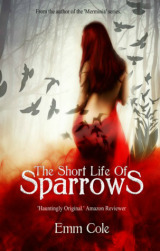
Once again, this book features on a list. I read the ending of this in two physical locations – my bedroom just before going to sleep (I say sleep… I mean lying awake with my eyes wide open wondering how anyone could do that to their readers). The other was halfway between Eden Hills and Coromandel on the train after TAFE. I had some serious jaw-grinding going on to stop the sads. Had to distract myself by counting ducks as we went past the national park.
4, Not A Drop to Drink by Mindy McGinnis
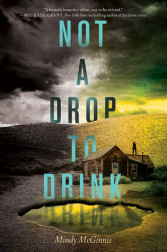
Picked this up from the library thinking it would be your standard apocalyptic survival story – a bit of a guilty pleasure of mine. Instead it was the heartwrenching tale of a girl who is as hard as the land she’s grown up on. This book is brutal. It earned a chin wobble just out of the Adelaide Showgrounds. A few commuters saw my eyes mist up and edged away.
I did, however, get my own seat for the entire journey home #win.
3, Hallowed (Unearthly #2) by Cynthia Hand
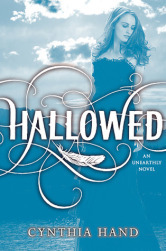
The first of two of Hand’s books on this list. Everyone who has read this book knows which part made me crumple into a ball and stifle sobs into my scarf. Why did I read this on a train? I don’t know. What makes it even stupider is that I’d already read this book and knew it was coming. I thought I’d toughened since last reading it. I thought I could handle it.
I was wrong.
Luckily I was distracted by the Lynton tunnel before I burst into five-star tears and howled at the ceiling.
(This entire series will be featured in a future post).
2, These Broken Stars by Amie Kaufman and Meagan Spooner
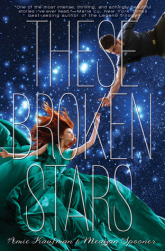
Sci-fi Titanic with enough spooky elements to make me break out in goosebumps as the train left Glenalta. I’ve always found sci-fi to be heartbreaking in a very unique way (I mean, there are tears, and then there are Doctor Who tears, amirite?), and this book seized upon all the ways that sci-fi can exploit your feels. Apart from being incredibly haunting and beautiful, there’s a twist which made me cry confused tears at the back of an empty carriage. I’m still confused, actually. However this hasn’t stopped the book from making my ‘to-buy-hardcover-list’ – the highest honor I can grant a book.
1, The Last Time We Say Goodbye by Cynthia Hand
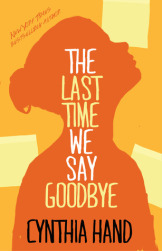
I’d like to preface this by saying that I’m not the only reader this book took down in public. Plenty of other Goodread’s reviewers have echoed my experience.
Cynthia Hand’s second book on this list, The Last Time We Say Goodbye is about a teenage girl dealing with her brother’s suicide. Why did I decide to read this on a train? Because once you start reading you can’t stop. This book took me out all the way from Mitcham to Blackwood. I’m talking silent, shoulder-shaking tears. Luckily the other passengers took in the title of the book before judging me for crying into my Game of Thrones scarf. They even seemed sympathetic (I guarentee this intensified my tears. I was a few caring glances away from throwing my arms around the woman next to me). This book makes you need hugs. Make sure you have a hug-buddy who is not a train passenger just trying to get home.



