
Ginger Scott's Blog - Posts Tagged "intense-romance"
How We Deal With Gravity Cover Reveal
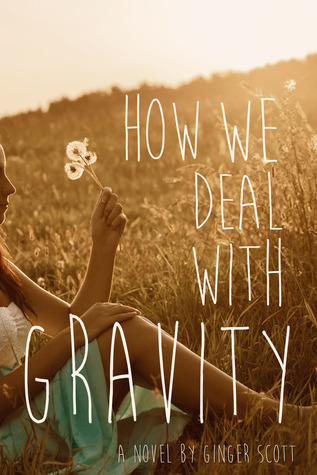
Trouble loading cover image? Go to my site - littlemisswrite.com.
There are warriors in this world—people who are a hell of a lot stronger than I am. And this book is about them.
I was a teenager the first time I heard the word autism. Rainman—that’s what I thought it was all about. Yes, a great movie, but really a fairly simplified portrayal of autism. I’m embarrassed that I once summed up a diagnosis as serious as autism based on a Dustin Hoffman movie. But I didn’t really know any better—and there are a lot of people like me out there.
Autism stuck with me, and when I was in my early 20s and working for a magazine, I decided I wanted to write a feature story on what it was really like to be a family affected by it. I made some calls and connected with Denise Resnik, an amazing woman who lives in Arizona. She helped found what started as a small resource center in Phoenix that was helping diagnosed families. She did it because her son had been diagnosed, and when she went through it, she didn’t know where to turn. The answers were all vague and hidden under research and medical jargon. And the more Denise unraveled for her family, the more she wanted to help those in the same circumstances, so they wouldn’t have to work so hard just to find answers.
I spent a lot of time with Denise and her family, and my perspective of all that autism is—and isn’t—changed. My small feature for the magazine turned into an eight-page in-depth look at autism and the Southwest Autism Research and Resource Center (SARRC). It traveled from reader to reader, one of those stories people ripped from the magazine glue and mailed to a friend. It turned into more phone calls to the center, and in some cases, donations to the cause. Something I wrote educated and incited action. It’s my favorite thing I’ve ever written, and it was an anchor for a lifelong passion for shedding light on autism.
What is autism? Here’s the clinical definition: Autism is a complex neurobiological disorder associated with impairments in socialization, verbal and nonverbal communication, restricted play and interests, and repetitive motor movements. The disorder affects each individual differently, and there is a wide range of functioning associated with the disorder.
But here’s what autism is as I see it: It’s a cage that traps the mind, and it traps every person’s mind a little differently. For some, it means they aren’t able to communicate how they feel, what they need or what they want. For others, they aren’t able to distinguish certain emotions—they don’t know how to show happiness or sadness and they don’t understand those cues from others. Some people affected by autism can’t speak, and for others, it’s mostly a social block, one that makes it more than challenging to make friends.
Since I wrote that first story, I have had family personally diagnosed and several friends whose families are affected by the autism spectrum. And Denise, the woman I met at the very beginning, went on to lead a charge, creating an organization that has since become a national leader in the fight to find autism therapies, factors and, with hope, one day a cure.
So, that’s a lot of intro material, I know…but I wanted to give you a little background on why this book is so important to me. I have interviewed dozens of families over the years in my volunteer work for SARRC. (I write the cover stories for their magazine.) I have cried with parents as they’ve shared their journeys with me. And there’s this one common thread that I’ve noticed in every interview I’ve had—the parent never puts themselves first. And I started to think about those parents I’ve met who are fighting this battle alone. And then…of course…the romance author in me started to think about their chance to find love.
Ideas like this tend to hit me while I’m running on the treadmill. I always do plotting and character development while I run. It’s my way of not paying attention to how much longer I have to make my legs move. A few months ago, I had the above stream of thoughts, and I actually forced myself to stop running early and ran to my locker to jot down everything I was thinking (I’m pretty sure I looked like a crazy person). The result was How We Deal With Gravity.
Gravity is a love story—first and foremost. But, it’s also so much more. It’s about falling in love through a second chance and finding the courage to take it. It’s also about putting yourself first, when every instinct in your body is to put yourself last. It’s about loving a soul mate and loving a child and finding a way to make those two coexist. And it’s about ignorance and acceptance.
The story is told from two points of view: Avery Abbot, a single mom of a child with autism, and Mason Street, the failed musician back in town for a fresh start. They have history—for Avery it’s a painful history, and for Mason their past is just part of his youth, a blip in a long line of blips. The story centers on how people change over time, and how those major moments in life can reshape who we are. For Avery, being a mother has meant being a fighter, and for Mason, being a failure has meant having to take a hard look at who he really is. As the two reconnect, those purposes start to shift, and a unique and powerful love starts to grow.
My debut, Waiting on the Sidelines, will probably always hold that special pedestal place in my heart. But this book is right next to it. How We Deal With Gravity is honest and real and beautiful and brutal all at once—at least, I hope that’s how it’s perceived. And I cannot wait to get it in everyone’s hands.
How We Deal With Gravity is scheduled for release this summer. In the meantime, if you would like to learn more about autism, I invite you to visit SARRC online at autismcenter.org .


