
Ellen Forsyth's Blog
January 16, 2026
A few thoughts on Say Nothing: A True Story of Murder and Memory in Northern Ireland - implications for oral history collecting
 Say Nothing: A True Story of Murder and Memory in Northern Ireland by Patrick Radden Keefe
My rating: 4 of 5 stars
This is a fascinating book and includes an example of how not to run an oral history program in a university library. There are issues of informed consent as some people were talking about criminal activities they had undertaken including murders, a lack of clear policies, secrecy and more. A lot of this has implications for local studies collections in public libraries and it shows the need of following good practice with oral history programs and their recordings. Public library oral history programs are unlikely to be interviewing people about their criminal activities and making promises about who can access the recordings (ignoring legal processes).
It is as the subtitle says a true story of murder and memory in Northern Ireland - with a focus on action from the IRA (and the not Unionist groups). It is a pacy, compelling and depressing read.
View all my reviews


January 2, 2026
A few thoughts on Chopsticks or Fork?: Recipes and Stories from Australia's Regional Chinese Restaurants by Jennifer Wong, Lin Jie Kong
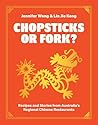 Chopsticks or Fork?: Recipes and Stories from Australia's Regional Chinese Restaurants by Jennifer Wong
My rating: 5 of 5 stars
I loved the television series this book is based on, and I loved this book. It is an exploration of the history of regional Chinese restaurants in Australia. It encouraged me to try more of these and I had some lovely meals as a result of this exploration. This book is an important work for local studies as it shows the importants of documenting a variety of perspectives, and valuing the ordinary. An excellent read, and it should serve as inspiration for people considering oral history recording or documentary photographs.
View all my reviews
January 17, 2025
A few thoughts on Empireland by Sathnam Sanghera
 Empireland: How Imperialism Has Shaped Modern Britain by Sathnam Sanghera
My rating: 5 of 5 stars
While this book has the subtitle - How imperialism has shaped modern Britain - it is relevant to all the countries which were part of this empire, including Australia. As well as being a book which looks at international history, it is also a brilliant book for how we consider local studies with several sections showing the exclusion of histories of people who are brown or black from library collections. It includes a calling out of inaccurate information which removes key people of colour from the centre of historic events.
This was an amazing book to listen to (which I did because my library did not have a print edition for me to borrow). The listening turned out to be a key element with outstanding narration helping to drive home some of the points made.
This is an important book to read and listen to. It will be of interest to those who watched the series , What the British stole .
View all my reviews
November 24, 2024
Documenting ordinary stories: Local studies collections in public libraries - a couple of papers and a thesis
Documenting ordinary stories: Local studies collections in public librariesThis paper describes research to consider how practices for local studies collections in Australian public libraries might need to shift to ensure that as well as including the historical past, that recent and current concerns and interests of the community are appropriately collected and reflected in their collections. This research used ethnography as a method to explore one public library in detail. Drawing on the metaphor of mirrors, windows and sliding glass doors, the research results describe how a social justice framework for local studies collecting in public libraries could ensure greater inclusion and equity. Such approaches can amplify voices that may have been silenced and enable people and themes with little visibility to be much more visible within local studies collections in public libraries. The conclusion is that a social justice approach to local studies collections in public libraries has the potential to provide a more representative record of the community as a wider range of voices and stories are documented, collected, preserved and made available for research and other uses. For this paper you may need to contact your friendly aggregator https://doi.org/10.1177/0961000624129031
We collect ‘everything’: A case study of a local studies collection in an Australian public library This paper about research which I undertook, was recently published in Journal of the Australian Library and Information AssociationThe abstract is here:This paper describes research exploring a local studies collection in an Australian public library. It includes the current collecting practices and paradigms and their impact on what is added to this collection. This research was to discover how contemporary content, including items from rapid response collecting are incorporated in a local studies collection. It uses a social justice approach to investigate how current collecting practices represent the whole of the community in a public library local studies collection to provide multiple stories and perspectives. Ethnography was the research method used to enable in-depth understanding of the collecting practices of one public library. The results of the research show a tendency for library staff to rarely say no to unsolicited donations, as well as a focus on emotional and decision making based on relationships. This led to donations based on relationships and the risk of collecting from cliques and resulted in an increased cataloguing backlog for the local studies collection. The conclusion is that for more of the community to be represented in a public library local studies collection, changes in collecting practices need to be undertaken to include a social justice focus.You should be able to access the paper to read it at this link https://doi.org/10.1080/24750158.2024...
If you want to access the papers and can't please contact me.
If you really want to read more, my thesis:If we don't take that who will: an ethnographic exploration of a local studies collection in an Australian public library is available to read here (and you can read the abstract there too).
September 19, 2024
A few thoughts on The outback court reporter - it is a local studies book for some communities.
 The Outback Court Reporter by Jamelle Wells
My rating: 4 of 5 stars
This audiobook read by the author takes a detailed look at the activities of courts in outback parts of Australia. It is a very interesting look at the range of court matters as well as providing local anecdotes and information. This is a book which locations mentioned in it should consider for their local studies collections. It includes family experiences with health services in more remote areas too.
View all my reviews
September 12, 2024
We collect ‘everything’: A case study of a local studies collection in an Australian public library
We collect ‘everything’: A case study of a local studies collection in an Australian public library about research which I undertook, was recently published in Journal of the Australian Library and Information Association
The abstract is here:
This paper describes research exploring a local studies collection in an Australian public library. It includes the current collecting practices and paradigms and their impact on what is added to this collection. This research was to discover how contemporary content, including items from rapid response collecting are incorporated in a local studies collection. It uses a social justice approach to investigate how current collecting practices represent the whole of the community in a public library local studies collection to provide multiple stories and perspectives. Ethnography was the research method used to enable in-depth understanding of the collecting practices of one public library. The results of the research show a tendency for library staff to rarely say no to unsolicited donations, as well as a focus on emotional and decision making based on relationships. This led to donations based on relationships and the risk of collecting from cliques and resulted in an increased cataloguing backlog for the local studies collection. The conclusion is that for more of the community to be represented in a public library local studies collection, changes in collecting practices need to be undertaken to include a social justice focus.
You should be able to access the paper to read it at this link https://doi.org/10.1080/24750158.2024.2386642
March 19, 2023
A few thoughts on the book The Australian history industry
 The Australian History Industry by Paul Ashton
My rating: 5 of 5 stars
This is an amazing book which would be great to re-read (even though I have just finished reading it). It is a pacy and entertaining exploration of researching history in Australia. It is a remarkable contemporary book with issues of the pandemic and other recent events part of the discussion of the work of history. The varied perspectives help to describe the complexity of historical research. This would be a helpful book for local studies library staff to read.
View all my reviews
January 8, 2022
A few thoughts on the book A modest living: memoirs of a Cockney Sikh
 A Modest Living: Memoirs of a Cockney Sikh by Suresh Singh
My rating: 4 of 5 stars
This is a really interesting local studies publication which I found out about from Spitalfields Life. It is written about growing up in London, and spending time in India with very specific locations being described. The author provides a very strong picture of his father. It is also a very interesting account of being punk, and being the first in the family to obtain a university degree. It shows the importance of having information about culturally and linguistically diverse people included in local studies collections. This really is a charming book, and includes some family recipes as well.
View all my reviews
November 7, 2021
A few thoughts on the book: The troubles and beyond: curating conflict
The troubles and beyond: curating conflict by Karen LoganMy rating: 5 of 5 stars
This book is about how the National Museums in Northern Ireland changed their approach to collecting information about The troubles, and also changed their approach to how exhibitions about this time are shown. They aim to present a 'view of broader social, cultural and economic history as well as exploring the impact of conflict on everyday life, people and communities' p 18. They are seeking a critical discussion with the community who are coming to exhibitions, especially of recent history. They are looking at recent history including for 'accuracy, inclusiveness and balance' p24, and are also seeking to build stronger community connections to advise the museum.
The book explores past approaches to describing The troubles, and the new approach of greater diversity and inclusion as well as community projects which are bringing together people who have similarly tough experiences. There are comments from people who provided personal testimony to the museum because they were shot, they had a family member killed, they were present at a bombing, or they were a nurse who treated people from all sides.
I was interested in this book because of local studies, and reading it highlights that difficult and divisive topics can be dealt with well by museums (and presumably libraries) and that it is important to not sidestep the tension.
View all my reviews
August 21, 2021
A few thoughts on How to turn a place around: a handbook for creating successful public spaces - relevant to libraries
 How to Turn a Place Around: A Handbook for Creating Successful Public Spaces by Project for Public Spaces
My rating: 4 of 5 stars
This is a pacy and engaging read. This, unsurprisingly, is a book about public spaces, and generally outdoor space, however there are many elements which are applicable for public (and other) libraries as well. In a description of Discovery Park in Houston, TX, it says that it is 'not enough to have just one great destination on a great park - you need at least 10 of them to create a truly lively place' (p91). This is relevant for libraries as you need different kinds of spaces within the one building. It is also not a new idea that libraries need different kinds of spaces, for example see this produced by my work place.
I have been following Project For Public Spaces for a while, but it was watching a recent Victorian public library conference about library buildings which encouraged me to read this. There are place making principles including creating a place not a design, and the importance of community consultation, and evaluation. Place making is also continuous as communities change over time.
I found it was helpful reading this book, because of the different locations explored as I could then think about the implications for libraries. I will need to read it again, but that will be enjoyable.
View all my reviews


