Alexander Geiger's Blog
May 18, 2019
An Ancient Bucket List
If ancient Greeks kicked anything in their death spasms, it probably wasn’t a bucket. An amphora, maybe, or a kylix, but certainly not a bucket. Hence, ancient Greeks were not familiar with the phrase “bucket list.” On the other hand, some well-to-do and restless Greek old-timers, followed by even wealthier and more travel-prone ancient Romans, felt an irresistible urge to visit “the sights.” A few then wrote books about what they’d seen.Inevitably, someone decided to make a list of the places all self-respecting tourists had to visit before they died. The entries on the list varied somewhat from author to author but their number seems to have remained fairly constant – seven. A good, lucky, prime, almost magical number.Eventually, early in the Roman imperial era, a standard lineup evolved, containing the following seven must-see wonders of the world: The Statue of Zeus, housed in his Temple at Olympia; the Temple of Artemis at Ephesus; the Mausoleum in Halicarnassus; the Pyramids near Memphis; the Hanging Gardens of Babylon; the Alexandria Lighthouse; and the Colossus of Rhodes.Which brings me to the Ptolemaios Saga. As any reader lucky enough to have read the three volumes published thus far knows, this series is, among other things, a travelogue. Prime Directive, Flood Tide, and Conquest of Persia follow the adventures and military campaigns of Alexander the Great between 344 and 330 B.C.E., as recounted by his faithful companion and our reliable narrator, Ptolemaios Soter. As it happens, Alexander was a dedicated sightseer who never missed a chance to visit any points of interest that happened to be at or near his route of travel. He (and Ptolemy) definitely visited four of the Seven Wonders of the Ancient World. The evidence is inconclusive as to a fifth one.Naturally, your author was compelled – solely in the interest of historical accuracy, mind you – to interrupt the narrative flow of breathtaking battles, aching romance, and clashing civilizations to describe in detail each sight visited by Alexander. The only break you, dear reader, have caught was with respect to the first of the seven wonders, the Statue of Zeus in his Temple at Olympia (the site of the original Olympic Games). Alexander’s father, Philip II of Macedon, almost certainly visited Olympia and presumably viewed the famous statue, in 338 or 337 B.C.E. Whether his son came with him is unclear.There was a meticulous description of the Temple of Zeus and its contents in an early draft of Prime Directive. Unfortunately, because I couldn’t be sure that Alexander (and Ptolemy) accompanied Philip on his visit to Olympia, I reluctantly cut this passage from the final version of the novel. All that’s left is a brief mention of Philip’s visit at page 267 of Prime Directive.By contrast, Alexander definitely visited the next four sights on the list, in the order listed above. Each of the four is described in my books with as much verve and historical accuracy as I could muster. (See the description of the Temple of Artemis at Ephesus in Flood Tide, pp. 158-61; the Mausoleum in Halicarnassus in Flood Tide, pp.205-06; the Pyramids near Memphis in Conquest of Persia, pp. 115-18; and the Hanging Gardens of Babylon in Conquest of Persia, pp. 280-81, 304-05.)And now, you have a chance to check out how accurate my descriptions have been. Or at least compare my descriptions to what some other folks believe about the appearance of these places some 2,300 years ago. David Anderson recently published a blogpost in the electronic version of Forbes Magazine, entitled Reconstructing The Seven Ancient Wonders In The Digital World. Below is their reconstruction of the Temple of Artemis at Ephesus; the Mausoleum in Halicarnassus; one of the great Egyptian Pyramids; and the Hanging Gardens of Babylon.
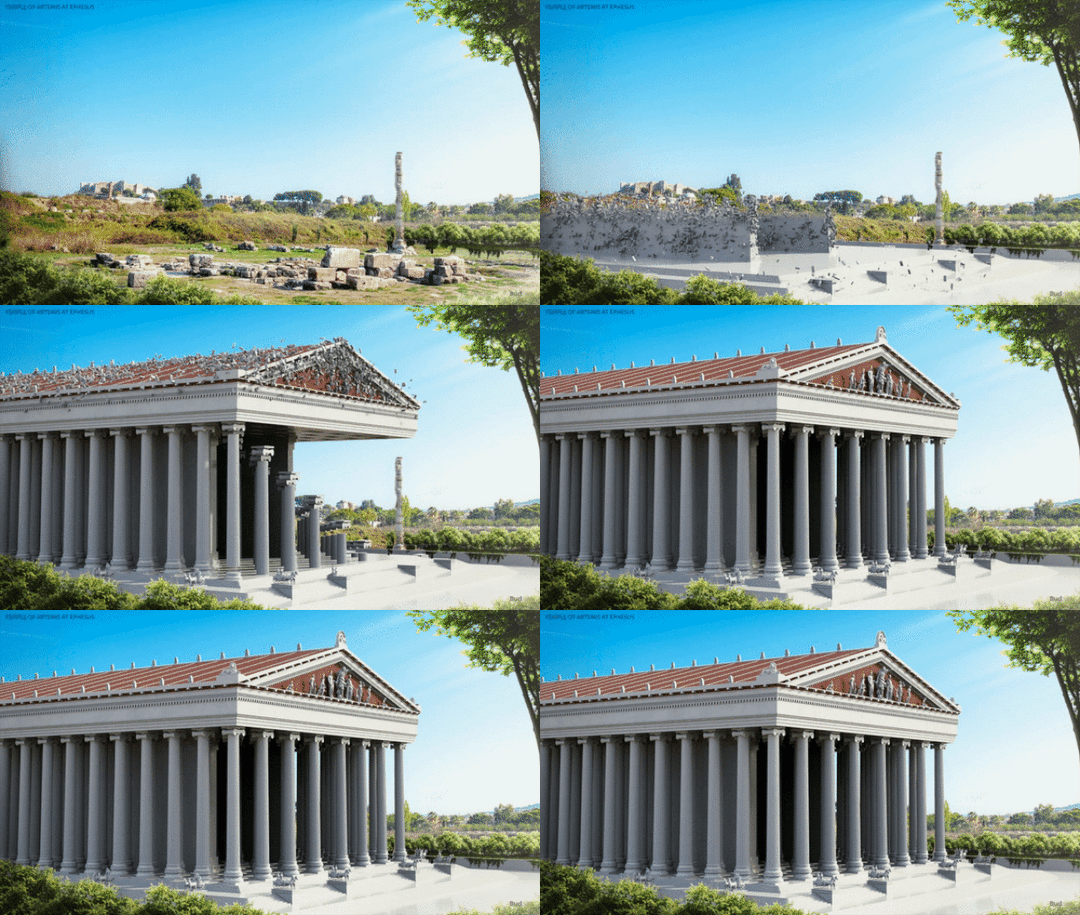 Temple of Artemis at Ephesus
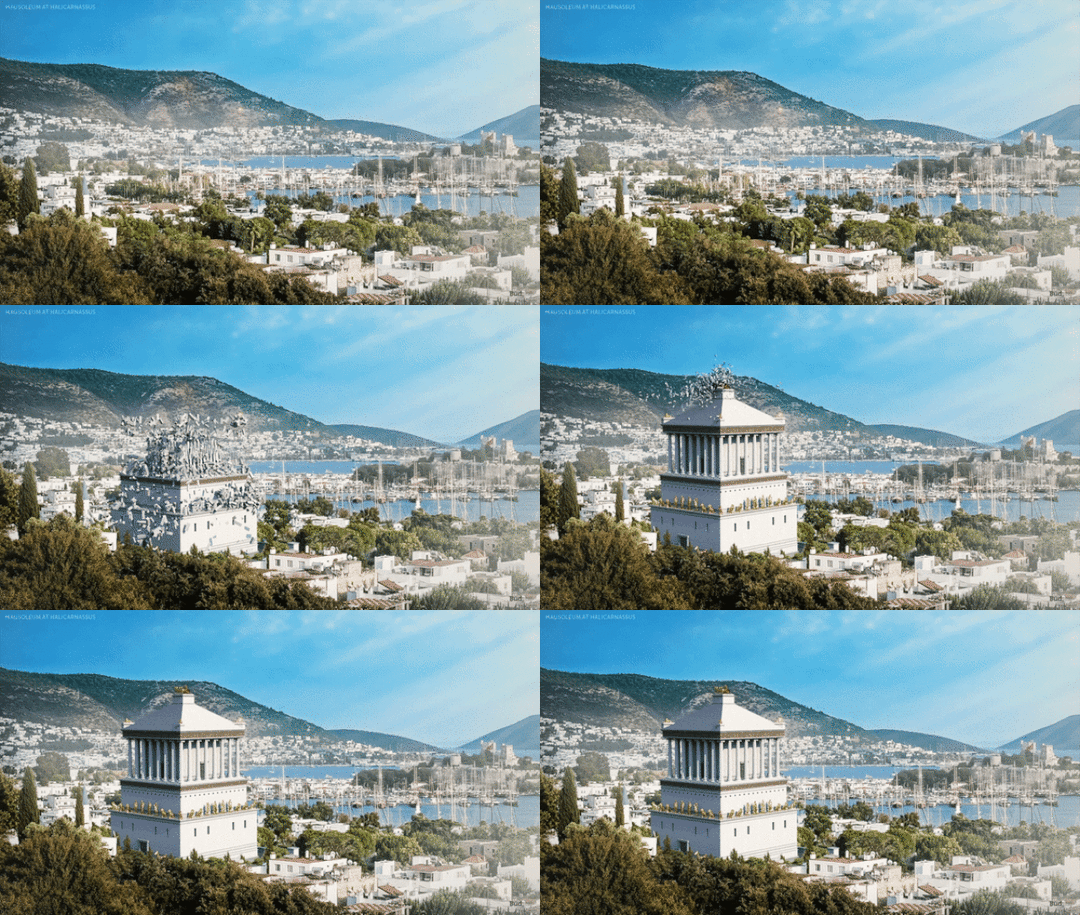 Mausoleum in Halicarnassus
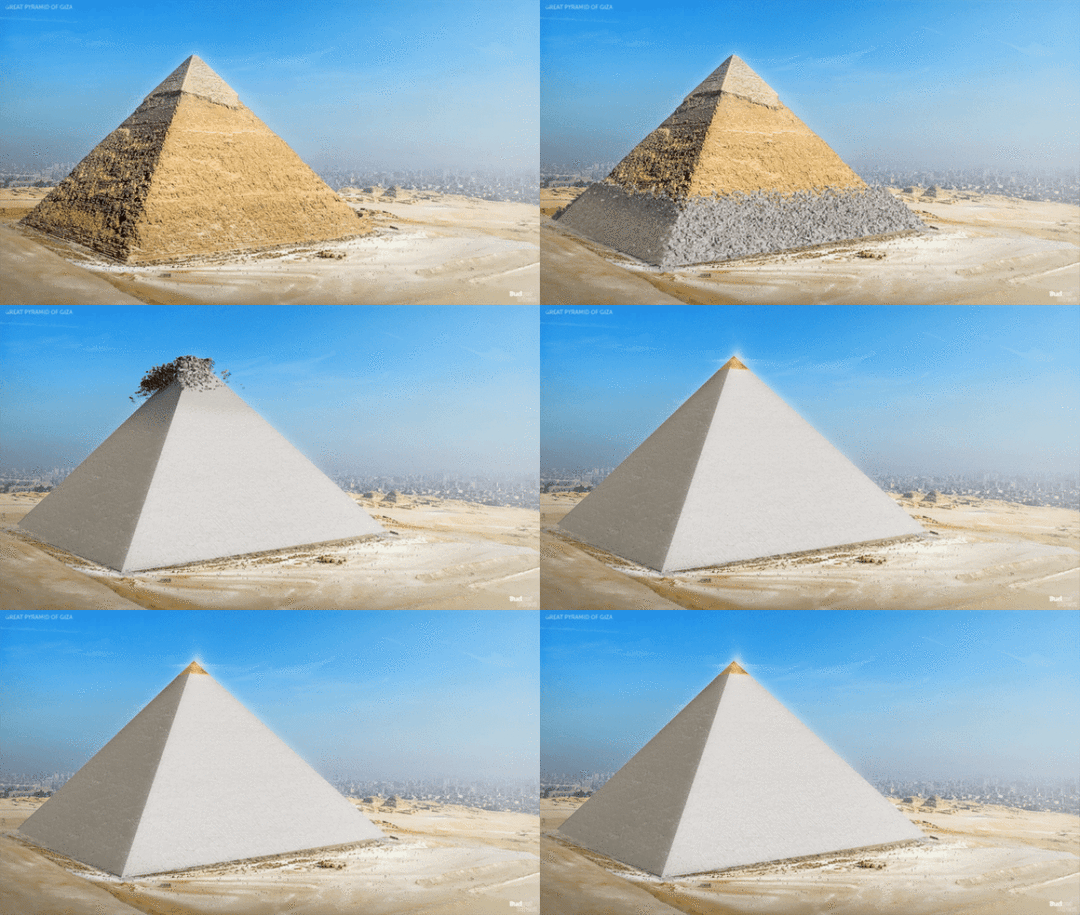 One of the great Egyptian Pyramids
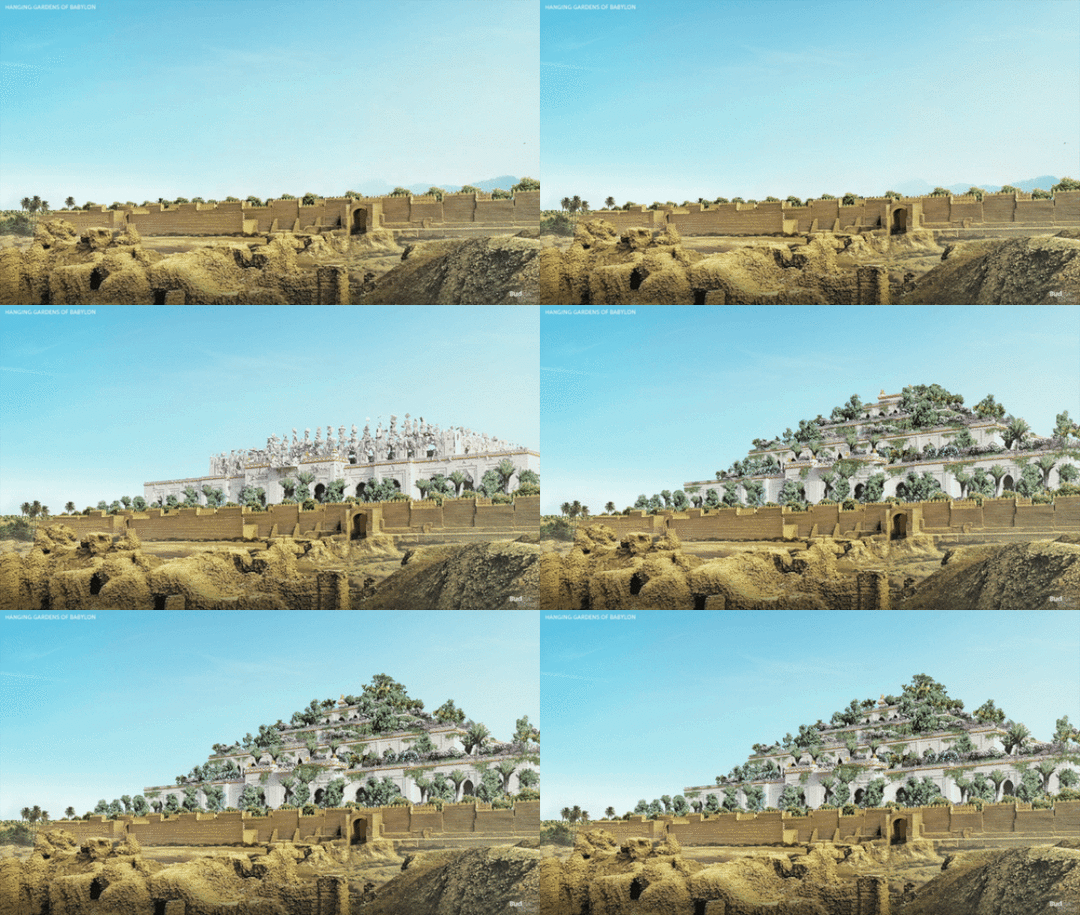 Hanging Gardens of BabylonWell, what do you think? How close are my verbal descriptions to these visual reconstructions? To the extent there are any differences between the two, which set do you believe to be more historically accurate? Final note: The last two of the seven wonders – the Alexandria Lighthouse and the Colossus of Rhodes – were not built until after Alexander’s death, so naturally, they didn’t make an appearance in any of the volumes published thus far. But don’t celebrate prematurely. Chances are that those two will turn up somehow in subsequent volumes, one way or another. And who knows, it’s even possible that some future narrator will find reason to visit Olympia once again.
 Temple of Artemis at Ephesus
 Mausoleum in Halicarnassus
 One of the great Egyptian Pyramids
 Hanging Gardens of BabylonWell, what do you think? How close are my verbal descriptions to these visual reconstructions? To the extent there are any differences between the two, which set do you believe to be more historically accurate? Final note: The last two of the seven wonders – the Alexandria Lighthouse and the Colossus of Rhodes – were not built until after Alexander’s death, so naturally, they didn’t make an appearance in any of the volumes published thus far. But don’t celebrate prematurely. Chances are that those two will turn up somehow in subsequent volumes, one way or another. And who knows, it’s even possible that some future narrator will find reason to visit Olympia once again.


May 17, 2019
My Transliteration Dilemma
Why is the founder of the Ptolemaic dynastic called Ptolemy in English-speaking countries and Ptolemaios in the rest of the world? The answer is that he himself spelled his name Πτολεμαῖος. Unfortunately, most people (other than Greeks) are not familiar with the Greek alphabet. This was true even in the days of ancient Rome, although many educated Romans back then did read and write Greek and they all greatly admired the older, more developed Greek civilization. They translated many Greek works of literature, history, and philosophy from Greek to Latin. Unfortunately, in the process of translation, they tended to “Latinize” the Greek names they encountered. Somehow, Πτολεμαῖος became Ptolemy, Αλέξανδρος became Alexander, and the City of Μίλητος became the City Miletus.When ancient Roman manuscripts were rediscovered during the Renaissance, scholars, who tended to do their scholarly writing in Latin, naturally used the Latinized versions of Greek names they found in the ancient manuscripts. For some reason, most scholars writing in English continue to use the Latinized versions of Greek names to this day.In the meantime, manuscripts written in ancient Greek began to turn up at various monasteries in Europe and in libraries and book shops in the Islamic world. European scholars, reading names written in the original Greek, started to faithfully transliterate the Greek names into the Latin alphabet we all use today. Thus, α became a, β became b, γ became g, δ became d, Κλεοπᾰ́τρᾱ became Kleopatra, and Πτολεμαῖος became Ptolemaios. At least that’s what happened in Continental Europe. In England, the newfangled fashion of faithful transliteration never caught on.When I set out to write the Ptolemaios Saga, I was immediately confronted with a dilemma. All my major characters are real historical figures with real Greek spellings of their names. Since I was writing in English, I needed to render their names using the Latin alphabet. But somehow it rubbed me the wrong way to bastardize a perfectly good name, such as Ptolemaios, as Ptolemy. So, I decided to go with Ptolemaios and Alexandros and Kleopatra. One unfortunate result of this decision is that anybody searching for Alexander the Great, Ptolemy I Soter, or Cleopatra VII Philopator will never find my books on Amazon or my website on the Internet.But my books are historical fiction, so I get to name my characters anything I want. The trouble was that even I – pedantic, strange, idiosyncratic, and weird as I might be – had a moment of hesitation when it came to naming places that have well-known English names. I just couldn’t bring myself to call Ἀθῆναι as Athenai. So, I called it Athens. I realize I’m being inconsistent but, as Emerson said, a foolish consistency is the hobgoblin of little minds. It goes without saying that all my consistencies are astute.Speaking of inconsistencies, for places less well known in the English-speaking world, I have retained their Greek names, transliterated into the Latin alphabet. So, basically, what I’ve done is completely arbitrary – one of the privileges of being an author.Let me know what you think of all this. And enjoy reading my books!