Vicky Unwin's Blog
April 7, 2026
In search of our ancestors: Fogels in Boskovice and Brno
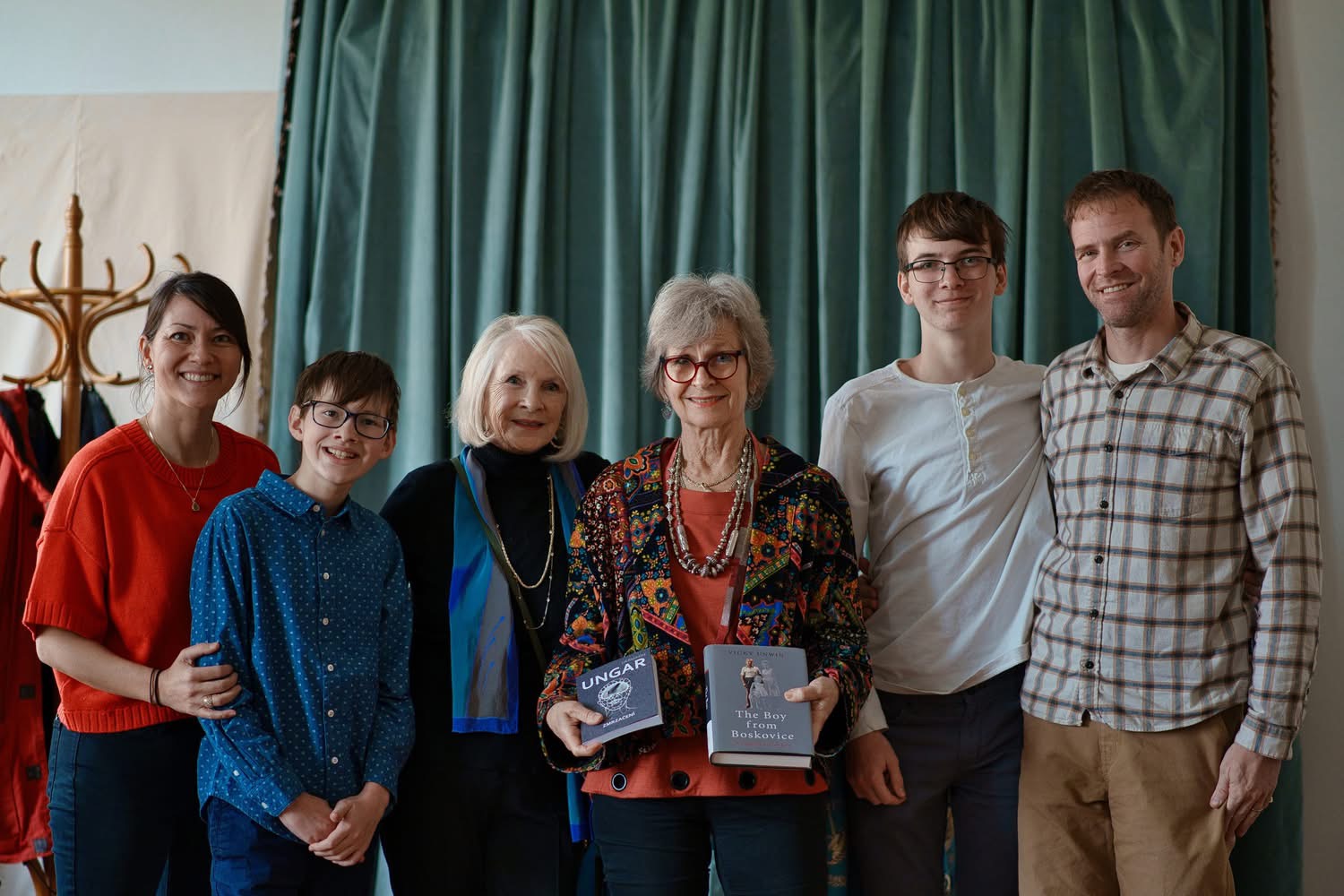
[continued…] The next morning David and Jess leave early. By 8.45 we’ve heard nothing and anxiety returns. It’s a good three hours drive to Boskovice and I need to be there by 2pm…Finally we hear the news and its not what we are expecting! Not having a licence is the least of our problems – we have no vehicle! The rental place is closed down! So they have been trying valiantly to secure another transport but it’s Easter and nothing is available.
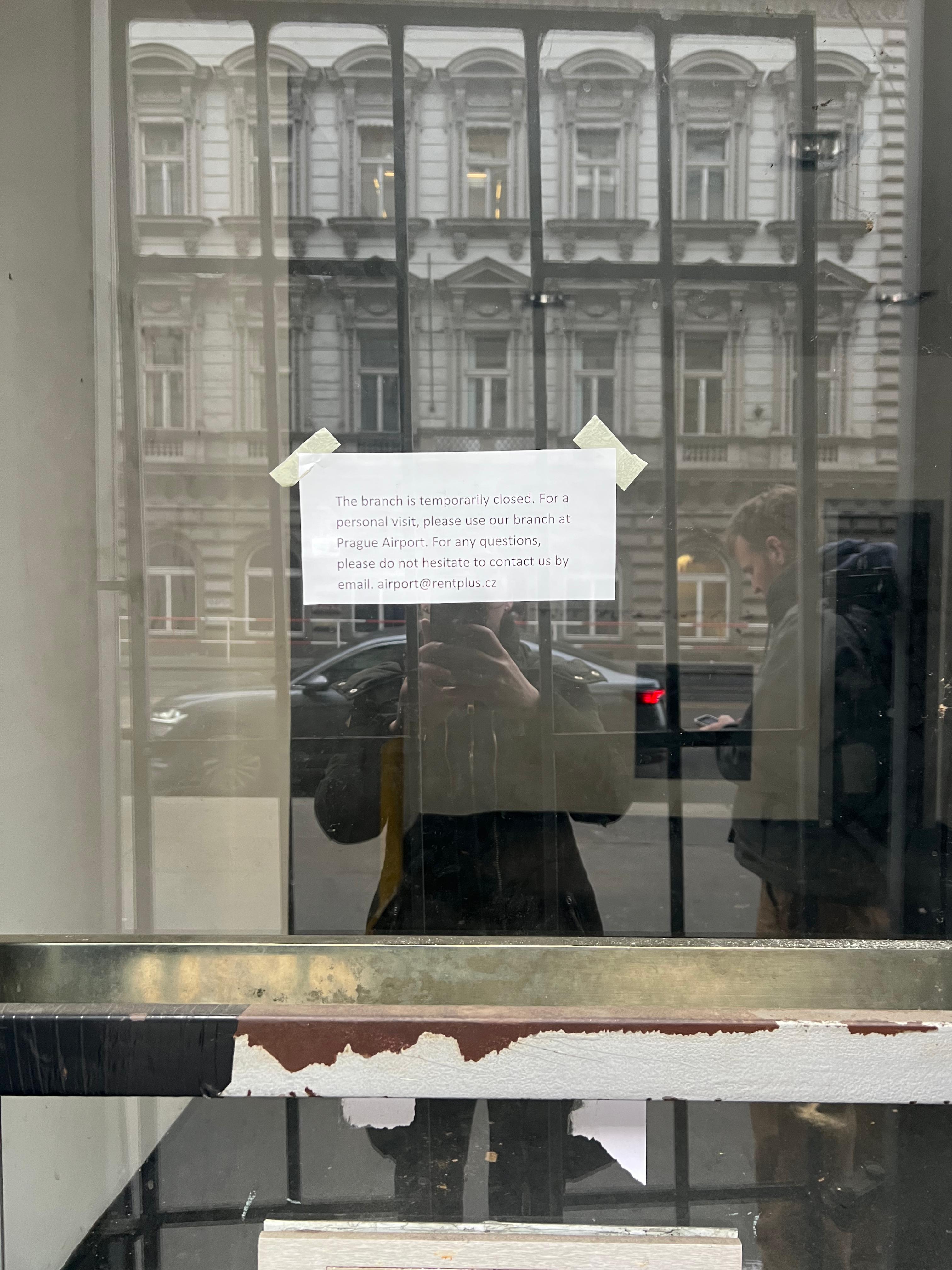
Eventually they manage to track one down which appears to be bona fide (car hire in Prague is renowned for being a scam we discover) and it will be delivered within the hour…we wait and wait but they can’t deliver it to us (heart sinks), we will have to walk with all our luggage to the other side of the Old Town square. I am feeling distinctly nervous now as it 10 am, but lo and behold there is a van! And a good one!
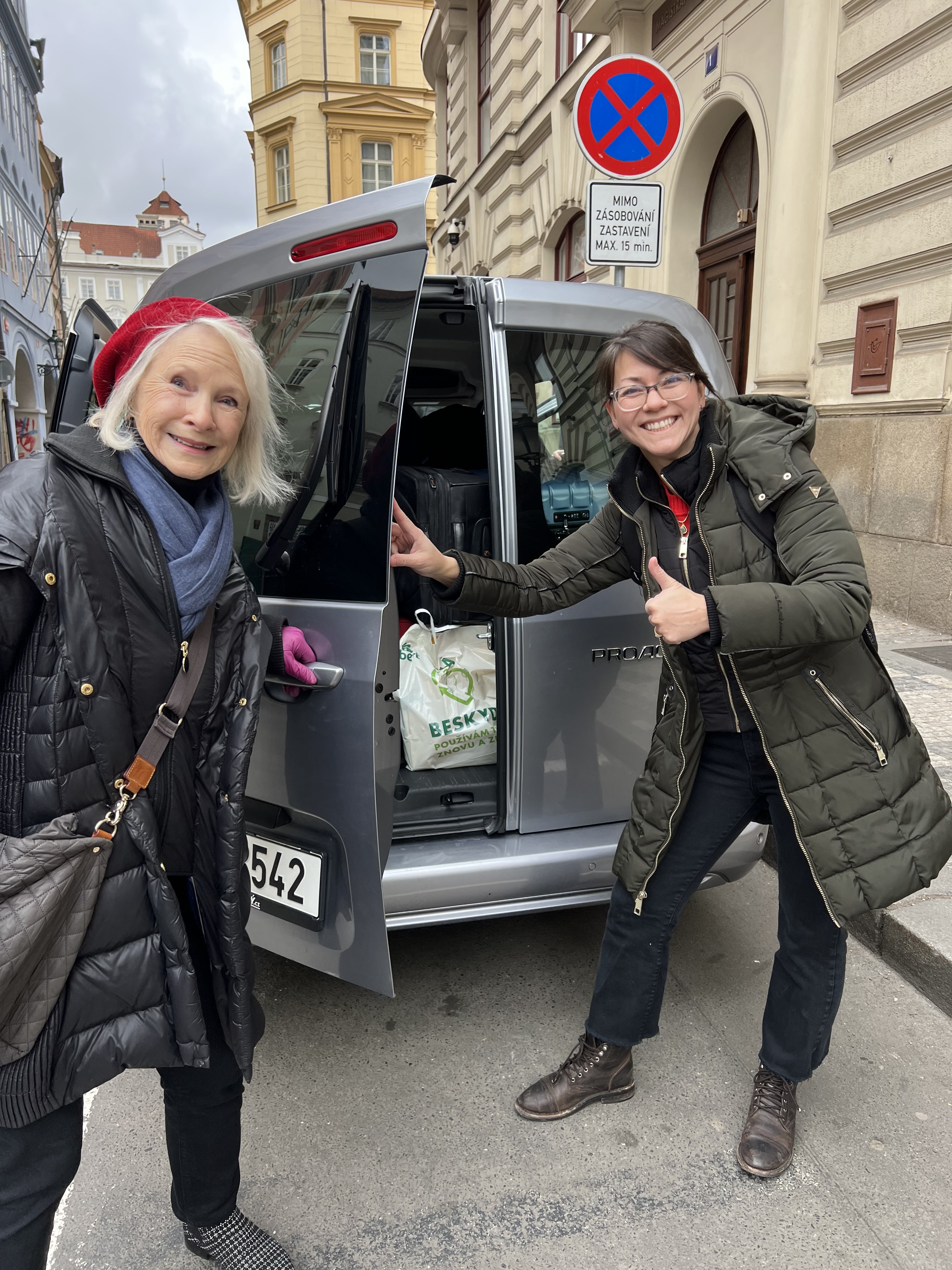 Ta da!
We set off via the motorway, lined with forests and lake views, before setting off cross-country through the enormous swathes of fields, interspersed with the occasional village of very Moravian yellow and pink houses and farms. We remark how prosperous it all looks – but I remember that this is rich farming country with wealthy landowners when Ungar was growing up. His uncle Ludwig, father of stepfather Richrd Kohn, was manager of a massive estate and the family was well-to-do. They both, plus Aunt Tilly died, in the Holocaust.
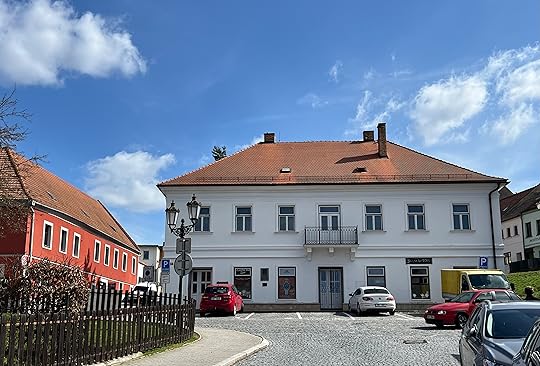
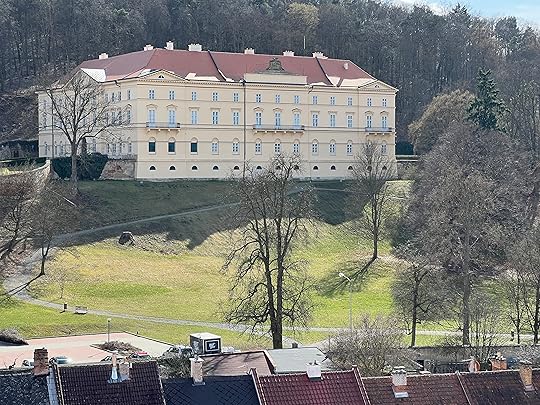
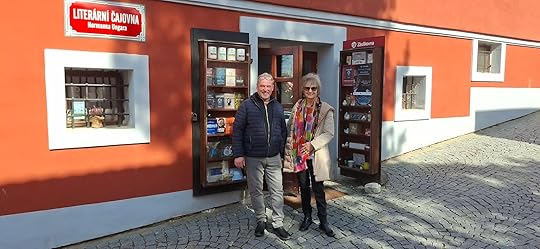
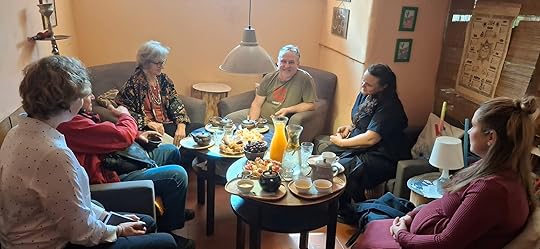
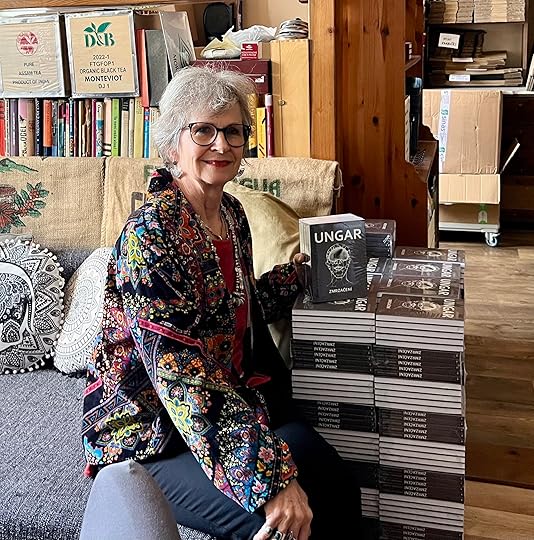
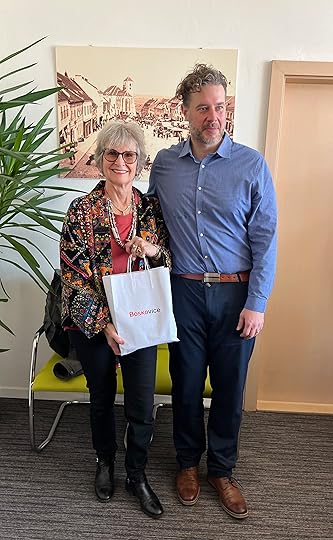
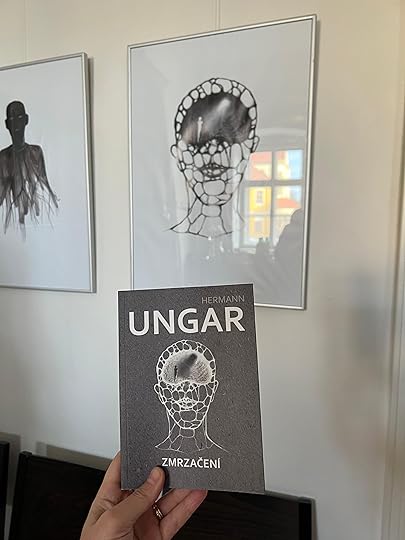
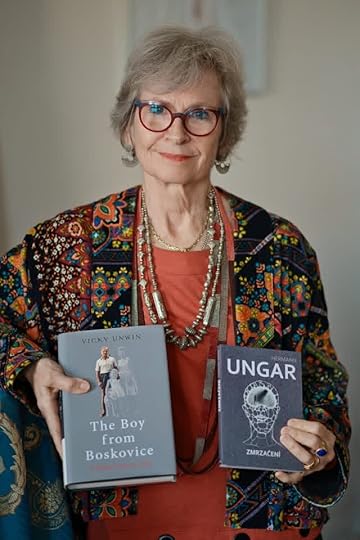
We arrive at the Hotel Slavia with 30 minutes to spare. I have a quick coffee and walk into the Jewish Quarter to meet my publisher and host, Václav Cikán, at the Hermann Ungar Tearoom. On the table is a delicious spread (which is actually for later, so I’m glad I found my BA biscuit and gobbled that down before I set out). Assembled are the Head of the Regional Museum; a journalist who will record the whole event; Mr Slonek, whom I have met before and will translate; Vaclav and his wife Gabriella, who is an artist and has provided covers for the two volumes, Boys and Murderers in addition to The Maimed. And Ginger the cat!
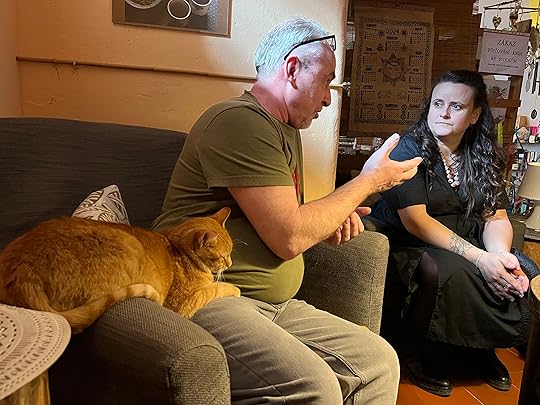
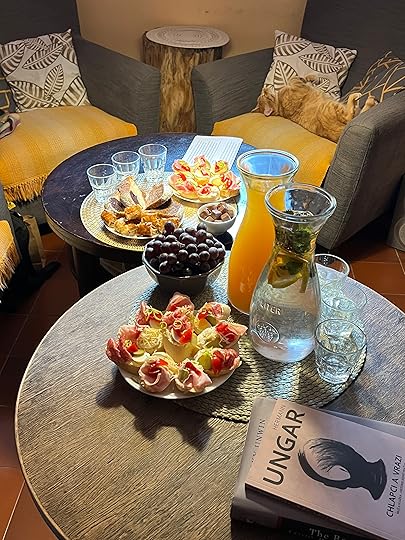
After a delicious Chinese blended tea, and some chit chat, Václav takes us on a tour of his pride and joy, his coffee roaster which is upstairs, for in this large building is also Boskovice’s favourite coffee shop – where we repair after the event for the snacks and wine! Strangely David also has a coffee roasting business, Bump and Grind in Silver Spring MD, and they exchange notes. Václav speaks no English but luckily his delightful daughter is on hand…(below in purple dress).
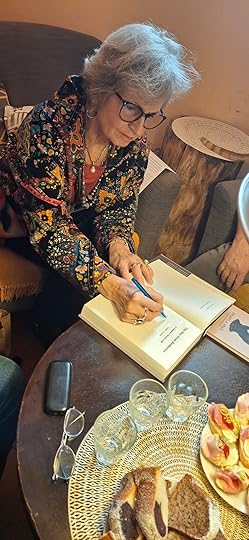
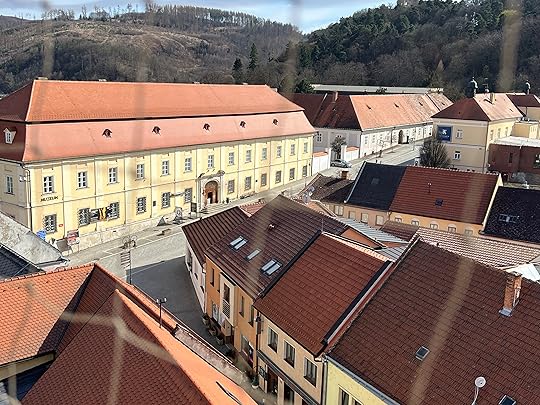
From there to the Town Hall where we meet Deputy Mayor Lukáš Holík who, after formal presentations of books, brollies and souvenirs of Boskovice, arranges for us to go to the tower for a city view
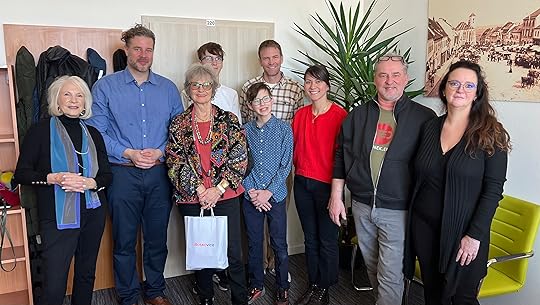
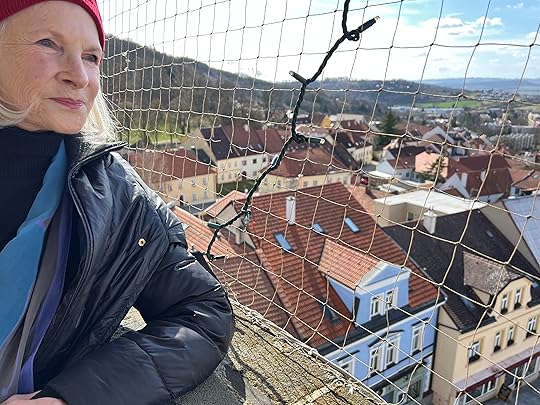
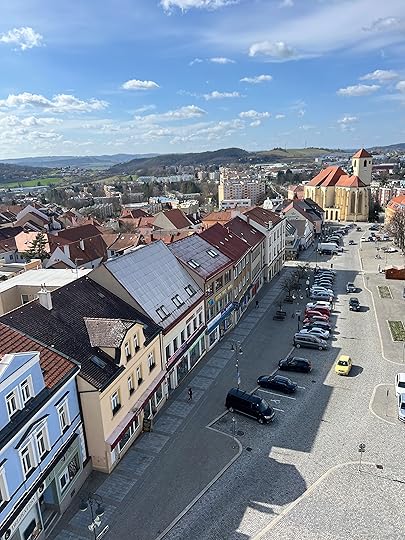
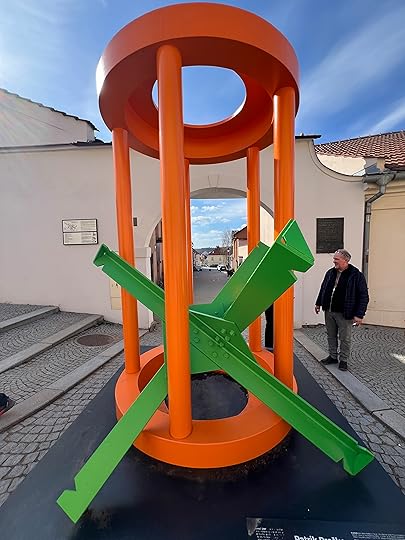
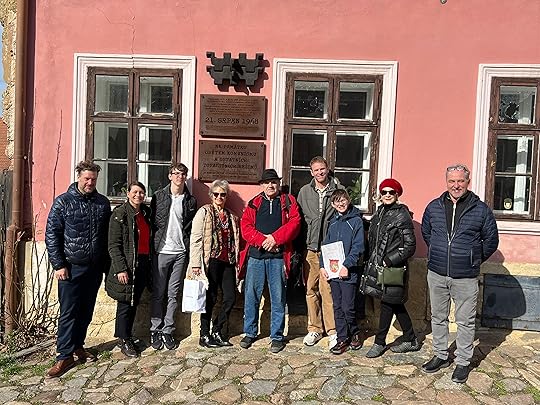
We amble down through the old town – it seems a bit tired since my last visit a couple of years ago. I learn that there are no Jews left now, and it’s a des res suburb of Brno and for local business. There is quite a large industrial area around Boskovice, a town of 12,000. Outside the gate is a new installation, a tank defence unit from the 1968 invasion by the Russians. Not sure what we think…There is another memento from that era – a tank track on a wall in the Jewish quarter; again not quite sure of its relevance right here. Mr Slonek is very excited by this – here he is in the centre with a red jacket.
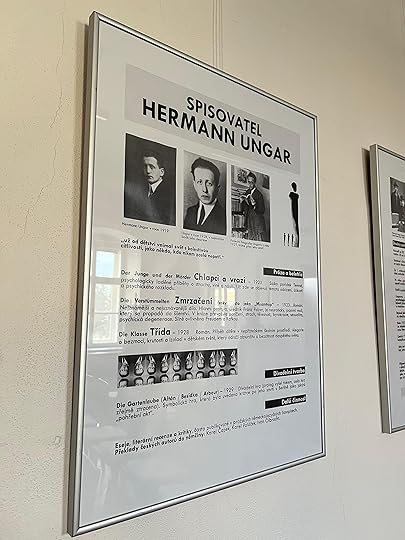
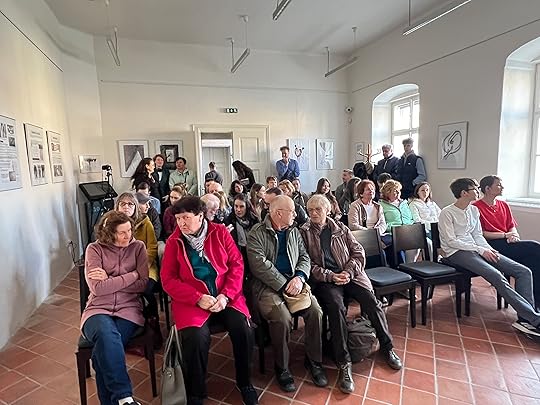
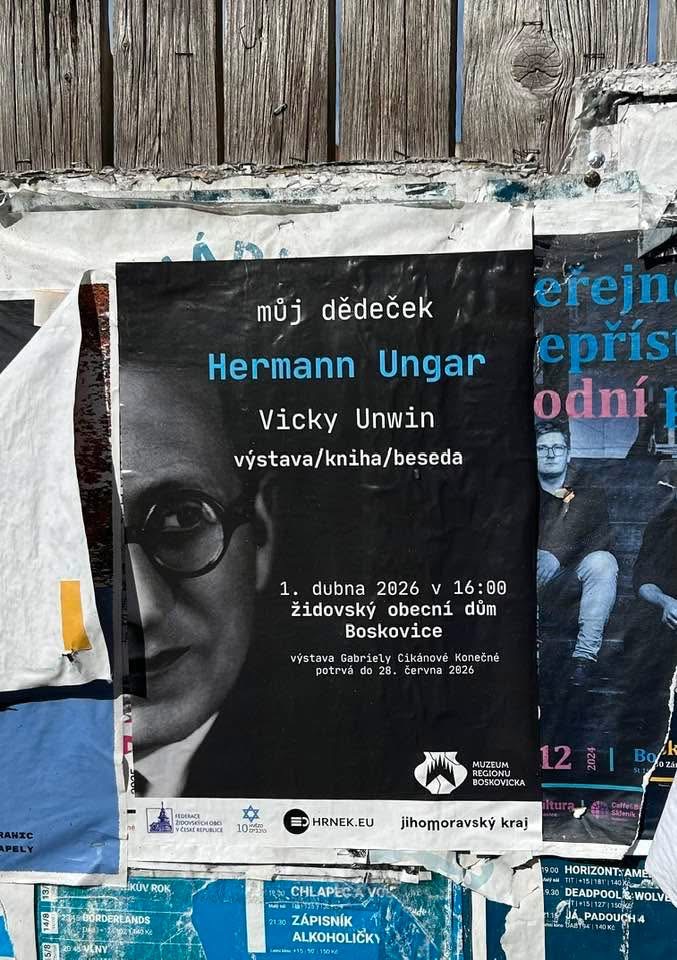
The room is full when we arrive – standing room only in fact. It’s good to see my friend from the Ungar/Kafka Colloquium 18 months ago, Tana Klementova, a historian involved in the Brno Jewish Museum project. Around the walls are Gabriella’s haunting pictures, and some info boards on the life and times of Hermann Ungar. After a brief introduction which includes a very witty little sketch written in the style of Hermann – the author really catches his self-deprecating style – we christen the new publication with tea of course! It seems rather sacrilegious to pour it over a book – but there you go!
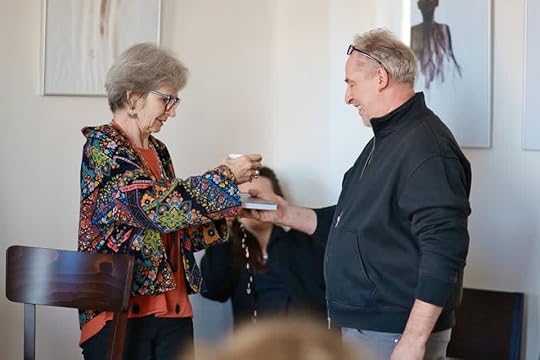
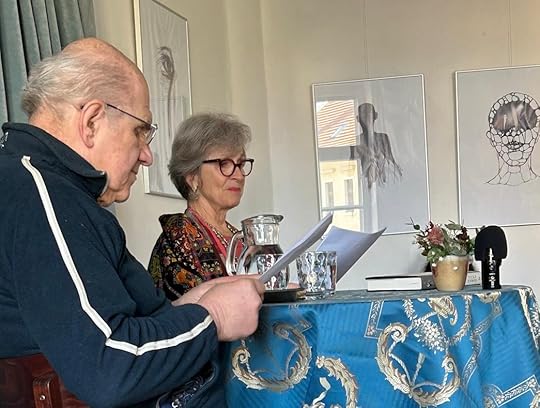
Then it’s my turn to give the talk I’d prepared about our grandfather; I’ve tried to relate it to Boskovice to make it relevant to the audience. Bonnie and co have arrived by this time and are in seats of honour. It’s a rather laborious process with Mr Slonek interpreting paragraph by paragraph – it appears Czech is much more wordy than my concise English so it all takes rather a long time! I’m anxious we are losing the audience, but he’s a well-known local character and the Czechs are a well-mannered and attentive audience.
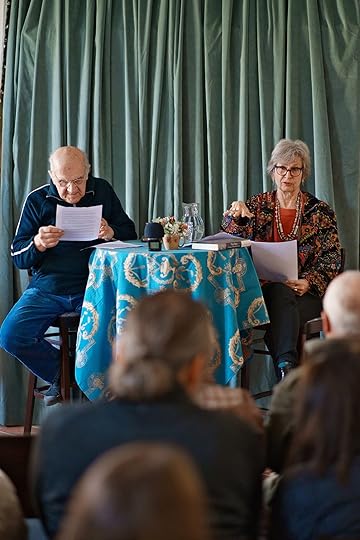
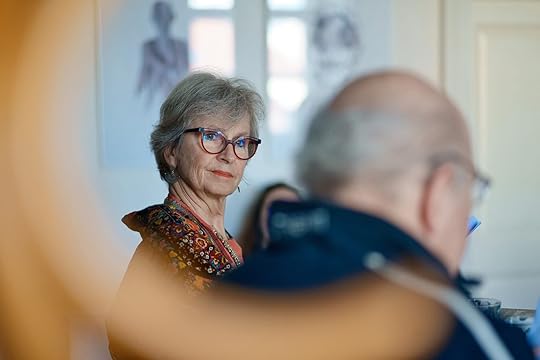
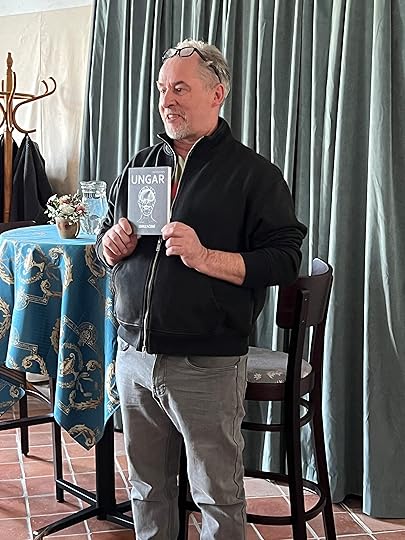
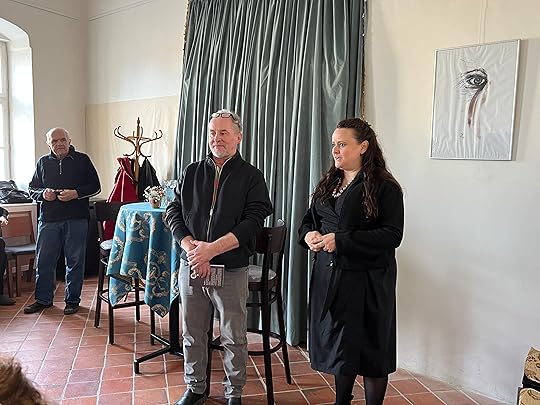
A few questions afterwards, an interview, and then back to the coffee house. Everyone is hungry and Gabriella’s snacks are wolfed down. Nevertheless the boys are still hungry so we find a local pizza place – Boskovice is not a centre for fine dining!
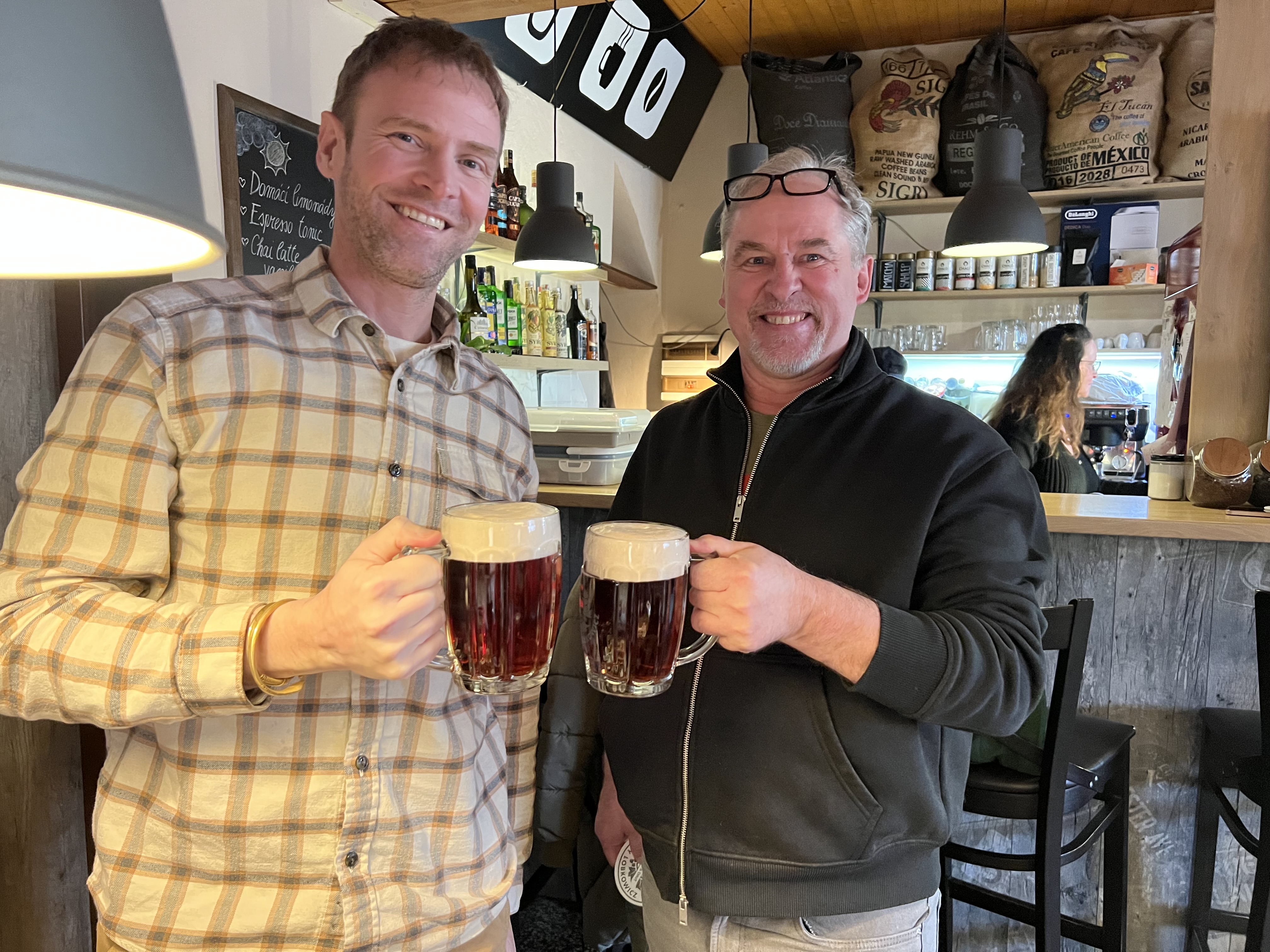 The coffee roasters Club
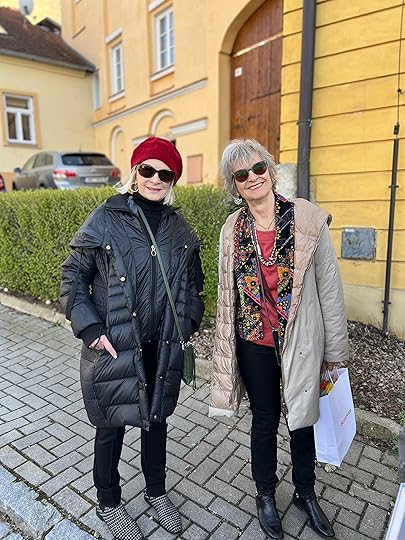
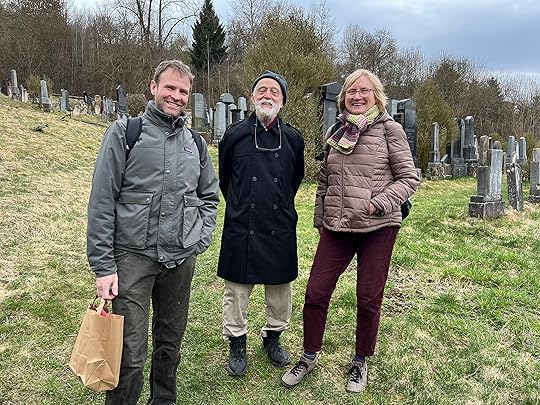
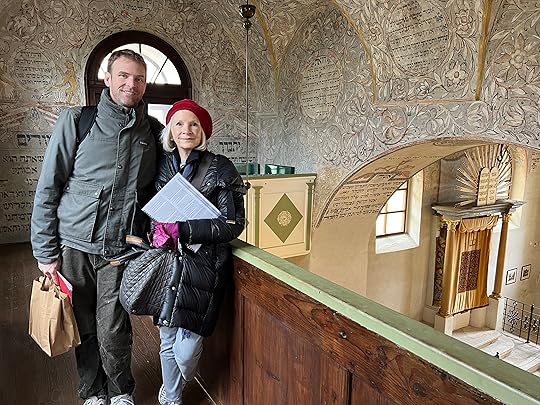
The following morning we walk around, ending up in the cemetery where, not only do we find our ancestral graves, but thanks to the Jewish community centre guide, also meet a charming educated couple who have managed to book an appointment at the synagogue, which we gratefully crash. We discuss, among other things, antisemitism in Czechia which I have always been convinced was the reason it took over five years to get a passport. But I am told this is not the case – Czechia is a great supporter of Netanyahu and Israel. We do agree however, that that’s not the same thing…the government is now right wing and will ally itself in that direction. Perhaps it was the vestiges of communistic bureaucracy that was the problem. We find quite a bit of jobsworthiness amongst minor officials on our rounds…
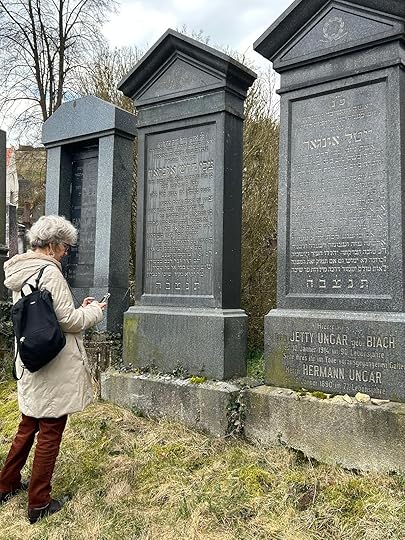
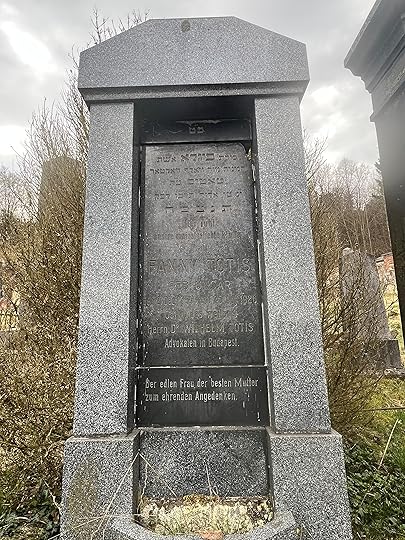
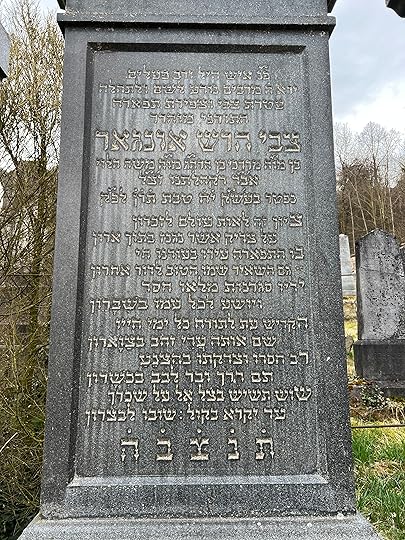
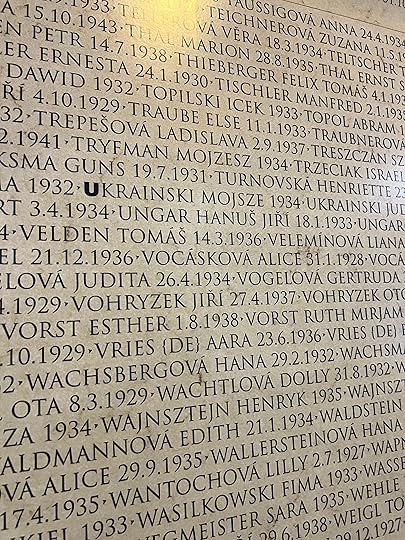
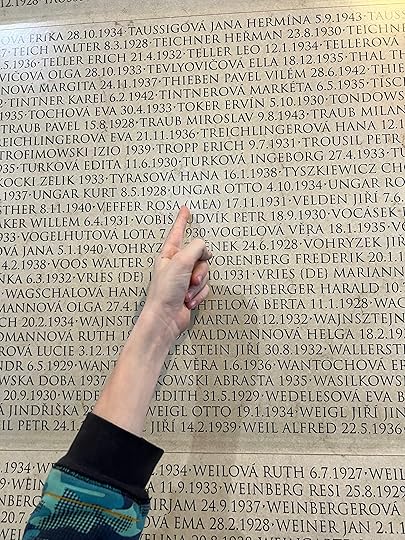
It is always a pleasure to visit the synagogue which is one of the best-preserved and oldest (started in 1639) in Europe. Leon is doing a project for his bar mitzvah on Otto Ungar, just as Aden did on Hans Georg – both of whom perished at Treblinka aged nine and seven respectively It has been a mission to find their memories wherever we go, and here they are in the synagogue, recorded along with all the several hundred other Jews who were forcibly removed to Terezin in the first instance. After I left Bonnie and co went to Terezin and found the names of Hans Georg and Otto as they transited en route to Warsaw.
After lunch we hop in our trusty van and drive the 45 minutes to Brno, where we park underneath the Janacek opera house! From there a few short minutes to another excellent find, the Hotel Jacob just off the main square where we had Airbnb type rooms. Again we wander around the old town; like Prague the main square has been overtaken by all sorts of stalls, mostly food and drink, but also knickknacks for easter and some local produce. And cannabis outlets – it has been legalised here; Transform Drug Policy Foundation which I chair, has been instrumental in advising on the legislation.
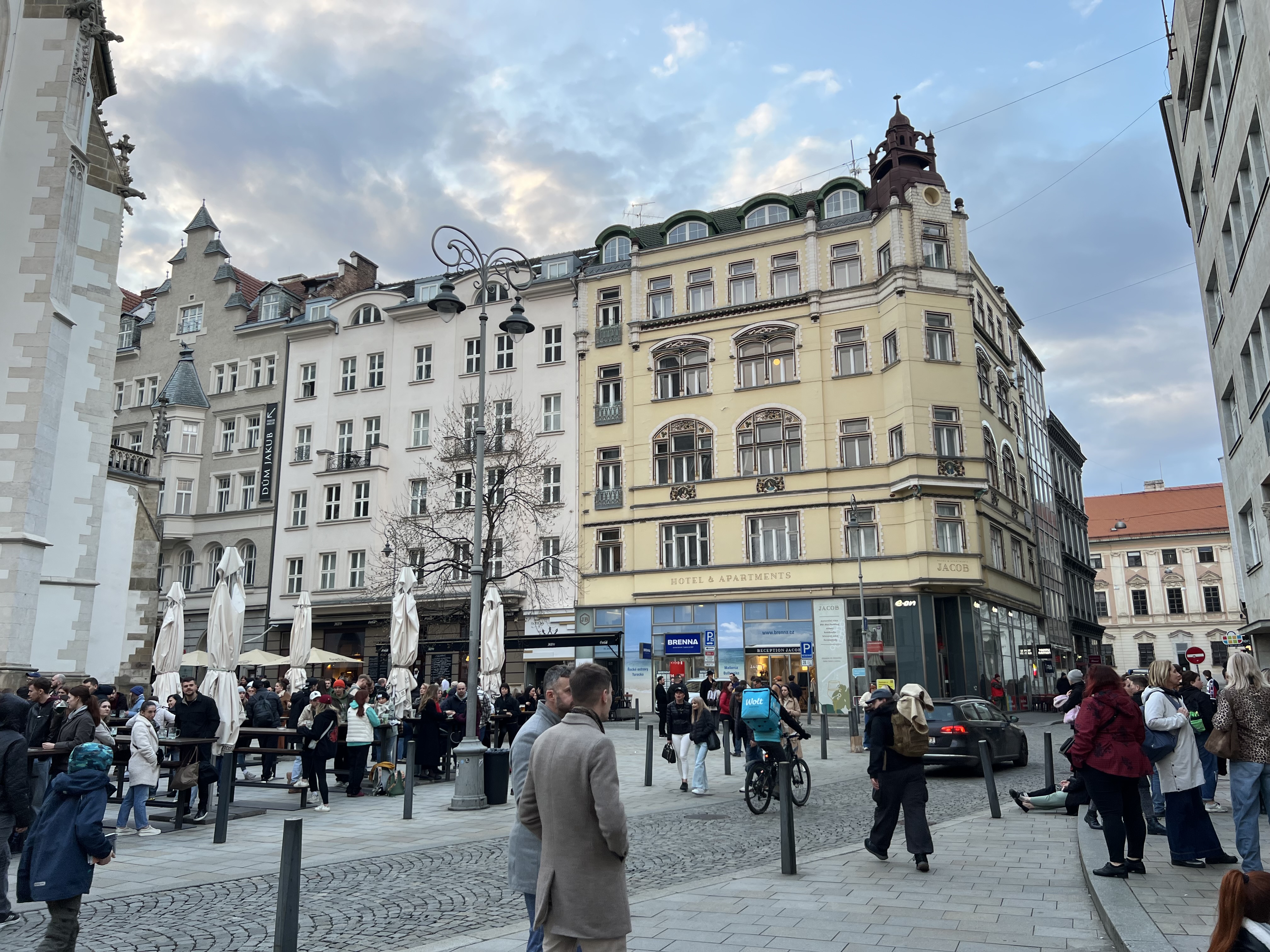 Jacob Hotel/apartments
Meanwhile another drama has been unfolding – Ryanair refuses to give me a boarding pass. Due to new Brexit rules on passports and dual nationalities requiring visas for visiting Europeans I am told I am not being allowed to enter the UK! It can only be sorted out (probably) at the airport…it was my fault initially as I put my Czech details into the app, thinking that as I had arrived that way, I should depart that way. But no! Anyhow, endless online chats later it was not fixable, even though I had changed my profile on the app…so another sleepless night wondering if I will get home for Easter!
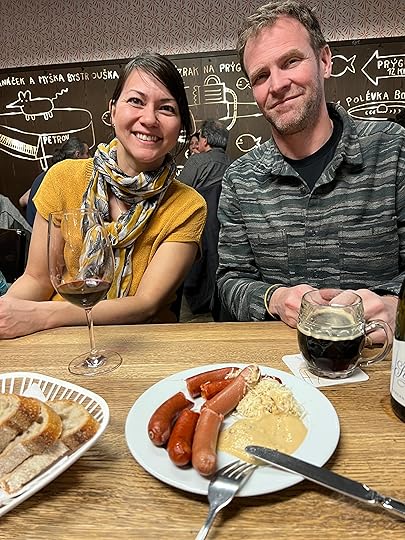
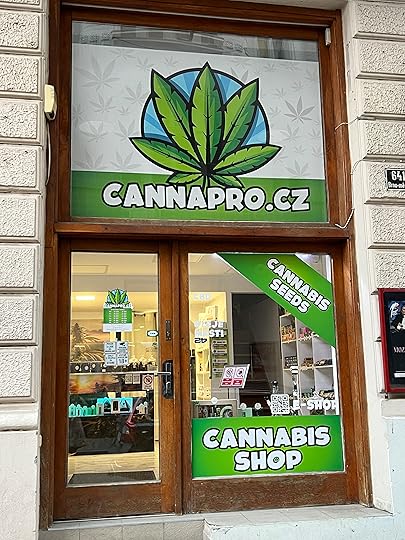
The final straw is my early Bolt does not arrive, driver does not speak English, so finding out what is going on is challenging. Luckily Bonnie is there to help calm me as I wait on a street corner at 6.45 am. Finally he appears, fond goodbyes are said, and I zoom off to the airport…where a very kind customer service man takes control of my app and manages to issue me with a boarding pass, after a good look at my British passport.
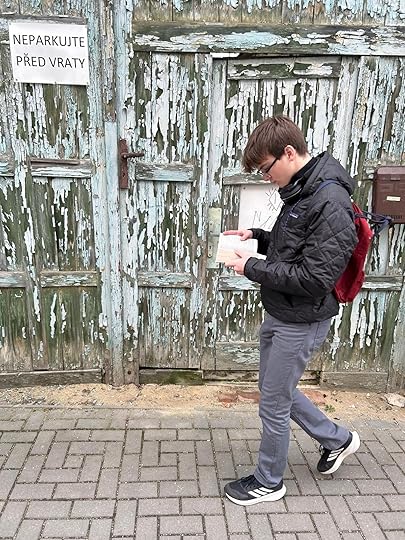
It has been a whirlwind five days. A great opportunity to get to know David, Jess, Aden and Leon. It must have been a bit boring for them all that wandering around, but I am impressed with their ability to do so while reading a book! Thank goodness they are intelligent and love reading. The only screen time seems to have been playing chess! Very impressive! They have survived the vagaries of Czech food (schnitzel the winner on all occasions) and the jet lag proved not to be a problem, surprisingly. So my initial push backs were all misconceived – apart from it being heaving with people in Easter week!
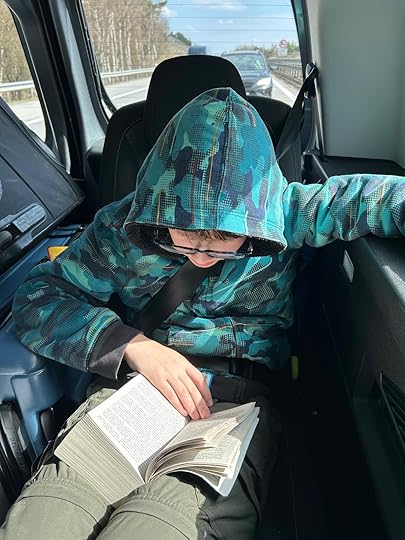
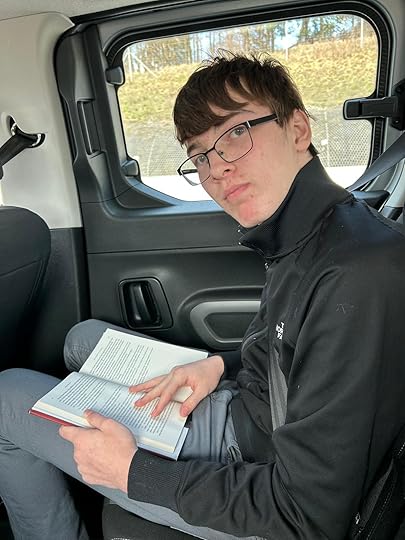
Thank you for making the journey and for sharing it with me.


April 6, 2026
In search of our ancestors: Fogels in Prague
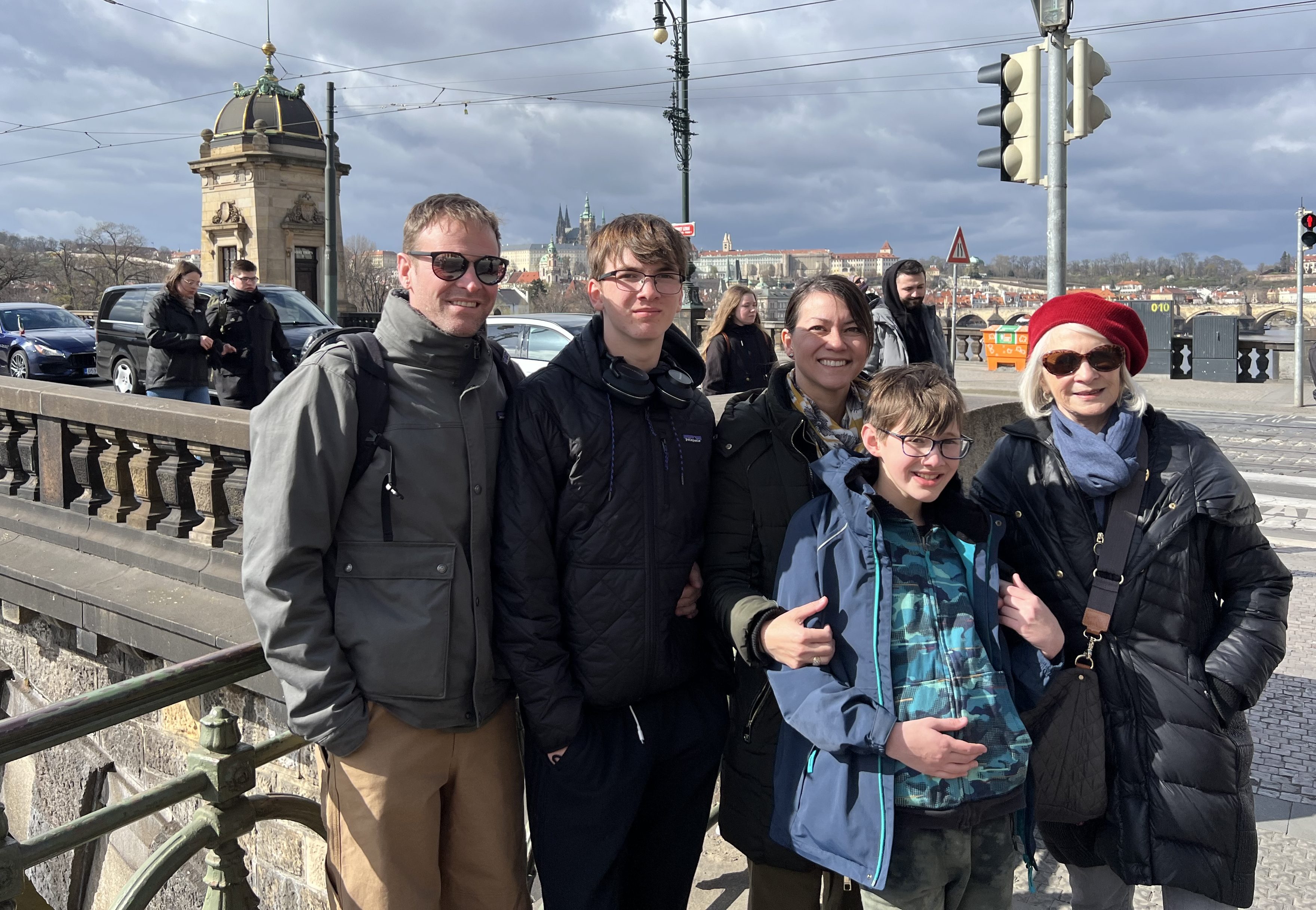 On the bridge over the Vltava outside the National Theatre near the family home
My half-sister Bonnie messages me to say she and her son David, his wife Jessica and their two boys, Aden and Leon, are coming to discover their Czech roots for Spring Break. ‘And we can’t do it without you!’ Spring Break? That’s impossible I say – three stops in five days with jet lag! Plus it’s Easter week so it will be crowded!
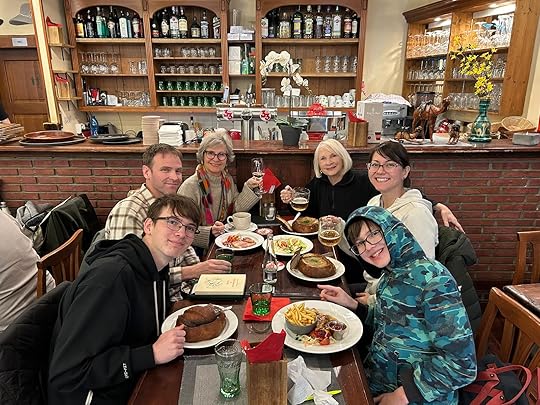
So it is a few weeks later I find myself at terminal 3 in Pret meeting Bonnie, Jess and the boys – David has gone to Germany to see an old friend before boarding a flight to Prague. Jess, as I am to discover, is the queen of organisation: on arrival she has loaded the Bolt app and we get a mini-van to our Airbnb apartment right in the centre of the Old Town. Amazing location and Bonnie and I get our own rooms! David has already arrived and we dump our bags and repair for their first encounter with stodgy Czech food at the hostelry opposite.
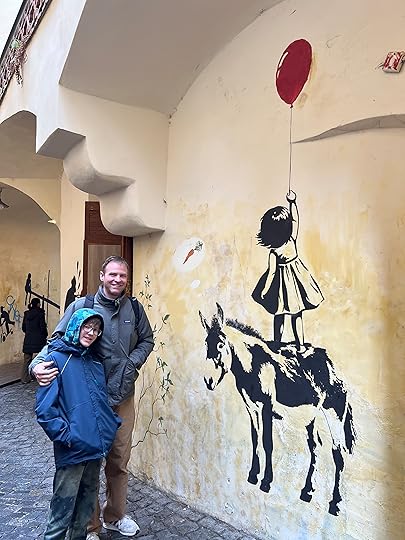
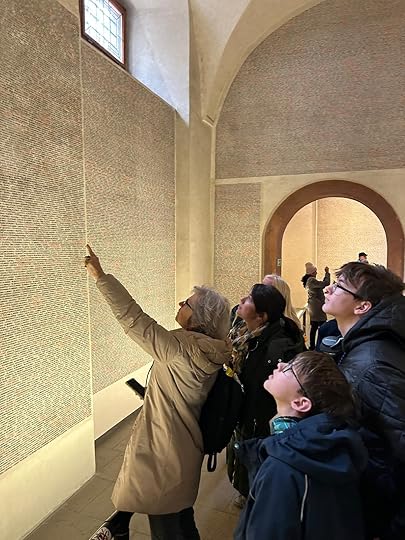
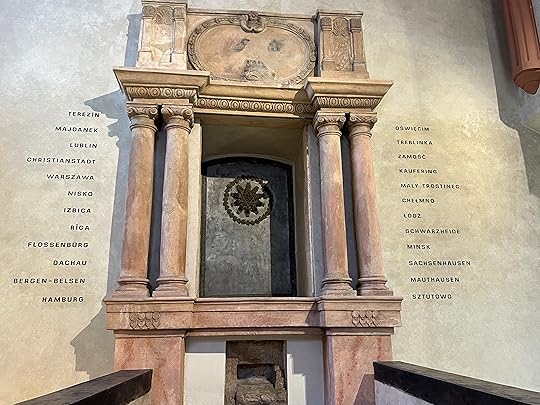
Jess has, on my advice, pre-booked a tour of the main Czech synagogues in Josevov, the Jewish quarter. The primary objective is to find the names of the Ungar and Stransky families on the walls of the Pinkas synagogue. It brings home to the boys, in particular, the enormity of the Holocaust on the Czech Jews, as we are surrounded by the names of those who were murdered, beautifully inscribed on the walls of the synagogue. It had to be re-done after the Communist era when the synagogue was closed. Religion was banned.
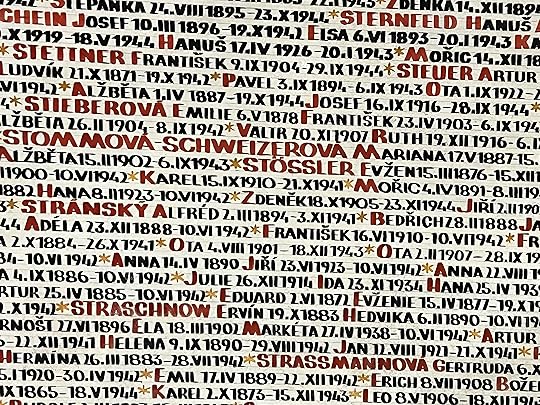
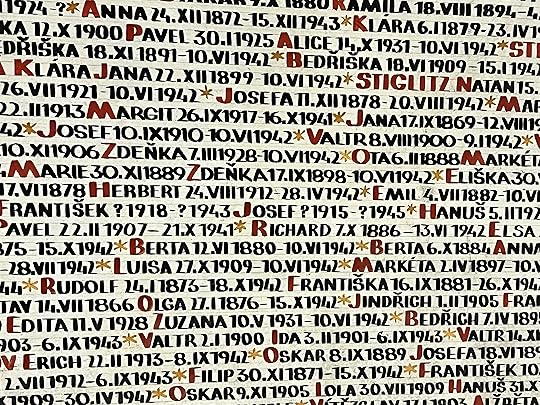
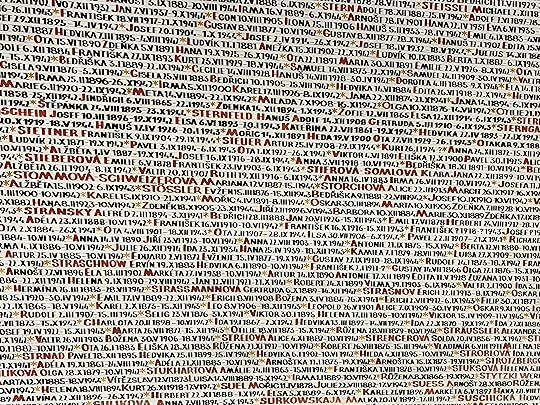
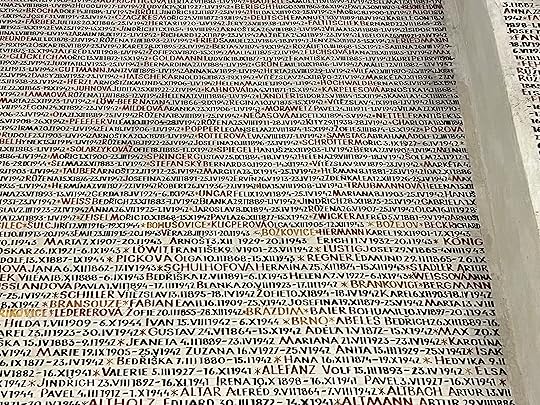
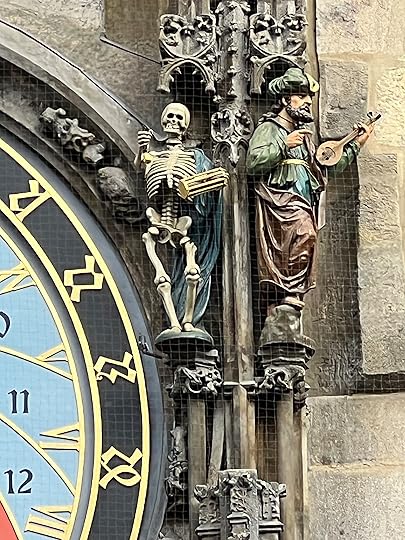
En route we admire the Astronomical clock as it strikes the hour with the extraordinary mechanical figures who rotate with the chimes. We pass by the site of the Café Continental, now long gone, where our grandfather, great-grandfather and great-great-grandfather Hermann Ungar would take his morning coffee.
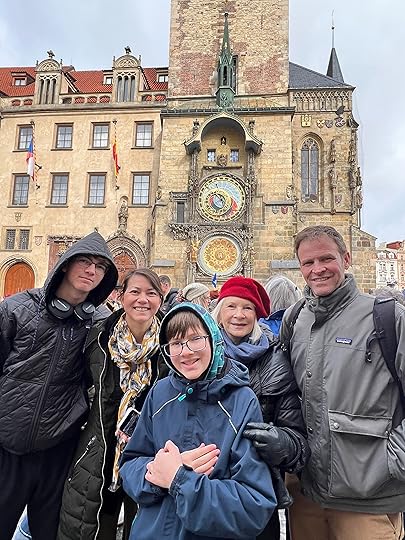
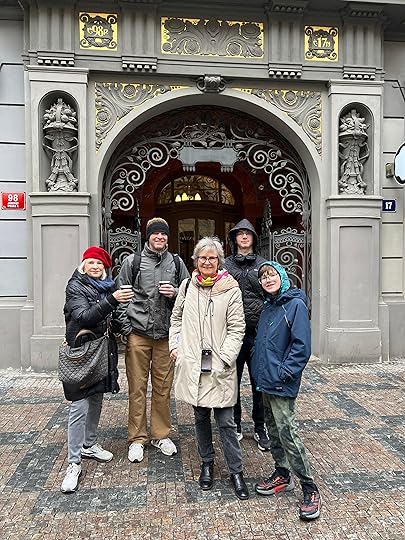
We are hugely disappointed to find that the promised Hermann Ungar display in the Spanish Synagogue is missing from the cabinet of famous Jewish writers (Kafka of course ubiquitous) and that the display of two of our Rabbinical ancestors (both Great High Rabbis of Prague) as reduced to one, Yekhezkel ba Hoda Bi Yhuda Landau 1713-1793); R Shmuel Halevi Landau 1756-1834 is AWOL: but we get our money’s worth as Yekhezkel is replicated in the Maisel Synagogue. He as after all one of the most famous Rabbis…as I tell anyone who questions my heritage – it is an illustrious lineage, direct descendants by eight and seven generations respectively, via Hermann’s mother Jeannette Kohn.
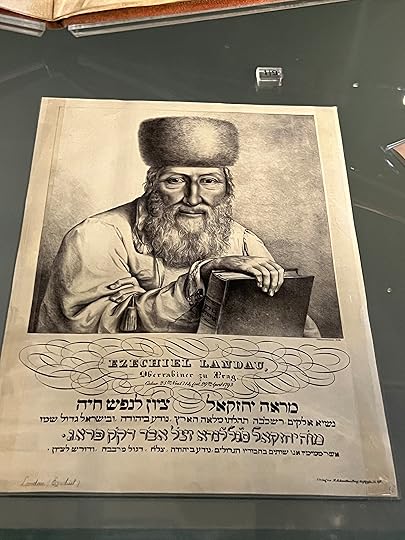
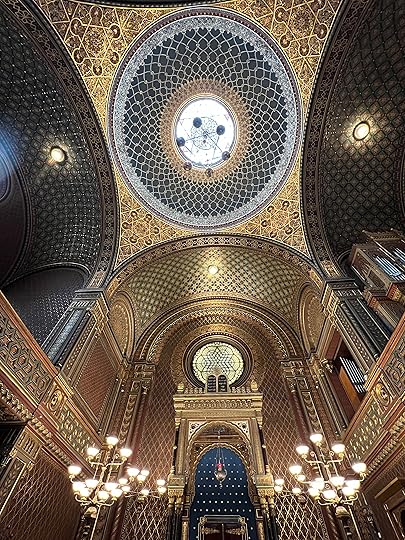
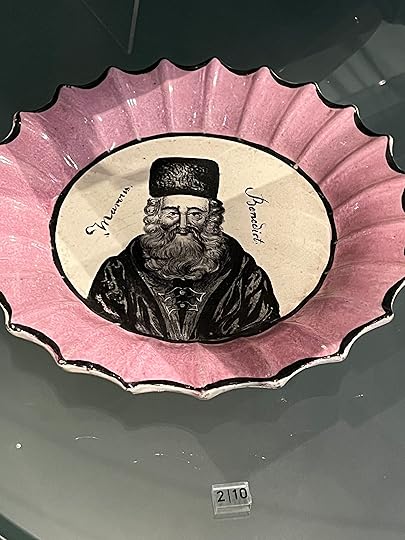
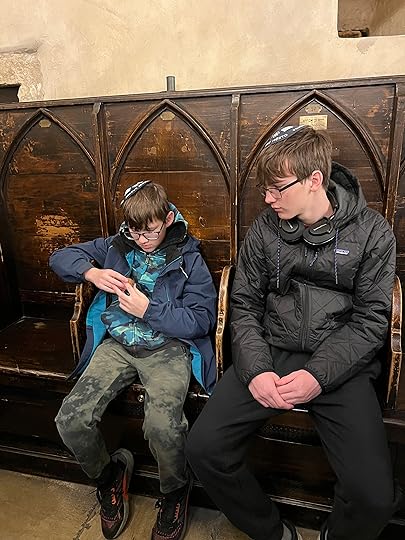
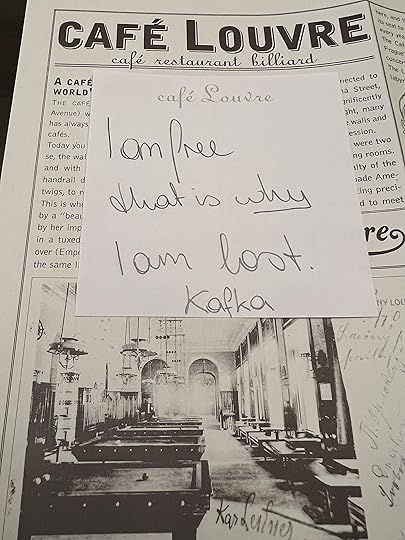
Lunch is a hot dog in the Old Town Square, followed by dessert in the Louvre café – Sacher torte, hot chocolate, ice cream and strudel of course. Hermann used to watch the billiard players as he sipped coffee and ate an egg in a glass, faithfully recounted in The Maimed and in his short story, The Bank Official. Here Bonnie finds a secret message on the table from Kafka. She’s very tickled.
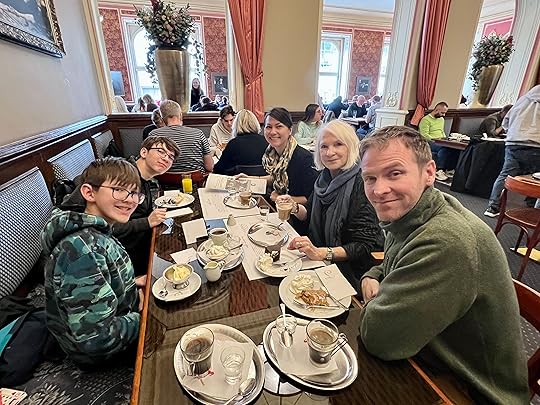
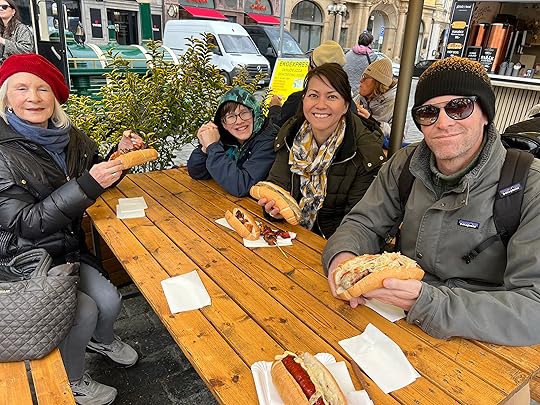
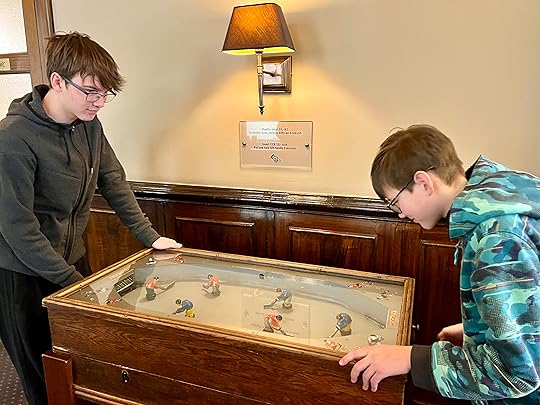
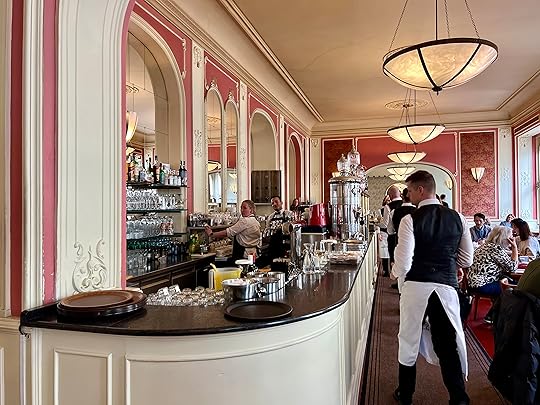
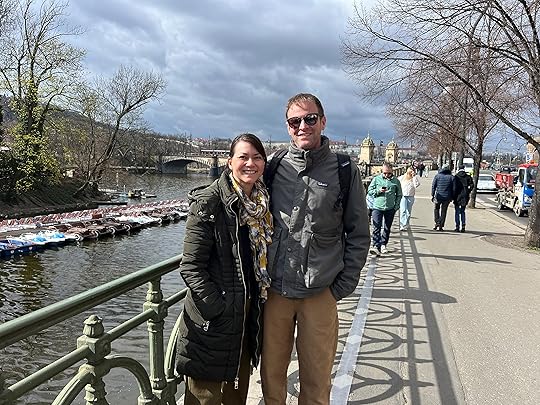
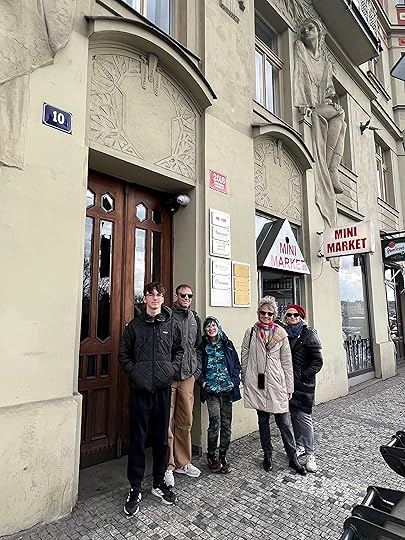
Replete, we bimble (Bonnie and David’s favourite word acquired in Namibia) along the river bank, to the Masaryk Quay for a photo opp outside Grete Ungar’s apartment, where she sold lingerie, and where she brought up Dad and Uncle Alec following Hermann’s untimely death in 1929, aged 36. It is opposite where we scattered Dad’s ashes.
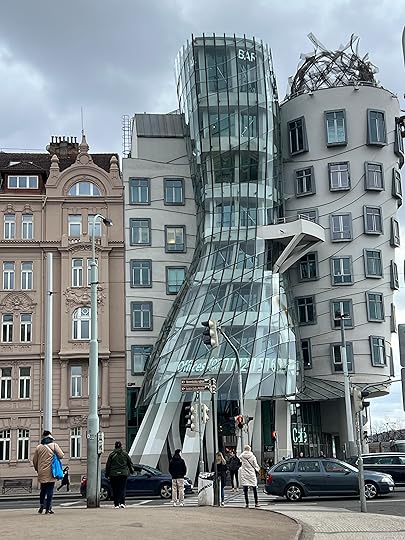
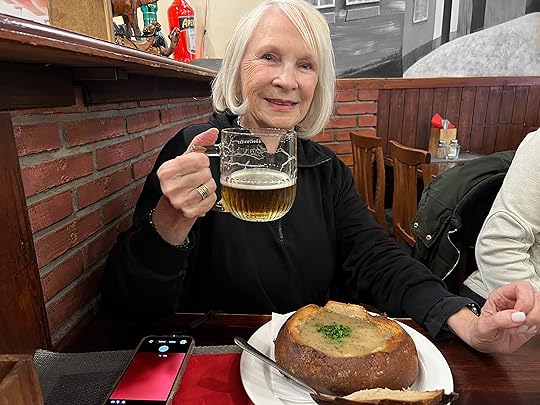
We are meant to be meeting dear friend and genealogist Julius Muller for supper, but at the last minute he has to pull out as he has flu. So instead of the rather fancy place we had booked, we sample another Czech meal in the Old Town. I’m not sure David is over impressed with svickova (national dish and Dad’s favourite, boiled beef in cream sauce); Bonnie stuck to Prague ham while the rest of us had schnitzels with cucumber salad, much nicer!
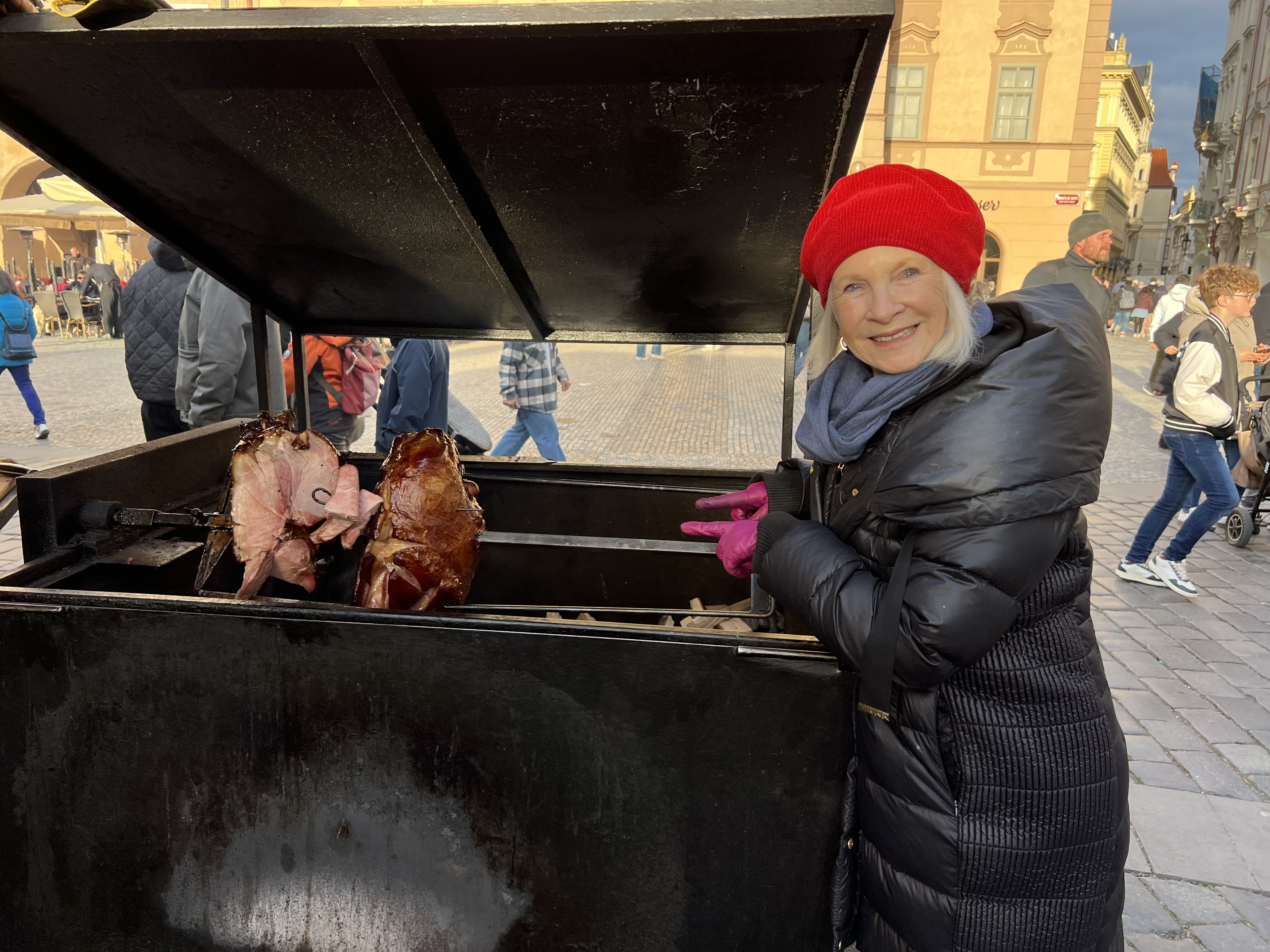 Prague ham – Bonnie’s fave
On return from another bimble round the Old Town, there is an unfolding drama. It appears US drivers require an international licence to rent a car – and no one has one. I haven’t brought any sort of driving licence. David, who is a very chilled chap, seems unperturbed – ‘it’ll be fine’- but the ladies are concerned. The plan is that David and Jess will go at 8 am to pick up the van and hope it’s ok! I’m a worrier (the Unwin gene from Hermann and Dad), so I go to bed feeling very anxious – my big day is tomorrow, the talk about Hermann at the book launch of the Czech translation of The Maimed, organised by the eponymous teashop in Boskovice. And I must be there!
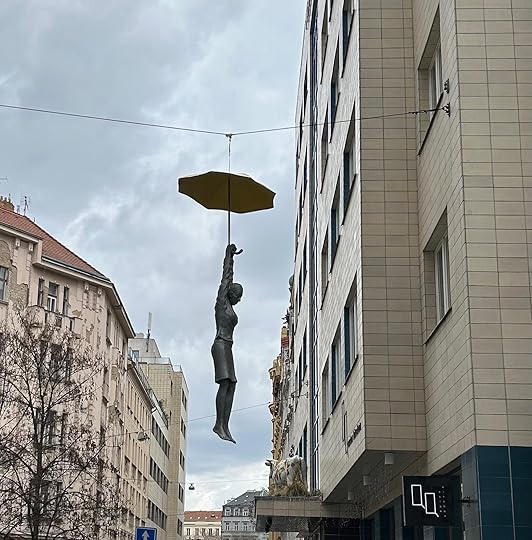
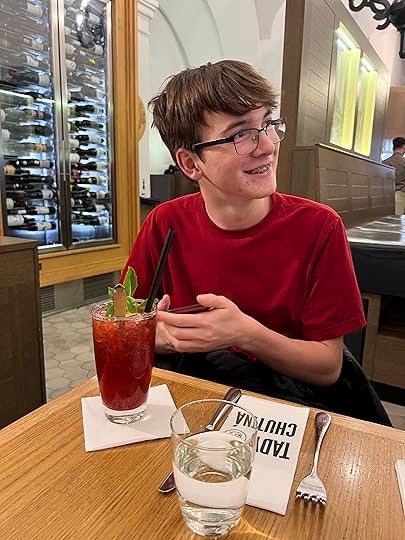
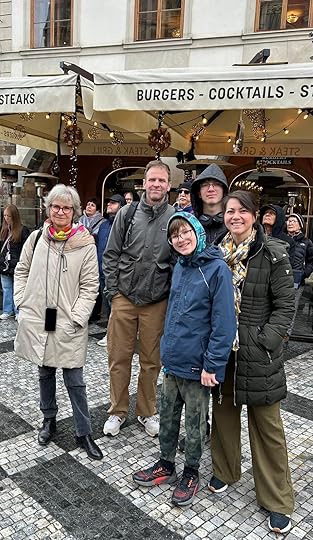
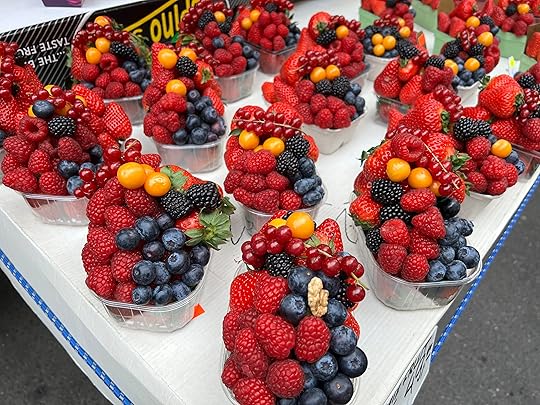
I need a Plan B which I come up with late in the night – if the worst comes to the worst, we will get a Bolt – £350 for all of us. With that I go to sleep…
To be continued!
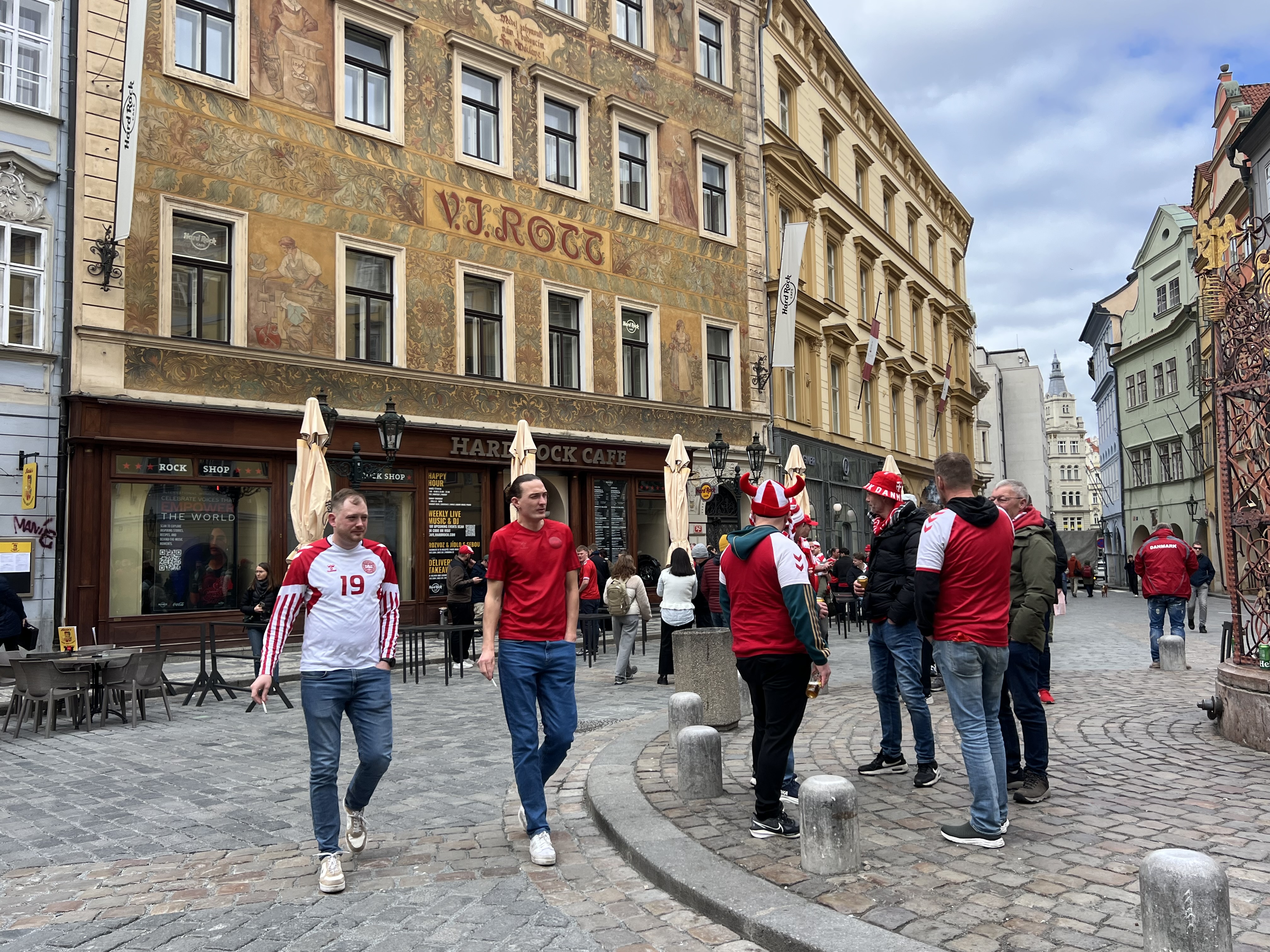 Danish fans in full force awaiting the World Cup qualifier in Prague. Czechia won…
March 7, 2026
Remembering Louise 15 years on
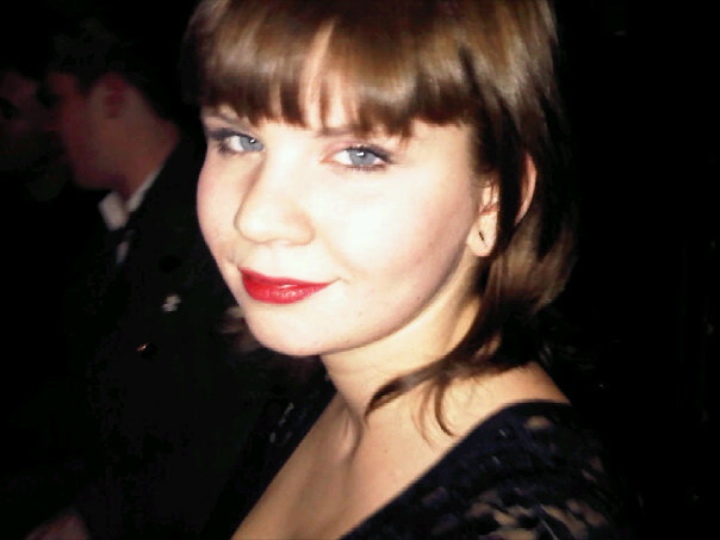
2nd March 2026 was the 15 anniversary of the terrible morning when we heard Louise had died. Each year we mark the occasion by visiting her bench with family and friends and then go off somewhere to celebrate her memory.
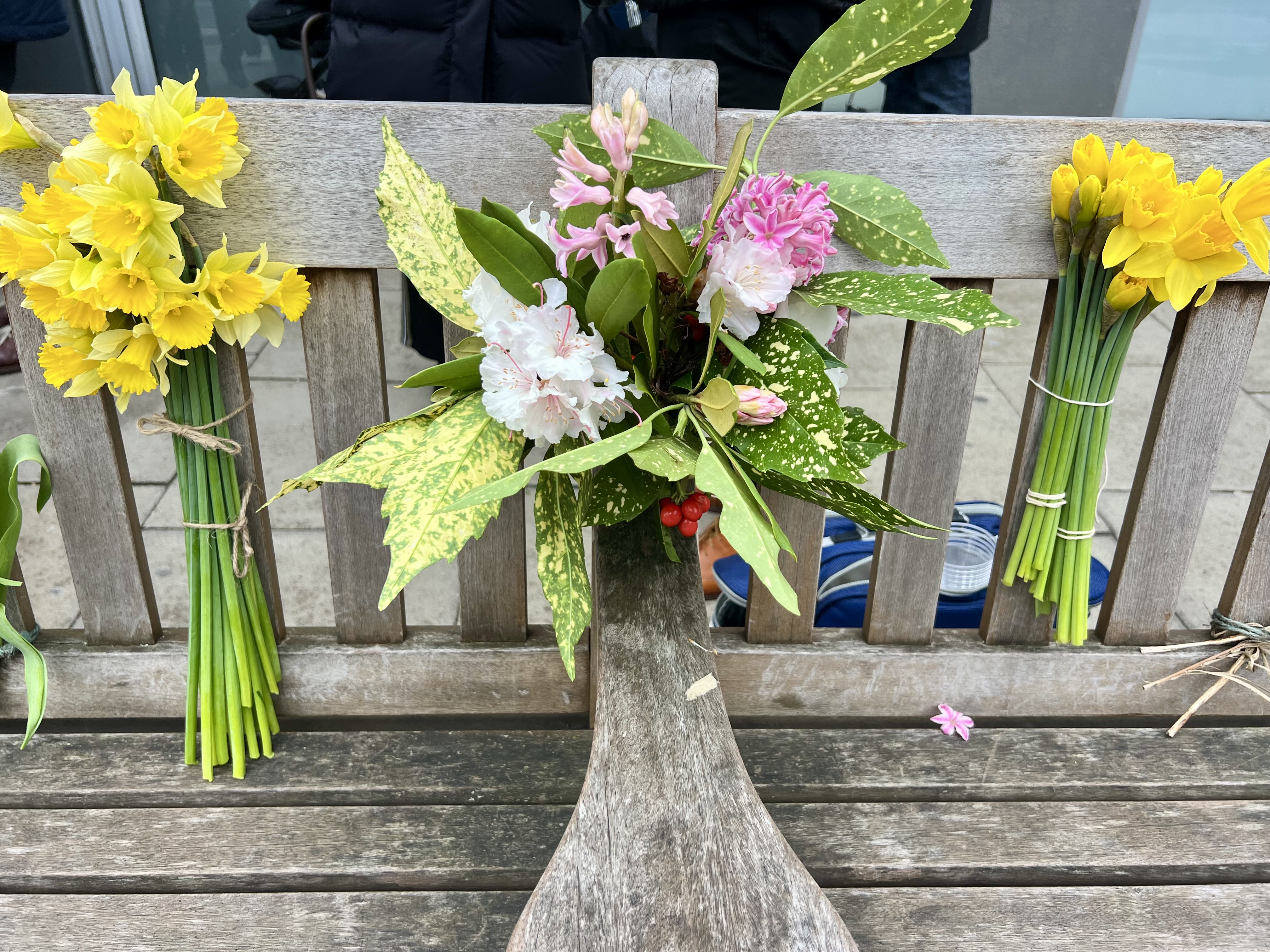 Flowers from my garden
This year, 2nd March being a Monday and, it being such a milestone, we decided to make more of an occasion of it so we invited people on Sunday 1st, both young and old, to come to the Bench and then to have lunch at Parkhill Road afterwards. About 30 people turned up in each location, the ebb and flow reflecting the realities of our day-to-day lives. The highlight was of course our delicious granddaughter, who now proudly says her name is ‘Claudie Louise Cattell’, and whose cheeky personality, constant smiles and high spirits personify the memory of Louise – she seems to be with us! She delighted in helping us decorate the bench, handing us big bunches of daffs. We are blessed to have such a wonderful son in Tommy, his lovely wife Anna and of course Claudie. Family is everything.
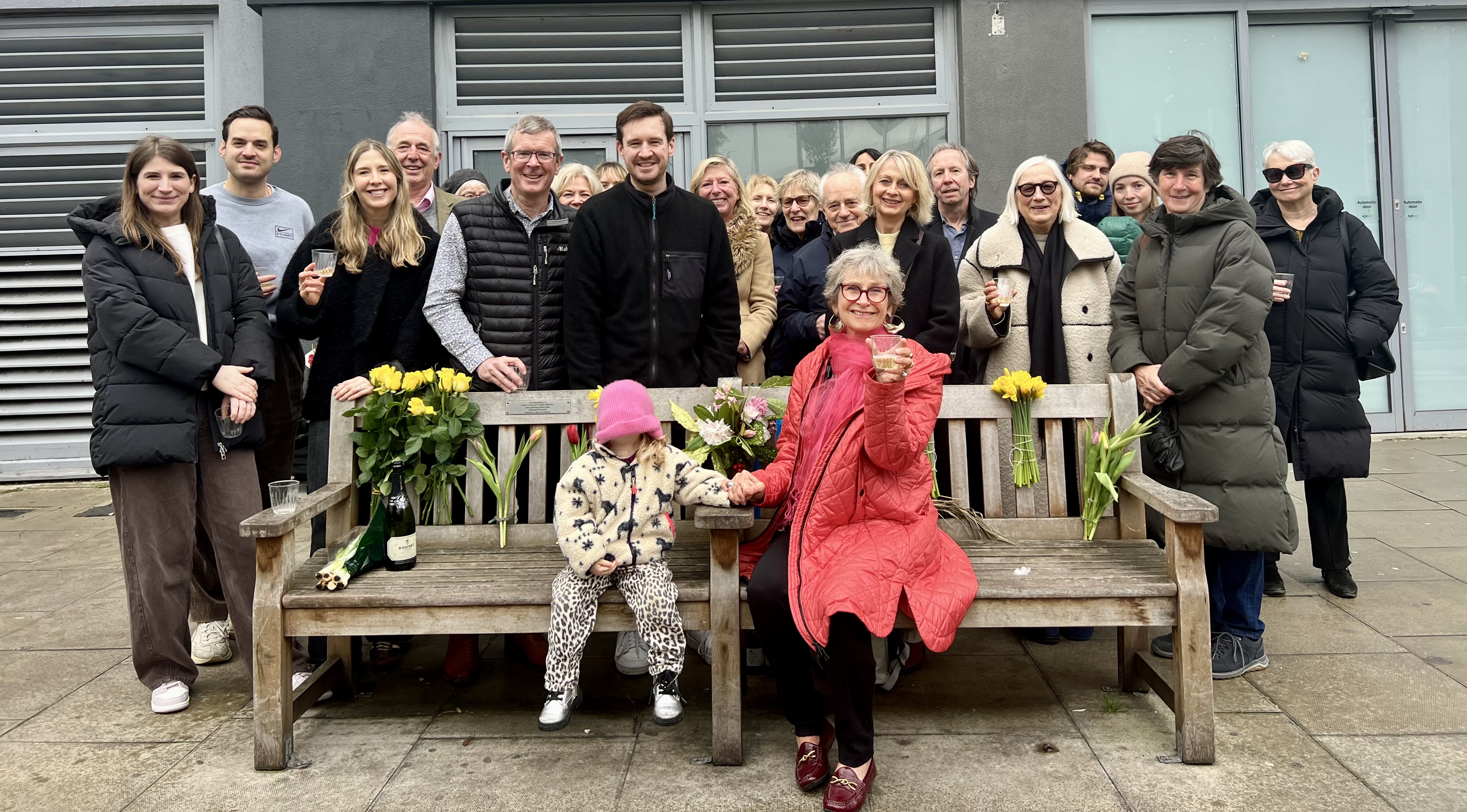 Friends and family, centre little Claudie spontanteously self-editing. She made us all laugh…
 Louise loved Jollof Rice in the last year of her life, and it became a big joke. So I found an authentic recipe, made a Thai green curry (a nod to her vegetarianism!) and Iniga, a child then now a chef, made a delicious blueberry tart. It was a fitting culinary tribute.
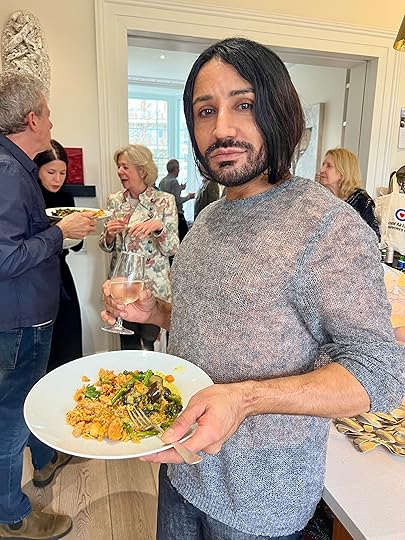
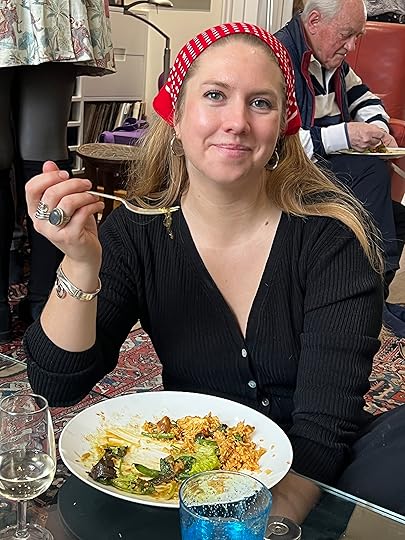
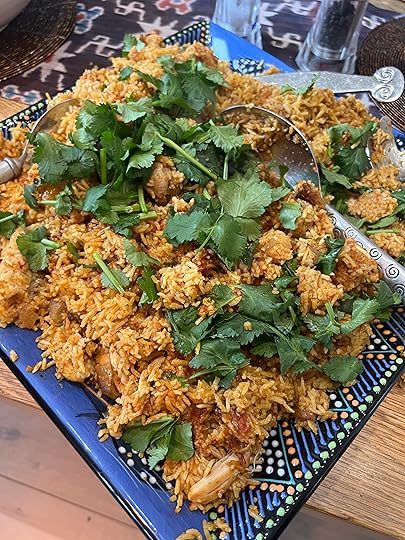
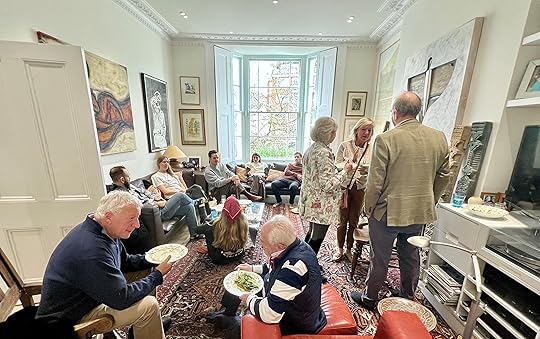
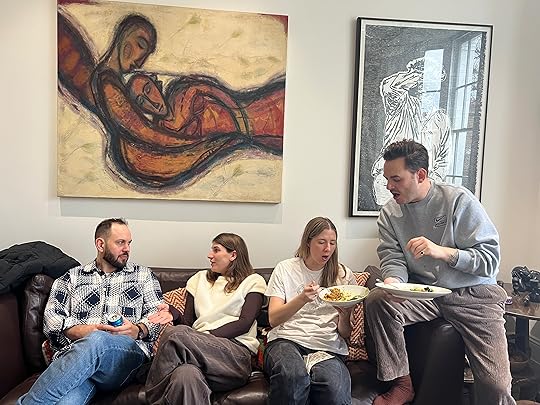
It is always wonderful to see how many people of all ages still remember Louise – so many have moved out of London, or round the world, but the messages flood in from all over. I remember her funeral when the overflow watched outside the crematorium on CCTV. Below, the celebrations continued in the Steele’s, everyone in silks and fine array – I mandated ‘no black’.
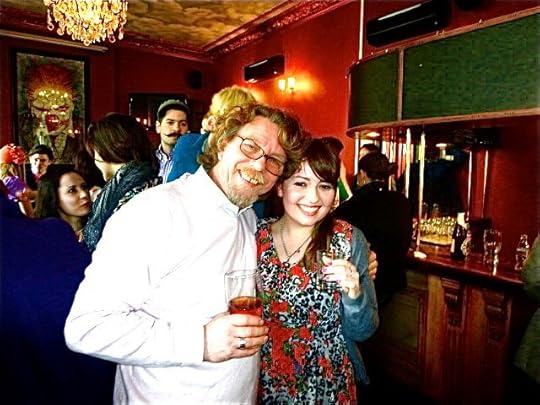
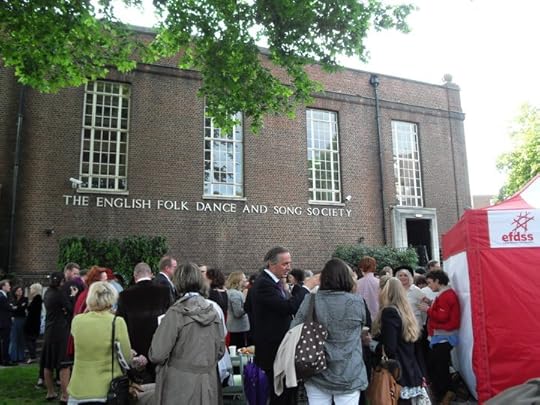
On midsummer’s day, at her memorial at Cecil Sharpe House, we put out the last keepsakes, sang and danced, and shared memories – many centred around Louise’s quirky character and alleged vegetarianism (sparked by finding a Macdonald’s loyalty card in her purse, which I still have). They were both grand send-offs to a wonderful girl. And the tributes continued for over a year with her Dingwall’s memorial gig.

Back in 2026, on her actual anniversary, we scattered her remaining ashes under a fine clematis tangutica, which will ramble over the old apple tree and the climbing rose in full view of the house. We also sprinkled the last of my Dad under two more clematis; I can’t think of a better place for them all to be, giving new life from old. Their ashes are already united, with my mum, in the flowing Zambezi and on Manda Toto island, next to Lamu. Louise is also guarding the roots of a tree near the Bench, the roses in the garden of her flat in Evering Road, protecting skiers on the Swiss Wall, and fertilising our little garden in Champery. She is ubiquitous in all her favourite places.
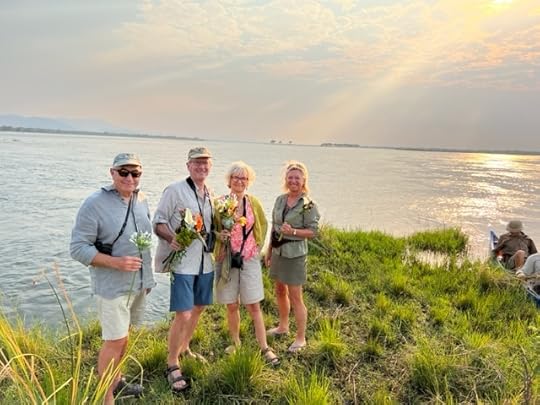
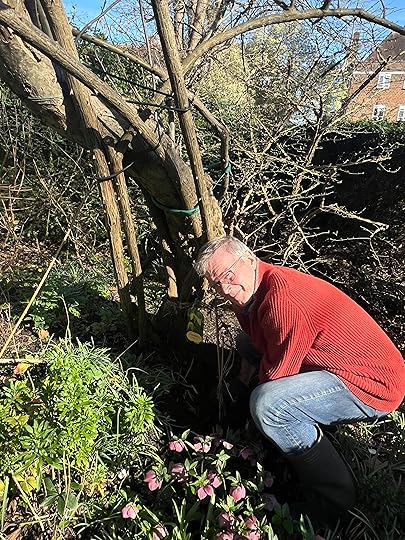
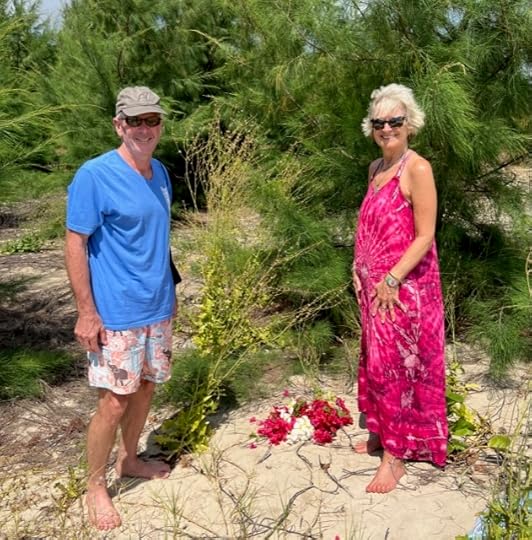
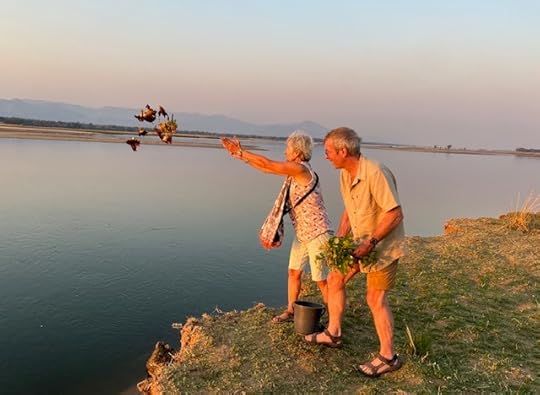
Fifteen years is such a long time and today I reflect on how I feel. In my dreams I see and talk to Louise at several stages of her life but, awake, I have to summon her very consciously as she seems just out of reach. I need to close my eyes to see her and hear her throaty chuckle and the ‘Mum’ she used to say in an exasperated tone (often). The troubled teenage years had given way to a more mature and thoughtful personality, still maturing when she died. There’s no doubt she would have become an exceptional adult, using her multitude of talents, her vibrant personality and deep empathy for others. How I mourn not seeing that happen.
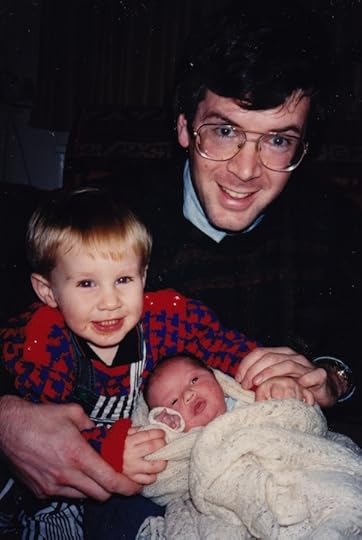
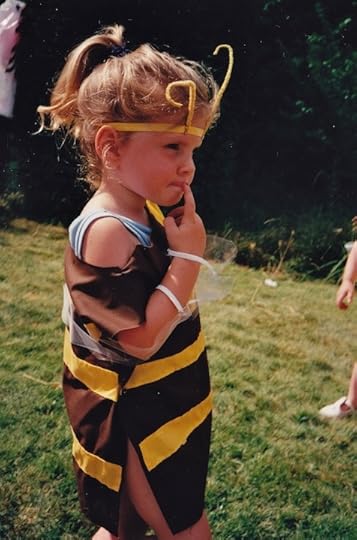
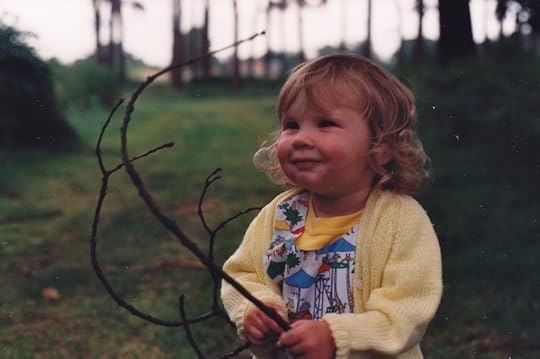
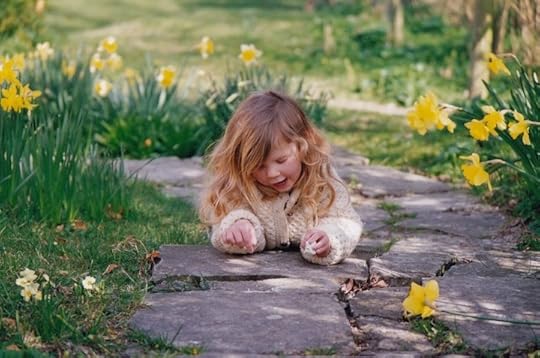
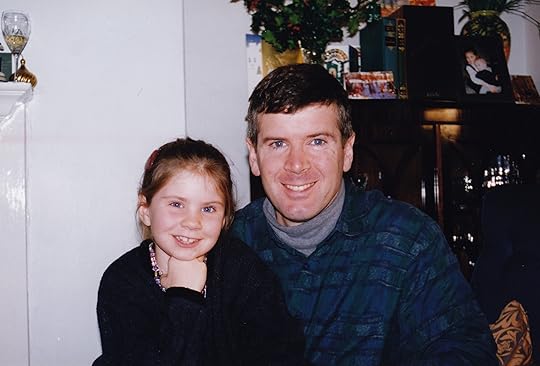
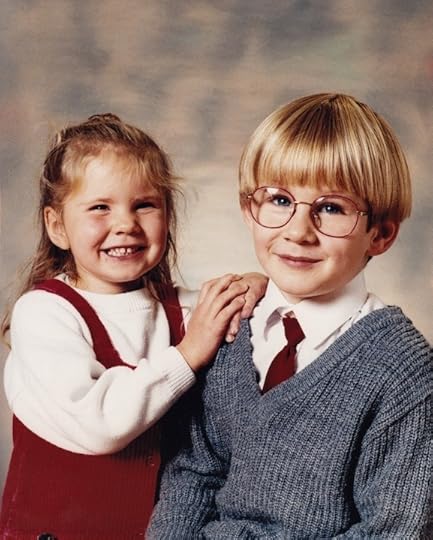
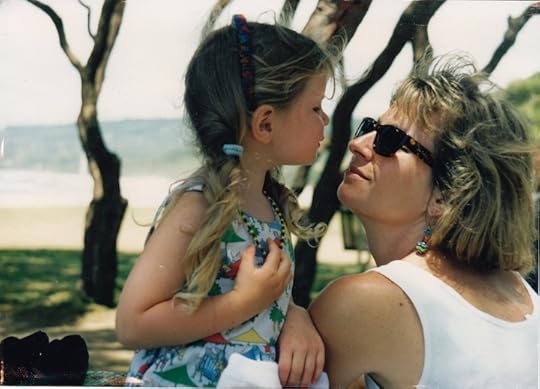
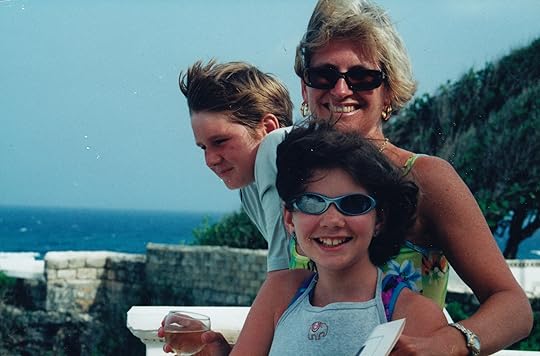
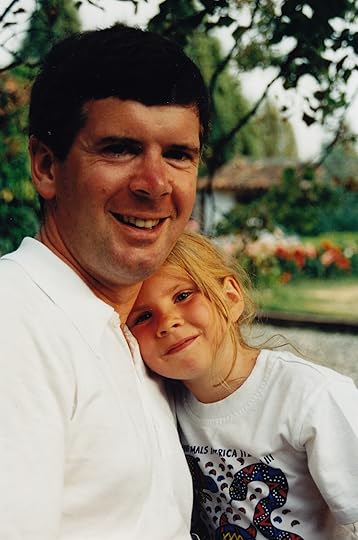
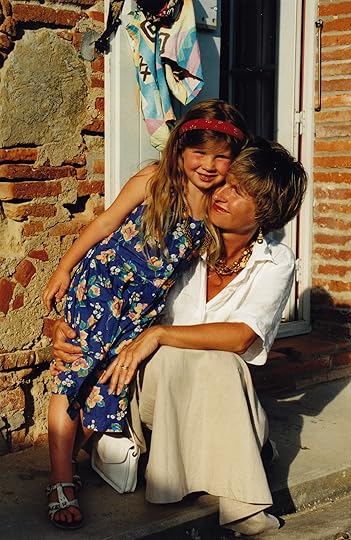
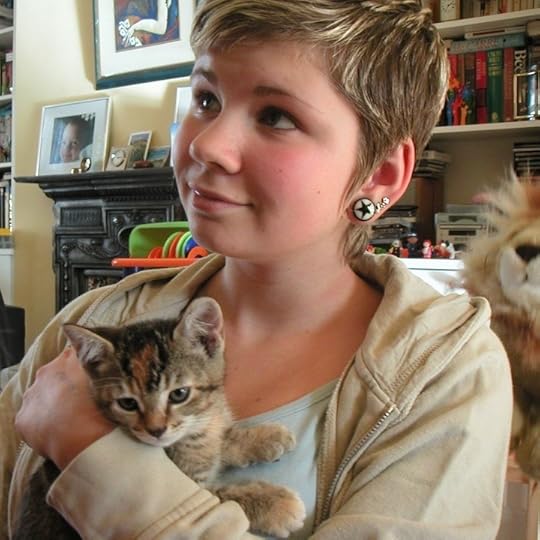
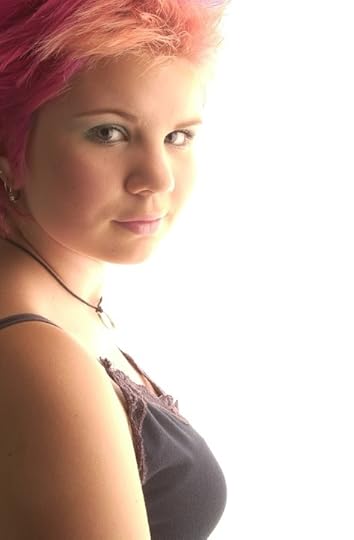

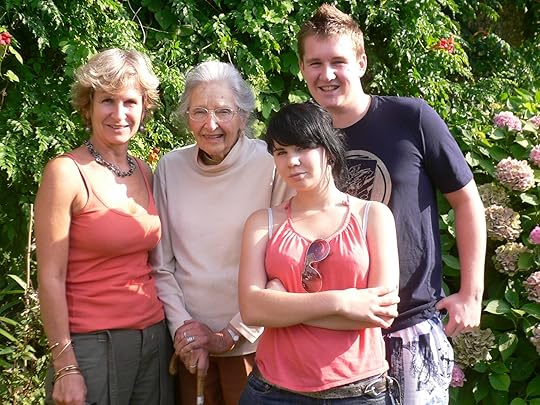
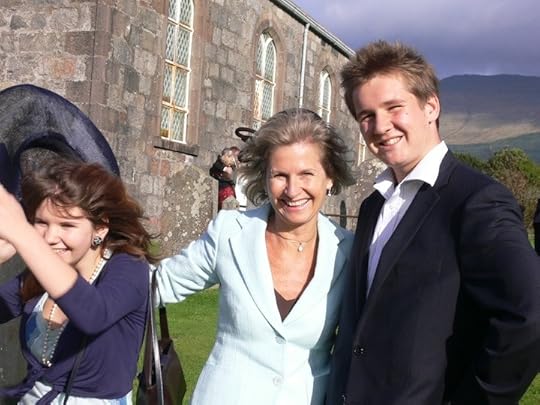
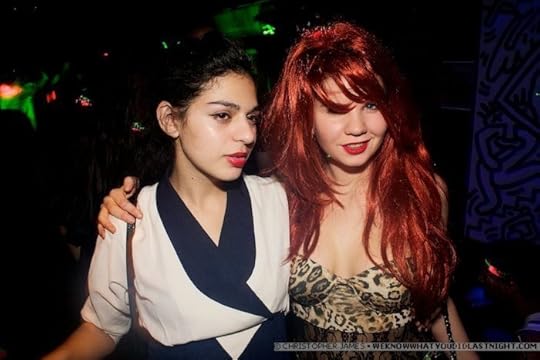

Remember the happy times I say to others who are bereaved but, to be honest, I find it painful to bring them to mind too often. So I continue in a state of numbed denial of the hole she has left in our lives and strive to make the best of it, campaigning for changes to UK’s drug policy, showing compassion and humanity to my best ability through charity work and activism (as I know she would want), the while trying to enjoy life as much as I/we can. Carpe diem is still our mantra and survival mode. It is not possible to ‘get over’ the death of a child but it is possible to learn to live with it.
Bearing witness to her newly maturing self, I found this written by Louise in 2009 [she was dyslexic so the spellings are original]:
I have been asked by some of you to respond to this “25 things about me” chain letter that has been going around. Firstly, I would like to say that I have greatly enjoyed reading all those that I have read and am flattered that people have asked to know a bit more about me. Unfortunately I do not have the time to write out a full 25 things right now (as I fear it would take me all night) so I’m offering you a slightly more modest “10 things about me”. For those of you who I am sending this to who have no idea what I am on about then the idea behind it is that if I “tag” you in this note then I wish for you to make a similar list and then “tag” me back and pass it on to whomever you wish.
Anyway, here goes, 10 things about me (you might learn something):
1. I am not religious. Until someone is able to proove or disproove the idea of Devine Creation to me then I shall not rule it out completely as a possibility. This is not to say that I do not find myself in total awe about nature and the world around us, I just believe that nature & science are the only solid things that we have to hold on to and therefor the notion of “God” only exists to me as a theory.
2. Further more I do not believe that I am necessarily right about anything I believe, all I know is that I am happy to believe them. As a consequence of this, not only do I constantly examine,question & explore my beliefs; but I also try not to inflict my views on anyone. Teach it, don’t preach it!
3. One thing that is very obvious about me, and something that almost everybody I know has commented on at some stage is that I am constantly altering my visual appearance. My explanation for this is that I do not think that I am (or should be) defined by the way I look and therefore a change of mood often goes hand in hand with a change of image.
4. I have two cats. One is called Pickle and the other is Pepper. I treat them like children, they are my friends.
5. I find people facinating and constantly watch others around me and try to work out why they do the things they do/act how they act. I really enjoy finding out new things about people, especially when they are things that turn out to be very telling about their personality.
6. I love indulging my senses and can be just as easily moved by a smell or feel of something as I could by a beautiful piece of music.
7. I am nostalgic despite seeing no sense in being so.
8. I enjoy planning things, assessing things & commiting things to extreme reasoning. Part of the process involves writing it all down, I scrutinize things often to the point of obssession.
9. I want to know everything. I feel that any moment spent not learning something is a moment wasted.
10. I am completely unable to multi-task. [This was absolutely true – drove us nuts!]
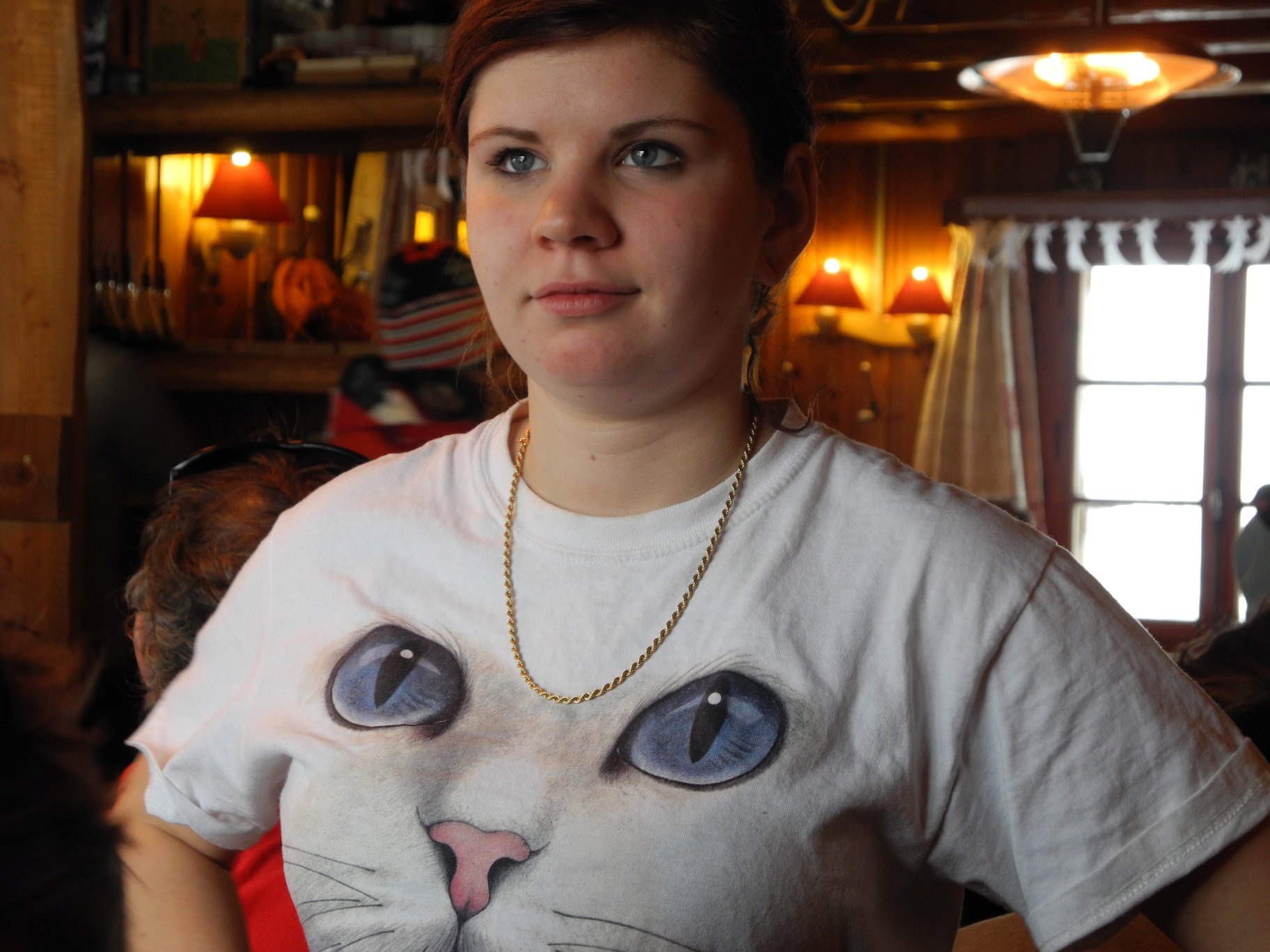 Girl with attitude… Last Christmas 2010…
And some final reflections on grief:
When you are joyous, look deep into your heart and you shall find it is only that which has given you sorrow that is giving you joy. When you are sorrowful look again in your heart, and you shall see that in truth you are weeping for that which has been your delight.
Khalil Gibran
Death Is Nothing At AllDeath is nothing at all.
It does not count.
I have only slipped away into the next room.
Nothing has happened.
Everything remains exactly as it was.
I am I, and you are you, and the old life that we lived so fondly together is untouched, unchanged.
Whatever we were to each other, that we are still.
Call me by the old familiar name.
Speak of me in the easy way which you always used.
Put no difference into your tone.
Wear no forced air of solemnity or sorrow.
Laugh as we always laughed at the little jokes that we enjoyed together. Play, smile, think of me, pray for me.
Let my name be ever the household word that it always was.
Let it be spoken without an effort, without the ghost of a shadow upon it. Life means all that it ever meant.
It is the same as it ever was.
There is absolute and unbroken continuity.
What is this death but a negligible accident
Why should I be out of mind because I am out of sight
I am but waiting for you, for an interval, somewhere very near, just round the corner.
All is well.
Nothing is hurt; nothing is lost.
One brief moment and all will be as it was before.
How we shall laugh at the trouble of parting when we meet again!
Henry Scott Holland
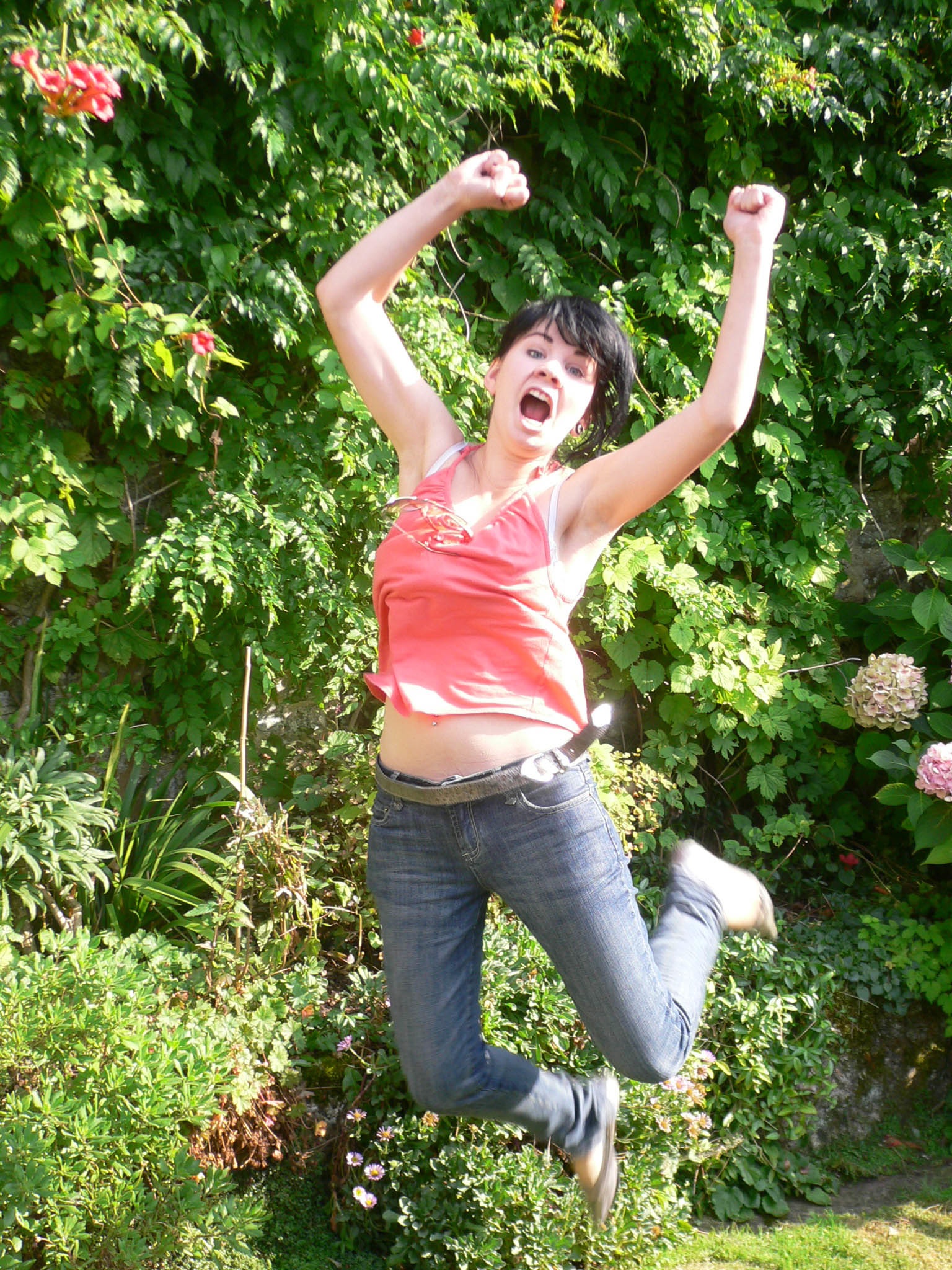
For more memories visit https://louisecattell.com/. A comprehensive record of everything…
November 24, 2025
Mexico 4: Uxmal and the Ruta Puuc
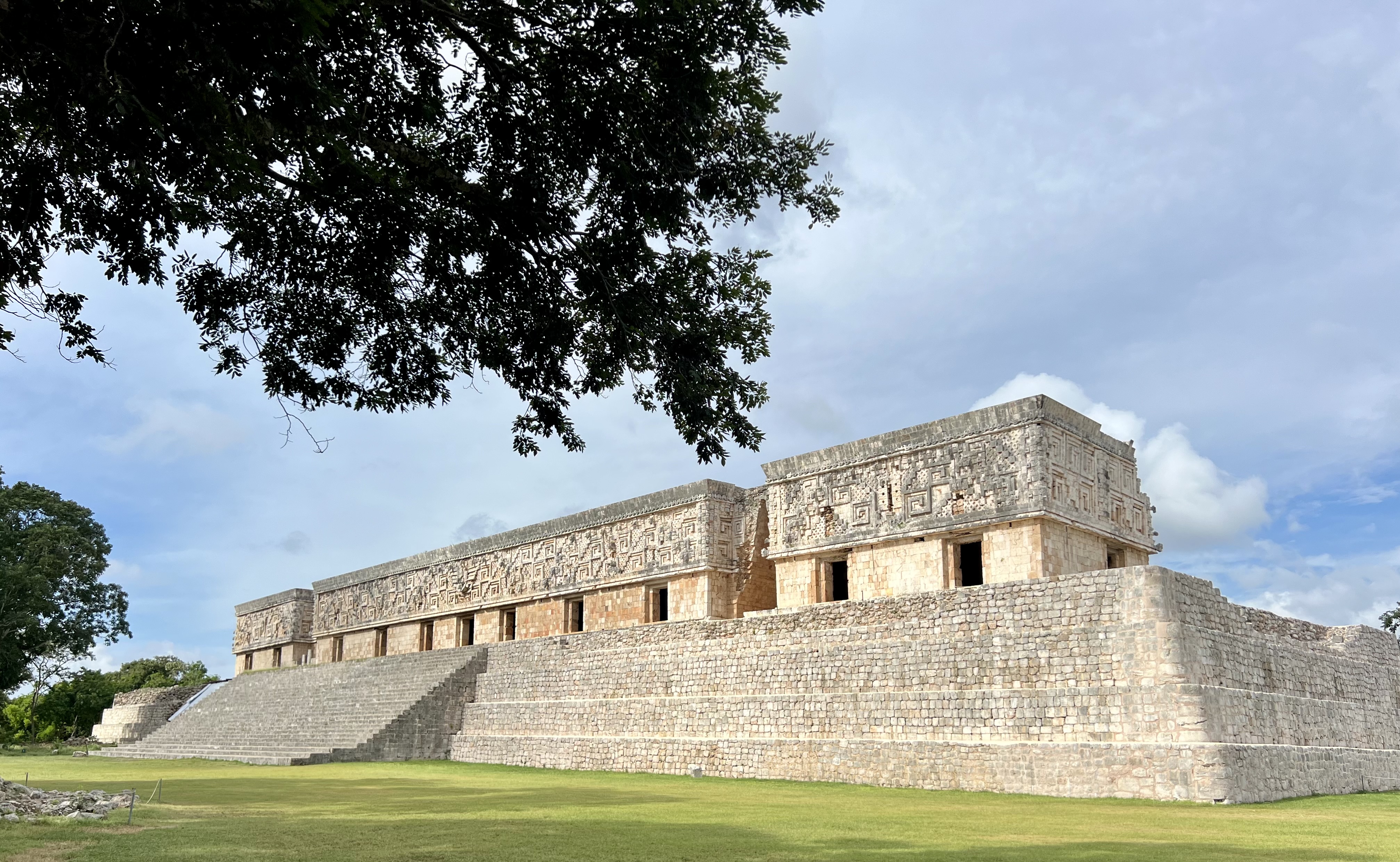 Palacio del Gobernador, Uxmal
We are anxious about crowds, so we set off very early to reach Uxmal, arriving at 8.15 am. The last part of the road is very narrow, as it is the route used by the lorries avoiding the toll road to Campeche. Amazingly the only other people there are another English couple who take a fine photograph of us three in front of the Piramide del Adivino, the magnificent structure that greets you on arrival. Atty is excited because, although living in Mexico, she has never visited an archaeological site before.
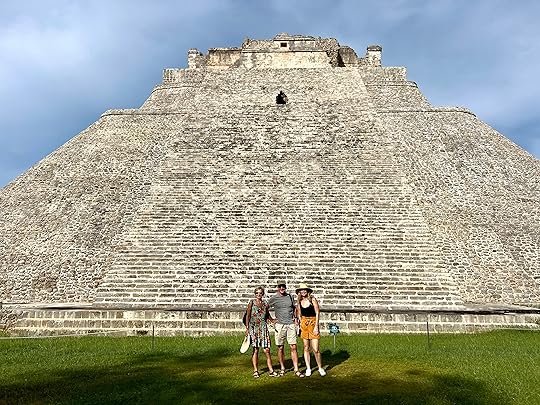
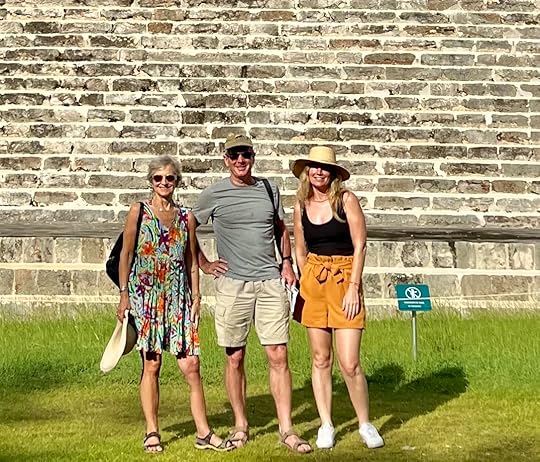
Uxmal, which means thrice built, was actually constructed five times, dating from the early classic period of 600AD. The architectural styles are borrowed from highland Mexico as it was an important trading town on the Ruta Puuc, where we will visit two more sites.
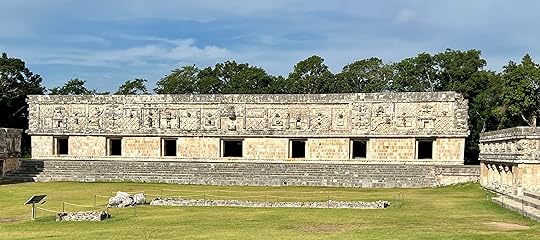
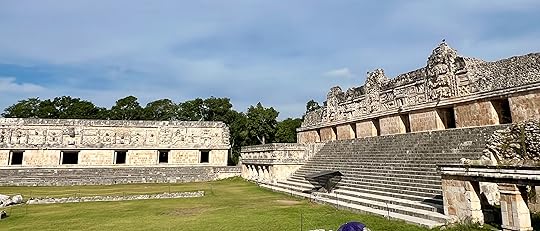
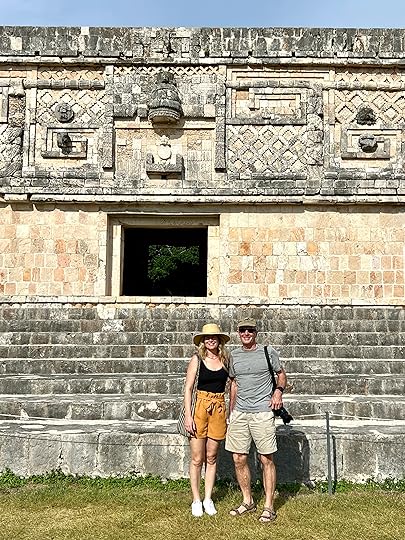
Skirting round the pyramid, you get to the Cuadrangulo de las Monjas, or Quadrangle of nuns, highly decorated with long-nosed images of Chaac, accompanied by the motif of the now familiar feathered serpent, Quetzalcoatl or Kukulcan in Mayan.
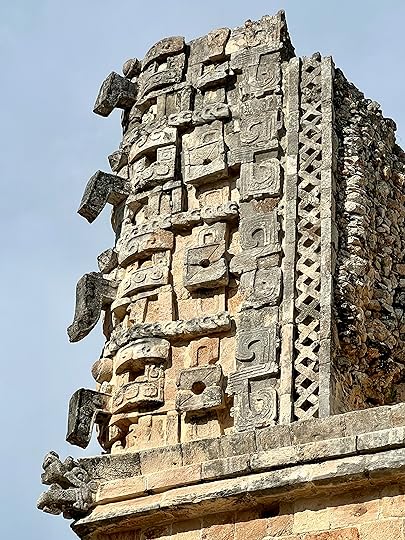
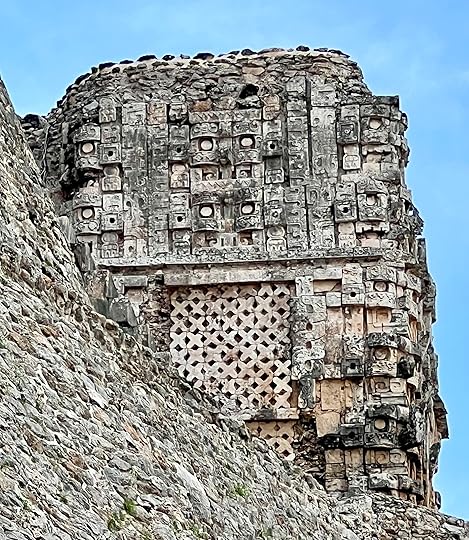
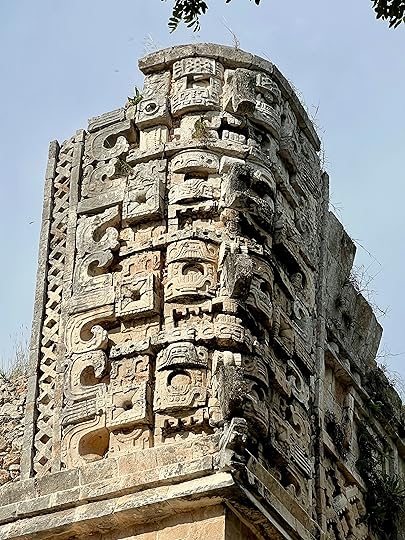
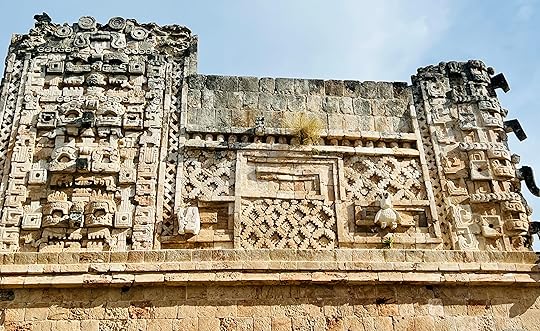
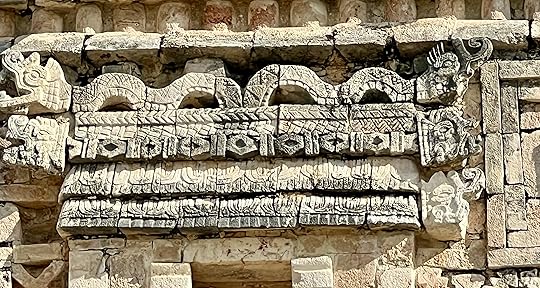
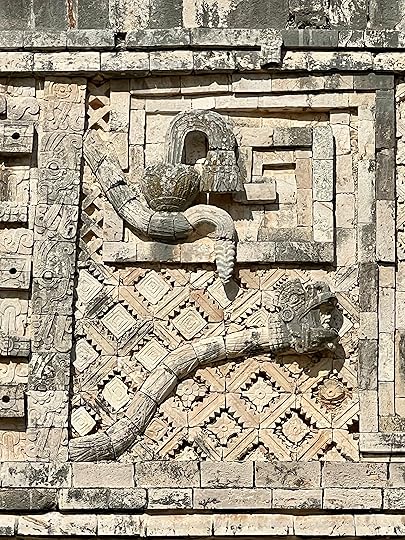
We pose for photos in the arch leading to the Pelota or ball court, another magnificent structure. On the right is the famous Casa de las Tortugas (House of the Turtles) – turtles were associated with the Mayan rain god, Chaac and in their mythology when they suffered from drought so did the turtles, hence a temple to pray for them.
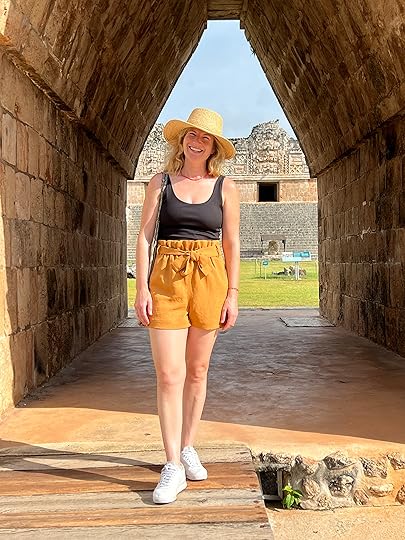
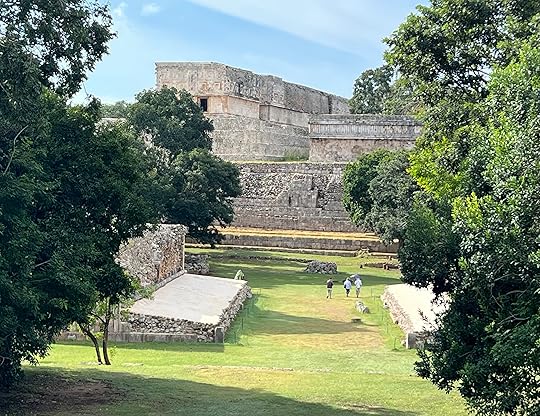
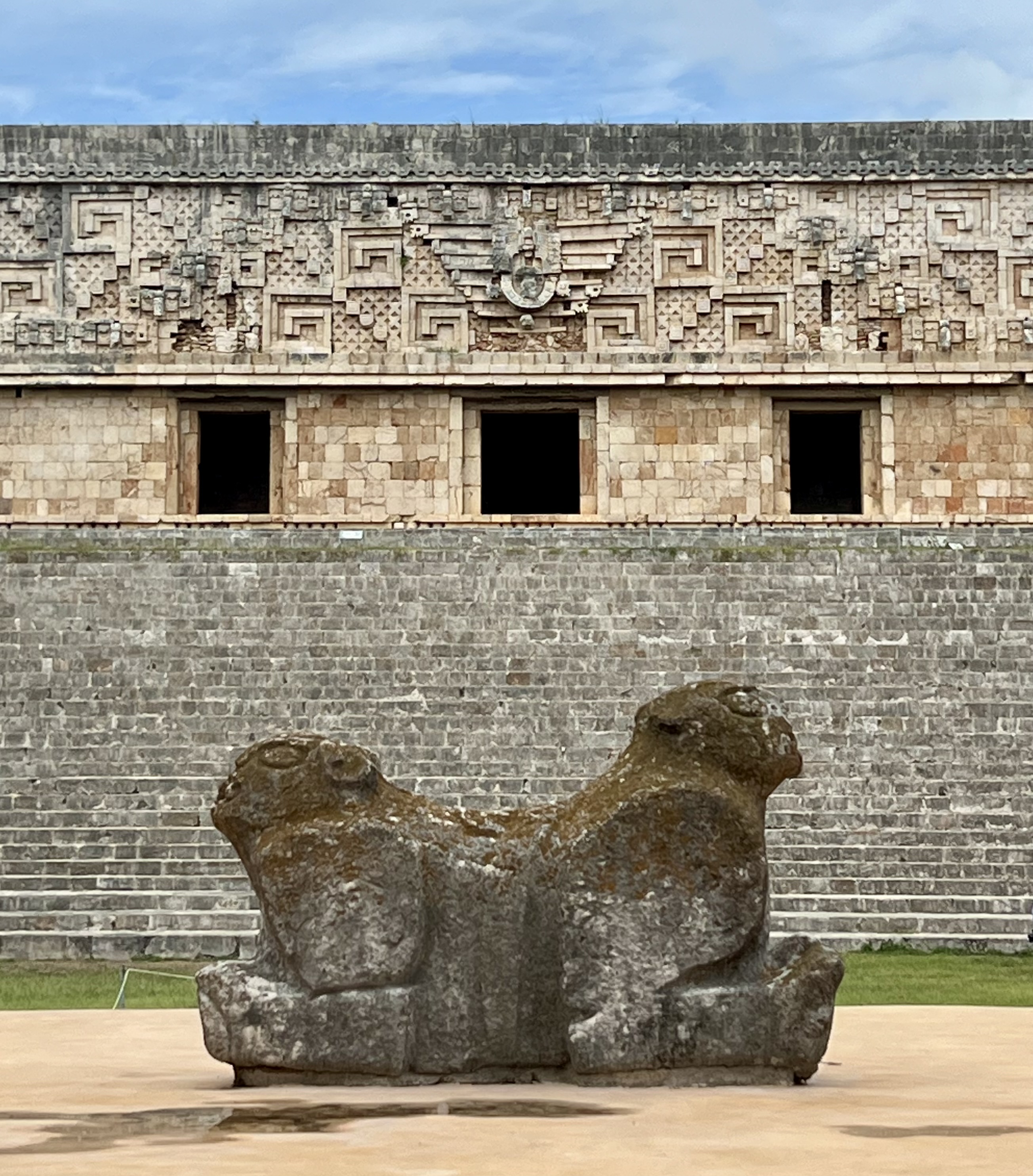
Opposite the 100m long Palacio in the top photo is a two-headed jaguar throne, very weather-worn.
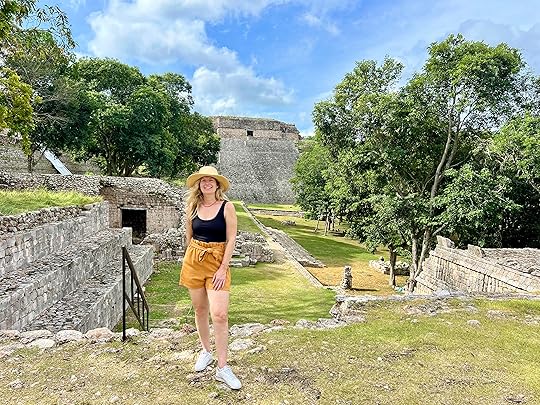
We make our way behind the Palacio to discover another huge pyramid, only partially excavated, which gives a good idea what the site must have looked like before the heavy restoration.
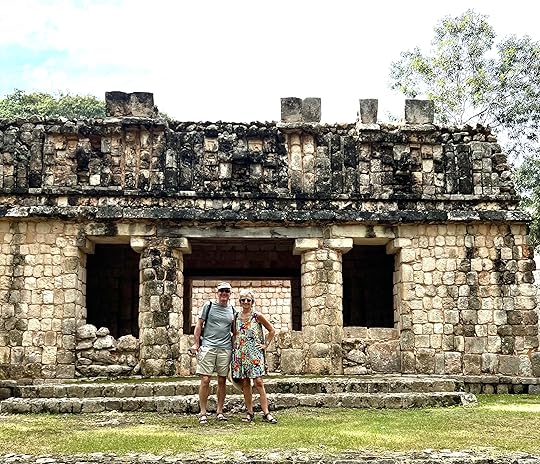
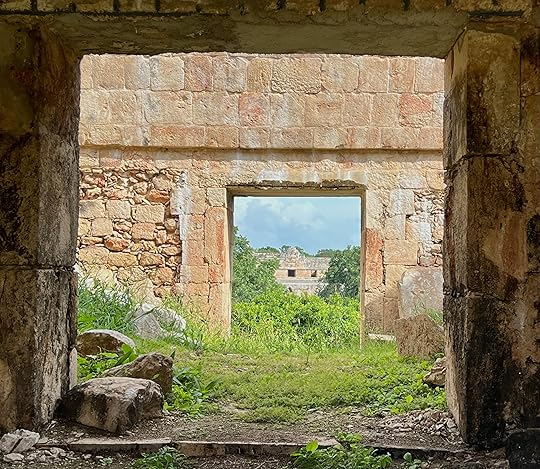
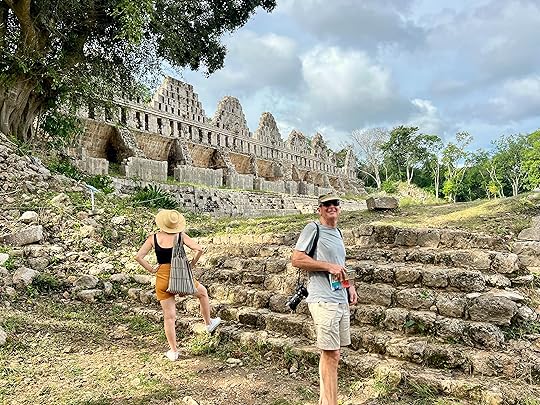
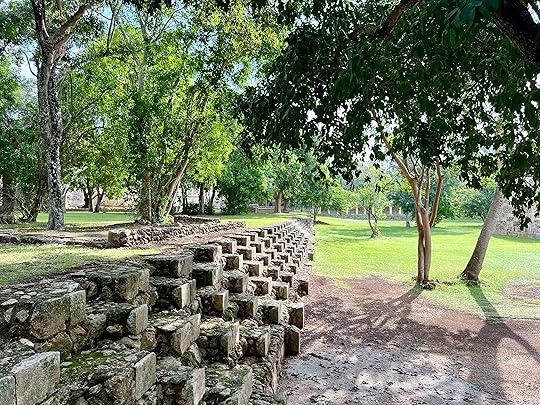
What is really notable about this site, apart from the complete lack of people and tourist-tat stalls, is the magnificent stone carvings which have survived the centuries.
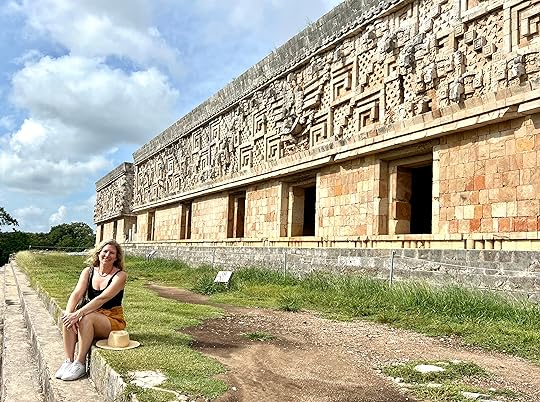
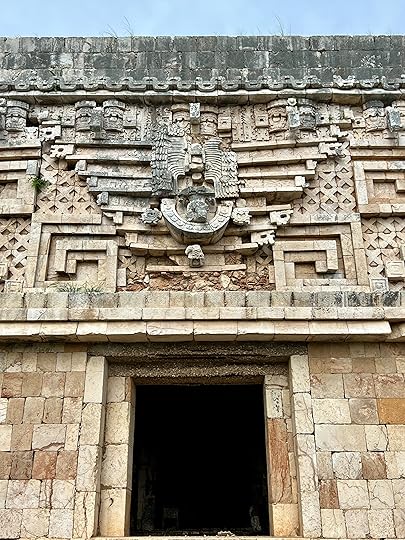
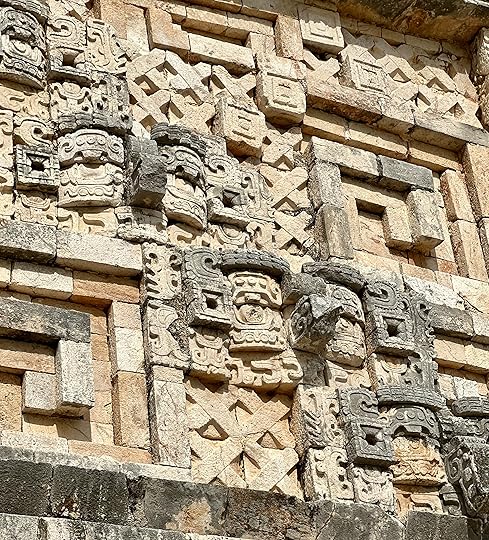
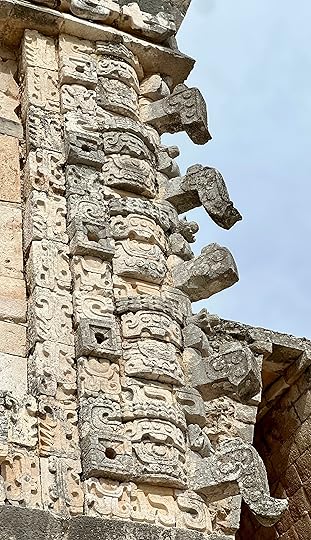
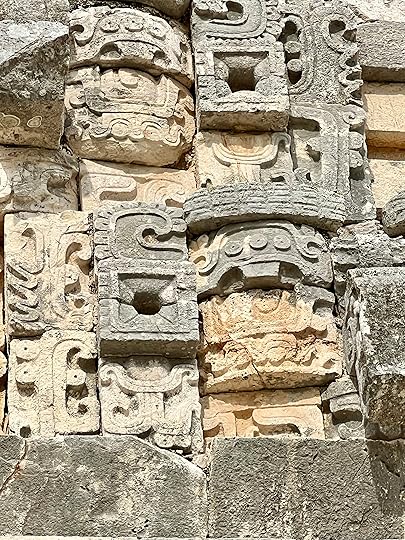
After a couple of hours drinking in the zen of Uxmal, we climb into the car to visit Kabah, another major trading town but small in size (or at least what has been excavated and is on display), but it must have been extensive and important if you look at a archaeological survey of the site.
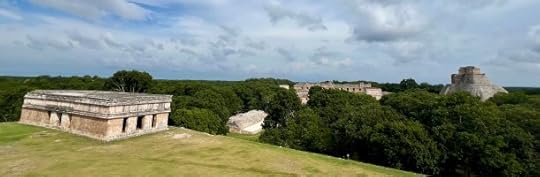 View from the Palacio del Gobernador back towards the main pyramid and site, Casa del Tortugo on left
Here there is another huge Palacio des Mascarones, or masks, where there are 300 depictions of Chaac decorating the front side of the temple. Round the back there are also two gigantic male figures. As we are about the leave the heavens open (as they have been threatening to do all morning) and a bus load of assorted-nationality tourists arrive – unlike us they have brollies and waterproofs! But otherwise we are almost alone here.
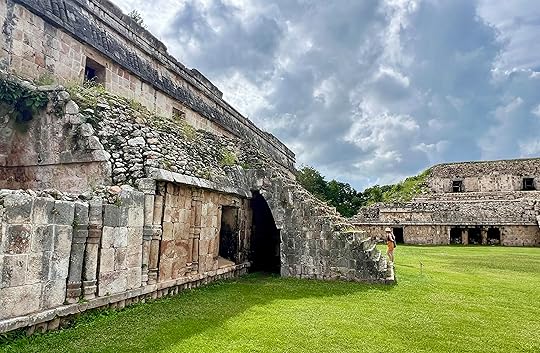
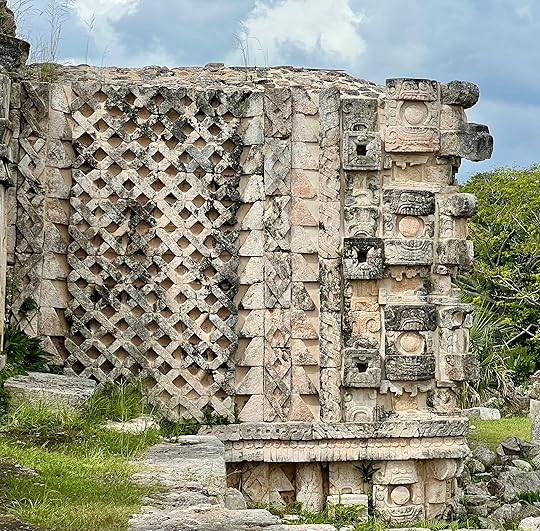
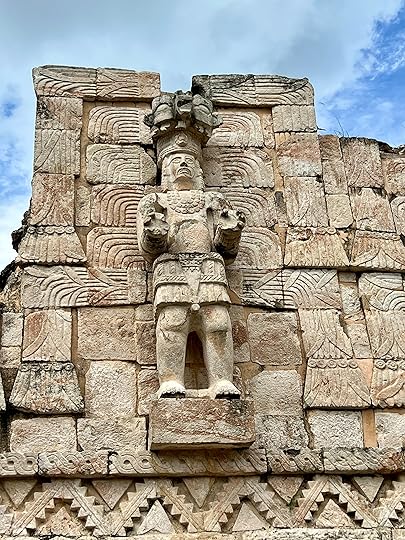
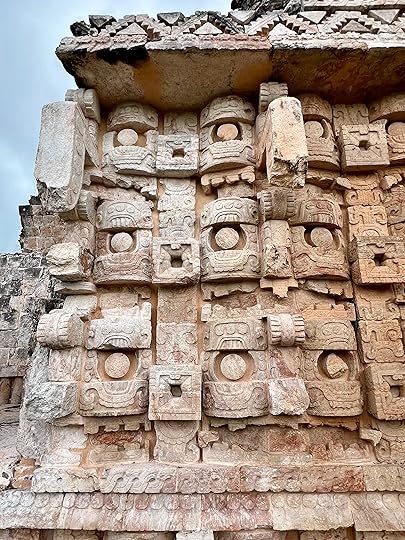
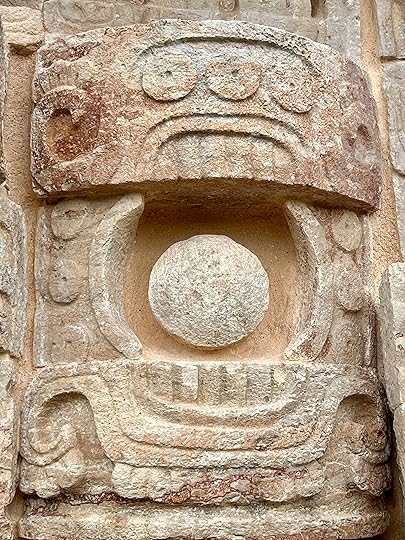
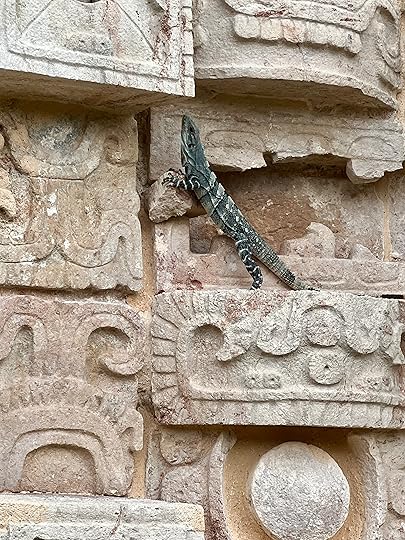
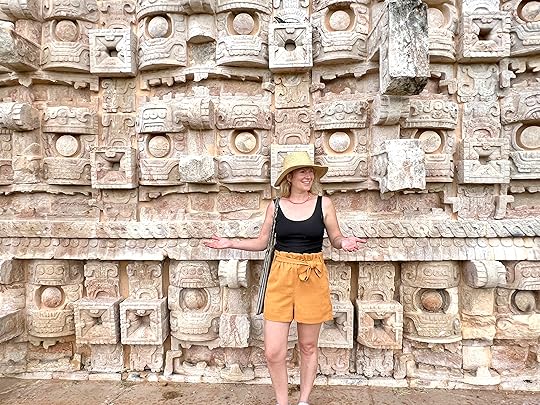
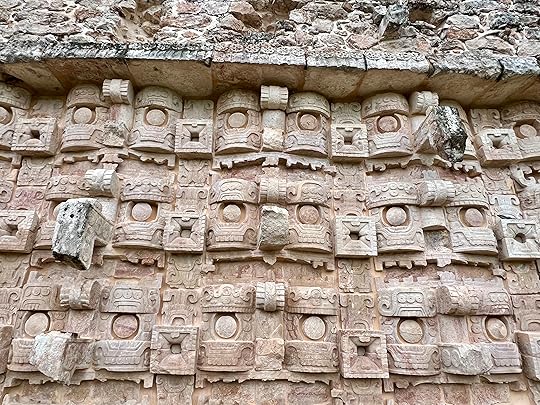
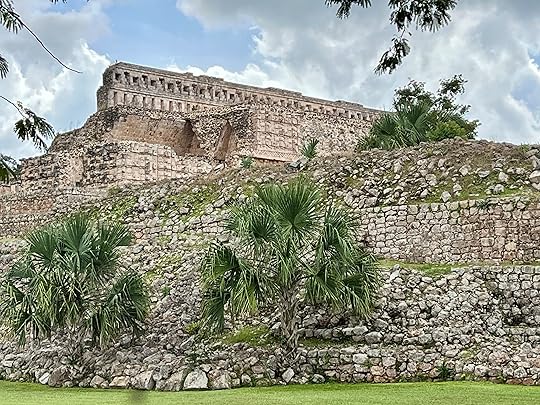
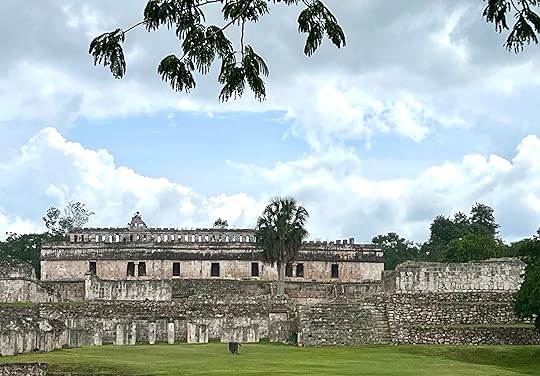
Our final stop is the site of Sayil, home to another huge palacio, hiding in the encroaching jungle. We have a long chat in English and French with a university graduate who is selling tickets – the strains of Edith Piaf alert us to his passion; Atty explains that university education is widely taken up and there are large numbers of incredibly well-educated people like this young man doing menial jobs. He learned French because he really wanted to go to France. He must have been lonely at Sayil – intelligent and loquacious but no one to talk to. It was hard to escape.
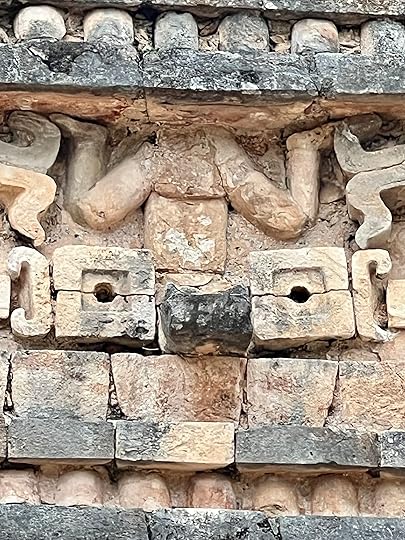
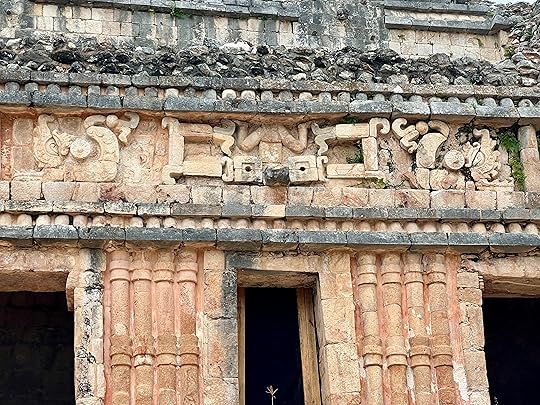
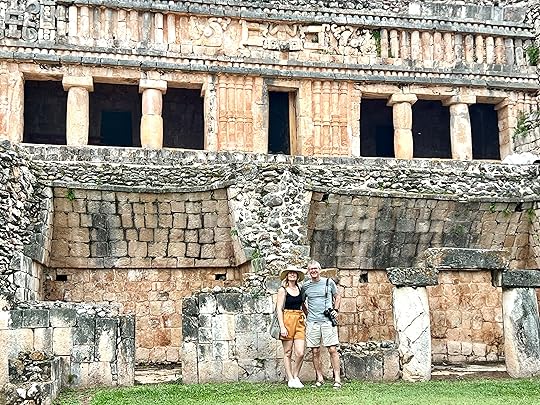
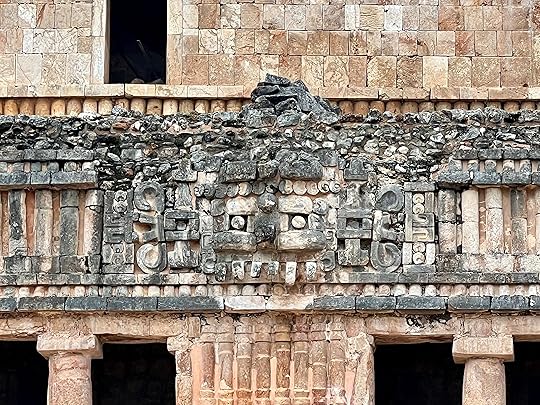
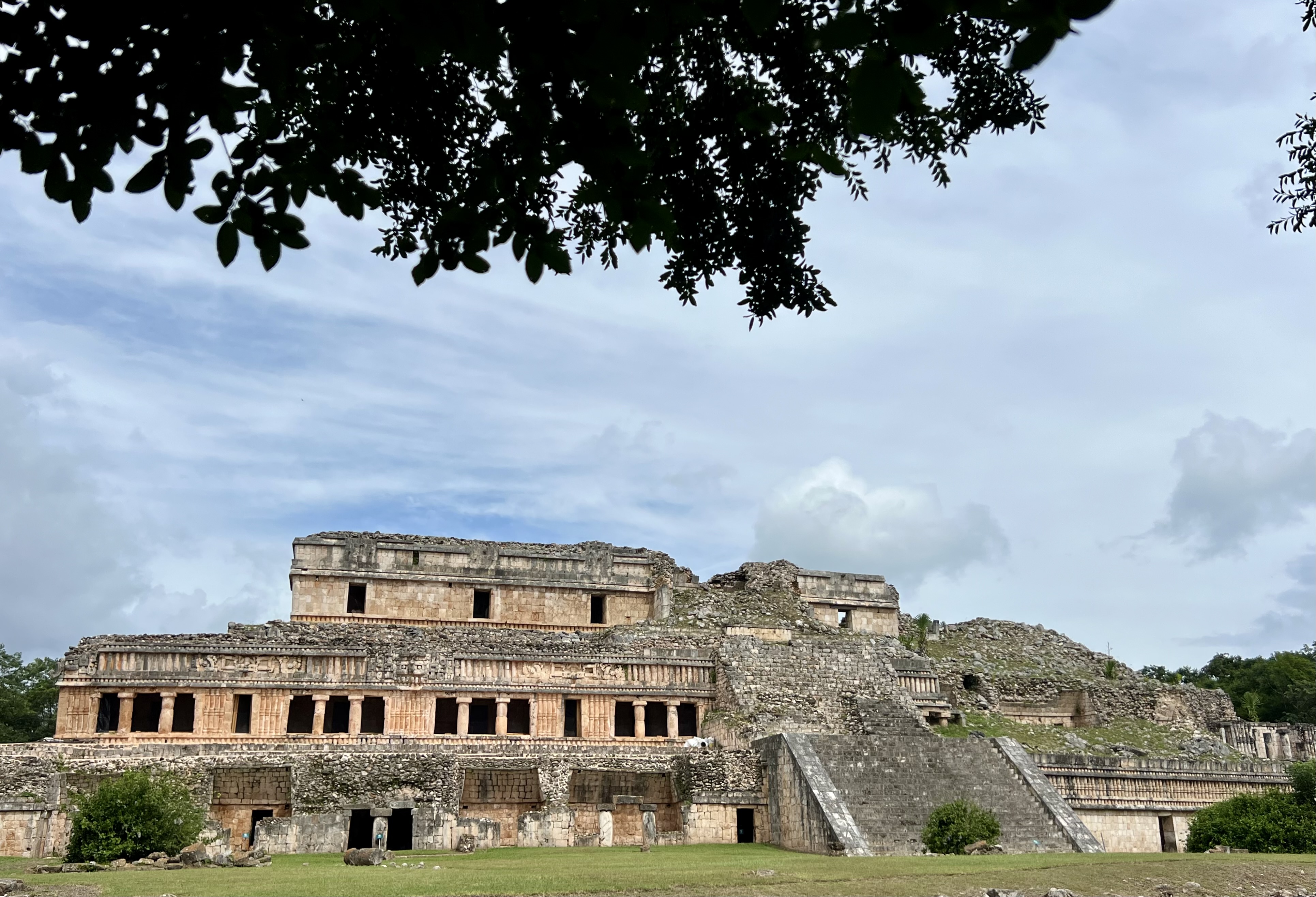 The grand Palacio
They are renovating this site, and there is a path cut through the rainforest leading to some of the hidden gems poking through the trees, like the El Mirador temple. At its height – around 800 AD – there were about 8000 people living here, hard to imagine.
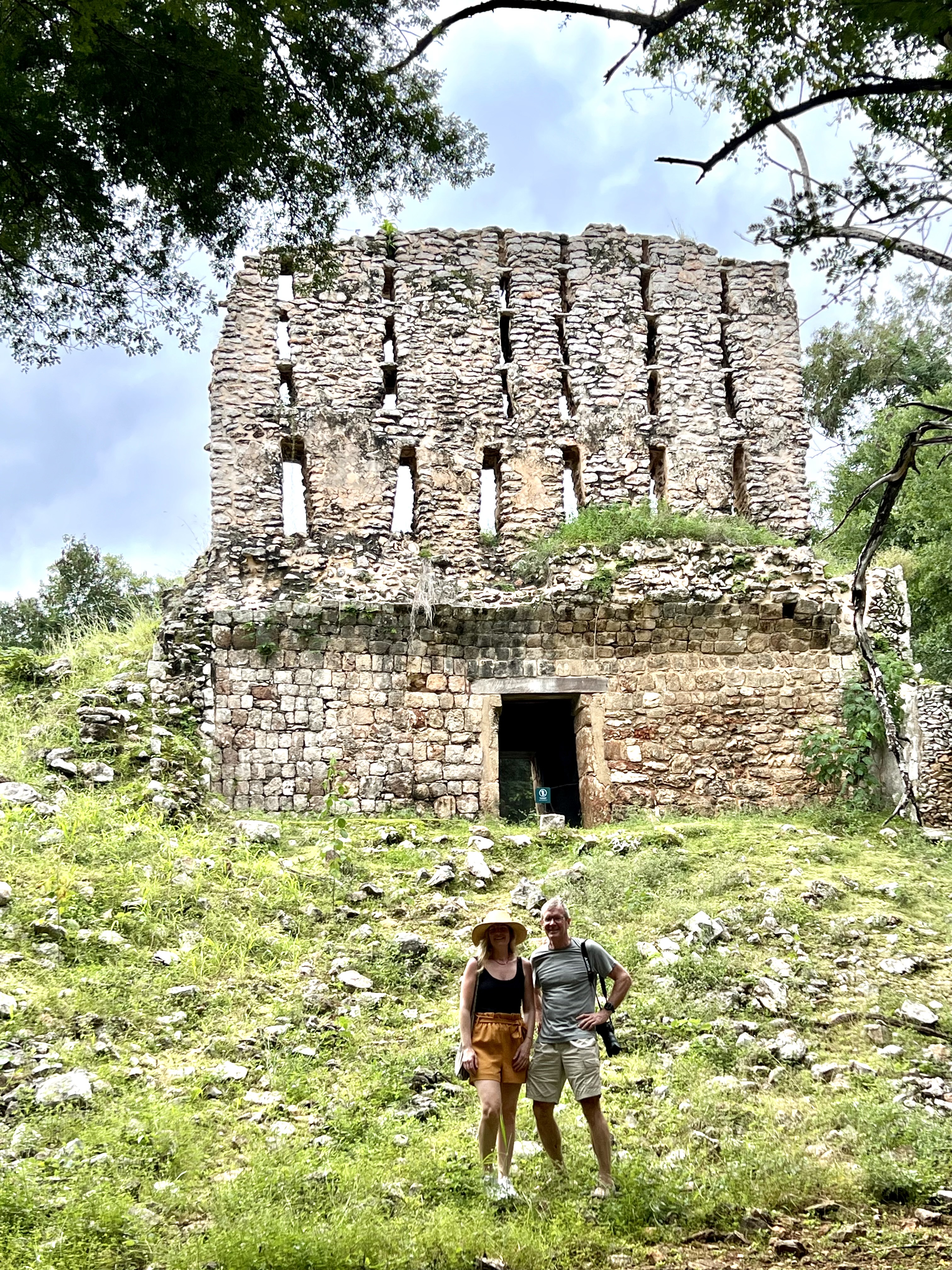 All that’s left of El Mirador, another great pyramid
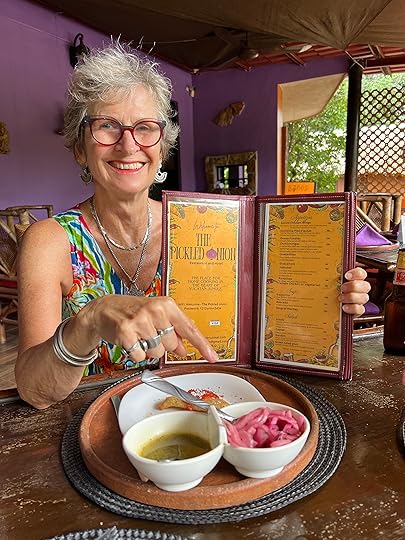
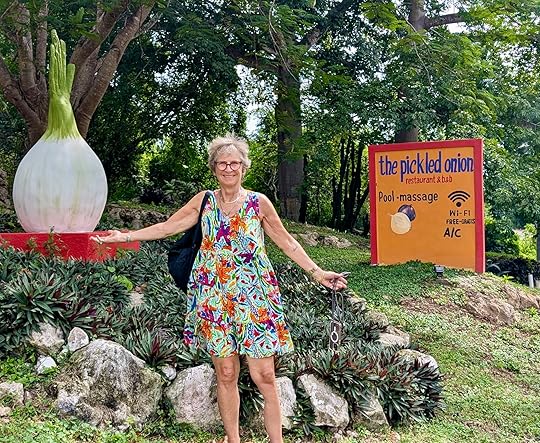
The rain is still hovering so we retrace our steps to the nearby town of Santa Elena, where I have been lured to the local hostelry called The Pickled Onion – one of my childhood nicknames. I simply can’t resist! Unsurprisingly we are the only people there, but we have a pleasant enough meal -including pickled onions, in red below.
Of all the archaeological sites we have visited, we find Uxmal the most impressive by far, not only because of its quiet serenity and comparative lack of visitors, but also because of its sheer beauty and the magnificence of its structures, set amongst the slightly rolling hills of the area. The quality if the construction (even if heavily restored) is simply breathtaking. A very worthwhile excursion.
 Uxmal
Uxmal
November 21, 2025
Mexico 3: Merida and around: Izamal & Celustun
 Modern wooden jaguar, one of the most power symbols of Mayan mythology
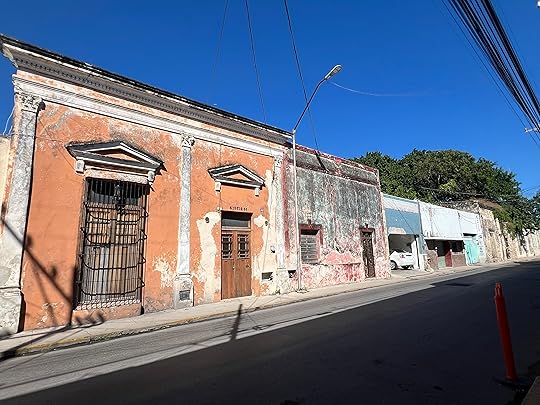
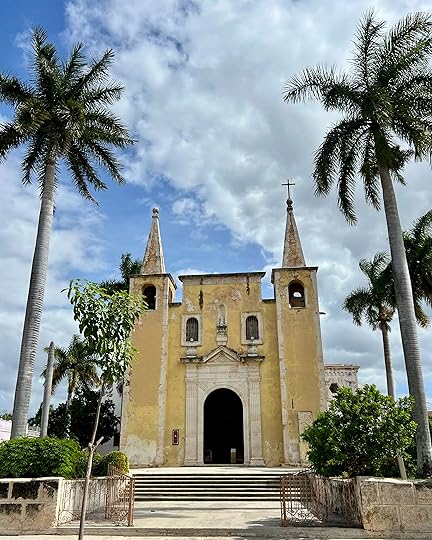
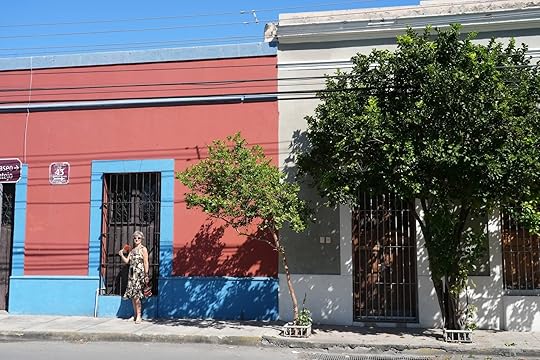
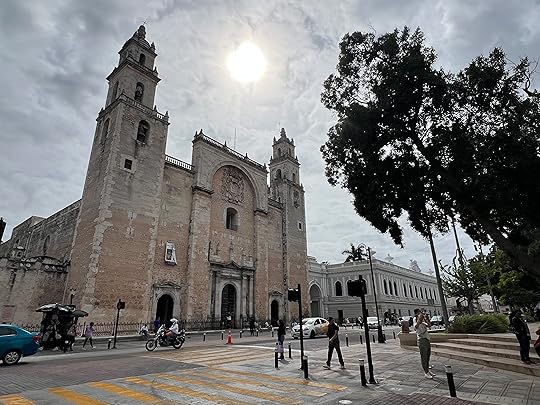
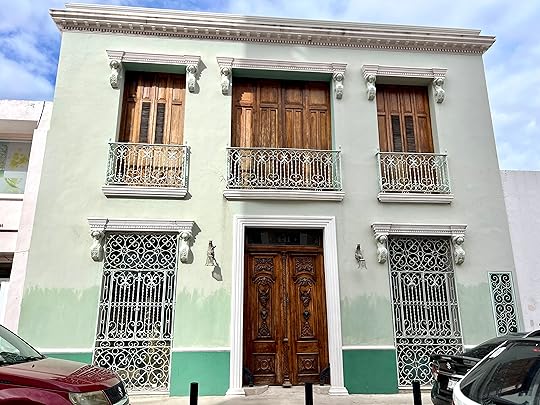
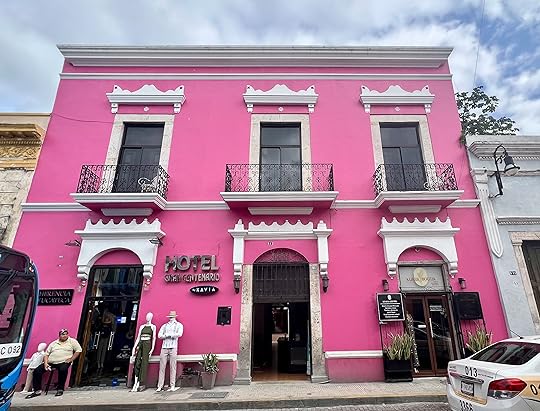
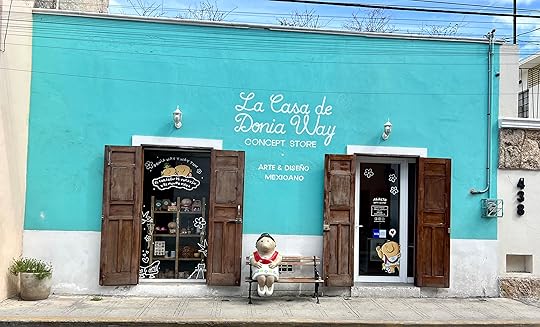
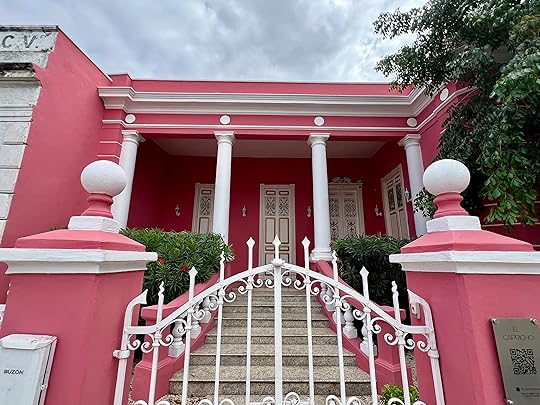
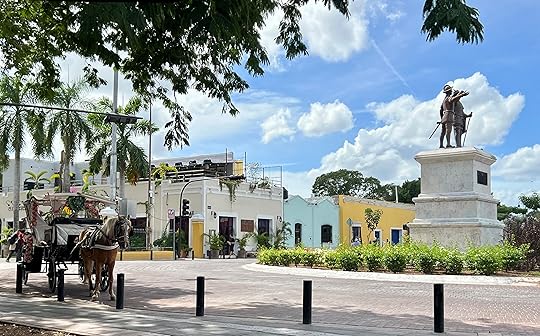
We arrive in Merida after a pain-free drive on near empty roads thorugh central Yucatan. Finding our home for the next week is not as challenging as it might have been before sat nav: Merida is laid out on a grid system and the streets seem to have alternate one-way systems. We can already see that this low-rise city with its colourful buildings is going to fun!
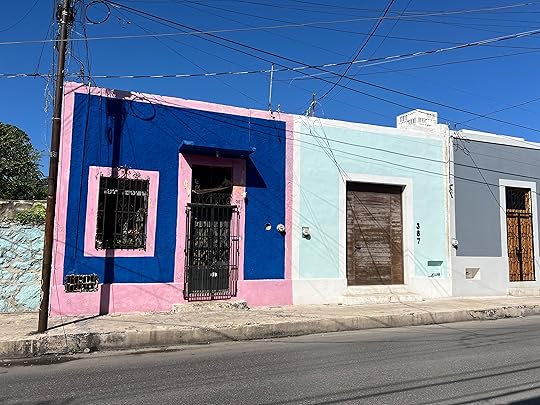
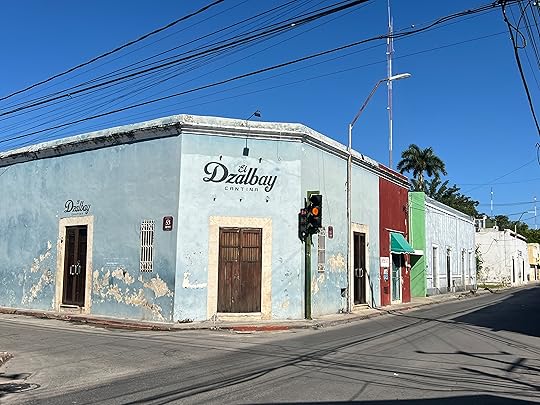
We are met at the Casa de los Mosaicos by the caretaker’s son, Jesus, and shown around this charming villa. It has been lovingly restored while retaining many original features – high ceilings and of course, the mosaic floor tiles, after which it is named. As is to be our pattern, we wash and brush up and go out for cocktails and supper to a nearby hostelry. You are never far from a good mixologist or meal in Merida.
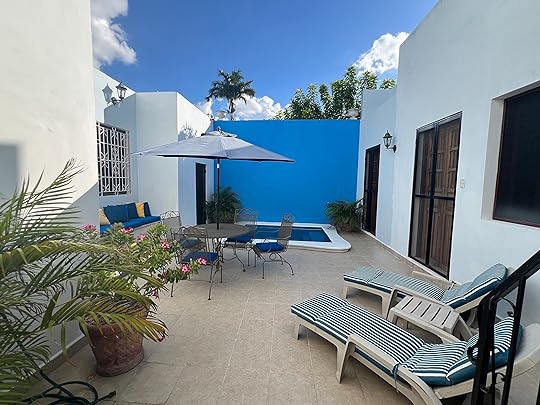
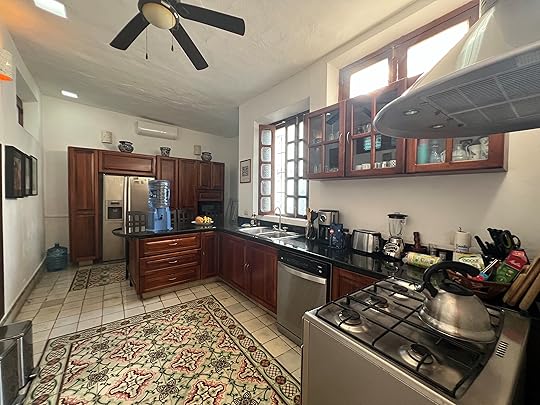
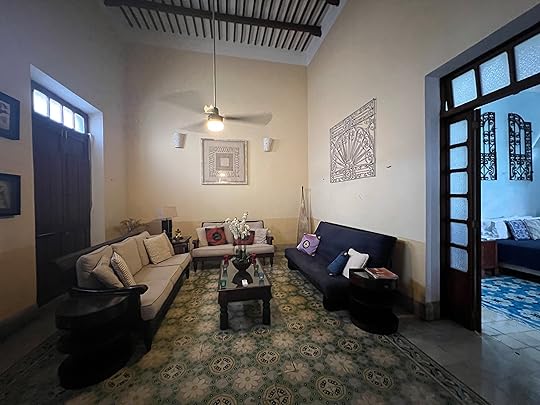
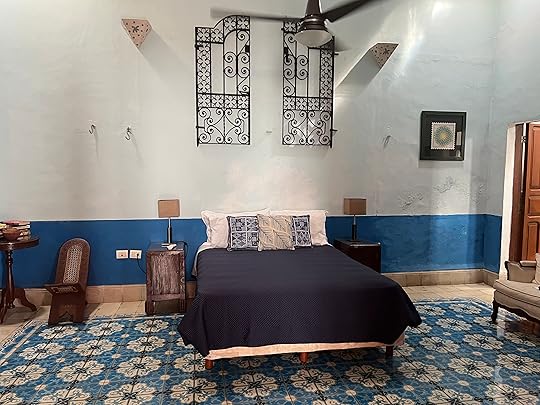
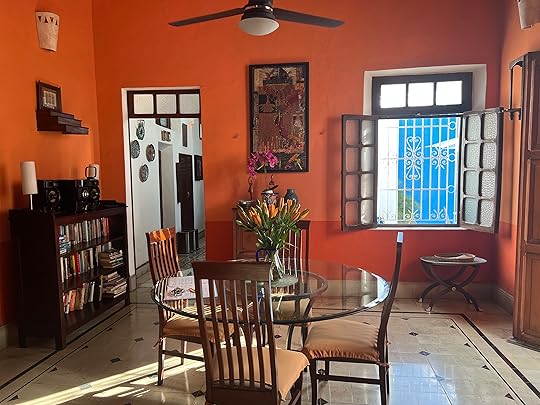
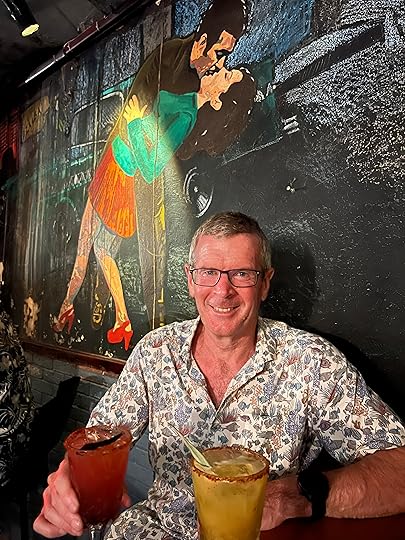
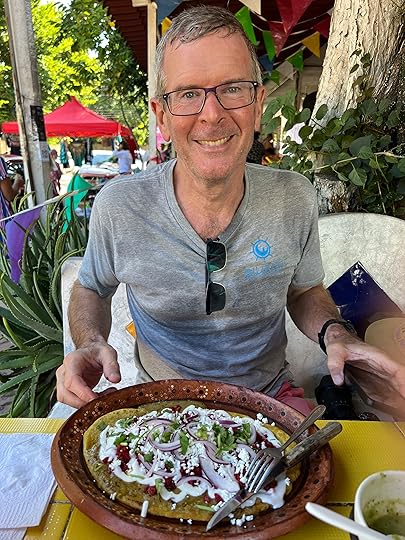
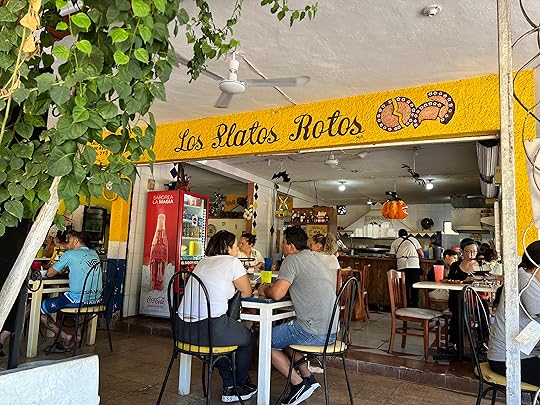
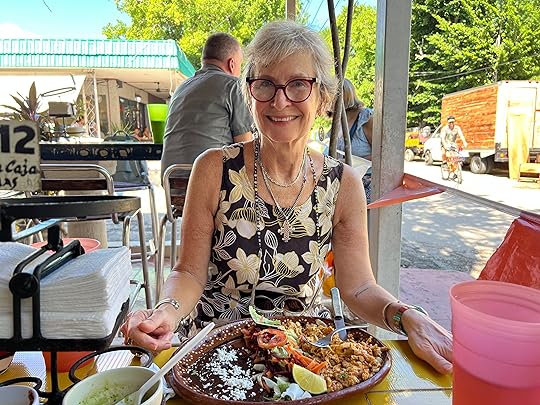
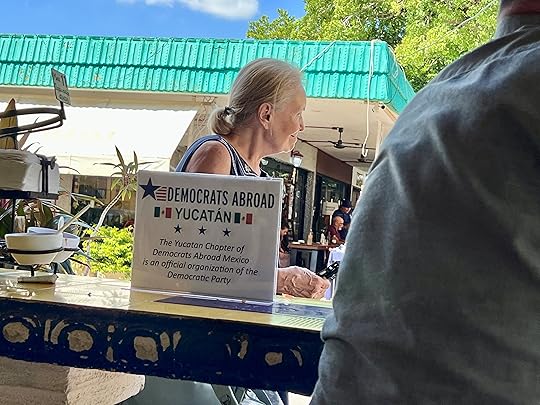
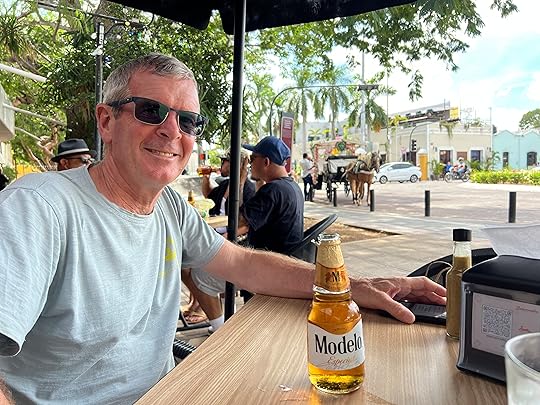
The next morning we walk to the farmers’ market (a good 30 minutes – very hot) where the best brunch is served; we are seated next to a busy table of Democrats Abroad where all the expats seem to congregate – and Merida is renowned as being a really good place to live if you want to escape the US and Canada either permanently, or just in the winter months! It’s the safest city in Mexico, and we feel completely safe the whole time we are there. People are charming and friendly, and there’s only a gentle cry of ‘Come and see my shop’ from time to time.
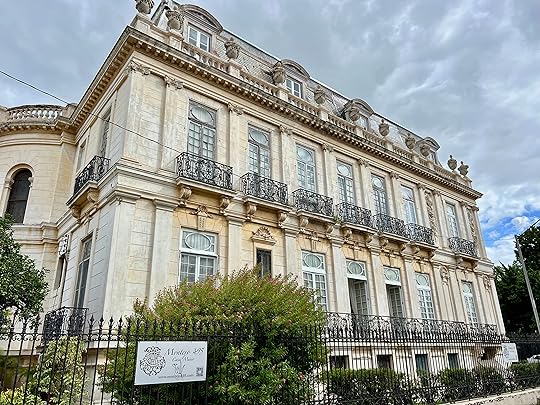
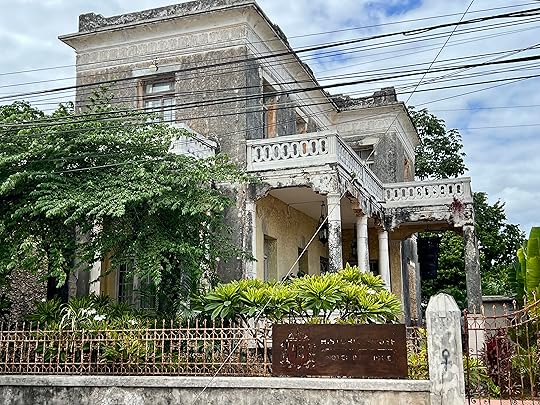
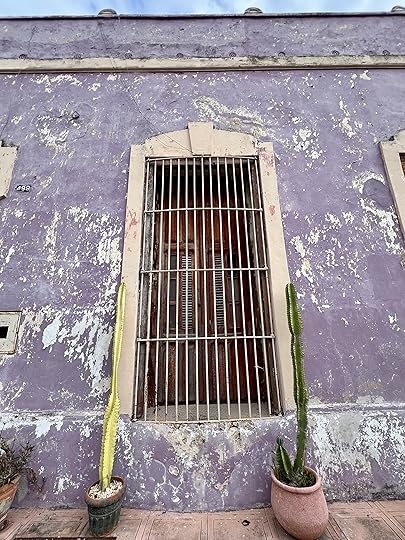
We do notice however in our perambulations many grand old houses abandoned and in disrepair. Others have been converted into museums and cultural centres. None seem to be lived in. Is the effect of migration or narcos we wonder?
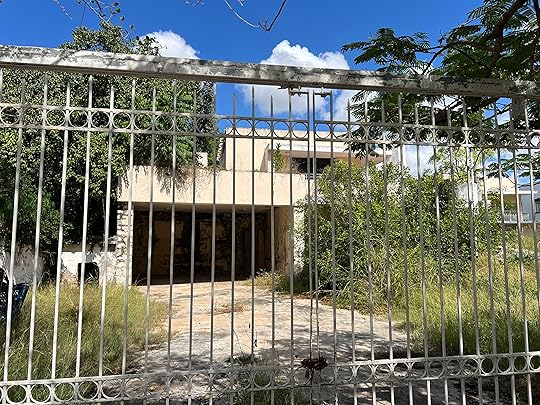
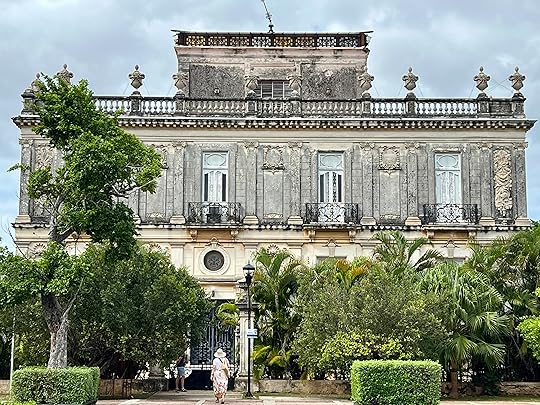
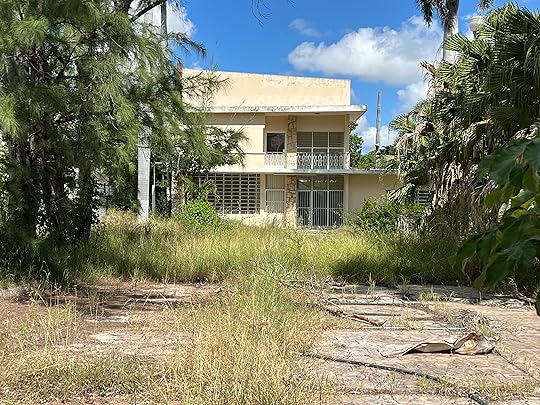
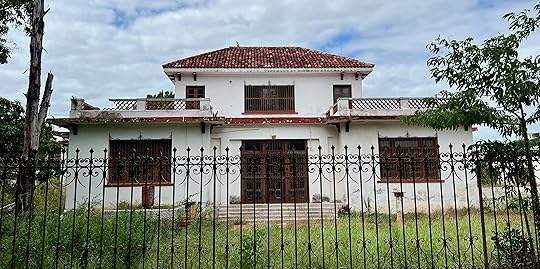
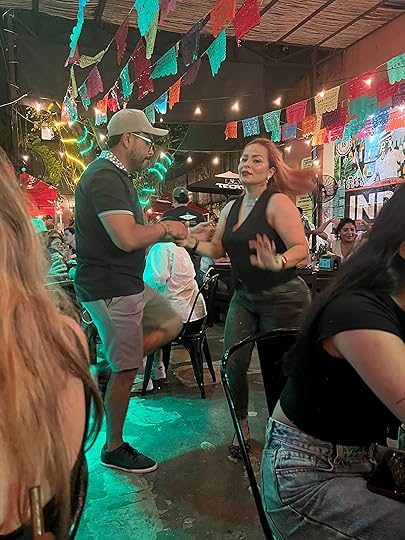
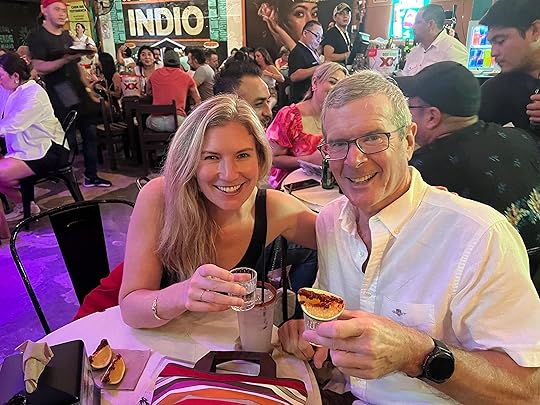
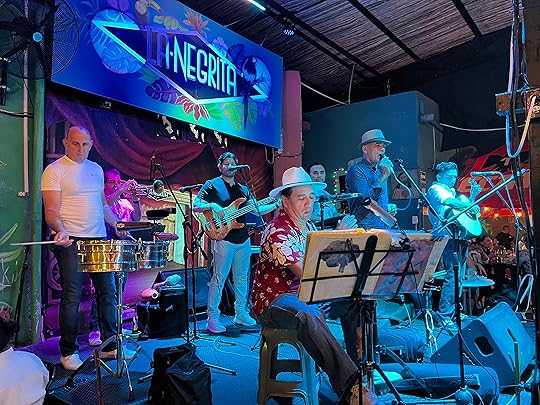
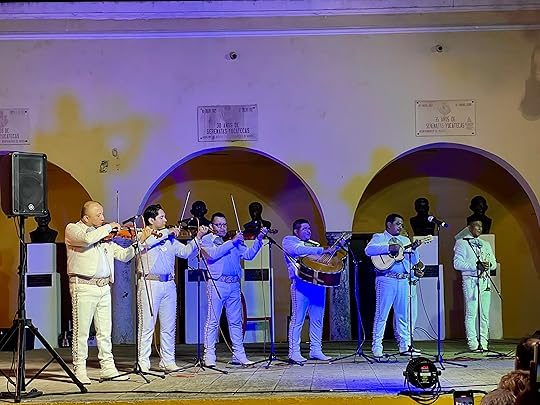
We are expecting a visitor for a few days, hot-tailing it down from Mexico City where she is working. Atty takes us to the hottest bar in town, La Negrita, when she arrives, with a great band (style of Buena Vista Social Club), packed full of Mexicans enjoyed Mezcals and free snacks, and salsa-ing the night away. Thanks to Atty’s charm and fluent Spanish, we get a ringside seat, before leaving for dinner, where we are serenaded by a more traditional Mariachi band.
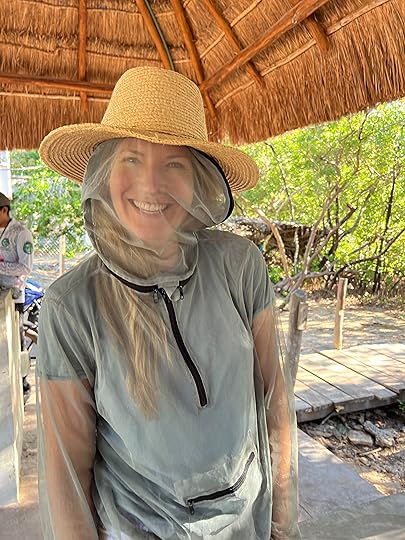
On Ross’s birthday we have booked a birdwatching tour in canoes in the mangrove swamps in Celestun, to be followed by a seafood lunch on the nearby beach. As soon as we arrive at the starting point for our trip with the original founders of the wildlife sanctuary, the Guardianes de los Manglares de Dzinintun, we are given all-enveloping anti-mosquito gear, including netted arms and face masks! And it is absolutely essential as they are pesky little nippers.
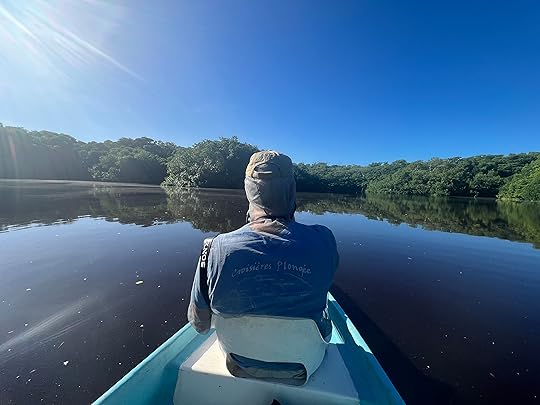
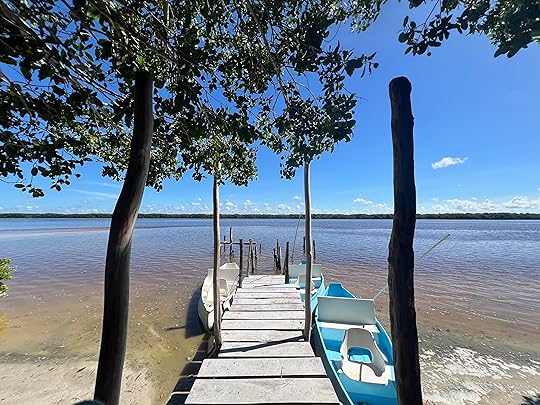
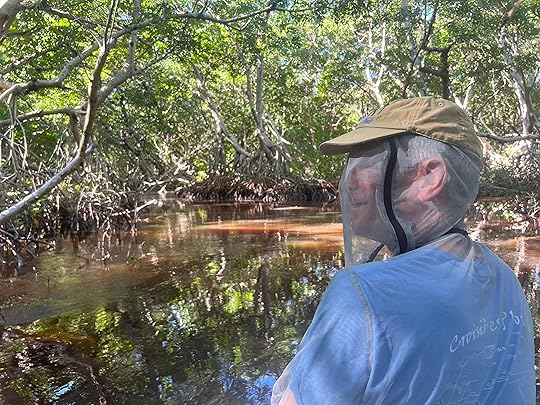
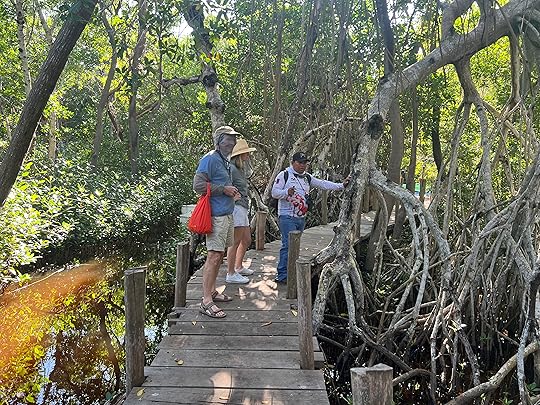
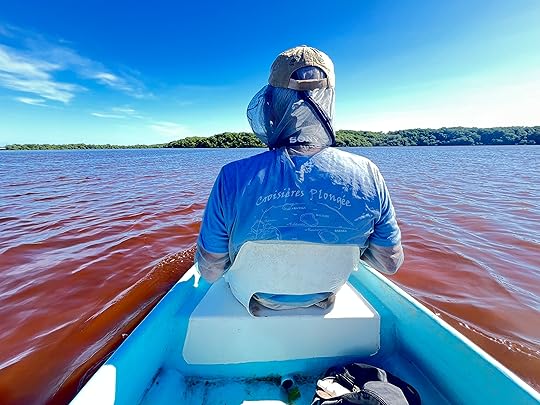
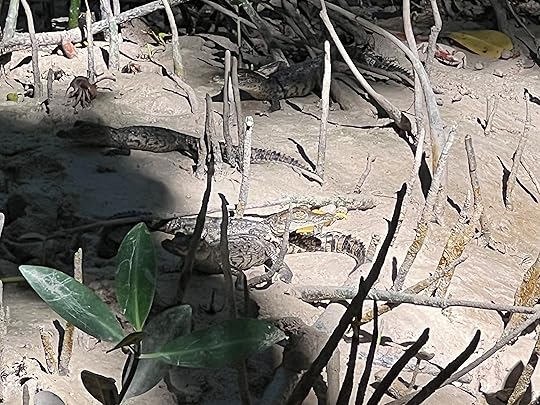
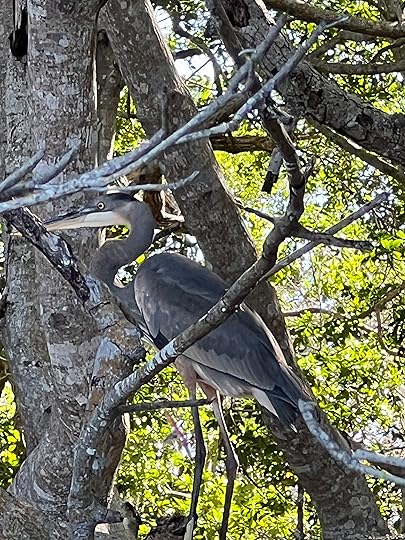
Our guide speaks good English and he is soon silently – save for the occasional splash of the punt-pole – easing us along through the creeks, in-between the tangled mangrove roots. It takes a while to get our eyes in but soon we are spotting herons of all types, kingfishers, a large black eagle, and even some baby crocs sunning themselves on the bank.
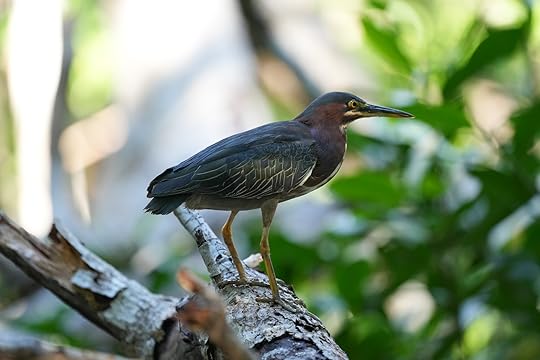
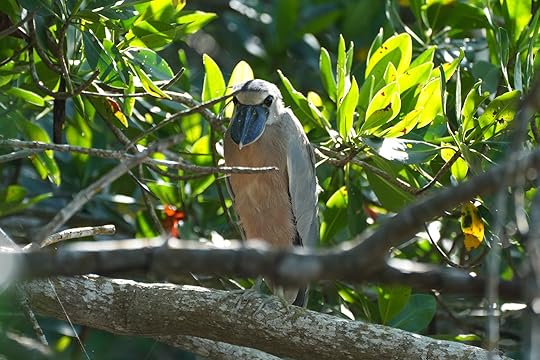
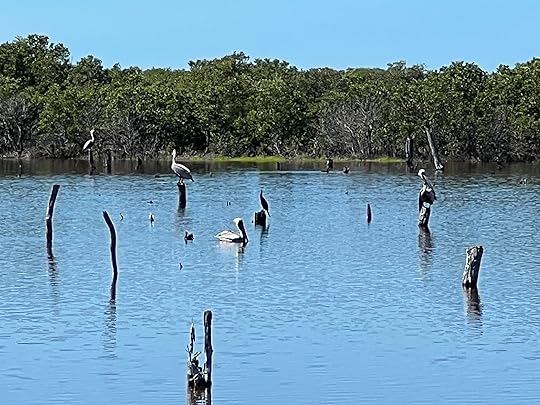
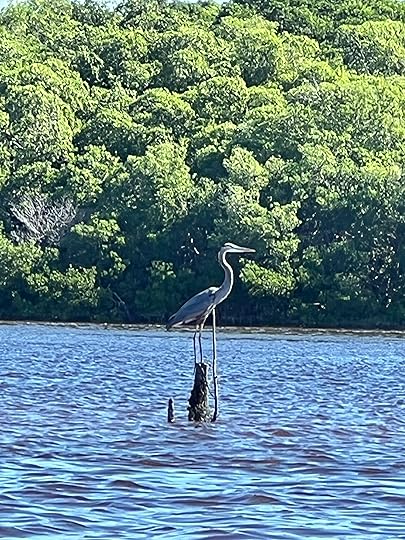
Heading out into the big lagoon, where fresh and seawater meet, producing a reddish slick on the water, we see spoonbills, pink from the staple diet of crabs, huge boat billed herons, snake herons, cormorants and later, some flamingos, though it’s not the season. Our trip lasts about three hours including a rather hot trek back via a causeway (it must 35 C and mosquitos are really a pest now!) but luckily a tuk tuk comes to our rescue.
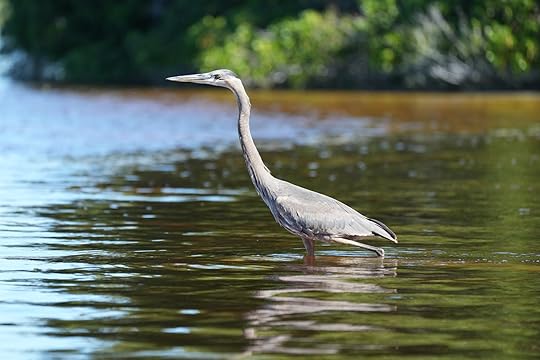
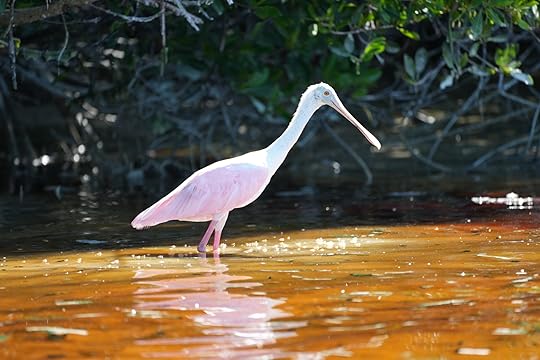
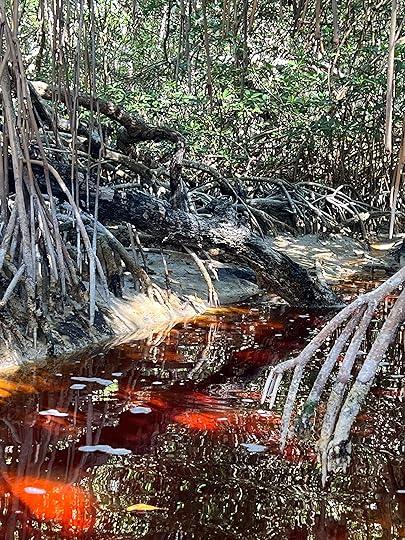
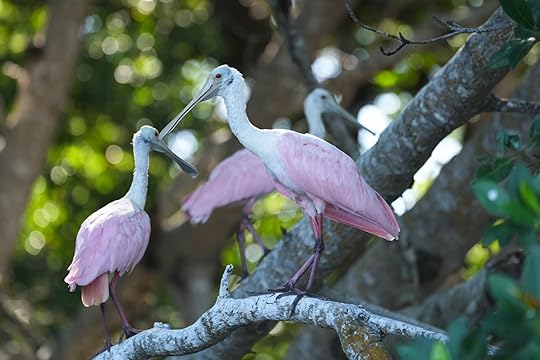
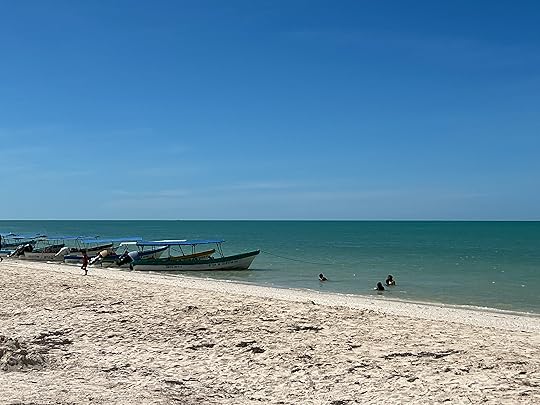
The beach is fabulous and lunch at Los Pompanos simply delicious – avocado piled with a fresh crab salad, astringent lime-marinated ceviche and barbecued ocotopus – yes I know one shouldn’t, but they are very abundant here.
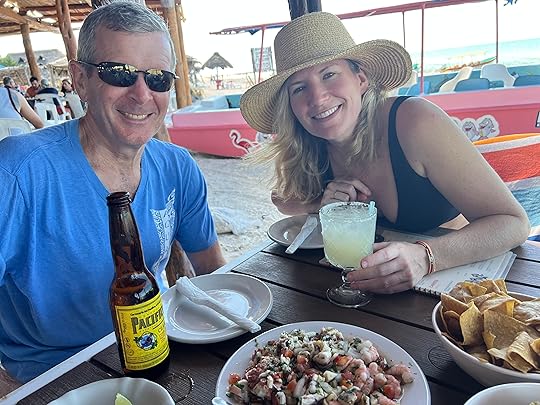
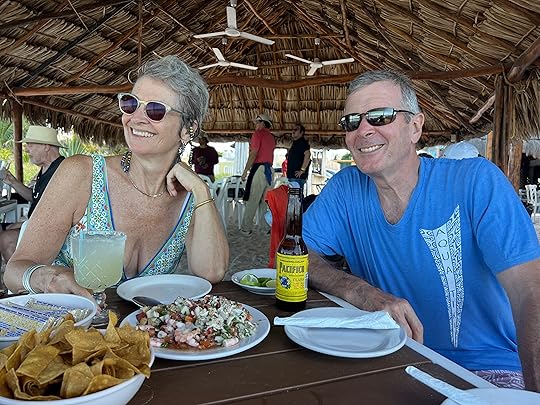
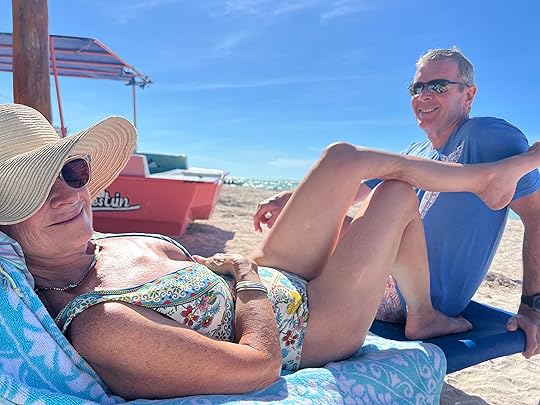
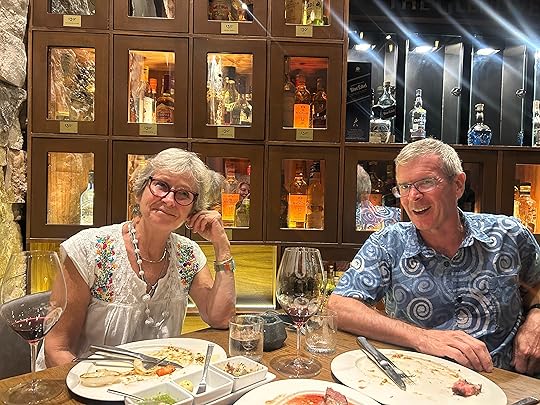
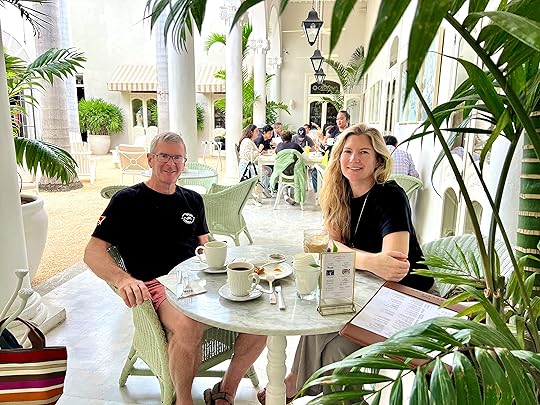
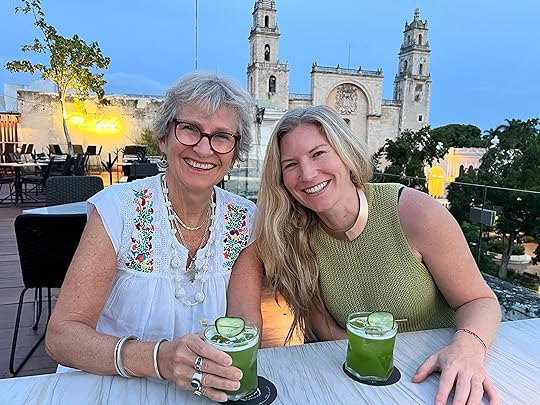
The days in Merida slide into one another, strolling around the shops and squares, with brunches, lunches and supper, punctuated by a margarita or two, just enjoying the atmosphere of the town. We drag Atty off to Uxmal and the Ruta Puuc, but that will be another blog as it’s is our favourite site and worthy of more space!
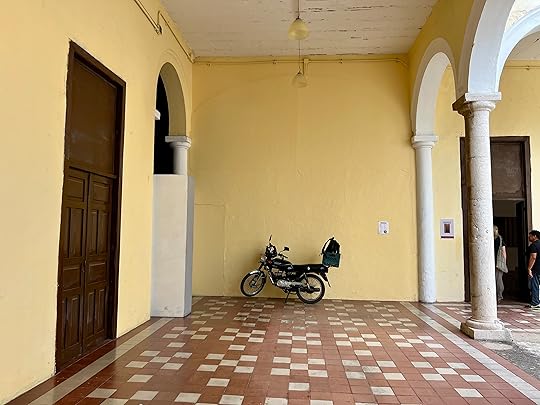
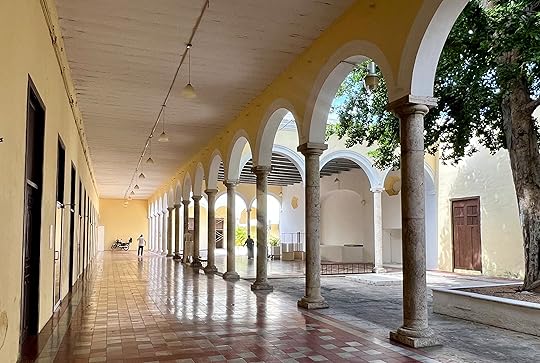
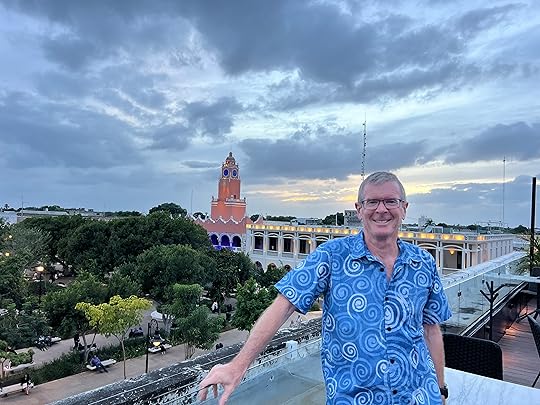
After she leaves – work calls – Ross and I go to the famous Yellow City of Izamal. Apparently the city suffered a decline earlier in the 20th century so the Mayor had the idea to paint it all yellow to attract tourism…well it’s certainly worked.
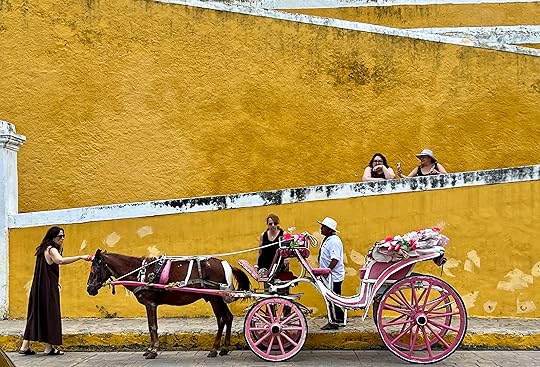
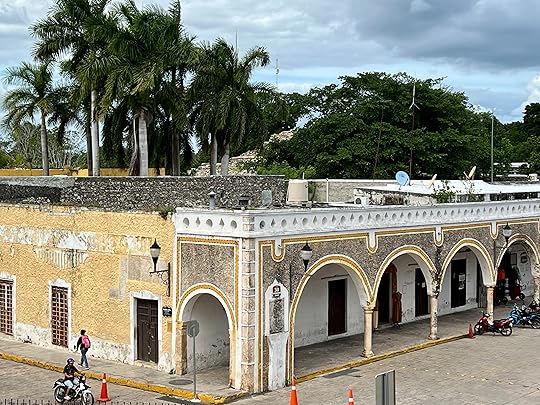
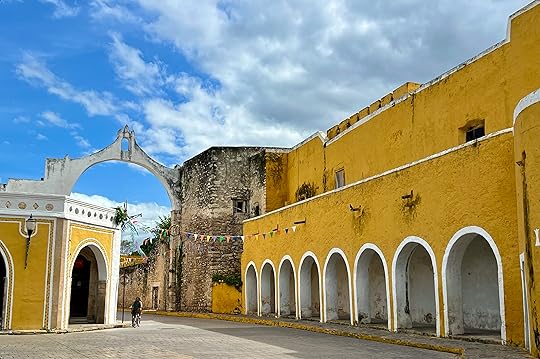
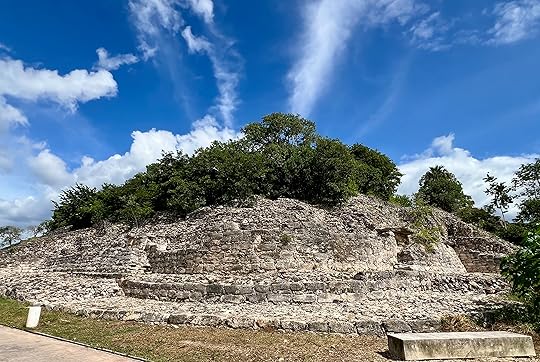
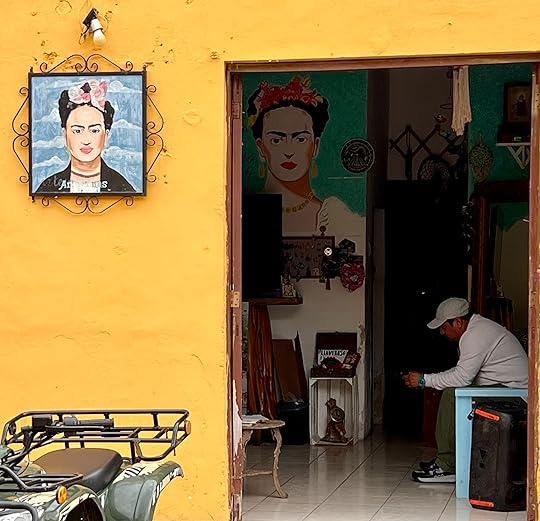
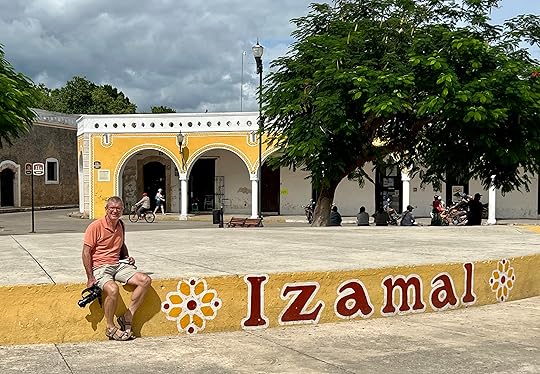
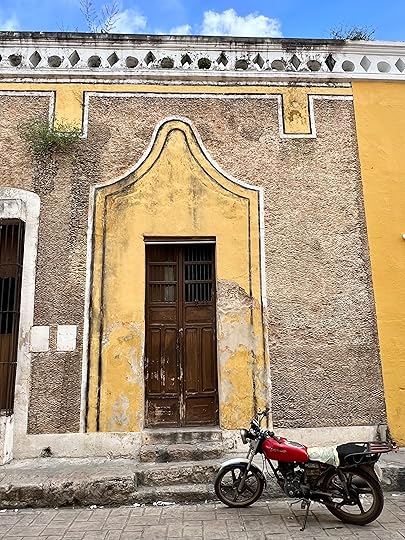
In addition to the Convento de San Antonio de Padua – one of the oldest still in operation in the world, dating from the 16 century – and the horse drawn carriages, yellow piazzas and a ruined pyramid (which I am forced to climb), there is a charming little cultural museum of contemporary art, superior to the Merida museum’s offerings.
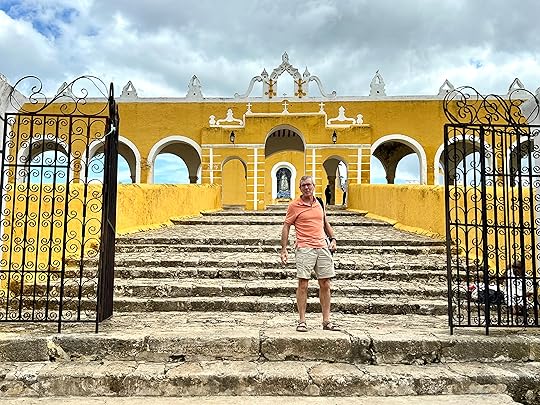
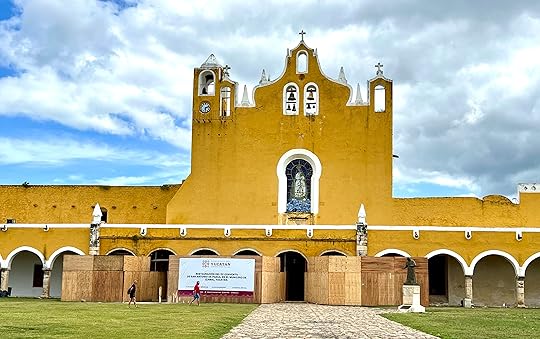
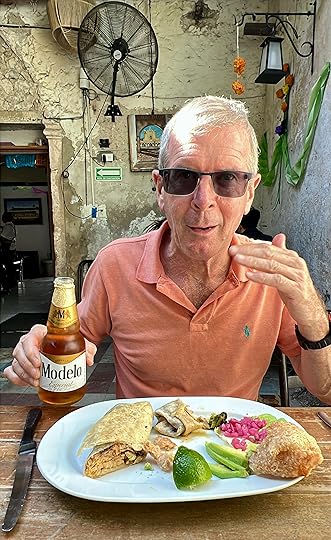
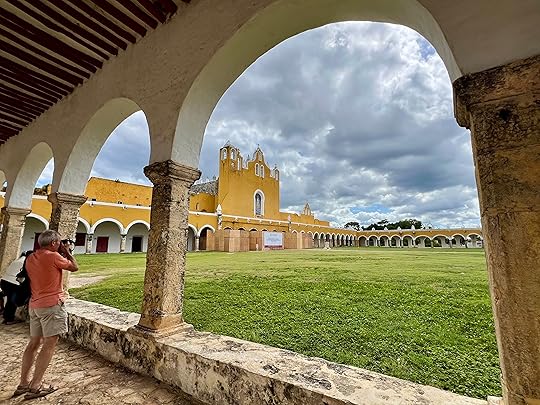
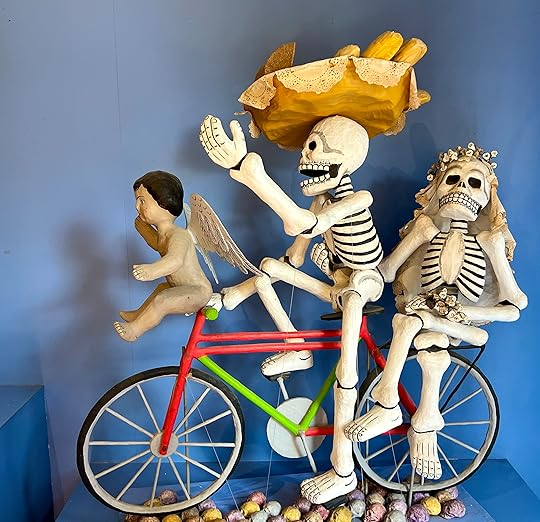
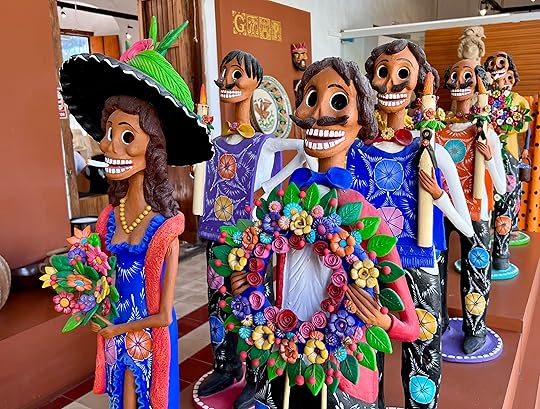
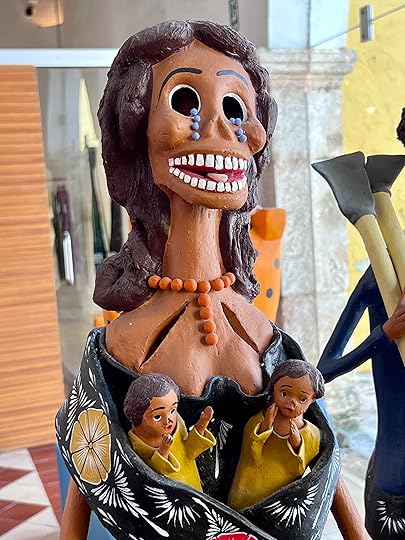
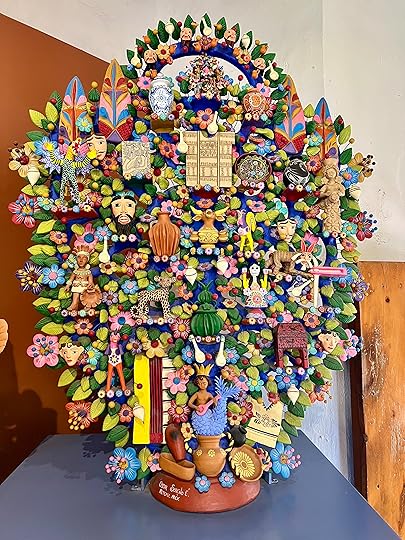
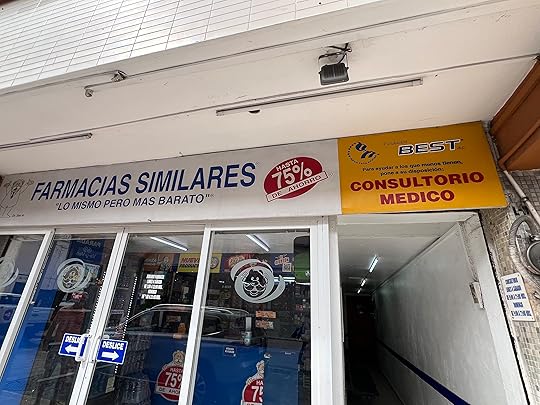
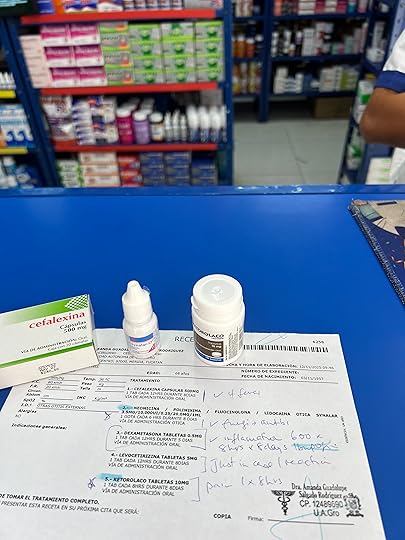
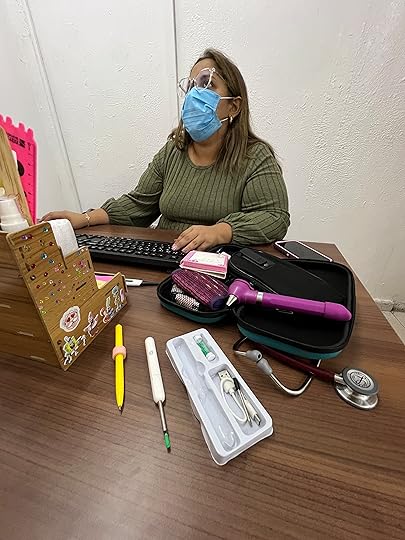
But the morning of our excursion, I wake up with a raging ear-ache – no doubt due to that enforced cave diving. Worried that I have ruptured my ear-drum (yes it’s that bad) I try in vain to find a doctor until AI informs us that many chemists in Mexico have a doctor’s surgery attached – and so for the princely sum of £3 I have an ear examination with a probe attached to bluetooth so I can see how awful my ear drum looks and, for a further £7, an array of drugs ranging from eardrops to antibiotics in case the pain doesn’t stop. Amazing. And by the next day it is better though I soldier on with the treatment until I’m home.
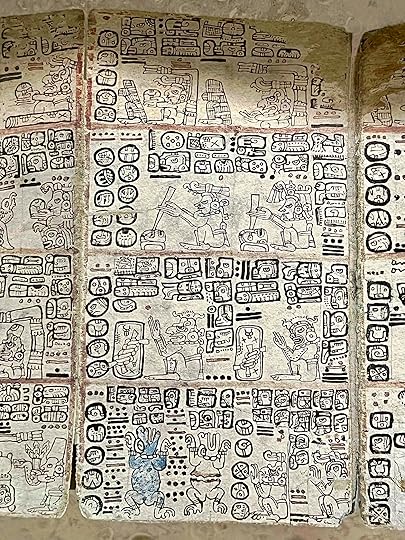
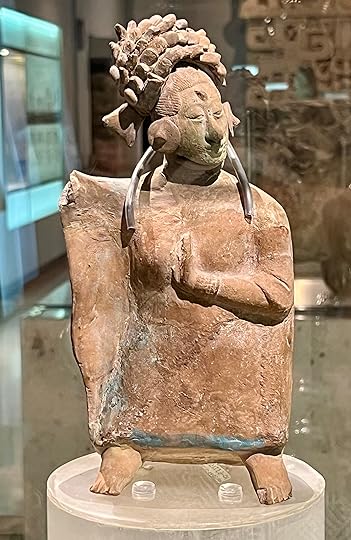
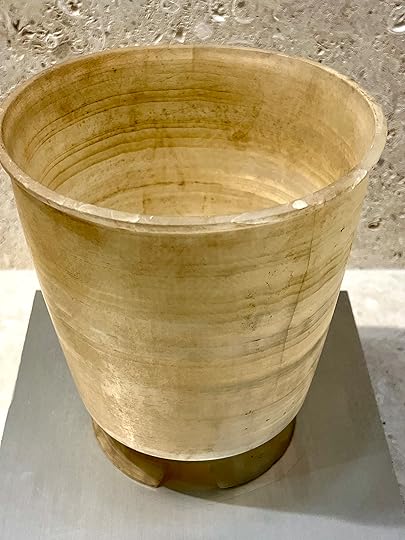
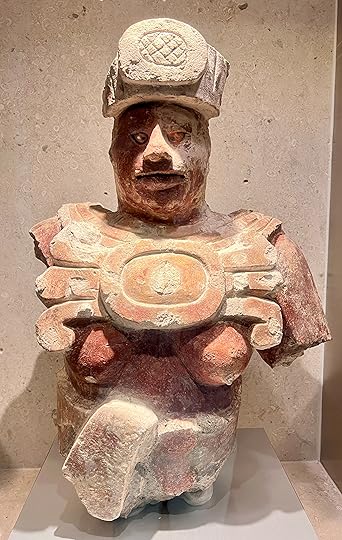
Talking of museums we enjoy our visit to the Gran Museo del Mundo Maya with its permanent collection of Mayan artefacts and the original reclining Chac Mool statue from Chichen Itza. Wish I’d been there before we’d visited the ancient sites!
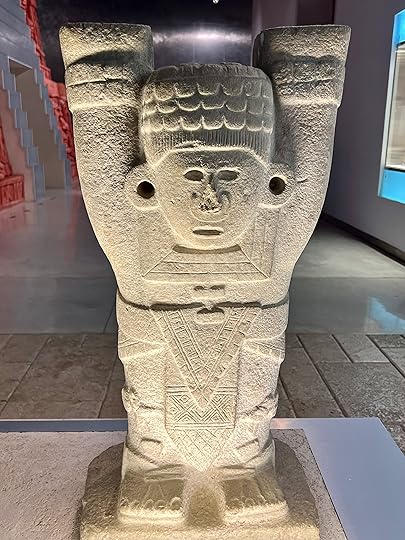
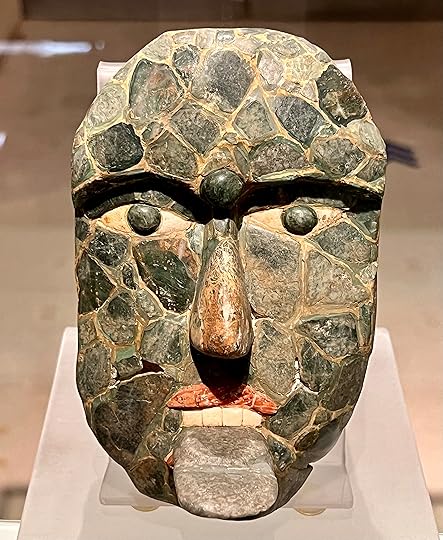
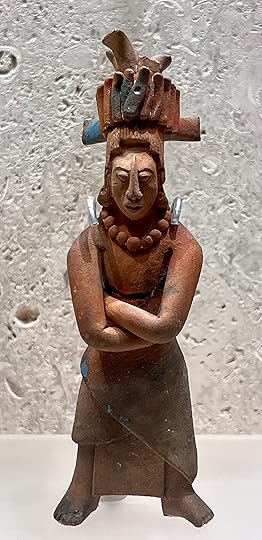
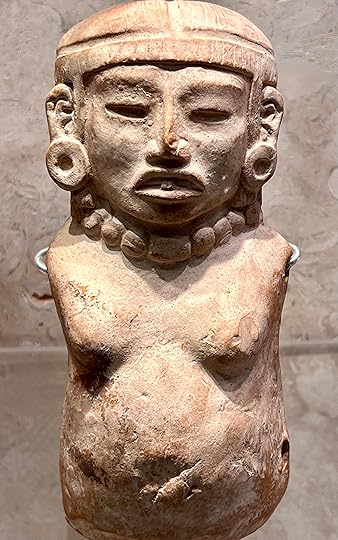
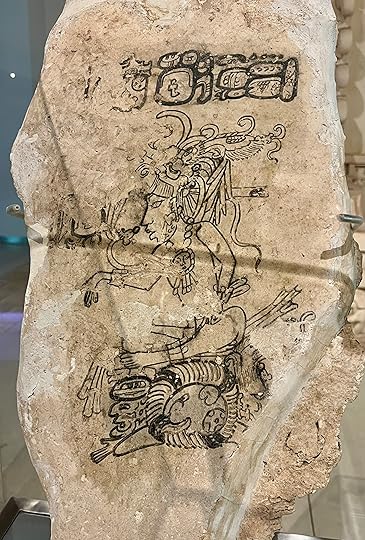
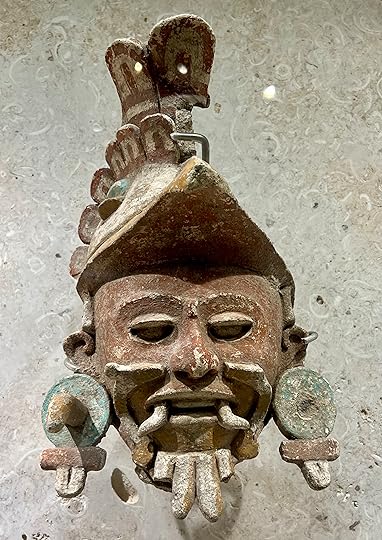
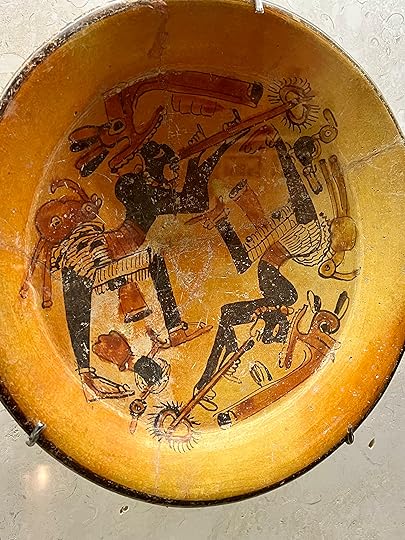
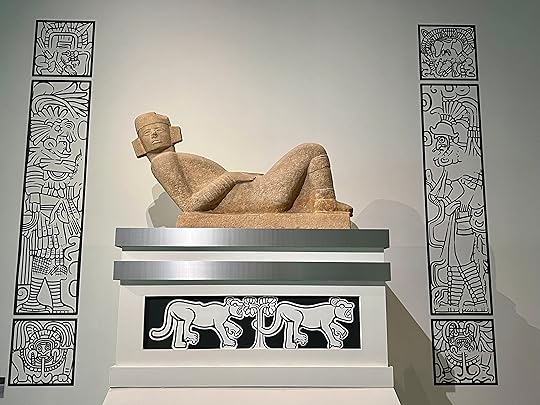
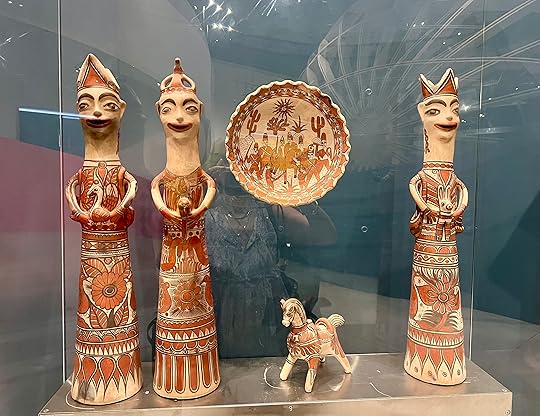
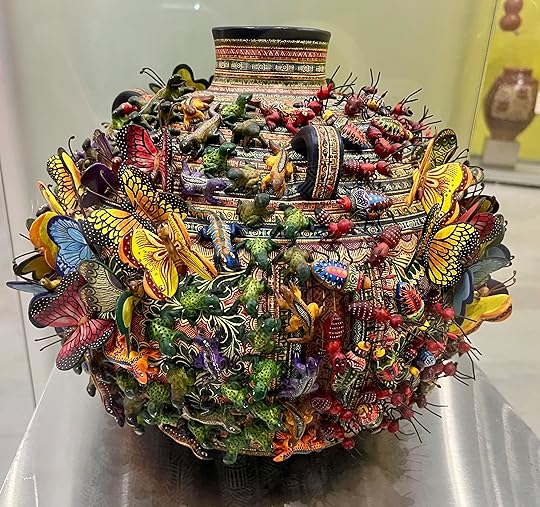
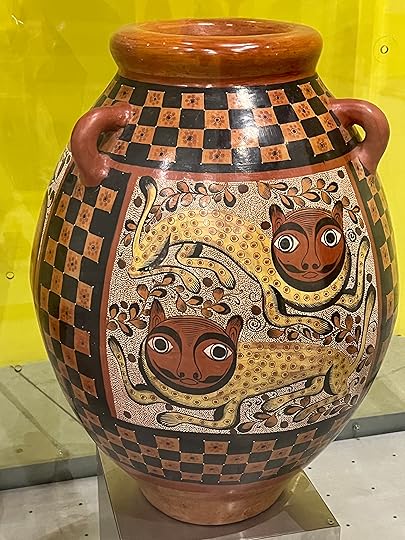
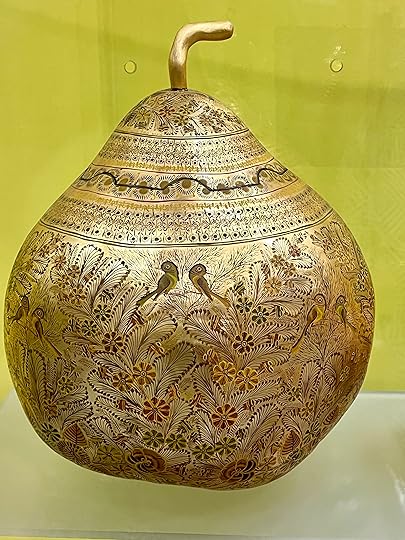
All too soon it’s time to climb aboard our car for the three-and-half-hour drive to Cancun airport, where we drop the car off and get a ride to the terminal. Effortless. We’ve really enjoyed our fortnight in the Yucatan, but next visit we’ll head for Mexico City, Wahaca and Guatemala.
November 18, 2025
Mexico 2: Chichen Itza
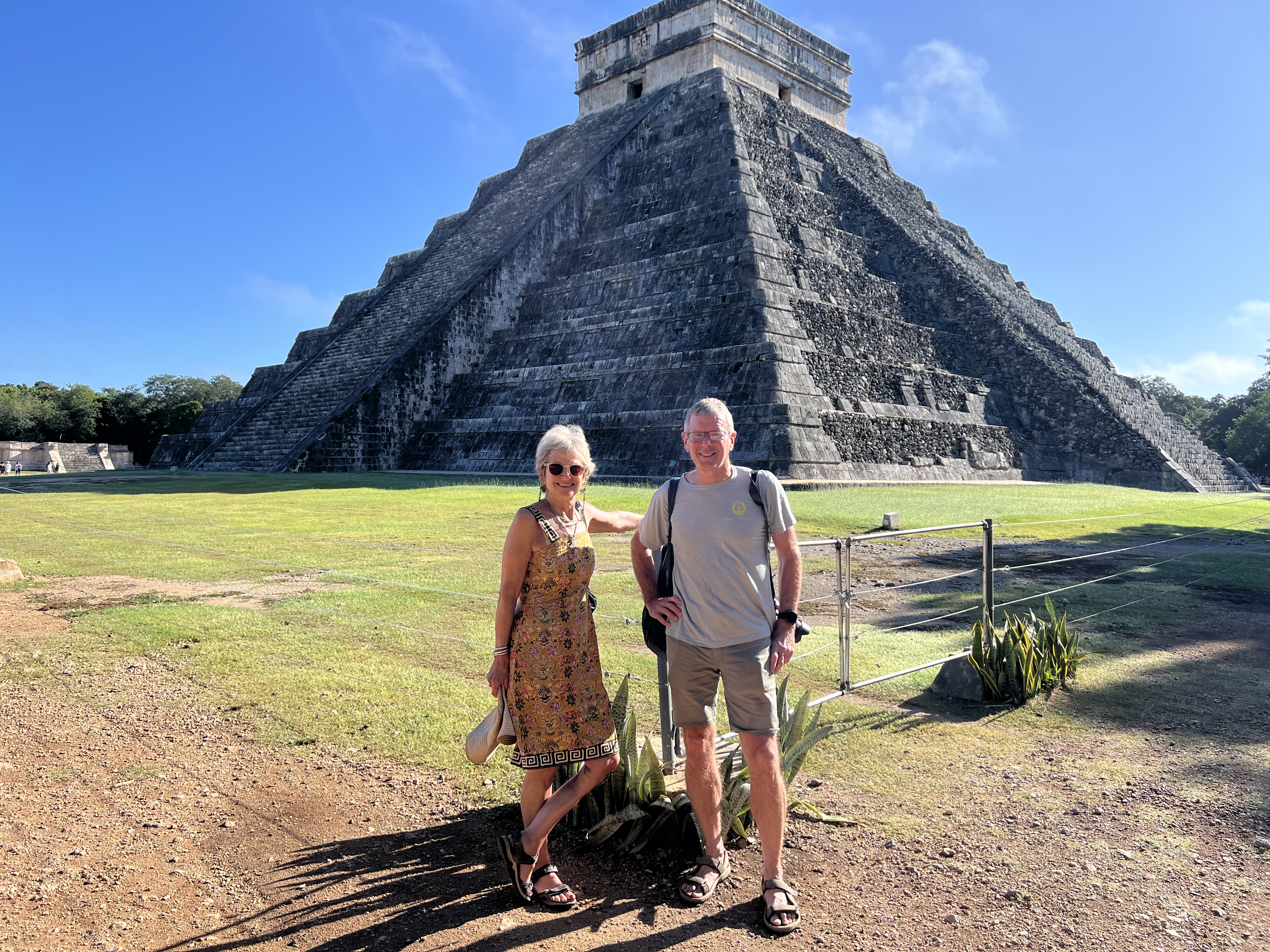 Temple of Kukulcán (El Castillo)
After a week on the Mayan Riveira we pick up a hire car in Playa del Carmen, which will be ours for the next week. We had been nervous about driving in Mexico but, despite the towns and cities being slightly hairy due to there being no obvious rules of engagement, aside for give way to the left on roundabouts – the main roads are mainly empty due to the tolls, so easily navigable.
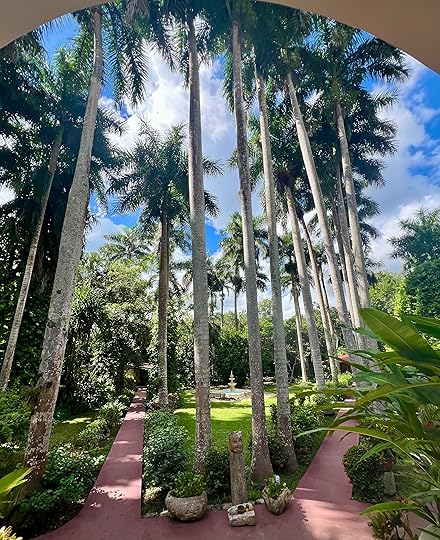
 The Hacienda Chichen, right by the site
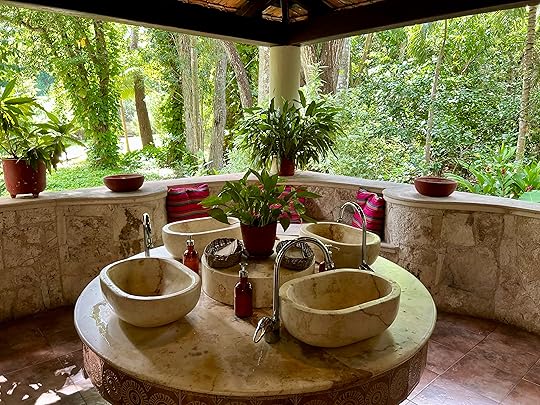
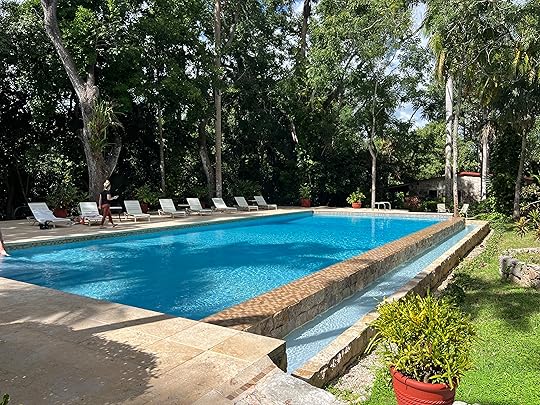
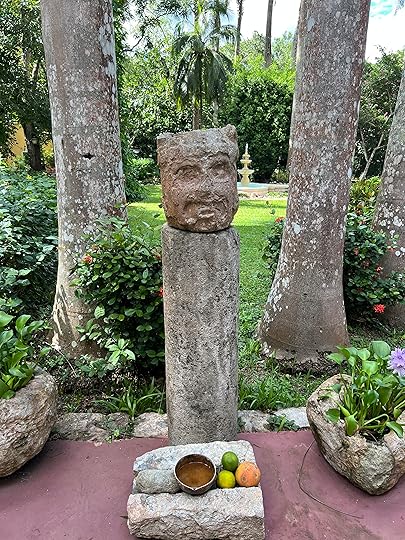
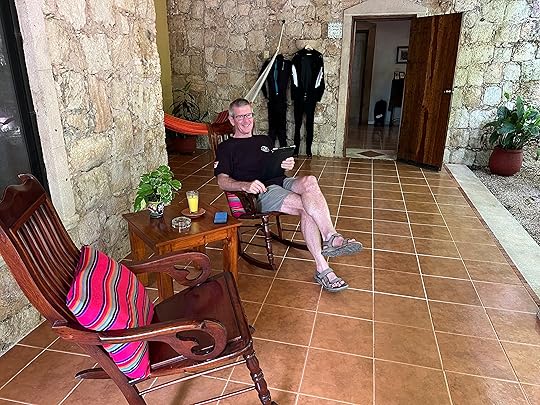
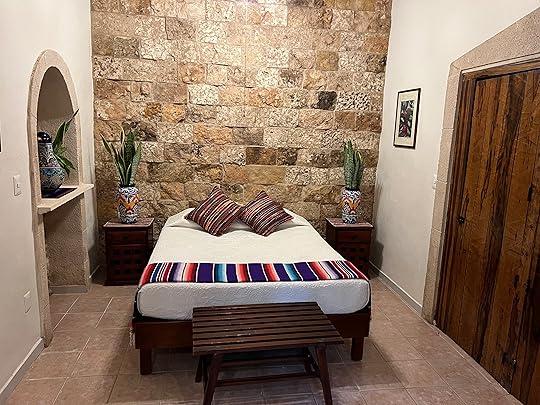
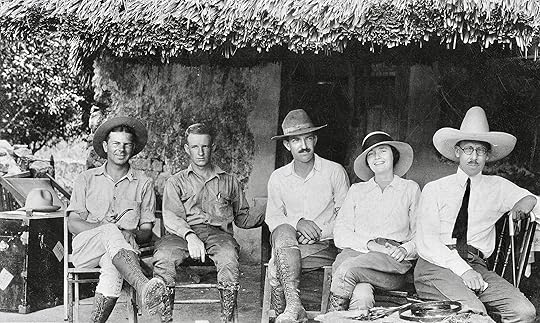
First stop Chichen Itza, where we are to spend the night in the charming Hacienda Chichen Itza. This was in fact bought by the archaeologist Edward Herbert Thompson, who excavated the site over a period of 30 years from 1894, and is indeed built on Mayan ruins and has many ancient stones built in to the walls! The rooms are scattered around the gorgeous garden and named after the various archaeologists who stayed there; the food is delicious and there is a large pool to relax by after our long drive.
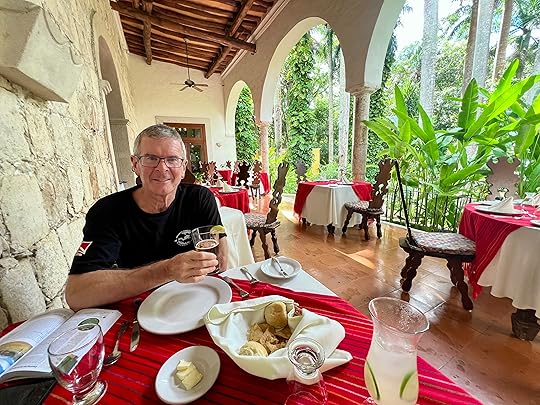
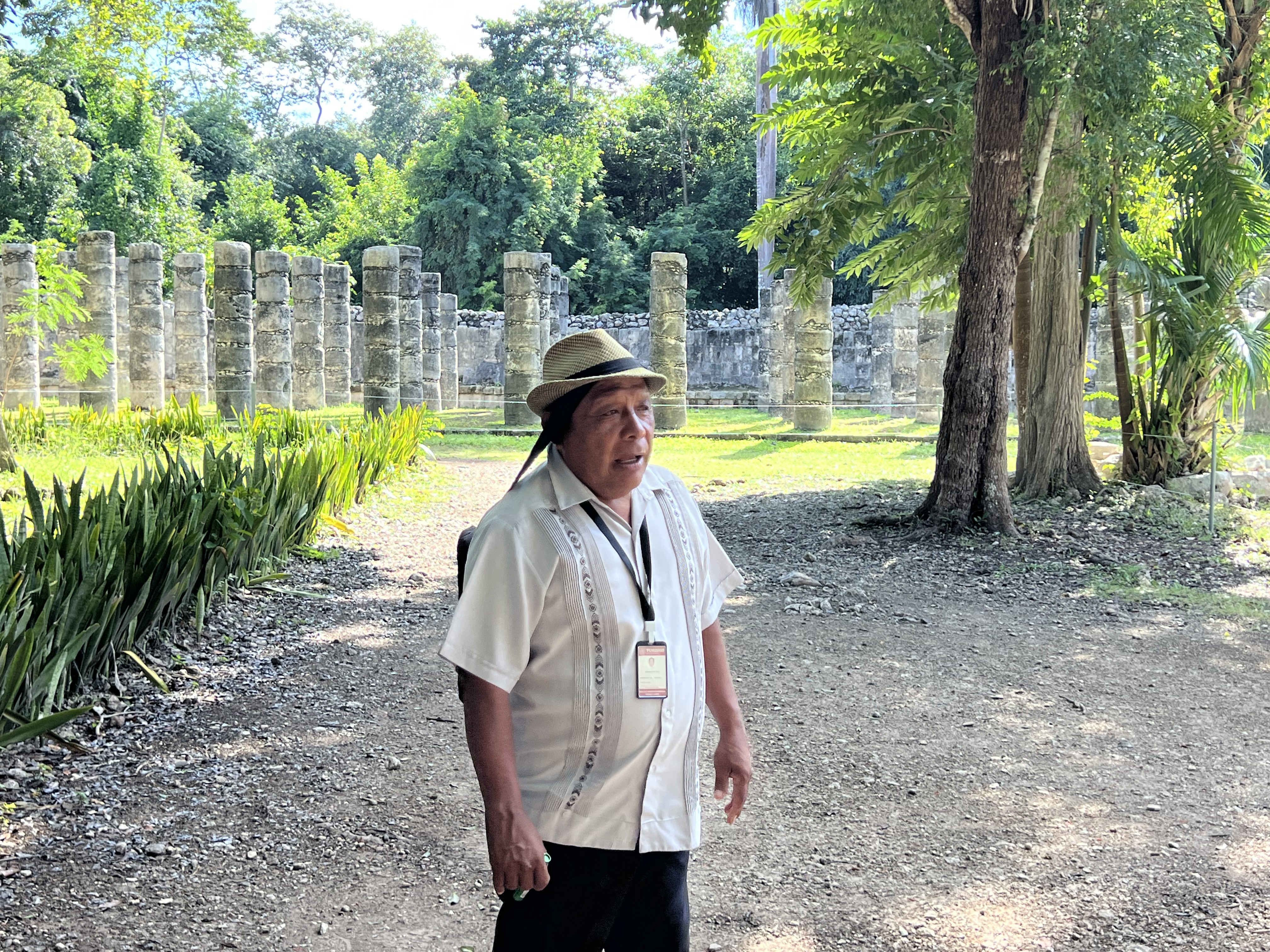
In the early evening we meet Bibiana, who is as Mayan as you get, with his basket slung round his forehead, and only just over five feet tall. He is to take us birdwatching and will be our guide to the main site the following day.
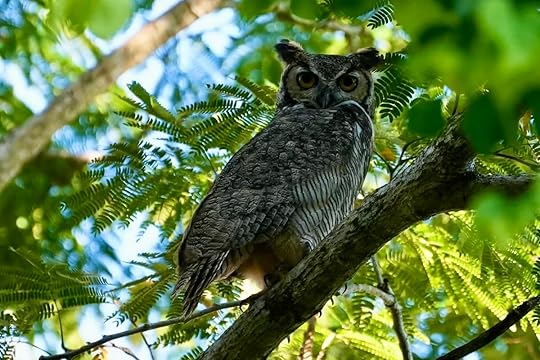
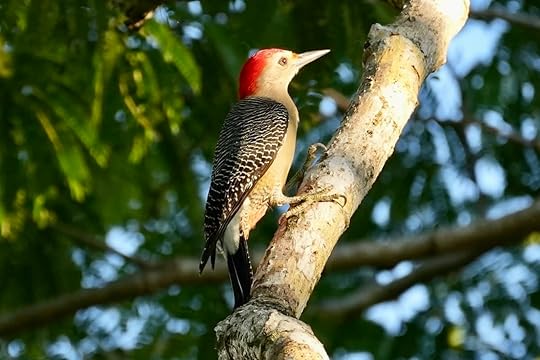
Wandering around the lush gardens of the Hacienda we are thrilled to find a rare and huge horned owl, as well as numerous woodpeckers, mot mots and other indigenous species, too fast to photo! They grow all their fruit and veg amidst the ancient ruins so it is a lovely little stroll.
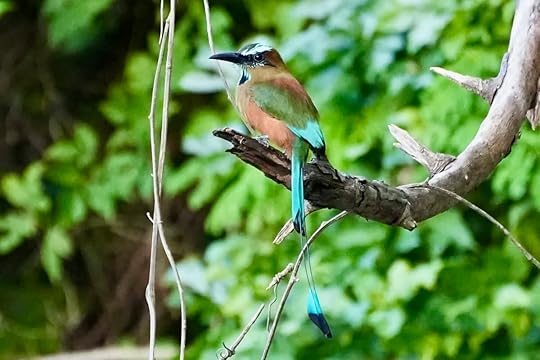
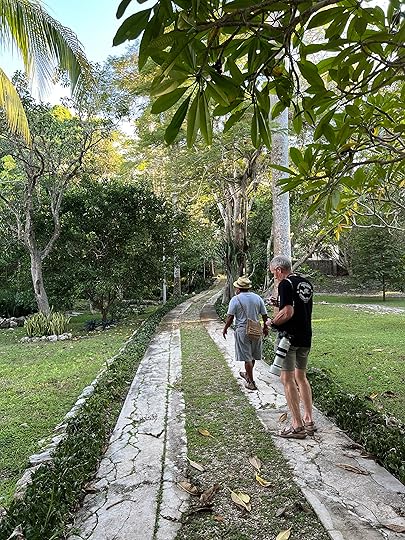
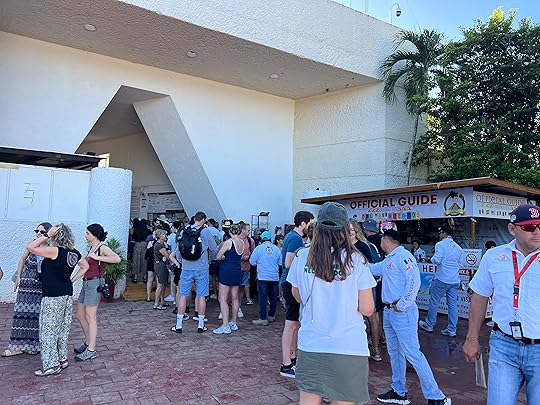
We are up early to get to Chichen before 8 am to try and avoid the queues which are legendary. Ross is second in line, and we get our tickets easily, meet up with Bibi (we joke about our shared name) and enjoy Chichen with only a select few. As we are leaving we understand why getting there early is a real bonus – the coach-loads are arriving form Cancun, several hours away. It gets almost 3 m visitors a year.
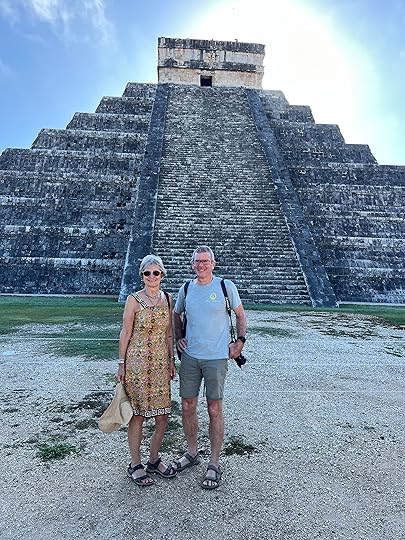
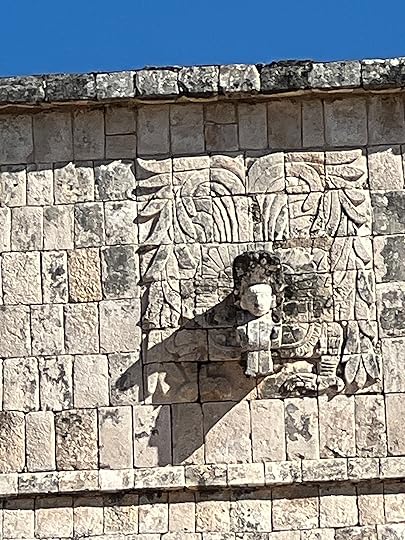
Chichen was one of the major Mayan cites and it spans several centuries (600-1200 AD) and is unique in its fusion of architectural styles, purloined from various conquerors and neighbours, including the early Puuc (which we will see a few days later on the Ruta Puuc) and the Toltec pillars – square, instead of round. Indeed it is one of the 2007 New Wonders of the World.
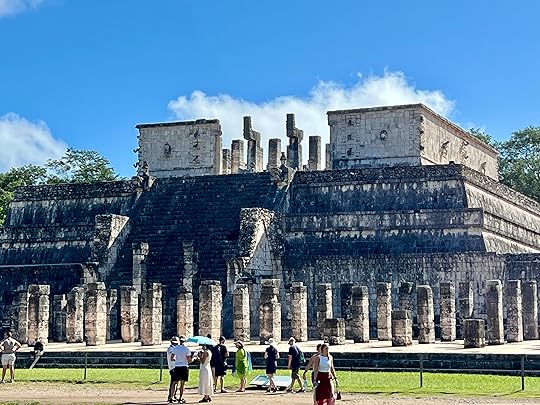
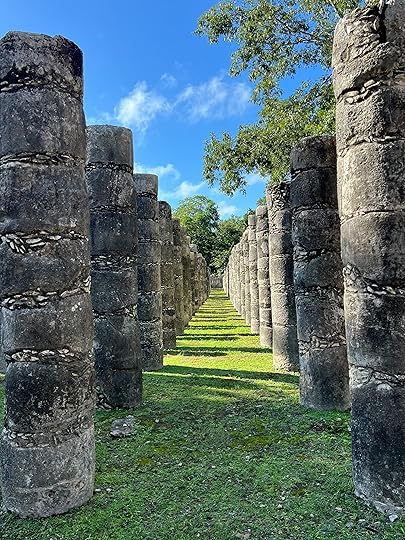
 Side view of the Temple of 1000 warriors, showing mix of Toltec and Puuc columns/pillars
It was a major trading centre, with finds of gold and obsidian – neither local. Agriculturally the Mayans relied on corn, beans and squash, supplemented with other vegetables. Noone really knows how or why this great city declined but it was no longer thriving when the Spanish arrived in the 1532 and occupied the area, subdividing it up among their soldiers. They were a most sophisticated civilisation – astronomers, mathematicians, spiritualists – with an extraordinary calendar guiding their belief system and activities, far too complex to go into here. I got my Mayan horoscope at the museum in Merida and according to this I am ‘serene but strong, and usually succeed in what [I] set out to accomplish…positive, problem solver, generous with advice…traveller who takes the road both in happiness and sorrow. Feminine, verbally skilful’. Well I’d say they knew a thing or two!
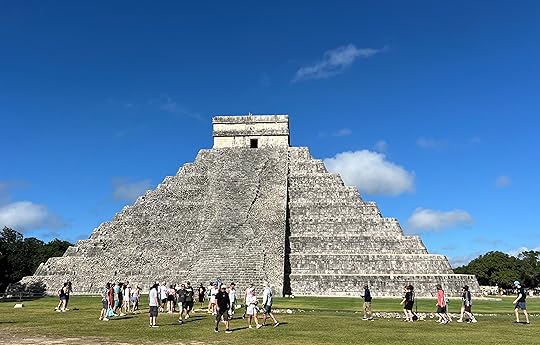
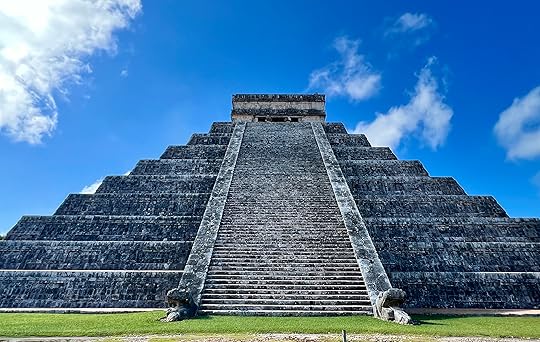
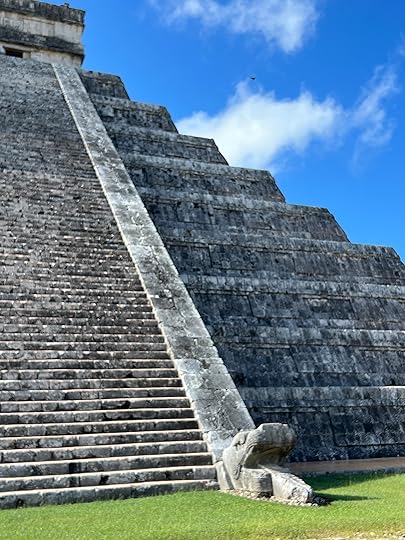
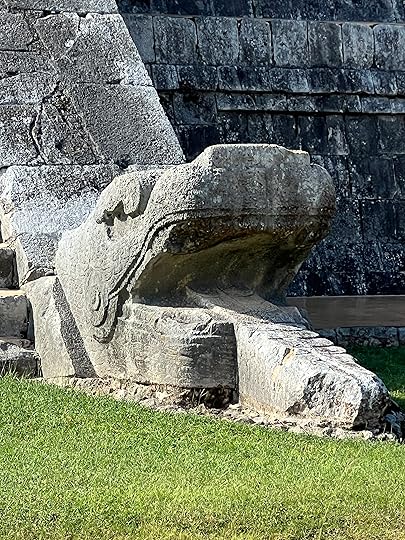
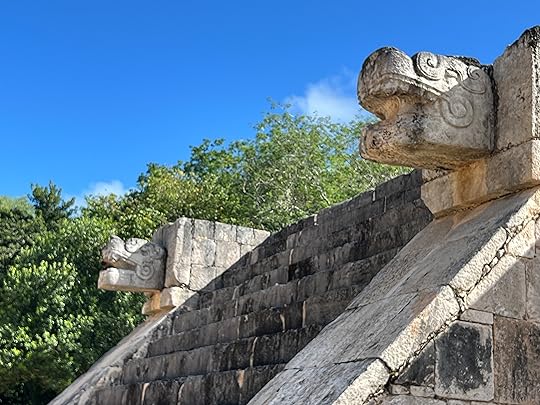
Temple of Kukulcán showing the serpent heads on the staircase leading to the inner chamber
However the Spanish were driven out in 1534 by the Mayans and did not return until 1588. It was ‘discovered’ by early explorers in the 1870s and 80s and various superficial excavations were carried out, but it was not until Thompson arrived that true work and restoration began.
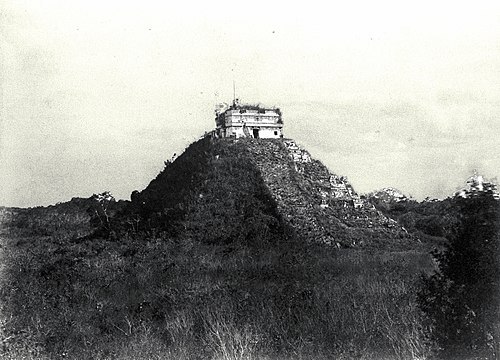
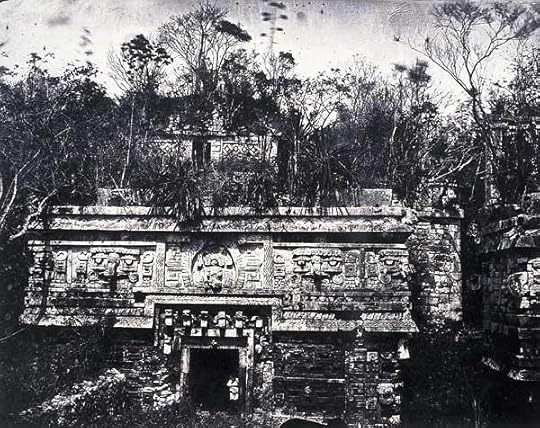
The site is divided into three main areas; the best known of these complexes is the Great North Platform, which includes the monuments of the Temple of Kukulcán (El Castillo) – the pyramid of the eponymous serpent god – and the Jaguar Throne.
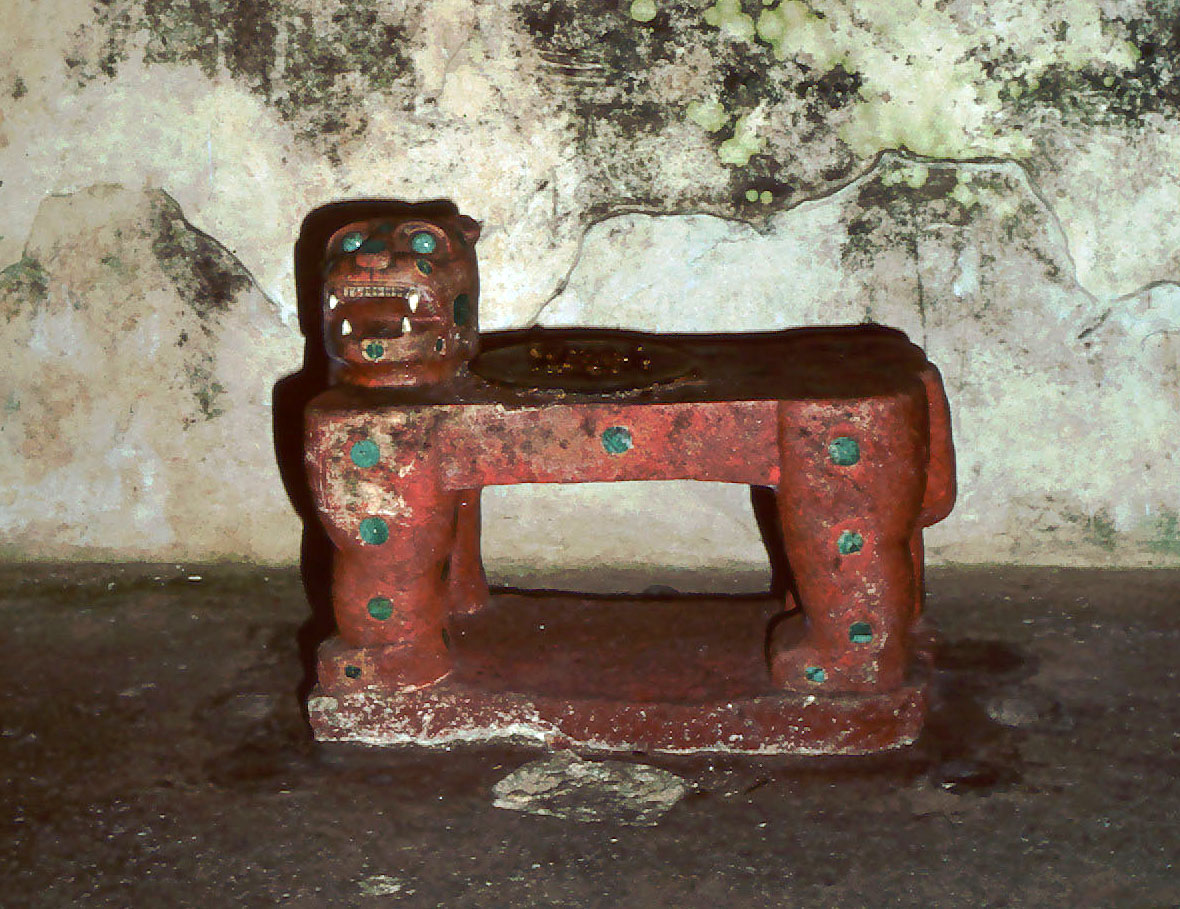 The Jaguar Throne inside the Temple of Kukulcán pyramid is red and inlaid with jade
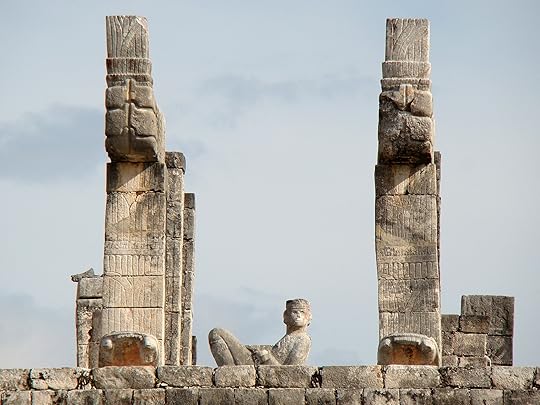
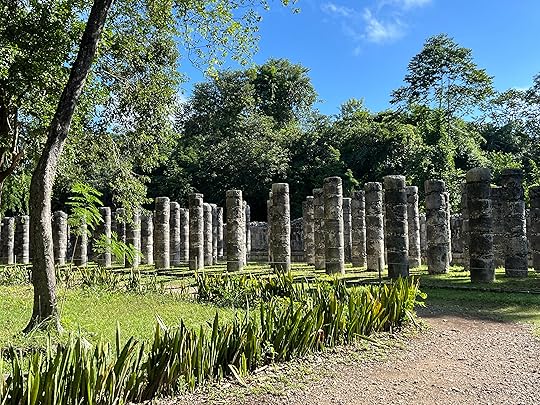
The Temple of the Warriors complex (below) consists of a large stepped pyramid fronted and flanked by rows of carved columns of eagles and jaguars, representing the warriors. At the top of the stairway on the pyramid’s summit (and leading toward the entrance of the pyramid’s temple) is a Chac Mool, a messenger to the gods – one of the only photographable ones we see outside of a museum. It is abutted by the Plaza of 1000 columns – really splendid (see below).
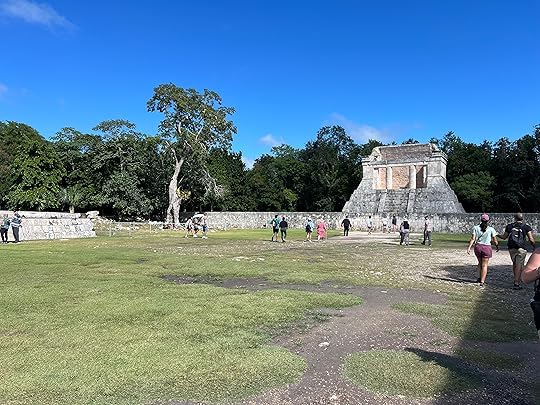
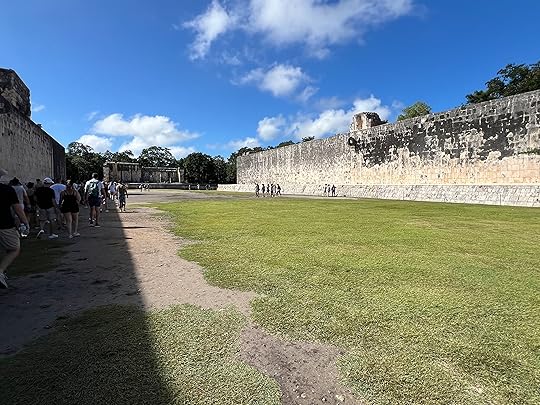
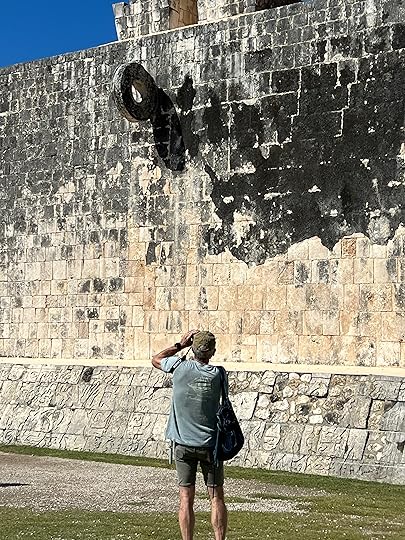
The Great Ball Court is also part of the central complex; we saw another at Uxmal. The game of pelota was ceremonial with two teams who had to get the ball through a polo-shaped hoop, using only their bodies – no hands or feet allowed! It is absolutely enormous – and is largely empty when we visit.
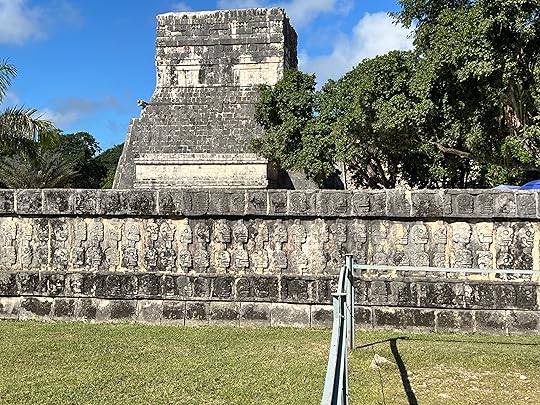
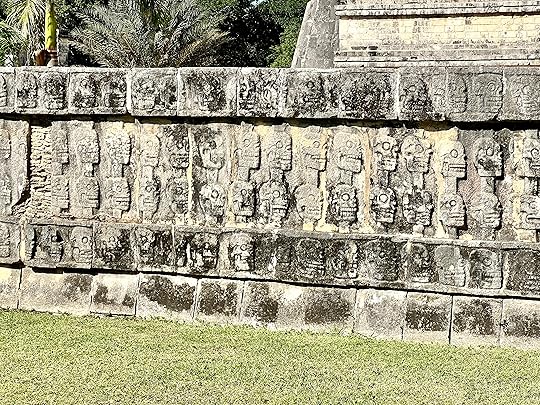
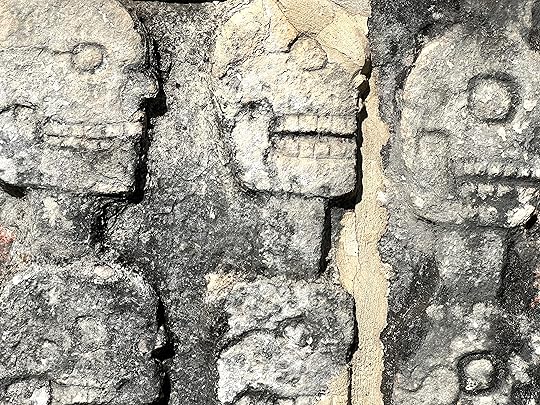
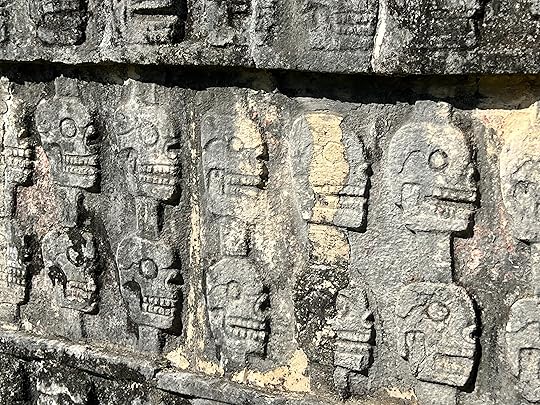
En route to it is an extraordinary platform engraved with skulls, abutted by the platform of the eagles and jaguars. Many of the wall engravings are well-preserved and it’s possible to see the depictions of the gods/kings/leaders/mythical creatures/snakes and jaguars (see below).
Unfortunately we discover afterwards that naughty Bibiano missed out a whole group of other edifices including the Observatory, the Nunnery and Church, and the sacred cenote i.e. about one third of the site. I think he was hot, lazy and bored – but very charming all the same! Although I am slightly annoyed in retrospect.
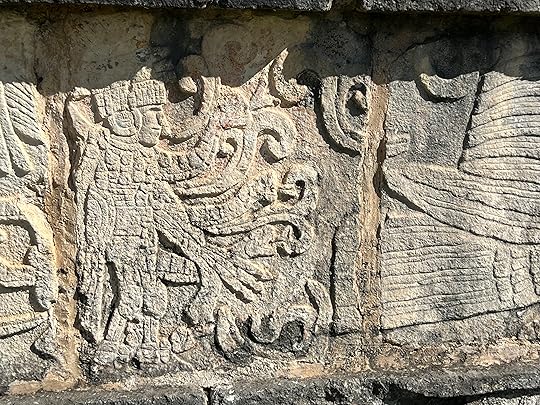
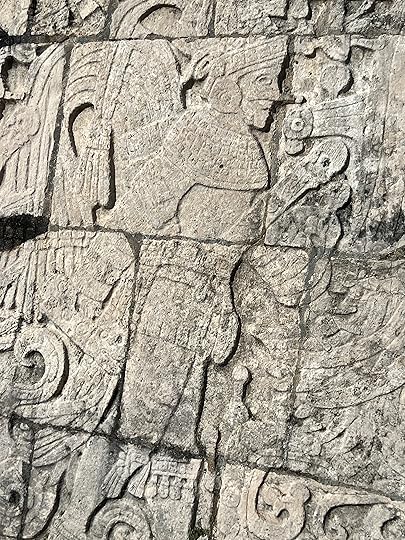
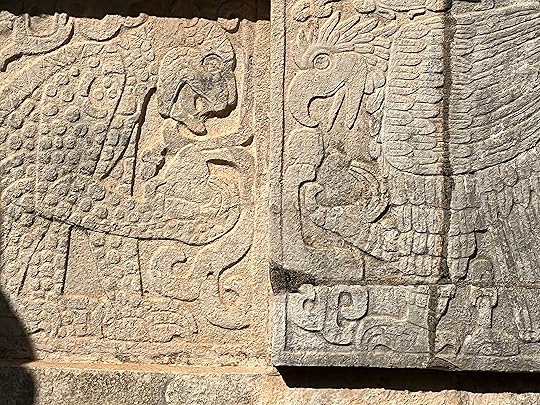
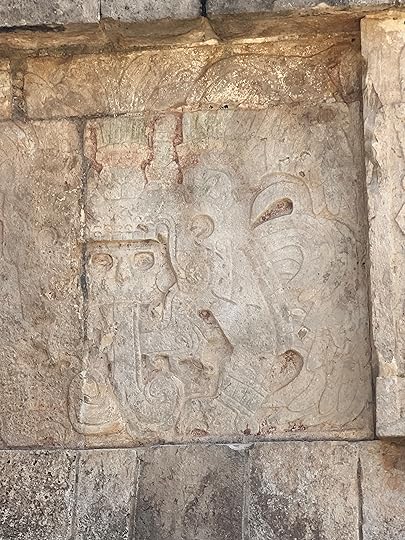
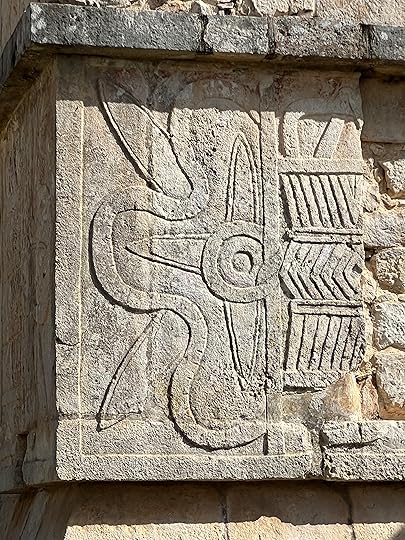
All are connected by the remnants of great walkways. Rather spoiling the serenity of the sacred site are hundreds of tourist stalls, selling probably mostly made-in-China tat…I always wonder who buys it, as they all seem to be selling the same thing. However, we hear that the government has given them all notice to quit next year – a desperate situation for all the vendors who have congregated from far and wide to work here. Later at Uxmal, it is notable that a site clear of vendors is much more magical.
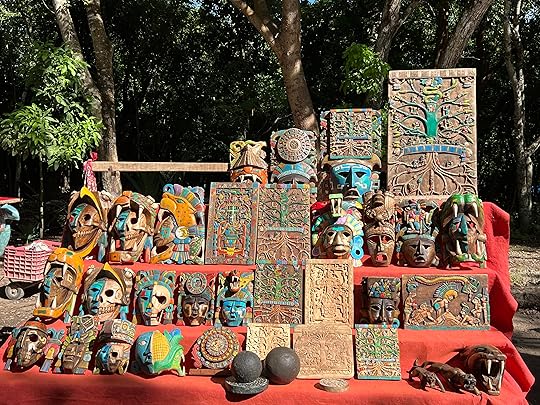
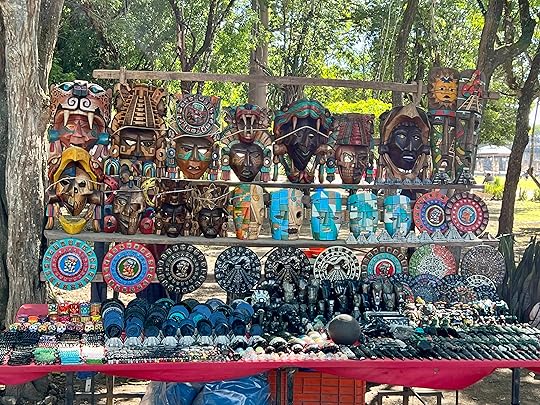
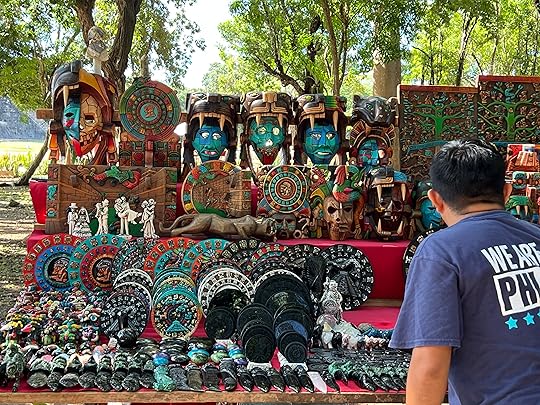
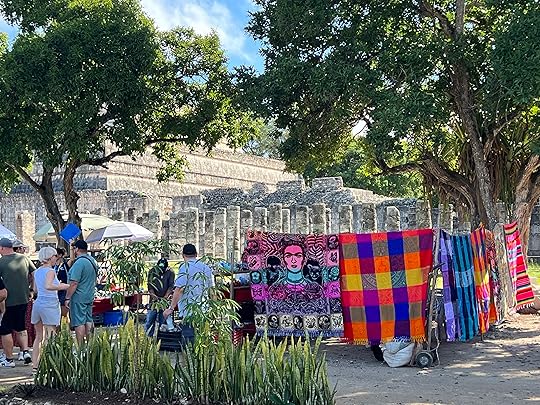
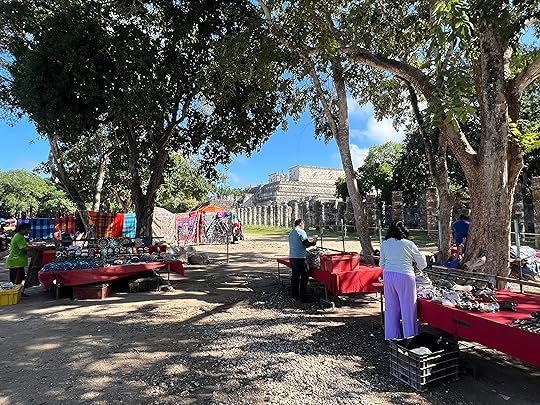
By the time we’ve done our ‘tour’ such as it is (to be fair to Bibi it was a good two hours) it is hot so we repair to the hotel for a swim and lunch before departing to Merida where we will spend the next week.
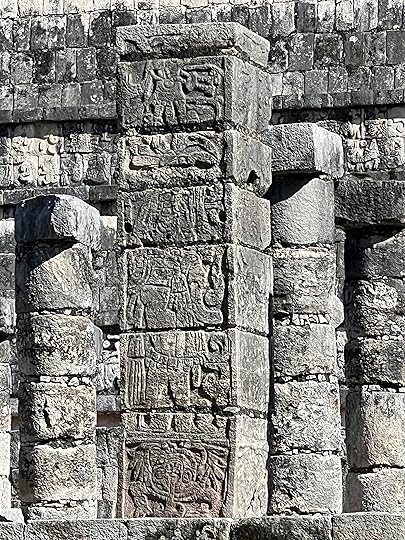
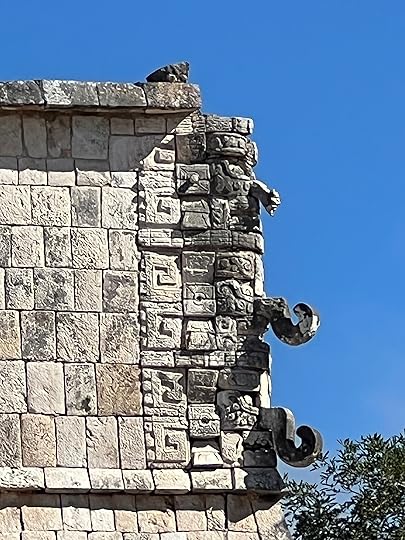

November 17, 2025
Mexico 1: The Mayan Riviera – cenote diving & Tulum
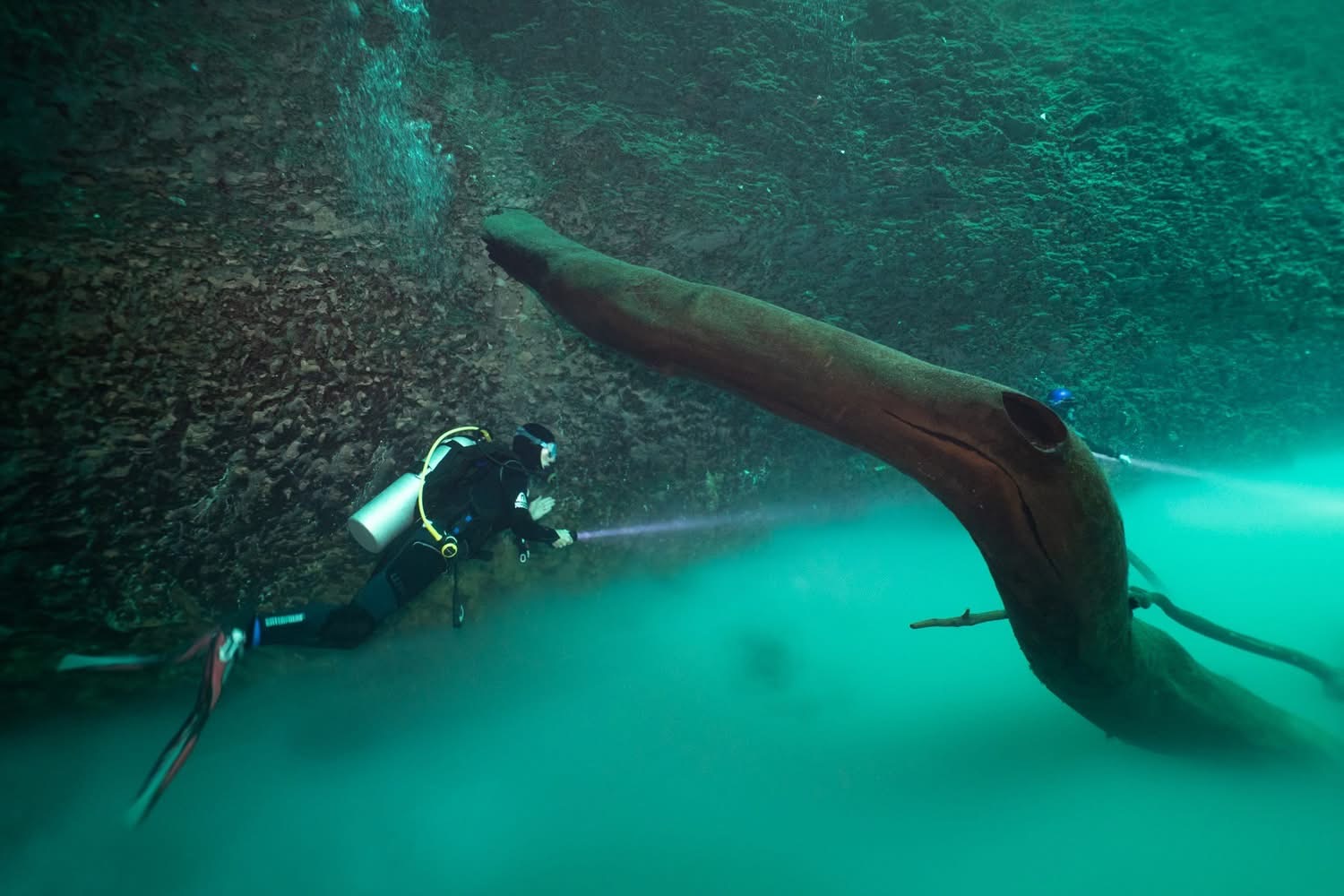 Diving at just above the sulphate layer and 30m at Angelita cenote
A couple of years ago we successfully bid for a week in a house in Merida at a charity auction. For some reason we never got round to using that week but, one summer afternoon, feeling rather gloomy, I rashly booked some flights to Mexico for the first two weeks in November!
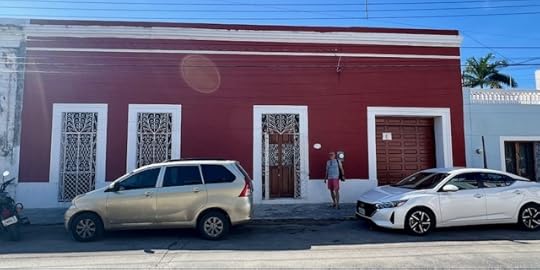 The house from the outside…
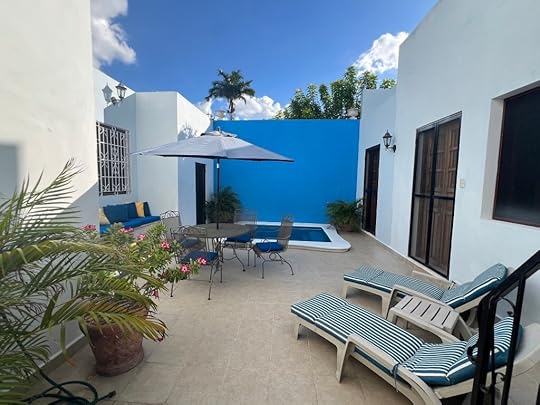 Hides a deceptively large interior complete with pool!
Bidding for the house was not a random kindness for a cause – Ross has always wanted to dive the cenotes – deep limestone freshwater caverns and cave systems in the Yucatan – so here was the perfect birthday gift (for him)!
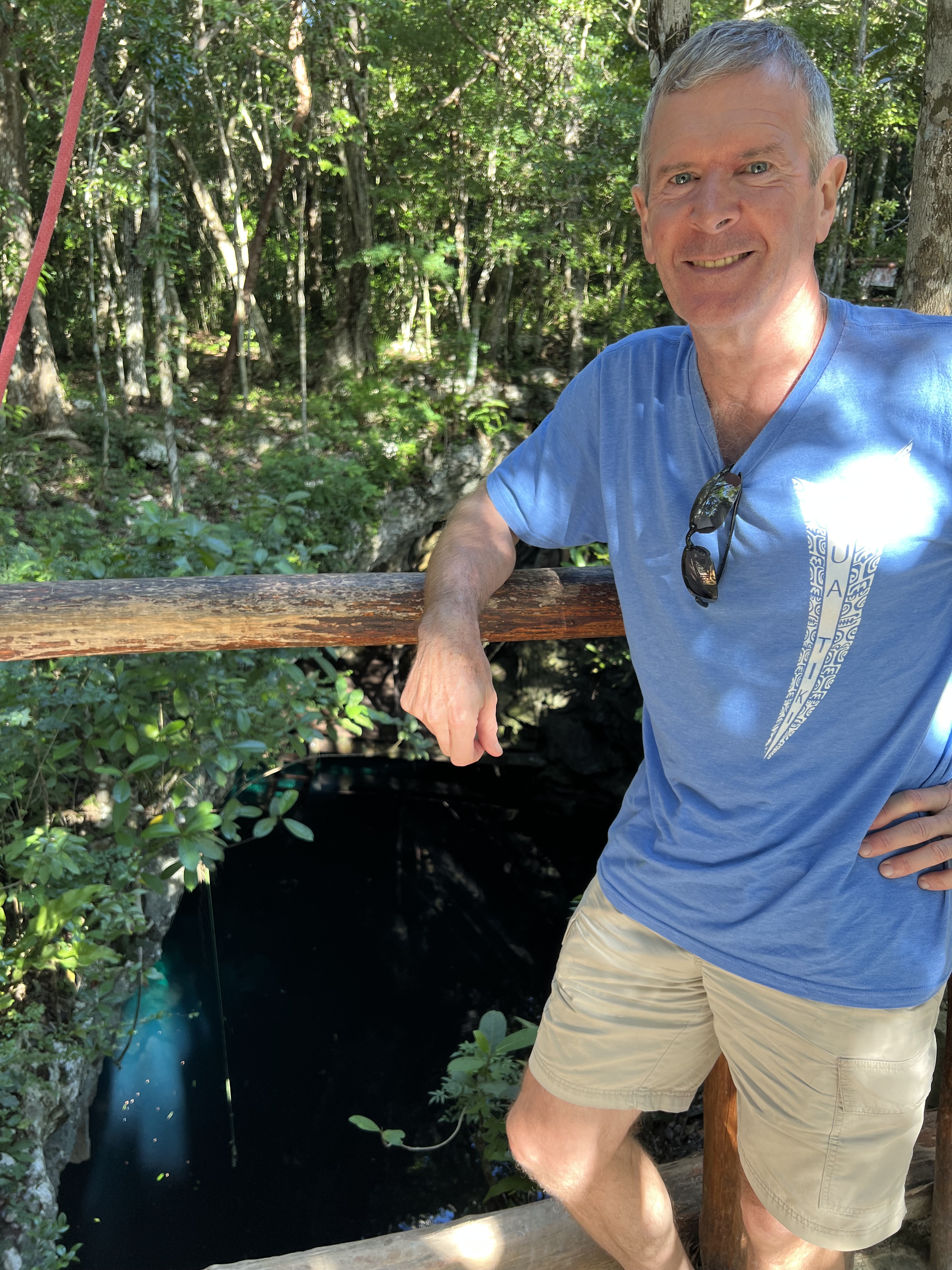 Action Man getting ready for The Pit – below him!
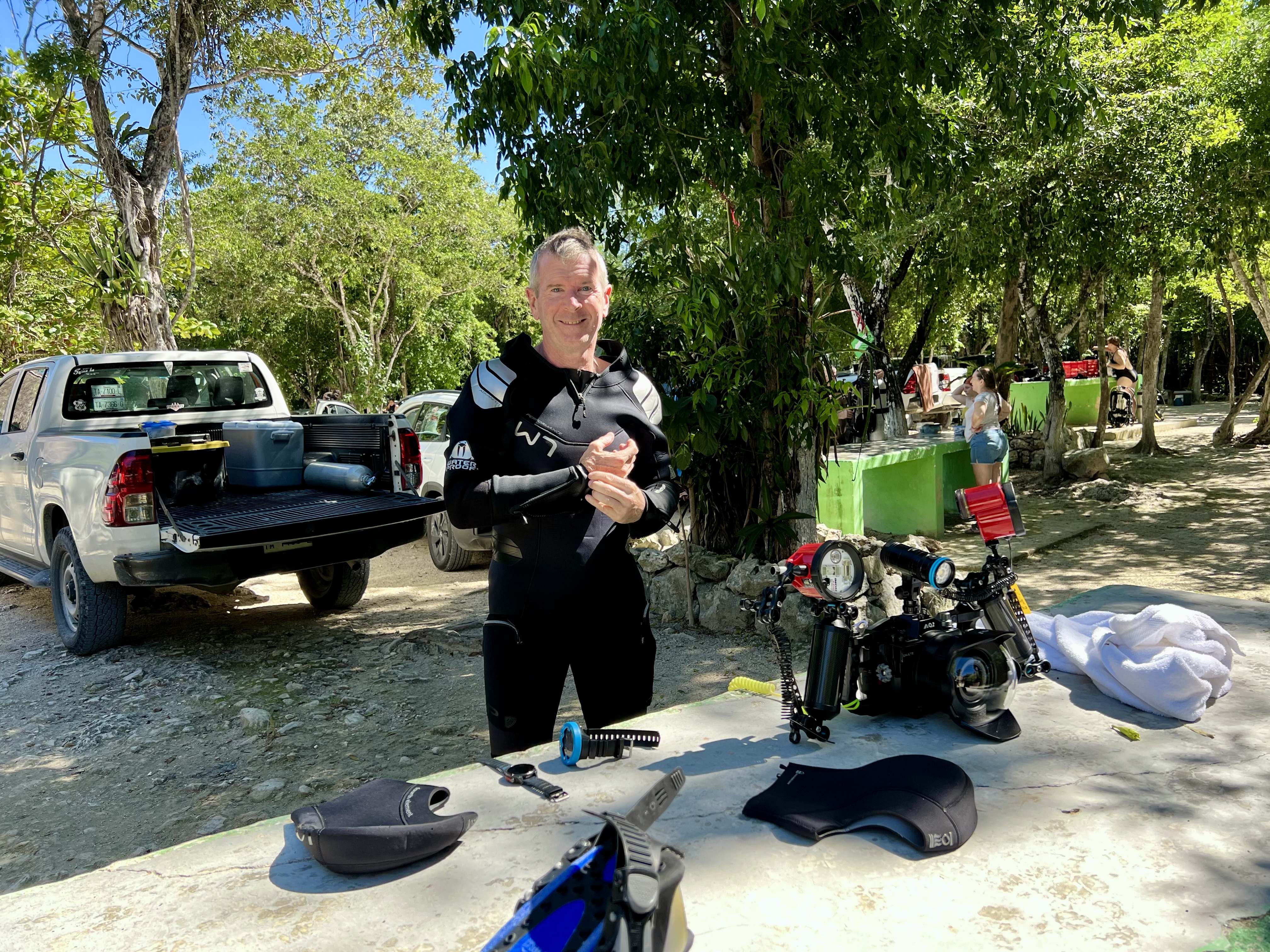 Kitting up!
We decided to spend the first week on the coast on the Mayan Riviera to access the cenotes more easily. I booked a fancy boutique hotel to be our base, the Viceroy – as it turns out it is more White Lotus in its clientele than we had bargained for, with a huge group young Americans celebrating a birthday, fuelled by free-flowing booze, disporting themselves and their perfect bodies for the best part of four days -rather ruining the intended exclusivity we had been looking for.
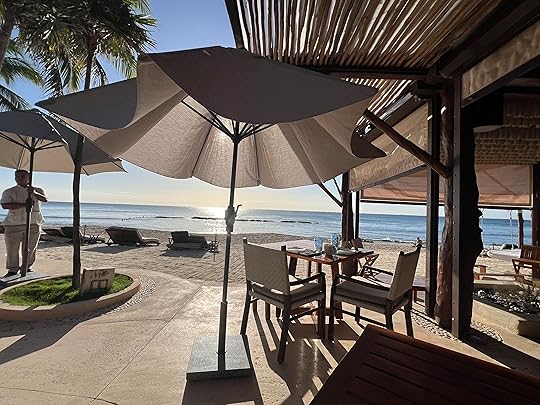
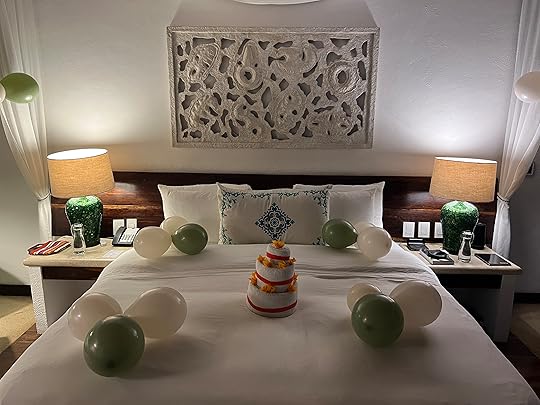
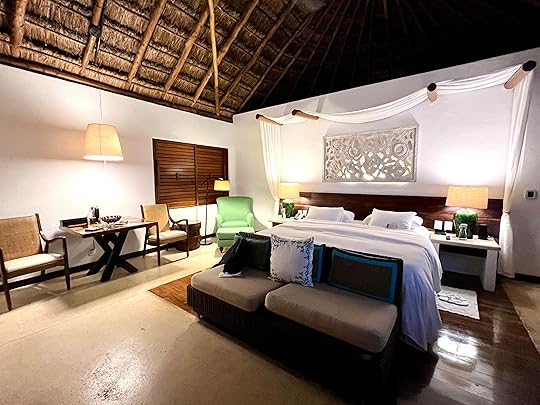
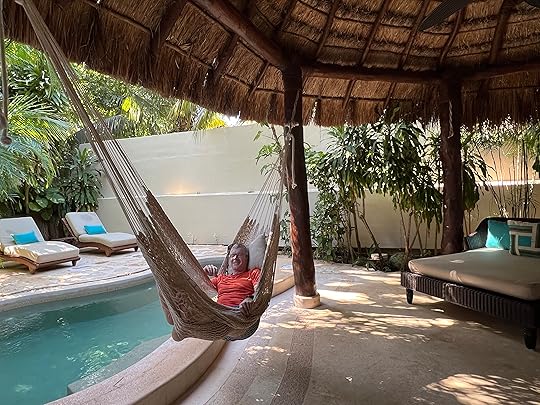
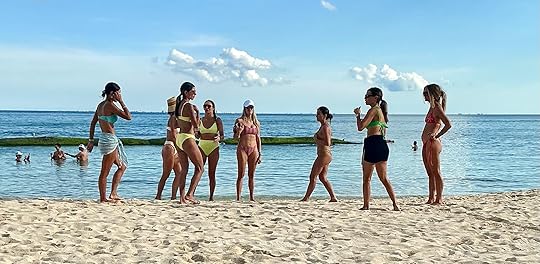
Although the hotel is secluded, luxurious and has amazing service, swimming is not easy as it is rocky, and we are effectively marooned (no nearby beach bars) so any outing is an expensive taxi ride. But the most stupid thing of all – mea culpa – is that we are not that close to the cenotes, which are all near Tulum and a good hour plus away…so I spend most of the first week being cross with myself for a rookie booking error.
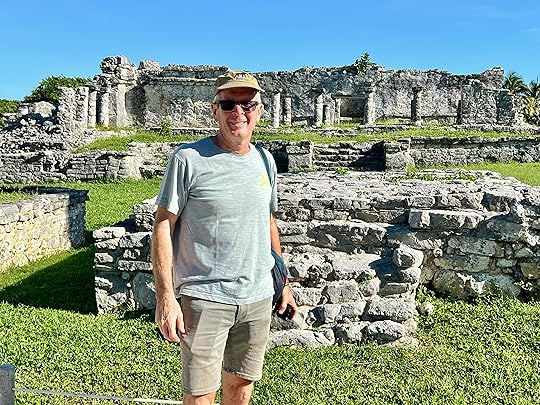
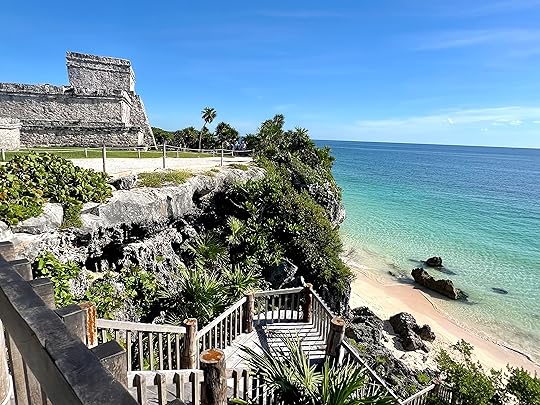
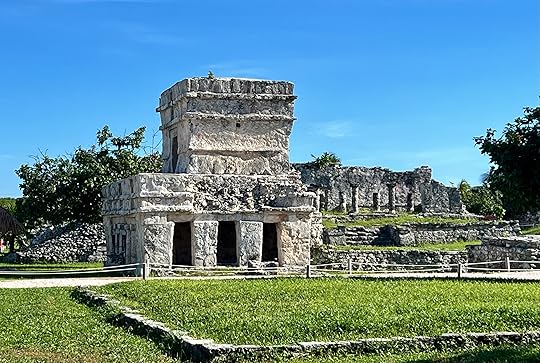
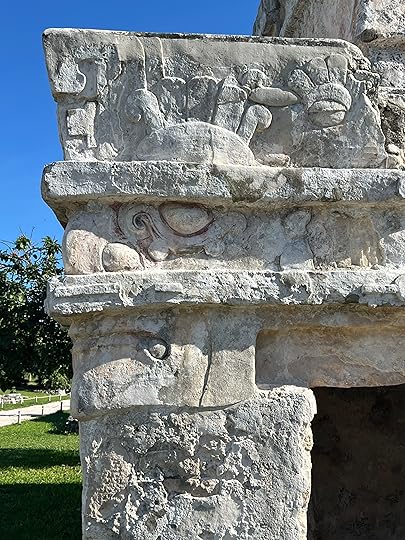
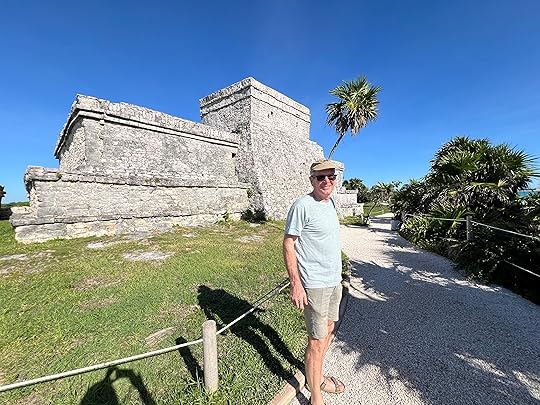
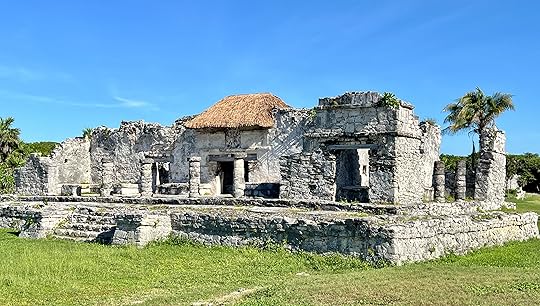
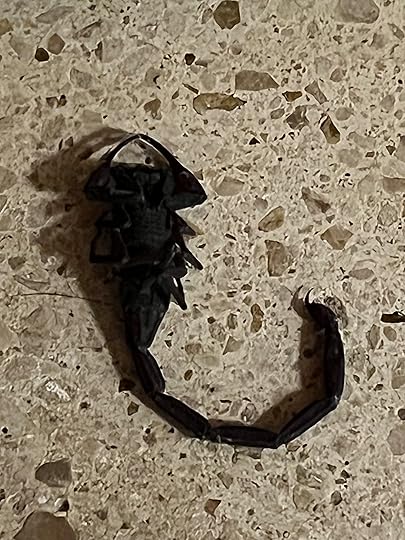
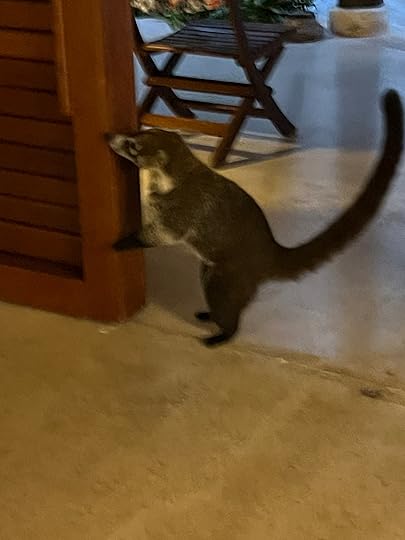
The Tulum ruins, and my two birthday visitors, a huge scorpion and a big male racoon – the exclusivity is confined to humans not fauna! As it turns out, despite its position on the sea-front, Tulum his the least impressive of the Mayan sites we visit, architecturally, and it is much later (13-15th centuries) towards the end of the civilisation, when the Spanish invaded
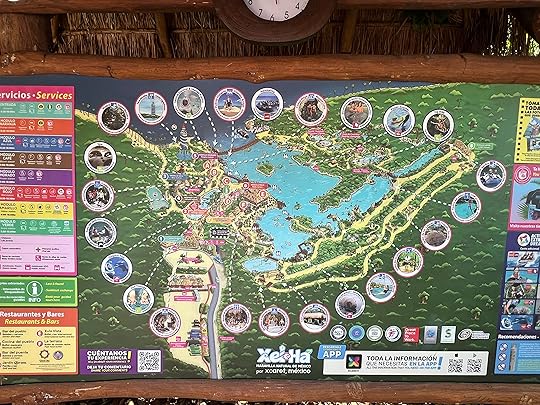
Ross has arranged the diving on alternate days, which we intersperse with other outings – a visit to historic Mayan site of Tulum, followed by what is meant to be a snorkelling trip in a lovely area, but turns out to be an all-inclusive visit to Xel-Ha an aquatic theme park where you can pet dolphins and sting rays (see photo) – my idea of hell on hearth (renamed Hell-ha by me) and we only stay for the free lunch and drinks…
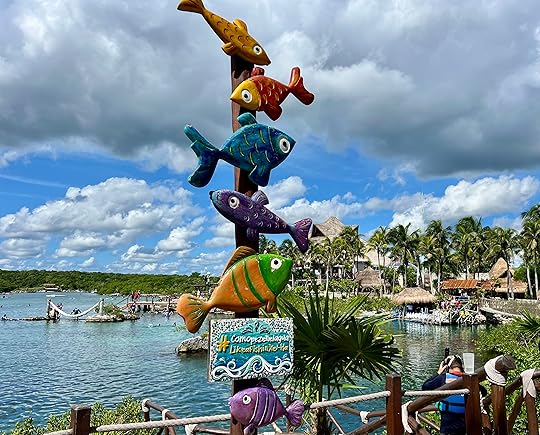
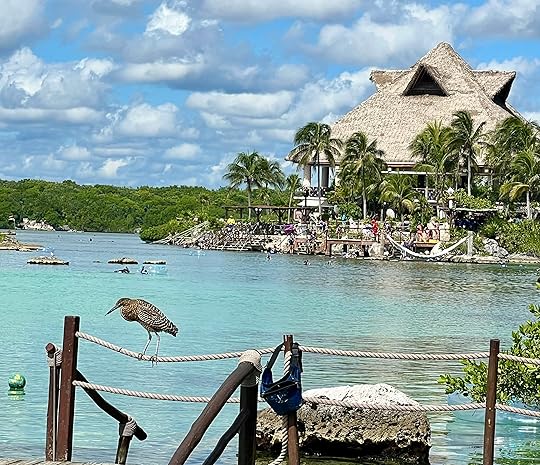
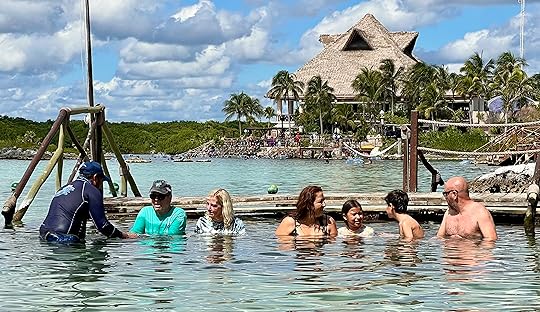
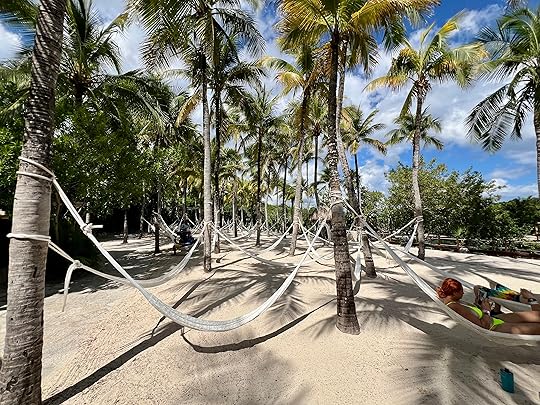
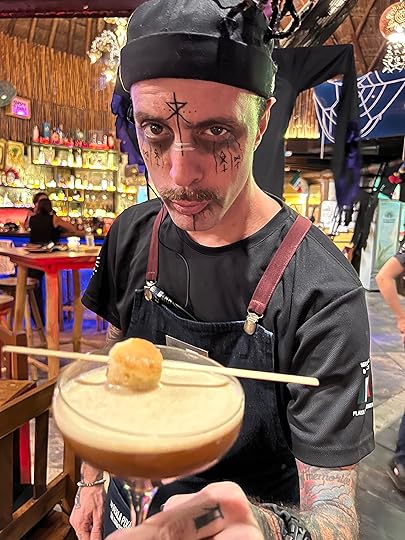
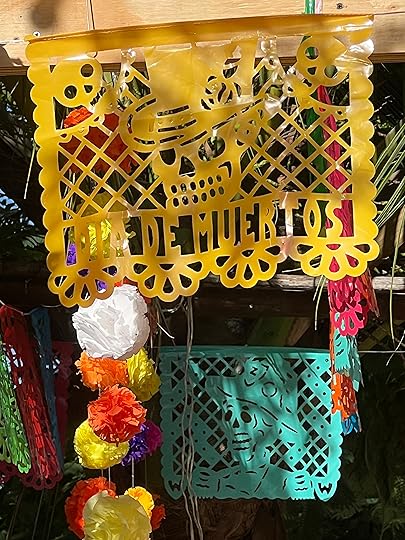
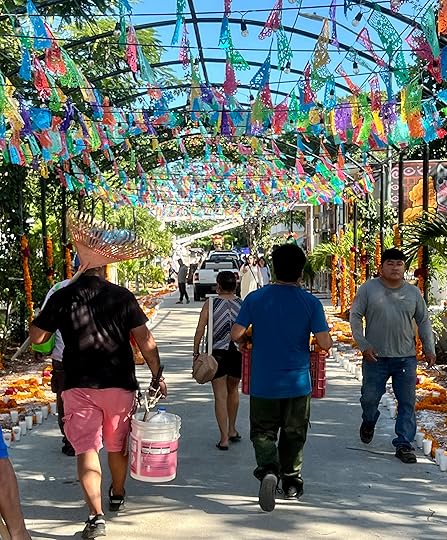
and expeditions to the Halloween celebrations in the town of Playa del Carmen, followed closely by celebrations of Mexico’s biggest holiday, Day of the Dead. Halloween is big here and the children parade with their responsible adults, dressed up to the nines. Tourists also get their faces painted, and the town is decked out in spooky paraphernalia. Even our cocktail waiter looks the part!
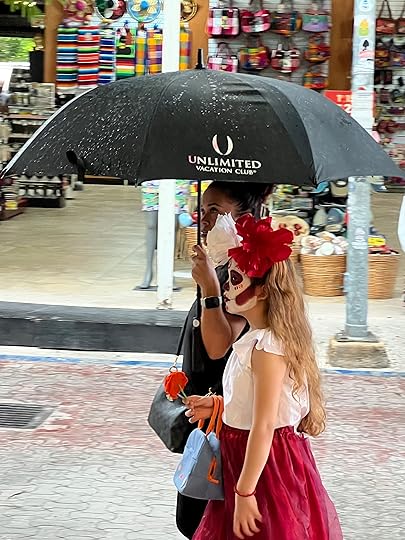
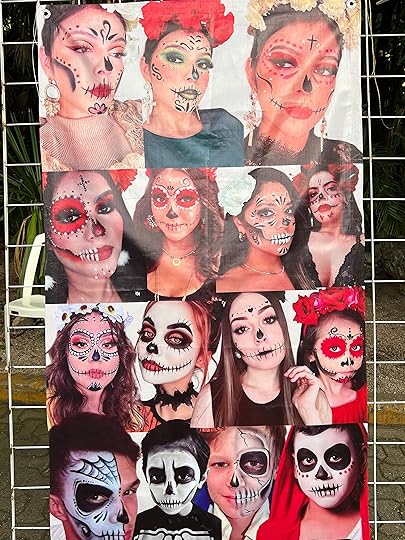
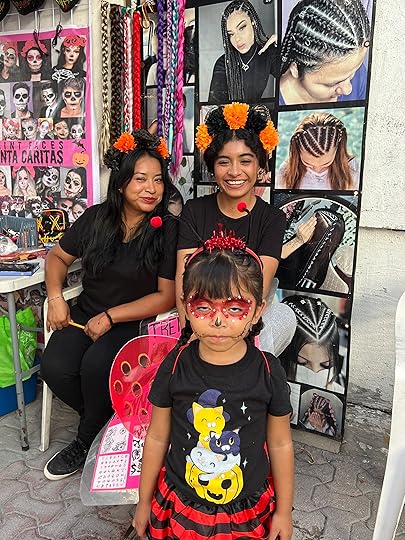
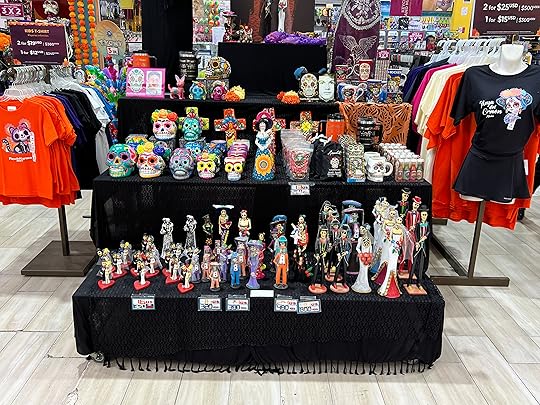
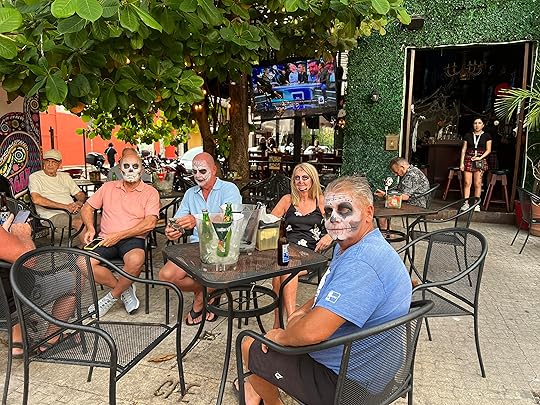
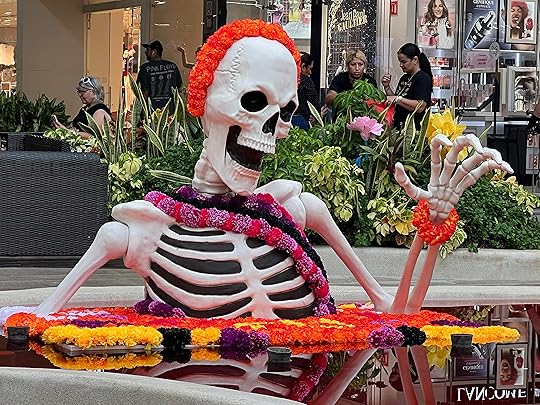
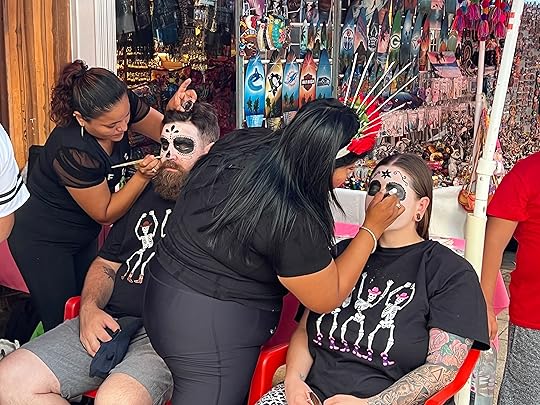
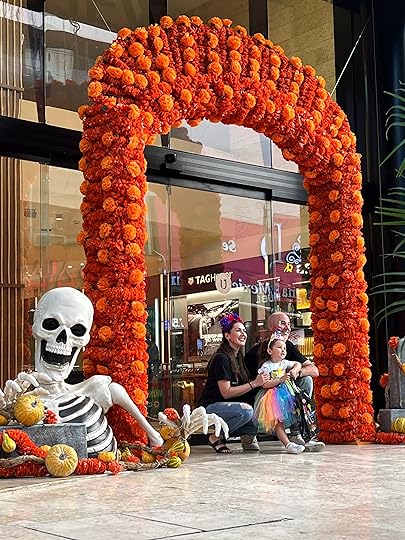
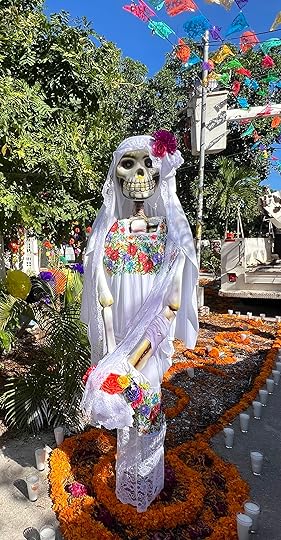
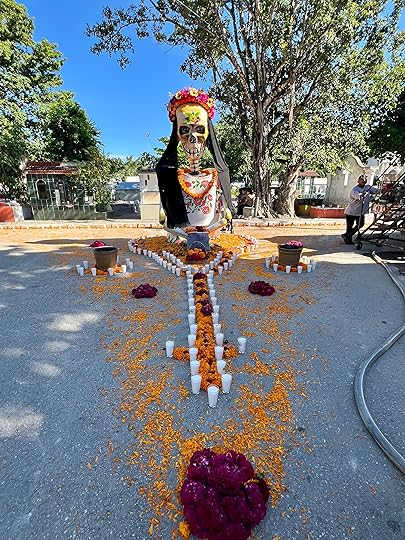
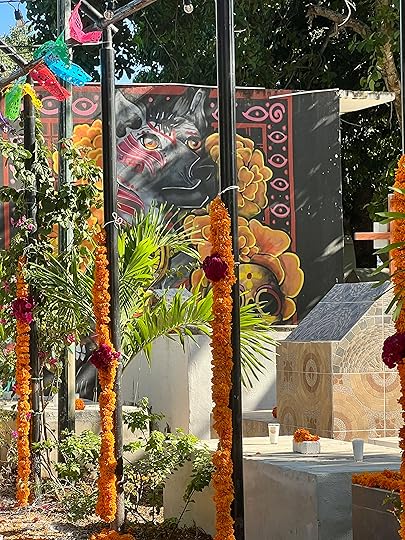
We visit the local cemetery to get a feel of the Day of the Dead celebrations – there is a BBQ in full swing, music playing, and effigies of skeletons and ghosts punctuate the spaces between the graves. These are also decorated with the ubiquitous orange flowers, and offerings of favourite food and drinks are left out. November 1 is the children’s day, while the following day is for the adults. Everywhere there are shrines and decorations honouring the departed – but it is more of a celebration than a mourning; we think of Louise in the cemetery and how much she would love her life to be remembered in this way – the colour orange one of her favourites, the dressing up and the feasting.
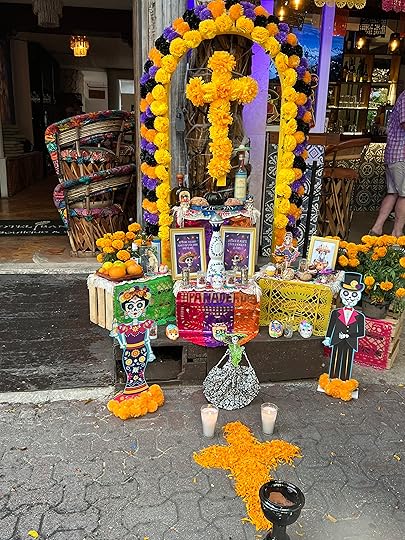
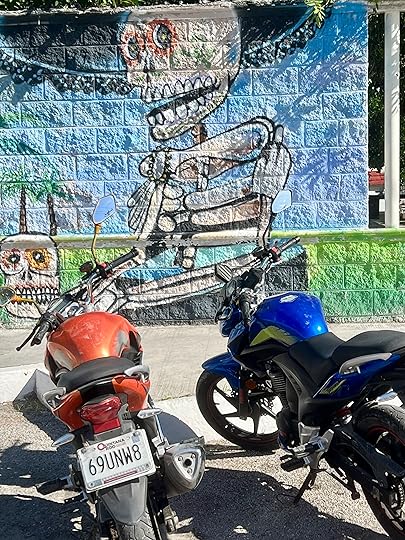
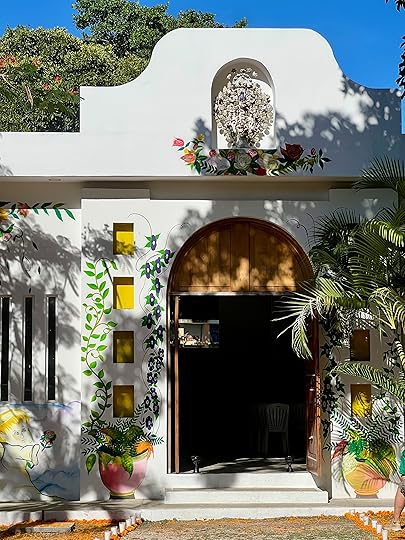
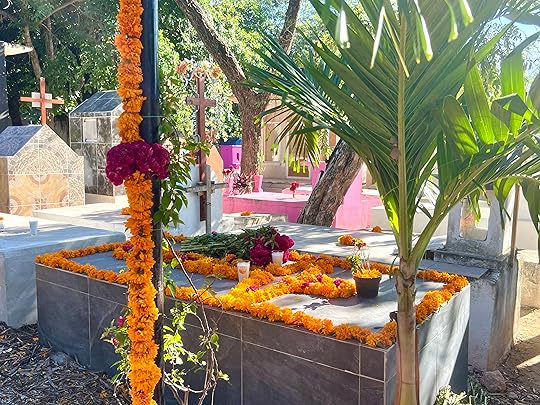
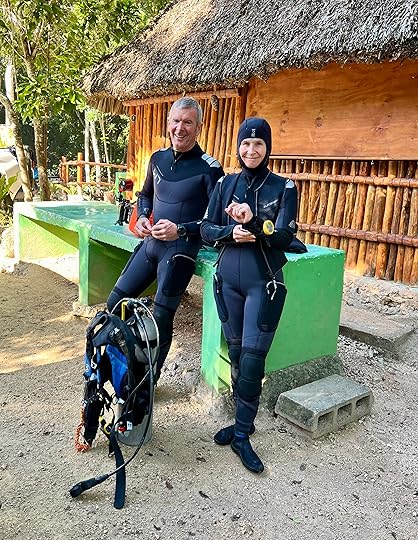
As for the diving – well this is not something I had been looking forward to. Firstly I hate being cold so we have bought new 5 mm wetsuits and new hoods. Secondly, I hadn’t realised how DIY it would all be – kitting up by the truck in a car park is quite challenging! Luckily on our first day Victor, the guide, hefts my tank and reg down the steep steps to the dive platform to enter The Pit, one of the deepest and most recently discovered cenotes. Quite honestly I am deeply anxious as I jump in, buoyancy in the new wetsuit in fresh water is extremely challenging and I am weighted down like a drowning puppy.
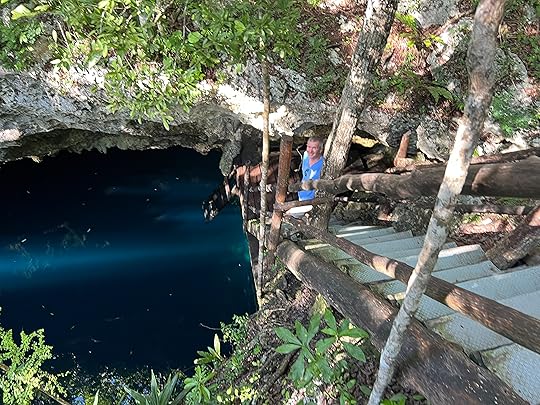
Getting ready for The Pit; you can see how far down it is!
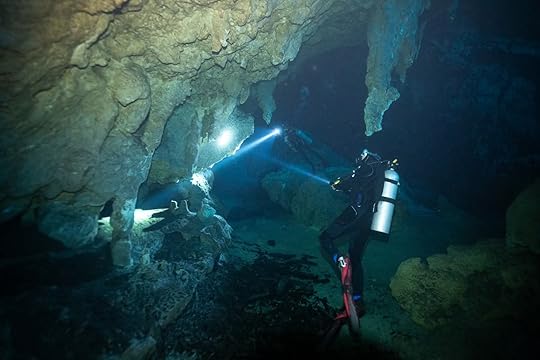
Once these challenges are overcome, we drop into the clear blue water, through a halocline at 17m where ethe fresh water meets the salt, producing an oily viscosity, before descending down to 30 meters and then spiralling slowly upwards, admiring the stalactites. But it is dark and in my flummery I manage to drop my torch which luckily Ross finds. It is nevertheless eerily beautiful. Second pic is me and Victor descending, third is the light filtering through, then me admiring a stalactite and following Victor to get out!
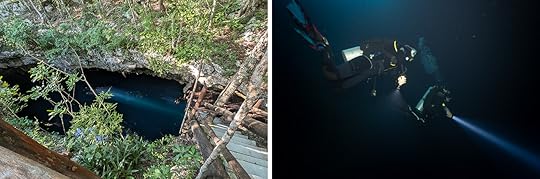

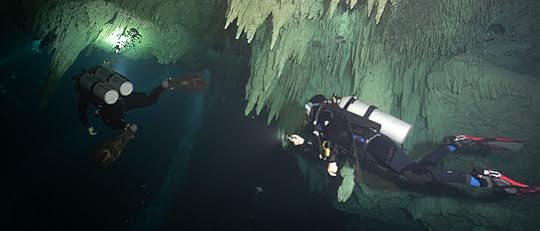
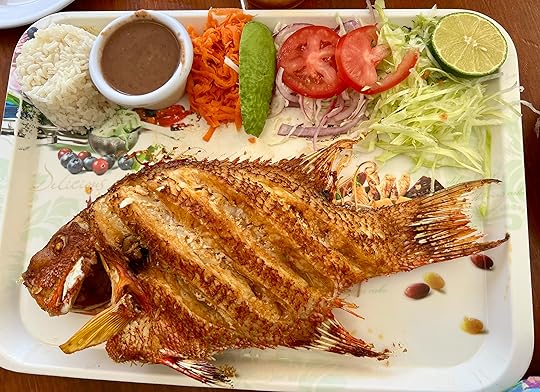
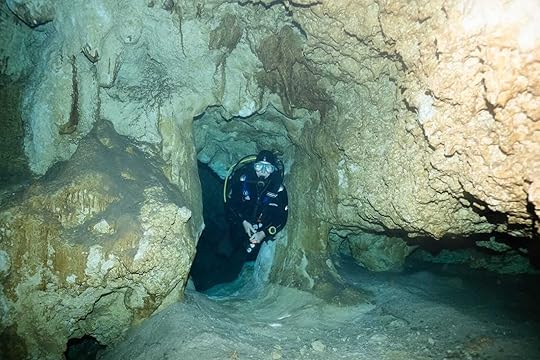
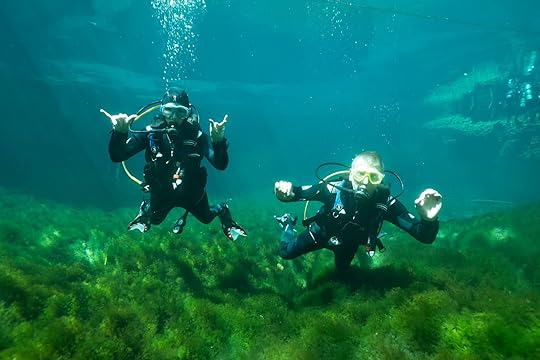
The second dive is a shallow cave network, Dos Ochos (two eyes) and we follow a line through the caverns leading to a Barbie doll being eaten by a croc at the midpoint. It is a popular site, with snorkellers and other divers, but doesn’t feel crowded. And in fact Im looking rather cool by the end, even waving at the camera. Afterwards we are dropped off in Playa for a really good – and cheap – fish lunch!
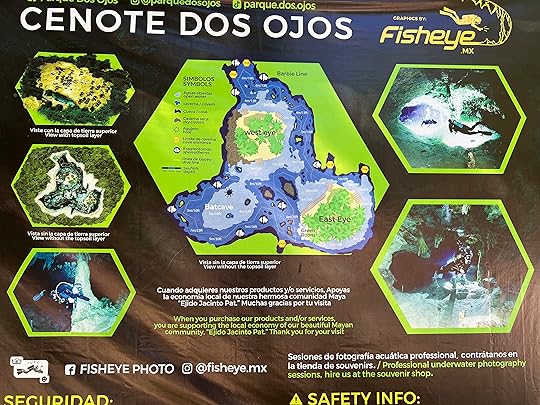
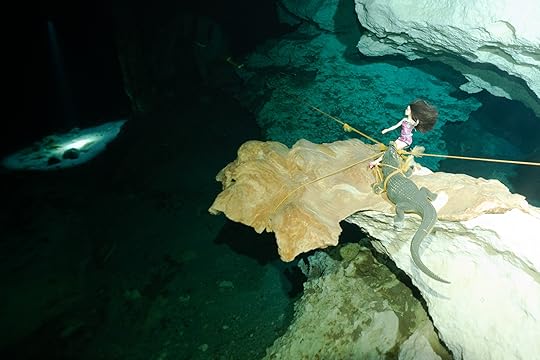
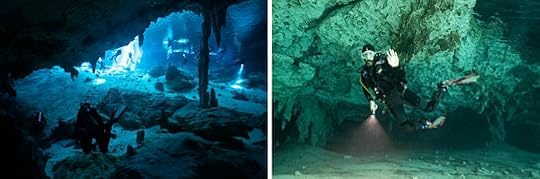
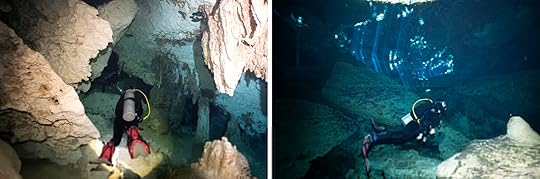
My birthday ‘treat’ is another deep dive site, Angelita, with a lovely dive leader Elisa; somehow I feel more relaxed with another woman! Here there is a sulphate layer at about 30 meters and we glide over the top, dodging petrified tree stumps, again admiring the stalactites and rock formations. I am not cold thank goodness.
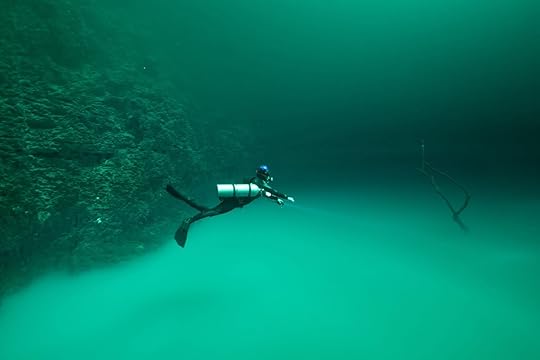
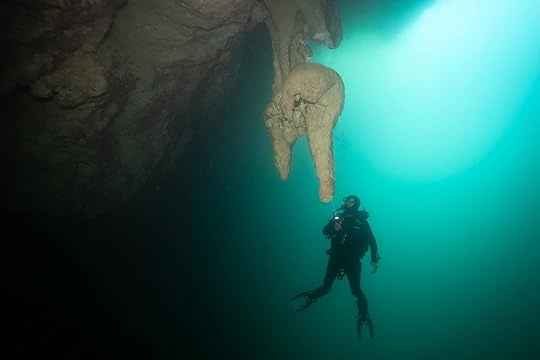

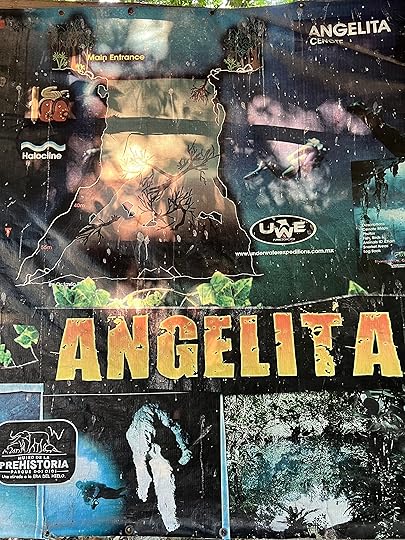
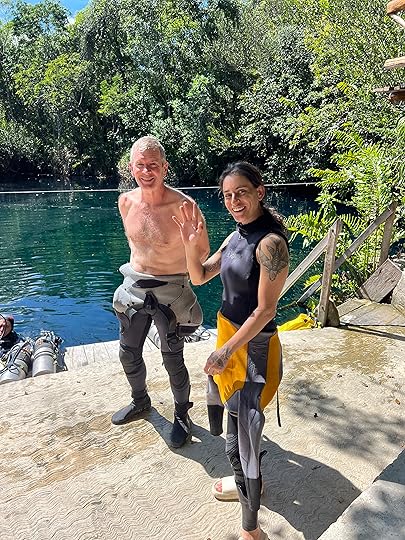
The second dive is another shallower dive, Car Wash, very pretty and green with vegetation, turtles and fish. We navigate through another series of tunnels, following a line, passing some fake Mayan pottery nicely displayed for us!

Elisa drops us off at Tulum proper so we can see what we’ve been missing – the beach is gorgeous and swimming lovely, but we are told Tulum is now run by cartels and is not so nice any more. Perhaps our exclusive hotel has some advantages. Proof of cartels is evident in that our taxi driver from Playa is told he can’t pick us up so we have to negotiate a ride home…which is easier than we thought as we were envisaging having to catch a collectivo or shared taxi! But my birthday is slightly marred by all this uncertainly.
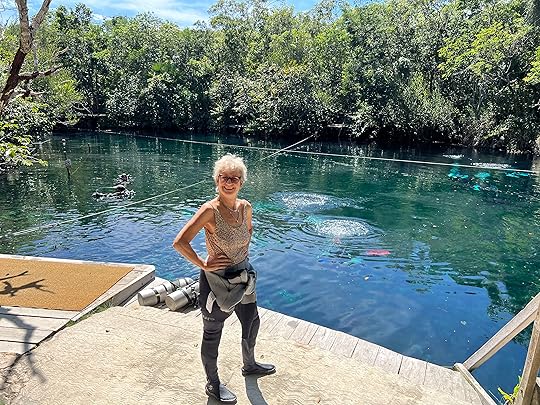
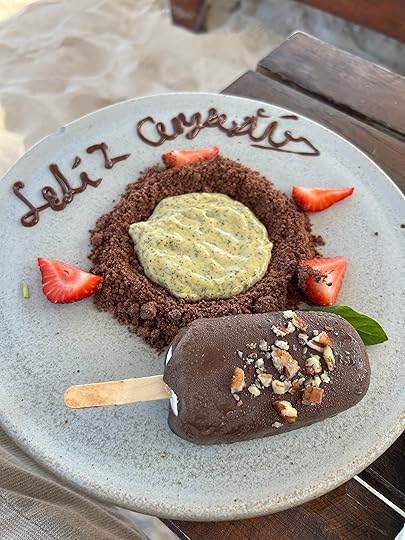
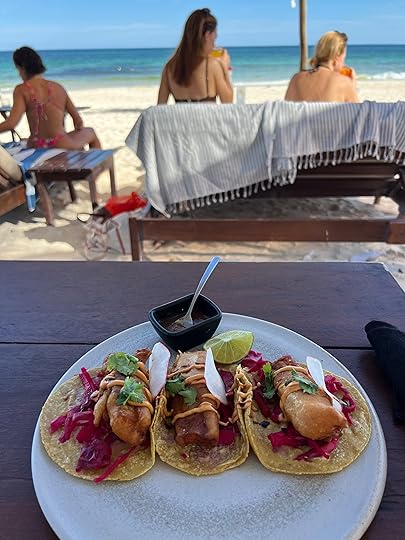
Birthday girl!
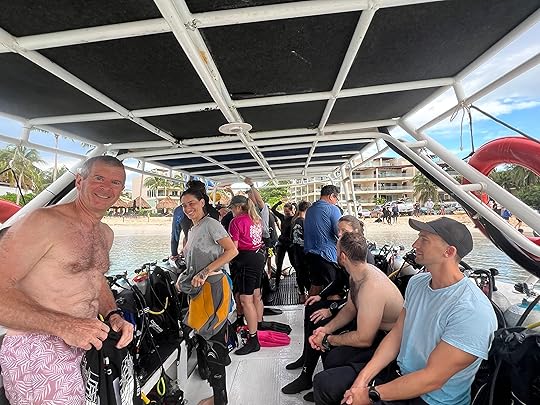
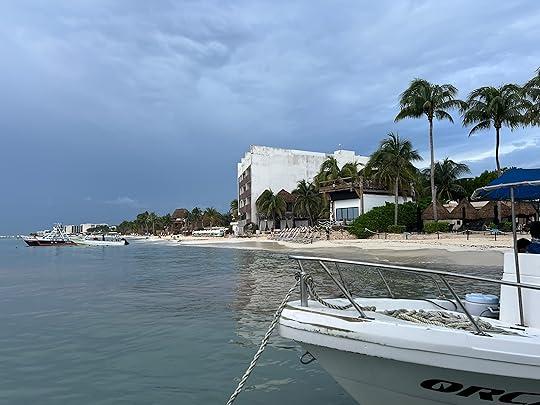
For our last day we are to go to Cozumel for some reef diving. It is a grey old day, and we once again kit up in a carpark before wading out to the Horus with a full complement of other divers plus Elisa. It is a good 40 minutes bumpy ride out to the reef, but once under the water, it is pretty with good viz, soft corals and masses of reef fish. On the second dive we see two huge turtles and a couple of nurse sharks. However, I don’t think I’d want to dive more than once in Cozumel as there seems to be little else other than drifting over this large reef.
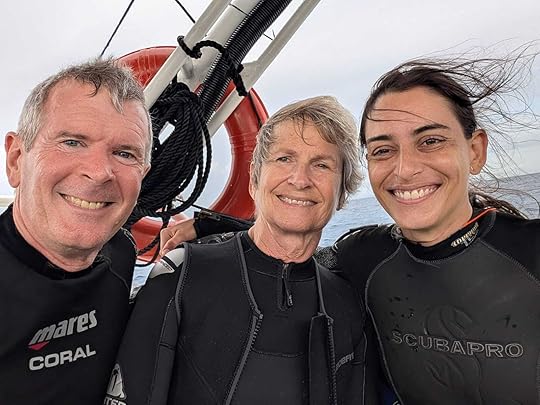
Below – loading up on the rather unattractive Playa beach, on the boat and a selfie with Elisa
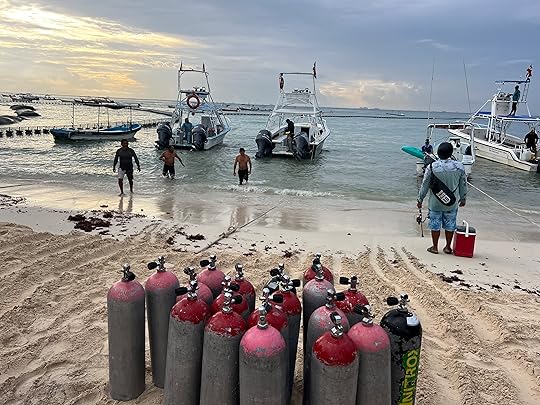
The ride back is really rough, the boat thudding on the waves and drenching us with spray! So we arrive back wet – nothing that a good mezcalita and a plate of ceviche can’t cure!
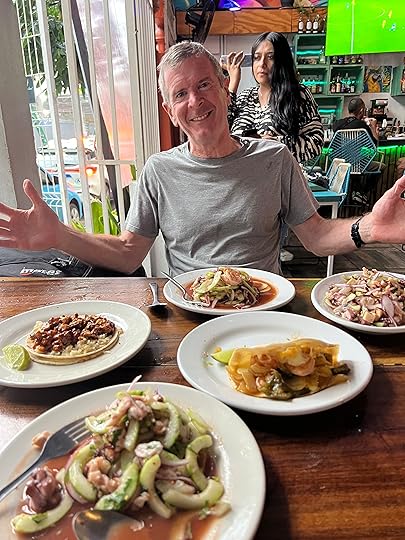
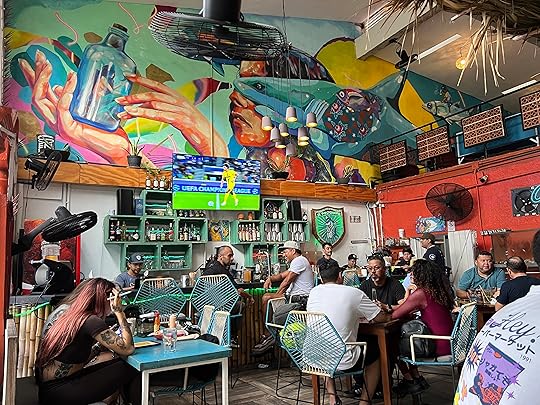
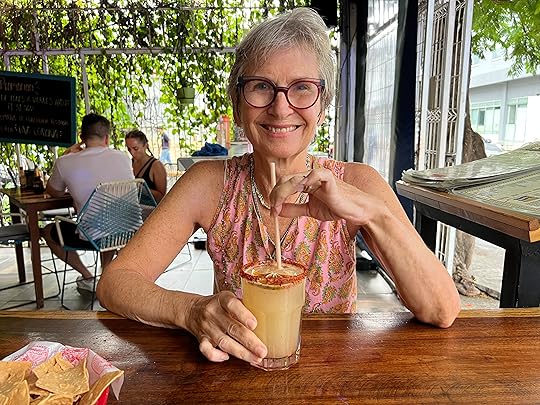
All in all a good week, though you can keep cenote diving as far as I’m concerned. A nice chance to unwind in-between the driving/diving and to get acquainted with Mexico. We are impressed with how lovely the people are and how little we are hassled or harassed in any way. And the food and cocktails are great! But we are keen to move on…next stop Chichen Itza!
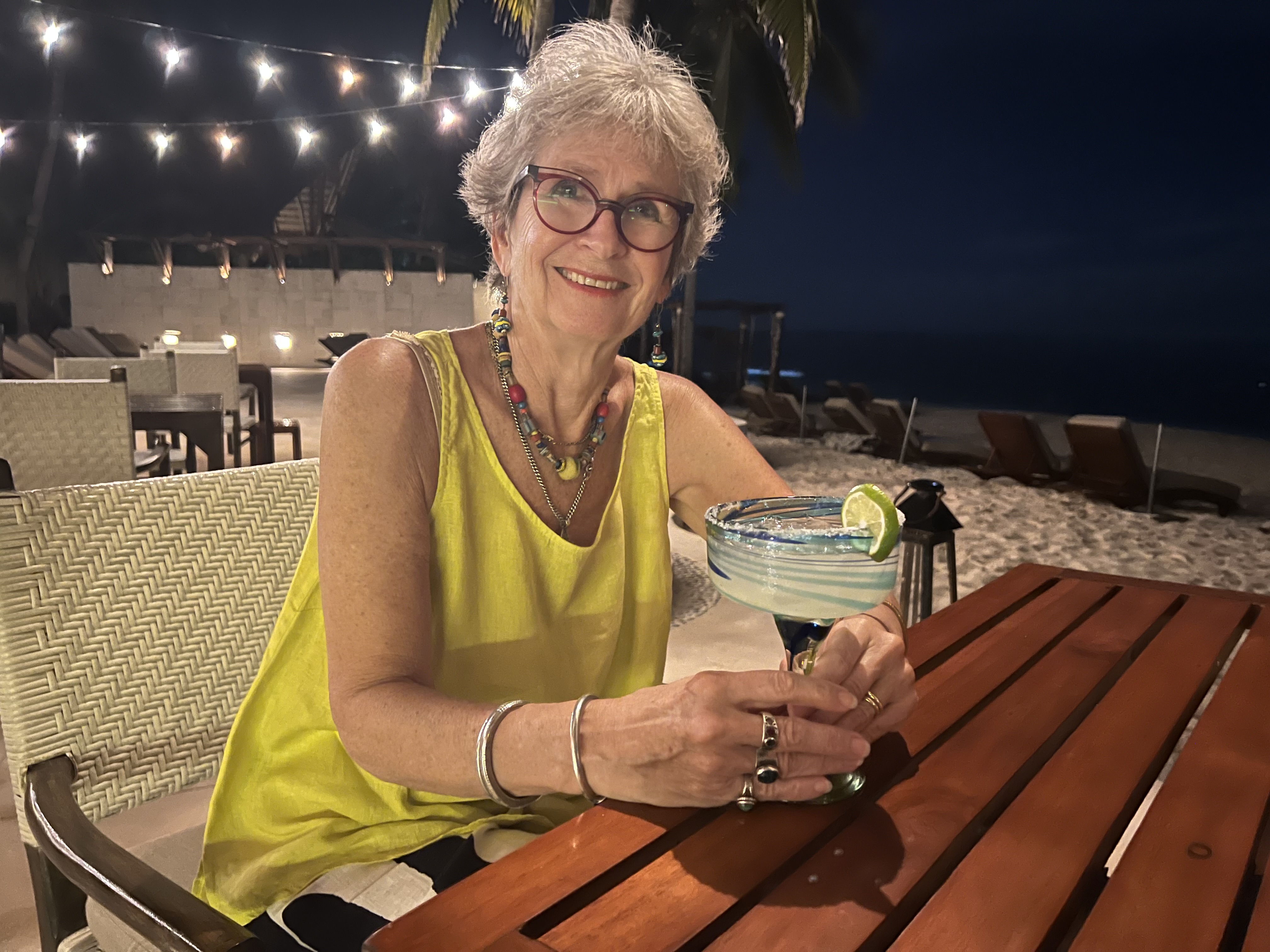 Birthday margarita
 A much more technical description of our diving can be found on Ross’s blog.
We dived with Koox diving, Tulum
The Mayan Riviera – cenote diving & Tulum
Diving at just above the sulphate layer and 30m at Angelita cenoteA couple of years ago we successfully bid for a week in a house in Merida at a charity auction. For some reason we never got round to using that week but, one summer afternoon, feeling rather gloomy, I rashly booked some flights to Mexico for the first two weeks in November!
The house from the outside…Hides a deceptively large interior complete with pool!Bidding for the house was not a random kindness for a cause – Ross has always wanted to dive the cenotes – deep limestone freshwater caverns and cave systems in the Yucatan – so here was the perfect birthday gift (for him)!
Action Man getting ready for The Pit – below him!
Kitting up!We decided to spend the first week on the coast on the Mayan Riviera to access the cenotes more easily. I booked a fancy boutique hotel to be our base, the Viceroy – as it turns out it is more White Lotus in its clientele than we had bargained for, with a huge group young Americans celebrating a birthday, fuelled by free-flowing booze, disporting themselves and their perfect bodies for the best part of four days -rather ruining the intended exclusivity we had been looking for.
Although the hotel is secluded, luxurious and has amazing service, swimming is not easy as it is rocky, and we are effectively marooned (no nearby beach bars) so any outing is an expensive taxi ride. But the most stupid thing of all – mea culpa – is that we are not that close to the cenotes, which are all near Tulum and a good hour plus away…so I spend most of the first week being cross with myself for a rookie booking error.
The Tulum ruins, and my two birthday visitors, a huge scorpion and a big male racoon – the exclusivity is confined to humans not fauna! As it turns out, despite its position on the sea-front, Tulum his the least impressive of the Mayan sites we visit, architecturally, and it is much later (13-15th centuries) towards the end of the civilisation, when the Spanish invaded
Ross has arranged the diving on alternate days, which we intersperse with other outings – a visit to historic Mayan site of Tulum, followed by what is meant to be a snorkelling trip in a lovely area, but turns out to be an all-inclusive visit to Xel-Ha an aquatic theme park where you can pet dolphins and sting rays (see photo) – my idea of hell on hearth (renamed Hell-ha by me) and we only stay for the free lunch and drinks…
and expeditions to the Halloween celebrations in the town of Playa del Carmen, followed closely by celebrations of Mexico’s biggest holiday, Day of the Dead. Halloween is big here and the children parade with their responsible adults, dressed up to the nines. Tourists also get their faces painted, and the town is decked out in spooky paraphernalia. Even our cocktail waiter looks the part!
We visit the local cemetery to get a feel of the Day of the Dead celebrations – there is a BBQ in full swing, music playing, and effigies of skeletons and ghosts punctuate the spaces between the graves. These are also decorated with the ubiquitous orange flowers, and offerings of favourite food and drinks are left out. November 1 is the children’s day, while the following day is for the adults. Everywhere there are shrines and decorations honouring the departed – but it is more of a celebration than a mourning; we think of Louise in the cemetery and how much she would love her life to be remembered in this way – the colour orange one of her favourites, the dressing up and the feasting.
As for the diving – well this is not something I had been looking forward to. Firstly I hate being cold so we have bought new 5 mm wetsuits and new hoods. Secondly, I hadn’t realised how DIY it would all be – kitting up by the truck in a car park is quite challenging! Luckily on our first day Victor, the guide, hefts my tank and reg down the steep steps to the dive platform to enter The Pit, one of the deepest and most recently discovered cenotes. Quite honestly I am deeply anxious as I jump in, buoyancy in the new wetsuit in fresh water is extremely challenging and I am weighted down like a drowning puppy.
Getting ready for The Pit; you can see how far down it is!
Once these challenges are overcome, we drop into the clear blue water, through a halocline at 17m where ethe fresh water meets the salt, producing an oily viscosity, before descending down to 30 meters and then spiralling slowly upwards, admiring the stalactites. But it is dark and in my flummery I manage to drop my torch which luckily Ross finds. It is nevertheless eerily beautiful. Second pic is me and Victor descending, third is the light filtering through, then me admiring a stalactite and following Victor to get out!
The second dive is a shallow cave network, Dos Ochos (two eyes) and we follow a line through the caverns leading to a Barbie doll being eaten by a croc at the midpoint. It is a popular site, with snorkellers and other divers, but doesn’t feel crowded. And in fact Im looking rather cool by the end, even waving at the camera. Afterwards we are dropped off in Playa for a really good – and cheap – fish lunch!
My birthday ‘treat’ is another deep dive site, Angelita, with a lovely dive leader Elisa; somehow I feel more relaxed with another woman! Here there is a sulphate layer at about 30 meters and we glide over the top, dodging petrified tree stumps, again admiring the stalactites and rock formations. I am not cold thank goodness.
The second dive is another shallower dive, Car Wash, very pretty and green with vegetation, turtles and fish. We navigate through another series of tunnels, following a line, passing some fake Mayan pottery nicely displayed for us!
Elisa drops us off at Tulum proper so we can see what we’ve been missing – the beach is gorgeous and swimming lovely, but we are told Tulum is now run by cartels and is not so nice any more. Perhaps our exclusive hotel has some advantages. Proof of cartels is evident in that our taxi driver from Playa is told he can’t pick us up so we have to negotiate a ride home…which is easier than we thought as we were envisaging having to catch a collectivo or shared taxi! But my birthday is slightly marred by all this uncertainly.
Birthday girl!
For our last day we are to go to Cozumel for some reef diving. It is a grey old day, and we once again kit up in a carpark before wading out to the Horus with a full complement of other divers plus Elisa. It is a good 40 minutes bumpy ride out to the reef, but once under the water, it is pretty with good viz, soft corals and masses of reef fish. On the second dive we see two huge turtles and a couple of nurse sharks. However, I don’t think I’d want to dive more than once in Cozumel as there seems to be little else other than drifting over this large reef.
Below – loading up on the rather unattractive Playa beach, on the boat and a selfie with Elisa
The ride back is really rough, the boat thudding on the waves and drenching us with spray! So we arrive back wet – nothing that a good mezcalita and a plate of ceviche can’t cure!
All in all a good week, though you can keep cenote diving as far as I’m concerned. A nice chance to unwind in-between the driving/diving and to get acquainted with Mexico. We are impressed with how lovely the people are and how little we are hassled or harassed in any way. And the food and cocktails are great! But we are keen to move on…next stop Chichen Itza!
Birthday margarita A much more technical description of our diving can be found on Ross’s blog.
We dived with Koox diving, Tulum
October 29, 2025
Check out my new website – Vicky’s Big Adventure!
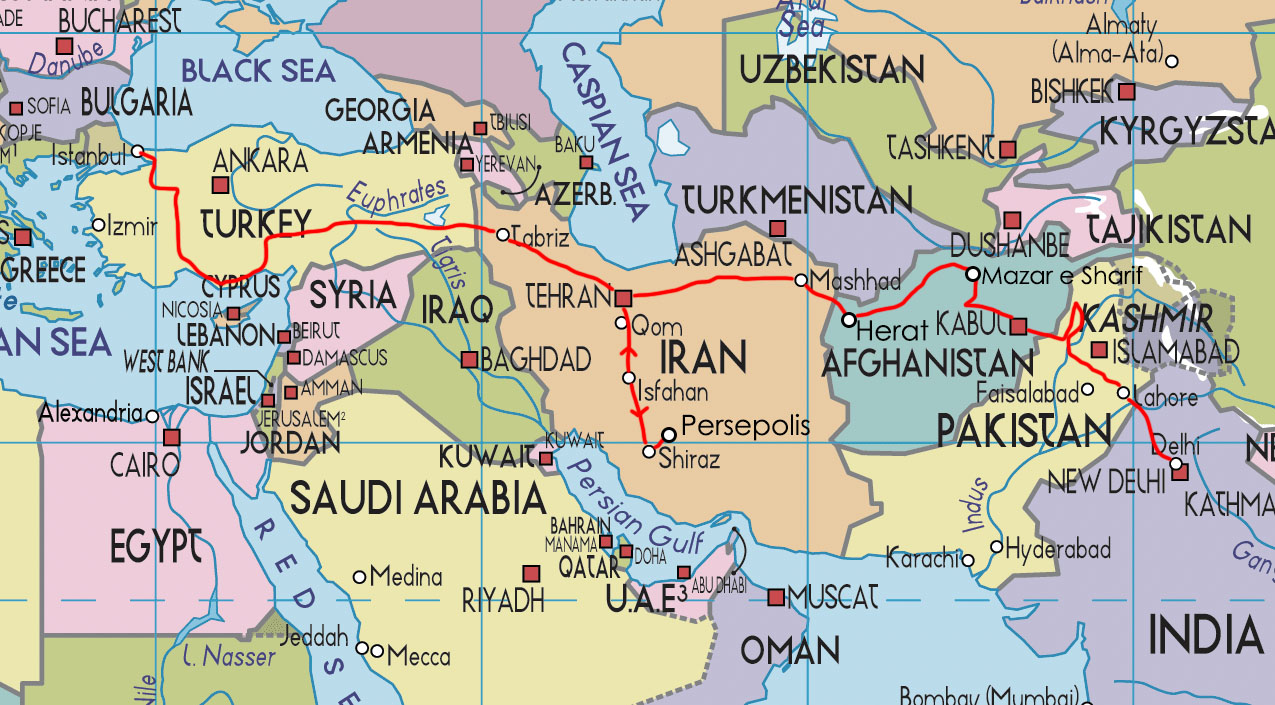
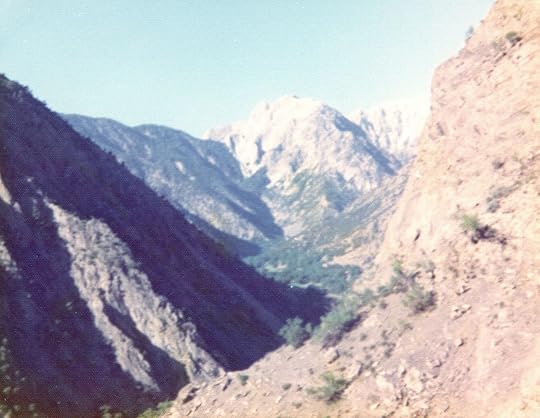
Finding my mother’s diaries and travel notebooks of her journeys, now published online as Travels with my Mother, inspired me to re-read my travel diary of my overland trip to India in my gap year, in 1976.
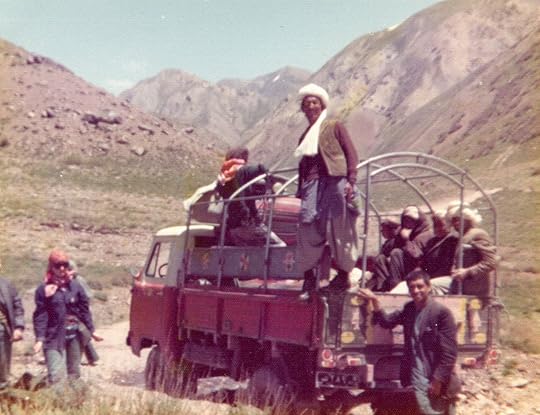
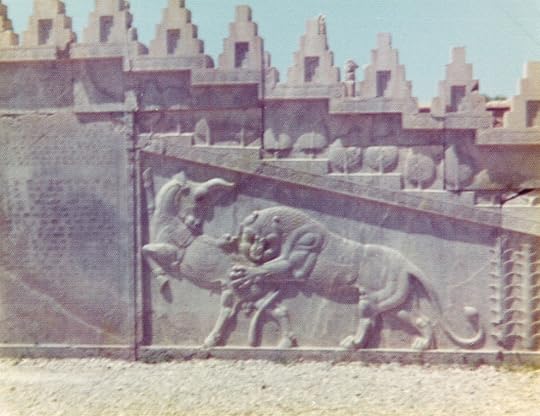
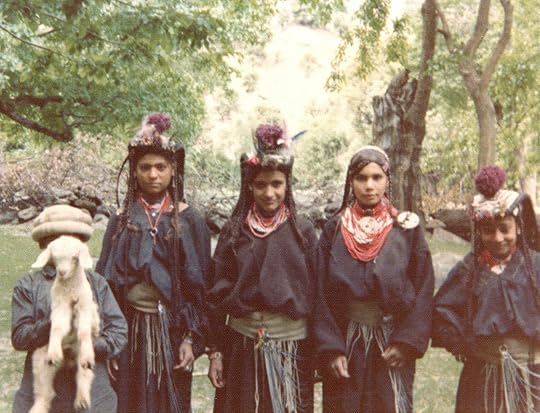
So by clicking on this link you will join the often arduous yet fascinating journey of 18 year-old pursuing her dream trip to the Hindu Kush!
Here are some photos to whet your appetite:
September 23, 2025
European Grand Tour 3 – Florence
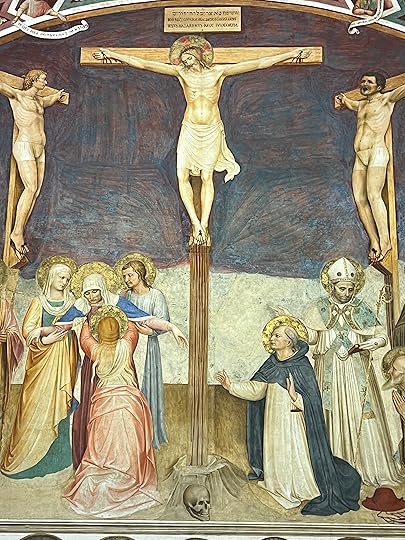
 Fra’ Angelico’s masterpeice, Crucifixtion with the Saints, San Marco
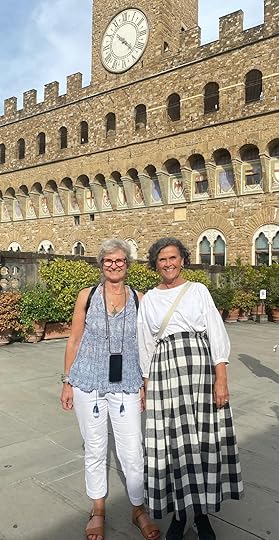
The last stop on our Grand tour is Florence, where our old university friend Debbie has lived since 1983! We only have two nights and one full day, with an afternoon and a morning on either side. Our fast train from Venice to Florence delivers us safely and we find the left luggage lockers before we sprint down to our rendezvous with Debbie, who has volunteered to whizz us round the Uffizi. On the way she poses with Hil outside one of her former employer’s buildings, Ferragamo!

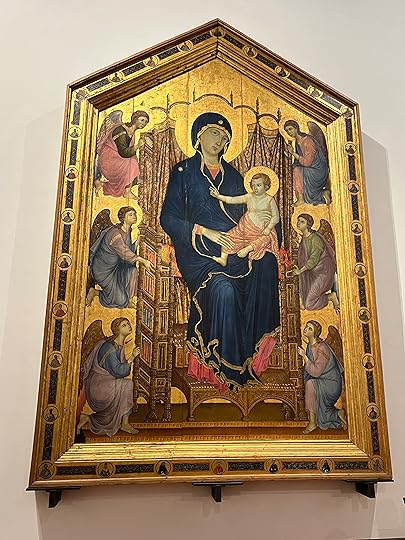
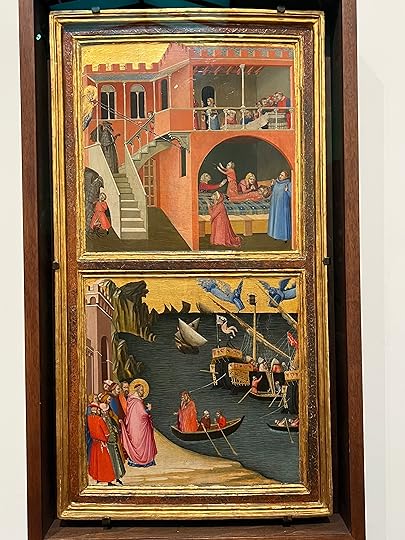
Debbie studied History of Art, and is an accomplished artist and sculptor herself; after years of living in Florence, she has strong views on what its worth seeing and what not at the Uffizi – basically everything early! She explains to us ignoramuses how medieval art really changed with artists such as Lorenzetti and Monaco introducing architecture and perspective, giving the works a sense of place, and the three dimensions, as opposed to the formulaic static portraits of Maddonas and Child, angels etc, however beautiful they might be! The Adoration of the Magi by Monaco, 1420 (below) is, in her opinion, a seminal piece, not only for the landscapes, but the introduction of an amazing colour palette and realism, exemplified by all the faces of the characters in the painting. We drink all this in!
 Monaco’s Adoration of the Magi
Another extraordinary painting showing the transformation of art is Uccello’s The Battle of San Romano c1435-40 – again the sense of perspective and the horses (some a bit contorted to be sure) all communicating live battle blood and gore.

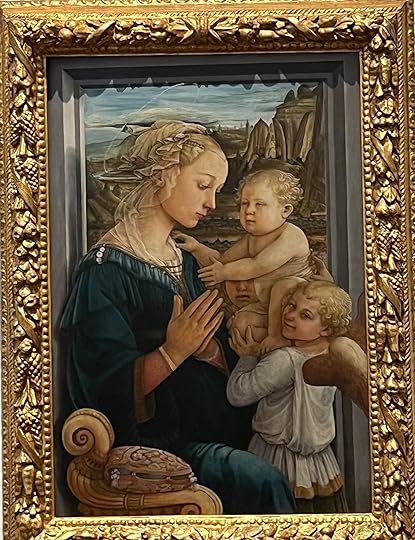
There are so many fine paintings but I will list myself to a few favourites: clockwise l-r: Lippi (1460-5); Messina (1470-3 – the Madonna’s face is so modern); Cranach the elder (1528); Bronzino (hard to see but the worsted wool detail is quite astonishing|); di Credi (1490 – just such a timeless face and wistful expression).
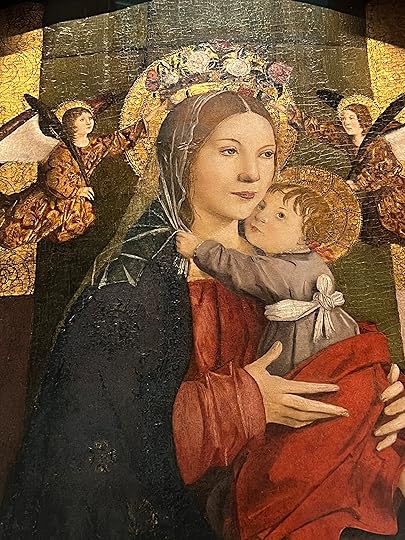
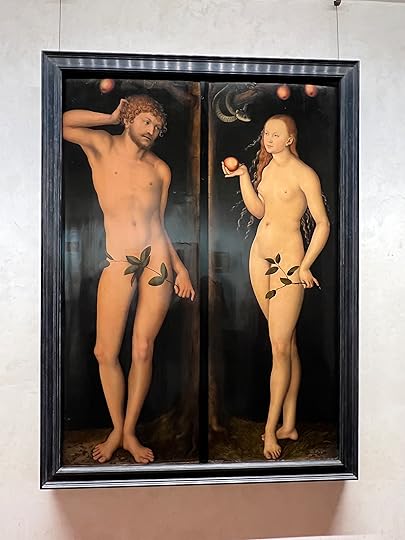
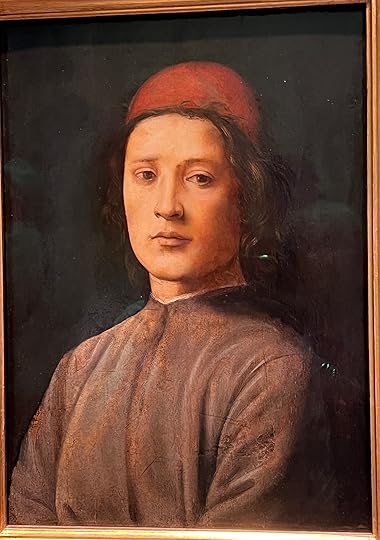
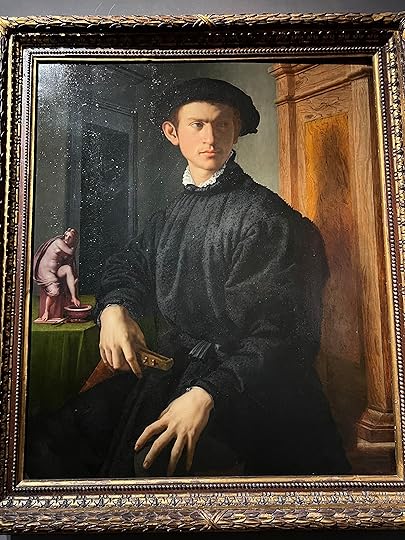
Of course everyone goes to see THE Botticelli, but I rather prefer the details from the The Spring (right) and this annunciation scene, but I can’t find the attribution.
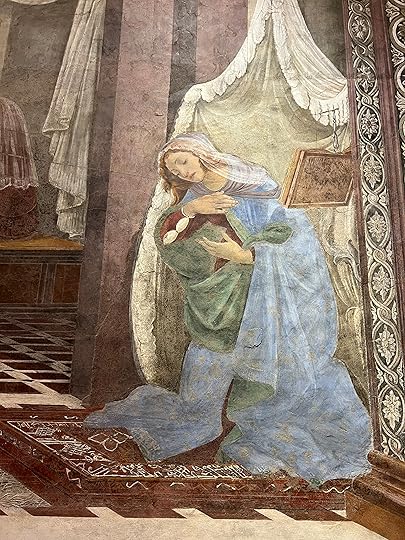
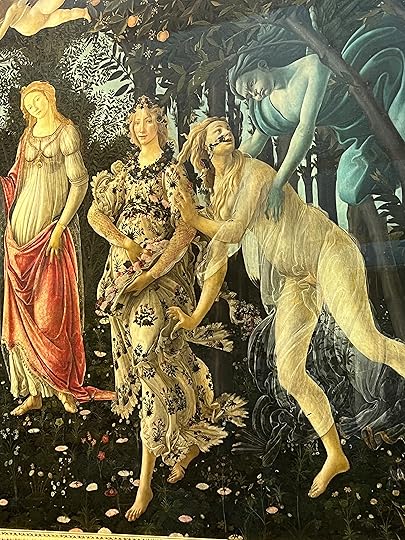
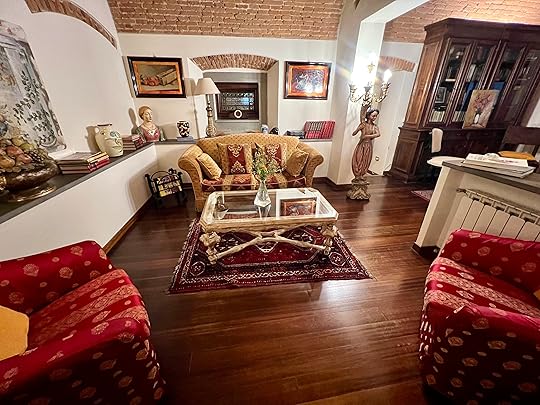
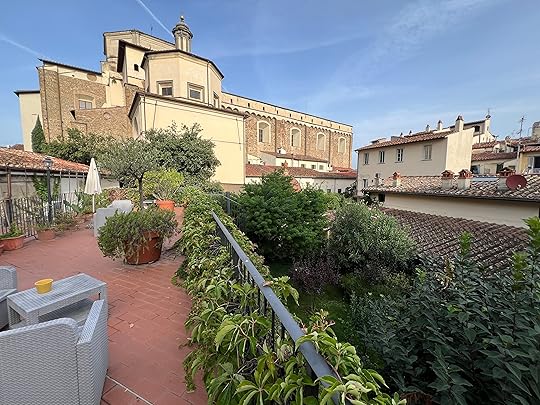
Finally we manage to find a taxi after our whistlestop two hours and arrive at our apartment Domus Giorgio in San Frediano. It is quite charming, old-school style – as Hilary says, it looks as if belongs to an old gentleman (books are eclectic, a biography of DH Lawrence, which Hil says her father had, and a Georgette Heyer, along with al the guides. It is well-equipped with Prosecco, tea coffee, fruit, drinks, biscuits. I thought it had two bedrooms, but there is one enormous double the street where we live!ed and a divan which looks most uncomfortable so we opt to share. There is also our own private outside space, plus a wonderful roof terrace with views of Florence.
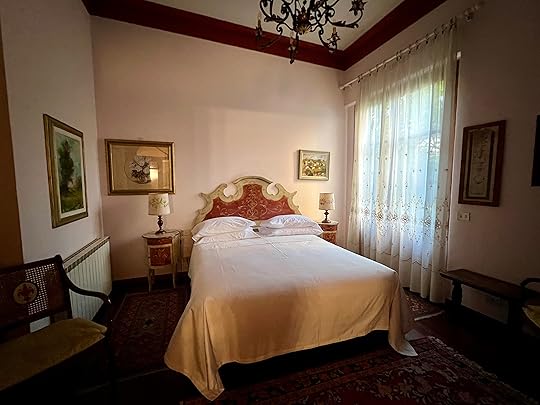
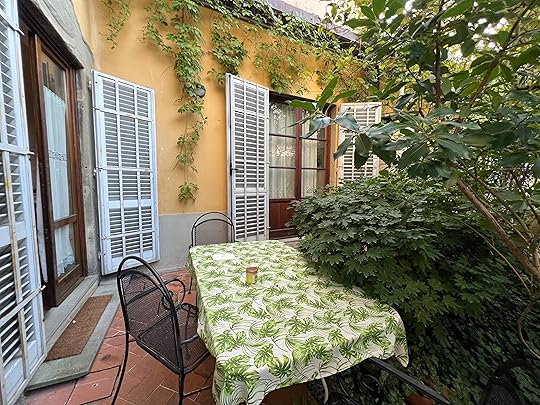
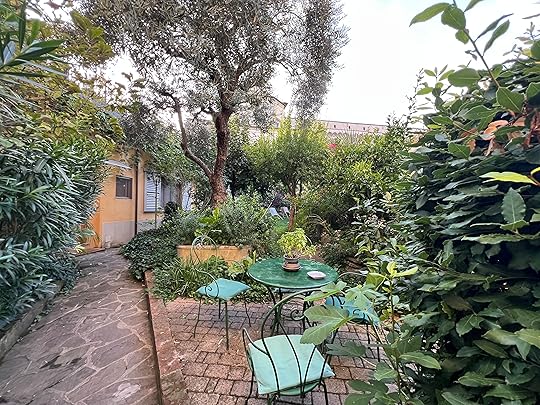
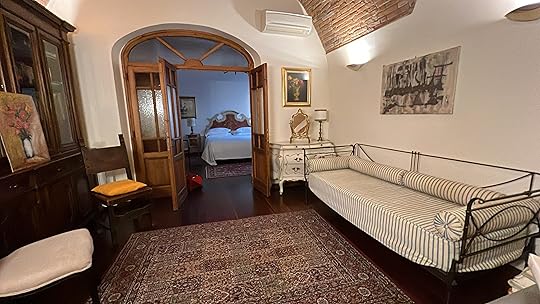
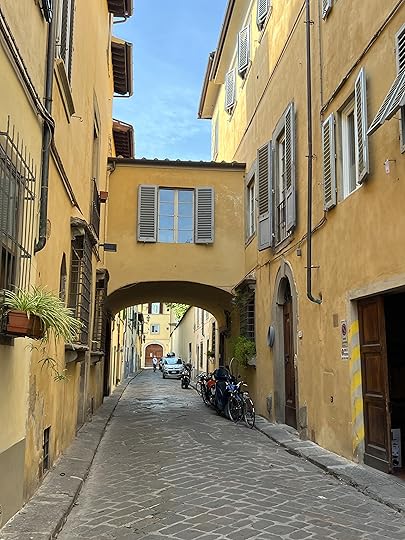
In the morning – after a delicious dinner nearby – we are left to our own devices as Debbie has other things on. But she has given us a route, so we wander over the Arno, stumbling across several Chinese bridal couples posing for the obligatory wedding photos, before visiting the Santa Trinita Basilica to see the Lorenzo Monaco frescos, ‘one of the master pieces of the 14th century’ and the Adoration of the Shepherds by Ghirlandaio.
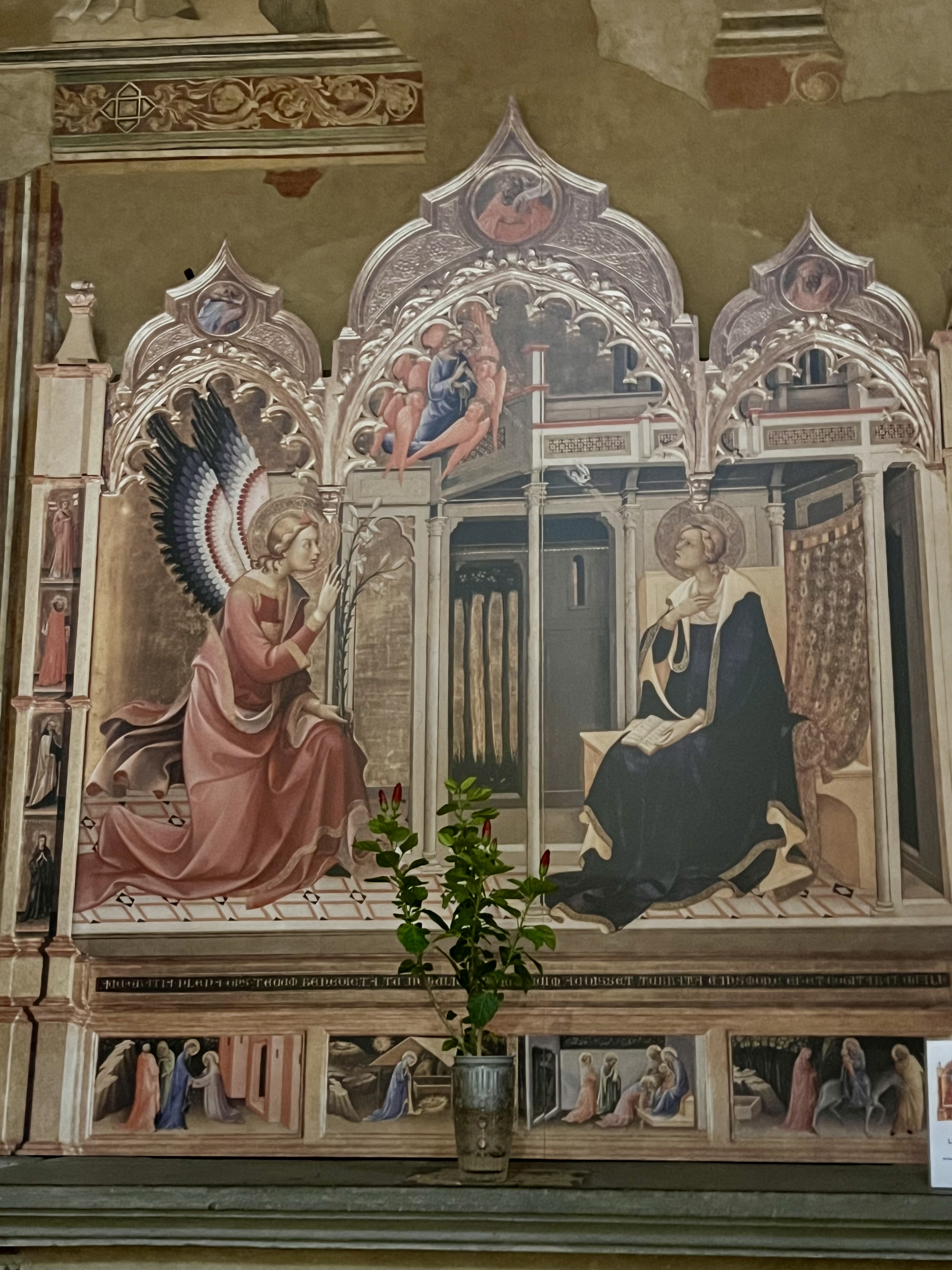 The Visitation
 The Adoration the Shepherds
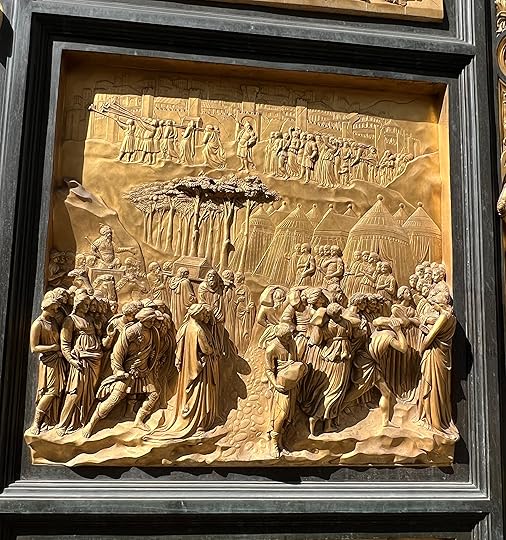
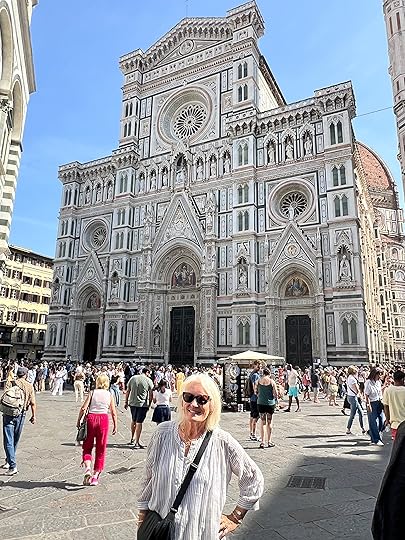
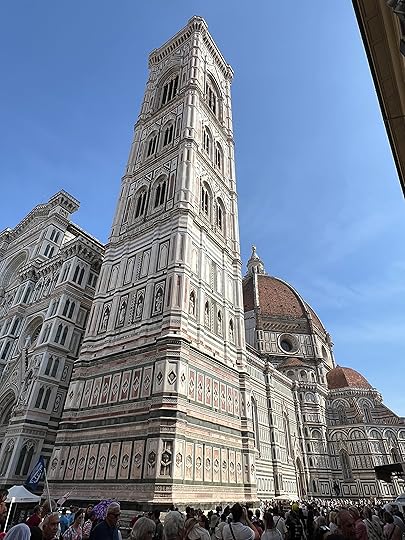
and, after a coffee and a croissant, passing through the Duomo square, heaving with people, stopping only to admire the great bronze doors, paying a massive 18 Euros to visit the San Lorenzo church – somehow we managed to miss the Medici tombs in another chapel – before going north via the market and a bag shop (cue spending spree) to the San Marco museum, home to the Fra’ Angelico frescos.
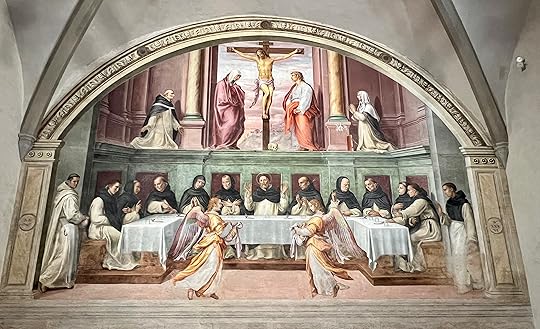
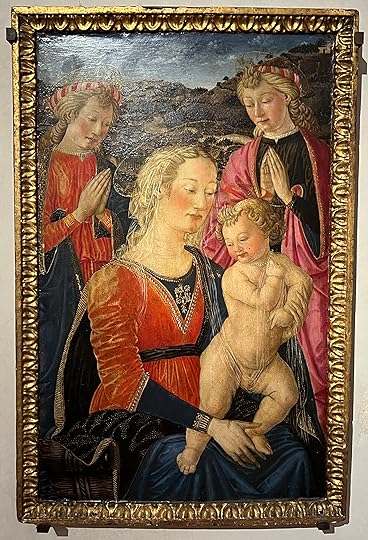
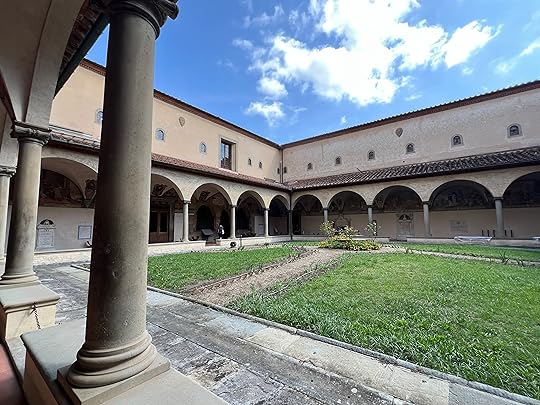
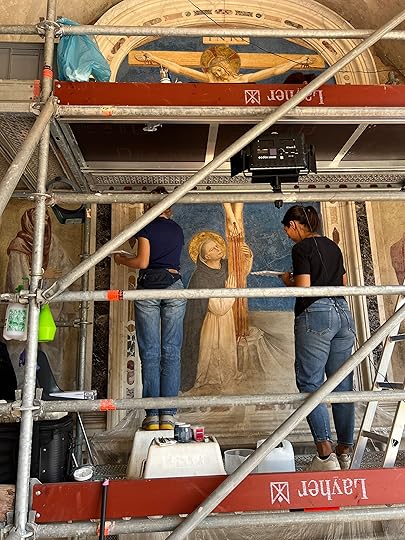
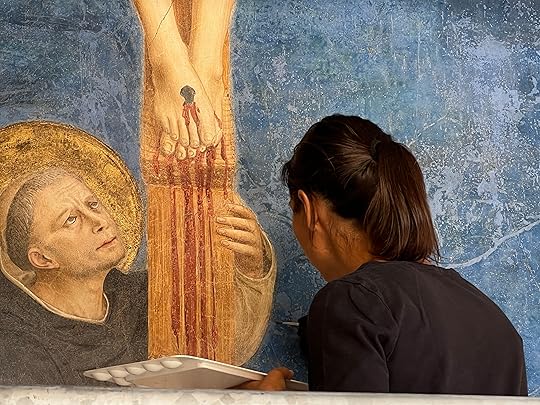
The museum is built around a leafy courtyard and was originally an old convent. Fra’ Angelico decorated most of the monks’ cells with frescos as well as altar pieces in the chapels and refectory. As we enter a fresco is being restored which is good to see. Below clockwise, detail from the main Fra’ Angelico Crucifixion and the Saints fresco (1441-2), Sogliani’s Miraculous Supper of St Dominic (1536); the cloister; the frescos in the cells; centre and left the restoration process; and last Rosselli’s Madonna (1480).
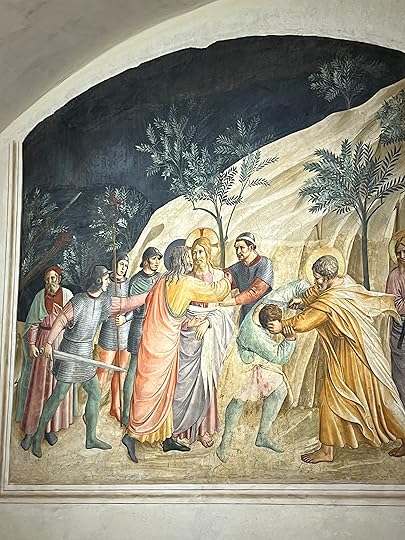
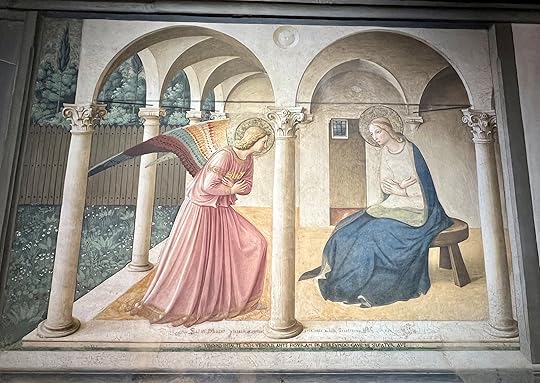
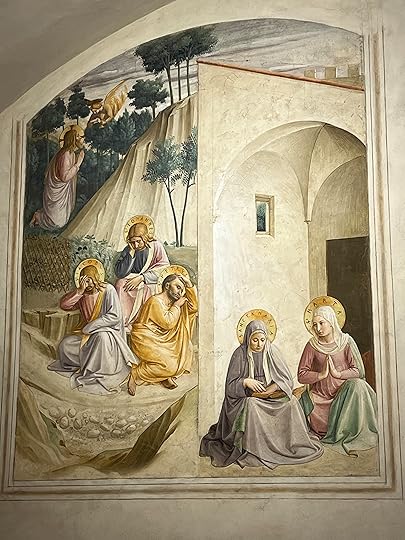
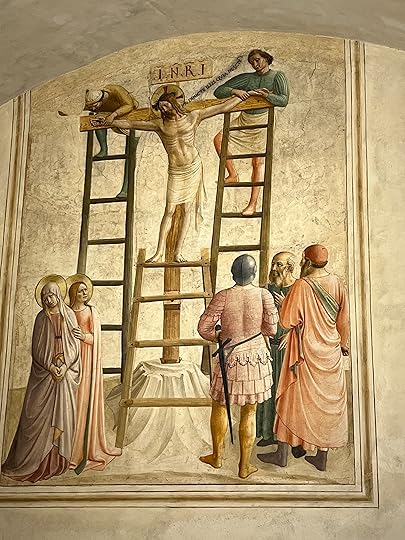
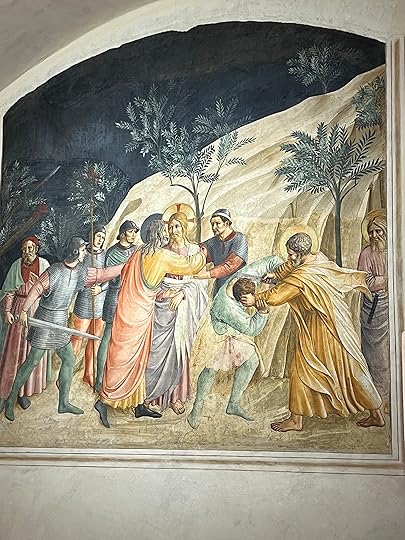
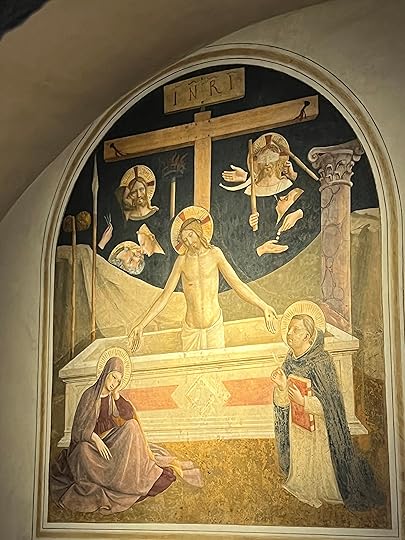
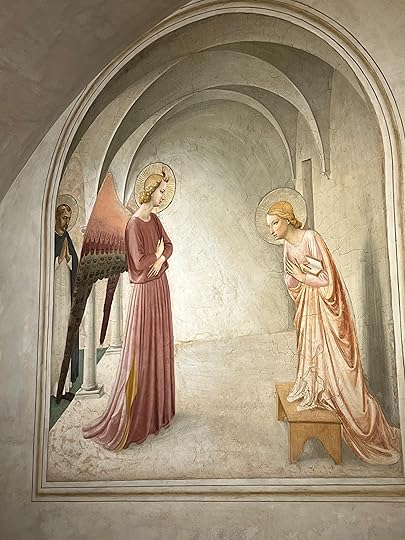
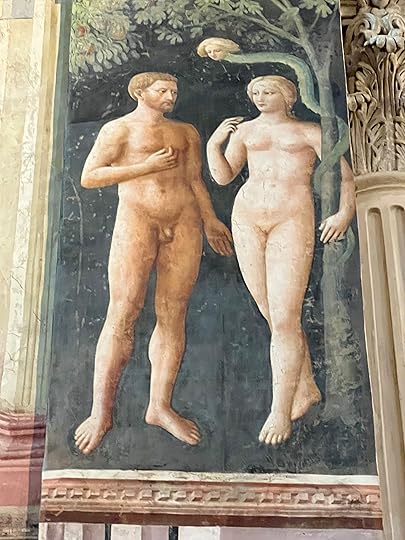
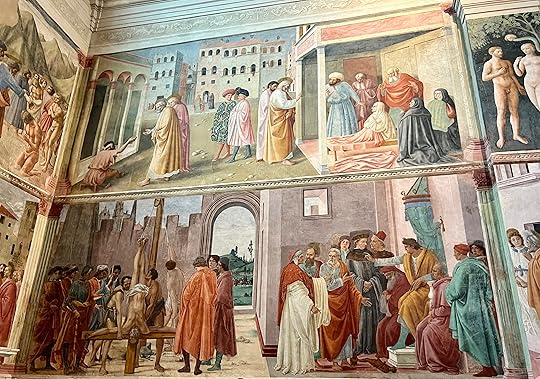
We manage to find a cab and meet Debbie in San Frediano for a very local lunch – she is well-known it seems and is greeted warmly wherever we go. She has booked a slot for us to see her favourite, the Brancacci Chapel. Here is the most wonderful set of frescos, started by Masolino but painted mainly by Masaccio, the better artist in fact (you can tell from the two depictions of Adam and Eve, the Masolino one on the left below being very static while the Expulsion from the Garden of Eden by his ‘pupil’ Masaccio is heartrendingly human (right, below). These frescoes are particularly famous for the very early use of perspective and the wonderful realism of all the characters who inhabit the paintings and mostly feature scenes from the life of St Peter (in the yellow robe). I particularly love the guard who has fallen asleep on his staff on the right-hand fresco
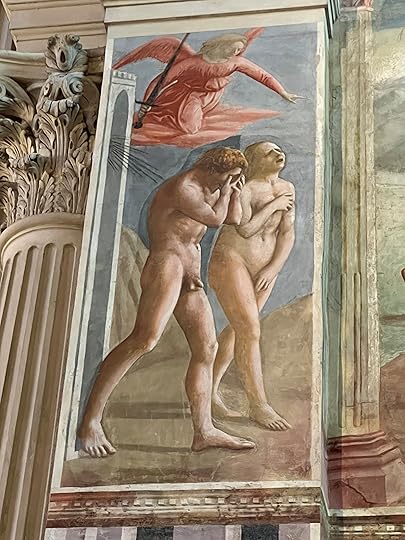
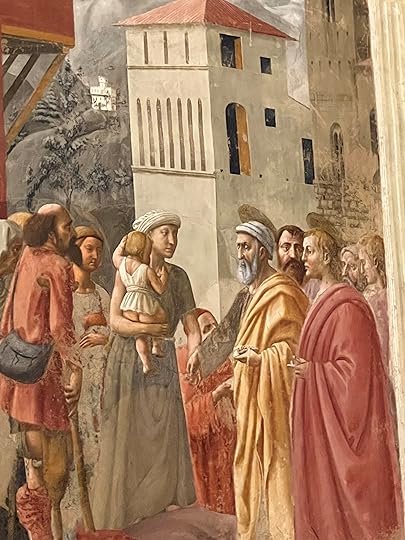
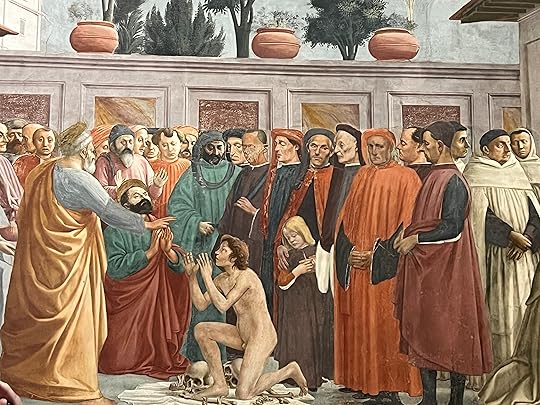
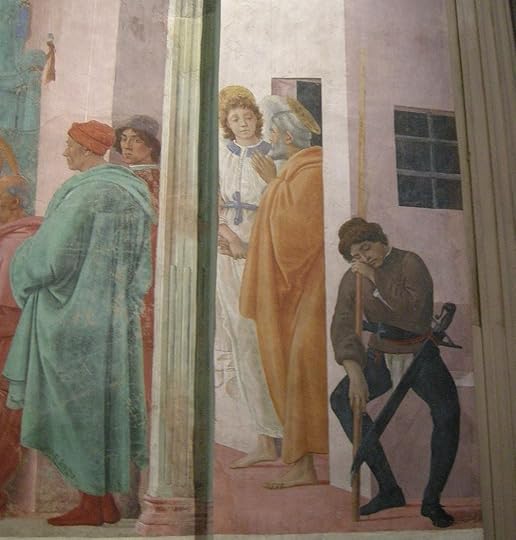
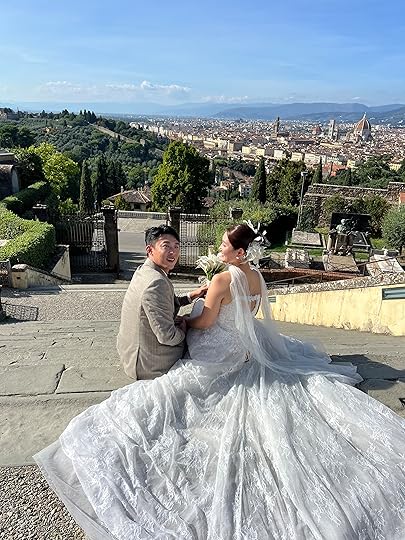
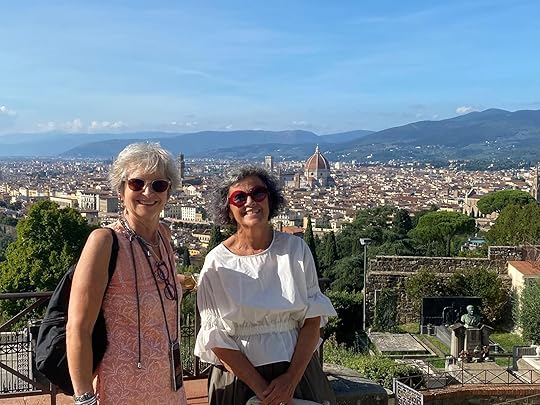
Our last port of call before we retire for a cuppa to Debbie’s country estate, is the the Basilica of San Miniato al Monte. Unfortunately it was undergoing restoration so we have to content ourselves with the stunning view, shared with yet another wedding couple.
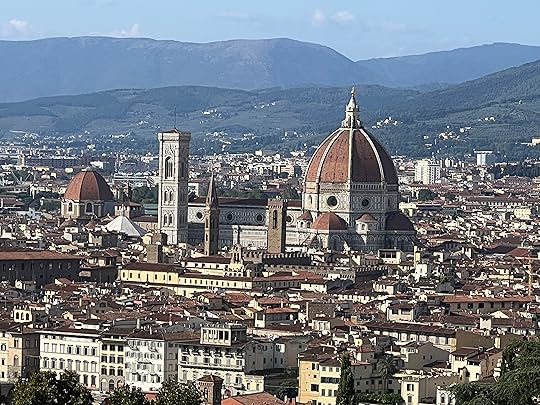
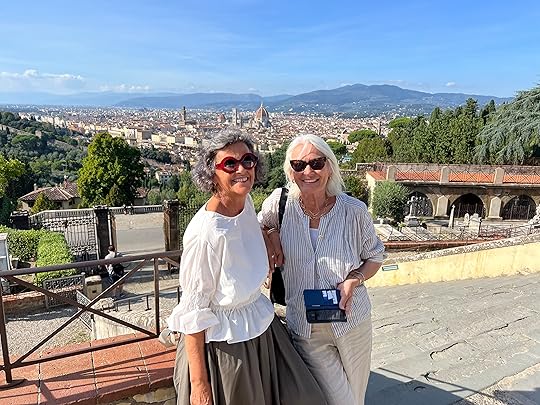
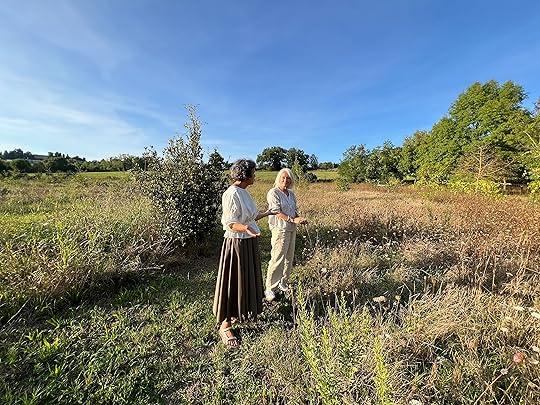
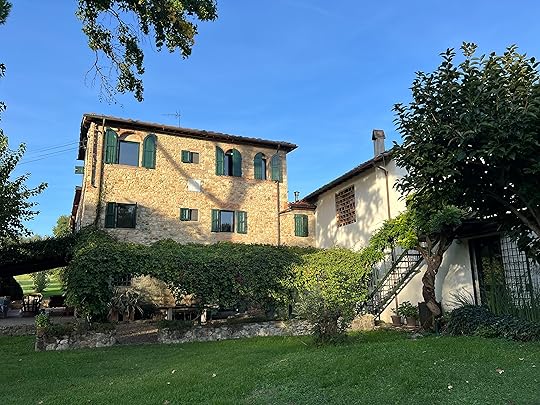
Debbie’s home is lovely, surrounded by agricultural land, vineyards and a new plantation of trees. She proudly shows us her new solar panels and her studio, where she spends what little free time she has sculpting and making etchings. A lovely way to end our day.
On our final morning we have plans to visit the Boboli Gardens, but these are thwarted by the absolutely impossible challenge of finding a taxi to the airport. We manage a quick flit to the impressive Santo Spirito church nearby with its fine Lippi altarpieces, before we return to the apartment, quite prepared to schlepp our bags 20 minutes up the the station to catch a tram. On arrival at the flat, we spot a woman surrounded by luggage, and Hil has the wit to ask her if she’s going to the airport. She is! And not only that but she lives in Hampstead. We thank our lucky stars as we pile in and head off. The holiday is saved from a bitter end!