
Amanda Meredith's Blog: Writer's Ramblings
November 29, 2018
Why Romance Novels Should Leave The Stigma Behind And Be Seen For The Progressive Reads They Are - Thursdays With The Author - November 29, 2018
Why Romance Novels Should Leave The Stigma Behind And Be Seen For The Progressive Reads They Are
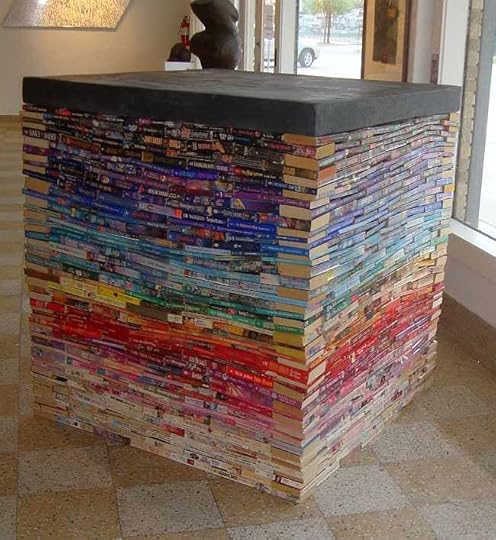 5000 Trashy Romance Novels by Thedra Cullar-LedfordI recently saw a post on a Facebook post about a piece of art made from romance novels. It was a giant cube made from the novels mostly facing outward with amazing colors, and it was absolutely gorgeous. But the title of the piece really bothered me. She had named her art '5000 Trashy Romance Novels'.
Now don't get me wrong, there are a few romance novels I'd call trashy. There's a few books of other genres that would fit that description too. But the idea here was that there were 5000 books, of different titles and authors, but all in the romance genre, that were all deemed trashy.
I write romance for a living. Even when I try writing a different genre, my brain and writing is stuck firmly on the happily-ever-after. I can't help myself. It's apparently hard-wired into my DNA.
So to see romance novels labeled as trashy, really got under my skin. The stigma of trashy novels has been around as long as romance novels have been written and published. Women would hide the novel they were reading under the dust jacket of a more conservative or non-fiction book, or behind a magazine. If someone asked what they were reading, they'd hide it away, or say 'Oh, it's nothing'.
As a romance writer myself, I find myself instinctively leaning towards ashamed when someone asks me what I write. I'm not ashamed, quite the opposite, but society has raised me to think that writing about love is some guilty pleasure, a subject that shouldn't be taken seriously, a thing you do but don't talk about. And that's some Grade-A bullshit right there.
I fell in love with reading at a very young age and went through all the age appropriate books at the library well before I should have. I was BORED. So I started exploring the adult sections and found a lot more interesting reads. I read my fist romance novel, a well worn title by Nora Roberts, at the ripe age of twelve. I didn't even understand half of the scenes but I LOVED IT. I was hooked for life after that. I remember slinking to the checkout desk with my hoard of books with half-naked people on the cover, hoping the librarian wouldn't tell me to put them back, or worse, tell my mom what I was trying to check out. Instead, she smiled, and showed me where the newest romance releases could be found. I was lucky to have such a progressive librarian.
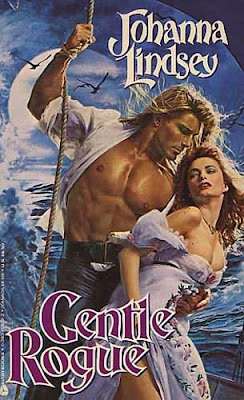 A classic romance cover featuring a (normally) shirtless FabioI grew up in a tiny town of 400 people. Everyone went to church on Sunday. There were no gay people, no minorities, no one that spoke anything but English. You were required to get married, and only have sex after the fact. That's the life I grew up living. I was sheltered. I was ignorant. I would have been trapped... if not for romance novels.
Those 'trashy' reads that no one wanted to admit they read, introduced me to an entirely new world. I read about sex, before marriage, during marriage, after divorce. I read about relationships. I read LBGTQ stories. I read stories featuring minorities. I read stories where characters spoke other languages. I read stories with women who didn't fit the 'norm' and men that weren't the same-old-same-old. I was reading about real life, only I didn't know it until I was much older.
Really, the only thing that could be considered fiction in a romance novel is the guaranteed happily-ever-after. Because we know in real life, that's a lot harder to get and sometimes we never have it. But everything else? Real life.
I read a blog post not long ago titled 'Why Romance Novels Should Be Part Of Your Regular Feminist Reading' and one section that really got me was when the author was describing a conversation with her mother about trashy romance novels. “I know they’re not the most intelligent reading,” my mother said, in a tone that could only be described as apologetic, referring to her love of writers like Nora Roberts and Julia Quinn as a “guilty pleasure.”“Of course you’ve been taught to feel guilty about reading romance novels," I told her. “They’re practically the only books in which women get exactly what they want, all of the time, and aren’t asked to feel bad about it.”After reading that article, I started thinking about all the things romance novels taught me that I would never have learned otherwise. Things that pushed the boundaries. Things that challenged stereotypes. Things that pushed for change. Things that made love in any form, fashion, and time completely normal and right. Romance novels changed my world and continue to do that for anyone that reads them.
Homosexual relationships? Romance novels.
Casual and consensual sex without marriage required? Romance novels.
More than one partner in your adult life? Romance novels.
Exploring your own body? Romance novels.
Not putting up with bullshit from a man? Romance novels.
Educated and empowered women? Romance novels.
Questioning authority and ‘the way it’s always been done’? Romance novels.
Women ahead of their time? Romance novels.
Expecting and demanding open communication and emotional connections in relationships? Romance novels.
Great sex where both parties were satisfied? Romance novels.
The female orgasm, how it’s natural, how it happens, how to get there? Romance novels.
Sex education including SAFE and responsible sex? Romance novels.
Dating? Romance novels.
Happily ever afters? Romance novels.
Handling breakups? Romance novels.
Moving on after divorce and even death? Romance novels.
Bad-ass women and powerful women? Romance novels.
Men unafraid to be sensitive, emotional, nurturing? Romance novels.
The list is endless for what romance novels taught me growing up.
The overall rule I learned as my love of reading romance morphed into writing it, was the relationship came first, sex was second.
Trashy that is not.
Think about how young people, particularly boys, learn about sex and relationships. From their parents, from other family members or friends, from porn. The first two can be great, as well as horrible examples. The last is nothing but horrible. Even the actual mechanics of sex can be wrong in a lot of porn. And there’s no relationship, nothing resembling real life.
Now if they read romance as a primer for relationships and sex, they’d have a much healthier understanding. Talking to each other, connecting on a personal level, striving to make each other happy, and having really great, really descriptive, really wonderful sex.
Foreplay, oral, sex, orgasms, kink. They’re all well-detailed in romance.
But it’s never just about sex.
The relationship, before, during, after, is the key component.
Which would you rather your kids learn from? Which would you rather learn from?
I’d pick the ‘trashy’ romance every time.
5000 Trashy Romance Novels by Thedra Cullar-LedfordI recently saw a post on a Facebook post about a piece of art made from romance novels. It was a giant cube made from the novels mostly facing outward with amazing colors, and it was absolutely gorgeous. But the title of the piece really bothered me. She had named her art '5000 Trashy Romance Novels'.Now don't get me wrong, there are a few romance novels I'd call trashy. There's a few books of other genres that would fit that description too. But the idea here was that there were 5000 books, of different titles and authors, but all in the romance genre, that were all deemed trashy.
I write romance for a living. Even when I try writing a different genre, my brain and writing is stuck firmly on the happily-ever-after. I can't help myself. It's apparently hard-wired into my DNA.
So to see romance novels labeled as trashy, really got under my skin. The stigma of trashy novels has been around as long as romance novels have been written and published. Women would hide the novel they were reading under the dust jacket of a more conservative or non-fiction book, or behind a magazine. If someone asked what they were reading, they'd hide it away, or say 'Oh, it's nothing'.
As a romance writer myself, I find myself instinctively leaning towards ashamed when someone asks me what I write. I'm not ashamed, quite the opposite, but society has raised me to think that writing about love is some guilty pleasure, a subject that shouldn't be taken seriously, a thing you do but don't talk about. And that's some Grade-A bullshit right there.
I fell in love with reading at a very young age and went through all the age appropriate books at the library well before I should have. I was BORED. So I started exploring the adult sections and found a lot more interesting reads. I read my fist romance novel, a well worn title by Nora Roberts, at the ripe age of twelve. I didn't even understand half of the scenes but I LOVED IT. I was hooked for life after that. I remember slinking to the checkout desk with my hoard of books with half-naked people on the cover, hoping the librarian wouldn't tell me to put them back, or worse, tell my mom what I was trying to check out. Instead, she smiled, and showed me where the newest romance releases could be found. I was lucky to have such a progressive librarian.
A classic romance cover featuring a (normally) shirtless FabioI grew up in a tiny town of 400 people. Everyone went to church on Sunday. There were no gay people, no minorities, no one that spoke anything but English. You were required to get married, and only have sex after the fact. That's the life I grew up living. I was sheltered. I was ignorant. I would have been trapped... if not for romance novels.Those 'trashy' reads that no one wanted to admit they read, introduced me to an entirely new world. I read about sex, before marriage, during marriage, after divorce. I read about relationships. I read LBGTQ stories. I read stories featuring minorities. I read stories where characters spoke other languages. I read stories with women who didn't fit the 'norm' and men that weren't the same-old-same-old. I was reading about real life, only I didn't know it until I was much older.
Really, the only thing that could be considered fiction in a romance novel is the guaranteed happily-ever-after. Because we know in real life, that's a lot harder to get and sometimes we never have it. But everything else? Real life.
I read a blog post not long ago titled 'Why Romance Novels Should Be Part Of Your Regular Feminist Reading' and one section that really got me was when the author was describing a conversation with her mother about trashy romance novels. “I know they’re not the most intelligent reading,” my mother said, in a tone that could only be described as apologetic, referring to her love of writers like Nora Roberts and Julia Quinn as a “guilty pleasure.”“Of course you’ve been taught to feel guilty about reading romance novels," I told her. “They’re practically the only books in which women get exactly what they want, all of the time, and aren’t asked to feel bad about it.”After reading that article, I started thinking about all the things romance novels taught me that I would never have learned otherwise. Things that pushed the boundaries. Things that challenged stereotypes. Things that pushed for change. Things that made love in any form, fashion, and time completely normal and right. Romance novels changed my world and continue to do that for anyone that reads them.
Homosexual relationships? Romance novels.
Casual and consensual sex without marriage required? Romance novels.
More than one partner in your adult life? Romance novels.
Exploring your own body? Romance novels.
Not putting up with bullshit from a man? Romance novels.
Educated and empowered women? Romance novels.
Questioning authority and ‘the way it’s always been done’? Romance novels.
Women ahead of their time? Romance novels.
Expecting and demanding open communication and emotional connections in relationships? Romance novels.
Great sex where both parties were satisfied? Romance novels.
The female orgasm, how it’s natural, how it happens, how to get there? Romance novels.
Sex education including SAFE and responsible sex? Romance novels.
Dating? Romance novels.
Happily ever afters? Romance novels.
Handling breakups? Romance novels.
Moving on after divorce and even death? Romance novels.
Bad-ass women and powerful women? Romance novels.
Men unafraid to be sensitive, emotional, nurturing? Romance novels.
The list is endless for what romance novels taught me growing up.
The overall rule I learned as my love of reading romance morphed into writing it, was the relationship came first, sex was second.
Trashy that is not.
Think about how young people, particularly boys, learn about sex and relationships. From their parents, from other family members or friends, from porn. The first two can be great, as well as horrible examples. The last is nothing but horrible. Even the actual mechanics of sex can be wrong in a lot of porn. And there’s no relationship, nothing resembling real life.
Now if they read romance as a primer for relationships and sex, they’d have a much healthier understanding. Talking to each other, connecting on a personal level, striving to make each other happy, and having really great, really descriptive, really wonderful sex.
Foreplay, oral, sex, orgasms, kink. They’re all well-detailed in romance.
But it’s never just about sex.
The relationship, before, during, after, is the key component.
Which would you rather your kids learn from? Which would you rather learn from?
I’d pick the ‘trashy’ romance every time.


Why Romance Novels Should Push Pass the Stigma and Be Seen For the Progressive Reads They Are - Thursdays With The Author - November 29, 2018
Why Romance Novels Should Push Pass the Stigma and Be Seen For the Progressive Reads They Are
5000 Trashy Romance Novels by Thedra Cullar-Ledford
I recently saw a post on a Facebook page I belong to. It was a piece of art made from romance novels. It was a giant cube made from the novels facing outward with amazing colors, and it was absolutely gorgeous. But the title of the piece really bothered me. She had named her art '5000 Trashy Romance Novels'.
Now don't get me wrong, there are a few romance novels I'd call trashy. There's a few books of other genres that would fit that description now. But the idea here was that there were 5000 books, of different titles and authors, that were all deemed trashy.
I write romance for a living. Even when I try writing a different genre, my brain and writing is stuck firmly on the happily-ever-after. I can't help myself. It's apparently hard-wired into my DNA.
So to see romance novels labeled as trashy, really got under my skin. The stigma of trashy novels has been around as long as romance novels. Women would hide the novel they were reading under the dust jacket of a more conservative or non-fiction book, or behind a magazine. If someone asked what they were reading, they'd hide it away, or say 'Oh, it's nothing'. As a romance writer myself, I find myself instinctively leaning towards ashamed when someone asks me what I write. And I'm not ashamed. But society has raised me to think that writing about love is some guilty pleasure, a subject that shouldn't be taken seriously, a thing you do but don't talk about. And that's some grade-A bullshit right there.
I fell in love with reading at a very young age and went through all the age appropriate books at the library well before I should have. I was BORED. So I started exploring the adult sections and found a lot more interesting reads. I read my fist romance novel, a well worn title by Nora Roberts, at the ripe age of twelve. I didn't even understand half of the scenes but I LOVED IT. I was hooked for life after that. I remember slinking to the checkout desk with my hoard of books with half naked people on the cover, hoping the librarian wouldn't tell me to put them back, or worse, tell my mom what I was trying to check out. Instead, she smiled, and showed me where the newest romance releases could be found. I was lucky to have such a progressive librarian.
A classic romance cover featuring a (normally) shirtless Fabio
I grew up in a tiny town of 400. Everyone went to church on Sunday. There were no gay people, no minorities, no one that spoke anything but English. You were required to get married, and only have sex after the fact. That's the life I grew up living. I was sheltered. I was ignorant. I would have been trapped... if not for romance novels.
Those 'trashy' reads that no one wanted to admit they read, introduced me to an entirely new world. I read about sex, before marriage, during marriage, after divorce. I read about relationships. I read LBGTQ stories. I read stories featuring minorities. I read stories where characters spoke other languages. I read stories with women who didn't fit the 'norm' and men that weren't the same-old-same-old. Really, I was reading about real life, only I didn't know it until I was much older.
Really the only thing that could be considered fiction in a romance novel is the guaranteed happily-ever-after. Because we know in real life, that's a lot harder to get and sometimes we never have it. But everything else? Real life.
I read a blog post not long ago titled 'Why Romance Novels Should Be Part Of Your Regular Feminist Reading' and one section that really got me was when the author was describing a conversation with her mother about trashy romance novels. “I know they’re not the most intelligent reading,” my mother said, in a tone that could only be described as apologetic, referring to her love of writers like Nora Roberts and Julia Quinn as a “guilty pleasure.”“Of course you’ve been taught to feel guilty about reading romance novels," I told her. “They’re practically the only books in which women get exactly what they want, all of the time, and aren’t asked to feel bad about it.”After reading that article, I started thinking about all the things romance novels taught me that I would never have learned otherwise. Things that pushed the boundaries. Things that challenged stereotypes. Things that pushed for change. Things that made love in any form, fashion, and time completely normal and right. Romance novels changed my world and continue to do that for anyone that reads them.
Homosexual relationships? Romance novels. Casual and consensual sex without marriage required? Romance novels. More than one partner in your adult life? Romance novels. Exploring your own body? Romance novels.Not putting up with bullshit from a man? Romance novels. Educated and empowered women? Romance novels. Questioning authority and ‘the way it’s always been done’? Romance novels. Women ahead of their time? Romance novels. Expecting and demanding open communication and emotional connections in relationships? Romance novels. Great sex where both parties were satisfied? Romance novels. The female orgasm, how it’s natural, how it happens, how to get there? Romance novels. Sex education including SAFE and responsible sex? Romance novels. Dating? Romance novels. Happily ever afters? Romance novels. Handling breakups? Romance novels. Moving on after divorce and even death? Romance novels. Bad-ass women and powerful women? Romance novels.Men unafraid to be sensitive, emotional, nurturing? Romance novels.
The list is endless for what romance novels taught me growing up.
The overall rule I learned as my love of reading romance morphed into writing it, was the relationship came first, sex was second.
Trashy that is not.
Think about how young people, particularly boys, learn about sex and relationships. From their parents, from other family members or friends, from porn. The first two can be great, as well as horrible examples. The last is nothing but horrible. Even the actual mechanics of sex can be wrong in a lot of porn. And there’s no relationship, nothing resembling real life.
Now if they read romance as a primer for relationships and sex, they’d have a much healthier understanding. Talking to each other, connecting on a personal level, striving to make each other happy, and having really great, really descriptive, really wonderful sex.
Foreplay, oral, sex, orgasms, kink. They’re all well-detailed in romance.
But it’s never just about sex.
The relationship, before, during, after, is the key component.
Which would you rather your kids learn from? Which would you rather learn from?
I’d pick the ‘trashy’ romance every time.
5000 Trashy Romance Novels by Thedra Cullar-LedfordI recently saw a post on a Facebook page I belong to. It was a piece of art made from romance novels. It was a giant cube made from the novels facing outward with amazing colors, and it was absolutely gorgeous. But the title of the piece really bothered me. She had named her art '5000 Trashy Romance Novels'.
Now don't get me wrong, there are a few romance novels I'd call trashy. There's a few books of other genres that would fit that description now. But the idea here was that there were 5000 books, of different titles and authors, that were all deemed trashy.
I write romance for a living. Even when I try writing a different genre, my brain and writing is stuck firmly on the happily-ever-after. I can't help myself. It's apparently hard-wired into my DNA.
So to see romance novels labeled as trashy, really got under my skin. The stigma of trashy novels has been around as long as romance novels. Women would hide the novel they were reading under the dust jacket of a more conservative or non-fiction book, or behind a magazine. If someone asked what they were reading, they'd hide it away, or say 'Oh, it's nothing'. As a romance writer myself, I find myself instinctively leaning towards ashamed when someone asks me what I write. And I'm not ashamed. But society has raised me to think that writing about love is some guilty pleasure, a subject that shouldn't be taken seriously, a thing you do but don't talk about. And that's some grade-A bullshit right there.
I fell in love with reading at a very young age and went through all the age appropriate books at the library well before I should have. I was BORED. So I started exploring the adult sections and found a lot more interesting reads. I read my fist romance novel, a well worn title by Nora Roberts, at the ripe age of twelve. I didn't even understand half of the scenes but I LOVED IT. I was hooked for life after that. I remember slinking to the checkout desk with my hoard of books with half naked people on the cover, hoping the librarian wouldn't tell me to put them back, or worse, tell my mom what I was trying to check out. Instead, she smiled, and showed me where the newest romance releases could be found. I was lucky to have such a progressive librarian.
A classic romance cover featuring a (normally) shirtless FabioI grew up in a tiny town of 400. Everyone went to church on Sunday. There were no gay people, no minorities, no one that spoke anything but English. You were required to get married, and only have sex after the fact. That's the life I grew up living. I was sheltered. I was ignorant. I would have been trapped... if not for romance novels.
Those 'trashy' reads that no one wanted to admit they read, introduced me to an entirely new world. I read about sex, before marriage, during marriage, after divorce. I read about relationships. I read LBGTQ stories. I read stories featuring minorities. I read stories where characters spoke other languages. I read stories with women who didn't fit the 'norm' and men that weren't the same-old-same-old. Really, I was reading about real life, only I didn't know it until I was much older.
Really the only thing that could be considered fiction in a romance novel is the guaranteed happily-ever-after. Because we know in real life, that's a lot harder to get and sometimes we never have it. But everything else? Real life.
I read a blog post not long ago titled 'Why Romance Novels Should Be Part Of Your Regular Feminist Reading' and one section that really got me was when the author was describing a conversation with her mother about trashy romance novels. “I know they’re not the most intelligent reading,” my mother said, in a tone that could only be described as apologetic, referring to her love of writers like Nora Roberts and Julia Quinn as a “guilty pleasure.”“Of course you’ve been taught to feel guilty about reading romance novels," I told her. “They’re practically the only books in which women get exactly what they want, all of the time, and aren’t asked to feel bad about it.”After reading that article, I started thinking about all the things romance novels taught me that I would never have learned otherwise. Things that pushed the boundaries. Things that challenged stereotypes. Things that pushed for change. Things that made love in any form, fashion, and time completely normal and right. Romance novels changed my world and continue to do that for anyone that reads them.
Homosexual relationships? Romance novels. Casual and consensual sex without marriage required? Romance novels. More than one partner in your adult life? Romance novels. Exploring your own body? Romance novels.Not putting up with bullshit from a man? Romance novels. Educated and empowered women? Romance novels. Questioning authority and ‘the way it’s always been done’? Romance novels. Women ahead of their time? Romance novels. Expecting and demanding open communication and emotional connections in relationships? Romance novels. Great sex where both parties were satisfied? Romance novels. The female orgasm, how it’s natural, how it happens, how to get there? Romance novels. Sex education including SAFE and responsible sex? Romance novels. Dating? Romance novels. Happily ever afters? Romance novels. Handling breakups? Romance novels. Moving on after divorce and even death? Romance novels. Bad-ass women and powerful women? Romance novels.Men unafraid to be sensitive, emotional, nurturing? Romance novels.
The list is endless for what romance novels taught me growing up.
The overall rule I learned as my love of reading romance morphed into writing it, was the relationship came first, sex was second.
Trashy that is not.
Think about how young people, particularly boys, learn about sex and relationships. From their parents, from other family members or friends, from porn. The first two can be great, as well as horrible examples. The last is nothing but horrible. Even the actual mechanics of sex can be wrong in a lot of porn. And there’s no relationship, nothing resembling real life.
Now if they read romance as a primer for relationships and sex, they’d have a much healthier understanding. Talking to each other, connecting on a personal level, striving to make each other happy, and having really great, really descriptive, really wonderful sex.
Foreplay, oral, sex, orgasms, kink. They’re all well-detailed in romance.
But it’s never just about sex.
The relationship, before, during, after, is the key component.
Which would you rather your kids learn from? Which would you rather learn from?
I’d pick the ‘trashy’ romance every time.
June 11, 2018
Your Brand - What is it and How do you Protect it? - Monday Musings
Your Brand - What it is and How do you Protect it? - Monday Musings - June 11, 2018
For pretty much everyone not living beneath a rock, the viral hashtag #cockygate has crossed your ears, computer screens, or phones in recent weeks. In the extreme off-chance that you don't know what I'm talking about, I'll try to sum it up quickly. You can also see my previous blog post, How to Alienate Your Readers and Tank Your Career - Monday Musings for a more in-depth explanation.
A romance author named Faleena Hopkins, who began publishing a series called The Cocker Brothers of Atlanta on June 16, 2016. The first book was Cocky Roomie, and all the subsequent books (there's 18 so far) have Cocky something as the title. Not too many people had heard of this relatively new author, until in early May 2018 when another author with a Cocky-something titled book, received a cease and desist letter from Faleena, stating that the WORD cocky was now copyrighted. Not the entire title, not the name of her series, but the single word, cocky. The trademark office should never have granted such a broad application for such a commonly used word but that's not the point. The point is, she copyrighted a single word on the excuse that she needed to protect her brand. The whole thing has since blown up in her face, she's shut down most of her social media sites to avoid confrontations with legions of authors and readers, and has actually sued and tried to set restraining orders on people. Specifically ones that she has a personal grudge against, and the author/retired IP lawyer that is petitioning for the trademark cancellation. The court date for that was today, and the judge shut Ms. Faleena down. The trial for the cancellation of the trademark is at a future date.
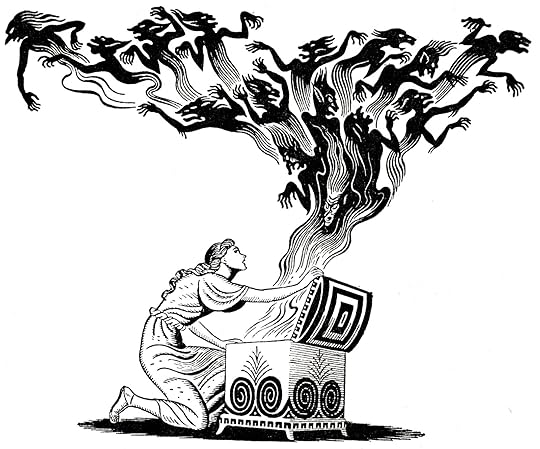
So now that you're up to date on what caused such a god-awful stink in the writing world, we'll move on to the Pandora's box it opened. Since Faleena's trademark, MULTIPLE authors have followed her misguided steps, and filed their own trademarks for single-use words. #RebellionGate, #ForeverGate, #DareGate, #ShifterWorldGate and many others have come to light, angering the writing community further and proving why the box that Faleena selfishly opened, should have been left alone, and preferably hidden in the 7th layer of hell.
The going excuse for all these misguided authors keeps coming back to one recurring explanation: I'm trying to protect my brand. That's all it really boils down to. But all these authors are missing one glaringly important fact. Your brand isn't your title.
That's right. Your title has pretty much nothing to do with your brand. Your name and the content you create... THAT'S your brand. IT'S YOU. If the title or series name was so important, JK Rowling would have trademarked the title Harry Potter and it's very specific font. (She didn't btw, she trademarked the CHARACTER of Harry Potter), Stephanie Meyers would have trademarked the Twilight Saga and it's unique font, EL James would have trademarked the 50 Shades series. Yet NONE of those huge-name and very successful authors did that. Because the title didn't make the difference. People knew what to expect from each of those authors based on their names and the type of stories they had already delivered.
EVERY author has to deal with crooks and scammers stealing their work and pirating it elsewhere. It's a universal problem. Basic copyright laws apply to everyone that's published to stop people from stealing their work, as long as they can prove they had it first. They can't sue for damages with a basic copyright, but they can stop someone from profiting further off their work. Authors can go a step further and pay to register a copyright. This allows someone to sue for damages if their work is stolen. Trademarking is the next step. Companies like Apple, Pepsi, GE, have all purchased trademarks for their logos and names, in specific fonts and for specific products. For example, Apple owns the trademark for the word in reference to electronic products. They aren't going to sue someone who writes a book called The Apple of Adam, or an Apple Juice manufacturer, etc. These companies have VERY specific TM's that are obviously protecting their very unique brands.
If an author wants to trademark their series name (trademarking single titles is currently illegal), their series name needs to be unique and specific. In Faleena's case, she SHOULD have trademarked "The Cocker Brothers of Atlanta" (The original series name and still showing up on her covers as well as a 'Cocker Brothers' logo and all over her social media), or even "The Cocky Series" (Which, I'd like to add, she didn't start using until this spring AFTER she filed for the trademark.) But by trademarking just the single word 'cocky', she prevented a lot of authors from using it in their titles, forced some to change their already published titles containing the word (with a big expense also forced on them), and started a legal battle with previously published cocky-titled books.
So other than applying for a very expensive and possibly legal battle-inducing trademark, how can an author protect their brand?
Well let's start with what a brand, for an author, is. A brand is a consistent promise to a customer about what they're going to get. For an author, that means the content you deliver. To be clear, your brand is NOT your title. It's what's between the cover. The content. The STORY.
Harry Potter's title might be recognizable, but it wasn't the title that got people to invest in JK Rowling's brand. It was the story of a young boy, who'd already had a rough start to life, finding out he's actually a wizard and might just hold the fate of the world in his hands. Her brand follows the journey of that boy as he grows and becomes powerful and eventually saves the wizard and muggle world.
As readers, we invested in Harry, Hermione, Ron, Dumbledore, Dobby, Hagrid, and more. We delved into life at Hogwarts, imagined receiving a letter from an owl, practiced spells with homemade wands. We spent hours reading those pages, going to the movies, buying merchandise, writing our own wizard stories. The title had nothing to do with that. The brand she created by writing a hell of a series kept us with her, years after the first book was published.
Even if Harry had been a Michael or Peter, the story wouldn't have changed. The first book could have been called Samuel Piper and the Philosopher's Stone and the story wouldn't have changed. The brand wouldn't have changed. Because it wasn't the title that made the brand, or even the names of the characters. It was the story that made the Harry Potter brand what it was and continues to be today.
So how do you protect your brand?
You write unique, original, and amazing stories. That's it. Yes, scammers will try to steal your work and sell it on iTunes. Thieves will try to copy your story and sell it as their own. It happens... to EVERYONE. But the stories you write, throughout your career, will create your brand and keep it safe. Readers will come to know your series characters, your style of writing, your voice. They will keep coming back, again and again, even when you write different stories, or start a new series. Because they know that YOU will give them an amazing story that they will fall in love with. They know YOU will write characters so real, it's like they were sitting next to them, characters they will get to know and keep thinking about long after they read 'the end'. Readers will know YOU and the quality of books you'll put out. A single title or a series will draw them in, and the content you deliver will keep them as fans as long as you have books.
So the moral of this blog post is, don't be a grade A asshole and start trademarking words that are commonly used. Trademark an entire series title if you feel you must but it won't make a difference to your readers. As long as you're writing amazing stories, they won't care what your titles are or who else might be writing something similar, they'll care about YOU and what you're writing. A trademark won't protect that. YOU protect that, by being an amazing writer.
For pretty much everyone not living beneath a rock, the viral hashtag #cockygate has crossed your ears, computer screens, or phones in recent weeks. In the extreme off-chance that you don't know what I'm talking about, I'll try to sum it up quickly. You can also see my previous blog post, How to Alienate Your Readers and Tank Your Career - Monday Musings for a more in-depth explanation.
A romance author named Faleena Hopkins, who began publishing a series called The Cocker Brothers of Atlanta on June 16, 2016. The first book was Cocky Roomie, and all the subsequent books (there's 18 so far) have Cocky something as the title. Not too many people had heard of this relatively new author, until in early May 2018 when another author with a Cocky-something titled book, received a cease and desist letter from Faleena, stating that the WORD cocky was now copyrighted. Not the entire title, not the name of her series, but the single word, cocky. The trademark office should never have granted such a broad application for such a commonly used word but that's not the point. The point is, she copyrighted a single word on the excuse that she needed to protect her brand. The whole thing has since blown up in her face, she's shut down most of her social media sites to avoid confrontations with legions of authors and readers, and has actually sued and tried to set restraining orders on people. Specifically ones that she has a personal grudge against, and the author/retired IP lawyer that is petitioning for the trademark cancellation. The court date for that was today, and the judge shut Ms. Faleena down. The trial for the cancellation of the trademark is at a future date.
So now that you're up to date on what caused such a god-awful stink in the writing world, we'll move on to the Pandora's box it opened. Since Faleena's trademark, MULTIPLE authors have followed her misguided steps, and filed their own trademarks for single-use words. #RebellionGate, #ForeverGate, #DareGate, #ShifterWorldGate and many others have come to light, angering the writing community further and proving why the box that Faleena selfishly opened, should have been left alone, and preferably hidden in the 7th layer of hell.
The going excuse for all these misguided authors keeps coming back to one recurring explanation: I'm trying to protect my brand. That's all it really boils down to. But all these authors are missing one glaringly important fact. Your brand isn't your title.
That's right. Your title has pretty much nothing to do with your brand. Your name and the content you create... THAT'S your brand. IT'S YOU. If the title or series name was so important, JK Rowling would have trademarked the title Harry Potter and it's very specific font. (She didn't btw, she trademarked the CHARACTER of Harry Potter), Stephanie Meyers would have trademarked the Twilight Saga and it's unique font, EL James would have trademarked the 50 Shades series. Yet NONE of those huge-name and very successful authors did that. Because the title didn't make the difference. People knew what to expect from each of those authors based on their names and the type of stories they had already delivered.
EVERY author has to deal with crooks and scammers stealing their work and pirating it elsewhere. It's a universal problem. Basic copyright laws apply to everyone that's published to stop people from stealing their work, as long as they can prove they had it first. They can't sue for damages with a basic copyright, but they can stop someone from profiting further off their work. Authors can go a step further and pay to register a copyright. This allows someone to sue for damages if their work is stolen. Trademarking is the next step. Companies like Apple, Pepsi, GE, have all purchased trademarks for their logos and names, in specific fonts and for specific products. For example, Apple owns the trademark for the word in reference to electronic products. They aren't going to sue someone who writes a book called The Apple of Adam, or an Apple Juice manufacturer, etc. These companies have VERY specific TM's that are obviously protecting their very unique brands.
If an author wants to trademark their series name (trademarking single titles is currently illegal), their series name needs to be unique and specific. In Faleena's case, she SHOULD have trademarked "The Cocker Brothers of Atlanta" (The original series name and still showing up on her covers as well as a 'Cocker Brothers' logo and all over her social media), or even "The Cocky Series" (Which, I'd like to add, she didn't start using until this spring AFTER she filed for the trademark.) But by trademarking just the single word 'cocky', she prevented a lot of authors from using it in their titles, forced some to change their already published titles containing the word (with a big expense also forced on them), and started a legal battle with previously published cocky-titled books.
So other than applying for a very expensive and possibly legal battle-inducing trademark, how can an author protect their brand?
Well let's start with what a brand, for an author, is. A brand is a consistent promise to a customer about what they're going to get. For an author, that means the content you deliver. To be clear, your brand is NOT your title. It's what's between the cover. The content. The STORY.
Harry Potter's title might be recognizable, but it wasn't the title that got people to invest in JK Rowling's brand. It was the story of a young boy, who'd already had a rough start to life, finding out he's actually a wizard and might just hold the fate of the world in his hands. Her brand follows the journey of that boy as he grows and becomes powerful and eventually saves the wizard and muggle world.
As readers, we invested in Harry, Hermione, Ron, Dumbledore, Dobby, Hagrid, and more. We delved into life at Hogwarts, imagined receiving a letter from an owl, practiced spells with homemade wands. We spent hours reading those pages, going to the movies, buying merchandise, writing our own wizard stories. The title had nothing to do with that. The brand she created by writing a hell of a series kept us with her, years after the first book was published.
Even if Harry had been a Michael or Peter, the story wouldn't have changed. The first book could have been called Samuel Piper and the Philosopher's Stone and the story wouldn't have changed. The brand wouldn't have changed. Because it wasn't the title that made the brand, or even the names of the characters. It was the story that made the Harry Potter brand what it was and continues to be today.
So how do you protect your brand?
You write unique, original, and amazing stories. That's it. Yes, scammers will try to steal your work and sell it on iTunes. Thieves will try to copy your story and sell it as their own. It happens... to EVERYONE. But the stories you write, throughout your career, will create your brand and keep it safe. Readers will come to know your series characters, your style of writing, your voice. They will keep coming back, again and again, even when you write different stories, or start a new series. Because they know that YOU will give them an amazing story that they will fall in love with. They know YOU will write characters so real, it's like they were sitting next to them, characters they will get to know and keep thinking about long after they read 'the end'. Readers will know YOU and the quality of books you'll put out. A single title or a series will draw them in, and the content you deliver will keep them as fans as long as you have books.
So the moral of this blog post is, don't be a grade A asshole and start trademarking words that are commonly used. Trademark an entire series title if you feel you must but it won't make a difference to your readers. As long as you're writing amazing stories, they won't care what your titles are or who else might be writing something similar, they'll care about YOU and what you're writing. A trademark won't protect that. YOU protect that, by being an amazing writer.
May 7, 2018
How to Alienate Your Readers and Tank Your Career - Monday Musings - May 7, 2018
How to Alienate Your Readers and Tank Your Career - Monday Musings
So over the weekend, there was an unholy uproar in the romance writing community that spread not only to every other writing genre, but to readers and the general public as well. Twitter, Facebook, Instagram, Snapchat, Bloggers, and more were all involved and the topic became instantly viral.
Said topic centered around a particular romance author named Faleena Hopkins, who also writes by the pen-name Sabrina Lacey, and has used the name Alicia Burton on social media. This particular author has published thirty titles, 17 of them part of the Cocker Brothers of Atlanta series which all feature a 'Cocky Something' title. She began publishing this series in 2016.
Cocky-something titles in romance have been around for a while. For example: Cocky Jock, a mm porn novel from 1974, Cocky Crew, a mm erotica from 1984 with a completely x-rated cover, Cocky Duke, a romance from 2003, Cocky Prince, a romance novel from 2004, Cocky Stepbrother, a romance from 2012, all the way to Cocky Bastard, a romance novel from 2016, among many others.
So, now that we've established that cocky titles are a commonplace in romance, I'll get to the uproar from this past weekend.
See, Friday evening, word got out that an author was sending Cease and Desist letters to other romance authors, claiming she had trademarked the word 'cocky', to be used in a romance novel title, and that they had to change their titles immediately or she would file suit and win. Not only win, but have her lawyer fees paid for by the 'offending' author and be awarded all the profits they made from that title. She only targeted self-published, indie, and small-press authors, who wouldn't have the funds or a big publishing company to fight the trademark claim in court. The alarm went up, thanks to a few authors who received C&D letters.
There's a few reasons why this caused such an uproar in the romance community.
1) You legally can't trademark common-use words. Not in the way the author was claiming. Take Apple for example. They trademarked the word only in context of electronic products. They couldn't trademark the word in a general sense. She managed to be granted the trademark for the common word when sued in any romance title. This never should have been granted.
2) She sent C&D letters to authors who published cocky titles BEFORE her trademark was granted, which should have been 'grandfathered' in so the trademark wouldn't apply to them.
3) She sent letters to authors claiming they needed to change their titles and that it would only take them a day to do, not cost them any money of profit loss, and that they would be able to keep their ratings and reviews on Amazon, all of which are lies. Changing a title after publication is a big deal. Covers cost money, anywhere from hundreds to thousands of dollars. They can take days, weeks, or months to create. If they had any promotional material printed: banners, bookmarks, t-shirts, etc. they'd have to throw them in the trash and pay for new ones. You can't change a title post-publication on almost every publishing site without creating an entirely new edition. It's a completely new book and you lose all your ratings and reviews.
3A) The same author filing C&D's and claiming changing the title was easy had one of her own books with a title mistake. The book in question is 'Cocky Soldier', and features a Marine. The author discovered during research that Marines are NEVER referred to as soldiers, always a Marine. So her title was not only incorrect, but insulting to Marines. She was made aware of this, before publication, but refused to change her cover. There's even a forward in the novel stating she knew about the mistake but because it would cost her money and she'd lose all her pre-orders changing the title, that she decided it was too difficult and kept the title as-is. So this author, who is now demanding other's change their titles and claiming it's an easy feat, couldn't even do the same thing herself when shown an actual mistake in titling her novel.
4) She claims her readers were 'confused' by other titles with cocky in them. She basically said that her readers are too stupid to be able to read HER name, also clearly stated on the cover, and were accidentally buying other author's books. Even if her readers are this stupid, all buying platforms have return options for such cases. The author has stated that this was her primary reason for filing for a trademark: her readers are too stupid. Or so she claims.
5) Her second trademark was to register the word 'cocky' in the stylized form she uses on the titles in her series. This one doesn't bother anyone, as specific fonts end up being a logo and well-recognized part of such a big series. The only problem in this particular case is that the style she trademarked BELONGED TO SOMEONE ELSE. The font was designed by an artist, belongs to a company, and was already copyrighted and trademarked. The owner of the font has been notified and will be contacting his lawyer when he returns from vacation. Someone failed to do their research.
6) When some of the C&D letters failed to get her desired responses, she began to leave 1 star reviews on the 'offending' author's books, only to leave another C&D request as the actual review. Then she had her 'most faithful' readers begin leaving 1 star reviews saying the authors were stealing her work.
So, that's the basics of what began one of the romance world's most spectacular uproars. Once word got out of the situation, romance authors and readers began doing their research, discovering the sketchy legal grounds and the sketchy actions of the author. They began gathering evidence and support against the author. Lawyers, who also happened to be authors, began building cases against her. The RWA, the romance world's biggest organization began investigating. The big 5 publishers caught wind and set their very expensive lawyers on the case. A writer/lawyer filed a petition to revoke the trademark today. And this is just the tip of the iceberg.
Here's a few reasons WHY it's such a big deal.
1) Being granted a trademark for such a generic and commonly used word sets a horrible precedence for writers everywhere, and not just in the romance genre. What happens when someone decides to trademark the word 'his', 'love', 'surrender', 'heart', etc. There won't be any titles left. Authors will be suing each other left and right and the entire industry will collapse.
2) Authors don't go after each other. We just don't. We're all in this together, especially indie authors, who don't have the money or resources that traditionally published authors have. To have another author blatantly go after colleagues in such a bullying, selfish, and illegal way is disheartening and upsetting.
Am I saying "Don't buy books from this psycho author?" I wish I could, but that's setting myself up for a defamation lawsuit. Feel free to buy her books, you might even enjoy them. But remember that she went out of her way to impact the entire writing world because 1) she thought her readers were dumb 2) she wasn't confident enough in her own work that she couldn't share even a partial title with another author. 3) She used shady legal practices with questionable legality to accomplish her goals.
The author has effectively derailed her career with her antics. Readers, not appreciating being called stupid, deleted her books. Publishers, writing groups and conferences, news outlets, etc. began dropping her as a member and speaker. She tried claiming that she was being bullied by the writing community for trying to protect her brand but the writing community and readers weren't having it. I wouldn't be surprised if her name disappears from publishing as well as her cocky books that caused such an uproar to begin with. But time and the legal system will be the judge of that.
So over the weekend, there was an unholy uproar in the romance writing community that spread not only to every other writing genre, but to readers and the general public as well. Twitter, Facebook, Instagram, Snapchat, Bloggers, and more were all involved and the topic became instantly viral.
Said topic centered around a particular romance author named Faleena Hopkins, who also writes by the pen-name Sabrina Lacey, and has used the name Alicia Burton on social media. This particular author has published thirty titles, 17 of them part of the Cocker Brothers of Atlanta series which all feature a 'Cocky Something' title. She began publishing this series in 2016.
Cocky-something titles in romance have been around for a while. For example: Cocky Jock, a mm porn novel from 1974, Cocky Crew, a mm erotica from 1984 with a completely x-rated cover, Cocky Duke, a romance from 2003, Cocky Prince, a romance novel from 2004, Cocky Stepbrother, a romance from 2012, all the way to Cocky Bastard, a romance novel from 2016, among many others.
So, now that we've established that cocky titles are a commonplace in romance, I'll get to the uproar from this past weekend.
See, Friday evening, word got out that an author was sending Cease and Desist letters to other romance authors, claiming she had trademarked the word 'cocky', to be used in a romance novel title, and that they had to change their titles immediately or she would file suit and win. Not only win, but have her lawyer fees paid for by the 'offending' author and be awarded all the profits they made from that title. She only targeted self-published, indie, and small-press authors, who wouldn't have the funds or a big publishing company to fight the trademark claim in court. The alarm went up, thanks to a few authors who received C&D letters.
There's a few reasons why this caused such an uproar in the romance community.
1) You legally can't trademark common-use words. Not in the way the author was claiming. Take Apple for example. They trademarked the word only in context of electronic products. They couldn't trademark the word in a general sense. She managed to be granted the trademark for the common word when sued in any romance title. This never should have been granted.
2) She sent C&D letters to authors who published cocky titles BEFORE her trademark was granted, which should have been 'grandfathered' in so the trademark wouldn't apply to them.
3) She sent letters to authors claiming they needed to change their titles and that it would only take them a day to do, not cost them any money of profit loss, and that they would be able to keep their ratings and reviews on Amazon, all of which are lies. Changing a title after publication is a big deal. Covers cost money, anywhere from hundreds to thousands of dollars. They can take days, weeks, or months to create. If they had any promotional material printed: banners, bookmarks, t-shirts, etc. they'd have to throw them in the trash and pay for new ones. You can't change a title post-publication on almost every publishing site without creating an entirely new edition. It's a completely new book and you lose all your ratings and reviews.
3A) The same author filing C&D's and claiming changing the title was easy had one of her own books with a title mistake. The book in question is 'Cocky Soldier', and features a Marine. The author discovered during research that Marines are NEVER referred to as soldiers, always a Marine. So her title was not only incorrect, but insulting to Marines. She was made aware of this, before publication, but refused to change her cover. There's even a forward in the novel stating she knew about the mistake but because it would cost her money and she'd lose all her pre-orders changing the title, that she decided it was too difficult and kept the title as-is. So this author, who is now demanding other's change their titles and claiming it's an easy feat, couldn't even do the same thing herself when shown an actual mistake in titling her novel.
4) She claims her readers were 'confused' by other titles with cocky in them. She basically said that her readers are too stupid to be able to read HER name, also clearly stated on the cover, and were accidentally buying other author's books. Even if her readers are this stupid, all buying platforms have return options for such cases. The author has stated that this was her primary reason for filing for a trademark: her readers are too stupid. Or so she claims.
5) Her second trademark was to register the word 'cocky' in the stylized form she uses on the titles in her series. This one doesn't bother anyone, as specific fonts end up being a logo and well-recognized part of such a big series. The only problem in this particular case is that the style she trademarked BELONGED TO SOMEONE ELSE. The font was designed by an artist, belongs to a company, and was already copyrighted and trademarked. The owner of the font has been notified and will be contacting his lawyer when he returns from vacation. Someone failed to do their research.
6) When some of the C&D letters failed to get her desired responses, she began to leave 1 star reviews on the 'offending' author's books, only to leave another C&D request as the actual review. Then she had her 'most faithful' readers begin leaving 1 star reviews saying the authors were stealing her work.
So, that's the basics of what began one of the romance world's most spectacular uproars. Once word got out of the situation, romance authors and readers began doing their research, discovering the sketchy legal grounds and the sketchy actions of the author. They began gathering evidence and support against the author. Lawyers, who also happened to be authors, began building cases against her. The RWA, the romance world's biggest organization began investigating. The big 5 publishers caught wind and set their very expensive lawyers on the case. A writer/lawyer filed a petition to revoke the trademark today. And this is just the tip of the iceberg.
Here's a few reasons WHY it's such a big deal.
1) Being granted a trademark for such a generic and commonly used word sets a horrible precedence for writers everywhere, and not just in the romance genre. What happens when someone decides to trademark the word 'his', 'love', 'surrender', 'heart', etc. There won't be any titles left. Authors will be suing each other left and right and the entire industry will collapse.
2) Authors don't go after each other. We just don't. We're all in this together, especially indie authors, who don't have the money or resources that traditionally published authors have. To have another author blatantly go after colleagues in such a bullying, selfish, and illegal way is disheartening and upsetting.
Am I saying "Don't buy books from this psycho author?" I wish I could, but that's setting myself up for a defamation lawsuit. Feel free to buy her books, you might even enjoy them. But remember that she went out of her way to impact the entire writing world because 1) she thought her readers were dumb 2) she wasn't confident enough in her own work that she couldn't share even a partial title with another author. 3) She used shady legal practices with questionable legality to accomplish her goals.
The author has effectively derailed her career with her antics. Readers, not appreciating being called stupid, deleted her books. Publishers, writing groups and conferences, news outlets, etc. began dropping her as a member and speaker. She tried claiming that she was being bullied by the writing community for trying to protect her brand but the writing community and readers weren't having it. I wouldn't be surprised if her name disappears from publishing as well as her cocky books that caused such an uproar to begin with. But time and the legal system will be the judge of that.
April 16, 2018
Making Money - How an Author Does It and How YOU Can Help - Monday Musings - Monday, April 16, 2018
Making Money - How An Author Does It and How YOU Can Help - Monday Musings
There's a common misconception that authors make a good chunk of change selling their novels. That assumption couldn't be further from the truth. Most authors have day jobs, and for good reason. It's very hard to be financially successful as an author
I'm going to give you a financial example from my newest release, Chase for Love . The financial and royalty specifications for my newest book are a pretty close average for most authors, especially self-published ones. So get ready for a glimpse into how an author actually makes money on their books.
So far (in the week it's been available), I have one print book order for Chase for Love . Most of the sales so far have been through eBook sales. Let me crunch the numbers for you:
A Chase for Love print copy retails for $10.99After manufacturing costs, Amazon and CreateSpace take their cut, and I get the rest. Every print copy I sell of Chase for Love , I make $2.60. I make less than $3 for a print book that sells for $11.
A Chase for Love eBook copy retails for $4.99Kindle and Amazon take their cut and I’m left with a payment of $3.43 for every eBook copy sold. I make just under $3.50 for an eBook that costs $5
If I’m selling print copies at a book signing or in person, I pay $3.99 for a direct-from-printer copy with a $3.59 shipping charge (For one book, mind you. Shipping costs go up significantly for each additional book I order). If I sell my books in person for $10 (I always lower the price for in-person sales), I make $2.42 for each in-person sale.
Royalties the author receives depends on the length of the book (bigger the book, higher the manufacturing cost, less revenue for the author) but most authors receive 50-70% of their book’s cost AFTER paying the companies and publishers. I get 70% for both versions of my book and the above revenues are all I make from each sale.
Another thing authors have to deal with is what print companies, like Createspace, set as minimum purchase price. They calculate pages, manufacturing costs, everyone that gets a piece of the pie, and tells you, before you publish, what your absolute minimum price must be. The cheapest print minimum I've ever had was over $8 and it was for my shortest book. EBook publishers have the same stipulations for minimum prices. With Kindle, for example, if you want 70% royalties, your eBook has to be AT LEAST $2.99. Want to sell a book for .99 cents? You can, but you'll only get 30% of that.
So when you see a print book price or eBook price and wonder what made the author set that particular price, it's usually only a $1, give or take, over the minimum price they are told they HAVE to sell it at.
Keep that in mind when an author releases a book, or when readers complain that it isn’t .99 cents, or even free. An author is making, if they’re lucky, a few dollars from each book sale, on a novel they might have spent six months to a few years creating for you. If the book is .99 cents, the author might be getting .20 cents from each sale. If the author has their book listed free for a promotion, they receive absolutely nothing.
The author might have spent thousands of dollars of their own money on an editor or cover designer, as well as money on any promotional materials. Unless the author’s name is John Grisham, Nora Roberts, Nicholas Sparks, etc, the author is likely not even recouping what they put into their novel to get it published. An author would have to sell over 500 copies of a book, if not more, to recoup what they put into it. So when you buy that $5 eBook or $10 print book, remember, that the author is only receiving a few dollars from that sale.
Another way an author makes money is by you doing something that is completely free. The more books an author sells, the more money they make. The best way an author can sell more books, is if YOU, the reader, tells someone else to buy it. This may come by word-of-mouth, or sharing a Facebook post, but most come from reviews left on Amazon and Goodreads. Both sites generate a lot of readers for an author so if you leave a review on one, try to leave on on the other as well. Reviews can be anywhere from a few words about how you liked/loved it, to a complete rundown of what made the book appeal to you. Reviews don't cost anything but a few minutes of your time. But they can have a huge affect for an author.

Using my own novel's royalties on, say, an eBook, costs you $4.99, giving the author $3.43. Add the few minutes you put into a review and two more people decided to give the book a try. You just helped the author make a total of $6.86 (plus what the author made from your sale) from your review. Your review could get 10 more people to buy the book. That's $34.30 you just helped the author make. Imagine if one or two of those ten people wrote a review with the same results.
It's a domino affect that is all up to you, the reader. You have the power, in just a few words, to make or break an author. You have the capability to change an author's life.

Here's another breakdown of how reviewing works. The average book only receives 1.5 reviews for every 750 (or so) books read. That's a lot of books read with hardly anything to show for it. And a lot of potential readers that never know what they're missing.
Amazon has made it doubly hard for self-published, indie, and new authors to gain a foothold with new readers already. We've all logged onto Amazon, looked at the book department, and been bombarded with top sellers/new releases/recommended for you adds in each category on the home page. But did you know that in order for an author to even be allowed on those lists, they have to have 50+ reviews on their novel? Fifty reviews is extremely hard to come by without paying a company thousands of dollars to write them. My novel, Dark Mountains was published in 2013, has an average rating of 4.3/5 stars, and still only has 36 reviews. Unless you're a big-name author, those lists seem unattainable.
But even worse for self-published authors, Amazon itself seems to be out to get them, by removing reviews based on a perceived bias. All authors have family and friends that will read their book and leave a review, most of the time, a favorable one, but sometimes, not so much, as was the case for me on my debut novel. See my post: Handling Negative Feedback for proof that a family member's review doesn't guarantee anything positive. But Amazon doesn't agree.
Amazon has, in recent months, begun deleting user's reviews if they get any hint of a connection between the author and reviewer. It isn't just family members and friends feeling the heat from Amazon. Even perfect strangers (to the author) that have liked their Facebook page, or followed them on Twitter or Goodreads, are feeling the burn. Amazon is currently on a witch hunt for any connection, regardless of how remote or above reproach it is, and is removing reviews from author's books.
Currently it's a big scandal, as Amazon seems to only be removing favorable reviews and not negative ones, even when they are found to be an author's competing rival or vindictive family member. Amazon has also been having major issues with some authors cheating the system but purchasing reviews, creating fake accounts and writing their own reviews, padding books with extra pages to gain more revenue from KDP select/Amazon Prime, etc. It seems an uphill battle for self-published authors trying to be successful in the right way, with so little options given to them.
My advice for leaving a review is to make sure you don't link any of your social media accounts to your Amazon one. Even with Goodreads, it's best not to link accounts. Goodreads itself is not at all strict with its reviews and ratings, but Amazon will check the reviews on Goodreads to search for author/reader connections. Don't mention that you know the author personally. But be honest about the book. If you didn't like it, say it. If you loved it, tell people, and let them know why you loved it.
There is a silver lining to Amazon's review process. Amazon currently offers reviewers to 1) vote whether the review was helpful or not and 2) let the reviewer comment on other reviews. What's so great about that?
If you took a peek at my Handling Negative Feedback post, you'll see that my debut novel, Dark Mountains, received a 2 star review (from a family member) because it had cursing and described sex scenes, although it is categorized as a romance novel and clearly states on the book's sale page that it's recommended for 18+ due to mature scenes. The reviewer also went as far to point out how my personal beliefs made her judge the type of book I had written. (My author bio page said I liked singing at church.)
[image error]
I also have a one-star review from someone who was shocked at the graphic sex scenes halfway through the book. To be fair, there are some fully explained sex scenes (though I wouldn't consider them graphic... they're a lot more tame than erotica books, and even Shades of Grey), and they are about halfway through the book, but the story centers on two kids and their journey to fall in love as they grow up. Obviously two kids can't have sex in a novel, and as the story progressed to them being adults, so did their physical relationship with each other. Beneath that review was two comments thankful to be warned about the sexually graphic content.
[image error]
[image error]
Of course, I'm glad that potential readers are being warned of what they're getting into before they start a novel, as I'd likely have a few more bad reviews if they hadn't been made aware. But having a romance category that points out on the purchase page that it contains adult content and recommended for reading over 18, should have been clear enough.
This is where the reviewer and Amazon account holder can save the day. A reviewer that had enough common sense to know what the novel was going to be about before starting it can comment and rebut a negative review. A reviewer that knows an author's personal beliefs shouldn't be held in account to the fiction they write, can defend an author's work. You, the reader and reviewer, can save an author's day.
So being a successful author isn't all about writing a great novel. Having readers and reviews plays a huge part in whether an author has financial success, or even breaks even, with the novels they spend so much time and money on.
My favorite analogy to use is this:
Most people would go to a coffee shop, say a Starbucks, and spend $5 or more on a cup of coffee. A barista takes a few minutes to make it and you shell out the money without batting an eye. You might even tip the barista for the few minutes of coffee making. There are some people that do this multiple times a day.
Yet a lot of readers complain that a book is too expensive, or even that the book isn't free.
An author spends a bare minimum of six months on a book. Usually a year or more perfecting it for publishing. They spend hundreds or thousands on cover art, a cover designer, an editor, someone to format it, on ordering copies. Thousands of hours on a keyboard, researching, editing, rewriting.
An author's book is that cup of coffee that makes you sigh on the first sip, that warms you on the inside, that makes you smile, that gets you through the day, that helps you to escape the world for a little while. An author's book is a one-time purchase for you, but one you can come back to and enjoy over and over again without having to pay any more money. As if that coffee kept magically refilling itself for you. And the review you leave is the barista's tip for a job well done.
So please, don't shy away from buying that author's book and make sure you don't forget to tip your author.

Monday Musings - Making Money - How an Author Does It and How YOU Can Help - Monday, April 16, 2018
Monday MusingsMaking Money - How An Author Does It and How YOU Can Help
There's a common misconception that authors make a good chunk of change selling their novels. That assumption couldn't be further from the truth. Most authors have day jobs, and for good reason. It's very hard to be financially successful as an author
I'm going to give you a financial example from my newest release, Chase for Love . The financial and royalty specifications for my newest book are a pretty close average for most authors, especially self-published ones. So get ready for a glimpse into how an author actually makes money on their books.
So far (in the week it's been available), I have one print book order for Chase for Love . Most of the sales so far have been through eBook sales. Let me crunch the numbers for you:
A Chase for Love print copy retails for $10.99After manufacturing costs, Amazon and CreateSpace take their cut, and I get the rest. Every print copy I sell of Chase for Love , I make $2.60. I make less than $3 for a print book that sells for $11.
A Chase for Love eBook copy retails for $4.99Kindle and Amazon take their cut and I’m left with a payment of $3.43 for every eBook copy sold. I make just under $3.50 for an eBook that costs $5
If I’m selling print copies at a book signing or in person, I pay $3.99 for a direct-from-printer copy with a $3.59 shipping charge (For one book, mind you. Shipping costs go up significantly for each additional book I order). If I sell my books in person for $10 (I always lower the price for in-person sales), I make $2.42 for each in-person sale.
Royalties the author receives depends on the length of the book (bigger the book, higher the manufacturing cost, less revenue for the author) but most authors receive 50-70% of their book’s cost AFTER paying the companies and publishers. I get 70% for both versions of my book and the above revenues are all I make from each sale.
Keep that in mind when an author releases a book, or when readers complain that it isn’t 99 cents, or even free. An author is making, if they’re lucky, a few dollars from each book sale, on a novel they might have spent six months to a few years creating for you. The author might have spent thousands of dollars of their own money on an editor or cover designer, as well as money on any promotional materials. Unless the author’s name is John Grisham, Nora Roberts, Nicholas Sparks, etc, the author is likely not even recouping what they put into their novel to get it published. So when you buy that $5 eBook or $10 print book, remember, that the author is only receiving a few dollars from that sale.
Another way an author makes money is by you doing something that is completely free. The more books an author sells, the more money they make. The best way an author can sell more books, is if YOU, the reader, tells someone else to buy it. This may come by word-of-mouth, or sharing a Facebook post, but most come from reviews left on Amazon and Goodreads. Reviews can be anywhere from a few words about how you liked/loved it, to a complete rundown of what made the book appeal to you. Reviews don't cost anything but a few minutes of your time. But they can have a huge affect for an author.
Using my own novel's royalties on, say, an eBook, costs you $4.99, giving the author $3.43. Add the few minutes you put into a review and two more people decided to give the book a try. You just helped the author make a total of $6.86 (plus what the author made from your sale) from your review. Your review could get 10 more people to buy the book. That's $34.30 you just helped the author make. Imagine if one or two of those ten people wrote a review with the same results.
It's a domino affect that is all up to you, the reader. You have the power, in just a few words, to make or break an author. You have the capability to change an author's life.
[image error]
Here's another breakdown of how reviewing works. The average book only receives 1.5 reviews for every 750 (or so) books read. That's a lot of books read with hardly anything to show for it. And a lot of potential readers that never know what they're missing.
Amazon has made it doubly hard for self-published, indie, and new authors to gain a foothold with new readers already. We've all logged onto Amazon, looked at the book department, and been bombarded with top sellers/new releases/recommended for you adds in each category on the home page. But did you know that in order for an author to even be allowed on those lists, they have to have 50+ reviews on their novel? Fifty reviews is extremely hard to come by without paying a company thousands of dollars to write them. My novel, Dark Mountains was published in 2013, has an average rating of 4.3/5 stars, and still only has 36 reviews. Unless you're a big-name author, those lists seem unattainable.
But even worse for self-published authors, Amazon itself seems to be out to get them, by removing reviews based on a perceived bias. All authors have family and friends that will read their book and leave a review, most of the time, a favorable one, but sometimes, not so much, as was the case for me on my debut novel. See my post: Handling Negative Feedback for proof that a family member's review doesn't guarantee anything positive. But Amazon doesn't agree.
Amazon has, in recent months, begun deleting user's reviews if they get any hint of a connection between the author and reviewer. It isn't just family members and friends feeling the heat from Amazon. Even perfect strangers (to the author) that have liked their Facebook page, or followed them on Twitter or Goodreads, are feeling the burn. Amazon is currently on a witch hunt for any connection, regardless of how remote or above reproach it is, and is removing reviews from author's books.
Currently it's a big scandal, as Amazon seems to only be removing favorable reviews and not negative ones, even when they are found to be an author's competing rival or vindictive family member. Amazon has also been having major issues with some authors cheating the system but purchasing reviews, creating fake accounts and writing their own reviews, padding books with extra pages to gain more revenue from KDP select/Amazon Prime, etc. It seems an uphill battle for self-published authors trying to be successful in the right way, with so little options given to them.
My advice for leaving a review is to make sure you don't link any of your social media accounts to your Amazon one. Even with Goodreads, it's best not to link accounts. Goodreads itself is not at all strict with its reviews and ratings, but Amazon will check the reviews on Goodreads to search for author/reader connections. Don't mention that you know the author personally. But be honest about the book. If you didn't like it, say it. If you loved it, tell people, and let them know why you loved it.
There is a silver lining to Amazon's review process. Amazon currently offers reviewers to 1) vote whether the review was helpful or not and 2) let the reviewer comment on other reviews. What's so great about that?
If you took a peek at my Handling Negative Feedback post, you'll see that my debut novel, Dark Mountains, received a 2 star review (from a family member) because it had cursing and described sex scenes, although it is categorized as a romance novel and clearly states on the book's page that it's recommended for 18+ due to mature scenes. The reviewer also went as far to point out how my personal beliefs made her judge the type of book I had written.
[image error]
I also have a one-star review from someone who was shocked at the graphic sex scenes halfway through the book. To be fair, there are some fully explained sex scenes, and they are about halfway through the book, but the story centers on two kids and their journey to fall in love as they grow up. Obviously two kids can't have sex in a novel, and as the story progressed to them being adults, so did their physical relationship with each other. Beneath that review was two comments thankful to be warned about the sexually graphic content.
[image error]
[image error]
Of course, I'm glad that potential readers are being warned of what they're getting into before they start a novel, as I'd likely have a few more bad reviews if they hadn't been made aware. But having a romance category that points out on the purchase page that it contains adult content and recommended for reading over 18, should have been clear enough.
This is where the reviewer and Amazon account holder can save the day. A reviewer that had enough common sense to know what the novel was going to be about before starting it can comment and rebut a negative review. A reviewer that knows an author's personal beliefs shouldn't be held in account to the fiction they write, can defend an author's work. You, the reader and reviewer, can save an author's day.
So being a successful author isn't all about writing a great novel. Having readers and reviews plays a huge part in whether an author has financial success, or even breaks even with the novels they spend so much time and money on.
My favorite analogy to use is this:
Most people would go to a coffee shop, say a Starbucks, and spend $5 or more on a cup of coffee. A barista takes a few minutes to make it and you shell out the money without batting an eye. You might even tip the barista for the few minutes of coffee making.
Yet a lot of readers complain that a book is too expensive, or even that the book isn't free.
An author spends a bare minimum of six months on a book. Usually a year or more perfecting it for publishing. They spend hundreds or thousands on cover art, a cover designer, an editor, someone to format it, on ordering copies. Thousands of hours on a keyboard, researching, editing, rewriting.
An author's book is that cup of coffee that makes you sigh on the first sip, that warms you on the inside, that makes you smile, that gets you through the day, that helps you to escape the world for a little while. And the review you leave is the barista's tip for a job well done.
So please, don't shy away from buying that author's book and make sure you don't forget to tip your waitress.
April 10, 2018
New Book Release!
Today I released my sixth novel. It's my first foray into historical romance and the beginning of a new series that takes place at the tail-end of the Victorian Era. The planned novels won't necessarily follow a chronological order but will all be somehow related.
The first novel is called Chase for Love and centers on the late Victorian horse racing and steeplechase scenes. I've had a lifelong love for horses and have always wanted to incorporate that into a novel.
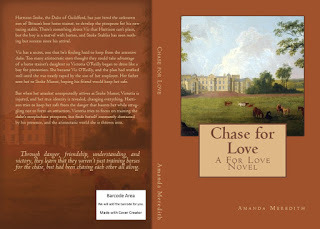
Here's a blurb for the first For Love novel:
Harrison Stoke, the Duke of Guildford, has just hired the unknown son of Britain’s best horse trainer, to develop the prospects for his new racing stable. There’s something about Vic that Harrison can’t place, but the boy is a marvel with horses, and Stoke Stables has seen nothing but success since his arrival.
Vic has a secret, one that he’s finding hard to keep from the attentive duke. Too many aristocratic men thought they could take advantage of a horse trainer’s daughter so Victoria O’Reilly began to dress like a boy for protection. She became Vic O’Reilly, and the plan had worked well until she was nearly raped by the son of her employer. Her father sent her to Stoke Manor, hoping his friend would keep her safe.
But when her attacker unexpectedly arrives at Stoke Manor, Victoria is injured, and her true identity is revealed, changing everything. Harrison tries to keep her safe from the danger that haunts her while struggling not to form an attraction. Victoria tries to focus on training the duke’s steeplechase prospects, but finds herself constantly distracted by his presence, and the aristocratic world she is thrown into.
Through danger, friendship, understanding, and victory, they learn that they weren’t just training horses for the chase, but had been chasing each other all along.
I have posted an excerpt on my website as well. You can find it here: AuthorAmandaMeredith.com
On the Amazon purchase page, you can click 'Look Ahead' and it will show you the first five chapters! Here's the link: Amazon
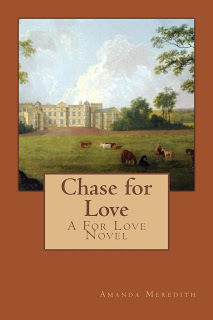
But since you came all the way to my blog for news of my new release, I'm going to give you an exclusive excerpt from Chase for Love that you won't be able to find anywhere else... unless you buy the book! So here we go:
“You cannot be serious,” Victoria whispered, her face pale as she sat at the breakfast table.“I am,” Helena answered with a smile.“I cannot be introduced to society,” Victoria spluttered. “I’m a horse trainer.”“You are also the granddaughter of a marquess,” Helena reminded her. “Irish or not, that makes you a well-born lady, and entitled to a grand introduction in the ton.” “Why?”“Why not?” Helena countered. “You’re of age, you’re unattached, and you come from a highly respectable line of aristocracy.”“I am a horse trainer,” Victoria insisted through clenched teeth.“You can be both,” Helena assured her. “Just not in front of the ton,” she added with a snicker. Victoria snorted as she pushed the food around her plate with her fork. Her face paled and she looked up at Helena.“Don’t young ladies have to be presented to Queen Victoria before their introduction to society?” Helena pursed her lips before answering.“They do,” she murmured. Victoria set her fork carefully on the table. Her hand was shaking so badly that the silver rattled against the plate.“You are quite mad,” she whispered, making Helena chuckle.“The ton will love you,” she answered. “You’re mysterious, interesting, and something they’ve never seen before. Even the scandal involving your father…” She paused, seeing Victoria’s face turn green. “Victoria, you are a lady. Regardless of what has happened, that fact cannot be denied.”“I am the daughter of a runaway lady and an Irish commoner,” Victoria answered, her voice quivering. “You are a well-born lady, Victoria,” Helena corrected. “Your parents’ story will be seen as a Shakespearean romance by the ton. Being the granddaughter of an aristocrat trumps any scandal.”“This is ridiculous,” Victoria grumbled, realizing Helena would not be swayed.“It will be fine,” Helena soothed. “We’ll go visit the seamstress in the village tomorrow to see what she has that we can alter for your size. But we’ll have to make a trip to London for a new wardrobe. You’ll need a spectacular gown to be presented to the queen.”“I know nothing of fashion, Helena.”“Fortunately for you, I know everything about it,” Helena teased. “So, you’re in good hands.”“I have no money to pay for such things,” Victoria stated but sighed with the look Helena was giving her. “I cannot rely on his grace’s charity.”“Oh posh,” Helena interrupted. “It isn’t charity. You are my friend.”“It’s still charity, regardless of our friendship,” Victoria pointed out.“Nonsense,” Helena scoffed. “You won’t sway me, Victoria.” Harrison entered the breakfast room, nearly making Victoria jump out of her chair.“Ladies,” he murmured, bowing to them. “Don’t fret on my account, Miss O’Reilly.”“I wasn’t,” Victoria stuttered. “I mean, I’m not.” She put her shaking hands in her lap as the duke filled a plate at the buffet, before sitting next to Helena. She frowned at the wrappings around her arm. According to Doctor Stanton, she’d need to wear it another week.“I’ve sent a letter to your uncle,” Harrison told her as he poured a glass of orange juice. “I had it taken by personal messenger. We shall hopefully hear back in a week or so.”“Thank you, your grace,” Victoria whispered, her hands still shaking in her lap.“Think nothing of it,” he answered, taking a bite of toast. Victoria squirmed in her chair, clearly uncomfortable. “Honestly, Miss O’Reilly,” he murmured between bites. “You act as if you’re sitting on pins and needles. Surely I don’t make you that nervous.”“You are a man,” Helena pointed out, making Victoria blush.“Really?” Harrison replied with a look of shock. “I hadn’t noticed.”“Your grace,” Victoria spoke up, her voice trembling. “I am… unused to such a situation,” she explained. “I mean no offense.”“None taken,” Harrison replied. “I understand your situation, Miss O’Reilly. I had hoped that by now, you would be able to trust that I mean you no harm.”“I do,” Victoria stuttered. “Trust you, that is.” She sighed, carefully reaching for her tea, and taking a sip. “I do not fear your presence, your grace,” she explained. “Only the… environment. I have been a bit out of practice at…” She looked at Helena, struggling for an explanation. “At all of this.” She gestured at the table as she spoke.“At eating breakfast?” Harrison questioned, giving her a smile.“At being a lady,” Victoria murmured, blushing. Harrison set his toast down and took a drink of juice as he considered her.“Did you not inform me that your father took great pains to see you educated?”“He did, your grace,” Victoria answered. “But knowing and doing are two different things.”“Indeed,” he answered with a smile. “I believe you only need a bit of practice, Miss O’Reilly,” he explained. “Helena would see to that best.” He inclined his head toward his sister and she smiled widely. “I believe I shall host a ball later this month,” He paused as Victoria’s face paled again. “With local families only,” he added. “It shall be good practice for London.”“I can’t attend the season in London until I am presented to the queen,” Victoria reminded him.“Of course,” Harrison answered. “And you shall be, after I hear from your uncle. If he is married, his wife will chaperone you. If he is unattached, Helena can.” Victoria blanched at this but held her tongue. She scowled, staring at her plate as her face reddened. “Is there a problem, Miss O’Reilly?” Harrison questioned with a grin.“Only a hundred of them,” Victoria muttered, making Helena chuckle. “But I see that I have no say in the matter.” Harrison chuckled and finished his toast. “But I would like to talk to you about the horses.”“The horses?” Harrison took a sip of orange juice. “What about them?”“I’d like to be allowed to work with them again.”“Absolutely not,” Harrison answered quickly.“Why not?”“It’s too dangerous,” he replied. Victoria gave a very unladylike snort, making his eyebrows lift.“I worked with them for quite some time when I first came here,” Victoria pointed out.“That was before I knew you were a woman,” he told her.“That isn’t exactly true,” Helena interrupted. “You knew who she was after Cheltenham.”“But she didn’t know that I knew she was a woman,” Harrison growled.“It doesn’t matter if you knew I was a woman or not,” Victoria insisted. “I worked with the horses for months without issue.”“Until you broke your wrist and nearly your neck,” Harrison pointed out.“That was not my fault,” Victoria growled. “Besides, I’m fine. I need to work with the horses, your grace.”“No.”“Harrison,” Helena murmured, laying a hand on his arm.“No,” he repeated firmly. “It’s too dangerous. Now that everyone knows who you are… It’s simply too dangerous for a woman to be in the stables.”“That’s ridiculous,” Victoria argued. “You’re treating me as if I were prisoner here.”“Now who’s being ridiculous?” Harrison asked, giving her a small smile. Victoria scowled, clenching her fingers in her lap. “You are not a prisoner here, Miss O’Reilly,” he told her gently. “You are a guest.”“Will you permit me to ride?” Victoria asked carefully.“Of course,” Harrison answered. “Provided you have a chaperone with you.” Victoria groaned at his answer. “And no racing.” Her mouth closed with an audible snap. She stood, making Harrison hastily rise from his own seat.“I’ve lost my appetite,” she whispered, her voice shaking with emotion. “Excuse me, your grace,” she curtsied and left the room without waiting for his reply. He waited until the door shut behind her before taking his seat again.“What was that all about?” he grumbled, taking another piece of toast.“You are so obtuse,” Helena growled as she threw her napkin to the table and stood. Harrison rose again, nearly knocking his plate from the table in his haste.“What did I say?” he complained, but his sister didn’t answer as she strode from the room. “Damn and blast,” he grumbled as he sat heavily in his chair. “Women.”
I hope you enjoyed some sneak peaks at my new release. The next For Love novel, Offer For Love, will be out by the end of the year!
The first novel is called Chase for Love and centers on the late Victorian horse racing and steeplechase scenes. I've had a lifelong love for horses and have always wanted to incorporate that into a novel.
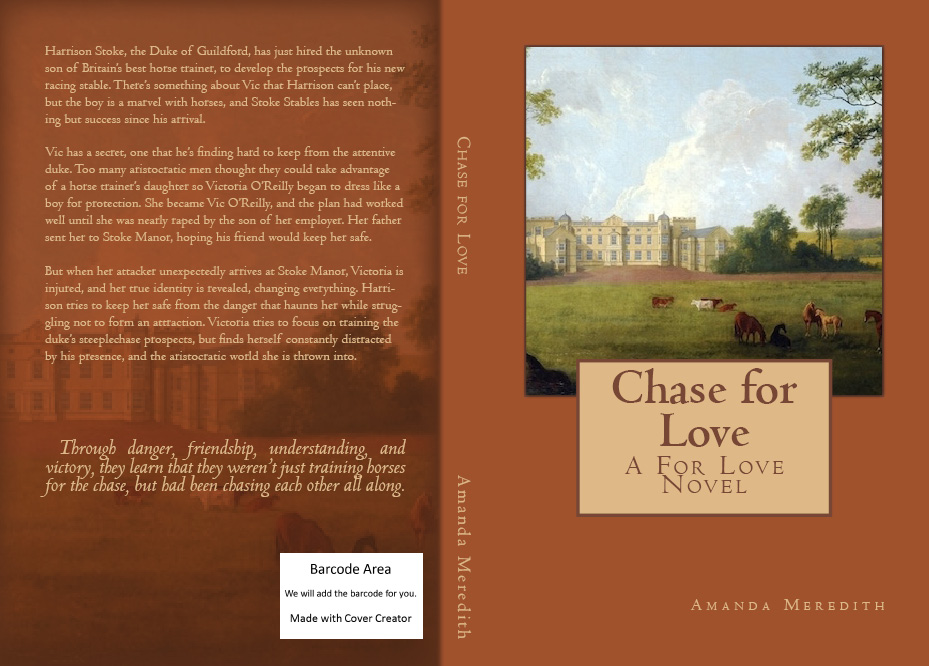
Here's a blurb for the first For Love novel:
Harrison Stoke, the Duke of Guildford, has just hired the unknown son of Britain’s best horse trainer, to develop the prospects for his new racing stable. There’s something about Vic that Harrison can’t place, but the boy is a marvel with horses, and Stoke Stables has seen nothing but success since his arrival.
Vic has a secret, one that he’s finding hard to keep from the attentive duke. Too many aristocratic men thought they could take advantage of a horse trainer’s daughter so Victoria O’Reilly began to dress like a boy for protection. She became Vic O’Reilly, and the plan had worked well until she was nearly raped by the son of her employer. Her father sent her to Stoke Manor, hoping his friend would keep her safe.
But when her attacker unexpectedly arrives at Stoke Manor, Victoria is injured, and her true identity is revealed, changing everything. Harrison tries to keep her safe from the danger that haunts her while struggling not to form an attraction. Victoria tries to focus on training the duke’s steeplechase prospects, but finds herself constantly distracted by his presence, and the aristocratic world she is thrown into.
Through danger, friendship, understanding, and victory, they learn that they weren’t just training horses for the chase, but had been chasing each other all along.
I have posted an excerpt on my website as well. You can find it here: AuthorAmandaMeredith.com
On the Amazon purchase page, you can click 'Look Ahead' and it will show you the first five chapters! Here's the link: Amazon

But since you came all the way to my blog for news of my new release, I'm going to give you an exclusive excerpt from Chase for Love that you won't be able to find anywhere else... unless you buy the book! So here we go:
“You cannot be serious,” Victoria whispered, her face pale as she sat at the breakfast table.“I am,” Helena answered with a smile.“I cannot be introduced to society,” Victoria spluttered. “I’m a horse trainer.”“You are also the granddaughter of a marquess,” Helena reminded her. “Irish or not, that makes you a well-born lady, and entitled to a grand introduction in the ton.” “Why?”“Why not?” Helena countered. “You’re of age, you’re unattached, and you come from a highly respectable line of aristocracy.”“I am a horse trainer,” Victoria insisted through clenched teeth.“You can be both,” Helena assured her. “Just not in front of the ton,” she added with a snicker. Victoria snorted as she pushed the food around her plate with her fork. Her face paled and she looked up at Helena.“Don’t young ladies have to be presented to Queen Victoria before their introduction to society?” Helena pursed her lips before answering.“They do,” she murmured. Victoria set her fork carefully on the table. Her hand was shaking so badly that the silver rattled against the plate.“You are quite mad,” she whispered, making Helena chuckle.“The ton will love you,” she answered. “You’re mysterious, interesting, and something they’ve never seen before. Even the scandal involving your father…” She paused, seeing Victoria’s face turn green. “Victoria, you are a lady. Regardless of what has happened, that fact cannot be denied.”“I am the daughter of a runaway lady and an Irish commoner,” Victoria answered, her voice quivering. “You are a well-born lady, Victoria,” Helena corrected. “Your parents’ story will be seen as a Shakespearean romance by the ton. Being the granddaughter of an aristocrat trumps any scandal.”“This is ridiculous,” Victoria grumbled, realizing Helena would not be swayed.“It will be fine,” Helena soothed. “We’ll go visit the seamstress in the village tomorrow to see what she has that we can alter for your size. But we’ll have to make a trip to London for a new wardrobe. You’ll need a spectacular gown to be presented to the queen.”“I know nothing of fashion, Helena.”“Fortunately for you, I know everything about it,” Helena teased. “So, you’re in good hands.”“I have no money to pay for such things,” Victoria stated but sighed with the look Helena was giving her. “I cannot rely on his grace’s charity.”“Oh posh,” Helena interrupted. “It isn’t charity. You are my friend.”“It’s still charity, regardless of our friendship,” Victoria pointed out.“Nonsense,” Helena scoffed. “You won’t sway me, Victoria.” Harrison entered the breakfast room, nearly making Victoria jump out of her chair.“Ladies,” he murmured, bowing to them. “Don’t fret on my account, Miss O’Reilly.”“I wasn’t,” Victoria stuttered. “I mean, I’m not.” She put her shaking hands in her lap as the duke filled a plate at the buffet, before sitting next to Helena. She frowned at the wrappings around her arm. According to Doctor Stanton, she’d need to wear it another week.“I’ve sent a letter to your uncle,” Harrison told her as he poured a glass of orange juice. “I had it taken by personal messenger. We shall hopefully hear back in a week or so.”“Thank you, your grace,” Victoria whispered, her hands still shaking in her lap.“Think nothing of it,” he answered, taking a bite of toast. Victoria squirmed in her chair, clearly uncomfortable. “Honestly, Miss O’Reilly,” he murmured between bites. “You act as if you’re sitting on pins and needles. Surely I don’t make you that nervous.”“You are a man,” Helena pointed out, making Victoria blush.“Really?” Harrison replied with a look of shock. “I hadn’t noticed.”“Your grace,” Victoria spoke up, her voice trembling. “I am… unused to such a situation,” she explained. “I mean no offense.”“None taken,” Harrison replied. “I understand your situation, Miss O’Reilly. I had hoped that by now, you would be able to trust that I mean you no harm.”“I do,” Victoria stuttered. “Trust you, that is.” She sighed, carefully reaching for her tea, and taking a sip. “I do not fear your presence, your grace,” she explained. “Only the… environment. I have been a bit out of practice at…” She looked at Helena, struggling for an explanation. “At all of this.” She gestured at the table as she spoke.“At eating breakfast?” Harrison questioned, giving her a smile.“At being a lady,” Victoria murmured, blushing. Harrison set his toast down and took a drink of juice as he considered her.“Did you not inform me that your father took great pains to see you educated?”“He did, your grace,” Victoria answered. “But knowing and doing are two different things.”“Indeed,” he answered with a smile. “I believe you only need a bit of practice, Miss O’Reilly,” he explained. “Helena would see to that best.” He inclined his head toward his sister and she smiled widely. “I believe I shall host a ball later this month,” He paused as Victoria’s face paled again. “With local families only,” he added. “It shall be good practice for London.”“I can’t attend the season in London until I am presented to the queen,” Victoria reminded him.“Of course,” Harrison answered. “And you shall be, after I hear from your uncle. If he is married, his wife will chaperone you. If he is unattached, Helena can.” Victoria blanched at this but held her tongue. She scowled, staring at her plate as her face reddened. “Is there a problem, Miss O’Reilly?” Harrison questioned with a grin.“Only a hundred of them,” Victoria muttered, making Helena chuckle. “But I see that I have no say in the matter.” Harrison chuckled and finished his toast. “But I would like to talk to you about the horses.”“The horses?” Harrison took a sip of orange juice. “What about them?”“I’d like to be allowed to work with them again.”“Absolutely not,” Harrison answered quickly.“Why not?”“It’s too dangerous,” he replied. Victoria gave a very unladylike snort, making his eyebrows lift.“I worked with them for quite some time when I first came here,” Victoria pointed out.“That was before I knew you were a woman,” he told her.“That isn’t exactly true,” Helena interrupted. “You knew who she was after Cheltenham.”“But she didn’t know that I knew she was a woman,” Harrison growled.“It doesn’t matter if you knew I was a woman or not,” Victoria insisted. “I worked with the horses for months without issue.”“Until you broke your wrist and nearly your neck,” Harrison pointed out.“That was not my fault,” Victoria growled. “Besides, I’m fine. I need to work with the horses, your grace.”“No.”“Harrison,” Helena murmured, laying a hand on his arm.“No,” he repeated firmly. “It’s too dangerous. Now that everyone knows who you are… It’s simply too dangerous for a woman to be in the stables.”“That’s ridiculous,” Victoria argued. “You’re treating me as if I were prisoner here.”“Now who’s being ridiculous?” Harrison asked, giving her a small smile. Victoria scowled, clenching her fingers in her lap. “You are not a prisoner here, Miss O’Reilly,” he told her gently. “You are a guest.”“Will you permit me to ride?” Victoria asked carefully.“Of course,” Harrison answered. “Provided you have a chaperone with you.” Victoria groaned at his answer. “And no racing.” Her mouth closed with an audible snap. She stood, making Harrison hastily rise from his own seat.“I’ve lost my appetite,” she whispered, her voice shaking with emotion. “Excuse me, your grace,” she curtsied and left the room without waiting for his reply. He waited until the door shut behind her before taking his seat again.“What was that all about?” he grumbled, taking another piece of toast.“You are so obtuse,” Helena growled as she threw her napkin to the table and stood. Harrison rose again, nearly knocking his plate from the table in his haste.“What did I say?” he complained, but his sister didn’t answer as she strode from the room. “Damn and blast,” he grumbled as he sat heavily in his chair. “Women.”
I hope you enjoyed some sneak peaks at my new release. The next For Love novel, Offer For Love, will be out by the end of the year!
November 30, 2017
Making Time to Write - Thursdays with the Author - November 30, 2017
Making Time to Write...
When Life Just Won't Leave You The Hell Alone
I've touched on this topic a few times throughout the course of Writer's Ramblings. Writing is hard. Finding time to write is even harder. Life is constantly getting in the way.
It doesn't matter if you're a teenager, taking your writing seriously though you think no one else will. Or a single college student scribbling a few lines of poetry between classes. Or newly married, jotting down lines while dinner is burning cooking. Or pregnant, journaling between reading every pregnancy and newborn book ever published. Or a first time mom, filling out lines in a baby book and hurrying through a few paragraphs while your baby naps for roughly two minutes and thirty seconds. Or chasing a brood of toddlers as you resist joining them as they pull out your hair, before sneaking in a few chapters when they are finally all sleeping for the night, only to fall asleep on your keyboard after a few lines. Or dealing with a hormonal, a-hole teenager, and using that angst and stubbornness to add depth to your characters. Or working that 9-5 10-12, really-wish-you-could-afford-to-quit job then pounding out 5,000 words while the Chinese from last night gets cold... again.
Or an empty-nester, finishing a novel and hoping that the absence of a daily writing schedule won't make you think too much about how quiet your house now is. Or enjoying retirement and adding first-hand knowledge of amazing locations to your book.
It doesn't matter where, or when, you are in life, finding time to write can be anywhere from hard, to down-right impossible. But there are ways to squeeze in a few moments to jot down words or scribble in a note-pad. Life doesn't stop just because you have an amazing story in your head. But the ups and downs, the crazy, beautiful, chaotic, amazing life you live, only adds to what you're writing.
We've all heard exercise enthusiasts preach about carving time out of your day to get a daily workout in. Like waking up a half hour early to run on the treadmill before life really starts swinging. I've never been much for working out, but waking up a little early to write isn't a bad idea. If you're set on getting your work-out mojo on, record yourself speaking out ideas while you're burning through those calories. Then, when you actually have time, listen through the recording and type it out.
If you have younger kids, they will nap more than a few minutes at a time eventually. This is some prime writing time, when the house is quiet. Of course, falling asleep yourself is always an issue, but if you manage to keep your eyes open, you can keep those fingers moving.

For older kiddos, if you're at home, school is a blessing in disguise. Wave them off to the bus then wave hello to your laptop and spend a decent chunk of the day writing while catching up on housework. Working mom? You can type between bites on your lunch break, just be sure not to spill on your keyboard.

After everyone else goes to bed for the night, crack open a beer or pour a glass of wine, and commit a half hour or more to writing. Sure you're losing out on some sleep, and possibly some nooky with the significant other, but you're writing. Save the nooky and sleep for after, where you can test out the moves to the romantic scene you just wrote, in real life.
When you're on the go and something pops into your head, don't lose it, whip out that smart phone that's in your pocket, but instead of opening Facebook, open your notes app and type out what you're thinking. You won't regret it later when your small idea turns into four or five new chapters, maybe even a new book idea.
My favorite way to make time for writing is to do your own writing retreat. You can make this as small or as big as you'd like. Ask the spouse to take care of the kiddos for a bit and sneak off to a Starbucks, or a quite room, or even a park, and get a few hours of uninterrupted writing in. Or take a full day away. Pay a babysitter, beg a family member, trade the spouse for a 'I won't say I'm not in the mood' card, and spend the day writing. If you can, make a weekend out of it. There's tons of writing retreats available around the world for a few days or weeks of literary escape. Some are even low-cost or free! Get away from the usual, the distraction, the chaos, and completely focus on what you're writing.
I went on a family vacation to Fort Morgan, AL a few years back and while the grandparents took the kiddos down to the beach, I was able to sneak an hour of writing time on the back deck. I could see my kids playing in the surf, felt the ocean breeze on my face, smelled the salt water, listened to the rhythmic crashing of the waves, heard the gulls crying out as they coasted above the sand. It inspired me to begin a new book located on the gulf coast. Just an hour of peace in the sun, and a new novel began.
Sometimes the smallest amount of time can have the biggest results.

So no matter where you are in life, how much chaos you're experiencing, how tired you are, find a few minutes or more to sit and write. It's not about how long it takes you to finish. It's about never giving up. You'll finish it when it, and you, are ready. And that will make it the best work you've ever done.
August 13, 2017
What is a Committed Writer? - Writer's Ramblings - August 13, 2017
We've all seen the memes and quotes by successful authors, attributing their successes to their commitment to writing. One writes a thousand words a day, another any words a day, so long as they have written something. Another writes only with detailed outlines to stay on track. Yet another writes only when they've closed off the entire world and it's only them and the keyboard. Some use journals, and those daily scribbles become their next novels. But what makes them a committed writer?
All of it.
It doesn't matter what methods you use to write. How little or how often to put pen to paper, or fingers to keyboard.
What matters, is that you never stop, even if there are large gaps in your works: you never gave up; you never quit.
My first novel took eight years from writing to publishing. Did I have days that I wrote absolutely nothing? I sure did. I even went weeks and months without writing. Work, family, pets, travelling, hell, even the weather, could interrupt my writing groove. I didn't let it bother me, or kill the passion I had for the written word. I wrote when I could, and found that when I did find the time, I more than made up for the lost time.
Last year, we welcomed our third child. My husband lost his job due to a horrible economy, and we found that we had to leave our home-state behind, as well as both our families. Deciding to move across the country with three kids (one being an infant), four pets, and fourteen year's worth of accumulated home, by ourselves, is not something I would recommend. But it's what we had to do. We left for Colorado shortly after Christmas and haven't looked back.
Of course, it was a huge adjustment: helping my older kids adjust to making new friends, learning how to navigate an unfamiliar area, and everything else that comes with a major move, left practically no time for writing in my blog, or working on my unfinished novel. It took over six months to really get back in the groove.

But if I look at the notes app on my phone, I can see list after list of ideas and story-lines that have popped into my head over the past year. I jotted them down so I wouldn't forget them and worked on them when I could.
I just typed the end on my latest novel just this week. It was like being with a friend you hadn't seen in years and you fell right back into it like there was no absence at all. I went nearly a year without moving that word count, but I had persisted, and eventually, finished it. The gaps in writing don't make you less of a writer. Writing daily doesn't make you a committed one. Never giving up, and somehow, someway, eventually finishing what you started: That's what makes you a committed writer.
May 1, 2016
Giving and Receiving Constructive Criticism - April 28, 2016 - Thursdays with the Author
At some point in our lives, as a reader, or a writer, we've been gotten or given constructive criticism.
Here's the difference between plain ole' criticism and constructive criticism.
Criticism is all negative. What you're doing wrong, all your mistakes, how you should've known better. Criticism can kill a writer's spirit.
 Constructive Criticism is negative AND positive. It points out your flaws and mistakes while complimenting your successes and telling you how to fix or improve on what you've done wrong. Constructive criticism is a learning experience and helps the author grow and mature as a writer.
* * * * * * *
For Readers:
If it's a first/early draft, there's going to be problems. It's guaranteed. It's impossible to have a polished piece without multiple revisions and corrections. Take that into consideration when reading an early draft. You're in for a garbage pile of problems. Unless the reader has specifically asked you for a detailed edit, you can gloss over the glaring problems like punctuation, spelling, and grammar, and focus more on what makes the story really great: flow, dialogue, story-line, characters, theme, etc. Those are the things that make an author great. Punctuation and grammar can be fixed in later revisions.
Now if you're reading what the author says is a final version, or if you're reading a published copy, there should be hardly any technical/grammatical mistakes. I've read/reviewed quite a few books in the last few years, mostly from self-published and indie authors, and unfortunately have seen a fair share of such mistakes in already published books. Maybe the author didn't receive any badly needed constructive criticism before publishing, but there's no excuse for finding so many mistakes in a published novel.
In these cases, it's very easy just to criticize. But you still need to keep in constructive! I've reviewed a couple books with such problems. The story itself was fine, but it had way too many technical errors. In those cases, I chose to contact the author personally with the problems I'd found with suggestions on how to correct them. My public review focused on the meat of the story, like I mentioned above, the flow, theme, characters, etc.
When passing on your constructive criticism, it's good to start with the positive. Mention what you liked and/or loved about what you read BEFORE diving in to what needed work. An author is more likely to take your constructive criticism and apply it if you start off this way.
Always remember that you're critiquing the writing not the writer. Don't make your critique personal, keep it focused on what you've read.
If you're reading a book with the express purpose of detailed critiquing, make sure you take notes from the start. If you've been given a print copy or manuscript, use a red pen and mark as you go. Dog-ear the pages so you can find them easily later. If you've been given a Microsoft document, turn on the track changes app and mark as you go. If you've been given an eBook, get some note paper out and write down your observations and corrections chapter by chapter. For eBooks, using the page read won't work because each eReader has different size pages. Start with chapter, paragraph, then line, to help the author find the places you're marking.
Remember: The most important things isn't what you liked and didn't like. It's why you like and didn't like. If you don't have a reason for your like or dislike, you aren't helping the writer learn anything.
For Author:
As an author, you need to be able to handle such feedback. A reader wouldn't contact you, point out your mistakes, and help you find ways to fix them, if they weren't trying to help you. The reader might have been in the same circumstances themselves at one point. Constructive criticism is teaching you something, and you need to be open to learning.
Remember that the you, the author, is separate from your work. The criticism is for something you wrote, not for you as the writer. Even if there's a lot of critique, it does not mean you are a bad writer. If you're receiving constructive criticism at all, it means that you are a good enough writer that the reader wants to invest their time in helping you become even better. And that should feel good.
 Constructive criticism and critiques are suggestions. You don't have to follow every one. Every reader has different tastes, maybe your novel was not in their comfort zone. If you get more than one critique for the same thing there's probably something you need to fix. But remember, you're the author, you have the power to change or not change anything about your story.
 On the same hand, don't let your hackles come up from pride and not listen to anything. Be open but realistic. Usually it's pretty easy to tell if someone is making a good suggestion or if it's because they just didn't jive with your story. If you're unsure if a certain suggestion NEEDS to be changed, try having a few other people read through the same section. If they're suggesting the same things, then you probably need to change it.
* * * * * * *
Constructive Criticism, especially for self-published authors, can be one of the only ways we can improve our writing. Traditionally published authors get plenty of it from their agent, editor, and publisher. Most of the time those authors have no choice about whether they want to fix it or not. As a self-published author, you have a lot more options on how you want to edit your work. Don't ignore good advice for the sake of your pride. Don't be afraid to ask readers or other authors to critique your work. Don't be upset when they find mistakes and make suggestions. It's all a part of becoming a great author.
Writer's Ramblings

Author News, Advice, Tips, and Resources for Writers and Sharing of General Awesomeness!
- Amanda Meredith's profile
- 15 followers

