
Michelle Tupy's Blog
January 7, 2018
TIME TO PUT PEN TO PAPER
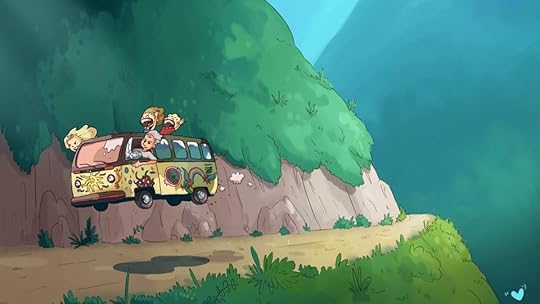 Well 2018 is here and it is time to sit down and put pen to paper - well not literally as my handwriting is atrocious. But our story must be told - in fact, it needs to be told - for many reasons.
We want to encourage families to travel first and foremost. We want people to know that whatever may be thrown at them in life, they can overcome - we are literally living proof of that. We ran out of money, fell ill on numerous occasions and broke down in every country (except Belize and Honduras, but that doesn't really count as we were only there for a day in each one). But despite all that, we made some amazing friends, had many wonderful experiences, got to see the kindness of strangers play out over and over again, and got to show our kids just how beautiful the world really is. We learnt a lot about ourselves (and others) in the process as well.
So there is no time like the present to get to work. And, of course, never doing anything by halves, I now have a wonderful mentor in the form of Kim Dinan, the author of the The Yellow Envelope, who is going to help me with my book proposal to publishers once I get things in place. If you haven't read her book, you really should.
So if you don't hear from me, you know that I am working behind the scenes writing a book proposal and working on the manuscript.
I will keep you updated as to my progress.


December 17, 2017
Merry Christmas and a Happy New Year

Thank you to all of my wonderful clients and supporters.
As a reminder, my virtual office will be closed from Friday 22 December until 8 January. I will respond to any messages after that date.
I look forward to helping your business and your projects move forward in 2018.
August 4, 2017
The Key to Having a Stress-Free Holiday
 What is the key to having a stress-free holiday? In your mind, you imagine an idyllic setting, cocktail in hand watching the waves lap onto the sand. It sounds relatively relaxing, but unfortunately, it doesn’t always work out that way. Your holiday may be providing you with time away from work, but in reality, it may also be adding to your anxiety.
So how can you overcome the stress and let your hair down?
The key to having a stress free holiday
The most important thing you need to realise when planning your holiday is that not everything will be perfect. Real life does not always mirror the colorful brochures you see in the travel agency. One trick to enjoying your vacation is to understand that things CAN and DO go wrong. It is time to lower your expectations down a notch.
Enjoy each moment for what it brings
So, your plane is delayed; but, at least you are on the plane! Your luggage is temporarily lost; but, at least it gives you an opportunity to buy a new outfit in the meantime. Your meal is not as delicious as you had hoped; but, at least you don’t have to wash the dishes! Change the narrative in your head from a negative perspective to a positive one and enjoy each moment.
Allow plenty of time to do nothing
It may sound a little dull for those who like endless adventure and excitement, but to get into the stress-free mode, you need time to unwind. Keep your itinerary flexible to maintain control of your days. If you want to sleep in, you can. If you feel the need to relax in the bath with a glass of wine, give yourself permission.
Leave the guilt at the door
Guilt can be a huge issue when you take your vacation. Shouldn’t you be working? Absolutely not! Leave the guilt at the door, switch the phone off and add an automated reply to your emails. They will still be there waiting for you on your return.
Don’t believe the hype
Not every destination lives up the hype, and not everyone loves each place they visit. Remember to keep those expectations in check and be realistic. Perhaps the beach resort is not as quiet as you imagined! Even if you don’t love 100% of your holiday, there will still be many magical moments that you can focus on.
Life does not stop when you are on vacation
Unfortunately, life will not stop while you are on vacation and you cannot control every aspect of your vacation life, work life and home life. Trying to micromanage everything will send your thoughts into a tailspin. Maintain your focus on your holidays. And if you do have to check in at work or home, loosen the reins a little to minimise the worry.
You can’t keep everyone happy all of the time
More and more people are giving up their vacations for overtime pay. However, vacations are a necessary part of life and will help you refresh and recharge, so you perform better at work and life in general. Taking time away for a holiday may not suit everyone – and that’s okay. The key to having a stress free vacation is realising that the only person you need to concern yourself about is you (and your travel companions) – the rest will take care of itself.
May 10, 2017
The Most Important Things You Should Do When Choosing a Lawyer
 If you are seeking a legal representative, here is a list of the most important things you should do when choosing a lawyer. While money is a huge factor, not everything comes down to the cost. A lawyer represents many of the biggest hurdles you have to overcome in your lifetime. Therefore, it is vital that you choose one that is the right fit for you.
The most important things you should do when choosing a lawyer
Selecting the right lawyer will boil down to asking the right questions in your initial visit or telephone call. Presuming that each lawyer is the same is the equivalent of thinking that a steak restaurant is going to serve you up a plate of sushi. Each lawyer has their own specialty and area of expertise that you need to be made aware of. So what questions, should you put to them?
Do they practice in your field of expertise?
Depending on your legal requirements, you first need to see if they deal with similar situations such as yours. A lawyer to help buy your house will be different to criminal law, as an example. When you make contact, explain exactly why you need a lawyer. Then confirm if it is something that they or someone in their office can handle.
If they can’t help you, can they recommend someone else?
If they cannot assist you, is there anyone else they can recommend? Getting a referral from a professional in the industry may be worthwhile in your particular circumstances. Perhaps they know of someone who specializes in the necessary field or has been down this road before. The worst thing they will say is no, so don’t be afraid to ask.
Do they charge a flat rate or by the hour?
Most lawyers will charge one of two ways. The first will be at an hourly rate, dependent on their experience. The second, less common, method is via a flat rate; so no matter how long it takes for them to complete the task, the fee will be the same. Make sure you check whether there are any additional charges included such as couriers, filing fees, photocopies, etc.
Are they available to answer any questions you may have at a later date?
On your visit, you may be too nervous to remember all those questions circulating in your head. Confirm with them whether it is okay to send a follow-up email with any further questions which crop up. If they seem present and available to your demands, then they may just be a great fit for you. You need to make sure that your legal representative is responsive at all times to avoid any confusion.
Can you think about it a little before you hire them?
What you don’t need at this point is a lawyer pressing you to decide then and there on the spot. It is well within your right to shop around for another. Give yourself some time to make your decision. You will know when it feels right and you come across a lawyer who is in tune with your needs.
November 15, 2016
Fast and Easy Tips for Hiring a Good Accountant
 Looking for fast and easy tips for hiring a good accountant for your business or individual finances? There are many experts that you need in your life to ensure that things run smoothly. From your doctor to your dentist, each professional you hire is there to provide their expertise and solve your problems. In each case, it’s important that the staff you select are a good match for your personality and your requirements.
A good accountant is no different. They are worth their weight in gold, ultimately assisting you in maximising your income and minimising those taxes. So what are you waiting for? Here are our top tips to ensuring you hire the best accountant for your needs.
Fast and easy tips for hiring a good accountant
Knowing what you want is by far and away the best tip there is. What exactly are you hoping to get from your accountant? Do you need them to prepare your taxes or sort out your financials? Understanding your needs is the first step in sourcing a good accountant.
Ask the right questions
Not every accountant will be the ideal candidate for you. Therefore, prepare a list of questions to get to the bottom of exactly what they are offering to avoid any surprises. Do they provide monthly bookkeeping as well as business taxes? What exactly can you expect to pay for their services?
Get a referral from a personal contact
Like a good hairdresser, finding someone that ‘gets’ you can be a challenge. Ask around and see if there is an accountant that someone near and dear to you recommends. Find out what they like about them. Ask them what services they are given and at what price.
Double check their qualifications and experience
Don’t be swayed by the promise of a large check following your tax return submission. Always confirm their qualifications and experience thoroughly. If in doubt, ask them for a reference so you can verify they are as good as they say they are.
Understand what they need from you
Make sure you know what is expected of you up front. Can you do everything that is required from your perspective? Do you need to visit their office and supply them with physical paperwork, or will electronic copies sent through email be suitable? Does the way they operate meet your expectations?
Gauge their availability
Accountants may not be known for their customer service skills, but it is still an important and real aspect of their job. If you don’t hear from them for days, perhaps they are not the one for you. You need to know that you can get a hold of them when you need them the most.
Consider whether you need a specialised service
Not everyone has the same accounting requirements, and there are many situations which require a specialist’s touch. Ask them specifically whether they have the experience to help you. Do their regular services cover your requirements? Or do you need to pay over and above to get the assistance you need?
Undertaking the legwork before you hire is vital to a successful match. There is no shortcut when it comes to hiring a good accountant, so make sure you do your homework before you sign on the dotted line.
April 11, 2016
Three Things You Need to Know About to Choose a Good Wine
 If you have ever stood looking bewildered in front of a shelf of wine, then understanding these three things you need to know about to choose a good wine is particularly relevant. Wine can be confusing, but it can also be downright delicious. For this reason, it is worthwhile learning about which wine goes with what food and the best way to select a good drop.
Three things you need to know about to choose a good wine
Only three, you might say? Well, the subject of wine can bamboozle the best of us, so I have attempted to narrow it down to just three things. Once you have these under your belt, you can continue to taste test your way to the level of a wine expert. Remember, everyone has to start somewhere, and one day, you too will be choosing wine for far more than the lovely label!
1. Partner your wine with your food
When in doubt, always try to pair your wine with your food. While the art of partnering food with wine can get very complex, understanding the basics will hold you in good stead. For starters, remember that seafood, vegetables and chicken work well with a lovely crisp white wine while red meats and even some cheese go better with a rich red. Sparkling wine is a good all-rounder and can get you out of many tricky situations.
Now let’s break it down a bit further. Try a Chardonnay with chicken or a Pinot Grigio with fish. Merlot can pair well with beef while a Pinot Noir can complement lamb. Opt for a Shiraz with your cheese, and finish with a sweet wine to match your dessert. Remember these basics and you can’t go wrong.
2. Get up to speed with your wine terminology
Understanding the world of wine is like learning a whole new language. But once you understand, you will have an easier time choosing a bottle. The language of wine focuses on descriptive words for the main part. Deciphering these words will make your selection so much less complicated.
Now you need to pick the words which appeal to you the most. Words such as soft, round, crisp, refreshing, oaky and fruity get thrown around a lot. Read the labels carefully and choose which ones sound particularly appealing. Sometimes it can be a case of trial and error.
3. Good wine is not always expensive
You may find this last point surprising, but it is true in a lot of cases. Price is often not indicative of quality. There are some wines at a low price which are outstanding. Likewise, there are many wines out there selling for over $50 a bottle that you wouldn’t even pass on to your worst enemy.
If you have a particular budget in mind, then don’t be afraid to ask for advice. You may end up finding a great bottle at a $30 price point without having to spend at least double that for the quality. Recommendations can be especially useful before you spend $90 on a bottle that won’t pair with any food on your table. Again practice makes perfect when it comes to taste testing, so if you get the chance, definitely try before you buy.
August 12, 2015
"She Said No To The Wind" Poetry Inspiration
by Cesar Moran-Cahusac  How did this poem come about?
Well one night I walked into Paddy’s, the Irish bar in Cusco; the one the proudly says it’s the highest Irish owned bar in the world and sat at the bar. As I ordered a bottle of beer and a glass I saw that the bar was packed with thirsty parishioners, all rowdy and telling each other of their adventures while visiting Machu Picchu or maybe celebrating their Salkantay hike. There was laughter and a lot of clanking.
The bartender, a young woman, was running back and forth serving and talking with a big smile that shone more with her dark black curls. But the peacefulness was interrupted by one customer who insisted in inviting her to partake in shots. She laughed and kindly rejected his offer, but the man insisted and got her to have a shot or two with him.
This individual was quite drunk and behaved as a continuous and persistent whirlwind that was full of heat. or of himself. and wanted her to drink more while boasting out loudly that he would take her with him that night. As the young woman moved about I got a glimpse of a phoenix she had as a tattoo on her back that swirled as she was serving and bringing drinks.
This interaction made me feel like I was in the middle of a windy day where the leaves are blown carelessly and the feathers of the fire bird flew with them. In fact every time she said NO, this man blew a fit that sent his frustration all over the room like those colorful leaves and feathers.
In a brief moment she turned; we exchanged glances and she smiled at me as if to say: “No worries I have this under control. I am used to taming ferocious winds that don’t bite." And as she turned her head back to him, the gentleman left tumbling away with a breeze.
Now enjoy the poem!
She Said No To The Wind Wuthering wind came and blasted her with words and she said No.
The wind was bringing up storms, chasing her with arrogant bluffs and she said No
In doing so she rode them like an acrobat, a barefoot fire dancer.
As she hovered she swiftly looked at me, her gaze had beaming sparks.
In an instant the wind dumped air all over the place and she said No
Delivering vanquishing thoughts the wind smirked; stomping hurricanes on the walls and she said no.
She turned around and the phoenix on her back, brushed its tail on my face.
The event drove me to serene incantations; into a land of imaginary constellations.
In her move a myriad of colorful feathers flew through the room as she said no.
The wind left howling; dragging a breeze and with her eyes said: “I like your energy.”
I slid on her grin, fantasizing that one could see the sun, the moon and stars through her dark curls.
I said: “How so?”
She: “When your eyes crossed mine I read fantasy, a will for care.”
I held her hand and we danced to courageous tunes leaving a trail of happiness over the wooden floor.
In the affair the solar bird was flicking its feathers; creating a maze of delight.
Cesar Moran-Cahusac is an ecologist, peace advocate and martial artist whose poetry weaves an expansive range of exotic, sensual and surprising life experiences into a dance of verbal refinement. From pig farmer to poet, from Sensei to CEO, from dreamer to truth-seeker, a man without energy and enthusiasm, he certainly is not. After gaining a master's degree from the Yale School of Forestry, Cesar returned to his native Peru to lead the Amazon Conservation Association, an international NGO spanning three countries: the United States, Bolivia and Peru. Cesar is a third-degree black belt in Aikido, a Japanese martial art known as "The Way of Peace," and the students at his dojo in Cusco, Peru, lovingly know him "Sensei." She Said No to the Wind is Cesar's first full length publication.
How did this poem come about?Well one night I walked into Paddy’s, the Irish bar in Cusco; the one the proudly says it’s the highest Irish owned bar in the world and sat at the bar. As I ordered a bottle of beer and a glass I saw that the bar was packed with thirsty parishioners, all rowdy and telling each other of their adventures while visiting Machu Picchu or maybe celebrating their Salkantay hike. There was laughter and a lot of clanking.
The bartender, a young woman, was running back and forth serving and talking with a big smile that shone more with her dark black curls. But the peacefulness was interrupted by one customer who insisted in inviting her to partake in shots. She laughed and kindly rejected his offer, but the man insisted and got her to have a shot or two with him.
This individual was quite drunk and behaved as a continuous and persistent whirlwind that was full of heat. or of himself. and wanted her to drink more while boasting out loudly that he would take her with him that night. As the young woman moved about I got a glimpse of a phoenix she had as a tattoo on her back that swirled as she was serving and bringing drinks.
This interaction made me feel like I was in the middle of a windy day where the leaves are blown carelessly and the feathers of the fire bird flew with them. In fact every time she said NO, this man blew a fit that sent his frustration all over the room like those colorful leaves and feathers.
In a brief moment she turned; we exchanged glances and she smiled at me as if to say: “No worries I have this under control. I am used to taming ferocious winds that don’t bite." And as she turned her head back to him, the gentleman left tumbling away with a breeze.
Now enjoy the poem!
She Said No To The Wind Wuthering wind came and blasted her with words and she said No.
The wind was bringing up storms, chasing her with arrogant bluffs and she said No
In doing so she rode them like an acrobat, a barefoot fire dancer.
As she hovered she swiftly looked at me, her gaze had beaming sparks.
In an instant the wind dumped air all over the place and she said No
Delivering vanquishing thoughts the wind smirked; stomping hurricanes on the walls and she said no.
She turned around and the phoenix on her back, brushed its tail on my face.
The event drove me to serene incantations; into a land of imaginary constellations.
In her move a myriad of colorful feathers flew through the room as she said no.
The wind left howling; dragging a breeze and with her eyes said: “I like your energy.”
I slid on her grin, fantasizing that one could see the sun, the moon and stars through her dark curls.
I said: “How so?”
She: “When your eyes crossed mine I read fantasy, a will for care.”
I held her hand and we danced to courageous tunes leaving a trail of happiness over the wooden floor.
In the affair the solar bird was flicking its feathers; creating a maze of delight.
Cesar Moran-Cahusac is an ecologist, peace advocate and martial artist whose poetry weaves an expansive range of exotic, sensual and surprising life experiences into a dance of verbal refinement. From pig farmer to poet, from Sensei to CEO, from dreamer to truth-seeker, a man without energy and enthusiasm, he certainly is not. After gaining a master's degree from the Yale School of Forestry, Cesar returned to his native Peru to lead the Amazon Conservation Association, an international NGO spanning three countries: the United States, Bolivia and Peru. Cesar is a third-degree black belt in Aikido, a Japanese martial art known as "The Way of Peace," and the students at his dojo in Cusco, Peru, lovingly know him "Sensei." She Said No to the Wind is Cesar's first full length publication.
August 4, 2015
How To Be Creative
By Debbie A. McClure
 People ask writers and other artists all the time, “How do you do it?” I have to admit, I don’t know. When I think about the hours a writer, musician, visual artist, clothing designer, interior decorator, architect, basket weaver, whatever, spends on his/her chosen craft, there’s this huge mystery around the how of it all.
So let’s tackle the “why” question then. We create things because something, anything, sparks our imagination. We see or hear something that resonates with us, inspires us and puts a mental picture in our heads of what that something means, or could mean. It’s different for each person. A painter will see it in terms of paint, a musician will see and/or hear it in terms of notes of music or song, and a writer will see it in terms of words on a page that tell a story or impart some sort of information.
Because we are moved by these experiences, we want to capture them. We want to bring them to life – much as a parent who is pregnant and wants to bring their child into the world and hold it. Creation is actually a very selfish act. We need to bring it out of our heads and into a medium we can manipulate. If we don’t, it won’t let us alone.
Ever had an idea that just keeps repeating in your brain? Yep, that one. You know it won’t let up until you do something about it. A business person who creates a new business to service a need in society is driven to make it happen. He/she eats, sleeps, dreams about this new idea until it just about drives them crazy. Same with the creative artist.
An inventor or scientist is driven to bring their vision or hypothesis into being, sometimes to prove that they aren’t crazy. Sometimes it’s to prove they’re right and everyone else is wrong.
In the beginning, the creator doesn’t care what others think. They do what they do because of an internal drive that has nothing to do with other people. It’s only after the creation is finished that our thoughts turn to showing the rest of the world what we’ve brought to life. Talk about visions of grandeur, but oh how beautiful it is!
What about when we fail though? Well, that’s okay too, because failure is part of the road to success. Can’t have one without the other. In fact, people learn more from their failures than we ever do from our successes. That’s why we do it over, and over, and over again. We want to make the finished product fit the image we carry around in our minds. We are our own most ruthless critic.
Of course we love to hear other people tell us how much they adore our newest book, play, movie, piece of music, building, clothing line, or room design, but if we aren’t satisfied, nothing you can say or do will convince us that it’s perfect and couldn’t use a little tweaking here or there. That’s why each creation is slightly different that the last one. As creators, we are forever perfecting our craft. My father is a retired building contractor, and I remember him telling me years ago that whenever he finished a project, he could always think of ways he’d change this window, or move that wall the next time. Now I get it.
As to the how of creating something new, well, that’s as easy, and difficult as you can imagine. For me, it’s about setting routines and sitting down to write five days a week, from around 9 or 9:30am to about 4-5pm. I’ve worked at this writing gig full time for the past three years now, and I’ve made some serious sacrifices to do that. Doesn’t make it right, or easy, but it’s right for me right now. I typically sit down at my computer and begin with a to-do list of things to tackle each work day. I don’t worry about prioritizing, but I usually have a pretty good idea of what needs to be done first and last. As I do each task, I cross it off my list. This gives me the illusion of control. Every creator has his/her own flow and schedule. Life also gets in the way, and allowances are made for life, because in the end, it’s where we draw our inspiration.
I’m a novelist, so as for the writing part, I don’t let myself focus on what isn’t there in front of me. I just re-read the last page of what I’ve written the day before to refresh my memory and pick up the threads. Then I start typing whatever comes to mind about what happens next. I don’t edit as I go when writing the first or even second draft. I don’t worry about what works and what doesn’t work. I don’t concern myself with plot or character development at this point. I just let myself write, and the time flies. I see the story roll out like a movie in my head. I’m just recording it. I do research of course, some of it before I begin to write the story and some of it once I’m writing the second or third draft. I’ve discovered that research is a great boost to the imagination, because it gives the writer more information to play with. In addition, you just keep writing, and reading, and writing, and reading … You get the picture. Practice makes, if not perfect, then at least eventually, better.
I’d have to think the same is true for any creative expression. When you’re in the “zone”, it just takes you away. When you’re working on the craft, you learn more about what you love, so it doesn’t feel like work. When you practice, you sloooowly get better. You also gain a small measure of confidence. Through research and study of your chosen field, you learn what’s been invented before so you don’t have to go down that road. You also start talking to other creative people, and begin to realize we have many things in common. There’s also an energy and strong vibe among like-minded creative people.
Entrepreneurs fit in here too, since they have a vision of what kind of product or service they want to bring to others. Don’t believe me? Just go to any industry conference or workshop and you’ll hear and see groups of people gathering and talking about what brought them together – their work! I’m not talking about the company employees who could care less and are there for the drinks and socializing; I’m talking about the visionaries, the creators, behind the businesses. They have invested in their creations whole-heartedly, with every fibre of their being and every resource at their disposal. That’s not to say that employees can’t share this buzz, if they too have a vision for the future. After all, leaders learn by watching other leaders.
Here’s the thing though; creative people aren’t just dreamers. We express our thoughts in concrete ways, then move heaven and earth to share it, in the hope that the creation will have a positive impact on others. If we fail to hit the mark, then it’s okay to rant, rave, and howl at the moon! Decry the unfairness of it all, and the stupidity of the fates. Then it’s time to suck it up, buckle down, and go back to square one. Creativity will always find a way to express itself. Your job is to help it accomplish the task.
Contact Debbie A. McClure at:
Website: www.damcclure.net
Blog: http://the-write-stuff.me/
Twitter: @debbiemcclure59
Facebook: https://www.facebook.com/DebbieA.McClure59
People ask writers and other artists all the time, “How do you do it?” I have to admit, I don’t know. When I think about the hours a writer, musician, visual artist, clothing designer, interior decorator, architect, basket weaver, whatever, spends on his/her chosen craft, there’s this huge mystery around the how of it all.So let’s tackle the “why” question then. We create things because something, anything, sparks our imagination. We see or hear something that resonates with us, inspires us and puts a mental picture in our heads of what that something means, or could mean. It’s different for each person. A painter will see it in terms of paint, a musician will see and/or hear it in terms of notes of music or song, and a writer will see it in terms of words on a page that tell a story or impart some sort of information.
Because we are moved by these experiences, we want to capture them. We want to bring them to life – much as a parent who is pregnant and wants to bring their child into the world and hold it. Creation is actually a very selfish act. We need to bring it out of our heads and into a medium we can manipulate. If we don’t, it won’t let us alone.
Ever had an idea that just keeps repeating in your brain? Yep, that one. You know it won’t let up until you do something about it. A business person who creates a new business to service a need in society is driven to make it happen. He/she eats, sleeps, dreams about this new idea until it just about drives them crazy. Same with the creative artist.
An inventor or scientist is driven to bring their vision or hypothesis into being, sometimes to prove that they aren’t crazy. Sometimes it’s to prove they’re right and everyone else is wrong.
In the beginning, the creator doesn’t care what others think. They do what they do because of an internal drive that has nothing to do with other people. It’s only after the creation is finished that our thoughts turn to showing the rest of the world what we’ve brought to life. Talk about visions of grandeur, but oh how beautiful it is!
What about when we fail though? Well, that’s okay too, because failure is part of the road to success. Can’t have one without the other. In fact, people learn more from their failures than we ever do from our successes. That’s why we do it over, and over, and over again. We want to make the finished product fit the image we carry around in our minds. We are our own most ruthless critic.
Of course we love to hear other people tell us how much they adore our newest book, play, movie, piece of music, building, clothing line, or room design, but if we aren’t satisfied, nothing you can say or do will convince us that it’s perfect and couldn’t use a little tweaking here or there. That’s why each creation is slightly different that the last one. As creators, we are forever perfecting our craft. My father is a retired building contractor, and I remember him telling me years ago that whenever he finished a project, he could always think of ways he’d change this window, or move that wall the next time. Now I get it.
As to the how of creating something new, well, that’s as easy, and difficult as you can imagine. For me, it’s about setting routines and sitting down to write five days a week, from around 9 or 9:30am to about 4-5pm. I’ve worked at this writing gig full time for the past three years now, and I’ve made some serious sacrifices to do that. Doesn’t make it right, or easy, but it’s right for me right now. I typically sit down at my computer and begin with a to-do list of things to tackle each work day. I don’t worry about prioritizing, but I usually have a pretty good idea of what needs to be done first and last. As I do each task, I cross it off my list. This gives me the illusion of control. Every creator has his/her own flow and schedule. Life also gets in the way, and allowances are made for life, because in the end, it’s where we draw our inspiration.
I’m a novelist, so as for the writing part, I don’t let myself focus on what isn’t there in front of me. I just re-read the last page of what I’ve written the day before to refresh my memory and pick up the threads. Then I start typing whatever comes to mind about what happens next. I don’t edit as I go when writing the first or even second draft. I don’t worry about what works and what doesn’t work. I don’t concern myself with plot or character development at this point. I just let myself write, and the time flies. I see the story roll out like a movie in my head. I’m just recording it. I do research of course, some of it before I begin to write the story and some of it once I’m writing the second or third draft. I’ve discovered that research is a great boost to the imagination, because it gives the writer more information to play with. In addition, you just keep writing, and reading, and writing, and reading … You get the picture. Practice makes, if not perfect, then at least eventually, better.
I’d have to think the same is true for any creative expression. When you’re in the “zone”, it just takes you away. When you’re working on the craft, you learn more about what you love, so it doesn’t feel like work. When you practice, you sloooowly get better. You also gain a small measure of confidence. Through research and study of your chosen field, you learn what’s been invented before so you don’t have to go down that road. You also start talking to other creative people, and begin to realize we have many things in common. There’s also an energy and strong vibe among like-minded creative people.
Entrepreneurs fit in here too, since they have a vision of what kind of product or service they want to bring to others. Don’t believe me? Just go to any industry conference or workshop and you’ll hear and see groups of people gathering and talking about what brought them together – their work! I’m not talking about the company employees who could care less and are there for the drinks and socializing; I’m talking about the visionaries, the creators, behind the businesses. They have invested in their creations whole-heartedly, with every fibre of their being and every resource at their disposal. That’s not to say that employees can’t share this buzz, if they too have a vision for the future. After all, leaders learn by watching other leaders.
Here’s the thing though; creative people aren’t just dreamers. We express our thoughts in concrete ways, then move heaven and earth to share it, in the hope that the creation will have a positive impact on others. If we fail to hit the mark, then it’s okay to rant, rave, and howl at the moon! Decry the unfairness of it all, and the stupidity of the fates. Then it’s time to suck it up, buckle down, and go back to square one. Creativity will always find a way to express itself. Your job is to help it accomplish the task.
Contact Debbie A. McClure at:
Website: www.damcclure.net
Blog: http://the-write-stuff.me/
Twitter: @debbiemcclure59
Facebook: https://www.facebook.com/DebbieA.McClure59
July 27, 2015
Finding The 25th Hour
 By Christina Hamlett
Have you ever wondered if the characters in your unfinished screenplay will finally get so tired waiting for you to wrap up their story that they just write the rest themselves? Real life, alas, has a pesky way of encroaching on the time you need for your “reel” life. If you’ve ever caught yourself saying, “But there aren’t enough hours,” consider this article your wake-up call. You actually have all the hours you need to keep on schedule with your writing; you simply need to allocate them more efficiently.
By the Numbers
If your boss gives you a task, there’s probably a due date attached to it. Writing, however, is a solitary craft that often embraces a “get-to-it-when-I-get-to-it” mindset. Unless there’s a specific deadline looming, it’s too easy to let a project slide by falling back on the excuse that your muse just isn’t cooperating. Well, it’s time to readjust that attitude, put on a “boss” hat and become more accountable for product delivery.
Let’s say you’re writing a 100-page script and you’re set on a 4-week deadline. In order to meet this goal, you need to produce 25 pages a week (5 a day if you take weekends off). It’s really not that much but where most writers err is in editing as they go. Don’t do this. Just write. Edit when you’re finished. If you edit as you compose, you’re going to spend way too much time agonizing over the perfect first line and never get to the second one.
Another approach is to commit to writing one page a day for 3-1/2 months. Even if you have a wild spurt of creativity and write 10 pages in a single afternoon, it doesn’t let you off the hook for the next 10 days; it just means you’re that much farther ahead. We’ll still expect the mandatory one page from you tomorrow. Psychologists say it takes 21 days to incorporate a new habit into your behavior. If you steadfastly apply this to a daily writing schedule, you couldn’t not write on Day 22.
The Cliffhangers
When I was penning romantic suspense novels for HarperCollins, I worked with several women who were voracious readers. Rather than join a critique group of fellow writers, I found it more valuable to test-drive my material on people who represented my target demographic. Every Friday afternoon, I’d distribute copies of my latest chapters. Since it was my style to end each one with a cliffhanger, they’d usually accost me first thing Monday morning and demand to know what happened next. I dared not show up empty-handed.
Whether you recruit your own readers or work with writing partner(s), engaging others in your writing process is a powerful motivator to impose stick-to-itiveness. If you don’t have access to supporters to push and prod you along, the next best thing is to never end your writing day at a point where it’s too hard to restart. Finishing a scene, for instance, makes you feel less inclined to begin a new one than if you end in the middle of a line: “Oh, Jeffrey, I know it’s bad timing but there’s a—” There’s a what???? Yes, you know what “it” is and it’ll drive you crazy to have to wait a day to type it.
Finding the 25th Hour
Could your writing schedule use an extra hour? Of course it could, but to paraphrase Captain Jack Sparrow, “The Isla de More Time cannot be found except by those who already know where it is.” If you want to keep to a code of high productivity, it starts with aggressive decluttering. For a single day, record how much time you spend checking email, surfing the Internet, reading TMZ gossip, looking for lost notes, playing computer games. Yikes! Who’d have imagined how it all adds up!
* If you live with others, how often do they interrupt and derail your train of thought? Writing is your job. Insist on respect.
* Learn keyboard shortcuts to save typing time. (http://www.microsoft.com/enable/produ...)
* Consolidate/delegate your errand-running.
* Identify your most productive writing zone and consistently stick to it.
* Remove distractions from your workspace.
* Get up earlier; go to bed later.
* Read Laura Vanderkam’s 168 Hours: You Have More Time Than You Think, Kenneth Atchity’s A Writer's Time: Making the Time to Write, and Pilar Alessandra’s The Coffee Break Screenwriter: Writing Your Script Ten Minutes at a Time.
* Invest in electronic programs such as NewNovelist.com, StoryCraft, Quick Story, Writer’s Café, Writer’s Blocks as well as voice recognition software.
* Use rewards – a spa day, chocolate, new shoes - to stay motivated. (Didn’t you always do your homework faster when you knew you could go play afterwards?)
Inspired? Great! Now go get back to your characters. They’ve missed you.
Former actress and director Christina Hamlett is an award-winning author, professional ghostwriter and script consultant whose credits to date include 31 books, 157 stage plays, 5 optioned feature films, and squillions of articles and interviews. Learn more at www.authorhamlett.com.
June 29, 2015
5 Reasons Why Social Media Is Important For Your Business
 It is interesting to see that despite the popularity of social media, many small business marketers still think it is a passing fad and therefore do not pay much attention to it. Most likely that is due to the fast rise of the widespread phenomenon and they think that it will die just as quickly. However I think that it is safe to say that it will not be going anywhere anytime soon.
1. It helps you connect with your client base.
Getting to know your audience is made easier with social media. You can immediately find out their likes and dislikes by testing the water and asking direct questions. Statistics will help you find out demographics and other sorts of helpful information to enable you to create extensive marketing campaigns to aid in the long term success of your business
2. An affordable way to increase awareness
Years ago getting your name out there in the business world meant expensive advertising campaigns. Social media has changed all of this and for basically the cost of your time, you can set up social media accounts and start to grow your customer base. Social media for small businesses is a very affordable option.
3. Create meaningful relationships to help you last the distance
Social media is not all about selling however. If you take the time to cultivate relationships and connections in communties and groups, you will find you develop a strong number of allies who you can use to your advantage. Whether it is just for advice or creating brand advocates, these people are the ones who you can count on the most.
4. Social media helps with SEO
SEO is a very interesting subject and unless you have time to spend a lot of time studying this ever-changing field, it can be very confusing. Social media posts such as well written blog posts ensure that new content is being constantly created and will help with your Google searches and keyword quality naturally. Think about it, when you rank higher in the Search Engine Results Page (SERPs), the easier you will be found.
5. Richer client experience
Your clients will love the fact that you are accessible through social media especially when they can instantly connect with you without having to contact you by telephone or having to leave a message. They can leave reviews, ask questions, provide feedback all in an instant and whether you are a fan of this type of exchange, it is the way of the future. It is this personal touch that makes your customers feel special and they will remember you for it.
There are many benefits of tapping into social media to take your business to the next level of success. Note that the longer you put off working on your social media, the more you have to lose. If you want to get started, but are not sure where to begin, then contact me today.
Together we can make a plan to lead you to the business success you seek. There is no time like the present.


