Jessica Markwell's Blog
November 5, 2015
British Library
When I was a student, the circular Reading Room of the British Museum was like a club. Passes were only handed out to an exclusive few. Readers who researched there - seated next to the ghosts of Karl Marx, Lenin and Sir Arthur Conan Doyle - were highly privileged. Now the Reading Room is closed, and it has been superseded by the much more egalitarian British Library. A pass can be acquired simply by turning up with a passport and proof off address.
I've become interested in the life of a Cambridgeshire MP and poet called Soame Jenyns, and recently spent a happy day in the Library looking at the parliamentary records from the years 1774-6. I didn't find what I was looking for, but I quickly learned how society was being shaped. Everywhere land was being enclosed, roads, bridges and canals were being built, and questions were being asked about the morality of slavery.
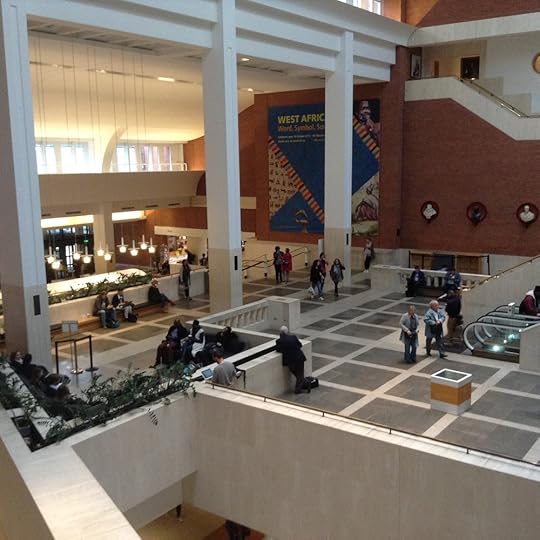
This photo of the main entrance gives an idea of the huge scale of the Garde 1 listed building.
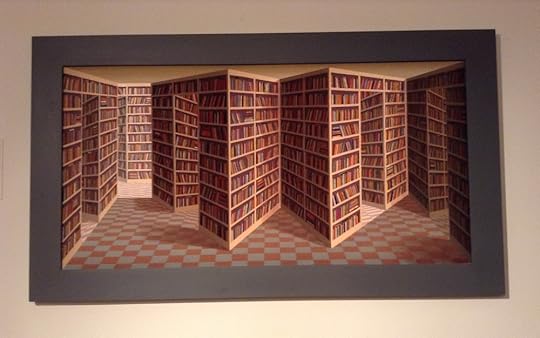
This 3D picture is up on a wall near the cloakroom. As you walk by, it looks like a moving screen.


October 13, 2015
Bronllys
When I was a teenager I read The Magic Mountain by Thomas Mann, and his description of the enclosed and fevered atmosphere of a fictional sanatorium has stayed with me ever since. Most of the patients - and Castorp, the main protagonist - are being treated at the hospital because they are suffering from TB, a disease which at the time was often incurable. (It was TB that killed the great short story writer, Katherine Mansfield, when she was just 34 years old.) Mann wrote his book having visited his wife in Davos in 1912.
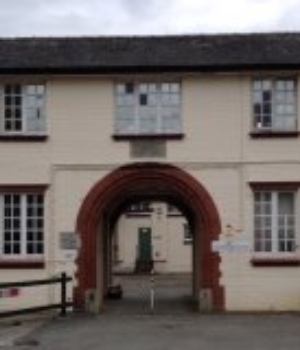
I thought of the Magic Mountain last week, when I went on a training day at Bronllys Hospital near Brecon in Mid Wales. The hospital was built as a TB sanatorium and consists of a complex of low buildings built in the Arts and Crafts style. According to Pevsner, the architects were Edward and Stanley Hall, and the works were finished in 1920.
Here's the Payroll building - looking a bit blurry because I snapped it with my phone in the dinner hour.
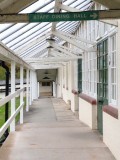
The main treatment for TB was fresh air, so outside the wards verandah's were built. Beds were pushed outside in all weathers. The verandahs form long walkways between the old wards.
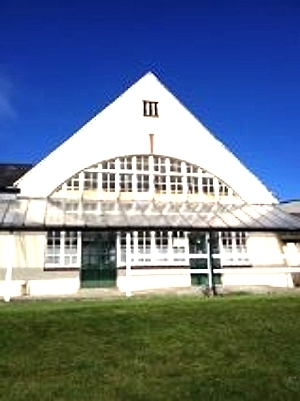
This is the canteen, a building made light by its many windows.
October 5, 2015
Kefalonia
When we arrived in Kefalonia the skies were thick with dark cloud - then came thunder and lightening and a rainstorm which lashed the island and flooded the roads. Having set off in our small hired Skoda we thought it best to keep on going, dodging stones which had been dislodged from the hills, and avoiding the deeper pools. We were relieved to arrive unscathed at our hotel, and delighted when the next morning we opened our bedroom shutters to find that the sun was shining. For the next week, we ate our meals outside.
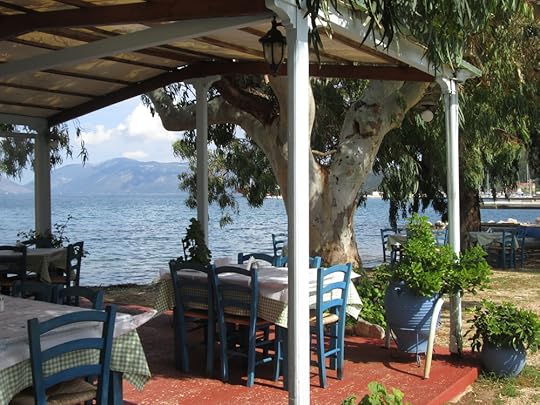
We stayed at Sami on the East of the island. High on the hills you can walk in the ruins of an ancient town, which was sacked by the Romans in 189 BC.
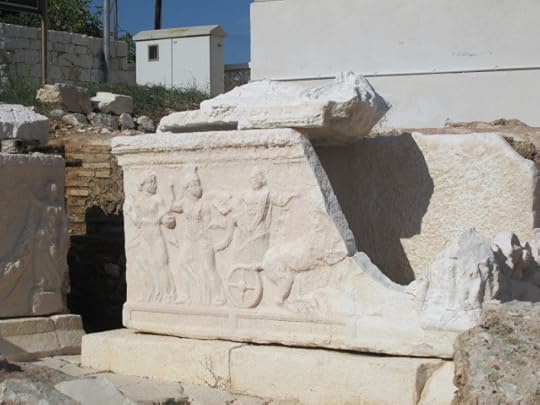
Travelling north to the town of Fiscado, we came across this Roman sarcophagus which was unearthed a few years ago and is now completely open to view. There's no museum and no charge - just a fence and an open gate.
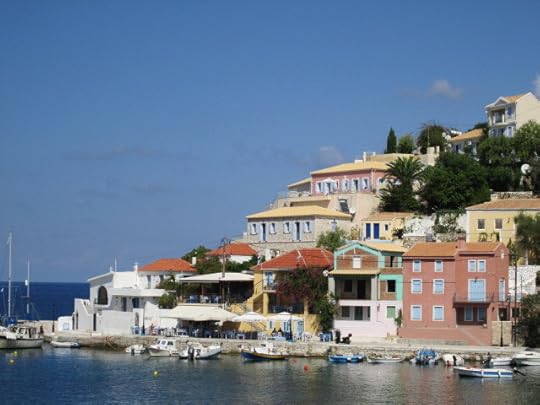
Fiscado
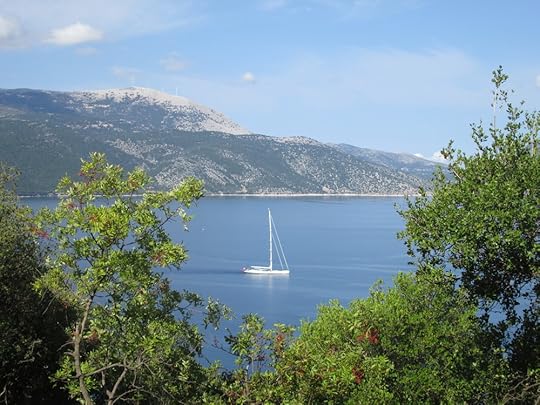
view of Sami bay from road leading to Acropolis
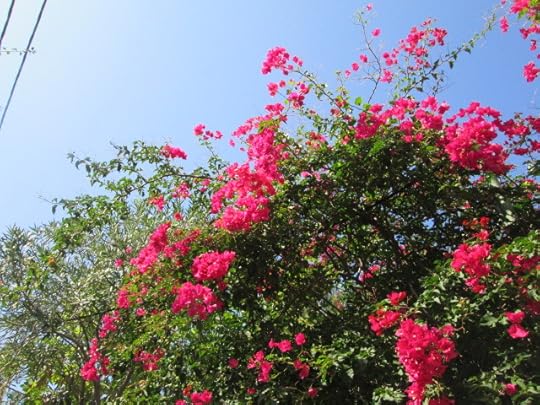
bougainvillea
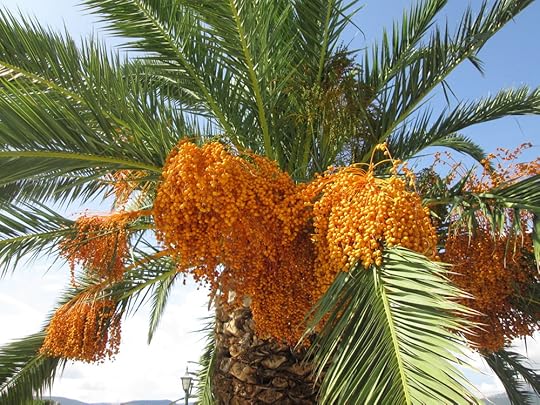
palm tree by the beach
September 12, 2015
Festival Number 6
Portmeirion is an Italianate fantasy village, built by the architect Sir Clough Williams-Ellis. Now every September it's the home of the award-winning Festival Number 6.
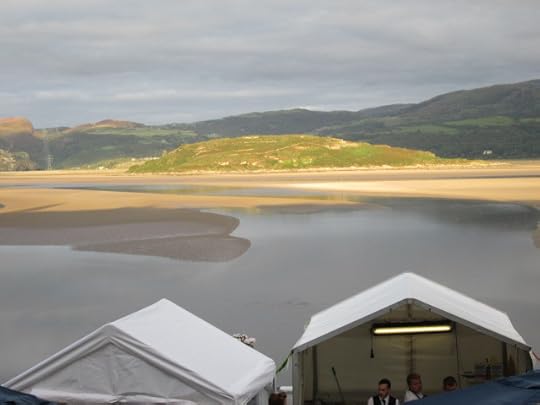
From our hotel room we could look out on dancing revellers and the estuary beyond. Inspired by Andrew Fusek Peters account of wild swimming I followed his example and took a dip in the sea. The surreal setting is the perfect backdrop to the festival - there's no doubt that Sir Clough would have approved.
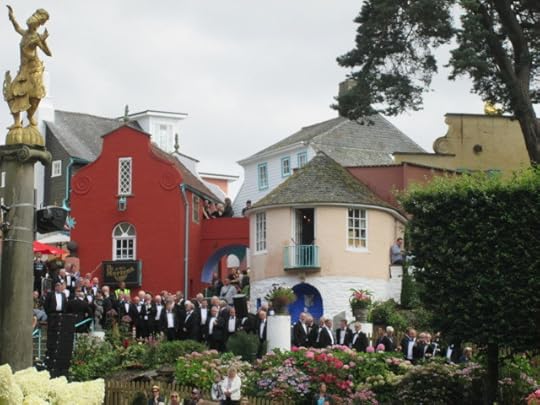
A highlight for me was the Brythoniaid Male Voice choir's rendition of 'One Day Like This' by Elbow. Wonderful, life-affirming stuff. You catch a version here; www.youtube.com/watch?v=eu77L6lpcig
August 25, 2015
Blinkin August
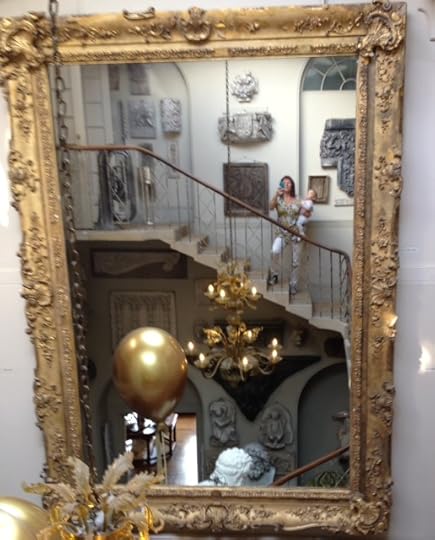
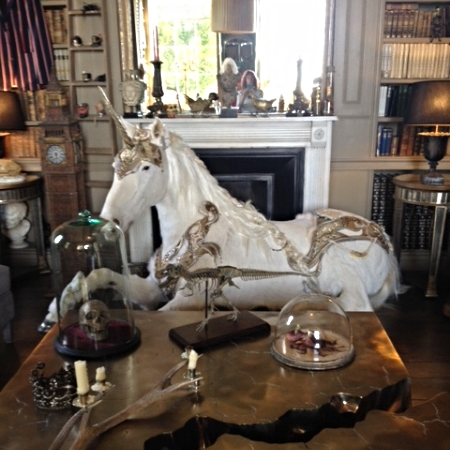
Privileged to have spent a weekend at the amazing Aynhoe Park - it's a beautiful house, built in the 17th Century by Sir John Soane. Here's me and Atticus admiring the grandeur of the hall, which is lit by a large glass cupola. The house is full of extraordinary curios - including a unicorn which guards the study. The objects have been collected by the owner, James Perkins, and James and his team couldn't have been kinder or more hospitable. We were at Aynhoe to celebrate the wedding of Eloise and Alex - a magical and very happy event. The bride's retinue included a shark, a lobster and a frog, and the guests gave a wild rendition of Bohemian Rhapsody during the signing of the register.
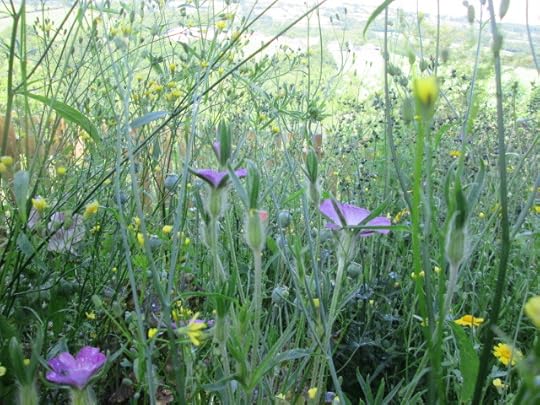
Back in Mid Wales and the warm weather plus bucketing rain have caused the grass and weeds to grow truly, madly deeply, so I've been scuttling out with my strimmer in between showers. The flower meadow now has corn cockles growing, replacing the poppies that splashed it with red.
July 7, 2015
Hackney City Farm
London is full of unexpected corners - you wouldn't expect sheep, goats, and clucking chickens in East London but they can all be found at www.hackneycityfarm.co.uk
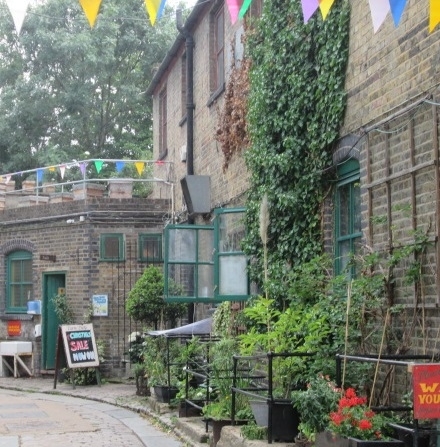
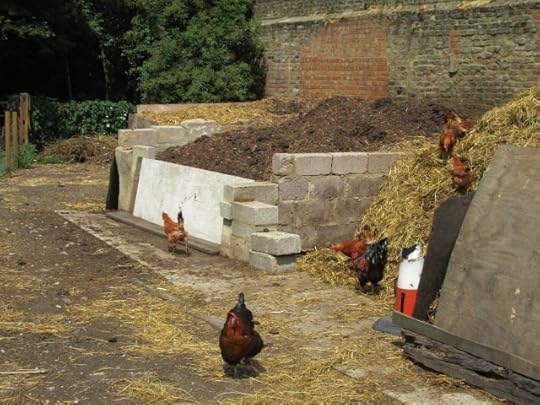
The farm was founded in 1984. We first went there soon after it opened when our own children were small. Now it's home to an award winning cafe and a pottery studio. The site was originally a market garden, then from the 1880s to the 1930s the buildings were occupied by West's Brewery which supplied beer to Hackney Road and Bethnal Green.
Beer was brewed from the site's own water supply. There's still a well in the garden, which for safety has been capped.
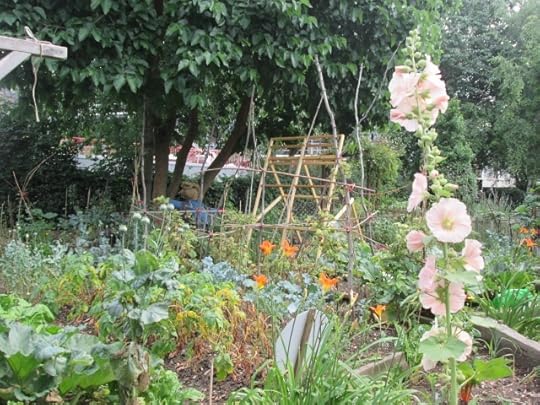
The garden with vegetables and flowers
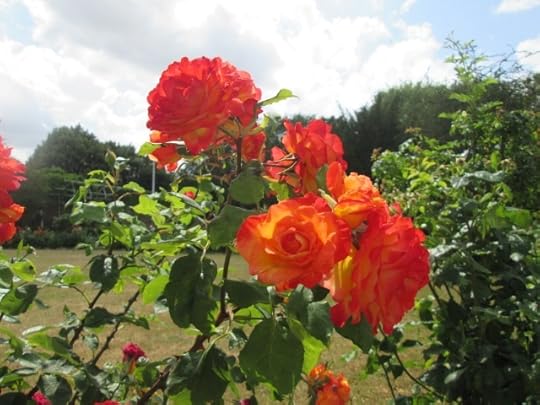
The City Farm borders Haggerston Park, where there's a tall and striking sundial, designed in the 1950s by an architect called Rupert Lyell Thorpe. The sundial is ringed by a multi-coloured rosebed which includes this orange-striped treat.
June 25, 2015
Blinkin garden
Since our land has expanded I've been occupied with making the space look better. The Zwartble sheep help, with their striking good looks - though how they'll appear without their thick brown wool I can't imagine. I'll find out soon - Tim the farmer has taken them to be sheared, and they'll be back tomorrow.
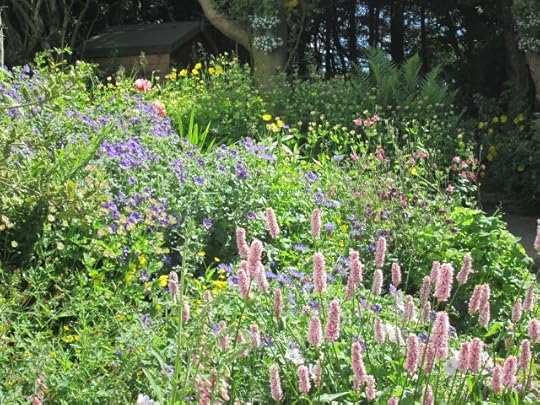
I've been weeding the border outside the french windows, pulling up buttercups and feather grass. The primula, astrantia and blue geraniums are colourful, and the rambling rose behind - Paul's Himalayan musk - is about to froth into bloom.
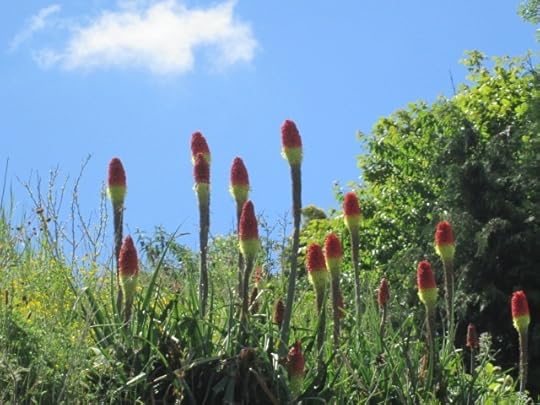
Around ten years ago I sent off for some perennials from a Guardian reader offer. I planted the kniphofia in my allotment by the Thames, and when we moved, the plants came too. Now they're flourishing on the bank by the front yard, standing tall against a background of buttercups.
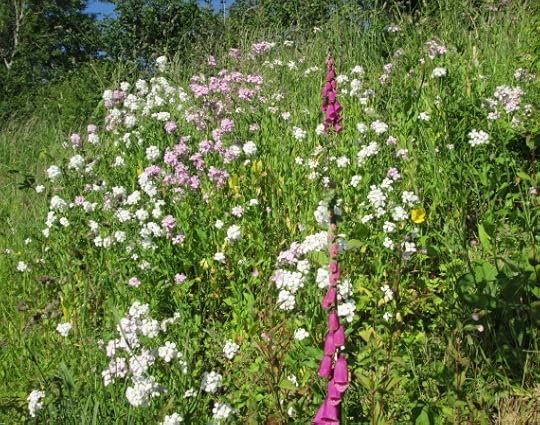
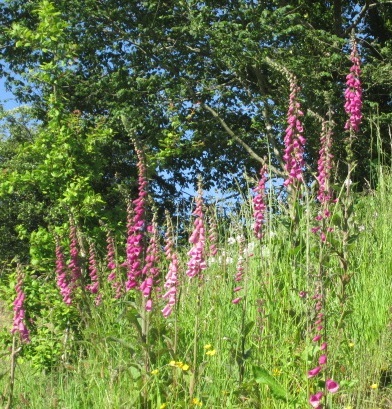
We're lucky in that there are foxgloves and self-seeded sweet rocket already growing on the slope above the lower terrace. I'm leaving the grass long, and gradually getting rid of the dock, nettles, and thistles.
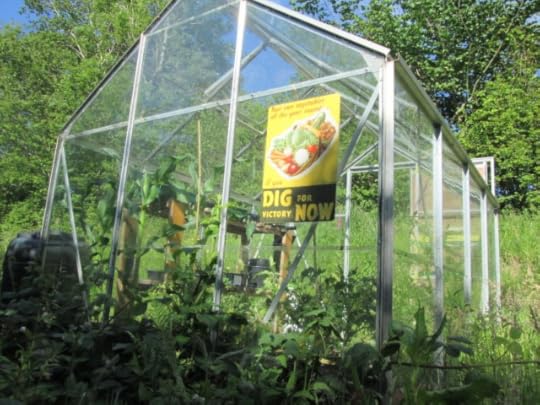
The greenhouse is now fixed, and we've eaten our first ripe tomatoes.
The vegetable plot has a way to go - there's much more space that can be filled and it needs weeding. Meanwhile I'm growing carrots, radishes, lettuce and beans and potatoes.
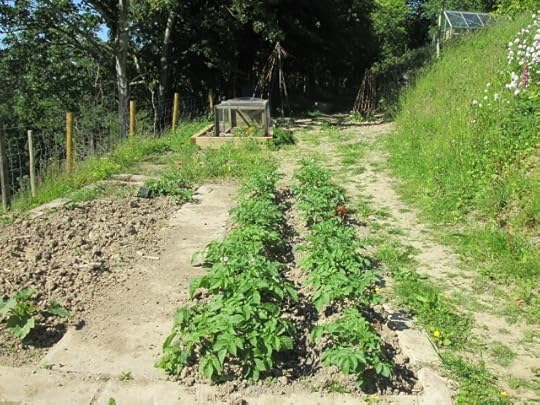
We're going to have a pergola at the end of the potato patch so there's a clear separation between the vegetables and the new flower garden I've been working on. So far it consists of a sort-of lawn (I've been mowing the rough ground with a Hayter Hayterette), two mixed beds and a bench next to some David Austin roses. I chose the variety Harlow Carr, for their scent.
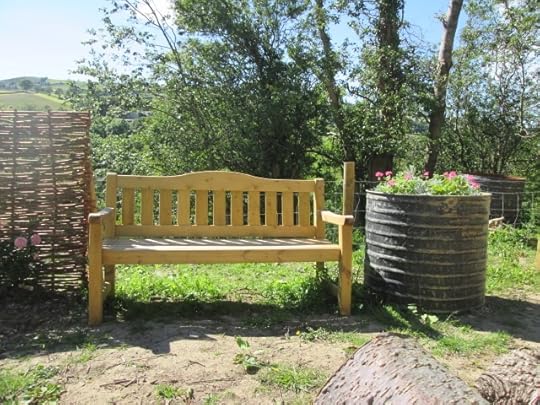
The barrel with pelargoniums in it was twice the size to begin with - I had it cut in two, so it could be used as a planter. Apparently, it used to be the home of a pig. I found this out when a couple of Jehovah's Witnesses visited. I was politely shutting the door when one of them introduced herself as Daphne, who used to live at the house. We owe Daphne a lot - she was responsible with her husband for many of the ornamental shrubs and trees still growing on the land. While we had a look round together, she told me that how she'd hired a pig and the barrel had provided shelter.
We've been speculating since about what the pig was hired to do. Serve canapes before dinner? Chauffeur the car? Or maybe more mundane tasks, such as shoe-cleaning or washing up ...
June 13, 2015
Grand Union Canal
When David and were first married we lived at Brentford Dock next to the Grand Union Canal. Thanks to good friends who own a narrow boat, we were able to explore another section of the canal in the sunshine of last week. We set off from Napton, stopped at Leamington Spa, travelled up through Hatton Locks, and explored Warwick on our return journey.
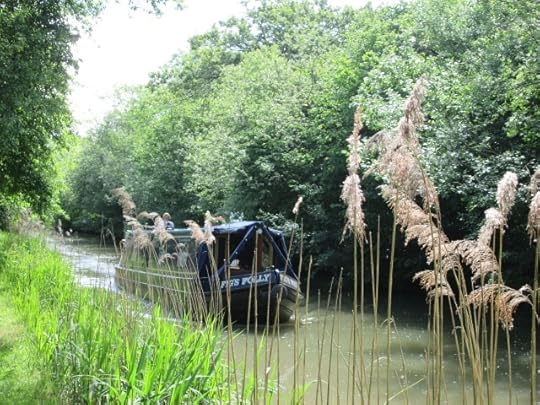
Mike and Belinda's boat
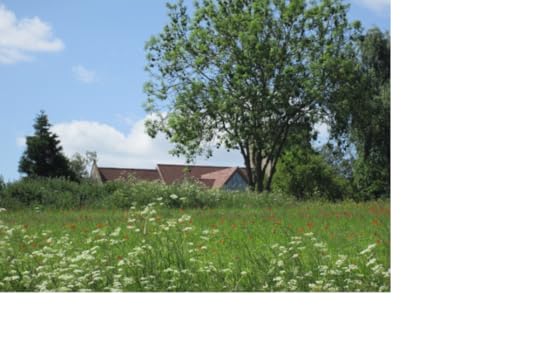
The English countryside was looking its early summer best.
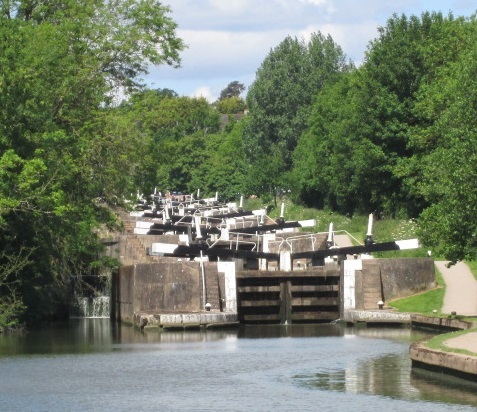
This flight of locks - installed at Hatton in the 1930s -proved a bracing challenge. There's a good pub at the top called the Hatton Arms.
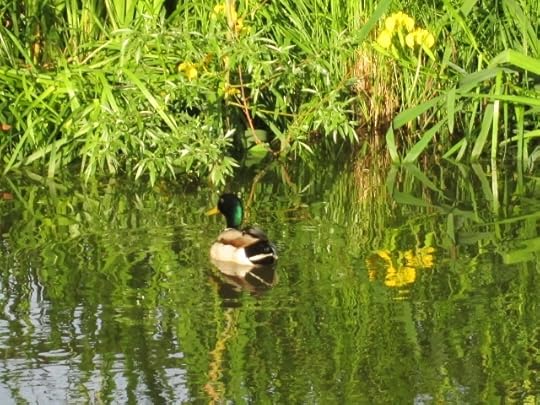
Duck by the canalside pub the Cape of Good Hope.
June 4, 2015
Stokesay Castle
Stokesay Castle is a fortified manor house owned by English heritage, and I'd been meaning to visit it since our move to Wales. It's near Craven Arms - about an hour's drive from Blinkin Mawr - and we finally got there at the weekend. Built in the 13th Century by a rich wool merchant called Laurence of Ludlow, the Castle's Great Hall is remarkable well-preserved, while the Gatehouse - added in the 17th Century - features beautiful carvings.
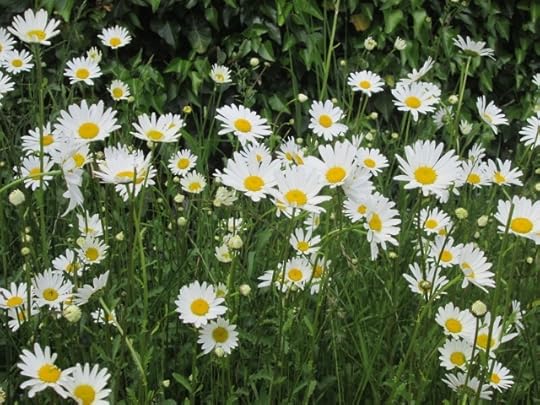
ox eye daisies growing in the verge by the entrance to Stokesay.
The Gatehouse is built of exposed timber and plasterwork. You can still see holes drilled into its sturdy wooden door - they were meant for muskets which were supposed to be used to defend the manor at the time of the English Civil War. In fact, no shot was fired. The Royalist defenders quickly surrendered to the Parliamentarians, knowing that they were heavily outnumbered.
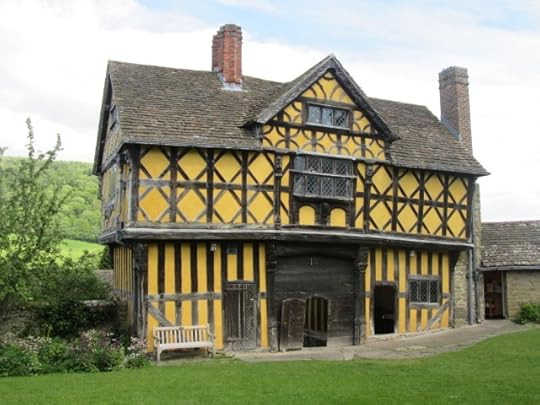
The Gatehouse
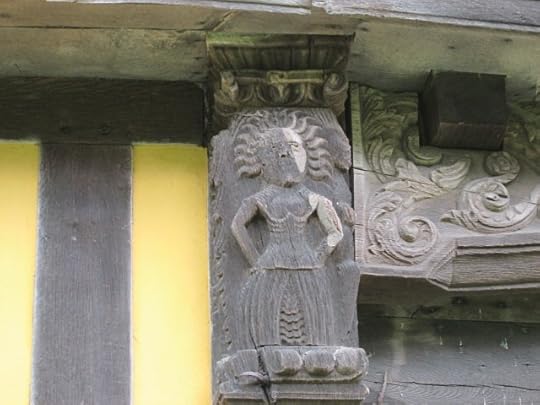
Wild-haired woman in 17th century dress
The building was meant to be beautiful rather than defensive which is why it is so richly decorated with angels, biblical characters and dragons.
Next to the huge empty space of the Great Hall with its arched beamed roof, is the Solar Block which consists of two storeys and a cellar. This is where Laurence of Ludlow lived with his family. The rooms would have been made cosy with wall hangings and mat flooring. Wood panelling and a stunningly ornate fireplace were added in the mid 17th, so that today the place still looks luxurious and welcoming.
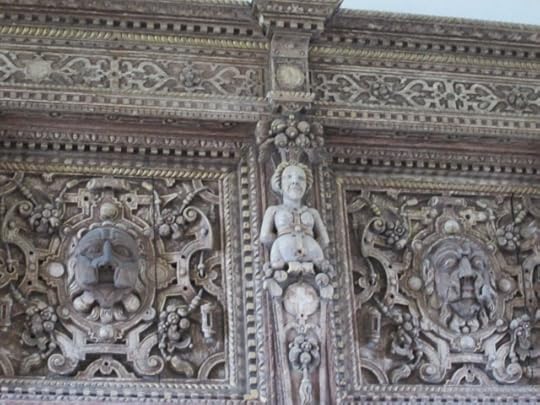
The wood-carved fireplace.
May 18, 2015
Blinkin Sheep
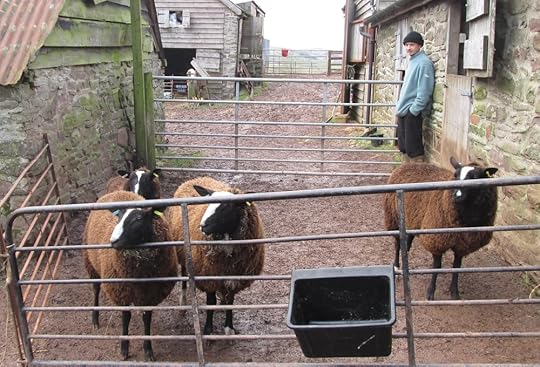
At Upper Redgate farm
Earlier in the year, I asked our neighbour John Morgan how many sheep we'd need to stop our new land at Blinkin Mawr from getting overgrown. He said that if we kept just four there'd be more than enough grass. He suggested we choose a rare breed so that they'd look decorative as well as earning their keep as lawnmowers, and he volunteered to come with me to Upper Redgate farm, near Knighton, where Alice and John Moore had some Zwartble ewes for sale.
We picked out these four, and with the help of the family I've named them Maisie, Baa-bara, Woolmina and Ewe-genie.
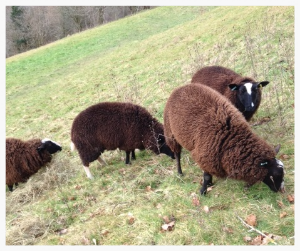
Home to Blinkin
They've settled in well, and are very tame. So tame, in fact, that feeding them can be a bit unnerving. At the sight of their blue bucket they come hurtling up or down the hill, then push and prod with some force at the person holding it - who's usually me. As the slope is steep and the ground often wet and slippery, staying upright can prove quite a challenge.
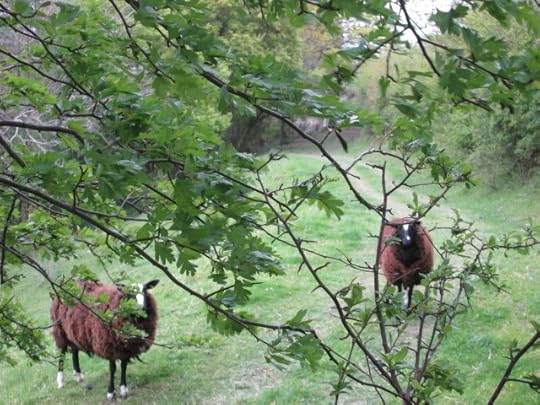
Baa-bara and Maisie
The Zwartbles love eating hawthorn, and we're constantly picking prickly twigs out of their thick wool. I'm trying to grow a maple and hawthorn hedge to protect the new vegetable garden, but the young saplings are losing their battle to survive. I can't blame the sheep - as children we'd happily eat hawthorn shoots calling them 'bread and cheese.'