Robin Esrock's Blog
October 28, 2025
A New Edition for a New Era
 I’m thrilled to announce the launch of a brand new, fully revised and completely overhauled 3rd Edition of The Great Canadian Bucket List. It’s packed with dozens of new experiences, which is why I wouldn’t call it a replacement of the popular, bestselling Second Edition, more of a continuation. To make room for new stuff, I had to let go of old stuff, because that’s thing about a Bucket List – the more you do, the more ideas keep popping up!
As you can tell from the cover, the new book is big, bold and beautiful, with a completely different look. The folks at Dundurn Press did an amazing job, as one expects for a book about an amazing country. My eye for unique, memorable, doable and bucket list experiences continues, from lakes in British Columbia to the Hudson Bay of Manitoba, from the East Coast Trail in Newfoundland to new adventures in Quebec, Ontario, New Brunswick and PEI.
The new edition also pays long overdue attention to Indigenous experiences across the country, with more national round-ups and page-popping photography.
It’s an inspirational gift for students setting out on their own, newcomers, visitors, retirees, clients, members, and everyone who could use a little Canadian wonder.
“The World Needs More Canada,” said Bono, and after several years of hard work and publishing fairy dust, not it has some. The new books is widely available at your favourite independent or chain bookstore, as well as online through Amazon or Chapters. Enjoy!


September 9, 2025
Highlights from a Long Hot Bucket List Summer
That was one crazy summer! Both for the adventures I’ll never forget, and the adventures I’d like to (here’s looking at you Air Canada Flight Attendant Strike). With the arrival of September, it’s time to take stock and look back at what I got up to, gathering new stories for my Canadian Geographic column, this blog, that blog, and also the stage for my popular keynotes. Not to mention future editions of The Great Canadian Bucket List, although it might be a while as the third edition – completely revised and re-designed – is out in November. In the meantime, here’s what a Great Canadian Summer Bucket List looks like: June
Things kicked off early this summer with a family adventure house-boating down the historic Rideau Canal. You can read all about that adventure on Canadian Geographic – or watch the super fun video above – and either should get the point across. Le Boat, Europe’s biggest houseboat rental company, have a range of boats stationed at Smith Falls Ontario, catering for 2, 4, 6, 10 and 12 passengers. For this to work, the waters need to be calm, there needs to be ports to call on, and it’s all about the locks. Later in the summer I went on another luxury houseboat experience, this time in France, but as with the rest of Canada, this Le Boat experience is an entirely different experience. Forget the cheese and wine, when you cross Big Rideau Lake or take on hundreds of lake islands, this houseboating trip is more rugged, adventurous, spacious that anything you’ll find in Europe, and you won’t have to worry about parking the boat with millimetres to spare in the locks. You also have the friendly lock masters from Parks Canada guiding you along the way. My extended family joined me on this one, and we had a ball, spending a couple nights in Ottawa on the way. I love Ottawa in summer. The festivals, the buzz, the views… it just might be my favourite city under the sun.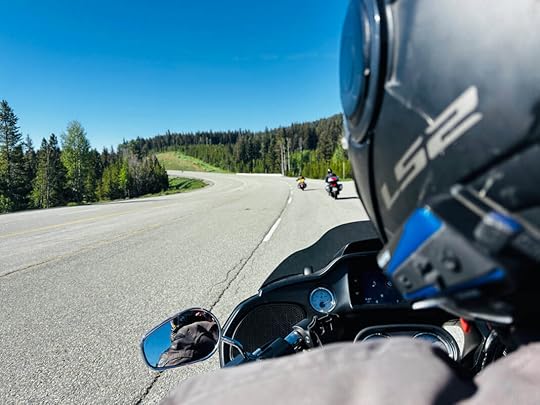 Hitting the Harley for another Bucket List BC Roadtrip When I got back from that trip, I jumped on a Harley Davidson for my annual ride into the BC interior. Thanks to the Vancouver office of Eagle Rider, riding the roads of BC with fellow bikers is a tradition I picked up researching other chapters for the Canadian Bucket List, and I’ve come to look forward it immensely. This year, we ditched plans to visit the USA and did a big circular loop from Vancouver, spending nights in Lilloeet, Revelstoke, Nelson and on the beach in Osoyoos, before heading back. There’s always an adventure on these trips, and this one was recorded in a story I wrote for the Harley Davidson Owners Group in Canada (which I can’t share unfortunately, as it’s a member-only publication, and innocent parties need to be protected!) There was also time for one more speaking event, taking the Heli Jet over to Vancouver Island’s Bear Mountain to inspire some folks with travels, wildlife, and what seeing bears, whales, elephants, lions, and other creatures can teach us about life. Very rarely, I do in fact feel like a Mysterious International Man of Mystery, especially when I take helicopters wearing a waistcoat.
 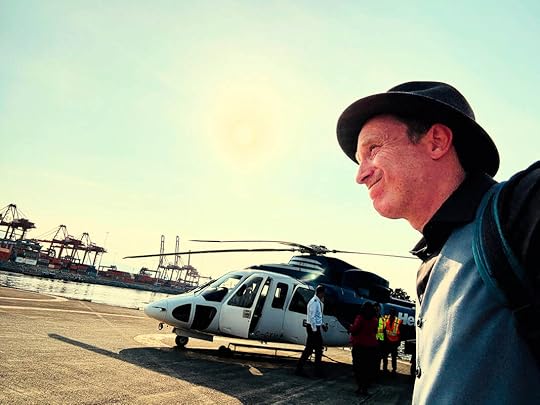 Robin Esrock: International Man of Mystery
July
Somewhat unusually for me, July was dominated by international travel to France and Ireland, where I could finally compare the Wild Atlantic Way to Newfoundland, and back up my claim that you’re simply not comparing Apples to Apples! Only one will give you a much better appreciation about the country in which you actually live! We had a fantastic road trip to Sligo, Derry, Belfast and the rock star attraction of Giant's Causeway. You can read all about our adventures in Ireland here. Taking on active summer kid duty, I did shuttle the kids to Squamish for a wood-working lesson at Create Makerspace they both thoroughly enjoyed. Teach my kids (and myself) how to use power tools. You don’t have to travel far to tick off something on your bucket list. I also took my aunt, visiting from Florida, to see Flyover Canada, as it’s a goose-bump inducing experience for any visitor to Canada, to get a sense of the overwhelming size and beauty of this country. Given the high cost of everything these days, it’s also very well priced. My aunt absolutely loved it.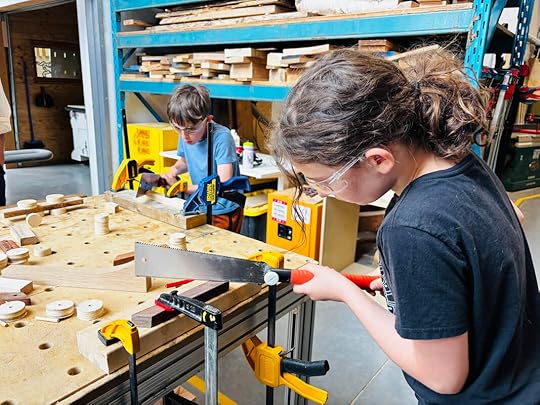 Bucket List Item #783: Teach the kids (and myself) how to do woodwork. August
The prime month of summer was dominated by a road trip up north with my son into BC’s beautiful Cariboo-Chilcotin region. Over the course of a week, we’d spend 18 hours in the car and drive about 6000 kilometres, so to make things more interesting we rented a Mustang Convertible from Enterprise, which ate up the miles with unnervingly smooth gusto. It just doesn’t feel like you’re going 150 km/hr…I mean 100 km/hr, I mean, why would you break the speed limit on a remote road in a muscle car? Who would do such a thing? Not I, not I. Anyway, our first stop was the Flying U Ranch, Canada’s oldest guest ranch and truly a special place to take the family. Staying in rustic, century-old cabins, it’s a communal experience with folks who seem to come year after year, drawn to the natural beauty of the ranch, the glimmering waters of Green Lake, and the experience of being paired with your own horse for fabulous rides into 60,000 acres of British Columbian wilderness. There’s so much personality and character about, both in the property, the folks who work there, the people who visit, and the 100 horses who call it home too. Here's my take in my Canadian Geographic column, but be warned, it might just add another box on your bucket list.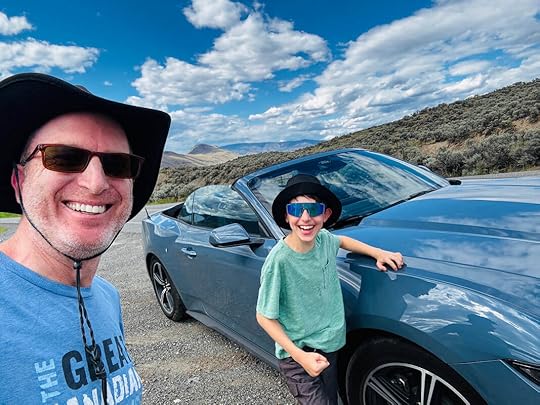 How to make a kid happy on a road trip: Do it in a Convertible muscle car! From the Flying U, we continued towards Quesnel and a long overdue visit to the historical town of Barkerville, a historic gold rush townthat’s been preserved as a living museum and heritage site. Founded in the 1860s during the Cariboo Gold Rush, at its peak it was the largest city north of San Francisco and west of Chicago, with a population of around 5,000 people from all over the world seeking their fortune. Today, the town has been meticulously restored to its 1870s appearance, featuring over 100 heritage buildings, many original structures, and costumed interpreters who bring the era to life. We dressed up in period costume to learn about life in the 1860’s, from printing and gold panning to the Chinese community and geology. The full report will be out in the new year, but in the meantime, I really wish I had discovered Barkerville – and the Flying U – earlier to add it into the third edition of The Great Canadian Bucket List. It’s always the case with these things: tick off one item at the top and three more will pop up at the bottom. A few days later, I found myself on a plane to Cusco, Peru. It's a long way to go and yet I felt like I was merely travelling full circle. 20 years ago, Peru was my first port of call on my first big journey around the world, when I was just another backpacker with a wild dream for adventure and the discipline to somehow record it along the way. I've been to Peru a few times since, but this was my first time back in Cusco, and now I was accompanied by my 12-year old daughter. We had arrived to do a shortened version of the Inca Trail with an Indigenous-owned local company called Alpaca Expeditions. I'd also be doing another story about the amazing food in Peru, taking a cooking class and a fabulous street food tour. I brought along the kid with the adventurous appetite, hoping she'd be able to cope with the altitude and the pace of an assignment. As you can see in the video, she did more than cope, she thrived. Cusco looked exactly the same as it did 20 years ago, but a lot has changed too: the crazy traffic, the smart phones, the high-end restaurants and hotels. Sprinkled among it all were the scraggy backpackers, heading to the Andes for the adventure of a lifetime. Thinking back to my own adventure in 2005, I could never have imagined returning to Sun Gate - older, wiser, fatter - with so many once-in-a-lifetimes I've lost count, and with a beautiful daughter to keep me company. Full circle indeed!
Luxury river boats in France. Road tripping Ireland. Hiking in Peru. Racing horses (and a Mustang) in the Cariboo. Helicopters to the island, Harley Davidsons and a Gold Rush. How was my summer? Epic, as always.
Things kicked off early this summer with a family adventure house-boating down the historic Rideau Canal. You can read all about that adventure on Canadian Geographic – or watch the super fun video above – and either should get the point across. Le Boat, Europe’s biggest houseboat rental company, have a range of boats stationed at Smith Falls Ontario, catering for 2, 4, 6, 10 and 12 passengers. For this to work, the waters need to be calm, there needs to be ports to call on, and it’s all about the locks. Later in the summer I went on another luxury houseboat experience, this time in France, but as with the rest of Canada, this Le Boat experience is an entirely different experience. Forget the cheese and wine, when you cross Big Rideau Lake or take on hundreds of lake islands, this houseboating trip is more rugged, adventurous, spacious that anything you’ll find in Europe, and you won’t have to worry about parking the boat with millimetres to spare in the locks. You also have the friendly lock masters from Parks Canada guiding you along the way. My extended family joined me on this one, and we had a ball, spending a couple nights in Ottawa on the way. I love Ottawa in summer. The festivals, the buzz, the views… it just might be my favourite city under the sun.
Hitting the Harley for another Bucket List BC Roadtrip When I got back from that trip, I jumped on a Harley Davidson for my annual ride into the BC interior. Thanks to the Vancouver office of Eagle Rider, riding the roads of BC with fellow bikers is a tradition I picked up researching other chapters for the Canadian Bucket List, and I’ve come to look forward it immensely. This year, we ditched plans to visit the USA and did a big circular loop from Vancouver, spending nights in Lilloeet, Revelstoke, Nelson and on the beach in Osoyoos, before heading back. There’s always an adventure on these trips, and this one was recorded in a story I wrote for the Harley Davidson Owners Group in Canada (which I can’t share unfortunately, as it’s a member-only publication, and innocent parties need to be protected!) There was also time for one more speaking event, taking the Heli Jet over to Vancouver Island’s Bear Mountain to inspire some folks with travels, wildlife, and what seeing bears, whales, elephants, lions, and other creatures can teach us about life. Very rarely, I do in fact feel like a Mysterious International Man of Mystery, especially when I take helicopters wearing a waistcoat. Robin Esrock: International Man of Mystery July
Somewhat unusually for me, July was dominated by international travel to France and Ireland, where I could finally compare the Wild Atlantic Way to Newfoundland, and back up my claim that you’re simply not comparing Apples to Apples! Only one will give you a much better appreciation about the country in which you actually live! We had a fantastic road trip to Sligo, Derry, Belfast and the rock star attraction of Giant's Causeway. You can read all about our adventures in Ireland here. Taking on active summer kid duty, I did shuttle the kids to Squamish for a wood-working lesson at Create Makerspace they both thoroughly enjoyed. Teach my kids (and myself) how to use power tools. You don’t have to travel far to tick off something on your bucket list. I also took my aunt, visiting from Florida, to see Flyover Canada, as it’s a goose-bump inducing experience for any visitor to Canada, to get a sense of the overwhelming size and beauty of this country. Given the high cost of everything these days, it’s also very well priced. My aunt absolutely loved it.
Bucket List Item #783: Teach the kids (and myself) how to do woodwork. AugustThe prime month of summer was dominated by a road trip up north with my son into BC’s beautiful Cariboo-Chilcotin region. Over the course of a week, we’d spend 18 hours in the car and drive about 6000 kilometres, so to make things more interesting we rented a Mustang Convertible from Enterprise, which ate up the miles with unnervingly smooth gusto. It just doesn’t feel like you’re going 150 km/hr…I mean 100 km/hr, I mean, why would you break the speed limit on a remote road in a muscle car? Who would do such a thing? Not I, not I. Anyway, our first stop was the Flying U Ranch, Canada’s oldest guest ranch and truly a special place to take the family. Staying in rustic, century-old cabins, it’s a communal experience with folks who seem to come year after year, drawn to the natural beauty of the ranch, the glimmering waters of Green Lake, and the experience of being paired with your own horse for fabulous rides into 60,000 acres of British Columbian wilderness. There’s so much personality and character about, both in the property, the folks who work there, the people who visit, and the 100 horses who call it home too. Here's my take in my Canadian Geographic column, but be warned, it might just add another box on your bucket list.
How to make a kid happy on a road trip: Do it in a Convertible muscle car! From the Flying U, we continued towards Quesnel and a long overdue visit to the historical town of Barkerville, a historic gold rush townthat’s been preserved as a living museum and heritage site. Founded in the 1860s during the Cariboo Gold Rush, at its peak it was the largest city north of San Francisco and west of Chicago, with a population of around 5,000 people from all over the world seeking their fortune. Today, the town has been meticulously restored to its 1870s appearance, featuring over 100 heritage buildings, many original structures, and costumed interpreters who bring the era to life. We dressed up in period costume to learn about life in the 1860’s, from printing and gold panning to the Chinese community and geology. The full report will be out in the new year, but in the meantime, I really wish I had discovered Barkerville – and the Flying U – earlier to add it into the third edition of The Great Canadian Bucket List. It’s always the case with these things: tick off one item at the top and three more will pop up at the bottom. A few days later, I found myself on a plane to Cusco, Peru. It's a long way to go and yet I felt like I was merely travelling full circle. 20 years ago, Peru was my first port of call on my first big journey around the world, when I was just another backpacker with a wild dream for adventure and the discipline to somehow record it along the way. I've been to Peru a few times since, but this was my first time back in Cusco, and now I was accompanied by my 12-year old daughter. We had arrived to do a shortened version of the Inca Trail with an Indigenous-owned local company called Alpaca Expeditions. I'd also be doing another story about the amazing food in Peru, taking a cooking class and a fabulous street food tour. I brought along the kid with the adventurous appetite, hoping she'd be able to cope with the altitude and the pace of an assignment. As you can see in the video, she did more than cope, she thrived. Cusco looked exactly the same as it did 20 years ago, but a lot has changed too: the crazy traffic, the smart phones, the high-end restaurants and hotels. Sprinkled among it all were the scraggy backpackers, heading to the Andes for the adventure of a lifetime. Thinking back to my own adventure in 2005, I could never have imagined returning to Sun Gate - older, wiser, fatter - with so many once-in-a-lifetimes I've lost count, and with a beautiful daughter to keep me company. Full circle indeed! Luxury river boats in France. Road tripping Ireland. Hiking in Peru. Racing horses (and a Mustang) in the Cariboo. Helicopters to the island, Harley Davidsons and a Gold Rush. How was my summer? Epic, as always.
July 19, 2025
Where do the stories come from?
Ideas for my stories are birthed from an unpredictable algorithm of curiosity, public interest, and outreach from partners in the tourism industry. Looking back at the first part of this year, you can see this in action. 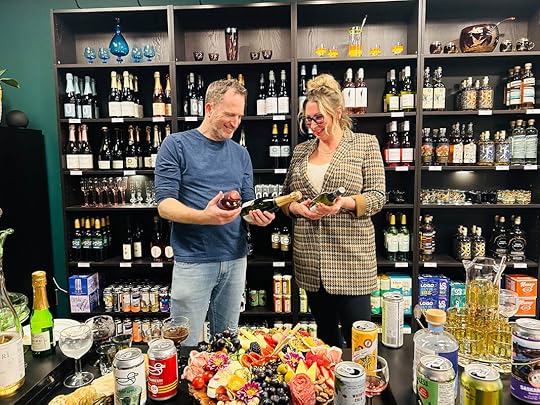 Learning about non-boozy booze with Angela Hansen at Mocktails. CURIOSITY:
On rare date night, Mrs Esrock and I took an amble down Commercial Drive in Vancouver, strolling past a store that had just opened for business. It was called Mocktails, and billed itself as the city’s first alcohol-free liquor store. Between the craft beer, wineries, cocktails and distilleries, alcohol is firmly entrenched in the world of tourism, long associated with good times and fine living. The dark side of it is well, kept in the dark: alcoholism, drunk driving, binge drinking, the horrific impact of alcohol on social violence and domestic abuse. You just don’t see this stuff in the tourism brochures. With a precipitous (and one might argue encouraging) decline in alcohol consumption among younger generations, non-alcoholic cocktails, beers and wines are increasingly showing up on drink menus. Here is a non-boozy booze store founded by a passionate advocate for the cause, spearheading a taste revolution as producers up their game to cater to a growing market. The story I wrote for Canadian Geographic – Canada’s Non-Alcoholic Revolution – went down smooth and easy, and picked up writing awards in the Food and Wine Category from both the Society of American Travel Writers and the Travel Media Association of Canada. Added to previous awards from both professional associations for Family Travel, Service Feature the Lowell Thomas Gold Medal for Best Blog (a Lowell Thomas is one of the highest accolades one can receive in my profession), it’s inspiring to know my stories can make a difference with both readers and industry.
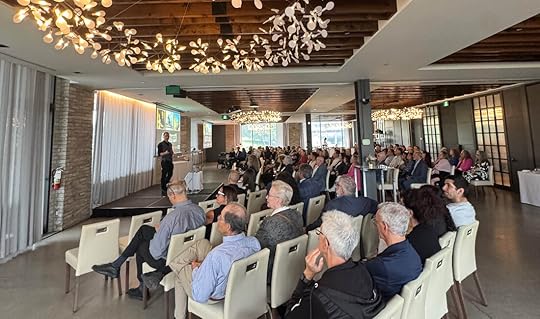 Storytelling on stage at a CIBC Wood Gundy Client Event, Spring 2025 PUBLIC INTEREST
Have you ever rented a houseboat down the Rideau Canal? At the end of my travel talks at client events for Canada’s best wealth advisors, the floor opens up for a Q&A. Sometimes the questions are practical: “Can you recommend a great place to stay in Portugal?” Sometimes it’s life coaching: “My wife and I are looking for an adventure but nothing too crazy, do you think we should do it?” Sometimes it’s travel advice: “Do you have any packing tips?” And sometimes, it’s a lead I that inspires me to chase it down, like: “Have you ever rented a houseboat down the Rideau Canal?” From an idea or suggestion to actually getting there and publishing a story usually takes a few years. Many stars have to align, like calendars, marketing plans, editorial schedules, and partner interest. Houseboating down the Rideau took a few years before it all came together, but unfortunately it was too late to include in the third edition of The Great Canadian Bucket List out later this year. As a multi-generational discovery of southern Ontario and Canadian lore, the story – Exploring Ontario’s historic Rideau Canal by houseboat: A scenic journey through Canadian history – sparked tremendous interest online, becoming the top story at Canadian Geographic Travel.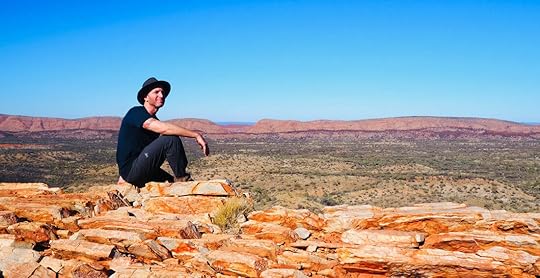 PARTNER OUTREACH
Every day, I receive press releases about destination marketing initiatives, activities, hotels, and news from across the domestic and international tourism industry. Travel media is the megaphone for an industry that generates 10% of global GDP (a staggering US$10.9 trillion) and accounts for an estimated 357 million jobs (source: WTTC). You might have an incredible city, restaurant or cruise ship, but that doesn’t mean much if people don’t know about it. Billions are spent on advertising, but until the day our AI Overlords usher us into Extraction Pods to harvest our energy (source: The Matrix), the most powerful form of advertising will always be compelling and authentic storytelling. Outlets include print, broadcast and social media, and for me personally, have transitioned from newspaper columns to digital columns, and lately the stage. All my platforms are hungry for content and I serve as a filter for peak travel experiences that capture the imagination. A perfect example: Cruising down the Nile with the kids, or hiking in comfort in the Australian outback, or snowmobiling in Ontario or kayaking under the stars in New Brunswick’s Hopewell Rocks. I also love shining a light on innovations, like the fastest growing indoor recreational activity in North America (born in Winnipeg) and how the best travel can be inspiring, quirky, and inclusive. None of the stories above would have happened if hard-working pros in the PR game hadn’t brought them to my attention, so that I could bring it to yours.
NEW VIDEOS:
I often film and edit videos to accompany my written stories, building a visual repertoire of my most memorable bucket list experiences. Although my videos have over a million views, I don’t consider myself a hardworking Youtuber, working the algorithm to maximize eyeballs. Kudos to them, it’s a ton of work few can appreciate behind the scenes. Hell, it’s a ton of work just making a video. Since my first Youtube clip 20 years ago (called Something to Make You Dream), I’ve continued to produce punchy montage videos soundtracked to the songs I love. Occasionally, I'll get help from friends, like award-winning photographer Jeff Topham. Here’s some fun recent videos you might have missed.
Learning about non-boozy booze with Angela Hansen at Mocktails. CURIOSITY: On rare date night, Mrs Esrock and I took an amble down Commercial Drive in Vancouver, strolling past a store that had just opened for business. It was called Mocktails, and billed itself as the city’s first alcohol-free liquor store. Between the craft beer, wineries, cocktails and distilleries, alcohol is firmly entrenched in the world of tourism, long associated with good times and fine living. The dark side of it is well, kept in the dark: alcoholism, drunk driving, binge drinking, the horrific impact of alcohol on social violence and domestic abuse. You just don’t see this stuff in the tourism brochures. With a precipitous (and one might argue encouraging) decline in alcohol consumption among younger generations, non-alcoholic cocktails, beers and wines are increasingly showing up on drink menus. Here is a non-boozy booze store founded by a passionate advocate for the cause, spearheading a taste revolution as producers up their game to cater to a growing market. The story I wrote for Canadian Geographic – Canada’s Non-Alcoholic Revolution – went down smooth and easy, and picked up writing awards in the Food and Wine Category from both the Society of American Travel Writers and the Travel Media Association of Canada. Added to previous awards from both professional associations for Family Travel, Service Feature the Lowell Thomas Gold Medal for Best Blog (a Lowell Thomas is one of the highest accolades one can receive in my profession), it’s inspiring to know my stories can make a difference with both readers and industry.
Storytelling on stage at a CIBC Wood Gundy Client Event, Spring 2025 PUBLIC INTERESTHave you ever rented a houseboat down the Rideau Canal? At the end of my travel talks at client events for Canada’s best wealth advisors, the floor opens up for a Q&A. Sometimes the questions are practical: “Can you recommend a great place to stay in Portugal?” Sometimes it’s life coaching: “My wife and I are looking for an adventure but nothing too crazy, do you think we should do it?” Sometimes it’s travel advice: “Do you have any packing tips?” And sometimes, it’s a lead I that inspires me to chase it down, like: “Have you ever rented a houseboat down the Rideau Canal?” From an idea or suggestion to actually getting there and publishing a story usually takes a few years. Many stars have to align, like calendars, marketing plans, editorial schedules, and partner interest. Houseboating down the Rideau took a few years before it all came together, but unfortunately it was too late to include in the third edition of The Great Canadian Bucket List out later this year. As a multi-generational discovery of southern Ontario and Canadian lore, the story – Exploring Ontario’s historic Rideau Canal by houseboat: A scenic journey through Canadian history – sparked tremendous interest online, becoming the top story at Canadian Geographic Travel.
PARTNER OUTREACHEvery day, I receive press releases about destination marketing initiatives, activities, hotels, and news from across the domestic and international tourism industry. Travel media is the megaphone for an industry that generates 10% of global GDP (a staggering US$10.9 trillion) and accounts for an estimated 357 million jobs (source: WTTC). You might have an incredible city, restaurant or cruise ship, but that doesn’t mean much if people don’t know about it. Billions are spent on advertising, but until the day our AI Overlords usher us into Extraction Pods to harvest our energy (source: The Matrix), the most powerful form of advertising will always be compelling and authentic storytelling. Outlets include print, broadcast and social media, and for me personally, have transitioned from newspaper columns to digital columns, and lately the stage. All my platforms are hungry for content and I serve as a filter for peak travel experiences that capture the imagination. A perfect example: Cruising down the Nile with the kids, or hiking in comfort in the Australian outback, or snowmobiling in Ontario or kayaking under the stars in New Brunswick’s Hopewell Rocks. I also love shining a light on innovations, like the fastest growing indoor recreational activity in North America (born in Winnipeg) and how the best travel can be inspiring, quirky, and inclusive. None of the stories above would have happened if hard-working pros in the PR game hadn’t brought them to my attention, so that I could bring it to yours.
NEW VIDEOS:
I often film and edit videos to accompany my written stories, building a visual repertoire of my most memorable bucket list experiences. Although my videos have over a million views, I don’t consider myself a hardworking Youtuber, working the algorithm to maximize eyeballs. Kudos to them, it’s a ton of work few can appreciate behind the scenes. Hell, it’s a ton of work just making a video. Since my first Youtube clip 20 years ago (called Something to Make You Dream), I’ve continued to produce punchy montage videos soundtracked to the songs I love. Occasionally, I'll get help from friends, like award-winning photographer Jeff Topham. Here’s some fun recent videos you might have missed.
June 26, 2025
An Outsider Inside the Explorers Club
When you do what I do, unusual things sometimes happen. Such as: finding myself getting smashed with actor Dan Aykroyd as we drain bottles of his Crystal Head Vodka. We were at a remote dinosaur dig in Alberta during a celebrity fundraiser for a new dinosaur museum named after the real-life inspiration for the Sam Neill character in Jurassic Park. Later I would share a day in a helicopter with the president of the illustrious Explorers Club, who invited me to be the Master of Ceremonies at the club’s infamous annual dinner at the Waldorf Astoria Hotel in New York. Following previous MC’s including Aykroyd, Dan Rather, and other celebrities better known and more qualified, I assumed she was joking.
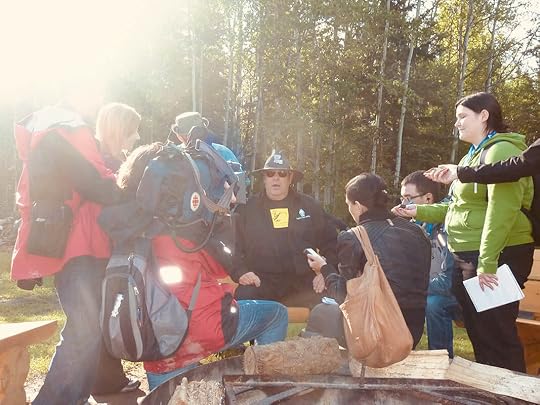 Dan Aykroyd addressed a media scrum at a fundraiser for the Phlip J Currie Dinosaur Museum in Alberta
 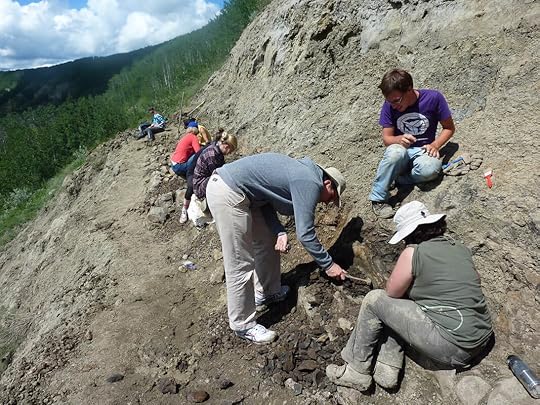 Digging for dinosaurs with palaeontologists and celebrity families. Months later it all actually manifested and off I went to New York to hold centre stage at a black-tie dinner with astronauts, ambassadors, billionaires, legendary filmmakers, explorers and scientific legends. I would wear an oversize rental tuxedo with a bright orange tie, read from a teleprompter, and be introduced on stage by drummers from Papua New Guinea. I didn’t write the script in a tightly managed, big-budget and choreographed evening, which happened to be the night before a board coup that ousted the lovely president who invited me, seemingly jettisoning everything she touched, myself included. That evening, I sat next to director Ken Burns, an intense chap who read a monotone keynote about Lewis and Clark. I love Ken Burns documentaries, his keynotes less so. I introduced and handed awards to some real legends, including astronaut Buzz Aldin, a man with a twinkle in his eyes who clearly knows exactly how to enjoy himself. I also shared the stage with the late US wildlife TV legend Jim Fowler, and an iguana clearly delighted to avoid the dinner table.
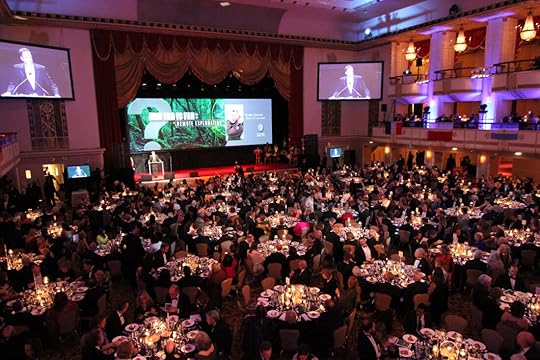 On stage as Master of Ceremonies at the Explorers Club Annual Dinner at the Waldorf Astoria in New York
 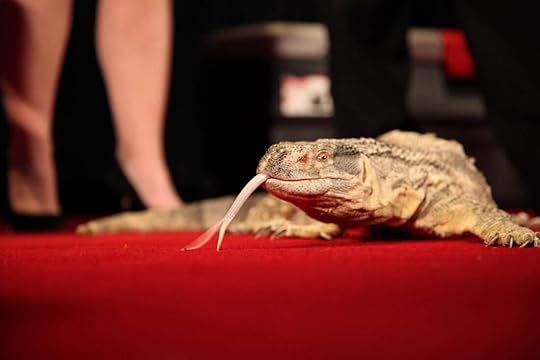 Sharing the stage with an Iguana
 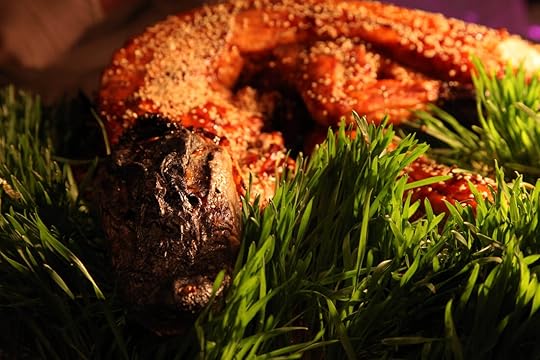 Roasted iguana on the menu. The buffet at the annual dinner is legendary, stacked with delicious invasive species like grilled lionfish, water bugs, rattlesnake, iguana, emu, and delectable goat penis on a stick. This is the Explorers Club after all. As my mug appeared on big screens, I expect most people were wondering who the hell I was, and where my accent came from. At the bar, I learned just how tense things were that year, politically, in a members-only society that should rival its competitor National Geographic for global renown. After all, Hillary planted an Explorers Club flag on Everest, and Neil Armstrong took one to the moon. Yet while National Geographic embraced the public with a magazine and TV shows, the Explorers Club retreated into a shadowy elite organization, sequestered behind impressive stone walls in its old-world rowhouse headquarters in New York.
Things have long since improved under a revitalized new board, but when I stepped into the building the morning after the event to learn more about the club and conduct some interviews, intrigue and ego dripped from the walls. A prickly atmosphere clashed with the medals, curios, awards, and photographs of illustrious members accomplishing otherworldly things. Yes, there’s a full sized stuffed polar bear in the library, and yes, the Explorers Club has counted US presidents, titans of industry and today’s most famous billionaires as members. In case you’re wondering, it’s a process to join this Freemasonry of Adventure.
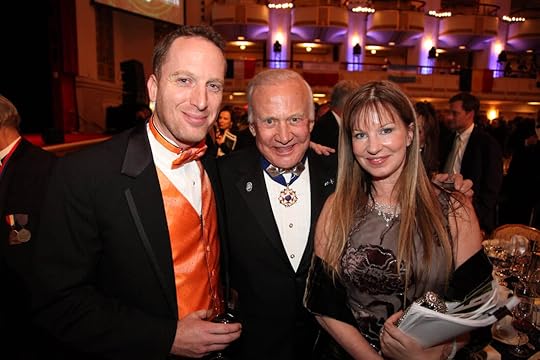 With astronaut Buzz Aldrin and outgoing Explorers Club president Lorie Karnath. Joining me that weekend in New York was my friend and filmmaker Ian Mackenzie, and we thought it would be fun to capture the absurdity of our adventure by paying tribute to the mystery of the organization. So, I wrote something up and adopted an accent as bad as my rental tuxedo, narrating a film noir video that does actually take you inside the dinner and organization. Shooting it for Matador in a brief moment of time when the organization didn’t mind some public attention, I thought it would be fun to unearth that video and share it here.
 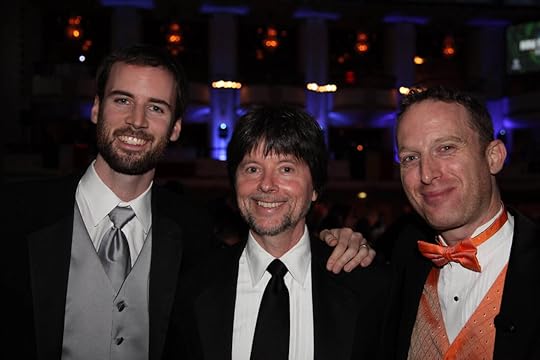 With filmmakers Ian Mackenzie and Ken Burns. As for the dinosaur dig that kicked it off, in attendance was also Robert F Kennedy Jnr, who is a lot better known now than he was back then. I brushed away dirt from fossils with the Aykroyd family, and the Philip J Currie Dinosaur Museum just celebrated its 10th anniversary in Grande Prairie. I collected a few more experiences too weird to make up, and because of that chance encounter with ambassador of Papua New Guinea at the event, I ended up learning to scuba dive in a truly remarkable part of the world. I was never invited to join the actual Explorers Club, but several of my friends are members, and I’m perfectly happy to be a Fellow of the Royal Canadian Geographic Society instead. In the end, we’re all on our own personal adventures.
Dan Aykroyd addressed a media scrum at a fundraiser for the Phlip J Currie Dinosaur Museum in Alberta Digging for dinosaurs with palaeontologists and celebrity families. Months later it all actually manifested and off I went to New York to hold centre stage at a black-tie dinner with astronauts, ambassadors, billionaires, legendary filmmakers, explorers and scientific legends. I would wear an oversize rental tuxedo with a bright orange tie, read from a teleprompter, and be introduced on stage by drummers from Papua New Guinea. I didn’t write the script in a tightly managed, big-budget and choreographed evening, which happened to be the night before a board coup that ousted the lovely president who invited me, seemingly jettisoning everything she touched, myself included. That evening, I sat next to director Ken Burns, an intense chap who read a monotone keynote about Lewis and Clark. I love Ken Burns documentaries, his keynotes less so. I introduced and handed awards to some real legends, including astronaut Buzz Aldin, a man with a twinkle in his eyes who clearly knows exactly how to enjoy himself. I also shared the stage with the late US wildlife TV legend Jim Fowler, and an iguana clearly delighted to avoid the dinner table. On stage as Master of Ceremonies at the Explorers Club Annual Dinner at the Waldorf Astoria in New York Sharing the stage with an Iguana Roasted iguana on the menu. The buffet at the annual dinner is legendary, stacked with delicious invasive species like grilled lionfish, water bugs, rattlesnake, iguana, emu, and delectable goat penis on a stick. This is the Explorers Club after all. As my mug appeared on big screens, I expect most people were wondering who the hell I was, and where my accent came from. At the bar, I learned just how tense things were that year, politically, in a members-only society that should rival its competitor National Geographic for global renown. After all, Hillary planted an Explorers Club flag on Everest, and Neil Armstrong took one to the moon. Yet while National Geographic embraced the public with a magazine and TV shows, the Explorers Club retreated into a shadowy elite organization, sequestered behind impressive stone walls in its old-world rowhouse headquarters in New York.
Things have long since improved under a revitalized new board, but when I stepped into the building the morning after the event to learn more about the club and conduct some interviews, intrigue and ego dripped from the walls. A prickly atmosphere clashed with the medals, curios, awards, and photographs of illustrious members accomplishing otherworldly things. Yes, there’s a full sized stuffed polar bear in the library, and yes, the Explorers Club has counted US presidents, titans of industry and today’s most famous billionaires as members. In case you’re wondering, it’s a process to join this Freemasonry of Adventure.
With astronaut Buzz Aldrin and outgoing Explorers Club president Lorie Karnath. Joining me that weekend in New York was my friend and filmmaker Ian Mackenzie, and we thought it would be fun to capture the absurdity of our adventure by paying tribute to the mystery of the organization. So, I wrote something up and adopted an accent as bad as my rental tuxedo, narrating a film noir video that does actually take you inside the dinner and organization. Shooting it for Matador in a brief moment of time when the organization didn’t mind some public attention, I thought it would be fun to unearth that video and share it here. With filmmakers Ian Mackenzie and Ken Burns. As for the dinosaur dig that kicked it off, in attendance was also Robert F Kennedy Jnr, who is a lot better known now than he was back then. I brushed away dirt from fossils with the Aykroyd family, and the Philip J Currie Dinosaur Museum just celebrated its 10th anniversary in Grande Prairie. I collected a few more experiences too weird to make up, and because of that chance encounter with ambassador of Papua New Guinea at the event, I ended up learning to scuba dive in a truly remarkable part of the world. I was never invited to join the actual Explorers Club, but several of my friends are members, and I’m perfectly happy to be a Fellow of the Royal Canadian Geographic Society instead. In the end, we’re all on our own personal adventures.May 13, 2025
Lamborghini vs Ferrari: A Tale of Two Egos
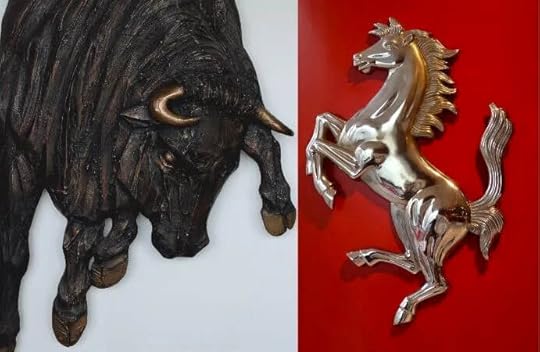 It is known as the Capital of Cars, the Engine of Italy. Born within a golden circle that surrounds the city of Modena, are the mythical brands whispered on the lips of car lovers the world over, along with the mega-rich, and boys of all ages. Maserati. De Tomaso. Pagani. The Italian sports car introduced the world to speed and luxury, the ultimate union of art and technology. Defining this perfectly are the region’s two most famous sons: Lamborghini, and Ferrari, vehicles that have transcended the circuits and bolts within them, commanding religious-like reverence from both drivers, and dreamers.
Few car enthusiasts know there would be no Lamborghini were it not for Ferrari. Ferrucio Lamborghini was one of the wealthiest men in Italy, having made his fortune selling tractors and appliances. An avid car enthusiast and collector, among Ferrucio’s favourites were several Ferraris, although he found them to be mechanically temperamental. A recurring clutch issue led him to contact Enzo Ferrari, founder and namesake, a volatile character best described as being ferociously driven in the pursuit of automobile racing. How different the vehicle landscape would be if Ferrari had taken his customer’s feedback seriously. Instead, Enzo allowed the manufacture of Ferrari sports cars only as a means to fund his beloved racing initiatives. Private customers had to put up with Enzo’s notoriously dismissive attitude, viewed as an unfortunate by-product for owning a vehicle of such outstanding quality. Ferrucio was no different. However, once informed that a tractor manufacturer had no right to criticize Ferrari’s cars, Lamborghini was compelled to repair his own models, and discovered that the mechanics of car and tractors had encouraging similarities. If Ferrari would not improve their road models, Lamborghini had the knowledge and financial clout to do it for them. In 1963, Automobili Lamborghini was born. With the help of hired ex-Ferrari engineers, his first model - a 350 GTV - was rolled out, built in a factory set up not far from Ferrari’s own. Unlike Ferrari, Lamborghini would focus solely on sports cars, shying away from the racetrack. Today, Lamborghini is a name synonymous with the Italian sports car, a better-looking thorn in the much bigger Ferrari landscape. Did Enzo rue his decision to insult Ferrucio? Probably not. He was a man so focused on the chequered flag there was little time for Sunday afternoon drives in the countryside.
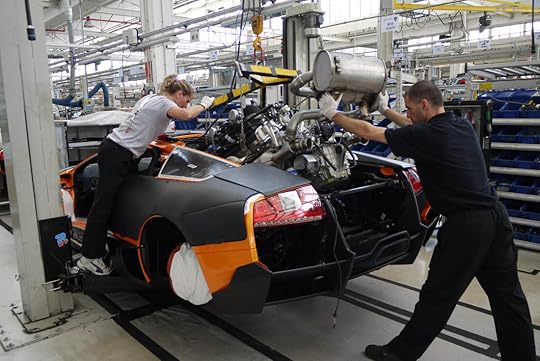 Just a few minutes across the municipal border into Bologna, you’ll find the headquarters and factory of Lamborghini. The eponymous Bull logo, taken from Ferrucio’s Taurus star sign, appears boldly on the walls. A parking lot holds dozens of Audis belonging to staff, now that the German manufacturer owns 100% of the Lamborghini brand. Since the 1970’s, the company has endured bankruptcy, a sale to Chrysler (itself sold to Italian car giant Fiat), ownership by an Indonesian consortium headed by the son of the dictator Suharto, and sporadic years of economic uncertainty. Yet it has continued to produce vehicles that have redefined design and car envy. Vehicles like the Aventador, Murciélago, the Diablo, and its predecessor, the Countach. As a teenage boy, I had a mounted poster of a blue Countach in my bedroom, a rocket ship on earth, my ultimate dream car. It was named after an Italian wolf whistle, for that is what it in inspired. Subsequent generations of the Countach, along with one of a kind prototypes and concept cars, are on display in an on-site gallery, open daily to the public. The Concept S has adjacent seat booths protected by individual windows, creating the distinct look of a jet fighter. The LM002 looks much like a Hummer, an SUV built in the mid-1980’s, way before its time. A green Countach sits so low on the ground it barely reaches my thigh. On show is also a Lamborghini police car, one of two donated to the Italian police department, to be used for emergency organ transplants and blood deliveries. It is the car you want to be arrested in.
 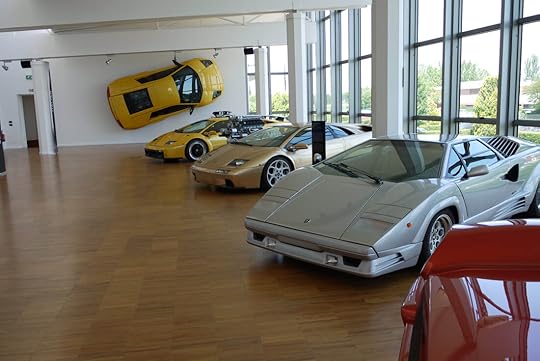 Behind the gallery is the factory itself, where every Lamborghini created is carefully hand-assembled. There are no giant robots drilling sparks into the air. There is no loud industrial noise, or even a spot of grease on the floor. Every 190 minutes, the cars move forward on a U-shaped production line to the next work station, where a team of white-gloved engineers set to work installing the electronics, the interior, the wheels and dashboard. For factory engineers, they look young, healthy, and completely enthused by their job, paying attention to the finest detail, scribbling their efforts into a production book that will follow the vehicle for the remainder of its life. Lamborghini does not keep stock. Each model is made to order, customized according to the exact specification of the buyer. From station to station, the car matures, until at the halfway point, a marriage takes place. The engine, already assembled, is hoisted up and inserted into the chassis, the perfect metaphor for the soul entering the body. At the final station, the electronics are tested, the lights flicker on, and spark plugs get their first ignition. The birth roar of an engine is primal, like a dragon breathing fire, a lion owning the savannah. 190 minutes later, another customized model, black fly-wing doors open, will roar its approval.
 It takes the finest leather of five Austrian cows to furnish the interior of Lamborghini, dyed in lush colours and stitched by hand. One upholsterer has large photos of his kids above his work desk. My guide says “this is love, no?”, I am not sure if she’s talking about the kids, or the car. Valetino Balboni, a 60 year-old test driver hired by Ferrucio Lamborghini himself, pulls up in a silver Gallardo LP 560-4 Spyder. He’s been driving these cars longer than I have been alive, and he’s taking me into the countryside to demonstrate what all that marvellous production amounts to. A car journalist might tell you that the Gallardo Spyder has a new 5.2 litre V10 engine with an output of 560 horsepower, a power to weight ratio of 2.77kg, an 18% reduction in fuel consumption and C02 emissions from previous models, and a top speed of 324 km/hr. All I’ll say is that stepping into the Spyder for the first time made me giggle like a schoolgirl. There is not a head on this planet (or any other for that matter) that would not swivel the second it sees this elegant creation. No wonder that Jeremy Clarkson, presenter of Top Gear and the car man’s car man, replaced his Ford GT with a Gallardo Spyder. Valentino presses a button, the Spyder growls to life, and we effortlessly pull into the road. At the first intersection, I receive eight nods of envy and three photographs.
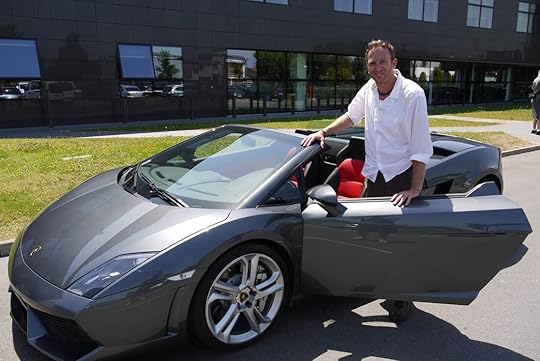 We are but two men comfortably seated on expensive red leather with a powerful state of the art engine strapped to our backs. Valentino shoots ahead, demonstrating the incredible power (0 to 100 km/hr in 3.9 seconds) and stop-on-a-penny all wheel drive braking. The sudden lurch of speed, as we taking sharp corners that could flip most cars, is not unlike being in a rollercoaster, catapulting forward but leaving my eyeballs trailing. We find a quiet stretch and Valentino invites me to take the wheel. With an advanced paddle shift transmission and various driving modes, he reassures me that I cannot make a mistake, as the car will automatically adjust itself as it needs. Sweat is dripping from my forehead, and this low to the tarmac, heat is radiating from the ground. The temperate in the cockpit reads an incredible 50C under a relentless Italian summer sun. I hesitantly pull forward, piloting a vehicle worth more than I could ever afford, well aware that I had signed a waiver holding me responsible for any mishaps. Valentino was right. The Spyder is beautifully forgiving, guiding my paddle presses, injecting fuel when needed, shifting solidly around corners. It doesn’t take long before I have the confidence to induce G-force and make this silver bullet fly. I drive back to the factory, pull up in front of a group of jealous tourists, and would have made a proud and gallant exit had my knees not buckled under the pure bliss of the experience.
It is a short drive from the Lamborghini factory to Maranello, where Enzo Ferrari relocated his factory after his original workshops in Modena were bombed during World War II. Maranello is a mecca for racing and car enthusiasts, and is not so much a small town as a Ferrari theme park. There are Ferrari stores and Ferrari schools, red-painted restaurants and hotels. Images of the famous prancing horse - adopted as a logo by Enzo in 1923 from a famed Italian fighter pilot - are everywhere. While Lamborghini and Ferrari are both Italian sports cars, it is immediately clear that Ferrari is the much larger enterprise - a fast, bright red world unto itself.
Enzo, who died in 1988, did not live to see Michael Schumacher dominate Formula 1 at the wheel of a Ferrari, but this was always his dream. Enzo was born to race, and when he realized his own skill was not up to par with the best, he changed his destiny so that other drivers could fulfil theirs. Originally working for Alfa Romeo, he left the company to start his own stable of race cars called Scuderia Ferrari, literally, Stable Ferrari. Founded in 1947, Ferrari’s impact on the world of motor racing was immediate if somewhat turbulent. It appeared to have more success off the track, as Ferrari road cars became the sought after toys of wealthy car enthusiasts. Yet Enzo viewed the consumer market as an afterthought. Plugging millions into racing development, financial woes in the 1960’s forced him to sell a large stake in the company to Fiat, which today owns 90% of the company. Yet Enzo’s tenacity, not to mention the raw power, stylish design and racing mentality of his cars, ensured not only the survival but also Ferrari’s growth into perhaps the world’s most sought after and recognized sport car brand. Ferraris are vehicles of success, on and off the road.
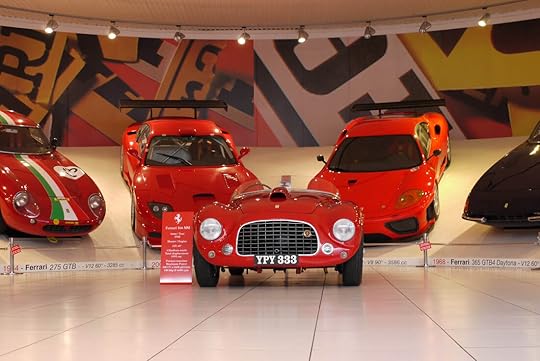 At the Galleria Ferrari, many of the most famous Ferraris are on display for an adoring public. From the original cars built by Enzo to the F1 triumphs of Michael Schumacher, the recreation of a pit stop inside the museum continues to emphasise the importance of the racetrack to the company. It takes some time for me to realize that the display cars are not replicas, but the very models that dominated sport headlines around the world, having won 31 Formula 1 World Titles. Upstairs are the sports cars, the famous Testa Rossa, the F40, the Enzo Ferrari, named in tribute. A red 308GTS represents my personal introduction to Ferrari – the car driven by Tom Selleck in the 80’s series Magnum. There is a marked difference from the sleekness and almost minimalistic lines I found inside Lamborghini’s showcase. These cars exude brute strength, more muscle than finesse. A special showcase houses a black 1957 250 Testa Rossa, an antique car that happens to be one of the most expensive vehicles ever sold at an auction. It sold for a staggering US$12.1 million, and it doesn’t even have headlights.
 Just about every car in the Galleria Ferrari is bright red, a colour forever associated with Ferrari, even though all Italian sports cars have been painted red since a racing organization assigned it to the country in the 1920’s. French blue, German white (later silver), British green. Ferrari came to own the colour because it came to own the idea of Italian race cars. Ironically, the 430 Scuderia waiting for me to test drive outside is a light metallic blue, with two silver racing stripes down the middle. Launched by Michael Schumacher at the Frankfurt Auto Show in 2007, this model was created to complete with the Lamborghini Gallardo Superleggera, offering a lighter body, more power, and faster speed. 508 horsepower at 8500 rpm, power to rate ratio of 2.5kk/hp, an F1-trac system and E-Diff stability control, and I’m not really sure what all that means other than this is a purebred racing machine built for speed. 0 – 100 km/hr in 3.5 seconds, and with a top speed of 320 km/hr, you’re always the pace car on the smooth Italian autostrade.
My test driver’s name is Gabriel, and we both agree that a job requiring you to drive in a Ferrari all day is a job worth keeping. Of all the Ferraris he has driven at the company, this is his favourite, because this model, he tells me, was built for racing, period. The interior is somewhat basic, the seats practical, belts tellingly over the shoulder, like the jump seat in an aeroplane. A metal footplate lets me support myself as Gabriel screams around the bend of a quiet country road, the engine snarling as he shifts the transmission with the paddles. We are tigers lurking in the concrete jungle of automobiles, ferociously hunting prey. After screeching past a chicane, I ask Gabriel how fast he was going. With a wry grin, he tells me he doesn’t know. You’d have to have a Lamborghini police car to catch us anyway, and I happen to know they’re focused on other priorities.
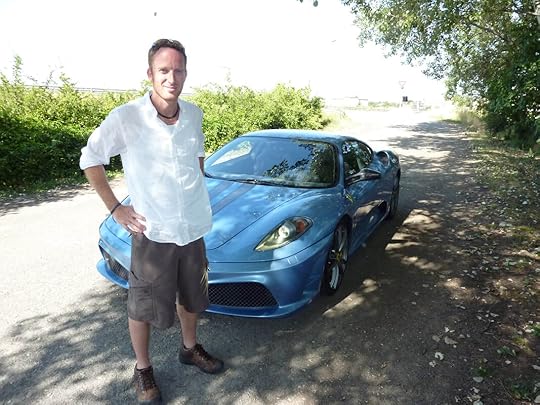 It is late afternoon when we drive back to the Galleria, and in the traffic of rush hour, it seems almost cruel for the 430 Scuderia to trot at 40 km/hr back to the stable. A race car without a race is but an appetite without the means to feed it. I thank my pilot, awkwardly exit the cockpit, and walk over to my rented blue Peugeot 107. Like most cars in Italy, it is a tiny vehicle capable of squeezing through narrow cobblestone streets, slotting in miniscule parking spaces, but still exceeding the 130 km/hr speed limit on the highway. It is half the size of a Ferrari or Lamborghini, but it got me to both factories safely, with room for my suitcase and a couple friends. Comparing it in the same breath as these mighty Italian giants seems almost sacrilegious, and yet the realist might argue they are all machines of transport, on four rubber wheels, powered by an engine. Is a supermodel a better person because she looks better than the average housewife? Is a sportsman a better father because he has more strength and tanned, toned muscles? This is logic, and certainly, this is folly. Dream machines were not designed to carry groceries or pick up the kids. Lamborghini and Ferrari are the golden chariots that shepherd our inspiration, our quest for power, speed and beauty, the desire to transcend practicality in the name of art and technology. Placing a price tag on such an endeavour misses the point. For the majority of us who can appreciate if not afford the result, there’s always a visit to the Engine of Italy.
April 11, 2025
A Little Nostalgia for Ancient History
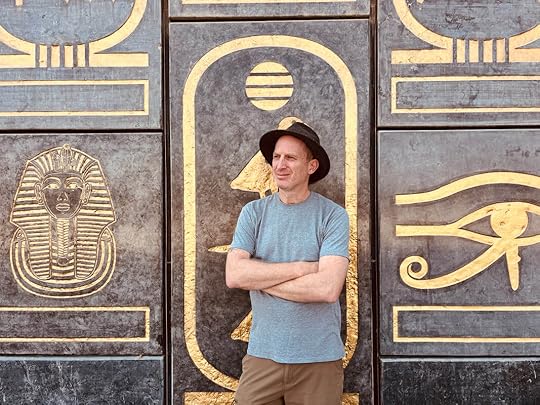 Congratulations, it’s my 20th Travel Anniversary! In 2025, I set out on a 12 month, solo, round-the-world adventure to run away from adulthood and search for adventure. So many crazy things happened during that one amazing year, recorded in a long-form now defunct blog called Modern Gonzo, that I got a tattoo on my leg to permanently remind myself it really happened. The plan was to return to Vancouver and get a job doing…something. Sometimes I’m asked where I think I’d be if that car hadn’t run me down that fateful day on Alberni Street, triggering into motion all the wild adventures that continue to follow. It’s a silly exercise, wondering about the if onlys and the what ifs. What if one of the bands I believed in more than anything hit the rockstar jackpot? What if I wasn’t born in South Africa? If only that show got picked up, that book got published, that project got greenlit, that first internet boom didn’t explode while I was right in the middle of it! It’s easy to rationalize that things happen for a reason, and we humans are zen masters at it. What’s that wisdom: worrying about the past leads to nothing but misery, and worrying about the future leads to nothing but anxiety. Nonetheless, here in the now, I’m taking a moment to reflect on my journey from budget backpacker to TV personality to newspaper columnist to bestselling author to husband, father, landowner, speaker, travel expert, consultant, and however else you want to label me. Actually, it’s a little overwhelming and probably best left to a book one day. But it has triggered all sorts of nostalgia, although for some reason, my brain is casting for memories much further back than twenty years. Let’s see where it takes us.
  First Time in the Sky
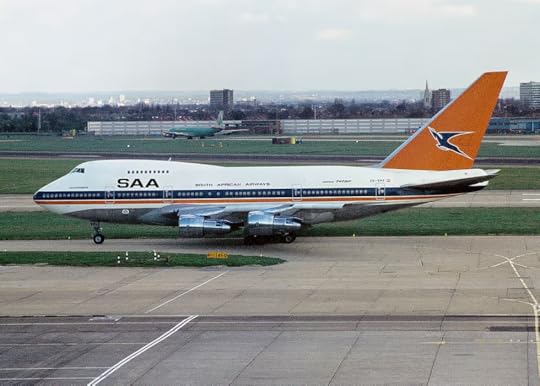
My very first plane trip was recorded for national television news in South Africa. SA Airways had a special promotion for people to fly for the first time, taking off from what was then Jan Smuts International Airport (now Oliver Tambo) for a half hour joyride over Johannesburg. My parents booked us onto that flight. I don’t know how they did it, or why, or how much it cost, but off we went to the airport to hit the skies, in a plane much like the one above, accompanied by an SABC TV news crew on the plane to capture a feel-good story at a time when South African media were prohibited from covering the actual news, that is, the protests against the apartheid regime. I think I was 8 or 9 years old. My parents had been overseas once, so they’d been on a plane before. My older brother got the vox pop at the very end of the news segment, which we watched that evening abuzz with the flight and possibly more excited we might be on the news. They interviewed the whole family I think, because I remember saying something to the camera. But my older brother got his voice on national television, just a single line that I still recall. He said: “It was very cool.” He was always beating me at everything, my older brother, then as now.
 I Got Stoned in Mea Sharim
The next time we got on a plane was on an El Al flight to Tel Aviv. Years ahead of the intergenerational travel trend, three generations of my family were booked onto a bus tour of Israel. I think it was 1988. My grandfather, Abie Esrock, always wore a bowtie, walked with a cane, spoke with a thick accent, and looked much older than he was due to a stroke. My younger brother, who was 3 years old, threw up every day on the bus. We were joined by a large contingent of South African families. The teens gathered into a crew, the little kids played together, and I was a tween awkwardly stuck in the middle, as tweens are wont to do. I have some strong memories from that trip: the taste of the shawarma, hummus and eggplant; the typical Israeli breakfast, served each morning without the slightest touch of variation; the smell of pink Bazooka bubble gum; the T-shirts with funny catchphrases; the teenage girls on the bus with all their alluring mysteries. We went to Masada and the Dead Sea, we went to Jerusalem and Haifa. One day, a rock came flying through the bus window, landing close to my grandparents. This was the start of the second intifada, and I don’t recall parents being particularly bothered by it all, because I wasn’t paying too much attention. I’m sure the incident freaked them right out of their eyeballs, and the army showed up quickly. I was probably listening to music on my blue Sony Walkman throughout the entire episode. Someone bought a T-shirt that said I got stoned in Mea Sharim. Mea Sharim is an ultra-Orthodox Jewish neighbourhood known to be hostile, sometimes violently, towards modern visitors. I didn’t get the joke, because I was 13. Ironically, I think we were close to Mea Sharim when technically, we did actually get stoned. Envy the youth for their ignorance
My family visited Israel again, when I was 15, and again when I was 17. That’s how I can honestly claim to have visited Gaza, because my great-uncle, an Israeli pioneer, lived in the territory in a tiny Israeli settlement on a hill surrounded by three large Palestinian towns. We were reassured that someone in the army swept the playground for bombs before our arrival. We climbed up a water tower, and I remember looking at the Arab towns, which looked peaceful in the late afternoon sun. I didn’t understand the politics back home in South Africa, much less Israel. Envy the youth for their ignorance.
 Bloodsport with a Legend
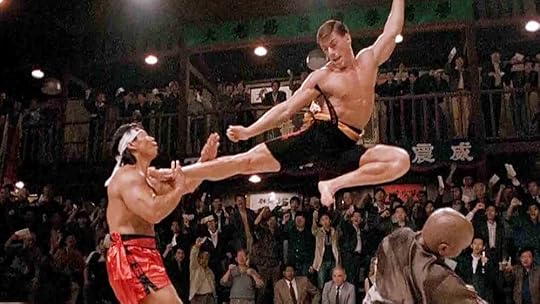
It's interesting what you remember, years later, even when your head is saturated with several lifetimes of experience. That same trip, my brother and I left the hotel in Tel Aviv one night to see a movie. It was called Bloodsport, with a then-unknown Jean Claude Van Damme, and it was the coolest damn kung-fu chop-socky movie we had ever seen. In the line-up outside the theatre, waiting with us to get tickets, was a tall, big, and handsome black American man. He had a moustache and looked like a movie actor. I don’t know what he was doing in Israel, but we struck up a conversation with the guy. I like to remember that he said he “fought in ‘Nam” but I might have adopted that memory from watching too many movies. In my movie-infused memory, he also looked very much like the actor Jim Brown in the 1970s, or Bubba Smith, the former footballer who played Hightower in Police Academy. Maybe it was. Anyway, he asked us where we were from, and my brother looked at me and I looked at him and we both remember, to this day, being embarrassed to say we were South African. Because we knew what apartheid was, and we knew it was wrong, and it was embarrassing and shameful to present our white sorry asses to this tall, proud, black American man, the first black American we’d ever met. But we didn’t fib, we told him we were visiting from Johannesburg, and to his credit, he didn’t shun or shame us. He just shrugged and continued the conversation. I think we sat next to him for the movie. Man, did Bloodsport ever kick Chong-Li ass. I think we were high-fiving our new American friend at the end. We did a lot in Israel that trip, but that’s the one moment I vividly recall the most. The people you meet on a journey often leave the biggest impression.
 Inspiring Others to Inspire Others
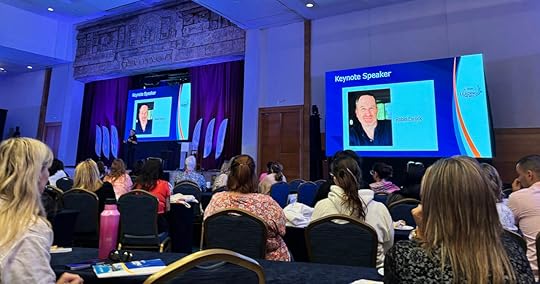
This month I had the privilege to fly to the Mayan Riviera and address a conference room of travel agents and suppliers. I was invited to give a keynote about the Power of Story to the lovely folks at The Travel Agent Next Door, a network of Canadian agents, gathered for their annual conference at the fantastic Iberostar Selection Paraíso Lindo along the Mayan Riviera. Whoever designed this mega-resort is an artist, it’s absolutely gorgeous. I had some wonderful conversations with agents from around the country, learned a few things, pondered the future of tourism, and sparked up various opportunities. My keynote clearly resonated because it got a standing ovation, which in the world of speaking is like a year-end, feel-good bonus. I’ve mostly been doing smaller events of late and it felt good to be on a big stage with three jumbotrons, inspiring others to inspire others, making a positive difference at a time the world desperately needs some hope and positivity. I encouraged everyone to take a media diet from the bad news, and also encouraged myself while doing so. In a month of utter economic chaos caused by the will of a madman, this captivating hour on stage is the one moment I hope to remember.
January 30, 2025
When Tourism Becomes An Economic Weapon
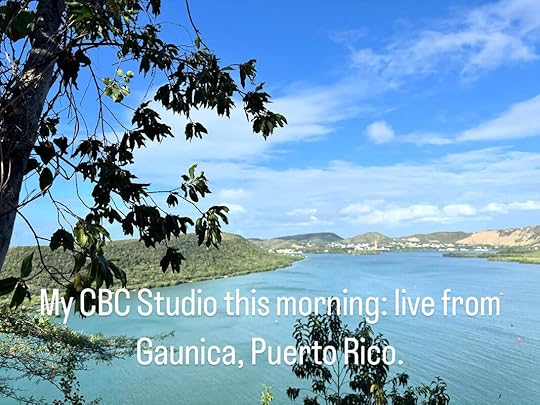 This month I got a call from CBC Radio to talk about Canadian tourism on the national show, The Current. Nothing particularly unusual there, I’ve spoken about Canadian tourism a dozen times on CBC Radio before, although this time I would be patching in from a remote forest in Puerto Rico. There's always a compelling reason to have me on: it might be early summer and everyone is planning their vacations, or perhaps I have a new book out and want to promote it. This time, it’s because Canadians are being encouraged to explore their own backyard at the expense of our southern neighbours.
 The reason for this is entirely political. A new US administration wants to tariff Canadian products and flex its economic muscles to negotiate more favourable trade deals, to hell with the Canadian economy (and Canadians in general). It's Big Guy Bulling Little Guy 101, but this is not the space to get into politics or my thoughts about that guy. It is however a place to talk about tourism. According to a recent report, if Canadians stop visiting the US, it could have as much as a $6 billion hit on the US economy. That’s not peanuts, although given the size of the US economy, it’s not going to make much of a dent - or provide much negotiating leverage - either. This is assuming you can get every Canadian to stop travelling to the US, which you can’t. What it does do is hurt tourism on both sides of the border. With patriotic vitriol and retaliatory tariffs, Americans won’t visit their beautiful northern neighbour, and Canadians won’t feel compelled to go south. This will hit tour operators, hotels, transportation companies, restaurants, and a lot of other ancillary businesses too.
For an industry that famously brings people together, tourism is now being positioned as an economic weapon, and one of the few Canada has when it comes to a much larger, richer and aggressive neighbour. It’s just one example of the chaos and disorder that guy is sowing in this strange new world, where nobody can believe anything they see or hear, and all the hard work to become socially responsible, ethical and empathetic appears to have been tossed out a window. It will, of course, all blow over, because it always does. In the meantime, more Canadians will choose to travel in Canada, which is never a bad thing, especially for Canada’s foremost bucket list travel expert! I do have several upcoming US trips planned, and have no intention of cancelling, despite feeling some pressure from colleagues in the industry. It’s been my experience that tourism people are open-minded, generous, informed, and believe in the benefits of welcoming people, in as opposed to shutting them out. It’s not US tourism's fault, and I’m not going to punish them. That said, apples for apples, if you have a choice between taking a Canadian or US vacation right now, until that guy quits threatening and mocking the sovereignty of its friendly normal neighbour, the choice for everyone north of the border should be obvious. And with their exceptionally strong dollar, the choice for everyone south of the border should be obvious too.
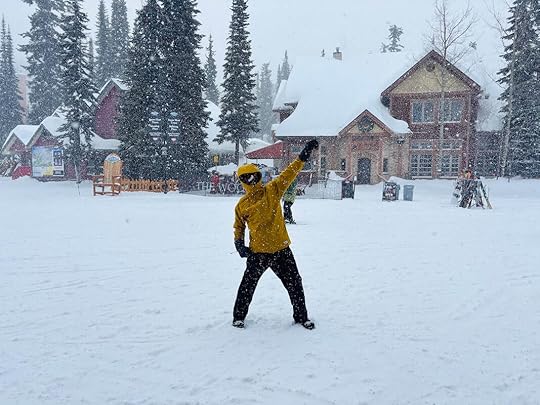
This month took me to Mount Baker and Big White to ski two very different hills, and then to tropical Puerto Rico for the first time to investigate three of the world’s seven bioluminescent bays. As the pandemic drifts into the haze of bad memory, I can see the resulting boom in tourism shows no signs of abating. I’ve also noticed that prices have taken a massive leap: it never used to cost so much to get an airport coffee, or a glass of wine, or order a round of appetizers. At some point, high value should return. There have always been multiple tiers of travel, and it’s totally fine to travel according to your taste and budget. Yet budget travel is now harder and harder to come by, especially for working parents with young families. I love a good ski hill, but mountain prices in top North American resorts have increased to dizzying heights, pricing out middle-class families who can no longer afford to get their kids on skis. Factor in the gear, transport, passes and meals, and budget at least $1000 a day for a family of four. It has me envying communities in B.C like Fernie and Kimberley that have access to such great local hills. Even as inflation has come under control, if the economy is not on everyone’s mind, it’s certainly on mine.
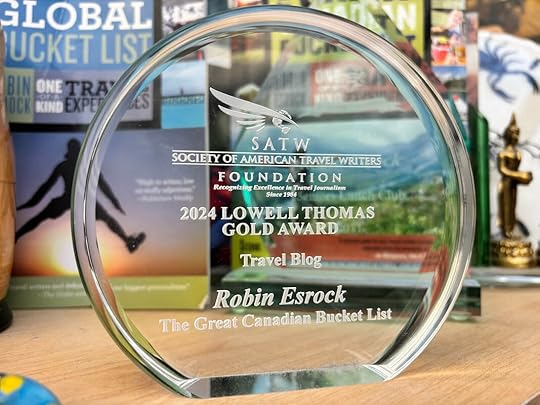
Upon my return from Puerto Rico, it was nice to be greeted with this physical award recognizing the quality and effort of my blog, www.canadianbucketlist.com. A Lowell Thomas Gold Media Award is one of the most prestigious awards in my wild and crazy profession. As Aesop said: "Gratitude turns what we have into enough."
December 11, 2024
A Bucket List Round-Up of 2024
I heard a quote from someone, misquoted by someone else, which I will now misquote further: creative people need to be creating, otherwise they’re not breathing. It is why musicians make music, painters make paintings and writers make words. God help all of us trying to make a living doing it.
My act of creation is rather specific: I travel and record my experiences in a positively authentic manner with the hopes I can inspire others to have these experiences too. Every year begins with a fresh slate with very little idea where I will end up, and what I will do when I get there. Each December, I look back on the year with a sense of bewilderment that can I assure you, never grows old. Did I really get the opportunity to go there, and to do that? Looking back on 2024, here’s a round-up of what I mean: January: A Theme in Orlando
Can you take the kids to the theme-park capital of the world and not visit the theme parks? This was my idea for a story, and it almost worked. Under stormy skies, we air-boated in the everglades, took on obstacle, aquatic and rope courses, illusion museums, and graceful manatees floating in crystal streams. But I’m not a monster, so the kids did get to enjoy Legoland (before they grow out of it) and Sea World’s Discovery Cove too. After Orlando, we headed south to Delray Beach for a long overdue family reunion 30 years in the making. This combination, of busy activities with personal reconnections, kicked off another remarkable year on the bucket list. February: Showing off on the Slopes
Every winter I like to profile a different ski destination. It’s usually the only time my family gets on skis, but slopes are only one aspect of any ski resort. This year we drove up from Vancouver to SilverStar Mountain Resort, discovering a compact, family-friendly resort with beautiful hills and a lot of fun off it. SilverStar had the best tubes runs I’ve ever seen, and the kids had way too much fun on the mini-sleds. My story took shape thanks to my sister and brother in-law joining us from New York. Who knew there was an authentic Austrian restaurant – shipped from Austria itself - in the hills of the Okanagan? Canada is always underestimated by visitors, and always overdelivers. SilverStar and Vernon proved to be yet another perfect example of this phenomenon.
March: Between Belize and a Barrier Reef
After conquering the skeleton at the Whistler Bobsleigh Centre and learning all about the non-alcoholic beverage trend, my daughter and I flew to Central America to climb Mayan jungle temples, eat ceviche, and float underwater. For I wondered: can a 10-year-old go scuba diving? The answer is yes, especially a 10-year-old like my daughter. With the help of PADI and a wonderful instructor at Ocean Quest Dive Centre, Raquel took her online courses and pool classes in Vancouver, completing her Junior Open Water Certification in Belize’s San Pedro. Adults struggle with the tests and it wasn’t easy, but watching her resilience to overcome the fear and challenges gave me pure nachas. This is a Yiddish word you’ll have to Google. Exploring the world’s second largest barrier reef with her, underwater and from above with a snorkel, meant more than one thousand Taylor Swift concerts. Enya slays in my video, but Raquel as always owns the show.
April: Vacations vs Adventures in Mexico
I don’t begrudge anyone who chooses a flop-n-drop vacation, especially with kids. Others, like myself, are just wired differently and prefer an adventure. With the family in tow, we headed to Puerto Vallarta in Mexico to see if it’s possible to combine an adventure and vacation. You can read my story here, or watch the dreamy video that makes me appreciate that trip more with every viewing. Back in beautiful British Columbia, the legendary Ange Chew backed up her claims that Surrey – soon to be the largest city in the province – has an incredible culinary scene with a Spice Trail worth salivating over.
 May: What the hell am I doing, speeding in LA?
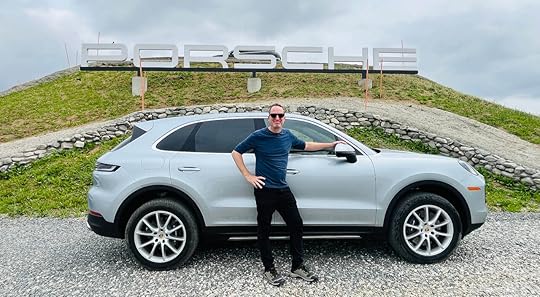
IPW is a massive annual US tourism expo, where states and companies one-up each other for trade and media attention. Host city Los Angeles pulled out all the stops, including shutting down Universal Studios for a private party, and throwing an opening bash at the historic LA Coliseum (which will host another Olympic Games in 2028). Always chasing a bucket list experience, I hopped in three Porsche models to see what these babies can do around a special-built race, sliding, and 4x4 track. Back home, I volunteered at the Courage to Come Back Awards, which raised $1.7m for the Coast Mental Health Foundation, and then headed to Medicine Hat for an inspiring talk to a wonderful community. After years chasing the northern lights in the Arctic, a powerful solar storm brought them south, lighting up the skies of Vancouver in greens and reds on a beautiful and clear spring night.
June: Sunsets in Botswana (and Johannesburg too)
I’ve always wanted to visit Botswana’s Chobe National Park and Okavango Delta. It has also been 14 years since my last visit to Johannesburg, where I was born and raised. Welcome to June. Catching up with my old friends and driving around Jo’burg for a few days was as comforting as a weighted blanket. A lot has changed, but some things haven’t changed at all. Botswana easily lived up to its reputation as a Bucket List safari destination for people who love safaris. Desert and Delta Safaris have incredible camps throughout the country, with a literal view of unforgettable wildlife experiences. In a year of highlights, June proved hard to beat. Cherry on the top: while on safari I learned that my story about visiting Churchill with my son took First Place in the Family Travel category at the Travel Media Association of Canada annual conference.
July: Biking Vancouver Island, the Stampede and Roadsurfing to Waterton
For the third year in a row, I joined a group of motorbike riders for a road trip, renting a Harley Davidson from Eaglerider in Vancouver. We travel far and light, and there’s something about the open road, the fresh air, and the camaraderie that makes these trips particularly special. Swapping my Street Glide for a different mode of transport, the family joined me on a memorable trip to Alberta, first to the Calgary Stampede, and then in a roadsurfer rental RV for a roadtrip to stunning Waterton National Park in the Rockies. Meanwhile, a fully revised and beautiful second edition of The Great Western Canada Bucket List hit the shelves nationwide. It was too late to squeeze in Waterton, but it easily makes its way in the third edition of The Great Canadian Bucket List, coming fall 2025.
August: Go east, young man
I love multi-generational travel. You experience a destination through different eyes, and the bonding is priceless. Together with my mom and son, we headed to Prince Edward Island and New Brunswick for a road trip to natural landmarks, beautiful red-sandy beaches, green gables, lovely little towns, the Bay of Fundy, and fuzzy goats on a boat. Over two weeks we packed in a lot, covering Fredericton, Moncton, St Andrews, Saint John, King’s Landing, and so much ground (and history) in New Brunswick. Returning home, I joined some friends for a milestone adventure in the backcountry: a week-long rafting trip down Idaho’s Salmon River. That story is coming up next year in The Globe and Mail, and it was a metaphorical bullseye for the idea that life is but an adventure, flowing in one direction, never looking back.
 September: Waltzing down the Danube
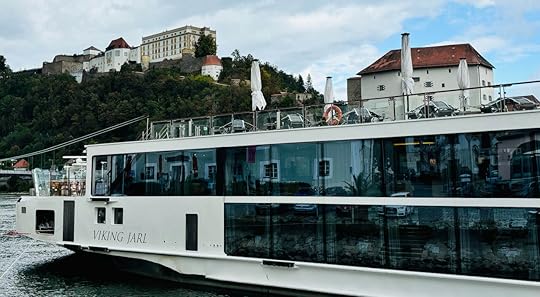
My poor, beautiful wife. Here I am, travelling the world, stealing the kids for one adventure after another, while she stays at home contributing to the community. Hoping to remind her who I am, we left the kids behind for a romantic river cruise down the Danube, hopping aboard the Viking Jaal in Regensburg, Germany and disembarking a week later in Budapest. The weather was moody (the Danube flooded the day we left for home) but there was so much to keep us busy between the historic towns, grand museums of Vienna, the incredible food, and a lovely boat with fun and gracious company.
October: Amalfi lemons don’t need lemonade
Returning to Europe, my daughter joined me for our first Exodus Family Travel Adventure, exploring Italy’s stunning Amalfi Coast. Exodus knows exactly how to keep kids and their parents engaged: cooking pasta and pizza in an authentic Italian kitchen; hiking the most scenic sections of the Path of the Gods; making paper with medieval tools; painting traditional ceramics; lemon gelato; kayaking the terraced coastline; exploring ocean caves and wandering about the remarkable ruins of Pompeii. All of this a fun first for everyone, and another gorgeous highlight in a year full of them. Amalfi was a memorable location to celebrate my 50th birthday too, and we snuck in a quick visit to Paris too!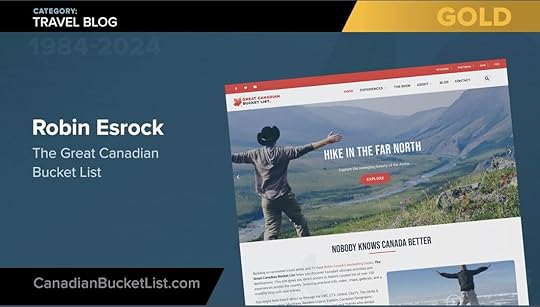 November: Travel is a Gift
You’ll have to excuse me, I’m not at my best, I’ve been gone for a month...” The classic hit by Spirit of the West has always captured the exhaustion of travel, so I took it easy this month, dreaming up big adventures for 2025. I did jet to Cambridge, Ontario for an inspiring talk for the lovely folks at MD Financial. I checked in with the folks at the Saintlo Jail Hostel in Ottawa, and worked on a new edition of my annual Bucket List Gift Guide, which I’ve now ported over to my column at Canadian Geographic.
Another unexpected gift: I won a prestigious Lowell Thomas Gold Medal Award from the Society of American Travel Writers, where an impartial panel of judges chose my Canadian Bucket List blog as the best blog on the continent. This shocked me as much as anyone. After almost two decades of working away in the shadows, receiving two top awards (and being nominated late last year as the Tourism Industry of Canada’s Travel Media Professional of the Year) is welcome validation from my peers for all the hard work. Remember, success is an iceberg: you see 10% of it shining under the sun, but 90% of the effort, failure, frustration, desperation, disappointment, sacrifice and discipline lies below the water.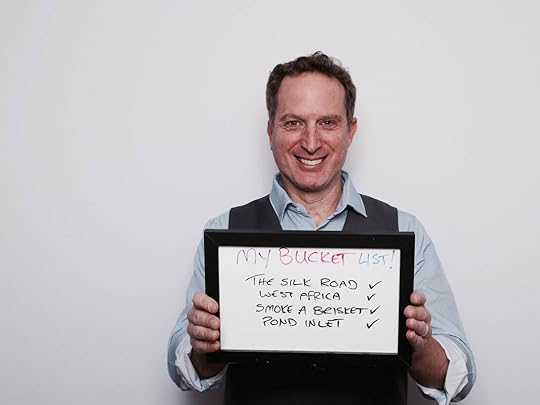 December: Around the Corner
So here we are, wrapping up my 19th year as a travel writer with another unexpected and extraordinary year. There are still a few stories to come, but I’m looking forward to the future in what I hope (although can never guarantee) will be another magical year. It’s been almost twenty years since I set out to see the world as a budget backpacker. So much has changed personally, globally, technically, politically, economically too. The mission has stayed the same: channel my energy and talent where it has a positive impact on the lives of others, while at the same time enjoying the juiciest fruits life has to offer. Coming up: kayaking the bioluminescent bays of Puerto Rico; a snowmobiling adventure in northern Ontario, skiing in Colorado, visiting ancient ruins in Egypt, exploring the French countryside on a small river boat, hopefully riding Route 66, and taking my daughter on the Inca Trail in Peru.
One of the hallmarks of finding happiness is having something to look forward to. Regardless of what’s happening in the world, I hope you too have the good fortune and opportunity to see joy in the possibilities.
- Robin
My act of creation is rather specific: I travel and record my experiences in a positively authentic manner with the hopes I can inspire others to have these experiences too. Every year begins with a fresh slate with very little idea where I will end up, and what I will do when I get there. Each December, I look back on the year with a sense of bewilderment that can I assure you, never grows old. Did I really get the opportunity to go there, and to do that? Looking back on 2024, here’s a round-up of what I mean: January: A Theme in Orlando
Can you take the kids to the theme-park capital of the world and not visit the theme parks? This was my idea for a story, and it almost worked. Under stormy skies, we air-boated in the everglades, took on obstacle, aquatic and rope courses, illusion museums, and graceful manatees floating in crystal streams. But I’m not a monster, so the kids did get to enjoy Legoland (before they grow out of it) and Sea World’s Discovery Cove too. After Orlando, we headed south to Delray Beach for a long overdue family reunion 30 years in the making. This combination, of busy activities with personal reconnections, kicked off another remarkable year on the bucket list. February: Showing off on the Slopes
Every winter I like to profile a different ski destination. It’s usually the only time my family gets on skis, but slopes are only one aspect of any ski resort. This year we drove up from Vancouver to SilverStar Mountain Resort, discovering a compact, family-friendly resort with beautiful hills and a lot of fun off it. SilverStar had the best tubes runs I’ve ever seen, and the kids had way too much fun on the mini-sleds. My story took shape thanks to my sister and brother in-law joining us from New York. Who knew there was an authentic Austrian restaurant – shipped from Austria itself - in the hills of the Okanagan? Canada is always underestimated by visitors, and always overdelivers. SilverStar and Vernon proved to be yet another perfect example of this phenomenon.
March: Between Belize and a Barrier Reef
After conquering the skeleton at the Whistler Bobsleigh Centre and learning all about the non-alcoholic beverage trend, my daughter and I flew to Central America to climb Mayan jungle temples, eat ceviche, and float underwater. For I wondered: can a 10-year-old go scuba diving? The answer is yes, especially a 10-year-old like my daughter. With the help of PADI and a wonderful instructor at Ocean Quest Dive Centre, Raquel took her online courses and pool classes in Vancouver, completing her Junior Open Water Certification in Belize’s San Pedro. Adults struggle with the tests and it wasn’t easy, but watching her resilience to overcome the fear and challenges gave me pure nachas. This is a Yiddish word you’ll have to Google. Exploring the world’s second largest barrier reef with her, underwater and from above with a snorkel, meant more than one thousand Taylor Swift concerts. Enya slays in my video, but Raquel as always owns the show.
April: Vacations vs Adventures in Mexico
I don’t begrudge anyone who chooses a flop-n-drop vacation, especially with kids. Others, like myself, are just wired differently and prefer an adventure. With the family in tow, we headed to Puerto Vallarta in Mexico to see if it’s possible to combine an adventure and vacation. You can read my story here, or watch the dreamy video that makes me appreciate that trip more with every viewing. Back in beautiful British Columbia, the legendary Ange Chew backed up her claims that Surrey – soon to be the largest city in the province – has an incredible culinary scene with a Spice Trail worth salivating over.
May: What the hell am I doing, speeding in LA?IPW is a massive annual US tourism expo, where states and companies one-up each other for trade and media attention. Host city Los Angeles pulled out all the stops, including shutting down Universal Studios for a private party, and throwing an opening bash at the historic LA Coliseum (which will host another Olympic Games in 2028). Always chasing a bucket list experience, I hopped in three Porsche models to see what these babies can do around a special-built race, sliding, and 4x4 track. Back home, I volunteered at the Courage to Come Back Awards, which raised $1.7m for the Coast Mental Health Foundation, and then headed to Medicine Hat for an inspiring talk to a wonderful community. After years chasing the northern lights in the Arctic, a powerful solar storm brought them south, lighting up the skies of Vancouver in greens and reds on a beautiful and clear spring night.
June: Sunsets in Botswana (and Johannesburg too)
I’ve always wanted to visit Botswana’s Chobe National Park and Okavango Delta. It has also been 14 years since my last visit to Johannesburg, where I was born and raised. Welcome to June. Catching up with my old friends and driving around Jo’burg for a few days was as comforting as a weighted blanket. A lot has changed, but some things haven’t changed at all. Botswana easily lived up to its reputation as a Bucket List safari destination for people who love safaris. Desert and Delta Safaris have incredible camps throughout the country, with a literal view of unforgettable wildlife experiences. In a year of highlights, June proved hard to beat. Cherry on the top: while on safari I learned that my story about visiting Churchill with my son took First Place in the Family Travel category at the Travel Media Association of Canada annual conference.
July: Biking Vancouver Island, the Stampede and Roadsurfing to Waterton
For the third year in a row, I joined a group of motorbike riders for a road trip, renting a Harley Davidson from Eaglerider in Vancouver. We travel far and light, and there’s something about the open road, the fresh air, and the camaraderie that makes these trips particularly special. Swapping my Street Glide for a different mode of transport, the family joined me on a memorable trip to Alberta, first to the Calgary Stampede, and then in a roadsurfer rental RV for a roadtrip to stunning Waterton National Park in the Rockies. Meanwhile, a fully revised and beautiful second edition of The Great Western Canada Bucket List hit the shelves nationwide. It was too late to squeeze in Waterton, but it easily makes its way in the third edition of The Great Canadian Bucket List, coming fall 2025.
August: Go east, young man
I love multi-generational travel. You experience a destination through different eyes, and the bonding is priceless. Together with my mom and son, we headed to Prince Edward Island and New Brunswick for a road trip to natural landmarks, beautiful red-sandy beaches, green gables, lovely little towns, the Bay of Fundy, and fuzzy goats on a boat. Over two weeks we packed in a lot, covering Fredericton, Moncton, St Andrews, Saint John, King’s Landing, and so much ground (and history) in New Brunswick. Returning home, I joined some friends for a milestone adventure in the backcountry: a week-long rafting trip down Idaho’s Salmon River. That story is coming up next year in The Globe and Mail, and it was a metaphorical bullseye for the idea that life is but an adventure, flowing in one direction, never looking back.
September: Waltzing down the DanubeMy poor, beautiful wife. Here I am, travelling the world, stealing the kids for one adventure after another, while she stays at home contributing to the community. Hoping to remind her who I am, we left the kids behind for a romantic river cruise down the Danube, hopping aboard the Viking Jaal in Regensburg, Germany and disembarking a week later in Budapest. The weather was moody (the Danube flooded the day we left for home) but there was so much to keep us busy between the historic towns, grand museums of Vienna, the incredible food, and a lovely boat with fun and gracious company.
October: Amalfi lemons don’t need lemonade
Returning to Europe, my daughter joined me for our first Exodus Family Travel Adventure, exploring Italy’s stunning Amalfi Coast. Exodus knows exactly how to keep kids and their parents engaged: cooking pasta and pizza in an authentic Italian kitchen; hiking the most scenic sections of the Path of the Gods; making paper with medieval tools; painting traditional ceramics; lemon gelato; kayaking the terraced coastline; exploring ocean caves and wandering about the remarkable ruins of Pompeii. All of this a fun first for everyone, and another gorgeous highlight in a year full of them. Amalfi was a memorable location to celebrate my 50th birthday too, and we snuck in a quick visit to Paris too!
November: Travel is a GiftYou’ll have to excuse me, I’m not at my best, I’ve been gone for a month...” The classic hit by Spirit of the West has always captured the exhaustion of travel, so I took it easy this month, dreaming up big adventures for 2025. I did jet to Cambridge, Ontario for an inspiring talk for the lovely folks at MD Financial. I checked in with the folks at the Saintlo Jail Hostel in Ottawa, and worked on a new edition of my annual Bucket List Gift Guide, which I’ve now ported over to my column at Canadian Geographic.
Another unexpected gift: I won a prestigious Lowell Thomas Gold Medal Award from the Society of American Travel Writers, where an impartial panel of judges chose my Canadian Bucket List blog as the best blog on the continent. This shocked me as much as anyone. After almost two decades of working away in the shadows, receiving two top awards (and being nominated late last year as the Tourism Industry of Canada’s Travel Media Professional of the Year) is welcome validation from my peers for all the hard work. Remember, success is an iceberg: you see 10% of it shining under the sun, but 90% of the effort, failure, frustration, desperation, disappointment, sacrifice and discipline lies below the water.
December: Around the CornerSo here we are, wrapping up my 19th year as a travel writer with another unexpected and extraordinary year. There are still a few stories to come, but I’m looking forward to the future in what I hope (although can never guarantee) will be another magical year. It’s been almost twenty years since I set out to see the world as a budget backpacker. So much has changed personally, globally, technically, politically, economically too. The mission has stayed the same: channel my energy and talent where it has a positive impact on the lives of others, while at the same time enjoying the juiciest fruits life has to offer. Coming up: kayaking the bioluminescent bays of Puerto Rico; a snowmobiling adventure in northern Ontario, skiing in Colorado, visiting ancient ruins in Egypt, exploring the French countryside on a small river boat, hopefully riding Route 66, and taking my daughter on the Inca Trail in Peru.
One of the hallmarks of finding happiness is having something to look forward to. Regardless of what’s happening in the world, I hope you too have the good fortune and opportunity to see joy in the possibilities.
- Robin
November 14, 2024
My LITTLE blog wins a BIG award
 The idea was simple, if a little ambitious. I’d been asked to write a guidebook in the age of Google, TripAdvisor and Expedia, which seemed like being asked to sell typewriters when everyone is buying computers. I took the book deal and focused on storytelling in print, but recognized that information is the flip side of inspiration, and a companion website and blog would provide enormous value for readers. For starters, they could easily access destination and tour operator links, original or curated video, galleries, reading guides, fantastic products, and tips that didn’t make the print chapter. I could also interact with my audience, receiving suggestions and offering advice. Outside the limitations of a long print cycle, I also could add new experiences to the blog, which in turn could feed future book editions.
Canadianbucketlist.com launched with the first edition of my book, The Great Canadian Bucket List, in 2013. Thanks to a fantastic prize from VIA Rail and Fairmont Hotels, it quickly attracted thousands of subscribers. My publisher was a little concerned the website would cannibalize book sales, but we quickly learned that essay-length stories and short snippets of online information didn’t conflict at all. In fact, only 1 in 5 readers registered on the website, the rest arrived organically from people around Canada and the world searching for unique experiences in the country. They'd learn about the book, and a positive feedback loop was the result.
Over the years, the smash bestselling Great Canadian Bucket List has been through a half dozen different editions. It's been updated, re-designed, focused on regions, and continues to sell well. Earlier this year Dundurn Press published the second edition of The Great Western Canada Bucket List, and next year will see the third edition of The Great Canadian Bucket List. The website, meanwhile, went through a complete overhaul during the pandemic (I had to do something stuck at home). Today it looks better and is easier to use, all the content is unlocked, and ads help me cover the costs.
Each month I continue to update the blog with new experiences, commentary, travel tips, gift guides, and news from my world. I never understood the world of SEO, which left money on the table but kept my content authentic and real. Hi, this is Robin. Not an AI, not an algorithm, not a bot...just a guy with the good fortune to see and share the remarkable country I live in.
This month, at a prestigious event in Istanbul, canadianbucketlist.com won the Lowell Thomas Gold Medal for Best Blog. Awarded by the Society of American Travel Writers, the Lowell Thomas Awards are the Oscars of travel journalism in North America. For 40 years, they has been awarded across multiple categories to the best writers, photographers, broadcasters and producers in the world of travel media. To quote the SATW website: “[The Lowell Thomas Award] is the premier competition in North America in the field of travel journalism. It has gained its stature for several reasons, most notably: it does not promote any particular destination or travel product; it does not have any membership requirements for journalists to enter; it is judged independently by the faculty at a top U.S. school of journalism. This year, judging was overseen by the University of Missouri School of Journalism with Emeritus Prof. John Fennell and Prof. Jennifer Rowe coordinating 25 judges and 1,430 entries.
I had entered several writing awards, because I’m a writer and occasionally that’s what we do, especially when you work alone in a bubble with little validation. I entered this blog as an afterthought, but sometimes, years of hard work can sneak up on you and pay off.
I'm deeply humbled by the recognition, and congratulate all award winners and nominees. I’d also like to give a shout-out to my hardworking, inspirational colleagues in travel media who somehow make it work in this bizarro industry we call home. It's difficult to see on the outside, but we make many sacrifices - personal and financial - to have this dream job. And my gratitude to you, the nameless anonymous visitor, for clicking on a link, spending some time with me on this site, and reading this far. Rest assured; my award speech would have been much more impressive in person.
September 25, 2024
That Time I Got Set on Fire
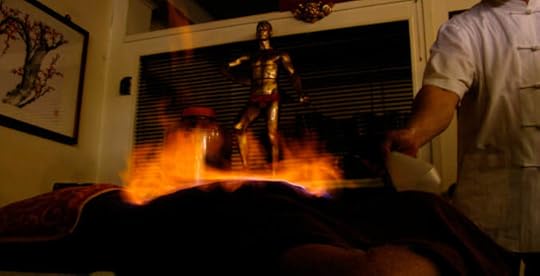 The Fire Doctor of Taipei has coated my back with a brown paste of herbs, covered me with a towel, and spritzed on some alcohol. After lowering the lights, he tells me to be calm, and then lights up the blowtorch. I hear a sound not unlike that of a gas burner being lit, and catch the reflection of flames off a nearby mirror. It takes a few moments to register that the source of the fire is my back, followed by the sudden rush of intense heat.
 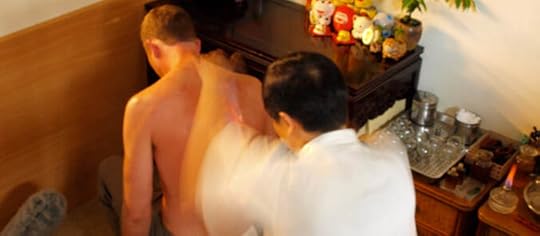 For over a dozen years, Master Hsieh Ching-long has been using open flame to rid the pain. Master Hsieh (pronounced Shay) created fire therapy a dozen years ago after medical training in Beijing, applying his knowledge of traditional medicine, martial arts, and pyromania to invent a powerful treatment for muscle aches and sports injuries. Photos on display in his small clinic depict the doctor with several dozen local celebrities, and he tells me that business is booming. “Not anybody can heal with flame,” says the Fire Doctor. It requires years of martial arts training, so that you can channel your inner energy and use your hands as iron. I’m not sure what this means exactly, but it sounded comic-book cool, and when he demonstrated the above by ripping an apple in half with his thumbs, I knew I was in good hands.
 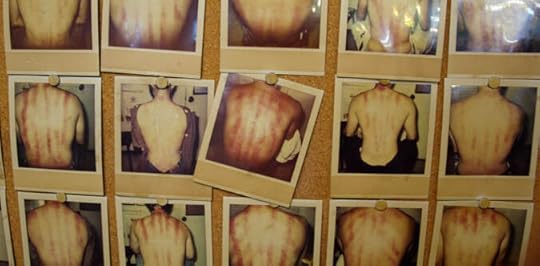 Being set alight was my thrill of choice in Taiwan, the “other” China. The island nation lives in a constant state of tension with its larger Chinese neighbour, with mainland invasion just a few missiles away. Established in 1949 after the communist revolution, Taiwan’s US-supported economy boomed, its democracy flourished, and today it is amongst the sharpest claws of the Asian Tiger economies. With political rhetoric heating up, many look to the success of Hong Kong as a potential future for the peaceful reintegration of Taiwan and China. In the meantime, I had my own heat to deal with.
 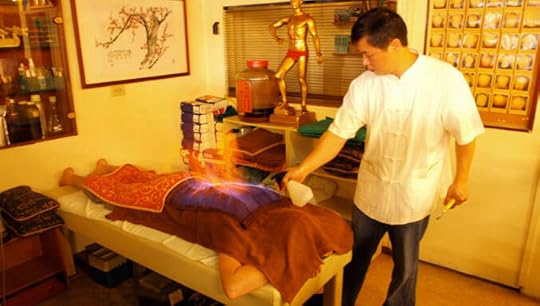 I was hoping Master Hsieh could use his able hands, scarred with burns over time, to untie the thick plane knots in my back. My treatment would come in three stages. Firstly, he would use heated glass cups to realign the energy. Gwyneth Paltrow popularized this treatment a couple years back when she revealed the source of the circular purple welts on her back. It was only during my second treatment, when the blowtorch was fired up, that my nerves began sweating. The herb paste burns for a several seconds before the good doctor douses the flames with a towel, and massages the intense heat into my skin. “Now for the dangerous part,” he says, in which open flame is applied directly to the skin. Photos of other patients on the wall showed grilled skin, lines like steak on a barbecue. I sit upright, and feel the flame rolled down my back on cotton doused in alcohol. It hurts. A lot. I smell the sickly-sweet scent of skin being scorched. Finally, the doctor uses his vice-grip hands for a deep tissue massage, and signals the end of the treatment. My back is bright red, but thankfully free of burn marks. I step out into the heat of Taipei, my adrenaline ablaze; the stiff muscles from yesterday’s long-haul flight slashed, burned, and cast off into oblivion.