Jane Rosenthal's Blog
June 27, 2018
Alameda Park, Casa de Azulejos
Mexico Series: Part 10
We’ll turn around now and head toward Alameda Park on the Western side of the Centro Historico, looking at two important buildings — Palace of Iturbide and Casa de Azulejos-before crossing Alameda Park and heading to the Franz Meyer Museum to see the collection of Viceregal art. That cup I showed you is from that collection.
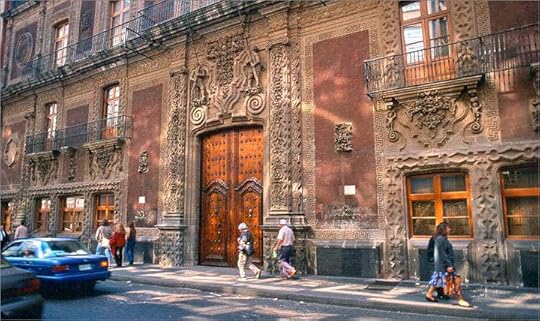
The Palace of Iturbide, built in the 18th century ,belonged first to the Count of San Mateo Valpariso, an incredib...
<!-- | </a>

Palacio Nacional in Mexico City
Mexico Series: Part 9
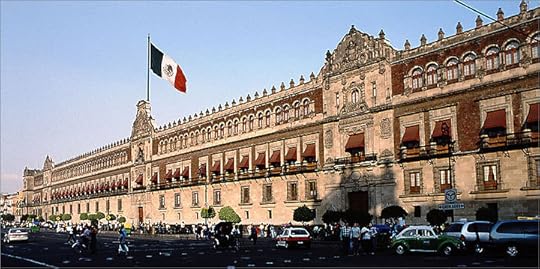
We can look in front of us now at the Palacio Nacional, built by Cortes as his personal palace and government offices in the fifteen hundreds.The red stones used to build the Palacio Nacional are called tezontle, and they came from the buildings of Moctezuma—the private dwellings and pyramids of the Aztecs. Tezontle is a light weight volcanic rock and rather easy to chisel into bricks. The sober structure is embellished with Baroque touch...
<!-- | </a>Manila Acapulco Galleon Trade Route
Mexico Series: Part 8
 The accounts of travels on the Chinese Galleon, the Manila Galleon, the Nao de China — the ships were called many things — were harrowing. It was a six month journey to cross over from the Phillipines to the coast of southern California always with the threat of running out of water or being caught in a typhoon. From California, the vessels sailed down the coast of Mexico to Acapulco where they stayed for many months until the winds were r...
Centro Historico
Mexico Series: Part 7
Now to the Cento Historico . . .
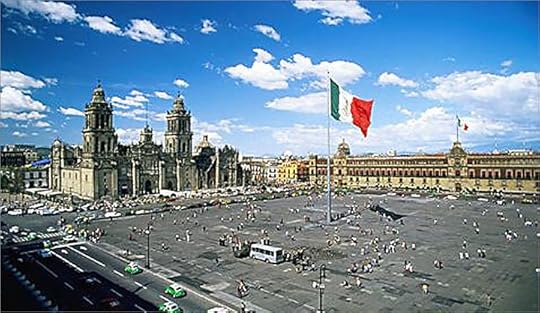
The best place to observe the Zocolo, the Palacio Nacional, and the Metropolitian Cathedral is from the roof terrace of the old Majestic Hotel. It’s a bit down on its heels these days, which makes it all the more bohemian. When the Mexican writer and former ambassador to the US Carlos Fuentes was asked to write about the Palacio Nacional for the Mexico’s bi-centenial, he choose this terrace as the place to...
<!-- | </a>Tenochitlan and Coyoacan
Mexico Series: Part 6
 About the sacrificial platform — The Aztecs believed the gods were weak and required human blood, especially blood of the human heart to succeed in the battle over the forces of night. I’m not going to dwell on this. It really requires a more complete understanding of the Aztec worldview and religion than I have time for here. I think it is important to understand ALL of Mexico’s history to understand Mexico City not just focus on its pre-...
June 27, 2015
Alameda Park, Casa de Azulejos
Mexico Series: Part 10
We’ll turn around now and head toward Alameda Park on the Western side of the Centro Historico, looking at two important buildings — Palace of Iturbide and Casa de Azulejos-before crossing Alameda Park and heading to the Franz Meyer Museum to see the collection of Viceregal art. That cup I showed you is from that collection.
The Palace of Iturbide, built in the 18th century ,belonged first to the Count of San Mateo Valpariso, an incredibl...
<!-- | </a></p>Palacio Nacional in Mexico City
Mexico Series: Part 9
We can look in front of us now at the Palacio Nacional, built by Cortes as his personal palace and government offices in the fifteen hundreds.The red stones used to build the Palacio Nacional are called tezontle, and they came from the buildings of Moctezuma—the private dwellings and pyramids of the Aztecs. Tezontle is a light weight volcanic rock and rather easy to chisel into bricks. The sober structure is embellished with Baroque touche...
<!-- | </a></p>Manila Acapulco Galleon Trade Route
Mexico Series: Part 8
The accounts of travels on the Chinese Galleon, the Manila Galleon, the Nao de China — the ships were called many things — were harrowing. It was a six month journey to cross over from the Phillipines to the coast of southern California always with the threat of running out of water or being caught in a typhoon. From California, the vessels sailed down the coast of Mexico to Acapulco where they stayed for many months until the winds were ri...
Centro Historico
Mexico Series: Part 7
Now to the Cento Historico . . .
The best place to observe the Zocolo, the Palacio Nacional, and the Metropolitian Cathedral is from the roof terrace of the old Majestic Hotel. It’s a bit down on its heels these days, which makes it all the more bohemian. When the Mexican writer and former ambassador to the US Carlos Fuentes was asked to write about the Palacio Nacional for the Mexico’s bi-centenial, he choose this terrace as the place to...
<!-- | </a></p>Tenochitlan and Coyoacan
Mexico Series: Part 6
About the sacrificial platform — The Aztecs believed the gods were weak and required human blood, especially blood of the human heart to succeed in the battle over the forces of night. I’m not going to dwell on this. It really requires a more complete understanding of the Aztec worldview and religion than I have time for here. I think it is important to understand ALL of Mexico’s history to understand Mexico City not just focus on its pre-C...