
Maxine Beneba Clarke's Blog
July 31, 2016


July 22, 2016
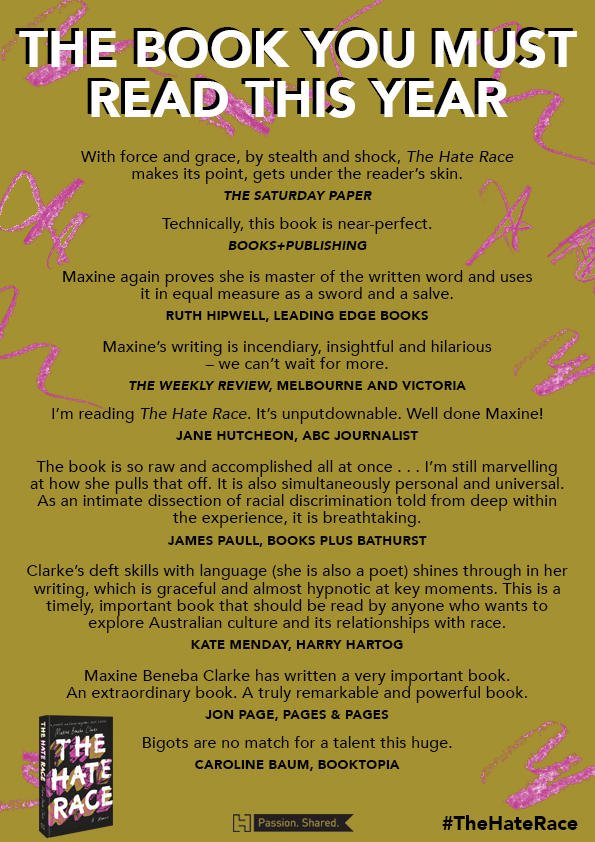
"Listen II - The Hate Race" - A Second Response to Fiona Wright
In the past, my books have drawn mixed reviews, all of which I’ve been very grateful to receive: any interest in literary work is appreciated.
I have only ever responded to one review. In that case, I pointed out a number of factual errors which attempted to discredit my research for my short fiction collection Foreign Soil.
A letter of response, including corrections of those factual errors, can be found here.
I post a link to this previous letter because today I am again responding to that same critic’s review of both of my new books: the memoir The Hate Race, and the poetry collection Carrying The World.
The fact that this one review covers two books in very different genres is unusual practice.
In today’s review, in her critique of the memoir The Hate Race, Wright says:
…at times, the perspective she grants to her younger self seems a bit too precocious. The most striking example occurs when her second-grade class discusses the "discovery" of Australia as a part of bicentennial celebrations. Clarke's narrator, here, is six or seven years old, but nonetheless canny enough to question the version of history her teacher is telling...
As with the review of Foreign Soil, Wright has made an error of fact here. In this chapter of the book, the narrator is not 6 years old, she is 9 years old. The narrator is born in 1979. The "Bicentenary" occurred in 1988. Both these dates appear clearly in the narrative.
Wright also says of The Hate Race:
Clarke's suggestion is that she is particularly alert to the suffering of Indigenous Australians because of her own experiences of racism, but there's something deeply uncomfortable about this alignment that elides very real differences of historical context and oppression.
Here Wright accuses me of both lacking an understanding of the nuances of history, and indirectly, of appropriating the struggles of Aboriginal and Torres Strait Islander people: an accusation I take very seriously indeed. Wright has not provided any evidence from The Hate Race - quotes or otherwise - which speaks to either assertion.
The Hate Race specifically points out that the narrator’s experience is completely different from that of Aboriginal and Torres Strait Islander people. Indeed, a great part of the book is dedicated to an understanding of this. As the child of migrants, I am a beneficiary of the colonisation of Australia – something The Hate Race makes explicit, and something I have always gone to great lengths to publicly point out in exactly these words.
Yet there is something very disturbing about Wright’s suggestion that a person of colour who has experienced racism would generally have no more understanding of the effects of racism on another person of colour than someone who has not been negatively affected by it - or indeed, than someone who actively benefits from it.In the absence of any quotes from the memoir which speak to her interpretation, the form of the combined review attempts to assist the critic’s insinuations. Wright now turns her attention to the poem Marngrook in Carrying The World.
This poem is specifically about the experience of watching targeted racism unfold against Indigenous people. As an accomplished poet herself, Wright would be well aware that the black Africa-descended narrator in this poem is not absolved of responsibility, but is firmly and deliberately positioned with other non-Aboriginal people as bearing equal responsibility for the ongoing inequality suffered by Aboriginal and Torres Strait Islander people, through the repeated use of ‘our', amongst many other devices.
...This land is not mine...
...I want to know the black nation
that could raise a man of such mettle...
...we are only ever as much
as what we teach our children
and so many of our children
have got it wrong...
...we are what we teach our childrenand our children are wrong... ...it is our responsibility..
In her review of this poem in The Age, Wright effectively cites the only lines in the poem which clearly identify the narrator as a black person of African descent - then uses these lines as the basis for alleging appropriation of struggle.
Wright’s underlying gripe - regarding these last two books, at least - seems to be that it is historically inaccurate for a person of colour to draw any correlation at all between their own history of colonisation, racism and oppression, and that of another racially oppressed group.
Ironically, this is the very whitewashed view of colonisation, imperialism, and world history to which The Hate Race speaks.
I invite readers to draw their own conclusions.
I have only ever responded to one review. In that case, I pointed out a number of factual errors which attempted to discredit my research for my short fiction collection Foreign Soil.
A letter of response, including corrections of those factual errors, can be found here.
I post a link to this previous letter because today I am again responding to that same critic’s review of both of my new books: the memoir The Hate Race, and the poetry collection Carrying The World.
The fact that this one review covers two books in very different genres is unusual practice.
In today’s review, in her critique of the memoir The Hate Race, Wright says:
…at times, the perspective she grants to her younger self seems a bit too precocious. The most striking example occurs when her second-grade class discusses the "discovery" of Australia as a part of bicentennial celebrations. Clarke's narrator, here, is six or seven years old, but nonetheless canny enough to question the version of history her teacher is telling...
As with the review of Foreign Soil, Wright has made an error of fact here. In this chapter of the book, the narrator is not 6 years old, she is 9 years old. The narrator is born in 1979. The "Bicentenary" occurred in 1988. Both these dates appear clearly in the narrative.
Wright also says of The Hate Race:
Clarke's suggestion is that she is particularly alert to the suffering of Indigenous Australians because of her own experiences of racism, but there's something deeply uncomfortable about this alignment that elides very real differences of historical context and oppression.
Here Wright accuses me of both lacking an understanding of the nuances of history, and indirectly, of appropriating the struggles of Aboriginal and Torres Strait Islander people: an accusation I take very seriously indeed. Wright has not provided any evidence from The Hate Race - quotes or otherwise - which speaks to either assertion.
The Hate Race specifically points out that the narrator’s experience is completely different from that of Aboriginal and Torres Strait Islander people. Indeed, a great part of the book is dedicated to an understanding of this. As the child of migrants, I am a beneficiary of the colonisation of Australia – something The Hate Race makes explicit, and something I have always gone to great lengths to publicly point out in exactly these words.
Yet there is something very disturbing about Wright’s suggestion that a person of colour who has experienced racism would generally have no more understanding of the effects of racism on another person of colour than someone who has not been negatively affected by it - or indeed, than someone who actively benefits from it.In the absence of any quotes from the memoir which speak to her interpretation, the form of the combined review attempts to assist the critic’s insinuations. Wright now turns her attention to the poem Marngrook in Carrying The World.
This poem is specifically about the experience of watching targeted racism unfold against Indigenous people. As an accomplished poet herself, Wright would be well aware that the black Africa-descended narrator in this poem is not absolved of responsibility, but is firmly and deliberately positioned with other non-Aboriginal people as bearing equal responsibility for the ongoing inequality suffered by Aboriginal and Torres Strait Islander people, through the repeated use of ‘our', amongst many other devices.
...This land is not mine...
...I want to know the black nation
that could raise a man of such mettle...
...we are only ever as much
as what we teach our children
and so many of our children
have got it wrong...
...we are what we teach our childrenand our children are wrong... ...it is our responsibility..
In her review of this poem in The Age, Wright effectively cites the only lines in the poem which clearly identify the narrator as a black person of African descent - then uses these lines as the basis for alleging appropriation of struggle.
Wright’s underlying gripe - regarding these last two books, at least - seems to be that it is historically inaccurate for a person of colour to draw any correlation at all between their own history of colonisation, racism and oppression, and that of another racially oppressed group.
Ironically, this is the very whitewashed view of colonisation, imperialism, and world history to which The Hate Race speaks.
I invite readers to draw their own conclusions.
"Listen II" - A Second Response to Fiona Wright.
In the past, my books have drawn mixed reviews, all of which I’ve been very grateful to receive: any interest in literary work is appreciated.
I have only ever responded to one review. In that case, I pointed out a number of factual errors which attempted to discredit my research for my short fiction collection Foreign Soil.
A letter of response, including corrections of those factual errors, can be found here.
I post a link to this previous letter because today I am again responding to that same critic’s review of both of my new books: the memoir The Hate Race, and the poetry collection Carrying The World.
The fact that this one review covers two books in very different genres is unusual practice.
In today’s review, in her critique of the memoir The Hate Race, Wright says:
…at times, the perspective she grants to her younger self seems a bit too precocious. The most striking example occurs when her second-grade class discusses the "discovery" of Australia as a part of bicentennial celebrations. Clarke's narrator, here, is six or seven years old, but nonetheless canny enough to question the version of history her teacher is telling...
As with the review of Foreign Soil, Wright has made an error of fact here. In this chapter of the book, the narrator is not 6 years old, she is 9 years old. The narrator is born in 1979. The "Bicentenary" occurred in 1988. Both these dates appear clearly in the narrative.
Wright also says of The Hate Race:
Clarke's suggestion is that she is particularly alert to the suffering of Indigenous Australians because of her own experiences of racism, but there's something deeply uncomfortable about this alignment that elides very real differences of historical context and oppression.
Here Wright accuses me of both lacking an understanding of the nuances of history, and indirectly, of appropriating the struggles of Aboriginal and Torres Strait Islander people: an accusation I take very seriously indeed. Wright has not provided any evidence from The Hate Race - quotes or otherwise - which speaks to either assertion.
The Hate Race specifically points out that the narrator’s experience is completely different from that of Aboriginal and Torres Strait Islander people. Indeed, a great part of the book is dedicated to an understanding of this. As the child of migrants, I am a beneficiary of the colonisation of Australia – something The Hate Race makes explicit, and something I have always gone to great lengths to publicly point out in exactly these words.
Yet there is something very disturbing about Wright’s suggestion that a person of colour who has experienced racism would generally have no more understanding of the effects of racism on another person of colour than someone who has not been negatively affected by it - or indeed, than someone who actively benefits from it.In the absence of any quotes from the memoir which speak to her interpretation, the form of the combined review attempts to assist the critic’s insinuations. Wright now turns her attention to the poem Marngrook in Carrying The World.
This poem is specifically about the experience of watching targeted racism unfold against Indigenous people. As an accomplished poet herself, Wright would be well aware that the black Africa-descended narrator in this poem is not absolved of responsibility, but is firmly and deliberately positioned with other non-Aboriginal people as bearing equal responsibility for the ongoing inequality suffered by Aboriginal and Torres Strait Islander people, through the repeated use of ‘our', amongst many other devices.
...This land is not mine...
...I want to know the black nation
that could raise a man of such mettle...
...we are only ever as much
as what we teach our children
and so many of our children
have got it wrong...
...we are what we teach our childrenand our children are wrong... ...it is our responsibility..
In her review of this poem in The Age, Wright effectively cites the only lines in the poem which clearly identify the narrator as a black person of African descent - then uses these lines as the basis for alleging appropriation of struggle.
Wright’s underlying gripe - regarding these last two books, at least - seems to be that it is historically inaccurate for a person of colour to draw any correlation at all between their own history of colonisation, racism and oppression, and that of another racially oppressed group.
Ironically, this is the very whitewashed view of colonisation, imperialism, and world history to which The Hate Race speaks.
I invite readers to draw their own conclusions.
I have only ever responded to one review. In that case, I pointed out a number of factual errors which attempted to discredit my research for my short fiction collection Foreign Soil.
A letter of response, including corrections of those factual errors, can be found here.
I post a link to this previous letter because today I am again responding to that same critic’s review of both of my new books: the memoir The Hate Race, and the poetry collection Carrying The World.
The fact that this one review covers two books in very different genres is unusual practice.
In today’s review, in her critique of the memoir The Hate Race, Wright says:
…at times, the perspective she grants to her younger self seems a bit too precocious. The most striking example occurs when her second-grade class discusses the "discovery" of Australia as a part of bicentennial celebrations. Clarke's narrator, here, is six or seven years old, but nonetheless canny enough to question the version of history her teacher is telling...
As with the review of Foreign Soil, Wright has made an error of fact here. In this chapter of the book, the narrator is not 6 years old, she is 9 years old. The narrator is born in 1979. The "Bicentenary" occurred in 1988. Both these dates appear clearly in the narrative.
Wright also says of The Hate Race:
Clarke's suggestion is that she is particularly alert to the suffering of Indigenous Australians because of her own experiences of racism, but there's something deeply uncomfortable about this alignment that elides very real differences of historical context and oppression.
Here Wright accuses me of both lacking an understanding of the nuances of history, and indirectly, of appropriating the struggles of Aboriginal and Torres Strait Islander people: an accusation I take very seriously indeed. Wright has not provided any evidence from The Hate Race - quotes or otherwise - which speaks to either assertion.
The Hate Race specifically points out that the narrator’s experience is completely different from that of Aboriginal and Torres Strait Islander people. Indeed, a great part of the book is dedicated to an understanding of this. As the child of migrants, I am a beneficiary of the colonisation of Australia – something The Hate Race makes explicit, and something I have always gone to great lengths to publicly point out in exactly these words.
Yet there is something very disturbing about Wright’s suggestion that a person of colour who has experienced racism would generally have no more understanding of the effects of racism on another person of colour than someone who has not been negatively affected by it - or indeed, than someone who actively benefits from it.In the absence of any quotes from the memoir which speak to her interpretation, the form of the combined review attempts to assist the critic’s insinuations. Wright now turns her attention to the poem Marngrook in Carrying The World.
This poem is specifically about the experience of watching targeted racism unfold against Indigenous people. As an accomplished poet herself, Wright would be well aware that the black Africa-descended narrator in this poem is not absolved of responsibility, but is firmly and deliberately positioned with other non-Aboriginal people as bearing equal responsibility for the ongoing inequality suffered by Aboriginal and Torres Strait Islander people, through the repeated use of ‘our', amongst many other devices.
...This land is not mine...
...I want to know the black nation
that could raise a man of such mettle...
...we are only ever as much
as what we teach our children
and so many of our children
have got it wrong...
...we are what we teach our childrenand our children are wrong... ...it is our responsibility..
In her review of this poem in The Age, Wright effectively cites the only lines in the poem which clearly identify the narrator as a black person of African descent - then uses these lines as the basis for alleging appropriation of struggle.
Wright’s underlying gripe - regarding these last two books, at least - seems to be that it is historically inaccurate for a person of colour to draw any correlation at all between their own history of colonisation, racism and oppression, and that of another racially oppressed group.
Ironically, this is the very whitewashed view of colonisation, imperialism, and world history to which The Hate Race speaks.
I invite readers to draw their own conclusions.
May 7, 2016
Carrying The World
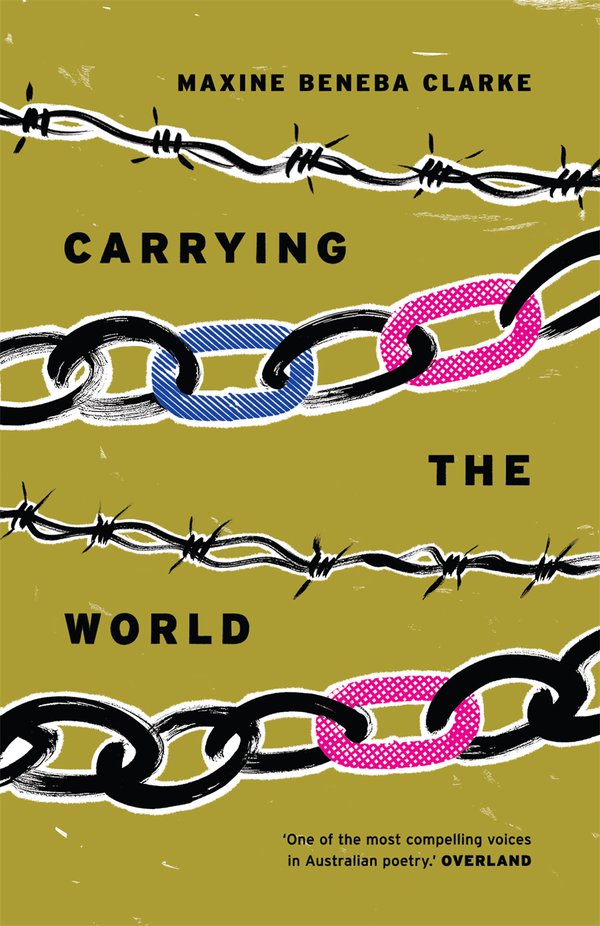
My poetry collection Carrying The World will be published in Australia on May 10.
April 10, 2016
Chinese Straight
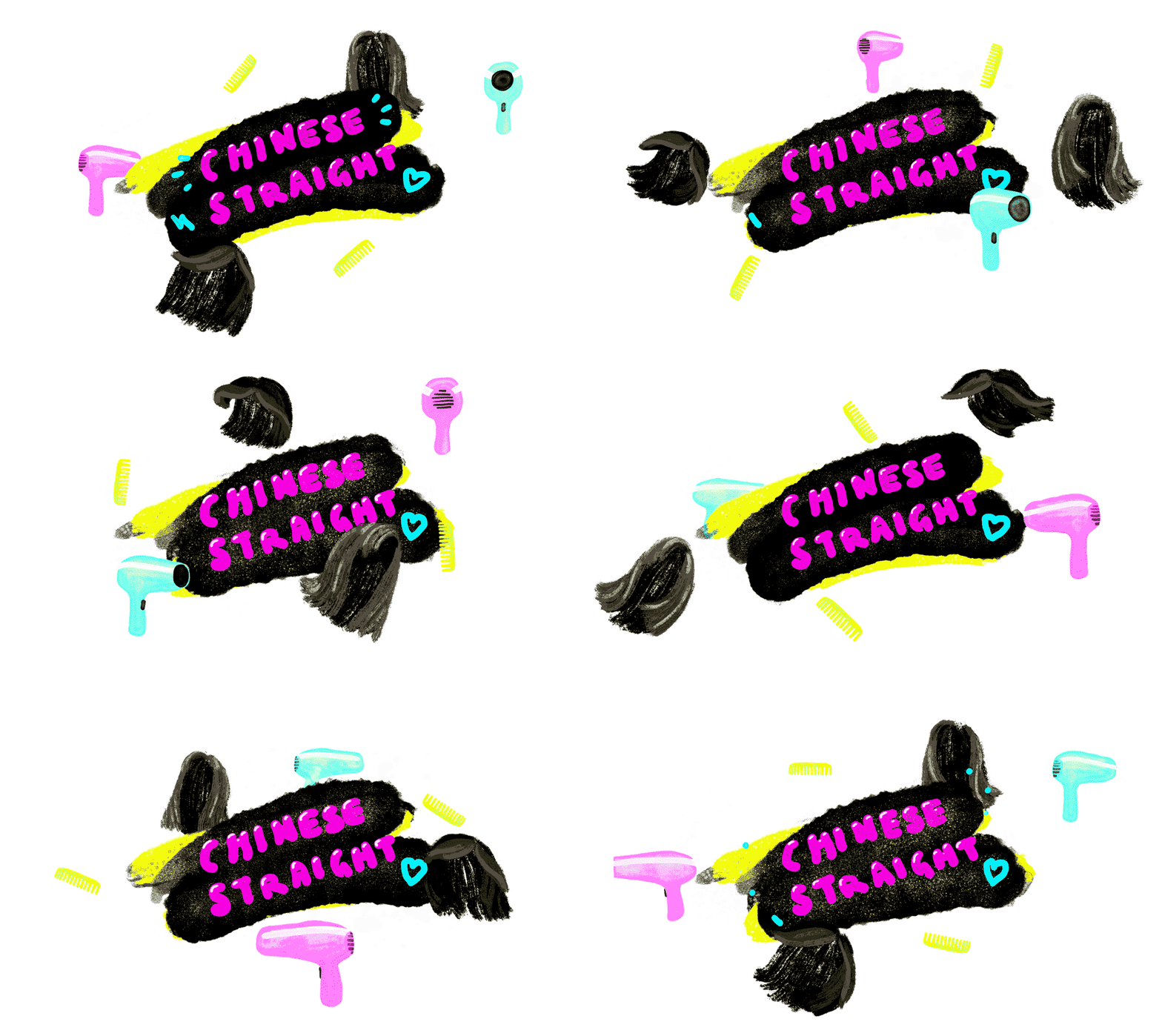 SBS online recently published my non-fiction piece Chinese Straight, with animations by Melbourne artist Isobel Knowles. Chinese Straight is an edited extract from my forthcoming memoir The Hate Race. View it here.
March 7, 2016
Subtext
From my poetry collection Carrying The World, in stores May 10.
February 23, 2016
disappeared
just last year
another young black man was disappeared
you forget his name
did you know it
roughed up by cops in flemington
his body surfaced
crushed and bruised
on the yarra - or perhaps it was
the maribyrnong - banks
nobody could really say
what happened
sweet jesus:
he was disappeared
another black man
remember liep gony
stabbed to death while riding home:
a kid coming back
from his fast food job
on just another ordinary
black boy day
liep gony lived several suburbs from me
liep gony / was my kid too
in the news some short while
but nobody remembers him now
he was more than just a dead boy
but he was just a dead boy brown
the immigration minister
of the day / he said
'these sudanese
have a real problem
with integration'
a black kid did not come home that day
and that was his eulogy offering
back in june / back in june
a taxi driver / was attacked
driving a handful of somebodies safely
– or so he thought –
home from the melbourne night
go back to where you came from they said
he was an indian man
they were white boys
they had baseball bats
theirs were no uncertain terms
yet another good-bloke copper
chasing yet another koori kid
to yet another death
yet another good-bloke copper
chasing yet another koori kid
to yet another death
and yet another good-bloke copper
chasing yet another koori kid
disappeared
it happened
yeah / it happened
yet again
another young black man was disappeared
you forget his name
did you know it
roughed up by cops in flemington
his body surfaced
crushed and bruised
on the yarra - or perhaps it was
the maribyrnong - banks
nobody could really say
what happened
sweet jesus:
he was disappeared
another black man
remember liep gony
stabbed to death while riding home:
a kid coming back
from his fast food job
on just another ordinary
black boy day
liep gony lived several suburbs from me
liep gony / was my kid too
in the news some short while
but nobody remembers him now
he was more than just a dead boy
but he was just a dead boy brown
the immigration minister
of the day / he said
'these sudanese
have a real problem
with integration'
a black kid did not come home that day
and that was his eulogy offering
back in june / back in june
a taxi driver / was attacked
driving a handful of somebodies safely
– or so he thought –
home from the melbourne night
go back to where you came from they said
he was an indian man
they were white boys
they had baseball bats
theirs were no uncertain terms
yet another good-bloke copper
chasing yet another koori kid
to yet another death
yet another good-bloke copper
chasing yet another koori kid
to yet another death
and yet another good-bloke copper
chasing yet another koori kid
disappeared
it happened
yeah / it happened
yet again
January 12, 2016
December 6, 2015
The Hate Race
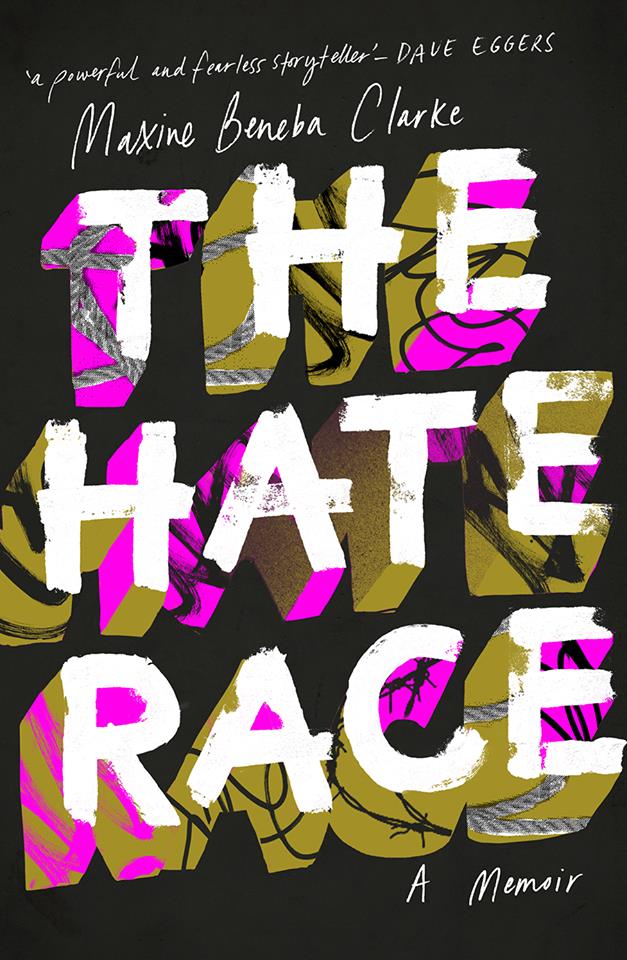
Due out through Hachette Australia, and Little Brown UK, in late 2016.
November 18, 2015
Chinese Straight
I'm thrilled to be part of SBS television's True Stories podcast, reading an extract from my memoir, titled Chinese Straight. You can listen here.
Maxine Beneba Clarke's Blog

- Maxine Beneba Clarke's profile
- 395 followers
Maxine Beneba Clarke isn't a Goodreads Author
(yet),
but they
do have a blog,
so here are some recent posts imported from
their feed.

