
Discover new books on Goodreads
See if your friends have read any of Dwight L. MacPherson's books

more photos (1)
Dwight L. MacPherson’s Followers (54)




1,346 books
|
287 friends

2,026 books
|
530 friends

389 books
|
1,938 friends

159 books
|
2 friends

1,371 books
|
165 friends

296 books
|
50 friends

16 books
|
1,021 friends

2 books
|
10 friends
More friends…
Dwight L. MacPherson
Goodreads Author
Born
in Michigan, The United States
Website
Genre
Influences
Edgar Allan Poe, Rod Serling, C.S. Lewis, J.R.R. Tolkien, Shirley Jack
...more
Member Since
March 2018
URL
https://www.goodreads.com/dwight_macpherson
To ask
Dwight L. MacPherson
questions,
please sign up.
Popular Answered Questions

Dwight L. MacPherson
Start writing. This is the golden age of self-publishing, so there is no better time than the present.


|
The Surreal Adventures of Edgar Allan Poo #1
by
—
published
2007
—
2 editions
|
|

|
Gene Simmons House of Horrors
by
—
published
2008
—
4 editions
|
|

|
The Imaginary Voyages of Edgar Allan Poe (Trade Paperback, Vol. 1)
by
—
published
2019
|
|

|
American McGee’s Grimm
by
—
published
2009
—
2 editions
|
|

|
The Surreal Adventures of Edgar Allan Poo #2
by
—
published
2008
—
2 editions
|
|

|
The Imaginary Voyages of Edgar Allan Poe #1: Chapter I: Falling Down
|
|

|
American Mcgee's Grimm #1
by
—
published
2009
—
4 editions
|
|

|
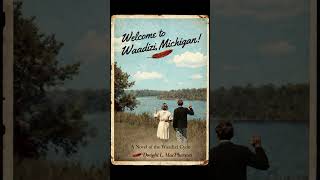
Welcome to Waadizi, Michigan: A Novel of the Waadizi Cycle
by |
|

|
Dead Men Tell No Tales
by
—
published
2008
|
|

|
Sidewise #1
by |
|
The Gotobed Letters: Entry XIII
The morning sun rose over the quiet, manicured lawns of the Ohio suburbs, casting a gentle, golden light upon the smoking, utterly devastated crater that used to be 1313 Willoughby Way. Where a two-story faux-Victorian lady had once proudly stood, there was now only a blackened depression in the earth, filled with pulverized drywall, melted siding, and …
Read more of this blog post »


Dwight’s Recent Updates
|
Dwight L. MacPherson
wrote a new blog post
|
|
|
Dwight MacPherson
and
5 other people
liked
Horror Reads's review
of
Return to Waadizi, Michigan: A Novel of the Waadizi Cycle:

"Welcome back to Waadizi, Michigan. Actually, "welcome" isn't the word you'd use because this is a small town with ancient eldritch secrets hidden beneath the lake. If you haven't read the first book, I strongly encourage you to read it. Not that this"
Read more of this review »
|
|
|
Dwight MacPherson
liked
a
quote

“There is some confusion as to what magic actually is. I think this can be cleared up if you just look at the very earliest descriptions of magic. Magic in its earliest form is often referred to as “the art”. I believe this is completely literal. I believe that magic is art and that art, whether it be writing, music, sculpture, or any other form is literally magic. Art is, like magic, the science of manipulating symbols, words, or images, to achieve changes in consciousness. The very language about magic seems to be talking as much about writing or art as it is about supernatural events. A grimmoir for example, the book of spells is simply a fancy way of saying grammar. Indeed, to cast a spell, is simply to spell, to manipulate words, to change people's consciousness. And I believe that this is why an artist or writer is the closest thing in the contemporary world that you are likely to see to a Shaman.
I believe that all culture must have arisen from cult. Originally, all of the facet ...more Alan Moore |
|
|
"
Alan wrote: "Greetings and salutations friendos Lauren, Dwight and Dylan."
Thank you very much! ...more " |
|
|
Dwight MacPherson
shared
a
quote

“Marketing may, in fact, be its own eldritch horror.”
Dwight L. MacPherson |
|
|
Dwight MacPherson
and
1 other person
liked
Carolyn Laskavy's review
of
Welcome to Waadizi, Michigan: A Novel of the Waadizi Cycle:

|
|
|
Dwight MacPherson
liked
Cindy Knoll's review
of
Welcome to Waadizi, Michigan: A Novel of the Waadizi Cycle:
"Do not read this on a lakeside vacation, just saying. You can smell the mud, taste the water, & feel the silt between your toes. A collection of very interesting stories."
|
|
“There is some confusion as to what magic actually is. I think this can be cleared up if you just look at the very earliest descriptions of magic. Magic in its earliest form is often referred to as “the art”. I believe this is completely literal. I believe that magic is art and that art, whether it be writing, music, sculpture, or any other form is literally magic. Art is, like magic, the science of manipulating symbols, words, or images, to achieve changes in consciousness. The very language about magic seems to be talking as much about writing or art as it is about supernatural events. A grimmoir for example, the book of spells is simply a fancy way of saying grammar. Indeed, to cast a spell, is simply to spell, to manipulate words, to change people's consciousness. And I believe that this is why an artist or writer is the closest thing in the contemporary world that you are likely to see to a Shaman.
I believe that all culture must have arisen from cult. Originally, all of the facets of our culture, whether they be in the arts or sciences were the province of the Shaman. The fact that in present times, this magical power has degenerated to the level of cheap entertainment and manipulation, is, I think a tragedy. At the moment the people who are using Shamanism and magic to shape our culture are advertisers. Rather than try to wake people up, their Shamanism is used as an opiate to tranquilize people, to make people more manipulable. Their magic box of television, and by their magic words, their jingles can cause everyone in the country to be thinking the same words and have the same banal thoughts all at exactly the same moment.
In all of magic there is an incredibly large linguistic component. The Bardic tradition of magic would place a bard as being much higher and more fearsome than a magician. A magician might curse you. That might make your hands lay funny or you might have a child born with a club foot. If a Bard were to place not a curse upon you, but a satire, then that could destroy you. If it was a clever satire, it might not just destroy you in the eyes of your associates; it would destroy you in the eyes of your family. It would destroy you in your own eyes. And if it was a finely worded and clever satire that might survive and be remembered for decades, even centuries. Then years after you were dead people still might be reading it and laughing at you and your wretchedness and your absurdity. Writers and people who had command of words were respected and feared as people who manipulated magic. In latter times I think that artists and writers have allowed themselves to be sold down the river. They have accepted the prevailing belief that art and writing are merely forms of entertainment. They’re not seen as transformative forces that can change a human being; that can change a society. They are seen as simple entertainment; things with which we can fill 20 minutes, half an hour, while we’re waiting to die. It’s not the job of the artist to give the audience what the audience wants. If the audience knew what they needed, then they wouldn’t be the audience. They would be the artists. It is the job of artists to give the audience what they need.”
―
I believe that all culture must have arisen from cult. Originally, all of the facets of our culture, whether they be in the arts or sciences were the province of the Shaman. The fact that in present times, this magical power has degenerated to the level of cheap entertainment and manipulation, is, I think a tragedy. At the moment the people who are using Shamanism and magic to shape our culture are advertisers. Rather than try to wake people up, their Shamanism is used as an opiate to tranquilize people, to make people more manipulable. Their magic box of television, and by their magic words, their jingles can cause everyone in the country to be thinking the same words and have the same banal thoughts all at exactly the same moment.
In all of magic there is an incredibly large linguistic component. The Bardic tradition of magic would place a bard as being much higher and more fearsome than a magician. A magician might curse you. That might make your hands lay funny or you might have a child born with a club foot. If a Bard were to place not a curse upon you, but a satire, then that could destroy you. If it was a clever satire, it might not just destroy you in the eyes of your associates; it would destroy you in the eyes of your family. It would destroy you in your own eyes. And if it was a finely worded and clever satire that might survive and be remembered for decades, even centuries. Then years after you were dead people still might be reading it and laughing at you and your wretchedness and your absurdity. Writers and people who had command of words were respected and feared as people who manipulated magic. In latter times I think that artists and writers have allowed themselves to be sold down the river. They have accepted the prevailing belief that art and writing are merely forms of entertainment. They’re not seen as transformative forces that can change a human being; that can change a society. They are seen as simple entertainment; things with which we can fill 20 minutes, half an hour, while we’re waiting to die. It’s not the job of the artist to give the audience what the audience wants. If the audience knew what they needed, then they wouldn’t be the audience. They would be the artists. It is the job of artists to give the audience what they need.”
―