J.M. Carr's Blog
February 17, 2025
The Selfies

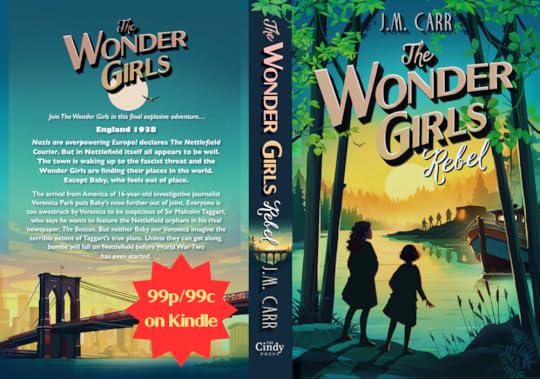
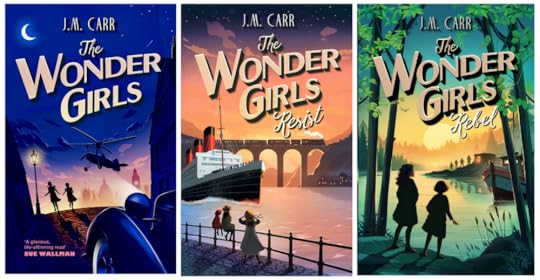
Good news being in short supply these days, I was thrilled to get an email from BookBrunch telling me that The Wonder Girls Rebel was one of six shortlisted books in the children's category of The Selfies.
The Wonder Girls, all three books, set in the 1930s, is a story for now - girls taking on the fascist threat and, spoiler alert, winning. (NB The baddies always lose in the end.) In Rebel the threat comes from an evil newspaper baron – aren't they all?). I've written about writing this final book in the trilogy here, here and here.
Of course, on getting the news, I immediately thought of all the reasons it won't win - the quality of the other 5 books:
Fyn Carter and the Agents of Eromlos by Ian Hunter
Beyond the Secret Lake by Karen Inglis
Time Tub Travellers and the Silk Thief by Claire Linney
Body in the Thames by Sarah Lustig
The Witch's Cat Goes Wild by Kirstie Watson, illustrated by Nina Khalova
...their excellent sales and my struggle with online advertising! But that doesn't matter because I feel I've won already with my ticket to The London Book Fair (LBF) and the opportunity to talk some really interesting people.
All the shortlisted authors, in all categories – adult fiction, children's fiction and non fiction – are invited to the awards on Tuesday 11th March at Olympia.
I've been to LBF before, an age ago, when I was volunteering with the Society of Children's Book Writers and Illustrators, SCBWI. It's really a trade event but lately there's been more and more for creators - published, unpublished and independendently published. I did nearly get to go again when The Wonder Girls was shortlisted but we all know what happened in 2020!
I really enjoy in person events - meeting readers at fairs and festivals, talking to groups, large and small, young and not so young. Hand-selling my books has given me loads of practice at pitching the story. I used to run an event for SCBWI, called The Hook, giving authors the opportunity to pitch their books, on stage, to a panel of agents. If it were still going, I would so rock at that now!
After the New Year down time, bookings are picking up again. Here are a few places, you can see me in action – Would be wonderful to meet a blog reader!
Thanks so much for visiting.
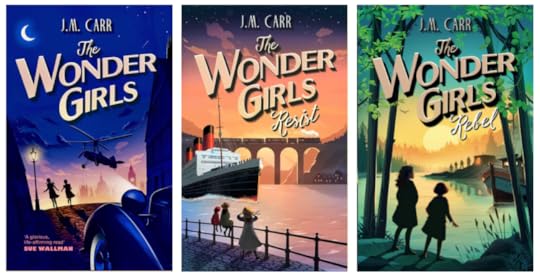
Check out my flagship books.
Lots of different ways to buy, but only 99p/99c on kindle until 12th March!
.


January 24, 2025
How to Write a Gripping Story 2

Thanks for checking out my top tips!
Here's number two and it's one of my toppest.
Newton's Third Law of Motion
Did Isaac Newton (1642ish – 1726ish), famous for falling apples and gravity, realise he had a very important thing to say about writing fiction? As a scientist and natural philospher, he described how the real world works. As writers of fiction we are trying to bring the same sense of reality to our fictional worlds. Newton's first and second laws of motion, here, are worth checking out but it is the third which is particularly relevant for us. It states that...
for every action there is an equal and opposite reaction
When something, anything, happens in your story how do your characters react? What do they do? They might not appear to do anything, which in itself is a reaction - for example, freezing at the news of a sudden death. But they will react in a way that is appropriate for what has just happened and is consistent with their own character – their equal and opposite reaction.
The 'something happening' could be an event - a thunderclap, a brick through a window, a leaf falling. In which case the reaction will, initially, be something external to your characters. For example, a thunderclap may send the dog whimpering under the table!
The 'something happening' will often be the action of another character, from a kick on the shin to a kiss. Each of these happenings will have an effect on the character on the receiving end and cause them to react. Your job is to choose the reaction most effective for moving your story on, the story's motion - see what I did there? Speech is also a reaction but without the character reacting physically, speech can become a disembodied voice in space, causing your story to stray into 'telling' and loosen the grip it has on the reader.
For the point of view character, reader and writer has the advantage of an internal reaction, emotional and/or rational. So when something happens in your story your first question should be What is your character going to do? and a very close second, How does it make them feel? followed by What do they think about it? Non point of view characters can also give us emotional reactions to events by what they do and to a less effective extent by what they say. I think of it like a spectrum...

The physical reactions contribute to the action of your story, the emotional reactions, the heart. Rational reactions - internal monologue or speech - are useful for giving the reader a little break!
Like strong verbs, reactions are more muscles for your story.
If you already have a draft...
Choose a nice bright colour and highlight the story's happenings - character actions, events large and small.
Weigh each one – How important are they to the story? Is anything happening as a result? Is the reaction equal to the event/character action? Fix accordingly!
If you don't have a draft...
Here's a great list of ideas for characters from Reedsy.
Pick one, then take them on a journey - throw trouble in their way!
How do they react?
How does everyone around them react to the 'trouble'?
How do they react to your character?
Thanks so much for visiting my blog.
Check out my flagship books...
November 10, 2024
How to Write a Gripping Story 1

There are forests of books on how to write a good story. They can be a little overwhelming – so much to fix – where do you begin? So this is the first in a series of 'top tip' posts, taking one fix at a time to nudge your story up a level.
N.B. Not one of these posts will be about commas or punctuation!
One of the first things you learn when you start writing fiction is show don't tell.
e.g. Don't tell me the moon is shining; show me the glint of light on broken glass is often attributed to the master storyteller and playwright, Anton Chekov.
Here's my example:
Telling: Maisy was very tired.
Showing: Maisy staggered to the armchair, collapsed into its lumpy seat, closed her eyes and let her head loll.
There are many different ways to 'show' and 'telling' isn't always bad. Note how showing takes many more words! But also, showing tends to be a lot more interesting i.e. gripping to read. This isn't a post about showing and telling, there are loads of those. Here's a good one. But one relatively easy way you can increase the showing in your story is to check your verbs. Specifically, check for all instances of the verb to be.
The verb to be, by definition, is about being. Not doing anything at all. Being is not an action. Actions are your characters doing stuff from the smallest twitch of an eye to the mightiest superhero hurling a ten ton truck. I learned in school that verbs are doing words. Doing is action so doing words inject more action into your story. It is action that makes your characters come alive and so makes the story a lot more fun to read, a lot grippier.
Actions are easier for the reader to visualise. It is generally easier to imagine a character running, say, than just being. Though not all readers visualise as they read. About 1 in 30 people have a condition called aphantasia. This means that when they read all they 'see' are the words on the page. There's also the opposite condition - hyperaphantasia which is the full 'movie in my mind' experience. Most people are somewhere between the two extremes.
To be is a very weak verb. This tip is about strong verbs. For example, the verb to have is similarly weak e.g.
It's also a little ambiguous - do you have the rope in your hand or stashed away in a cupboard somewhere. A stronger, more specific, verb might be:
I'm holding a rope.
And better still...
I'm gripping or I grip the rope.
And even more active...
I grabbed the rope.
Have you read reviews that describe the writing as muscular? Verbs are like the muscles of your story. But this doesn't mean every verb has to be truck hurling, eye twitches are equally effective!
If you already have a draft...
In your draft, search for these words:
wasisamarewere
Now, where you can, swop these for better, active strong verbs.
Don't feel you have to totally eliminate all instances of 'to be'. But think about every one. This will not be just a straight swop. In nearly all cases you will need to rewrite and most likely increase your word count. These strong verbs will not only make your characters more active, they will also develop your characters and so deepen your story..
This is not a quick but it is a focussed fix with extra benefits!
If you don't have a draft or want to try something new...
Find a prompt that grabs you and try to write without using any instance of 'to be' at all.
I like this list of prompts from Written Word Media. Scroll down to get the list, which is sorted into genres.
If you have a go at this I'd love to read what you come up with!
Thanks so much for visiting my blog.
Check out my flagship books...
October 31, 2024
The Wonder Girls Rebel: Spark 3

Baby, Indian by birth, is the character at the centre of the Wonder Girls trilogy. Originally, I didn't to want write a story that was not mine to tell. But I did want a diverse cast. So I researched and created a plausible backstory for Baby that would explain why she knew very little of her cultural heritage and how she came to be a London street kid. She would be the gang leader but we would not be inside her head.
However, it was during the development of this first book my then mentor suggested I make the story a dual narrative and Baby the second point of view character, I bowed to the mentor's experience and did just that. It was receiving some difficult feedback, from one reader, after I published the book, that convinced me I needed to not just to know but to tell Baby's whole story. At the time I was in the middle of Book 2 and my head was full of the Basque Children. The feedback stalled me a bit but after a while, I picked myself and pressed on. You can read Baby’s backstory in books two and three. I am now very grateful to my mentor and that reader, for pushing me to write it.
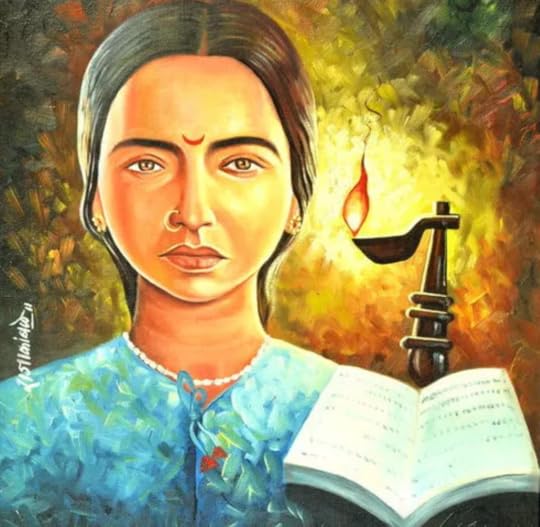
Mukta Salve
A young Dalit woman, born in India around 1841, Mukta Salve, with the student resistance leader Sophie Scholl, inspired much of Baby's character and story.
In India’s caste system (a hierarchy that defines a person’s place and value in society) a Dalit is the lowest. Dalits were often referred to as ‘untouchable’. They were given the dirtiest jobs, for example, dealing with rubbish, sewage and the dead. They had very little access, if any, to education or health care. They were even excluded from Hinduism, the religion that defined them. Crimes committed against Dalits went unpunished.
At fourteen years old, after only 3 years of education, Mukta wrote her essay ‘About the Grief of the Mahar and the Mangs’, the Mahar and the Mangs being sub groups within the Dalits.
Mukta not only documented appalling atrocities committed against Dalits, and questioned Hinduism, she also analysed how the highest caste, the Brahmins, manipulated religion to maintain their influence over Indian society.
Mukta saw how her parents suffered under the caste system and in her essay, refers to the ‘merciful British government’ who mitigated the pain of Mangs and Mahars. She writes how harassment and torture stopped under British influence, and how some Brahmins were motivated to start schools for Mangs and Mahars. Her essay was published in the journal, Dnyanodaya, in 1855.
Though abolished on paper, videos from Indian commentators such as Annenberg Media show that in India, even in the 21st century, the caste system remains entrenched.
The following two bite-sized chunks of research only form a small part of Baby's story but they have also influenced my telling of it.
The Charkha
The Charkha is a small portable spinning wheel in use since the 14th century but popularised by Ghandi, the leader of India’s resistance against the British. It symbolises independence and self-sufficiency.
While under British rule, India was forced to send its cotton to Britain for spinning and weaving. The cloth was then sold back to India at a high cost. The Charkha enabled women, particularly, to change that. It gave them the means to set up and run their own cottage industries.
The Charkha is even represented on India’s flag as a 24 spoke wheel. I love this short film about how a modernised charka is changing the lives of Kashmiri women today.
The Partition of India
Britain finally gave India its independence in 1947. But done in such a hurry, ‘Partition’ was disastrous for the Indian people. Borders were drawn to make two nations India and Pakistan – to separate the two main religions. Though Pakistan was also divided into East and West, East Pakistan eventually becoming Bangladesh.
The Muslims were to be in in Pakistan, the Hindus in India but there were more than two religions in India and people did not live so conveniently. This resulted in millions of people having to uproot, to leave villages where their families might have lived for hundreds of years and move to areas where they thought they might be safe.
Fears for the safety of women led to families being divided. Because the details about the new borders were not released until after Partition, there was much unrest and bloodshed. Kashmir in the north, is still disputed.
This post has been a draft for many, many weeks. I am nervous about appearing to condone colonialism – 'The control over one territory and its peoples by another, and the ideologies of superiority and racism often associated with such domination.' Oxford Reference. But Mukta, definitely a Wonder Girl, should be heard.
I include these snippets of research mostly in the paperback versions of the books you can buy from me directly. Click below here to get your copies.
Thanks so much for reading.
Lots of other options to buy including ebooks as well as paperbacks directly from me (yes please!) here: https://www.jmcarr.com/books
October 16, 2024
Badges, Boxes & Being Grateful in 1969
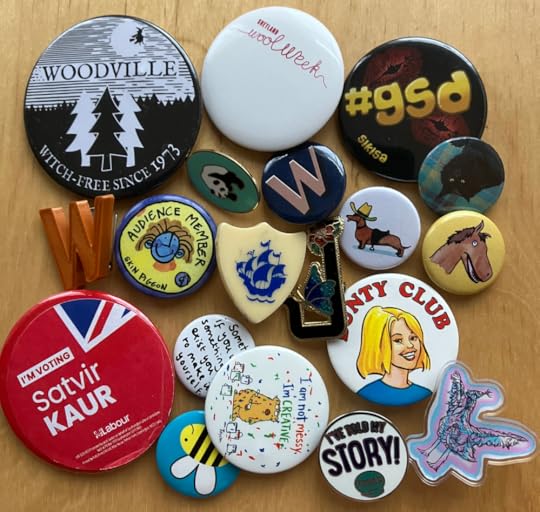
66 years ago today, 16th October, the kids TV programme Blue Peter first aired on the BBC. I know this because on Monday we went along to see the marvellous Brian Bilston in Southampton and bought a book – Days Like These - An Alternative Guide to the Year in 366 Poems. Today’s poem is called The Badge. My equally, if not just a bit more marvellous hub reminded me about a story I wrote on the same topic…
You can listen to me reading it on Soundcloud here: https://soundcloud.com/jancarr/grateful-1969
Or read it yourself here...
Grown ups give you things and you have to be grateful. They knit you baggy jumpers and expect you to wear them. They give you books with tiny writing and expect you to read them or sweets that aren’t proper sweets at all, like sugared almonds or fruit jellies and expect you to eat them. ‘Grateful’ means lying through your teeth – ‘Dear Aunty Dorothy, Thank you for the lovely jumper. It fits perfectly.’ Dear Aunty Margaret, I really liked the Newberry fruits you sent and I am looking forward to reading Grimm’s Classic Fairy Tales retold for Boys and Girls. The clue’s in the title, Aunty.
‘Just be grateful you have presents at Christmas,’ Mum said. ‘There are lots of poor children in the world with no parents or kind aunties.’
Sometimes, I wished I was one of them.
Writing ‘Thank You’ letters can put you off writing anything for life. My mum said, ‘If you don’t write to say thank you, you won’t get a present next year.’
I tried to tell her I didn’t want those presents. I’d said and said and said how I wanted a Tressy with hair that really grew or a Spacehopper, before I got too big to bounce really high on one. How come she couldn’t hear that when she could hear me tip toe across the bedroom floor to turn the light back on when I was meant to be asleep?
Something Mum did get me every year though was a Blue Peter Annual because it was ‘educational’. I loved Val, John, and Pete smiling at me from the front cover wearing their Blue Peter Badges. And the tiny crack it made on Christmas morning when I opened it for the first time.
I did try making my own badge out of some cardboard from a cornflakes box. I coloured it in with blue felt tip. But it was rubbish because the card was brown and my colouring was all streaky anyway.
The annual was full of pictures in colour, not like on our old TV. Pictures of things that had been on the show that year, so it was like being able to watch them all over again. I especially loved the picture of John slipping on the elephant poo and the instructions for making a Dougal puppet off The Magic Rounadbout. This year’s had loads of stuff about the different things people collect.
Collectors have different names according to what’s in their collections. I learned that philatelists collect stamps, numismatists collect coins, and deltiologists collect postcards. Every collector has loads of things that must have taken them years to get. Val, John, and Pete said they’d like to hear about our collections. And if we wrote them an interesting letter, they’d send us a Blue Peter badge. Brilliant!
I was on my way downstairs to ask Mum for a sheet of her best writing paper, when I remembered I didn’t have much of anything you could call a collection. I had last year’s conkers but what could I tell Val, John, and Pete about them? I’ve got a big brown one, some little brown ones and some are a bit harder than others but I don’t know which until the softer ones are smashed to bits? I slipped back in between the bedcovers and let Aunty Dorothy’s bag of sugared almonds slide to the floor.
*****
Granma lived up the end of our road. We walked up to see her almost every day. Grandad had died, which meant he wasn’t under her feet anymore so she could do lots of tidying up. Mum, Granma, and me made lots of trips to the Oxfam shop.
Once, not long after Christmas, Granma walked down the road to visit us. I didn’t see her because I was at school and she only stayed long enough to make Mum get out her best cups and saucers to have a cup of tea.
‘Granma’s brought you a present,’ said Mum when I got home.
Mum said ‘brought’ and not ‘bought’. That was a bad sign. She pointed to a box on the table.
It was an old shoe box with some string tied round it.
Definitely a bad sign.
I would probably be safe betting my pocket money from now until I’m really old like twenty seven or something, that it wasn't a Tressy or a Spacehopper.
‘Go on then,’ said Mum. ‘Why don’t you open it?’
The box smelled funny. It smelled of Grandad’s Woodbines and the white stuff Granma used to rub into his aches and pains. I didn’t want to open it.
One of the corners was split, which was why it needed the string. I was worried it was some of Grandad’s old books noone’s heard of anymore. I closed my eyes and imagined Grandad was here again. Then I opened them straightaway and decided to get it over with.
‘You’ll have to write Granma a ‘Thank You’’, said Mum.
‘Wha’..? I slumped in the chair.
Mum’s mouth was a thin straight line, so hardly any of her lips showed at all.
‘Yes, Mum.’ I hooked my finger through the string that was holding the box together and slid it across the table towards me.
‘Be careful…’ Mum was still watching over me. She held her hands over her pinny like she was hoping for something.
The knot was tiny so I pulled the string off the box with it still tied up. It was tight so it took a while to work it off.
After a bit Granma’s present didn’t smell so much. That was until I got the lid off, when it didn’t smell of Grandad any more just very old.
Well, it was brilliant! Granma’s present was a present! Exactly what I needed! I couldn’t believe I’d got one! Maybe this way it didn’t strictly count but I didn’t care. ‘Can I take it upstairs?’
‘You will be careful, won’t you?’ said Mum.
I put the lid back on the shoe box and tucked it under my arm, and careful not to let anything slide out of the torn edge, I took it upstairs.
After tea, I was ready. ‘Can I have some paper please, Mum?’
I swear Mum clapped for joy. She put a pen and a perfect bit of thick white paper, so stiff it was almost card, on the table in front of me.
‘I need two bits…please.’
Her smile lost some of its curl as she returned from the cupboard again with another sheet of the card paper. I expect it must have looked a bit suspicious when the most I usually managed was one side and that was by making my writing really big and spaced out.
I leaned over the table, curled my left arm round the paper and started writing. While my head was down, I felt Mum place a matching envelope on the table near my guarding arm. I needed two, so when she was back in the kitchen with the washing up, I pinched another one out the cupboard.
I spent the sixpence I was saving for two ounces of lemon sherbet on a stamp instead. I posted one letter that wasn’t big and spaced out and when we went to Granma’s that Saturday, I gave her the other letter, which wasn’t big and spaced out either. When she read the letter I was sure she smiled.
For weeks and weeks after that I’d come home from school and ask Mum if there’d been any post. When she asked me what I was expecting, I’d pretend not to hear her. Until it got a bit awkward, so I stopped asking and just looked to see if there were any letters lying around with my name on. A while after that, I stopped bothering to look too.
At Easter, I had three eggs, one from Mum, one wrapped in turquoise and silver foil in a mug from Granma, and one I won in a raffle at Holy Trinity’s Spring Clean Jumble Sale. The Aunties didn’t approve of chocolate. Mum let me off writing a ‘thank you’ to Granma because we were going straight there for dinner.
Because Easter was late that year, the wait between then and my birthday wasn’t so long as usual. There was just enough time to cut out lots of pictures of Spacehoppers and Tressies from the old Kay’s catalogues in the wet playtime box at school and stick them on the bit of bedroom wall right in front of Mum’s nose if she came in to kiss me goodnight.
My birthday when it came was a near miss - a Cindy, with short hair, but still no Spacehopper. Though there was a small pile of post for me when I got home from school. Mum sat me down at the table with an ice cream sandwich, as a special treat before we went up to Granma’s for tea.
I opened my cards and stood each one in front of me in card wall of lucky black cats , bouncy bunnies and cute ponies.
The last envelope was bigger than the others. It was typed and in the corner was a little blue sailing ship.
I felt a lump inside the envelope and another lump wriggle up into my throat. My skin prickled like electricity. I shivered when I pushed my finger through the gap at the top and ripped the envelope open, careful not to let anything loose fall out.
First, with a shaking hand, I pulled out a typewritten letter...
Dear Janette,
Thank you for your letter and the old postcard you sent us of Chinese boats. We really enjoyed reading about your collection and have put the card on our viewers’ board. Your Grandad must have had a very interesting time visiting China when he was in the army. We think you certainly are a budding deltiologist! We hope you enjoy wearing your badge as much as building your collection!
Best wishes,
Val, John, and Pete.
For about three seconds I didn’t want to look in the envelope in case they’d forgotten to put one in. But I couldn’t think of anything else the lump could be, so I took a better than a Spacehopper by a hundred miles present out and pinned it on my frock. I put my thank you letter from Val, John, and Pete back in its envelope, took Mum’s hand and let her lead me, a real Blue Peter Badge winner, up the road to Granma’s for my birthday tea.
I really wanted to wear the letter as well, to show everyone that I’d done something good and people liked it. Not just people, Val, John, and Pete people. Now I knew what it was like to get one, I thought differently about thank you letters after that. For a few years at least.
Thanks so much for reading!
If you liked it you could 'buy me a coffee' on ko-fi!
Or buy my Books! Lots of options to buy including directly from me (yes please!) here:
July 25, 2024
Chatting to Mark
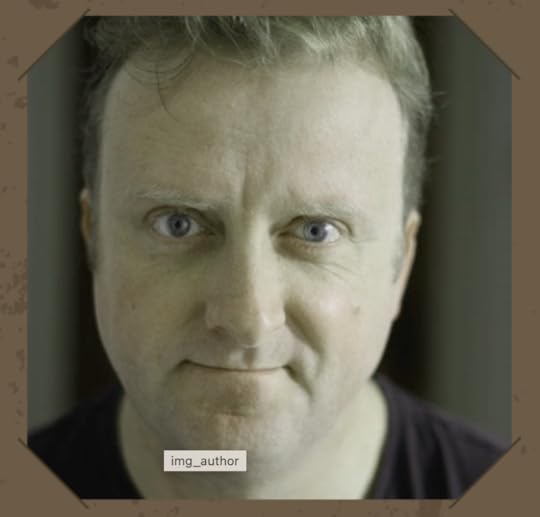
I had such a blast chatting to Mark, last evening! If you couldn't tune in (I'm from the 1960s) you can catch the re-run here.
Find out all about Mark here: https://markstaywrites.com
Buy Mark's End of Magic and End of Dragons Fantasies (beautiful covers) https://markstaywrites.com/books/
Check out Mark's film Robot Overlords - especially great if you're missing Dr Who already!
https://youtu.be/03Y7sd_LLEU?si=ryh8lynd-iTnj6an
Spot some very famous actors, including my fave, 'Gerry' – Milo Parker – from The Durrells).
And another of Mark's films, Unwelcome (Quirky horror set in Ireland). Look out for Derry Girls Star Jamie-Lee O'Donnell).
https://youtu.be/f1qHTrb6QaE?si=6uugZJ6X4r5l4TKl
March 19, 2024
The Wonder Girls Rebel: Spark 2 - The Heroine (one of them)
I don't read newspapers – their headlines, more often than not, make me too angry. Since 2015 I've got my news mostly through sites like Ripples. This way I can do something about it. It may only be a click on an online petition or a few pounds a month to support Led by Donkeys, or The Good Law Project but it does make a difference and to quote a UK supermarket with their fingers in far too many pies, 'every little helps'.
But I have started collecting old newspapers. The headlines may be dire but I know the outcome. Perhaps not liking tension is inappropriate for someone who loves making fiction but the fictional world is one over which I have total control!

Spark 1 for The Wonder Girls Rebel was the villain, a fascist newspaper baron - aren't they all? Spark 2 is a writer, a 'muckraker' – an early 20th century investigative journalist. Generally, I don't like novels about writers, they feel too navel-gazey but this writer is an exception.
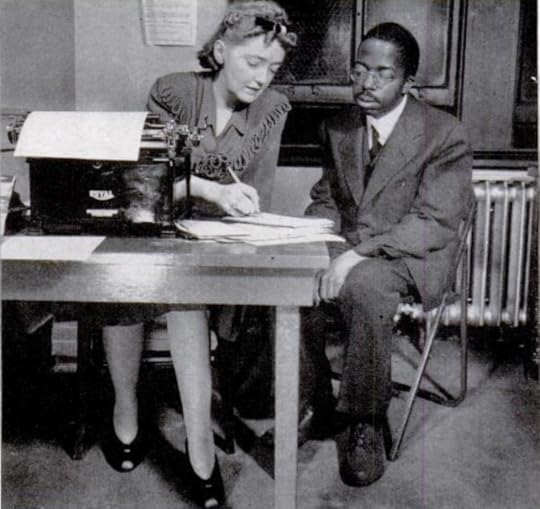
Frances Sweeney was born in Boston around 1908, the only daughter of an Irish 'saloon-keeper'. Petite and blonde with a rheumatic heart condition, she founded her own paper The Boston City Reporter. More newsletter than newspaper, she produced copies using a mimeograph machine, different in operation, but looking like the 'Banda' copiers I used centuries ago when I was teaching.
Her objectives were clear.
The paper struggled for money but Frances refused to resort to advertising or anything that would adversely reflect upon her work or enable her opponents to malign and discredit it. She mostly relied on teenage volunteers, like journalist and social commentator Nat Hentoff, who wrote about the experience in his memoir, Boston Boy.
Frances' instruction to her young investigative reporters was simple. 'What I want from you is facts.' Those facts had to come with proof, not opinions. The only person allowed to have opinions was Frances herself and her opinions had to be based on facts that could be incontrovertibly proved.
She had one paid undercover investigator, interestingly with the same rheumatic heart condition, who Hentoff described as 'tall' and 'cadaverous', a greek known as Gus, with a talent for invisibility in the far right meetings he infiltrated.
At first, Frances focussed on corruption in politics but then turned her attention to fascist and anti-Semitic propaganda. As a devout Catholic, she was especially appalled by the anti-Semitism she saw in The Catholic Church. In the 1930s, gangs of Catholic youths would terrorise Jewish neighbourhoods assaulting residents and vandalising property. Boston at that time was one of the most anti-Semitic cities in the United States. Father Charles Coughlin, a well known radio priest and supporter of some the policies of Nazi Germany and Fascist Italy, incited much of the violence. Frances risked excommunication not only by denouncing Coughlin but the whole priestly hierarchy for not denouncing him.
During World War Two, Frances started a ‘Rumour Clinic’ with The Boston Herald. Each week, the ‘clinic’ would take a rumour, trace it to its source which was usually Nazi propaganda and soundly refute it. One such rumour was that because a woman with permed hair went to work in a munitions factory, her head exploded. Other rumours were less ridiculous, but it only goes to show what people will believe if somebody, or something, like a newspaper, with perceived authority, tells them.
As one young woman, working independently, her task was huge. It was likened by fellow ‘muckraking’ undercover journalist, Arthur Derounian, pen name 'John Roy Carlson', as ‘digging at a mountain with a hand-spade’. Her determination, however, was fearless.
One wet night in April 1944, as Frances was walking home through a wealthier Boston neighbourhood, she had a heart attack. She lay in the gutter, in the rain, conscious, but unable to move. Local people passed commenting on the number of drunks in the city. It took the second glance of a passing police officer to work out that Frances was not drunk, but sick. She lived for just a few more weeks, dying in June of that year. She was 36 years old.
Posthumously, Frances Sweeney succeeded in getting Catholic International, a pro-fascist magazine banned from news-stands. She raised awareness about anti-semitism in the Boston police force, which led to the firing of the police commissioner and a sharp drop in violent crime against the Jewish community.
Irving Stone, the American biographical writer said,
Veronica, my heroine inspired by Frances Sweeney, has a lot of Frances' determination but faults too, which the records for Frances don't show. Perfect heroines don't make great stories. I do hope The Wonder Girls Rebel does Frances' memory some justice. She has been such an inspiration.
My other principal heroine/point of view character is my one-time street thief 'Baby', whose story spans all three books and is Spark 3, landing here in a week or so's time.
For this short post, I am particularly grateful to Wikipedia – always – it points me in the right direction, Google Books for Nat Hentoff's memoir, and Life Magazine for the complete picture of Frances at her desk with a colleague – the 12 October 1942 edition, via eBay, is on its way across the Atlantic as I write!
I hope you'll click on my books here to find out more about the stories inspired by activists like Frances...
The Wonder Girls Rebel:Spark 2 - The Heroine (one of them)
I don't read newspapers – their headlines, more often than not, make me too angry. Since 2015 I've got my news mostly through sites like Ripples. This way I can do something about it. It may only be a click on an online petition or a few pounds a month to support Led by Donkeys, or The Good Law Project but it does make a difference and to quote a UK supermarket with their fingers in far too many pies, 'every little helps'.
But I have started collecting old newspapers. The headlines may be dire but I know the outcome. Perhaps not liking tension is inappropriate for someone who loves making fiction but the fictional world is one over which I have total control!
Spark 1 for The Wonder Girls Rebel was the villain, a fascist newspaper baron - aren't they all? Spark 2 is a writer, a 'muckraker' – an early 20th century investigative journalist. Generally, I don't like novels about writers, they feel too navel-gazey but this writer is an exception.
Frances Sweeney was born in Boston around 1908, the only daughter of an Irish 'saloon-keeper'. Petite and blonde with a rheumatic heart condition, she founded her own paper The Boston City Reporter. More newsletter than newspaper, she produced copies using a mimeograph machine, different in operation, but looking like the 'Banda' copiers I used centuries ago when I was teaching.
Her objectives were clear.
“The object of the Boston City Reporter is and always has been to tell the public who is using prejudice against entire races and religions for undemocratic purposes - and how.
The paper struggled for money but Frances refused to resort to advertising or anything that would adversely reflect upon her work or enable her opponents to malign and discredit it. She mostly relied on teenage volunteers, like journalist and social commentator Nat Hentoff, who wrote about the experience in his memoir, Boston Boy.
“In all of Boston the woman I most admired, sometimes feared, and ridiculously loved was Frances Sweeney.”
Frances' instruction to her young investigative reporters was simple. 'What I want from you is facts.' Those facts had to come with proof, not opinions. The only person allowed to have opinions was Frances herself and her opinions had to be based on facts that could be incontrovertibly proved.
She had one paid undercover investigator, interestingly with the same rheumatic heart condition, who Hentoff described as 'tall' and 'cadaverous', a greek known as Gus, with a talent for invisibility in the far right meetings he infiltrated.
At first, Frances focussed on corruption in politics but then turned her attention to fascist and anti-Semitic propaganda. As a devout Catholic, she was especially appalled by the anti-Semitism she saw in The Catholic Church. In the 1930s, gangs of Catholic youths would terrorise Jewish neighbourhoods assaulting residents and vandalising property. Boston at that time was one of the most anti-Semitic cities in the United States. Father Charles Coughlin, a well known radio priest and supporter of some the policies of Nazi Germany and Fascist Italy, incited much of the violence. Frances risked excommunication not only by denouncing Coughlin but the whole priestly hierarchy for not denouncing him.
During World War Two, Frances started a ‘Rumour Clinic’ with The Boston Herald. Each week, the ‘clinic’ would take a rumour, trace it to its source which was usually Nazi propaganda and soundly refute it. One such rumour was that because a woman with permed hair went to work in a munitions factory, her head exploded. Other rumours were less ridiculous, but it only goes to show what people will believe if somebody, or something, like a newspaper, with perceived authority, tells them.
As one young woman, working independently, her task was huge. It was likened by fellow ‘muckraking’ undercover journalist, Arthur Derounian, pen name 'John Roy Carlson', as ‘digging at a mountain with a hand-spade’. Her determination, however, was fearless.
One wet night in April 1944, as Frances was walking home through a wealthier Boston neighbourhood, she had a heart attack. She lay in the gutter, in the rain, conscious, but unable to move. Local people passed commenting on the number of drunks in the city. It took the second glance of a passing police officer to work out that Frances was not drunk, but sick. She lived for just a few more weeks, dying in June of that year. She was 36 years old.
Posthumously, Frances Sweeney succeeded in getting Catholic International, a pro-fascist magazine banned from news-stands. She raised awareness about anti-semitism in the Boston police force, which led to the firing of the police commissioner and a sharp drop in violent crime against the Jewish community.
Irving Stone, the American biographical writer said,
"Fran Sweeney could not be discouraged, could not be beaten down, could not be frightened, could not be put in her place. She was a one-man crusade. She burned with some of the hottest and most unextinguishable passion for social justice that I have ever seen."
What. A. Woman.
Veronica, my heroine inspired by Frances Sweeney, has a lot of Frances' determination but faults too, which the records for Frances don't show. Perfect heroines don't make great stories. I do hope The Wonder Girls Rebel does Frances' memory some justice. She has been such an inspiration.
My other principal heroine/point of view character is my one-time street thief 'Baby', whose story spans all three books and is Spark 3, landing here in a week or so's time.
For this short post, I am particularly grateful to Wikipedia – always – it points me in the right direction, Google Books for Nat Hentoff's memoir, and Life Magazine for the complete picture of Frances at her desk with a colleague – the 12 October 1942 edition, via eBay, is on its way across the Atlantic as I write!
I hope you'll click on my books here to find out more about the stories inspired by activists like Frances...
March 10, 2024
Mothering
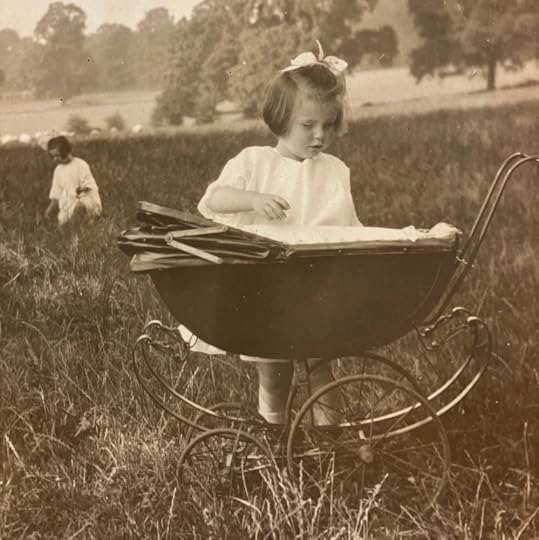
It's Mothering Sunday in the UK today. I prefer that to 'Mothers' Day'. (Is that apostrophe right? Should there even be one? I have no idea.) But I Iike the verb 'Mothering'. To me, it suggests that anyone can do it, because just being called 'Mother' doesn't always mean you do.
What is Mothering? For me, it's caring, nurturing, protecting, teaching, nursing, supporting, defending, championing, encouraging, LOVING.... Biology doesn't necessarily come into it.
Much of The Wonder Girls is about mothering, doing it well and not so well. Doing it because a character's been given the role or because they've inherited it and, in one instance, because they've taken it. Not so much of the story is about mothering because a character has given birth.
None of us with the title 'mother', awarded because we gave birth or legally adopted our children, are perfect. I often think about all the mistakes I made. Did I make fewer mistakes with baby number 4 than baby number 1? Probably not but they were different ones. Because children are different. A bit like books. As Neil Gaiman says, you only learn to write the book you're on.

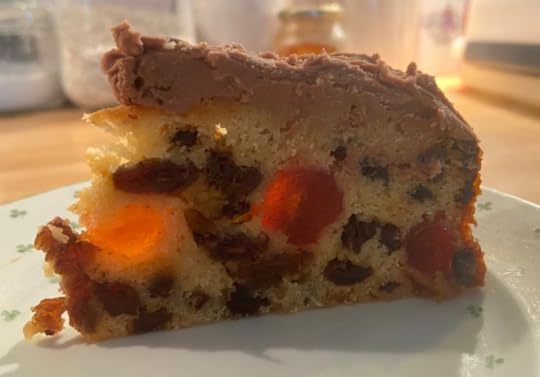
Mothering Sunday originated in Medieval times, even before in other parts of the world. It has a strong associations with, if not its roots in, the Christian Church. The day coincides with Mid-Lent Sunday when a reprieve from the Lent's abstinences would be permitted. Cake might be eaten, traditionally Simnel Cake, also associated with Easter. (Though I'm not a fan of so much marzipan.) In Bristol, they have their own Mothering Buns made from enriched dough, iced and sprinkled with hundreds and thousands.
Originally, the Mother in 'Mothering Sunday' is your 'Mother church' – that is the church in which you were baptised, where, in the middle of Lent, you might return for a special service. The Mothering Sunday gospel reading is traditionally 'The Feeding of the Five Thousand' where Jesus performs the most motherly of miracles, making a little go round a lot! In the early 1900s, Constance Adelaide Smith revived Mothering Sunday as a celebration in the UK. She extended the 'mother' to include earthly mothers, Mary, mother of Jesus, Mother Earth, and Mother Nature.
The American 'Mothers Day', usually celebrated in May, was also revived in the early 1900s, by Anna Jarvis, daughter of peace campaigner, Ann Jarvis. Years before in 1868, Ann organised a committee to establish a 'Mothers Friendship Day' to reunite families divided by the Civil War. After her mother's death, Anna Jarvis continued with, and became obsessed by, her mother's efforts, to the exclusion of other women working for the same ends. One such woman was Julia Ward Howe who led a "Mother's Day for Peace" in 1872, which was accompanied by an "Appeal to womanhood throughout the world' and became known as the Mother's Day Proclamation...
Arise, all women who have hearts, whether our baptism be that of water or of tears! Say firmly: We will not have great questions decided by irrelevant agencies....
I love the notion of world leaders (tech giants... billionaires... media moguls...) as 'irrelevant agencies'.
My own mum died suddenly ten days after I became one, 36 years ago. She could be a challenging lady. So, I don't know how I would have coped had she been around to 'help'. I suspect I would have got quite frustrated. But I can remember feeling very jealous of new buggy-pushing mums with their own mum in tow. I am very sad mine didn't know her wonderful grandchildren. She would have been beside herself with pride. I often wonder what they would have made of her.
I am off now for my Mother's treat – a Zoom game of Ticket to Ride with the fam (very pandemic). It's my favourite board game – sometimes children have to make sacrifices for their parents!
Hope that whatever you're doing, mother related or not, is just as much fun!
March 6, 2024
The Wonder Girls Rebel: Chapter 1

Veronica knew they were coming. The talk outside Betty Marie's bar blew along the sidewalk to the tiny basement and turned the air sour. Whispers dropped like the marbles the kids were trading on the stoop above. Glances flashed through the railings. Good riddance, they said.
Not everyone had had enough of her ‘lies.' Jessie and Loretta upstairs, for instance. They helped out when Archie was … But she couldn't put that into words yet. How empty the place was
without him, the only father she could remember.
Archie's ink-stained work coat still hung on the back of the door that led to the small space they shared. The whole basement, in one way or another, was devoted to publishing their paper The Maple Street Reporter. She unhooked the overall and rolled it into her bag.
She had one last job.
Veronica slid round the printing press, the hulk of iron and ink that dominated the room, now quiet and mourning its master. She stroked the plates, still in place from the edition that had secured her passage to England. ‘I don’t need you today, old friend.’
Folks said their stories were trash—about The German American Bund, for instance, who were playing at Nazis pure and simple. Just fun and games, folks said, what’s wrong with good old healthy sporting competition? But it wasn’t just baseball they were playing, that’s for sure.
Folks said she and Archie should stop raking stuff up. The kinder ones said they should stop drawing attention to themselves, an old black guy and young white girl was asking for trouble. And the stupid ones said people just didn’t want to know.
Tell all that to Mr Schneider. Sewing ten-dollar suits, trying to scratch out a living in South Williamsburg, his window smashed and swastikas daubed on his door. Trouble comes wherever you hide.
Everyone said it was kids, but Mr Schneider had showed Veronica the threat wrapped around the stone. ‘They even come for us here,' he said sadly with a shrug of his shoulders, a little Schneider twisting the tassels on her papa's shawl as he spoke. ‘When I crossed over, I thought we'd be safe,’ he gestured towards the Williamsburg, the huge bridge that joined Brooklyn to the Lower East Side. ‘But this is our lot now,’ he said, gathering up his little one, still blissfully unaware of her papa's troubles.
Well, Veronica had done the work. She'd found the typewriter with the bent ‘J'. It was in the priest's office when she supposedly went to ‘confess' one day. And there on the same desk had been the programme of events for the latest ‘Friends of Germany’ Camp on Long Island. Perhaps when they were holding Nazi rallies in Madison Square Garden, folks would start paying attention.
Veronica took a clean sheet from the box of paper under the desk. The truck pulled up on the street above, but wasn’t going to hurry. She unscrewed a bottle of ink and picked out a brush from the pot. One copy, that’s all she needed.
As Veronica painted in clear brush strokes, boots clumped down the steps. She reminded herself that despite how it looked, she was the one in control here.
Voices, petty and jostling, argued on the other side of the door as Veronica was admiring her work. But then she noticed a dot of blood sunk into an ancient crack in the wood and her heart ached for Archie. Her eyes stinging, she blew on the wet ink.
And there it was, the knock on the door, the official rat-tat.
In the last moment before she had to leave the only home she'd really known, Veronica breathed in the scent of the old place and she was filled with certainty that she was doing the right thing.
She pulled her scarf from her pants pocket and tied it around her neck. The scarf was a bright turquoise and reminded her of a vacation she and Archie once took upstate. Veronica patted his old Fedora firmly on her head and tucked the scarf under the lapels of her jacket, cravat style. She was ready.
The door handle rattled.
‘Alright, alright, I'm here.’ She snatched the paper off Archie's desk and opened the door to two officials. One young, lanky and leering over the other, older, grumpy and crumpled. Both squashed together under the stoop.
’Veronica Frances Park, we're here to…’
'I know, I know… give me space,' she said. ‘I need to lock up.’
The old grumpy official grunted and backed into the young lanky one, who stumbled backwards up the first few steps.
Veronica slung her bag though the door into the space they'd left. She pulled the door shut behind her, turned the key and reached into her jacket pocket where a little nest of thumbtacks pricked her fingers. She held her freshly painted notice against the door and, as the two men watched over her from the sidewalk above, pressed a tack firmly into each of the notice’s four corners.
KEEP OUT
IF YOU DON'T WANT TO CATCH IT!
That should do the trick. Veronica did feel a bit bad about starting a rumour that was clearly (to anyone with half a brain) untrue. But it would stop prying eyes ‘til she got back.
She pulled the key from the lock, grabbed her bag and ran up the steps into the early spring sunshine as a trolley car trundled by. ‘Well, aren't we going?' she said, putting up the collar on her jacket against the fresh breeze.
Lanky leaned over and whispered into Grumpy’s whiskery old ear. ‘Catch what?'
’Baloney,’ said Grumpy.
But Veronica caught Lanky’s look of distaste before he loped through the crowd and slunk into the back of the waiting truck. She couldn't help smiling. Her notice would work, then.
‘Take a good look, ‘cause you won't be coming back, Missy,’ said Grumpy, grabbing her arm.
‘We'll see,’ said Veronica under her breath.
‘What d'you say?’ he said, holding the back door of the truck open.
‘I said, “you don't say.”’ She tried the same tone she'd once used for interviewing an old lady who'd lived her entire life in the worst asylum in the state. She shook off the official arm and scanned the little crowd.
She was surrounded by familiar faces, most of them there to gawp. But there was Lorretta, dabbing her eyes. Veronica pushed her way through to her neighbour, hooked her free arm around Lorretta's neck and kissed her cheek. ‘Don't worry. I'll be fine,’ she whispered. ‘Just look after this for me.’ She slipped the basement key into Loretta's apron pocket.
'I will.’ Lorretta sniffed and shook her head. ‘I didn't mean you to go, honey child.’
‘I know, but I think Archie did.’
‘Take good care of yourself, won't you?' Lorretta did her best to smile.
‘I will, dear Lorretta, you know me!’
Lorretta laughed. A tear slid over her cheek. ‘I do, and that's the trouble.’
Veronica felt a rough grip on her arm.
'It's time to go,' said the old official, pulling her away.
But there was the little Schneider, squeezing between two old Brooklyn ladies who wore self-righteous pouts. The little girl handed Veronica a small square of cotton, beautifully embroidered with a V. ‘From Papa,’ she said.
The stitching was so fine. But the child had disappeared before Veronica could say thank you and she felt her own tears prickle.
Old Grumpy snatched Veronica's bag and threw it inside the truck. It slid across the floor into Lanky’s feet. He squished himself further into the corner.
Grumpy thumped the small of Veronica's back with his palm, pushing her inside with Lanky. Was it because she was dressed in pants and a jacket that they thought they could be so rough? Though she'd better get used to calling them trousers.
A yellow checker cab with a bent front fender drove up behind. She could just make out a man in a hat on the back seat. How nice to be so untroubled by the world you could doze in cab.
'Miss Park,’ said Grumpy, ‘I strongly recommend you don't cause trouble. You have no papers, no record with Immigration. You are an illegal alien. I am sure your family in England will be pleased to see you.' He slammed the little door shut behind her. Veronica grabbed her bag and sat down on the bench, ignoring the young man huddled as far away from her as he could get.
She heard Grumpy scuffle through the crowd. The truck lurched as he got into the cab and the engine gurgled into life.
Family, what family? That was just one of the questions to which she was hoping to find the answer. She slid along the bench and positioned herself in a small of patch of sunlight pouring through a tiny window. She took off her hat and closed her eyes in the warmth.
The engine rumbled as the truck pulled away from the street.
Jerking and joggling in the back, Veronica Frances Park made up her mind. No, she wasn't going to cause trouble. Not that much, not yet anyway, not on this side of the Atlantic. But perhaps for this family in England when she found them, whoever they were. The thought restored her excitement. She was a muckraker, an investigative journalist, and this was going to be her greatest story so far.