Crystal Bryant's Blog
January 8, 2015
Marketing: Affiliate Links
Short post, but I’m just nerding out about this.
1. If you are an author or blogger and you ever link to Amazon, you should have an affiliate account. (This goes for all retailers that offer an affiliate program — if you can get in, do it.)
2. Be aware that if you use affiliate links and reside in the US, you do have to post a notice that you are using affiliate links.
3. (And what I’m really excited about.) You can claim more than one affiliate ID from Amazon.
So why is #3 important? Tracking. According to the Amazon Associates Program Participation Requirements (long-ass name), you can not use a cloaking mechanism to hide or shorten your link. This means no bit.ly or it’s ilk. You can, however, use different affiliate IDs. So if you’re trying to figure out which media, Facebook, Twitter, your blog, or your mailing list, gives you more clicks, you can use a different affiliate ID on the links you post in each forum. You can have one for each blog you manage, one for each social media account, one for each day of the week — you figure out what information you want to track.
Knowing that is important because if you’re trying to figure out where is best for you to focus your marketing efforts, you want to know what really pays off.


December 29, 2014
Indie-Visible is Live!
background-color:#008ba4 !important;
border-style: none;
padding: 5px;
color: #ffffff;
font-weight: bold;
font-size: 13px;
}
.iv-subscribe:hover {
background:#444 !important; text-decoration:none !important;
}
h1.iv-content, h2.iv-content, .iv-highlight {
font-family: 'Oswald';
}
h1.iv-content {
color: #e35638;
}
.iv-body-content {
font-size: 16px;
font-family: Tahoma, Arial, Verdana, sans-serif;
line-height: 1.5em;
}
.iv-body-content a {
color: #008ba4;
}
.iv-body-content a:hover {
color: #e35638;
}
.iv-header-content {
text-align: center;
}
.iv-wrapper {
width: 600px;
margin: 0 auto;
}
Indie-Visible 2.0 Soft Launch
Hooray! We here at Indie-Visible are thrilled to be (soft) launching our site! So, who the heck are we anyway? Indie-Visible is an awesome collaboration backed by a super talented team of writers, bloggers, and freelancers in the publishing industry, who you can meet here and here
Indie-Visible’s BookHub is an online magazine where readers can connect with their favorite authors in fun, innovative ways. BookHub will have a variety of columns, including Indie Book Recommendations, Interactive Contests, and all sorts of activities aimed at getting to know talented authors and their books. If this interests you, be sure to click on the subscription link below!
In the PubHub, writers can get tips on a variety of writing and publishing elements, as well as build their dream publishing team by selecting from our endorsed list of freelancers. Our goal is to provide the perfect “Hub” for writers, where an environment of expertise and professionalism will offer high-level support in all phases of the publishing process and beyond. If this interests you, be sure to click on the subscription link below!
In addition to BookHub and PubHub, Indie-Visible has another AMAZING (Top Secret!) program set to launch in February. Keep your eyes out for an announcement sometime in January.
Keep up on all the goodies by subscribing to our BookHub and/or PubHub newsletters. All subscribers will also be automatically entered to win one of our AWESOME GIVEAWAY PACKAGES. More details on those coming during our Full Launch in January!
Never miss out on an Indie-Visible post!
PUB HUB
BOOK HUB
October 9, 2014
Keeping up to date on industry news
Many authors I know feel like it’s too hard to keep up-to-date on what is going on in the industry. For a long time, I found this hard to understand. I never had to go looking for industry information, I let it come to me. It’s only in the past year that I realized that was the key: I let it come to me.
What doesn’t work for me
I prefer my email to only include actionable items. Things I need to respond to (personal and business emails), things I need to do (change my password, pay a bill), and important time sensitive items (the semi-annual sale at Bath and Bodyworks).
I know a lot of people prefer to follow blogs by email, but that doesn’t work for me. If my email gets too full of things I only want to read, I dread going through my email, figuring out which is a read item and which is an action item, and 1000+ emails later I nuke the whole thing and start from scratch.
There are ways to get your email client to do your sorting for you (rules and tags and folders), but why do all that work for every blog I follow when I can stick them all in a feed reader? (More on that in just a moment.)
What kind of works for me
I can get easily overwhelmed by too much information, so Twitter and I have a cautious relationship. When I originally joined Twitter, I followed ALL THE INTERESTING PEOPLE and many of the not-so-interesting people, and was inundated with one line sales pitches and quippy retorts, and nothing connected together at all! Yet I was determined to read EVERYTHING that crossed my wire, using TweetDeck. So I nuked that account and didn’t go back for almost a year.
When I joined back up, I was very choosy about who I would follow. (I didn’t even follow my husband because he only posted about politics for his job and I knew he’d just tell me anything he posted while we were at home.) Friends and a few famous-types that were funny, made me smile, and had hilarious or interesting conversations between each other. I slowly pushed that out to some really smart people who had interesting things to say about the publishing industry, but only a few. Those folks tend to post a lot, and I don’t want to get overloaded again.
Now, when I get on Twitter once or twice a week, I’ll read back until I get bored and I don’t feel guilty about it. I’ll often pick up a few items of news that I want to share out, but mostly I go for fun things.
What absolutely works for me
RSS Feed Readers
It astounds me the number of people I meet who have no idea what I’m talking about with this. Basically, an RSS Feed Reader is a read-only email for blogs. Kinda. If you are following a blog or website via a reader, every time that blog updates, the reader will pick up that post and save it for you to read at your leisure. After you read it, it will mark as “read”, or you can star it, save it, mark it as unread if you want to remember to read more later–depending on your reader’s capabilities.
So you have a blog you love, right? Do you go to that blog every day to check if they have anything new? Do you know what that blog’s posting schedule is? Do you get their posts in your email? It’s so much easier to add them to a feed reader.
I use Feedly (because Google shut down their reader on July 1, 2013, RIP, no I am NOT bitter), so I’ll use it to walk through the steps.
Feedly is extremely user friendly in that you can often copy the URL of the blog from the address bar (say, http://www.crystalraebryant.com/blog/), plop it into Feedly’s search bar (top right-hand corner) and voila! You click add, and you are now following this blog. For Feedly, when you click add, you can also choose to organize the blog into a category, if you have several different blog types you read through and prefer to read through categories. For instance, I have Books, Travel, Friends, Food, and Nerdy.
If for some reason, Feedly can’t find the RSS feed from that URL, most sites will have a little button like this, though many will be orange:
If you click on that, it will take you to a page that has the exact address for the RSS feed. You plop that into Feedly’s search, click add, and you’re good to go.
Once you have all these lovely interesting blogs plugged into your reader, it will start to fill up. You can read your blogs whenever you want to! You’ll never miss a post! Angels will sing and money will rain–but really, it’s a low-stress way to keep up on whatever industries you’re interested in.
Now, there have been times where life has gotten away from me and I haven’t been able to get to my reader in a regular timely manner and unread items have stacked up to over 1000 in a week. And then over 2000 because I’m just too overwhelmed and scared to even start.
It’s easy to nuke it. (Have you noticed a pattern?) Real life comes before nice-to-know information. Any method that overwhelms and stresses you is not a good method for you. I go through every six months to a year and trim who I follow. If someone hasn’t posted in three months? Gone. I just don’t like your posts any more? Gone. You may be the ultimate Twitter geek, on top of everything the moment it happens. Kudos to you, I need you people to sort through all that for me and present the pertinent pieces of information. Blessings on you.
If you’d like to kickstart your RSS blog list with some author and publishing professionals’ blogs, you can download the list of blogs I follow by right-clicking –>here
Happy reading!
July 30, 2014
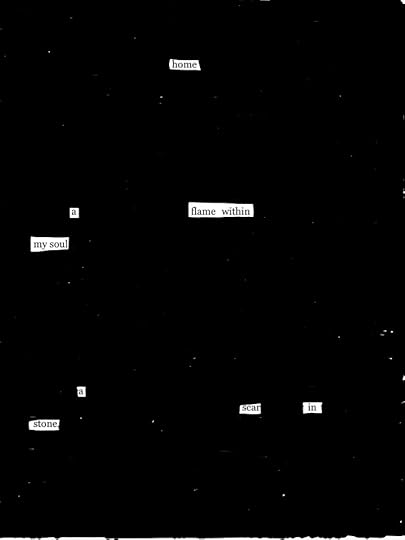
Blackout Kindle Poetry
I kind of have a nerd obsession/crush on Austin Kleon, and had a hankering to do some blackout poetry after scrolling through the web reading his stuff most of today. The problem is, when you’re slow traveling and living minimalist, you don’t have a lot of printed material around to play with.
I do, however, have a bazillion ebooks, and a handy drawing on pictures app.
This is from Max Gladstone’s (another nerd crush of mine) Three Parts Dead at the last page I was reading.
July 11, 2014
The Science Behind “Knowing” the Right Direction For Your Story
From Hugh Howey
It’s spooky to admit that the conscious portion of our brain isn’t aware of what’s happening elsewhere in our noggins, but some really freaky experiments back this up. This is why, when the writing is going well, it feels more like reading or discovery than it does writing or creation. It feels as though the story could go no other way than the way we’re writing it. Like it existed before us.
February 28, 2014
Make No Excuses — Get the Most From Your Out of Excuses Retreat
This list is advice for the lucky folks attending The Out of Excuses Writing Retreat II: The Retreatening, and much of the advice is going to be specific for this retreat, though probably applicable to the Writing the Other Workshop and Retreat, lead by WX member Mary Robinette Kowal. Some of it you can use for any retreat. While the retreat is quite a few months out, it’s good to start thinking and planning ahead of time.
1. Know what you want outside of the class time. Do you want to make writing friends? Build a critique group for after you leave? Run your outline past some good folks? Get writing time in? Knowing what you want will keep you from regretting a, b, or c. At some point you will have to choose between doing awesome thing A and awesome thing B. Knowing your overall goals can help you make that decision. It’s okay to change your priorities midway, but be conscientious about it.
2. Someone — bring an icebreaker game that can be played among a large group. If you’re a little adventurous, Cards Against Humanity is often a hit, but Mafia or Werewolf is really good for a large crowd. (And you can spin some great stories within those games.) You’re all going to be introduced online before you get there, but face to face meetings can be awkward for some folks. Drag them in.
3. Some of you will be arriving the night before the retreat starts. Get together with your fellow attendees! Grab some dinner, and ask all the awkward icebreaker writer questions. What do you write? How will you know you’ve “made it”? Favorite authors? Book you’re most waiting for this year?
4. Not everyone is a note taker. Those of you who are? Share your knowledge! Set up a group Drop Box/Google Drive folder where everyone can upload their notes for the group. Us non-note takers really appreciate it when we go to try to explain a concept we learned, but can’t remember something specific. And each note taker finds different nuggets of gold that meant more to them than other listeners at the time, but useful for everyone.
5. Sleep is for when you get home, but know when you need to take some downtime to recharge. Your brain is going to be going at 160%. It’s okay to shut off for a bit. It’s better to be on 100% part of the time than 50% all of the time.
6. Don’t be afraid to speak up in class or out of it. You are in a well-lead, safe environment. Everyone is excited to be there. Everyone is excited to meet everyone; that means you.
7. It’s okay to turn your cell phone off. You don’t have to, but it’s fun to focus entirely on the retreat. Tell your loved ones you’ll talk to them once a day, then lose yourself in the offline experience.
8. Don’t compare yourself to the other attendees. You’re going to do this anyway, but recognize that it’s pointless. Everyone is on a different path in their career, and it’s not a competition.
9. Get to know your Cousin Emily. Your Cousin Emily will most probably not be named Cousin Emily, but they are a person that the WX folks have pulled in to help with the mundane aspects of the retreat: lunch, clean up, who knows what. No matter who your Cousin Emily is, they are awesome. And they are a writer, too. Because your Cousin Emily is awesome, and you want to spend time with them while they’re not running around cleaning up your mess, make sure you clean up after yourself. Volunteer to take the garbage out. You’re in someone’s home. Remember this.
10. If there’s a closing activity, schedule your trip so that you can stick around for it. And save some energy for it. Just do it.
Thanks to Mike Thayer, Jason Gruber, and Kristen Mercer, fellow WXR 2013 attendees, for helping me compile this list.
February 21, 2014
Emotional Warfare
I avoid negative emotion like the plague.
It finds me on its own, often enough, so I rarely see the point in seeking it out or even acknowledging its presence.
But there’s a problem with this. (Other than that of the psychological variety.) I love stories. I can handle a sad story only because I trust there will be some happiness at the end. It doesn’t have to be all happiness, but a happiness. I trust there will be a Happily After All. I love stories so much I want to create my own.
I trip along blithely at the beginning of penning a story. Characters are introduced. There is bantering. Hints of unrest. But when I get to the point of really digging into the meat of emotion, I dry up. My internal Negative Emotion Early Alarm System engages in automatic evasive manuevers. This system has been tested and refined for twenty years and is extremely good at what it does. If I could patent it, I’d make millions.
Defenses are well and good, but they are limiting my abilities. I don’t like limits. Ask my mother. But I’m not sure how to get around this one. Maybe now that I know it is there, that will be enough to push me over the line.
In the meantime, if anyone develops an Emotional Wall Bazooka and needs test subjects, give me a call.
December 24, 2013
Ninja-ing out of Depression
Cross post from tumblr — posted December 23, 2013
I have managed to be personally unproductive today.
I was quite professionally productive (got two huge things done today), but I feel as if somehow my brain has switched into super mode where everything I accomplish that is not Costa Rica focused somehow isn’t real, like it’s a dream. A nice, productive dream, but one that has no input on my feelings of worth as a human being.
Which is just silly.
I actually have been a little productive. I made coffee. (Twice!) I made soup. (From a can.) I chased the little girl for the second, third and fourth times in less than twenty four hours. (I seriously do not learn from repeated mistakes.) I left the house. (Twice! Once for food, and then back out thirty minutes later for last minute Christmas shopping.) I found the camera I was worried I had lost! (Though really that was just proof of my complete inability to find things in plain sight. It was on the floor on the far side of my bed. Not under my bed, just on the other side of it. I actually called the truck rental place to see if I’d somehow left it in the truck because the last time I’d seen it was Tuesday, and Tuesday was the day we rented the truck, even though I knew I hadn’t taken the camera into the truck, I had meant to take it, and was upset when I found I had left it in the car instead. But my brain likes to play tricks on me, so I worried I had taken it into the truck, but just thought I hadn’t, and then left it.) I managed to not buy anything (for me) in Barnes & Noble.
Even though I’ve been super productive this week (so crazy productive I feel like this whole moving thing is possibly being managed by super helper gnomes somewhere, because I never manage anything this smoothly, and I’m trying not to stress about all the things that are going to go wrong last minute BECAUSE THIS IS TOO EASY), I haven’t finished all the things I wanted to finish. Mainly, I haven’t organized the kitchen or cleaned out the car yet.
Granted, the kitchen often terrifies me. I am not the cleanest person. I will cook once a month, and then get so exhausted of the idea of cleaning up afterward that things sit in the sink for weeks. But I got past that stage already. I put everything gross and icky to soak in the sink, and ran them through the wash last night. So now all that remains is the organizing. And really, all I need is the five things I need to put in a box to take tomorrow to Kentucky for storage. But for some reason today, that just seems completely overwhelming. Even as I type this, I realize how ridiculous I’m being. All I need to do is grab a box, throw the five things (cast iron frying pan, cast iron dutch over, immersion blender, pasta maker and crazy bar spoon for layering drinks) in a box and I’d feel tons better.
Ugh. I’ve convinced myself to do this.
…
Good thing. The dutch oven needed cleaning and time to dry.
Sometimes, like tonight, all it takes to get me out of my funk is a good personal pep talk, or better yet, a good personal guilt trip. I haven’t been taking my Vitamin D super regularly, and I’ve had a lot of people time. Those two combined can definitely put me out of place.
But sometimes, it doesn’t matter how much I guilt myself, how easy a task it is that I’m avoiding, I just can’t make myself. And that, my friends, is depression. The less able I am to do the simple thing, the simpler the thing is, the guiltier I feel, the less of a human being I feel, and the harder existence becomes. I lay in bed, thinking to myself, I should wash clothes so I have clean underwear. I should pick up a little bit so that there’s actually a clear path on the floor. I should get a glass of water. And I just lay there.
I haven’t been in that place in a while, and fear of it offers an extra oomph to the personal guilt trips. Anytime I find myself laying in bed, thinking of the simple things I should do, but just can’t muster up the will for, I worry that I’m going to go to that place again. And sooner or later, I’ll get up and do one thing, just to prove to myself I can.
That one thing is the most important thing.
If I can do one thing, I can generally do two things. And then I’ve cleaned an entire room. But really, it’s the one thing.
Tonight, I’ve done the one thing that proves to myself that I’m not in that dark place, one sneaky ninja-escape from the slippery mountain of depression, and I’ve stepped back from it for a minute. And that’s okay. That’s all I need. I’m giving myself permission to slack now.
I’m going to go watch Mulan.
December 2, 2013
My History of Depression
I’ve been absent here for a while, but I’m posting quite a bit over on my tumblr about our upcoming move and randomness.
I don’t post much about things that are important to me, but I’m still figuring out. Things like feminism, spirituality, how to live a meaningful life. I generally sit in my pile of thoughts, asking silent questions, seeking out answers (thank you internet), thinking some more, and once my thoughts have reached a jello-like feeling of cohesion, then I start talking about them. To a few people. Maybe re-post a few articles that resonate with me, see what conversation it sparks. This drives Jonathan bonkers.
Jonathan likes input on every part of his thought process. He needs the rapid fire bounce of ideas among multiple brains, reforming and rebuilding his thoughts and opinions through external interaction. So when I sit and think on an idea for days or weeks or months and finally start to talk about it, my first external interactions are much more fully formed than his and (exacerbated by my Yankee tendency to talk about all my opinions and beliefs as FACT, no matter where I am in my thought process) it seems to him as if I’ve gone and made a giant decision or belief change by myself, without letting him in on the process, when I’m just reaching another step in my process.
Sometimes I feel like I should talk about these things more, sooner, publicly. I’ll start to post something and pull back, not ready or able to spend energy engaging in a meaningful discussion. External interaction takes a lot of energy out of me anyway, and talking about things I’m still figuring out takes even more. I can talk your head off for hours about the importance of story and beautiful words in the history of humanity and the lives of individuals. Talk for days. But if there’s a discussion about gender inequality in media? Unless it’s one-on-one, I’m probably going to sit back and listen, engaging silently. One of the things I’ve learned from dealing with my depression is to know my boundaries and respect them, but don’t let them limit me.
Howard Tayler (creator of Schlock Mercenary and member of the fabulous Writing Excuses team) opened up about specifics of his mental health on twitter this week, and several people jumped in to support him and share their own stories. This happens in spurts in different communities (and more and more often in creative communities) and I adore Jenny Lawson (The Bloggess) for her openness and the openness she inspires among other fabulous people about their struggles with their mental health. And many of the communities I’m a part of talk about the need to destigmatize mental illness, but part of the discussion that struck a chord for me in the Twitter discussion was when someone said that the more we talk about mental illness, the more people will see it as an actual illness, Howard responded, “Which is one reason why, even though it’s embarrassing and it hurts, I tweet about it to 7,000 people.”
While I may not be up for a discussion about my soup of developing thoughts, theories and beliefs, I’m in a really good place with my depression. It doesn’t hurt me to talk about it. At this very moment (though I can’t promise anything for this afternoon, tomorrow or next week), I’m not in the middle of it. But other than one-on-one conversations and the occasional re-post of a blog or video, I haven’t talked about it publicly. And if Howard Tayler can share his story while in the immediacy of the moment with 7,000 strangers, I can surely share my story with a much smaller audience of people who likely know me while I’m in a moment outside of depression.
Note for my mother: I don’t know how much of this I’ve actually told you. You should probably grab a box of tissues. Because I know you, even though this story is past and has a happy middle. The ending has not yet come.
I was chronically depressed from age twelve to age nineteen, and probably bits and pieces after that. I have never seen a doctor about my depression. At first, it was because I was a kid and I didn’t know any better. My mom was in a really bad place and not able to see it for me, and my dad worked a lot to keep us afloat. As an adult, I was either doing “okay” or so deep in the middle of it I had trouble holding two thoughts together, and now I’ve dealt with a lot of the history/hurt issues and have figured out a process that works for me that doesn’t involve meds. (I am ridiculously lucky that I can currently control or mediate my depression without prescriptions. I don’t know if this will last forever, and I’m not against medication if there comes a time where I need it.)
Without giving too much of my mother’s story, because it’s hers to give, not mine, what you need to know to hear my story is that my mom slipped into a bad place after my youngest sister was born when I was six, and she doesn’t remember several years — from about then to when I was twelve, from what she’s told me.
I can remember the exact moment I stopped telling her anything important to me. I was eleven, and I had start writing a new story, Siri and the Fairies. I excitedly formatted and printed the pages of the first couple chapters I had written, making them look as much like a real book as I could, and took them to her to read. She was sitting at a table, sewing, I think. She took the pages from me, ran her eyes down the lines of words,said, “That’s nice,” and set them aside. As an adult, I know that she might not have been able to engage with me at the moment — I know what it’s like to have a one-track mind, and I’d interrupted her in a project. I know now she was in the midst of a bad place and it’s unlikely she remembers this moment at all. But eleven year old me didn’t know this, and eleven year old me didn’t feel worth much at that moment.
I was a very happy and confident child and a very sad, awkward, and confused pre-teen and teen. We started homeschooling when I was eleven. School, which I had wanted to attend since I was three, had become an unhappy place for me. I had a teacher in third grade who played favorites, and somewhere between first grade and leaving public school, I went from happy, engaged and popular to awkward, angry and bored. Mom told me a story (which I had apparently blocked from my memory) of my classmates booing me off our Junior Olympic field. I remember many many times, wishing that I didn’t exist. Thankfully, never considering suicide, just wishing for a state of non-existence. I remember going to an overnight birthday party for a long time friend of mine. She didn’t live in town, but she stayed with her grandmother often, and we’d set a tent up in their backyard. I knew a couple of the other girls from summer soccer, but most were strangers. I don’t remember how it escalated, but I ended up curled at the bottom of the tent while the other girls kicked at me (thankfully not hard enough to cause any pain) and poked and scratched me with the fake fingernails we’d put on earlier that night. Around two in the morning they got bored and left the tent for a while, and I bolted, running as fast as I could for her grandmother’s door, banging until they woke up and let me in. I slept in their spare room and they made the girl apologize. I don’t know if they told my parents. I never let myself be around her without adults again. We connected on Facebook a while ago. I don’t know if she remembers this.
I remember a short period of time where I couldn’t tell dreams from reality, or my memory was so jumbled it seemed like dreams and reality melding. Stupid stuff. Knowing that my sister had gotten a second piercing when such a thing had never happened. Knowing that I had told my mom about plans to go to a concert with a friend when I never did.
I read a story once where the character had trained himself to feel no emotion. That’s how I remember it, at least. It may have been that he trained himself to show no emotion. But I thought that was the best thing ever. How great would it be to not have to deal with emotion? I set out to systematically destroy my emotions so that I wouldn’t care. If I didn’t care, if I didn’t get excited, I wouldn’t be hurt.
The problem is that just doesn’t work. It’s actually fairly easy to destroy positive emotions. It’s not so easy to destroy negative emotions. I don’t know if it’s even possible. And in a way, I succeeded. I became extremely apathetic. I was able to control how I showed emotion — which was that I didn’t. I made myself that way. On purpose. Now, I can’t think of a worse way to choose to live your life.
When I was sixteen I went to Jamaica for the summer. It’s been ten years ago and I’ve only recently started to think about looking for the journals I wrote during that time. Only recently have I come to a place where I could handle it. While I was there, the woman I was staying with saw the disconnect in me, the lack of emotion when I should be hurt or sad or angry or happy or content. She started asking uncomfortable questions, even getting mad at me, at times making me feel worse than I already did, but she told me something that no one else had told me before. That my home life wasn’t normal. That it wasn’t my fault. And I finally started thinking about things that I had been hiding from. For the first few years after I started dealing with my depression, much of figuring out who I really was centered on defining my relationship with my mother.
Like I said before, my mom was in a bad place, and there’s a lot of time lost to her memory. During the worst years, she was inconstant, unpredictable, in pain (both physical from fibromyalgia and constant kidney stones — at least once a week, if not more — and emotional), hurt, angry, and it lead into a cycle of more hurt and anger as she saw how she treated us, how she treated Dad, how she treated herself, and she didn’t know how to fix it. I much of my childhood and teenage years defining myself by how I perceived my mother felt about me and how to live with her, to lessen amount of emotional pain and yelling. My sister and I, in a discussion at youth group, once told what we thought was a humorous story about waiting to ask Mom anything until after she had her pain pills because if you asked before then, it was always stressful and generally a “no”. We didn’t realize this wasn’t normal.
Maybe my mother’s influence on how I saw myself was stronger because I was homeschooled. I don’t know. I wouldn’t have given up being homeschooled for anything, though, and I got through highschool without ever trying illegal drugs. (Still haven’t. Can’t stand the smell of pot after smelling the giant cigars of it they smoked outside the school I taught at in Jamaica.) I had my first wine cooler when I was sixteen. I don’t know even half the trouble my parents had gotten into by the time they were sixteen.
Even though I started realizing how unhealthy my family environment was (because while my mom was the most obvious influence, none of us were blameless), I still held on to a lot of blame, a lot of guilt. I still felt intrinsically unlovable, undesirable, and useless.
While I was in Jamaica, my mom read an email I had sent to my friends about all the things I was dealing with. She sent me a long letter. I sent her a long letter back. My entire family was angry at me. I was violating the invisible, silent code of acquiescence that had guided our lives for years, and because I wasn’t at home, they were the ones to deal with the consequences. I was told that I was the one at fault. That I was rebellious. That I was blaming people for my own problems.
When I returned home a month later, there was a two week grace period, and then I remember standing in the entry of our kitchen, my mother and I screaming at each other, the rest of the family hunkered down a the kitchen table with her, caught in the crossfire. Shortly after that my mother started seeing a counselor. I went with her once.
There are very few moments, if any other than this, that I can say changed my life completely. I believe that most changes are gradual and small and a hundred thousand tiny changes build up into the big changes. Changes like — realizing your family isn’t normal. Changes like — realizing you aren’t intrinsically broken.
But Bonnie said this, and it changed my life:
We as human beings tend to personalize things. You bake a cake, and someone says they don’t like it. We interpret that as, “I’m a horrible cook.” Someone criticizes your child, for any reason, “I’m a horrible parent.” The next time someone says something that you think is negative about you, look at what they said. Are you simply personalizing their statement? Maybe they just don’t like cake.
Of course my life wasn’t immediately sunshine and roses, but she gave me a key to unlock a truer vision of myself.
Mom adds this:
At Bonnie’s urging and a lot of convincing by her, I started taking meds to treat my depression. I was already on so many meds, I didn’t want to take anymore, but I was clinically, massively depressed and although I didn’t and still don’t like the emotional numbing effects of the meds, it was what I needed at that point to be able to begin the long, uphill climb of being able to live a “normal” life. I think there a lot of people who feel like they can do it without meds, who in reality, are like me, and really need the meds, whether it is a temporary or life long need is something only they and their doctor can tell when they have gotten to a better place. For me, it still requires a low dose of antidepressant during the October to April season [Crystal note: there is little sun in western New York during this time]. It is just something that I have to do for me and the ones that I love. I hate that it dulls my emotions but am so grateful that it does at the same time. The good gets dulled with the bad, but it is better than having that huge weight of BAD FEELINGS dragging me down.
I had one year after Jamaica before I left for college. For most of that year, I just ducked my head and trudged on. I remember being extremely depressed that winter. I didn’t do any schoolwork from November to April. I ate, slept, worked, and if I had the energy for it, read, but mostly I slept and worked.
I met Jonathan, now my husband, and we quickly began dating. I began to realize maybe I was loveable. I continued working through all my issues. We dated for a year, and he broke up with me over Christmas break. I was devastated, but one morning after returning to school, I woke up and I was not depressed. I don’t know why then, in one of the most emotionally turbulent periods of my life, I had a giant up step instead of a giant down step. I don’t know how to explain it to anyone who hasn’t been depressed. I had lived with this sense of overall grey for as long as I could remember, and I simply woke up one morning without it. It didn’t stay away, but I knew there was something other to aim for.
(Clearly Jonathan and I got back together.)
After Jamaica, and talking to Mom’s counselor and moving to college, I held my family at arm’s length for quite a while. I put extremely firm boundaries up about what I would and would not talk to them about. Finances were off the table. Friends and movies were fine. There were still upsets. Really bad upsets. I silently made a decision to not stay with my family for more than a week at a time.
Mom had been working back and forth with her doctor for years, trying to find the right cocktail of drugs that would mediate her physical and mental issues, and they finally stumbled on a key: vitamin D. They visited Jonathan and I for Thanksgiving the first year or second year we were married, and my mom was a brand new person. She had energy! She was making jokes! She was getting all handsy with Dad.
So I started taking Vitamin D. Just 1000IUs. Just in case. I knew Western NY was bad for Vitamin D deficiency because there was no sun in the winter. And now I worked in an office all day, so I probably wasn’t getting enough now either. Jonathan was working on the campaign, and toward the end of it, I was luck to see him three times a week. I went to bed before he got home (if he got home) and was up and headed to work before he woke. The second winter in Nashville was bad for me. Very similar to my senior year in high school, I ate, slept, walked the pups, and went to work. Mostly slept and worked. I was too tired to even watch TV. If I wasn’t asleep, I simply laid in bed, existing. Not thinking, not doing. Maybe holding the dogs close and petting them. It took me two years in Nashville to make any friends. I think most of that was because I had no energy to engage people, but a good part is that Nashville is not an easy city to start up in.
There were times I’d be sitting at my desk at work and I would feel utter panic descend on me. I knew that I was crappy at my job. I knew that everyone hated working with me. I knew I was a failure. I knew they just put up with me because they had to. I’d have to go into the bathroom to breath so I wouldn’t burst into tears in the office.
I was tired of being tired. At some point I upped my Vitamin D usage to 5000IU and that won me quite a bit of life, but I still didn’t feel like a real girl. I went to see a doctor. I’d probably been taking Vitamin D for a year and a half, two years at this point. She told me to handle my tiredness, to eat more but smaller meals, and if that didn’t help, we’d get me some pills. She also did bloodwork and my Vitamin D she said was “fine” even though it was at the absolute bottom of “normal” range. Even after taking 5000IUs of Vitamin D for a year. I didn’t go back to her.
I started researching diets for energy, and came across Paleo. Paleo is pretty much the best thing that has every happened to me physically. I lost thirty pounds over two years of intermittent Paleo. I discovered that when I have a lot of carbs and sugars, my depression is more likely to pop up. When I’m on hardcore Paleo, I only need 3-6 hours of sleep a night and I have energy throughout the rest of the day. The stomach pain I’d been having randomly since college, pain that at times put me screaming on the ground (this happened once or twice a year) and a clenching stomach and heartburn every time I ate, disappeared. For the first time that I could remember, I was consistently without depression.
I got cocky. I forgot to take my Vitamin D with me for a weekend trip, and when I got back home I continued to forget to take it. Within two weeks, I was back to the worst I’d ever been, except this time Jonathan wasn’t on a campaign and he could see how bad I was. There were arguments. There were tears. There was once again feeling like I was broken so bad I was never going to be fixed. And there was the realizing it had been a while since I had taken my Vitamin D. Within a few days of taking it, I was back to a level of life beyond simply existing.
Sometimes the Vitamin D isn’t enough. Sometimes I’m not eating well enough. Sometimes my body just says, “Screw you. Meltdown time.” Sometimes I’m not sure if I’m just having normal doldrums or if I’m headed into a depressive episode. But most days are okay. Some days are good. A few days are great. Mental illness sucks. I’m happy I’ve found what helps me deal with it.