Therese Vannier's Blog
November 2, 2020
An excerpt from our interview with New Times SLO
Therese Vannier and writing partner Michael Corbin Ray clearly share a love of storytelling, but they come at it from different perspectives. Vannier says she "was raised on a diet of schlocky horror and martial arts movies from the '70s, while Michael served time as an English major and occasionally aspires to commit literature."
She says their writing process often "devolves into an argument over how much blood is too much blood."
Despite their better judgement and fully aware of the long odds of seeing it produced, Ray and Vannier are again working on another screenplay.


September 9, 2020
San Luis Obispo, California Book Launch & Signing in Morro Bay
September 2, 2020
Authors Mark 97th Anniversary of the Honda Point Disaster with September 8th Book Launch
https://santamariatimes.com/lifestyle...
August 26, 2020
May 1, 2020
Dead Reckoning Docks on September 8th--The 97th Anniversary of the Honda Point Disaster
Dead Reckoning is a work of fiction inspired by these true events. The book follows the lives and passions of a group of enlisted sailors on liberty in San Francisco as their paths cross with an anxious diplomat recently returned from Japan. When that diplomat turns out to be a friend of their own captain, a series of minor conflicts and unrelated incidents builds to sudden tragedy and a night on the water that no man will forget—if they can first find a way to survive.
more at https://www.baaapress.com
April 14, 2020
Dead Reckoning
Please know that no one is more disappointed than us, but our hands are ultimately forced by the lockdown. Thank you friends far and near for your continued support.
We're now waiting anxiously for our draft ARCs to arrive from Ingram. Stay safe and healthy, everyone.
May 9, 2019
Hello world!
Welcome to WordPress. This is your first post. Edit or delete it, then start writing!
January 8, 2018
The Shape of Water (2017) – A Review
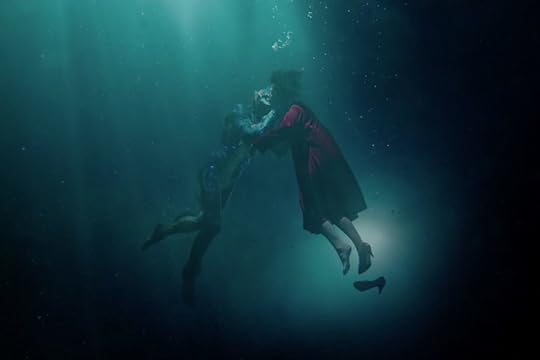 Guillermo del Toro may know better than any living filmmaker how to create a fantasy with intelligence and maturity. The Shape of Water begins with a dreamscape that would be awkward in lesser hands but feels visionary under del Toro’s touch. The camera glides through a teal green water world, past wavering chairs, lamps and tables, all swirling in the interior of a flooded apartment like a school of fish. Floating amid them, also underwater, is a woman comfortably slumbering on the living room sofa.
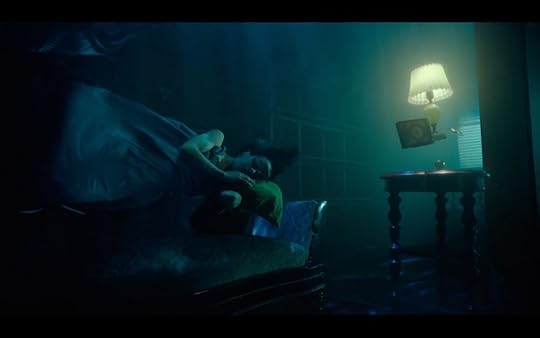
As the water slowly drains away, we hear the melancholy voice of the male narrator. “If I told you about her, the Princess Without Voice, what would I say?” Soul-satisfying shots, a lulling introduction to a sleeping beauty; what better way to set the scene for a journey into make-believe?
Like his other films, The Shape of Water never lacks artistry. This dreamlike story is about love and loneliness, and how most of us are probably unfulfilled until we find that special someone who really gets us. All the main characters are shunned by the community in different ways––Elisa (Sally Hawkins) can’t speak, her neighbor Giles (Richard Jenkins) is old and has been unable to live as a gay man, her colleague Zelda (Octavia Spencer) is African American, and her new best friend is a childlike, often wild ocean creature who may have been a deity and was apparently worshipped by people in the Amazon.
Jenkins shines as Giles, bringing humor and warmth to the film, while Hawkins blows the character out of the water in a galvanizing performance that balances both strength and vulnerability. She is a mute woman living a tidy, orderly, and sheltered life in early 1960s Baltimore. She lives alone but enjoys close relationships with a handful of friends.
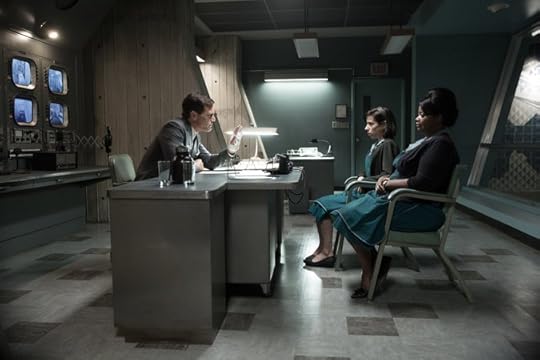
Guillermo del Toro and co-writer Vanessa Taylor use the character of Colonel Strickland (Michael Shannon) to demonstrate whose opinion counted the most during that period–the straight, white male. At one point, Strickland, who is the villain, even tells Zelda that God probably looked like him rather than her during a conversation in his office.
The writers have carved quite an exquisite little gem. Of course, del Toro being del Toro, his tale also contains clusters of eroticism and violence. Elisa and her handsome aquatic friend not only make impassioned love, they are an effective team and communicate better than the speaking characters do. The orgasmic moments are charming, not lewd, and the moments of gore are precisely crafted to advance the story, not provide shock value (though they do).
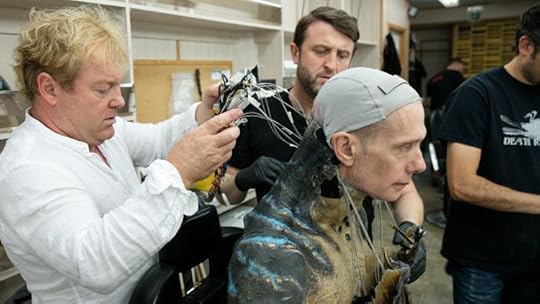
Ultimately, del Toro wants us to know that we don’t need words to express how we feel and love can conquer everything. The story is helped by the world that is created by del Toro through the visuals, costumes, and location. The vibrant greens and deep reds help bring the story to life. The film also uses practical effects rather than CGI with the creature played by Doug Jones.
The Shape of Water builds to a buoyant liquid finale that echoes the weightless opening. Fitting for a film that sends you away with your feet off the ground. It’s an unforgettably romantic, utterly sublime, dazzling phantasmagoria.
December 5, 2017
Three Billboards Outside Ebbing, Missouri – A Review
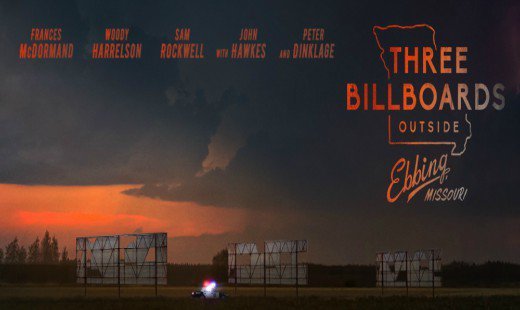
In Bruges (2008) director Martin McDonagh has nailed what could be a contender for Best Picture at the 90th Academy Awards ceremony with Three Billboards Outside Ebbing, Missouri, and while there’s still plenty of time for someone else to clench Oscar, that doesn’t stop the Englishman’s latest script from being just about everything you could ask for in a screenplay.
It’s not as out-and-out a comedy as the director’s last two features, but Three Billboards still has all of McDonagh’s unforgettable wit. And as the title suggests, you should be sure to expect something a little idiosyncratic or different. In fact, at first, it almost seems as if McDonagh has put together a rather moody drama.
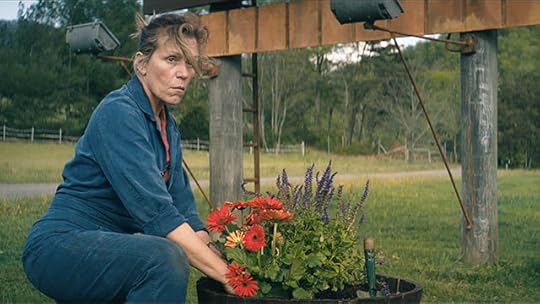
“My daughter was murdered 7 months ago, it seems tome the police department is too busy torturing black folk to solve actual crimes.”
The first thing we see in this movie is the androgynous-looking Mildred Hayes (Frances McDormand) chugging along a forgotten road in thick, split pea soup fog. At the foot of a green valley, she pulls up in her station wagon and stares long and hard at three giant billboards in a row along the road. Country music plays softly in the background, and the camera follows her gaze to what looks like a cemetery of old-school style advertising.
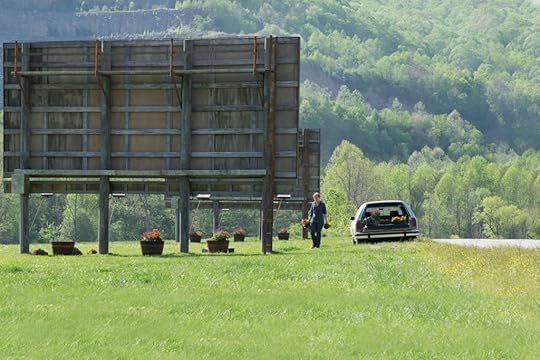
“What’s the law on what ya can say on a billboard?”
The scene is filled with a sense of longing and a wonderful momentary contemplation of a world that is being blotted out by more recent digital substitutes, and also a part of middle America that has been cut out by larger, more modern highways that suck people away from them. While this is deep and all, McDonagh doesn’t indulge in the retrospection contemplation for long.
Seconds after this scene, Mildred swaggers into the local advertising company. In a badass slow-mo she saunters in, while music that suggests something not unlike a spaghetti western shoot out is about to go down plays in the background. Except this time, only verbal bullets are fired, and soon Mildred is barking at the company manager in a series of brilliant one-liners. The put-downs in this film are really exceptional, and when two sparring characters come up against each other, there are few places you’d rather be than watching this film.
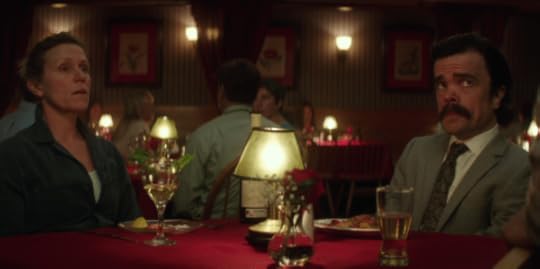
“I know I’m a midget who sells used cars and has a drinking problem, I know that.”
The story achieves an incredible mix between significant social critique, moving drama, and perfect comedy. This may sound like those things could in no way be linked, but this movie pulls it off in a way that feels like a darkly themed novel. There’s a deep-seated sadness about the wrongs of the world, but at the same time there’s this defiant, almost shrill squeal of laughter against the darkness and despair of McDonagh’s fictional world. There is humor in the thoughts, actions and lives of Mildred and Sheriff Willoughby (Woody Harrelson), as they slowly go to war over the case of Mildred’s brutally murdered daughter.
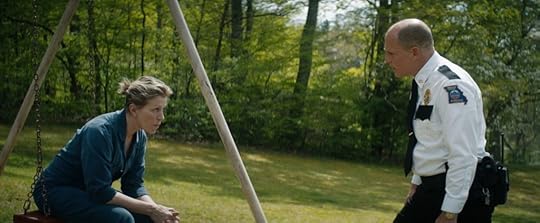
Frances: “I was in Fargo.” Woody: “Well, I was in the television show based on the movie.”
The best thing about Three Billboards is that it never does what you think it’s going to do. Ever. With genuinely impressive creativity and uneasiness, it’s constantly coming at you from left field with immensely funny quips and unexpected character actions that you could never see coming. McDonagh arms every scene with surprises and shapes all the shocks into something that is totally perfectly formed and watchable. Three Billboards is a shining example for screenwriters everywhere and it has the lowest body county for a McDonagh film (2).
October 10, 2017
American Made (2017) – A Review
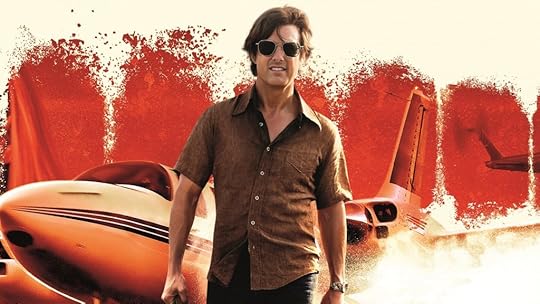
Apparently, Tom consumed the entire bottle of Drink Me potion and is now bigger than a mother fucking plane.
In the late 1970s, TWA pilot Barry Seal (Tom Cruise) leaves his mundane job after being recruited by the CIA to fly recon missions over South American countries. Eventually, he’s also hired by the Cartel so he basically stockpiles guns and drugs, launders money and makes exhilarating aerial escapes in American Made (2017).

Barry Seal serving his country.
Director Doug Liman reunites with Cruse after Edge of Tomorrow (2014) for a groovy adaptation of a based-on-true-events story about a pilot who smuggled drugs for the Colombians and arms to Nicaragua for the Reagan administration. Seal becomes a comically productive employee, and Cruise is, of course, the right person for the task. Lightweight, but fun, with amusing period details and a George W. Bush “cameo.”
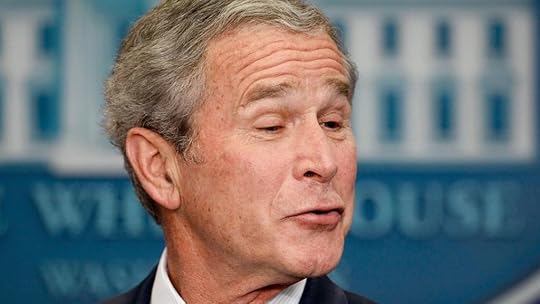
They misunderestimated me.
American Made is one of the highest-rated mainstream releases this year and I can see why. Tom Cruise’s charismatic performance and good ol’ boy sensibility wins the audience over. Big time. Cruise propels himself to be a high-octane fireball of energy and he’s more than committed–he’s downright capable. It’s a performance of complete exhaustion and any other actor couldn’t have handled it with the same laudable poise and vigor.
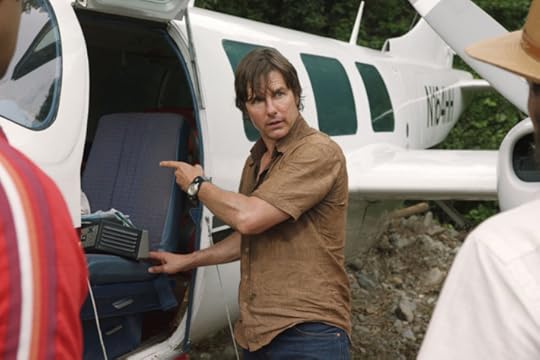
Show me the money. And the coke. But mostly the money.
Tom’s latest work belongs to the same genre as The Wolf of Wall Street (2013) and War Dogs (2016). All three stories are set during turbulent times in American politics, celebrating excess and highlighting rampant corruption through cynical humor. If you enjoy a tale with an anti-hero at its core and plentiful observations about the unethical political landscape, this one’s for you.
Cinematographer Cesar Charlone (City of God) delivers American Made with an old school visual palette. The film resembles the high fidelity quality of a VHS tape, starting with the Universal logo all the way to the grainy credits. The mise-en-scène bears the kind of underwhelming and awkward primary colors you’d find opening a 70s porn flick when you should be asleep.
Doug Liman choreographs the stunts and handles the aviation scenes with clarity and precision with snappy editing and infectious energy. American Made is a well-made romp with Cruise in solid form.