Tim Robson's Blog
September 27, 2026
Prague: What To Do, See and Avoid
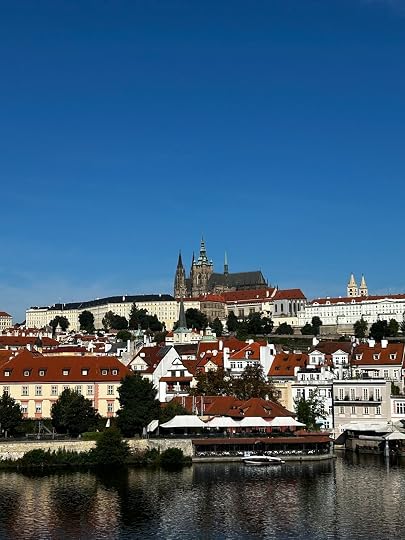
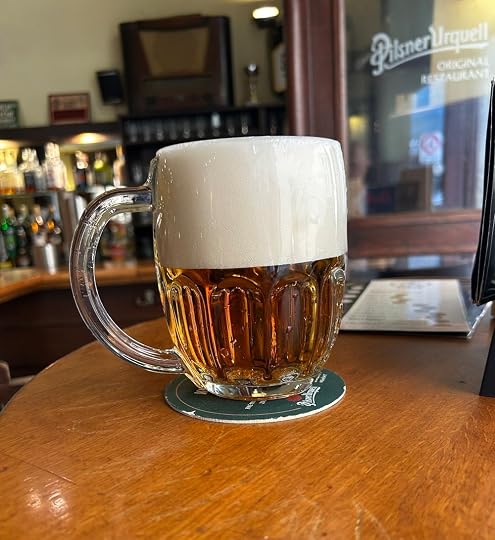
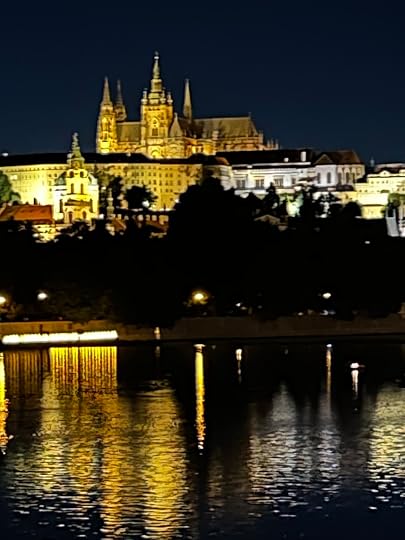
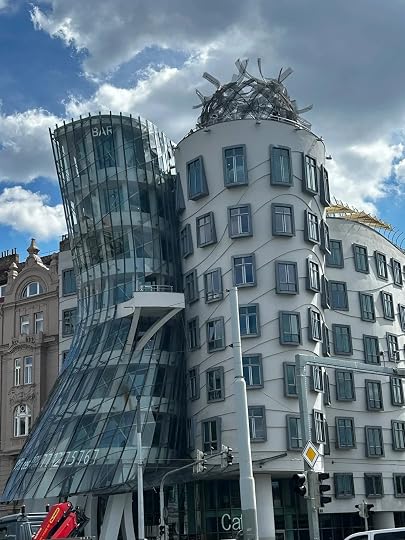
My Top Tips Prague Guide
When: I recently visited Prague in Early Sept 2026 and spent roughly five days there so I got to understand - as well as you can in that time limit - some of the dos and don'ts of the city. Like all good advice, I pass this onto you!
Before we start on the guide, below is the list of in-depth articles I wrote about Prague and what each covers. I charmingly call them my Prague Quintet. There’s six.
Prague Castle - Is It Worth It? Pro tips and hot takes.
Beer & Loathing in Prague - A boozy night of missed opportunities, conversation and pimps
Art & Museums. I review the National Gallery, The National Memorial and a Baroque concert in St Giles’ Church.
A Comedic Night out in Prague - Here I go to a sparsely attended English language comedy night and later become the Alpha God of some tech bro. Beer, missed laughs and ladies.
The Museum of Communism and the National Memorial to the Victims of Reinhard Heydrich. Sobering but well curated museums.
Bohemian Cafe Sketch - a laptop toting Tim orders himself some Czech beer and checks out the clientele of a charming chandelier lit cafe.
So, let’s start with the first duty of a travel blogger, a list. A list of ten random things set down with the certainty of the ignorant. Probably one will be useful. Maybe two.
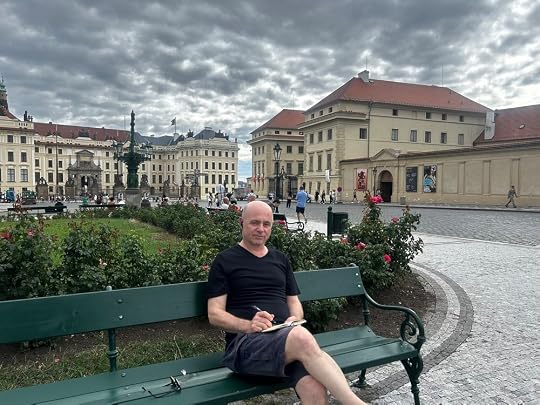
Image Description
Prague Top Ten Tips1) Old Town is pretty. But it’s packed and a tourist trap with shops selling overpriced tat and restaurants serving slop by the bucket load. If you like taking pictures of people taking pictures, it’s ideal. Time your visit to early morning.
2) Depending on your tastes, the Museum of Communism, the Heydrich Martyrs Museum and the National Art Museum were all worth visiting. The Martyrs Museum is even free. If you like classical music then there are plenty of recitals by top class musicians held in awesome church settings. Check out my post on Prague arts and museums.
3) Do walk. The centre of the city’s not that big and you get to see and feel more (and walk off the beer & dumpling belly-rippling combo).
4) However, if you do go further afield, the trams and buses are really easy to use as is the PID App which allows you to buy and activate tickets on your phone. Download the App. It’s helpful and you can download it before you arrive so you can do the initial double bounce public transport journey from the airport to the city centre (see below in Practicalities).
5) The Castle. Sure. Why not? Good views over Prague. Dunno about the paid stuff as I didn’t pay. I believe a visit here is obligatory and stamped into your passport and checked at the border. Read my take on it and also a secret backdoor route to arrive feeling smug.
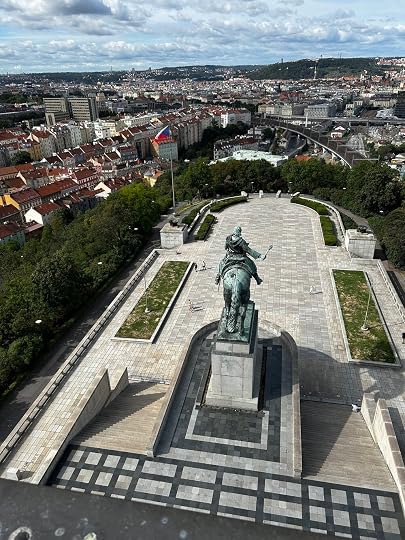
6) The National Monument also has very good views, this time from a hill on the opposite side of Prague to the Castle. It’s free and no tourist seems to have this on their Top Ten schedule (unless they read here, of course!). A frequent bus service runs here though you can just as easily walk. Do one way on the bus, one way walking.
7) Beer. Yes. Lots of this please. You must drink this foamy liquid. It’s like, the law or something.
8) I spent most of my time in The New Town and the Lesser Town. Quieter, better walks with views. You can discover places and curate a unique Prague all to yourself.
9) There are other bridges besides the Charles Bridge (Most Legii for example). Granted they may not be as pretty or ancient but you do get to avoid the crowds and paradoxically you also have the chance for some decent photos of… Charles Bridge!
10) Shooters Island (Střelecký Ostrov). I came back to this central spot several times. There were even rock concerts here and in the bar on the opposite bank (it was summer). It’s very near to Old Town and Charles Bridge but again, tourists don’t go here. There’s a free elevator down from the middle of Most Legii (Legions Bridge). Use it.
Practicalities: There’s No Dumb QuestionsHere I cover some of the ‘is this a dumb question’ type questions. Or, at least, the ones I would ask. So they’re not really that dumb. It’s always good to do some research before you go.
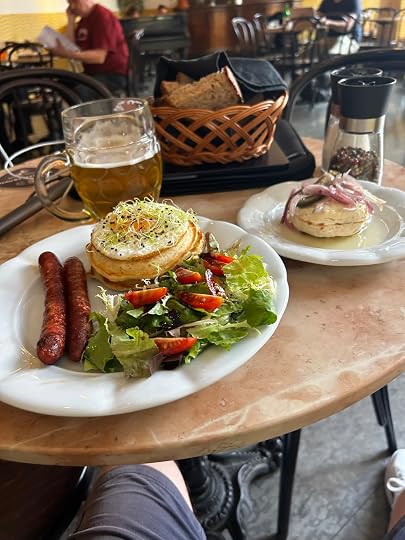
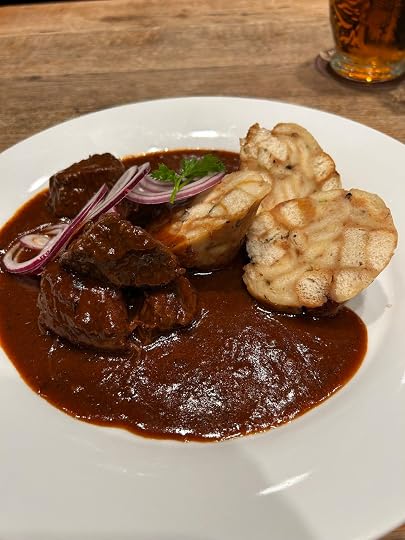
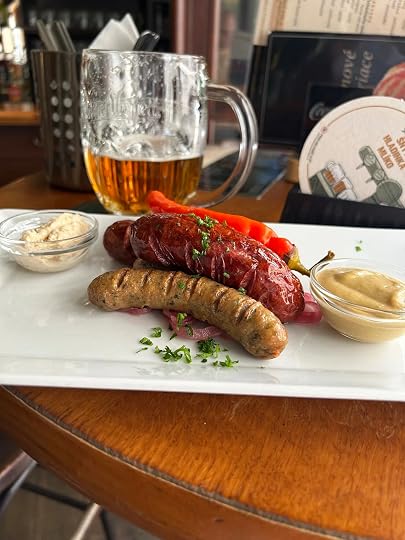
Food and Drink
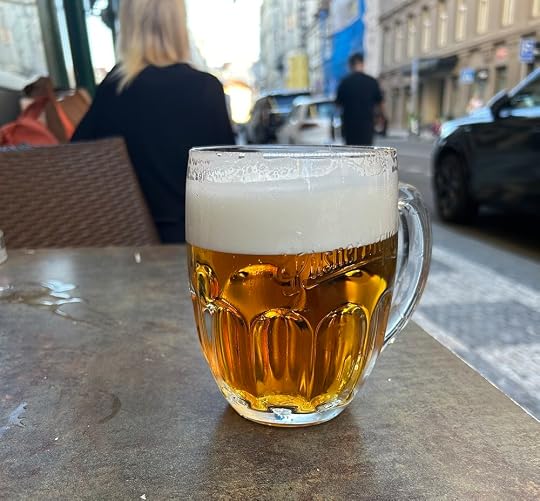
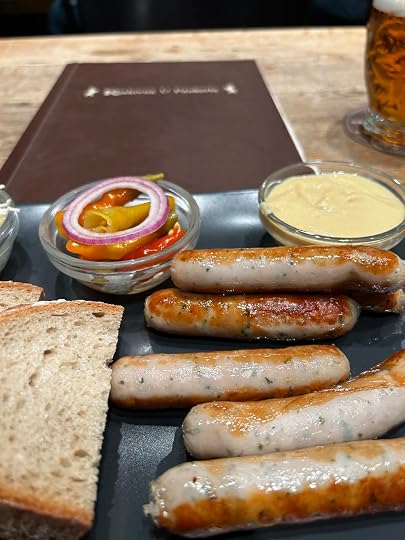
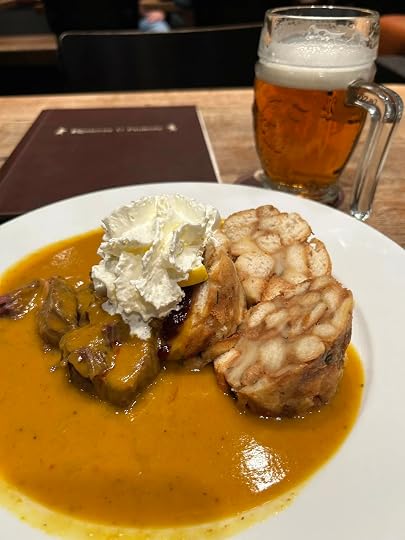
Well, I did find a few salads but this is a place that you’ll probably want to adopt the ‘fuck it, I’m on holiday’ rule. Beef stews, either Czech Goulash or Svíčková na smetaně are pretty mandatory along with the obligatory bread dumplings. Served with beer of course. I also troughed plenty of local sausages but look out for items like pickled cheese. Where do I recommend? Where do I remember? Go to Cafe Na Boršově for light bites. More traditional Czech food can be found at Kozlovna U Paukerta. Both are friendly, serve good local food and near to, but not in the middle of, Old Town.
Hotel/Flights and CostI stayed at the MOODs Charles Bridge which is in a quiet side street about five minutes at a slow pace from the Bridge itself. So I could either a) walk easily into Old Town b) cross the Bridge and explore Lesser Town or c) walk away from Old Town towards New Town and other bridges in The Dancing House direction. The hotel was £440 for four nights, breakfast inclusive. I would recommend this hotel both for its location and for the hotel itself. The perfect spot; near but not too near.
Two doors down from the hotel is Cafe Na Boršově which is a charming cafe bar that also serves pretty decent food. Very laptop friendly. I did spend an awful lot of time here and you can read about my observations in my Bohemian Cafe Review or a slightly more louche evening partly spent there in my comedic Prague piece.
I flew Wizz Air from London Gatwick for around £120 return with some very friendly flight times (not too early setting out there, early evening return). Too cheap to buy extra luggage allowances, I took one small rucksack and used the 10kg allowance. Any money I saved was then promptly spent on Wizz Air’s drinks’ trolley.
EnglishYes, spoken widely and fluently. This is a premium destination for tourists, remember. English is the language of commerce. It also - conveniently - happens to be my language so, hand meet glove, meet lazy bastard. I felt bad, but not that much.
Getting From the AirportDownload the PID App in your country. Link your credit card. When you arrive, choose to buy a 90 minute ticket. Get on the 59 Trolleybus right outside the terminal and then change at Nádraží Veleslavín metro station, and get on Metro Line A for a few stops. Get off at either Staroměstská or Můstek. Costs about £1.50. Especially if you’re a solo traveller or in a couple, don’t bother with taxis. Live the city guys! You’ll feel good about yourself when you take public transport. Takes about 40 minutes.
Read On!All My Prague Articles can be found individually at the top of the page. However, to read them all, my Prague Quintet is where you will find them all.
Do I just go to Prague? Oh no! To read all my city reviews then head over to the special section of my website for all my travel writing. Belgium, Netherlands, Germany, Poland and the US feature here.
Pulling a couple of examples, you want to know about the Darkness of Bruges or the Hillbillies of Monschau? Well now you can.


September 19, 2026
Repressions and Redemption: Nazi & Communist Museums in Prague
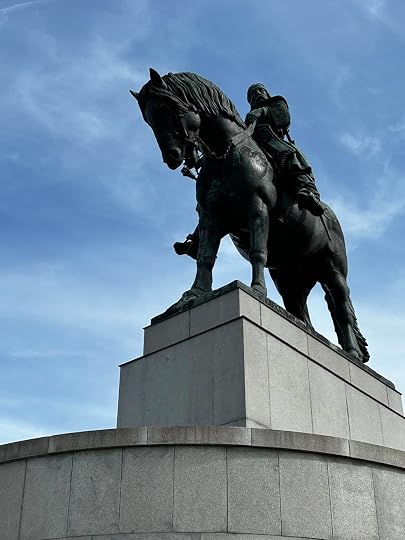
Jan Žižka Statue
Here I review as part of my Prague Quintet Series:
The National Memorial on Vítkov Hill
The National Memorial to the Heroes of the Heydrich Terror at the crypt of St Cyril and St Methodius
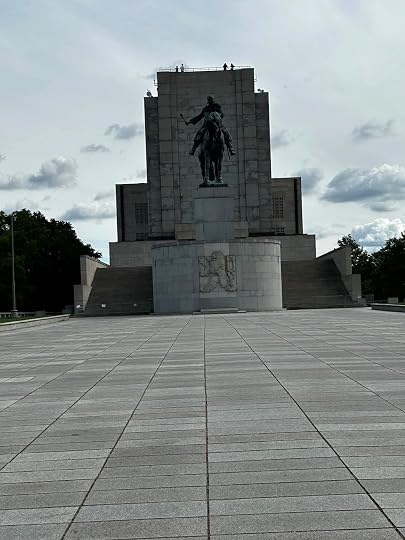
National Memorial Prague: Bus 207I took Bus 207 to - near - well not near really (thanks Gemini - ever been anywhere you know nothing bitch?) - the National Memorial on Vítkov Hill. Concrete, vast, Albert Speer-esque, built in the years prior to the Nazi takeover. Robbed by the communists post war and then repurposed after the Velvet Revolution of 1989. It’s seen some changes.
I took the bus there from Old Town as directed by AI. Bought a 30 minute ticket via my PID app. But I activated it too soon as the bus driver was having a - probably union inspired - break. He chomped on some gruesome meat sandwich with one hand, fag in the another, dick in the last as he hung out of the bus doorway giving some serious ‘don’t fucking ask me a question’ vibes to the queue waiting at the stop. A naive tourist asked him when the bus would leave in Japanese accented English. Taking a bite of his sandwich, and a drag on his fag, this civic employee gave the earnest enquiry the full Czech version of, ‘fuck off, I’m on my break, bitch’.
Anyway, it took thirty minutes by bus to pass through the mandated eight stops and negotiate the Prague traffic. I had twenty seconds left on my ticket. So, being young and fit, I decided instead to walk back to Náměstí Republiky. Which took me twenty minutes. Twenty-five with my hawk-like, fuck the data allowance, unnecessary, scrutiny of Google Maps on my phone. There’s a lesson to be learnt here, children. Remember it. I’ve preached this gospel before - read my Paris walk guides. Or my London walk guides. It’s often cheaper, quicker and more interesting to walk. Don’t be a sheep. And here in Prague, you get to walk off all the fucking beer and those heavy dishes they keep serving me. And I keep ordering. More sausages, vicar?
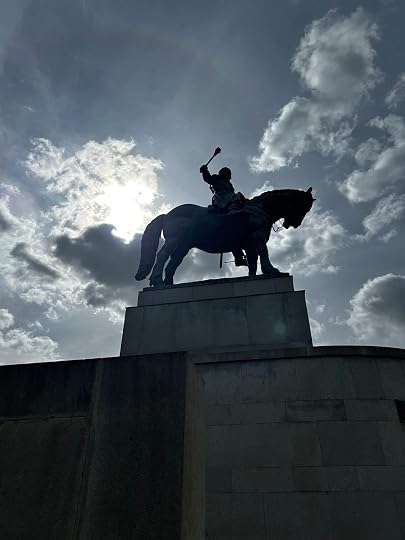
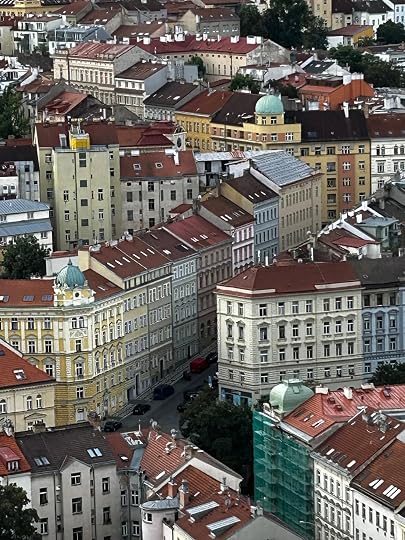
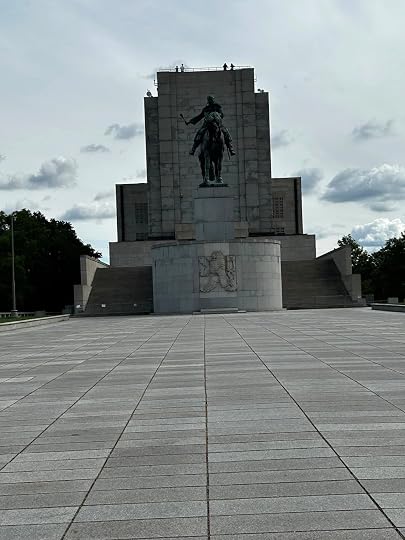
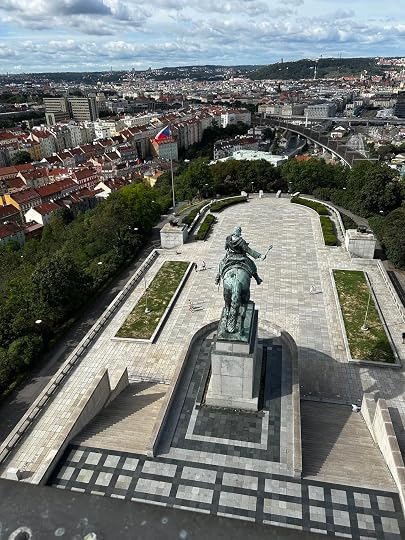
Should you go to the National Memorial? Yes, of course. The views over Prague are spectacular. It’s free and the statue of national hero Jan Žižka is vast and impressive. It’s a good anchoring point to the city and, being in the opposite direction, a quiet counterbalance to the tourist mandated Prague Castle. Best of all, it was completely empty. I had the place almost to myself. The park surrounding it is also beautiful.
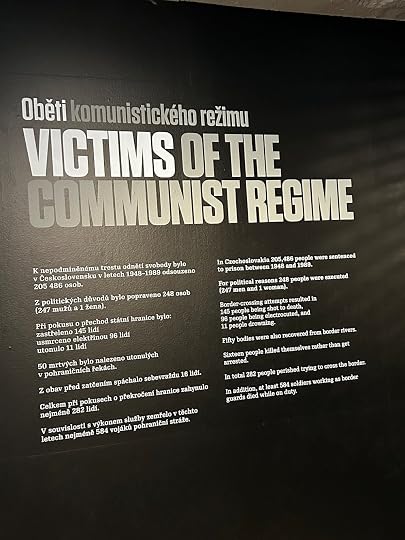
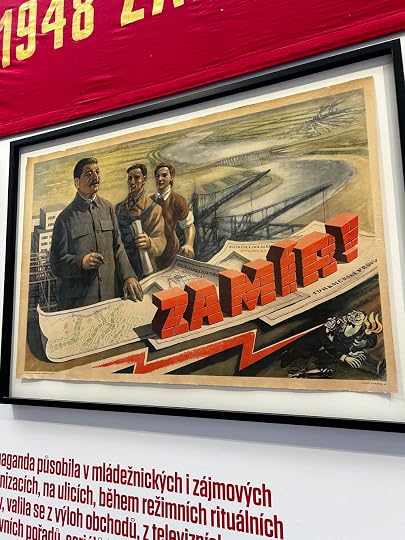
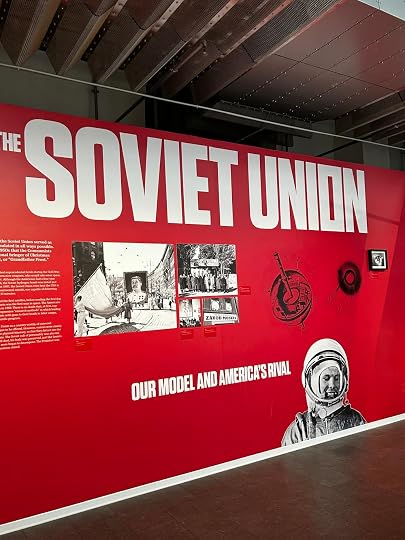
Museum of Communism: The Once and Future State?And onto the Museum of Communism. Bottom Line Up Front: These commies were evil, murderous soul-destroying bastards. Like the Nazis they are the (often forgot/forgiven) bad guys of recent history. Maybe if Stalin had a comical moustache and kept his murderous instincts to one racial group, our collective view would understand what a satanic bastard this guy was. But, Uncle Joe followed his egalitarian principles in all things; he - and his Czech fellow-travelling bitches - just killed anyone and everyone. Did you spill my pint? Look at my bird?
Control always leads to repression which leads to the gulag. Every time.
The museum was laid out - like the Oskar Schindler Factory in Krakow - in chronological order starting with the foundation of Czechoslovakia after WW1. I must admit, I was drawn to the subject so I read everything on display. Each panel, each exhibit was clearly labelled with explanatory notes in both Czech and English (sorry French! Germans; well, you know. You know.)
What I found interesting is that a) there always was a large communist movement in Czechoslovakia b) the economic conditions of the country weren’t great (an unhappy proletariat) c) the Brits (and the French) sold them out in Munich undermining their massive prepared defensive lines on the German border. This sell out ‘gave’ the Sudetenland and all those defences away leaving the rest of Czechoslovakia easy prey to Hitler’s later brutish expansions.
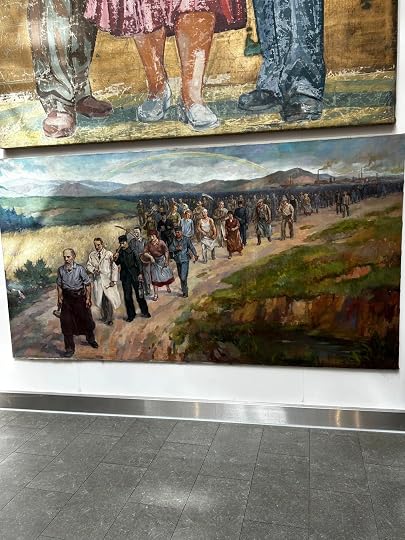
And then onto the communist era. Like Poland, out of the frying pan and into the fire. No wonder these ex-communist states leapt into the EU. There’s not much difference between the Nazis and Communists. The horseshoe meets with these two extremes. What was it that Orwell said about a boot stamping on the human face forever? A leadership cult combined with control of labour, industry, media, thought, family life, travel, money (the 1953 devaluation fucked any Czechs with money). Just a grim life with petty restrictions, pointless activities and savage repression. Fuck! The Czechs were butt-fucked in the 20th Century. Like the Poles and many others. You forget that living in God’s own sceptred isle.
Thank god we escaped this in Britain.
History: Not everything is a Munich sell-out. Except when it was
History is right there in front of you, if you’re prepared to look back just a tiny amount. But increasingly, we’re not. The Tudors have been au courant for so long now, perspective is lost. Even our modern obsession with the Nazis is superficial and one dimensional. Poland. Belgium. France. Russia. Dunkirk. Battle of Britain. Yeah. Yeah. GCSE syllabus. But what about Greece? Bulgaria? Yugoslavia? Czechoslovakia? Burma? Yeah, I’m reading Churchill's History of the Second World War so I’m newly educated (you can’t get enough autodidaction).
Hitler bad and, er, everything that isn’t total war is another Munich these days. But what, my friends, was the actual deal in that original Munich Agreement? A sell out, but of what? Does anyone know? A Czech sell out. The future of Czechoslovakia without anyone from that country being present. Thanks Chamberlain. Revisionism (ie, the game obscurantist historians play where everything you know is wrong) will applaud you for simplicity. But this plucky nation remembers.
I’m reminded of Tim, idiot-clever, going to Iceland years ago on a business trip and being schooled by my hosts about the British take-over in 1940. Who the fuck knows that? I didn’t. WW2 is not all Dunkirk and D-Day. It really was a world war and all these smaller nations remember and we, well, we don’t. Sideshows and footnotes in our Island Story.
Tim’s Mandated Histories - Brave ParatroopersThe National Memorial to the Heroes of the Heydrich Terror at the crypt of St Cyril and St Methodius (Operation Anthropoid)
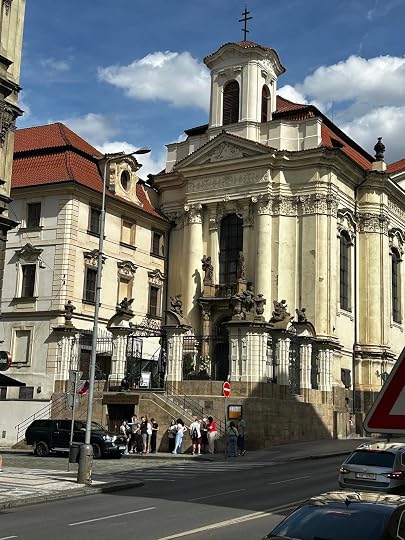
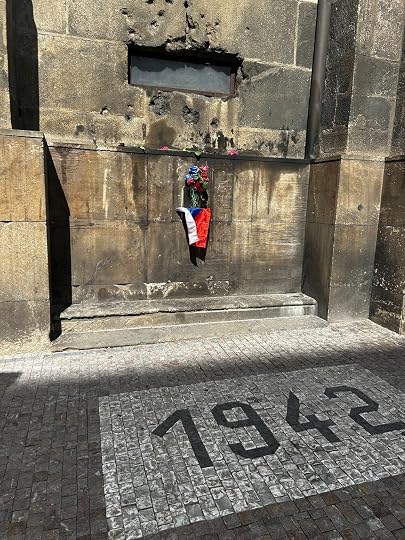
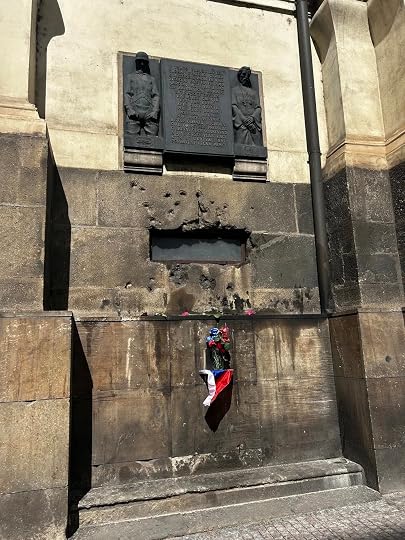
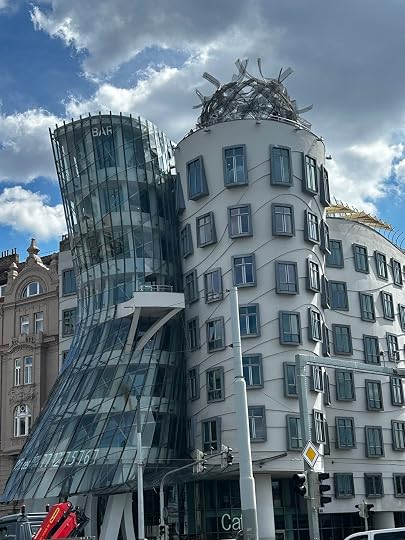
Now if you have a couple of days in Prague, it’s mandated that you go to the Dancing House which is rather interesting architecturally. Good for a picture anyway and not much more. What you probably won’t do - but should - is visit the crypt of St Cyril and St Methodius Church which is about 200m up the hill away from the river. This is where the seven brave (British trained) Czech paratroopers made their final stand in 1942 after assassinating that Nazi scum Heydrich who ruled Czechoslovakia as Reich Protector.
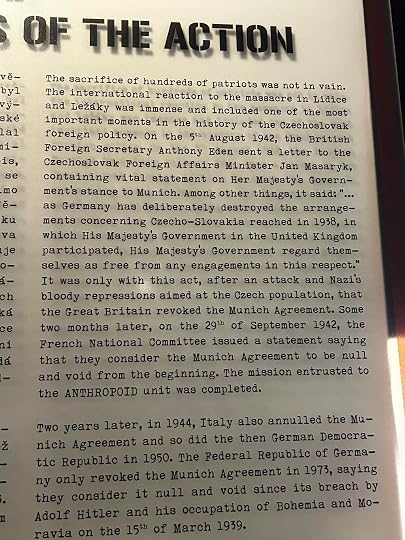
It’s tastefully done. Again, panels are in Czech and English and explain the background, the plot, the botched but ultimately successful assassination. The brutal Nazi repressions that followed and the ultimate victory of the Czechoslovakians. Most moving is that having proven their resistance credibility with this act - an act which provoked the shocking Nazi response - Britain, in the form of Anthony Eden the Foreign Secretary recanted, followed by De Gaulle, their shameful Munich Agreement appeasement. Finally, the Brits did right by the Czechs and it’s gracious of them to acknowledge this in a moving panel. This small gesture on our part meant so much to this nation.
Into the creepy crypt itself where most of the paratroopers made their final stand (two others were shot in the church itself) after being sold out. It’s cold, claustrophobic and not much changed from the pictures. Wounded, caught and with no escape, they finally took their own lives rather than surrender to the Nazis. The Nazis then revenged themselves by wiping out their families, any acquaintances and frankly any fucker they chose. This is the nature of autocratic regimes.
What is somewhat heartbreaking to know - thanks to my earlier visit to the Museum of Communism - is that the brave Czech fighters who fought with the British and Americans and helped liberate Czechoslovakia were then persecuted by the Communists as not being sufficiently loyal to the new post war regime and Comrade Stalin. They’re honoured now as patriots and this small (free) museum tells their story. You should go. I took no pictures inside out of respect.
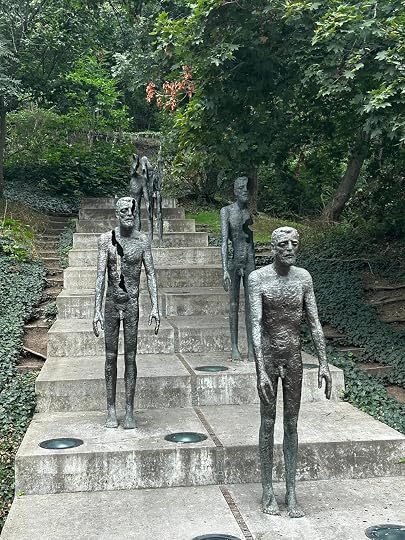
The Memorial to the Victims of Communism Petrin Hill
Quiet ReflectionWalk back on the other side of the river and choose your bridge - not Charles - to get back to Old Town. I found I prefer the opposite bank of Smíchov and Lesser Town. Tourists don’t really go here. It’s more peaceful, more normal; life is good and full of trees and happy families playing in parks and business people snatching a coffee and talking cheerfully together.
All is how it should be, not as once was. It’s best to remind ourselves of that every now and again.
Quotidian Notes / Further ReadingPart of my Prague Quintet Series of Articles about my recent (Sept 2026) trip to Prague. Read them all. I cover art, comedy, Bohemian Cafe Society and nights out on the town.
For a touristy type of further reading, start with Prague Castle - Is it Worth a Visit?.
The National Art Gallery Prague and a Baroque Concert is a good place to read up on high arts in Prague.
For more low brow Prague insights, try a Comedy Night and Tech Bro’s. Less serious. Apart from the comedy.
I mentioned Poland a few times. It’s almost a companion piece. Read my Krakow Trilogy which covers museums, history and Polish cafe life.
September 13, 2026
Bohemian Cafe Sketch Prague
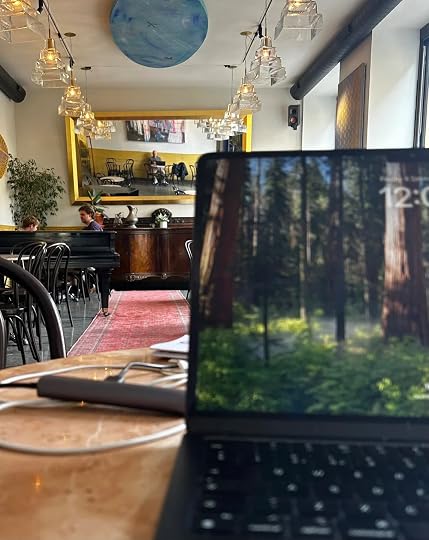 A Laptop Friendly Cafe in Prague
Bohemian bar scene - Cafe Na Boršově - merely steps from my hotel (Naprstkova 272/10, 11000 Prague 1). Everyone has a laptop. Dr Google and his bratty know-all brother Gemini, said Prague wasn’t into the laptop scene. Wrong! This cafe is laptop heaven. Everyone is tapping away. And Tim? Hell yeah, balls deep in this place. The vibe? Studenty with chandeliers.
Who’s here? Let’s review…
Many of the clientele are women. No, don’t get excited. Not much makeup is being used here. Certainly not as much as the blue / green hair dye. And straight fringes. Not many smiles in my direction. It gets in the way of all the earnest conversations over endless coffees. ‘Nuff said. There are exceptions though.
The guy on the next table is attempting to be the gayest guy in Prague. He’s been in training for years, the dapper moustache, the floppy trousers, the striped t-shirt, the exaggerated manner as his etiolated limbs flop ceaselessly across his ostentatious handbag. He’s exasperated and performatively so, thirty years out of date, seeing every person as his disapproving father. He’s also got the best table in the fucking room, the table in the corner with the fully open window to which he rebelliously sticks one leg through out into the street. No rules, man!
I take the table next to him and type as he crunches through the ice in his empty cocktail. I type. He splits an ice cube. Cur-runch! Type. Curr-runch!
Co-Working and ClaudeTwo girls opposite pilot Claude for some mysterious project. Odd, non-male-pleasing, haircuts meet skater-boi fashion as they high five over some agreement in their plot to take over the world. Or finalise their manifesto for trans rights access to women’s bathrooms at Charles University. Or perhaps their nascent plan to subvert received opinion by setting up The Donald Trump Appreciation Society of Prague. Going on instinct, I’d say the former.
A serious guy in a tight white T-shirt rocks a Mac by the steps to the bar. He keeps the keyboard an arm’s length away so he can flex for the benefit of the room. He types deliberately and drinks coffee. He has the look of a jock who’s watched a video on the manosphere and has ‘thoughts’. Either he’s writing the definitive guide to having sex with seven women in one week or his dissertation towards his BSc in Generative AI. Probably the latter. His confused look at his screen suggests he’s unfamiliar with deep thoughts. He probably thinks this attitude and his flexing makes him look cool. Sadly, it probably does. Twat.
The co-working team in the other corner sit around a large table each wearing headphones. Together but so alone. I’m sure when they converse they do it via some WhatsApp group chat. So much easier than talking across the table, eh? What is their project though? Looking at them I think either plans to create Czechia’s Revolut or a group project on why my mummy hates me.
The Trouble with Maria Lounge ActOver in another corner, a heartbreakingly beautiful woman recites biblical passages and rituals to a nun in full Sound of Music gear. Looks like a novice type interview. It’s that sort of place. I’m not even surprised. Obviously, I won’t put the novice off her potential course in life, but, if she’d like to test out the sins of the flesh before she takes the pledge, well… I’m here and my hotel is only two doors away. I offer these services for free. What’s free these days?
Well, what’s free is the annoying French guy languidly getting up from his table and playing schmaltz on the grand piano like he’s swallowed half of Richard Clayderman’s playbook. Not the good half either. It’s all a bit doodley, sub The Piano meandering arpeggios. Luckily, no one pays him the slightest bit of attention - the attention he seeks anyway - and he slams the lid down in a huff and goes back to his red wine. Philistines.
He’s now furiously scribbling into his leather notebook with a Montblanc pen. Game knows game.
The girl. Alone. With a laptop. Heartbreakingly beautiful with tresses of long blonde hair. Mysterious, coy, reserved. But what does she write? Is it the mirror image of my own solipsistic tappings? Maybe, how she fantasises about the hot but slightly older mysterious English guy who fails to make eye contact with her but is unfailingly polite with the waiters? Possibly. One down tick though for the visible tattoo between her neck and bosom. This generation is lost. So very lost.
Ah, the 80s! MusicThe music goes back on after the French interlude and it’s good. Bronski Beat plays. Smalltown Boy. I used to dance to this in the Crypt nightclub in Sussex University in the mid 80s. Fuck off granddad. Sade now. I watched her live at Live Aid, my Czech friends. Nathan from that bar on Újezd the other night would change the subject here. And I met Madonna. Sorry mate; I have baldness and memories and you have youth and callowness. I know, regretfully, which has better currency.
The attractive waitress brings me another beer and bends down to do so. I try (and fail) to avoid observing how her floppy top opens out to show her boobs. Luckily I’m not too lecherous - well being caught peeking is awful - and so turn away and smile innocently when she stands up. Not my style. I ask her, is it okay if I go outside to vape (I haven’t paid my bar bill yet) and she says those magical words - “It’s okay to vape inside”. Fuck! This is my new home and to drive this home the Cure comes on! This is my Prague BOHO bar! And it’s next door to my hotel. Ignoring the Thai massage parlour in between, of course.
ReflectionsAnother day, after a late afternoon spent listening to baroque music in a stunning Renaissance church, I return to the cafe to write up my thoughts. It’s my home-from-home in Prague. I walked to the bar with my laptop. Asked for a beer at the bar. Waiting, my musings on the foamy pour are distracted though when suddenly, from behind a curtain at the back of the room, came not one, not two, not ten but thirty oh so beautiful Czech ladies. What the fuck? But, thank you! What was going on behind that curtain?
They scattered around the place in fours and fives, their high pitched voices energised from whatever they were doing in private. Aperol was taking a serious beating. Me? I gathered my pilsner and held onto a table near the door observing. There’s an ornate wall length mirror on the other side of the room where I can stealthily scan the room from two perspectives. Next to me a youngish lady on her own dawdles through her cocktail seemingly bored. She orders something and a few minutes later the waitress - she knows me now and just brings beer when my glass looks empty - brought her an open sandwich.
Seizing the moment, I tried a line on the lady as she fiddled with her food. Asked her about her sandwich or something. Bold for me if slightly pathetic. Her response wasn’t fulsome nor encouraging of further conversation. Of course, I’d picked the only young Czech lady who doesn’t speak English.
Or did I?
Later. Back at the hotel. I’m looking at the surreptitious picture I took earlier of the room via the mirror at the other side of the room. It captures everyone in the bar, those in front, those at the side, me and her. In the picture, she’s looking at me intently, all alone, as I gaze at the mirror, phone in hand, laptop and beer laid before me. There’s a story there if I was clever enough to read it. She was too shy perhaps to engage? Possibly. It’s true I give off an unattainable Brad Pitt vibe. Must try and tone down the high-status sexual attractiveness. Make myself available to normal ladies.
Or did I fuck up again and miss the signs only to realise too late what was actually happening right next to me? Readers, here is the photo: you judge:
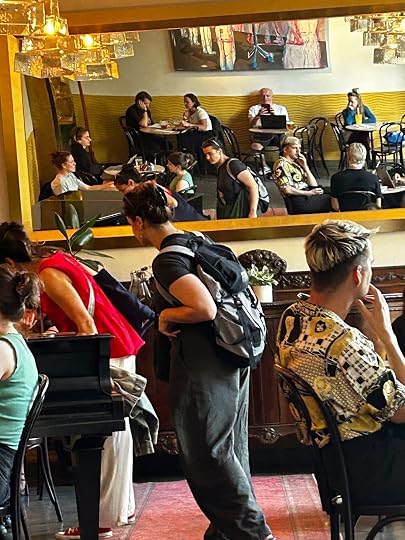
Mirror Image in Cafe Na Boršově
Don’t judge me too harshly.
Yeah. I fucked up didn’t I?
Bollocks.
Quotidian Notes / Further Reading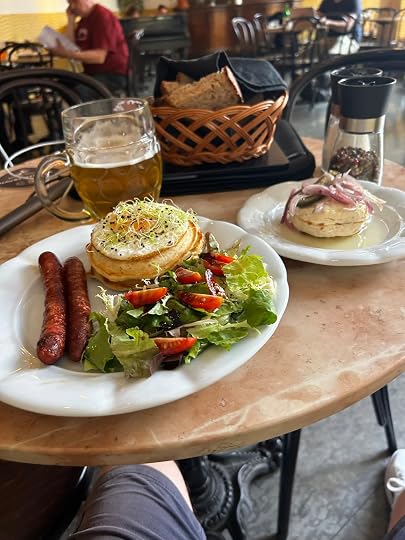
1) Food and drink. I ate here quite a lot of my time spent in Prague. The menu was more of your light bite variety which came with salad so made me feel slightly less piggy than the normal beef stew and dumpling fayre elsewhere. Pickled cheese was interesting! Beer. Yes, freshly poured Czech pilsner. I had many drafts of this.
2) Before I went to Prague I googled laptop friendly places and the results were pretty poor. Apparently, it’s not the done thing to sit in a cafe / bar in Prague and tap away on your laptop. So, imagine my surprise when right next door to me (skipping the Thai massage parlour) was this gem. It was lively, interesting and lots of work gets done here. It’s very close to Charles Bridge but in a side street so prices are reasonable and the staff, boho model types, very friendly. I definitely recommend this place.
3) Part of my Prague Quintet series detailing different aspects of Prague from a solo traveller point of view. Start with Prague Castle - Is it Worth it, and then follow the trail through Comedy Nights, Art Galleries and Baroque Music and my experience with a pimp on Charles Bridge (really Tim, you may be dramatising for cheap effect here).
4) There’s a certain voyeurism about taking mirror pictures is there not? No, no, no! It’s narcissism, my friend. The picture and the blog, ostensibly outward-looking is always, and forever, inward facing. I’m also beginning to realise it’s about missed connections.
September 12, 2026
Art, Music and Blogging in Prague
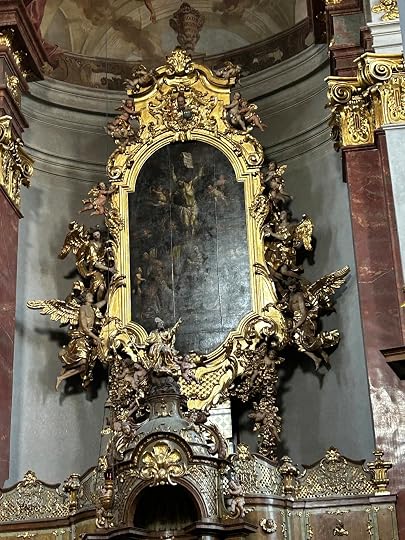
St Giles Church, Prague Old Town
Tim Reviews High Art in Prague:National Art Museum - Veletržní Palác
A Baroque Concert in Church of St Giles (Kostel sv. Jiljí)
Morning MotivationsDid I tell you my hotel does breakfast thrown into the room price? So no matter how hungover I was from my comedy club / Alpha move excesses, there was no way I was going to miss this eat-all-you-can buffet. I piled the plate high with Czech sausages, refilled the coffee and drank copious juice. Heavy but satiated, I repaired straight back to bed. How did I get in this state? What happened the previous evening?
Tossing and turning as bright, jigsawing light escaped through my hastily pulled curtains, I realised this self-pity was a fucking criminal waste of time. Get your lazy arse up Tim and go and do something! Thus inspired, I chose art. Because, why not? I’m cultured. Tick. Here. Tick. Cultured and here. Tick-tock. Let’s go to an art gallery and gaze at some pictures.
Retrieving my shorts from where I’d thrown them at 2.30am, I finally made it out of the hotel and caught the 17 tram off to, well even I can’t remember. Somewhere in one of Prague’s non-touristy areas, anyway. My destination? The brutalist, post modern factory building that is the National Gallery Prague – Veletržní Palác.
And what a good museum it is.
Beauty and BrutalismPicasso, Monet, Toulouse Lautrec, even Van Gogh. Lots of - surprise, surprise - Czech artists. Essentially the theme was the nineteenth century onwards. Plenty of good Impressionist art that segued, unfortunately, into a load of modernist, cubist abstracts. The 1920s and 30s certainly were a particular low point in the story of art.
In total I probably spent a couple of hours in the museum studying the pictures with an intensity reserved for hangovers. I even came to appreciate the art-for-the-proletariat factory setting. I must admit though, I skipped a lot of the modernist stuff. As the art critic T.E. Robson once said, “What a load of bollocks. Learn to paint.”
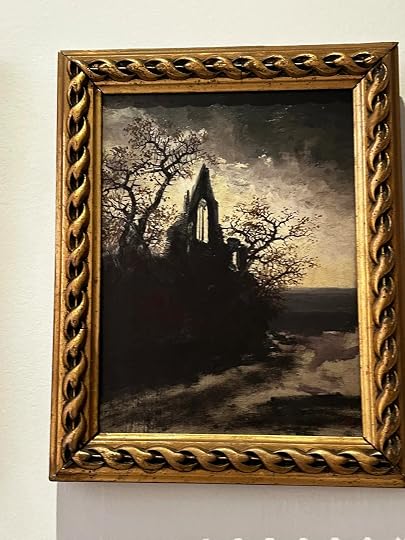
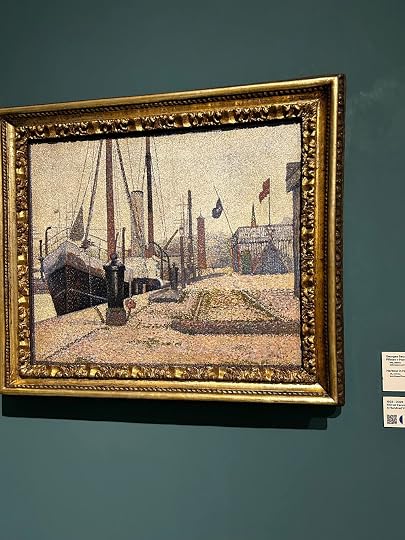
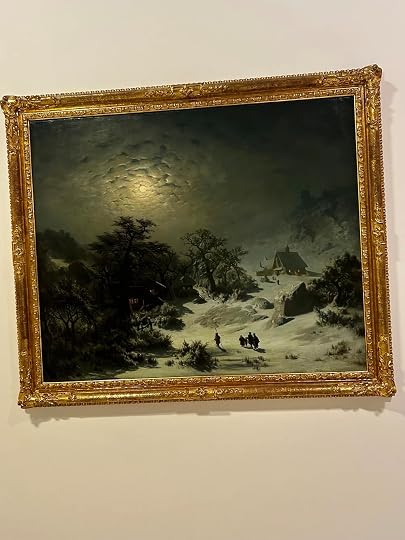
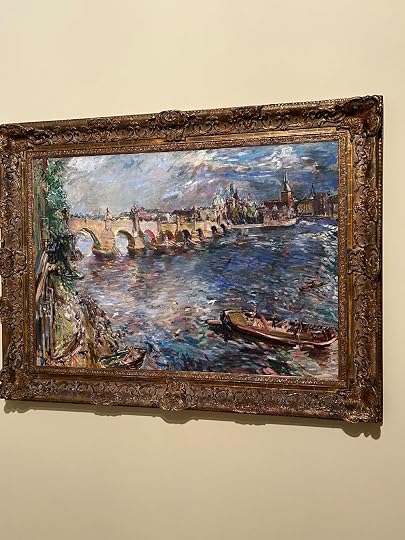
But there was plenty of good stuff. I’d call out Adolf Kosárek - Winter Night (1857), Antonín Waldhauser - Gothic Ruins (1870), Georges Seurat - Harbour in Honfleur (1886), Oskar Kokoschka - Prague Charles Bridge (1934).
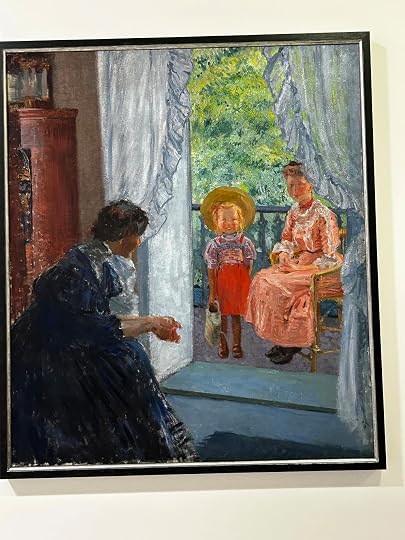
My favourite - for personal reasons - was The Balcony by Czech artist Miloš Jiránek (1908). I was disappointed I couldn’t get a postcard of this picture but not doing so saved me around 10p.
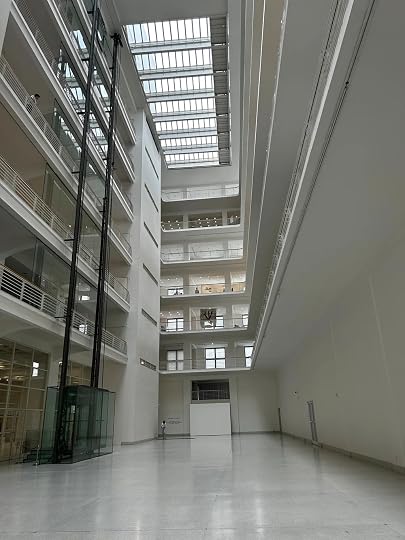
The utilitarian communist brutalism of the building - a factory of art in fact - worked. The layout was crisp and followed a well defined path. I would have spent more time on the floor dedicated to post war architecture (shocking, rabbit hutch apartments presented in black and white photos and scale models with much sub-Corbusian contemporaneous intellectual bullshit about homes for the workers) but, well, I couldn’t linger long. The paracetamol was wearing off and the hangover was kicking back in.
I needed the 17 tram back again. Onboard I was lulled by its steady rhythm and missed my stop. But, serendipity is the key to solo travelling and I stayed onboard as we trundled alongside the Vltava River. Indeed, I’d paid £1 for 30 minutes. So I got my money’s worth. I got off at the Dancing House (been there, done that, got the photo) and walked back. Hangover messy, I overshot a second time and ended up in the Old Town again just in time for the lunchtime troughing of the tourist hordes as they ordered their pizzas and burgers, Aperol and beer.
Sidebar: Overheard dialogue in Old Town“Where shall we go?” a British Northern accent asked her rotund husband in his football top holiday attire. “There’s a Popeyes over there,” he responded and they gleefully crossed the road, the desire for empty calories strong even here in Prague.
Listen dumplings, Czech dumplings will fill you up better, for cheaper and, I dunno, you’ll try something new, something local. Why are you here again? Nah. Fuck that. Irish bar later? They serve Stella. Can we get a tram to the Prague Castle? Avoid the Old Town unless you like being herded from overpriced, insincere, anywhere, nowhere, fodder.
I know. I know what you’re thinking: You’re the guy with a laptop who can’t handle real interactions that aren’t on a barstool with conversations that rise and fall depending on the drink you’re ordering. And what about your myriad failures to read people? Women in particular? Okay. Good points, all. I get that... Bitch. But we all come out swinging somewhere and find our level. I just write mine down.
Yes, I’m a snobbish twat. Read my stuff - I own it. I’m the mayor of this town. Finding interactions with humans, observing them in foreign places, is what I do. But these random diversions helped in one way: It delayed my first beer today: 16:00; a new self-denying record! Onto the music.
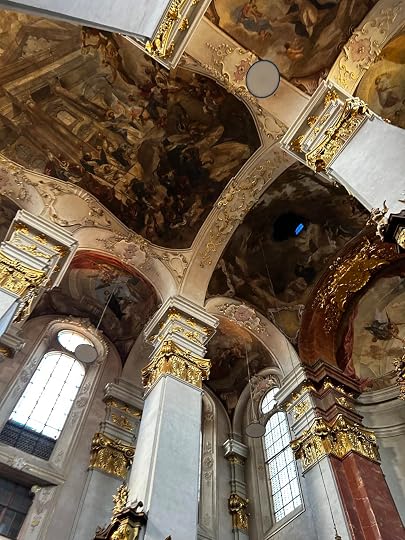
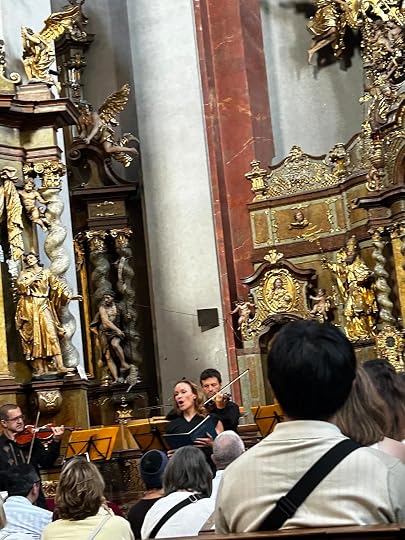
Baroque InterludeNot sure when I first heard Ave Maria. As a non Catholic, it didn’t really cross my musical horizon that much. Perhaps the Liverpool film ‘No Surrender’ (anyone remember that one?). But today, in a beautiful church, first with a powerful organ and secondly, with a string quintet and soloist, it was moving. Very moving.
The formal church setting, perhaps? The professionalism of the musicians, maybe? Hard to say but it got me both times. Dust in my eyes and all that. Twice. I was there for Vivaldi. Mozart. Handel. Albinoni. All my baroque favs. The musicians went Route One with us €30 tourists; playing the heavy hitters, the Classic FM (or whatever the equivalent in the US is) top ten. Popular classics. Chuck in local boy Dvořák and you have a cosy hour of Western cultural brilliance.
The Church of St Giles (Kostel sv. Jiljí) setting was perfect. These pieces were composed with religion in mind, in praise of God in an era when that meant something, when people gave a toss. And so hearing these excellent musicians play these excerpts from The Greats here was, cynicism aside, moving.
The audience. Well, pretty much 100% tourists. American mainly (who says they’re dumb, they certainly aren’t - I don’t endorse that stereotype), Japanese, probably some other mixed Europeans as well. The solemnity of a magnificent church didn’t really create a chatty-chat, where you from, environment. This wasn’t a boozer so I traded my normal barstool for a pew. On either side I had Americans and I guess they were religious. They bowed their heads and clapped at the end of each piece ever so politely. As though doing so was a bit profane in a church, you see. I guess.
Tim Has Thoughts
Me? Well, you know me. Laptop guy. Getting pissed in a bar writing shit about everyone, soooo; I thought I’d mix it up here in Prague. I love classical music. I love baroque and, outside of Venice and watching a Vivaldi recital at an historic church in San Marco, this was grazing the ceiling of the best experience you can get. I took a couple of short 5 second videos but - to be honest - felt a bit guilty doing so. Does anyone live in the moment anymore?
Yeah, yeah. We’re all victims of Insta culture, #somoved_prague. I get that but, but, I’m an artist. I paint word pictures of foreign cities for your benefit. You know, the bits that other quotidian, top 10 sights wank merchants miss. So, the odd video helps jog the already-had-four-pints-before-I-arrived memory.
Yeah, I needed a piss halfway through. I suffered for my art and you, my dear readers.
Talking of click bait bitches. I met some famous Prague YouTube vlogger I’ve been following in the lead up to this holiday on my way back from the church. His videos gave me some useful insights into what to see in the city whilst I’m here. Actually, it was he who recommended going to the National Monument at Vítkov. Good videos. Cool guy. I went over and shook his hand and said I watch all his videos. He kinda blanked me with a ‘thanks for watching’ before immediately looking away. Wanker. 2 million subscribers? I get better numbers from my bot attacks.
And with that, we head to the bar.
Quotidian Notes / Further ReadingPart 4 of my Prague Quintet series of articles about my recent trip to Prague. This is the morning after the night before, detailed in my Comedy Night in Prague blog.
And who is that vlogger? Not hard to work out. Perhaps I was being a touch unfair and maybe he was filming. Nah. He’s a nob.
I separated art (pictures & music) from museums. The weighty history of Prague in the 20th Century deserves its own blogpost. Fuck! This Quintet of articles is turning into a full bloody orchestra. Did I actually do anything in Prague apart from write? Weeeellll. Yes, see above for example. Where I wrote, well that in itself is another blog. FFS.
Read more City Tours in Scabrous adventures series. Try The Darkness of Bruges or, for perhaps The Do’s and Don’ts of Krakow? My wanderings around the sights (bars) of Breda is criminally under-rated. Along with the video of me on stage in that town.
September 11, 2026
A Comedic Night in Prague
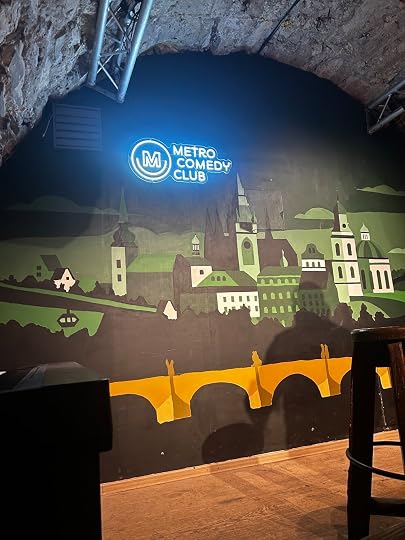
The suspense builds…
The Open Mic Night(mare)Well, I went to an English language comedy club. In a way it was a comedic night though perhaps not in the way anyone involved intended. I got there about ten minutes early to find a depressingly empty bar. Two American barmen served me, scanned my QR code and then stamped my hand. I drank some of my beer and then, fuck this is embarrassing, went outside and stood on the pavement for a while. Should I leave? I’d paid about £3.50 online for this open-mic night so, there was that. I went back in to finish my beer only to be spotted and thence desperately herded downstairs two levels into the dungeon basement where a paying audience of seven was augmented by an equal number of ‘talent’.
Cringe.
The Fun Starts…The host was a jovial Italian who delivered his lines with more bravado than wit. Probably the high point. Short of material and laughs, he then did the ‘where are you from’ routine with the paying audience. I sat at the back, calculating my responses, and was the last to be asked.
“I’m Tim from the UK. I work in London,” I said simply.
“So Tom, what do you do in the UK?” asked my host.
“I’m a comedy writer,” I answered.
The host shrank back a bit. “You write for the BBC or films?” he asked, seriously over-reaching.
I dwelled on this moment of tension. This is called timing, would-be comics out there. “Nah! I’m just fucking with you, mate,” I said, eventually.
He relaxed but word got out and I wasn’t picked on all night. They even invented themselves a fantasy that I was a big-shot TV producer from the UK. Whatever. I didn’t disabuse them.
This high status was wasted with the ladies though. There were only three in the audience: two were comics who, I believe, held hands all night and the third was a stunning but married Icelandic princess. With her husband. No one was getting laid tonight. A point made most forcefully by the tubby try-out from Slovakia who, with much enthusiasm, regaled all fourteen of us with stories about masturbation.
It didn’t get better. The tropes trooped on, one by one. The angry middle aged female. The angry American black comic who fantasised that this was a white power rally. Yawn. The gay comic who asked the audience how many dicks they’d sucked before painfully transitioning into a grim riff on female oral sex. The guy from Vietnam, or somewhere, who used his ethnicity as a cloak to make incomprehensible racist jokes about Koreans. The two American barmen also made an appearance. For comics, they pour beer well. The lowlight was a torturous and unfunny five minute riff about someone’s dog which I think even the guy telling the joke didn’t understand or remember. I forgot it during it, concerned with counting the bars on my phone.
There were plenty of quotidian anti-Trump, anti-Brexit comments and - topically - boo-hiss implied - the staunch decision by the Icelanders to stay the fuck out of the EU. Bad Iceland.
Some Advice: Be FunnyAfterwards, in the bar with the comedians, I judiciously dispensed advice to each about how to make their jokes land better. After all, I am a commissioning editor for Channel 4 or something. Ricky Gervais’ best mate.
“Lose the dog joke, mate.”
“No, I think you should lean in more heavily into the man-hating vibe, love.”
I told the wanking guy to keep working on his material. It was clearly well researched. He looked like he wanted to start taking my advice then and there. Sidebar: every comedian I’ve ever met is unfunny in real life. Why is that?
Eventually, after holding court for too long, I got the impression I’d amused everyone enough - it happens and it’s always best to recognise this before everyone else does. So I let them get back to their collective post-gig, you were great, no you were great, therapy session.
The trip back across Charles Bridge was its usual tourist hell. Dodge, weave, avoid kicking the praying beggars, don’t smile at the ladies. No pimp was going to front me up tonight. Shoulders back, eyes front: You looking at me, mate? Arriving at my hotel, I noticed my daytime local coffee shop/ laptop two doors away was still open with a youngish crowd noisily spilling out onto the street. Mmm. What to do?
Blockchain and GirlsThere was no decision to be made here. I walked into the cafe, possibly several pints over the edge, and ordered a Pilsner. Got talking to a guy - Daniel? - on the barstool next to me who was scribbling impenetrable equations onto his beermat. He was seriously into crypto. He liked to talk about this. A lot. He had thoughts and grand theories. He shared them. At length. We progressed to another crowded late night bar nearby when we got kicked out of the first. Drinks secured - I let him buy - he then started riffing about being an introverted extrovert or some such intellectual nonsense. Shockingly, he finds it hard to meet women.
Shushing his flow, I leaned back in my chair, tapped the shoulder of one of the Latin American girls on the next table, introduced myself and ended up kissing her.
I leant back to Daniel. “Could you do that, mate?” I asked, aware I was now his Alpha God.
Then it all got a bit messy. The girls left in a pack. Daniel gave me his LinkedIn details (soon deleted) and I walked home in the wee small hours aware it was curtain up time for the opening act of a major hangover. But that is for the morning and a queasy tram ride to an art gallery.
I go low. I go high. I am Michelle O’Trump.
Quotidian Notes and Further ReadingYeah, I’m a bitch. You ever read any of my stuff? Read my Antwerp Bar commentary. Or, how about, The 3rd Battle of Mons. You’ll get the vibe.
I read once - probably in The Guardian - that going to a comedy show is like paying for a prostitute; you’re laying down money for a synthetic experience. Well, socialist fellow-travellers, it depends what you’re after, does it not? Fun can be found anywhere. The soulless experience is an experience. The verdict is in the re-telling.
Serious note. It takes balls or self-delusion to get up on stage and do a set. I’ve never had the cojones. But, Lady Catherine de Bourgh style, if I did, I would inevitably be amongst the greats. But, if you’re a pussy like me, and you’re in Prague, support The Metro Club. They try, they’re fun people despite my bitchiness and you should support these type of good-hearted places. Anyway, it’s cheap as fuck and you’ll have a good time.
This is part of my Prague Quintet of stories. Read my views on Prague Castle and whether it’s worth it and the previous night’s Beer and Loathing in Prague. Both excellent and required reading if you’re planning to go.
September 9, 2026
Beer And Loathing: A Night in Prague Bars
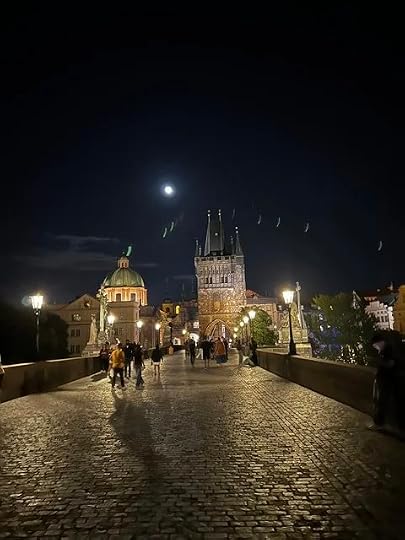
Charles Bridge, Prague.
Russian Barman: A ConfessionThe barman was friendly. From Russia, he told me, though brought up in Prague by way of a couple of years in Dublin. He wanted to go back there; he had an Irish girlfriend. I mentioned it seemed somewhat empty tonight in Prague - all my YouTube research warned me about the nightmare of overcrowding caused by the tourist hordes in summertime. He observed that maybe this out of the way place I’d chosen on Újezd - away from the tourist cattle ‘must-see’ haunts in the Old Town - was always going to be a bit quiet on a Monday night.
He went on to overshare. Warming to his theme, he said that he used to work in busy Old Town places, techno clubs and that sort of thing. I asked him, why he’d switched jobs to this out of the way place? Well, he got caught selling drugs he replied with a smile whilst helping himself to another gratis refill of his beer.
Blur v Oasis: Dick MeasuringThe guy on the bar stool to my right - Nathan, American I guess – heard my accent and started on a riff about music and Britpop. How he preferred Blur over Oasis and that Damon Albarn was a genius. But this was like a Gen Z teenager holding forth on the Beatles to someone who’d watched them play Get Back live on the rooftop. He clammed up when I bitch-slapped him with my observation that I’d seen Blur many times in the early 90’s as far back as their Modern Life is Rubbish Tour. Oh! Music snobs don’t like it when, in the dick measuring contest of their wankery, the guy next to them is sporting a ten-inch compared to their meagre six.
But he was nice enough and we talked about New York and Chicago and New Orleans and Brighton versus Brighton Beach. The sort of ‘anywhere & everywhere’ conversation one has internationally. Perish the thought you’re parochial. Me? I visit Belgium regularly and voted for Brexit. Life isn’t simple.
I pulled the old guy routine again when I said my last trip to New York was probably a quarter of a century ago and that I used to party in the Windows on the World. You know, that bar at the top of the World Trade Centre.
“Fuck man! There was a bar there?”
A Beer Too Far?Mmm. This wasn’t my first set of beers tonight. But, prompted by my Russian friend who needed to make up for his larceny - I ordered one more. Too soon I made my excuses with some Pilsner still left in the glass. The shame. That’s, like, sacrilegious in my culture. But, with pissed bonhomie, I shook hands with Nathan, the barman and his newly arrived Irish girlfriend (also drinking for free). Back out into the Prague night.
Age. Longevity. Memory. There has to be a trade-off, doesn't there? You lose your looks; you lose your hair. You battle to stay thin. But inside - confused, commingled and somewhat capricious - we have memories, memories that make us human, that shyly reveal us as a bit player in a once popular drama that doesn’t run anymore beyond highlight reels or Youtube shorts.
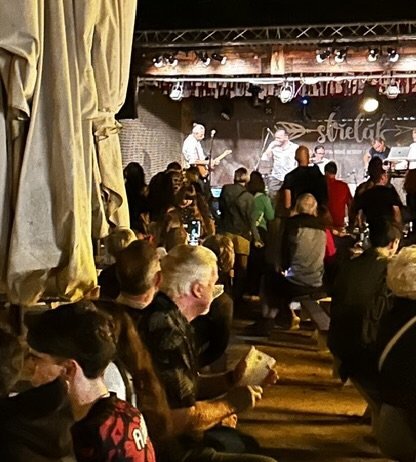
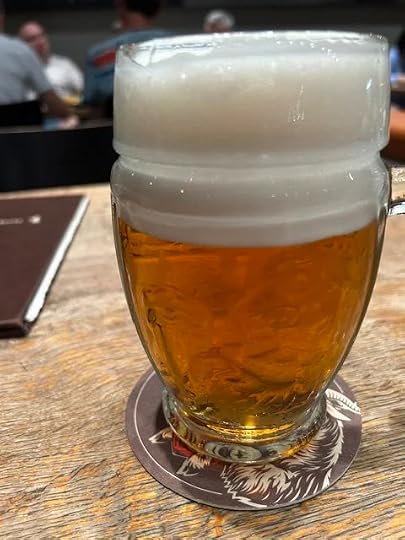
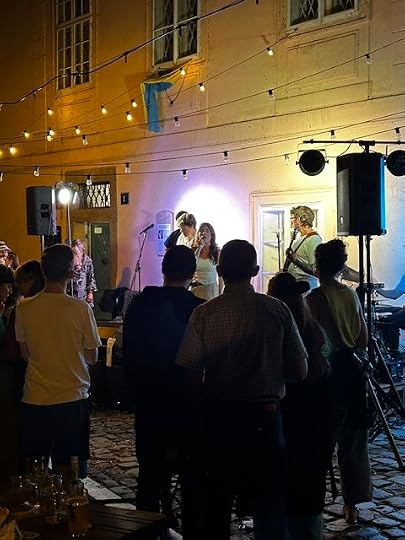
The Girl by the Riverside Earlier
Before that bar, there were – of course - a few others. I’d started earlier, by the river, on the Lesser Town side. There was a joyful noise coming up from a bar in the Kampa region whilst crossing the Legion Bridge (Most Legií). People having fun. Live music. So, I went down to investigate and caught the last few songs of a local band playing outside the Jazz Dock watched by a large, enthusiastic Czech crowd. I only caught the last three songs. They were good. Sorta like The Cardigans (who they, granddad?).
Walking back to the bridge along the waterfront I was followed, and then led, by an attractive, single lady, thirty something who was on her own. I smiled. She smiled. She paused in her walk, I overtook her. I stopped, and she passed me slowly. Synchronicity is a good sign of attraction, I’ve found. Our paths collided when we reached the bridge.
She went left and I went right.
That’s okay: I needed a piss anyway.
What are the Signs and how to Miss ThemAnother night. Before or after, not sure.
The woman at Stage Bar on Střelecký Ostrov island. A band was playing, so - as I was crossing anyway, I followed the noise and took the lift down from Legion Bridge (Most Legií). I stood at the back, watching the band, watching the crowd. The most gorgeous woman of indeterminate age, in a tight lime suit was next to me. She was getting into the music, arms in the air, swaying and constantly filling her glass from premixed cans stashed in her bag. She was beautiful; high cheek bones, prominent nose, curvaceous.
Readers, if I had to design, or wish for, a perfect woman, this was she. Alarmingly close, she wiggled, she lifted her jacket to show her ass, bent over on the table in front of me provocatively. She unbound her hair and shook it sensuously. I mean, all the signs! She did literally everything to entice me apart from drop down to her knees and fumble around in my trousers.
I, of course, faced with Yoda’s choice to do or not to do, chose nothing. I gave nothing, encouraged nothing. As she was putting on her show, I could see her stage whisper her friend seemingly asking, is he looking? I know this because the friend would obviously appraise me and the two would then giggle performatively. But I was frozen. Real life and real decisions. Not for me. Eventually the music stopped, as did her actions. Was I dreaming? Did I imagine a come-on? How would I, an observer but unobservant, even know?
I left as she pulled a bottle of prosecco out of her bag. If I was a certain type of guy, maybe I would have stuck around at this point, let nature and bubbles take their course and ride this tram to the next stop. But I’m not and I didn’t.
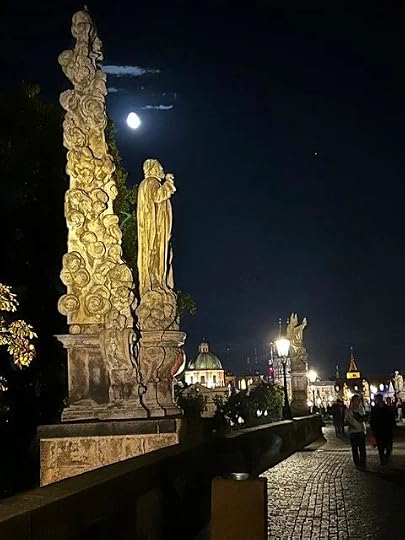
“You looking at my bird?”
The Pimp on Charles Bridge?Disgusted with myself, all the beer I’d been drinking and the carby meals I’d been eating, I walked back through Lesser Town slowly and made my way to Charles Bridge. I pinballed drunkenly from side to side, seemingly always against the flow. It’s what I do. Usual crowd. Couples strolling arm-in-arm before heading to their hotel for perfunctory holiday sex. Youngish girls high on life and a couple of cocktails being silly. Guys being loud, annoying and drunk. Amidst this, a gorgeous, oh so beautiful lady, curvaceous in that modern way, smiled at me and I smiled back. Then I noticed a mean-looking guy nearby in jeans with a short hair cut and jacket fully done up. He was slowly walking in front and then behind her.
I paused. The girls didn’t move much. The guy didn’t move much. I walked on and they kept pace with me. I stopped and they seemed to stop. Wherever I was and whatever pace I walked, the guy seemed to be not that far away and kind of looking at me. His gaze wasn’t friendly. It wasn’t even a case now of him being a pimp watching his charges. I felt like a mark and hunted.
And, like a paranoid little bitch who’d watched too many ‘scams in Prague’ or ‘Be careful in Prague’ videos on YouTube, I picked up my skirts and fled the bridge back to the safety of my hotel. No more beers tonight.
Paranoia and missed opportunities. Is anything real? What is the truth? Am I sinking into the abyss or just drunk? Drunk and alone in Prague.
But there’s always tomorrow. I’m going to a comedy club. I feel like a fucking clown anyway. Based on tonight (last night, whatever; recently) I should be on stage and share my dating tips. Mic drop.
That though, dear readers, is another, and my next, story (to be overshared, of course).
Quotidian Notes / Read On1) This is part of my Prague Quintet series of articles about the Czech capital covering art, music, museums, beer, bar escapades, trams, You know, the full Goulash with bread dumplings. Read part 1 Prague Castle Guide - Is it worth it?
2) I’m liking this In Media Res style of writing. Keeps you guessing, no? Guessing whether I’m a wanker probably but a literary wanker at that. Literary discussion from a bar in Delft: F.Scott Fitzgerald - What a Bitch!
3) The comedy club night is a scorcher. You’ll love it! Just writing up my notes.
4) I went to Prague first week in September 2026. It was warm.
5) What about reading my Krakow Bar Stories or maybe some Antwerp bar stories?
September 5, 2026
Prague Castle Review
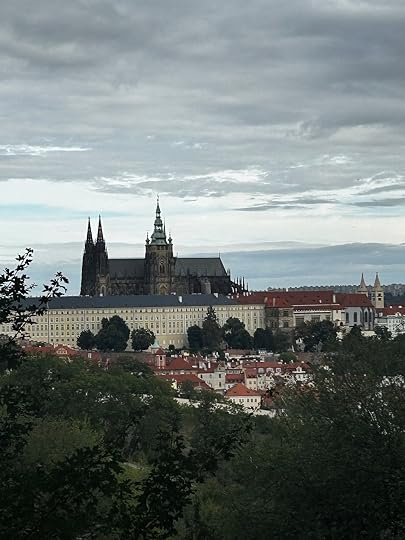
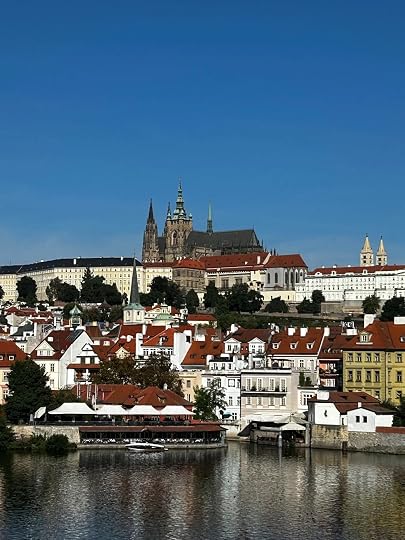
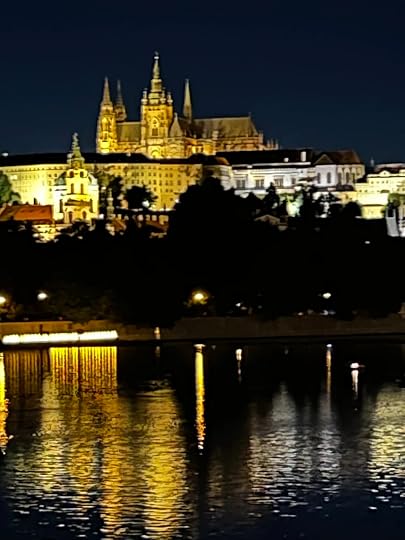
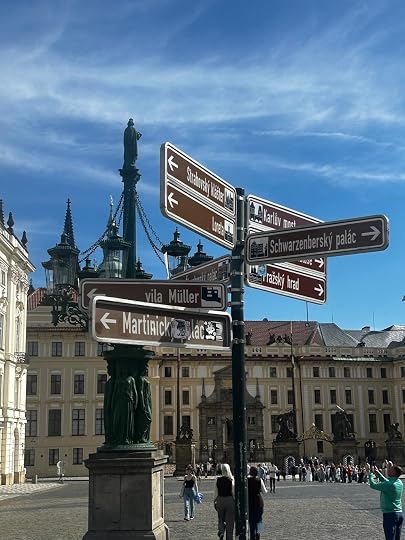
Prague Castle: Is it worth it?
Whatever they say do, don’t do. Whatever they recommend, treat with caution.
I overheard a guide today at Prague Castle tell the flock gathered around her umbrella: “You’ve seen many magnificent sites today. Food for the soul. But what you now need is food for the body. I will show you an excellent cafe around the corner that serves the best coffee and cakes in all Prague. I will take you there.”
ABC: Always be closing.
Route 1: Up the HillPro Tip: Based on five days of on-the-ground research, my "beat the crowds and feel smug" route appears at the end of this post.
I walked up the hill from the Lesser Town (Malá Strana) relatively early to beat the crowds. And yes, to get to Prague Castle (Pražský hrad) you will have to make the short but steep climb.
It’s certainly an investment in your calf muscles this excursion up the hill to Prague Castle. But, like, you have to do it. Don’t you? I mean, that’s what all the guides say; come to Prague, see the castle, cross Charles Bridge, rub a statue, blah, blah.
BTW: There is another way to get to the top. You can hire a ridiculously extended vintage car costing, in Czech Koruna, probably something like half this country’s GDP, and be driven past the sweating tourists all cursing you. This option is mainly taken by tourists who wear masks a lot. Even in an open-air car with your own family. Fuckwits.
So, who else was also making this morning trek?
Fat Americans, stopping every few steps, sweating profusely, caught twixt and between McDonald's and Starbucks (yes, there’s even a Starbucks here at Prague Castle along with authentic Czech kebab and weed shops).
Koreans, also pausing every ten steps - this time for the obligatory selfie.
Determined families, pushing their reluctant teenagers up the hill to get that parentally mandated culture fix, all whilst laden down with bread rolls and apples stolen from the hotel breakfast buffet.
Me? Walking steadily but faster than this lot. Getting those steps in to negate the previous night’s beer and dumplings overload. 20,000 steps here we come!
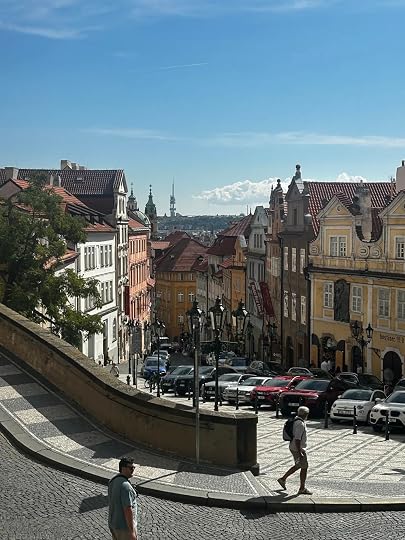
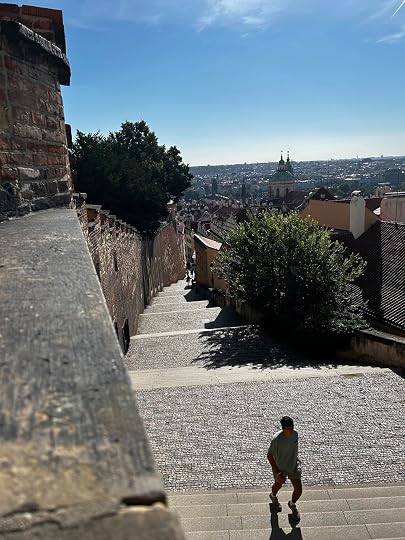
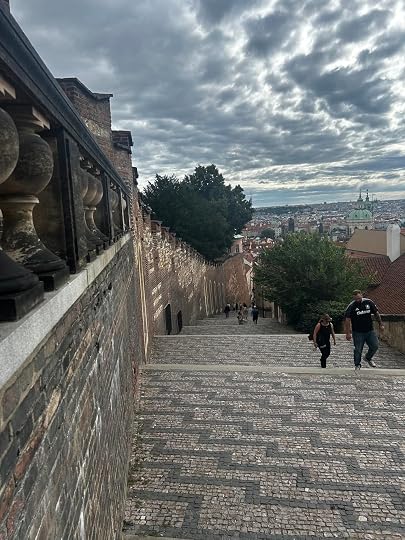
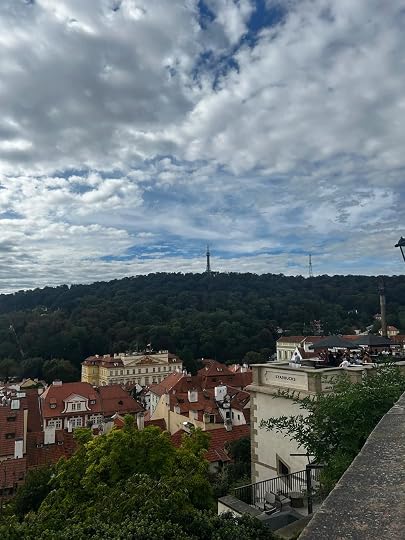
You Made It!
And if you make the journey to the top - and you’re not too tired to rock when you get there - you’ll be glad you did. It's certainly pretty and boasts a great view over Prague spread out below you. Ornate palaces and churches sit randomly on a large site; it’s less a castle and more a collection of stately buildings on a hill - the entire district is called Hradčany. A bit like Wawel Castle in Kraków to be honest; there’s no real ‘there’, there.
I like history. I love architecture. But the rehearsed ‘pretend you give a fuckness’ I found up there leaves me colder than a foamy beer poured from an Old Town cellar bar into a refrigerated glass. But I won’t say it’s crap because it’s unique, historical, and hovers over the city like a sinister bat ready to swoop down and devour its tourist ant hordes below on Charles Bridge. You have to visit.
Without a guidebook or any research though, it’s probably a baffling trip; Karel this, Leopold that, palace of the beer vat, palace of the dumpling, Church of St. Beardy Guy… Yeah, okay, I admit it: I did fuck all research and I’m too cheap to pay for the ticket to see the interiors or get a guide. I guess I’ll carry that regret, that disappointment. But lightly.
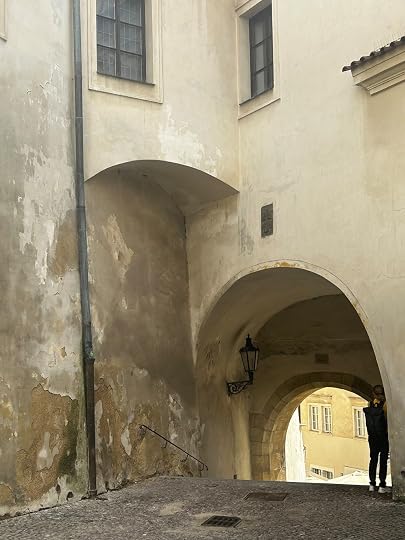
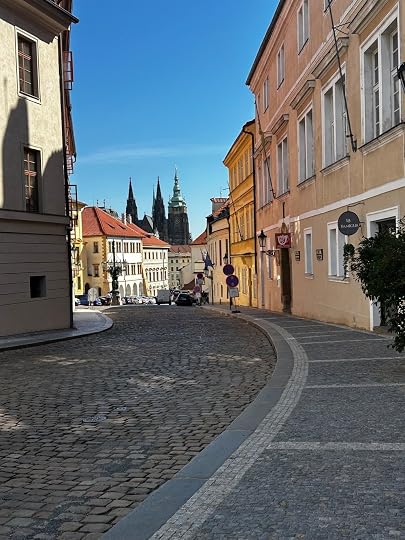
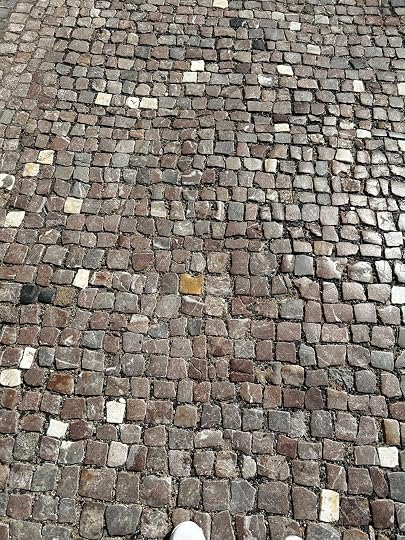
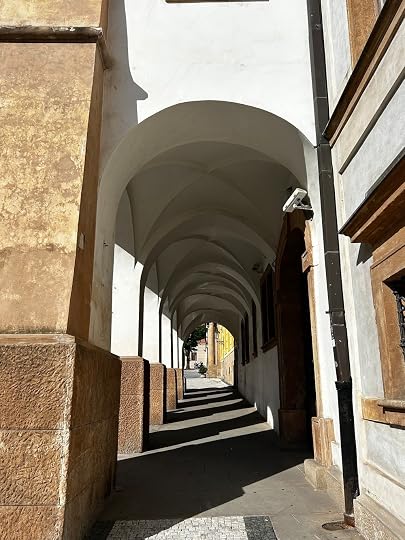
Impressions: Cobblestones & Trucks
On the hour, every hour, a bell chimes to command the strolling tourist monks to the high mass of the changing of the guard. It summons them to the service of a higher power - those “I was in Prague’ Insta shots. Probably later scrubbed of the crowds. Yeah, it was just you there and the fancy soldier boys.
The constant pitter-patter of manic delivery trucks on the cobblestones was the pleasing soundtrack to my visit. If you get here early enough, your aimless wandering can be enhanced by the friendly “Get out of the fucking way, tourist” yell from tattooed drivers counting down that angst-filled hour before their first comforting beer of the day.
Observation: What is it with solo female travellers? They all seem to cradle large, extendable cameras around their necks. One watches as their hands play lovingly with the retractable lens - extending it, shrinking it, twisting it as they try to coax a perfect shot.
Groan. Yes readers, another poor sex metaphor. You love it.
Explore the whole complex slowly and at your own pace. There are many fine, lesser palaces in various styles and covered archways as you move around. It’s not all about the castle proper. If you absorb the vibe rather than the precise detail, I think you’ll have a less stressful time.
The Descent: Some Marriage AdviceI walked back a different way (there are two main walking routes to and from the Lesser Town below). Interestingly, I was stopped on my way back down by a sweating and overweight American couple, pausing to catch their breath on their way up. The lady asked me: “Have you been to the Castle? Is it worth this climb?”
Now, the bastard, impish Tim would have said: “No, it’s a waste of time. Just stop here at this cafe - highly recommended I’ve heard - and have a couple too many beers each and discuss your secret S&M fantasy with your husband. To me, it looks like he secretly wants you to peg his arse vigorously. Y’all have a good day now!”
But I didn’t. I chickened out and said something safe like, “It’s not too much further, I think you’ll like it when you get there. There’s plenty of level ground. And a Starbucks.”
You see, I can be nice. IRL as the kids say. Master of the keyboard, I’m Vlad the Impaler crossed with Genghis Khan. With a touch of Amis, Hemingway, Wilde and Fitzgerald, of course. In person, well... I’m a Director at a fintech company.
And onward Tim marched downhill, across the river, off to his next stop. Unlike the castle delivery drivers, today I put in place a no-beer-before-1pm rule. I’m a man of resolute will and once I set my mind on something no pilsner pleasures can distract me. Okay, the first one was at 12:55pm. I break rules. Even my own.
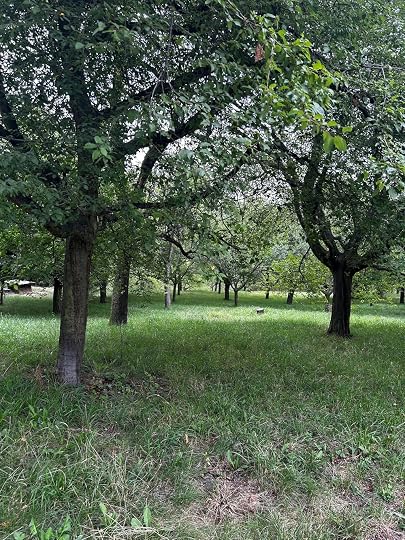
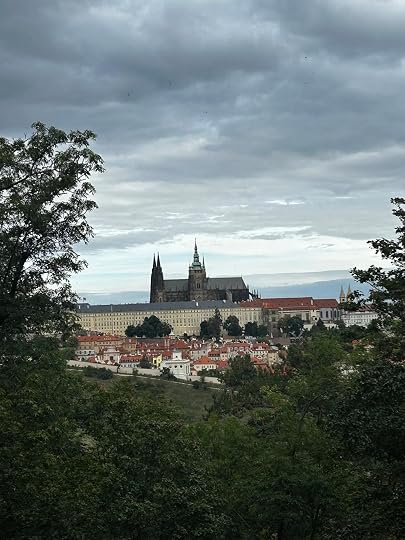
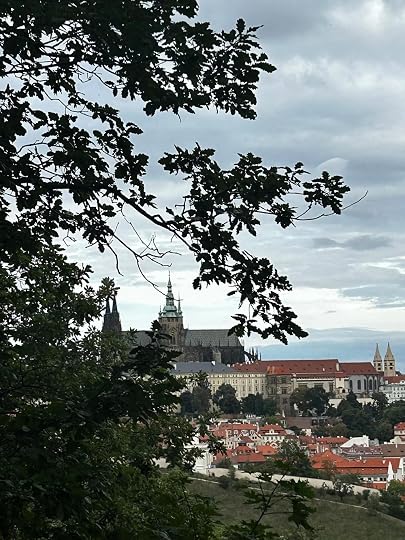
Pro Tip: The Petřín Park Back Door!
I said at the start I have a good tip for you. Instead of marching straight up from Lesser Town like everyone else, make a proper walk of it and go via some of Prague’s hidden treasures.
Warning: If you’re a fat fuck, don’t bother as it is again a long, windy trek and the complete walk is around 5km or so. If that’s you, stick to those touristy Trdelník snacks and guide-recommended cafes that always seem just that little bit underwhelming and overpriced.
This route starts via the Legion Bridge (Most Legií) and leads up through Petřín Park. You come to the Castle from the opposite direction by walking through miles of beautiful, quiet parkland. Hardly anyone is there and you get vastly superior views of the city and the castle complex. That is because the expansive park sits high on the ridge, providing dozens of uncrowded vantage points as you progress over toward Hradčany.
You even pass through St. Wenceslas' Vineyard (Svatováclavská vinice) and copious orchards. You could almost be out in the rolling countryside, so peaceful is this route. No Starbucks in sight.
It’s a great walk. Nobody does it. Feel smug. You’re welcome.
Quotidian NotesTrip was early Sept and the temperature was 22-27C.
Part of Prague series of articles. I thought I’d start with a nice touristy click-bait one first. Reel you in before I hit you with the bars, people, music, art and history diatribes. You’ve been warned!
To read about Krakow - and a similarly insightful Wawel Castle review - check out my Krakow Trilogy
I’m often reviewing citys. My Scabrous City Tours - Antwerp, Bruges, Mons, Breda etc - should be read, well, now.
August 20, 2026
Gladiator 2: Shocker!
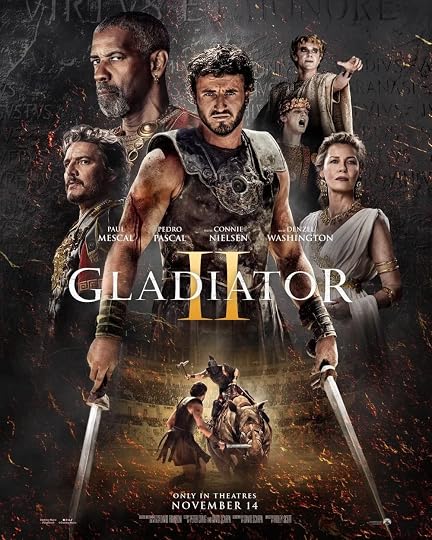
Gladiator 2 advert: It’s not good.
Traducing a MemoryI think we can all agree that Gladiator was a great movie. From the opening battle scene against the Germans, to Maximus’ many gladiatorial fights, Russell Crowe’s magnetism, the atmospheric music, the masterful cinematography. And many quotable lines: ‘On my command, unleash hell!’
Gladiator 2 is none of these things.
I looked forward to this. As the internet’s pre-eminent Roman blogger (see my bona fides below), you don’t get much in the way of Roman films. But, being a tight bastard, I waited until Netflix streamed it for free. I still felt ripped off.
Since yesterday, I’ve been trying to put into words how to describe this terrible chariot-crash of a movie. Disappointing. Poor. Formulaic. Wooden. A-historic. Annoying! No, no; there’s only one word that covers this like a legionary’s cloak in winter:
Shit.
Yes; shit will do.
Accuracy? That’s for Marvel Movies.It starts with some scene setting onscreen to cover the gap in time between the first film and the second. But reading the first sentence I was already raging at the TV debating - after just 30 seconds - whether to switch the damn thing off in disgust.
“Sixteen years after the death of Marcus Aurelius the Roman Empire is ruled by twin emperors Caracalla and Geta.” Whaaaaaaat! You mean 196 AD? Right in the middle of Septimius Severus’ reign? (“Who-he?”, The Scriptwriter)
Maybe a better story might have been to anchor the story around the ageing Septimius (famously from AFRICA dimwits - perhaps played by Denzel?) and then portray the real vicious battle-royal that took place between his sons?
The sons of Septimius Severus - there’s a proper movie hiding here within the toga of history. They weren’t twins and they actually hated each other. Hated each other so much that they divided their palace in two and only came together when Caracalla lured his brother into his mother’s apartment just to kill him in front of her. Real life is better than this Hollywood boo-hiss cartoon fantasy cosplay of Roman inequities.
And the best actor award goes to? The MonkeysActing. Was there any? Or just some randoms rounded up off the street and then given half an hour to learn the script with just one stage direction from Ridley Scott: ‘Overact like fuck! Bring on the rhino!’
The bloke who plays (spoiler alert) Maximus’ son had all the charisma of a shy librarian giving a talk on book binding to a half empty roomful of sleeping pensioners. His supposedly rousing speeches certainly aroused me; into shouting at the bloody TV - how the fuck did you get this gig? I could have done a few press ups for a week, cut back on my beer consumption over a weekend and I’d have made a better job portraying a gladiator than this clown.
Geta and Caracalla? What the fuck? More make up and wigs than the floor show at a trans Dolly Parton fest. Again; real life was better! These two were succeeded in a couple of years by their distant cousin from Syria who really was a bit trans - Elagabalus. If you want debauched emperors, he had it all; cross dressing, rampant homosexuality, strange Eastern cult worship. He was so bad and scandalous that his own family had him murdered and swapped out by another pale cousin pronto. And all in the same damn time period.
Lazy script writing bastards!
And Denzel? Probably thought he was in Washington DC rather than 196 AD. Much has been made of his chewing the scenery overacting. Well, at least he was acting. In this sub three hour bore-fest he was probably the only one who left any lasting impression. Like a chilli in a rice pudding; memorable but not for the right reasons. It was all a bit Training Day meets A Funny Thing Happened on the Way to the Forum.
And the Plot? Bring on the Rhino!The story? Well, I forget. It was a pale imitation and rewrite of the original. Sequel cereal. No wonder Russell Crowe disowns this galleyful of clowns. Even the battle scene: Attacking Numidia? That was conquered hundreds of years earlier! Masinissa anyone? Jugurtha who got his butt kicked by Marius and Sulla in the late second century BC? Juba I who Caesar rolled through whilst fighting his civil war in 46BC? Numidia was conquered over 200 years before this ahistorical turkey was set. I mean if you want a quotidian battle scene, for the movie why not show the Romans whacking the Parthians? Septimius was actually fighting them in this period. Or maybe start with him chasing the Picts around Scotland? Real campaigns. No fuck that. More monkeys.
Ahhhh!
Once There Was A Dream of Rome. Oh Please!And then there was the same ridiculous conceit as the first movie; all this ‘There was a dream of Rome once’, restore the republic nonsense. Yeah, a bloody dream in the minds of the scriptwriters who thought, a quick read of a couple pages of Mary Beard’s SPQR, add some CGI monkeys, co-mingle 46 BC with 196 AD and, fuck it!, who’s to know? Throw in that Derek Jacobi from I Claudius to add some British ‘I’m a classical ACTOR’ vibes and, Oscar - here we come!
And then there’s the sharks swimming in the Colosseum. That’s where this turkey really jumped the shark, we just needed Fonzie to water ski through the screen and then we’d have the perfect synergy of bullshit, laziness and taking the audience for fools. “Are you not entertained?”
Mmm. Maybe I’ve stumbled on what they were trying to achieve by producing this movie? It’s just one giant big piss-take?
As I may have mentioned (demonstrated even), I do tend to write about Rome quite frequently. So if you want to read my other reviews of popular Roman series / books then the suggestions below are a good way to do so…
Firstly, my review of the aforementioned Mary Beard’s SPQR. The book’s a bit mmmahh, but the review’s cracking!
Acting more wooden that the Teutoburg Forest: My review of Netflix’s Barbarians.
A series I pretty much enjoyed is Sky’s Domina. You see, I’m not just a bitch. Well…
More serious. Keeping with the third century, how Septimius Severus wrecked the Roman economy and Diocletian tried to put it back together again. Inflation Roman Style.
Or just choose your own Roman articles to read. There’s plenty in my Rome Section.
August 10, 2026
Top Ten Madonna Songs
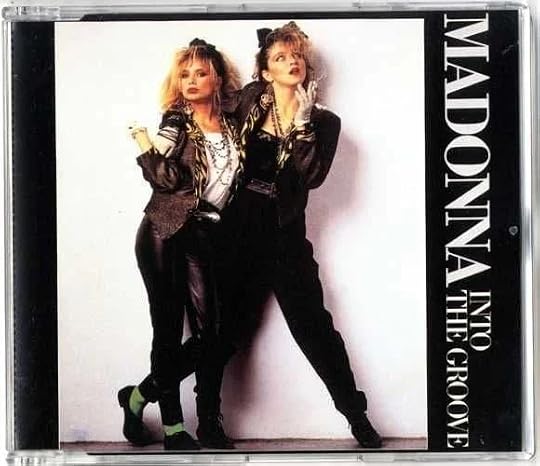
Into the Groove. Could it top the charts?
We met. Did I tell you that?Did I ever tell you I met Madonna once? It was in Cipriani’s in Park Lane. Prince Andrew (Booo!), Sarah Ferguson and their kids were also dining there that night. As was I. Anyway, she and I met, but briefly. You can read my account about meeting Madonna in this very blog. For her side of the story, you’d need to ask her. Recollections may possibly vary but - for myself - I’ve said all I’m going to say about the incident. Unless asked. Or pissed.
Love her or loathe her, she’s certainly had a long career. From her bouncy lightweight pop in the early 80’s to her move toward more convention-defying music of the early 90’s through to producer-led techno of the mid 90’s onwards thru to soundtracks, she’s produced a decent catalogue of songs.
Now, dear reader, I know I’m famous for my reviews of classic rock (really Tim?) but a decent pop song will always get me going. Songs date you, they place you in a certain time and certain place. I span all Madonna’s career. As she was breaking through I was just starting to go to clubs (discos in those days, kids). We’ve kind of had a parallel existence; her dominating the pop world and me, well, yeah.
The Top TenSo, I thought I’d do my top ten Madonna tracks in homage to her, our brief time together, some memories of a bygone era and because her stuff always creeps onto my playlists when I’m off for a long drive. Don’t expect a deep dive here; they’re not really that kind of songs. We’re talking a feeling, a hook, a look, a place and a time. We only met once, but, through her music, we coalesced multiple times.
Scanning through the candidates for the top ten you’ll notice there’s eleven on the list. Why? Well, who said I can’t subvert the listette convention. No rules, man. But I genuinely found it hard to slim the list down to ten, so I chickened out on which songs to leave out. So, eleven it is. The other unsuccessful songs from my long list appear below. You think this stuff is easy?
In reverse order:
10 - Music“Hey Mr DJ, put a record on!” A firm number 10 on the list. A solid dance floor hit. Electronically treated with an earworm high pitched guitar punctuating each phrase. It could be dismissed as Madonna enslaved to production but she’s too good to be pigeon holed for that. It’s got a chorus, it’s got a groove, it’s talks about dancing. Must be Madonna. Video’s not bad either. Aiyee!
9 - Vogue“Strike the pose” Madonna self styling herself as a serious artist, an artist of the dance floor. Am I alone in picking up a little bit of ‘Going to a Go-Go’? No? Just me then. Love the stepped housey piano on the chorus - whatever happened to that keyboard sound? And then Madonna starts riffing about famous movie stars, they’re all a bit obvious - Dean, Monroe, Harlow, Fred and Ginger - but I’m sure they appreciated the call out. It fits with the song though “vogue, vogue, vogue.”
8 - SorryThe latest track on the list. To be honest, I missed this when it came out being otherwise distracted by, well, life so I came across it relatively late. Je suis désolé. I was blown away that Madge had pulled out a classic at this late stage in her career. It’s driving, well produced and stands up against her earlier stuff. If she mimed to this at a concert I’d happily do that Tim sway thing along with the earlier classics.
7 - Deeper and DeeperI bought this single. A cassette single, if I remember. (Ask your parents if you don’t know what this is.) A decent dance groove, one of those tracks where Madge babbles about music setting you free. I’m down with that. Frankly, I’m amazed it’s not higher on the list as I probably play this more often than some higher on the list. My ways are inscrutable. Depends when I’m writing this and what I’m drinking. Deep. And deeper, Tim.
6 - Ray of LightA comeback of sorts. We were all into Britpop, Oasis and lad bands in the mid 90’s. And then Madonna puts out her 1998 album of the same name which was a massive return to form. The lead single, Frozen, was a turgid misstep but Ray of Light is a shining pop tune for the ages. “And I feel!” she sings as she ramps up the temperature propelling this track into a floor filling classic. She means it, man. I still hit the clubs back in those days and I know I spilt lager on the dance floor to this one.
5- Drowned World / Substitute for LoveSame album. A deep cut. A couple of tunes melded together, stitched together by a beautiful synth guitar part in the middle. Like grunge rock - this is the quiet bit, this is the loud bit. With Madonna, it starts slow and then gets all noisy as the track progresses. This isn’t lightweight pop anymore. This is the older Madonna holding the mic and telling her truth (with a shit load of production helping her). “I now I find, I’ve changed my mind” she sings. I certainly did.
4 - HolidayWho wouldn’t like this? Bouncy early 80’s lightweight pop. We all like holidays. We all like Madonna’s track singing about holidays. Reminds me of Rochdale which is not a non sequitur. The discos pounded to this when it came out and I started going out! Peak early Madonna. I think - and I may be wrong - that this is the first Madonna song I heard. Certainly the first one I heard in a club. Thing is, when you listen on earphones or on a phone (or earphones attached to a phone) it can sound a bit tame. But at a club, bass turned up, floors bouncing to the music and the dancing, tracks like ‘Holiday’ rocked. Join in - ‘Holiday!’
3 - Skin“Do I know you from somewhere?” That line always gets me. It’s like she’s singing to me, remembering our one in-person meeting. Another from the Ray of Light album. Techno treated, producer playing the boards but underneath it, a great - slightly melancholic dance track. As you may have realised, Ray of Light, is the only Madonna album I’ve actually bought. The only album I’ll actually play all the way through whilst cooking. There is no higher honour for an artist. Fuck Grammys. If it passes the Tim in the kitchen test, then you’ve made it. When we met, we didn’t discuss this. I might have said “I’m not like this all the time!”
2 - Like A VirginThis one came out of the blocks and propelled young Madonna away from getting her kit off for ‘arty’ nude photo shoots and into pop royalty. This was the one. Slightly naughty, an effortless pop classic. Obviously Quentin Tarantino’s deconstruction of the lyrics in Reservoir Dogs has added a slightly more layered interpretation but it was always meant to be provocative. Young - and older Madonna - always wanted to create headlines by controversy. Here she succeeds but in doing so rides a great song. Synth bass and lightweight vocals date this slightly but the verve, the melody and the lyrics keep this a seminal Madonna track.
1 - Into The GrooveMy go to Madonna track. You have to know the words to the spoken word intro (You can dance. For inspiration. Come on! I’m waiting.). Peak 80’s synth groove. The best Madonna dance track. She likes to dance. She feels free there. Feels a bit jiggy when she dances. Maybe I should have met her in a club instead of a restaurant? Mmm, you’re overplaying your one connection Tim - you’re not bullshitting on a date now. I know. I know. This track reminds me of flecked suits, yellow shirts, sharp haircuts and hair gel. Girls with big hair, discos that burnt down for the insurance money. And Madonna playing loud, bass bouncing off the wooden dance floor, light shows periodically spotlighting your crap dancing as you ‘get into the groove’. Top tune. Top vibe. Number 1. Watch it here.
Bonus Track: Dear JessieI debated booting this one off the list and so I did. But. But it’s Beatle-esque production, and my love of it when it came out, demands I keep it at my slightly illegal number 11. Madonna would appreciate my transgression. However, it earned its place with a younger Tim and so - as the solipsism is strong with this one - I kept faith with my younger self. Shout out - love you man. So Dear Jessie is here. Still very Beatles-esque. Its charm wears out quickly though.
Do You Agree?So that’s my list. I had to whittle it down which wasn’t easy. Borderline. Material Girl. True Blue. Hung Up. They all fell by the wayside as I ruthlessly edited it down to 10 (or 11, yeah, yeah). It was hard. Not as hard as, say, The Beatles, but I’ve spent two years on this blog post so I’ve put the hours in. She’s a major artist and deserved it.
Do you agree? I’m not sure I do myself. Comment below. I usually respond to comments unless they’re weird and have a whiff of your Mum’s basement about them. And so I’ll end by insulting my readers.
Read onObviously you HAVE to read my meeting with Madonna. I may have mentioned it a couple of times already in this article.
Maybe my top ten 80’s tracks - one a year I believe.
Or just go to my music section of the features page and select and curate your own reader experience.
July 20, 2026
Kevin Keegan RIP
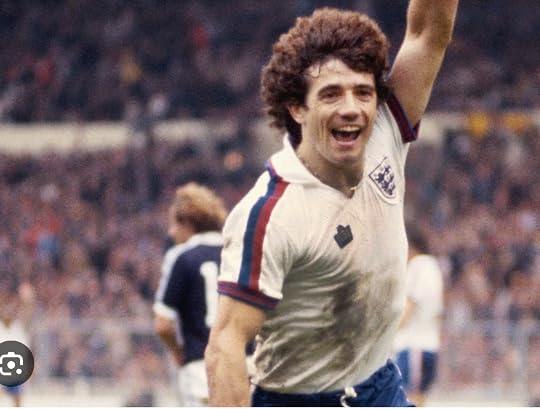
I had this strip when I was ten. Because of Keegan.
Heroes Go. One by One.This was is tough.
I don’t usually write much about football or sport but, Kevin Keegan. Fuck! He’s gone. My childhood hero.
I grew up in the 70’s and started watching football in 1976 and Liverpool was my team. Keegan was the star. They won the League. They won the European Cup (I watched it). And then he went off to Germany. Heartbreak.
I watched him on Superstars fall off the bike. I watched him at the 1982 World Cup coming on near the end and nearly winning it for England. I saw him once at Maine Rd when he played for Southampton.
No matter who you supported, there was always love for King Kev. Football fans across England and the world mourn his death tonight.
And me?
A great footballer.
A proud Northerner.
A great Englishman.
A decent guy.
I mourn the death of one of my childhood heroes. He was on a poster on my bedroom wall when I was young.
Kevin Keegan. King Kev. Mighty Mouse. RIP. My boyhood hero.