Lone Morch's Blog
February 26, 2021
Before the Belle Epoque…
A couple of years ago, before we knew a pandemic was in the making, I jokingly said to my climate activist friend, “If we’re headed for doom and gloom, we might as well have the Belle Epoque now.”
She got mad at me. “A Belle Epoque is the last thing we need.” She could only see the hedonistic orgie and blind pursuit of more. She couldn’t see what I saw: a chance to redefine “beauty” before we self-destruct. A chance to redefine what we give value to and make daring shifts in how we live, together, on this planet.
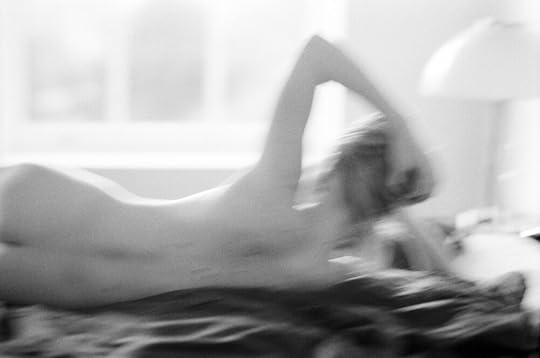
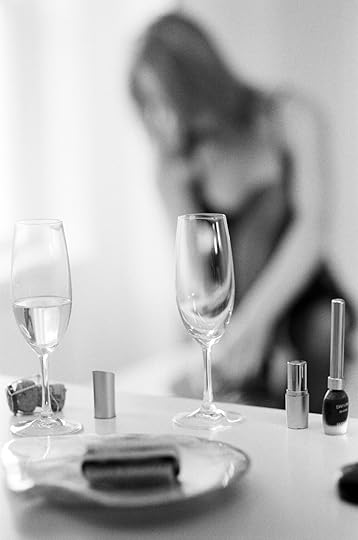
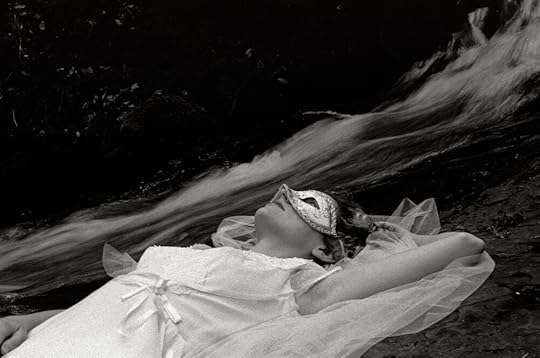
A year into the pandemic, after a lengthy bout with the virus, I’m finding myself battling the corona blues, and plotting my post-pandemic Belle Epoque. Are you not? Dreaming of exchanging your comfy duds and the spell of captivity with free flowing champagne, spontaneous dances, bursts of creativity and flirty kisses. Meeting the fatigue, struggles and setbacks with creative and sensual gluttony. I don’t know about you, but my heart speaks to me of uprising, and once the doors open, my psyche expects catharsis. I deserve it. We all deserve it. The freedom to live.
But what catharsis? What freedom? What life?
The Belle Époque ("Beautiful Epoch”), also known as the ‘golden era’, refers to a period in French history between 1880 and WWI in 1914 that was characterised by optimism, regional peace, prosperity, colonial expansion and technological, scientific, and cultural innovations with a flourishing artistic climate, in Paris particularly.
All last century wars were also followed by optimism and a spur of growth—think of the roaring 20s or the pastel 50s—though not everyone got to the party in time. I see a similar phenomena erupt in the wake of the pandemic. A hedonistic orgie for those, who feel entitled to once again taking and having it all, readily justified by the economic necessity of getting the wheels spinning again. But at what cost? Spinning us where?
Admittedly, my imaginary Belle Epoque is reminiscent of times before I understood the full gravity of the world’s trouble and began to hold my personal life and dreams up against climate and capitalistic damage and white privilege shame.
I’m reminded of my confirmation at 14. I struggled to write my personal creed, because I felt something divine about the universe, a presence or wisdom beyond human form that I couldn’t find in the voice of God and the bible stories. So I didn’t believe in Him, but I wanted to participate and have the party and the gifts. How I managed to bridge the gap between my conviction (and inner knowing) and my desire for the riches and belonging I cannot tell, but surely it was my first exercise in holding the paradoxical nature of my humanity.
Today, when I dream of leaving the world’s trouble behind to have my Belle Epoque, I feel that same blush of shame. How will I reconcile lessons from the pandemic and climate challenges and my desire for carefree pleasure and new adventures?
Despite my eloquent talk about the need for change, the answers I expect of myself elude me. If my life has been about exploring and living freedom inside and out, that freedom is now, if not at the expense of yours, at least deeply linked to yours. What used to captivate me, provide value and meaning no longer seems to move me. While I long for levity and more carefree days, I find myself grieving the loss of innocence alongside the loss of biodiversity, other species, clean air, water, soil, and food, and mourning the idiots with money enough to pollute space with tech debris, mega-microwaves and fake stars. Inside this grief, I search for my own daring shift, oddly bereft of direction.
Problem is, it’s never been a problem being me, until now.
At midlife, I’ve woken up to the startling awareness that…1) I’m a white, privileged woman, meant to consume to keep it all going, while destroying it all the same, 2) participating in this violent, destructive world makes me feel half-insane, 3) and last, I think I suffer a case of awakening fatigue, losing faith in our ability to change, anything, let alone ourselves.
Maybe the beauty of the pandemic is exactly that we’ve been locked up with ourselves and each other, forced to not only face our fears, hopes and longings, but also confront all the messy human stuff we cannot be and deal with. If you haven’t numbed out or joined an army of “liberators,” you’ve probably spent a good amount of time reflecting upon values and lifestyle choices, how they impact your overall health, and the health of the planet. Questions I’ve asked myself and those around me: What is a good life, what is true wealth, what do we value, what is freedom, what is truth, what do we trust, what do we need, what is enough, and how do we live wisely, with what we know now.
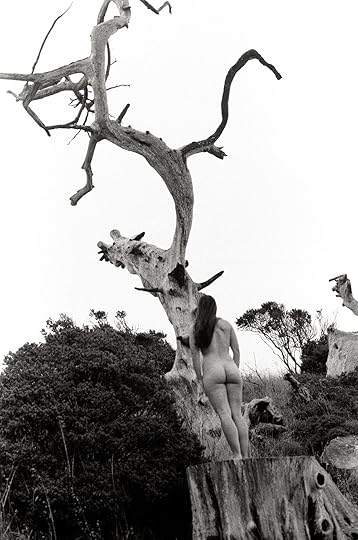
For the past 3 months, I’ve been locked up with a new love. Two dreamers who, despite themselves, are doing the relational dance, with ample time and space to explore intimacy and the dynamics of self and other, me and we, and the give and take of attention, emotion and freedom. In short, nowhere to hide, all our dirty underwear hung out to dry. Meanwhile, with impermanence breathing down our midlife necks, the “lock up” has us in daily discussions of what matters and what to do with the rest of our lives.
Conversations oscillate from tiny house living, vegetable garden, sailing the south seas, desiring community and doing things that matter, to global travel, drinking wine, dancing, moving to a sunny island and bathing in the dead sea. Oh what wouldn’t I do to see the world once more, before it’s gone, before I’m gone, but there’s that shame again—consuming, taking, polluting. He wants to live and experience, while I feel called to help usher in a more wholesome world and have half forgotten how to live. He holds no illusions of a beautiful turn-out for our world, while I struggle to hang onto a silver lining—that what we choose to do now, matters.
To have a choice seems a privilege of the few, and yet, we are the many who make up the world. What does it mean when we say, humanity has been placed in proper proportion to the web of life? That we have understood interconnectedness, that we are—as individuals and as collective—neither above, beyond or at the center of LIFE, but equal participants in the ecosphere and life processes with the very special responsibility to care and clean up our act. Wet techno dreams about Mars isn’t the answer; the proliferation of future generations and life on the planet is.
That is to say, we can cry, bitch and worry about and blame this, that, and the other for the climate, the pandemic, and the world outside of ourselves, but we are intimately stuck with the situation, within ourselves, amongst ourselves.
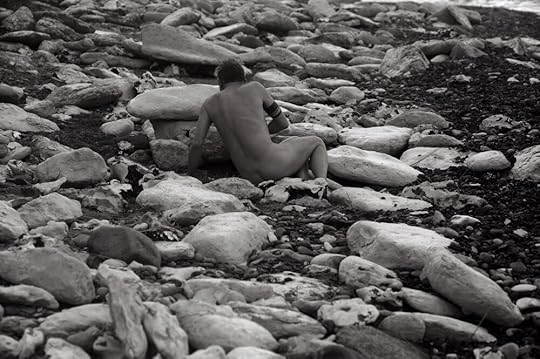
In a recent conversation with a mystic writer friend from Schwarzwald, we shared our latest reflections on the pandemic, the rise of conspirituality and the fraught global discourse in which everyone’s out to win the narrative war, but no one listens to one another.
“I surprised myself and my family at dinner last night,” she said. “I announced I was fed up with the grandiose world changing project. I don’t believe I can change people; all I can do is perhaps add a little beauty.”
“I’m exhausted trying,” I added. “The gap between people’s perception of reality on display right now is profoundly humbling. Makes me think I’ve fooled myself into believing we’re evolving, when in reality, it doesn’t take much trouble, before fear and fight takes over and we regress. My ambition of having impact has been cut to size. My ego too.”
“I feel such a relief though to let go of the global paradigm shift and focus on life right here,” she muses on, “with kids, dogs, horses and sitting together at the fire at night. The pandemic has in many ways been such a gift.”
We laugh and let relief soothe our worn spirits. My sense is, the dissolution of the old power institutions and structures on one hand, and the delusion and division amongst humanity on the other, have muted and made many of those on the awakening path withdraw, probably to adjust their own sense of reality and purpose. Not everyone is born to reflect so deeply upon the world theatre of events or be passionate about elevating planetary consciousness, but rather busy living, where they are, with what they got.
Still, we’re all in the liminal, where fears, sorrows, hopes and longings can either fade or flower—depending upon what we water.
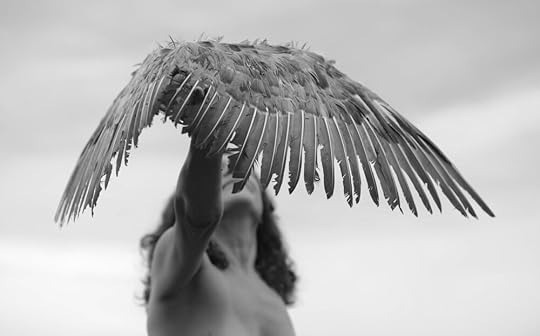
Cut to size? Not my spirit, no. Freedom is nothing, if you’re not free within. That said, my expectations of my own and humanity’s ability to change have been put in fitting perspective. Feeling the doom and gloom is important, but as I’ve learned, to stay there and dim your light enough to see in the dark, isn’t constructive in the long run. Neither is the worship of the light, the shallow positive, because it may blind you to the full range of reality. And so, we oscillate in search of equanimity; a centered place from which we can take the next step.
The Belle Epoque vision may be short-sighted; because, what I, what We, need is a renaissance. Renaissance means “rebirth” in French. We need a rebirth. And with it, a new skin, new language, new values, new rituals, new ways of living and doing in dynamic harmony with all life on this planet. It will happen on its own time. I’ve never heard of a renaissance that just rolled in overnight. The path may be scarred by death, drought and destruction. Even so, the urgency of change is palpable. Will we meet it, shy away or regress?
In a recent film “La Belle Epoque,” a man gets to relive the best time of his youth, re-created by an event company specializing in fulfilling people’s fantasies. Nostalgia is easy. Glossy images are lifeless and 2-dimensional. We all suffer from selective memory and the tendency to wallow in the good ol’ times, forgetting all the parts that were threatening, terrible, sad and sulky. There is no going back. But we can apply our imaginations to script the path ahead and train our eyes towards beauty, our hearts towards courage and compassion.
Simple pleasures revisited. Yes, my Belle Epoque will be self indulgent, as I seek to re-cultivate joy, wonder and curiosity amidst these complex and challenging times. In releasing the long-held breath, and transmuting the grief and the grind of chaos into renewed creativity and communion, I want to ‘just’ live—in ways resonant with the soul, soil and sensual belonging to this world, this life, this time.
Remember, time isn’t running, it’s coming. It’s a gift.


April 29, 2020
Staying with the trouble...
while viruses invade your body and mind.
Seven weeks into my battle with Covid-19, I’m still looking at the world from behind the windows of my home and scanning the feeds daily for the latest news on the virus and worldly collapse.
How are you faring and feeling? Scared, lonely, restless, anxious? Still overdosing on baking, alcohol, netflix, sex, facebook? Overwhelmed trying to homeschool, work, shop, cook and do the family thing inside the four walls of your home? Angry at the powers-that-be and worried about your future? Grieving the loss of your old life? When things made sort of sense? Fighting with your lover or longing for touch? Perhaps you are one of the few who continues to rejoice in the time you've been given back?
Inside this collective collapse our individual experiences are unique, from Denmark to Japan to India and USA. Even so I see this planetary pause as a chance for nature to restore a bit and for us people to stop! And feel into our existence and the impact our consumption, lifestyles and growth trance has on our health and the health of our planet. Because, if the climate crisis didn’t wake us up, the Corona has: we are profoundly connected, down to cellular level. What happens in Wuhan doesn’t stay in Wuhan, sort of.
The apocalypse is suddenly and quite literally unfolding closer to home. None of us (in the western world) have experienced a pandemic before, let alone being locked up at home, indefinitely. Forced to pull our energies back ‘home,’ we’re all getting up close with all our distracted and disconnected ways, worries and wants. If you’re ravaged by distress and existential angst, well, yes. The good, the bad, the ugly—in ourselves, each other, our life styles, political economic power structures and outdated bureaucratic healthcare systems—it's all on full display right now.
I’d like to say, thank god, all blinders off. At least, we can see what we are looking at. But no, not quite. As everyone scrambles to control the uncertainty, fill the void of unknowing with surety and make sense of the new situation, more blinders, dividers and walls seem to go up.
My social feed is filled with conspiracy theories and terror, virus curves and cures, political dramas and surveillance anxiety, all-is-love, yoga and mindfulness promotions, how to finally excel at online business, not to forget the beliefs that corona is God’s punishment, Bill Gates' doing, the promise of a new world order or a new planetary recalibration. On bad days, it feels like we’re smack in the middle of the biblical battle between good and evil. On worser days still, I’m certain the capitalist war machine is hell bent on pulling us apart, only to drop us by the wayside, collateral damage on the path to some techno-empire wet dream.
© Lone Mørch 2020
In my humble view, Covid-19 a virus, which even the wisest virologists still can’t wrap their minds and research around. After battling it in my body for seven weeks already, I can tell you it’s like a wicked dragon, that keeps snapping its tail. It requires strength, a good immune system and patience for the lengthy battle and I dream of the day I again can breathe fully and freely.
So do be careful, cover up, wash hands, eat good, protect yourself and others as best as you can—from the Coronavirus as well as the virus of paranoia and fear that’s invading your mind and psyche.
Everyone is using Covid-19 to push their particular worldview and win the narrative war. Have you noticed how fear and powerlessness begin to sound rather righteous and religious, if no outright fundamentalistic?
Meanwhile, I’m more and more uncertain about The Truth and I find myself seeking a deeper truth, a more grounded truth, a truth growing from the soul and soil of life.
What if we simply stop looking for answers to questions we don’t even have yet, and instead sit with the discomfort of uncertainty?
Apocalypse isn’t as bad as it sounds. In Greek etymology, it (poignantly) means to uncover, to reveal. What’s being unveiled in your life? What are you learning?
One of the surprising things I'm learning is that I feel weirdly prepared for this collapse. The surrender. Of everything. Into the primordial soup of chaos and change. I’ve lived through many a threshold and transition in my life. Several times I’ve let go of all of my possessions to travel lightly to next destination. Life in other cultures has scrubbed down my ideas of identity, beliefs and belonging to the bone. At different times in my life, I’ve even practiced ‘social distancing’ to heal, reset and realign myself.
So I find myself oddly calm in this storm, gently moving with the winds of change, and listening. Priorities become simpler or clearer, as I become more and more allergic to Bull Shit. That said, I too have my personal survival worries, I long for other humans, and if I let myself, I feel heartbroken and angry. No fancy dancing of any kind is going to fix the trouble we’ve created.
Staying sane has become a daily preoccupation.Oh what wouldn’t I give for some frivolousness in my heart, but these days it eludes me. I still laugh, dark laughter, sad laughter, laughs of relief. No, it's not that, it's just ... Maybe a deeper heart is being born, spacious enough for the light and the dark, the decay and the dreams, the very humanness of our tender self-centered existence?
© Lone Mørch 2020
Lately, have you noticed how the sky is bluer than before, you can hear the birds chirping, wild life is enjoying the freedom to roam, fish are returning to rivers—because, we are no longer taking up all the space? The world hasn’t been this silent and the sky this clear, since I was a kid. This morning when I woke to the sound of more cars on the road outside, I wanted to cry.
My biggest fear isn’t death, it’s that we learn nothing,change nothing, from this experience.
I get it, we’re all raring to go, to get back to normal and feel in motion again. I do. But going back to normal is impossible, if we wish to stay sane and survive as a species. It would be utterly shameful if we didn’t take this pause to deeply consider life and what it would take for us to create a thriving world that cares for the dynamic ecosystems we are embedded in and dependent upon. For all my desire for fancy dancing, there’s no back to normal for me. There hasn’t been for quite a while.
Because once you see, you cannot unsee. What have you seen?
I think what we are looking at is — ourselves.
© Lone Mørch 2017
Maybe nothing changes, but everything will be different. Human are not so wise. Change takes time we don’t have. Bad things will happen, but good things too.
On a personal level this shift may feel daunting, but collectively, this is where we’re at—having to face this, ourselves, together. The Covid-19 has called us home to the earth, and given us a chance to rewrite the narrative of humankind.
From times old, the stories we tell ourselves and each other about who we are, about the world and our place in it, shape not only our own lives, but the world around us.
To me this is mythic terrain. Call it a dark night of the world soul, a rite of passage for humanity or a collective hero's journey, a miniscule virus has pushed us towards an extraordinary awakening. Extraordinary because, we find ourselves at the end of the anthropocentric worldview (human is superior), and the start of the painful birth of something new. Extraordinary because this is not just you and me in the dark uncharted waters; the whole world is. Together we have to learn to swim, breathe underwater, build boats, make sails, and navigate unknown seas. Much is at stake.
How shall we respond? Who shall we become?How shall we live? What will we value and care about?
Everyone wants (to be) a hero, but the time of the lone wolf, let alone the savior, is over. Rather than trying to figure out our individual trajectories alone, Donna Haraway suggests we need to stay with the trouble. That is to say: we stay with other humans and the messes we've created in order to grieve, heal and discover
new pathways..We're asked to let the old world order dissolve and shift from a self-centered view to the wisdom of solidarity and wholeness: from me to we, self to community, separation to connection, and radical belonging to the earth.
Now, before we forge ahead with new cool constructs and concepts and smart leadership programs to create an illusion of order, control and god forbid, progress, I believe we need to dive deeper into the chaos, into the liminal, and connect with the language of the soul: our broken hearts, grief, fear, despair, loneliness, vulnerability, anger, shame and sense of failure, and soon enough, also our longings, love, desires, dreams and innate wisdom.
Our feelings are the true gateway to hope,creativity and sacred activism.
With Francis Weller words: "This is a season of remembering the ancient rhythms of soul. It is a time to become immense. To become immense means to recall how embedded we are in an animate world--a world that dreams and enchants, a world that excites our imaginations and conjures our affections through its stunning beauty.”
Becoming immense this way feels very different from the usual “rising above, fighting our way back, becoming bigger, bolder, better” doesn’t it? There’s both humility and wonder. Yes, it is time for us to become ‘immense,’ together. Because…
Rather than resist the chaos, wait for change to happen to us, or 'experts’ to tell us what to think, believe and do, I wish for us to meet this threshold with curiosity, courage and creativity. Together!
Real change won’t come from the powers-that-be or old world order of leaders, bankers, warlords and big pharma wizards, or even the public administrators keen on keeping office. No, real change will come from the ripples we - the many of us - begin to spread in the water.
For a couple of years, I’ve worked on what might be a book and felt semi-insane as my usual constructs and concepts about self and society have been dissolving. How to make sense of what I’ve seen, felt, sensed and studied for the past decade, when the language available feels inadequate and limiting and thus, incapable of capturing the essence of the the not-yet-seen?
This is where were we are, betwixt and between the old and the new, setting out to find a new language with which we can create life-giving changes.
With our big quarantine hairs and beating hearts, we are surely wondering if there’s still a chance for us to sneak away for another summer of love, or if we—sigh—really must do this, the hardest thing…
Change. For the (future) life on this living planet.
Invitation to Stay With the Trouble
Want to dive into the chaos with me and get naked in a whole new (respectfully distant) way?
My new online program “Staying with the Trouble” is an intimate and creative group experience to support this deep dive into the chaos. It consists of weekly emails with creative input and prompts, facebook sharing and zoom gatherings. Max 12 women to keep it intimate and real.
We will mine the creative intelligence of our feelings, unravel the narratives we’re shaped by, deepen into the intelligence of life, learn a bit of system thinking and navigate uncertain times a little bit better.
None of us know the way or the answers. This won’t be a polished, puffed-up packaged program with promises of upleveling, shine and 7-figure success. Rather, it is my heartfelt invitation to join the exploration of the uncharted seas. Honestly. Creatively. Organically.
My hope is to help us strengthen our relationship to ourselves, each other and the Earth and surrender to the wild mystery of being alive at this amazing moment. My secret mission is to turn you into wise earth students / stewards of all life, but no expectation. :)
Details and dates coming when I’m fully recovered from Covid-19.
Let me know if you’re interested: lone@lonemorch.com.
December 16, 2019
Shooting Men
First published in Barren Magazine Issue No 12 - December 2019
© Lone Mørch
Notes on seeing men, the eros of presence and
the perils of being the perfect stranger.
Dear Lone, I looked at your photographs and read your Invitation to See and Be Seen on your website. It’s surely a topic that demands a lot of sensitivity, and I detected just this (and a lot of sheer natural beauty) in your presentation. I often ask myself similar questions, and sometimes it’s hard finding answers. I’m 51, my dear wife and everybody else say I look much younger than that, but sometimes I feel much older. I caught multiple sclerosis 20 years ago and got cancer in 2003, which returned twice, and I’ll never know if this nightmare occurs again. But I still stand tall (as good as possible), go to work each day and try to enjoy life like everybody else. I’d like to see you seeing me somewhere in Denmark, curious about the outcome, perhaps a Revelation, surely a deep experience, maybe getting to a better understanding or simply just a new view of myself. Would be very delighted if this has raised your curiosity. Wish you a joyful time, wherever you are right now. Best regards, Karsten
This email makes me pause. Random raunchy calls aside, I rarely receive inquiries from men, who convey genuine desire to be portrayed by me. When I do, it’s never just about vanity. Underneath there’s a quest for more – a new experience of self, perhaps metamorphosis of shame, trauma, limitation and low self-esteem. Not unlike the 1000 women I have photographed over the past 15 years, who’ve come with similar motives to self-discover through my lens view.
I’m not the only one curious about men’s inner landscape. When I give public talks I’m asked, what about photographing men? How is it different? With only a few men under my photographic belt it’s hard to tell, but when I proposed the Seeing Men project on social media, men in my feed joked. The thought of being naked in front of a camera, let alone a female photographer, filled them with trepidation. Many expressed self-loathing, certain their bodies deserved no such limelight.
Because men’s bodies haven’t been subjected to the same degree of public sexualization and scrutiny as women’s bodies, they may not feel the same need to counter the public gaze with a personal one. But it’s changing. Today more men feel pressured to have perfect physical appearances, shying away neither from botox and waxing nor being strangers to self-damage and eating disorders.
When I pitched a Seeing Men essay to EuroMan Magazine, they deemed my idea too artistic. Indeed, the distinction between art, fashion and documentary photography is significant, and the resulting images depend upon the gaze given: are you beholding, seducing or using someone to fulfill your vision or provide evidence for your case at hand? EuroMan were clearly too timid to let a woman look beneath the skin of men, and perhaps they should be.
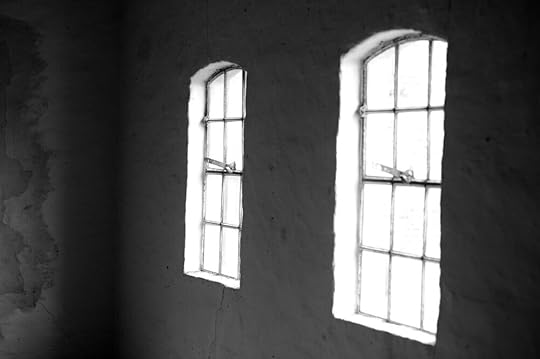
© Lone Mørch
The premise for my work has been to find the trueness in everyone. To that end, nakedness has become an interesting metaphor for honesty, but still, Karsten’s request fills me with questions. How can I see him? Are my intentions pure? Am I ready to step into this naked terrain with a stranger?
The invitation to undress requires vulnerability and courage from both seer and seen, to walk the delicate line between eros and porn, public and private, object and subject, power and submission. Who looks at whom is never clear-cut, and with the naked skin in the middle, the intention becomes more important: Why are we looking?
My work with women has been healing and empowering and helped us exchange our female competition with solidarity, but perhaps I’m naive to think that my gaze can offer healing to men and foster solidarity between the sexes.
In my early conversations with Karsten, we address these matters.
“I want to accept my body and feel strength and pride in it,” he says. “I want to see what you see. The people in your photos look like you know them, this make me feel in good hands.” His intentions assure me of his sincerity.
Safety is important. For him to trust me to not expose him or otherwise cast him in an unflattering light. For me to feel I can be alone with him and do my work without sensual advances. I ask how his wife feels about him going off to get naked with a female photographer. “We’ve had to deal with my body for years now,” he shares. “We’re rather open-minded. She’s trusting me to do this.“
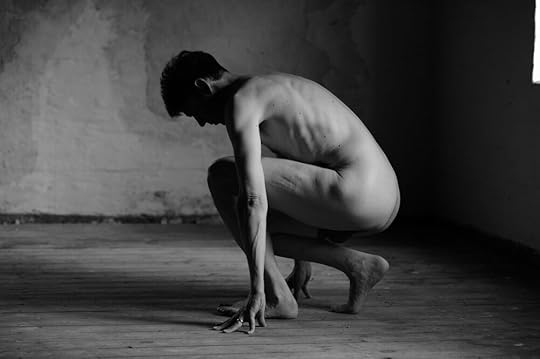
© Lone Mørch
As we work through the logistics, I learn about his physical constraints. “With only one kidney, catching a cold could be deadly,” he says. “I’m not as surefooted as I used to be, even an even surface can be challenging, and without my glasses, I’m rather blind.”
I translate his words into visual metaphors to work with: limitation and freedom, strength and vulnerability, object and abject. I try to imagine how to visually approach a male body, let alone a crippled one.
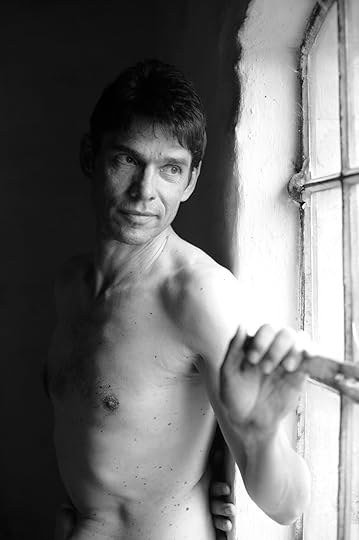
We convene in Soenderborg in South Denmark. I’ve found two locations: a raw warehouse space above a cafe and a private loft bedroom. Karsten shows up with a walking stick and a bag. He’s tall, slender, with dark hair and black glasses. He gets up the stairs with surprising ease. We chat loosely over coffee, before proceeding to our makeshift studio. We’re both awkward.
He unpacks his props. A tie, a scarf, shirt, jeans and cuffs.
“Cuffs?” I chuckle. “Getting a little kinky?”
“No, no,” he grins and pulls the fur off the cuffs. “It’s to show I’m imprisoned in this body, but feel free.”
I prep my camera, check the light. “Where to begin?”
He looks around and tinkers with his stuff. I hesitate too. Dropping into the creative slipstream with another is always a deep-dive and this time, it’s with a naked man.
“There’s things I can’t control.” He says, gaze down. “My wife did ask, what I’d do if I got an erection.”
“There’s that.” I’m happy he brings it up. “Once I photographed a man outdoors, he worried the opposite would happen.”
Karsten smirks.
“Here’s the deal: If it happens, I’ll do my best to not take it personally. This is after all not about your penis.” I give him a hug. “Why don’t you get naked and sit on the edge of bed?”
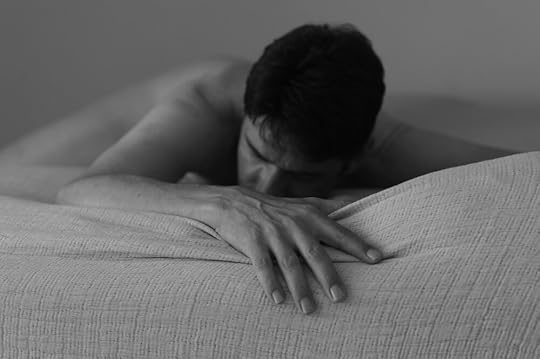
© Lone Mørch
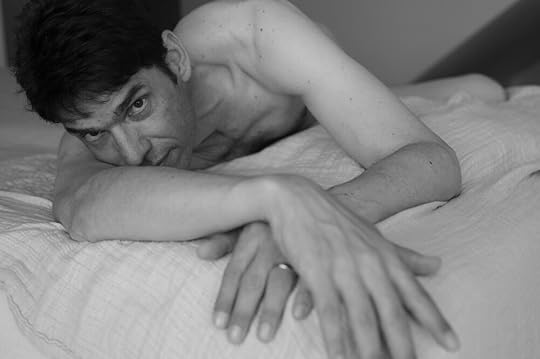
© Lone Mørch
© Lone Mørch
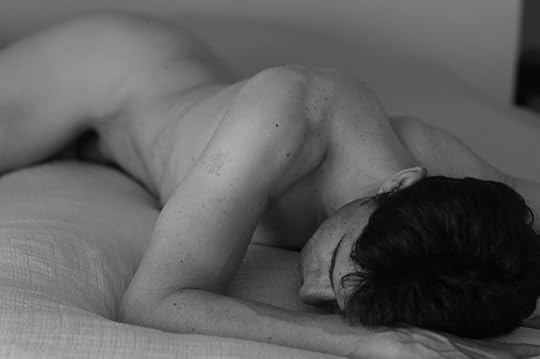
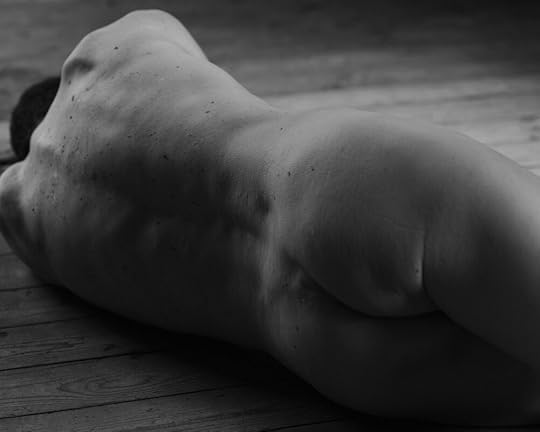
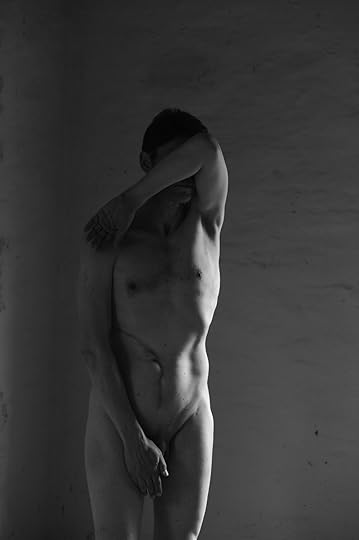
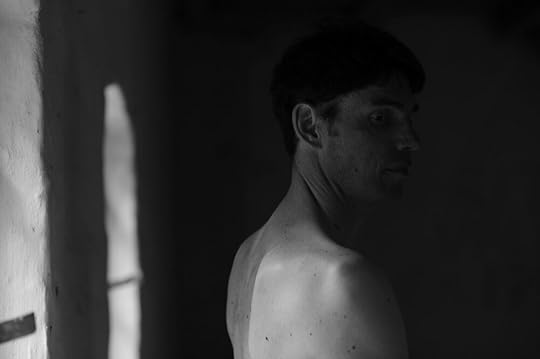
Through the lens, I notice how the light caresses his rounded back. I wonder how multiple sclerosis feels in his body. He stands up, his body straight and muscular. The scar across his stomach gives his waistline a slight feminine shape. Our words fade, as we move about the space, interacting with the furniture, the floor and the light. I search for faces of him, gestures. I encourage with comments. Sometimes I tell him what I see as if to bridge the divide between seer and seen.
The eye of the beholder is never just one-way. While I invite self-expression, my presence solicits responses and sometimes I have to project a lot of energy to help the person before me emote, move, feel. Karsten is soon comfortable moving his body, here and there meeting my gaze. As he appears for me, I sense, he is also appearing for himself.
On the bed again, he moves with subtle sensual force. I capture his exposed neck, his curved backside, the way his hand grips the edge of the bed. Something is there, at once vulnerable and forceful. I hold my breath. My face feels hot. I want to penetrate the flesh to conjure his inner power, poetry, sexuality, freedom, softness.
Would a man photograph him differently? More manly?
© Lone Mørch
We chat over coffee and cake at the cafe.
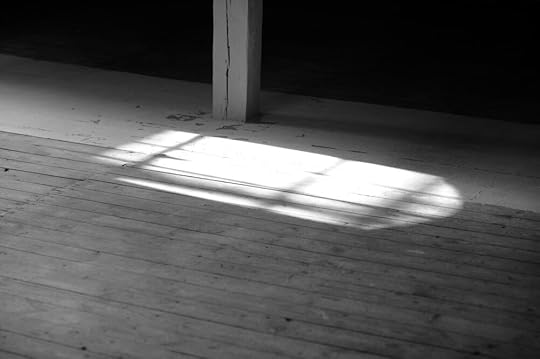
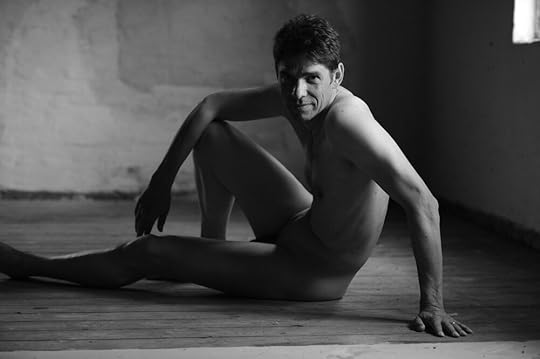
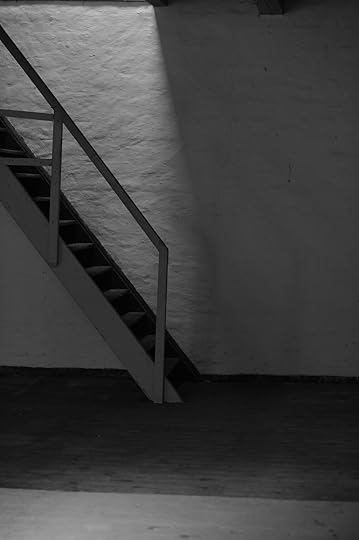
We discover a shared passion for vintage cars, music and writing. I worry about our stamina and the cold warehouse upstairs, but Karsten insists. While he undresses, I investigate the space. Two windows, wood floor, a pillar in the center and at the back, a wobbly staircase to the attic. Sublime light spills from above.
We begin again. With no place to hide or hesitate, we are both called into immediacy. I watch him respond to the textures. Adrenaline overrides our fatigue, as we become moving bodies, eyes, senses.
“Would you get on the floor?” I ask.
He shakes his head. “It’s cold.”
“Two minutes?” I can’t help myself.
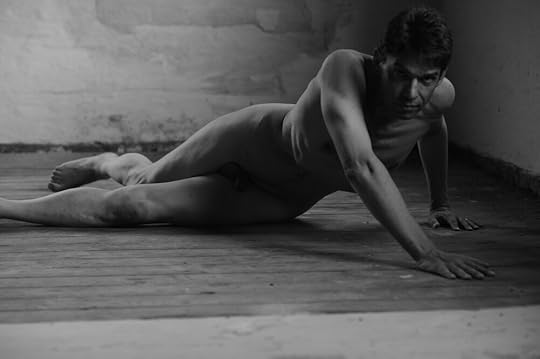
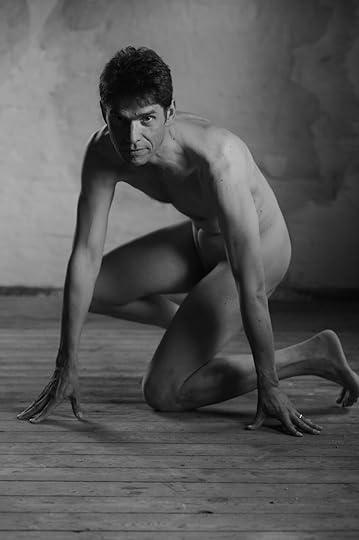
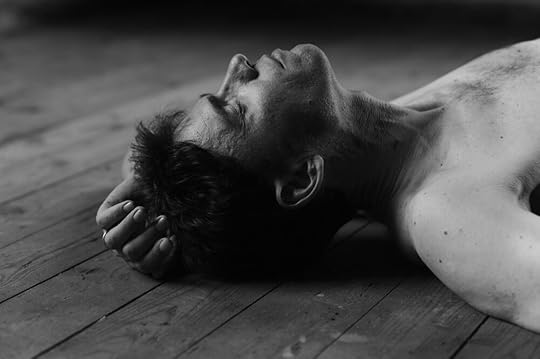
His stiffness shows as he tries to get down. One moment it looks like he is loosing control and falling back, before he surrenders. Back on his knees, he’s remarkably handsome. I tell him so. Confidently, he comes at me, his gaze completely open. My neck hair rise. There he is. Present. Powerful. Unabashed.
“This always happens.” I muse, and click and click. “I fall in love.”
How to explain to him that this is the moment I’ve been waiting for all day, where all reluctance falls away, in him, in me. The signs: my heart swells, I giggle, get goosebumps, sigh, utter, applaud, burst into tears. And then, I’m done.
© Lone Mørch
© Lone Mørch
Karsten drops me at the station. I’m so spent I can barely speak. Before I enter the train, I look back. We wave at each other. Tears roll. An intense session often leaves me sentimental, but as the train bumbles North, sadness sets in. Then emptiness and sheer exhaustion.
My life is a string of short-lived creative love affairs, I sulk inside. I’ve given Karsten all I’ve got, loved him forth, and now there’s nothing left for me. Tears fall.
Last year I fell in love with a man. He asked me to photograph him, but soon passion took over, and I never did. Living 9000 miles apart we did not pursue the relationship, but now, the way he looked at me then, is all I can think of.
At dinner, I share my thoughts with friends. How this intimate seeing is a lot like falling in love, because then we are eager to see and feel and devour everything about the other. How both seer and seen must bare their hearts for art to happen. And yet, the very premise for such a naked encounter is me staying neutral, holding the space safe and sacred.
“I’m the perfect stranger,” I declare. “But why is this work so intoxicating, yet so all-consuming?”
When two people meet for an open and intimate journey of discovery, what happens to the empty space between? We want to fill it, I say, but with what? Eros? Spirit? Synergy? Ourselves? I don’t know, but it feels like love.
My artist friend says, “Auguste Rodin said the same thing about his work, except he slept with all his models to release the intense desire for merging.”
There’s that. We laugh.
© Lone Mørch
While I’m trying to recuperate, Karsten writes exuberant emails.
“Lone, Only a few days in life are special, only a few encounters are magical, only a few experiences are larger than life, only a few friends get closer to you than anybody else. This was such a day, such an encounter, such an experience, you were able to become such a friend for one day.”
“Lone, Is there any chance to repeat it? To continue? Would it make sense? Could it be as good as the first time? Or even more intense? I‘d like to think so, but I know it would be just a fantasy, a miracle, too good to be true, too difficult to be simple.”
“Lone, We were heroes on that day, weren‘t we?”
We were. Sorting through the many photos, a man comes into full view: His vulnerability and willingness, ease and tension, strength and seduction. I’m quite pleased with my work. I tell him so.
“Lone! I’ve been waiting for this message, and now I get nervous like a schoolboy who’s been waiting for an answer from his favorite girl. My heart’s jumping, soul’s starting to fly, feels like a freight train running through my chest, good vibrations spreading all inside of me. Guess from now on, I’ll have sleepless nights, ready to dive into your photos. Wish you could see me smile from ear to ear.”
When I transfer the photos to him electronically, I hear nothing for 24 hours.
“I just finished watching the photos one by one, reminiscing how I got accustomed to being naked, being watched, being guided by that careful woman I had just met, remembering how I started to feel familiar with you, feel safe and ready to move more elegantly, anxious to capture your attention, finally testing my ability to seduce you. All of this is mirrored in these photos. If I didn’t know this guy so damn well, I’d probably fall in love with him.”
© Lone Mørch
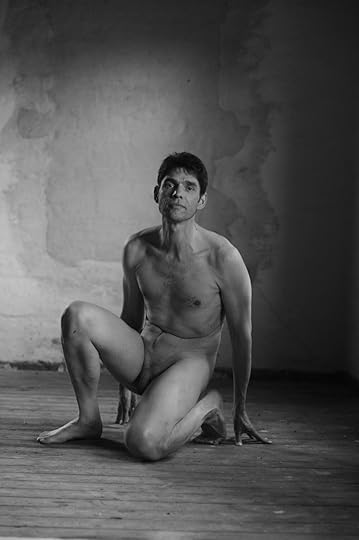
It dawns on me, that men too can feel invisible to the world and those closest by. The women I’ve photographed have often come for beauty, but in reality, they have needed to to be witnessed without judgement.
Wouldn’t a selfie do? Maybe, but there’s a difference between presenting oneself and being present with oneself. In my experience, it’s the process of revealing oneself, of finding the freedom to be seen by another that empowers, not the temporary shedding of inhibitions. The photos become evidence of your existence.
“It is exactly what I hoped would turn out but couldn’t find the right words to express, because I was unconscious of this wish when we arranged our encounter. All my physical weaknesses, my long hard fight against cancer, the evermore difficult battle against multiple sclerosis, had robbed me off my self-confidence as a man. By “SEEING ME“ naked and challenging me to reveal not only my body but also my personality, you gave me so much attention, showed so much female attraction that slowly I started to rediscover my male identity. And that felt so right and so good. I haven’t felt so much at home in my own skin for a very long time. Is it any wonder that I long to stay in touch and go on blossoming for you and recovering through your eye? I probably wasn’t even aware of how deep below my soul had been sinking down.”
Receiving this overflow of gratitude is at once wonderful and woeful. Had I been a ‘Madame Rodin,’ I may have enjoyed the flirtation, but I know Karsten’s affection isn’t for me. I encourage him to pull back his projections. We should get on with our lives, I say.
“Over the last weeks, I felt very lonely, and I wish I knew why. I guess, I feel, I believe, that our photo session was such an intense experience for me that it stands out far above the usual, the regular, the average, the normal. I was certainly more than pleased, I was intrigued to get your full attention, all your passion of the moment, your dedication to let me shine in your photos. I haven’t felt so valuable, so unique, so precious for a very long time. And the only way to deal with these feelings was probably by directing them towards you. I think I very rarely met a woman who could express such a passion, such a willingness to let herself drift into a dream and follow it with all her power. I wish I could give back to you just a fraction of what you allowed me to share with you.”
From elation to emptiness. His ability to express his feelings helps me understand the stake I have in our process, and how rare it is for people to meet in a power-free space.
In my work, I get to meet people in intimate places that are mostly reserved for lovers, and erotic in the truest sense. Not sexual, not wanting, but a free-flowing exchange of creativity and chemistry. A shared sense of discovery. Evoking Eros can be tricky through. It can only be experience by becoming its conduit. It cannot be possessed. When we try to claim it and name it, we kill it.
In the presence of Eros, the hardest part for us mortals is to do… nothing. To leave it alone. To let it penetrate us with life, connectedness, beauty.
© Lone Mørch
Once a woman said to me: “I’m not afraid of being photographed. I’m afraid I won’t like what I will see. I think I prefer to stay in the illusion of myself.” Her words hit hard like truth: We all long to be seen, but are terrified of being seen.
Having ‘stared’ into the eyes of a 1000 people, I know our gaze holds power. The need to be seen isn’t just a symptom of a narcissistic world; it taps into the fundamental way we come to feel valuable, lovable, connected and human. On a subliminal level, I may have tried to protect those I photograph from a cynical, harshly lit world by casting them in a more gentle, lyrical light. With Karsten I’ve moved closer to the heart of the matter: Their longing is also mine.
This may explain why my work can feel like both a gift and a curse. When operating from a wound, a yearning, we must move through it to receive the reward. Two sides of the same coin, the seer and the seen, seeking, seeing. Perhaps this is the role and responsibility of the Perfect Stranger. It’s a divine thing. It fills me with reverence.
If only it was this beautiful.
© Lone Mørch
The loss of a loving gaze can feel like death, a severing of your lifeline, a fire gone out in the dark night. I know this. Karsten knows this. He writes about upheavals at home and sleepless nights of anguish. It’s not unusual for people to seek my services at times of inner turmoil and transition, I explain to him. When one person stirs the status quo in a relationship, a re-alignment is naturally required.
“Be where you are,” I say. “Please take care of your marriage and life.”
“A Record of A Romance.”
This is the title of his next email. To pay tribute to our journey, he has compiled a playlist of songs. Before I fathom, it’s his way of coming to a close, his words has tripped me up. Romance? Hasn’t he listened? I worry what his wife would read into it. Upset, I reiterate: “My friendly presence is professional. By alluding to romance, you’re crossing my boundary.”
He huffs and puffs at my refusal to indulge his fantasies and turns defensive. When he questions my final fee, it’s my turn to huff and puff and come to a brutal halt. From being his bright star, I’m now his fallen angel.
For all my ability to bring out the beauty in people, I wonder, if I may in fact be doing a disservice. Worse. I’ve been here before. With men. After a pure and potent encounter, what we each make it to mean so easily land us in a crossfire of projection and power games.
© Lone Mørch
A more careful exchange ensues.
We are sorry. We try to regain each others’ trust. The image of Karsten crawling down on the warehouse floor float into my awareness. I’m overcome by the sensation of his surrender to the rugged, the dirt, the imperfect. I think of Karsten’s wife, who is holding the space for him in her own domain. After years of marriage she must have seen the good, the bad, the ugly, and therefore cannot see him without their history. Of course, my unencumbered gaze would feel thrilling, freeing him of history and habit, if only for a moment.
We all long to exist in such moments, don’t we?
It’s tempting to conclude that “men cannot leave something good alone,” but Karsten continues to show up for the discomfort of intimacy as we unravel our projections and unhealthy polarity games. In the end it is his humility and his courage that allows me to share our story.
Will he look at his photos with the same rapture? I doubt it, but being as dedicated to honesty as I am, he will embrace the more complex, whole human he is, and perhaps treasure them even more for it.
© Lone Mørch
So, can I see men?
With my set of eyes, yes, I can. But not without risk. To see beneath the skin and create the art I do, I must be willing to go deep with people. The presence and permission I bring to the experience also requires a baring of my own heart, which to some men would be easily mistaken for an invitation to ‘more.’ When this ‘more’ isn’t offered, I risk being judged and rejected for the very thing I am and give. I ask myself if I can bear it.
As a professional, I can set rules and take protective measures to ensure a safe space, but I’m certain, it will be at the risk of killing the art, the mystery, the Eros, and ultimately the chance of finding oneself in the loving gaze of another.
© Lone Mørch 2019, text and images, released by all involved parties,
Published in Barren Magazine Issue No 12, December 2019.
November 1, 2019
The Courage to Grieve
Suffering is the condition on which we live. And when it comes, you know it. You know it as the truth. Of course it’s right to cure diseases, to prevent hunger and injustice, as the social organism does. But no society can change the nature of existence. We can’t prevent suffering. This pain and that pain, yes, but not Pain. A society can only relieve social suffering, unnecessary suffering. The rest remains. The root, the reality.
— Ursula Le Guin
In a world in hasty pursuit of happiness grief gets little attention. Get over it. Get back to work. Go do something new. Such are the messages, but underneath they reveal a discomfort with suffering and they make grief a private matter. Often the grieving person ends up hiding their sorrow, carrying it like a burden with nowhere to dispose of it. Sorrow left unattended, unexpressed, block our vitality and access to the soul.
Culturally, sorrow is perceived and dealt with differently. Let me give a few examples from my own cross-cultural experiences. At the end of a work contract in Nepal years ago, my colleagues hosted a farewell party with drinks, folk dance and a long procession of blessings – each of them draping a flower garland around my neck and pressing red paste on my forehead. Then they asked me to say something. But words paled in my attempt to express my love and gratitude for their friendship, as it blended with the sorrow of now leaving them. You don’t cry in public in Nepal. Ashamed, they ushered me into the Director’s office to wait for my tears to stop.
A culture well-versed in rituals for all things life and death, they have a way to channel their emotions though private and communal ceremonies of reverence and prayers and so perhaps, for them, crying in public isn’t honorable. In my family I was always the teary one. Having grown up in a Nordic culture devoid of such rituals and with a tendency to suppress emotions, I learnt to bottle up my feelings and hold them in until I’d burst. My tears would hold anything from shame for crying, anger for not being heard, sadness for not being seen, but also the happy-sadness when taking leave for a new journey, the love-sorrow of falling in love, the gratitude-grief when faced with loss, the humility when encountering the generosity of spirit and grandness of life, and so forth.
Ten years ago, I’m at a small Christmas gathering in San Francisco. My husband and I have just decided to divorce, but his sister aside, we’d told no one as to not spoil “the fun.” My mother-in-law already informed, pulls me aside and said,“Please don’t make a scene.” The rest of the day I stood there, choking on my emotions, while observing this in-law family I was about to exit. My husband joked with his uncle, drinking beer, as if nothing had changed. All of them had their version of ‘imperfect’ lives, but were busy keeping up the facade. Put on the happy face, this was the American way, which to me meant devaluating our feelings and the opportunities to connect with each other around those things that truly touch and change us.
In 2019, I have woken up from what now feels like a time warp, a trance, to my own midlife ‘wasteland’ and a world in crisis. The growth paradigm of the past 50 years has finally caught up with us and the benevolent world I grew up in have arrived at an impasse - we have become as alienated from the nature of our existence as we have from the beauty and intelligence of our living universe.
© Lone Morch
Perhaps the reason d’etre of midlife is to stop, look around and take stock of your life, only to realize that the equilibrium has shifted - life is now more about losses than gains. As I made my own calculations, I counted: the loss of a husband, an unborn child, several family members, three beloved pets, a few too many dreams, an unrequited love or three. Add to that, the loss of innocence, the loss of friends, places, youth, and the loss of time itself. In short, loss of who I once was. Though rich in memories, I was afraid to release it all, because without these stories and events, I was… no one?
My midlife wasteland was accentuated by the recent return to my native land after more than 20 years living abroad. When my soul nudged me to untether from America, I courageously succumbed to what didn’t really make sense at the time, let go of all my possessions and the business and community I’d built, to return empty-handed to my roots, open for a new experience in life.
I came unprepared for the reverse culture shock - both Denmark and I had changed and for the first time in my life as global citizen, I felt like an alien. Not only were my references, thoughts and language based upon other places and experiences than those around me, I was also uninvited to “the party” in a somewhat closed, cliquish culture. Underneath all my failed attempts to open doors, find work, discover a place I could live, pursue my projects, a deep resistance I didn’t understand lingered within. It grew heavier, but I kept pushing this invisible boulder in front of me, working double time to uphold a positive spirit and show a happy face, because, I could not afford otherwise. I was scared. In my eagerness to look ahead and find my footing, I’d not given myself to chance to grieve all I left behind.
Grief comes from the Latin word gravis, meaning heavy, weighty. Just like divorce hadn’t been part of my vocabulary, collapse didn’t exist as an option either. Collapse reeked of failure, weakness and dissolution. With no secure work and income, not even my own house, collapse wasn’t an option. Who would catch me? What would be on the other side of surrender? What if I’d completely fall apart?
A better question to ask might have been: why had I come to think that I alone should carry and solve the problems of my life?
© Lone Morch
Frances Weller offers five gates of grief to help us welcome grief as a natural part of life and living. The First Gate: Everything We Love, We will Lose. The Second Gate: The Places That Have Not Known Love. The Third Gate: The Sorrows of the World. The Fourth Gate: What We Expected and Did Not Receive. The Fifth Gate: Ancestral Grief.
As I pass through the midlife portal, all of these gates have been blast open. But in a society where we live in the illusion of (self-) control, succumbing to grief requires courage. Even amongst the self-proclaimed spiritual awakeners, your life and sense of self seem to rely on the idea of control of your destiny, by harboring only positive feelings, vibes and energy to manifest a life of more bliss, more success.
Conversely, collapse implies relinquishing control. It leaves you naked, vulnerable, at open sea. We fear this collapse, in part because we are expected to ‘keep it together,’ but also because, as a community, we have lost the ability to invite sorrow in as a path to deepen our relationship with ourselves and the world.
In her book Dispossessed Ursula Le Guin writers about suffering, loyalty and time, and seems to say, we bond not in love, but in our suffering. “Suffering is the condition on which we live. And when it comes, you know it. You know it as the truth. Of course it's right to cure diseases, to prevent hunger and injustice, as the social organism does. But no society can change the nature of existence. We can't prevent suffering. This pain and that pain, yes, but not Pain. A society can only relieve social suffering, unnecessary suffering. The rest remains. The root, the reality.”
Buddhist philosophy addresses this root suffering of human existence directly, saying the way we approach our pain determines the degree to which we will in fact suffer in our lives. So how do we approach grief?
Looking to the past for inspiration, Frances Weller illuminates the ancient Scandinavian tradition of ‘a year in the ashes.’ It was a common practice for those dealing with loss to spend a year by the fire. Spending time with the fire and the ashes were holy time, a period of digesting and metabolizing the bitter tincture of loss. From this sojourn people came back changed with wisdom gathered in the darkness. When we communally honor this time of living in the ashes, we invite a deepened relationship with death which, in turn, keeps our bond with the living world vital and sustaining: the two states are mirrors of each other, reminders of the great round of life, which must include the reality of death. (The Geography of Sorrow, The Sun Magazine).
Without such conscious practices let alone the time to let our grief breathe, we are left bereft to our own devices of fumbling through the underworld of loss.
At some point this Spring, I simply stopped. I said no to opportunities and pulled back. I needed time with the ashes. I walked barefooted on the beach to connect with earthly physicality. I surrendered to the need for rest. And in the rest, sorrow was safe to surface and shiver and shake through me. While this now feels inevitably, I’m certain, I could only do this, because I felt adequately held by a few people, who didn’t judge, nudge or otherwise try to fix me - they knew grief and how to let me be with the fire and the ashes of life.
Grief humbles. Scrubs down. Melts frozen bodies. Opens hearts. Grief cannot be rushed.
© Lone Morch
Ursula Le Guin writes, “It is our suffering that brings us together. It is not love. Love does not obey the mind, and turns to hate when forced. The bond that binds us is beyond choice. We are brothers. We are brothers in what we share. In pain, which each of us must suffer alone, in hunger, in poverty, in hope, we know our brotherhood. We know it, because we have had to learn it. We know that there is no help for us but from one another, that no hand will save us if we do not reach out our hand. And the hand that you reach out is empty, as mine is. You have nothing. You possess nothing. You own nothing. You are free. All you have is what you are, and what you give.”
There’s a reciprocity at play here. As we are given time to do our grief work, we also grow stronger with gravitas, the weight to carry not only our own grief with dignity, but also our communities through hard times. Without a community to witness and hold our grief, we cannot ‘graduate’ and take our place as the wisdom holders, and I suspect, respected elders in the community.
Right now, most of us are overcome with an ominous ecological grief, against which our personal lives and sorrows may seem insignificant. Could this grief in fact bring us together and activate our global heart and mind to change the course of our world? As Frances Weller says, some grief is not meant to be resolved and set down. Sometimes grief helps us hold what must be carried by a people so that we may never have to endure such pain again. He talks about this grief as a kind of protest against the current trajectory of our world, a refusal to numb out and anesthetize in a destructive soul-less system, and to use it to come back to life.
Someone recently said to me, “Grief is love without a recipient.” It struck a deep cord and forced me to reframe my sorrow to a sense of reverence - for all the ways I love my life and everything in it, past, present and future. Frances Weller’s turns it on its head and says, “Love is a way of grieving that which has not yet slipped away.” In this way, love and loss are two sides of the same coin, both touching the impermanence of all things… including grief.
After taking time to deepen, letting the grief ebb and flow, I’m noticing that levity finds its way to my heart and gait again. Light and dark is part of our human experience, and we must learn to pendulate between the two, and come to trust that the ability to really feel joy is equivalent to our capacity to embrace sorrow. When we dare to exist between these two poles without shame, we naturally become more authentic and with that, comes a tremendous freedom and a gratitude towards all that life is offering.
© Lone Morch 2019
© Lone Morch
This essay was first published October 1, 2019 in the German IP / Integrale Perspectives , kindly translated by Karsten Rehrmann and Cordula Frei.
References:
Podcast: Charles Eisenstein - Of Grief and Reverence (E04) - A New and Ancient Story
September 25, 2019
Shooting Men
Dear Lone, I looked at your photographs and read your Invitation to See and Be Seen on your website. It’s surely a topic that demands a lot of sensitivity, and I detected just this (and a lot of sheer natural beauty) in your presentation. I often ask myself similar questions, and sometimes it’s hard finding answers. I’m 51, my dear wife and everybody else say I look much younger than that, but sometimes I feel much older. I caught multiple sclerosis 20 years ago and got cancer in 2003, which returned twice, and I’ll never know if this nightmare occurs again. But I still stand tall (as good as possible), go to work each day and try to enjoy life like everybody else. I’d like to see you seeing me somewhere in Denmark, curious about the outcome, perhaps a Revelation, surely a deep experience, maybe getting to a better understanding or simply just a new view of myself. Would be very delighted if this has raised your curiosity. Wish you a joyful time, wherever you are right now. Best regards, Karsten
This email makes me pause. Random raunchy calls aside, I rarely receive inquiries from men, who convey genuine desire to be portrayed by me. When I do, it’s never just about vanity. Underneath there’s a quest for more – a new experience of self, perhaps metamorphosis of shame, trauma, limitation and low self-esteem. Not unlike the 1000 women I have photographed over the past 15 years, who’ve come with similar motives to self-discover through my lens view.
I’m not the only one curious about men’s inner landscape. When I give public talks I’m asked, what about photographing men? How is it different? With only a few men under my photographic belt it’s hard to tell, but when I proposed the Seeing Men project on social media, men in my feed joked. The thought of being naked in front of a camera, let alone a female photographer, filled them with trepidation. Many expressed self-loathing, certain their bodies deserved no such limelight.
Because men’s bodies haven’t been subjected to the same degree of public sexualization and scrutiny as women’s bodies, they may not feel the same need to counter the public gaze with a personal one. But it’s changing. Today more men feel pressured to have perfect physical appearances, shying away neither from botox and waxing nor being strangers to self-damage and eating disorders.
When I pitched a Seeing Men essay to EuroMan Magazine, they deemed my idea too artistic. Indeed, the distinction between art, fashion and documentary photography is significant, and the resulting images depend upon the gaze given: are you beholding, seducing or using someone to fulfill your vision or provide evidence for your case at hand? EuroMan were clearly too timid to let a woman look beneath the skin of men, and perhaps they should be.
The premise for my work has been to find the trueness in everyone. To that end, nakedness has become an interesting metaphor for honesty, but still, Karsten’s request fills me with questions. How can I see him? Are my intentions pure? Am I ready to step into this naked terrain with a stranger?
The invitation to undress requires vulnerability and courage from both seer and seen, to walk the delicate line between eros and porn, public and private, object and subject, power and submission. Who looks at whom is never clear-cut, and with the naked skin in the middle, the intention becomes more important: Why are we looking?
My work with women has been healing and empowering and helped us exchange our female competition with solidarity, but perhaps I’m naive to think that my gaze can offer healing to men and foster solidarity between the sexes.
In my early conversations with Karsten, we address these matters.
“I want to accept my body and feel strength and pride in it,” he says. “I want to see what you see. The people in your photos look like you know them, this make me feel in good hands.” His intentions assure me of his sincerity.
Safety is important. For him to trust me to not expose him or otherwise cast him in an unflattering light. For me to feel I can be alone with him and do my work without sensual advances. I ask how his wife feels about him going off to get naked with a female photographer. “We’ve had to deal with my body for years now,” he shares. “We’re rather open-minded. She’s trusting me to do this.“
As we work through the logistics, I learn about his physical constraints. “With only one kidney, catching a cold could be deadly,” he says. “I’m not as surefooted as I used to be, even an even surface can be challenging, and without my glasses, I’m rather blind.”
I translate his words into visual metaphors to work with: limitation and freedom, strength and vulnerability, object and abject. I try to imagine how to visually approach a male body, let alone a crippled one.
We convene in Soenderborg in South Denmark. I’ve found two locations: a raw warehouse space above a cafe and a private loft bedroom. Karsten shows up with a walking stick and a bag. He’s tall, slender, with dark hair and black glasses. He gets up the stairs with surprising ease. We chat loosely over coffee, before proceeding to our makeshift studio. We’re both awkward.
He unpacks his props. A tie, a scarf, shirt, jeans and cuffs.
“Cuffs?” I chuckle. “Getting a little kinky?”
“No, no,” he grins and pulls the fur off the cuffs. “It’s to show I’m imprisoned in this body, but feel free.”
I prep my camera, check the light. “Where to begin?”
He looks around and tinkers with his stuff. I hesitate too. Dropping into the creative slipstream with another is always a deep-dive and this time, it’s with a naked man.
“There’s things I can’t control.” He says, gaze down. “My wife did ask, what I’d do if I got an erection.”
“There’s that.” I’m happy he brings it up. “Once I photographed a man outdoors, he worried the opposite would happen.”
Karsten smirks.
“Here’s the deal: If it happens, I’ll do my best to not take it personally. This is after all not about your penis.” I give him a hug. “Why don’t you get naked and sit on the edge of bed?”
Through the lens, I notice how the light caresses his rounded back. I wonder how multiple sclerosis feels in his body. He stands up, his body straight and muscular. The scar across his stomach gives his waistline a slight feminine shape. Our words fade, as we move about the space, interacting with the furniture, the floor and the light. I search for faces of him, gestures. I encourage with comments. Sometimes I tell him what I see as if to bridge the divide between seer and seen.
The eye of the beholder is never just one-way. While I invite self-expression, my presence solicits responses and sometimes I have to project a lot of energy to help the person before me emote, move, feel. Karsten is soon comfortable moving his body, here and there meeting my gaze. As he appears for me, I sense, he is also appearing for himself.
On the bed again, he moves with subtle sensual force. I capture his exposed neck, his curved backside, the way his hand grips the edge of the bed. Something is there, at once vulnerable and forceful. I hold my breath. My face feels hot. I want to penetrate the flesh to conjure his inner power, poetry, sexuality, freedom, softness.
Would a man photograph him differently? More manly?
We chat over coffee and cake at the cafe.
We discover a shared passion for vintage cars, music and writing. I worry about our stamina and the cold warehouse upstairs, but Karsten insists. While he undresses, I investigate the space. Two windows, wood floor, a pillar in the center and at the back, a wobbly staircase to the attic. Sublime light spills from above.
We begin again. With no place to hide or hesitate, we are both called into immediacy. I watch him respond to the textures. Adrenaline overrides our fatigue, as we become moving bodies, eyes, senses.
“Would you get on the floor?” I ask.
He shakes his head. “It’s cold.”
“Two minutes?” I can’t help myself.
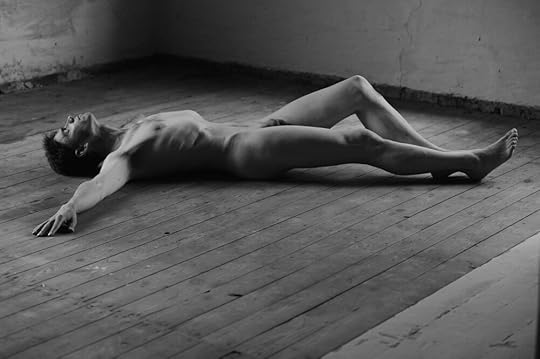
His stiffness shows as he tries to get down. One moment it looks like he is loosing control and falling back, before he surrenders. Back on his knees, he’s remarkably handsome. I tell him so. Confidently, he comes at me, his gaze completely open. My neck hair rise. There he is. Present. Powerful. Unabashed.
“This always happens.” I muse, and click and click. “I fall in love.”
How to explain to him that this is the moment I’ve been waiting for all day, where all reluctance falls away, in him, in me. The signs: my heart swells, I giggle, get goosebumps, sigh, utter, applaud, burst into tears. And then, I’m done.
Karsten drops me at the station. I’m so spent I can barely speak. Before I enter the train, I look back. We wave at each other. Tears roll. An intense session often leaves me sentimental, but as the train bumbles North, sadness sets in. Then emptiness and sheer exhaustion.
My life is a string of short-lived creative love affairs, I sulk inside. I’ve given Karsten all I’ve got, loved him forth, and now there’s nothing left for me. Tears fall.
Last year I feel in love with a man. He asked me to photograph him, but soon passion took over, and I never did. Living 9000 miles apart we did not pursue the relationship, but now, the way he looked at me then, is all I can think of.
At dinner, I share my thoughts with friends. How this intimate seeing is a lot like falling in love, because then we are eager to see and feel and devour everything about the other. How both seer and seen must bare their hearts for art to happen. And yet, the very premise for such a naked encounter is me staying neutral, holding the space safe and sacred.
“I’m the perfect stranger,” I declare. “But why is this work so intoxicating, yet so all-consuming?”
When two people meet for an open and intimate journey of discovery, what happens to the empty space between? We want to fill it, I say, but with what? Eros? Spirit? Synergy? Ourselves? I don’t know, but it feels like love.
My artist friend says, “Auguste Rodin said the same thing about his work, except he slept with all his models to release the intense desire for merging.”
There’s that. We laugh.
While I’m trying to recuperate, Karsten writes exuberant emails.
“Lone, Only a few days in life are special, only a few encounters are magical, only a few experiences are larger than life, only a few friends get closer to you than anybody else. This was such a day, such an encounter, such an experience, you were able to become such a friend for one day.”
“Lone, Is there any chance to repeat it? To continue? Would it make sense? Could it be as good as the first time? Or even more intense? I‘d like to think so, but I know it would be just a fantasy, a miracle, too good to be true, too difficult to be simple.”
“Lone, We were heroes on that day, weren‘t we?”
We were. Sorting through the many photos, a man comes into full view: His vulnerability and willingness, ease and tension, strength and seduction. I’m quite pleased with my work. I tell him so.
“Lone! I’ve been waiting for this message, and now I get nervous like a schoolboy who’s been waiting for an answer from his favorite girl. My heart’s jumping, soul’s starting to fly, feels like a freight train running through my chest, good vibrations spreading all inside of me. Guess from now on, I’ll have sleepless nights, ready to dive into your photos. Wish you could see me smile from ear to ear.”
When I transfer the photos to him electronically, I hear nothing for 24 hours.
“I just finished watching the photos one by one, reminiscing how I got accustomed to being naked, being watched, being guided by that careful woman I had just met, remembering how I started to feel familiar with you, feel safe and ready to move more elegantly, anxious to capture your attention, finally testing my ability to seduce you. All of this is mirrored in these photos. If I didn’t know this guy so damn well, I’d probably fall in love with him.”
It dawns on me, that men too can feel invisible to the world and those closest by. The women I’ve photographed have often come for beauty, but in reality, they have needed to to be witnessed without judgement.
Wouldn’t a selfie do? Maybe, but there’s a difference between presenting oneself and being present with oneself. In my experience, it’s the process of revealing oneself, of finding the freedom to be seen by another that empowers, not the temporary shedding of inhibitions. The photos become evidence of your existence.
“It is exactly what I hoped would turn out but couldn’t find the right words to express, because I was unconscious of this wish when we arranged our encounter. All my physical weaknesses, my long hard fight against cancer, the evermore difficult battle against multiple sclerosis, had robbed me off my self-confidence as a man. By “SEEING ME“ naked and challenging me to reveal not only my body but also my personality, you gave me so much attention, showed so much female attraction that slowly I started to rediscover my male identity. And that felt so right and so good. I haven’t felt so much at home in my own skin for a very long time. Is it any wonder that I long to stay in touch and go on blossoming for you and recovering through your eye? I probably wasn’t even aware of how deep below my soul had been sinking down.”
Receiving this overflow of gratitude is at once wonderful and woeful. Had I been a ‘Madame Rodin,’ I may have enjoyed the flirtation, but I know Karsten’s affection isn’t for me. I encourage him to pull back his projections. We should get on with our lives, I say.
“Over the last weeks, I felt very lonely, and I wish I knew why. I guess, I feel, I believe, that our photo session was such an intense experience for me that it stands out far above the usual, the regular, the average, the normal. I was certainly more than pleased, I was intrigued to get your full attention, all your passion of the moment, your dedication to let me shine in your photos. I haven’t felt so valuable, so unique, so precious for a very long time. And the only way to deal with these feelings was probably by directing them towards you. I think I very rarely met a woman who could express such a passion, such a willingness to let herself drift into a dream and follow it with all her power. I wish I could give back to you just a fraction of what you allowed me to share with you.”
From elation to emptiness. His ability to express his feelings helps me understand the stake I have in our process, and how rare it is for people to meet in a power-free space.
In my work, I get to meet people in intimate places that are mostly reserved for lovers, and erotic in the truest sense. Not sexual, not wanting, but a free-flowing exchange of creativity and chemistry. A shared sense of discovery. Evoking Eros is tricky. It can only be experience by becoming its conduit. It cannot be possessed. When we try to claim it and name it, we kill it.
In the presence of Eros, the hardest part for us mortals is to do… nothing.
To leave it alone. To let it penetrate us with life, connectedness, beauty.
Once a woman said to me: “I’m not afraid of being photographed. I’m afraid I won’t like what I will see. I think I prefer to stay in the illusion of myself.” Her words hit hard like truth: We all long to be seen, but are terrified of being seen.
Having ‘stared’ into the eyes of a 1000 people, I know our gaze holds power. The need to be seen isn’t just a symptom of a narcissistic world; it taps into the fundamental way we come to feel valuable, lovable, connected and human.
On a subliminal level, I may have tried to protect those I photograph from a cynical, harshly lit world by casting them in a more gentle, lyrical light. With Karsten I’ve moved closer to the heart of the matter: Their longing is also mine.
This may explain why my work can feel like both a gift and a curse. When operating from a wound, a yearning, we must move through it to receive the reward. Two sides of the same coin, the seer and the seen, seeking, seeing.
Perhaps this is the role and responsibility of the Perfect Stranger. It’s a divine thing. It fills me with reverence.
If only it was this beautiful.
The loss of a loving gaze can feel like death, a severing of your lifeline, a fire gone out in the dark night. I know this. Karsten knows this.
He writes about upheavals at home and sleepless nights of anguish. It’s not unusual for people to seek my services at times of inner turmoil and transition, I explain to him. When one person stirs the status quo in a relationship, a re-alignment is naturally required.
“Be where you are,” I say. “Please take care of your marriage and life.”
“A Record of A Romance”This is the title of his next email. To pay tribute to our journey, he has compiled a playlist of songs. Before I fathom, it’s his way of coming to a close, his words has tripped me up. Romance? Hasn’t he listened? I worry what his wife would read into it. Upset, I reiterate: “My friendly presence is professional. By alluding to romance, you’re crossing my boundary.”
He huffs and puffs at my refusal to indulge his fantasies and turns defensive. When he questions my final fee, it’s my turn to huff and puff and come to a brutal halt. From being his bright star, I’m now his fallen angel.
For all my ability to bring out the beauty in people, I wonder, if I may in fact be doing a disservice. Worse. I’ve been here before. With men. After a pure and potent encounter, what we each make it to mean so easily land us in a crossfire of projection and power games.
A more careful exchange ensues…
We are sorry. We try to regain each others’ trust. The image of Karsten crawling down on the warehouse floor float into my awareness. I’m overcome by the sensation of his surrender to the rugged, the dirt, the imperfect. I think of Karsten’s wife, who is holding the space for him in her own domain. After years of marriage she must have seen the good, the bad, the ugly, and therefore cannot see him without their history. Of course, my unencumbered gaze would feel thrilling, freeing him of history and habit, if only for a moment.
We all long to exist in such moments, don’t we?
It’s tempting to conclude that “men cannot leave something good alone,” but Karsten continues to show up for the discomfort of intimacy as we unravel our projections and unhealthy polarity games. In the end it is his humility and his courage that allows me to share our story.
Will he look at his photos with the same rapture? I doubt it, but being as dedicated to honesty as I am, he will embrace the more complex, whole human he is, and perhaps treasure them even more for it.
Can I see men? With my set of eyes, yes, I can.
But not without risk. To see beneath the skin and create the art I do, I must be willing to go deep with people. The presence and permission I bring to the experience also requires a baring of my own heart, which to some men would be easily mistaken for an invitation to ‘more.’ When this ‘more’ isn’t offered, I risk being judged and rejected for the very thing I am and give. I ask myself if I can bear it.
As a professional, I can set rules and take protective measures to ensure a safe space, but I’m certain, it will be at the risk of killing the art, the mystery, the Eros, and ultimately the chance of finding oneself in the loving gaze of another.
© Lone Mørch, text and images, released by all involved parties, 2019
September 2019 update:
Karsten and his wife has mounted a beautiful print of him above their bed and he has also created a fantastic book of photos, favorite lyrics and texts, his and mine, for keepsake. Unable to take walks like before, Karsten now uses a wheel chair. I continue to be in awe of his sensitivity, poetry and willingness to show up for life with honesty, heart and humor. A rare man indeed. The best friendships often grow from daring and challenging encounters.
August 31, 2019
SPEAKING ABOUT BEING GLOBAL CITIZEN ON BASHY'S CORNER TV
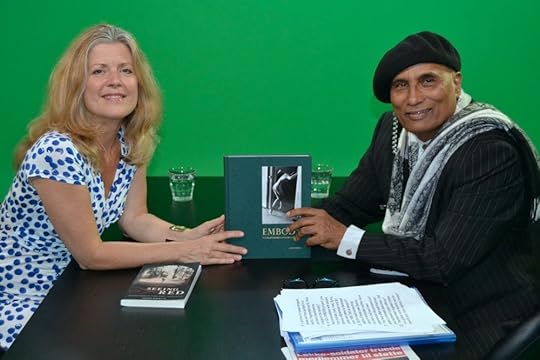
So this happened...
In just 30 minutes we touched upon the main threads of my life as global citizen, life in Nepal and the US, various professional and creative endeavors and the challenges of coming back to my Danish roots.
If I could add a few words, I would end the talk with these words:
We always have a choice to build walls or tear them down.May 7, 2019
100% Foreign?
This question guides the 100% FOREIGN? project - a large-scale (and ongoing) documentary art project, which at its completion with consist of 300 portraits, 300 interviews and 300 voices belonging to 300 statistically selected citizens, who have come to Denmark as refugees since 1956.
I was asked to interview and write the literary portraits to accompany photos taken by Maja Nydal Eriksen of former refugees in the Aarhus region of Denmark. This has landed me smack in the middle of the hottest topics of our time: migration and integration, and, under it, war and economics, religion and identity.
In what ways and to what degree do you feel foreign? What places feel foreign to you or make you feel foreign to yourself? When all is gone, what do you identify with?
Having lived in foreign cultures, each time struggling to stretch my identity and mindset beyond what I know and believe, has in many ways shaped my own personality and outlook on life and our world. I’ve both felt foreign in the judging gazes by people of other cultures and privileged to have been welcomed and able to freely move in the world. In recent years, when I returned to my native land Denmark, I expected to feel at home and secure. But to my surprise, I found myself feeling more foreign, more alien, more outside, than I’ve felt in any of the other places I have come to call home in America and in Nepal.
The opportunity to live in other cultures has given me an interesting outsider-insider perspective, and it has helped me stay awake. Each new place I’ve been has forced me to open my mind to new ways of thinking, being and doing things. I’ve not been able to go to sleep in the habitual, the known, the expected, but rather been forced to stay on my feet. I like this. And now, I’m turning this particular gaze upon Denmark. In a small way I have felt a kinship with the people I’ve met through this project.
In my intimate conversations with people from Vietnam, Iran, Irak, Somalia, Afghanistan, Syria, Sri Lanka - people who’ve had no other option than risking their lives to flee from risky if not deadly situations - I’ve learned more about the challenges of making home, connection and finding peace in Denmark.
Because, who are we when everything we know and care for and belong to is gone?Several times over, I’ve let go of my belongings to travel lightly to the next place and phase of life. Not because I was forced to, but because I wanted or needed to. The most recent move from California to Denmark has been the hardest, probably because I’m also leaving behind a life, a dream and a community built over many years at a time in life (midlife), when most people are super settled and secure. The ‘nakedness’ I suddenly feel makes me realize how much identity we attach to our things, our homes, our communities, and for me, the land I’ve walked.
The heart-wrenching plights of these new Danes, many of which feel neither here nor there, puts my own experiences into perspective. Their tales have had me in tears and awe, and sometimes we’ve laughed together too, at the grotesque situations they’ve encountered. I see in them, the resilience of the human spirit. Like the water of a river, they find ways around the rocks, the eddies and the falls, again and again.
If only we could all be so brave in the face of fear, rejection and abandon. A few examples of the Aarhus Portraits:Texts by me, photos by Maja' Nydal Eriksen.
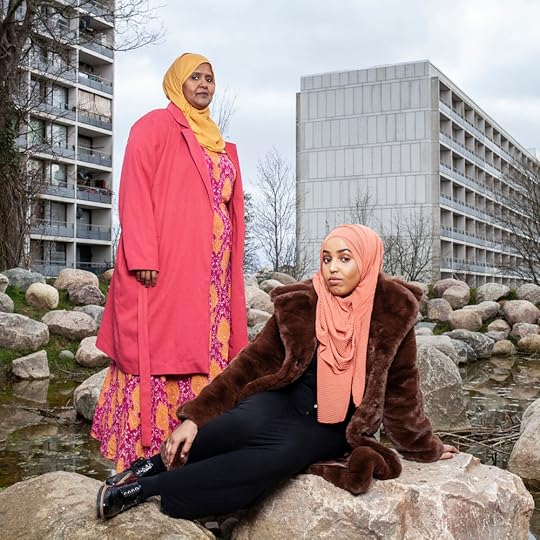
Leyla Oshman Ali
Hvor mange år skal der gå, før jeg kan kalde mig dansk? Danmark er mit land nu, dansk er også blevet mit sprog, og jeg har danske og indvandrer venner, men derfor kan jeg godt savne Somalia. Da krigen brød ud var det som om jeg blev hevet ud af en lykkelig barndom og landede et hundekoldt sted. Jeg var glad for at jeg boede i Hurup de første år i Danmark.
Mine venner og jeg taler ofte om, om velfærdsstaten vil blive til et ‘hver mand for sig” samfund. På min gamle arbejdsplads lavede vi meningsmålinger for forskellige projekter.
Når vi spurgte folk om de synes, at de 1% rige skal betale mere i skat, var der flere der svarede nej. Det er svært at forestille sig fattige i Danmark.
Tørklædet har været del af mig og min identitet siden jeg var 4 år, og det irriterer mig at verden
synes at det vil begrænse mine jobmuligheder på grund af det. Jeg synes ikke man kan bede nogen om at vælge mellem religion og karriere. Jeg studerer statskundskab i Odense. I min kultur er det usandsynligt at jeg rejser og bor alene, men jeg har fået lov, og lærer meget om mig selv ved det. Fx. at jeg er en clean freak, og at det er krævende både at studere, arbejde og lave mad hver aften.
Jeg er romantiker og tror min soulmate findes. Jeg må komme hjem med hvem jeg vil, men jeg er lidt gammeldags. Det er svært at vide om fyre bare vil hygge eller har oprigtige hensigter. Det er som om folk ikke værdsætter kærligheden mere. De er mere optaget af at få det de vil have. Vi ødelægger så mange ting for os selv, og jeg kan blive helt bange for om kærligheden overhovedet findes.
Leyla Oshman Ali / 24 år / kvinde / statskundskabsstuderende / Aarhus / fra Somalia / kom til Danmark i 2001 / opholdstilladelse i 2010
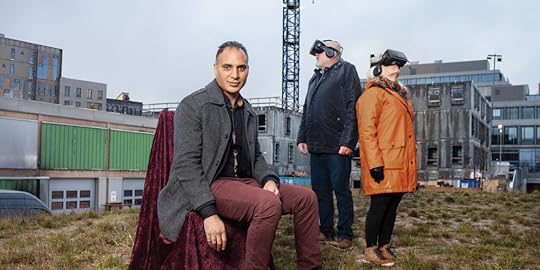
Rabih Azad-Ahmad
Hvornår er man fremmed og i forhold til hvad? Jeg er ikke fremmed i mig selv og synes, det er en berigelse at kunne trække på flere kulturer.
Folk har egne definitioner af danskhed. For mig er det danske at skabe og give plads til hinanden. Da jeg kom i 1989, blev jeg mødt af et mangfoldigt land – folk klædte sig, som de ville, talte frit, lyttede til hinanden og kunne vælge at leve nogenlunde, som de ville. Det er ærgerligt, når nogen begynder at begrænse denne mangfoldighed og definere danskhed så snævert, at det ekskluderer og fremmedgør.
Som yngre gik jeg op i, hvordan andre så mig, og følte mig fremmedgjort, når jeg blev sat i bås med mediernes flygtninge-stereotyper. Jeg skulle altid forklare eller forsvare mig selv.
I dag findes der danske afvigere, fx. kriminelle, eller folk, som kan have holdninger som ligger langt fra, hvad der er dansk kultur, men som stadig mener, at jeg er mere fremmed, end de er, alene udfra mit udseende eller etniske baggrund.
Jeg gik ind i politik, fordi jeg blev frustreret over skolesystemet. Alle børn skal have en chance, uanset baggrund, hudfarve og navn. Jeg gik selv på Nordgårdskole, hvor der kun var indvandrere. Da jeg var 15, spurgte en ven: Hvad med dig? Hvad skal du blive til? Jeg tudede, for jeg kunne intet og havde intet håb. Jeg satte mig for at skabe en fremtid, og det blev en lang kamp for at få en ordentlig uddannelse. Jeg blev jurist, og har været medlem af Aarhus Byråd siden 2007. Så længe jeg kan bidrage med noget, er det et perfekt sted at være.
Jeg elsker Aarhus Bugten og finder ro i min have, hvor jeg dyrker grøntsager. Som en overraskelse tager jeg min mor med ud at rejse her til påske, bare hende og jeg. Det glæder jeg mig til. Min familie betyder meget for mig.
Rabih Azad-Ahmad / 43 år / mand / gift / børn / Rådmand for Kultur og Borgerservice, Aarhus Kommune / født i flygtningelejr i Libanon / kom til Danmark i 1989
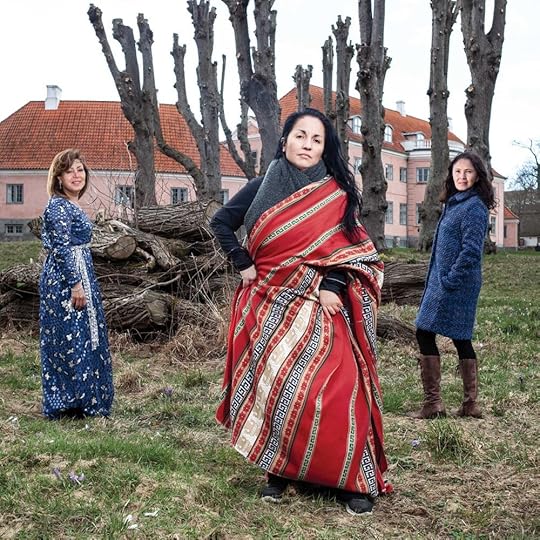
Carola Alvarado
Da jeg var yngre, ville jeg til enhver tid have forsvaret min danskhed, men nu hvor kløften imellem fremmed og ikke-fremmed er blevet dybere i Danmark, føler jeg mig mere fremmed. Jeg er blevet stolt af mine rødder, men når jeg besøger Chile, kan jeg godt mærke jeg er dansk.
Jeg kan lide det skæve og fest og farver. Når jeg bliver for regelret, siger mine børn, jeg er blevet for dansk. Tingene behøver ikke være så firkantede og strømlinede for at være acceptable. Jeg er meget glad for at have en ‘pyt-knap.’ Den bruger jeg flittigt.
Min mand er fra Sierra Leone og vi har 4 børn. Vores kulturer ligger tættere op ad hinanden end den danske. Vi forstår hinanden og tør godt være kvinde og mand. Det skaber en fin dynamik. Min far bor langt væk og min mor døde for 5 år siden. Hun har passet vores børn, holdt det spanske i live, spillet og sunget og været det chilenske anker i mit liv. Nu skal jeg selv til at være det anker.
For to år siden overtog jeg spillestedet Vestergade 58, hvor jeg slog mine folder som ung. Jeg har altid drømt om at skabe et socialt center for latinamerikansk og afrikansk mad, musik og dans. Ofte arbejder jeg 60-70 timer om ugen, men jeg er stolt af at skabe et sted, hvor der er plads til forskellige måder at være menneske på. Det må være mit positive bidrag til udlændingedebatten. Jeg drømmer om et mere åbensindet og tolerant Danmark, hvor man værdsætter forskellighedens styrker.
Jeg gav et neo-folk-punk band lov til at spille i Kælderbaren. Ingen vil have dem og jeg kan huske hvor svært det var at starte mine egne salsa-fester op. Det blev en fin aften, som vi ikke havde oplevet, havde jeg afvist det der var lidt anderledes.
Carola Alvarado / 47 år / kvinde / i et forhold / børn / Aarhus / leder af Vestergade 58 / fra Chile / kom til Danmark med familie i 1974 / opholdstilladelse i 1975
Project link: https://100pctfremmed.dk/en/
100% Aarhusianer - Kids Portrait Workshop.
Alongside this project, Per Bergmann and I were doing personal portraits workshops with school kids in Aarhus to share a glimpse of the diversity of kids and what it is like to be a kid in Aarhus today. They wrote their own texts and we shot the portraits. This was really interesting, both to experience the difference in self-perception between 11 and say 14 year olds, but also the honesty and sincerity in their personal texts. We made a book for each class. and the exhibit can currently be seen at Godsbanen in Aarhus (until mid-may 2019).
Here’s a few pages from the books of our portraits with personal texts by the kids.
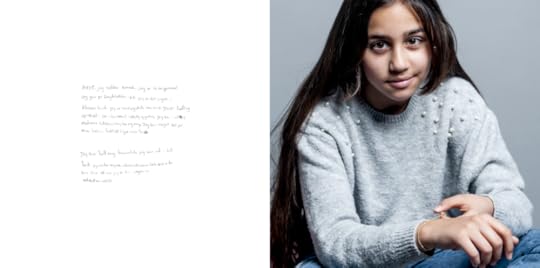
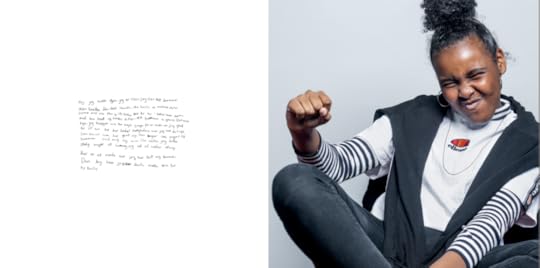
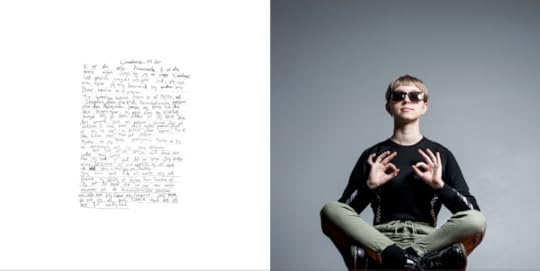
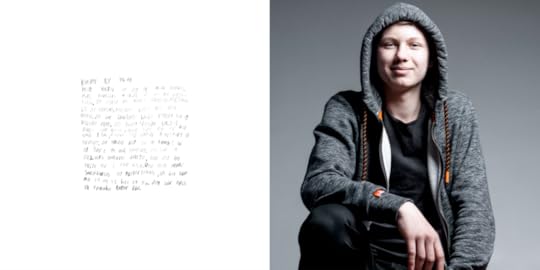
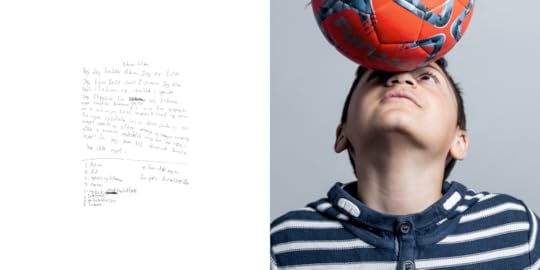
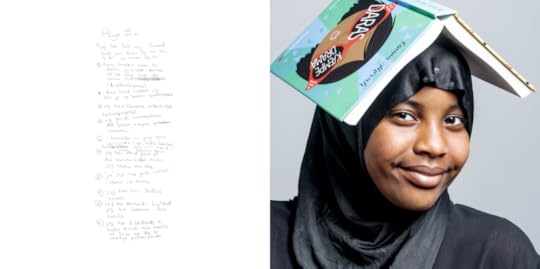
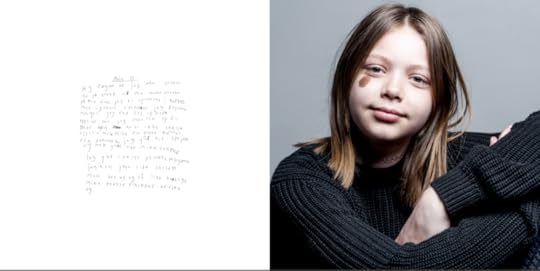
Here are some of the kids I photographed.

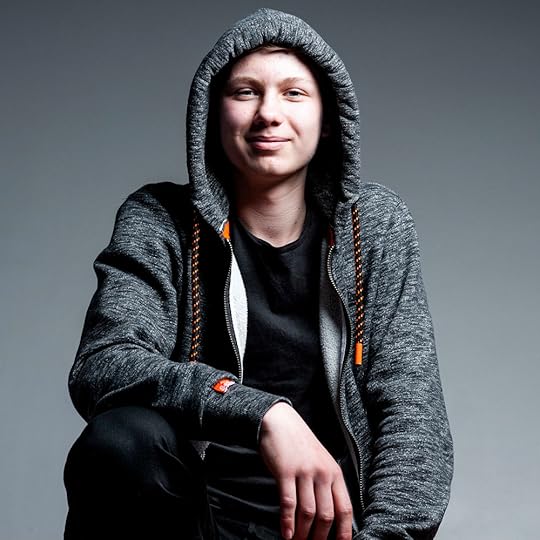
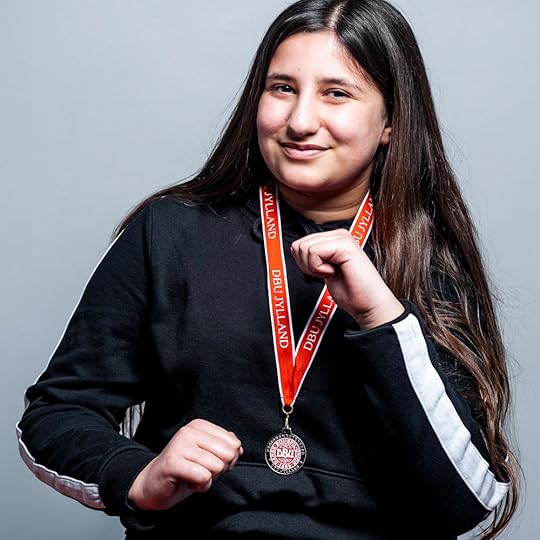
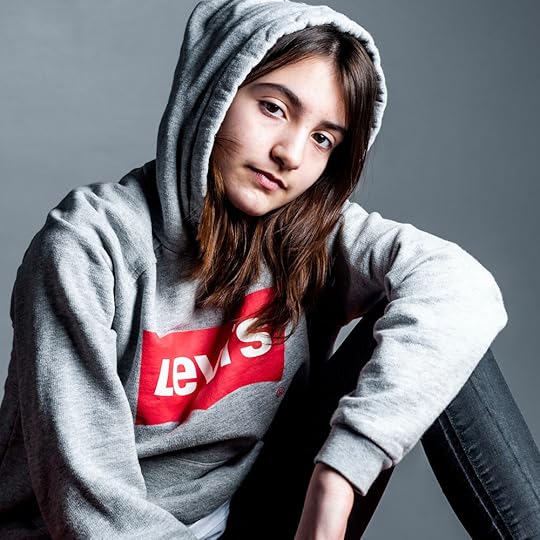
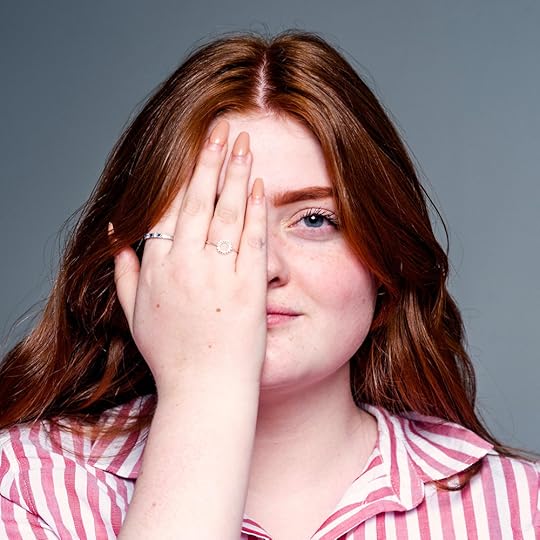
May 1, 2019
THE GREAT CLIMATE SPANKING
Does Greta Thunberg’s climate spanking merely make us willing subordinates — celebrating our grief — instead of becoming true climate heroes?
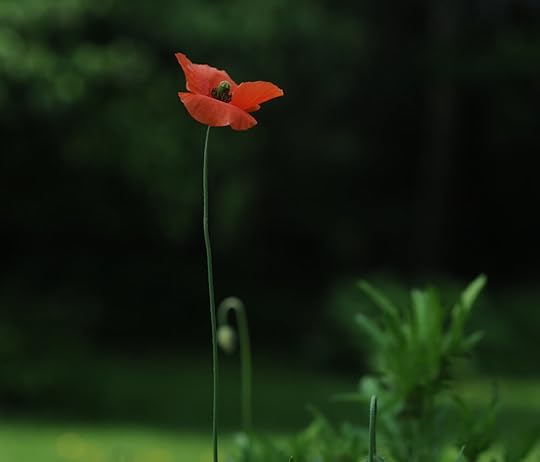
On a sunny day in Copenhagen, I’m at the Climate March with my friend Ally from America. Kids, youth, adults and elders have gathered in front of the parliament. Together, we await our global climate star, Greta Thunberg. A DJ blasts a mix of electronic dance music and Danish bands from the 80s singing songs of justice and diversity and love out through the speakers. Above our heads, flags and posters sway, some more creative than others. Someone informs us, we’re now close to thirty thousand people. I rise to my feet to scan the crowd. For a moment, panic pushes against my body and mind. Getting out of here has become nearly impossible. I inhale and exhale to calm myself. I’m fine in this friendly sea. Ally is filming with her Iphone. A cute, but rather serious looking girl with huge pink glasses and pink rubber boots stands on a speaker-stand to better see the stage. Next to us, two young men in green capes talk to people about water health and protection in an attempt to enlist members for their organization.
Meanwhile, the concierge eggs the crowd on, making us chant together, first something boring (EU election), then something exciting (climate change). It’s loud, festive, and lighthearted.
Inexperienced in mass rallies, I turn to Ally. “This is a bit like a rock concert. People act like they are waiting for a pop star. Is this normal at rallies?”
Ally nods pensively, “I think so.”
Then Greta arrives. A wave of applause and salutations greet her. She speaks in Swedish first, then switches to English, and starts by mentioning the upcoming Danish Election, how the parties lack visionary climate policies. Ally and I cannot see her for the posters. She speaks in the sound bites, we’ve already heard from her TED talk and TV interviews. She speaks to the reality, the grief, the hope. She says: Adults, what were you thinking, you did this, you have been sleep walking, in denial, irresponsible, now you need to wake up, if not for yourself, then for me, for the youth. At every soundbite, the crowd breaks into exuberant yelling and clapping in agreement. Just in front of us, a tall man in his fifties accompanies her sound bites with “YES. YES. Go Greta.” Next to us, a young woman wipes tears off her cheeks.
As she speaks and the crowd celebrate, I fall into silence. Are they listening to what she’s actually saying?
She’s spanking us publicly and everyone’s roaring in delight.
Perhaps I’m the odd one, the critic, inexperienced at both rallies and idolizing. At best, pop star adoration and celebrity events feel phony to me. In my view, by pedestalizing Greta as our savior, we not only get to transfer our hopes and responsibilities onto her, we also get enamored in her story of becoming — the heroine — at the risk of loosing her message. Like all good Americans, we love the-rise-of-the-hero stories, we love redemption stories. I’ve already see numerous critical articles about Thunberg’s background, her family, her autism, whatever, and have also noticed a lot of angry men dismiss the validity of her message. “She’s only a child! What does she know?”
The rest of us? Well, we’re likely to make her the placeholder for our private grief and powerlessness and perhaps in her words, we find redemption, because, finally, we feel something… is happening.
But is something happening?
In these SoMe times it’s easy to get caught up in the personalities and the memes and hashtags, while the important messages drown in the hungry hype machine without anyone really considering the depth and significance of the message and its purpose: … to create change and make us the change agents.
This contortion of an important vision happened to “Liberty, Equality and Fraternity” and more recently it happened to “#metoo.” Everyone’s claiming it and framing it according to their agendas and preferred views. When Dalai Lama said, “The world will be saved by Western women,” every savvy female coach and business owner I knew made this their brand tagline, soon turning the message into a (temporary) marketing fad, quite possibly sidestepping its inherent call to awakening and action.
Today, I fear, #climatecrisis and #gretathunberg will suffer the same destiny. We take it on as our own, love it up, and then, forget. Because soon we’ll have another pop star to eat up, another hashtag to tag along.
A more appropriate response to Greta’s talk might be to quietly acknowledge our denials and hypocrisy and failure to act on what we’ve known for a long time to be a huge problem: our consumption, pollution and exploitation of our earthly resources, and, ultimately the inequality in our world.
As I scan the crowd and try to join in the elation, I wonder, why we need a heroine to speak to our in-action and push us onto the planetary edge of survival. Perhaps those who join the Climate Marches are already aware and activists and so, Greta is giving us a voice. I look around. I don’t know who’s here today, but on stage, a young woman calls us out, scold us for our irresponsibility, while, everyone eager, blush-faced, clap and roar.
The writings on the wall, but which wall?
I probably sound holier than thou, though my thoughts are founded in my own grief and the powerlessness I feel at the enormity of the loss and severe problems we face. I love this world and its diversity of people, places, languages, histories, traditions, and yes, its magnificent multitude of flora and fauna. All my life, I’ve been able to hike through the highest mountains, dive into the oceans, swim with wild dolphins, traverse deserts and get lost amongst the old redwood trees. It’s pure magic to me, filled with the intelligence of life itself from which we still can learn. It breaks my heart that we are destroying it, and so many people seem either unaware or don’t care.
For the past 30+ years I’ve travelled the world, and lived and worked in various countries, and here, there and everywhere, I’ve seen the writings on the wall. Except, the writing was never on my wall.
When I was 16, Chernobyl had us scared all over Europe. I wore my ‘Anti A-Power’ badge with surety. At 26, I worked in CARE’s rural development projects in Nepal trying to solve problem with poor land and soil management, deforestation, lack of education and socio-economic opportunities. At 36, I worked on informercials and educational documentaries about the importance of land conservation and how to bring sustainability consciousness into businesses in San Francisco. Already then, we had people like Joanna Macy, Paul Hawken, Native Americans Chiefs and many more speak to the pending planetary ecological crisis.
I must have lolled myself into the San Franciscan bubble, believing that “our” conversations, consciousness and activism would ripple into the wider world, and, become the new normal.
“Ally, this climate thing has overtaken my consciousness. Now everyone in Denmark talks about it. Do you think and talk about this? Do your friends and colleagues talk about this?“
“No. Not really,” she says. “Most Americans are unconscious, they want what they want and cannot imagine that their lives and consumption should impact the climate, or the rest of the world, for that matter.”
America suddenly feels frighteningly huge, ignorant and avoidant.
At 43, we had Fukushima. I remember walking along Rodeo Beach in the Marin Headlands with a strange discomfort inside my skin. I worried about the radioactivity spilling into the oceans, frying the fish and plant life, and very soon, reaching this shore. I worried about the ramifications of poisoning the very water of our existence. I no longer enjoy sushi.
At 48, 49, 50, I arrived in California each Fall, carrying a face mask in my suitcase in case the air was smoke polluted. Last summer, we had an unusual drought in Denmark, the lush verdant summer landscape suddenly brown and dying.
At a recent climate meeting at the Alternative party office, the local politicians running for office talked without meta-view and ambition about their plans to green the city with gardens and demand more sustainable buildings. A woman from the Danish Nature Conservation Association gave a presentation. On one of her slides there was a citation from a professor: “For our food and survival, we don’t need the other species.” Meaning, if giraffes and elephants and whales and birds die off, it’s of no effect to us––the superior human.
Now at 51, we have Greta. And a rude awakening. What we’ve heard about for the past 30 years is suddenly real and written on our walls. Like many of those around me today, I must have believed that, by osmosis, by being aware of my co-existence and dependence upon nature and other species, I was doing my part. I too have blindly trusted that those in higher power — politicians, organizations, activists and smart business people — would somehow have the health of our planet at heart and move us in the right direction. I too have engaged in the magical thinking that a more beautiful world is possible.
Against the climate crisis, we are all naked.
Greta is the child who points out to us, that not only is the emperor naked, so are we. Ursula Le Guin has been cited for saying “the creative adult is the child that survived.” She didn’t actually say that, but in her essay, “The Inner Child and the Nude Politician” she discusses the cult of the inner child as the creative, free, innocent self against which adults are bad and teachers tend to obstruct the child’s spontaneity. Le Guin argues that in reality, children are unfinished beings who have been given a very large job, the one of becoming complete, to fulfill their potential: to grow up.
Children are by nature irresponsible and it’s part of their charm. But when carried into adulthood it becomes a dire practical and ethical failing. Le Guin says: “Uncontrolled spontaneity wastes itself. Ignorance isn’t wisdom.”
Ursula Le Guin ends her essay with this: “In order to see that our emperors have no clothes on, do we really have to wait for a child to say so? Even worse, wait for someone’s Inner Brat to pipe up? If so, we’re in for a lot of nude politicians.”
Children cannot grow up without the guidance of wise and patient teachers and parents. Today, it seems to me that we are the adult-children who never grew up, and Greta is the child-adult who points out that we are naked, unable to hide behind our childish charms and irresponsibilities.
If public shaming isn’t the way, what is?
Greta long gone, a sad harp player is now entertaining us with her laments before the next speaker arrives. It’s getting hot and my throat is dry.
Ally tugs at my arm. “Can we leave now?”
For a moment I’m surprised she’s already done, but staying might actually require more stamina than I can muster. We begin to inch our way through the mass of people who are moving in all directions, some patient, some in panic.
For many years, we’ve lived into the idea of the separate self, human beings as overlords and the non-human world the backdrop for our material self-actualization. Now this idea has become our down fall. In Joanne Macy’s words, to attach ourselves to hope merely takes us out of the present moment and ability to do something. What we need is ‘active hope.’
Hope without intention is nothing.
As we enter this era of loss––not just species, soil substance and clean water, but also in our privilege as consumer––we need new values and ways. We can hustle to create quick-fix solutions, evolve smarter technologies, produce eco-friendly products, perhaps build alternative societies on manmade floating islands or escape to Mars, but ultimately, we’ll be doing ourselves a disservice if we do not become brave enough to face the core of the problem: the superior position we believe we hold in relationship to the whole––the global and local ecological systems we exist within.
We can be climate crazy (as a Danish politician calls us) and plant wild flowers, fight against Round Up, and get rid of plastic bottles, but that in itself will do little to solve the deeper ecological imbalance.
Nostalgia? Sentimentality? Unrealistic? Romantic?
All of that too. But rather than fall for hype, turn messengers into celebrities thereby deflating their message, it would behoove the media, politicians and leaders of our societies to tackle the problems and report on what they are actually doing, rather than focus on the temporary stooge. And, I encourage us to listen and to fully feel our grief and fear, and acknowledge that we don’t know what to do. For now.
Because, to let our paralysis be a blessed state of curiosity would be graceful. To have conversations with each other, about what we love, what we are scared of and how we might change our values and forge new ways of living would be honest. To talk about how we will initiate the great leveling of our resources, consumption and foot print in our global community would be wise.
Inspired by Joanna Macy, I’d say: Let’s be intellectually naked and emotionally available for this next big leap in our world history. Let’s show Greta and the next generations that we are listening.
© Lone Morch, Copenhagen 2019
March 19, 2019
My TEDx Talk
https://www.youtube.com/watch?v=fK2Gx...
December 7, 2018
At the End of the Gaze, the Longing
Note, long read, settle in with a cup of tea! Expect to be moved. I’ve included a preface for those unfamiliar with my “Seeing Men Series” or work in general.
Dear Lone, I looked at your photographs and read your Invitation to See and Be Seen on your website. It’s surely a topic that demands a lot of sensitivity, and I detected just this (and a lot of sheer natural beauty) in your presentation. I often ask myself very similar questions, and sometimes it’s hard finding the answers. I’m 51 years old, my dear wife and everybody else says I look much younger than that, but sometimes I feel much older. I caught multiple sclerosis 20 years ago and got cancer in 2003, which returned twice, and I’ll never know if this nightmare occurs once again. But I still stand tall (as good as possible), go to work each day and try to enjoy life like everybody else does. I’d like to see you seeing me somewhere in Denmark, curious about the outcome, perhaps a Revelation, surely a deep experience, maybe getting to a better understanding or simply just a new view of myself. Would be very delighted if this has raised your curiosity. Wish you a joyful time, wherever you are right now. Best regards, Karsten.
This email made me pause. Random raunchy calls from men aside, I rarely receive a sincere inquiry from a man who, like the women, have a deep found desire to be seen and expressed. In such cases it’s never just a quest of vanity; underneath there’s often a longing for metamorphosis - of shames, insecurities, trauma, limitation, stuck self-perceptions and unmet expectations.
My professional- and artistic gaze have, for the past 14 years, mainly focused on women. Not just a few; a 1000 of them. Not models for a documentary project, but women who on their own dime and desire have found the courage to step in front of my lens view. Because they have something personal at stake, the process becomes poignant and potent, and the experience have helped many of them transform, heal, celebrate and embrace more of themselves.
So, perhaps it’s only natural that I should turn my gaze towards men to investigate the ‘other side’ of the equation? I’m not the only one curious about men. At talks and presentations I often get asked, what about men? How is photographing them different? A while back, I proposed the “Seeing Men” project online. The men in my social media feed joked, poked and showed their vulnerability. The mere thought of being naked in front of a camera, let alone a female photographer, filled them with trepidation. Many expressed self-loathing, certain their bodies deserved no such limelight.
Since men’s bodies haven’t been subjected to the same level of public sexualization and scrutiny as women’s bodies, I gathered men may not need to counter the public gaze with personal expression. Though today men too have become targets of the marketing machine, and strive to perfect their physical appearance, neither shying away from botox, waxing, skin lightening and dietieng nor being total strangers to body-related ills, such as self-damage and eating disorders.
I proposed an intimate photo essay on men to EuroMan Magazine, but they thought my approach too artistic. True, there’s a distinction between art, fashion and documentary photography. The resulting photos depends upon the gaze given - whether you’re beholding someone, seducing someone or using someone to fulfill your vision or provide evidence for your case at hand. Possibly EuroMan was too timid to have a woman look beneath the skin of men.
To see the beauty in everyone, I meet them somewhere between beauty and truth. Meaning, I try to mediate what they’d like to express and what I actually see-sense when I’m with them. My agenda is to call forth and capture the complex nuanced inner person, as seen through my particular aesthetic lens. Capturing an alluring appearance is easy, but I am interested in what is alive, honest and potent under his or her skin, beneath surface (re)presentation.
Nakedness has therefore become an interesting metaphor for honesty. A fast track to naked presence. This requires equal measures of vulnerability and courage on both the seer and the seen’s part. My work walks a thin line between the private and public, object and subject, surrender and power. Who looks at whom is never clear-cut.
Thus, the intention becomes more important. Why are we looking?
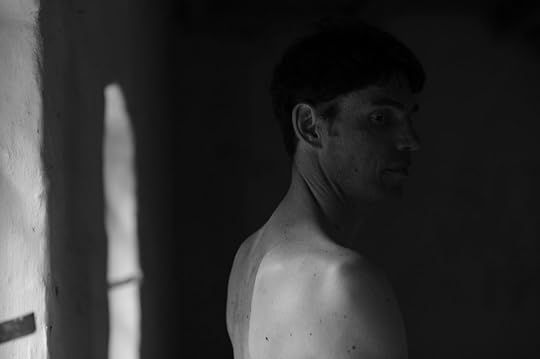
Professionally, I wonder, can I see men? Can I find the beauty in any male body? Will I as a woman be able to call forth the inner man and capture him in his true complexity? And more poignantly: will we be able to see past our polarities and projections, his and mine, and see the man, not as I want him to be, but as he is?
Personally, I’ve lived through a variety of intimate relationships of love, lust, friendship, power and poetry, including marriage and divorce, heartbreaks, ecstatic highs and a few too many magical men. Here I’ve arrived at ‘single’ midlife, where everything inside and outside is shifting, including my desires, needs, sureties and expectations, and so I suspect, my relationship to men will shift too. With my “Seeing Men” project I feel old enough to take the personal out of the equation, yet, I’m also curious about how I will perceive men at this stage in life.
Culturally, our world is churning. #MeToo have brought to our attention underlying often systemic and surely unhealthy (ab)use of power between men and women in private and public spheres. My work with women have allowed for deep personal healing, but inside that also a mending of the 'feminine divide” between us and between the Madonna and the Whore, which has kept women feeling “unwhole” and “unholy.” Together we have been able to change the competition for solidarity.
Would “Seeing Men” allow for similar transformation? A healing of the rift between men and women? With only a few men under my photographic belt, no pun intended, it is too early to say. But such were the considerations before I embarked upon this photographic adventure with Karsten.
70 emails, a 7-hour photo session and 555 photos later, Karsten writes eloquently about his experience being seen Here. In the following I share my perspective and reflections upon this profound and enriching encounter.
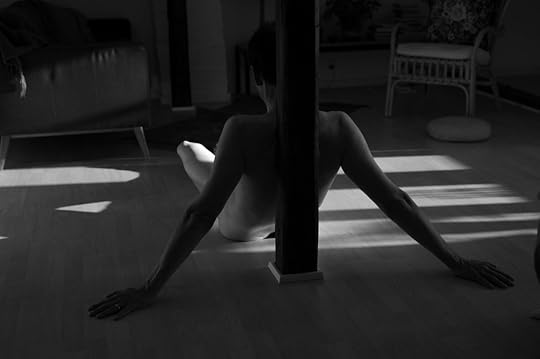
The Set Up: Finding A Perfect Place to Get Naked.
Upon receiving the first email from Karsten, a long conversation commenced. “I want to accept my body,” he said. “I want to feel strength and pride in the body I have. I want to See what You See. The people in your photos look like you know them, this make me feel in good hands.” His intentions and words assured me of his sincerity and that it would be safe to pursue this project with him.
Safety is important for both parties. Him to feel he can trust me and that I’m not going to expose him or otherwise cast him in unflattering light. For me to feel I can be alone with him and do my work without discomfort and sexual advances. I asked how his wife felt about him going off to be naked with a female photographer. “We’ve had to deal with my body for years now,” he shared, “and so, we’re rather open-minded. She’s trusting me to do this.“
As we worked through the logistics, I learned more about his physical constraints. While he was interested in both indoor and outdoor, the Fall temperatures had dropped and he worried about his health. With only one kidney, catching a cold could be deadly. I’m not as surefooted as I used to be, he wrote. Even normal walking on a flat surface sometimes can be a challenge, and I may need a place to sit down once in a while. And, without my glasses, he adds, the world turns a bit blurred.
In my mind, I tried to translate his words into visual metaphors we could work with - masculinity in a crippled body, limitation and freedom, strength and vulnerability, object and abject, blindness and clarity.
We decided to convene in Sønderborg in South Denmark, a place foreign to both of us. Through my network, I found two great locations - a large private bedroom under the roof where I’d be able to sleep the night before, and a raw open warehouse space above a new cafe in town.
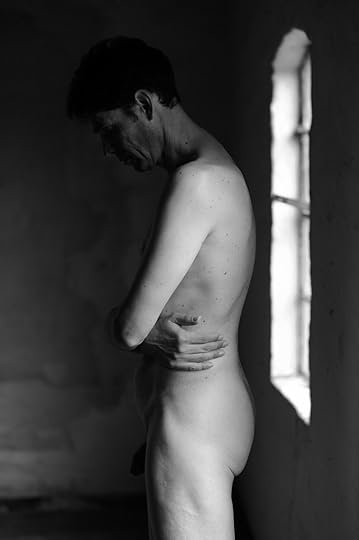
The Photographic Dance: Being Heroes for One Day.
One Monday morning at 8:20 he shows up at the door with a walking stick and a bag. Still in my nighties, I’m unprepared for his early arrival, but laugh it off and give him a hug. After all he was going to get naked, so who cared if I was a little ‘naked’ with him now. To my surprise he walks up the long stair case with no problem. He’s tall, slender, with dark hair and black glasses. We both looked a bit befuddled.
We drink coffee and ease into our adventure. We scout the top floor space. He shows me his stuff. A tie, a scarf, shirt, jeans and cuffs wrapped in pink fur.
“Cuffs? Getting a little kinky on me?” I chuckle.
“No, no, it’s to show how I’m limited, but still free.
“You’re quite courageous. I could tied you up and leave you here. “
He grins and pulls the pink fur off.
Not all symbolic items will turn out great, but I like working metaphorically. I prep my cameras, check the light, the time has come. “Where shall we begin?” I ask. “Getting naked might be a fast track through the awkwardness?”
He looks around and tinkers with his stuff, as if buying time. “There’s things I can’t control,” he says without looking at me.
“Yes. I know.” Inside I too feel a moment of hesitation. It’s always a deep dive for me, into the creative slipstream, into this persons inner world, but this time, it’s with a naked man. How will I deal? How will I make him feel comfortable?
He looks at me. “My wife did ask me what I’d do if I got an erection?”
“There’s that.” I smile at him.
“Once I was photographing a man outdoors, and he was worried about the opposite. “Karsten smirks.
“Here’s the deal,” I say, “if it happens, I’ll do my best to not take it personally. This is after all not about your penis.”
I give him a hug. “Why don’t you get naked and sit on the edge of the bed?”
As he sits there on the bed, I noticed the light caress his rounded back, tracing the outline of his spine. I wonder how the multiple sclerosis might feel inside, if it tightens his veins and muscles around his heart, his core, as if to curl him up in fetal position. Then he stands up, tall, straight, his body strong and muscular. From certain angels the scar across his stomach accentuates his waist line, giving him a more feminine shape.
We enter a deep concretrated flow, both moving in the space, with the sparse furniture, with the light. Our words dwindle. Through the lens, I search for facets of him, faces of him, movements of him. While he surrenders to my gaze, he also grows more comfortable using his body. Here and there I encourage with comments, and tell him, what I see. At the end, he’s on the bed again, it seems, exploring the space between tension and softness. For a moment, I sense an erotic emotional energy take hold of him, then me. I capture his exposed neck, his curved backside, the tension of his hand gripping the edge of the bed. Something is there. Although a vulnerable exposure, also a powerful force is present, at once feminine and masculine.
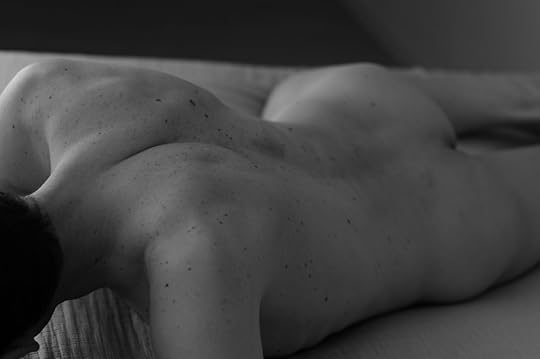
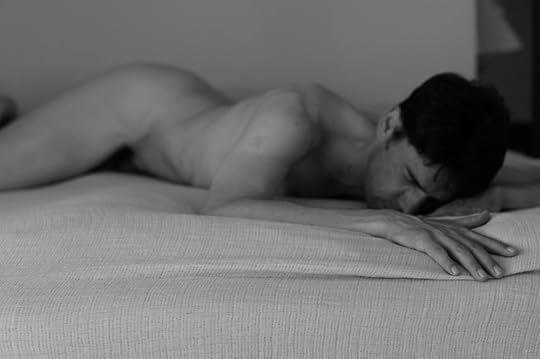
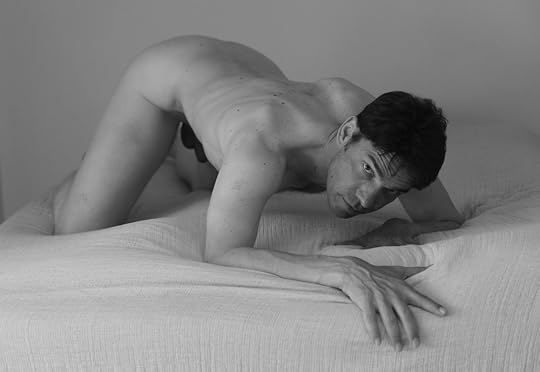
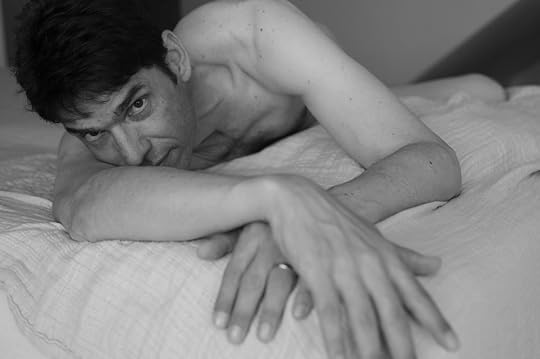
The eye of the beholder is complex, the meeting between the seer and the seen rarely neutral, rarely without power. I invite self-expression, though my presence will solicit responses. I don’t really take them personally, though in some situations I’ve projected a lot of my own energy into the space to help the person emote, move, feel. In this case, Karsten is willingly trying to use his body, and he is slowly appearing for me, and I sense, for himself as well. As I’m seeing him in a more sensual light, I wonder, if I with my feminine aesthetics and attempt to avoid sexualizing him will limit my way of seeing him as a sexual man.
Would a man photograph him differently? More manly? Hmm…
A few hours later, we run out of ideas and steam. We pack up and head out for the other space. At the cafe, we have coffee and cake and discover we share a passion for vintage cars, music, writing. He talks about musicians he’s met. Two strangers talking intimately, as if we’d known each other for long. Inside, I wonder, if we have the stamina for another shoot in the cold space above.
How Not to Disturb The Sheer Beauty of ErosThe room reminds me of my old barn in Sausalito. Gorgeous light spills through the old style windows. As we begin to shoot, I observe Karsten respond to the room. From a softer lived-in-space to this raw, unknown locale, a further shedding of layers is required, just as evermore freedom is invited.
As I move about him, observing closely through the lens his every move and gesture, the intensity grows. It feels as if we are pulled into the vortex of movement, body, light and shadow.
He overcomes his resistance to the cold dirty floor, and as he lies down, I get the sense of falling from grace, his surrendering of final control. He looks extraordinarily handsome all of a sudden. I tell him. Confidence grows in his body and gaze, as if he is emerging from below, coming up to meet me. Is he challenging me? Flirting with me? He feels more masculine, more centered in his own power, and thus, he draws me in.
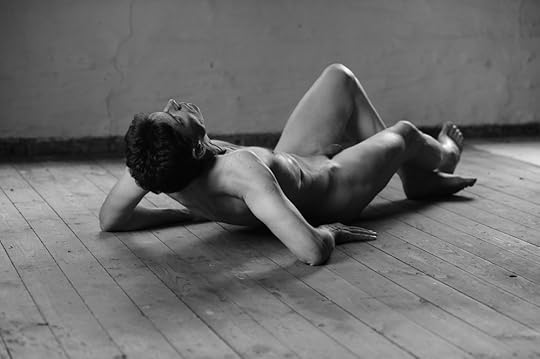
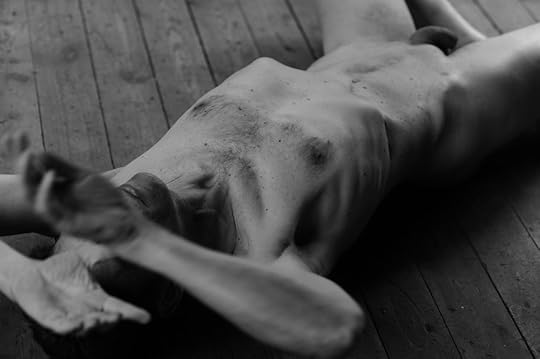
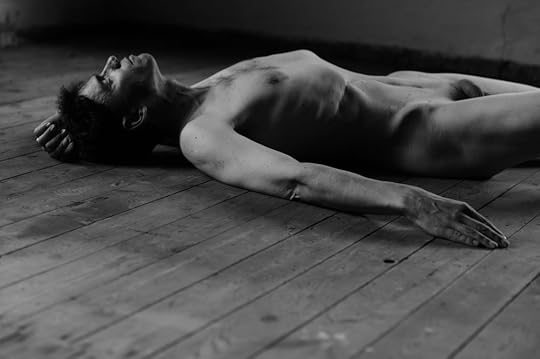
When nearing something alive, true, fierce, eros enters me, and I know it, because I respond kinetically with giggles, goosebumps, sighing, uttering, applauding. As it’s happening, my heart swells, my cheeks heat up.
Creative flow is often characterized by the loosing of self-consciousness, ‘becoming one with’, and so the drive to merge with your subject, is quite natural. This happens often when I photograph; I forget myself and enter into the act of seeing, sensing ‘the other’.
As he comes towards me, totally open, my neck hair rise. Oh, this happens, this always happens, I muse and I click, click and click. This is for me the grand finale, where the last bits of reluctance falls away, and he reveals himself unabashedly for me to see and capture. Of course, I fall in love.
This happens with the women. This happens with the men. When we both show up in a mutual gaze in an empty space without judgement, power and pre-tense, we fill it. But with what? Love? Eros? Spirit? Synergy? Connection? Ourselves? I don’t know. But it feels like love.
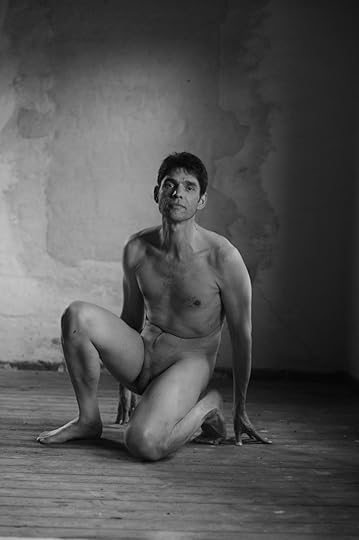
The Joys and Woes of the Being A Perfect Stranger.
Karsten drives me to the station. With no energy, no words left, I can barely speak. We hug. Before stepping onto the train, I turn around. Karsten stand there by his car, we both wave. Tears gather behind my eyes. An intense session always leaves me sentimental and well-spent, but this Farewell touches an emotional nerve. For a moment it seems to be the predicament of my life - as The Muse – a long line of short love affaires complete with the wave.
In truth, all day I’ve been reminded of a man I fell in love with a year ago. He’d wanted me to photograph him, but we fell in love instead, though, for various reasons we could not fully pursue a relationship, and the sadness spilled into this farewell moment with Karsten.
For all these years of doing this intimate work, I’d never fully understood why it always took so much out of me, leaving me spent, empty. Sometimes I’ve called it “burn out”, other times, I’ve wanted to run away from it. Here I was, empty, I’d given Karsten all I’ve got, I’ve loved him forth, and I’m at once grateful and sad as the train bumbles North. In my private heart, I felt my own longing for that loving gaze, for someone who’d stick around, to see me through.
At dinner with friends that night, I try to describe the jumble of feelings inside. How the intimate process of seeing requires both of us to open up and drop away armors, not unlike falling in love, where we automatically want to see and feel and devour everything about the other. Though in my case, as the photographer, the very premise for this revealing to happen is by me holding a neutral and space safe for the other to show themselves. I’m the “perfect stranger”. The experience is at once intoxicating and all-consuming.
Trine, my artist and art critic friend says, Oh but Rodin said the very same thing about his work, except he slept with all his models, as a way to release the intensity and desire for merging. We laugh.
The Photos: Making Him Feel Like A Natural Man.
While I’m recentering myself and gathering my energy, Karsten writes eloquent emails exuberant with feeling, wonder, gratitude. He is processing everything, having a hard time going back to normal. He wants more.
Lone, Only a few days in life are special, only a few encounters are magical, only a few experiences are larger than life, only a few friends can get closer to you than anybody else. This was such a day, such an encounter, such an experience, you were able to become such a friend for one day.
Lone, Is there any chance to repeat it? To continue? World it make sense? Could it be just as good as the first time? Or even more intense? I‘d like to think so, but I know it would be just a fantasy, a miracle, too good to be true, too difficult to be simple.
Lone, We were heroes on that day, weren‘t we?
We were. Meanwhile, I sort through the 555 photos of Karsten. A man is coming into full view. His vulnerability, his willingness, his humor, his ease, his tension, his strength, his seduction. I sense all of it. I tell him so. He writes:
Lone! I’ve been waiting for this message, and now I get nervous like a schoolboy who’s been waiting for an answer from his favourite girl. My heart’s jumping, soul’s starting to fly, feels like a freight train running through my chest, good vibrations spreading all inside of me. Guess from now on, I’ll have sleepless nights, ready to dive into your photos. Wish you could see me smile from ear to ear. XO Karsten
A few days later I send him the photos. 24 hours of silence. Then this:
I just finished watching the photos one by one, reminiscing how I got accustomed to being naked, being watched, being guided by that careful woman I had just met for the first time in my life, remembering how I started to feel familiar with you, feel safe and ready to move more elegantly, anxious to capture your attention, finally testing my ability to seduce you. All of this is mirrored in these photos. If I didn’t know this guy so damn well, I’d probably fall in love with him. XO Karsten
Like women, men need a mirror in which their handsomeness and lovability is reflected. In long term relationships, and as we age in youth-obsessed world, I suppose men too will start to feel invisible to the world, to themselves, to those closest by. My photographic eye lets people practice vulnerability; the chance to bare themselves to someone, who’s got no history or fixed idea about them, and so, in meeting the empty mirror they can better see themselves anew, unchained or just changed. Karsten writes more…
It is exactly what I hoped would turn out but couldn’t find the right words to express, because I was unconscious of this wish when we arranged our encounter. All my physical weaknesses, my long hard fight against cancer, the evermore difficult battle against multiple sclerosis, had robbed me off my self confidence as a man. By „SEEING ME“ naked and challenging me to reveal not only my body but also my personality, you gave me so much attention, showed so much female attraction that slowly I started to rediscover my male identity. And that felt so right and so good that I don’t want to forget a single moment of the time spent with you. I haven’t felt so much at home in my own skin for a very long time. Is it any wonder that I long to stay in touch with you, go on blossoming for you, recover through you, feel stronger in your presence? I probably wasn’t even aware of how deep below my soul had been sinking down.
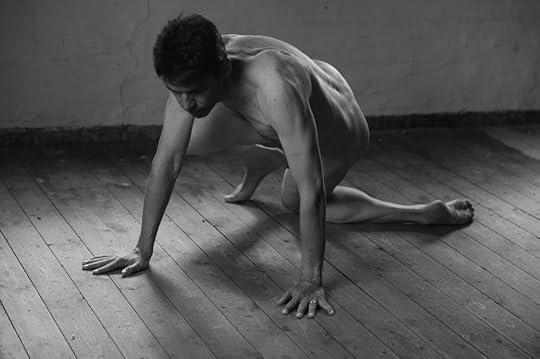
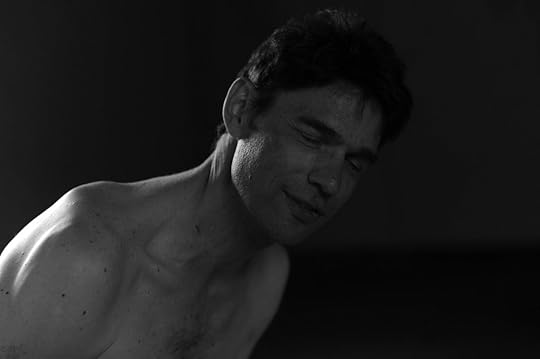
Integration: Returning Home, Some Sort of Wholeness
I understand where he is at; many women have felt equally elated from the experience. To be on the receiving end of this overflow of amour and gratitude is at once wonderful and woeful. I’m not unaffected by our encounter, but for different reasons. It is time for me to pull back, I tell him, and for him to direct his amorous feelings towards his own soul, body, wife and life. His new sense of self needs fuel from inside himself.
So often we try to hold onto the catalyst, the one that makes us feel open, seen, accepted, embraced, elevated, because we think by osmosis, we can hold onto the thrill and the burn. Just like when falling in love. We want to stay near, merge with, if not devour, the person that stirs such wondrous aliveness within our skin. Had I been Rodin, I may have relished in the romance with Karsten. But, I know it’s not for me. And that, the purity of my presence is precisely what allows for his experience of embodiment to occur.
Eventually, normal life does catch up with us. And the loneliness. Karsten shares:
Over the last weeks, I felt very lonely, and I wish I knew why. I guess, I feel, I believe, that our photo session was such an intense experience for me that it stands out far above the usual, the regular, the average, the normal. I was certainly more than pleased, I was intrigued to get your full attention, all your passion of the moment, your dedication to let me shine in your photos. I haven’t felt so valuable, so unique, so precious for a very long time. And the only way to deal with these feelings was probably by directing them towards you. I think I very rarely met a woman who could express such a passion, such a willingness to let herself drift into a dream and follow it with all her power. I wish I could give back to you just a fraction of what you allowed me to share with you.
When you talk about the personal side of your job, I think I know what you mean. It must be hard for you to bring in so much affection, to sympathize with your model in a way that enables you to find out his (or hers) sweetest look, make him appear charming, beautiful, lovable, also in your own eyes. And then...Just when photographer and model start to fit like a pair of gloves, the session is over.
[image error]
Rarely do we humans meet in a power free space without agenda and judgement. A space in which you drop the armor, release the chains and grow wings. This is what can happen when we, as man and woman, do and dare to be curious about our responses and revelations, dreams and desires and still, do nothing, but witness it all as it ebb and flow. In this way, being present, at once seeing and being seen, is erotic in the deepest sense.
Sometimes not claiming, not trying to possess, what we think we want is the true beauty of eros. By pursuing sensation, acting on impulse or naming moments too soon we kill the potent chemistry of and with life itself. When instead we pause to behold, to relish the moment in its pain and pleasure, the mystery will penetrate us, not as images or words, but as a profound sensation of trueness, connectedness, love.
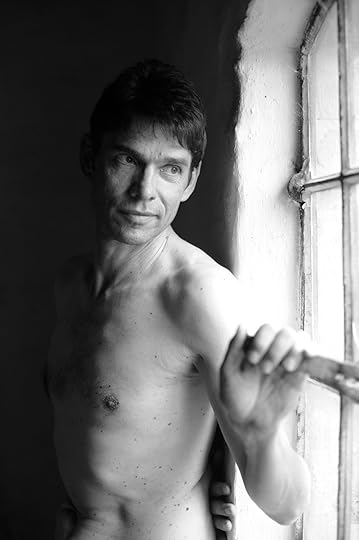
At the end of the Gaze, the longing.
Why am I taking you deep into this experience? Because I’m trying to make sense of the underlying creative process and the ambiguities I’ve felt about my work, but been unable to express until now.
Years ago, a woman inquired about my work. She wasn’t convinced my work could help her through a life transition. As she gets ready to leave, she turns towards me at the top of the stairs, tiny streams running down her cheeks, and says: “I’m not afraid of being photographed. I’m afraid of what I will see. I think I prefer to stay in the illusion of myself”. At that point I’d photographed a few hundred women and this hit me hard, like truth. We all long to be seen, but are terrified of what we (and you) will see. Why, I asked.
I’ve always known that I been motivated by more than mastering the art or the business of Seeing. At first I was intrigued by the women’s desire to be photographed, then with the power of my camera, while a rebellious force grew inside of me and made me want to give the women the loving gaze they’ve so rarely received by lovers, parents, society. I made the book EMBODY to celebrate the complex woman in ways I too wanted to be seen - in all my glorious light and shadow. By healing the women I might have sought to heal myself. I’ve written about this. I’ve talked about this on the Tedx Stage. But only now, I’m nearing the paradoxical heart of the matter.
The people I work with come to be seen by a loving gaze. I too am longing to be seen as such. I give them the love I wish for myself. Possibly, I feel the love reflected in their eyes in a short moment of recognition.
By working from my own deepest longing, I’m giving away what I desire the most. In this way my work has been both a gift and a curse. A pleasure and a pain. A giving and a taking. A joy and a sorrow. A light and a shadow.
When we work from a core wound, shadow or longing in ourselves, we are at once delivered and destroyed. As we spend it all, we also have to learn to fill ourselves again. Such is the circular process of creation and destruction. While we are constantly reminded of the pain, we have to move through it to discover the pleasure. It’s a beautiful divine thing. It fills me with gratitude and reverence.
And so, the ebb and flow of love remains, while the lover and the artist walk into the river, hand in hand…
© Lone Mørch