
Kevin Doyle's Blog
December 2, 2024
The Bhopal “Accident”
Forty years ago this month, shortly after midnight on December 2nd 1984, the Bhopal chemical “accident” happened in Madhya Pradesh state in northern India. In the region of 4,000 people were poisioned to death that night. A further 15,000, at least, were to die in the days, weeks and months that followed. Overall, nearly half a million people were affected in someway by the massive leak of the highly dangerous chemical, methyl isocyanate. To date the true scale of the impact of the accident has never been fully established, nor has adequate compensation been paid to those who suffered death, illnesses and long terms health complications dues to what happened that night.1
 This inconic photo associated with the Bhopal disaster is of a young girl – never identified – as she was being buried the day after the main leak of methyl isocyanate at Union Carbide’s Bhopal site. The photo shows the severe damage to eyes of the victim. This shot was taken by Pablo Bartholomew, an Indian photo-journalist.
Not one but several injustices would subsequently play out around the Bhopal disaster. The US corporation who owned the site, Union Carbide (UC), quickly offered up the explanation that sabotage had been the root cause of the leak. By doing this, UC deliberately muddied the waters around who was responsible, delaying and ultimately frustrating the demands for justice. It was a callous move by the powerful corporation and one that would ultimately be shown up for what it was: lies. But the confusion formented by Union Carbide’s claim helped assist it with its plan not to compensate the victims or even help them with their medical care. Many of those who survived the leak itself were left to languish in pain for years and decades afterwards, before finally being awarded paltry sums of money. To this day the victims are still fighting for adequate care and justice.
What eventually emerged was a picture of criminal mismanagement, corporate disregard for safety, and outright racism directed at the mainly Indian workforce.
Getting to the truth of what happened at Bhopal took time. What eventually emerged was a picture of criminal mismanagement, corporate disregard for safety, and outright racism directed at the mainly Indian workforce. While the Bhopal tragedy had a great deal to do with the bottom line and putting profits before people, it was also a direct result of a process familiar to many workers: those who voiced concern and alarm at the state of safety at the plant were often punished for speaking out. Some were demoted, others transferred, and others again fired. In Bhopal, the twin issues of cost-cutting and authoritarianism had catastrophic consequences. The Bhopal site became a tragedy waiting to happen, the inevitable result of negligence, inaction, and willful and reckless cost-cutting at the expense of safety. Of course, in the final analysis, it would be the poorest in Bhopal who would suffer the most on that fateful night and since.
A Brief HistoryIn the mid-seventies, Union Carbide (UC) was the seventh largest supplier of industrial grade chemicals in the world, operating in more than forty countries. It was something of a household name in the United States manufacturing products as diverse and different as pesticides and household kitchen wrap. It was headquartered in Danesfort in West Virginia.2
The Bhopal factory was opened in 1969 and was wholly owned and operated by Union Carbide (India) Limited (UCIL), a division of Union Carbide. Its main products were Sevin and Temin, insecticides aimed at replacing the highly poisonous and discredited agrichemical, DDT.3 One of the ingredients used to make Sevin was methyl isocynate (MIC). Until 1978, MIC was imported in tankers from Union Carbide’s US manufacturing plant at Institute in West Virginia. Because this option was costly and unsafe, involving inter-continental transportation, UCIL took the reasonable decision to manufacture MIC in India in close proximity to where it would be used.
The city of Bhopal was chosen as the site for the plant. Construction began in 1979, with production getting underway a year later. It was envisaged that MIC supply would exceed demand during certain periods in the production cycle, so excess storage capacity was installed at the new plant to accommodate this. In total, MIC storage at Bhopal consisted of three large tanks, each with a capacity to hold 57,000 litres. Two tanks were specifically dedicated to storing “usage grade” MIC, while the third was reserved for holding lower-grade MIC that didn’t meet the quality standard and would require reprocessing.
Officially the population of Bhopal stood at 300,000 in 1979. However, over the next number of years, it rose dramatically, swelling to 900,000 by 1984 (according to official census figures).4 From a legal standpoint the MIC plant should not have been located in Bhopal or any equivalent urban area due to the known high toxicity of the chemical. However, there was considerable regional competition within India to host the plant and as a result the planning stricture advising again MIC production near an urbanised setting like Bhopal was waived.
MIC was a known dangerous and toxic chemical.5 A liquid at room temperature, it had a low boiling point and vaporised quickly if exposed to heat. In its gaseous state MIC is particularly dangerous as it is invisible to the eye and denser than air. In high concentration it has the capacity to travel undetected away from where it is stored, usually along the ground. The only reliable indication a human might have that MIC was present nearby related to the chemical’s lachrymatory properties: even in small amounts MIC irritated the eyes and caused the person exposed to its vapour to cry. A further consideration and danger is that MIC easily reacts with water to form an even more dangerous substance, phosgene – a poison that functioned as the active ingredient in mustard gas, a chemical weapon used in World War 1.6
Union Carbide had considerable expertise with the manufacture and handling of MIC. The Bhopal plant was modelled on UC’s plant at Institute in West Virginia and there was no reason not to expect that the Bhopal facility would also operate safely. Indeed, there had never been any serious accidents or loss of life at UC’s West Virginia plant relating to MIC production.7
However, to cope with the possibility of a leak – and as was normal practice – the MIC storage facility was equipped with several safety defence systems which were designed to neutralise MIC and the threat it posed in the event of a serious leak of the chemical. These systems – there were four in all – were standard defence mechanisms employed in the chemical and pharmaceutical sectors in the event of gas and noxious chemical leaks. They included a vent gas scrubber, a refrigeration system, a flame torch burner and a water shower unit.
Timeline of the “Accident”On the evening of December 2nd, 1984, production workers at the Bhopal plant were instructed to conduct a maintenance operation to clean the pipe network supplying nitrogen to the MIC storage tanks.‘Blanks’ should’ve been inserted into the network at various junctions in the complicated pipe system surrounding the tanks. These blanks are critical as they prevented water (that was being used in the cleaning process) from escaping into areas that it shouldn’t go into. Because water reacts vigorously with MIC, it was particularly important that this procedure be followed scrupulously by those involved in cleaning routines at the Bhopal site.The blanks were either not inserted or were inserted in the wrong place.8 In addition, the pipes were so badly clogged – due to the inadequate cleaning routine at the site – that the cleaning water backed up in the system. At one point an operator at the Bhopal site noticed that while water was being pumped into the pipe network (to clean it), no water was exiting from any of the outlet drains. This was clear indication that something was wrong. The obvious question was where was the input water going? The worker reported that matter but was told to continue working regardless.9It appears that a substantial amount of cleaning water built up inside the pipe network and eventually reached a level where it reversed direction and found its way into the MIC storage tanks. It was later estimated that by 10pm that evening nearly 400 litres of wash water had entered into the MIC storage tank, E610. E610 was already registered to be holding 45,000 liters of liquid MIC.The shifts change at 10.45pm and an incoming operator, Suman Dey, noticed a problem. The pressure inside the MIC tank, E610, was veering high – although he noted that it was not yet outside its allowed upper limit. (This rise in pressure was due to water reacting with MIC to form phosgene gas. In addition this chemical reaction was generating heat, accelerating the vaporisation of MIC storie in E610.)Around an hour later, a number of workers on site were experiencing ‘tear-gas’ like irritation in their eyes. This was an indication that MIC was present outside of the storage tanks and that it had in effect escaped into the open air around the storage zone. By this time the massive leak of MIC was underway.After a late tea break, Dey went to examine the MIC tank again and at this point he heard rumbling noises coming from inside the huge storage vessel, E610. This was a further sign that the temperature and pressure inside E610 was now at a dangerous level. In effect the heat was so great that the MIC was beginning to boil.E610 was equipped with a pressure release valve system that allowed excess pressure to ‘blow off’. This pressure release system was in place precisely to prevent a tank like E610 over pressurising and exploding – an outcome that could cause immediate devastation. However in effect MIC and phosgene were now venting into the air around the tanks.With the situation turning critical Dey returned to the control room to trigger the safety systems devised for this very situation. He attempted to activate the first and most important system known as a gas scrubber. Scrubbers are tall, rocket shaped towers and operate on the principle of contact neutralisation. Any escaping the gas is channeled from the venting values into the mouth of the scrubber unit. As the dangerous gas passes upwards through the scubber it is doused repeatedly with a fine mist of neutralising liquid – in this case concentrated caustic soda. Normally this would rendered almost all escaping MIC harmless.However, when Suman Dey pressed the button to activate the gas scrubber pump – which pumped the all important caustic solution around and through the scubber – it failed to respond. Despite repeat attempts he had no success with the piece of equipment. It no longer worked.10As a result the escaping gas passed through the scrubber unaffected. But the next backup system should have been able to manage this unexpected outcome. The second backup – a gas flare – is a crude but highly effective treatment. In effect it should’ve immediatly incinerated any escaping MIC. However it also didn’t work. It later emerged that a portion of the supply pipe connecting the flare to the its gas supply was missing and had been for months. In other words the flare defense unit had no supply of gas to it: it was useless.The third line of defence was a water shower/ spray system. It was designed to drench and neutralise any escaping MIC vapour. It also failed. It later emerged that the pressure of the water supply to this sytesm was insufficient. Water could not be pumped up high enought so that it would fall as a shower over the escaping vapour.The final defense, it also emerged, had been inoperable for months. When the Bhopal site had been built, a refrigeration system was also installed aroiund the MIC storage tanks. This cooling system was based on the fact that if MIC is kept at a cool temperature, normally close to 0ºC, is will not react with water – no matter how much water it comes into contact with. For this reason, E610 was equipped with a large refrigeration jacket designed to keep the tank and its contents at a temperature of less than 6ºC. However, the refrigeration system was shut down in the summer of 1984, nearly six months prior to the accident.11 Even worse the Freon gas in the unit – the basis of the cooling unit – was removed for use elsewhere in the plant in an operation that is believed to have taken place to save money. The refrigeration system couldn’t be deployed.With all four safety systems inoperable, the temperature inside Tank E610 continued to climb. As it did, the pressure in the tank also rose. Once it reached a certain level it began to escape at pace from the storage tank through its emergency pressure-release system. MIC leaks for well over 2 hours gathering close to the ground around the storage tanks. However at a certain point it reached a critical concentration and began to migrate. This process took it towards the perimeter of the plant where a large concentration of people lived. During the early hours of the morning of December 3rd, 1984, MIC reached the plant boundary and then crossed as an invisible vapour into the densely packed slums surrounding the plant. Once inhaled MIC reacts with the mucous lining of the respiratory system causing severe irritation and the production of phosgene. Death is painful and similar in nature to drowning – the lungs fill with water. The victim can also die from cardiac arrrest.Approximately 4000 died on that night in 1984.12 The InvestigationThe Bhopal accident was the single largest chemical accident in history. In the aftermath numerous investigations were conducted into what went wrong at the Union Carbide site. Broadly speaking, these agree on the evolution of the disaster. However, there was disagreement over the immediate cause of the accident – as to how such a large volume of water entered tank E610 where MIC was stored. At the centre of this controversy was the unsubstantiated claim make by UC’s senior management that water was deliberately pumped into E610 in an act of sabotage. As mentioned Union Carbide never produced any evidence to support his allegation, but the charge of sabotage succeeded in muddying the waters in respect to who bore responsibility for the tragedy. This allowed UC and its shareholders to avoid paying adequate and just compensation to the victims – a matter that remains unresolved to this day.13
However, from the general standpoint of the Bhopal tragedy, how water entered E610 is only a part of the story. The Bhopal site was designed and built using the knowledge and know-how that UC had aquired from years of manufacturing MIC at its plant in Institute in West Virginia in the United States. Central to this design was elaborate containment sytems put in place to prevent and/ or contain a leak of the lethal chemical. Importantly MIC storage was equipped with a refrigeration system to keep liquid MIC at an inert temperature. Refrigeration was a supremely effective means to stopping MIC from reacting with water. Indeed if the refrigeration system alone had been working that night it would probably have prevent what happened but, as was discovered, the entire refrigeration system had been robbed months earlier of its lifeblood: freon gas.
In addition, the three safety backup systems all desigend to cope with a big leak of MIC failed on the night of December 2nd. As the owners and operators of the plant, Union Carbide bore responsibility for these failings.
What emerged early in the investigations was evidence that the Bhopal plant had been problematic from when it first began to produce MIC. This was graphically highlighted by local journalist, Rajkumar Keswani, who took an interest in the Bhopal site after he learned from an employee at the plant about a number of hazardous incidents that had happened there that had been hushed up. Looking closer at operation at the Bhopal site, Keswani came to realise that a number of highly dangerous chemicals – MIC and phosgene – were routinely being used in a less than safe manner in large quantities. The death of a worker, Ashraf Khan, in December 1981 prompted him to write a number of prophetic articles about UC’s Bhopal facility. Keswani found out that Khan was conducting a routine operation when he was doused in poisonous phosgene. He died the following day from his injuries.14
Keswani identified three important aspects of the Bhopal plant which, it was later concluded, contributed to the scale of the disaster that happened in early December 1984. Firstly, safety had a low priority at the Bhopal plant – even though the plant used a number of highly toxic chemical. Secondly, a large ‘unofficial’ population was living alongside the plant and was entirely unaware of the danger that existed close by.15 Thirdly, MIC was not just a dangerous substance, it was a killer chemical and highly toxic.
In a series of article published in local magazines, Keswani did everything he could to explain the dangerous situation at the plant. He pointed out that small leaks of highly toxix chemicals were happening at the site on a regular basis. This would be a red flag issue in most chemical plants, a pointed signal to those involved in safety that something serious was awry. But at Bhopal nothing was done. Keswani drew a significant conclusion from this. He argued argued that if the disregard for safety at the site was not arrested a major leak with devastating consequences could happen. His warnings were largely ignored, but in a final article, published on six months before the tragedy, he warned that ‘not a single witness would be left alive’ if a major leak of MIC took place at the plant. His doomsday prediction almost came through.
The fact that regular small leaks of gas, including MIC, were commonplace at the Bhopal site was a red flag that should have prompted the plant’s management and the authorities to act. Instead, the ignored the situation and continued without improving site safety. Technicians and workers were rarely alerted to any leaks occurring at the facility and often only became aware of the danger that they were in by noticing stinging in their eyes.16 Apart from the tragic and painful death of Ashraf Khan, in addition there was a series of other significant accidents at the site before the disaster in December 1984.
In early 1982, over twenty workers were exposed to phosgene and had to be hospitalised. Later the same year a chemical engineer was badly burned when he was splashed with MIC. This was followed, in October 1982, when a serious incident happened involving a leak of MIC, hydrochloric acid and chloroform. Three workers were injured and residents in the nearby unofficial settlement had to be evacuated. This prompted one of the trade unions at Bhopal to publicise the dangers posed by the plant by putting up posters around the site alerting civilians to the potential scale of the danger. These posters said, “Lives of thousands of workers and citizens are in danger due to poisonous gas”.17Management’s complicity in the catastrophe was total.
Soon after the disaster in December 1984, a comprehsive report and review of safety at the Bhopal site surfaced. In the fact report had been written two years before the trajedy and was the result of an audit of the Bhopal site by an experienced safety inspection team from UC’s Danesfort plant. The audit reported major and serious deficiencies at the Bhopal site. It circulated among senior managment at Bhopal and Danesfort but nothing was done about any of the key issues highlighted. Many of the findings of the audit report would later emerge as factors in the disaster in 1984. The primary points emerging from the audit are worth examining.
There was a prevalence of substandard and faulty equipment at the Bhopal site. Essential repairs were often only made after protracted periods of inactionRepairs were often completed using substandard replacement parts, leading to new and repeat probems.Repairs were begun but were often left incomplete rendering key items of equipment unusable. In fact this was the reason why one of the key defense systems – the flare – failed to work on the night of leak. A section of corroded pipe was earmarked for replacement and was removed. But the missing section of pipe had not been replaced even after a number of weeks.The audit found that the water pressure at the site – a key element of the safety response system in all chemical plant – was deficient in several key areas. It recommended addressing this issue as a priority but nothing was done by UC’s Bhopal management. Again the low water pressure issue was also a major factor exacerbating the trajedy on the night of the leak, contributing to the huge and dangerous buildup of MIC on site.There was a high turn-over of personnel at the plant with employees being moved between functions and jobs without due regards to training and safety upkeep. This practice directly contradicts best practice and led to a situuation where inexperinced workers were often left to operate high loads of highly dangerous chemical. The issue with personnel didn’t stop there though. The audit found that Bhopal’s workforce were insufficiently trained on the safey handling of the chemicals used at the site. Perhaps most damning of all most of the site operators only spoke broken English and read it with difficulty whereas all the plant’s operating manuals were only in English! Altough this begars belief it was the situation at the Bhopal site.Most damning of all was this: most of the site operators only spoke broken English and read it with difficulty whereas all the plant’s operating manuals were in English.
The Danesfort safety audit report was damning and was availably internally in UC corporation before the tragic accident at Bhopal. However its publication internally in UCIL and UC did not lead to an interruption in production at the site.18 The issues it raised appear not to have been addressed and in fact a number of specific shortcoming identified in the Danesfort report, later contributed directly to the disaster on the night of December 2nd .
It was clear that management at Bhopal was seriously defficient. But the matter goes much further and deeper than that. Managment at UC’s Bhopal’s plan actively denied there problems at the site when they knew they were widespead. In fact efforts to alert them to what was wrong were met with derision. In an exchange with one of the main unions at the facility in August 1984, months before the disaster, management claimed that the Bhopal plant complied with all state regulations in terms of operation and air pollutions guidelines. The general manager even declared that the UC’s Bhopal plant was a model operation that other facilities aspired to copy and one of best run plants in India.19
Behind Bhopal’s poor safety record lay the matter of authoritarianism and power. From the outset the Bhopal site was in trouble because it was failing to make profits in a market setting that was also undergoing significant downward momentum. As a result of this difficult economic context the Bhopal site was instructed to cut costs in order to minimize loses to UCIL and its parent company, UC. These orders which came from corporate headquaters was the background to what the Danesfort audit report found. For example, the issue around the refrigeration unit used to for storage tanks directly related to this. A few months before the tragedy, the Freon gas used to maintain the MIC storage tanks was removed and taken to a different part of the plant. In other words UC were not prepared to purchase Freon for the site even though it was a key part of one its major safety defence systems for a known highly dangerous chemical. That a risk like this could be taken by management was damning in its own right. It also tells us clear what senior managers thought was the priority. When asked to choose between the employee and civilian safety or following the orders from corporate headquarters, it chose to follow orders.
A further arena in which this was seen was in staffing levels inside the plant. During his tenure at Bhopal, CEO Jagannath Mukund oversaw a reduction in staffing. Again the aim was to make saving irrespective of the repercussions on safety. In the MIC production zone, the numbers on duty on each shift was reduced from eleven to five while among maintenance crews there were cuts across the board of 50%.
Inside the plant, the decline in safety was noticed. In tandem with the cuts however a climate of fear and intimadition reigned. Workers who spoke out were dismissed – a response by management that had a chilling effect on all those who remained on at the plant. The message was made clear that senior management was going to get its way in terms of cutting cost. If this was resisted or even spoken about then the ultimate sanction of management – to fire those who were prepared to speak out – would be used and was.
Testimony by a number of workers and ex-workers at the Bhopal plant confirmed that this was what happened in the lead up to the tragedy. Kumkum Saxena got a job with Union Carbide in 1975 as a medical officer. She drew attention of a raft of unsafe practices at the plant and eventually resigned in 1982, a full two years before the accident. She recalled that that there were minor leaks at the plant “all the time”. Alarm sirens went off regularly but workers were advised to continue working. Saxena only learned about the dangerous chemicals being stories at Bhopal during her training. She witnessed many operatives working in areas where the levels of toxicity far exceeded what was recommended or permissible. She also realised that there was little awareness outside the Bhopal facility of the danger that the plant posed. This was brought home to her tragically in 1981 when plant operative Ashraf Muhammed was drenched in phosgene and later died. Like others, she also became aware that the Bhopal plant also represented a major danger to the thousands of people who were living beside the facility. On one occasion she raised the issue of the site needing to address the need for an evacuation plant in case of a major leak but she was told to stay quiet and that her idea would cost too much money.20 A notable contributory factor in respect to the Bhopal tragedy is that the plant didn’t even have an alarm siren at its disposal that could be activated to alert the public in case of a major leak.
What we see then in relation to the Bhopal tragedy is regime of cost-cutting implemented without due regard for safety. The senior managers acted in a cavalier, authoritarian manner to fulfil the directive of head office to reduced cost at plant. When the attention of middle and senior management was provoked by complaints and reports from site workers, they chose to ignore these warning. Frontline workers and non-frontline workers who observed the dangers weren’t listened to. Others were pressured to stay quite or had their objections dismissed on cost grounds rather than on safety grounds. Some workers were also dismissed for speaking out and others again were made reductant for reasons that were tied to their outspokenness workers to stay quiet about what they witnessed and if workers didn’t they had them fired or moved to other jobs.
ReferencesJames R. Chiles, Inviting Disaster (New York, HarperBusiness, 2002), 262. See also here. ︎Joyce Fortune and Geoff Peters, Learning from Failure (London: Wiley, 1995), 152 ︎DDT or Dichlorodiphenyltrichloroethane is an organochlorine that was widely used as an insecticide until a worldwide ban was imposed on its use in 2004 ︎Sanjoy Hazarika, Bhopal (India, Penguin, 1987), 60 ︎Fortune and Peters, Learning from Failure, 154 ︎Chiles, Inviting Disaster, 266 ︎Charlies Perrow, Normal Accidents (Princeton, 1999) 358 ︎Chiles, Inviting Disaster, 265. This error is believed to have resulted from staff shortages and cutbacks. A supervisor unfamiliar with the MIC area was in charge of the clean up on the night of the tragedy and may not have understood the complexity or dangers associated with the ingress of water ︎Ibid. 265 ︎Ibid. 266. Some reports suggested that the gas scrubber did operate but either underperform or was inadequate given the scale of MIC gas that was escaping. See Fortune and Peters, p160-161 for a more detailed explanation. ︎Chiles, Inviting Disaster, 266. ︎The exact death toll and the numbers seriously injured continues to be disputed. For more see “Bhopal Disaster – Wikipedia”. 2020. En.Wikipedia.Org. https://en.wikipedia.org/wiki/Bhopal_disa ︎See Hazarika, Bhopal,49 for more on Warren Anderson the CEO of UC. Anderson absconded while on bail. He faced charges in India but was never brought to justice. See also Chiles, Inviting Disaster, 267 ︎Hazarika, Bhopal, 39 ︎There was no safety evacuation plan in place at Bhopal that took into consideration the large number of civilians that were living in close proximity to the storage and production facility. ︎Hazarika, Bhopal, 55 ︎Ibid. 62 ︎Ibid. 62 ︎Ibid. 63 ︎Why I quit Carbide before 1984, by their medical officer Kumkum Saxena | International Campaign for Justice in Bhopal (2010). Available at: https://www.bhopal.net/4894/ (Accessed: 23 March 2021). ︎


July 19, 2023
About Enrique Marco Nadal – Spanish Civil War Veteran

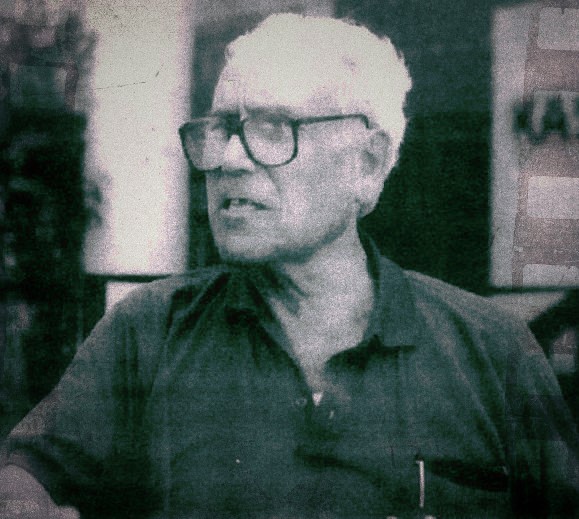
Enrique was born in 1912. He served as the General Secretary of the National Federation of Railway Industries (an affiliate of the CNT) from 1931 to 1936. When the Spanish Civil War broke out he joined the Iron Column, a fiercely indpendent workers’ militias. It had over 3,000 members, mainly anarchists and surpassed most other of the militias with their bravery.
It was probably the most revolutionary of all the columns. For them the war was not just a civil war to defeat Franco and the Right but a war to liberate the workers and peasants from capitalism. One of the column’s delegates to the CNT Congress in November 1936 declared “Our entire conduct must not aim at strengthening of the state. We must gradually destroy it and render the government absolutely useless”.
“O ur entire conduct must not aim at strengthening of the state. We must gradually destroy it and render the government absolutely useless.”
The Iron Column opposed the entry of the CNT into the central government and held out to the last before submitting itself to the discipline of the central government, which was slowly restored after the initial revolutionary committees had been undermined. Because the column refused to accept the government’s authority it was refused arms, supplies and eventually pay. With the crisis engulfing the Republican cause deepening Enrique and his comrades were left with no choice; the Iron Column was subsumed into regular army . Enrique then served in a regular brigade until the end of the war. He was later interned by the fascists, but escaped after 5 months and fled to France.
After FrancoIn January 1945 he was captured by the Nazis but was released with the end of the war. He again became active and at the end of the year became a representative of the National Committee of the CNT in exile. In 1948 he returned to Spain. In May 1947 he was captured in Barcelona and held for 47 days. He was transferred to Madrid where he was constantly interrogated for 103 days. Eventually he was sentenced to death. This was commuted though and he served 11 years penal servitude. On release he was exiled to a place 300 km from his usual residence before the Civil War. Enrique continued his activism in the CNT in Spain. Following the death of Franco and the formal end to the dictatorship, he took his place in the reviving libertarian workers movement. He was a member of the CGT and passed away in 1994 in Valencia, Spain.
Spanish Civil War Veteran Visits Ireland(Original post from Workers Solidarity, September 1986)JULY saw the 50th anniversary of the Spanish Civil War. The commemorations that were held and the many articles in the newspapers had one thing in common (besides commemorating the Civil War). They all failed to mention or discuss in any meaningful way the revolutionary aspects of the war. They failed to point out that not only were the workers and peasants fighting Franco but also the very system of capitalism that gave rise to fascism in the first place. The workers and peasants tore down the old social order. They formed workers militias, industrial collectives and took over vast amounts of land. They were beginning to build a new social order based on their needs. A social order without bosses, landlords, politicians and bishops.
The commemorations failed to mention that the driving force behind this social revolution were the militants of the anarchist National Confederation of Labour(CNT). With 1.5 million members in 1936 it launched a revolution in response to the fascist coup. Without its immediate mobilisation Franco’s victory would have been so much easier, and if the revolution had succeeded Franco would never have come to power at all.
This is only a very brief outline of what the anarchists did. Few people know about it and it has been deliberately hidden by those who do but who do not like it. Because of this the Workers Solidarity Movement is bringing Enrique Marco Nadal to speak in Ireland in October.
IRON COLUMN
Enrique was born in 1912. He served as the General Secretary of the National Federation of Railway Industries (an affiliate of the CNT) from 1931 to 1936. When the Civil War broke out he joined the Iron Column, one of the most notorious militia columns. It had 3,000 members, mainly anarchists and surpassed most others with their bravery. It was probably the most revolutionary of all the columns. For them the war was not just a civil war but a war to liberate the workers and peasants, One of the column’s delegates to the CNT Congress in November 1936 declared ‘Our entire conduct must not aim at strengthening of the state. We must gradually destroy it and render the government absolutely useless’. The column opposed the entry of the CNT into the central government and held out to the last before submitting itself to the discipline of the central government, which was slowly restored after the initial revolutionary committees had been undermined.
Because the column refused to accept the government’s authority it was refused arms, supplies and eventually pay. Eventually the column was left with no choice. Enrique then served in a regular brigade until the end of the war. He was later interned by the fascists, but escaped after 5 months and fled to France.
INTERNED
In January 1945 he was captured by the Nazis but was released with the end of the war. He again became active and at the end of the year became a representative of the National Committee of the CNT in exile. In 1948 he returned to Spain. In May 1947 he was captured in Barcelona and held for 47 days. He was transferred to Madrid where he was constantly interrogated for 103 days. Eventually he was sentenced to death. This was commuted though and he served 11 years penal servitude. On release he was exiled to a place 300 km from his usual residence before the Civil War. Enrique is still active and should be well worth hearing, Get the next issue of Workers Solidarity for details of the public meetings.
Other Links
Enrique Marco Nadal (1913-1994)
The Railwaymen In the Revolution in Spain and the Spanish Civil War
Permissions: The image of Enrique Marco Nadal is taken from the above bio under the conditions of fair usage.
About Enrique Marco Nadal – Spanish Civil War Vetern
Original Post from Workers Solidarity (September 1986)Enrique was born in 1912. He served as the General Secretary of the National Federation of Railway Industries (an affiliate of the CNT) from 1931 to 1936. When the Spanish Civil War broke out he joined the Iron Column, one of the most notorious militia columns. It had over 3,000 members, mainly anarchists and surpassed most others of the militias with their bravery.
It was probably the most revolutionary of all the columns. For them the war was not just a civil war to defeat Franco and the Right but a war to liberate the workers and peasants from capitalism. One of the column’s delegates to the CNT Congress in November 1936 declared ‘Our entire conduct must not aim at strengthening of the state. We must gradually destroy it and render the government absolutely useless’.
Our entire conduct must not aim at strengthening of the state. We must gradually destroy it and render the government absolutely useless.
The Iron Column opposed the entry of the CNT into the central government and held out to the last before submitting itself to the discipline of the central government, which was slowly restored after the initial revolutionary committees had been undermined. Because the column refused to accept the government’s authority it was refused arms, supplies and eventually pay. With the crisis engulfing the Republican cause deepening Enrique and his comrades were left with no choice; the Iron Column was subsumed into regular army . Enrique then served in a regular brigade until the end of the war. He was later interned by the fascists, but escaped after 5 months and fled to France.
After FrancoIn January 1945 he was captured by the Nazis but was released with the end of the war. He again became active and at the end of the year became a representative of the National Committee of the CNT in exile. In 1948 he returned to Spain. In May 1947 he was captured in Barcelona and held for 47 days. He was transferred to Madrid where he was constantly interrogated for 103 days. Eventually he was sentenced to death. This was commuted though and he served 11 years penal servitude. On release he was exiled to a place 300 km from his usual residence before the Civil War. Enrique continued his activism in the CNT in Spain. Following the death of Franco and the formal end to the dictatorship, he took his place in the reviving libertarian workers movement. He was a remember of the CGT and passed away in died in 1994 in Valencia in Spain.
Spanish Civil War Vetern Visits Ireland
JULY saw the 50th anniversary of the Spanish Civil War. The commemorations that were held and the many articles in the newspapers had one thing in common(besides commemorating the Civil War). They all failed to mention or discuss in any meaningful way the revolutionary aspects of the war. They failed to point out that not only were the workers and peasants fighting Franco but also the very system of capitalism that gave rise to fascism in the first place. The workers and peasants tore down the old social order. They formed workers militias, industrial collectives and took over vast amounts of land. They were beginning to build a new social order based on their needs. A social order without bosses, landlords, politicians and bishops.
The commemorations failed to mention that the driving force behind this social revolution were the militants of the anarchist National Confederation of Labour(CNT). With 1.5 million members in 1936 it launched a revolution in response to the fascist coup. Without its immediate mobilisation Franco’s victory would have been so much easier, and if the revolution had succeeded Franco would never have come to power at all.
This is only a very brief outline of what the anarchists did. Few people know about it and it has been deliberately hidden by those who do but who do not like it. Because of this the Workers Solidarity Movement is bringing Enrique Marco Nadal to speak in Ireland in October.
IRON COLUMN
Enrique was born in 1912. He served as the General Secretary of the National Federation of Railway Industries (an affiliate of the CNT) from 1931 to 1936. When the Civil War broke out he joined the Iron Column, one of the most notorious militia columns. It had 3,000 members, mainly anarchists and surpassed most others with their bravery. It was probably the most revolutionary of all the columns. For them the war was not just a civil war but a war to liberate the workers and peasants, One of the column’s delegates to the CNT Congress in November 1936 declared ‘Our entire conduct must not aim at strengthening of the state. We must gradually destroy it and render the government absolutely useless’. The column opposed the entry of the CNT into the central government and held out to the last before submitting itself to the discipline of the central government, which was slowly restored after the initial revolutionary committees had been undermined.
Because the column refused to accept the government’s authority it was refused arms, supplies and eventually pay. Eventually the column was left with no choice. Enrique then served in a regular brigade until the end of the war. He was later interned by the fascists, but escaped after 5 months and fled to France.
INTERNED
In January 1945 he was captured by the Nazis but was released with the end of the war. He again became active and at the end of the year became a representative of the National Committee of the CNT in exile. In 1948 he returned to Spain. In May 1947 he was captured in Barcelona and held for 47 days. He was transferred to Madrid where he was constantly interrogated for 103 days. Eventually he was sentenced to death. This was commuted though and he served 11 years penal servitude. On release he was exiled to a place 300 km from his usual residence before the Civil War. Enrique is still active and should be well worth hearing, Get the next issue of Workers Solidarity for details of the public meetings.
Other Links
Enrique Marco Nadal (1913-1994)
The Railwaymen In the Revolution in Spain and the Spanish Civil War
Permissions: The image of Enrique Marco Nadal is taken from the above bio under the conditions of fair usage.
September 19, 2022
Brave Little Sternums by Matt Broomfield
Fly on the Wall Press £10.99 + p&p
 Mural, linking the anarchist influences on Rojava
 Difficult and defiant are two words that come to mind on thinking about this new book of poems from Matt Broomfield. Recently published by Fly on the Wall Press, the collection deserves to be widely read and promoted. For those familiar with what has happened and is happening in Rojava, these poems will undoubtedly deepen their appreciation of what has been achieved there – and at what cost. For those less aware, this work is a stepping-stone to further engagement.
Resistance and rebellion arise all the time, but its enemies are more ruthless than ever. Take the Arab Spring and the huge hope it was born of and inspired. Think of the aftermath of Syrian uprising – about the vicious war directed against the rebels. Or of those who had the temerity to rise up in Egypt, or Libya or Bahrain. In each case the retribution was fierce.
Perhaps this is why Rojava is so important. Who would have given those who live there a chance against NATO’s second biggest army, Turkey. Against ISIS and its brutal mutations, or against Syria’s cruel Assad regime. Not to mention Russia and the United States waiting in the wings. If it’s true that you are known by your enemies then that must say something highly significant about what Rojava stands for.
Feminism, anarchism, democracy …To give you a sense of what this is aobut I include here the Wikipedia entry for Rojava:
The Autonomous Administration of North and East Syria (AANES), also known as Rojava, is a de facto autonomous region in north-eastern Syria. It consists of self-governing sub-regions in the areas of Afrin, Jazira, Euphrates, Raqqa, Tabqa, Manbij and Deir Ez-Zor. The region gained its de facto autonomy in 2012 in the context of the ongoing Rojava conflict and the wider Syrian Civil War. While entertaining some foreign relations, the region is not officially recognized as autonomous by the government of Syria or any state except for the Catalan Parliament. The AANES has widespread support for its universal democratic, sustainable, autonomous pluralist, equal, and feminist policies in dialogues with other parties and organizations. North-eastern Syria is polyethnic and home to sizeable ethnic Kurdish, Arab and Assyrian populations, with smaller communities of ethnic Turkmen, Armenians Circassians and Yazidis. Supporters of the region’s administration, state that it is an officially secular polity with direct democratic ambitions based on an anarchistic, feminist, and libertarian socialist ideology promoting decentralization, gender equality, environmental sustainability, social ecology and pluralistic tolerance for religious, cultural and political diversity, and that these values are mirrored in its constitution, society, and politics, stating it to be a model for a federalized Syria as a whole, rather than outright independence …

Rojava is a living example that another world is possible. Ethnic strife is not inevitable, dictatorship is not inevitable, patriarchy is not evitable. There are other ways to live and all credit to the people and political forces in Rojava who have carved out a different way to living based around the practices of real (participatory) democracy.
It is into this world that Matt Broomfield arrived in 2018. Rojava had held back ISIS and then played a key part in eliminating its presence in the north Syria region. But Turkey was only waiting to strike, invading in 2018 and again in 2019. All the time, while fighting these wars of self-preservation against its many enemies, Rojava continued to build a new type of society. The price has been high and if Brave Little Sternums speaks of anything then it is of these losses and the gains that were made. Matt Broomfield summarises the situation at one point:
“The revolution is living, ugly, beautiful, writhing, self-contradictory, hopelessly compromised, and utterly worth fighting for.”
Matt Bloomfield was interviewed by MedyaNews about Brave Little Sternums. Towards the end of the interview he reads and discusses a number of poems from the book.

ghazal: 80km from Shengak City [is at 15 minutes in the MedyaNews podcast.] Using the word heval – Kurdish for comrade – the sweep of this rhythmic poem is broken repeatedly by its jarring declarations. Coffins are carried down the Tel Kocker road/ no matter how heavy, heval/ mothers will reach and wail for the coffins/ no matter how empty, heval.
for Hevrin Khalef [at 20 minutes] I recall reading about the brutal roadside slaying of Hevrin Khalef in 2019. A Kurdish journalist and activist, her car was ambushed by a Turkish army backed paramilitary group. She was dragged from the vehicle and beaten before being murdered. This bleak poem which opens with powerful lines – The temptation is to elide/ normalise or over-indulge/ and not to inhabit – succeeds in personalising this activist’s death, extracting it from those accounts that have appeared online and testifying to her bravery. The truth is not the sum of abrasion but the abrasions attest to the truth.
For Anna Campbell (Helin Qerechox) [at 29.30 minutes] is another powerful poem managing to capture the impossibility of not acting in certain circumstances. Moral courage is everything and of course Anna Campbell had this. She travelled to Rojava and fought with the YPG, losing her life in a missile attack by Turkey in 2019. Her family have fought a long battle to have her body brought home but have (at the time of writing) not been successful. The poem conjures a difficult angst, each section building up to, but never quite reaching its point. As in Above all, we would also/ in our thousands we would also/ believe us, heval/ at any cost we would also
Containing over forty poems, background material on Rojava, some photos and and observations by the author we are indebted to Fly On The Wall Press for publishing this collection. Do cconsidering buying this book – as both the author and the publisher need support in today’s difficult bookmarket. And of course Rojava needs as much attention at it can get. Despite all that’s been achieved it survives on a knife edge today.
Buy the book directly from Fly on the Wall Press here £10.99 + p&p
More LinksBrave Little Sternums, poems from Rojava by Matt Broomfield – Medya News
Journalist Banned From 26 European Countries
Rojava – Revolution Between a Rock and a Hard Place (WSM, Ireland)
October 13, 2021
The Child They Killed
 Dima Asaliyah, aged 11
In July I attended a protest in Cork to remember the children killed during the bombing of Gaza a few months earlier – in May 2021. About a hundred and fifty people attended the gathering. Posters of the children who had been killed had been made in advance by the Cork Palestine Solidarity Campaign. Each displayed an image, as well as the name and age of a child who was killed. In all there were sixty-six posters and by chance I ended up carrying that of Dima Asaliyah, an eleven year old – the poster erroneously said she was ten – who died on May 19th. Afterwards I thought it would be a good idea of find out more about Dima.
According to the New York Times, Dima lived with her parents in Jabalya in the northern part pf Gaza, an area close to the border with Israel. She was returning from her aunt’s house, located close by, when the lane she was walking along was struck by a missile. Apparently she had been running an errand to her aunt’s and was returning with a small counter-top oven (for baking bread) in her arms when she was blown up. The organisation, Defense of Children International (Palestine), said this happened at around 8 pm in the evening. Dima was taken to the Indonesia Hospital in Gaza but was pronounced dead on arrival. Her body and the oven she had been carrying were reported to be peppered with shrapnel from the missile that exploded near her.
Collateral DamageIn an article titled Who killed 11-year-old Dima Asaliah?, Matt Gutman from ABC News reported that Dima died close to her home and that her body had been ‘torn apart’ by the missile. The day after Dima’s death, Gutman and his team filmed Dima’s funeral, reporting that the child’s “shroud-covered body was carried on a stretcher through tight alleyways and placed on the floor of Dima’s pink-painted bedroom …”.
 Matt Gutman at site of the missile strike that killed Dima Asaliyah
The Asaliyah family was convinced that Dima had been killed by by an Israeli shell, however it was not immediately clear if this was the case. Doubts arose in part due to the blast site. Large bombs had been pounding Gaza during the May hostilities but as Gutman wrote “typically [an] Israeli bomb punched swimming pool-sized craters in the earth, obliterating buildings”. Whereas the blast scene around where Dima died was much smaller in comparison (see photo). There was collateral damage, however it was relatively compact in nature. The possibility that Dima had been struck by a Palestinian rocket was also explored. As mentioned, Jabalya is close to the Israel-Gaza border and occasionally rockets directed at Israel from Gaza have fallen short of their intended targets and have dropped on Palestinian residential areas. However the nature of Dima’s injuries and the damage to the surrounding area didn’t support this possibility. A related theory surfaced suggesting that Dima might have been (unknowingly) transporting an IED (Improvised Explosive Device), hidden inside the bread oven. This was also quickly discounted, again due to the evidence at the blast site.
Tungsten Tungsten cubes designed to kill and maim …
The type of missile fragments that were found in the vicinity suggested to Gutman and others that Dima had died in a targeted strike originating with the Israeli Defense Forces (IDF). Gutman contacted the Israeli military and they replied saying that “that no drone or Israeli air asset had ever targeted that location” (where Dima was killed). However Gutman was not satisfied and eventually with assistance from an (anonymous) Israeli pilot and an ordnance expert (Steve Draper), he succeeded in identifying the round that killed Dima. A significant factor in this breakthrough was the type of shrapnel that was recovered from the blast area and the little oven Dima was carrying: small dense metal cubes made from tungsten.
Known by the alfa-numeric, L62 HE-PFF IM84, the missile that killed Dima is designed mainly for use by naval craft. It is powerful enough to destroy fast moving enemy missiles, small aircraft and speedboats utilising the principle of high-powered detonation/ fragmentation to achieve its objectives. In essence the L62 HE-PFF IM84 is a fragmentation type missile that sheds a concentrated load of dense metal objects (cubes) at high-velocity once detonation occures. Draper informed Gutman that this type of ordnance forms part of the arsenal of Israel’s new Sa’ar 6 class corvettes and is normally fired from a 76mm Melara deck gun.

Gutman approached the Israeli military again with this new information and after a delay the IDF replied that “A preliminary investigation indicated that a Palestinian Islamic Jihad operative was targeted at the location on May 19, 2021. The details of this incident are under review.” The IDF went on to say that it operates “in accordance with international law and takes as many precautionary measures as possible in order to reduce harm to civilians during operational activities …”.
Currently, it is believe that Dima was targeted by drone circling over Jabalya. It has been suggested that the item (the bread maker) that Dima was taking back to her mother’s caused ‘suspicion’ and this led whoever was monitoring the camera on the drone to call in a strike on the lane where Dima was hurrying along to get home. It is not clear to me at this point if the missile that killed Dima was fired from the drone that was hovering over Jabalya or if the drone was ‘the eyes’ for a Israeli navy ship located off the coast of Gaza that targeted the precise lane that Dima was walking along.
For now that is what is known about the death of Dima Asaliyah. What, of course, is impossible to understand or accept is how a young child carrying a small item in her arms could have been annihilated in the way that she has. Dima was walking towards home and, in fact, was almost there. In the videos (links posted below) you can get a sense of what the area that she lived in was and is like. It is entirely urban. What is sadly plausible, and quite likely to be the case, is that Dima was killed because it is easy to kill anyone given the weaponry and resources that Israel now has at its disposal, and has deployed around and over Gaza. The small oven that Dima was holding may have looked “suspicious”, but it is equally plausible that Dima’s death was (despite the claims of the IDF) simply an act of retribution by Israel intent on punishing those in Gaza for the outbreak of hostilities. It that context it is extremely doubtful that those involved in her death will ever be identified or brought to justice. Hell is likely to freeze over first.
Who Was Dima?Dima Asaliah was by all accounts a dance-happy 11 year old. In the links below there is some footage of her singing and dancing at home. It is very sad to look at it knowing what happened to her. Her father and mother are briefly interview in the clips that follow. Make of these images and clips as you wish.
Making Money from Death – the EU Connection
> Facebook Video (16 Oct Group): Wafaa Aludaini reporting here.
> YouTube video (16 Oct Group): Wafaa Aludaini reporting here.
> ABC News video: Matt Gutman ABC News reporting here.
 Some of the 66 flowers floating in the River Lee, Cork
The missile that is believed to have killed Dima is a type produced by Simmel Difesa, an arms manufacturer located in Colleferro, Italy. At one time owned by the Fiat Group, Simmel Difesa is now part of the French arms manufacturer Nexter Systems which is wholly owned by the French state.
An informative post by US Citizens for Justice and Peace, explains that Simmel Difesa is no stranger to charges of profiting from death. It was under spotlight many years back due to its role in the manufacture of cluster bombs and has been involved in the sale of these munitions in to conflicts in Kosovo, Afghanistan, Iraq and Lebanon. Israel, it should be noted, used cluster bombs in the 1982 and 2006 conflicts in the Lebanon and the U.N. estimates that there are still large amounts of this type of unexploded ordinance in existence there. On its website, Simmel Difesa describes its mission as follows. The word ‘death’ does not feature anywhere on its site or in any of its product information bulletins: Simmel “has developed its know-how in the design and manufacture of all ammunition components, from powder and explosives to fuses and metal parts. Thanks to its experience, Simmel Difesa is able to optimize the integration of various elements in order to design first class products.” Nexter Systems, of which Simmel Difesa is a part of, has consistently been in profits in the last fifteen years reporting cumulative profits of approximately €1 billion for the period 2006 and 2016.
So there we have it. Not only was the death of Dima, aged 11, a product of Israeli war crimes in Gaza, it was in addition a consequence of the profit hungry EU arms manufacturing industry.
Campaign for Boycott, Divestment and Sanctions (BDS)
The Palestinian BDS National Committee (BNC) calls for a boycott of Israeli and international companies that are complicit in violations of Palestinian rights. Virtually all Israeli companies are complicit to some degree in Israel’s system of occupation and apartheid. We focus our boycotts on a small number of companies and products for maximum impact. We focus on companies that play a clear and direct role in Israel’s crimes and where we think we can have an impact.
__ATA.cmd.push(function() { __ATA.initDynamicSlot({ id: 'atatags-26942-6166d5ec925cd', location: 120, formFactor: '001', label: { text: 'Advertisements', }, creative: { reportAd: { text: 'Report this ad', }, privacySettings: { text: 'Privacy', onClick: function() { window.__tcfapi && window.__tcfapi( 'showUi' ); }, } } }); });December 5, 2020
Alan MacSimóin 1957-2018
Oration at Glasnevin Cemetery 13/12/2018
[image error] Alan MacSimóin with Mary Muldowney [Photo: Donal Higgins]
When a photo of Alan MacSimóin appeared on my phone screen on the morning of December 5th, 2018 I wondered if, perhaps, Alan was on his way to Cork. Occasionally, he would ring earlyish in the day to say he would be in Cork around lunch time, if one of his jobs took him in our direction. Admittedly, it was less common in recent years but that’s what came to mind when I saw his photo. I thought, great, it would nice to see him and have a chat. However, as soon as I heard dear Mary Muldowney’s voice I realised that something serious might be wrong. I still didn’t fear the worst, it didn’t even occure to me, but I was wrong.
In the days since the news broke of his death there has been outpouring of affection for Alan online and elsewhere. Some beautiful, lovely and appropriate things have been said about him, that to some extent underline the impact that he had on our lives and the high esteem in which he was held by so many people around Dublin, in the wider political community and, of course, by his many, many comrades in the anarchist and socialist movements, here in Ireland and around the world.
Today, however, we are here to say goodbye to Alan. It seems fitting then to talk about his outstanding qualities which I believe will ensure that he lives on in our lives and memories long into the future.
A Dangerous Dreamer
It is not often said about Alan, but in fact I think it was central to who he was and to his life: Alan was a dreamer. He was a dreamer of the most dangerous and beautiful type because he believed in the ability and capacity of ordinary people to change this world for the better. He knew of and could speak about many instances when ordinary people, the working class, had done this, and it was that vision, dream if you like, that in a sense was the light along the road he took.
To each according to their need, from each according to their ability. That is what he subscribed to. It is a phrase worth dwelling on for it holds within it the basis for a just and non-destructive existence on this planet. When Alan first got active in politics, which, has been pointed out elsewhere, was at a young age, he was coming into political life when optimism for change was growing and the potential of activism seemed high. He leaves us at a time when inequality has reached criminal proportions, when the future destruction of life on this planet has become a real possibility to all but the obtuse. The problems we see around us now, Alan would have laid rightly at the door of capitalism and I think he was right.
[image error] Anarchism or Marxism? [Talk in Cork, 2015]
But he saw an alternative and he spent much of his life working for this, helping in whatever way he could to popularise hope and to convince those around him that, in the words of the anarchist Proudhon, “The great are only great because we are on our knees, arise”.
Alan was an anarchist, and in that movement the Spanish anarchists have a special place. So, it is to them that I turn to put this to you more succinctly. Shortly before he was killed in the famous defence of Madrid, the same battle that was to give us the immortal words “No Pasaran”, words that now seem very relevant in our lives once again, the anarchist activist Buenaventura Durruti was asked for his views on the difficult matter of building a new society. Contrasting the destruction wrought by the Civil War with the high goals they were fighting for, Durruti said that more than anything else, ‘He had a new world in his heart’ and ‘that it was growing at that very minute’. I believe this is entirely accurate of Alan too: he had a new world in his heart.
Practical
At the same time, Alan was an immensely practical man; some might say too practical. Many will have seen this side of him. While it is true to say that you cannot go anywhere without a dream of what the future should look like, Alan’s view was that you had to ground your politics in the practical. We have only to look at his own contribution over many decades to know that this was not just words with him. He opposed racism, fought sexism, fought for women’s liberation, opposed imperialism. However, he was perhaps nowhere as committed as with the struggle of his fellow and sister workers. He was a worker of course and throughout his life an active trade unionist. He was involved in countless solidarity and support events for other workers, those in unions and not in them. His contribution in this area is legendary and will never be forgotten. It is a contribution underlined by the honour bestowed on him today by SIPTU in providing Alan with a guard of honour on this his final journey.
But he was practical in a different sense too. When a number of us began meeting to consider the idea of setting up an anarchist organisation here in Ireland, it was Alan who insisted on the idea that we should plan the process, take our time and be clear about what we wanted. He was the one who rooted the movement in its early days in an appreciation of what being organised entailed. I know when I first got involved with this project, I was enthusiastic but without any real sense about what to do about anything. In the early days Alan was central in setting a course that took us immediately in the right direction. I believe that this will be one of his lasting contributions to the movement that he played such an important role in.
Workers Solidarity
He had a magnificent grasp of what the world was like and wasn’t under any illusions. He more or less wrote the trade union paper for the organisation, the Workers Solidarity Movement and several others too. Which leads me on to another aspect of Alan and this was his intelligence, depth and wealth of knowledge. Which I might add he gave of willingly and which we spent freely. I have to say it was only occasionally in later years that I thought about the possibility of him not being there one day. Now that time has come.
I asked a number of people who knew Alan about what they thought about him and one of the responses that I frequently received was, ‘I learned a huge amount from him’ Or ‘he knew such a lot’. I think this was another somewhat underappreciated side to him. Being a socialist or anarchist is about having the courage to stand up and fight for justice, but it is also about education. It is important to explain, teach and share your knowledge and he excelled at that. He fundamentally believed that changing the world involved convincing people that socialist and anarchist ideas were the ones to live your life by.
During one of his final working visits to Cork, so to speak, we invited him to talk about the engaging subject of anarchism and marxism. I was once again struck by how comfortable he was talking about what is a complex question. He was funny and immensely knowledgeable. He used the occasion to take a few swipes at those who were, he said, ‘blissfully ignorant of reality’. He was entertaining and it was easy to see that he enjoyed giving the talk too, sharing what he felt where the lessons of history in an open way.
Alan was always prepared to play his part. He was ready to stand on a picket line on a cold winter’s morning or to hand out leaflets to passers-by outside the GPO on a Saturday afternoon. But he complemented that practical activism with regular contributions on matters concerning strategy and tactics. If a campaign or struggle was not going to succeed, he was often one of the first to call time on the effort. Not because he no longer believed in the justice of the issue but rather because he preferred to put his resources into activities that could materially and politically advance the ideas that he believed in. He suffered defeats but he was a vital part of a number of very important victories. Two stand out and need to be noted: his involvement in the national anti-water tax campaign which succeeded in stopping austerity and, secondly, his involved with Repeal 8th. He played an important role in both these victories as an activist and as an organiser.
Victories
In the early days we used to tease by saying things to him things like, ‘So Alan, what was it really like during the Paris Commune? Or did you know any of the sans culottes.’ And when he’d refuse to answer we’d move on and say to him. ‘Well if you won’t talk about the Paris Commune then at least tell us about the Russian Revolution.’ I guess this was a roundabout way of acknowledging his wisdom.
I would like to particularly thank Mary Muldowney, Alan’s sweetheart and soulmate, and Alan’s close family, all his children and loved ones, for minding Alan for us all over these years. Alan loved politics but politics can be a hard business and it has its ups and down. Alan loved his family and they meant everything to him. We are grateful for the love and support they gave him over many decades of activism.
To return then finally to what I said at the outset, Alan was a dreamer so let us keep his dream alive and continue the struggle for it. The spirit of revolt lives on and will always live on, comrades, family and friends. As will Alan’s memory. His contribution is assured, his place in our history is a given.
It is with the greatest sadness then that I say goodbye to my closest friend and comrade, a gentle revolutionary who gave an inestimable amount to our movement and to the cause of the oppressed.
Slán, goodbye, adios and adieu, Alan.
Kevin Doyle
13/12/18
Glasnevin Cemetery
July 15, 2019
Don’t Worry, We’ll Be Back …
In the last number of years the Irish left has been involved in a number of significant victories – playing its part in the anti-water tax campaign, in the Marriage Equality referendum and in the Repeal 8th Amendment campaign. But defeat and defeats have also been part of our story. So how then do we respond when we lose? This interview arose from a call by the journal Perspective In Anarchist Studies for activists to talk about their experiences and their responses to defeat. Specifically this interview examines the Free The Old Head Campaign and the children’s book that later emerged and was inspired by the campaign, The Worms That Saved The World.
Q: So where is a good place to begin? A children’s story book emerging out of a campaign that ended in defeat? How, why?
A: A few reasons. First
off, like so many campaigns and struggles that we are involved in we lost but
we shouldn’t have. What I mean is that justice was not done. Rather we lost
because the other side had deep pockets and they also had the police and the
state on their side. They didn’t win because they were right or because that
position had more validity than ours. Our campaign was a classic example of
might winning out over right. So, I suppose, our book is a way of saying ‘We’re
not done here actually’.
[image error]
Q: Perhaps so you could tell us something about the campaign that inspired the book?
A: Sure. It was a
campaign that happened here in Ireland at a location called the Old Head of Kinsale. It’s a beautiful promontory of
land with walking trails, bird sanctuaries and magnificent views of the ocean
and the surrounding coastline. It has been a traditional walking destination
going back through the generations. For generations the land there was farm
land with these wonderful walks around and at the edges of it.
Then in the late eighties the entire headland was purchased by a
millionaire developer who had this dream of building a luxury golf course there.
He wanted it to be exclusive too, just for those who had a lot of money. He was
aiming at the top end of the golfing business – where luxury intersects with exclusivity
and unparalleled scenic position.
“Many people wanted to preserve the headland as a public amenity and these developers wanted to effectively privatise it.”
A campaign got
underway. Many people wanted to preserve the headland as a public amenity and
these developers wanted to effectively privatise it. Our campaign – called Free
The Old Head – emerged to take on the developers.
[image error]We shall not be moved: stalwart protester, Pat Allen, making a his point to the gardaí
Q: How did the campaign go and evolve?
A: In truth it
was always going to be an uphill battle to win against a determined group of developers.
We were up against people with deep pockets. Essentially the campaign took the
shape of a series of mass trespasses whereby people went to where the golf
course was and insisted on their right to walk onto the Old Head of Kinsale. It
was direct action and, at first, it was very difficult for the developers to
stop the protest as they were large and defiant.
As soon as they did, the Irish police – the gardaí – rowed in to enforce
the rule of law. It was touch and go after that. We really needed more public
support and it didn’t arrive. So, in the end, public
access was lost.
Eventually the developers went to the Irish courts, took on Cork’s
County Council and Ireland’s Planning Board, both of which opposed the
restrictions on the public’s right to walk in the area. In the courts the
developers made many outrageous claims and tried to suggest that “The entire
right to private property in Ireland was in dispute.” Mad stuff. But the
courts, well, they sided with the developers. Surprise, surprise right?
Normally
defeat spreads dejection and in our case there’s no doubt that was the case too.
But it was really a highly spirited campaign despite losing. A lot of people
mobilised. There were some really big protests. People scaled walks and climbed
big wire fences. There was a strong element of direct action mixed in which what
were called People’s Picnics which were very family friendly.
[image error]
Q: Books about campaigns are not uncommon. Why did you choose the idea of a children’s book? Why that angle?
A: A few reasons really. I suppose from the
purely practical point, there’s a lot of creative space within fiction writing.
Even more so in children’s fiction. It struck us that the fight at the Old Head
of Kinsale was in some ways a metaphor for our times. It was a conflict involving
the public good up against private greed. On this occasion privilege and greed
won out but we have to remember too that this cannot continue to be the case.
We must start to win. The “public good” must begin to win out against privilege
and greed. We cannot keep losing all these battles.
So
subconsciously there was a feeling, for me anyway, to write about it and
imagine the alternative.
What
happened at the Old Head of Kinsale moreover seemed to be perfect material to
bring back to life in an imaginary way. So in our book, the story is carried
forth by a community of earthworms. They live on an imaginary headland – on
Ireland’s Atlantic coastline! – that is invaded by a luxury golf course
development. Pesticides and insecticides are used on the land and soon the
worms are getting sick. However, they are rebels and they speak up. They ask
for consideration. The result is that the developers try to eradicate them. The
earthworms make a valiant escape but they know they have little hope on their
own. A seagull – normally one of their predators – helps them, and this is how they
make their grand breakthrough. They realise that they need to get help so they
set off to tell their story. They build a movement … We won’t tell you the
end but they do win!
The
book is aimed at children but adults really get it too. It’s nice to imagine
winning, and that one can. Another reason why a children’s book seemed ideal
was that children don’t like injustice. When you talk to children about saving
the planet from greed, you really are pushing an open door. And we want to tell
a story that is optimistic about the possibilities ahead. Even though they can sometimes appear bleak.
I
guess, when we tell stories or sing songs about injustice and fighting back, we
are in part administering therapy and in part defying the impact of defeat. Stories
and songs are resistance and therapy.
Q: But the book is primarily aimed at kids?
A: Yes. Most
definitely. It is an illustrated book in the best sense of that word. The
artist who created the illustrations, Spark Deeley, did a wonderful job. The
illustrations have a lot in them, and within some there are more stories – like
the one where the worms have a mass meeting.
Also
the story is dramatic. The worms have to fight to survive. It’s an adventure
and they make it through in the end. So it’s an adventure book too.
It
is fair to say though that it is an “alternative” adventure book. I suppose it
fills a gap in the book market. That was
another side to why we chose to do a kids book.
Many
activists are parents or will be parents or child-minders at some point in
their lives. While the campaign to Free the Old Head was ongoing, I had young
daughters myself. I’d be the first to say that there are some really great
books out there, but there is a dire lack of books like ours about things like
this too.
Q: You mentioned a few reasons?
A: So many story
books reinforce and uphold traditional values. This has been exposed in recent
times around gender roles in particular. The video “The Ugly Truth About Children’s
Books” is a great example. It’s on YouTube and well worth a look. A mum and her daughter remove books from a bookcase using the
following criteria: Is there a female character? Does she speak? Do they have
aspirations or are they just waiting for a prince? In the end there’s not a lot
of books left for the mum and daughter to read. One bald fact tells you a lot:
25% of 5,000 books studied had no female characters at all. So across the board
for a range of children’s media, less than 20% of products showed women with a
job, compared to more than 80% in respect to male characters. So around gender
roles we can clearly see biases in operation. Do these biases help in
perpetuating a whole range of disparities that women and girls suffer in
society? Of course they do. Conservative socialisation is all around us, and
dominant in so many spheres of life.
Moving away from gender temporarily, why would we be surprised
if there were similar biases around topics like poverty, exploitation or
challenging authorities. Of course there are.
“The book is an imaginary celebration of fighting the good fight for justice. In our story – as you can see from the book’s cover image – the earthworms are happy rebels.”
So in another way, in responding to what happened in our campaign
in Cork, we are also addressing other issues not actually disconnected from our
general struggle against injustice. People are passive and accept injustice
often because they are socialised from a young age to be that way. We need to broaden the scope of radical ideas
and alternatives. The area of young children’s fiction, seemed an obvious place
in a way. Also an important place. Children matter and they listen and
question. We want to link up with that I suppose.
We’ve described our book as “Direct action for kids,” and
that’s what we think our young citizens should know more about: in life, to be
effective, direct action works.
Q: In the promo piece you say “A book for adults too” right? Can you talk about this?
A: Adults can clearly see
the simplicity of the story. It is a bit of a good versus bad tale and none of
the dreadful complications of adult life are really there. But adults like the
idea of passing on their values to children, and this book offers opportunities
for doing that.
Questions
arise from any good story. So in our book, community and solidarity become
central issues in survival. The importance of standing by people if they are
picked on by more powerful people, by bullies if you like, is also part of the
story. Children sadly are quite familiar with bullies, so this book is able to
speak to them about this issue too.
A
key anarchist idea is in our story also, by the way. In fact the plot turns on
it. This is the idea of mutual aid. Species on our planet coexist, and there is
cooperation, but do we hear much about that? Children hear lots about competition
and the Darwinian idea of the survival of the fittest. So again there is room
in the story to look at the idea of cooperation and how humans must in the end
cooperate and respect the value of the environment.
So
there’s room in the book for adults to talk and explain to children about
different things that arise. Or you can just read it for the adventure and fun
of it.
Q: A lot of positivity from defeat then.
A: Sure. The book is an
imaginary celebration of fighting the good fight for justice. In our story – as
you can see from the book’s cover image – the earthworms are happy rebels. The
cover image by the way is from a point in the story before the worms have claimed
outright victory. So, via the image, we are reflecting on that very important
fact that we sometimes overlook: it is important to fight injustice but it is often
fun too!
I
mean, many of know this at a personal level in that we meet some great friends
in campaigns, and we meet some really decent comrades. But joining with others,
taking part, enjoying participatory democracy, we get to live life. So the book
is a celebration of rebellion and the rebellious way too.
Q: Has the book had an impact on the original issue at Kinsale?
A: Locally it has
revived interest in the issue at the Old Head. With the passage of time, the
loss of this amenity is felt more acutely. There is a sense that the community
was “robbed” and in a way it was. Also other cases have emerged. For example,
Donald Trump has a golf course that is involved in controversy in another part
of Ireland. There is a golf course in Scotland with a similar tale of woe to
tell, also linked to Trump I think. People have told us about other cases
similar to ours that are really about the same type of thing: the greedy 1%
taking away from the public space. So it has brought an awareness that what
happened at the Old Head is about a lot more than just something in our
locality.
Another
interesting aspect has been the positive response from many of the activists
from the campaign. They have really helped to promote the book. I think many of
them are proud that their fight has been celebrated with a book of its own.
Q: Some final points?
A: A couple that are
related I suppose. Firstly we have to play the long game if we want to change
the world. I know some ask, is there time? Well, we need time too. There is a
war of ideas out there and neo-liberalism is very pervasive. We need to get in
there now. Books are one way of doing that because books are powerful. That has
been known from time immemorial. So our book, The Worms That Saved The World, is part of the long game. We want
to influence young people and have them think early on about the idea of standing
up for their rights.
But
let’s go a step further and ask what do you do about your rights if the
authorities and the courts say NO? If they say to you your rights don’t matter.
Our book goes into that and it is unequivocal. If you rebel, think about how to
win and what winning entails.
[image error] https://a
Educate,
spread your ideas and build support. It’s one of the lessons that emerged from
losing at the Old Head of Kinsale. We didn’t do enough of that before the
crunch came in the fight there.
At
the very end of our story, the worms celebrate and they say, about their
victory, “We did it together.” That says it all.
This interview was first published in Perspectives on Anarchist Theory 30: Beyond The Crisis.
The
Worms That Saved The World by Kevin Doyle
and Spark Deeley was published in May 2017. It is distributed worldwide by AK Press (Oakland)
and AK
Press (Edinburgh)
Advertisements
October 10, 2018
Socialist whodunnits, the Catholic Church and being ‘left in the lurch’.
Occupy march, Cork 2011
Q: To Keep A Bird Singing begins during the Crash in 2010. Noelie and Hannah, two of the main character in the story, are keeping their heads above water. We meet Noelie for the first time in a charity shop. Was there a specific reason why you chose that time period for the story?
A: The Crash felt like a reckoning, the past catching up with us and exacting revenge. There had been so much hyperbole around the Celtic Tiger and that it had heralded a new dawn in Irish history – we were a country people were immigrating into rather than emigrating from for a change. Then, it ended. Austerity, cuts, unemployment, mass emigration all over again. A time of reckoning is a time when you look more closely at what’s around you and what’s going on; maybe it’s a bit late in the day but you do it anyway. I think that’s some of the backdrop to the story.
Q: And Noelie and Hannah?
A: They are ‘stayers’. What I mean is that when the Crash hit, people in droves once more. It’s national affliction 
April 24, 2018
The Punk Bit …
[image error]
I was a Stiff Little Fingers fan [c. 1980]
The truth is my punk records were stolen many years ago and it was a blow. What that says about my state of mind or the state of my life back then – this was in the early half of the eighties – is another question but it’s true that I took the loss badly. It was not that I was an obsessive collector of punk and New Wave records, but I had a decent collection, tempered by yearly visits to Portobello Road market in London.I was lucky to have an uncle who lived in Paddington and he attended the market religiously on Friday and Saturday morning every week. My brothers and I often went to stay with him in the summer months during the seventies and through that I got to know the ins and outs of Portobello market in west London: where the ‘tourist’ end was and where the locals went. Under the Westway flyover, there were often plenty of punks and lots of punk records, new and second-hand, to be had; I spent a good deal of time there sifting through the records stalls. Further down the market , in the direction of Notting Hill, there was Rough Trade of course – another Mecca for anyone interested in punk back then.
[image error]
Thankfully my collection of 45s survived the theft.
Douglas Street
Being broken into is an unpleasant experience. I was living on my own in a fairly decrepit flat on Douglas Street when it happened – working my way through my Masters when the theft took place. Some money was taken and a few other bit and pieces but the record collection’s disappearance was the big loss. I can’t remember for sure now but I think the thief was caught – he attempted to cash a cheque from a campaign cheque book I was holding; I tended to volunteer then for jobs like ‘treasurer’ or ‘secretary’ – and after being told to return to the bank with ID if he wanted to cash said cheque, he did and was duly arrested. He never revealed where my prized collection was however and, as I recall, the garda detective involved was not that interested either.
I spent awhile haphazardly combing through various second-hand record stores in Cork hoping to spot one of my treasures, hoping indeed to see any part of my collection again but I never did; the records were gone and I suppose were soon dispersed in every direction. That, in a sense, was the end of the story.
Charity Shop
[image error]
Castle Street, Cork
Years later and at a very different stage in my life, my record collection came back into my mind. By then I had two children and they were attending The Cork School Project (Educate Together) located on Grattan Street in Cork. I often dropped them to school and collected them later to bring them home again. This involved walking through town and one shop of particular interest that we often passed was on Castle Street (pictured) off North Main Street. A charity shop along the street was well known for making an art form of its interesting window displays.
This was the noughties and records and LPs were not yet back in fashion as they are now. There were boxes of vinyl lying on sale at giveaway prices in the shop and I often checked them, somewhat absent-mindedly, but with an eye for any of the gems that I had lost all those years ago. I wondered about the idea of finding my collection again and what that would feel like after all this time. It would be strange and odd too, right? Now what if I found the entire collection still intact, what would that mean? It never happened but I did have an idea for how a story – probably set in Cork – could begin. All this time later it is how To Keep A Bird Singing begins.
Advertisements
February 28, 2018
The Road To Letterfract
[image error]Last year I gave a reading at Kenny’s Bookshop in Galway as a guest of Over The Edge. I read Capricorn, a short story I wrote about an elderly Irish exile, Hallisey, who has chosen to live in a remote area of the Pilbara in north-west Australia. An unexpected phone call reminds Hallisey of what happened to him as a child at St. Patrick’s Industrial School (Greenmount) in Cork. As the story progresses it becomes clear that Hallisey has lived in silence and alone with what he suffered at the school for all these years. Now, finally, provoked by the phone call, it appears that he may tell someone about what happened to him; understanding at last why it is essential to talk about what happened long ago.
I knew about Letterfract’s reputation. In part because I was in Galway and in part because I had been writing about the legacy of the industrial schools for a number of years, I felt I should take the opportunity to go there and see what now remains of the infamous institution. The school itself closed in 1974 and I wondered what if anything existed now that bore witness to what had happened there. I had heard that the original school building still existed and I wanted to see that. But what else was there?
STARK
[image error]It takes about an hour and a half to get to Letterfract from Galway. The trip through Connemara National Park is a highlight. On the day I made the journey, it was cold and overcast. The national park is bleakly beautiful. It was said about Letterfract Industrial School that it was crueller than the norm due to its remote location on the edge of Ireland’s Atlantic seaboard. Even today it still feels like the journey across county Galway to Letterfract is a journey into isolation.
Except that today Letterfract is anything but isolated. It is a busy, tourist-centred locality, a gateway to a multitude of adventure based activities involving the national park and the nearby coastline. Signposts direct the visitor to pub food, accommodation and to this company and that one offering different tourist experiences. Letterfract has had a modern make-over and in some ways epitomises the reinvention of Ireland’s western coastline. Here, in a place still wracked by emigration, a small community has clung on to assert a new way of using and making a living from the location’s natural beauty and amenities. On the day I visited, although at the end of the tourist season, there was a steady stream of people and activity around the shops and pubs. In the summer period I figured Letterfract got quite busy.
I understood that former industrial school was near the centre of Letterfact so I was surprised when I couldn’t find it. I realised that I had made a very basic error : the old industrial school building was there, dominating one quadrant of the main crossroads that is the centre of Letterfract. My mistake was that I was looking for a building fitted out in monochrome. Now, brightly repainted in red and yellow, the main building looked nothing like its former incarnation. In fact the building complex is now part of the Galway-Mayo Institute of Technology. A public park and picnic area in the foreground, screened by trees further helped to offset the domineering image that the industrial school once wore as a badge of pride. In the end, still unsure that I was in the correct location, I accepted that I was indeed looking at the former institution by virtue of the building’s position relative to Diamond Hill. Many of the iconic photographs of Letterfract Industrial School (see below) were taken with the austere peak in the background. Today that same vista is easily observed.
UPTON, ARTANE, BESSBOROUGH, TUAM …
It was a disconcerting sight – a place of abuse and a place where cruel punishment was meted out. Despite the passage of time, despite the make-over, it was hard for me not to think about what happened there. I was bothered too by the precise change of use: the former penal institution was now a part of a place for advanced learning. That seemed to me to be a travesty. The Letterfract building – because of what it was – has so much to tell us about ourselves. But that it seems is not of interest to some. I walked over to the main building. Close to where the old entrance was once located there is a plaque under the window with a poem on it: Show Day by Mary O’Malley. The poem, one of a series in the Letterfract Poetry Trail is a moving elegy to location and emigration. It can be listened to here.
Is there anything more, I wondered. There must be. I walked around. Students came and went. A group of young backpackers were picnicking on the grass despite the cold conditions. I wondered what they knew about this place. A casual visitor would not learn anything by walking around. There is nothing to warn anyone about what happened here; on the contrary in fact. I wouldn’t go so far as to say that an effort has been made to obliterate the past but there is doubt that someone is intent on not drawing any attention to what this place once stood for either. I was reminded of a visit I made to St Patrick’s Industrial School at Upton outside Cork a number of years ago – as part of research I was doing for my novel To Keep A Bird Singing. That complex is now a functioning day care centre in the Bandon area of Cork. I was told when I went there that it was not possible to walk around the main building for ‘health and safety’ reasons. St Patrick’s is another site of abuse where care has been taken to obscure the past.
[image error]There had to be more. Letterfract’s Catholic Church is on an elevation at the rear of the main building complex. A path leads to steps and then to another short path: I arrived at the front of the church. It is literally a stone’s throw away, underscoring for me the role that the Catholic Church played in the regime of abuse at Letterfract: the church was the overseer to the crimes that happened there, but it also very much a witness too.
GOD COULDN’T HEAR ANYTHING … AGAIN
It is not my intention here to trawl through Letterfract’s litany of crimes. One example will suffice to give the reader an idea of what the place was like. Taken from the Child Abuse Commission’s report published in 2009 it concerns a Brother Vernay who in 1940 made a complaint to the regional body overseeing the Christian Brothers regarding serious mis-doings at the institution. By passing his own boss at Letterfrack, Vernay outlined the case of a number of boys who were regularly being punished in public at the school by a few the Brothers. The method of punishment was the problem: the Brother were using horsewhips on the young boys. Yes, that’s correct, horsewhips. Pointing out that (even then in 1940) the ‘instruments used and the punishments inflicted are obsolete even in criminal establishments’, Brother Vernay went on the draw attention to the fact that knowledge of the severe punishments being meted out at the school had permeated to the community living around the industrial school. In his letter to the regional head of the Brothers, he noted that ‘people were talking’ and that this was causing disquiet both inside and outside the industrial school. Worried by the damage to the Order’s reputation, Vernay asked for an intervention. This happened and it appears that Vernay’s complaints were upheld. However little it seems was ever done to any of the assailants or to the superior at Letterfract who it seems ‘wasn’t even reprimanded.’ The Commission also found out that no apology or recompense was made to the victims. That was the sort of place that Letterfract was. Children beaten in public using horsewhips. Just one example. The entire chapter on Letterfract in the 2009 report (The Ryan Report) makes for grim reading, I tell you.
Behind the church there is narrow lane. It is a part of one of the recommended walks in the area. A backpackers hostel is close by. A little further on, on the opposite side of the road, there is a sign on a pillar: Letterfract Industrial School Graveyard. I walked up to the cemetery. At the entrance there are two more poems from the Letterfract Poetry Trail. By Paula Meehan, these are The Boy From The Gloucester Diamond and The Cardboard Suitcases and they can be heard here.
DIED AT A YOUNG AGE
The grave yard is relatively small and compact and is surrounded by tall trees; it is quiet and sheltered. Inside there is a careful arrangement of small headstones in two main plots. Walter Footer died as a young boy. Edward McDermot died aged 8. William Fagen died aged 13. John Kelly died aged 15 … [image error]and so on they go. I figure that there are a lot more buried here than there are names for. The cemetery is really a mass grave and this is underlined by the headstone pictured on the right. At one end, a plinth supporting a cross is draped with a tattered and bleached Irish Tricolour. Fitting. There is also a small memorial to the Letterfract boys erected by Connemara National Park.
I sat down. There was no one else there when I visited. Certainly this was a place to meditate on the wrongdoings that took place at the industrial school. What were these boys’ stories I wondered. How did they come to be sent to Letterfact and how did they die? The graveyards is a peaceful place. Thought has gone into it and it is well maintained. I felt that here at least what happened in the past is both respected and understood. It is good to see that.
LONG REPRESSED, RENDERED INVISIBLE
In a number of location in Ireland right now, a battle is being fought by activists to simply have just this – a proper cemetery such as that that exists at Letterfract. [image error]In Tuam (Galway) and in Cork at the Good Shepard Convent (Sunday’s Well) and at the Bessborough Mother and Baby (Blackrock) efforts are underway to identify the full extent of a series of mass graves that are probably located in those places. The situation at Tuam is particularly heart-wrenching. A large number of babies and children’s bodies were dumped in mass grave at the Tuam site without any care to record who they were or to mark their places of burial in any way. These ‘unwanted’ (by Catholic Ireland’s mores) were unceremoniously dumped. The Irish government has been embarrassed into looking into the matter in more detail but it is now claiming that a full and exhaustive excavation of the site would actually cost too much. In the two Cork locations, there is also resistance to efforts to identify and mark who is actually buried at those sites. The Catholic orders and institutions are refusing to make records fully available. Even more telling in the two Cork cases, the property and buildings involved are either in the process of or have actually been sold to private developers who wish to turn these former sites of institutional abuse into apartment complexes. For many it is a race against time to extract the information and prove that these sites must by properly excavated and respected. At least at Letterfract, this small precious cemetery has been salvaged from the steamroller of progress and the process of ‘active forgetting’ at least partially stalled.
[image error]But are cemeteries enough? At Letterfract? At Tuam or in Cork? Most definitely not. Cemeteries are needed. Each individual buried in each of these places is also entitled to a proper headstone as a minimum. None of this should be in any dispute – even though it is. But we need a lot more too. We need a museum and a permanent exhibition space which will the tell the story of the industrial schools, the Magdalene Launderies and the Mother and Baby homes.
Such a facility would and could perform a number of functions. Firstly, it would act as repository for all the records related to these institutions of abuse – a place were all the information (print, audio and photographic) can be safely stored and made available for future generations so that they too can learn and understand what happened. Such a place could also facilitate scholarship into what took place and help with explaining how such abuse practices could have taken place. There are still so many aspects to the entire edifice of institutional abuse that we do not fully understand. We need to know a lot more about the perpetrators for example. Who were they, why did the behave as they did, why have they been protected as they have? Thirdly such a facility, if properly structured, could act as a place where we as a society might be able to look at what happened, attempt to understand what happened, and learn more about the legacy of widespread institutional abuse.
[image error]As I see it there is a conscious effort (by the Catholic Church) and an unconscious effort (by the state) to facilitate us forgetting what happened. The idea is to render almost invisible what happened at these industrial schools, Laundries and Mother and Baby homes. In part the point is to salvage the reputation of the Catholic Church but these efforts are also a societal aversion to acknowledging who we are and what the price was for becoming the Ireland that we are today. Many of us have been raised to be good at looking the other way. Here now, around this matter of institutional abuse, our acquired talents have taken on a societal dimension: turning away from facing up to the truth and the reality of what was done by us and in our name. We have the left the victims to scramble after small crumbs of justice.
We are talking about a shameful period in our history and we need to face up to it. At Letterfract, we can see today what the preferred solution looks like: the past is not hidden away anymore but it is certainly kept at a distance from the public’s eye. It is no longer feasible to say the past didn’t happen – the victims after all have refused to go quietly and won’t be silenced – but Irish society is still happy and comfortable with leaving things largely unseen. At Letterfact you have to search for the past and this is at one of the most infamous of all the abuse institutions in our country.
So if we are to be honest about all of this we need the following:
Firstly, full publicly-funded excavations of all the burial sites. Every effort to be made to identify all the those buried in all mass graves. Where there is suspicion about the causes of death, criminal investigations to follow.
Secondly, a commitment to the creation of a publicly funded facility to highlight and explain what happened. This facility – a museum – should be located at one of the former institutional sites of abuse. A site should be identified as soon as possible for this facility.
Thirdly, we must oppose the sale of any of these former sites of abuse by the religious orders to private developers until full disclosure and recompense is made to all the victims.
More Information
It’s Personal – What Tuam Has Revealed
Advertisements



![[image error]](https://kfdoyle.files.wordpress.com/2020/12/mg_7766-2.jpg)
![[image error]](https://kfdoyle.files.wordpress.com/2020/12/5.jpg)