Jason A. Garrison's Blog
May 10, 2016
A Better Hope; A Better Life

A real vacation spot in Maui.
Hope is expectation; it is the expectation of something wonderful.The Christian’s hope is that God will do all that he said he will do, and when one has Christian hope he/she expects that God has ordained all things to bring about his own glory and the good of the believer (Romans 8:28). Christian hope is the expectation that God will resurrect the dead just as he said he would, and that faith in Christ purifies the soul so that you can be with God forever. Even though people die every day, every minute just as they have for countless years, Jesus defeated death on the cross two thousand years ago. If you just hope that the promise is true, you’ve got an all-expenses paid trip to your dream vacation after death.
A few weeks ago I saw an interesting news report. A woman found a great vacation deal online. Normally a trip to this spot would cost several thousand dollars, but this week it was on sale for just $1500. How wonderful! She was skeptical and did a little research. Sure enough the location was real, the resort was real, the company making the sale was the same one that owned the resort. Everything was legit. She and her family looked forward to their dream vacation. I imagine each night at the dinner table they would talk about work and school and all the troubles that came with it. Some meetings don’t go well. Some business deals sour and fail. Upcoming tests and reports at school haunt the kids. But the wife and the mom of the family reminds them that they have an incredible vacation ahead of them. Everyone smiles as they think of getting away from it all for a week.
The first day of vacation, they hopped a plane, got on a shuttle and arrived at their dream destination. When they came to the counter wearing great big smiles, they presented their printed paperwork to the concierge. He looked puzzled and got his manager. Both of them returned to the desk laughing. The manager said that this room had already been booked, and even if it were available that week the cost would be much higher than a mere $1500.
This poor family was conned. They had an expectation of something wonderful, certain that it would be real and relaxing and terrific. Once they reached the place where their hope could be realized and experienced, they found that it was empty and false. In same way, Christian hope is the expectation–many would say “certainty”–that we will all be resurrected after death to the ultimate eternal vacation spot where we will enjoy everlasting life in God’s presence. It’s an expensive and wonderful trip that Christ paid for on the cross about 2000 years ago. All you have to do is accept his offer and it’s yours.
Is there any way to validate that expectation? Well, just like the vacation website showed, there are lots of testimonials from prophets and sages throughout history. They never went there, but they assure us that it’s legit. That’s not convincing. Maybe they were passionate but misinformed. Hasn’t anyone been there who can tell us about it? Someone who has died, been to heaven and returned to talk about it?
Well, sure! Jesus was dead for three days and came back. I mean, how can you expect better proof than that? Well, we need to. When Jesus returned, he didn’t talk about heaven, he just did more signs and gave more instructions (cf. Jn. 20:30). Yes, he talked about heaven some before he died and resurrected, but you’d think he’d have a ton to say about it after he came back from there and experienced it for the first time as a disembodied human. He didn’t. Was it a lackluster experience? Was his beaming white tunic branded with an Aramaic phrase loosely translated “I went to paradise for a few days and all I got was this stupid stigmata”? What’s the deal? Where’s the excitement? Where’s the sell?
Well Paul will help us. According to 2 Corinthians 12, he had a vision or revelation or something that either happened while he was in his own body or not in his own body. In fact, he’s so fuzzy on what happened, he talked about the whole event in third person, and he gave us an awesome description! Well no, not really. He says that heaven is awesome. It’s really, really awesome. In fact, it’s so awesome, he can’t describe it. And he confesses that it might be hard for us to believe him, so he promises really, really hard that he’s telling the truth. Trust him.
So far, these are your testimonials of how great your heavenly vacation will be: some prophets who have never been there but are enthusiastic about it (and honestly, most biblical scholars admit that the Old Testament doesn’t even address resurrection from the dead!). Jesus himself who didn’t talk about it at all after he visited it two thousand years ago, and arguably the most important apostle of the church who penned most of the New Testament but couldn’t write more than a few sentences about the most amazing experience he maybe, kinda, sorta had, he really promises. Really.
Actually the book of Revelation is the only book in the Bible that mentions heaven the most. Great. The single most disturbing and misunderstood book of the Bible, the one that has more cryptic symbolism than any other book in the canon is the one that gives us the most details about our dream vacation. Who wrote it? He calls himself John. Did he die and go to heaven and come back with firsthand reports? Nope. The whole book is a series of visions. After all, we call the book “Revelation(s)”.
Are you convinced yet? So far, these sales pitches for your heavenly vacation sound sketchy.
“It’s great. I’ve never been there, but I’m sure it’s awesome.”
“Yes, I’ve been there myself…sort of. I did a virtual tour on the Internet. It was as good as being there! Heck, I might as well say I went there! It was great! How great? Really great! Really really great! Why are you looking at me like that? I’m not lying. I’m really telling you the truth! I promise!”
“Yeah, I’ve been there, but more important is your decision to go there today. Come on, let’s get your dream vacation planned. Don’t worry about your ride who brought you here, they will wait. This is the most important decision in your life.”
“Here’s the brochure of your dream vacation. No, the writer has never been there, he just reports what he sees. Yes, I know it’s hard to understand the writing, but doesn’t this imagery of streets of gold and a gigantic feast and people in pure white robes sound great? Can’t you see yourself there? It won’t cost you a thing to go, just focus your whole worldview on going there and you’re in!”
I doubt you’d plan your vacation on such arguments, but maybe you’ve planned your religious life around them hoping–wishing–that heaven is exactly as you envision it. …better even. Humanity needs and deserves a better hope than this. It needs to be tangible and realistic. The day I became a secularist was one of the most exhilarating and frightening days of my life. I thought all of my hope was vested in this vacation of eternal bliss that the Bible promoted. But I quickly came to realize that I already had hope in other things that were real and tangible. I had personal and private hopes, and hopes that I shared with other communities.
Remember, hope is the expectation of something wonderful.
I hoped my marriage would endure hardships and would grow in wonder and beauty, and it has.
I hoped to find a solid job that I enjoy, and I have.
I hoped to purchase my own home, and I have.
I hoped to earn a doctorate degree in Biblical Studies and Theology, and I have.
I hoped to publish some of my written works, and I have.
On the other hand, I have experienced the disillusion of unfulfilled hopes.
I hoped to become a tenured theology professor, teaching classes and helping people grow in their faith. That won’t happen.
I hoped to have the chiseled physique of an athletic god within 6 months. Nope. What about another 6 months? No. Six more months? Shut up and eat another donut.
I hoped for other things too.
I hoped for a lot of things that didn’t come to pass, investing in some more than in others. The greater my investment, the greater the pain of loss when those hopes were never realized. Imagine the pain I felt when I realized that heaven might not be real, that the church might be completely wrong, and that God himself might be a figment of my imagination.
What happens when hopes are dashed? Some of them you shrug off, others you mourn. But ultimately, you find new hopes or else you just give up on everything. I choose to have hope in humanity. I choose to have hope in myself. I choose to have hope in my family and friends. If some of these let me down, I may choose to have hope in them still (hope is stubborn like that, you see). If not, I’ll choose new hopes, just like I chose to stop hoping in heaven and in many of the Bible’s promises.
The Bible promotes a hope that you will never see until after death. That’s the trick. Have you ever met someone who has died, gone to heaven, and physically rose from the dead and told you about heaven? How many people have physically died, and stood before you in the flesh, shook your hand and said “Do you feel this hand? This hand was cold in a grave about a week ago. It was dead for a few days. It was buried. But I rose up from the dead. This body standing before you was dead, but I rose up!” How often does that happen? Of course, the answer is never. If it did, it would weird you out, not inspire you. You’d call the police, not the media.
How many people have you met who have collected on their lifelong faith investment? All the Bible does is invite you to invest in a hope that you’ve never actually seen. Invest in it. Invest some more. And some more. It’s the conman selling you the deed to a bridge. It’s the website advertising the dream vacation you’ll never experience. Jesus said that death is defeated. That was two thousand years ago. Think long and hard about that when godly people pass away. Can you find a single news broadcast without mentioning death? Visit a grave yard and you’ll find a headstone bearing your first name. I’ll bet that poor fem or fellow bought a dream vacation too. Take another look at the roadkill you just passed on the freeway. Is death really defeated? No it isn’t. Anyone who tells you otherwise is promising more than than they can prove.
Listen to me. A hope with no demonstrable goal is an empty hope. Don’t believe the idea that only Christ can give you an abundant life. You can find your own abundant life. People do every day. A human-made frail hope that might fail is a thousand times better than a divine hope that turns out to be empty.
Paul once said, “If Christ is not raised, then your faith is worthless.”
Indeed. You deserve a better faith. You deserve a better hope.
“So I saw that there is nothing better than that a man should rejoice in his work, for that is his lot. Who can bring him to see what will be after him?”
–Ecclesiastes 3:22 ESV


April 30, 2016
“I’m Done”–Leaving Christianity to Find a Better Glory
 I didn’t lose my faith. I walked away from it a few years ago. It happened the day I made this Facebook post.
So this is the church that the gates of hell cannot overcome, whining about the loss of their favorite millionaire reality tv star.
This was the day I said out loud that I was finished with the Church. The body of Christ possessed with the great counselor was incensed that it could no longer watch new reality tv episodes of their favorite bearded duck hunters, who happened to be Christians. When their values clashed with those of the network, the show was briefly cancelled which was apparently an act of persecution against those poor Christian millionaires and against their fans.
It wasn’t just the Christian pop-culture who reacted against this heinous act of persecution, it was church leaders too. Persecution used to be about imprisonment, murder, abuse, things like that. Apparently, I was mistaken. The Biblical Theology that I had studied professionally for a decade made it clear that the Holy Sprit converted and remained within all believers. Jesus went so far as to say that the Gates of Hell could not overcome them…and this is what they had become–a people incensed over a television show. The only organization on the planet gifted with the mysteries of the universe from the Ancient of Days himself, the people who knew the one and only truth, bitching about a 30 minute reality show. As I thought over these things, I released a long sigh and croaked out a single word: “Ichabod.”
This is the church where the Holy Spirit resides. Ichabod.
The power of the one who raises the dead leads them. Ichabod.
Jesus left a counselor to guide us in all truth. Ichabod.
The glory that shone a clear path before me for so many years had gone cold, clammy, dark. How great was that darkness. I knew that I didn’t need another empty revival to help me feign divine passion for the thousandth time, I needed a new path instead. The former was gone. I needed a better one.
As was my habit, I talked to God about it all. But I wasn’t on my knees this time. My hands weren’t clasped. I sat on a chair with one hand on my knee and the other on my head. My face was a scowl.
I kept mumbling the same phrase to myself. “I thought your church was more than this. I thought your church was more than this.”
My face soured when I realized what my heart really wanted to say. I shook my head.
“I thought you were more than this.”
I breathed in deeply a few times. Then my head nodded faintly as that inevitable decision formed in my mind and passed my lips.
“I’m done.”
My commitment to the church was over. I didn’t hate her and still don’t, but I could not support such trivial pursuits from such an important organization. And God was asleep at the wheel.
“And you don’t give a shit.”
I waited for lightning to strike. It didn’t. There was no divine intervention in my madness. No great revival. There was no movement of the Spirit. In all these complaints from Christians vexed by a prime-time inconvenience, I didn’t see an ounce of supernaturally inspired behavior–no hand of God. Instead, I saw humans being humans. As a trained theologian I had always looked for some shred of the supernatural in the world, but that day I realized that humanity and human nature was the only clear constant, not divine providence.
I’m sure you’re thinking that this is the lamest reason in the world to reject the church. I mean, not all the church freaked out over the Duck Dynasty cancellation. I know it sounds silly, but there were lots of other things I was wrestling with, and this was just the last straw. Besides, didn’t at least a percentage of these devout Christian fans have genuine faith in Christ? And since they are genuine believers, can’t the Holy Spirit sorta slap some people over the head and say “Dude, get a grip. This is a tv show. It’s got nothing to do with the Kingdom of God.” The Holy Spirit is supposed to do stuff like that, to lead believers to noble, Christ-centered decisions.
I guess I expected too much from an omnipotent God.
So along with my decision to say goodbye to the church, I also placed a giant question mark on the God that I had trusted for salvation long ago. To be sure, God’s church has accomplished some great things, but ultimately every one of them have been human accomplishments. If the church was truly imbibed with divine power, where were the recent undeniable supernatural feats? In the church age, the age of the Spirit, shouldn’t miracles be a dime a dozen? I found it hard to believe that God’s power–his Holy Spirit residing in all believers–couldn’t overcome the Gates of Hell in two thousand years. Think about it: the Millennial Kingdom was promised two millenniums ago. That’s absurd. How many millenniums will pass before a millennial kingdom is no longer impressive? The son of David, the son of God, said he’d be right back after leaving us to our own devices about two thousand years ago. He’s still not here. So as far as I was concerned, we were on our own until–or if–he chose to return.
That was a scary day for me. I didn’t tell a lot of people about my decision back then, but I write about it now for a few reasons. For one, it’s cathartic for me and helps me organize my thoughts. Also, some of you who have taken interest in my theology and ideas in the past have been in the dark about where I am these days, so this will give you some clarity on that. I feel some responsibility to let you know how I got here. And I guess I still want to teach people even though I no longer hold a formal teaching position.
So you can expect more posts to come explaining how I’m renovating my views of life. More than two years after that day, I’m now a secular humanist. I still love the church, the Bible, and Christmas. Yes, I know that’s hard to believe, but it’s true. Maybe I’ll explain that sometime, but some other groundwork needs to be laid first.
May 1, 2014
Behind the Trail
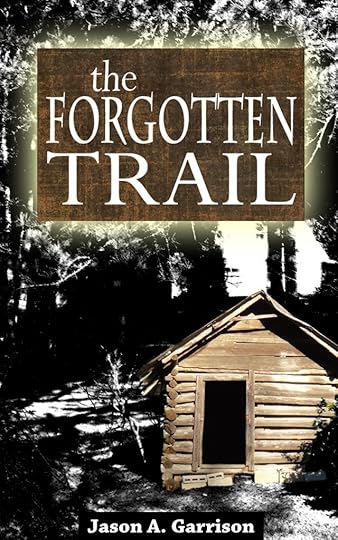
If you live in Memphis, you probably know about Shelby Farms, where acres and acres of land are available to weekend warriors. Whether you’d like to claim one of the grassy fields for a game of Frisbee with friends, or you’d fancy a game of disc golf on the course, or you’d like to take a paddleboat on the lake, Shelby Farms is usually the first choice for locals, including Allyson and me. If the weather is right on Saturday mornings, we’d get our bikes and go for a ride on one of the many trails that snaked their way through the woods.
One morning we decided that we’d try a new path we never knew existed. It was an unpaved trail that supposedly ran alongside Wolf River. After searching for the trailhead for about ten minutes, we finally gave up thinking that it no longer existed. I speculated that one of the recent floods earlier that year had washed it away. Whatever the reason, we opted for another path that day and had another great ride.
But the rest of the day I couldn’t shake the thought of that mysterious, hidden trail. I didn’t think that we could have missed it, but maybe we had. Over the next few weeks when I drove past Shelby Farms and saw people walking along the paths, I’d think about that lost trail again. How in the world could we have missed it? And if it didn’t exist anymore, surely the mapmakers would have removed it from the most recent documents. The more I thought about it, the more shadowy the missing trail became.
Eventually I started having fun with the idea of a passage in the woods that nobody could find and mused over how a couple of teenage boys would react if they stumbled upon it. Those young adventurers would be filled with a mixture of excitement and fear as they plunged deep into the dark and barren woods. That kind of setting would be perfect for a good scare.
 So I started writing with the simple idea of two kids finding a trail out of the blue while biking through the woods. I hoped that the story would be ready by Halloween 2013. I thought it would simply be a tale of the boys finding the path and whatever lurked beyond the trees, but the more I wrote, the more questions I asked about the boys. I chose to develop their backgrounds and also thought it might be interesting to show how they found this forgotten trail in the first place. Turns out, their past has direct bearing on the horror they would experience at the end of that spooky trail. As Halloween approached, I realized that the story would take some more work, so I gave up on publishing it right away.
I saw the two boys sort of as outcasts at their school, whose friendship with each other is clearly unstable. They are devoted to each other insofar as they share a history and are not part of any other social circles. One is a reckless bully who tends to take the lead on things while the other is a more introspective, shy-type who is pretty insecure about his own abilities. Their relationship grows unstable as they traverse the new path, and what they find at the end could break that friendship forever. Or it might just kill them both.
If you haven’t gotten a chance to read the Forgotten Trail, I hope you get a copy. After you read it, maybe you can give me a short review on Amazon.
Oh, and by the way, it turns out that the trail I was looking for really does exist. It was covered with weeds making it hard to see when Allyson and I searched for it before. I’ve ridden it several times since finding it, and I’m a little disappointed that it wasn’t as dark and mysterious as I thought it might be.
Oh well. I’ll always have the short story.
January 2, 2014
A Good Book Review
 A few days ago, the site manager for the website Dachshund Delights let me know that he was featuring a review of Long Lessons in his January newsletter. Of course, I was stoked. He was nice enough to let me know that it would be a positive review, so that I wouldn’t be on pins and needles while I waited.
It’s a good review that you can find here. While you’re there, you might check out the cool stuff offered on the rest of the site!
December 4, 2013
Q & A about Long Lessons and a New Direction in Writing
Several friends and family members have had questions about my new writing projects. Here are my answers to the most common ones.
Q: A lot of your training is in theology, biblical studies, and ancient Near Eastern literature. Why the sudden interest in writing things that have little to do with these topics?
A: It’s a long story I intend to tell someday, but here’s the gist. When I graduated with my Ph.D. in Old Testament, I had aspirations of becoming a professor at a Bible College, Seminary, or University. But these days, so many schools are only hiring adjunct professors for meager pay and no benefits. And since there is an overflow of qualified teachers in my field, one definitely has to know the right people to find full-time work. Well, that led to another problem: my views had shifted quite a bit which, sadly, burned several bridges. In the end, I had two graduate degrees from religiously conservative schools but held many core beliefs that most of my friends would describe as liberal. That led to some difficult encounters which left me without a home church and without work. All the while I continued to blog and publish my ideas.
At the beginning of 2013, I decided that I needed to blaze a new trail. I had several stories that I wanted to tell since high school, but never made the time to develop them. After reading Stephen King’s great memoir On Writing, I decided to pen some of the stories that I had stored in the attic of my mind for all those years. About six months later I published Long Lessons.
Q: A book about dogs written by a biblical scholar is very different, even strange. Why did you decide that would be your first project?

A: In my public speaking and teaching venues, audiences love it when I tell stories about my dogs. Even those who don’t particularly care for dogs chuckle when I describe Dixie’s crooked tail, Sparky’s obsession with tennis balls, and Reesie’s insatiable hunger for the most rancid things he can find. Their stories were fresh on my mind, and since they were well-received among my friends, I decided to write them down as sort of an experiment to determine how well I could tell such a story. I knew I could write research papers, but didn’t know how well I could tell a comical tale. I started with one chapter, and it was so much fun I just couldn’t stop. Soon I developed an outline and storyboard for the whole book. I set goals and deadlines, had other people read over it and give feedback, and published it myself.
Q: That leads to another question: Why did you self-publish instead of going through a publisher?
A: During the first two months I was pretty pleased with all that I had accomplished. I was nearing two hundred pages when I started researching how I could pitch the story to a publisher, but the more I researched, the more I saw how well some authors did publishing their own work via Amazon and other e-book platforms. At the very least, self-publishing is a great way to develop a fan base which helps get a publisher’s attention. Still, I thought I’d pitch the idea to a few publishers to see what would happen. I mean, who in the world would publish a book about lessons that they learned from their own three Dachshunds?

Matt Ziselman, that’s who. While perusing the bookstore around May of this year, I saw his new book on the shelves: Hounded: The Lowdown on Life from Three Dachshunds.
Crap, I thought. So much for my unique idea. But there was still hope. Maybe the book sucked, so I thumbed through it searching for some kind of fault. Double-Crap! It doesn’t suck. It’s great. And actually, it really is a good, fun book. Anyone who is a dog lover will enjoy it. But since my unique edge was now gone, I figured I’d just give the self-publishing route a try.
Q: How’s it going so far?
A: Slow. The people who have read my book enjoy it, but as a new writer, nobody knows who I am. And though there is a lot of freedom in self-publishing, people would rather buy a book from an established publisher than some Joe Schmo they’ve never heard of before. If a publisher invests in it, the book is at least somewhat decent, right? But there is an ocean of self-published work that really isn’t any good. So in a lot of ways, the odds aren’t in my favor.
Still, the response I’m getting so far is great. I’m taking steps to market Long Lessons and get the word out, but—you know—it’s just me. But I try to live by the most important rule for writers: write a great story. That’s what I’ve done. My plan is to continue writing great stuff and let the chips fall. Even if I never “make it” as a writer (whatever that means), I’m pretty happy that people find my work enlightening and entertaining. That’s the main thing that motivates me to write and write well.
In many ways I feel like a chef cooking for my friends. I want to prepare something delicious for the reader, and when they finally drop their napkin on the plate, I want them to smile big, maybe give a small belch, and tell me how great the meal tasted. I think that’s the true motivation of a writer: the reader’s gleeful satisfaction after devouring a story.
Q: In the preface of Long Lessons, you state that there is no “hidden agenda” in the book. What do you mean?
A: I wanted to set my readers at ease. Though I’m quite proud of my Christian heritage and theological education, I wanted to make it clear that there is no guilt trip, point of decision, “altar call,” or whatever you want to call it in the book. I’m not preaching anything. I just wanted to tell a fun story with no strings attached. Since Long Lessons is a memoir, you’ll still see a few glimpses of my time at school. More than once you’ll see me try to reconcile some things I’m learning with my new dog experiences. Even though I love dogs, the Bible has virtually nothing good to say about them. At one point I even wrestle with the idea that animals supposedly have no afterlife.
But these are only brief comments that I make along the way. In fact, I was really nervous about sounding preachy, so I made sure not to use any Bible references at all. But later I felt irresponsible for leaving them out—three humanities degrees will do that to you. So I decided to add a short “notes” section in the back for anyone who wants to know more about some of these topics. That way, you can choose to read the egghead stuff only if you want to.
Q: Any new projects on the horizon?
A: Several. I’m finishing up a novella which should be out before 2014 about two boys who explore an abandoned bike trail in a section of woods nobody has seen in years. It’s a creepy coming-of-age story inspired by my Stephen King readings. A few months ago, I started working on a Christmas story that I wanted to get out this year, but that one will have to wait. All these projects take longer than you expect, you know?
Early next year I’ll start pitching my next book idea which I think has real potential. It’s a dystopian sort of story that I’m pretty stoked about. Another book I’m cooking up deals with ghosts terrorizing different folks which should be a cool exploration of how people deal with fear. And then there’s the one about the flawless machine, and another one about an egomaniac. So I guess you’d say I have a few ideas to keep me busy for a while.
Q: So does that mean you’re done with your theological writings?
A: Not at all. I hope to continue wrestling with ideas at Scripture Views. Several people have asked me to expound on my new ideas. Those who know me are perplexed at how I could move from a biblicist position to one that is more liberal. So I might have to write that story too. I expect that’ll be a lot of fun.
October 25, 2013
Messin’ Around with Promotional Fliers
I worked on a promotional flier today for the new book. Let me know what you think!

October 17, 2013
Tom Clancy’s interview
A few posts ago, I mentioned a quote from Tom Clancy regarding his philosophy on writing. He used the same vernacular in this interview reposted by Brian Klems. Since I’ve started writing, I haven’t heard these writers cursing me in my sleep nearly as much as I used to.
If you haven’t heard, Clancy died a few weeks ago, which is probably how I found the interview so easily. Perhaps you’ll find it as intriguing as I did. Click the picture to read the article.
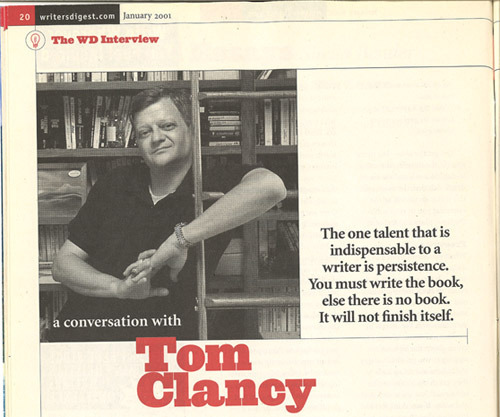
Tom Clancy Interview. Writer’s Digest, January 2001.
October 11, 2013
Long Lessons Now Available on NOOK
Every ebook platform requires its own kind of formatting. Formatting my manuscript for Amazon Kindle took me a few days, but it only took me a few hours yesterday morning to get everything ready for the Barnes and Noble NOOK. They have a cool online editor that makes things pretty cut and dry. After submitting everything at NOOK Press, I got an email telling me that it would take about 72 hours to get it posted online. So I was pretty darn happy when I saw it up on the Barnes and Noble site this morning.
If you have a NOOK, take a look at my book.
Why do I suddenly feel like Dr. Seuss?
October 9, 2013
“Get Outta Here, King!”

First draft of my manuscript alongside the book that inspired me to start it.
Stephen King has been sitting beside by bed drinking tea every morning for the past several months, staring me down as I try to sleep. I don’t know where the heck he comes from every day because he’s not there when I go to bed. But around 5 a.m. I’ll glance over and see him there, steaming cup of tea in his hand, doing nothing but drinking and waiting. He takes a sip and after a short pause he says the same thing he’s been telling me for weeks, “Write the damned story.”
I gotta say, it’s really frustrating having a best-selling author stare you down for half the night while you just try to catch a few winks. If you’ve ever tried to sleep with someone staring at you, you know what I’m talking about. I can actually feel him watch me, which really creeps me out and he knows it—he’s trying to get me writing, after all. Sometimes when I make eye-contact, he just glances at his watch, looks back at me, and shrugs. What the heck is he doing here? I didn’t even invite him into the house, for Pete’s sake!
Now that I think about it, maybe I did.
I’d already devoured his stories in Different Seasons years ago. His massive novel The Stand is on my shelf, begging to be read. After catching a bit of the Children of the Corn film while channel surfing, I decided to get a copy of Night Shift—another collection of tales—so that I could read “Children of the Corn” for myself. It took some time since I was first drawn to several other enticing tales along the way, like “Jerusalem’s Lot,” “Graveyard Shift,” “Quitters, Inc.” and the spooky “One for the Road.” After finishing the book I couldn’t leave well enough alone, so I decided to investigate more of his work which eventually led me to his book On Writing: A Memoir of the Craft.
It was suburb. King spends the first segment describing his childhood experiences that fomented his writing interests. It has plenty of riveting characters and a sample of sad and painful events that made me writhe, the kind of stuff you’d expect from King. The following chapters are more practical, giving an overview of the world of writing with clear instructions on how one might write his or her own story. The illustrations and examples he includes serve as an effective bore-proofing agent that keeps the book from sounding like a used college text. I didn’t feel like I was reading a book as much as I felt like I was having tea with a friend who refuses to teach me formal lessons, and would rather give his frank ideas about how writing is really done. And though it was a relaxing interaction, I couldn’t help but take a few notes on a napkin.
King states that writing is like telepathy, since the writer has to transmit the story from his own mind to the reader’s. That’s probably why he’s been pestering me every morning without actually being here. He keeps repeating the same phrases and concepts I saw in in the book. Stop making excuses. Stop just thinking about your story. Stop hoping that it will materialize on its own. Now get up and “Write the damned story!”
Geez, does he have to cuss at me, too? Well, he did in the book. And quite honestly, he’s not the first author to swear at me. Over a decade ago I read that a prominent writer—I think it was Tom Clancy—gave a lecture to some war veterans, encouraging them to write down their own stories before they were lost forever. It went something like this:
“You have an interesting and unique story that no one has ever heard before. You’ve been thinking about it for months, or even years. So stop just thinking about it and write the damned story!”
I was intrigued but didn’t listen. Though I wasn’t a veteran, I had several of my own stories to tell, both fiction and non-fiction. As a full-time student, I didn’t make the time to write even one of them down. Instead, I stowed them away inside an unmarked box within the attic of my mind, neglected and collecting dust. Reading King’s book cajoled me to find it again and unpack those ideas, and his morning taunts have encouraged me to get up early and write them out little by little every day. Otherwise, I must keep enduring his jeers.
I gather that writing may be the only way to exorcize this phantom and keep him from calmly cursing me out of sleep each morning. So over the past few months, I’ve worked on a memoir called Long Lessons. If you’re a dog lover or if you just like to laugh, I invite you to check it out.
I’m also working on a short story for Halloween, a short story for Christmas, and several other ideas for novels. For those of you who wonder what happened to my theological work, don’t worry—I plan on working that in, too. And since my views have shifted a bit, those writings should be pretty interesting as well.
Maybe now King will get off my back.