Elizabeth Fitzgerald's Blog: Earl Grey Editing
May 18, 2022
Signing off
I regret to announce that I am once again winding up the blog here at Earl Grey Editing. This is definitely sooner than I had anticipated, but a combination of factors is making blogging here difficult for me to sustain.
I will continue to review for Nerds of a Feather, so please join me there. I will also continue to be available for editing work.
As I said last time, change is a constant, so I hope that at some point in the future circumstances will shift again and I will be able to return to blogging at EGE. But for now, I’m signing off.
Thank you to everyone for all your support. It has meant a lot to me and I hope we can have tea together again sometime soon.


 The post Signing off first appeared on Earl Grey Editing.


May 11, 2022
Brewing Community with Tansy Rayner Roberts

Brewing Community is a series of guest posts in which readers, writers, artists and fans are invited to share their experiences of community. Whether online or in person, these groups bring a great deal of support and sometimes stress to their members. The aim of Brewing Community is to share the joy and find ways to brew stronger communities.
The series first ran in 2015. In returning to it after several years, I wanted to focus on how these experiences of community may have changed in recent years, and how people would like to see them change, as well as delving into what books and media have brought comfort in difficult times.
Today’s guest is Tansy Rayner Roberts. These days, she’s primarily a writer of cosies (both the SFF and the mysteries kind… sometimes both at once). However, she’s also a co-host of the Verity podcast and formed one third of Galactic Suburbia.
Since you’ve never been interviewed on Earl Grey Editing before, there’s one important question I must ask first: what’s your favourite beverage?
Tea, always tea! (Ironically not Earl Grey but just, ALL the other tea)
Has your experience of community in speculative fiction and fandom changed in recent years?
Absolutely it has. Partly I feel like I’ve withdrawn from a lot of community aspects I used to pour time into, which does leave me feeling a little more isolated. I’m older, my kids are growing up, I have a more intensive day job than ever before, and my drawbridge has gone up a little as far as online spaces/social media is concerned.
And then of course, Covid. Not going to a convention every year or so shouldn’t feel like a big deal — there were often years when I didn’t go to Continuum etc. But I miss it a lot, while also not feeling ready to travel even as the conventions do start up again.
I’ve been looking inward a lot more — my family has suffered some losses and some scary medical situations over the last couple of years. It’s been rough. I find myself wanting to spend more time improving our immediate environment and less time at the laptop, even if that is where so many of my friends live…
I’ve found new pockets of community — or they’ve found me, on the whole I don’t have energy to track down new friends but I have occasionally been invited into conversations/new online spaces/local events that I enjoy greatly. I like being invited to things! It’s my true weakness.
What would you like to see changed?
Honestly I want someone to invent some kind of brand new social media platform that everyone gets excited about and allows me to stay in touch with all of my fannish/SFF friends in a way that is intimate and fun and low-stress. Obviously that magical social media platform would also have to be 100% accessible, non-problematic and just, perfect for everyone.
It’s too easy to just… drift away from chatting to people you used to talk to every day, just because you aren’t sharing the same specific online space any more. How do we fix that? I don’t know. But I think my future in SFF community is going to continue to be more weighted to the digital and the local than anything involving travel any time soon.
Also if Covid could just stop now please, that would be great.
What books or media have you found yourself turning to for comfort?
My love of gaslamp fantasy has grown so much over the last few years. I find historical romance comforting, too — now there’s so much of these genres that is LGBTQ friendly, feminist and generally rich with diversity, they feel like good places to escape to. The present feels almost as scary as the future…
The TV show that got me through 2021 — a really painful, stressful year in many ways — was Escape to the Chateau and its associated spin-offs. I can’t tell you why I took so much pleasure and diversion from a show about Brits buying cheap property in France and then refurbishing collapsing castles in the face of termites, plumbing disasters and dwindling budgets, but these shows are EVERYTHING TO ME.
I tell myself it’s because I’ve always been obsessed about stories involving small business (see: my love of The Babysitter’s Club, and any romance novel involving a little shop) but mostly it’s the heartwarming tales of strife and the vintage wallpaper.
 Photo credit: Tansy Rayner Roberts
Tansy Rayner Roberts is the author of the Teacup Magic novellas (cozy gaslamp fantasy), and The Creature Court Trilogy (dark, blood-spattered gaslamp fantasy). Under the pen-name Livia Day, she also writes mystery novels set in her home of Tasmania.
Tansy’s recent releases include From Baby Brain to Writer Brain (Brain Jar Press), Dyed and Buried, and Spellcracker’s Honeymoon.
Until the perfect social media platform to rule them all is invented, you can find her on Twitter & Instagram as @tansyrr, or subscribe to her newsletter: https://tinyurl.com/tansyrr

 The post Brewing Community with Tansy Rayner Roberts first appeared on Earl Grey Editing.
May 4, 2022
Mt TBR Report: April 2022
April was largely focused on the Magical Readathon. I read a fair bit of non-fiction, which slowed me down, but this was counterbalanced by the motivation of the readathon.
Mt TBR StatusMt TBR @ 1 January 2022: 360
Mt TBR @ 31 March 2022: 396
Mt TBR @ 30 April 2022: 390
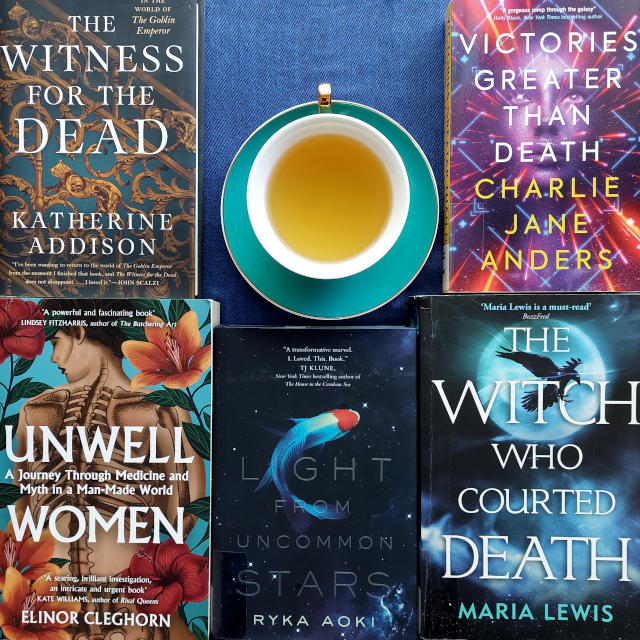
28. The Witness for the Dead by Katherine Addison. Fantasy. Having helped the young emperor investigate the murder of his father, Celedar now uses his abilities to speak to the recently deceased to serve the common people. This was rather a different kettle of fish to The Goblin Emperor, but has some similar vibes with respect to a character who is isolated and doing his best in a difficult and complicated job. I could see some of the author’s love of Sherlock Holmes, but those vibes weren’t too overpowering.
29. The Weed Forager’s Handbook by Adam Grubb and Annie Raiser-Rowland. Non-fiction. A bit brief, but informative. I did find it tended to be focused on the south-east of Australia, which is useful for me but not so for everyone.
30. Seance Tea Party by Reimena Yee. Middle grade fantasy graphic novel. Book club pick. A young girl left behind by her maturing friends meets the ghost who haunts her house. This was a sweet story about not wanting to grow up and about keeping your imagination when you do.
31. Selected Poems of Emily Dickinson edited by Ted Hughes. Poetry. Emily Dickinson might be considered classic, but she doesn’t do much for me.
32. Unwell Women: A journey through medicine and myth in a man-made world by Elinor Cleghorn. Non-fiction. Traces the history of women’s medicine through the ages from hysteria, through to hormones and the lack of understanding around autoimmune diseases. It also emphasises how current understanding of women’s health is based on the torture of and experimentation upon women of colour.
33. Fire Cider! 101 recipes for health-boosting remedies made with apple cider vinegar by Rosemary Gladstar. Non-fiction. Basically what it says on the tin. Read just in time to prepare for winter.
34. NPCs by Drew Hayes. Book club pick. Fantasy. First book in the Spells, Swords and Stealth series. When a party of adventurers dies in the tavern, the half-orc owner, the daughter of the mayor, a guard and a retired gnome must take on their quest in order to protect their town from the ire of the king. A fine enough story, but not particularly deep or innovative.
35. A Strange and Stubborn Endurance by Foz Meadows. Fantasy. A scandal sees Velasin betrothed not to the daughter of a neighbouring kingdom, as he expected, but to the son. However, the betrothal is threatened when someone attempts to assassinate Velasin in the name of his betrothed. Review forthcoming.
36. It Came From the Deep by Maria Lewis. Science fiction. Third book of the Supernatural Sisters. When two men bearing a grudge try to drown Kaia in a local lake, she is saved by a mysterious rescuer. Rather reminiscent of The Shape of Water, but without the depth and set in Australia.
37. The Impossible Resurrection of Grief by Octavia Cade. Science fiction horror. As ecosystems collapse brings a deadly depression to the human population, Ruby finds herself dealing with the death of a friend. Review forthcoming.
AcquisitionsLight from Uncommon Stars by Ryka Aoki
The Witch Who Courted Death by Maria Lewis
The Cat Proposed by Dentou Hayane
Victories Greater Than Death by Charlie Jane AndersFire Cider! 101 recipes for health-boosting remedies made with apple cider vinegar by Rosemary Gladstar

 The post Mt TBR Report: April 2022 first appeared on Earl Grey Editing.
April 27, 2022
Brewing Community with Rivqa Rafael
Brewing Community is a series of guest posts in which readers, writers, artists and fans are invited to share their experiences of community. Whether online or in person, these groups bring a great deal of support and sometimes stress to their members. The aim of Brewing Community is to share the joy and find ways to brew stronger communities.
The series first ran in 2015. In returning to it after several years, I wanted to focus on how these experiences of community may have changed in recent years, and how people would like to see them change, as well as delving into what books and media have brought comfort in difficult times.
Of all the people I’ve met at SFF cons over the years, one I count myself most fortunate to have met is Rivqa Rafael. She is a talented writer, insightful editor, stalwart friend and fierce advocate for justice and compassion. Today she offers something a bit different to the usual interview.
Balancing Burnout And Connection or: How I Learned To Stop Worrying* And Skip Online ConsAs an extremely online person, I wasn’t too worried about cons pivoting to virtual space. I loved Twitter, texted incessantly, and used to play online games for hours on end. I’d be fine with video panels and text-based Q&As, right?
Absolutely not.
I wanted online cons to be an exciting opportunity, a silver lining in what was otherwise a pretty shitty time of a global pandemic. After all, they were expanding accessibility for folks who aren’t able to attend in-person conventions for a variety of reasons (disability, finances, family responsibilities, and more). Online cons are a good thing. They just don’t work for me.
My bad experiences with them started with the first one I attended. I got up at the crack of dawn for a panel I was excited for, only to hear a panellist make ignorantly supersessionist and antisemitic statements. The accompanying Discord channel exploded, but the panellists couldn’t see that. A volunteer alerted the panel moderator, who misunderstood and handled it poorly. And while it was a relief to easily connect with others who felt similarly, the open forum also meant we were a captive audience to less sympathetic individuals. Looking back, I can’t help but wonder how differently it might have played out in person, with a collective gasp from the audience, or someone brave enough to shout back, or even a pointed audience question that didn’t have to be delivered by text. If the debrief had happened with someone who could offer me a hug. I left angry and disappointed, and two years later I’m still not sure I’ll ever attend that con again.
At the time, however, I blamed that con more than the online experience more generally. I tried again, and found that attending as a panellist was more rewarding for me — when I could pretend I was having an interesting chat with intelligent friends and strangers. I hosted a small online gathering of friends during WorldCon, which was fun. But I didn’t meet anyone new. For someone who’s made at least one new friend at nearly every con I’ve attended (including the host of this blog, at my very first con ever), this was a deflating realisation.
Replicating the bar con experience is hard for online conventions. At one, Discord voice channels had to be booked, increasing safety but effectively removing the opportunity to make a new friend — unless you had a mutual acquaintance proactive enough to introduce you. At another, the spaces were freely available, and you could see the names of the cool attendees without entering. But without eye contact and a welcoming smile, the prospect was daunting. I gave it a try once or twice, but was beset by connection issues and people AFKing when I wanted to talk to them.
All of this feels like a social anxiety whinge, but how much of a con is made up of its interstitial moments? Not just bar con, but also the shared experiences of lining up for panels, laughing together, being outraged together. Friends of friends stopping at your lunch table and becoming new acquaintances. Hugs with old friends and new. Handing over a book to its author for signing with tears in your eyes because it meant that much to you.
And attending a con at home means you can’t leave real life behind for a few days, especially with parental, carer, and other responsibilities. As much as I appreciate the internet for keeping us connected over distance and especially through the pandemic, it has its limitations. Family and housemate interruptions, internet problems, Zoom fatigue, and of course the stress and tragedy of the pandemic itself — I’m sure all of these factors, large and small, contributed to my decision to nope out of online cons.
I haven’t attended an online con since 2020, so maybe they’ve ironed out some of the wrinkles. But I have no desire to revisit them. Soon after my last one, I found myself in burnout. Always conscientious with my short story submissions, in early 2021 a cluster of rejections felt like too much. I stopped submitting stories, and very soon after I stopped writing them. Did the lack of satisfying cons contribute to my burnout? The community, solidarity, encouragement and education of a good convention is hard to replicate. Or was it the increasing toxicity I was noticing on social media, especially Twitter? The pandemic itself? Again, I’m sure it was all of the above.
Social media toxicity probably deserves its own paragraph, given that this is a series about community and I am well aware that the internet is real life. It’s real, it can be great, and it can cause immense harm. I don’t have any answers about how to fix its problems — the trolling, the deliberate and accidental misunderstandings, the algorithms that spread outrage over joy. When my heavy use of the block and mute functions were no longer enough, when I spent too long wondering if I’d be next in the line of fire, I withdrew, and I know I’m not alone in that. Nowadays, my online writing community happens in walled gardens: private Discord servers, select authors’ Patreons, private messages and video calls. My virtual world contracted alongside my meatspace world.
It’s hard to see this as a bad thing, overall. No one is obliged to fight every troll on the internet, nor can they. After some experimentation, I found a format for online group writing that worked for me (no to all-day video calls; yes to encouraging text chat with a video chat lunch break). My critique group, which pivoted to online early, has been consistently supportive and understanding. I started writing again, attended online writing workshops, and participated in a one-off online panel. I said no to things that felt like too much. I still haven’t submitted a story to a magazine, but I’m sure I’ll get there. While I have made new connections, they haven’t developed into the lifelong friendships that have arisen from in-person conventions. Then again, I met some of my closest friends online, so maybe that’s just bad luck.
All this has left me thinking about creative communities, and how they thrive or falter. In an ideal world, an overlapping system of online and in-person communities would support everyone who wants to write. In reality, some people will be left out, no matter the forum — and sometimes with no malice at all. My experiences weren’t due to abuse, mistreatment, or even conflict, although there was plenty of that in the background. While some people write in complete isolation, most of us need a community around us. At this point, I’m thinking about how I can contribute to writing community in ways that work for me. I know I could do more, and that it’ll be good for my writing, too. Two years into the pandemic, it’s time to give back to the network that supports me.
* Statement may not be true.
 Photo credit: Bruria Hammer
You are what you write, which is why most of Rivqa Rafael’s fiction is about queer and/or Jewish women. Her award-winning and shortlisted stories have been published in Strange Fire (Ben Yehuda Press), Strange Horizons, Escape Pod, and elsewhere. Rivqa lives in Sydney, where she studies psychology, works as a science editor, and dabbles in kitchen alchemy. She can be found online at rivqa.net or on Twitter as @enoughsnark.

 The post Brewing Community with Rivqa Rafael first appeared on Earl Grey Editing.
April 20, 2022
Sanctuary by Andi C. Buchanan
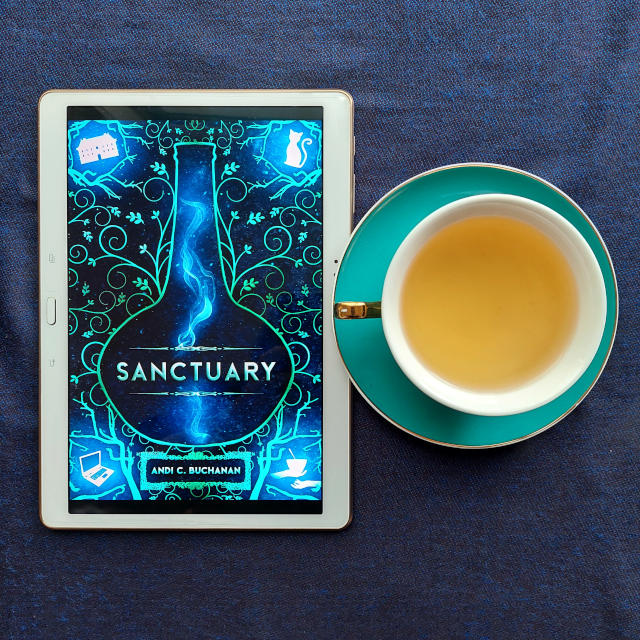
This week, I’m over at Nerds of a Feather with a review of Sanctuary by Andi C. Buchanan. It’s a book that centres diversity through a found family ghost story.

 The post Sanctuary by Andi C. Buchanan first appeared on Earl Grey Editing.
April 13, 2022
Spear by Nicola Griffith
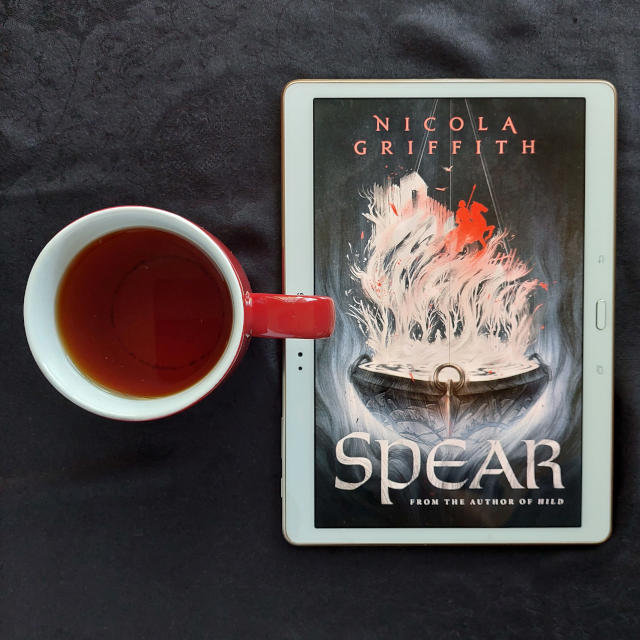
Although I’m not a big fan of King Arthur and the legends of Camelot, I could not resist the promise of a queer retelling. Which is a good thing for me, because Spear was a book I genuinely savoured.
It retells the story of the knight Percival, referred to here as Peretur which is the sixth century Welsh version of the name. However, the issue of a name is a fraught one. She was raised in the wild by her mother, a mentally unstable woman who nevertheless has great magical ability and who knows that there is power in names. So for a while, the main character has no fixed name, but is referred to in different ways, depending on whether her mother is having a good day or a bad one.
Eating daily from one of the treasures of the Tuath De, Peretur grows up strong. Knowing how to speak to the animals and insects helps her to learn how to hunt and fight. One day, she saves a group of knights and knows that it is time to leave her home and meet her destiny: to become a knight and to answer the call of the Lake.
It is strange to me that this is such a short book (coming in at under 200 pages, it’s really an oversized novella) because it has the feel of an epic. The language is rich, the initial shock of it seeming almost purple before I acclimatised to its beauty. It paints a natural world that is vibrant and alive, filled with its own secrets and companions, which contributes to a sense of the mythic.
This is shored up by the interweaving of Celtic legend into the traditionally rather Christianised tales of Camelot. Although the Celtic deities nominally remain in the Overland, away from mortals, their presence and the consequence of their actions remain very present. Likewise, the four treasures of the Tuatha De Danann — the stone, the sword, the spear and the cauldron — are material items fought over by immortals and mortals alike. This interweaving brought a new angle to the story for me, making it of more interest, and was so neat it seems surprising it hadn’t been thought of before.
(Although, perhaps it has. The author’s note humourously comments on the time-honoured tradition of stealing and reworking elements, common not only to the creative process in general, but in renditions of the legends of Camelot in particular. I’m very unfamiliar with the source material and therefore not in a position to judge definitively.)
Another relatively fresh approach to the tale was the diversity of the cast. While Peretur did not read to me as trans (her pronouns were consistently she/her and there was no indication of gender dysphoria; cross-dressing seemed mostly a matter of practicality and a way of being socially acceptable in the kind of role she wanted to fill), she was most certainly queer. The king’s Companions include knights with a range of skin tones; notably, white is not the assumed default and is explicitly described where present. Nor are the knights necessarily able-bodied. Delightfully, this makes Lance a brown, disabled, bisexual man (thus subverting the love triangle I always hated by making it a triad). The author herself puts it best:
“Most importantly for me, historical accuracy also meant this could not be a story of only straight, white, nondisabled men. Crips, queers, women and other genders, and people of colour are an integral part of the history of Britain — we are embedded at every level of society, present during every change, and part of every problem and its solution. We are here now; we were there then. So we are in this story.”
Spear was the very first book I read in 2022 and it set the bar high. I was captivated by the magic of it, and its poignant longing to belong even after having the door shut in one’s face (multiple times). In the end, I don’t know whether to hope for a sequel or to simply relish this compact slice of epic.

 The post Spear by Nicola Griffith first appeared on Earl Grey Editing.
April 6, 2022
Mt TBR Report: March 2022

My reading is getting slower and slower this year. I’ve decided it’s time to officially downgrade my reading goals and have set my Goodreads Challenge down to 100 books.
Speaking of reading challenges, I didn’t even glance at my selections for the mini Magical Readathon. I was rather disappointed, but recognise I’ve got a lot going on at the moment. And it turns out I will get a second chance, with the April edition of the readathon going ahead after all.
Mt TBR StatusMt TBR @ 1 January 2022: 360
Mt TBR @ 28 February 2022: 389
Mt TBR @ 31 March 2022: 396
21. Stiletto by Daniel O’Malley. Contemporary fantasy. Second in The Checquy Files. Tensions are high as the Checquy and the Grafters negotiate a merger after centuries of enmity. I found this to be a slightly weaker book than its predecessor, however the variety of female characters continued to be a delight. The story had plenty of political intrigue, action, character development and slime, maintaining its sense of humour. I also liked the choice to have the previous protagonist present but somewhat decentred.
22. Incense and Sensibility by Sonali Dev. Contemporary retelling of Sense and Sensibility. Third in The Rajes series. I liked this book more than its predecessor (which retold Persuasion), perhaps because it had an easier time of modernising the story. The characters were also more likeable.
23. Aurora Rising by Amie Kaufman and Jay Kristoff. YA space opera. First book in the Aurora Cycle. Reviewed here (as part of the whole trilogy).
24. A Master of Djinn by P. Djeli Clark. Alternative history with magic. First book in the Dead Djinn series. Book club pick. The youngest woman working for Egypt’s Ministry of Alchemy, Enchantments and Supernatural Entities gets called in when a secret brotherhood is murdered. Tons of fun. Somewhat similar to The Checquy Files with its blend of action, investigation and political intrigue, as well as lots of female characters in a variety of roles.
25. Sanctuary by Andi C. Buchanan. Contemporary fantasy. Review forthcoming.
26. Burntcoat by Sarah Hall. Literary dystopia. Book club pick. A celebrated sculptor weathers a pandemic with her lover at her warehouse studio. Gorgeously written and does some fascinating things with translating Gothic elements into a modern urban environment. However, tread carefully if you’re prone to pandemic feelings; this is not a light-hearted read.
27. The Goblin Emperor by Katherine Addison. Fantasy. Reread.
AcquisitionsIncense and Sensibility by Sonali DevBurntcoat by Sarah Hall
It Came from the Deep by Maria Lewis
The Wipe by Nik Abnett
12 Bytes by Jeanette Winterson
The Silvered Serpents by Roshani Chokshi
The October Man by Ben Aaronovitch
False Values by Ben Aaronovitch
Seance Tea Party by Reimena Yee
NPCs by Drew Hayes
A Strange and Stubborn Endurance by Foz Meadows
The Ex Hex by Erin Stirling
The Weed Forager’s Handbook by Adam Grubb and Annie Raser-Rowland

 The post Mt TBR Report: March 2022 first appeared on Earl Grey Editing.
March 30, 2022
Murder Most Actual by Alexis Hall
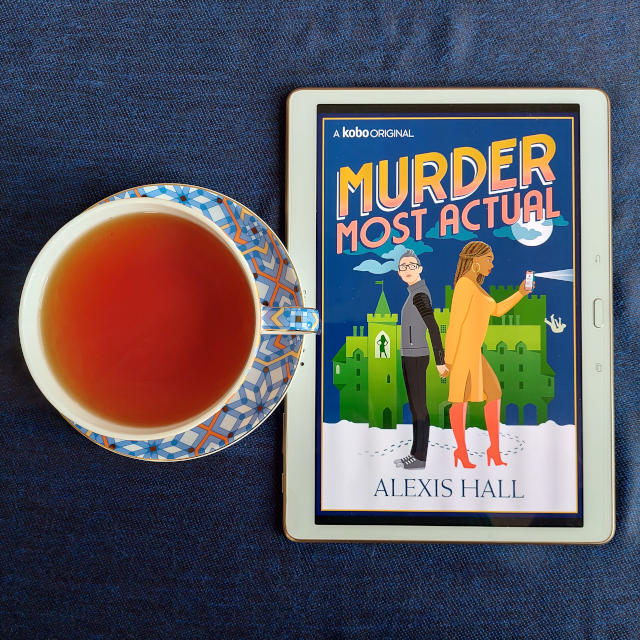
In my TBR report for January, I mentioned getting sucked in to Kobo’s subscription service. One of the ways that happened was through Murder Most Actual by Alexis Hall. The book is currently being offered as a Kobo exclusive and since I’ve very much enjoyed what I’ve read of Hall’s work to date, I couldn’t resist.
Murder Most Actual is, unsurprisingly, a murder mystery. Liza and Hanna’s marriage is going through a rough spot, so Hanna books the couple in for a weekend at a secluded castle-turned-hotel in the Scottish Highlands. The lack of internet and mobile phone reception seems ideal for giving Liza some distance from her work as a popular true crime podcaster… until they get snowed in. And the bodies start to drop. Literally: the first victim is a guest that falls from the castle tower.
Of the books by Alexis Hall I’ve read so far, Murder Most Actual reminded me most of The Affair of the Mysterious Letter. Both are books in which the author is messing about with genre in a fun way that is at times rather meta (though I note he does a bit of this in Boyfriend Material as well). In Murder Most Actual this takes the form of bringing together both murder mystery and true crime, then looking at the gaps between them, and bringing some critiques of those genres.
The murder mystery elements come out most strongly in the characterisation. Fans of Cluedo will immediately pick up on the colour-coding of the other guests: the reverend wearing a green sweater, the colonel in the mustard tie. Not only was this an entertaining nod to a landmark work of the genre, it also helps immensely to keep track of the large cast of characters. There are also nods to other giants in the field; Agatha Christie’s mark can be seen on the short inspector with the dubious foreign accent who is hot on the trail of a criminal mastermind. These characters are ridiculously stereotypical in a fun way that helps to point out how over-the-top murder mysteries can be.
Although the secondary characters are not exactly well-rounded, Liza and Hanna certainly are. The author used this technique previously in Boyfriend Material and it works here to good effect. Their relationship has nuance; both of them love each other a great deal and want to make things work, but have grown apart over time and have coping mechanisms that make things worse. Insecurities come up and although they are dealt with in the course of the story, it is acknowledged that they will more than likely come up again.
One of the key conflicts that comes up between them is that Hanna just doesn’t get Liza’s interest in true crime. This is one of the ways in which the genre gets critiqued. Hanna has reservations about the ethics of the genre and while she agrees that Liza behaves ethically for the most part, there are times when Liza crosses the line by asking inappropriate questions and harassing other guests — who, Hanna is at pains to point out, are people. It also sends Liza running off into danger when the most prudent choice would be to head in the opposite direction. Nevertheless, I found Liza’s obsession with solving the puzzle she’s presented with to be relatable.
Murder Most Actual is definitely not the most subtle of the author’s work, with a tendency to lampshade his points. It also felt overly long, with the middle dragging. Given the number of characters, a novella form might have done it a disservice and cutting the number of characters reduces the pool of suspects. Still, I could feel my attention wandering at times.
But on the whole, it was a fun book and an entertaining read.
Published: November 2021 by Kobo Originals
Format reviewed: E-book (epub), 302 pages
Genres: Mystery
Source: Kobo
Available: Kobo

 The post Murder Most Actual by Alexis Hall first appeared on Earl Grey Editing.
March 23, 2022
The Aurora Cycle by Amie Kaufman and Jay Kristoff
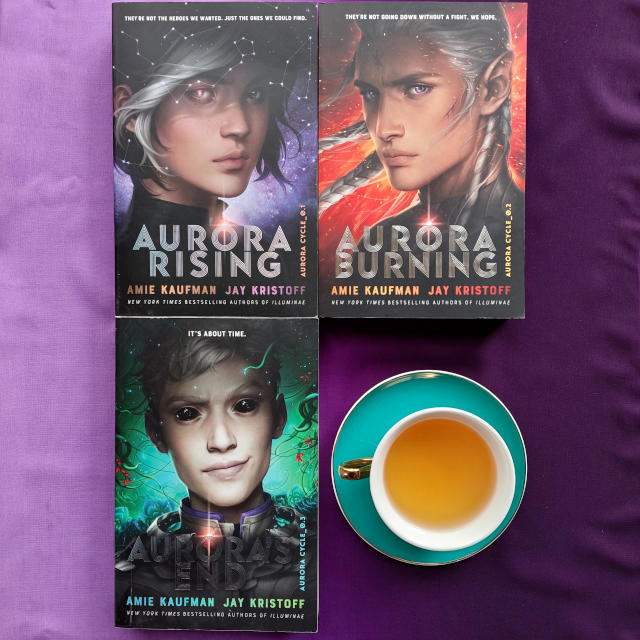
This week, I’m over at Nerds of a Feather with a review of The Aurora Cycle by Amie Kaufman and Jay Kristoff. It’s a stylish teenage space opera offering action and adventure.

 The post The Aurora Cycle by Amie Kaufman and Jay Kristoff first appeared on Earl Grey Editing.
March 16, 2022
Brewing Community with Catherine Lundoff
Brewing Community is a series of guest posts in which readers, writers, artists and fans are invited to share their experiences of community. Whether online or in person, these groups bring a great deal of support and sometimes stress to their members. The aim of Brewing Community is to share the joy and find ways to brew stronger communities.
The series first ran in 2015. In returning to it after several years, I wanted to focus on how these experiences of community may have changed in recent years, and how people would like to see them change, as well as delving into what books and media have brought comfort in difficult times.
Today’s guest is Catherine Lundoff. I know her best as the driving force behind Queen of Swords Press and a fellow tea aficionado, but she’s also an author of speculative fiction and erotica, as well as a LGBQIA advocate. When it comes to building community and putting one’s money where one’s mouth is, Catherine is a shining example.
Since you’ve never been interviewed on Earl Grey Editing before, there’s one important question I must ask first: what’s your favourite beverage?
Tea! I tend to like rich, fruity or spiced black teas the best, but I also like a nice light fruity green tea and some herbals. So pretty much all the flavored teas, especially Novel Chai, which is Queen of Swords Press’s own tea blend from Bingley’s Teas, my local tea shop. 
Has your experience of community in speculative fiction and fandom changed in recent years?
Ufda, as they say around here. Well, I began as a fan, not a writer, so for my first decade and a half in fandom, I was just going to conventions to hang with my friends, look at folks in costume, listen to authors and so forth. I started writing in my early thirties and publishing right around the same time and wow, did things shift! Conventions became more of a business setting and some people who had been friends became colleagues, or even competition, depending on how we perceived each other. This was the later 1990s well before COVID.
Once online community became nearly as important as in-person meetups in the early 2000s, I had a few books out and everyone who was published was expected to start promoting themselves a lot via blogs, websites, social media, etc. I think that element of self-promotion has always been a part of the writing life for genre fiction writers, but I also think it increased in intensity. My online and in-person communities have always had a fair amount of overlap so I learned to do a lot of building online networks, virtual friendships, finding allies and so forth within fandom and fannish context as well as working a limited convention circuit. I’ve been to fannish events outside cons but was never an organizer of anything besides author readings.
My success in finding the same level of community at local conventions as one I built online was decidedly more mixed. I came into local fandom as an out queer writer, older than many writers in the field with their first books out, and as a small press writer at that, and these things definitely colored my experience in the field. Add to that, I got my start in a genre not considered to be under the sf and f umbrella, a combination that caused me some grief in local writer circles. Despite that, I did make connections with other writers and fans that blossomed into deep, long-term friendships, but I also got a fair amount of nonsense from others, so definitely a mixed bag on that score.
Now, I approach community in fandom as a small press publisher and am seeing another shift in how I am received/perceived. Fandom looks a bit different from a position of power, however nebulous or small that power may actually be. At the same time, I’ve gotten a lot more recognition in the last couple of years as Queen of Swords Press has grown, our authors have done really well and I’ve passed some career milestones in terms of amount of work published, awards, etc. than I got when I was “just” an author.
And then, of course, came the pandemic and lockdown and huge shifts in how in-person communities within fandom operated. Shifting online has opened some more doors to me that I think might have remained closed if it was still essential to travel extensively to certain cons, for example. Now I’m focusing a lot on building online community since I anticipate that travel will be impacted for some time to come and my personal life has been impacted by the pandemic in ways that will make travel more difficult for me personally. Building online community is about building alliances as much as building readership and maintaining friendships. It doesn’t get easier, exactly, but wow, do you get to meet some cool folks!
What would you like to see changed?
Oh, so many things! As a small press publisher, I would love to see the field as a whole, conventions, readership, awards, etc. embrace new voices from small presses the way they embrace the voices from big presses. I’d like to see the small press and indies appreciated as a talent incubator and as a source of great fiction as well as a way to keep works that might otherwise vanish available and in the public eye.
As a writer, reader and fan, I really want to see fandom and fannish communities fully embrace writers and fans of color, queer writers and fans, international writers and fans and more. There’s a lot of lip service to diversity and what that means, but we’re still seeing significant problems with racism, transphobia, sexism, accessibility and so forth. As communities, we have to grow out of being stuck in an imaginary Golden Age when everyone fit into specific buckets, or lose the things that make being in fandom good and fun. We’ve got the opportunity to build new things, dazzling things, and we need to do the work to make that happen.
What books or media have you found yourself turning to for comfort?
Thanks to the pandemic, I had to get us on a couple of streaming channels since we couldn’t go to movies. So I’ve been exploring a lot of TV I hadn’t seen before. Current sfnal favorites include The Witcher, Killjoys and Wynonna Earp and recent seasons of Legends of Tomorrow and movies like Space Sweepers, The Old Guard and Vampires vs. the Bronx. I also like mysteries, with Lupin and Only Murders in the Building as particular favorites.
A lot of my reading is publishing-related, but my fun reading includes things like the new sf and f anthology It Gets Even Better: Stories of Queer Possibility, nonfiction like Braiding Sweetgrass by Robin Wall Kimmerer and mysteries like An Elderly Lady is Up to No Good by Helene Tursten. I’m also enjoying Persephone Station by Stina Lecht, all things by Martha Wells and Melissa Scott and A Master of Djiinn by P. Djeli Clark. And I would be remiss if I didn’t give a shoutout to Elizabeth Peters and Carole Nelson Douglas (Irene Adler series) for penning historical mysteries that I can lose myself in over and over again.
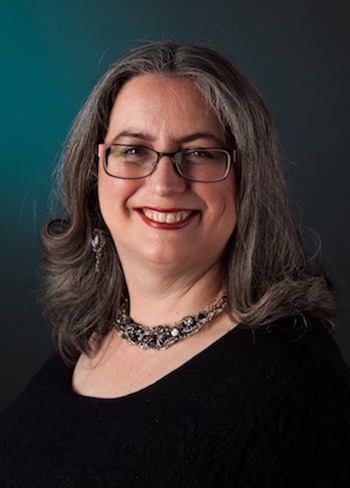 Photo credit: Ben Zvan
Catherine Lundoff is an award-winning writer, editor and publisher. She owns and operates Queen of Swords Press, a Minneapolis-based genre fiction publishing company and is a recipient of a 2021 Ladies of Horror Fiction Writing Grant. Blood Moon is the second volume in her Wolves of Wolf’s Point series. Her other books include Silver Moon, Out of This World: Queer Speculative Fiction Stories and Unfinished Business: Tales of the Dark Fantastic and as editor, Scourge of the Seas of Time (and Space). She is also the author of over 100 published short stories and essays which have appeared in such venues as Fireside Magazine, Nightmare Magazine, the SFWA Blog, Sherlock Holmes and the Occult Detectives, American Monsters Part 2 and such World of Darkness anthologies and games as Wraith: Haunting Shadows, Vampire the Masquerade: The Cainite Conspiracies and Wraith: Ghosthunters. In addition, she teaches writing classes at the Rambo Academy and Springboard for the Arts and she will be the Author Guest of Honor at Marscon 2022 in Minneapolis. Websites: www.catherinelundoff.net and www.queenofswordspress.com

 The post Brewing Community with Catherine Lundoff first appeared on Earl Grey Editing.