Nancy Churnin's Blog
January 28, 2021
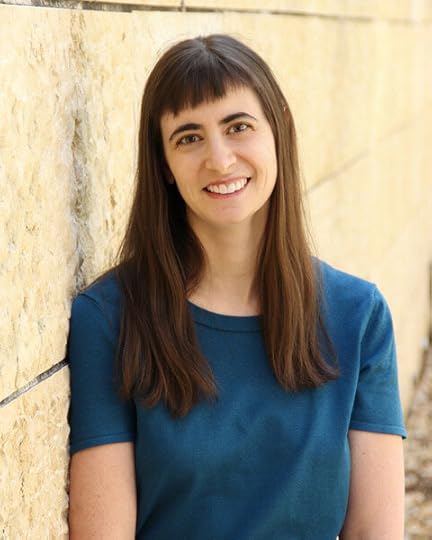
Welcome, Susan Kusel and 'The Passover Guest'

Susan Kusel’s journey to The Passover Guest was long and winding, but every bit as wondrous as the tale at the heart of her story about a mysterious stranger and the joyful miracle he leaves for a little girl and a community both in want of belief and cheer.
A longtime librarian and buyer for a bookstore, who sat on Caldecott Medal and Sydney Taylor Book Award committees (including, full disclosure, the Sydney Taylor Book Committee that honored my Irving Berlin, the Immigrant Boy Who Made America Sing with a Notable), Susan had a story she wanted to tell about a Passover miracle, but for a long time she wasn’t sure how to tell it or even when or where to set it.
But when she figured it out, bringing it back in time, to the Great Depression, but to her home in Washington D.C. — magic! Her book debut has received three starred reviews, from Kirkus, Booklist, and School Library Journal. Wowza! Welcome, Susan. Thank you for sharing your journey on The Kids Are All Write!
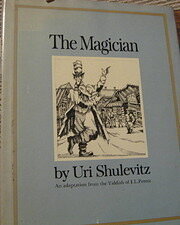
In your author's note, you talk about how you were inspired by ‘The Magician: an adaptation from the Yiddish of I.L. Peretz’ by Uri Shulevitz. What drew you to this story and made you want to tell it in your own way?
My mother read me this version of the story when I was a child and I just fell in love with it. I was captivated by the magic that happens in the story. And I was so taken with the fact that the main characters actually got to meet Elijah, which is something I always wanted to do. When I encountered the book again as an adult, I loved it as much as ever, but found myself wishing I could change several plot points. That sent me down the road of doing the adaptation.
How did the pieces come together for you of where and when to set the story?
I wanted to take the story out of the shtetl, where it was originally set and move it somewhere more contemporary. My editor, Neal Porter, suggested the Great Depression as a good fit for a penniless family and I think this ended up working well. I also wanted to put the characters in a location that we don’t often see in Jewish picture books and my hometown of Washington D.C. seemed like a natural fit. I thought the cherry blossoms, white buildings, and vibrant Jewish community would add to the book.
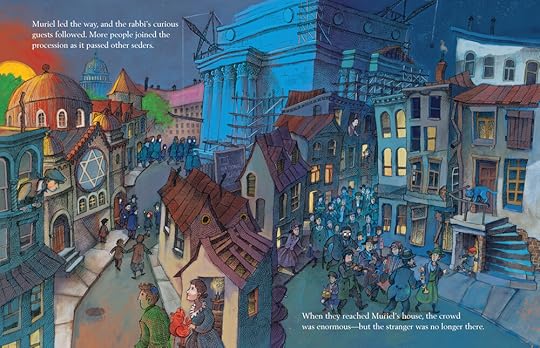
The Passover Guest by Susan Kusel, illustrated by Sean Rubin (Neal Porter Books, Holiday House)
How long was your book journey from idea to completed manuscript? How much did it change along the way?
It was long! It took about ten years from the first draft to the finished book I’m finally holding in my hands. Everything from the main character’s name to the location changed during the over fifty drafts. The main plot and message stayed the same throughout though.
Did your story find a home right away? How did you feel when it was acquired?
The book has an unusual acquisition story because I only showed the manuscript to one editor, and that editor acquired it. I also didn’t have an agent at the time, although I got one soon after. That said, I had been working on the manuscript for about three years before Neal saw it and then we worked together on it for a while before he acquired it, so it was a bit of a process. I can’t even put into words how I felt when it was acquired, because I was so over the moon. It was beyond amazing.
Which illustrations by Sean Rubin surprised or particularly delighted you?
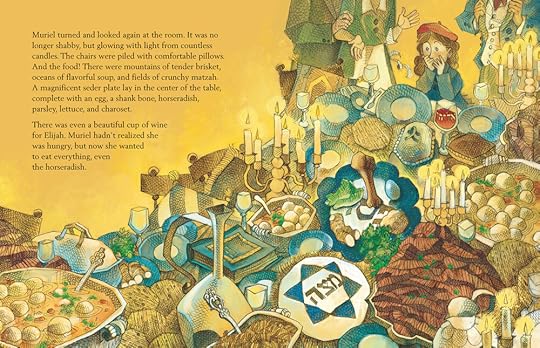
All of them. I am really in awe of Sean’s work on this book and how he transformed my words into such beauty on the page. I could talk about how incredible every single illustration is. One of my favorites spreads is when after being hungry for so long, Muriel sees an enormous feast spread out in front of her. The abundance of food, mixed with her facial expressions and the gold-colored background make this page really special. I also love how the heads of the adults have been cut off from view, so the reader’s main focus is on the child. And on a personal note, this is a fun page for me because Sean modeled the blue china dishes on the table from pictures I sent him of my own Passover dishes.
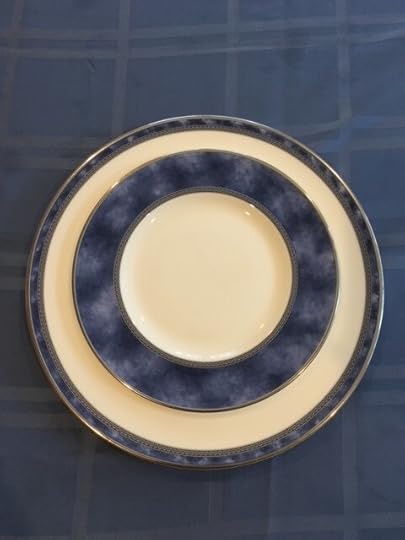
Susan’s Passover dishes (above). Below, Sean Rubin’s illustration with those dishes for The Passover Guest by Susan Kusel (Neal Porter Books, Holiday House)
This is quite an auspicious debut, to have your first book published by Neal Porter Books, and to have three starred reviews by School Library Journal, Booklist, and Kirkus Reviews. Does it make you feel as if Elijah might have sprinkled some magic your way?
It certainly feels that way! I am indebted to everyone who worked on this book: Neal Porter, Sean Rubin, Jennifer Browne, Marietta Zacker, Drew Seeger, everyone at Holiday House and so many others who helped and consulted on the book. Picture books are truly a collaborative effort and I am so lucky to have had such an incredible team bring this book to life.
As a longtime librarian and member of awards committees, from the Caldecott Medal committee to the Sydney Taylor committee, you are used to critiquing other people's books. How does it feel to be on the other side, having your books reviewed and, possibly, being considered for awards?
I am definitely realizing how much work goes into book promotion and am gaining a lot of respect for how much authors do in this area. It is so humbling to see my book in the pages of review journals I’ve been reading for so many years. As for awards, I have to tell myself the same thing I’ve told many others through the years. The best you can do is make sure the book has been submitted and then hope that the committee sees something special in your book.
Has his book journey changed you -- and if so, how so?
It made me realize that I had the power to actually become an author and get a book published, even though it seemed like an impossible road at the start.

The Passover Guest by Susan Kusel, illustrated by Sean Rubin (Neal Porter Books, Holiday House)
What do you hope children will take away from this story?
If I could impart a message through this book, it would be that hope is important even in the bleakest of circumstances and that even the smallest actions can make a difference, like putting a penny in a hat.
Do you have any new books in progress or in the pipeline?
I’m working on several Jewish picture books, and a middle grade novel with a Jewish protagonist. It is very important for me to tell Jewish stories.
Thank you, Susan, for sharing your journey! You can visit Susan online:
On her website: http://susankusel.com
On Twitter: @susankusel
On Instagram: @susanhkusel
On Facebook: Jewish Kidlit Mavens
And for you faithful readers who have followed us this far, a special treat. Susan’s mom found a photo of Susan getting engaged at Passover. In Susan’s words: “ In the middle of the four questions (I was an adult but was still the youngest person at that seder)…. I said, ‘How is this night different from all other nights?’ And my boyfriend put a ring box on the table and said ‘Because tonight I’m asking you to be my wife.’ As you can see, I was a little overcome!”


November 5, 2020
Beth Anderson on Smelling a Good Story in 'Smelly Kelly'

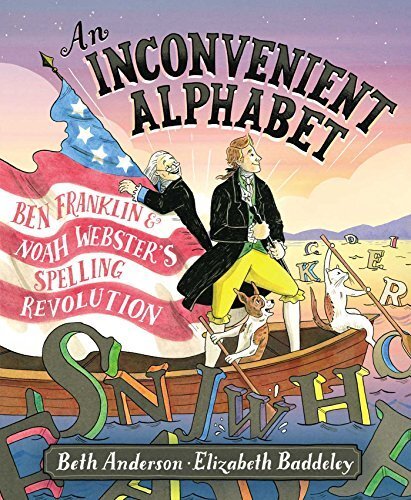
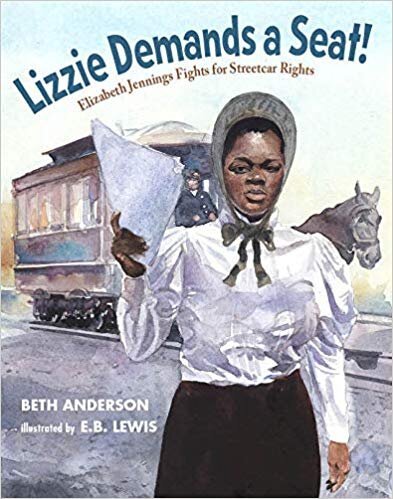
I’ve had the good fortune of being in several book groups with Beth Anderson, a master at finding unusual stories that deserve to be widely known. Sometimes, in Lizzie Demands a Seat!: Elizabeth Jennings Fights for Streetcar Rights (illustrated by E.B. Lewis, Calkins Creek, shortlist for Goddard Riverside CBC Youth Book Prize for Social Justice), it’s a true story about a brave woman who deserves to be more widely known. With An Inconvenient Alphabet: Ben Franklin & Noah Webster’s Spelling Revolution (illustrated by Elizabeth Baddeley, Simon & Schuster, finalist for the Colorado Book Award), it’s the story of two famous people and a little known story about them — their quixotic pursuit of how to improve the English alphabet. Both books are Junior Library Guild selections and, guess what? So is her latest, which we’re going to talk about today: “Smelly” Kelly and His Super Senses!
Beth is a former English as a Second Language teacher, with linguistics and reading degrees, a fascination with language, and penchant for untold tales. She lives in Loveland, Colorado where she laughs, wonders, thinks, and questions; and hopes to inspire kids to do the same. I’m excited to welcome Beth to THE KIDS ARE ALL WRITE to give us a sniff at“Smelly” Kelly and His Super Senses, illustrated by Jenn Harney, from Calkins Creek.
How did you hear about “Smelly” Kelly? What made you decide to write a book about him?
I happened upon a short article about James Kelly, the first subway leak detective, and was immediately fascinated by all the bizarre, humorous, and dangerous experiences he had. A man who could smell water? Wow! Leaks and stinks? Even more fun! An unsung hero? I’m in! As a country girl, I always wondered what was beneath all those grates and manholes on city streets. Such a mysterious world beneath the pavement, and so full of essentials for our daily living – water mains, electric lines, internet cables, sewers, steam lines, and natural gas lines. As an author I saw kid-friendly angles like smells and heroes, and as an educator I loved the intersection of science and social studies topics as they play out in the real world.
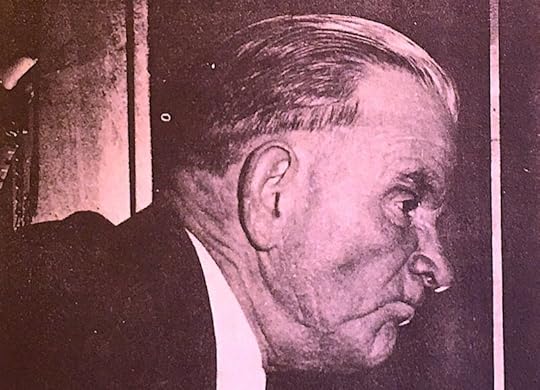
The real“Smelly” John Kelly, using his famous nose. COURTESY HARPER COLLINS
How long was your journey from idea to book? How much did it change along the way?
I researched for a couple months and began to write in April of 2017. It was subbed in August, received some rejections, and went under contract in March 2018. The publishing process took two and a half years.
As I researched, I learned about the times and found that 1920-1950 was the golden age of detective stories. I had the first subway detective – so I tried writing it as a detective story. But the story fell flat. I kept coming back to his nose and ears as “super powers.” Researching more, I found the emergence of super heroes in that time period. That aspect was loads of fun to write, but I still had to find the heart. That’s where the manuscript underwent some trial and error. After much brainstorming on heroes, I found my “heart.” Overall, there were few changes. One of my favorite scenes was left behind, and I moved the super hearing farther in to build the arc. Then I tightened and strengthened the connecting thread.
Your research is impressive! Please tell us how you found your sources and how they helped shape your narrative.
I found only three sources: a magazine article, a newspaper article, and a chapter of a book. (A fourth article was found after we were in the publishing process.) All I really had to start working from were a collection of anecdotes. So basically, I had pieces of the midsection of the story. With so little on the main character, much of the narrative rested on understanding his world, both above ground and in the subway tunnels. One thing led to another as I googled and checked books, and any list of sources I found provided more paths. I consulted the New York Transit Museum, sought sources to help me learn about his tools and technology, and dug for diagrams of the infrastructure below ground.
I searched out New York City subway history, construction, the third rail, maps, public perceptions, and clandestine You Tube videos of subway tunnels. And I was fortunate to find an expert willing to answer my questions as they came up. Once I had an understanding, I could put myself there. But I needed to experience it as Kelly did with his super senses. How could I get that sensory experience? Never underestimate what’s online! I found an old stench map (late 19th c), industry map (1922), and sound map (1920s). The sound map had video links – a treasure trove! With all that I could begin to immerse myself in his world, as well as connect and enliven the scenes – with humor as well as heroism.

Which of Jenn Harney’s illustrations surprised or delighted you most?
The first tunnel spread with the dramatic palette and the underground world she created knocked my socks off. I loved that underground world! A later spread that showed Kelly in the tunnel but also the construction work going on above ground, made the cause/effect relationships clear with the growing city creating dangers in the subway.
I always think that every book I write changes me in some way. Did “Smelly” Kelly change you? And, if so, how?
I agree! There are always writing lessons that come from the unique challenge in each story, but there are personal lessons as well, as you work with themes and characters. An Inconvenient Alphabet and Lizzie Demands a Seat affected me on a deeper level than “Smelly” Kelly and His Super Senses. My biggest challenge in writing “Smelly” Kelly, connecting the scenes into a meaningful story, really came down to motivation and the force that drives us to do what we do—and consequently, brought some reflection on that. I think this book reinforced some ideas about finding one’s place in the world and providing opportunities for kids to shine.
What do you hope kids will take away from this story?
I hope kids will see there are all sorts of heroes (many who go unnoticed) and what a great attitude and sense of humor will do for you. But most of all, I want them to internalize the take-away on the last page….no spoiler here J .
Is there anything you would like to add?
Thank you for hosting me on your blog and for sharing “Smelly” Kelly and His Super Senses!
Thanks, Beth! Be sure to visit Beth on her website, where you can also find out about her upcoming books:
TAD LINCOLN’S RESTLESS WRIGGLE; PANDEMONIUM AND PATIENCE IN THE PRESIDENT’S HOUSE, illustrated by S.D. Schindler, Calkins Creek, fall 2021.
REVOLUTIONARY PRUDENCE WRIGHT: LEADING THE MINUTE WOMEN IN THE FIGHT FOR INDEPENDENCE, illustrated by Susan Reagan, Calkins Creek, spring 2022.
FRANZ’S PHANTASMAGORICAL MACHINE, illustrated by Caroline Hamel, Kids Can Press, spring 2022.
THOMAS JEFFERSON’S BATTLE FOR SCIENCE: BIAS, TRUTH, AND A MIGHTY MOOSE, illustrated by Jeremy Holmes, Calkins Creek, Fall 2022.
And follow Beth on social media here:
Website: bethandersonwriter.com
On Facebook: Beth Anderson
On Twitter: @BAndersonWriter
On Instagram: @BAndersonWriter
On Pinterest: @BAndersonWriter
October 29, 2020
Emma Bland Smith On winning her battle to tell ‘The Pig War’
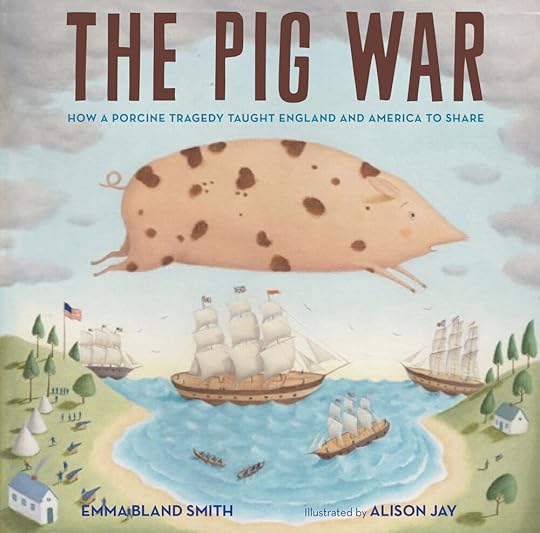
The Pig War by Emma Bland Smith, illustrated by Alison Jay (Calkin Books; Boyds, Mills & Kane)
Sometimes, a writer seizes on an idea and can’t let go. That’s the way it was for Emma Bland Smith with The Pig War, How a Porcine Tragedy Taught England and America to Share (illustrated by Alison Jay, Calkin Books; Boyds Mills & Kane). Emma knew this little-known story of a fight about a pig that brought two countries to the brink of war would be challenging to tell. She knew it would take more research than she’d done for her previous four books. She even knew she might not find an answer to every question that came up — and she found an ingenious way to acknowledge multiple possibilities while staying clearly in the realm of non-fiction.
It helped that Emma is a children’s librarian who already has wonderful books on her resume, including Journey: Based on the True Story of OR7, the Most Famous Wolf in the West, winner of Bank Street College’s Cook Prize and Northland College’s SONWA award. But I think the biggest reason she did such a great job is that she was compelled to tell this story. And we’re so glad she did. Thanks, Emma, for taking the time from your husband, two kids, one cat and one dog in your San Francisco, California home, to answer questions on The Kids Are All Write!
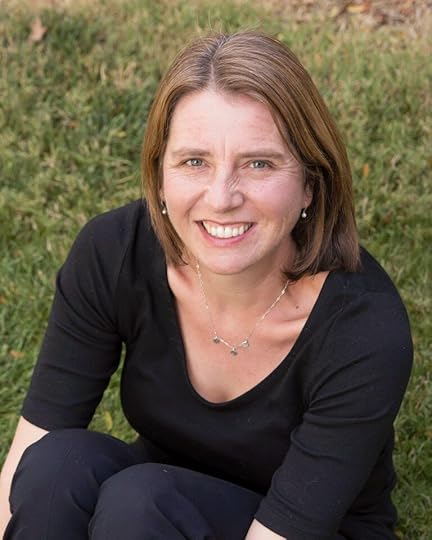
Emma Bland Smith
What inspired you to write The Pig War: How a Porcine Tragedy Taught England and America to Share?
I read about the historical incident called the Pig War when I was poking around the internet, researching another book. I initially didn’t think much more about it, but I must have filed it away in my brain, because I kept coming back to it. One day I just decided, “Yes, I think this would make a great picture book!” It was the first book of mine to require a great deal of research, and that was a real learning experience for me.

The Pig War by Emma Bland Smith, illustrated by Alison Jay (Calkins Creek; Boyds Mills & Kane)
Tell us about your book journey. How much did the book change from the time you got your idea to when you finished the manuscript? Did it find a home right away?
The first editors of my story were my amazing critique partners, of course! After that, it did not change a great deal. I had it critiqued at a conference, and the critiquer recommended an editor—Carolyn Yoder at Calkins Creek, the American history imprint of what was then Boyds Mills Press (now it’s Boyds Mills & Kane). So when I turned the manuscript in to my agent, she submitted right away to Carolyn. Luckily, Carolyn liked it and acquired it! It was only my third picture book deal, so it felt very, very exciting.
How long did it take you to find your narrative voice — to figure out how to tell this story? I imagine you had a ton of information to sort through!
From the beginning, I knew that I wanted to use a slightly comic, folksy voice to tell this story. I love writing in that style, and it worked here because of the ridiculous-but-true aspects to the tale. There was indeed a lot of information to sort through, but one of the challenges and joys of narrative nonfiction is figuring out which facts move your story forward, and which should be relegated to the back matter.
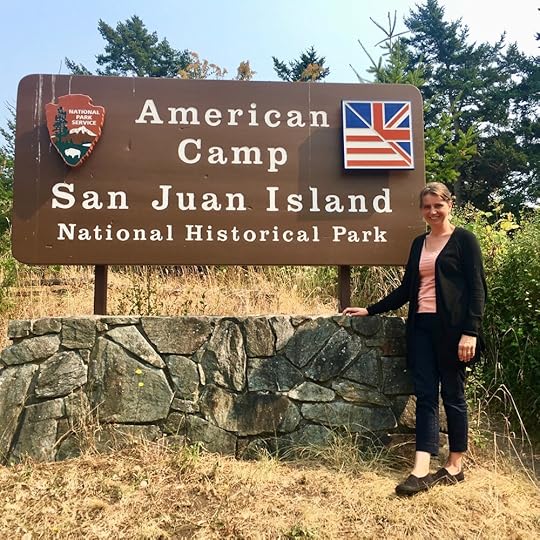
Emma Bland Smith at the scene of the porcine crime
How challenging was the research? Did you go to San Juan Island?
I began with online research, but I told myself right off that if this manuscript were to be acquired, I would visit San Juan Island. The manuscript was acquired in February, and that summer my family and I spent a week in the islands. It’s not an easy place to get to: It requires flying to Seattle, taking a two hour bus ride, waiting several hours at the ferry terminal, then taking a ferry through the islands. But boy, was it worth it! Getting to actually walk around the areas the Pig War took place did influence my revision. I was better able to capture the physical characteristics of the island. Besides visiting San Juan Island National Historical Park, I spent an afternoon in the archives of the ranger station, searching for primary sources to back up every fact in my story. My editor is a stickler about primary sources, as well she should be, and I felt strongly about measuring up to her standards. I had a few quotes, taken from other reports, for which I was not able to find back up; I ended up taking those out of the manuscript. I also had an expert reader, Mike Vouri, who had written a scholarly book about the Pig War. I met with him twice in person, and we exchanged many emails.
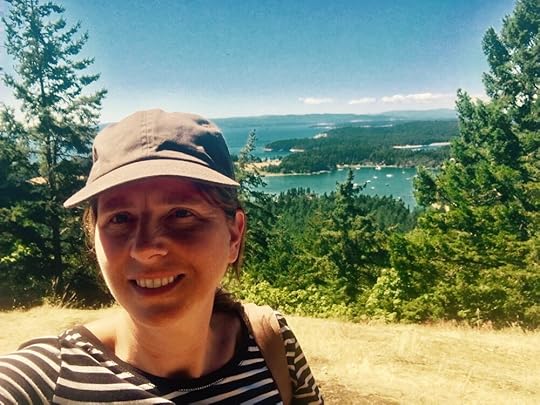
Emma doing research at San Juan Island
Did you know from the start that you were going to lead off with questions about Lyman and his motivations or did you tell the story that way because you couldn’t find the answers to why he did what he did?
That is a sneaky but effective nonfiction technique I had fun with. In certain cases, when I didn’t know for sure how someone felt, or why someone did something, I wrote my assumptions in the form of a question or guess, or I used a qualifying word or phrase, such as “maybe,” “likely,” or “must have.” (This also added to the humorous tone in some cases.) Here are some examples:
• “Maybe Lyman hadn’t had his coffee. Maybe he’d slept poorly. Maybe he was looking forward to boiling those potatoes for his lunch. Maybe he was thinking of the many painful miles he’d rowed to buy the potato seed. But for whatever reason, when he saw that pig, he got cranky.” • “Hornby…likely felt a tad nervous himself at this point.”
• “The Americans must have sighed a breath of relief.”
• “Now, the two bosses, Harney and Douglas, may or may not have been cranky. We don’t know.”
• And lastly: “Did Lyman participate in these good times? Probably—he was known as a fun-loving guy. Did he feel just a teensy bit embarrassed about all the fuss he’d caused? Let’s hope so, for goodness’ sake.”
These techniques allowed me to get inside the characters’ heads and examine their motivations while still keeping the work legitimately nonfiction.
Did the fellow who lost the pig ever get paid anything?
Oh, what a great question! No, I sincerely doubt Charles Griffin received a penny from Lyman Cutlar! To think what cost and trouble would have been avoided if in the very beginning Griffin had simply quoted a reasonable price for the pig, rather than letting his ego and temper get the better of him and making such a fuss!
When did the islands officially become part of America?
1872
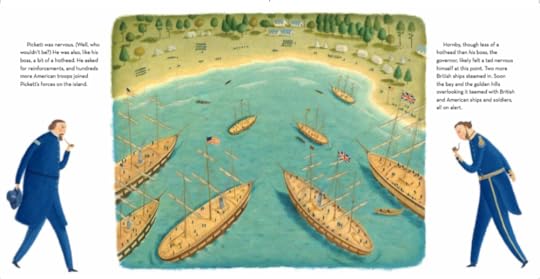
The Pig War by Emma Bland Smith, illustrated by Alison Jay (Calkins Creek; Boyds Mills & Kane)
What illustrations are your favorites? Did anything surprise or delight you about Alison Jay’s approach to the story?
I could not have been more thrilled at learning that Alison Jay would illustrate this book. I’ve been reading her book to my kids since they were babies! I just adore her crackle painting technique. I think my favorite illustrations are the ones that show lots of charming, vintage everyday detail, such as the spread depicting the parties the Americans and Brits had together. Alison likes to include animals in all her illustrations, so I also enjoyed finding all the cats, dogs, horses, and pigs running around, as well as the whales and orcas in the ocean.
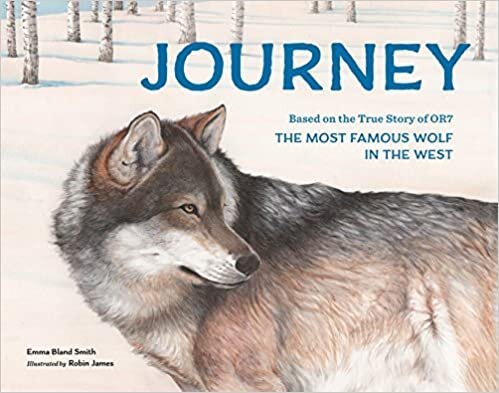
Journey: Based on the True Story of OR7, the Most Famous Wolf in the West by Emma Bland Smith, illustrated by Robin James (Little Bigfoot)
How does this book compare with your earlier work, including your award-winning debut, Journey: Based on the True Story of OR7, the Most Famous Wolf in the West?
The Pig War was my first historical nonfiction picture book, and very different from my first few books. Both books, however, have an important message to impart. For Journey, it’s that we can all take action to help save endangered wildlife. For The Pig War, it’s that while one hostile action can ignite an argument and spiral out of control, it’s never too late to back down and turn things around.
Did this story change you and, if so, how so?
The book pushed me to write with a very different voice from what I’d used before. I had so much fun being cheeky and ironic. I learned that using a comic voice can be a good way to take on heavy subjects—the sugar to help make the medicine go down.
What do you hope kids will get from this book?
I truly hope that young readers will come away from this book a little less likely to want to fight issues out, and more interested in compromise and peaceful problem solving.
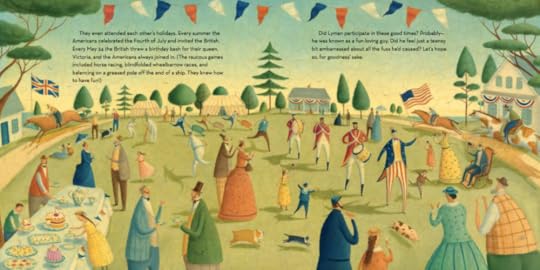
The Pig War by Emma Bland Smith, illustrated by Alison Jay (Calkins Creek, Boyds Mills & Kane)
Emma, thanks so much for visiting us on The Kids Are All Write! Is there anything you would like to add?
I appreciate your having me here, Nancy! You’re an inspiration to me with your own wonderful books!
My pleasure, Emma! Thank you for sharing your book and your journey here.
Remember to visit Emma on social media!
On her website: emmabsmith.com
On Facebook: Emma B Smith
On Twitter: @EmmaBlandSmith
October 8, 2020
‘zis vi honik’: Talking to Miriam Udel About ‘Honey on the page’
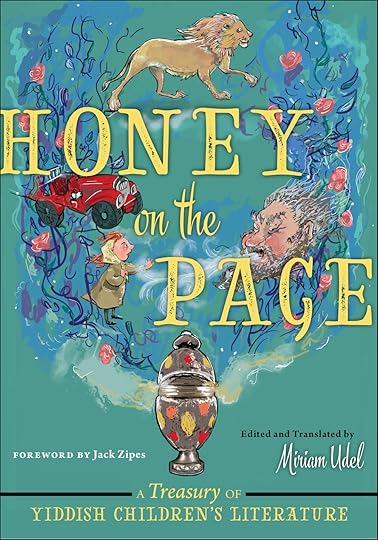
Honey on the Page, a Treasury of Yiddish Children’s Literature, edited and translated by Miriam Udel, illustrated by Paula Cohen (NYU Press)
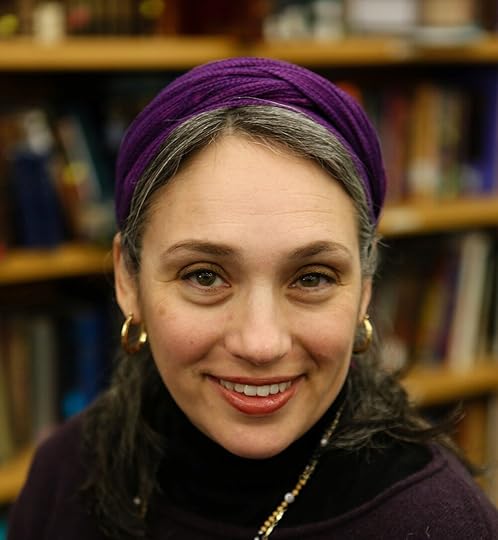
I had the pleasure of meeting from Miriam Udel at Tent, a wonderful program sponsored by PJ Library at the Yiddish Book Center in Amherst, Massachusetts, where she shared her translations of Yiddish stories that have now been published as Honey on the Page, A Treasury of Yiddish Children’s Literature, edited and translated by Miriam, illustrated by Paula Cohen and published by NYU Press. It’s the first comprehensive anthology of Yiddish children’s literature in English and it’s hard to imagine anyone bring more passion to this important project than Miriam, an associate professor of German Studies and Jewish Studies at Emory University, where she teaches Yiddish language, literature, and culture.
Miriam holds an AB in Near Eastern Languages and Civilizations as well as a PhD in Comparative Literature from Harvard University and was ordained in 2019 as part of the first cohort of the Executive Ordination Track at Yeshivat Maharat, a program designed to bring qualified mid-career women into the Orthodox rabbinate. She is also the author of Never Better!: The Modern Jewish Picaresque (University of Michigan Press), winner of the 2017 National Jewish Book Award in Modern Jewish Thought and Experience.
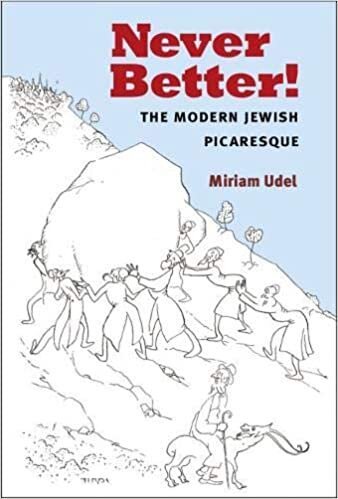
Miriam lives in Atlanta with her husband and their three boys where she enjoys weight-lifting, salsa, tap, hip hop ad reggaeton. Thanks, Miriam, for taking time to visit The Kids Are All write!
How did you decide on the title, Honey on the Page?
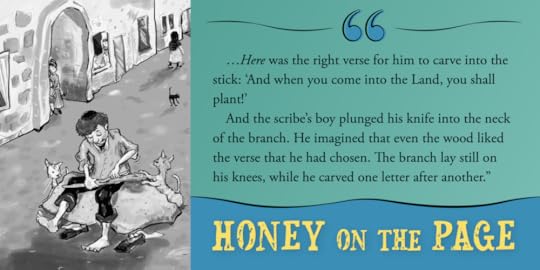
I wanted to evoke the custom of slathering honey onto a child’s first school primer to make learning sweet. In my own Jewish education, we were told about this custom at the start of Hebrew school, but chocolate pieces were substituted for honey. Just as the chocolate was meant to stand in for the messier honey, so too I hope my translations and relatively neat categorization scheme will stand in for the splendidly chaotic, multifarious Yiddish originals.
How long was your journey with this book? Can you tell us how long it took to evolve from idea to completion? What were the challenges, surprises, delights along the way?
This book took the satisfyingly Biblical term of seven years from inception to publication. Three very serendipitous things helped move it along. One was that in 2013, when I was just getting serious about this project, the Yiddish Book Center inaugurated its Translation Fellowship. I applied for the first cohort and suddenly had access to expert, detailed instruction from professional translators as well as a peer group of Yiddishists looking to cultivate the craft of translation. So I would gain the skills to actually write the book I was proposing.
Every spring, Emory brings one literary agent and one scholarly press editor to campus for talks and individual meetings with faculty. In 2015 (I think!), they brought Eric Zinner of NYU Press. By this time, my agent had already circulated a proposal to trade presses and children’s editors. Nobody was interested or really saw the project’s potential—except for Eric. It helped that NYU had published a successful anthology of American leftist and anarchist literature called Tales for Little Rebels, so they had a template in mind. But I was dead-set on creating a volume that would appeal to children as well as adults, with copious illustrations. I wanted full color! I wanted an illustrator! I sent a lot of proposals to a lot of foundations and potential sources of funding and heard many polite variations of “no.” An entire year of “no” while the translations were basically done and I was busy with other things.
Then, I taught for my third time at the TENT seminar for Jewish children’s authors and illustrators, and the inexorable drive of Jewish matchmaking took over. Novelist Joanne Levy nudged her friend Paula Cohen approach me because I had mentioned I was looking for an illustrator. Paula’s work is incredible: joyous, whimsical, engaging, but also very precise: every line is just where she wants it. She was willing to work in black and white (also in incredibly vivid, eye-popping color for the cover). Once the book went into production and I had found an illustrator that everyone could see we were lucky to get, then things started falling into place with very generous support from Emory’s Jewish Studies program and some additional funds from my graduate department at Harvard.
You arranged the stories thematically, from school days to holidays. Was that the plan from the start? Did the stories you found fall naturally into these themes or did you find yourself looking for stories that fit these themes?
I’m chortling as I read this question, thinking of the tag line, “Maybe she’s born with it; maybe it’s Maybelline.” I considered several different methods for organizing what proved to be an overwhelming amount of material: by chronology, geography, age of the target reader, etc. Each of those would invite certain audiences and turn off others. Historians might love the chronological approach, and scholars probing pathways of literary influence might love a geographical one. But what seemed to best invite the attention of a wide readership was organizing the stories and poems by theme.
I was encouraged by the fact that many anthologies from the 20’s and 30’s, the period to which most of my selections date, were organized in a very particular arc from the most distinctively and particularly Jewish content to more universal themes. I decided to emulate this. I remember sitting on the sofa with index cards spread all around me with about fifteen different thematic categories and smaller, cut-up index cards with each individual entry. Of course I wanted each one to fit naturally into a thematic category, but there was lots of potential overlap and a couple that got shoe-horned in. I hope most of the placements feel “just right” though.
Is there a quixotic element to learning Yiddish and translating these stories so that they can live on for future generations? It takes enormous effort on your part, that of other Yiddish scholars, and the Yiddish Book Center to keep alive a language that doesn’t have a home of its own.
Look what the Jewish community has invested in fostering high-quality, engaging children’s literature today. Look how many representations there are, both in kid lit and work for adults, of the shtetl, and look how much is simply being imagined, sometimes clumsily, for want of the knowledge of Yiddish. Doing anything with Yiddish felt more quixotic when I started studying it almost twenty years ago. But today, there is such a well-developed institutional structure undergirding the “Yiddish renaissance.” There are so many young adults, millennials and Gen Z, who are learning Yiddish and creating new work and new modes of working with it.
The stories span from the 1910s to the 1970s. Do the stories end in the 1970s because people stopped writing stories in Yiddish in the 1970s? Do you think we will see people writing in Yiddish again?
People are writing in Yiddish right now, both in the Hasidic world and in the more secular one! There is a wonderful little press called Kinder-Loshn (Child’s Language) that is publishing bilingual versions of Yiddish stories old and new. Yiddish is an officially recognized and government-supported language in Sweden, so there are new TV shows and children’s books and radio plays being produced there in the mame-loshn (mother tongue). My friend Arun Viswanath recently published a translation of the first volume of Harry Potter into Yiddish.

Obviously, these projects are all swimming against the current of linguistic assimilation, but at this point, I wouldn’t bet against Yiddish.
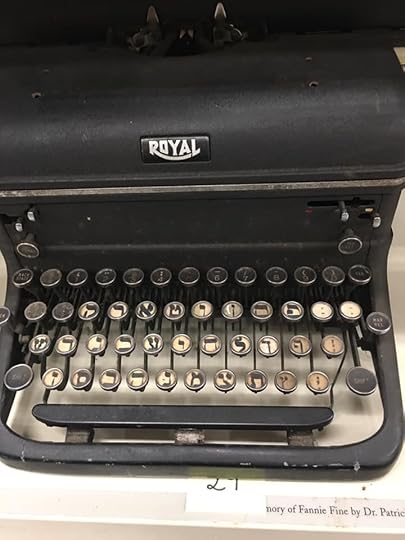
A Yiddish typewriter at the Yiddish Book Center
How did you find these stories? Did you discover any of them as an undergraduate or when you were completing your Ph.D. at Harvard University?
One thing that I reflect on in the introduction to the book I’m writing now, a critical study of Yiddish children’s literature designed as a companion to Honey on the Page, is that my Yiddish education included NO children’s literature. When I studied Spanish, Hebrew, and Arabic at earlier points in my life, kidlit was always part of the syllabus. It made me wonder whether there even WAS any Yiddish children’s literature out there, and the shock of finding it all sitting in plain sight (digitized even!) yet utterly neglected spurred me toward this project.
You are a rabbi in addition to being a professor, ordained at Yeshivat Maharat. What drew you to become a rabbi? Does being a rabbi lead you to seek stories with ethical and spiritual resonance as well as literary quality? Can you give examples of some of the stories that work for you on both levels and why?
The children’s literature that I include in the volume was a product of the Yiddish left, which understood itself to be broadly secularist. Authors’ attitudes ranged from Yiddishkeyt (Jewishness) is the ethical and aesthetic wellspring of our inspiration” to “all forms of religious expression are the opiate of the masses.” With the former group, I found it fascinating how invested they could be in telling tales that took traditional religious observance as a theme, such as the two Sabbath tales that open the book. I needed to figure this out so badly that I ended up exploring the topic in a couple of scholarly articles. I was also fascinated by the notable return to telling holiday tales in the 1950’s, when the Jewish liturgical year becomes a source of cultural preservation and consolidation after the disruption of the Holocaust.

How will you be using this book at Emory University, where you’re an associate professor of Yiddish language, literature, and culture?
I will be using it this semester in my course on Children’s Literature and the Quest for Just Societies. I have been teaching my translations for about five years now, and it will be thrilling to be able to show my students nicely laid out book pages instead of just word processing documents that scream at the top “NOT FOR CIRCULATION. DO NOT SHARE.” I also teach courses focused on Jewish childhood and family life that will make use of some of these texts, as well as translations that ended up on the cutting room floor.

It was a joy meeting you and learning from you at TENT, the program at the Yiddish Book Center in Amherst in 2019. I remember how proud you were of the book Good Night, Wind: A Yiddish Folktale by Linda Elovitz Marshall , because of the way Marshall found a contemporary way to bring a classic Yiddish tale to life. Can you tell us about the journey from the Yiddish story to Marshall’s retelling?
This is probably mostly Linda’s story to tell, but I was indeed quite thrilled when she used the story by Moyshe Kulbak “The Wind That Got Angry” as the basis for her beautiful Good Night, Wind. I had taught my translation and interpretation of the tale at YIVO in Winter 2015. She changed the second half of the plot a great deal, she said, because in contemporary children’s stories, children need to be the primary agents and heroes. So instead of having a single mother stand up to the angry wind for the sake of the children, she figures out how to have the children confront the wind themselves.
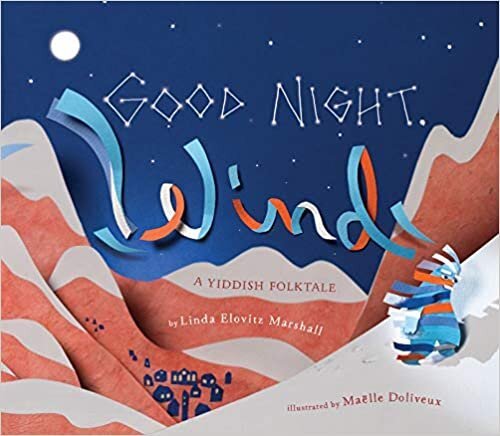
Good Night, Wind: A Yiddish Folktale Hardcover by Linda Elovitz Marshall, illustrated by Maelle Doliveux (Holiday House)
I was also especially gratified because she built my interpretation, that the blizzard the wind creates is the acting out of a tantrum, right into the retelling of the tale. As translators, we don’t always get to catch a glimpse of the bridges that we’ve built, but in this instance I did.
You’ve said that your three sons were a focus for the group. Do they have any favorites among the stories and do their favorites surprise you?
My older boys have particular appreciation for everything that rhymes because that’s where they see my hard work—or rather, they don’t see it but can intuit that it’s there. My preschooler loves all the funny ones, such as the couple Avrom and Mirtl, who allow their home to be cleaned out by thieves rather than either one caving and going downstairs to shut a door that wasn’t properly bolted on a windy night. He hasn’t heard all of them yet, but next week we’re going to rock his world with the calf that gets lost in a farmer’s beard.

Tell us about the companion book you are working on for Honey on the Page.
I am writing a book for grownups about why this corpus matters: how we cannot fully understand Jewish modernity until we understand the culture that Yiddish-speaking Jews were creating for their children. Moreover, I explore what a deeply feminist project it is to dig into the thought world that educators and parents, so many of whom were women, developed with and for the children in their care.
What would you like readers, young and old, to know about Honey on the Page?
This is a book for generations to share and talk about together. Kids will like some of it, adults will appreciate some of it—but the book really comes alive when it is shared. Part of the work I hope it does in the Jewish community is to empower and activate older generations as tellers of family tales.
Do you have any favorite Yiddish expressions or words to share?
I suppose it makes sense to share the expression “sweet as honey,” zis vi honik, and perhaps what we wish people at the start of any new endeavor or adventure: mitn rekhtn fus, or “on the right foot!”
Thank you so much for your time, Miriam! Is there anything you would like to add?
Since travel isn’t possible right now, I’m embarking on a virtual tour that includes lots of public events. I am trying to keep the list current on my website, miriamudel.com. I’d love to “visit” your community, whether to speak at a day school or Sunday school, to an adult ed audience or book club, or to craft intergenerational virtual events that people can participate in from anywhere. Thank you for such a wide-ranging and fun set of questions to tackle, Nancy!
So, nu, give Miriam a call! And in the meantime, visit her here:
On her website: miriamudel.com
At the Emory University website: german.emory.edu/home/people/faculty/udel-mirian.html
On Facebook: miriam.udel
On Twitter: @miriamudel
NYU Press: Honey on the Page
Yiddish Book Center Museum Store: Honey on the Page
Yiddish Book Center Museum Store: Harry Potter in Yiddish
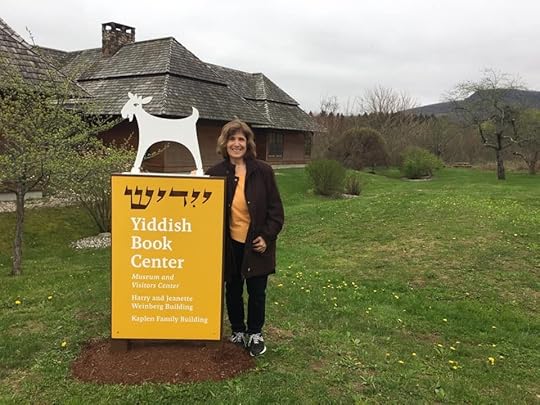
Nancy at the Yiddish Book Center, attending the TENT program sponsored by PJ Library in 2019, where I had the pleasure of meeting and learning from Miriam Udel (and working on a picture book about Henrietta Szold, coming out in Fall 2021 from Creston Books/Lerner Books)
September 24, 2020
Of Roosters & Gratitude: Karen Rostoker-Gruber and ‘A Crowded Farmhouse Folktale’
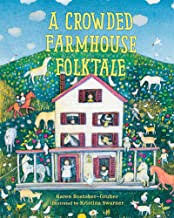
Karen Rostoker-Gruber’s resume is as crowded as Farmer Earl’s home in her newest book, A Crowded Farmhouse Folktale. But the difference between Karen and Farmer Earl is that while Farmer Earl is looking for a little more room, Karen enjoys adding more books. Right now, she’s authored more than 16, with hundreds of thousands of copies sold. Farmer Kobi's Hanukkah Match (co-written with Rabbi Ron Isaacs, illustrated by C.B. Decker, Apples & Honey Press), was named a National Jewish Book Award Finalist and was awarded the 2016 Outstanding Children's Literature Award from the Church and Synagogue Library Association. Her books Bandit, Bandit's Surprise (both illustrated by Vincent Nguyen) and Ferret Fun (illustrated by Paul Ratz de Tagyos), all from Marshall Cavendish, received starred reviews in School Library Journal.
Rooster Can't Cock-a-Doodle-Doo (illustrated by Paul Ratz de Tagyos, Dial) and Bandit were International Reading Association Children's Book Council Children's Choices Award recipients. Rooster Can't Cock-a-Doodle-Doo, Bandit, and Ferret Fun were chosen for the 100 Best Children's Books in the Bureau of Education and Research's Best of the Year Handbook. Rooster Can't Cock-a-Doodle-Doo and Ferret Fun were nominated for the Missouri Show Me Award; Bandit was nominated for the South Carolina Book Award; and Rooster Can't Cock-a-Doodle-Doo was a Dollywood Foundation selection in 2007 and 2008. Maddie the Mitzvah Clown (illustrated by Christine Grove, Apples & Honey Press), was a 2017 PJ Library book selection. This year’s books, Happy Birthday, Trees (illustrated by Holly Sterling, Kar-Ben) and A Crowded Farmhouse Folktale (illustrated by Kristina Swarner, Albert Whitman), are PJ Library selections for 2020. Karen is a member of SCBWI, has twice co-chaired the Rutgers University Council on Children's Literature's One-on-One Conference, and is a co-founder of The Book Meshuggenahs. Welcome, Karen, to The Kids Are All Write!
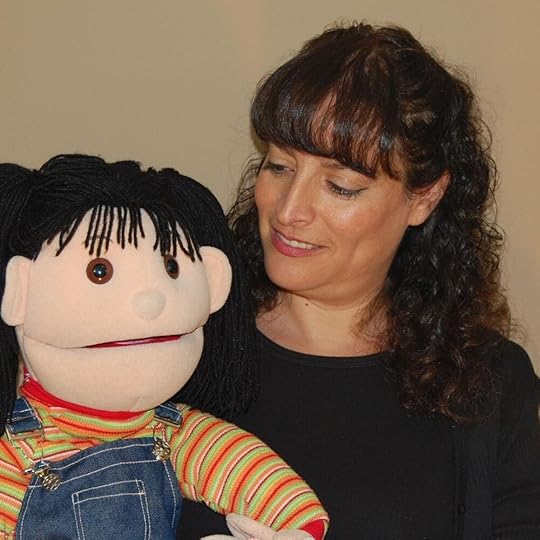
When I looked at the rooster in A Crowded Farmhouse Folktale, I couldn't help thinking about your book, "Rooster Can't Cock-a-Doodle-Doo." Now, you didn't actually mention a rooster in the text, what did you think when you saw it in Kristina Swarner's illustrations?
When I first looked at the sketches and saw the rooster on the first page, I couldn't believe it! Illustrators and authors aren't supposed to talk about the book until the book is done because the publisher doesn't want the author to influence the illustrator's creativity. I wonder if Kristina looked me up and saw my book, Rooster Can't Cock-a-Doodle-Doo, before she began her illustrations. I never asked her. One time, at a school visit, a little kid asked me if I wrote Rooster Can't Cock-a-Doodle-Doo because my last name sounds like rooster (Rostoker). I had never had that question before and it really stumped me.
September 10, 2020
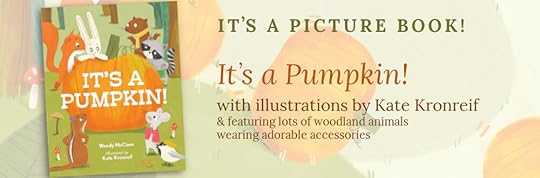
It's a Wendy! Editor Wendy McClure on her new picture book, 'It's a Pumpkin!'
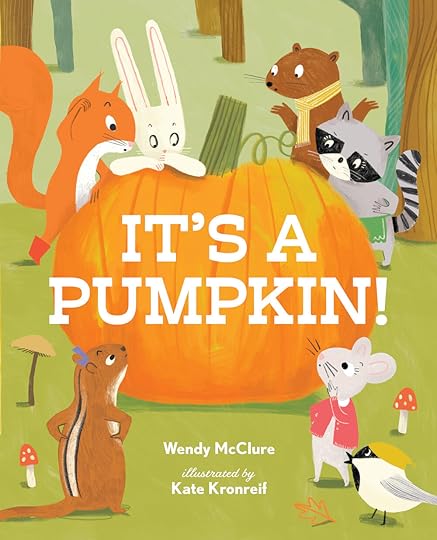
Wendy McClure is a writer and a children’s book editor at Albert Whitman & Company. In fact, full disclosure, she’s been MY wonderful editor on four published picture books, with another on the way in 2021. Wendy has authored two picture books, the historical fiction series Wanderville, and worked on numerous books at Albert Whitman & Company. Her writing for adults includes the book The Wilder Life: My Adventures in the Lost World of Little House on the Prairie and work appearing in The New York Times Magazine, O, The Oprah Magazine, The Chicago Sun-Times, and the radio program This American Life. She has an MFA in poetry from the Iowa Writer’s Workshop. She lives in Chicago with her husband, Chris. I’m thrilled she’s taken time out of her busy schedule to shmooze on THE KIDS ARE ALL WRITE. Welcome, Wendy!

What inspired you to write It’s a Pumpkin!?
I've just always loved pumpkins. There's something a little mythical about them, the way they show up in fairy tales and nursery rhymes, but they're also so goofy in their way. My husband and I bought our first house in 2018, and of my favorite things about having a house is having a front porch for seasonal decorations, which in the fall means PUMPKINS. So I guess the story came out of some kind of idle meditation on pumpkins, and how they are so many things—decor, food, weird heavy projectiles, etc.
How long did it take to get from idea to finished manuscript?
This is very unusual for me: I wrote it in a single evening! The idea was knocking around in my head that afternoon at work, and I took five minutes to type a couple of lines in a document I saved to Dropbox. Then right when I got home I worked on it some more and had a finished draft by bedtime. But that almost never happens.
You're a longtime writer as well as an editor. But usually, you write for older children, young adults, and adults with books like The Wilder Life: My Adventures in the Lost World of Little House on the Prairie, I’m Not the New Me, and your humor book, The Amazing Mackerel Pudding Plan. Plus you do thrilling newsletter posts about the mysteries of your family history. How do you find time? And how can one head wear so many hats?
I published a couple of those books you mentioned fifteen years ago, so one answer to your question is that you can wear plenty of hats if you give yourself a long enough span of time! As for finding the time to write, it's mostly just that I love to write and so I make space for it in my life. Some years it's been more space, other years less—the year we bought a house, for instance, my only writing was my newsletter, which required only a few hours of work once a month. But really I'm no different from any other published author who also has a day job. I don't think enough people understand that this is the situation for most authors. It's funny how we don't talk about it, though: a lot of the authors I work with have full-time jobs but I don't know what they are! Not sure what that means: I think it's that we live our writing lives to the fullest in whatever space we have, and don't give much thought to what our colleagues do in their "other lives." It just happens that my other life as an editor is as visible to some people as my writing life. I don't think it means I do more!
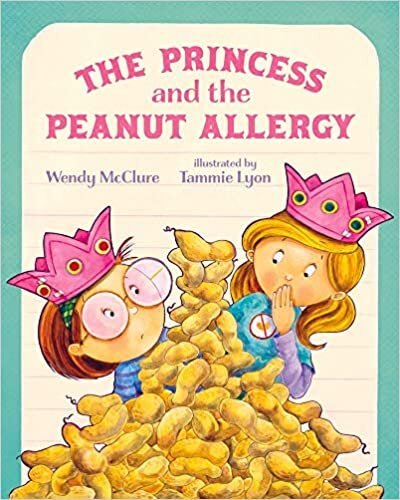
The Princess and the Peanut Allergy by Wendy McClure, illustrated by Tammie Lyon (Albert Whitman)
The last picture book you wrote was the lovely The Princess and the Peanut Allergy in 2009 for Albert Whitman. Can you tell us how The Princess book came about and why it’s been so long between picture books for you?
That's a funny origin story. I was at work with my old boss, Kathy Tucker, and the other editors, and we were having our weekly meeting when we talk about upcoming seasons and the kinds of books we want to acquire. We wanted to publish another peanut allergy story but were having trouble finding something that worked and was different enough from another book we'd just done. And then we'd been hearing that princess books were popular, so we were casting about for one of those too. So I joked that all we needed was a book called The Princess and the Peanut Allergy, and Kathy looked up and said, "you should write that!" My husband has some lifelong food allergies, including a couple that are pretty rare, and I felt there was a need for a story about how to be a good friend to a person with food allergies, so that's the story I wrote. As for why it's been so long: well, as an editor, whenever I get that "this should be a picture book!" kind of notion, my first instinct is always to find an author to write it (or who has written something like it already) and publish THEIR book. Plus I get to see other people's great ideas become great picture books all the time, and being part of that process is deeply satisfying. So it's not often that a picture book story concept comes to me that I want to do all by myself.
How is writing picture books different from your other writing? How does it feel to be back in that world again?
In terms of process, it's sort of a cross between composing a poem and writing a short essay. For many years I did a column for BUST magazine, and my word count was around 800 words, and once I got used to that limit, it sort of changed the way I wrote those pieces: I'd know, after a couple of paragraphs, whether my pacing and structure was tight enough to work with that word count. If it wasn't, I'd start over. I find now that I do the same thing with picture books, because working with those texts as an editor has given me a feel for that length. It's funny, because I still believe in writing first drafts without worrying about word count, and that sometimes you need too much story at first to have enough in the end. But it's also useful to understand the sense of scale a picture book has. It's like figuring out what size paintbrush you need. As an editor of picture books, I'm always in that world to some extent! But it's a little different when it's your own manuscript. I liked letting my editor (Christina Pulles) make decisions about page breaks and jacket copy, and I was able to sit back more and watch the magic happen, which was fun.
Did you choose the illustrator, Kate Kronrief? What drew you to her work? Tell us about the images that delight you most and why.
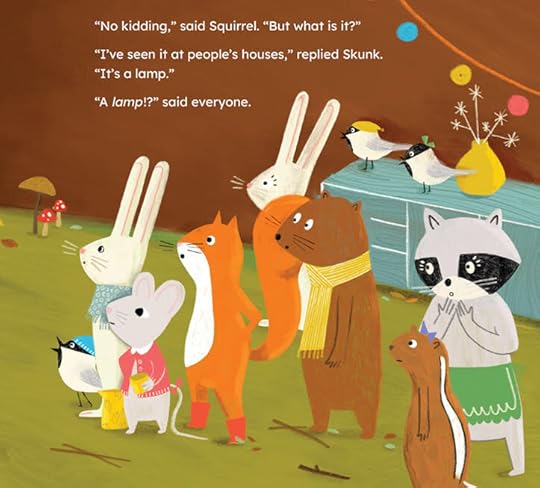
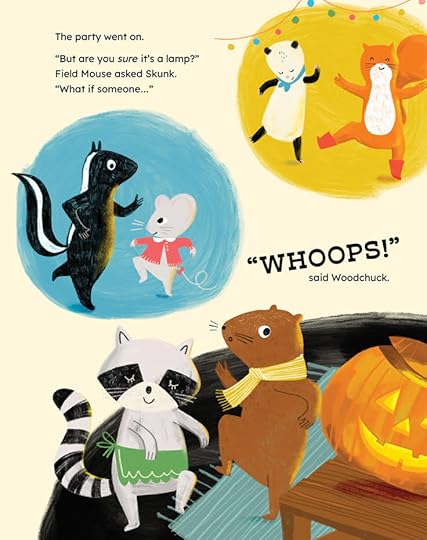
I didn't get to choose her but I know what we were looking for in an illustrator was someone who could do cute woodland animals but had a touch of humor in their characters too, and Kate had just that. I love little details, like the knit hat on the chickadee, and the mid-century furniture in Woodchuck's burrow. And the scenes where the animals are dancing are just the best.
How would your writer-self describe the kind of editor you are?
Supportive, thorough, and maybe a little unpredictable. Sometimes I keep finding things in a manuscript that need attention, up to the last minute, and I imagine it can drive writers crazy.
How would your editor-self describe the kind of writer you are?
I AM AN ABSOLUTE DREAM TO WORK WITH.
Confession time: have you ever used a pumpkin as a chair, a table or a doorstop?
No, but I have always liked the saying, "I would rather sit on a pumpkin than a velvet cushion." I just looked it up and it's based on a Thoreau quote. But I heard it from one of the interior designers on that TV show Trading Spaces. (But I don't think they made furniture out of pumpkins.)
Would you share a favorite carved pumpkin picture with us?
Here's a really demented pumpkin I carved in 1986 when I was about 15. I made the eyeballs with melon baller and then decorated it with bolts, wire, skewers, a saw, and the temperature probe from our microwave oven. I think my mom was a little alarmed!
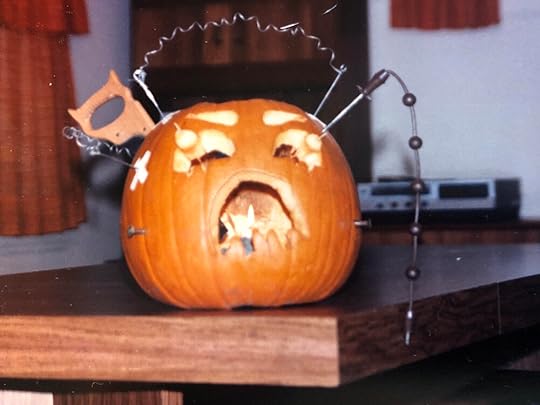
I think that photo is crying out for its own story! But while we’re waiting for it, visit Wendy:
On her website: wendymcclure.net
On Facebook: Wendy McClure Books
On Twitter: @wendy_mc
On Instagram: @wendymc
September 3, 2020
A 'Short & Sweet' interview with Josh Funk
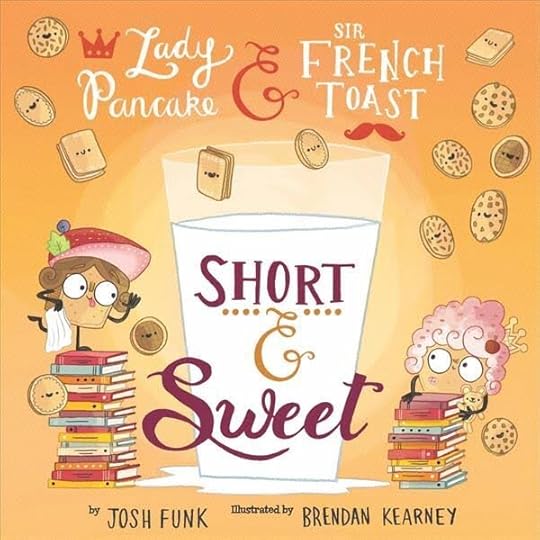
Josh Funk has a long bio, a short bio, a very short bio, a bio where you can fill in the blanks, and a bio written by his cat, all on his website joshfunkbooks.com. Since there’s no way I can improve on all that, I’ll just let you know that Josh is a software engineer based in New England, the author of many funny, popular books and that I’m super excited that he’s made THE KIDS ARE ALL WRITE one of his blog tour stops to talk about his fourth and latest adventure in his Lady Pancake & Sir French Toast series: Short & Sweet. Welcome, Josh!
Congratulations on Short & Sweet, your fourth Lady Pancake & Sir French Toast book! Back in the day when you were still an aspiring picture book writer and you were inspired by your kids arguing about having French toast or pancakes for breakfast, did you ever think you would have a fourth book in a series about this?
Thanks, Nancy! And no! When I wrote the first book in this series, all fourteen drafts over a period of a year and a half, I was just hoping that I would someday get some book published. I was so far away from thinking about sequels, let along serieses or quadrilogies (is that a word?). And I still feel so fortunate to have published any books at all, let alone multiple. I don’t think the “pinch me” feeling will ever get old (I certainly hope it doesn’t).
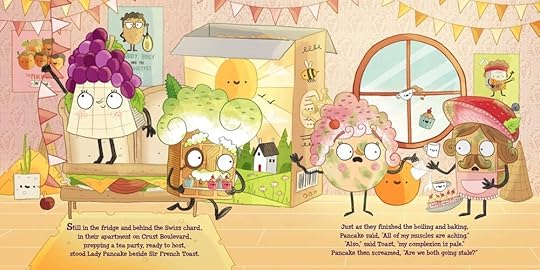
What inspired this particular story? Part of the Short & Sweet plot hinges on Professor Biscotti accidentally turning Lady Pancake and Sir French Toast into toddlers and I couldn’t help wondering if the dad in you sometimes wishes you could do that to your kids, too — if just for a little bit.
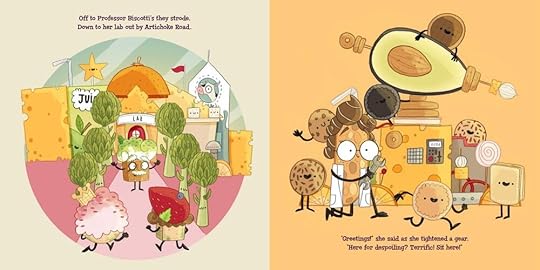
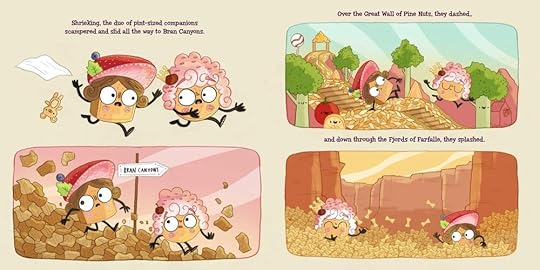
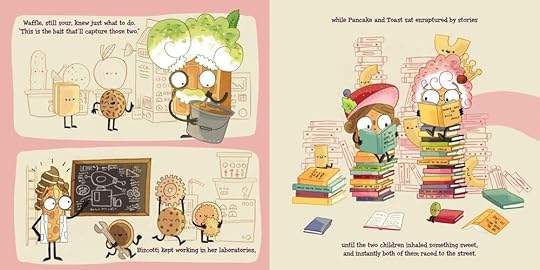
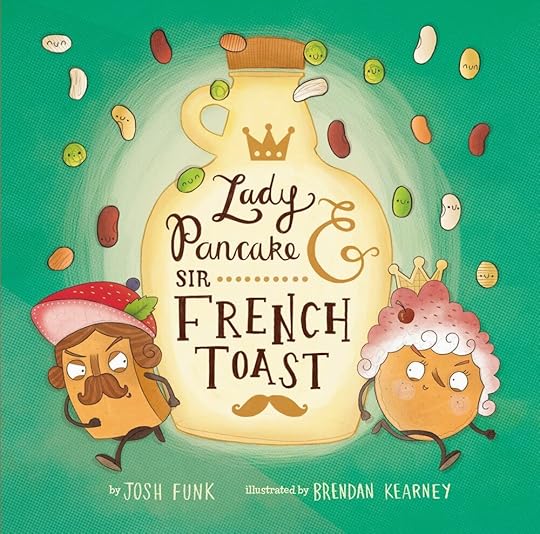
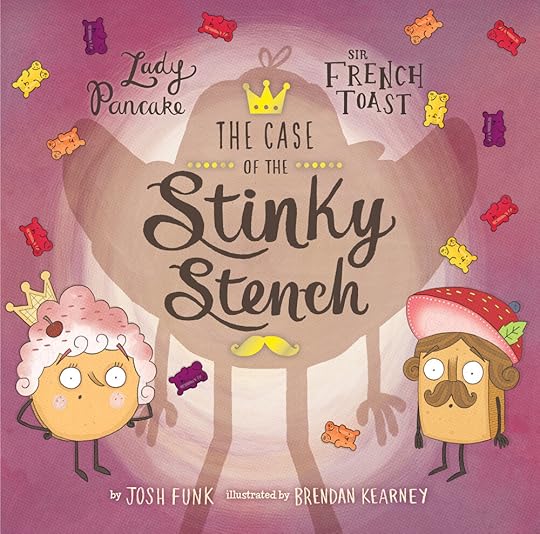
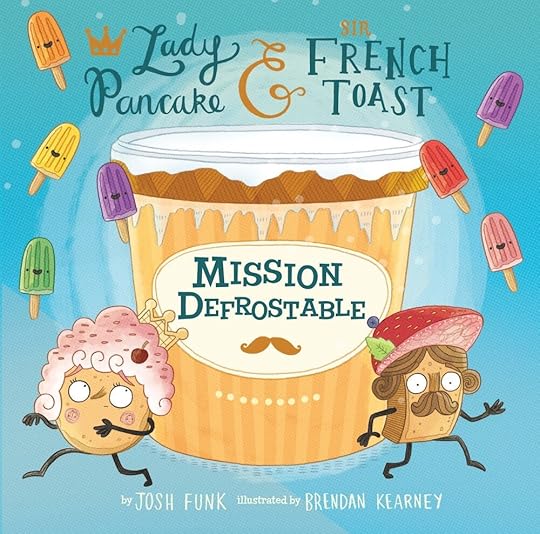
Well, there are a couple things that went into the idea behind this. First and foremost, I’ve recently been getting the question, “How are Lady Pancake and Sir French Toast not stale yet?” from a number of readers. So I wanted to address that, as well as make it possible for them (in theory) to be able to live in the fridge forever. Secondly, I like the fact that each of the books in the series is sort of a different ‘genre,’ if you will. Lady Pancake & Sir French Toast is a race. The Case of the Stinky Stench is a mystery. Mission Defrostable is an action-adventure-thriller. I wanted to keep up the trend of switching genres. I like to think that Short & Sweet is a magical bodyswap / sci-fi comedy (think Big or Freaky Friday meets Honey I Shrunk the Kids or The Absent-Minded Professor). And thirdly, I wanted to try and throw it back a bit to the fast-paced madcap culinary chaos of the original and a little less dialogue than books 2 and 3. Putting it all together, this is what I cooked up.
You worked hard at your craft for a long time. You endured a lot of rejections in the beginning, mainly from literary agents. Then you decided to submit directly to publishers and boom! You had three books come out from 2015-16, have an agent you love and you haven’t slowed down since. What kept you from getting discouraged in the beginning? What made you persevere?
The writing community has been so warm and welcoming. I’d like to think that even if I never sold a book, I’d be so enamored with the friends I’ve made and the experiences I’ve had, it would still have all been worth it. But also, rejections are part of the deal. You know that going into it. It doesn’t hurt any less getting them. But I also knew that my writing was improving. I could tell that my stories were getting better, the more new ones I wrote - both because I was enjoying them more, but also because of the responses from my critique partners. Which brings it back to the community. Having the support of other writers going through the same experiences alongside you - and hopefully some ahead of you - is critical. Having more experienced writers around to be able to ask for support is something I was very fortunate to have (both regarding the craft of writing and about the business of writing).
What do you hope other writers learn from your experience?
It’s important to keep writing new things. My first manuscript was terrible. My next manuscript was a little less terrible. And my third was slightly better than the second. But I attended workshops and classes and webinars and kept writing new things. That first manuscript was flawed in so many ways and was never going to get published. But I needed to write it. And revise it. And submit it. And get rejections. I now know I shouldn’t have been submitting it, but it was all part of my journey, so I don’t regret it. I learned so much from that process. And I was able to take all that I learned and start new manuscripts with much better foundations. Also, don’t use ridiculous pseudonyms. Going as Papa J Funk definitely hindered me in getting an agent. Oops.
What drives and inspires you to write as much as you do?
I like to entertain. Myself. My kids. My friends. And hopefully strangers. I have fun writing things that a brilliantly talented illustrator will eventually render on the page. I want to entertain children, but also the adult readers in their lives. The way I see picture books is that adults will be reading them to children (in most cases). Teachers, librarians, parents, and so forth. As a parent, I wanted to be entertained as I read picture books - and if I wasn’t, I was likely not to want to give a book a repeat read. And so I want to create books that adults will enthusiastically enjoy with their children or students or patrons. I write books that I want to read. And hopefully children and their grown-ups will, too.
How long does it typically take you to take a manuscript from idea to acquisitions? Does the number of revisions vary from book to book?
It’s completely all over the place. Ballpark, I’ll write 5-10 drafts before sending it to my agent and if she agrees it’s worth moving forward with, we’ll revise a couple times before submitting to publishers. The truth is, most books don’t even get to my agent. And even those that do, only a little more than half ever go on submission. And of those, about half eventually sell, but not before some (or many) rejections roll in. All of these numbers are improving slightly over time as I realize which books are worth pursuing and which aren’t earlier on in the process. Here are the raw (vague, because it’s publishing) numbers. I have 12 published books, with a few more on the way. But if you take out sequels, books that were someone else’s intellectual property, and the two books that came out of slush piles before I was agented, my agent and I have sold a total of only 6 books in over 150 submissions to editors. That’s a 4% success rate with almost 150 rejections (or black holes).
Is it a challenge to find a work/life/writing balance? Where and how does your writing fit in with your time with your family and your work as a software engineer?
I write whenever I can fit it in. Coffee breaks, bathroom breaks, but mostly in the evenings and on weekends. Usually when I’m really into a story, I’ll work on it in ALL my free time for a few days or weeks or longer until it’s done. But I’m not one of the types that writes every day. Which is probably why I don’t write anything longer than picture books. I don’t have the mental stamina to handle that.
Do Brendan Kearney’s illustrations for this series crack you up? I love all the visual jokes, particularly the signs being held up in the final pages of this book, and am wondering if you two collaborate on that or if he is inspired by your text to come up with his funny stuff independently.
Brendan’s art is hilarious. The band names are all him - he’s been adding them since book #2 (The Case of the Stinky Stench) when Spuddy Holly and the Croquettes played on the final page (there’s always a party on the final spread before the gatefold). In Mission Defrostable it was The Peach Boys. And Juice Springsteen leads the way in Short & Sweet (but if you look closely, there are a whole bunch of other food bands on the festival poster - that you’ll have read the book to discover). I love that Brendan adds so much humor to the series. I’m so fortunate that Sterling found him.
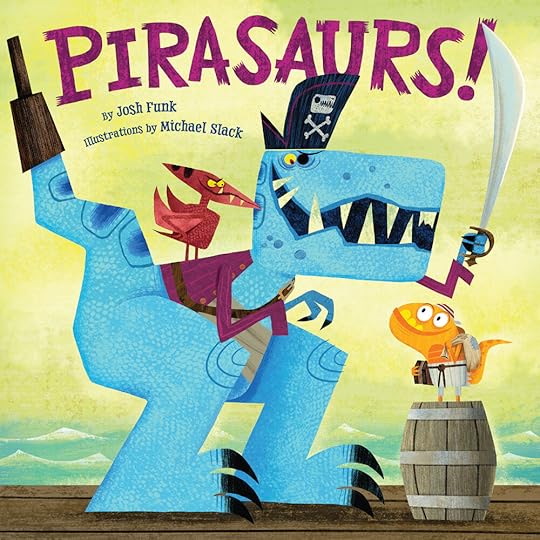
What inspired Pirasaurs!, Dear Dragon, How to Code a Sandcastle and the It’s Not a Fairy Tale series?
The word “pirasaurs” came to me in the middle of the night back in 2013 and I wrote it down on a pad I keep next to my bed for just such occasions and went back to sleep. The next morning I saw it and started a first draft. Three and a half years later, Pirasaurs! became a book. I don’t know what I was eating or reading or watching before bed that previous night. But whatever it was, it worked.
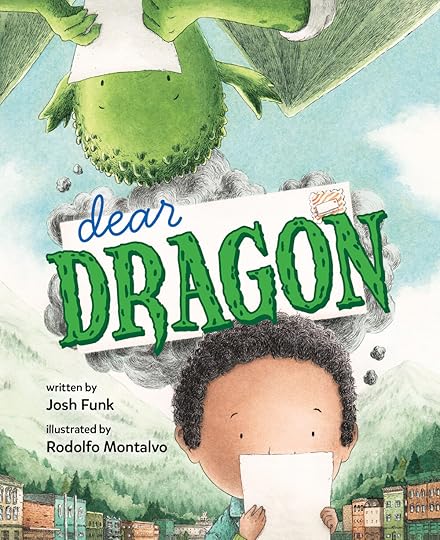
Dear Dragon stemmed from my wife leading a pen pal postcard exchange with other middle school classes around the world - and my son being very into dragons when he was in preschool. Both were discussed on a car ride to a family theater production of Charlotte’s Web and somewhere along the way, the ideas melded together. When I wrote it, I thought it would be funny if both characters didn’t realize they were writing to different species. And I think it is funny - but the reason Penguin acquired it was because they loved that two characters with completely different backgrounds became friends. Which I didn’t realize until my editor explained that to me (even though I wrote the book). Writing is weird sometimes.
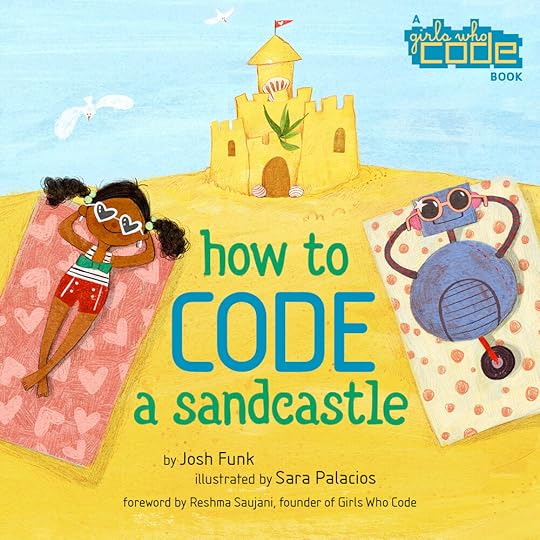
For the How to Code with Pearl and Pascal series, it was my agent who suggested I should try writing a book about coding, since it’s an important topic for youngsters and I write code for my day job. But taking a complicated topic and breaking it down into something digestible by the picture book crowd (or even my non-coder adult critique partners) was not an easy task. It took three and a half completely different attempts at writing a picture book about coding before I landed on How to Code a Sandcastle. But it was all worth it.
For the It’s Not a Fairy Tale series, I was mostly inspired by B.J. Novak’s The Book with No Pictures. I thought it was great that the adult reader looked foolish reading the book aloud to a child. And I thought, what if the characters in a book actually argued back with the person reading it. Add to that how characters in fairy tales often do very … let’s say ‘not smart’ … things. I mean, if a giant beanstalk grew in your backyard overnight, would you climb it … or call the police (or maybe a gardener)? If you lived in the woods your whole life, wouldn’t you know that animals would eat bread crumbs if you left them on the ground? And if you went to visit your grandmother and a wolf was in her bed, don’t you think you’d be able to tell that it wasn’t her?
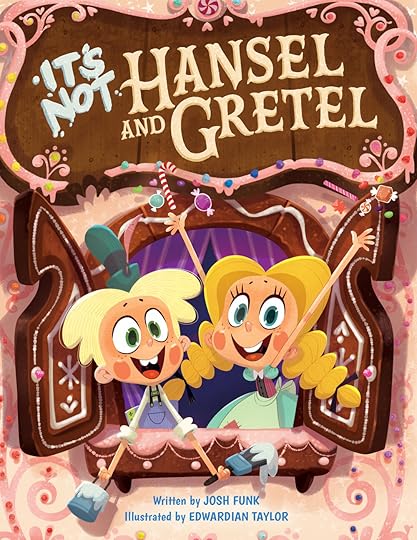
Put those ideas together and you’ve got smart-alecky characters who talk back to the storyteller leading to (hopefully) lots of children laughing at the adult reader.
How did your Lost in the Library: Patience and Fortitude series come about? Writing stories about the lions in front of one of the most amazing libraries in the world had to be a thrill. Had you ever wondered about the lions in front of the 42nd Street Library growing up? How did their story come to you?
This also came about because of my agent - she is great at networking. She heard from an editor at Macmillan that the New York Public Library was partnering with Henry Holt (the Macmillan imprint) to make a handful of books about the library. One was a middle grade novel (which turned into The Story Collector series by Kristin O’Donnell Tubb), one was a coloring book, and one was a picture book about Patience and Fortitude. My agent pitched me the plot suggested by the editor (Patience goes missing and Fortitude goes searching for him in the library, getting a tour of the library and eventually finding Patience in the children’s room) and asked if I was interested in writing a sample. Of course, I said yes.
A few months later, I found out they picked mine and then I had to write the book (fast, in fact, as Macmillan told the library it would be out in the fall of 2018 and I didn’t officially get the go ahead until the winter of 2017. But I took a quick trip to get a behind the scenes tour of the library (Boston to New York to Boston via Amtrak all in one day in early January) and pretty much wrapped up the final draft of the text by the end of that month.
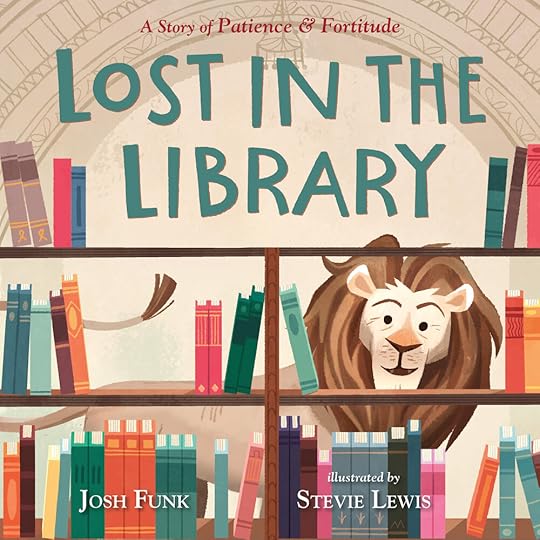
And why a sequel, you ask? That one was my idea - but it’s the library’s fault. You see, I wrote a draft of the backmatter describing all the different rooms and statues, etc that Fortitude met along his journey in the first book, Lost in the Library. I wrote this for the final bullet point: “Fortitude finally finds Patience in the Children’s Center, which is located on the ground floor just beside the 42nd Street entrance.” It was sent along to NYPL staff for fact-checking and to make any tweaks they deemed necessary. The NYPL appended this line: “As of 2020, the children’s library will be located at the newly renovated Mid-Manhattan Library across Fifth Avenue, which will be called the Stavros Niarchos Foundation Library.” WHAT?!? As of 2020 the children’s library was going to be MOVED?!? I wrote this book based on a summary given to me and in two years, the book wouldn’t make sense any more?!? (thanks, Kirkus, for pointing this out in your review, btw… *eyeroll*).
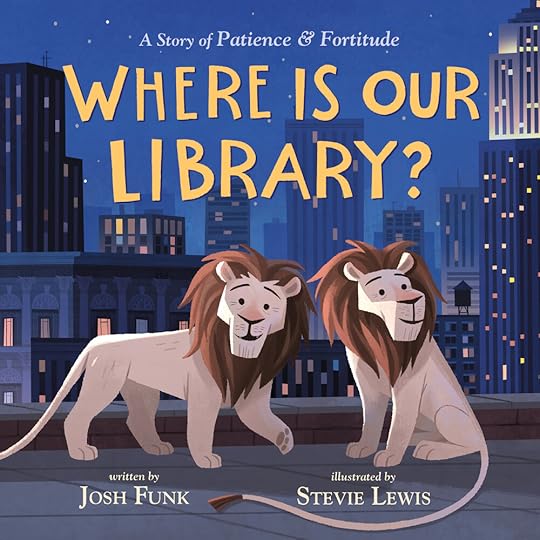
However, I (several months later) realized that THIS could be the conflict for the sequel. Patience and Fortitude venture into the children’s room one night and all of the books are GONE! Voila - we’ve got Where Is Our Library?, in which Patience and Fortitude race ALL over the island of Manhattan searching for the books, racing by kidlit literary locales (like the Plaza and the High Line), visiting kidlit statues (like Alice in Wonderland and Hans Christian Andersen in Central Park) and other libraries (there are 92 branches of the NYPL) before eventually finding their library across the street. (Where Is Our Library?, illustrated by Stevie Lewis, comes out on 10/27/20). So…are your kids impressed? Do they take credit for your success? Do either of them write or give you ideas about what to write next?
When you’re searching for a new idea, are you ever tempted to encourage them to argue about something?
Ha! I always encourage children to argue - all children, not just mine - it makes for great story ideas. But no, they don’t really take credit for things. They’re a little impressed, but not much. I have a hard time getting them to listen to me when I want to read them new drafts (until I remind them that if they want to go to college, I have to keep selling books). And if they have ideas, I encourage them to write them. I’d never steal my kids’ ideas (but I’ll definitely take their critical feedback if they’re willing to offer it).
You caution people about rhyming for good reasons — agents and editors are wary of it, it’s hard to do well, it makes books a harder sell for foreign translations. And yet…you rhyme. All the time. Charmingly. Why?
I was stubborn at first and didn’t give up, despite hearing all the stigma attached to rhyming picture books. And because of that I made a ton of mistakes .. but eventually learned how to rhyme better (it took a long time - and I’m still learning more about writing in rhyme all the time). For me, I feel like there has to be a reason why I should be the one to write a book as opposed to someone else. I have to bring some element of charm that makes the book special. In the case of the How to Code with Pearl and Pascal series, the charm is that the books are about coding. In the It’s Not a Fairy Tale Series, the charm is the meta aspect to the fractured fairy tales. And lots of other times, the charm is rhyme. I think I’m pretty decent at it, and hopefully people enjoy reading them.
What do you recommend for aspiring rhymesters?
Don’t write in rhyme. But seriously, I could talk about this for hours. I guess I’d say a couple things:
1.Rhythm is way more important than rhyme (and also harder to learn). Any kindergartener can rhyme. But nailing the rhythm is the tricky part.
2. Picture books are meant to be read aloud, often performed. And rhyming picture books are, after all, picture books. Picture books are a unique medium where the reader will likely have never read nor heard the words before (unlike a song, which one can emulate). So it’s important that the words are as easy to read (and PERFORM!) as possible. No adult wants to look foolish in front of children (unless that’s the intent of the book, of course).
3. It’s not about YOU and how YOU read the book - it’s about EVERYONE ELSE. And I mean EVERYONE who speaks the language. All accents. If it rhymes in New England it needs to rhyme in Texas. If the rhythm works in Seattle, it also needs to work in New York. Picture books are only about 500 words. I go through every syllable to try to make sure they’re the right ones. I recommend you do, too. Also, don’t write in rhyme.
You have always been a super helpful and supportive member of the kid lit community. You offer great free tips on writing on your website and generously boost other writers. Please share why that’s important to you.
As I mentioned, the kidlit community has been so welcoming since the very beginning. Living in New England, there are a plethora of writers and illustrators who’ve helped me along my journey toward publication. And I’ve learned a lot (although I know I still have lots to learn). I’d love to help folks avoid the mistakes I made along the way and hopefully give people a bit of a head start if possible. Also, you can only post ‘buy my book’ so often on social media before people will either tune it out or unfollow you. Or both. You have to provide some sort of interesting content. And at first, I didn’t really think I had any interesting content to share. So I wrote some blog posts about what I’d learned so far about writing and shared those. Eventually I cleaned them up and turned them into a Resources for Writers page on my website. And maybe, if it’s helpful to you, you’ll consider buying my books. *wink* I’m guessing you have another half dozen books in the hopper.
Can you tell us a little about what’s up next?
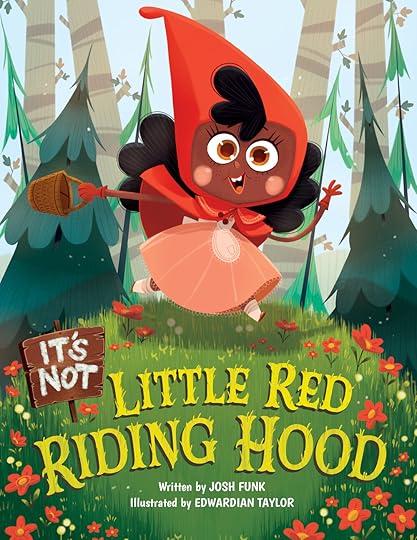
After Short & Sweet, I have two more sequels coming out, both on October 27th, 2020: Where Is Our Library?, as I discussed earlier, and It’s Not Little Red Riding Hood, in which Red questions the storyteller’s plan to have her walk in the woods ALL ALONE, the Wolf calls in sick (Captain Hook fills in), and basically nothing goes according to plan - illustrated once again, brilliantly, by Edwardian Taylor. And I do have a few more books in the pipeline … but unfortunately I can’t talk about them yet (and not all of them rhyme!). But follow me on social media and I’ll be sure to shout about them as soon as I’m able!
Is there anything you'd like to add?
I’d love to share a couple of my favorite recent books if you don’t mind. I really enjoyed Your Name Is a Song written by Jamilah Thompkins-Bigelow and illustrated by Luisa Uribe. It’s a great story that should be read in every classroom on the first day of school. And a terrific novel I read recently is The Wonder of Wildflowers by Anna Staniszewski. It’s a fantasy about a little girl named Mira who moves to a country of privileged citizens who are allowed to use a “natural super-drug” called Amber which is basically a liquid that makes you completely healthy and very smart. It explores privilege and immigration in a kid-friendly way. And thanks so much for inviting me to stop by and chat!
Follow Josh on his blog tour:

And follow Josh on social media!
On his website: joshfunkbooks.com
On Facebook: Josh Funk Books
On Twitter: @joshfunkbooks
On Instagram: @joshfunkbooks
August 27, 2020
The Moovelous 'Mootilda's Bad Mood' From Kirsti Call & Corey Rosen Schwartz & GIVEAWAY!
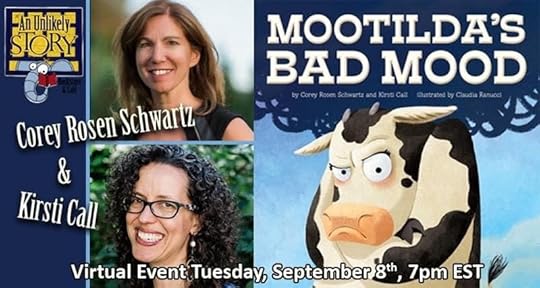
Mootilda’s Bad Mood by Corey Rosen Schwartz and Kirsti Call, illustrated by Claudia Ranucci (little bee books)
As a therapist, Kirsti Call knows a lot about people’s moods. As a children’s book writer, she’s expanded into bovine ones in Mootilda’s Bad Mood, with the help of her co-author and friend Corey Rosen Schwartz, the Warren, NJ-based author of The Three Ninja Pigs (illustrated by Dan State, G.P. Putnam’s Sons Books for Young Readers) and several other rhyming picture books and fractured fairy tales.
Kirsti, who lives in Andover, Mass, is the co-coordinator of ReFoReMo, Reading for Research Month, which encourages picture book writers to revise with the help of mentor texts. Kirsti reads, reviews, revises and critiques every day as a 12x12 elf and a blogger for Writer's Rumpus, and has judged the Cybils Award for fiction picture books since 2015. Look for her upcoming books, Cow Says Meow (illustrated by Brandon James Scott, HMH Books for Young Readers) and Cold Turkey (Little Brown) in 2021. Thanks, Kirsti, for visiting The Kids Are All Write!
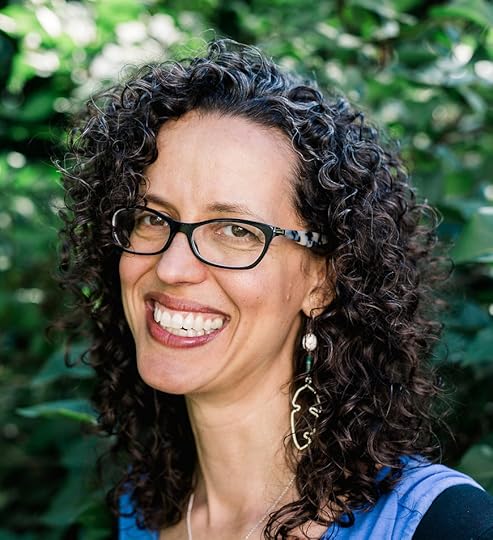
Kirsti Call
What inspired Mootilda’s Bad Mood?
Our own moooooods and our children's moooods---and the fact that I'm a therapist and my job is to help people with their moods.
Tell us about writing with Corey Rosen Schwartz. How did you two meet?

Corey Rosen Schwartz
Corey and I met on-line in various facebook writing groups, and then in person at the New Jersey SCBWI conference. Writing with Corey involves texting, messaging, talking on the phone, meeting on a google doc, and texting some more. The process is super fun.
You’ve each written books separately. Why did you want to write together?
Corey loves co-writing and when she asked me to write with her I already liked her as a person and knew she wrote phenomenal books. It was an easy "Yes!"
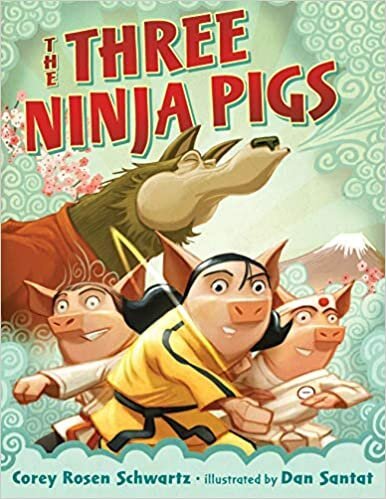
The Three Ninja Pigs by Corey Rosen Schwartz, illustrated by Dan Santat (G.P. Putnam’s Sons Books for. Young Readers)
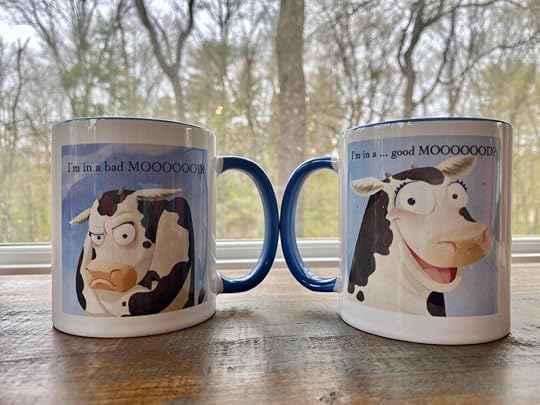
I’ve heard you two have complementary Mootilda mugs. Can you share a photo of that and share how that came about?
We always joke about me being in a good moooood, and Corey being in a bad mooood. So we made Mootilda mugs with those lines from the book. My mug always makes me chuckle.
I notice you had another book about a cow called Cow Says Meow. Kirsti, is there something you want to tell us about your connection with cows?
Cow says Meow just happens to be my next book, coming out with HMH on March 16, 2021. I've written many manuscripts that do not feature cows--I don't know what to say, my cow books must be mooooooving!
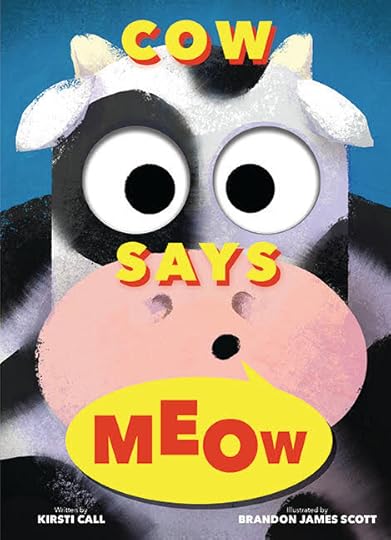
Cow Says Meow by Kirsti Erekson Call, illustrated by Brandon James Scott (HMH Books for Young Readers)
How much fun did you and Corey have coming up with all that moo-ving word play? Any favorite jokes that didn’t make it in the book?
Our previous drafts of MOOTILDA had "hoof past eight", an apple-anche (or an apple avalanche), and Mootilda makes her creamy cold desserts "from scratch".
This book has a larger theme, too — can you share about that?
MOOTILDA'S BAD MOOD is about knowing it's okay to be in a bad mood, and at the same time, realizing your bad mood can affect others. And of course there are many ways to improve your moooooood!
How long did it take you to find a home for the book? Did it change much after it was acquired?
Our agent subbed MOOTILDA to three publishers and Courtney at Little Bee acquired it pretty quickly. We didn't make any major revisions after we signed the contract, but we deleted an entire character out of the book at Courtney's suggestion before she brought it to acquisitions. Sorry folks, there is no longer a coyote.

This coyote, who is NOT in Mootilda’s Bad Mood, is waiting for answers (and his own book)
What was your first reaction to Claudia Ranucci’s illustrations? Do you have a favorite spread?
I truly love how Claudia brought Mootilda to life. She used her daughter as a model for the cover! My favorite spread is Mootilda and the chickens saying: "We're in a bad mooooooood!"

What do you most hope kids will take away from Mootilda’s Bad Mood?
I hope kids will read the book, learn a few things about how to handle a bad mood, and when they're grumpy, I hope they say: "I'm in a bad mooood". (Or sing it! My daughter wrote a Mootilda’s Bad Mood song that will debut at our virtual book launches) And hopefully that will make them laugh.
Want to win a signed arc and stickers from Kirsti to any winner within the U.S.? Share this blog on Facebook, Twitter, or Instagram, tag @Nancy Churnin on Facebook and @nchurnin on Twitter or Instagram and leave a comment below by Monday, Aug. 31 to make sure I don’t miss your share.
Check out the links to the launch parties for Mootilda’s Bad Mood
Visit Kirsti Erekson Call on social media:
On her website: kirsticall.com
On Facebook: Kirsti Erekson Call
On Twitter: @kirsticall
On Instagram: @kirsticall
Visit Corey Rosen Schwartz on social media:
On her website: coreyrosenschwartz.com
On Facebook: Corey Rosen Schwartz-PB Ninja
On Twitter: @CoreyPBNinja
On Instagram: @CoreyPBNinja
August 20, 2020
Deborah Diesen's new picture book answers 'Equality's Call'
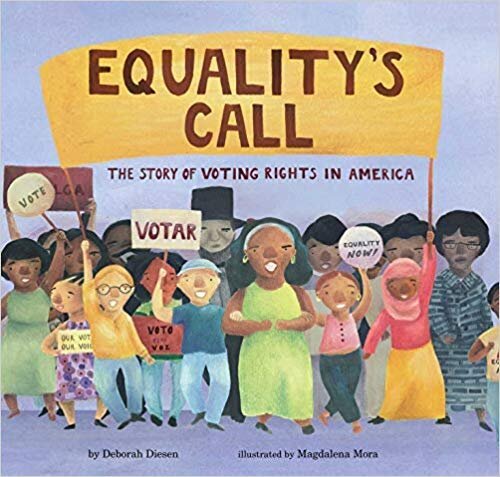
Deborah Diesen listens to her young readers — including her younger son. In fact, it was after a conversation with her son about voting rights that the Michigan-based author got the idea to write Equality’s Call. Deborah is the author of many children’s picture books, including the New York Times bestseller, The Pout-Pout Fish, the story about a fish that revolves to be fun instead of glum. Deborah loves playing with words and rhymes and rhythms. She has worked as a bookseller, a bookkeeper, and a reference librarian. We’re so happy she’s hanging out with us now on THE KIDS ARE ALL WRITE!
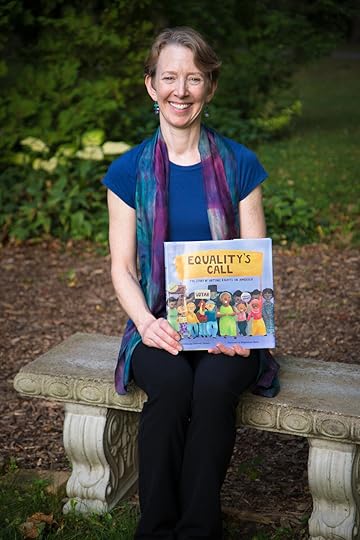
What inspired you to write Equality’s Call?
One day back in 2017, my younger son and I were discussing politics and voting, and he mentioned how relatively recently it was that women had gained the right to vote – that it hadn’t even been 100 years. As I thought about that milestone, I started thinking about perhaps writing a children’s book about the women’s suffrage movement. I figured a book about the passage of the 19th Amendment would coincide nicely with its ratification centennial in 2020.
But as I began to learn more about the history of the right to vote, I realized that I couldn’t write about the 19th Amendment in isolation. Limitations on the right to vote have been a significant part of our country’s history since its founding, progress has been at times uneven, and barriers to voting still remain. The overall story of voting rights is complex, and the fight for the right to vote is ongoing. To tell any part of the story, I would need to find a way to tell it all.
When I realized that, I came close to abandoning my project. I felt overwhelmed and underqualified to tell such a complicated story. I was also concerned that the truth of the history might make for a discouraging book. But I decided to try anyway. I did my best to write a story that is honest about the inequities that have been present in our country since it began, but that is also celebratory and hopeful about the history-altering impact that people have when they speak up for rights and equality.

It is incredibly timely, with this year being a presidential election year along with increased scrutiny about whether everyone is getting an opportunity to vote. Was the timing of the publication intentional?
When I began submitting the manuscript, my hope was that it would be a 2020 book. In addition to being a presidential election year, 2020 is also the 150th anniversary of the ratification of the 15th Amendment, the 100th anniversary of the ratification of the 19th Amendment, and the 55th anniversary of the Voting Rights Act. Seemed like a good year for a book about voting rights!
But really, any year is a year we should all be thinking about voting rights. The work to secure and guarantee voting never ends. New voting barriers, for example those created or worsened by COVID-19, need to be identified, worked through, and addressed on an ongoing basis. The journey of democracy is never over!
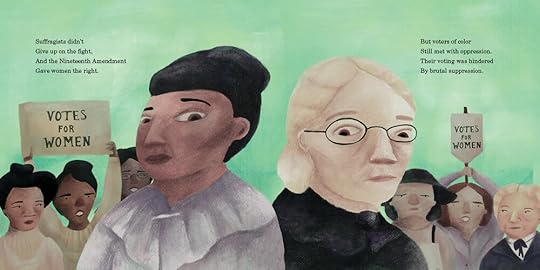
You did a wonderful job making a complicated concept — the right to vote over the centuries in America — accessible for kids. Was rhyming part of the way you made it accessible and had you planned to rhyme from the beginning?
Rhyming was part of my plan from the beginning, though I didn’t end up writing the story I initially set out to. My initial thoughts on the story, focusing on women’s suffrage, had me playing with rhymes and rhythms that could work with the names of famous suffragists. But as I began to shift toward the wider and longer story of voting rights history, equality became my main character. The rhyme scheme, meter, and structure of the story developed around that.
The structure imposed by writing the book in verse helped me in making choices about what to include and how to pace the book. Limitations make writing both harder and easier!
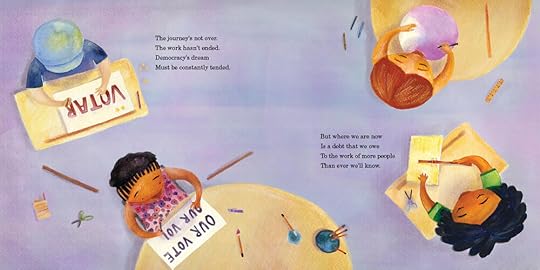
I am impressed by how you embraced rather than simplified the voting obstacles faced by different groups in America. Can you share your research process and how you decided what to include, what to leave out, what to feature in the back matter?
I learned so much when I was working on the book. I had been naïve about our country’s history of voting rights. There are so many ways in which voting rights have been denied that I had been unaware of. And my knowledge base is still growing. I thought at first my own steep learning curve should automatically disqualify me from writing this book. But I realized that it actually gave me an important perspective – that of a learner. If I could learn and then succinctly express what I learned, my experience could help kids (and their grown-ups) take a similar learning journey through the book.
The rhyming text in the book is only 400 words long. It paints the broad contours of voting rights history, but it definitely doesn’t cover all the ways in which the right to vote has been denied or all the people impacted. The book’s introduction and backmatter provide some of those additional details. My hope is that kids, classes, and families will use this book as an entry point in their journey to understanding – and to speaking up for -- the right to vote.
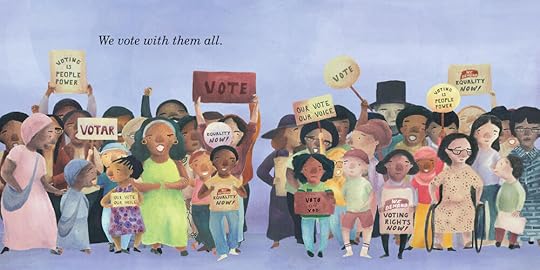
Please share the journey from idea to finished manuscript. How long did it take to get it where you wanted it to be? How long did it take to find it a home?
I started jotting some notes for the book in December 2017, and I worked on it in earnest in late January and early February of 2018. I started submitting it later that February and had an offer by March. That sort of timetable is extremely unusual: my writing invariably takes much, much longer than that; and the submissions process often moves on a glacial timetable. But it just all came together! Andrea Welch, my editor for this book, guided me through some manuscript revisions as well as into the creation of the introduction and backmatter. I’m extremely grateful for her wisdom, encouragement, and insight. I also consulted with a wonderful historian, Marsha Barrett, who helped me better understand the history. Her knowledge and assistance were particularly important and useful as I wrote the backmatter sections. The book grew much the better for it! Any mistakes are my own.
Was there anything that surprised you about Magdalena Mora’s illustrations? Do you have any favorite spreads?
I wasn’t sure how an illustrator would mix together the past and the present, but Magdalena did it seamlessly. Her art is vibrant and strong and amazing, and I love it all. I particularly love the final spread, which shows assembled together voting rights activists of the past with young people of today. Each time we vote, we vote with them all!
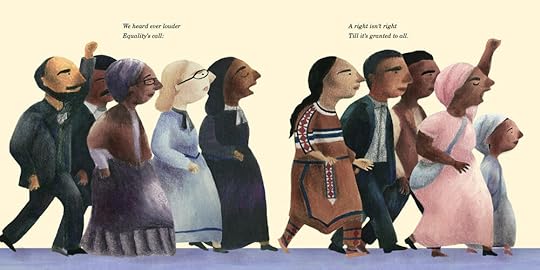
Do you think it will surprise fans of the New York Times best-selling Pout-Pout Fish to see you as the author of Equality’s Call? Is there anything that links the Pout-Pout Fish series with this new book?
Writing about voting rights history was quite different than writing about the adventures of a pouty talking fish, but many of the themes of The Pout-Pout Fish stories overlap with those of Equality’s Call, including: helping one another; speaking up about what’s important; and working together to solve problems.
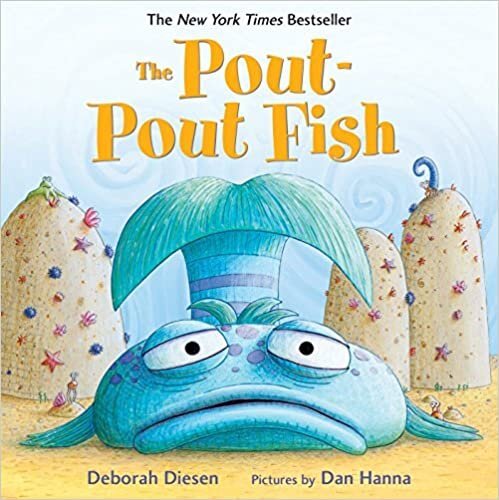
The Pout-Pout Fish by Deborah Diesen, illustrated by Dan Hanna (Farrar, Straus and Giroux)
As Mr. Fish and his friends know: Together, we’re the answer!
What do you hope children will take away from your book?
I hope that kids who read Equality’s Call will be encouraged by the history of voting rights activism to use their own voices to speak up about the issues of our time. The last section of the book’s backmatter provides brief bios of activists and then poses an important question, one for all of us to answer with our words and with our actions:
How will you answer equality’s call?
Visit Deborah on social media!
On her website: deborahdiesen.com
On Facebook: Deborah Diesen
On Twitter: @DeborahDiesen
On Instagram: @deborahdiesen
June 18, 2020
‘Morning,Sunshine!’ Keely Parrack on the highs of haiku & Her pb debut
Morning, Sunshine! by Keely Parrack, illustrated by John Bajet (North Atlantic Books)
Keely Parrack has been an elementary school teacher in Nottingham, England, a science and language arts specialist, a day care director, a fashion retail manager, a waitress, a supermarket shelf stacker. and a freelance writer with work published in The Christian Science Monitor, The Contra Costa Times, Patch, Spider Magazine and mothering.com. Her best student job was at the movie theater, where she got to watch all the films for free. And now the British native, who lives in San Francisco with her husband, her son and a very demanding cat, has a new favorite grown-up job: debut picture book author. We’re glad Keely dropped by to share the unexpected literary twists and turns that led to Morning, Sunshine! Welcome, Keely!
What inspired you to write Morning, Sunshine!?
I was waiting on some feedback from my agent on a novel I’d written, so I had a little breathing space. And during that sitting around daydreaming time, I started noticing all the creatures that visited our garden; salamanders, hummingbirds, bees, butterflies, squirrels, and I started writing poems about them for fun. Then I figured, I could make a picture book about a day in the garden, from dawn to dusk. But that seemed like such a long time, and to be honest, where I live it is quite hot in the middle of the day, so not much happens, which makes for a pretty boring story! Then an editor I chatted to suggested I narrow the time frame down. This idea worked really well for haiku, too. All I needed to decide then was which creatures and what time period. I love dawn, it’s a magical time of the world waking and always seems so full of possibility, so the that’s how the idea of Morning, Sunshine! taking place from dawn to sunrise came about!
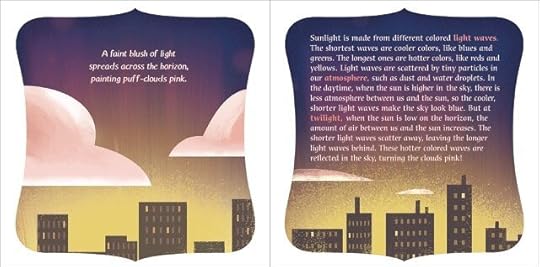
Good Morning, Sunshine! by Keely Parrack, illustrated by John Bajet (North Atlantic Books)
Did you start off with this fascinating structure — a haiku about a creature, or aspect of nature, followed by a page of information? How did you come up with the idea to tell the story this way?
I love science and nature, and when I was a teacher, the children I worked with did, as well. So I always wanted to have poems supported by facts. But I wasn’t sure for a while if the facts should come after the poems as back matter, or on the opposite page, as sidebars. In the end, I figured that the haiku were so small and focused that the back matter should just concentrate on the questions raised in the poems, so then it made more sense to have them together on the same spread, like a question and answer!
One of Keely’s inspirations for Morning, Sunshine! was this swaying mourning dove with her brood, nesting in the Parrack family hanging basket (photo by Keely Parrack)
In your back matter, you teach children how to write haiku and share how fun it is. When did you first learn to write and like haiku?
I have always written poetry for fun. My mom still has a faded one I wrote when I was six about a mouse. I really don’t remember when I first wrote haiku, to me it’s just a fun challenge—can you stick to just three lines, use 17 syllables total, and still say everything you want to say? It’s like a puzzle, and so satisfying when you make it work! I think children like playing with haiku as they are small, as it’s not intimidating and has understandable rules! (Haiku, not children!)
Keely’s very demanding cat contemplating her review of Morning, Sunshine! (photo by Keely Parrack)
Why did you pick the creatures you did? Do you have any favorites that you had to leave out of the final text?
I started with a whole load of poems, but knew I had to limit the number of creatures and events, to fit the number of pages I had to play with. My editor and I quickly realized we had to keep three things in mind for the books structure to work.
1 – the settings are in a repeated pattern, suburban, urban, rural.
We wanted it to be inclusive, representing urban, suburban and rural areas, so every child could see something similar to their own environment.
2 – dawn to sunrise timeline
The creatures had to appear in the order that they would, no bees at dawn, or dawn chorus at sunrise!
3- variation of subject
The creatures and natural events needed to be spaced out from each other, so no bird after bird or insect after insect.
We built a spread sheet to figure it all out and some of my favorite creatures had to go, like butterflies and raccoons. But they were replaced by some wonderful creatures like foxes and deer. It was a tough call!
Do you have your own favorite dawn-time creatures? Did you get up early up to watch some for research (and fun)?
One of my favorite experiences writing this book was getting up really early and going down to the end of an area nearby, where the road ends and turns into scrub land. There are a lot of houses, then a small patch of land with some trees and a grass walkway, next to a fenced-off water reservoir and a lot of overgrown bushes. While I was waiting for the sun to rise, rabbits hopped by my feet and birds called across the water, then suddenly from nowhere a deer family stepped out of the shadows. It was amazing, they’re so big up close, and to just step out from the shadows and suddenly be there seemed like a miracle. And that’s how the deer haiku pretty much wrote itself!
One of Keely’s inspirations: deer at dawn by her home (photo by Keely Parrack).
Some picture book writers shy away from challenging words, but I see you have found a way to introduce new words in context and have followed up with a rich glossary at the back. Was that part of your initial concept, too? Was it difficult to figure out which big words to feature?
I have always been a big fan of not dumbing down for kids, so I always wanted a glossary, plus words are so much fun! The words were ones I thought could either use a little more explanation and context or were just excellent words that are wonderful to say like ‘crepuscular’ and binky! I do think there’s a sort of magical power in words, and it’s great fun to discover new ones. And here’s a secret, I’m actually a terrible speller, so having a glossary to quickly refer back to, for me as a child, was always wonderful!
What was your writing journey like from idea to finding a home for your manuscript?
It was a long and winding road, with many different versions being written then abandoned. It started out as just fun for me, then every time I showed it to my writer friends, they’d love it, which gave me the motivation to carry on. But I mostly worked on other things and had stopped even thinking about it until an editor at North Atlantic Books mentioned they were looking to expand their children’s books. asked if they would be interested in a non-fiction picture book written in haiku that took place from dawn to sunrise and she said yes, send it! From then it was full speed ahead.
Morning, Sunshine! by Keely Parrack, illustrated by John Bajet (North Atlantic Books)
Were you surprised by any of John Bajet’s drawings? Do you have any personal favorites?
The team at North Atlantic Books were wonderful to work with and kept me very involved with the whole choosing the illustrator process, so I already knew how much I loved John Bajet’s work, but I was still surprised in a wonderful way when I got an actual copy of Morning, Sunshine! His art really brings the words alive, and I love the richness of his colors and textures. There are so many gorgeous details!
How does it feel to have a brand new picture book out in the world? Any feedback from your husband, son or cat?
It feels surreal and wonderful to have a book out in the world, but the best part is sharing it with children and talking about creativity and nature with them. My husband and son are super happy and proud about it. My cat loves it but feels she should really get more credit, being my constant writing companion and muse. As it came out during Covid lockdown she did have her own Morning, Sunshine! social media book tour around our house, which I think she enjoyed very much!
This snail was one of Keely’s inspirations for her book (photo by Keely Parrack)
As a former elementary school teacher, how do you envision teachers using Morning, Sunshine! In the classroom?
I’m thinking as a teacher here, and how we would have used it in the school I used to teach in. We worked very collaboratively and built a theme-based curriculum together for years K, 1 and 2, so with Morning, Sunshine! as the inspiration, in music, we’d make our own dawn chorus bringing in different instruments, ‘birds’, in one by one until we were all playing together then gradually reducing it down again. For science, we’d go on nature walks around the school grounds, taking notes and drawings of our findings, maybe even recording the sounds we could hear, then coming back to the classroom, sharing findings, asking questions – what did we see, where, why do we think they were there what were they doing etc. We’d explore our local geography, maybe build a map, what do suburban, urban, and rural places look like, what do they have in common? What are the differences? Why could that be? For math lots of sorting creatures with the same number of legs, paws, wings etc. and multiplication, addition and subtraction of different creatures with different variables, such as amounts of legs, number of wings, etc. For Earth science we’d investigate light and sound waves, as well as how and why the sun appears to move across the sky, how the and moon and Earth orbit, and where the Earth’s axis and equator are and why! And of course artwork, both creative art and observational drawings. Oh, and we would build a shared role play area as a garden or a forest with the children, for them to play discovering nature in!
All of that without even getting started on the language art elements of creative writing, poetry, note taking, fact finding, and discussions!
So far, I’ve used Morning, Sunshine! to talk to children in grades K-5 about nature and poetry, and children in grades 6-8 to explore the creative writing process, and both have been equally engaged.
What do you hope children will find in the book?
Hope, a fascination with nature, and a lot of fun!
Anything you’d like to add?
My website has downloadable materials for anyone to use, including a nature notebook, and how to fun sheets on how to make a spider and a snail out of paper bag handles!
Thanks, Keely! Be sure to visit Keely on social media.
On her website: keelyparrack.com
On Facebook: Keely L Parrack
On Twitter: @keelyinkster
On Instagram: @keelyinkster
Downloadable resources on Keely’s website: click here
Connect with Keely on social media!
On her website: keelyparrack.com
On Facebook: Keely L Parrack, Children’s Book Author
On Twitter: @keelyinkster
On Instagram: keelyinkster