
Daniel McDowell's Blog
March 31, 2024
Jazz Impressions of ‘A Boy Named Charlie Brown’ + Cooperstown Rye
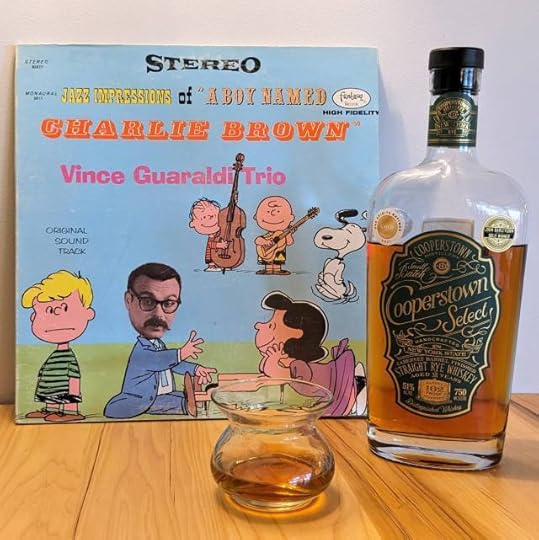
JAZZ: Vince Guaraldi Trio - Jazz Impressions of 'A Boy Named Charlie Brown’
Having just produced a documentary film on the career of legendary baseball player Willie Mays that aired on NBC in 1963, Lee Mendelson decided that the subject of his next production should be the worst baseball player in the world, Charlie Brown. To compose the score for his project, A Boy Named Charlie Brown, Mendelson turned to Vince Guaraldi. At the time, the jazz pianist was still basking in the glow of his 1963 Best Original Jazz Composition Grammy Award for “Cast Your Fate to the Wind”. Guaraldi accepted Mendelson’s offer, and within two weeks had composed “Linus and Lucy”, the song that would come to define the Peanuts animated classics. Eventually, the musical score that Guaraldi wrote and performed with his trio for A Boy Named… formed his sixth studio album, released by Fantasy Records in December 1964. Mendelson’s documentary, however, was not so fortunate. Unable to secure sponsorship for the film, it would never air on television. Thanks to the magic of the internet, you can watch it in its entirety here.* (Ultimately, the partnerships that formed on this project led directly to the development of 1965’s A Charlie Brown Christmas).
Despite its birth as an orphaned soundtrack, the record is bursting with swinging Guaraldi numbers. The album marked the debut of “Charlie Brown Theme” and the aforementioned “Linus and Lucy”, unabashed classics that will be familiar to any Peanuts enthusiast. Guaraldi’s trio opens the album with the bouncy little bop “Oh, Good Grief”. The emotional range of the record is on display with “Happiness Is”–a delicate number with a title inspired by Schulz’s 1963 bestselling book Happiness Is a Warm Puppy. It’s my favorite song on the LP. Then there is “Schroeder”, a short, ragtime-inspired romp that sounds as if it were lifted from the soundtrack of that great caper film, “The Sting”. On the B-side of the record, Guaraldi’s fingers skip across the keyboard in trademark style on “Baseball Theme”, but its drummer Colin Bailey’s brushwork that keeps my attention.
NEAT: Cooperstown Rye
To pair with Jazz Impressions of 'A Boy Named Charlie Brown’, I chose one of my absolute favorite everyday rye whiskies, crafted by Cooperstown Distillery in the apocryphal birthplace of America’s pastime and home to the game’s great Hall of Fame. Cooperstown Select Straight Rye Whiskey is made with a mashbill of 80 percent New York state grown rye. Aged for at least two years, first in American oak barrels, then in used Cabernet barrels, it is bottled at 102-proof cask strength. Not for the faint of heart, this potent, rye-forward pour hits your palate with Shohei Ohtani-level power and speed. For that, it holds up well in a Manhattan or Old Fashioned, but I prefer it straight from the bottle. At around $55 a fifth, you can be liberal with your serving. The intensity of this rye is the perfect counterbalance to Guaraldi’s smooth West Coast jazz on the turntable. Sitting here as I watch the record spin, I ponder whether Charlie Brown might have won a few more baseball contests had he been old enough to relax with a glass of Cooperstown Rye the night before the next big game.
*Eventually, a full-length feature film using the same title and updated versions of many of Guaraldi’s 1964 songs was released in 1969.


March 8, 2022
The Face of Mount Molehill + Whipsaw Rye
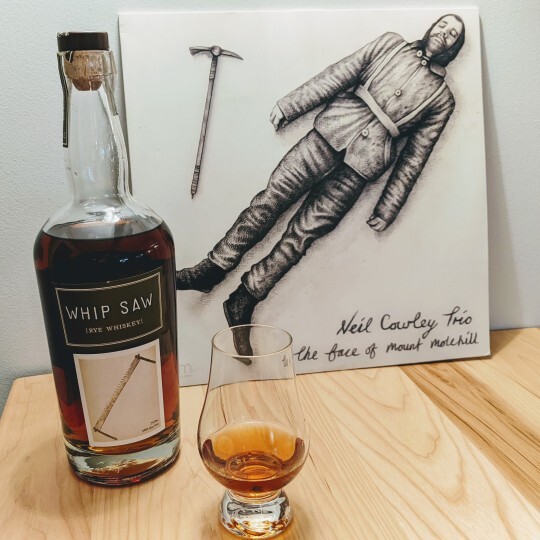
JAZZ: Neil Cowley Trio – The Face of Mount Molehill
If you’ve never listened to a Neil Cowley Trio record, thefirst question I would ask you is: Do you like The Bad Plus? If you responded, “Whoare The Bad Plus?” I would probably stop talking to you. But you wouldn’trespond that way, would you, because you know good music when you hear it. LikeTBP, Neil Cowley Trio is a jazz group with a rock band aesthetic. The Faceof Mount Molehill is the UK trio’s fourth studio record. Released in 2011on the Naim Jazz label, this one is a wild ride. It presents an almost equalmix of hard hitting, rock inspired songs alongside dreamy, string-laden numbers,fit for a dramatic movie score. Its musical volatility at its finest. The albumopens with “Lament” a soft, delicate little number where the string accompanimentreally shines. The ethereal opener transitions into the hard hitting “RoosterWas a Witness”, exhibiting those aforementioned rock elements. Rex Horan’s pulsingbass, Evan Jenkins steady drums, and Cowley pounding keys drive this song—itsrefrain reminiscent of a ticking clock, imparting a nervousness to the track. “Fable”is another punchy tune, with a hard edge. But then with a song like “Skies Are Rare”we’re flung right back into a lullaby. Unquestionably, the best song on therecord is “Slims.” It represents the best of Cowley’s style, and it sits in thetension between the two extremes on this record. The opening lyrical piano provides the infectious hook that immediately sets this song apart. That hookgives way to more fluid piano sequence with gorgeous string backing beforeCowley sprinkles in some dreamy notes in the upper octaves. The song truly hasit all, and at less than 4 minutes in length, you’ll almost certainly want tolisten again and again. The record’s title track is also worth a listen, anotherdriving song with a catchy melody while the album’s short closer, “Sirens LastLook Back”, brings the record to a peaceful rest.
NEAT: Whipsaw Rye
To pair with Molehill, an album that whipsaws youfrom one mood to the next with reckless abandon, I chose Whipsaw rye by The SplinterGroup, an innovative Napa-based maker of spirits. Theirs is a unique approachto whiskey making. Eschewing the art of distillery, they import whiskies fromKentucky and Tennessee. These spirits are already aged up to seven years whenthey arrive in The Golden State. Next, they create their own blends and begin asecondary aging process using French Oak barrels, coopered in California, andfirst used to age Napa wine for up the three years. The result is a trulyexceptional, ultra-oaky, sweeter-style rye with a rich, deep amber color. For thelast six months, when I haven’t been drinking Scotch, I’ve almost exclusively beendrinking Whipsaw. Having worked my way through a reasonable number of bottles,I can say that—unlike Cowley’s record—this spirit is steady as she goes, withouta hint volatility to be found.
April 3, 2021
Waltz for Debby + Baller Single Malt
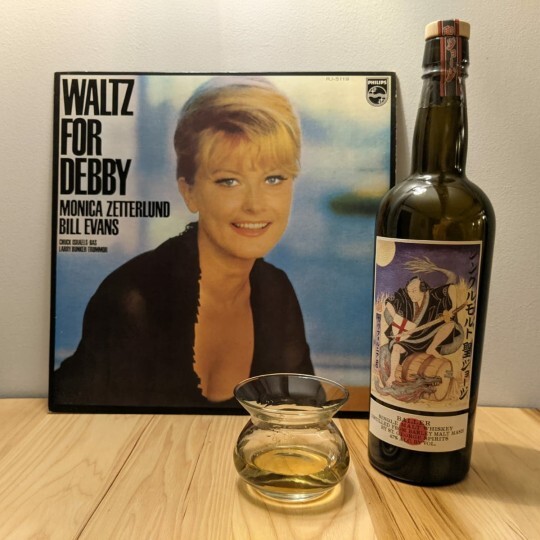
JAZZ: Waltz for Debby – Monica Zetterlund / Bill Evans Trio
What are you wearing right now? No, I don’t mean it thatway. This isn’t that kind of blog. However you’re dressed, there’s a good chanceit isn’t fit for listening to this record. Gentlemen: Press your shirt and puton a sharp sport jacket. Ladies: Get out that red lipstick and your finestevening gown. This record demands it. Bill Evans, one of jazz music’s finest pianistsand composers of all time (see this) pairs his stylish trio with the breezy,throaty vocals of Swedish actress and singer, Monica Zetterlund. This refined,sophisticated offering from 1964 is absolutely luxurious. Zetterlund commandsyour full attention from the moment you hear her first words in “Come Rain orCome Shine.” Throughout a record full of jazz standards, Monica presents her fullemotional range as an actress and vocalist. On the third track, with Chuck Israels softlybowing his bass, she sings regretfully, “You loved me once upon a summertime.”Elsewhere, while performing a Leonard Bernstein classic, she gives us the most memorablerefrain on the record: “Oh well”, she sighs, “We’ll catch up some othertime.” Later, singing the upbeat “Lucky To Be Me”—another Bernstein standard—youcan’t help but believe that it really must have been lucky to be MonicaZetterlund in 1964. Several offerings are in her native tongue, but none morebeautiful than her rendition of Evans own classic “Waltz for Debby”, this time reimaginedfor her in Swedish as “Monicas Vals.” The only song on the record that doesn’twork for me is “It Could Happen to You” which, despite her fine performance, isa tune owned entirely by Chet Baker. I would like to keep it that way. Zetterlund’svocals are rightly out front on the record, but the trio holds its own withoutoverpowering her. For the Evans purists, though you have to go without “Skatingin Central Park”, there are plenty of Bill Evans’ signature block chords tofill in the empty spaces and make you feel right at home.
NEAT: Baller Single Malt
To pair with a record that is a “baller” black-tie affair invinyl form, I chose Baller, a single malt whiskey from the distillers at St.George’s Spirits in Alameda, California. This dram is different. I mean reallydifferent. I know it seems like every American distillery has a gimmick thesedays to make their product stand out. Often the results are underwhelming (I’m looking at you Basil Hayden’s Dark Rye Whiskey) or just unconvincing (“I don’t taste rum cask at all”). So,what’s the deal with Baller? It’s an American take on the Japanese take onScotch. Follow that? I’ll try again. This American distillery starts withmalted barley, like Scotch. But, in the Japanese tradition, they are producinga whiskey intentionally designed to be enjoyed neat as well as in highball form. The real distinguishing feature here comes when the whiskey is finished in casks that previously held a Japanese plum liqueur(called umeshu). Though you get little of this on the nose, it imparts alayer of flavor reminiscent of dried plums and raisins. For me, Baller startson the sweet side but ends with a subtle bitterness that lingers in the back ofmy mouth.* Big picture, St. George’s Spirits has successfully managed to makesomething both different and worth drinking. Cheers to thataccomplishment. And cheers to putting on your finest attire. You’ve got a bignight ahead of you. The band is warming up. Monica is stepping toward the mic. Overon the bar, there is a glass of Baller with your name on it. What are youwaiting for?
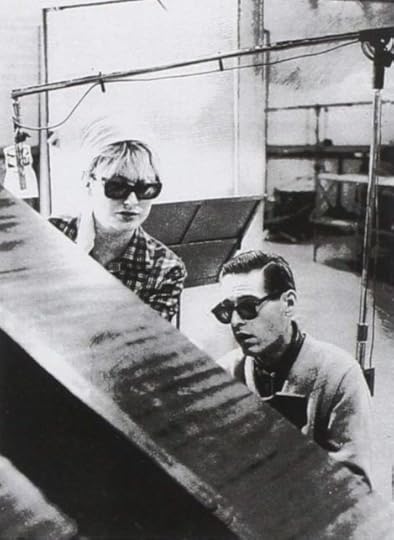
Monica and Bill, 1964
[special shout out to my wife who surprised me with this record, long on my wish list, yesterday]
December 23, 2020
A Charlie Brown Christmas + Spice TreeJAZZ: Vince Guaraldi Trio – A Charlie Brown ChristmasI feel...
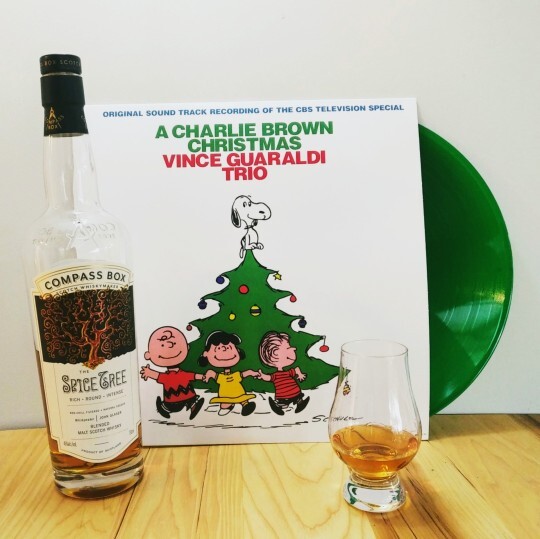
JAZZ: Vince Guaraldi Trio – A Charlie Brown Christmas
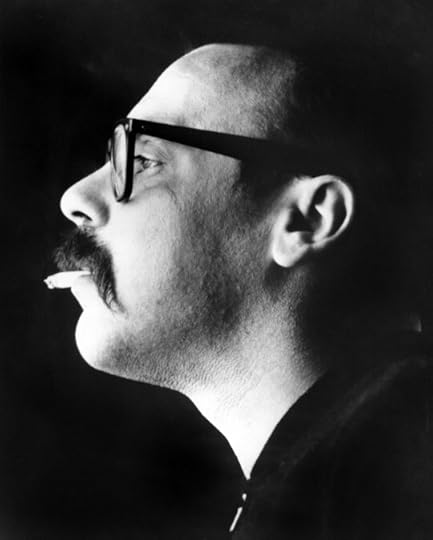
I feel sorry for anyone making a Christmas record. It must be difficult to know that no matter how hard you work, no matter how great the music is, it will never have a shot at being the best Christmas album ever made. That title will always reside with Vince Guaraldi’s brilliant soundtrack for Charles M. Schulz and Lee Mendelson’s timeless TV special about a little boy’s struggle with the true meaning of Christmas. The story behind the record began with Mendelson hearing Guaraldi’s “Cast Your Fate to The Wind” on a San Francisco radio station while driving across the Golden Gate Bridge in 1963. He was struck by how the song was at once “adult and childlike.” Two years later, when Mendelson began collaborating with Schulz on a Christmas special, he looked to Guaraldi to create the perfect musical score. It worked. There is so much to love about this record, beginning with the opener: Guaraldi’s interpretation of one of the most insufferable Christmas carols ever written, “O Tannenbaum.” And yet, what he produces is something light years ahead of, say, this vacuous rendition by Tony Bennett. Guaraldi’s version sounds a bit sad, yes, just like the TV special’s lead character. But the song does not sound hopeless, either. It leaves open the possibility that there is meaning out there. “Christmas Time Is Here”, an original composition by Guaraldi and Mendelson, aptly expresses the melancholy of Charlie Brown’s opening scene lament: “I think there must be something wrong with me, Linus. Christmas is coming, but I’m not happy. I don’t feel the way I’m supposed to feel.” Like Charlie Brown’s own internal struggle, the joyous lyrics of the song (e.g. “Christmas time is here. Happiness and cheer. Fun for all that children call their favorite time of year”) clash with its sad, longing melody. The record also includes some happier tunes, like “Skating”. Listen and you can practically see the snowflakes falling and see the Peanuts gang sliding effortlessly over the icy pond. “Christmas is Coming” is a fun little bop where the record feels its jazziest. Another of my favorites is “My Little Drum”, which features the angelic voices of the children’s choir from St. Paul’s Episcopal Church in San Rafaelt, California, to go alongside Guaraldi’s delicate piano and Jerry Granelli’s calming brush work.
NEAT: Compass Box Spice Tree
To pair with the greatest Christmas record of all-time, I chose a blended Scotch whisky by Compass Box that is perfectly suited for the winter holidays. Part of their signature line of whiskies, Spice Tree is a unique malt whisky that is produced by a two-stage aging process. The dram begins with malts from three different Highland distilleries. These are first aged separately in American oak casks. Upon maturation, they are blended before a secondary two-year aging process begins, this time in a suite of specially crafted hybrid barrels. These casks use new French oak for the heads and American oak for the bodies. The French heads are toasted to three different levels (“vanilla”, “infrared”, and “mocha” toasts, to use Compass Box’s terminology) which produces the whisky’s distinctive complexity and, yes, spiciness. The description of the nose characteristics is a cavalcade of Christmas baking spices: “Big, sweet aromas of clove, ginger, cinnamon, nutmeg and vanilla.” Yes, please. Another highlight of Spice Tree is its long, lingering, warming finish. A feat it accomplishes without a hint of peat smoke to be found (making this a good choice for those who enjoy bold whisky yet dislike smokier coastal single malts). For anyone struggling with the commercialism of Christmas this year, try sipping some Spice Tree next to your Christmas tree while you relax to the soothing sounds of The Vince Guaraldi Trio. Or, maybe, just watch A Charlie Brown Christmas. That’s what Christmas is all about, after all.
July 24, 2020
Cure for Pain + Standard Wormwood Spirits Rye
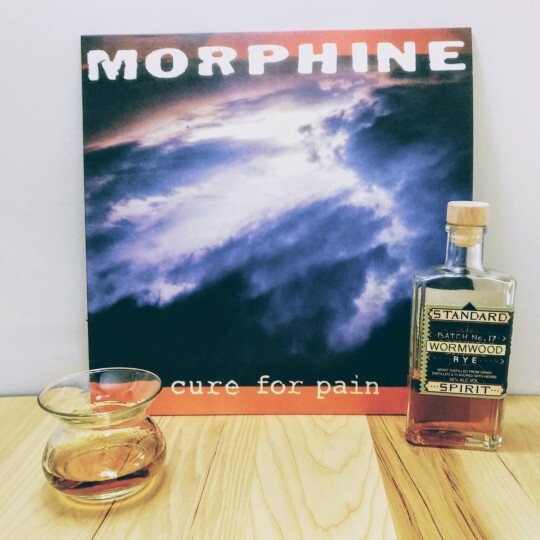
JAZZ: Morphine – Cure for Pain
One day in 1997 during my freshman geometry class, asophomore pothead who often copied my work (not because I was great atgeometry, but because he generally slept through class and was lost) slipped mea blue cassette tape with some songs by a band called Morphine. At the time,I was rushing headlong into two things musically: Weezer and 90s punk of theEpitaph or Tooth & Nail variety. Fast paced, guitar driven music with lotsof treble. When I put the tape into my deck and started playing “Cure for Pain”I immediately thought the cassette was junk. The music had zero high-end andthe tempo was so slow. It sounded like the tape was stretched out or maybe thereels were gummed up and turning too slowly (anyone old enough to have used thecassette format will relate to this). Turns out the tape was fine. Morphine justhappened to create music unlike any I’d heard before. Yet I really liked it. Iended up listening to that tape a lot that year. Recently I’ve been revisitingthe band’s work after hearing my favorite jazz radio station (KMHD) play acouple of their tunes. Though it’s beyond a stretch to describe Morphine’smusic as jazz, their three instrument ensemble—consisting of Mark Sandman onbass guitar, Dana Colley on baritone/tenor saxophone, and Jerome Deupree ondrums— is undeniably in the tradition of great jazz saxophone trios (see LeeKonitz’s trio on Motion, or Ornette Coleman’s trio on Town Hall).Just listen to “Buena”—one of the best songs on Cure—and you’ll realizeit draws heavily from bossa nova. Compare it to the bass and piano rhythm in AntônioCarlos Jobim’s “Stone Flower” (e.g. 1:48, 2:08, 2:22 marks) and draw your own conclusion. Other Curehighlights include Colley’s saxophone solo in “All Wrong” and Sandman’smelancholic slide bass and dark croon in “Candy.” Fittingly for this blog, the album wraps with“Miles Davis’ Funeral”—a instrumental dirge honoring the legendary artist whopassed in 1991, two years before Cure was released.
NEAT: Standard Wormwood Spirit Rye
To pair with Cure for Pain, I chose a rye fromBrooklyn’s Standard Woodward Distillery. All the spirits they produce use wormwood—anherb valued for its purported pain-curing properties—in the distillationprocess. The distillery aims to harness wormwood’s “bitter profile, once prolificin spirits like Vermouth and Amaro, to influence our spirits similar to howbitters do in a cocktail.” If the goal is to craft a rye with an intense bitterflavor profile, the distillers have succeeded. The contribution of the wormwoodis not subtle. It is the show. It’s (literally) on the nose. It’s the firstthing and the last thing you taste. It lingers. Somewhere beneath the wormwoodflood, you will enjoy some oak and traditional spicy notes from the rye. Butthis is all about the wormwood. Personally, I like this stuff quite a bit. Makethat a lot. Like Morphine’s jazz infused alt rock, this herb infused rye is trulyone of a kind. As it turns out, I have a bit of a headache tonight. Here’shoping a little wormwood rye and Cure for Pain playing softly on theturntable will do the trick. Cheers.
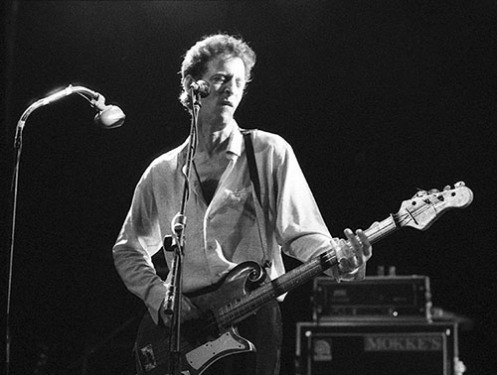
Mark Sandman: 1952-1999
April 5, 2020
As Falls Wichita, So Falls Wichita Falls + Rieger’s Kansas City Whiskey
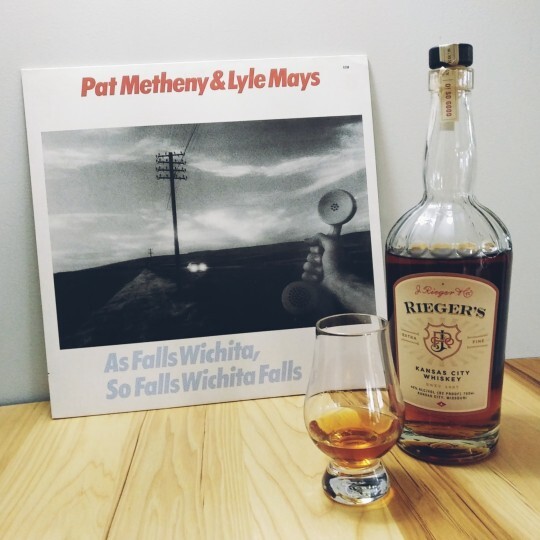
JAZZ: Pat Metheny and Lyle Mays - As Falls Wichita, So Falls Wichita Falls
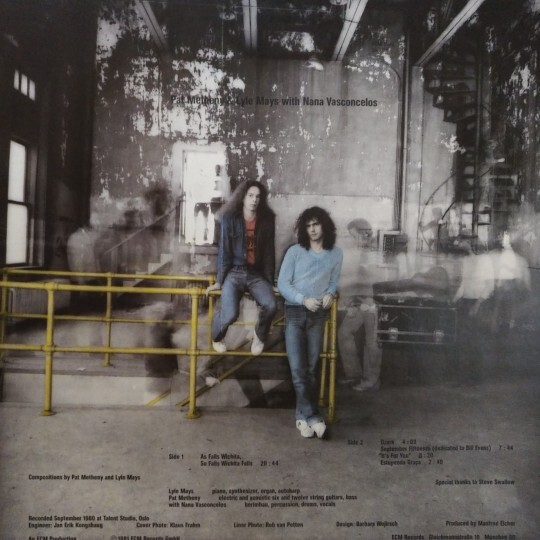
What music does one listen to during a pandemic? The recordI’ve found myself drawn to over the last several weeks of quarantine is Pat Methenyand Lyle Mays’ 1981 masterpiece As Falls Wichita, So Falls Wichita Falls. Let’s start with the album cover. The imagery—intentionally evocativeof the 1968 Glen Campbell hit “Wichita Lineman”—is pure American Midwest, where bothMetheny (Missouri) and Mays (Wisconsin) hail from. The B-side of the record hasfour songs. All are good, including “September 15th”, which waswritten in honor of legendary Jazz pianist Bill Evans who died on that dateduring the recording of this album. But this post is not about the B-side. Itis about the title track which, at over 20 minutes long, begins and ends the A-side of the record. I love this track. That’s going to take some explaining. Itisn’t so much a song as it is a sound experience. To me, it’s an auditory train tripthrough midwestern plains and grasslands. It opens with muffled crowd noisewhich is then joined by a subtle pulsing bass. All aboard. There’s a summerstorm in the distance. Metheny joins on guitar and the locomotive picks up somespeed. For the next 10 minutes, Mays and Metheny use an array of instruments and sounds to paint varying images of vast, open,expansive spaces. Listening with closed eyes is a meditative experience, perfect for escaping a global health crisis. But just whenyou’ve found yourself floating away, you’re brought back to your seat with a crescendo thatbuilds, first slowly and then suddenly, around 12:30 into the song. For a brief moment, the trackhas its first steady, driving beat. But, just as quickly as it arrives, it is goneagain. The song enters its final act as Mays’ synthesizer chords sneak in fromthe left channel, soon taking over both ears. You overhear someone countingbeats. Then the crowd noise returns. You’ve arrived at your destination. Whatdo you do next? That’s up to you.
NEAT – Rieger’s Kansas City Whiskey
To pair with As Falls Wichita, I chose awhiskey that is distilled just a few miles away from Pat Metheny’s hometown ofLee’s Summit, Missouri; distilled just a short three-hour drive away from Wichita,Kansas. Rieger’s Kansas City Whiskey is marketed as a rebirth of apre-prohibition spirit. Inside the bottle is a blend of Straight BourbonWhiskey, Light Corn Whiskey, Straight Rye Whiskey and…just a touch of 15-year-oldOloroso Sherry from Jarez, Spain. In the 19th century, Sherry wasapparently a popular “coloring agent” for whiskies. According to J. Rieger & Co., thiswas also a technique used to “round out the harsh flavor of the under-aged, andby today’s standards, not the most well-made whiskey.” My wife picked this bottleup for me a couple of weeks back for just under $40 as we were pandemic prepping.It’s the first whiskey from Missouri I’ve ever tried. The flavor profile isdominated by sweet and spicy notes. I find it to be easy to drink. Onereview I read describes the finish as “harsh” but I have to disagree. I don’tget that at all. It would probably make a pretty good Manhattan,though I haven’t tried yet. I guess I’ll add that to my increasingly long “pandemicto-dos list.” For now, it will have to wait. I’ve got a train to catch tonowhere, middlewest, USA. And I already know what I’m doing when I get there: orderingmyself a Rieger’s Kansas City Whiskey. What else.
[RIP Lyle Mays: November 1953 - February 2020]
January 9, 2020
Another World + Shackleton Scotch
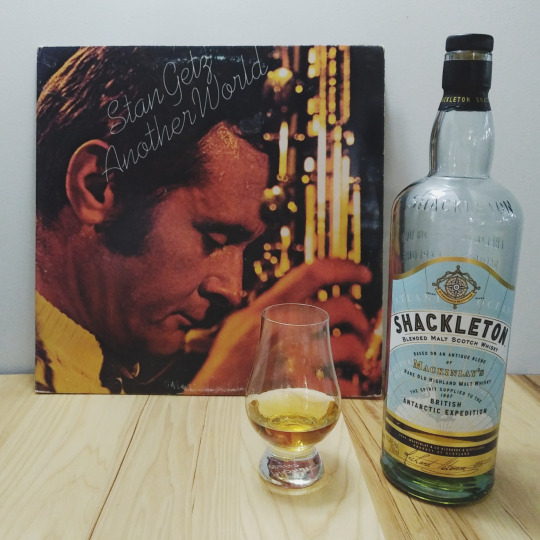
JAZZ: Stan Getz– Another World
“Stan Getzis of course a poet and one of our truly great musical treasures. But beyondthis, he’s an explorer whose playing and conception continue to grow and breaknew ground while always respecting the rich tradition of his art.” So declarethe liner notes of Getz’s 1977 double record Another World. Known forcreating some of the most commercially successful jazz of the 1960s incollaboration with artists like João Gilberto and Charlie Byrd, this albummarks something of a departure for Getz. The “exploration” taking place on AnotherWorld is the tenor saxophonist’s experimentation with electric instrumentsin his band. Reading Getz’s commentary about the album, which manifests as anearly 2000-word essay in the record sleeve fold, you get the sense that he wasreluctant to “go electric” at all. Getz asserts that electronics used bymost musicians amount to “gimmickry” and substitute “musicianship for volume.”Later, he adds, “There is…something about the humanness of the acousticinstrument…with electricity alone suddenly most everyone sounds the same.” Thisapparent reluctance to “go electric” reveals itself in the music. Tracks like “Anna”and the jazz standard “Willow Weep For Me” are purely acoustic and classicGetz. The same goes for “Sum Sum”—a neat little number bursting with Latinrhythms familiar to any Getz purist. Andy Laverne’s subtle electronic keys arethe only clue that the band leader has taken you on a bit of a detour here. Inother songs, the “electronics” feel forced. This is most apparent on “PrettyCity” where the Moog seems like it exists on another plane entirely from therest of the band, like an old Disney film where live action and cartoons sharethe screen. “Another World” features Getz alone on tenor (at times layered)with heavy reverb. It’s the most progressive piece on album, abandoning purejazz entirely. On a few occasions, though, Getz finds the balance I think hewas looking for. “Keep Dreaming” has a funky little electric bass line overwhich Getz signature smooth tenor feels just right. “Club 7 and Other WildPlaces” is even better. It feels both traditional and forward looking, which isprobably what Stan wanted to accomplish with the record all along. Explorationjustified.
NEAT –Shackleton Blended Malt Scotch
To pair with Another World, I chose Shackleton Blended Malt Scotch Whisky, inspired by the tastes of an early 20th century explorer. In 1907, Sir Earnest Shackleton led a band of British compatriots on the Nimrod Expedition, an early effort to reach the South Pole. The explorers ultimately fell a bit short of their goal, settling for setting a new Farthest South record instead. One possible reason for the failure could lie in Shackleton’s decision to bring 25 cases of Mackinlay’s Rare Old Highland Malt Whisky on the trek. That’s a lot of booze to carry. But, Shackleton’s loss is posterity’s gain. One century later, three cases of perfectly preserved whisky were discovered beneath the Nimrod base camp ice. Shackleton whiskey is Master Blender Richard Patterson’s effort to recreate the spirit enjoyed by those Antarctic explorers all those years ago. Is this a bit gimmicky? Of course it is. Do I care? No. What does it taste like? A $40 bottle of blended Scotch. It’s solid, balanced. If you want a detailed review, here you go. As for me, I’m happy to marinate in the story behind the whisky while Another World spins on my turntable. Cheers to the Nimrod Expedition and to Stan Getz. Cheers to exploration, to pushing beyond comfort zones, and to leaving something special for those who come after to savor.
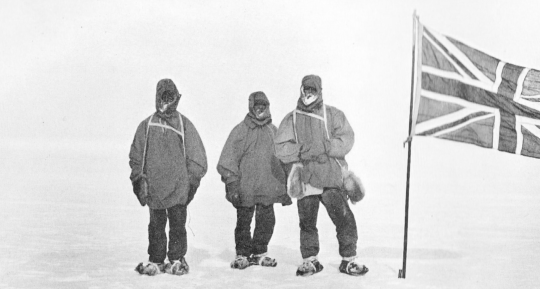
[some boys from the Nimrod Expedition, 1907]
September 14, 2019
Maiden Voyage + KAIYō whisky

JAZZ: Herbie Hancock – Maiden Voyage
In 1965, Blue Note Records released Herbie Hancock’s fifth LP, Maiden Voyage. The record was a concept piece, designed to create a nautical atmosphere. On the album liner, Hancock writes of his intentions, noting “this music attempts to capture [the sea’s] vastness and majesty, the splendor of a sea-going vessel on its maiden voyage.” The record has left a lasting impression, ranked among the most beloved Blue Note releases of all time. Hancock’s opening piano chords on the first number “Maiden Voyage” are indicative of the way he uses space to create a sea-fearing feeling. The piano’s modal playing style continues throughout the song in a fashion reminiscent of Bill Evans’ piano on Kind of Blue. Freddie Hubbard’s trumpet solo beginning around the 2 minute mark is a stand out part of the song. Another highlight as is Anthony Williams drums—especially his use of the ride cymbal where he changes the beat pattern frequently, keeping you unsettled but engaged. Hancock’s band picks up with pace with “The Eye of the Hurricane.” On the main riff in this number, Hubbard’s trumpet and George Coleman’s tenor play beautifully in tandem and pace the piece from the start. This song really moves, as if the vessel is picking up speed. It has a much less pensive, less modal feel than the title track. The final song on the record is lounge-y feeling “Dolphin Dance” with the horns playing in the lower register in a swingly, sing-songy kind of way over Hancock’s piano. On the whole, this is tremendous record that deserves to be listened to, not just played.
NEAT: KAIYō Whiskey
To pair with Maiden Voyage, I chose Kaiyō whiskey, which begins with unaged malt whiskey sourced from a distillery in Japan (I haven’t been able to identify the specific source which appears to be something of a guarded secret). The distillery “teaspoons” in some whiskey from another producer in order to spoil the “single malt” title. The whiskey is transferred into Ariake-made Mizunara oak casks. Mizunara oak is native to Japan and is more porous and has a higher moisture content than its American cousin. It is sought after by distilleries around the world for these unique properties. The whiskey is aged for three years on land before it is blended, and re-casked. The whiskey is then loaded aboard a ship and taken out to sea–on its own maiden voyage so-to-speak–where the aging process continues in international waters for a few more months before bottling. The whiskey itself is very light in color, similar to a young, unpeated Scotch, like Bruichladdich’s “The Classic Laddie.” I find Kaiyō pretty flat on the nose, but the flavor makes up for this. It presents a fruity and floral, light and delicate flavor with soft oak notes. That’s the Mizunara talking, but I barely heard. Maiden Voyage is turned up too loud and I’m already drifting out to sea.
August 13, 2019
Nubya’s 5ive + George Dickel no. 12
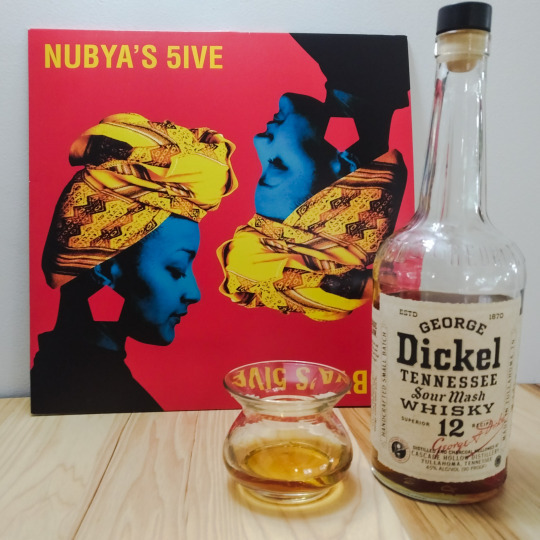
JAZZ: Nubya Garcia – Nubya’s 5ive
Women have been a part of jazz music since its birth. Yet, female instrumentalists and composers have historically been underrepresented inthe genre. The reasons for this are complex and have been discussed and debatedelsewhere (here and here for example). While male jazz artists stillsignificantly outnumber their female counterparts, the gap is narrowing. Oneneed not look further than Downbeat’s 2019 annual critics poll which rankedtwo female artists—Cecile McLorin Salvant and Mary Halvorson—as the #1 and #2jazz artists in the world, respectively. In that same critics poll, London-basedsaxophonist and composer Nubya Garcia was ranked as the #6 “Rising Star” in jazz.I got turned on to Garcia’s music earlier this year when I was introduced to “LostKingdoms”, the first song on her 2018 debut album, Nubya’s 5ive. This songhas an assertive hook that grabs you from the jump. It’s one of those songswhere, the first time you hear it, you stop and see who this is, because itsounds so compelling and fresh. The song features some great solos from Garciaas well as Shelia Maurice-Grey on Trumpet. Joe Armon-Jones keys lay a gorgeousfoundation in the background. “Hold” is equally terrific. The song opens with TheonCross playing an infectious groove on tuba. This riff carries the entire songover which Garcia and her band mates improvise. The repetition gives the song atrance-like quality. “Red Sun” is a nice little number, though it is far moretraditional than the others, dropping the electric instruments and the tuba forquartet sound.
NEAT: George Dickel no. 12
Like jazz, women have been an integral part of the whiskey industryfor generations. Yet, whiskey still tends to be associated with old, beardedwhite dudes. Much of this is due to the kind of marketing campaigns (and eventhe logos and labels on many whiskey bottles) which perpetuate the myth. Today,women are at the top of some of the most recognizable and influential brands inthe world (here’s a good list for starters). Recently, I stumbled on thisarticle in my local newspaper about Nicole Austin. She grew up about 10 minutesfrom where I live. Today, she’s the general manager and distiller for CascadeHollow Distilling near Tullahoma, Tenn. Her distillery produces George Dickel Whisky(they spell it without the “e”)—the second most popular Tennessee Whiskey aftersome other brand (Jack something-or-other). After reading her profile, which Irecommend reading for yourself, I picked up a bottle. Tennessee Whiskey isn’tsomething I would typically buy, so my expectations were low. I waspleasantly surprised. This stuff is good. The No. 12 variety, which I snared for a cool $25, is aged about 8 years (from what I can find) in new American Oakbarrels. Sharingjust about everything else in common with bourbon, Tennessee whiskey adds one step—filteringthe spirit through sugar maple charcoal prior to aging. The process is intendedto produce a smoother whiskey perfect for “finest quality sippin”, as my bottleof Dickel declares. Dickel no. 12 is heavy on the corn (85% of the mash) whichputs it on the sweeter side of the ledger. Yet, it packs a punch at 90 proofwithout sacrificing drinkability. To be honest, I’m hard pressed to think of abetter whiskey at this price point. Credit to distiller Nicole Austin and herfancy charcoal filtering process. And, cheers, to all the women in the worlds of whiskey and jazz.
July 20, 2019
Bill Evans Live in Tokyo + Hibiki Japanese Harmony
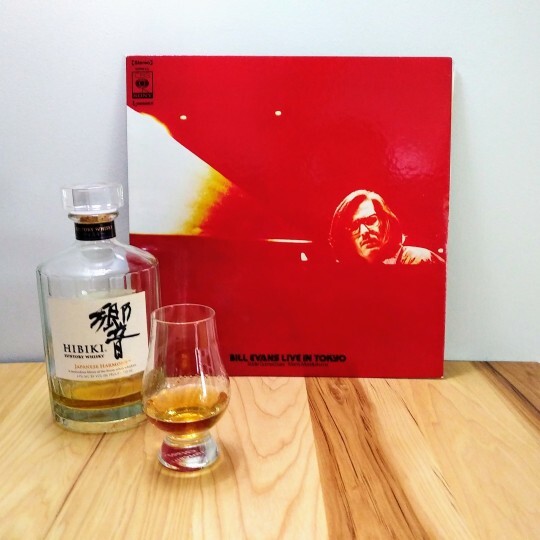
JAZZ – Bill Evans Live in Tokyo
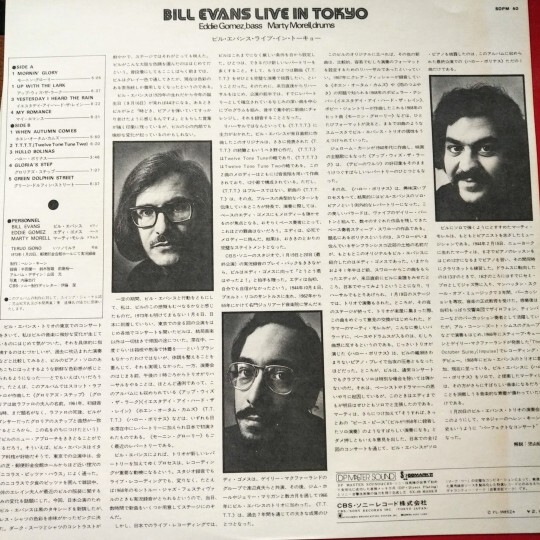
When you are the pianist on the best-selling jazz album of all time, you have earned your place in the pantheon of jazz greats. When you also write the original liner notes for that same album, you can add music documentarian to your credentials. Bill Evans got his big jazz break when Miles Davis invited him to join his sextet in 1958. One year later, Evans would become an integral part of jazz history as he performed with Davis on Kind of Blue, a landscape altering modal jazz masterpiece. Later that year, Evans left Davis’ imposing shadow and embarked on his career as a jazz trio band leader. Live in Tokyo (sometimes titled The Tokyo Concert) was recorded later in Evans’ career in January 1973. It was a time when Evans had relaxed his traditional, clean cut image. In Tokyo he sported shoulder length hair, a mustache and paired a pink shirt with his band’s tuxedos. This was also a time when Evans and his trio must have been touring ferociously. Between 1972 and 1975, Evans released a total of fourteen albums. Ten of them were live cuts. Consistent with Evans’ style, this record is made for sitting back and relaxing. Though there are a few songs with tempo, this record is best for calm moments—early in the morning or late at night. “Up with the Lark” is my favorite track on the record. It begins so pleasantly, with Evans playing softly on the keys for a moment before the full band joins on the main melody of the song to the crowd’s great amusement. Originally written as a vocal piece, Evans’ interpretation has a happy, swing like feel. Marty Morell’s brush strokes on the drums are another highlight. “My Romance” is a lovely piece that features a striking solo by Eddie Gomez bowing his bass. “T.T.T.T. (Twelve Tone Tune Two)” is the only Evans composed song on the record. The number has a faster pace and more driving bass line than the other tunes. It also presents more of an improvisational feel than the other compositions where the band plays tightly but also feels more starched and hemmed in at times. “Hullo Bolinas” stands out as the shortest song on the record featuring Evans, solo on piano, for all of its three minutes and 46 seconds.
NEAT – Hibiki Japanese Harmony
To pair with Evans’ Tokyo concert, I naturally enjoyed a Japanese whisky. Hibiki is a brand under the Suntory distilling company umbrella. Their whisky came to fame in America through a humorous scene in the 2003 Sofia Coppola film Lost in Translation. Unfortunately, the 17-year variety that Bill Murray enjoyed is no longer available. Neither is the 12-year. Demand for Japanese whisky has resulted in a shortage and Harmony is Suntory’s response to that. The bottle construction is what you would expect from a Japanese distillery. It is striking. The glass top reminds me of an old glass doorknob. As a blend of younger malt whiskies, it is on the lighter side. It’s reminiscent of a smooth, blended Scotch whisky minus the peat. Harmony features a lovely finish. The heat builds slowly but lingers, like a trademark Bill Evans block chord. To quote Bill Murray, with one slight edit, “For relaxing times, make it Bill Evans and Suntory time.”
Daniel McDowell's Blog

- Daniel McDowell's profile
- 1 follower


