
Christopher Klein's Blog
May 25, 2019
Battle of Eccles Hill
It was on this day in 1870 that the self-proclaimed Irish Republican Army marched off to war. Stopping on a country road in northern Vermont outside a brick farmhouse just yards from his intended target, General John O’Neill ordered his troops into battle: “The eyes of your countrymen are upon you. Forward, MARCH!”
With O’Neill’s command echoing in their ears and the dreams of liberating their homeland dancing in their heart, 400 men in green uniforms charged into enemy territory—Canada.
Sparked by the adrenaline and Irish pride coursing through his body, 25-year-old John Rowe sprinted to the front of the pack as he passed the iron post marking the international border on the road between Franklin, Vermont, and Frelighsburg, Quebec. Atop the rocky cliff of Eccles Hill that overlooked the boundary, James Pell of Dunham, Quebec, crouched behind a time-scarred boulder and squinted down the thirty-inch barrel of his Ballard rifle. He remembered well how Irishmen had ransacked his house and smashed his piano on the Irish Republican Army’s previous visit to the Eastern Townships in 1866. As he held his rifle’s heavy hexagonal barrel and peered through its graduated sight, Pell focused on the first green figure rushing toward the bridge.
Pell’s finger squeezed the trigger, and the butt of his rifle bit into his shoulder. A sharp crack reverberated around the dale. Rowe collapsed to his knees, his hands still clutching his rifle. Pell’s shot pierced an artery on the Fenian’s left arm and tore through his lungs, leaving him to suffocate in his own blood on the bridge where he lay.
The Fenians were greeted with a further downpour of Canadian bullets after Pell’s opening salvo. The younger soldiers were struck with panic at the sight of their fallen comrade and their first taste of combat. They jumped off the bridge and crawled underneath it for cover. Others scattered, harboring themselves behind stone walls, outhouses, and chicken coops. William O’Brien of Moriah, New York, was shot dead. Others fell wounded while seeking shelter.
When a Canadian shot brushed the high felt hat off the head of the St. Albans Messenger correspondent Albert Clarke, who had commanded a company of the Thirteenth Vermont Infantry at Gettysburg, he beat a hasty retreat from the lumber pile on which he stood, under “no disposition,” he said, “to satisfy his curiosity further at the risk of his life.”
So many Fenians had taken flight that the rounds of ammunition rattling around inside the tin interiors of their swaying black leather shot pouches, according to one eyewitness, “could be distinctly heard even above the din of the civilians who were still scampering in both directions from the field.”
Although the Fenians outnumbered the Canadians nearly six to one, the forces atop Eccles Hill had the advantage of a nearly impregnable position. Thousands of years earlier, the retreating glaciers had sculpted the perfect fortress “behind which twenty men could have defied a thousand,” one newspaperman reported.
Frustrated, O’Neill gathered those troops within shouting distance in a protected area behind Richard’s house. He castigated his men in green for their timidity. “Men of Ireland, I am ashamed of you! You have acted disgracefully today; but you will have another chance of showing whether you are cravens or not. Comrades, we must not, we dare not go back with the stain of cowardice on us. Comrades, I will lead you again, and if you will not follow me, I will go with my officers and die in your front!” He then ascended a hillside orchard to rally his soldiers next to the Richard farm.
Returning, the general stopped to check on a wounded Fenian lying on the side of the road when a U.S. Marshal suddenly appeared at his side, threw him into the backseat of a waiting carriage, and declared him under arrest by no less an authority than President Ulysses S. Grant himself.
Given the arrest of their commander and the increasing desertion of soldiers, Fenian officers were left with no choice. They had to abandon their attack and hold their position until they could escape under the cover of darkness.
Once the Canadians began a counterattack, however, the demoralized Fenians fled into the woods back to their camp. In their haste to escape, they tossed their ammunition pouches and knapsacks to the side of the road in order to lighten their loads. One soldier whipped off his green jacket and turned it inside out because he felt betrayed by the Fenian leaders.
“It’s all up; and damn the men that got us up here,” the retreating soldier told a Burlington Free Press reporter. “I come from Massachusetts. They told us it’d be a glorious business, and a good job, and all that; and then got us into Canada and sent us down there to be shot at for two hours,” he said. “I’ve got enough of this Fenian business; and I’m going home.”
The Battle of Eccles Hill ended with two Irish-Americans dead and nine injured. For their part, the Canadians suffered not a single casualty. While newspapers joked that “I.R.A.” now stood for “I Ran Away,” O’Neill stewed in a jail cell. “I never was in a battle before that I was so utterly ashamed of,” he confided to a Rutland Herald reporter.
Anyone who thought that the utter humiliation of the Battle of Eccles Hill would dissuade O’Neill from ever attempting to attack Canada again, however, would eventually be proven wrong.
For more on the Battle of Eccles Hill and the five Irish-American attacks on Canada, order your copy of WHEN THE IRISH INVADED CANADA.
With O’Neill’s command echoing in their ears and the dreams of liberating their homeland dancing in their heart, 400 men in green uniforms charged into enemy territory—Canada.
Sparked by the adrenaline and Irish pride coursing through his body, 25-year-old John Rowe sprinted to the front of the pack as he passed the iron post marking the international border on the road between Franklin, Vermont, and Frelighsburg, Quebec. Atop the rocky cliff of Eccles Hill that overlooked the boundary, James Pell of Dunham, Quebec, crouched behind a time-scarred boulder and squinted down the thirty-inch barrel of his Ballard rifle. He remembered well how Irishmen had ransacked his house and smashed his piano on the Irish Republican Army’s previous visit to the Eastern Townships in 1866. As he held his rifle’s heavy hexagonal barrel and peered through its graduated sight, Pell focused on the first green figure rushing toward the bridge.
Pell’s finger squeezed the trigger, and the butt of his rifle bit into his shoulder. A sharp crack reverberated around the dale. Rowe collapsed to his knees, his hands still clutching his rifle. Pell’s shot pierced an artery on the Fenian’s left arm and tore through his lungs, leaving him to suffocate in his own blood on the bridge where he lay.
The Fenians were greeted with a further downpour of Canadian bullets after Pell’s opening salvo. The younger soldiers were struck with panic at the sight of their fallen comrade and their first taste of combat. They jumped off the bridge and crawled underneath it for cover. Others scattered, harboring themselves behind stone walls, outhouses, and chicken coops. William O’Brien of Moriah, New York, was shot dead. Others fell wounded while seeking shelter.
When a Canadian shot brushed the high felt hat off the head of the St. Albans Messenger correspondent Albert Clarke, who had commanded a company of the Thirteenth Vermont Infantry at Gettysburg, he beat a hasty retreat from the lumber pile on which he stood, under “no disposition,” he said, “to satisfy his curiosity further at the risk of his life.”
So many Fenians had taken flight that the rounds of ammunition rattling around inside the tin interiors of their swaying black leather shot pouches, according to one eyewitness, “could be distinctly heard even above the din of the civilians who were still scampering in both directions from the field.”
Although the Fenians outnumbered the Canadians nearly six to one, the forces atop Eccles Hill had the advantage of a nearly impregnable position. Thousands of years earlier, the retreating glaciers had sculpted the perfect fortress “behind which twenty men could have defied a thousand,” one newspaperman reported.
Frustrated, O’Neill gathered those troops within shouting distance in a protected area behind Richard’s house. He castigated his men in green for their timidity. “Men of Ireland, I am ashamed of you! You have acted disgracefully today; but you will have another chance of showing whether you are cravens or not. Comrades, we must not, we dare not go back with the stain of cowardice on us. Comrades, I will lead you again, and if you will not follow me, I will go with my officers and die in your front!” He then ascended a hillside orchard to rally his soldiers next to the Richard farm.
Returning, the general stopped to check on a wounded Fenian lying on the side of the road when a U.S. Marshal suddenly appeared at his side, threw him into the backseat of a waiting carriage, and declared him under arrest by no less an authority than President Ulysses S. Grant himself.
Given the arrest of their commander and the increasing desertion of soldiers, Fenian officers were left with no choice. They had to abandon their attack and hold their position until they could escape under the cover of darkness.
Once the Canadians began a counterattack, however, the demoralized Fenians fled into the woods back to their camp. In their haste to escape, they tossed their ammunition pouches and knapsacks to the side of the road in order to lighten their loads. One soldier whipped off his green jacket and turned it inside out because he felt betrayed by the Fenian leaders.
“It’s all up; and damn the men that got us up here,” the retreating soldier told a Burlington Free Press reporter. “I come from Massachusetts. They told us it’d be a glorious business, and a good job, and all that; and then got us into Canada and sent us down there to be shot at for two hours,” he said. “I’ve got enough of this Fenian business; and I’m going home.”
The Battle of Eccles Hill ended with two Irish-Americans dead and nine injured. For their part, the Canadians suffered not a single casualty. While newspapers joked that “I.R.A.” now stood for “I Ran Away,” O’Neill stewed in a jail cell. “I never was in a battle before that I was so utterly ashamed of,” he confided to a Rutland Herald reporter.
Anyone who thought that the utter humiliation of the Battle of Eccles Hill would dissuade O’Neill from ever attempting to attack Canada again, however, would eventually be proven wrong.
For more on the Battle of Eccles Hill and the five Irish-American attacks on Canada, order your copy of WHEN THE IRISH INVADED CANADA.


March 21, 2019
Podcasts and Book Talks
I was very happy to have Malcolm Hillgartner narrate the audiobook version of WHEN THE IRISH INVADED CANADA. He did a fantastic job of infusing energy into the telling of the story.
I'm not blessed with Malcolm's pipes but if you'd like to get a quick synopsis of the story of the Fenian Raids that you'll find in WHEN THE IRISH INVADED CANADA, give the latest episode of The Road to Now podcast a listen. The Road to Now is available on Apple Podcasts, Google Play, Stitcher, Spotify, and anywhere podcasts are available. If you don’t have a podcast app, you can listen on your computer and smart phone by accessing it on their episode page.
A recent book talk I gave has also been recorded and you can catch it here on YouTube.
I'm not blessed with Malcolm's pipes but if you'd like to get a quick synopsis of the story of the Fenian Raids that you'll find in WHEN THE IRISH INVADED CANADA, give the latest episode of The Road to Now podcast a listen. The Road to Now is available on Apple Podcasts, Google Play, Stitcher, Spotify, and anywhere podcasts are available. If you don’t have a podcast app, you can listen on your computer and smart phone by accessing it on their episode page.
A recent book talk I gave has also been recorded and you can catch it here on YouTube.
March 12, 2019
Publication Day!
Very excited that When the Irish Invaded Canada is now hitting the shelves of bookstores and libraries across the country. I just came back from my local bookstore and it was a thrill to see the book out in the wild.
If you'd like to get a flavor for the true story of the Civil War veterans who attempted to kidnap Canada and ransom it for Ireland's independence, you can read the Prologue by clicking here. Time Magazine has also just posted an essay I wrote about the Fenian Raids.
Happy reading!
If you'd like to get a flavor for the true story of the Civil War veterans who attempted to kidnap Canada and ransom it for Ireland's independence, you can read the Prologue by clicking here. Time Magazine has also just posted an essay I wrote about the Fenian Raids.
Happy reading!
March 8, 2019
Introducing When the Irish Invaded Canada
The Fenian Raids were a seminal moment in Canadian history, but a mere footnote in the United States. I’m hoping my new book on the Fenian Raids, When the Irish Invaded Canada, will make more people aware of the outlandish story of a band of Irish-American Civil War veterans who undertook one of the most improbable missions in military history—to kidnap the British colony of Canada and ransom it for Ireland’s independence.
When I first read about this bizarre coda to the Civil War, I probably wasn’t alone in wondering how many pints of Guinness were involved in concocting a plot to invade America’s northern neighbor. Part of that can be chalked up to viewing the past through the lens of the present day when the United States and Canada share the longest peaceful international border in the world.
The more research I conducted, however, the more I learned that the idea of attacking Canada in the 1800s wasn’t some whiskey-fueled delusion of grandeur, but as much of a time-honored American tradition as fireworks on the Fourth of July. In addition, after reclaiming the South, many Yankees had cast their eyes north in search of the next territory that would allow the United States to continue to fulfill its Manifest Destiny. Plus, Anglo-American relations were at their lowest ebb since the Redcoats torched the White House a half-century earlier because of the tacit British support given to the Confederacy during the Civil War. The United States sought reparations for the damage done by Confederate warships built in British ports and was more than willing to twist the lion’s tail in retaliation for the safe haven given to Confederate spies and raiders in Canada.
In the Fenian Brotherhood, a semi-secret band of Irish-American revolutionaries, the United States had the perfect vessel in which it could outsource their revenge. President Andrew Johnson and Secretary of State William Seward even signaled their intent not to interfere with the invasion plans, and the government sold large caches of weaponry to the private army.
The willingness of thousands of Irish immigrants to take such desperate measures speaks to the desperate times they faced. Even fifteen years after the Great Hunger that killed one million Irishmen and forced upwards of two million others to flee their homeland, the trauma remained raw. For seven hundred years, the British had taken away Ireland’s religion, culture, and language, and when the Great Hunger struck, they even took away its food and exported it to other realms of the British Empire. The Irish who washed ashore in the United States had become radicalized, and among the nearly two hundred thousand who took up arms for both the Union and Confederacy were many who saw the bloody battlefields of the Civil War as training grounds for the real fight they wanted to wage—a war to free Ireland.
When I first read about this bizarre coda to the Civil War, I probably wasn’t alone in wondering how many pints of Guinness were involved in concocting a plot to invade America’s northern neighbor. Part of that can be chalked up to viewing the past through the lens of the present day when the United States and Canada share the longest peaceful international border in the world.
The more research I conducted, however, the more I learned that the idea of attacking Canada in the 1800s wasn’t some whiskey-fueled delusion of grandeur, but as much of a time-honored American tradition as fireworks on the Fourth of July. In addition, after reclaiming the South, many Yankees had cast their eyes north in search of the next territory that would allow the United States to continue to fulfill its Manifest Destiny. Plus, Anglo-American relations were at their lowest ebb since the Redcoats torched the White House a half-century earlier because of the tacit British support given to the Confederacy during the Civil War. The United States sought reparations for the damage done by Confederate warships built in British ports and was more than willing to twist the lion’s tail in retaliation for the safe haven given to Confederate spies and raiders in Canada.
In the Fenian Brotherhood, a semi-secret band of Irish-American revolutionaries, the United States had the perfect vessel in which it could outsource their revenge. President Andrew Johnson and Secretary of State William Seward even signaled their intent not to interfere with the invasion plans, and the government sold large caches of weaponry to the private army.
The willingness of thousands of Irish immigrants to take such desperate measures speaks to the desperate times they faced. Even fifteen years after the Great Hunger that killed one million Irishmen and forced upwards of two million others to flee their homeland, the trauma remained raw. For seven hundred years, the British had taken away Ireland’s religion, culture, and language, and when the Great Hunger struck, they even took away its food and exported it to other realms of the British Empire. The Irish who washed ashore in the United States had become radicalized, and among the nearly two hundred thousand who took up arms for both the Union and Confederacy were many who saw the bloody battlefields of the Civil War as training grounds for the real fight they wanted to wage—a war to free Ireland.
February 22, 2016
Strong Boy Wins Bela Kornitzer Book Award
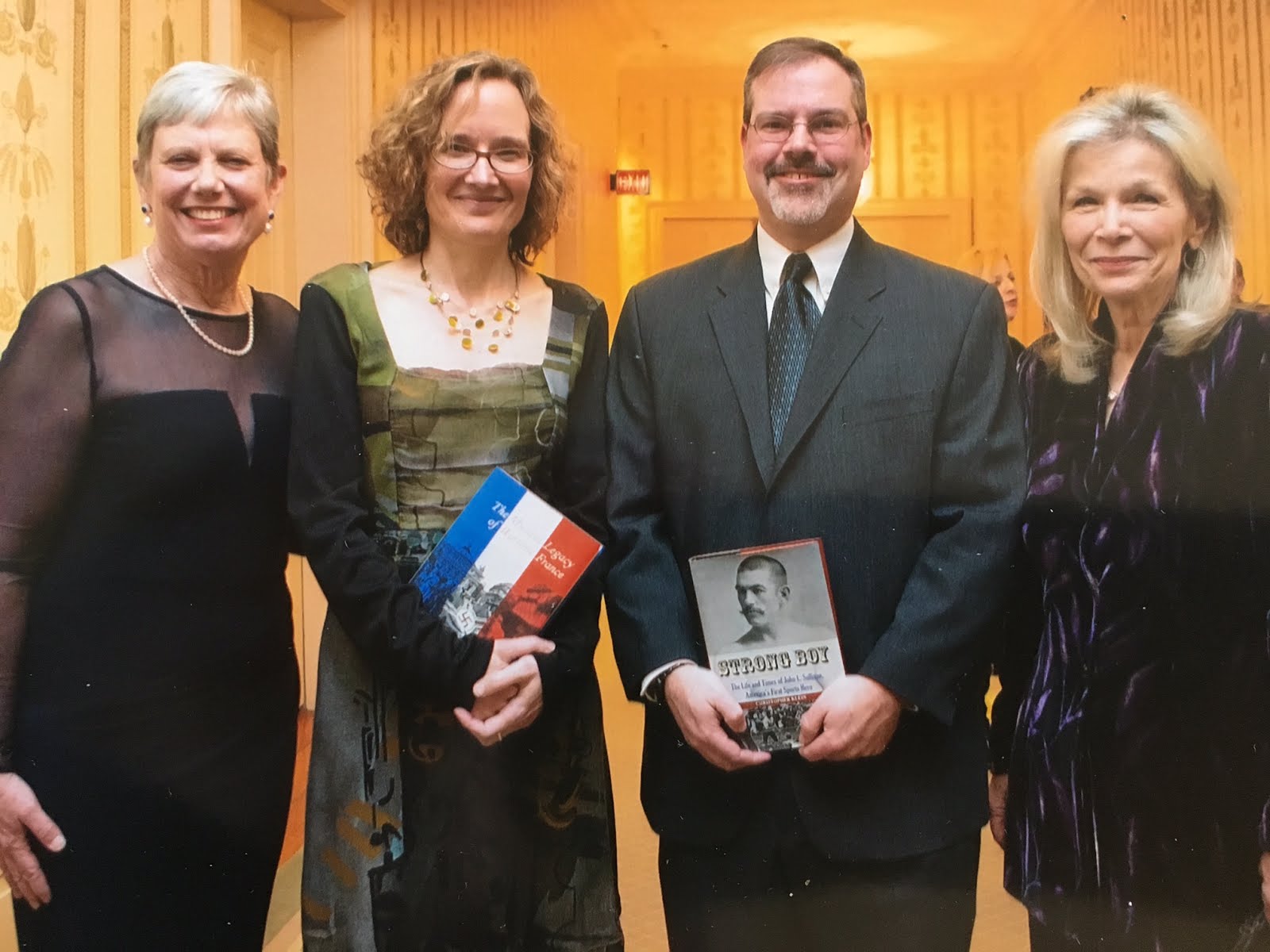
I was very happy a few weeks ago to return to my alma mater, Drew University, to receive the 2016 Bela Kornitzer Book Award along with Associate Professor of Music Dr. Leslie A. Sprout for her book "The Musical Legacy of Wartime France." The awards were presented at the biennial Library Gala by Noémi K. Neidorff, who paid tribute to her uncle and to her parents who established the award in his name.
The Kornitzer Prize Endowment was established twenty-three years ago by the late Alicia Kornitz...
July 7, 2015
STRONG BOY Now Available as Audiobook
 Looking for a good summer read...er...listen? Good news. STRONG BOY: THE LIFE AND TIMES OF JOHN L. SULLIVAN, AMERICA'S FIRST SPORTS HERO is now available as an audiobook.
 Approaching nineteenth-century sports and boxing with a twenty-first-century perspective, STRONG BOY brings to life John L. Sullivan, a man who was the gold standard of boxing for more than a decade and the first athlete to earn more than a million dollars. He had a big ego, big mouth, and bigger appetites. His womanizi...
May 26, 2015
June 7 Book Signing and Beer Tasting in Portsmouth, NH
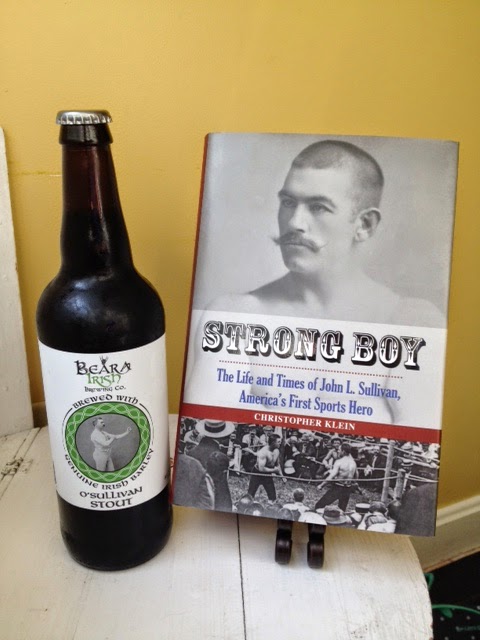
John L. Sullivan appreciated a good pint—well, any pint for that matter—so I’m sure he’d be excited about a great afternoon of brews and books that will be hosted by the Beara Irish Brewing Company in Portsmouth, New Hampshire, on Sunday, June 7, from 2-4 PM.
Sullivan's role as the country's first sports superstar and Irish-American hero has faded a bit from our collective memory in recent years, so I was particularly excited when I saw his image gracing the labels of a great local brew, Beara...
March 9, 2015
STRONG BOY now available in paperback
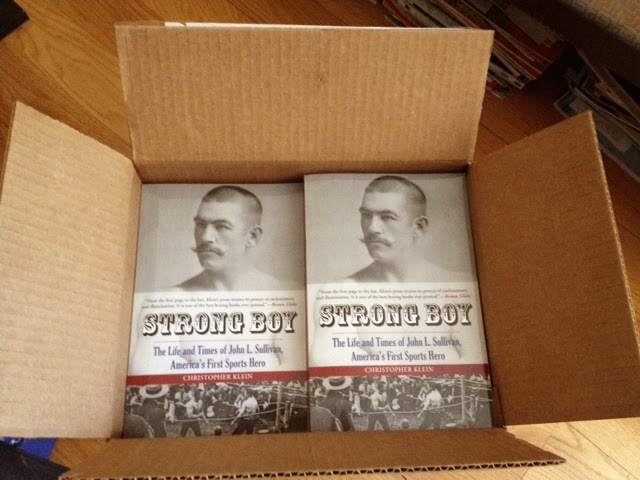 STRONG BOY: THE LIFE AND TIMES OF JOHN L. SULLIVAN, AMERICA'S FIRST SPORTS HERO is now available in paperback. Same great content, half the price!
Happy to see this great review from the Boston Globe on the front cover: "From the first page to the last, Klein's prose retains its powers of enchantment and illumination. It is one of the best boxing books ever penned."
Approaching nineteenth-century sports and boxing with a twenty-first-century perspective, STRONG BOY brings to life John L. Sulliv...
July 10, 2014
Pedestrianism: When Watching People Walk Was America's Favorite Spectator Sport
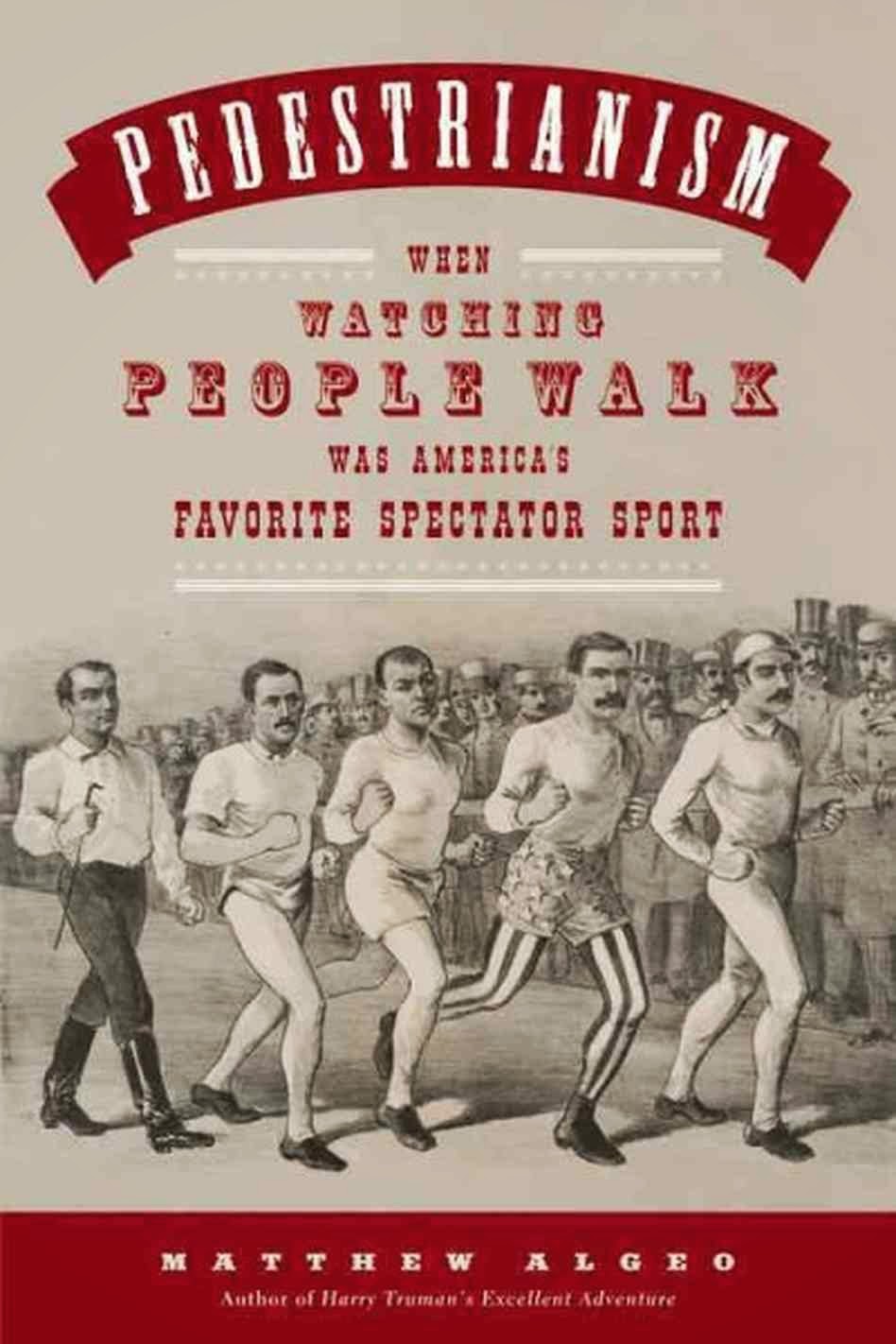 One of the historical oddities I came across in writing
Strong Boy: The Life and Times of John L. Sullivan, America's First Sports Hero
was the brief American sporting fad of “pedestrianism” that emerged after the Civil War and reached its height in the late 1870s as Sullivan was beginning his rise to the heavyweight title. Both men and women competed in long-distance walking match races and crazy feats (or "feets" in this case) of endurance, such as the wildly popular six-day races staged in...
One of the historical oddities I came across in writing
Strong Boy: The Life and Times of John L. Sullivan, America's First Sports Hero
was the brief American sporting fad of “pedestrianism” that emerged after the Civil War and reached its height in the late 1870s as Sullivan was beginning his rise to the heavyweight title. Both men and women competed in long-distance walking match races and crazy feats (or "feets" in this case) of endurance, such as the wildly popular six-day races staged in...
July 8, 2014
The Rumble at Richburg
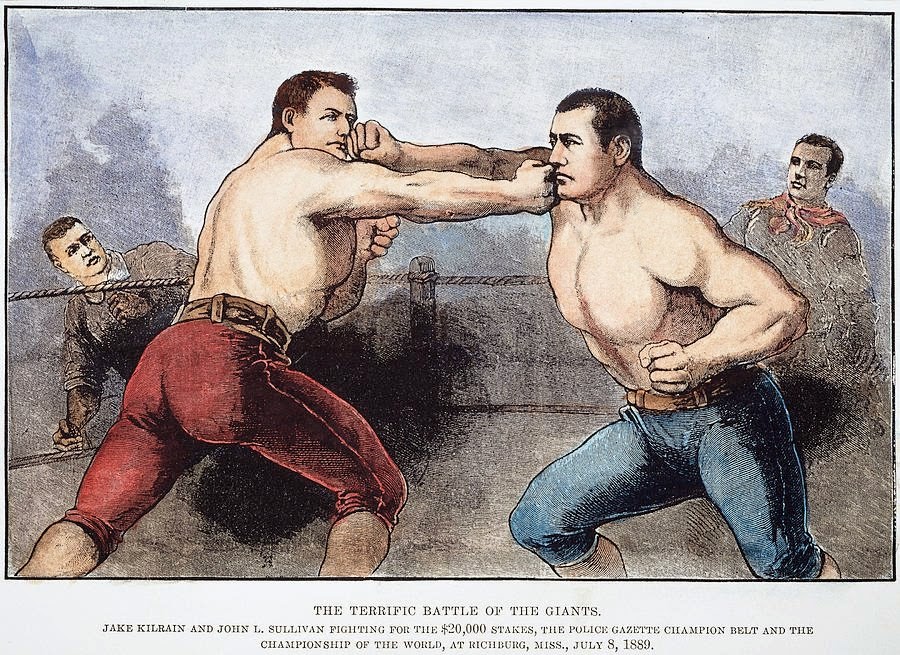 On July 8, 1889, blood, sweat, and whiskey soaked the sandy soil of the Mississippi backwoods. Two battered, bruised, and bloodied outlaws traded blows with their naked fists for more than two hours while the midday summer sun broiled and blistered their exposed skin. In the triple-digit heat, the bloodlust in the crowd bubbled up like the pitch from the freshly cut pine planks used to build the hastily constructed outdoor arena. In spite of the secluded setting, this brawl in Richburg, Missi...

