Jo Allen's Blog
June 30, 2023
Musings from a ghostwriter
About 18 months agoI was contacted by my publisher and asked if I would ghostwrite anovel for a celebrity. It was to be a Second World War story, set inthe East End of London. Initially that’s all I was told, but Icouldn’t agree to do the work without knowing who the celebrity was(it might have been some rabid right-wing politician! Argh!)Thankfully it was someone I admired so I agreed to write the book, asit’d be a new and interesting challenge for me. I was passed lotsof research that had already been done, and we had a few WhatsAppconversations where more ideas were sent my way.

I spent last summerwriting draft one, and the first few months of this year completingseveral rounds of edits until the book was finally accepted.
And now… now I’mwaiting for publication date, waiting to see how it’s received bythe reading public, by the celebrity’s many fans and followers, bythe book press…
… and it’s astrange feeling. With my own books that are written under my ownname, I get to approve the cover and blurb, I’m involved in thecover reveal, I’ll post excitedly about the book going up forpreorder, I’ll arrange a blog tour around publication date, I’llpost frequently on my social media about the book in its first fewweeks post-publication. I’m not an author who does a lot ofpromotion compared to others I know, but I do that much anyway.
This time – it’snot ‘my’ book. (My name will be on the title page inside, but noton the cover.) I get no royalties (it was a flat fee) so it makes nodifference to me financially whether it does well or not. But I docare… because my name is associated with the book, and because Iworked damned hard on it and I’m proud of the finished story, andI’d love the book to fly high!
I had a heads-upbefore the book was announced, I was sent a bound proof copy, andlater I spotted the cover reveal by chance, and occasionally I see asnippet of news about it. Publication date is still a couple ofmonths away so who knows how much hype there’ll be about it by then– it’ll be interesting to see.
My own books don’tmake a huge splash. They sell to a core group of fans, to readers ofdual timeline fiction, and they make me a decent income. But there’snever any real hype around publication, not like there will be withthis book. I don’t know whether any of this book’s publicity willspill over into more sales for my own books or whether it’ll haveno effect whatsoever. (Doesn’t really matter – I didn’t writeit for that reason; I wrote it for the experience and the challenge.)
I don’t reallyknow what to expect at all! And I’m not sure there’s a point tothis blog post other than my musings out loud.
(PS it’s no secretwho the celebrity is, but I didn’t want to include their name orthe book’s title here so this post so it won’t turn up onsearches. But if you’re really curious pop over to my website andhave a rummage around to find out.)


May 4, 2023
ChatGPT and ME!
 Image by Gerd Altmann from Pixabay
MY STORY
The implications of a computer system that analyses language and produces text in seconds, be it a factual or creative piece, has obvious worrying consequences for writers. Here's a personal example that might help explain.
Over Easter weekend my eldest went to visit his grandparents, while I worked on a suffragette story. On his return, he asked what I’d written, and I explained the premise, which included specific details relating to a daring attack on Winston Churchill that took place at Temple Meads Station in Bristol, in November 1909. The piece was written in the form of a letter.
My son then input what I’d shared – the bare bones of the story – into ChatGPT which created a piece in seconds. The programme was mind-blowingly quick and frighteningly accurate.I then asked if the letter could be rewritten in a more formal, Victorian voice. Again, a new letter was produced in less than a minute.What had taken me a whole day – both research (checking characters, dates, settings, language, dress etc.) then writing – had taken ChatGPT seconds to reproduce.
 Computer Processor
THE PROBLEM
But it wasn’t perfect. The voice was too stilted; something developers say will improve as users input more and more data.
WHAT DID I DO?
I read what ChatGPT produced, just as I would read other research material (reference books, blog posts, newspaper articles) then selected THREE words I felt would strengthen my story. But what did that mean? Was I cheating? Was it still my work? Does that mean MY story is now ChatGPT assisted? I don’t know.

WHAT DOES THIS MEAN FOR BOOKS AND PUBLISHING?
Most authors find ideas come easily. We have notebooks and files stuffed with magazine clippings, random snippets of conversation, details of interesting places visited. The real difficulty is finding time to fix our bums on seats and write. And the act of writing is hard. It requires research, concentration, grammatical skill, knowledge of the craft, determination to spend weeks and months rewriting draft after draft after draft. However, the introduction of ChatGPT, and other AI products like it (Amazon has just launched its version), mean there are already authors (some indie – independent of large publishers) saying they plan to write hundreds (yes, hundreds!) of books per year.
It would be easy to become despondent and say, what’s the point in continuing, assuming that whatever I write will become lost in the tsunami of books and writing that is bound to be coming our way.But the truth is, I still have ideas I want to explore and stories only I can write (with or without the assistance of ChatGPT). We live in interesting times, which will have implications for all industries, not just publishing. Artificial intelligence isn’t going to go away, and has implications for rights and author income, so all we can do is arm ourselves with knowledge.
.jpg)
WHAT DOES THIS MEAN FOR READERS?
As a reader, do I wish to know if a news article, blog post, novel or piece of flash fiction has been written by a human or assisted by a bot – yes, I do. But until regulation catches up, it’s unlikely we can be certain exactly what’s going at desks and kitchen tables across the globe.
How about you? Do you need to know if what you are reading was written or assisted by AI? Or, if the novel/article is a page-turner/ interesting, does it matter?

WHERE TO TURN NEXT
A writer who is constantly ahead of what’s happening next, and brilliant at explaining futurist technology in an easy-to-understand, positive way, is author and podcaster, Joanna Penn. I recommend checking out her Creative Penn website and blog posts, as well as listening to her fantastic podcast.

Finally, for transparency, no AI was used when writing this blog post.
As for my suffragette story, it will be included in my debut flash fiction collection.
Rae x
April 1, 2023
I love book clubs!
Do you belong to a book club? I've been a member of several over the years, and I have a very big soft spot for them.
Twenty five years ago I joined a book club in the village I was living in at the time. The members were made up entirely of mums from the local primary school and I'm not sure we could really call ourselves a book club. Certainly we did all read a book each month, but to be honest that was the extent of anything bookish that used to happen. We would meet at someone's house and enjoy a lovely meal, then we'd spend a maximum of ten minutes (no, I'm being generous, it was closer to five minutes) discussing the book, followed by several hours gossiping about the local schools, a decision about new curtains, how many bottles of wine was acceptable on a school night - you get the picture!
These days book clubs have evolved due to the wonders of the internet. We can join in with online book clubs and discuss our opinion of a book with people from all over the world, connecting through our love of reading. And there is also the concept of a 'readalong' where we can read a favourite book by a specific author at the same time as fellow fans, pausing every few chapters to discuss what we've just read. Similar to a book club, but in much smaller chunks and for a lot of people with a hectic modern lifestyle this is more manageable.
I am also once again in a physical meet-once-a-month book club. And shock horror, we spend the whole meeting discussing the book! Well, sometimes we may stray into a moan about the state of the pavements while super-fast broadband is installed in the village, but we all congregate from different walks of life with a wide age range, so it's nothing like the book club of decades ago. The best part of this book club - indeed all book clubs and readalongs - is hearing such different views about something we have all read. Often these differ from my own thoughts; our different backgrounds and life stories change the way a book speaks to us.
One of the most wonderful things about this book club is that we have a special library department to organise our chosen books, so we're all able to have a copy of the same book at the same time without having to purchase each one. I need no encouragement to buy books, but even I can see the wisdom of borrowing a book that I may turn out to not enjoy. And of course, every time a book is borrowed from the library the author gets a small payment - but that is a subject for another blog!
And in case you're interested, this month's bookclub book is The Fish Ladder by Katharine Norbury. It's part travelogue, part memoir and is very different (in a good way!) from anything I've read before.

March 15, 2023
Romantic Novel of the Year Awards 2023
Exhausted but happy, I returned from the annual Romantic Novel of the Year Awards (RONAs) last Monday night, 6th March. Held by the Romantic Novelists' Association, it is always a spectacular evening to be part of and, on this occasion, I was a finalist in the Romantic Historical Novel category, with my dual timeline THE LEGACY OF HALESHAM HALL. Not a winner this time (huge congratulations to Natasha Lester), I still had an enormous smile on my face and joy in my heart. That's what comes of spending an evening with your tribe - and romance authors are definitely that!

I travelled down to London with fellow Norfolk and Suffolk Chapter members Heidi Swain, Clare Marchant and Kate Smith, and the hour and a half journey whizzed by. My fabulous agent (Hannah Schofield of the LBA agency) met me beforehand for a drink, and then I was whisked off for photographs with the other finalists, before we all took our seats and the evening began.

The night started with a moving tribute to Eileen Ramsay, former chairman of the RNA, who sadly passed away recently. She was a lovely lady and I remember talking to her at a RNA conference several years ago. She will be missed.
The first award of the evening was the Popular Romantic Fiction Award, which went to the delightful Heidi Swain, but huge congratulations must go to all the winners; Emily Bell, Emily Kerr, Jane Lovering, Sara Downing, Dani Atkins, Natasha Lester, Vicki Beeby, Louise Allen and Julie Haworth. The trophies were handed over with aplomb by Peter Davison, and there were some fantastic (and quite emotional) acceptance speeches.
 The winners, with the glorious
 Katie Fforde at the front.
(Photo credit; Camilo Queipo Photography)
To end the awards, and the section that had the whole room emotional was, of course, the Lifetime Achievement Award which went to the long-standing President of the RNA, the enchanting Katie Fforde. As the tributes poured in, the one word on everyone's lips was "kind". Such a kind lady - so generous and encouraging to aspiring writers and published authors alike. There was not a dry eye in the house.
 My favourite photo! Full of giggles, it looks as though
Heidi and are about to waltz around the room.
(Photo credit; Camilo Queipo Photography)
As always, the RNA continues to play a huge role in my life, and not just my writing life. These people are my friends and my mentors, and I must yet again thank this incredible organisation for the knowledge, opportunities and support it continues to give me. Being shortlisted at the RONAs made me feel like a winner regardless, and attending these awards was truly a highlight of my year.
Jenni x
December 3, 2022
Finding Books in Spain
We’re spending a few months touring Spain in a motorhome, my husband and I. This is the third time we’ve done this, and it’s such a wonderful way to escape England’s grey, drizzly winter days. He’s retired and I can write anywhere, so we’re lucky to be able to do it.
Away from home, away from the TV – of course we end up reading a lot. We both have Kindles but we also read paperbacks. One thing we’ve discovered is that it’s amazingly easy to find English-language books to read while away in Spain, particularly while on the Costas.
There are a lot of northern Europeans who, like us, seek out the warmth of southern Spain for winter. British and Irish, Germans, Scandinavians, Swiss and Dutch people in abundance. And all bring books with them and then need more to read later in their trips.
In the larger supermarkets, such as Carrefour’s hypermarkets, you can buy books in various languages. All the big name authors will be represented, but you’ll be paying a premium for these books – no discounts at all!
Alternatively some street markets will have stalls selling second hand books for about a euro each. I’ve spent plenty of time happily browsing what’s available there, and yes, I’ll admit, I always check if any of my own books have made it out to Spain! (Never spotted one yet.)

Another option is to use the various book-swap facilities around. Many campsites will have a few shelves of books in various languages, and I’ve also seen them in coffee shops or just in tiny huts in town squares. The deal is you leave one, and take another. Some volumeslook as though they’ve been kicking around Spain for years, being passed on over and over again.
One campsite I know well closed down its bookshelves during the Covid crisis. Even so, long term campsite residents found ways to pass on books. When read, a book would be left by the communal washing up sinks. You could guarantee it’d be picked up by someone else within a day.
I’ve found that reading books from book-swaps has introduced me to new authors. There’s a limited choice, of course, which will force you out of your reading comfort zone and get you to try something new. Also, campsite friends of various nationalities have passed interesting books on to me – the quirky but compelling books of Carlos Ruiz Zafon for example, and The Sixteen Trees of the Somme by Lars Mytting was given to me by a Norwegian friend who’d read it both in Norwegian and English. (And oh wow, what a fabulous book that was!)
So now when we come to Spain for the winter, we bring a selection of paperbacks that we know we’ll be happy to pass on when read. And we’ll keep our minds open as to what we’ll pick up in exchange for them!
November 6, 2022
WRITE YOUR NEXT CHAPTER... CAREER COACHING FOR CREATIVES

WHAT IS COACHING? I can only share my experience and have no expertise in the field, but the main tool used in sessions was ACTIVE LISTENING. A handy skill for writers too! Tanya Paget of Ellipsis Coaching was warm and friendly, immediately putting me at my ease. The initial focus was on beliefs and goal setting, which helps creatives work through issues in their personal and/or professional lives. Tanya’s business strapline is Write your next chapter... How could I resist!
Tanya’s fundamental belief is that individuals are creative, resourceful and whole – meaning we have the knowledge to make the changes needed to gain whatever we seek in our lives –balance, confidence, more sleep, the ability to say ‘no’... the list goes on!
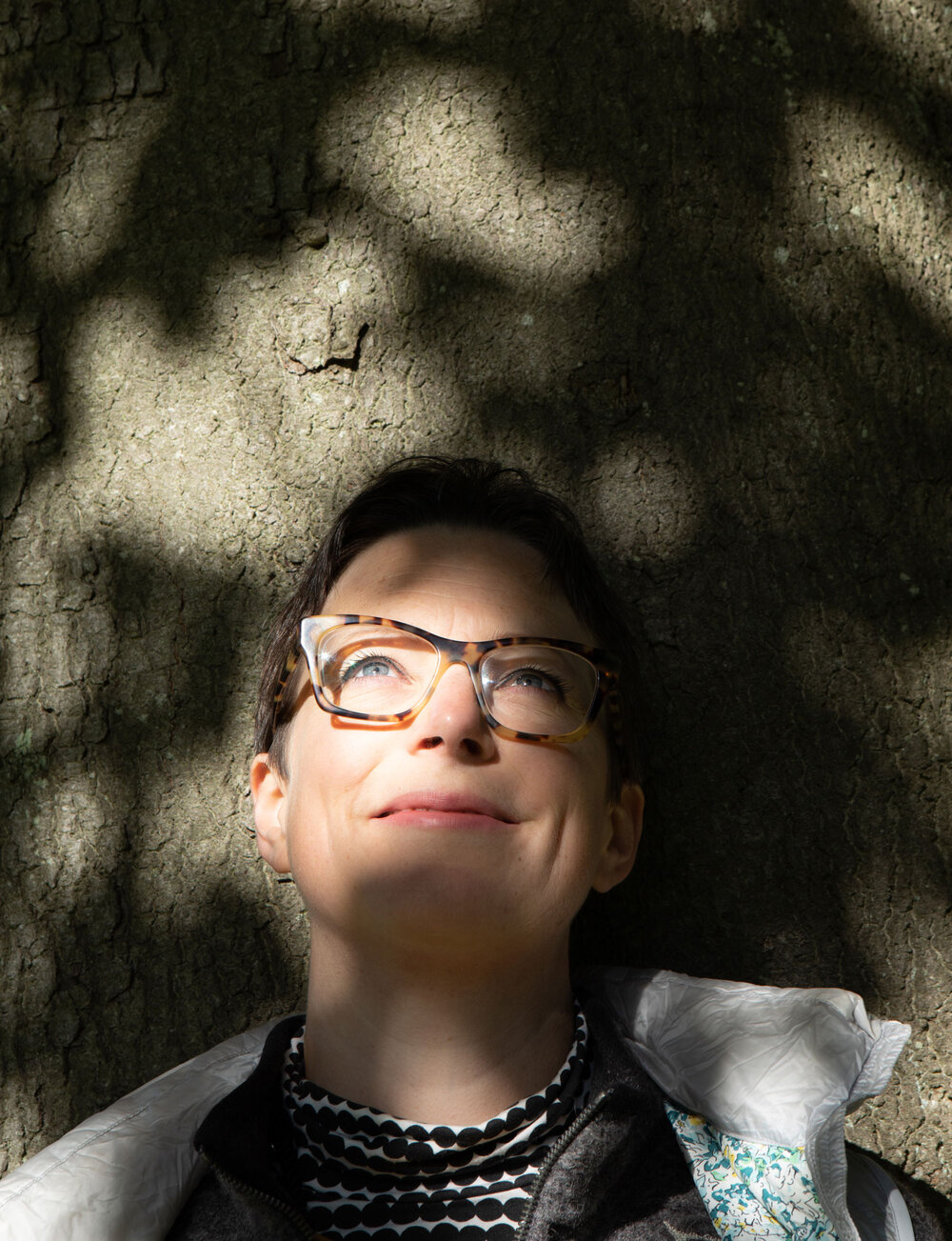 Tanya Paget of Ellipsis Coaching
WHAT IT’S NOT... Coaching isn’t therapy. It tends to be goal-focused, looking forward, helping clients identify and work towards next steps.
WHO WAS INVOLVED?GROUP SESSIONS As I mentioned, part of the pilot coaching project included group sessions with eight fantastically creative women, who were an absolute joy to get to know. Confidentiality is key to these sessions, but I can say that the diverse range of creative disciplines in the room really added to the fun.
INDIVIDUAL SESSIONS We were also offered individual sessions, which either took place over Zoom, or as a walking consultation, when there was time to drill down into what I wished to achieve and what was holding me back. Through gentle, incisive questioning, Tanya explored how barriers could be removed, helping me take small steps that have made a big difference. (In amongst new business goals, I now make time for Yoda Nidra – check out Ally Boothroyd’s FREE meditation sessions on You Tube here)
.jpg) Balance Stones
Balance StonesWHERE DID SESSIONS TAKE PLACE? I opted for Zoom sessions and was a little concerned that such personal conversations might be awkward on screen, but this wasn’t the case as I quickly forgot that Tanya was in a different location. We also enjoyed a group session at Greenbrae Steading, Hopeman, a co-working space with a log-burning stove and spectacular views over the Moray Firth – a real treat. (A brilliant space for writing workshops too).
 Greenbrae Steading's fabulous workshop space
WOULD I RECOMMEND COACHING FOR CREATIVES? Would I recommend coaching for creatives? Absolutely! I now understand how coaching helps individuals make time to think about their life, career, business, and clarify what should happen next.
Is career coaching an approach that could be used by publishing houses to support their authors – particularly during such uncertain times? It's an interesting thought.
I would like to thank M:ADE (Moray Arts, Development, Engagement) for funding such a useful initiative.
Finally, just as important as the personal growth I experienced, was spending time with such an interesting, supportive, creative circle of women who love to laugh and share. I wish them all happiness and an abundance of creative success as they begin their next exciting chapter.

September 29, 2022
Living and Writing in York
Or in Yorkshire.
We retired to York 9 years ago for many non-writing reasons, but basically because we loved the city. However, it wasn't until I got the writing bug and started exploring the area that I realized how remarkable the County was! I mean, ANY county that produces the Bronte sisters, James Herriot, JB. Priestley, WH Auden, Alan Bennett, Val Wood, Kate Atkinson, Laurence Sterne,Barbara Taylor Bradford, Frances Brody, Ava Manelo, Jane Lovering, K LShandwick and Leah Fleming has to have something special going for it.

Of course, in terms of novels actually SET in York, I give you the amazing Jonathan Strange & Mr Norrell, with its very Gothic presentation of the city. Going back in time, Bernard Cornwell had York – or Jorvik, feature in many of his Uhtred novels! York is such a compact city you can walk around the encircling walls in an hour – and many of the streets have changed little over the last thousand years.

No piece discussing Yorkshire and its writers could be complete without mentioning the fabulous Milly Johnson - who was presented with the Rishard Whiteley Award for giving outstanding inspiration to others within the County.

If you are in the mood for Historical fiction (or fact), a walk around the city can give you a host of plot ideas! As can the city pubs! Ghosts abound – as do real-life characters like Guy Fawkes, Dick Turpin and Anne Lister.

Come at the right time of year, and you could find the Romantic Novelists Associationtion hosting an event there too. Recently they have been holding them in the Merchant Taylors Hall. In addition, you may find a writers' conference being held at York University.
Of course, all the attractions bring a downside too. A local paper ran a piece recently entitled "Death by Hen-Party". York being a central transport hub, Friday about 3 pm., the arriving trains start to decant groups of jeunesse dorée all determined to have a good time. To be fair, they are mostly harmless, and there is usually room for everyone.
York's other claim to fame is, of course, chocolate! Terry's and Rountree's were the big players in the chocolate markets of the Victorian era.
.jpg)
.jpg)

Like many chocolate makers of the era, they were Quakers and had a very paternalistic attitude to their workforce. However, they are STILL significant players in the property market. Rowntrees even built a theatre for their workers, and the Joseph Rowntree Theatre is in vibrant and popular use today.
When writer's block strikes, take a stroll, think back and imagine these very stones being trodden by King Richard III. You can literally walk in their footsteps. Towton, Stamford Bridge, Marston Moor and Fulford, some of the most infamous and bloody battles fought in England, have been fought here!
Finally – a word about hedgehogs! Our local ones seem to have gone into hibernation already. This is early but not exceptional. We have at least three who regularly visit us and seem to come back every spring.Hedgehog Street! A link worth clicking on!
Hedgehogs from earlier this year.
We are STILL putting the food and camera out – just in case. As it happens, we live next door to an old orchard with a large area of the untended garden. Heaven for hedgies – and they have a hedgehog highway through to our garden. My expert advisor for hedgies, Toni Burrell, says they only take about 15% of their food from what we put out – they get the bulk of their diet from what they forage.
Winter is definatly approaching. It is noticably cold at night, and the nights aare drawing in. Hibernating sounds like a good idea (if only!) Take care over the winter, and curl up with several good books. Hopefully, by the time spring comes around they will be joined by one or more of your OWN books!
September 2, 2022
Change of Seasons
As I write this, I'm enjoying the final warm days of summer, but I've noticed that the nights are already drawing in and it's dark by nine o'clock.
Although I love the warm summer months (and we've been more than blessed this year!) there is something enticing about autumn. The first whisper of the cold weather to come, closing curtains as the evening falls and curling up with a good book. There are some advantages to living in a country with so many months of long, dark hours when we can be holed up in our homes making our way through a teetering 'to be read' pile.
And I find that what I read changes with the seasons. During the summer I like to read novels that reflect my life at that time, so holidays, sunshine, village fetes and days out. I absolutely love anything involving a coastal location and a big multi-generational family staying in a vast holiday home. I can feel the tension seeping out from between the pages before I've even opened it! I want to be transported somewhere warm with cocktails and sun-loungers and definitely no work - the summer of my dreams, but never my reality!
So, as we move into autumn and the children are going back to school (collective sigh of relief from parents across the country, including myself) I'm looking at my bookcase and putting away the summer novels to start reading something more suitable for the new season.
Whilst I do absolutely love them, I try and save the Christmas books for reading in December (I must stop myself from diving in too early!), so for my autumn reading I turn to darker, slightly mystical books. The sort of slightly spooky, gothic books usually with a historical element or dual timeline that needs to be read in front of a roaring log fire. Just as sitting in the sun adds to the mood when I'm reading a holiday novel, sitting in the dark with the lamp lit, is perfect for reading something atmospheric.
I've pulled out some of the books that are at the top of my 'tbr' pile and I am ready to dive into; I've just finished reading a review copy of Jenni Keer's 'The Legacy of Halesham Hall' so I don't have a copy of that (yet!) but it was brilliant, everything I love in a book for the turn of the seasons - twists and turns, gothic and deliciously dark!
Roll on the autumn nights, my books and I are ready to embrace them!

August 5, 2022
Hooray! Hooray! For the RNA!
Last month the annual Romantic Novelists’ Associationconference was held at Harper Adams University in Shropshire. The pandemic meant the 2020 and 2021 conferences couldn’t take place, so for many of us, this gathering of romance writers was extra special and eagerly anticipated.
 Notepad at the ready...
For four blissful days, I was surrounded by my tribe – people who were passionate about writing and, specifically, championing the romance genre. The conference has long been a highlight of my year: a chance to catch up with old friends, make new ones, and mingle with industry professionals. At Harper Adams, both the accommodation and the food are always top notch, and it was my privilege to share a flat with Clare Marchant, Rosie Hendry, Ian Wilfred, Nancy Peach, Kate Smith, Annette Hannah and Debbie Johnston. (What happens at the kitchen party, stays at the kitchen party – right guys!)
 A kitchen gathering.
The long weekend is jam-packed full of lectures and panels, with barely a moment to catch your breath. Highlights for me were the talk by Elizabeth Chadwick, a panel on pitching your book to editors, TikTok and Instagram talks, the legend that is Charlotte Ledger, and various talks about diversity and inclusion. I also got to meet my amazing agent, Hannah Schofield of LBA Books, for the first time, as I had signed with her during the pandemic. She’s a real industry superstar, fantastically supportive of romantic fiction, and definitely one to watch.
 Myself and the amazing Hannah Schofield
The RNA runs an amazing New Writers’ Scheme to support emerging romance writers. NWS members receive a critique of their manuscript and the opportunity to attend RNA events. Every year, graduates from this scheme are put forward for the Joan Hessayon Award, and this year the awards took place just before the Gala Dinner at the conference. The shortlist was overflowing with talent and the winner was Suzie Hull for her delightful debut “In This Foreign Land”. Congratulations, Suzie. I can highly recommend the book. Link below:

But what I love most about the conference is the things you learn over snatched cups of coffee and late night kitchen parties. THIS is where close friendships are forged, some serious networking takes place, and snippets of publishing gossip are shared. I finally got to chat properly to the very lovely Jessica Redland (after taking her on a magical mystery tour of the campus at midnight… oh, okay, yes, I got us both lost). I had a long overdue hug with my dear friend Mick Arnold, and Morton Gray shared useful underwear tips! But with 240 attendees, I couldn’t possibly shout out to all the wonderful people I talked to in those surprisingly short four days, but suffice to say, I returned home absolutely bouncing and brimming with new ideas. It was a time for me to reflect how much joy our genre brings to people, and gave me the confidence to continue writing what I love.
 My book in the bookshop!
 A panel about the modern protagonist
 Ian Wilfred - who grinned for 4 solid days!
 I packed the essentials.
 With Elizabeth Chadwick
 Diane Saxon - you little beauty!
Roll on summer 2023.
Jenni x
July 3, 2022
A Novel Point of View?
Schools in Argyll and Bute finished for the summer holidays yesterday, so at one o’clock I found myself singing my annual rendition of Alice Cooper’s Schools Out for Summer, although with a little less enthusiasm than I perhaps used to when I was a classroom teacher. At least I have six weeks ahead of me without an alarm going off at seven in the morning even if I do have to entertain my kids more often!

As soon as the girls were home, they wanted to go to the beach and, as it was too choppy for the paddle boards, they went swimming while I took my kayak out. After a rather dodgy attempt to get into it, I finally managed without either capsizing or being washed up onto the beach. I did, however, discover that my plan to paddle leisurely up and down the shoreline was simply not going to happen. The waves were high enough that the safest option was to head directly into them at ninety degrees, then turn as quickly as possible and head back to shore the same way. (The photos were taken on better days!)
 This meant that I found myself further out into the sea-loch than I usually go, giving me a different perspective of the peninsula I live on. This idea of looking at the place I am so familiar with from a different point of view (a novel point of view?) has always been intriguing to me. It was when I discovered that there had been a Viking fort on the site of a friend’s house, and human remains found in my parent’s garden (in Victorian times — thankfully I didn’t have to even consider the possibility of Mum having buried someone under the patio — maybe I'll save that idea for a future book…) that I thought about setting a Viking series here.

So little is known about the ancient kingdom of Strathclyde that it doesn’t often feature in novels and it’s divided from modern Scotland by language — they most likely spoke Brythonic or Cumbric, a language closer to modern Welsh than modern Gaelic — but nevertheless, there are remnants throughout the area of links with the Norsemen if you know where to look. (Knockderry, Luss, Carrick Golf Course, Dumbarton Rock and Govan, to name but a few.) These remnants may not add up (yet) to a significant relationship between the two peoples, so I have kept these interactions minimal in my novels, but there are enough to suggest that there was definitely some level of significant contact.

It’s not until you are actually out there on the loch that you see the water as forming a connection, rather than it being a division. Places that are far distant by road suddenly become the closest town. People that you would be unlikely to meet on land suddenly become the very people you are most likely to bump into. The long fingers of the peninsulas that form the northern banks of the Firth of Clyde suddenly become accessible to one another, rather than separated by hundreds of miles of long, narrow, winding roads.

Perhaps this is something writers always do — distance themselves from places and people and perhaps even themselves — so that they can tell these other stories, but I think, for me, anyway, that it’s more pronounced when writing historical fiction. Looking back at the landscape in front of me from far out on the water, I imagined what it would have looked like then. There would, of course, have been the same basic bare bones of the landscape, but what areas would have been attractive to live on? Where had the best access to the sea-loch and streams? Where is the flattest land for building? What would those buildings look like? Sadly, my artistic skills don’t extend to me drawing an image, so I have to use words and hope that readers can picture it roughly the way I have — or maybe that doesn’t matter? Maybe it’s okay for them to picture it their own way?
Our new schedule for the Novel Points of View blog has meant that, rather serendipitously, I have ended up being the one to blog the weekend prior to the release of book three of my series. The Viking’s Princess Bride will be released on Tuesday July 5th. Thanks to various delays, it’s not particularly seasonal as it’s set at Imbolc in early February and features the two main characters snowbound in a shieling high on the moors. Shielings were dwelling houses used primarily by women during the summer when they took the sheep up onto the moors to give them access to richer grasslands. This is Scotland, however, so I’m not going to jinx our summer weather by saying that the presence of snow indicates that the events couldn’t happen in July!
I hope everyone has a lovely summer and sees the sun at least once or twice!
Mairibeth