Rachel Connor's Blog
December 17, 2021
‘Feeling the tug’ versus ‘doing the dance’
Navigating the holiday season
A friend of mine spoke recently about her overwhelm at everything she’s juggling just now: work, home, family, responsibility for elderly relatives. I’ve sometimes been in a similar place. At one time or another, most of us have: trying to make it all fit, keeping everyone happy and handling multifarious projects all at the same time. My friend described it as a feeling of being pulled in different directions— a sort of emotional and psychological tug-of-war.
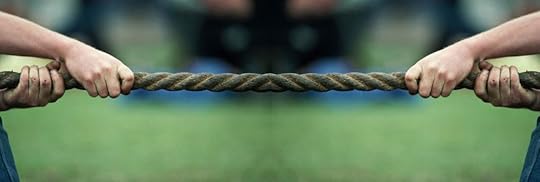
My friend’s circumstances weren’t specifically related to the Christmas holiday season — but this chimes for many people this time of year. December seems to me inherently contradictory. We get busier and speed up when our bodies (from an evolutionary perspective) are designed for wintering, slowing down, embracing the darkness—as our ancestors did in the days before electricity, going to bed as the sun set and sleeping until it rose again. While we’re still in the grip of a global pandemic, things might feel more contracted than normal but many people I know are still, this year, feeling the pull of obligation: that feeling of so many things to do and people to see, over the holiday season.
I asked my friend if she could think of her experience from another perspective. Instead of feeling like she is being tugged (pulled away), I asked her, could she think of it as dancing towards—or between—those tasks or people or things? Tugging has a sense of violence about it, an involuntary energy that comes from something, or someone, else doing the pulling. Things are outside of our control; we let others dictate our actions or behaviours. We are slaves to ‘should’ and ‘ought’.
Commonly, when we’re overloaded with obligations we can be pulled into resentment. If we can’t or don’t, let go of the too-many things, then we’re making an active choice to overload ourselves—even if, mostly, that doesn’t feel like choice. What does this say about us? Who or what are we choosing to be in that place of overload or too busy? Is there something we are trying to prove to ourselves or to others?
What would it feel like to be able to glide blithely through things, limbs moving fluidly through space, and that movement bringing with it a sense of joy?
Easy enough to say, perhaps— but how is it possible? It’s something I’ve been thinking about ever since that conversation with my friend.
How do we reframe our thinking to shift from ‘tug’ to ‘dance’, to take a step back and remind ourselves that we have a choice?
Tune in to the body
Whether we’re engaged in a tug of war or moving in a lyrical dance, we’re connected to our bodies.
We can use the body as a guide to our internal experience. How does the ‘tug of war’ play out in your body? If you’re in tug mode, and feeling discomfort or overwhelm, stop. Find the feeling in the body. Is your back stiff, or are your shoulders tensed up? Do you feel a constant knot in your stomach? How would you describe those sensations— the ‘screwed up shoulder’ or ‘tangled tummy’ feeling, for instance? It can help to pin down the feeling, apply a metaphor or give it a name.
What would it take to lighten up physically? How can you make the contracted parts ‘dance’ so they’re free of tension? I’m not talking doing about a full-on disco, ballroom or ballet dance. For me, the ‘contracting kaleidoscope’ sensation I have in my stomach when I’m in a place of stress gives way— when I actively loosen the contraction—into what I call my ‘shoulder blade waterfall feeling’ that feels a bit like having wings.
 Photo credit: Mary Markevich
Tune into how your body feels when it’s freer: what would you describe the sensations then? What does the movement of gliding, sliding, dancing feel like on the inside? For a moment, see if you can connect to that lighter place. You can even find a visual image that might help: think of swirling leaves coming off the trees in the autumn, or the eddy in a stream as it swirls downhill on its way to the sea.
If we consciously let go of tension in the body, we can often find a moment of respite from that urgency of feeling tugged.
Consider what you can let go ofBeing busy can give us tunnel-vision. At least, that’s what I experience. I get so blinkered by the things I need to do that I’m unable to take a bigger perspective when allowing a little space around things might make the tasks and responsibilities feel lighter.
Ask yourself: must I do ALL the things? Are there some I can put to one side and save until later? Is there anything you can delegate? Could you enlist other people for help (not always an easy one!)? Is it possible to pay someone else to take care of some of the things on your list, or swap or share resources with a friend?
Thinking about it, an effective tug of war means working as a team, in which each one has their own place in the overall choreography. When we allow in others in a combined collective force, there’s less effort. Then the tug becomes a dance – literally – as feet are aligned and everyone pulls in the same direction.
Who’s on your tug-of-war team?
Tap into the meaning and magicAnother way to find perspective and create space in the face of stress or tension is to think beyond our own circumstances. What is the meaning behind each of those tasks? This can help to filter the important tasks or duties from those that are less significant or even necessary.
For me, this means reflecting on the value of service inherent in each task. How does it align to my values? Being aware of the underlying meaning of each task—how it links us to others, how it creates, how it contributes—can help put us in the zone of magic: that feeling of connection to something beyond us, so that we are dancing in a space that is dance in a zone that is more expansive than our perception of our individual place in the world.


April 6, 2020
Waiting
One of my chosen three words for 2020 is ‘waiting’.
From here, a quarter of the way through the year, the time of its choosing feels like a different world. ‘Waiting’ brought with it a promise of expectancy and fullness, of calm. Waiting is not something I’ve practised much; it’s not something I’m good at (I wasn’t great at stillness, which was one of my words for 2019, either). My partner challenged me to begin a new practice, a ‘just waiting’ meditation, which involved simply that: waiting, in any one given moment.
 Photo: Sandro Figliozzi
Then we were tipped into the chaos of a global pandemic.
Waiting, now, takes on a whole new import for all of us. There’s a collective holding of breath. We wait in queues for the pharmacy and the supermarket. Life is on pause while we wait for the lockdown to be over, for the peak of the disease to pass. And we wait to see what emerges in the wake of this new coronavirus: perhaps a different way of relating to each other, a greater sense of kindness, a renewed sense of community. But we will also come out of this — as individuals and as a society — with a bruised kind of vulnerability, with first-hand and painful experience of grief, loss and fear.
Writing in this moment, I must acknowledge my own good fortune and privilege. I still (for the moment, at least) have an income; I have a safe, warm place to live and enough food. I am tearfully, immensely grateful for these things. These past weeks have renewed my relationship with gratitude, again and again, for small things that —just a month ago —I might scarcely have noticed.
I have seen that there can be a grace in this waiting; that ‘being good at it’ is inconsequential. The slowing down has enabled me to turn inwards. In this time of in-between, there is an extension backwards and forwards, into past and future. This waiting dredges up memories of happy times; it forces me to sit uncomfortably with things I fear. At the same time, I am wrenched into the present, where things are distilled into essence, where there is joy in a new experience of stillness, more time to read, to cook and simply to be. And where there is also fear of losing those I love, the acute ache of longing to see them again. To hold and be held.
 Photo: Victor M Gamero
My prayer is that I can embrace what this in-between can teach me. I sense I will learn things I can’t yet imagine. Then there are the things we will all need: acceptance and courage. Acceptance of loss – of those I know, love and live alongside; and a loss of the way things have been in my lifetime. Courage to face uncertainty, to step into the future with determination and a renewed sense of the spirit of creativity that illuminates the dark times, and allow us to make sense of them.
January 6, 2019
In praise of darkness: an ode to the stillness of winter
For several years now, I’ve embraced the habit of choosing three words for the year, to help me shape and define how that year might unfold. And this year? One of those words is stillness. I have felt it gathering, that need to be still, for the past few months. This year is a time to make that need more explicit, and the practice of it more conscious.
Finding stillness has always been a big challenge for me. In a busy life that involves juggling writing with an academic career and the things I’m passionate about – creative cooking, dancing, deep connections with those I love – across three different towns and cities, there isn’t much time to be still. I know I need it. It’s a crucial component of the Five Rhythms dance practice that I’ve loved for so long. Yet it remains a challenge.

At this point in the calendar, I associate stillness with darkness. I’ve just returned from rural Scotland, where I celebrated the turning of the year. Transitioning from 2018 to 2019 involved not just stillness but darkness, in a place away from the glare of too much artificial light, a place where the dark has its own illumination – that of the soul. Over that holiday, in which I slept in a beautiful, beamed barn in total blackness and where the silence was punctuated only by the call of the owls, I read Clark Strand’s Waking Up to The Dark. His book is a beautiful meditation on the significance of darkness on our lives and our consciousness as a planet. I’d urge you to read it, if you want to make space for contemplation in your life. Strand says this:
I have not described how darkness feels against the skin. Everyone has felt it, but in an age where consciousness itself is no longer consciousness, but only a by-product of watt-age, most people have forgotten the feeling of the dark.
The darkness fits the body so well that we might as well be entering the water when we wear it. It flows everywhere the light is not – across every bone and sinew, surrounding every hair. It hugs the shadow within a shadow and, when we are ready, lets down a milky richness white with stars.
We come from the dark, and we return to the dark. We are not merely in it but of it. The darkness does our thinking when we let it, and it is in the darkness in which we move.
Here’s to allowing stillness – and moving in the darkness – to nurture our thinking and creativity in 2019.
January 15, 2017
Words for busy and creative people: clarity
 My last post was about setting intentions for the new year, inspired by my recent reading, and the practice of choosing three words to help focus those intentions. Here, I reflect on the first word in the list of three: clarity. What role does it play in creativity, and how do we achieve it in order to best do the things we want to do?
The clarity of creativity
In Creativity: the psychology of discovery and invention, Mihalyi Csiksgentmihalyi suggests that ‘the creative process starts with a sense that there is a puzzle somewhere, or a task to be accomplished.’ It might be a conflict, a tension, a need to be satisfied. It might be driven by the need to achieve a goal or solve a problem. Sometimes the problem, or problems, emerge through the work — in moments of clarity or realisation of what Csikszentmihalyi calls ‘a gap in the network of knowledge.’ For artists, unlike scientists, the ‘goal’ may not always be apparent. Csikszentmihalyi gives an example from the career of Robertson Davies, a writer who, in the early stages of thinking about a novel, kept coming back to an image of two boys in a particular street in a village in Ontario (the village where Davies was born), one about to hurl a snowball at another. That novel would become Fifth Business, the first in a bestselling trilogy. Davies’ goal, Csikzsentmihalyi suggests, was to discover — through writing, not just of that book but of the others in the series — the significance of the setting, of that image and of the implications on the characters (and the story world) of the snowball being thrown.
Getting clear
Isn’t creativity, then, rather about the lack of clarity: the need to be (and be comfortable) with uncertainty until the insights arrive? Doesn’t it require the faith to keep doing the work, even on days when the work doesn’t yield anything certain? The answer is: yes, of course. Anyone involved in creative activity of any kind will recognise this condition. The true question is: how can we make the uncertainty bearable so it doesn’t paralyse us?
One way to achieve focus in the midst of uncertainty is to get clear about why we’re doing what we’re doing; cultivating awareness about how the work connects to our broader context — the who of who we are. According to Grace Marshall in How to be really productive, when considering the work we intend to do, we should first take an audit of our core values and assess the purpose of our projects. Everything starts with why, Marshall argues (drawing on Simon Sinek’s TED talk, Start with Why, which is well worth a watch if you haven’t already).

Flock of White-faced Whistling ducks flying in arrow form
But what about the days when the chaos in our heads takes over? When our heads are too crowded with other things: worries, concerns, things we need to remember, tasks we need to do? Marshall suggests that we remind ourselves of our ‘territory’ — by identifying those things we can control or do something about, and those that are beyond our remit.
To help with this, Marshall suggests an exercise adapted from Stephen Covey’s The Seven Habits of Highly Effective People. First, write a list of everything that is on your mind: tasks to do, projects you’re engaged in, things you’re worried about. On a large piece of paper, draw two circles, one inside the other. Assess each thing on your list, asking: ‘can I do anything about this?’ If you can’t, put it in the outer circle. This is your Circle of Concern: things that worry you, but over which you have no control. The inner circle is your Circle of Influence: things you can act on and do something about. This visual tool is a brilliant way of mapping your inner headspace, of assessing where your time and effort is going. How much wasted energy are you putting into things you can’t control? Once you see where you can exert your control, your purpose should be clearer.
With the best intentions, even when we feel clear in our creative purpose, it’s easy to get distracted. We all know that temptation to do anything (the washing up, the laundry, checking our emails) other than work on the creative task in hand. Marshall links this avoidance to clarity, too: that impulse to do the washing up/laundry/emails is simply a craving for a task that is clearer in its outcomes. Washing up is more certain and less scary than [insert whatever creative task you’re working on and struggling with here]. It isn’t necessarily that we need more patience for the labour of creative work, but that we need more courage. Recently, I’ve begun a habit of recording in my process journal when I feel the impulse to pull away from the writing, and noting the conversation I have in my head to keep me focused. I’ve found this a positive step to helping me get clear about my fears around creativity.

Staying clear
Being creative, then, involves being clear about the process and about why we are doing it. It also involves being disciplined with ourselves and others about what we can achieve in the time we have, preserving boundaries in order to achieve those things. It sounds easy in principle. So why do so many of us struggle to set boundaries? Because, as Marshall points out, ‘we think they are about keeping people out’ rather than protecting and valuing what is on the inside. In How to be really productive, she offers a whole range of practical suggestions for establishing clear boundaries and sticking to them (my personal favourite: practicing stealth and camouflage by finding somewhere away from your desk to work undisturbed).
To do our best creative work, we need to build what Csikszentmihalyi calls ‘habits of strength’: take charge of our schedules; carve out time for ourselves (especially when our energy is at its most efficient); to cut down on the energy of decision-making. Albert Einstein, for instance, always wore the same sweater and trousers — for the simple reason that wearing the same thing reduced the time and energy taken on deciding what to wear so that he could focus on the important things.
Ultimately, these habits can provide a scaffolding for our creative process, a support mechanism to lend certainty in the midst of work that is predicated on uncertainty. Above all, it helps us protect the work. Because, as Csikszentmihalyi writes in the conclusion to Creativity, what really matters is not the acclaim or status we’ve achieved but having lived a full and creative life.
For more on the work of productivity coach Grace Marshall, read her interview with @beprolifiko here.
January 4, 2017
Three little words: suggested reading for 2017
I love January, don’t you? Crisp, sharp mornings and cosy nights by the fire. I realise I’m in a minority as a fan of winter. But, at this time of year, I relish that feeling of emerging, mole-like, blinking in the dark. It’s a time when we can reclaim and rediscover ourselves. Everything can feel old-new. It’s a season for taking stock, and, of course, to start again.
 This festive season was especially hibernatory for me. It meant I took a proper midwinter holiday (as opposed to the trawl of travelling to visit lots of people). It also meant the luxury of lots of time to read. If, like me, you’re curious about the ways in which we can really engage with our purpose, then I highly recommend three of the books that were part of my Christmas reading diet: Brene Brown’s Daring Greatly, Mihaly Cziksentmihalyi’s Creativity and Grace Marshall’s How to Be Really Productive. Each, in its different way, is full of wisdom and valuable insights; perfect reading for renewal and reflection at the point when the year turns from old to new.

Following the cult status of his classic book Flow, Mihaly Cziksentmihalyi is the household name on creativity. In Creativity: The Psychology of Discovery and Invention he outlines the conditions that support creativity: the right environment, the creation of sustained focus — or ‘flow state’ — a key relationship between the creative individual and his/her social and cultural context. While not always the easiest of reads (the prose can be a little dense at times), the book demonstrates a dazzling breadth of psychological research.
For social researcher Brene Brown, being creative — as a leader, as a parent and as a human being — means first to be vulnerable, or to allow ourselves to be vulnerable. She argues that it’s impossible to be creative without it. Daring Greatly extends her brilliant work (in I Thought it Was Just Me and The Gifts of Imperfection) on shame as the key blockage to us realising or achieving our purpose. She exposes the cultural myth of vulnerability in our institutions and in our individual selves. It makes for powerful — and sometimes uncomfortable — reading.
In How to Be Really Productive, Grace Marshall has written a game-changer. Although tagged as a ‘business book’ , in fact there’s something for everyone, whether you’re a home-maker or business owner, entrepreneur or artist, self-employed or part of an organisation. It’s a business book shot through with mindfulness; a practical, how-to book with soul. Far from being a time management tool that suggests we should work harder or longer, it is a guide that encourages us to work at what is important: to identify, in the first place, the ‘why?’ of what we do.

I’m a big believer in choosing three words as a way into, or as shorthand to define, something. (For the last few years – inspired by Chris Brogan – I’ve started each year by selecting three key words to shape or set intentions for the new year. You can read here about my choice for 2016). So, in the following three blog posts, I’ll be revealing three words that, for me, synthesise these three books; three words that could also be used as key words, guiding principles or intentions for the year ahead.
I’ll reveal the first word next week. But, in the meantime, go ahead. Feel free to guess what it might be…
January 17, 2016
3 words for 2016
There’s something special for me about winter: the stillness; the turning inward and time for reflection. At the turn of the year I always try to reflect on the twelve months just gone and the ones still to come.

Image from www.photoree.com
I’ve never really been big on goal-orientated new year’s resolutions. But recently, inspired by Chris Brogan, I’ve started a ritual of choosing three all-encompassing words to guide me as the year turns and a new one begins. The ideal is to pick words that are relevant to every area of one’s life, to use them as waymarkers on the journey of the year; as tools for reflecting and taking stock.
In 2014, these were my three words: simplify, complete, clarify.
In 2015, I didn’t do this exercise. I wish I had. It was, in many ways, a tough year (but a year of some inspiring and positive changes too).
In 2016, my words are:
Reconnect
I aspire to this on many levels…with dance (which I love, and did not do enough of in the latter part of 2015); friends; a regular running habit; with myself, by allowing more time in my day for solitude and silence.
Surrender
Far from having negative connotations, surrender suggests a release – a giving up of trying to control things (time, the future, money, progress, tidiness and order, workshops) and instead trusting in intuition, exploration, the creative process and fun. It means cultivating a ‘good enough’ mindset and trying to shake off perfectionism that might not serve me. I also hope I can surrender a need to do everything myself; to accept help.
Expand
Mostly, this means expanding my horizons: trying new things and experiences, travelling more. Every once in a while, going beyond my usual habits and routines whether in my writing practice, or my teaching; or on a dance floor.
The idea is to have a regular check-in, as the year unfolds, to see how I’m doing with all these words. I’ll let you know how I get on but, in the meantime, what would your 3 all-encompassing words be for this year?
August 11, 2015
Literary Sisters: interview with Deirdre Quiery
This week sees the publication of another exciting debut by an author with whom I’ve worked closely as mentor and structural editor. It was a pleasure to work with Deirdre Quiery on Eden Burning. Set in 1970s Belfast, it traces the story of two families riven by conflict and yet, in the end, brought to a redemptive resolution.
 This might make it sound more like Romeo and Juliet than it actually is, though love is a vital element of the book’s message. It’s a hugely evocative read: pacy, atmospheric and with characters that appeal with their strident voices and strong sense of purpose. In fact, the writing is underpinned by a strong sense of spirituality, something that is a key component of Deirdre’s creative practice.
I’m looking forward to working further with Deirdre on her next novel, which is a companion piece to Eden Burning. Here, in the meantime, she talks about her debut novel, her writing process and the importance of home in a Mallorcan olive grove.
How do you juggle writing with other work?
It’s a great question. I work as a Leadership Consultant delivering workshop around the world on topics such as Coaching, Leading a Team, Conflict Resolution and Leading Change. These workshops are within the corporate world and a normal day where I am delivering would mean getting up at 5.30 am – the workshop finishing at 6.00 pm and sometimes the evening is spent having a dinner with participants which means I only get back into my bedroom around 10.00 pm. On days like these there is no space to write – so I don’t try.
However, I always have a journal with me – a notebook stuffed into a rather large handbag. This is where in spite of the business of the day I record before going to bed, impressions of the day – what has caught my attention or impacted my emotional world. Perhaps it might be the staff in the hotel, participants or something happening in nature. In this way observation of the world is still happening. This may be the seeds for something later in writing. For example, this morning in the hotel at breakfast I saw an elderly man peer into the breakfast room. He looked around and then walked away. He returned. I watched him. He seemed confused, uncertain, almost afraid. There was something about him which reminded me of my father who had dementia – a great vulnerability. I began to think of Paddy who is a character in my second novel “Gurtha”. Paddy has dementia and I wondered what this new stranger could teach me about the vulnerability and gentleness of Paddy. I found myself getting up from my seat, walking towards the door to find him. There he was hovering about outside, looking lost. I walked up to him and asked, “Can I help you?” He looked at me with a smile that would melt an iceberg and said, “I’m only waiting for friends who are coming down to breakfast at nine. I’ve been up from seven.” There was something in that encounter which definitely will impact in “Gurtha”. So although I’m not writing as such, I am observing and allowing my heart and mind to be touched by the world around me.
However, I have the fortune of being a freelance Consultant and that means on other occasions I may have an entire week without having to travel or to deliver a workshop. In those days I am very disciplined about writing. I still get up early (not at 5.30 am!) around 6.30 am. I have a coffee, go for a one hour walk in nature, when I think about the characters and plot in the book. I also drop that from time to time and try to experience the beauty of nature without thinking about what I am going to write. I come home and do 30 minutes of meditation – emptying my mind of all thoughts. Then I set an alarm clock for 2 hours and write. I have a second coffee and set the alarm again for two hours. I like to write between 1,000 to 1,500 words if I can. However, the next day I may delete half of those!
So the juggling of other work comes with seeing work as possible inspiration and being very disciplined about writing in the days when I have no formal work.
You grew up in Belfast during the Troubles and so inevitably Eden Burning is influenced by your own experience. Can you tell us about the process of sifting that goes on when you take material from ‘real life’? What remained the same and what did you choose to fictionalise?
I think this is a very significant question for a writer. My characters are definitely fictional. I believe strongly in the importance of this. However, it is also true that real life sparks the creativity for the creation of characters, plot and dialogue. I tend to take an essence of something and then use this as the base to create the scene. For example in the character of Lily there is an essence of my Aunt Muriel who I loved. She had a great sense of humour. However, Lily is no way like my Aunt Muriel – if you were to meet them both you would know they were very different people. That’s one of real fascinations of writing – you really get a sense that you are bring someone complete new to life. Of course they have touches from the past – just as we all do with our DNA – but we are unique. We are not copies of our parents.
Where it is a scene which has moved me in real life – it works in the same way. In real life our house was taken over and someone was killed in crossfire – but the characters created around that are all fictional – Ciaran, Lily, Tom and Rose.
So I allow whatever has moved me from a person’s life to inspire the characters, plot and dialogue. I feel this is in some cases an honouring of their spirit which can go unrecognised in life. However, my characters, plot and dialogue have to be authentic in standing alone in their unique creation.

There’s a strong spiritual strand to your work. By this I don’t just mean that you construct characters who subscribe to organised religion but that you want to get under the surface of the material and the everyday. Can you say a bit about how this is important to you?
Yes. It is true. I see a difference between spirituality and religion. Religion if not accompanied by an inner spirituality can lead to fundamentalism. However, I believe that there are different ways of experiencing the world. There is a level where we see things as objects with which we relate to and we either like them or we don’t. This includes seeing people as objects – sometimes to be used. You might call that a level of ego experiencing the world. There is another level where we see the world as it really is. I would call that a seeing with the “heart”. In that seeing we see the interconnectedness of everything. We don’t see separation but oneness. That for me is the spiritual connection – to know ourselves connected to nature, to others and ultimately to our Source – that which has created us and holds us moment by moment in being.
I think our lives are journeys to drop deeper and deeper into experiencing this oneness. In my writing I like to explore how that might be possible with the key characters and what gets in the way for them – which is also an important part of being human – failing along the way. I have a lot of sympathy for failure and respect for keeping going!
I have always been interested in what’s “real” and “the truth”. Our school motto was “Truth in our hearts”. In Northern Ireland during “The Troubles” I remember thinking that you didn’t know what was real. It was very confusing what to believe.
What’s the best thing about being a writer? And the worst?
The best if feeling that I am doing something that I was meant to do. I write and I don’t know whether anyone will like it and yet I feel as though I am meant to be writing. I have always felt that I wanted to be a writer.
The worst is the thought that maybe I’m deluded! The doubts flood in from time to time that maybe I shouldn’t be writing. But then I can’t think of anything else which would fill the gap.
Can you tell us a bit about the initial stages of your writing process – how you capture your ideas and how you tackle the first draft?
Eden Burning went through at least three drafts. I started the first draft by looking through journals I had kept for over 10 years. These journals contained thoughts, clips from what inspired me in my reading, writing poetry and dreams.
The first draft almost had a business feel to it. I called it “Beyond Vision and Values” and it was designed as a new paradigm for leadership in the corporate world. After I had written it, I knew that I wanted to write fiction. So I did nothing with the first draft other than have it printed off and filed it.
I then began the second draft which I called “My Favourite Flower is a Diamond”. I created a plot and characters and began to create fiction. Although it was rough writing, I knew this was what I wanted to do – to write fiction – not business books, not autobiography. I booked myself on an editorial workshop and started to study the art of creating plot, characters and dialogue.
How do you feel about the editing process? Do you love it or loathe it, and why?
I found it really helpful to receive feedback from you. This motivated me in carrying out the editing process. I felt exhilarated at pressing the delete button and seeing the book start to take more of a concise shape. With your help, I learnt the importance of editing and enjoyed it. You encouraged a “no fear” approach to the initial writing and a “no fear” approach to the editing. Having a positive attitude and support made the process motivational.
Where do you like to write best?
At home in Mallorca, sitting at my desk, surrounded by the cats and staring into the beauty of an olive grove.
Who is your most significant influence (literary or otherwise)?
When I was younger I liked Ernest Hemingway, D H Lawrence, Graham Greene. Today I like John Banville, Margaret Atwood, Julian Barnes, Iris Murdoch, Peter Carey and J M Coetzee. I also like to read the writings of John Main – a Benedictine monk. I find that if I really like an author I want to read everything they have written. I remember doing this with Enid Blyton and feeling that the world would never quite be the same because I had read everything she had written.
Where would you like to be in five years’ time? And in ten years?
Please could you tell me? I would like someone to tell me! I have made changes in my life based on the fact that I was too happy and thought that I needed to expand my range of experience and suffer more. I think that I have done that and so I am quite happy to going back to being happy! As you mentioned before I have a spiritual perspective and keep praying for guidance as to where I should be rather than where I want to be. No answers so far that I can interpret and so I stay where I am.
If you had one piece of advice to give to your fifteen year old self, what would it be?
Be more disciplined and say nothing at times (may not so good for a writer!) But didn’t Samuel Beckett say something about there is nothing to say together with the obligation to say? I would say to my fifteen year old self – see the value in silence.
Eden Burning is published by Urbane Publications and is available for purchase here from Urbane, here from Amazon and here from the independent publishing service, Compass.
Read Deirdre’s account of ‘the making of’ Eden Burning on the ‘A Lover of Books’ blog and her article on the background to the novel on www.writing.ie here.
June 9, 2015
A comic, cross-cultural road trip: Tying Down the Lion by Joanna Campbell

Continental road trips – at least for a family like the Bishops, who live in a semi in Audette Gardens – are rare in 1967. But Jacqueline’s mother, Birgit, is half-German and has long yearned to find her two lost sisters who live either side of the Berlin wall. So her father, Roy, packs the family (Mum, Dad, teenager Jacqueline, her brother Victor and Grandma Nell) into a beaten-up Morris Traveller and heads off to Germany.
It’s here that the epigram of Joanna Campbell’s wonderful debut, Tying Down the Lion, begins to make sense: ‘Remember, no matter where you go, there you are’ (Confucius). The journey to Berlin is a physical one that spans the time frame of the book. But there are a number of emotional journeys too. Through the course of the trip, Roy does battle with his ‘Bad Moon Girls’ – the characters who characterise his post-traumatic life after the war. Central character Jacqueline crosses from childhood (she is obsessed with spiders, which she studied in a past school project) into an adulthood in which she dreams of becoming a Biba model. And Birgit, reconciled with her lost sisters, must face the truth about her past. Each discovers that – like the Bluebird of Happiness – what they were looking for was inside them all along.
The novel is as much about divisions as it is about journeys: east and west Berlin, divided by the Wall that separates Birgit’s sisters Ilse and Beate; western democracy and eastern communism. But the subtlety and skill of Campbell’s writing is to question such easy binaries. Are the Eastern Berliners – with a scratched existence and far fewer resources – actually more ideologically free? Is it possible to reconcile different halves of the self, English and German, when Britain is still reeling from the fallout of the Second World War? Campbell beautifully captures Jacqueline’s struggle with this, as she attempts to make sense of the emotional complexities of female friendship: ‘Only half of me is a good friend. Half is bad. I’m composed of too many halves.’
Every incident that happens on the road trip, every revelation, both challenges and endorses Jacqueline’s perception of herself. The novel’s ethnographer, she records what she learns for a school project so that the more comic elements of the novel – the escapades of the journey – are spliced with first person accounts of Kristallnacht and Nazi persecution of the Jews. What Tying Down the Lion offers us is a cross-cultural road map. Unlike the passengers on the underground who must pass the ‘ghost stations’ dotted along the line from west to east, being forbidden to embark, we alight like tourists in east Berlin. Campbell’s precision in rendering setting is breathtaking. We travel with Birgit and Jacqueline through the border crossing on their way to visit Ilse in the east. We hold our breath when, on the way back, they are interrogated for their possession of western women’s magazines. We admire the ingenuity of the eastern Berlin housewives, and women like Ilse, who make do with little but remain cheerful throughout.
Tying Down the Lion is certainly a big-hearted, sprawling literary road trip, with pitch-perfect comic pacing and memorable characters. But the book also records an important moment in British cultural history. Grandma Nell might provide much of the warmth and comedy, but she also demonstrates the extent to which ignorance fuelled bigotry and xenophobia in post-war Britain. The image, later in the novel, of Nell bustling around Beate’s kitchen underscores the key themes of reconciliation and communication. In the end, Campbell’s book asserts the importance of family and love, of all different kinds. Like the silk spun by the female diving-bell spider in Jacqueline’s school project that is strong enough to hold down a lion, the ties that bind the Bishop family connect and endure.
Tying Down the Lion is published on 15 June by Brick Lane Publishing and is available from Amazon.
Read my interview with the author, Joanna Campbell, here.
April 30, 2015
Literary Sisters: interview with Joanna Campbell
Occasionally, as an editor, you come across a novel that really shines. Joanna Campbell’s debut, Tying Down the Lion (published on 15 June by Brick Lane Publishing) is one such novel. It came to me through Cornerstones (the consultancy for whom I freelance) and, from the very first page, the characters reeled me in. I found myself caught up in the exploits of a family on a quest (and a road trip) to Berlin. The book is a wonderful evocation of 1970s suburban British life, an exploration of cross-cultural politics and an exploration of the joys and complexities of family life. 
Joanna has already had a number of short story writing successes: a collection of her short stories was shortlisted for the 2012 Flannery O’Connor Award. In 2013 she came second in the William Trevor/Elizabeth Bowen International Short Story Competition and she has been shortlisted five times for the Bridport Prize. I’m delighted that she has found success in longer-form fiction too. Here she talks about short stories, novels and the importance of sleep!
You write short stories, as well as novels. Can you talk us through the difference in process between the short and long forms of fiction?
With short stories I tease out the essence of the characters within a moment in their lives, as if studying a blurred still from an ancient cine film. Capturing and pinning my people down is an intense process, like sifting through the chaos of a stranger’s dream. With novels there is time to follow the characters further, exploring diversions and detours, delving deeper into their past. The short story is the more painful and exhausting process because it is so concentrated. Arranging the words is like separating an egg, hoping to keep the white pure and unadulterated for the perfect meringue. The yolk can be saved for another time, a provision perhaps for a new story or a novel.
Which part of the writing process do you enjoy most? And least?
I love every single stage from initial idea to editing. When I begin a new piece, I do find the blank screen a little daunting, but it is a thrilling, self-imposed kind of intimidation.
I enjoy the variety of the writing life; for example, spending part of a day immersed in new ideas and the rest fine-tuning a chapter or polishing a completed scene.
What motivates you most when you’re writing?
Always, without exception, the characters themselves motivate me. Once I have invented them, they keep pulling me back to my desk. When they are well-established, my chief incentive becomes the wish to entertain the reader, who is another fictional person living inside me. Not an inner critic as such, but someone waiting for the writing to stir his emotions.
Tying Down the Lion is a story primarily about family, though it also touches on the politics of the East/West Berlin divide. Were you conscious, when you were writing the novel, of this interplay between public and private?
I became conscious of this interaction only once the Bishop family had taken shape on the page. In the beginning, I focused mainly on their life at home in order to discover who they were and how they interacted. As soon as Berlin rose up in the background, I saw how the family’s rifts and ruptures were reflecting the wider picture. It became vital to see them on the road—an opportunity to put their family ties to the test and therefore more exciting for the reader. As I was drawn into the Bishops’ story, the parallels began writing themselves and I became aware of them all only when I re-read the novel.
The characters in your novel are exceptionally well-drawn. Do you have a method for character development? Do you spend a lot of time thinking and planning or do you tend to dive straight in?
Thank you, Rachel. Everything I write is character-driven and I plunge in at the deep end without testing the water. Despite the huge presence of Berlin, Tying Down The Lion is about ordinary people. I tend to store fragments of everyone I meet, read about or just observe in passing. As a child I would never speak to anyone, but absorbed everything they said, as well as their mannerisms and patterns of speech. When I visited relatives with my parents and brother, I fell suddenly silent for hours, then exploded like a Doodlebug in the car going home, retelling the entire day and reciting the twists and turns of the conversations. I was always obsessed with how people behaved; the way they laughed when nothing was funny—even at a wake, how they cared as passionately about neighbours’ carbuncles as they did about the price of petrol, and why they always interrupted and finished each other’s sentences.
Tell us about your experience of editing Tying Down the Lion. How much did you cut or keep? What fundamental things changed between drafts?
After I sent the first draft to Cornerstones and you read the novel, Rachel, I began to see the wood for the trees. I realised I must take the Bishops out of their home and launch them on their journey much earlier in the novel—I had written over a hundred and fifty pages with them still straining at the leash, raring to go. I could see how exasperating it was for the reader, waiting to travel with this family on their dream trip, while their plans constantly shifted and stalled. I cut out thirty-five thousand words, axed one of the characters and set off to Berlin on page sixty-five, but still the build-up was too long-drawn-out and frustrating! Finally, there was only one option left—I began the journey on page one. It was such a relief. It felt like having a cooked pie instead of a lump of raw dough.
The editing experience has taught me not to fear leaping straight into the main action of the story. Having learnt to roll out the tarmac first, I was able to paint in the scenery as we drove along.
And how have you found the experience of marketing and promotion? Are there any bits that you particularly like or loathe?
I have a small presence within social media, but it doesn’t come naturally to me. I enjoy Twitter the most, especially the challenge of trying to say something worthwhile in so few words. It reminds me of flash-fiction, another form of writing I enjoy. I honestly don’t think I could promote a glass of iced water to a man stranded in the desert. (For example, in answer to your question about short stories, I probably should have added that I have a collection being published this year.) I love taking part in interviews like this, but I am not good at putting out unsolicited information about myself. I need to be invited, otherwise I’m afraid of seeming presumptuous.
You’re working on another novel at the moment. Can you tell us a bit about it?
Yes, I am having a wonderful time with another family, but this time they have been hit by an enormous tragedy—which takes place on page one! The fall-out from this dreadful event affects each character in a different way, but its main outcome is twofold: the thirst for revenge and the pursuit of love. I am writing this novel from several viewpoints, which is a gift for me because every time I start a new chapter, it feels like a fresh short story. The crucial time will begin when I stitch them together—seamlessly, I hope.

Name your favourite time off activity.
Sleeping! I start writing at five in the morning, too restless to be prone any longer, so my few hours of rest are quite precious. We have a miniature Shetland and an extremely irritable Irish pony, neither of whom are suitable for riding, but they desperately needed a home. I love them very much and enjoy the twice-daily walk through the village to visit them. And the time spent with my husband and three daughters is magical, mainly because we make each other laugh.
Where would you like to be in five years time? And in ten?
In five years, I hope to be where I am now; sitting at my desk and playing with words. That would be heaven. It would be marvellous if one or two more novels could be published by then and, more than anything, I hope my words will have entertained a few people and that the characters will linger in their minds. In ten years, I hope to be an experienced writer of several novels whose bones don’t creak too loudly in the chilly dawn.
If you had one piece of advice to give to your fifteen year old self, what would it be?
I would love to tell her to carry on being herself. I believe that when we are children, we are unashamedly ourselves, without a trace of inhibition or pretence. But adolescence seems to introduce a sense of needing to change, to impress and to fit in with other people’s expectations. In my late teens, I became ashamed of being quiet and shy when I should have celebrated it. My hermit tendency is conducive to being a writer. And observing people, rather than pretending to be sociable and gregarious, is useful fodder for story-telling. If I had remained true to myself, perhaps I would have begun writing sooner. Now I am in my fifties, I am far closer to being the person I was as a child, someone I lost when I started growing up.
Thank you very much, Rachel, for giving me the opportunity to answer some really thought-provoking questions.
To find out more about Joanna’s work, you can visit her website and blog. You can also follow her on Twitter (@PygmyProse) and Facebook.
Tying Down the Lion is available from 15 June from Brick Lane Publishing as well as from Amazon.