
Tim Robbins's Blog
June 10, 2026
Hello world!
Welcome to WordPress. This is your first post. Edit or delete it, then start writing!
The post Hello world! appeared first on Tim Robbins.


October 14, 2020
The Ringer: Tim Robbins Opens Up About ‘The Shawshank Redemption,’ ‘Top Gun,’ and More
On ‘10 Questions With Kyle Brandt,’ the award-winning filmmaker remembers discovering the talent of Jack Black and discusses his new project, ‘Bobbo Supreme’
By Kyle Brandt | Oct 14, 2020 | 8:31am
Tim Robbins competes on 10 Questions With Kyle Brandt. He shares behind-the-scenes stories from The Shawshank Redemption and discusses his experience winning an Academy Award, how he discovered the talent of Jack Black at a young age, his new project, Bobbo Supreme, and much more.
TweetOctober 11, 2020
Bobbo Supreme launches on Patreon
President Bobbo Supreme is an infantile, narcissistic lounge singer, game show hosting, narcoleptic racist; an unhinged id running for reelection and unwilling to cede power if he loses. The billionaire recording artist and leader of the free world is in the final push of his re-election campaign. Tortured by periodic dreams that range from glorious fantasies of his prowess as an athlete to nightmares of utter failure, President Supreme struggles to maintain a grip on reality. As the Election Day gets closer, chaos erupts throughout the country as right wing militias, aligned with the White House, clash with protestors.
https://www.patreon.com/TimRobbinsPresents
Become a Patron!TweetOctober 1, 2020
Variety: Tim Robbins to Launch Trump Satire and Podcast ‘Bobbo Supreme’ (EXCLUSIVE)
By: Brent Lang | Oct 1, 2020 | 11:41am
[image error]Film Servis Festival Karlovy VaryTim Robbins thought he’d come up with a timely idea for a new comedy.
The subject of his new satire would be an unhinged billionaire-turned-president who uses the Oval Office to sow racism and division. Robbins’ film would focus on his struggles to maintain his grip on power during a tumultuous year in which he faces an uphill climb to re-election. Parallels to Donald J. Trump are obvious and intended, Robbins says.
“It’s definitely Trump,” he told Variety. “But it’s the Trump behind the scenes — the one from the unsourced reports of him belittling aides and behaving in an even more narcissistic fashion.”
Initially, Robbins reached out to “The Big Short” writer and director Adam McKay about lining up financing for the feature film. But the pandemic upended those plans, making it nearly impossible to secure backing and complete the film by Election Day on Nov. 4. That sent Robbins back to the drawing board. His creative solution has enabled him to deliver an October surprise of his own. “Bobbo Supreme,” his incisive look at power and politics, has been re-conceived as a five-episode podcast.
Robbins said he gradually became convinced that the best way to respond to Trump and the country’s rightward lurch was with humor.
“It’s what autocrats fear most,” said Robbins. “Satire and humor gives us a deeper understanding of what’s going on in our world. It’s also important as a great release for people who are trapped in a cycle of news that is despairing and hard to listen to. It’s a welcome relief from the reality we are dealing with every day.”
The actor also tapped his rolodex of friends and past co-stars to assemble an A-list cast. In addition to Robbins, who plays Bobbo, the voice cast includes Jack Black, Isla Fisher, Alfre Woodard, Ray Wise, Ted Levine, Patton Oswalt, Kerri Kenney-Silver, Tom Lennon, Rita Brent, Haley Joel Osment, Riki Lindhome, Maribeth Monroe and Sasheer Zamata. The group, most of whom were quarantining in their homes during the shutdown, assembled from 35 different locations for four days of recording. Robbins felt it was important that everyone record their parts at the same time in order to better capture comic timing and so the performers could feed off of each other.
“We were juggling a lot of different time zones, but we figured it out,” he said. “We had people recording from Utah, New York, Los Angeles, Georgia. They were in broom closets, living rooms, bathrooms — just wherever they could get a signal.
The project also went through prep, recording and post-production entirely remotely.
“Bobbo Supreme” shines a mirror on the chaos of the past few years — there are rightwing militias, Supreme Court appointments, CEO shakedowns. Much of it set to original music and songs that were written and performed by Robbins and his brother David Robbins. The two previously collaborated on “Bob Roberts” and “Dead Man Walking,” two of Tim Robbins’ previous directing efforts.
Robbins spoke with Variety a day after the presidential debate — a clash between Trump and Joe Biden that was described by one CNN commentator as a “s— show.” The Oscar winner said he believes that Trump will ultimately lose the election, but that headaches around counting ballots during the pandemic may lead to a chaotic transition.
“I think our podcast is going to remain relevant beyond the election,” said Robbins. “Unfortunately, there’s going to be a prolonged period of time when we don’t know who the next president is.”
“Bobbo Supreme,” which Robbins is calling an “aural immersive experience,” will be made available on Patreon, a podcasting network, on Oct. 8. Robbins is also working with the New York Film Festival to have an event tied to the podcast’s release.
Robbins serves as the writer, director and producer, and Lisa Rudin serves as producer. Starburns Audio is their production partner, with Brian Baldinger and Jason Smith as head producers. Brendan Lynch-Salamon is sound designer and associate producer, and Jessica Gutierrez is audio engineer for the project.
Robbins enjoyed the experience of making an audio movie of sorts and is actively looking to turn two or three other screenplays that he’s written into podcasts.
TweetSeptember 11, 2020
The NY Times: 20 Theater Figures on How to ‘Revolutionize’ Their World
End unpaid internships. Set term limits for leaders. Get real about inclusion. Take performances to the streets. Say yes to joy, and no to couch plays.
By: Jennifer Schuessler and Scott Heller | Sept. 11, 2020 | 7:30 AM
Whoopi Goldberg had a suggestion: Stop calling Broadway “The Great White Way,” she proposed on “The View” in June, and nickname it “The Great Bright Way” instead.
Merely symbolic, or a meaningful recognition of unconscious racism? Following the pandemic shutdown and Black Lives Matter protests, the proposal by Goldberg (a five-time Broadway performer) was one pointed challenge to change among many buffeting the American theater this summer.
Here, six months after most stages went dark, 20 theater figures — many far from the heart of the commercial sector — offer their own suggestions. They have been edited for space and clarity.
“Pledge to stop supporting productions that are not inclusive, diverse or equitable when it comes to pay, hiring and opportunity. It will mean more due diligence, but our money speaks.” — T. OLIVER REID, actor and co-founder, Black Theater Coalition
“Producers, entertainers and creatives who began in the theater and have gone on to ‘make a killing’ on Broadway or in Hollywood should help to sustain the community by creating a pooled fund with the excesses of their wealth to provide medical insurance and universal basic income for theater-makers who need it.” — JAY STULL, playwright and director
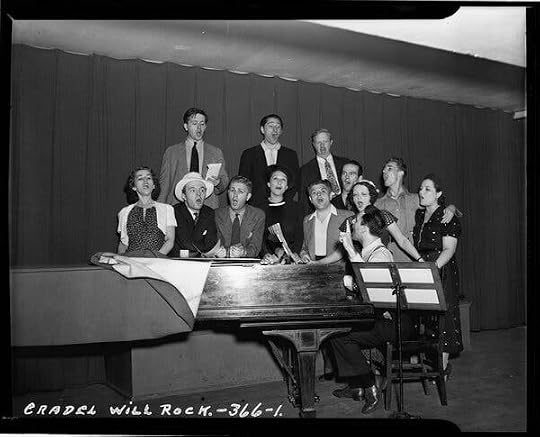 Cast members in “The Cradle Will Rock,” a play written by Marc Blitzstein and directed by Orson Welles as part of the Federal Theater Project in the 1930s.Credit…Library of Congress.
“We need a new Federal Theater Project, a national arts program in all 50 states as ambitious in scope as the original New Deal-era program. Make federal funds available for a working corps of artists charged with putting their skill to use in service of their local city. Commission local writers in all 50 states to write local plays. Encourage theaters to bind their fortunes to the wider community — partnerships with hospitals, schools, YMCAs, parks departments, libraries and local restaurants.” — LEAR deBESSONET, artistic director, Encores!
“Challenge the theater industry’s leadership model. Let us consider a model where there is more than one artistic leader in place, or a model where there are term limits for leadership staff.” — JORDANA DE LA CRUZ, co-director, JACK
“Eliminate unpaid internships and low-paying apprenticeships. Too many organizations rely on exploitative labor practices that condition young theater workers to devalue their personal and professional worth. If theaters truly want to cultivate a diverse work force, they need to make sure early career opportunities aren’t limited to the most wealthy and privileged candidates.” — LAUREN HALVORSEN, dramaturge and writer
“It’s time to reopen. More people are flying because they have friends who have flown and lived to tell about it. Compelling discounts at first. A credible testing system in place. Masks. Selling every other seat for a month or two. Intrepid New Yorkers will be the first, as they were after 9/11. Then the more watchful New Yorkers. Then the tourists. People need to see other people entering and leaving the theaters. Little by little this will seem normal, not frightening.” — ROCCO LANDESMAN, producer
“Assuming that theater as we know it still exists, I would love to see more small, community-focused theaters getting funding and media attention. The primary impact of Covid-19 will be to worsen the already unacceptable inequalities of our society, and our current elitist pipeline shouldn’t be treated as the only valid form of theater in this country.” — YOUNG JEAN LEE, playwright
“I hope to see and be part of more works that are made to span traditional theater venues, digital media and the streets. Performances that might have components designed specifically for the theater and for our TikTok feeds, or a musical that spills out into the streets as a protest.” — NIEGEL SMITH, artistic director, the Flea
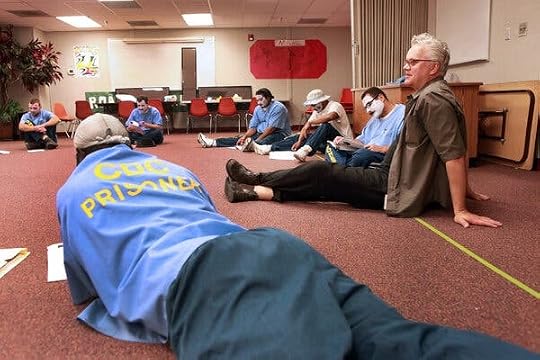 Tim Robbins, at right, leading an Actors’ Gang workshop with prisoners in 2011.Credit…Monica Almeida/The New York Times
“When theater returns it must return with danger. I think of roving bands of actors, post-plague, performing mock mystery plays on the street that lead, eventually, to a theater where people assemble.” — TIM ROBBINS, actor and artistic director, The Actors’ Gang
“I hope I never have to see a couch onstage again.” — RAQUEL ALMAZAN, playwright and president, Indie Theater Fund
“The theater industry is gasping for diversity (honesty), for patience (listening), for reparations (action). I hope for a theater industry that prioritizes the artistry and truth of the people over the influences of the elite.” — KUHOO VERMA, actor
“We need health care for our freelance artists that is not dependent on weeks worked per union requirements.” — MARIA MANUELA GOYANES, artistic director, Woolly Mammoth Theatre Company
“White supremacy, ableism and the tyrannical effects of capitalist time have been ruining theater since well before Covid, but with no opening nights on the horizon, we have the opportunity to identify them, rout them out of our practices, and at long last reinvent the way we make our work. Theater has the power to revolutionize. Our methods matter as much as our message.” — ELINOR T VANDERBURG, playwright and co-creative director, Fresh Ground Pepper NYC
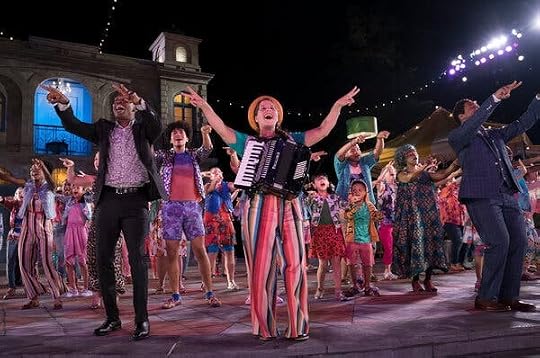 Shaina Taub as Feste in “Twelfth Night” at the Delacorte Theater, a Public Works production that featured professional actors and community groups.Credit…Sara Krulwich/The New York Times
“We have to keep prices low and make events free, be willing to travel to where people are rather than ask them to come to our spaces, and use our new digital capacities to reach audiences beyond our immediate geographic area. We’ve also got to make theater that matters and establish our usefulness in this new world. That doesn’t just mean important and serious themes, although we need those; it also means we have to spread joy, the celebratory and communal nature of the theater, to a much larger community than those who enjoyed us pre-Covid.” — OSKAR EUSTIS, artistic director, Public Theater
“We should replace our high-speed, cookie-cutter, season-driven approach to artistic development with a wholesale investment in poetry and tragedy, the deepest and truest responses to the world’s horrors and to the wonder and fragility of human life. How? With real support for artists, giving them the time and resources they need to make complex, meaningful, and challenging work, and by subsidizing tickets so that all audiences can join them.” — GIDEON LESTER, artistic director, Fisher Center at Bard
“Let’s build systems for the delivery of our services that are not predicated on hierarchy or scarcity, so that storytelling may be restored to its proper place as an essential service for the practice of life.” — NIKKOLE SALTER,actor and playwright, board chair of Theatre Communications Group
“We playwrights have a new obligation — a happy one, I might add — to start exploring stories that up to now have lived in the corners of our society. And not just for the sake of tragedy. Surely there is comedy in the wearing of masks. Of lives turned upside down overnight. In getting through dinner with your 28-year-old son who is living back home again. Comedy always comes surging out of change and angst. We just have to look for it.” — KEN LUDWIG, playwright
“I’ve been streaming a ton of content from home and as a text-based director I love watching plays with captions and having the language right in my ears with headphones. I hope that we continue to prioritize access post-pandemic.” — LAVINA JADHWANI, director
“Theaters that had to make incredibly difficult and painful decisions to reduce staff during this shutdown will have, and should take advantage of, the unprecedented opportunity to rebuild with a much sharper focus on ensuring that our organizations are more diverse, equitable and inclusive than they have been historically.” — JOSEPH HAJ, artistic director, Guthrie Theater
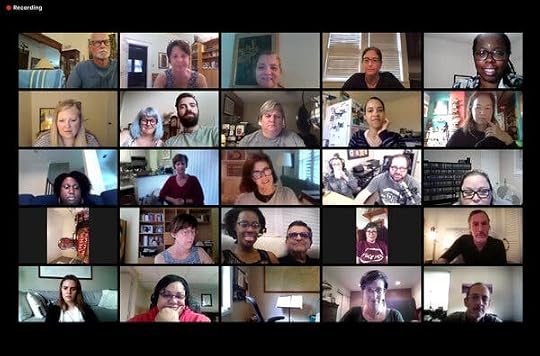 Audience members participated in a conversation after “Equitable Dinners,” a series of events produced by Out of Hand Theater in Atlanta.Credit…Sara Krulwich/The New York Times
“If this pandemic has shed light on anything, it’s the invaluable role that technology plays in keeping us connected despite being physically distant. Theaters should institutionalize media production departments. We, as theater artists, must couple our herculean creativity with technology in order to ensure that we can continue to bring our stories to our audiences uninterrupted.” — PSALMAYENE 24, playwright and director
TweetMarch 14, 2020
New Zealand Listener: Dark Waters: A damning account of DuPont’s water pollution
By: Sarah Watt | March 14, 2020 | 3:14 PM
DARK WATERS
directed by Todd Haynes
Far From Heaven director, Todd Haynes’ latest is a gripping story of corporate greed.
West Virginia, 1975. Young people are skinny-dipping in a river, oblivious to the filthy film on its surface. A boatload of shady-looking officials shout at them as they carry on hosing away the pollution under cover of night. The oily substance is soon revealed to be the by-product of chemical company DuPont’s illegal dumping in the state’s waterways, where it is being drunk by Wilbur Tennant’s cows.
As Tennant (a storming performance by Bill Camp) watches his animals die gruesome deaths, he harangues corporate lawyer Rob Bilott (Mark Ruffalo), who, ironically, has built his career on defending such companies, to take up the case.
As if there weren’t enough troubles in the world, this horrifying true story, based on several investigative articles and Bilott’s memoir, portrays how the US chemical giant has contributed to an increasingly toxic planet for more than half a century.
It takes a good screenplay to put corporate law on the silver screen and make it interesting – file boxes of documentary evidence aren’t as inherently exciting as witness-stand testimony – but thrillers such as Michael Clayton and The Insider included enough personal peril to enthrall and appall the viewer. Erin Brockovich had Julia Roberts’ Oscar-winning turn and a memorably snappy script. In comparison, Dark Waters is a low-key affair, centered on Ruffalo’s quiet but captivating performance as the gently principled Bilott. The well-written film still gets its point across and serves up plenty to ponder.
It also boasts an impressive supporting cast, which includes Anne Hathaway as Bilott’s wife (slightly feistier than the usual obligatory long-suffering spouse), Tim Robbins’ law-firm boss and William Jackson Harper (Chidi from The Good Place, sadly underused).
Director Todd Haynes, whose award-winning Far from Heaven was a color-drenched delight, paints this film in murky greys and browns underscored by rain and snow, which befits the increasingly grim subject matter. From Haynes’s eclectic body of work, Dark Waters is more akin in style and substance to his Safe, in which Julianne Moore played a suburban housewife who falls ill from multiple-chemical sensitivity.
Rather than rely on the flashy, here Haynes simply lets the terrible facts speak for themselves. It’s not a fun watch, but it is an engrossing indictment of commercial greed and disregard for human life.
TweetMarch 9, 2020
EXTRA: Tim & Jack Henry Robbins Reveal What They Banned on ‘VHYes’ Set, Plus: Their Political Views
March 9, 2020 | 5:01 PM
“Extra’s” Jenn Lahmers sat down with Tim Robbins and his son Jack Henry Robbins as they promoted their new film “VHYes.”
The nostalgic film was recorded on VHS, leading to a major no-on on the set. Tim shared, “We had a rule on set: No magnets! Because if one of those cassettes gets near a magnet, it completely ruins the tape.”
The duo also discussed politics. Watch!
TweetMarch 6, 2020
Jimmy Kimmel Live: Tim Robbins on Delivering Pizza & Working with His Son
March 6, 2020 | 11:36 AM
Tim talks about touring with his theatre company, doing Q & A’s with audiences, which of his movies he gets asked about the most, delivering pizza in Beverly Hills, and making his new movie VH-YES with his son Jack.
March 2, 2020
Mountain Democrat: ‘The New Colossus’ director Tim Robbins shares his views
By: Thomas Frey | March 2, 2020 | 10:51 AM
[image error]Tim Robbins, center, Academy Award winner and director of “The New Colossus” will facilitate an in-depth discussion following the two performances at the Harris Center for the Performing Arts, March 3 and 4. Tickets are available online at harriscenter.net or from the Harris Center ticket office at (916) 608-6888. Courtesy photoNoel Stack and Thomas Frey
Features editor and staff writer
The Actors’ Gang brings “The New Colossus” to Folsom’s Harris Center for the Arts, 10 College Parkway in Folsom, March 3 and 4 — a moving tribute to the nation of immigrants. The Mountain Democrat spoke with Academy Award winner Tim Robbins, director of the production and Actors’ Gang founding artistic director, about the production’s origins, why he likes having emotional roles and the power of hearing immigrants’ stories.
Question: Was there a reason you decided to perform this production at this time?
Answer: “We started it five years ago during the Syrian Refugee Crisis. We’ve been performing it off and on for a while.”
Q: What do you want the audience to talk about after the show and after the Q&A? What’s the topic you want on their minds?
A: “I want an audience to think whatever it wants to think. I don’t ever subscribe to the idea that I want an audience to think in one certain way. The great beauty of theater is that it creates dialogue. If you do your job well, it creates a vibrancy from a dialogue.
“Entertainment can be various things. Entertainment can be a prestige that distracts and makes everyone happy for a while and then everyone is happy after the show. That’s a legit thing to do but it’s not what The Actors’ Gang tends to do. We tend to do plays that resonate deeply with audience members, that tell stories … reflective of their own experience of the world that they are living in. There are their own concerns. Their own common emotional connections to stories have a lot to do with the way we present theater.
“At the end of the show I come out and I talk to the audience about where they are from and I ask people to start sharing their stories or their own ancestors’ stories, immigration or what it was like to be a refugee. We’ve heard some incredibly inspiring stories.
“The experience that happens after … we hear these stories, it kind of empowers the audience to think about their own ancestors. After people share, what happens in the lobby afterward is pretty cool because those who didn’t get a chance to share or were too shy to share around other people end up staying and talking about their relatives. I would say that we’ve been experiencing that pretty regularly.”
Q: How was it received when the idea was floating around before it actually became a production?
A: “I have a very diverse company in Los Angeles. Several actors for whom English is a second language, people who were immigrants or sons and daughters of immigrants. I had been looking to do a piece with them. We started talking when we saw what was happening with the Syrian Refugee Crisis and started asking ourselves what it is to be a refugee. Who are refugees? Who are we? What is our story?
“I encouraged 12 of the actors in the company to write either their own story or their ancestors’ story of immigration. What I found is that they all found a common story — a story of needing to get away from a dangerous situation in order to get a better life for themselves or their future generations.
“Another common story was what kind of courage it takes and what kind of strength it takes to survive that journey. We started to weave them together into a story — 12 different refugees from 12 different time periods speaking 12 different languages. The first time we did it, we saw immediately how deeply it resonated with the audience. It was only after two or three performances that we realized we really needed to talk to the audience because they were staying after the show and sharing their own experiences. Let’s make that part of the play. Let’s make the audience part of the play at the end. Really we are telling their story.”
Q: Have you traced back your ancestors’ story?
A: My grandfather did many years ago. John Robbins was the first Robbins to travel to America in 1640 in Connecticut. He died in 1660. His grave still exists.
“My mother’s family came a little bit later up through the South. They came from England and Ireland. They (lived in) Mississippi and Kentucky and up in Missouri. Both of my grandparents grew up in the West. My father’s family were homesteaders in Washington state. My mother’s mother is actually a different story of migration — a woman who was cultured, forward-thinking, independent. (She) played violin for a string quartet … had a family that she could no longer tolerate (because of) racism. Particularly a brother named Doug who was a flat-out bigot. She chose to leave and go to California.”
Q: In speaking with the audience, have you ever found a story so captivating that you wanted to weave it into your production or encourage them in some way to write it down?
A: “We have been hearing so many amazing stories. Here is what we are doing, we started in North Carolina and we have a bunch of cameras with us. Every night after we do our talk … and we hear some of these stories from the audience, we invite many audience members back who want to share their story and we have been filming them. So we have a whole backlog of them — incredible stories we are going to figure out how to share. I don’t know whether it will be part of a film version of ‘The New Colossus’ or whether we are going to do an independent project that’s a documentary that’s about immigration in America.
“Extraordinary stories. On two separate nights in North Carolina. Two separate stories, both in Italy, of women that were promised to men that they didn’t want to marry, they took the dowry and bought a boat ticket and came to the United States. Of course, the relative is telling it with great pride.
“Heard a story of this kid who tried to get legal migration, early 20th century, a boy who traveled alone. He had an address of his relatives pinned to his shirt (but officials) wouldn’t let him in so the kid jumps off the boat, swims to shore, hides out in horse stables … is homeless. Doesn’t have the address of his family anymore because it got wet in the water, has to survive on his own. He is 9 years old. Eventually, a family adopts him. That gentleman said it was his great-great uncle and he was one of the founders of Teamsters.
“Another story also of people who helped — a ship’s captain that came into Ellis Island and there was a quota, a per month quota that had already (been) exceeded. The ship got turned around. There were 10 days until the next month started and its quota would begin and the people at Ellis Island told (the captain) to take them back to their origin country. And the ship’s captain instead went out to sea, fed his passengers for 10 days, then first thing in the morning on the first of the month, he sails into New York Harbor — the very first boat of the month and gets everybody in.”
Q: Why is the production called “The New Colossus?”
A: “Well there is a poem called ‘The New Colossus’ by Emma Lazarus that is on the base of the Statue of Liberty. It’s a poem that I find deeply inspiring. The famous lines are ‘Give me your tired, your poor, your huddled masses yearning to breathe free.’ But the lines after that are equally strong. ‘The wretched refuse of your teeming shore. Send these, the homeless, tempest-tost to me, I lift my lamp beside the golden door.’
“In other words, we are a strong enough country to take people who are in trouble that need help, who are homeless, who are troubled, who need us. That kind of strength is what we possess in this country. Not only will we let them in but we will guide your safe passage with a light.
“That for me always represented what this country was about. It’s not like the hateful rhetoric of immigrants has started in the past few years. This has been around forever. Every single wave of migration was met with racism, with xenophobia, with hateful rhetoric. It’s a time-honored tradition of politicians since the beginning of time, divide and conquer. As long as people are fighting with each other they won’t notice how corrupt we are in the way that we run things. This device is nothing new. The Italians met it when they first came. The Irish need not apply. You should see some of these racist cartoons from the late 19th century about Italian and Irish immigrants. They were made into this kind of demonized race of people. That poem is for me, the counter balance to that hateful rhetoric.”
Q: Do you find that sometimes the discussion after the performance turns to this immigration issue or do people generally stick to their stories?
A: “Last night we had a guy say to us that there was a guy he knew that was just arrested by ICE and is being held in detention. We’ve heard stories of illegal detentions; we’ve heard stories of moving where they are incarcerating people. Two nights ago we heard a story of a father being ripped away from his children, his children crying in the street. It does come up in discussion because people have a vested interest in it.
“We don’t tell people what to say and we don’t censor anybody. People are willing to stand in front of other people and testify and I’m all for that. That is what a free and open society should be about. We have had nobody that has stood up and defended what is happening right now. That might be pretty telling.”
Q: Are there challenges in balancing a career in movies and television while also serving as the artistic director for The Actors’ Gang?
A: “It’s challenging to run a nonprofit for sure. It’s a difficult thing. Trying to maintain an organization that does an immense amount of volunteer work, getting funding for that.
“We are currently in 13 state prisons running 15 yards. We have rehabilitation programs; The Actor’s Gang has been doing this for 12 years. We’ve managed to figure out a pretty effective rehabilitation — 89% reduction in prison infractions for people who have been through our program.
“We also run educational programs in 12 Los Angeles area schools — elementary, middle and high school. We do after-school programs.
“We do reentry programs for formerly incarcerated people who are entering society. We do work in the juvenile detention centers and we produce anywhere from four to eight shows per year plus touring. It is quite challenging balancing all of that with a career in Hollywood.
“But I have found that throughout the years, it’s been 38 years now, the thing that has kept me most grounded and centered and focused and growing as an artist has been The Actors’ Gang. It’s a great lesson in humility to be able to walk into a theater and either perform for or direct for a live audience. You can’t cheat that. They are going to tell you how they feel by their reaction at the moment. Oftentimes in Hollywood, you can get in a little bubble, a self-congratulatory bubble. The only reaction you hear is from people you’re paying to represent you and that can be unhealthy sometimes.”
Q: Is there a particular reason that you have had a career drawn to emotional roles and emotional films and emotional theater?
A: “I haven’t done a comedy for a while but I love doing them. I’ve done some cameos in ‘Austin Powers’ and ‘Anchorman’ and those types of movies. So I like doing them. I enjoy comedy. I like satire. I like telling stories that resonate with people — that move people.
“The great thing about theater and movies, as well, is you get people in a room and they have an opportunity and this is particularly true in theater. You have an opportunity to create a live moment with a new audience every night. Every night is going to be a different chemistry. At that moment you can create a community. You can create a shared emotion. In other words, people can laugh together or they can cry together; they can be angry together. They can pop into a collective fear and they can share that regardless of their politics or their points of view or who they are or where they are from.
“In these times in such a decisiveness, it is such a gift to have a theater and a theater company where we can travel around and create a common experience for people — a common shared emotion. That is something that unites people. After uniting them through emotion, to then speak with them and share their stories, it’s something that I feel very thrilled by right now.”
TweetFebruary 28, 2020
NewsRadio KFBK: “The New Colossus” in Folsom with Oscar-Winning Actor Tim Robbins
By: Kitty O’Neal | February 28, 2020 | 9:11 AM
Listen to Kitty’s interview with Academy Award winner Tim Robbins.
The national tour of The New Colossus comes to the Harris Center Tuesday, March 3 and on Wednesday, March 4 at 7:30 pm (same time both days). Tickets are $28-$52; Premium: $62. Students with ID $12. Tickets are available online at www.harriscenter.net or from the Harris Center Ticket Office at 916-608-6888 from 12 noon to 6 pm, Tuesday through Saturday (please note new hours), and two hours before showtime. Parking is included in the price of the ticket. The Harris Center is located on the west side of Folsom Lake College campus in Folsom, CA, facing East Bidwell Street.
https://www.facebook.com/HarrisCenter...THE ACTORS’ GANG BRING THE NEW COLOSSUS TO FOLSOM; DIRECTOR TIM ROBBINS WILL BE IN THE AUDIENCE AND WILL LEAD POST-PERFORMANCE DISCUSSION
“Give me your tired, your poor, your huddled masses yearning to be free”—it’s a personal story in The New Colossus, as cast members share the stories of their families coming to America
In this intensely physical production, cast members from The Actors’ Gang tell their ancestors’ stories in twelve different eras, all woven into a single narrative about escaping an oppressive homeland and being drawn to the beacon above Ellis Island. The play was work-shopped during the Obama years in a reaction to the Syrian refugee crises; the director of the show, Academy Award-winner Tim Robbins told the Los Angeles Times, “I looked around at our company, and we have people from all over the world, so I asked everyone to really think about their own families and how they found their way here.” Performed in twelve languages, each used sparsely, and interspersed with live music, poetry, and kinetic movement, the play concludes with a question — who are we as a country? “The New Colossus holds a theatrical mirror to the nation” (Los Angeles Times).
Following each Folsom performance, an in-depth discussion will be facilitated by the director. Tim Robbins will lead the cast and audience in a conversation centering on the immigrant and refugee experience, during which audience members will be encouraged to share their own personal stories, as well as their immediate reactions to the work. The Harris Center is excited to welcome Mr. Robbins to Stage One; his availability is subject to change.
TweetTim Robbins's Blog

- Tim Robbins's profile
- 15 followers
