Allan Hudson's Blog
November 29, 2025
The Story Behind the Story with Gianetta Murray of Great Britain.
We are most pleasedto have Gianetta back with us today.

Her latest novel isnow available and she’s going to share the good news with you.
She’s been a guestbefore and if you missed her previous visit, please go HERE.
Read on, myfriends.
Gianetta has spent most of her life, like her protagonist Vivien, as atechnical writer and librarian. She grew up in the heady tech boom of SiliconValley, but for the last twenty years has lived a more peaceful existence inSouth Yorkshire, England with her British husband and two or more cats. Sheplays various musical instruments and enjoys watching Hollywood musicals aswell as doing an annual rewatch of Buffy the Vampire Slayer, and she hopes oneday to be able to afford a seat close enough to the stage to be spit on byJonathan Groff.
Title: : A Vivien Brandt Mystery

Synopsis:
“Wicked stepmother” wasn’t something Vivien wanted on her resume (orher CV).
But six months after moving from California to join her Britishhusband in a quiet Yorkshire village, Vivien and her cat Sydney are confrontedwith a volatile 24-year-old stepdaughter and the sparks start to fly.
It certainly doesn’t help when they join a local protest and a deadbody turns up.
Once again Vivien must work with her enterprising neighbors to solve amurder and clear her family’s name, which isn’t easy when you’re surrounded bythose who “’ear all, see all, and say nought”!

The Story Behind the Story:
This sequel to Moved to Murder was already outlined before I finishedthe first Vivien Brandt mystery, Moved to Murder, and was inspired byvarious events in the local press (although not the murder or the corruption parts).While the first book is about Vivien’s culture shock directly after moving toYorkshire, this one is more about adjusting to her new family situation and herburgeoning career.
Because I was fictionalizing actual events, it was also an adventurein what could and couldn’t be said without alienating my local audience, sowe’ll see how that goes!
The writing itself flowed better this second time around, but it alsorequired more research into the functioning of local British politics, thearcheology of South Yorkshire, and issues related to step-families; researchwhich I enjoyed immensely. You can take the librarian out of the library, but…
I hope everyone enjoys the result.

A question before you go, Gianetta:
Scribbler: What has been the most enjoyable about your writing journey? The least enjoyable?

Gianetta: I love love love the plot creation and the writing, working out the puzzle of how the murder happens, how it is solved, and where there are red herrings (and how the story will involve the cat, of course!). This is why I decided to spent my retirement not really retiring, because I enjoy what I’m doing so much.
But as with most of us introverted author types, the marketing isn’t something I look forward to (except when people like Allan make it so easy and I don’t have to put makeup on or comb my hair). Going to book fairs and working out ads and effective keywords, etc., are just not what floats my particular boat. It would be ever so lovely if people the world over would simply recognize my genius and wait with bated breath to purchase my next work of art. 😉
An Excerpt from : Dug to Death: AVivien Brandt Mystery

“Waituntil you hear what I learned today from the archeologists,” Sara said.
“Ah,yes,” said Geoffrey. “You had lunch with the young man leading the dig, eh?”
“Keith,”she confirmed.
“Andhe was helpful?”
“Notso much, to tell the truth. But I also got to talk to two of the women workingwith him, Lucy and Phoebe, when we went back to the dig after lunch, and theywere more forthcoming, especially after Keith left to run an errand.”
Vivienquirked an eyebrow at her stepdaughter. “What was wrong with Keith?” she wantedto know.
“Frankly,I think Keith is hiding something. When it came down to it, he didn’t reallywant to talk about the dig at all. He avoided my questions, claiming he wantedto know more about me instead.”
“Maybehe was just being polite? Trying to put you at ease?”
“No,it was definitely avoidance. I don’t think it was about getting into myknickers. At least, not entirely.”
“Sara!”her father protested, but his daughter just grinned.
“So,what did the other two tell you?” Vivien wanted to know.
“Theyconfirmed my doubts about Keith, as a matter of fact. They said he’s been verysecretive about his findings in that one trench, he won’t allow anyone else towork it, and that he’s always still there when they leave. He’s logged someminor pot shards in the official record, but nothing major, nothing to justifyhis suspicious behavior.”
“Maybehe’s on the developer’s payroll and wants to hide some important find so theproject isn’t delayed, or cancelled, even,” Vivien hypothesized.
Saranodded. “It could be that. But he doesn’t seem worried about the rest of themfinding anything, which you’d think he would be if that’s his concern.”
“Hmm,true,” Geoffrey added. “So maybe it’s something he’s already found and wants tokeep to himself?”
“Alsopossible. Although any ambitious archeologist would be happy to be associatedwith a major find. But one thing’s for sure, if he’s found something that wouldstop the dig, he doesn’t seem inclined to give it up.”
“Wellthen,” said Vivien, “we may have to have another talk with Mr. Myers tomorrowto try and find out what’s going on.”
“Leaveit to me,” Sara responded. “I think I know how to make him talk.”
“Nothinginvolving torture, Sara. Or the sacrifice of your good name,” her fathercautioned.
Shelooked at him with wide eyes and fluttered her lashes for emphasis. “Why,Daddy, how could you think I’d stoop to such levels?” she teased.
“Hmph,”Geoffrey responded. “Just be careful, please.”
Sararose and started to clear the dishes from the table. “I’ll clean up, and thenI’m going to the coven meeting with Tabitha. I told her I was interested in therituals from an anthropological point of view, and she said she’d let meobserve.”
“Areyou thinking of becoming a Wiccan practitioner?” asked Vivien.
Sarashrugged. “It’s more about being a good anthropologist than ablessed-wanna-be.”
Vivienlaughed as they all cleared the table together before Sara waved goodbye andleft her father and stepmother to an evening of rewatching The X-Files.Geoffrey had a thing for Scully, and Vivien occasionally indulged him withoutadmitting she found a young Fox Mulder equally easy on the eyes. After threeepisodes they found themselves exhausted from trusting no one and retired.
Whenthe phone rang just after midnight and Sara told them she was being held at thepolice station under suspicion of murder, Vivien was glad her stepdaughtercouldn’t see the “I told her so!” look on Geoffrey’s face.
This novel soundslike a winner, Gianetta. Thanks for being our guest this week. We wish youcontinued success with your stories.

Thank you to all ourvisitors and readers.
Feel free to leave acomment below.
We’d love to hearfrom you.


November 22, 2025
The Story Behind the Story with Author Chantal MacDonald of Moncton, NB, Canada.
We are more than happy to have Chantal back asour guest this week.

She has a new book out and it is generating alot of interest. The Scribbler is most fortunate to have her share the goodnews with you.
She’s been with us before and if you missed hervisit please go HERE.
Read on, my friends.
A teacher bytrade, Chantal MacDonald began pursuing a writing career with the first book inthe Sadie Jones Series. She has a Master of Arts in English Literature from theUniversity of Ottawa and has spent over fifteen years teaching students in bothvirtual and brick and mortar classrooms. Passionate about loving people,Chantal volunteers on her church frontline team and mom’s group. In addition tothe Sadie Jones Series, she has released two picture books. One about a cleverlobster from Prince Edward Island—Lester the Lobster and the Great Escape—andthe other about an ordinary lobster who paints her shell blue to feel special—Lorrainethe Lobster Feels Blue. Chantal is a married mom to three young children, anamateur baker, and a resident of Moncton, New Brunswick, where she enjoyscopious amounts of seafood.
Title: APromise on the Windy Shores

Synopsis:
Sometimes the journey home is the hardest oneof all.
Afterten months in Mwanza, Tanzania, Sadie Jones returns to her hometown ofLunenburg, Nova Scotia, carrying more than just souvenirs. She brings homequestions, heartache, and the weight of uncertainty of where she truly belongs.When devastating news from Africa arrives shortly after her return, Sadie’semotions unravel, and she’s forced to confront the ache of loss and thestruggle to move forward.
Navigatingdecisions about school, starting a new job, and her growing romance with TomCarter, Sadie finds herself caught between who she was, who she is, and who shelongs to become. While grief once again threatens to overwhelm Sadie’s hope,gentle whispers remind her of something deeper: God’s promises still hold.
Asher heart wrestles and heals, Sadie must decide what it means to moveforward—into love, into purpose, and into the fullness of who she was createdto be.
A heartfelt story of grief, love, andbecoming, A Promise on the Windy Shores is for anyone learning to trust again—even when the winds of life blow you intoan all too familiar storm.

TheStory Behind the Story:
This book has been the culmination of almost six years ofwork. When I first had the dream to write a novel, I knew where I wanted mymain character—Sadie Jones—to start, and I knew where I wanted her to end. WhatI did not know was everything in between. I originally thought that I would beable to conclude this series in three books, but it has turned into four.
As a “pantser” (a writer who tends to let the story leadover story mapping), I have been surprised at some of the places that mycharacters led me. It has been both a struggle and a joy to let the writing bea process of discovery.
With this book, in particular, it has required anenormous amount of research. The first third of the novel is set in Africa. Itwas important to me to be as accurate as possible to the culture and thelocale. Since I had never visited the city that is used in my novel, I reliedheavily on the information and anecdotes provided for me from a dear friend wholives in Mwanza.
I have been stretched by the process of writing thisbook—and the entire series for that matter. The writer who has emerged at theend of A Promise on the Windy Shores is a far cry from the woman whopicked up a computer in 2020 with glossy-eyed aspirations to write a book. Icannot wait to see what I learn and how I grow from my next project.
Chantal’s Website: please go HERE.

A question for you Chantal:
Scribbler: What has been the most enjoyable about your writing journey? The least enjoyable?
Chantal: The most enjoyable part of the writing journey has easily been sharing these stories with others. When you spend so much time in these fabricated worlds, the characters and their problems become a part of you. Watching others become invested in these characters and love them the way that I do has brought me so much joy.
The least enjoyable part has been the struggle to maintain accuracy and consistency throughout my books (and series). Over time the details get fuzzy. It’s hard to remember what colour eyes someone had, or what their middle name was, or even the layout of a specific home. But these are the details that readers (especially those who reread) will catch. I did not want any inconsistencies to pull my readers out of the story so it required keeping notes or rereading my previous works to ensure that I kept the storyline true to what had been previously written.
An Excerpt from A Promise on the Windy Shores:

Sadie Jones had just finished showering whenthe power flickered, buzzed, and dimmed before the room went dark. Silencereplaced the familiar hum of electricity inside the modest African home—acommon occurrence, yet one that Sadie still found frustrating. She stood with atowel wrapped around her small frame, water dripping from her body onto theconcrete floor, and peered through the dusty windowpane over the bathroom sink.Sadie felt grateful the morning sun was beginning to crest over Mwanza—a majorport city in the southeast African country of Tanzania. At least in thedaylight she would be able to see her way around.
Third time this week, she thought. Glad I was able to finish myshower. Looks like it will be fruit for breakfast.
Checking the clock on the wall, Sadie knewthat if she did not leave in the next fifteen minutes, she would be late tomeet up with her team for their forty-five minute trip to the village healthcentre. She threw on a t-shirt and a billowy skirt that hung to her ankleswithout much care as to whether or not the outfit matched. Her life was nowabout function over fashion. Looking in the mirror, she ran her fingers throughher damp auburn curls. She would have to let it air dry today. Flipping herhead upside down, Sadie wrapped a silk bandanna tightly around her head to holdthe curls in place. Her roommate, Sasha, had taught her the trick and thebandanna had been a gift from a local woman working with the organization.
The apartment was tiny, yet cozy. Sasha wasstill sleeping in a room behind the closed door off the kitchen. She was aboutten years older than Sadie, native to Mwanza, and worked nights as a medicalaid. Sasha had graciously agreed to host Sadie on a temporary basis partlybecause Sasha believed in the mission of the organization and partly becauseshe needed the extra money.
Sadie threw a few necessities in a canvas bagand tossed it over her shoulder before stepping outside onto the concrete stepin front of her temporary home. The morning dew clung to the leaves of themango tree, which was casting a shadow across the front walk. A soft breezefluttered her skirt, bringing some relief from the heat and humidity that wasalready causing her to perspire, even at this early hour. Thankfully, theregion was in a rainy season, which meant some form of precipitation wasinevitable.
Scanning the road, Sadie saw no sign of herride. She checked her watch to make sure she had not misread the clock.
African time, she thought with a sigh. It was a commonoccurrence, yet one that she still struggled to internalize. The relaxedapproach to arrivals, start times, and departures was something that had beenan adjustment for Sadie. Being a type A recovering perfectionist, Sadie spentthe first couple months of her time in Mwanza trying to make everything movefaster—meetings, projects, social gatherings. But, as had been pointed out toher on multiple occasions by the locals, things happened when they happened.She could no more change an entire culture than she could stop the sun.
Buy the book HERE.
You might enjoy these also:


Thankyou for being our guest this week, Chantal. We wish you continued success withyour stories.
.jpg)
Thankyou to all our visitors and readers.
Feelfree to leave a comment below.
We’dlove to hear from you.
November 15, 2025
The Story Behind the Story with Sean Paul Bedell of Halifax, NS, Canada.
Let’s welcome Sean back!

A true gentleman and a talented author, we aremost keen to have him return to tell us about his new novel.
He’s been with us before and if you missed hisvisit, please go HERE.
Read on. My friends.
Author ofthe novel Somewhere There’s Music, Sean Paul Bedell has been writing andpublishing for more than 30 years. A longtime paramedic and captain with thefire service, he lives with his wife Lisa and their golden retriever, Maggie(Margaret Atwood), in Dartmouth, Nova Scotia.
Title:

Synopsis:
In this gritty and emotional exploration of the human condition, adedicated paramedic, Steve Lewis, faces the devastating aftermath of afatal collision that casts a dark shadow over his once-passionatecommitment to saving lives. Plagued by guilt and grief, he finds his career,family, and very existence hanging in the balance as he navigates thecomplexities of trauma both personal and professional. As Steve grapples withthe high stakes of his job amidst the scrutiny of a community that admires yetquestions him, each life he saves rekindles his passion for his work, remindinghim of the profound connections he can forge through compassion and care. Acompelling and visceral journey of personal redemption and triumph overadversity, Shoebox explores the human spirit's capacity forhealing.

TheStory Behind the Story:
Two things droveme to write Shoebox. First, readers of my first novel, Somewhere There’sMusic, frequently told me they liked the paramedic-ambulance-firstresponder angles in that story. Also I had a bunch of paramedic stories – sad,funny, poignant – from my own career as a paramedic. I worked ambulance formany years in the Halifax-Dartmouth area and along Nova Scotia’s Eastern Shore.As I wrote Shoebox, experiences that my fellow crew-mates and I hadshaped some of the anecdotes in the book. Overall though, Shoebox is astory of redemption after tragedy, and the healing that hope offers.
Website: please go HERE.

Scribbler: Who was your favourite author, or story, growing up, Sean?
Sean: Growing up, I read everything I could. When I was twelve, my mother gave me a boxed set of classics. I immersed myself in those books. Exciting, exotic worlds enchanted me. My favourites were Treasure Island and Robinson Crusoe.
An Excerpt from: Shoebox

Chapter One
My ambulance was based at University Station, theoldest f ire station in Halifax. In the year I worked there, I’d seen thesandstone building’s interior walls transform from frost-caked blocks in thewinter to oven-like bricks in the summer. A brass pole that connected thefirefighters’ sleeping quarters to the bays downstairs was cordoned off now,out of service. Two of the old-timers at the station still polished it everyweek so it gleamed when the sun hit it through the arched windows. If I everdid use it, to speed up my time getting to my ambulance, I’d look like thatserpent, curled fetus-like around the pole. I’d pop out at the other end intothe truck bays, freshly born to dispense miracles everywhere, sent out into thechaotic world to save lives. I would be one with the image emblazoned in theblue, six-pointed star of life crest on my ambulance, the same imageembroidered on the shoulder flashes of my uniform shirt. Instead, to get to myambulance, I’d bound down the narrow staircase that had three twists, each witha tiny landing. Legend said the staircase was designed during the days of horsedrawn fire apparatus. The tight turns prevented the horses from climbing up thestairs. I didn’t care about blocking horses but wanted to get to my ambulancewithout breaking my neck or knocking myself out.
University Station was smack in the centre ofdowntown, a hotbed of the wildest calls a crew of medics could get dis patchedto. It was at the crossroads of the wealth of Halifax’s South End and the gritand despair of its downtown. Calls were either dramatic or mundane. They rangedfrom stints fighting with newly liberated drunken university students out ofsight of their parents for the first time; to the breathing or heart problemsof the old, rich elites; to the homeless and addicted who had skidded here fromacross the province and toted their demons with them. I worked withFletch—Gideon Fletcher. He was a tall medic with a tidy grey beard. Hisdeliberate, erudite manner of speaking, along with his appearance, made himseem like a mis placed professor from one of the city’s universities.
Fletch stocked a bird feeder so he could watchchickadees and jays from the window upstairs in our quarters. Once, when wewere coding to a call from Graham’s Grove to downtown Dartmouth, Fletch jammedup the brakes by Sullivan’s Pond to let a mother duck and her ducklings crossthe road. A lot of medics would have roared through with a trail of feathersbehind them; they would have plowed through anything to get to the call to savethe day. That call past the duck pond turned out to be anything but an emergency.Fletch was down to earth, wise, kind, and didn’t take any bullshit.
Buy the book HERE.
This one too, maybe?

I’m looking forward to reading your new book, Sean. Thanksfor being our guest this week.
We wish you continued success with your writing.

Thankyou to all our visitors and readers.
Feelfree to leave a comment below.
We’d love to hearfrom you.November 8, 2025
The Story Behind the Story with Author Chuck Bowie of Fredericton, NB, Canada.
Good news! Chuck is back with a newbook!

He’s been a popular guest on theScribbler many times and it pleases us to have him return.
If you missed the previous visit, please go HERE.
I’m a fan of his stories and I’m sureyou will be too.
Read on, my friends.
Chuck is both a writer and an author, with fourteen books/novelspublished and one just underway. Chuck has recently settled into exclusivelywriting mysteries: Suspense-Thrillers and Cozy Mysteries. All of his books arewell-reviewed, and he has sat on the boards of the Writers’ Federation of NB,The Writers’ Union of Canada, is a Fellow of the Kingsbrae InternationalResidency for the Arts, as well as being acknowledged as a member of theMiramichi Literary Trail.
His thriller series chronicles the adventures of Donovan, aninternational thief for hire, while his cozy series (written as Alexa Bowie)follows the adventures of the owner of an arts and culture centre as Emmasolves the crimes that swirl around her centre: The Old Manse.
Chuck lives in Fredericton as well as beside Miramichi Bay. Thrillernumber Six, Lost in London is now available, with Number Seven underway.
Title: , an Old Manse Mystery

Synopsis:
The Problem, the Secret, the Decision.
Emma’s friend Thom delivers a luxury cruiser from Canada to theBahamas, whereupon he promptly disappears. His employer hires Emma to go to theCaribbean to find him. Thom, however, left his girlfriend Sophie behind in themidst of a Christmas tiff, so…has he been abducted, or has he merely cut offcommunication with everyone?
During the voyage south a secret emergers: the boat may be usedfor an illegal, very profitable purpose. Now Thom knows this secret, but issubsequently kidnapped for his troubles. Thom has this information, but cannotshare it. Meanwhile, Emma must risk her life, navigating the beautiful butdangerous Caribbean waters in search of her missing friend. Will she find him?Will she fall prey to the dark side of the sandy beaches, blue sky, and waters?

The Story Behind the Story:
I’ve written a story—a series, really—about a small town and thewonderful, eccentric people who inhabit the tight-knit community. With theunfolding of each plotline, we come to know our heroine, Emma, but also get toknow (and love) the characters that bring the town to life.
So, when a beloved character leaves town and disappears, everyoneis naturally worried about him and want to help. Emma must leave her home atthe most inconvenient time of the year: Christmas, but as the British say,‘Needs must.’ I do add a separate narrative arc set in the town: it isan Old Manse Mystery, right?
Please go HERE.
Chuck is alsopresent on FaceBook/Insta, as well as on Threads.
 Scribbler: Who was your favourite author, or story, growing up?
Chuck: As an introvert, I read many, many books growing up. I took to series, early on, starting with L. Frank Baum (Wizard of Oz) and Trixie Beldon, and then on to Rex Stout and JR Tolkien. More recently, I’ve fallen in love with the Edinburgh mystery writer Kate Atkinson. Her writing is brilliant, convoluted, hilarious (at times) yet quite dark. She’s the best.

An Excerpt from Death Between the Cays:
* * *
“I’ve got a surprise.” Bobby’s facecarried a smirk. “Back at the boat.”
“Iwas hoping it would be food, but those two men loitering outside of your boatare painting a different picture. They are staring at us as if we are expected.Bobby, are they expecting us?”
“Absolutely.Remember how I tried to tell you about our project, and how it will make usrich? These guys are gonna explain it in such a way that no one could refuse,or want to. We’ll have a sit-down in a minute, so prepare to get excited.Please give them a chance to wow you, okay?”
Thomwas about to say ‘I already told you I’m out,’ but they had already reached theboat. The men shook hands without taking off their sunglasses, and Bobby washalfway up the gangplank before Thom could even say hello.
Thethree men followed Bobby onto the boat, and they sat on the bench seats infront of the transom. The first thing out of anyone’s mouth came from thestockier of the two strangers. He spoke with a French accent, and he had thatweathered face borne of many years under the tropical sun. The man directed hiswords to Bobby. “You told him about moving some product?”
Thomstood up. “No, Bobby told me nothing, and that’s because I am going home on thefirst flight I can catch. I can’t help you gentlemen out, since something hascome up and I can’t stay. Please don’t say anything, so we can easily forget weever met.”
Thestocky man with the French accent looked over to his partner. The partner’seyes were locked on to Bobby’s (Thom presumed this was taking place, since thesunglasses had not dropped). And Bobby stared goggle-eyed at Thom, silentlybegging him to change his words.
Thomdid not change his words.
Bothmen remained inscrutable. Bobby’s level of discomfiture rose with everyheartbeat. Thom stood, waiting. What else could he do? He knew that this littlebit of knowledge they shared might already be dangerous, and the next momentmight very well rest in Bobby’s hands. Eventually—Thom realized he had beenholding his breath—Bobby spoke.
“Look,guys,” his voice was in sell mode, persuasive and low, “Tommy here is justalong for the ride, you know, one last trip on the boat he loves. He says he’snot interested in making a few bucks. He’s got girl trouble, and that’s all hecan think of.”
Thomfelt himself nodding, desperately willing his face to look as placid and notquite as knowledgeable as a two-year-old heifer.
“Look.Tommy and me, we’ll head over to Moore’s Island and I’ll join you guystomorrow, okay?”
Thestocky man spoke in a lighter tone, easing the pressure. “That works. Listen Bobby, we have to go now, but beforewe do, can we have a word? In private?”
Thomwas quick to nod. “I’ll just head back to the beach. Can’t get enough of that,right?” He turned and left before anyone else had a chance to say a word. I’lljust go see if Edward is gone. I never did get his phone number. By thetime he got back to the shoreline, though, both Edward and his boat and motorhad vacated the beach. He spied an outbound ferry rounding the end of the longwharf, a boat attached by a rope. Ah. There he goes. I hope I’ll see himbefore I return home.
Thomsat on a patch of sand to ponder his possible dilemma. If I go back to theboat (where my passport is sitting in a bag with my possessions), those twogangsters just might kill me on the spot. And since my so-called new friendBobby is in thick with them, I now have to re-think my relationship with him.Do I cut and run with just my wallet, or do I take them at their word and partways after Bobby and I have dinner this evening? He wouldn’t hurt me, would he?And it’s not as if those two guys in sunglasses are coming over with us.
Withthat being said, though, what do you suppose they want transported? In theolden days, it would have been rum-running, using boats like that gaff-rigschooner, The Bluenose. Nowadays they’d use a cruiser like mine (well, she wasmine) to haul maybe drugs, or cash for laundering, or worse. What’s worse thandrugs? Either way, the less I know about it, the better. He stared up in the general direction of the sun,squinting. He was sweating, and it may have been the sun, but the issue mightalso be found a mere hundred yards away. It was time to get back to the boatand begin the hundred-and-forty mile trip over to Moore’s Island, check intothe resort and book a flight home. The shine had definitely worn off histropical vacation and it was time to leave.
Buy the book HERE.
 To catch up on Donavan's latest caper, please go HERE.
Thankyou Chuck for being our guest once more. We wish you continued success with your writing.

And a BIG thank you to all our visitors and readers.
Feelfree to leave a comment below.
We’dlove to hear from you.
November 1, 2025
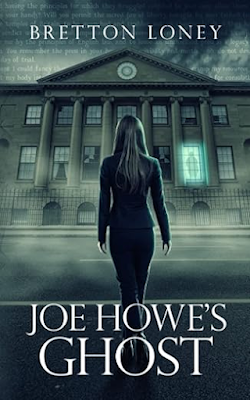
The Story Behind the Story with Author Bretton Loney of Halifax, Nova Scotia, Canada.
Bretton is backwith a new book!

He’s been a guestbefore and we are most pleased to have him return. If you missed the previousvisit, please go HERE.
This new storysounds intriguing and I’ll be in the lineup for a copy.
Read on, myfriends.
I am a novelist and non-fiction writer who in 2022 published thenovel, Joe Howe’s Ghost. I have published two previous books that werenominated for Whistler Independent Book Awards: in 2018 for my first novel, TheLast Hockey Player and in 2015 for a biography, Rebel With A Cause: The DocNikaido Story.
A journalist for more than 20 years in Nova Scotia and Newfoundland, Ialso worked in communications for the Government of Nova Scotia for 16 years. Ilive in Halifax with my wife, Karen Shewbridge. For more information, pleasesee go HERE.
Title: UnsettlingTime

Synopsis:
In Unsettling Time, I tell the storyof Ryan Treiber, aSaint Mary’s University lecturer, who falls while walking in downtown Halifaxand is unexpectedly hurtled back in time to 1749 and the city’s first days.
Incapacitated by the side effects of time travel, he is found by AubryDe Courcy, a member of Governor Edward Cornwallis’s council. As Ryan strugglesto survive in an eighteenth-century settlement, he and Aubry learn of thebrutal murder of a servant.
The authorities refuse to investigate the crime because of theservant’s alleged homosexuality. That injustice launches Ryan and Aubry on thehunt to find the killer.
The intelligent and intriguing Mrs. Athena Dunfield, her Blackassistant, Joseph, and Ryan's new Acadian friend, Michel, join Ryan and Aubryon the quest to solve the murder. Ryan’s growing feelings for Athena make hisnew life increasingly more appealing.
Unsettling Time offers intimate insight into colonial Halifaxand the people who shaped it.

The Story Behind the Story:
In 2013 while I was reading Jon Tattrie’s great book, Cornwallis:The Violent Birth of Halifax one particular passage fired myimagination. It described how many of Halifax’s main downtown streets,including George Street, were the first clearings carved out of the dense woodsby the English colonists when they arrived in 1749. That passage was the seedfrom which the idea for this book grew.
I wanted to tell the story of Halifax’s founding from a broaderperspective to include poor English settlers, Acadians, people of Africandescent, and the German and Swiss Protestants who first settled in Kjipuktuk (Halifax),located in Mi’kma’ki, the ancestral and unceded territory of the Mi’kmaq.
I inserted an inadvertent time traveler from our era to providecontext that characters of that era would have no knowledge of to again givethe story broader perspective. I created the murder mystery to propel the storyalong and to introduce various historical characters of colonial Halifax.
Website: Please go HERE.

Scribbler: What has been the most enjoyable about your writing journey? The least enjoyable?
 Bretton: The most enjoyable part of my writing journey is learning. I do a lot of research for my books and I really enjoy that aspect of the process. The other very enjoyable part is putting together all my various thoughts, bits of dialogue, scenes I want to capture and characters I’m developing into a hopefully cohesive and enjoyable story. When all that begins to come together it is a wonderful feeling.
 An Excerpt from : Unsettling Time

Chapter 1
July 16
A man awoke with his head in a muddy puddle. A turd
floated near the corner of his eye. He lifted his head
in horror and snorted out water. The ground started to
spin. A deafening ring pierced him, and hot bilerushed up
his windpipe and spewed out. He fell with a thud,missing
the puddle, and landed on ground coated with leavesand
pine needles that imprinted on his wet cheeks.
He revived to the thwack of an axe and the screech of
a tree falling close by, its branches whipping theforest floor
a few metres from his face.
“Are you okay, master?”
A strangely dressed young man looked down on him,
concerned, face dripping with sweat. He wore a stained
tricorn hat, a loose-fitting shirt, breeches, andbuckled
shoes. A large axe balanced on one shoulder.
As the man carefully lifted his head, all he could see
were trees and rock and bush. Not a building, road, or
streetlight broke nature’s dominion. He noticed acrude,
narrow path making its way downhill toward a glint of
water.
The young man’s gaze left his as he heard another man
stride purposely toward them.
“Master De Courcy, I found this man lying on the
ground. Yet I swears he was not here a moment ago when
I passed by to look for the surveyor for meinstructions.”
Still on the ground, the man looked from the young
man to the newcomer, who wore a tricorn hat along witha
long coat, vest, and breeches. The newcomer was abouthis
own age with a pleasant face but sunken, tired eyes.He
struggled to get to his feet.
“Are you alright?” asked the newcomer. “You appear to
have fallen into the mire.”
“Don’t know what happened,” he said, before
collapsing onto his knees and falling face first, oncemore,
into that same pool of dirty water.
“Woodsman, this fellow is oddly dressed, do you not
think? Long breeches, a peculiar shirt, and no hat. Hedoes
not smell of drink. Probably done in by the sun. Helpme
take him to my quarters,” De Courcy said. He and the
woodsman grabbed under the man’s arms and, swerving to
and fro like drunken revellers, dragged him downhill.“And
for God’s sake, do not mention him to the soldiers. Wedo
not want him shot by a sentry. They are nervousNellies
and fear that a French spy or Mi’kmaw warrior lurks
behind every tree. When he awakens, I will sort outthe
rights of it.”
When he regained consciousness, hewas lying on a
simple wooden cot, looking up at the ceiling of a
tent. Once his head cleared a little he realized itwas a
large sheet of white canvas draped over a few polesmade
from thick branches, cut and stripped of bark. No oneelse
was inside.
Outside there was a riot of birdsong, conversations
among men with English accents, and the crack of axes
against trees. He peeked out the end of the shelter.It was
dusk. A redcoat soldier with tricorn hat walked past
cradling a musket in his arms. Campfires glowed in asmall
clearing crowded with tree stumps.
The flap on the other side of the canvas shelter
snapped back, and the man he heard called De Courcy
poked a head in and smiled.
“You have finally stirred. You were out for most ofthe
afternoon. Are you better?”
He did feel better, but where was he? The last thinghe
remembered before collapsing was walking up George
Street, in downtown Halifax, on the way to the Grand
Parade square to meet a local historian for lunch. The
noon cannon on Citadel Hill had gone off and was
echoing through the concrete canyons when he foldedlike
a paper bag and fell to the sidewalk.
He recalled waking up in the puddle. He had no idea
how he got from downtown Halifax to this forest, nordid
he understand why everyone was dressed like historicalreenactors
or movie extras from an eighteenth-century
period piece. Had he been abducted? Was he stillunconscious
and this was all a vivid dream?
“I’m feeling better, but I’m confused. Where am I?”
Buy the book HERE.
Thank for being our guest this week, Bretton. We wish you continued success with your writing.
And a BIG thank you to all ourvisitors and readers.
Feel free to leave acomment below.
We’d love to hearfrom you.
October 24, 2025
An interview with Visual Artist Joan Dimock of Moncton, New Brunswick, Canada.
Wehave another new visitor to the Scribbler.

Imet Joan this summer when she was co-managing the Art on the Wharf along withfellow artist, Colleen Shannon.
Shehas kindly agreed to answer a few questions and share images of her artwork.
Please note her work is for sale and you willfind a link below.
Readon, my friends.
Joan Dimock is a resident of south-easternNew Brunswick. She spends her summers in Shediac and winters in Moncton. Her inspiration often comes from NewBrunswick landscapes, beaches, coastlines, and the natural beauty of Bay ofFundy vistas and trails.
Joan paintsexclusively in oils and usually paints landscapes that she has experiencedherself or that instill a sense of memory. She is drawn to create landscapesthat evoke the feelings one experiences from the vastness of skies, water, andvistas. She enjoys the challenge of reducing the largeness of what one sees inperson to a painting that can still arouse the feeling of being in nature.
Joan's retirement hasallowed a greater focus on her art and art community. In addition to herinvolvement with the Art on the Wharf in Pointe du Chene, Joan is an active member of the RiverviewArts Council.
Scribbler: Thanks for being our guestthis week, Joan. Please tell our readers how long you’ve been painting? How didyou get started?

Joan: I have always been acreative but my interest in painting began about 10 years ago. I am self-taught with a number ofmentors/teachers along the way and believe painting is is a life long learning. Originally I started painting to take time tobreath, time for me. I found that whenyou paint, you fully focus on what you are doing and can escape from all thecompeting priorities on ones mind. Iquickly became very interested in the process and developing my skills. Now I paint because it has become part of me.
Scribbler: How do you decide what youare going to paint next?

Joan: My inspiration comes fromthe human need to connect with nature and my experience with those feelings,particularity from the places I have been, seen and felt. Half the fun is exploring our landscapes andtaking reference photos for future paintings, its part of my process. I am inspired by the sensory affects of thesights, the physical feelings of the wind, the emotional feelings of calmnessor nostalgia and even smells while walking through the woods or beside ourseascapes. What I paint next depends onwhat landscapes I have a connection with at the time. I usually have 3 or 4 paintings on the go atthe same time.
Scribbler: What I admire most aboutyour paintings is the softness (not sure if that’s the right word) of thecolours, which I find most appealing. How do you do that?

Joan: Choice of paint palettehelps but I find painting multiple thin layers over several sittings create thesoftness you describe. When studiopainting, I am in no rush and I let the layers dry for a few days before continuingthe process. In addition I mix my paintwith mostly transparent oils allowing the creation of depth with many layersand utilizing soft edges for brushstrokes.
Scribbler: I notice many of yourimages are of the seashore or in nature. What inspires you?

Scribbler: Where are your paintingsexhibited or where can they be purchased?

Joan: I exhibit my originalsmostly in the summer months in Shediac and prints can be found at MaritimeCrafts in Shediac as well. Although youcan find me at a few Fine Art Sales throughout the year, the best approach isto contact me directly on my Instagram account @joan_dimock.
Please go HERE.
Scribbler: Is there anything else you’dlike to tell our readers?
Joan: I have come to theconclusion that my love of landscapes continues to translate into other mediumsand processes. I continue to studiopaint, particularly in the winter, however over the last few years I have put afocus on plein air painting (The act of painting outdoors). Paintingplein air is a process of adventure and gives me the ability to paint naturewhile outside in nature, amplifying the feelings in nature and senses ofcolour. Utilizing fibre art, I havealso translated a number of landscapesinto wool needle felting pieces thatcontinue to provide the connection ones feels in nature utilizing an additionalcreative process.

Thanksfor taking the time to answer our questions, Joan. We wish you continuedsuccess with your paintings.
.webp)
Another BIG thank you to all our visitorsand readers.
Please leave us a comment, especiallywhere you are from.
October 11, 2025
The Story Behind the Story with Author Barb Parker of Fredericton, NB, Canada.
Another new author for you to meet.

I had the pleasure of meeting Barb atthe GMRD Book Fair last spring. I’m happy to have her visit with us as ourspecial guest this week.
Read on, my friends.
Hello, my name is Barb Parker. I live in Fredericton, N.B. with myhusband, Larry. I am an author of three non-fiction books: My first book, “MySister’s Journey from Headache to Heartache.” was published in 2010. This book was awarded “READERS CHOICE OF THEYEAR 2013” by Salon Magazine (Telegraph Journal). This book was recommended by a well-knowndoctor/author, to be used as an Educational Tool at Dalhousie University.
My second book, THE CHOICE MY PATHMY DESTINY,” was published in 2013. Bothbooks are now available through NB Library Services.
My third book, “DON’T LEAVE ME,” was published in 2024 and is availableonline or by contacting me.
Title:

Synopsis: I wrote this book as a tribute to my mother in hopes ofencouraging others to share, care, love, and take care of their elderlyparents. I recommend taking many pictures & cherishing the special momentsthat keep memories alive forever.

TheStory Behind the Story:
My third book,”DON’T LEAVE ME,” was not something I had planned to do. UNTIL, one day when Iwas cleaning out my mother’s apartment after her death and climbed up on asmall ladder to check the shelves for anything I may have missed. Somethingshiny caught my eye. It was a smallfeather broach that my mother had worn on one of her sweaters, kept on theshelf. I showed my brother what I hadfound. He said, “you know that is a sign that Mum will come back to visit youby leaving feathers in your path.” Hewas right. I started finding feathers instrange places. After months passed,many memories still so vivid in my memory of the seven years that I cared formy mother, I felt I had to share her story (our story), thus “DON’T LEAVE ME,”
The logo of thepublisher, Word Alive is a feather. Yes,a feather.
Facebook: Please go HERE.

Barb: The most enjoyable journey about my writing of all three books was relieving the good memories. The least enjoyable about my writing journey of my three books, including my last book, was the pain and tears and sadness as I shared the sad, scary, unknow memories that were part of the story.
An Excerpt from: DON’T LEAVE ME

Chapter 12:
When I walked in, I found broken glass and water all over the living room floor. Mum didn’t know who I was. She was trying to talk………………
Thank you for being our guest, Barb. We wish you continued success with your writing.

Thank you to all our visitors and readers.Feel free to leave a comment below.We’d love to hear from you.
October 4, 2025
The Story Behind the Story with Author Nick Doyle of Saint John, NB, Canada.
We have another new author to the Scribblerfor you to meet today.

I had the pleasure of meeting Nick at the GMRDBook Fair this spring and he has kindly accepted our invitation to be our guestthis week
Read on, my friends.
Nick Doyleis an author from Saint John, New Brunswick. He’s a securities lawyer by tradeand has a background in Greek and Roman history and culture. He likes to usethat background to create engaging, mythologically dense stories with a darktwist. His preferred genre is dark fantasy and has two ongoing dark fantasyseries. His latest foray into fantasy, Celestial City 66, is the first of aplanned trilogy with the second due out Fall 2026.
Title:

Synopsis:
Ina world swarming with monsters and the decay of a ruined civilization, the smallsettlement of Mist has survived in relative tranquility. That is, until aterrible creature breaks through Mist’s walls and shatters the peace byinfecting the populace with a deadly poison. With no available cure, twoyouths, Remus Quinn and Claudia Tarr embark on a perilous journey to the northin a desperate attempt to reach the mythical Celestial City 66, the last livingcity, and the only place medicine able to heal their people might exist.
Thepath north leads through a multitude of dangers from horrifying creatureslittering the countryside to bloodthirsty warlords and their gangs of killers.Beliefs are challenged and hands are bloodied all without knowing if the fabledCelestial City 66 truly waits for them at the end of their journey.

TheStory Behind the Story:
The initial ideafor Celestial City 66 came from a short story I wrote while I was in lawschool. While adapting short stories into novels isn’t odd for many writers, itis for me. I’m terrible at writing them and usually avoid doing so. This shortstory was about a creature that derived elements from Eastern Orthodoxy mythologyand some hapless fools that wandered into its cave. It wasn’t very good, but Istarted imagining what the world outside the cave would be, and this led to mecreating a fun post-apocalyptic backdrop. An adapted version of the short storyis actually a key chapter in the book and marks the end of its second act.
Facebook: Please go HERE.

Scribbler: What has been the most enjoyable about your writing journey, Nick? The least enjoyable?

Nick: Easily my favourite aspect of the writing journey is the weeks following a release where I get to finally see reactions from readers about the stories I’ve had locked up to myself for so long. For the actual craft of writing, I love when I can click with a character so much that I don’t need to consider what they would or should do. They simply act in the story according to their internal beliefs. I have a good number of characters under my belt, and those ones are precious.
The least enjoyable part is the grind. Sometimes things don’t gel, or you’re not feeling the scene. Pushing through that and forcing words on the page even without the muse is always the hardest part for me.
An Excerpt from: Celestial City 66

Remus emerged into adifferent world. Rolling green fog smelling of lavender and cooked meat rose upinto the air. It wasn’t coming from the lake. The unnatural vapor wafted fromwhere the gate once stood. Remus pierced the fog and ran to confront the beast.
He spotted itsmonstrous shadow through the fog near the chapel. Its arms flung wild, snappingup fearless, stupid men who tried to challenge it in the hope of proving theirstrength to the Messiah. As Remus got closer, fleshy tubes had sprouted fromthe sides of the monster, pumping out the green gas that filled the town. Twohunters were stabbing its thick fat but hadn’t pierced its hide. Remus ran tojoin them. He backed off just as the monster’s left hand smashed one to a pasteand swiftly grabbed the other.
Remus yelled at thetop of his lungs and swung the Maneater as he rushed forward. The serratedblade hit the monster’s left arm near the joint and left a long cut. From thebeast’s mouth came the pig cry again, spewing equal parts drool and gore thatpooled in front of it. Remus followed up his attack, forcing the monster todrop the hunter in its clutches. The blue light of the dangling eye focused onRemus. It reared its other hand back and sent him flying against the wall ofthe chapel.
Remus gasped as theair flew from his lungs on impact. Never once did he allow his spear to fallfrom his hand. He gazed up, his head fuzzy and vision blurry. The fog grewthick, but before a green death enveloped him, he spotted a figure running inhis direction. The man’s face was obscured by a black gas mask, but the purplerobes meant it had to be the preacher Michael.
“Get out of here,”Michael shouted.
“But Mist.” It was allRemus could say before he started coughing in the fog.
“You need to get tothe lake.”
“I can’t. I can’t. Ihave to stop it.”
“Foolish child. Get upand…”
The piercing bang of agunshot choked off Michael’s words. The preacher turned, muttering to himself.The monster reared its head as its insectoid legs began the long process ofturning its hulking mass towards the gate. Another shot broke past the yelloworb of its right eye. The monster wailed, and its giant hand pressed againstits leaking face. Chunks spattered into the air as two more shots burst throughthe beast’s flesh. Emboldened hunters rallied. They were quickly brushed away,but not before opening a series of bloody gashes on the monster’sside. Remus rose to join them, but the preacher Michael held him back.
“No,” Michaelsaid.
Remus looked past himand saw a swift shadow in the fog, racing like the winged angels of Michael’ssermons. The figure wore a long brown coat with a wide-brimmed hat. His facewas covered by a gas mask, and he carried a knife the size of a forearm. The manscrambled up the monster’s back, arm slashing back and forth as he ran alongthe ridge of the creature’s spine. He reached the forehead and grabbed at thetendril holding up the blue light. The man severed it with two brutal hacks.The light dimmed and the beast sputtered bile and bellowed once again.
Remus stood in awe asthe lone man stood against the giant beast. Both hulking arms clasped together,snatching up the man before he could evade. The beast squeezed, throwing openits mouth in anticipation of a well-earned meal. The man wriggled in the stubbyfingers, his hand reaching something on his belt. As the beast dangled himabove its gaping mouth, the man tossed a tiny ball downward into the giganticesophagus. At the same time, he unleashed his knife on the fingers holding him,forcing them to release. Dropped on the ground, the man entered a dead sprinttoward Remus and Michael. He fell upon the side of the chapel and covered hisears just as a mighty bang sounded. Remus’s eyes flew open as an explosionrocked the inside of the beast’s stomach, spewing fire, smoke, and the gruesomecontents of the beast’s stomach everywhere. Its mouth hung open and it fell tothe side, landing among scattered flesh and a strange, blue blood that nowseeped into every surface of the village.
Mouth agape, Remusgawked at the man, who was busy wiping a messy mix of bodily fluids from hiscoat.
“W-what was that?”Remus asked as the man passed.
“Loimos. Better beworth the grenade.”
The man left, joininga woman at the gate wreckage. Though a gas mask obscured her face, Remus couldrecognize that lanky false bravado anywhere—Claudia.
Thanksfor being our guest this week, Nick, and for sharing an excerpt. Your storysounds intriguing.
Wewish you continued success with your writing.

Thankyou to all our visitors and readers.
Feelfree to leave a comment below.
We’dlove to hear from you.
September 27, 2025
EARTH!
It’sfinally here!

It’sbeen a wonderful, fun collaboration and you can meet the authors.
Readon, my friends.
Earth, An Anthology, is the first in a compelling four part series that celebrates ourplanet in a smorgasbord of unforgettable short stories.
Ten best-selling and award-winning authors who call the North Atlantic home, sharetheir vivid imaginations in these tales of intrigue and adventure. From potato farmmayhem; investigating mysterious jagged trenches; a voice from the past; a grimdiscovery, and a quest for a lost sword, to life lessons; seductive sparkle and fire; questioning the balance between good and bad; and someone – or something – that threatens the existence of Warden McCabe — Earth,An Anthology, is a treasure trove of pure entertainment.
So tuck into your favourite armchair and experience our world as never before.
AngelaWren

Angela is an author, actor, and has worked as adirector at a small theatre a few miles from where she lives in the county ofYorkshire in the UK. She has always loved stories and story-telling – nomatter what the media. So, having ditched her full-time and verypressured job in business change and project management, it seemed right to tryher hand at creative writing.
Starting with short stories, oneof her earliest pieces was published in an anthology which was put together bythe magazine ‘Ireland’s Own’ in 2011. She hasn’t looked back since, goingon to create many more short stories in, the Miss Moonshine, the Dark World,and the Seasonal Paths series of anthologies, along with stories for theUK Crime Book Club Group on Facebook. She also has a successful cosycrime series of full-length novels set in the Cévennesand featuring her private investigator, Jacques Forêt.
When she’s not writing,Angela likes to spend as much time as possible each year travelling in France.
Angela’sstory in Earth
Eithne
Website – please go HERE.
AngellaCormier

Angella grew up in St-Antoine, in southeast New Brunswick.It was in this small town’s library where her love of reading and writing wereborn. Her curious nature about everything mysterious and paranormal helpedcarved the inspiration for her current passion of writing horror and mysterystories. She is also a published poet, balancing out her writing to expressherself in these two very opposing genres. Angella has an extensive backgroundin Interactive Multimedia Technology since 1998. She now owns and operates “AncorCreative Solutions” as a personal creative assistant, where she proudly helpsother writers with their cover design and book formatting, among with manyother services.
Angella’sstory in Earth.
Earth2.0
Website– please go HERE.
EdenMonroe.

Eden writes aboutreal life, real issues and struggles, and triumphing against all odds. A proudeast coast Canadian, she enjoys a variety of outdoor activities, and a goodbook.
Eden’sstory in Earth.
TheAwakening.
Website– please go HERE.
Gianetta Murray

Gianetta was a librarian, technical writer, and knowledgemanager for over forty years on two continents before she hung up those hats in2022 to fulfill her dream of being a writer.
Netta has stories in Spring and Summer Paths as well as other anthologies. She has published a collection of humorous paranormal stories, A Supernatural Shindig, and the first two books in her Vivien Brandt Mystery series, starting with Moved to Murder. She is currently working on the third.Besides writing, she enjoyswalks in the English countryside when the weather allows, and when it does not(which is often) she binges on TV mysteries, Hollywood musicals, and rewatchingBuffy the Vampire Slayer. She is also a willing slave for two very demandingcats.
Gianetta’sstory in Earth.
TheGardener of Braintree.
Website– please go HERE.

PierreArseneault

The youngest of eleven children, Pierre C. Arseneault grew up inthe small town of Rogersville, New Brunswick, Canada. As a cartoonist, Pierrewas published in over a dozen newspapers. As an author, he has written solo andin collaboration. Pierre currently lives in the outskirts of his hometownagain, near Rogersville in New Brunswick, Canada.
Pierre’s story in Earth.
Cedrik’s Travelling Sideshow
Website – please go HERE.
Suzanne Casey.

In my office closet, I have binders upon binders of stories that Icreated during elementary school. I've been writing since I was 9-10years old. That passion has been burning in me for many decades. However,regular life got in the way. Marriage, raising two daughters, work,and other regular obligations came first.
Whenmy parents died 6 weeks apart several years ago, I decided to stop findingexcuses and follow my dream of becoming a novelist. Life was tooshort not to live it with complete passion. Surrounded by the loveand support of my family and longtime friends, I've never looked back.
Iam a wife, mother, grandmother, sister, loyal friend, and supporter of theunderdogs. I prefer one on one lunch dates over large gatherings. Ilike making food for people, a trait I got from my mother. Spendingtime with my two daughters rejuvenates me. Spending time with mygrandchildren is beyond precious. Spending time with my siblingsfeeds my soul.
Suzanne’sstory in Earth.
Boris.
Suzanne –please go HERE.
SandraBunting

Sandra grew up mainly in Miramichi, New Brunswick. She graduated fromRyerson, Toronto with a BA in Radio and Television Arts. After working forBroadcast News (CP) and CBC News, she moved to Europe and lived in France,Spain, and Ireland. She received a Masters in Writing from University of Galway and went on to give poetry seminars there,set up and manage the Academic Writing Centre, teach English as a SecondLanguage and train teachers to teach EFL.
Sandra’s first poetry collection, Identifiedin Trees, was published in 2006 by Marram Press in Galway, followed by twoshort story collections, The Effect of Frost on Southern Vines and Everythingin this House Breaks, this time with her her own imprint Gaelóg Press. Anearlier non-fiction collaboration The Claddagh: Stories from theWater's Edge was published by History Press, Dublin. The poetrycollection Lesser Spotted was launched in the spring of 2023. Shereturned to Canada in 2011 and established herself in Montreal and laterMiramichi, where she took up the position of executive director of themulticultural association for a few years.
Sandra’s story in Earth.
Green Potatoes
Facebook – please go HERE.
Christopher Sweet

I’m a father of two crazy littleboys, Gideon (3) and Sullivan (1), and beast-dad to three dogs and a cat(Colby, Zelda, Stanley, and Gemma). My wife, Annie, and I (et al) live on thegorgeous Tabusintac River where we help manage my parents’ campground, OceanRiver RV Resort. Summers are spent working outdoors, tending the grounds, andwinters are spent in relative creative isolation. We moved here in 2021 fromHamilton, Ontario and the change in pace and lifestyle has been incredible forour family and for our creative work (Annie is a very gifted visual artist,creator, singer, and, not least of all, mom). I’ve been writing for quiteliterally longer than I can remember and fairly recently decided to “seriously”funnel my ambition and creative energy into what has been my life’s passion. Itook broadcast journalism at Mohawk College in Hamilton and screenwriting atUniversity of Toronto. Journalism was fun but being awakened to screenwritingchanged my life and really lit a fire under the writer in me—I wrote severalscreenplays before I got up the guts to write my first novel. With Annie’sencouragement, I quit what I assumed would be my career for the discerniblefuture and got to work writing. In March of 2022 I published my first novel,The Boy in the Canvas.
Christopher’sstory in Earth.
Kit
Website– please go HERE.
S.C.Eston

Steve always had a conflicting love for the fantastical and thescientific, which led him to write both fantasy and science-fiction. He hasthree published books: Deficiency, TheConclave and TheBurden of the Protector. He lives in Fredericton with his wife andchildren.
Steve’s story in Earth.
The Ridge
Website – please go HERE.
AllanHudson

Allan lives in Dieppe, New Brunswick,Canada, with his wife Gloria. I began writing in my mid 50s with no intentionof stopping. Since 2013 I have published 10 novels and partaken in fouranthologies (this is my fifth). Happily retired, I spend most mornings working on my stories andpublishing my blog, the South Branch Scribbler where I feature authors andother creatives, as well as my own stories. The rest of my days are spent withbook related projects, time with family and other important issues, such as taking life easy.
Allan’sstory in Earth
TheLast Day on Earth
Website– you’re already here!

Buythe book HERE.
(please& thank you)
A HUGE thank you to all our visitors and readers.

Don't be shy - tell us what's on your mind!
September 20, 2025
The Story Behind the Story with Author Jill Maclean of Nova Scotia, Canada
One of my favourite storytellers isour guest this week.

Jill has been a guest with us before, a little over a year ago.
If you missed it, please go HERE and discover the novel that precedes the one we are talking about today.
Please note the Jill’s secondmedieval novel, The Arrows of Fealty, willbe launched on SundaySeptember 21st at the Writers’ Federation of Nova Scotia,1113 Marginal Road, Halifax, NS, from 3:30 until 5:00. Bookmark will be on handselling copies.
The book will also be available onall the usual online channels.
I’ve been awriter for a long time. Writing genre fiction taught me the basics ofstory-telling. Mentorships with two excellent poets, one in Winnipeg and one inHalifax, honed a love of language and a respect for the power of words. Mypoetry collection was shortlisted for two awards, my three middle-grade and twoyoung adult novels garnered various nominations and awards and I began to thinkthat maybe, just maybe I wasn’t wasting my time – I have a rampant inner criticand am all-too frequently assailed by self-doubt. Perhaps these twocharacteristics lead to my compulsion for revising? Is the opposite ofself-doubt the conviction that each sentence as it’s first tapped on the screenis perfection itself?
Did I think, when I delved into researching the 14th centuryten years ago, that I would write two novels about serfs living in a smallvillage in southwestern England who become embroiled in war, plague andrebellion? The short answer? No. Would I have kept going, had I known? Oh yes!The medieval period fascinates me, the characters have become part of me,writing – it’s very clear – is what I want to do, along with striving, always,to make the next book better than its predecessor. I hope you’ll read TheArrows of Fealty and judge for yourself.
I live in Bedford, Nova Scotia, and love gardening, walking (stirs thebrain cells), canoeing and reading. Four of my current favourite novels are PatBarker’s trilogy about the women of Troy, and Percival Everett’s James, basedon the journey by Huck Finn and Jim down the Mississippi River, but brilliantlyretold from the point of view of Jim, the slave on the run. Also, I’m delightedto have discovered Sarah Dunant’s historical novels, set in Renaissance Italy.
Title: TheArrows of Fealty

Synopsis:
The protagonistof The Arrows of Mercy, my firstmedieval novel, is Edmund of Flintbourne. TheArrows of Fealty tells the story of Haukyn, Edmund’s second son. As a serf,Haukyn owes fealty to the lord of the manor and his life is tied to the soil, yethe craves adventure beyond the boundary stones of his village. In 1373, heleaves for John of Gaunt’s campaign in France. There, during five months ofcombat and loss, futility and atonement, he learns how armour-clad knights canbe brought as low as any serf.
Home again, he iscaught between two women, pretty Annabel and Ilotte of the sloe-black eyes.Neither marriage nor fatherhood tames his restless spirit. When a knight whowas his sworn enemy in France becomes the new lord of the manor, Haukyn leadshis neighbours in rebellion against ancient custom and unjust taxation.
England’ssouthern counties march in open revolt to London, where Haukyn witnesses theking grant freedom to every serf in the country. Unimaginable freedom. Afreedom that will bring consequences.

TheStory Behind the Story:
WhenI enter what I call the “brooding” phase of a new novel, which entails walking theneighbourhood with a notebook in my pocket, staring vacantly at the sky thenmadly scribbling something down, I don’t have a theme in mind, nor do I have anargument I want to get across or a lesson I want you to learn. Far from it. Ibegin with character and scene, listening and watching, hoping for scraps ofdialogue, for an inkling of conflict and action, for the yearning that can soeasily engulf each one of us. Henry James wrote, ”What is character but thedetermination of incident? What is incident but the illustration of character?”The two enmeshed, inseparable. This does, however, tend to slide over animportant facet of historical novels, in which entire populations can be caughtup in history – a war, a famine, a plague, a rebellion – events imposed uponthem from outside. When the story describes how they react and their strugglesto survive, then incident and character resurface.
I’moften the last person to know the themes that lie behind what I’ve written. After my third middle-grade novel waspublished in 2013, someone said to me, “This book is about loneliness,” and Ithought, shocked, you’re right, of course it is, and I never realized it.Instead, unknowingly, I must have trusted that by digging deeply enough into mycharacters’ lives and whatever was impinging on them, the theme or themes wouldemerge.
Jills website – please go HERE.

Buy the book HERE.
Scribbler: Tell us about your writing habits. Morning, late night, anytime? Music or solitude? What is your beverage of choice while writing?

Jill: No music. Silence, please. No company. I’m an introvert and someone leaning over my shoulder in the study would finish me off. Beverage? Water. Snack? Dark chocolate. Could I write without it? Doubtful.
I’m a morning person – don’t ever expect even minimal intelligence from me past nine o’clock at night. Consequently, I sit down at the laptop immediately after breakfast five days a week, and put in three or four hours of concentrated writing. Some days it goes well, others not…if I had to choose whether talent, inspiration or perseverance is the most important attribute for a writer, I’d probably choose perseverance. A morning person, indeed: when I’m working on a book, I often wake at 2 a.m. with Edmund crumbling soil between his fingers, Haukyn cursing the ragwort in the fields, Ilotte in the stocks railing at her tormentors. I grab the notebook by the side of the bed and write all this down, and sometimes in the morning it’s legible, and sometimes it even ends up on the screen. Oh, and every morning I start by revising what I wrote the day before: a good way to get back into the story. In the big picture, I write the first scene and keep going until I reach what feels like the end, not by any means following an outline, but usually with some sense of the arc of the story.

Revision is my middle name. When the manuscript is as polished as I can make it, and I’m so close to it that it could be full of holes and I wouldn’t see a single one of them, I send it to my trusted UK editor at The Literary Consultancy in London for substantive editing (one of my weak points). Almost all his suggestions are incorporated, alongside my own copy editing. This can take weeks or, more often, months.
For me, the ending is hugely important. I can’t tell you how many times I rewrote the last six or seven pages of The Arrows of Mercy.
Knowing when to stop revising is also hugely important. The original manuscript of The Arrows of Mercy was over 150,000 words, which I pared down to 113,000. Revision as subtraction. I was so intent on not repeating this mistake that The Arrows of Fealty was too sparsely written and the UK editor said things like, “Jill, this scene needs fleshing out. Jill, this character isn’t developed enough.” Revision as addition. Supposedly – if I write a trilogy – the first draft of the third novel won’t need any revision. Right? Don’t bet on it!
My warm thanks to Allan Hudson for his ongoing support of local authors.

You are most welcome, Jill.
I’m looking forward to reading the story. Thanks for being my guest this week and I wish you continued success with your writing.
.jpg)
A HUGE thank you to all our visitors and readers.