
DocG's Blog
October 9, 2019
Gaslighting
I received a really nice email the other day from a blog follower who provided a link to a very convincing and disturbing article on gaslighting. The article got me thinking about the possible role of gaslighting in the Ramsey case, a topic we haven't considered for some time. As a result I've given this issue some thought lately and decided to once again go over the reasons why I believe John Ramsey very likely gaslighted Patsy into accepting his version of certain key events.
1. While John initially made a point, on national television, of claiming the 911 call was his idea, Patsy offered a very different version when interviewed for the A&E documentary on the case. A third, more detailed, version appears in their book, The Death of Innocence, where John is on his hands and knees studying the "ransom" note, and tells Patsy to call the police. She reaches for a nearby phone and dials 911. This version is totally different from the version Patsy provided to the A&E interviewer: "I said, 'I'm going to call the police and he said OK. And I think he ran to check on Burke. And I ran downstairs and, you know, dialed 911." I see no reason why Patsy would have wanted to lie about what happened, yet she apparently accepted John's very different version when the book was being prepared and never challenged it since. Why?
2. John's story about breaking the basement window the previous summer is, as I've demonstrated both here and in my book, almost certainly a fabrication concocted to direct attention away from the much more probable likelihood that he broke it the night of the murder to stage an intruder breakin. Despite all the many reasons to doubt John's story, Patsy backed him up by claiming she swept up all the broken glass after returning from a summer vacation with the children. Listen to what she had to say:
Secondly, the area around the broken window was a royal mess,
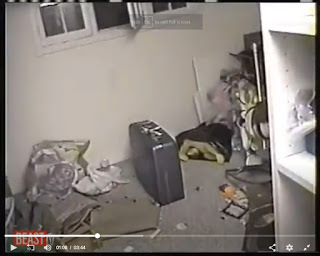
not a likely place for the children to play. Patsy seems to have confused this area with Burke's train room, in a different section of the basement. Why?
Third, the "baseball size" hole in the window pane would hardly have produced "a ton of glass everywhere."
So what are we to make of Patsy's story? If she were lying she'd have made sure her story hung together, made sense and was convincing, which is certainly not the case. And she is clearly not telling the truth, as her version of what happened is inconsistent with both Linda's testimony and the facts. When we couple this totally confused story with the inconsistencies surrounding the 911 call, no logical explanation seems possible -- until we consider gaslighting.
When I first broached this possibility some time ago, it was greeted with considerable skepticism, as though I were grasping at straws to counter the many accusations that both Patsy and John were involved in their daughter's murder and lying to cover that up. As I see it, however, Patsy's involvement is totally inconsistent with all the other evidence, and her alleged lies, or most of them, can be explained due to either confusion on her part or confirmation bias based on unfounded assumptions. The "lies" that can't be so easily explained, such as her willingness to accept John's version of the 911 call, or her very confused story about the broken window glass, seem to make no sense -- unless we consider gaslighting.
It's important to realize that 1. Patsy was heavily sedated for weeks after the discovery of JonBenet's body; 2. Patsy had recently undergone chemotherapy, which could also have affected her memory due to what is known as chemo brain; 3. Once John had been "ruled out" as writer of the note, and Patsy had not, she was suddenly catapulted into the role of chief suspect. All sorts of "experts" were examining her handwriting with a fine tooth comb and many felt they could prove she'd written it. A leading detective in the case, Steve Thomas, was literally accusing her to her face, convinced she'd "accidentally" clubbed her daughter to death in a rage over bedwetting. Her staunchest supporter throughout the investigation was her "devoted" husband, John, who dismissed all the accusations as ridiculous and hired one of the area's top lawyers to defend her.
All of the above would have made Patsy the perfect candidate for gaslighting. And if, as I feel sure, John Ramsey is the guilty party, he'd have had every reason to manipulate her in any way he could, to make sure they were both "on the same page."
According to the article linked above,
If she'd expressed any doubts regarding this event, John could have convinced her she was suffering from "chemo brain" and could not recall what happened. He would also have stressed the importance of her backing up his story, since the authorities were "out to get them" and it was essential that they present a united front.
While gaslighting might seem an unlikely stretch of your host's imagination, as we learn from this article it is by no means as unusual as one might suppose. For me this is one of the keys to an understanding of this very challenging case.
1. While John initially made a point, on national television, of claiming the 911 call was his idea, Patsy offered a very different version when interviewed for the A&E documentary on the case. A third, more detailed, version appears in their book, The Death of Innocence, where John is on his hands and knees studying the "ransom" note, and tells Patsy to call the police. She reaches for a nearby phone and dials 911. This version is totally different from the version Patsy provided to the A&E interviewer: "I said, 'I'm going to call the police and he said OK. And I think he ran to check on Burke. And I ran downstairs and, you know, dialed 911." I see no reason why Patsy would have wanted to lie about what happened, yet she apparently accepted John's very different version when the book was being prepared and never challenged it since. Why?
2. John's story about breaking the basement window the previous summer is, as I've demonstrated both here and in my book, almost certainly a fabrication concocted to direct attention away from the much more probable likelihood that he broke it the night of the murder to stage an intruder breakin. Despite all the many reasons to doubt John's story, Patsy backed him up by claiming she swept up all the broken glass after returning from a summer vacation with the children. Listen to what she had to say:
TT: When did John break that window in the basement?She thinks it was last summer. First sign that something's off. If it happened last summer why couldn't she have been sure? Wasn't that long ago.
PR: He, I don’t know exactly when he did it, but I think it was last summer sometime when we, the kids and I were at the lake.
TT: In Charlevoix."Or whatever"? What does that mean? And why would he have needed her to come back if he'd left the keys inside the house, as he reported in their book?
PR: In Charlevoix and he told me to come back from out of town or whatever and he didn’t have a key and the only way he could get in was to break the window.
TT: Okay. Yeah, right.Another red flag. A broken window in the basement and she can't recall whether she had it fixed? Can't even "remember even trying to remember that"? Obviously she's confused. But why?
PR: The little um, like door, little window to the basement there.
TT: He had to lift the grate out of the way to, to get in there.
PR: Yeah, that’s the one, um hum.
TT: Okay. Any reason why that one wasn’t replaced or the pane wasn’t fixed or anything?
PR: No, I don’t know whether I fixed it or didn’t fix it. I can’t remember even trying to remember that
um, I remember when I got back, uh, in the fall, you know . . .
TT: Um hum.
PR: . . .uh, went down there and cleaned up all the glass.
TT: Okay.
PR: I mean I cleaned that thoroughly and I asked Linda to go behind me and vacuum. I mean I picked up every chunk, I mean, because the kids played down there in that back area back there
TT: Um hum.
PR: And I mean I scoured that place when, cause they were always down there. Burke particularly and the boys would go down there and play with cars and things and uh, there was just a ton of glass everywhere.The above is especially revealing. First, as we know, Linda (the housekeeper) later testified that she knew nothing about any broken window and certainly did not help Patsy clean up any glass in the basement. If Patsy were lying, why would she have included Linda in her story, knowing full well that Linda would deny it? And if she were telling the truth, why wouldn't Linda have been willing to corroborate her story? Is there a third possibility?
TT: Okay.
PR: And I cleaned all that up and then she, she vacuumed a couple of times down there.
TT: To get all the glass.
PR: In the fall yeah cause it was just little, you know, pieces, big pieces, everything.
Secondly, the area around the broken window was a royal mess,
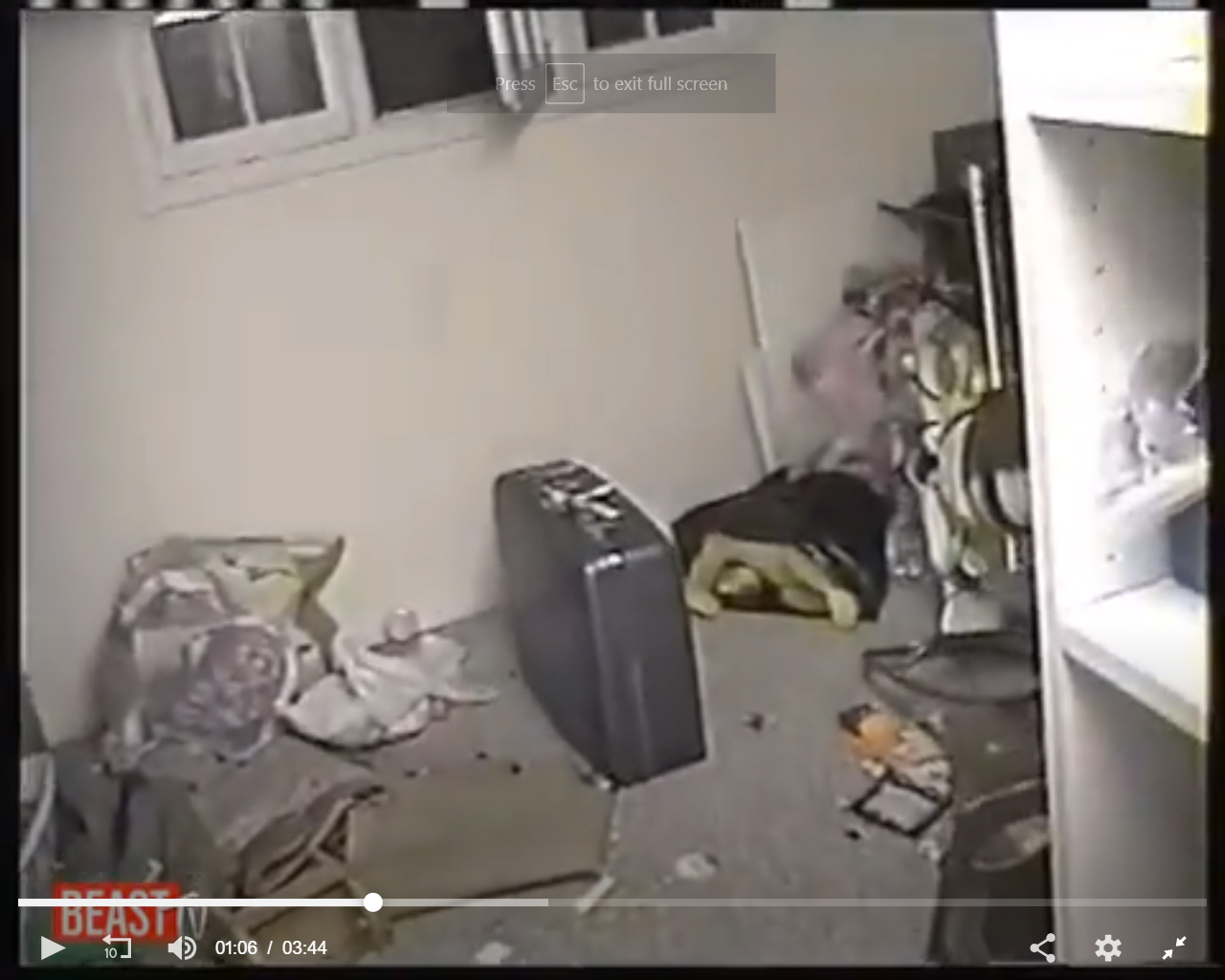
not a likely place for the children to play. Patsy seems to have confused this area with Burke's train room, in a different section of the basement. Why?
Third, the "baseball size" hole in the window pane would hardly have produced "a ton of glass everywhere."
So what are we to make of Patsy's story? If she were lying she'd have made sure her story hung together, made sense and was convincing, which is certainly not the case. And she is clearly not telling the truth, as her version of what happened is inconsistent with both Linda's testimony and the facts. When we couple this totally confused story with the inconsistencies surrounding the 911 call, no logical explanation seems possible -- until we consider gaslighting.
When I first broached this possibility some time ago, it was greeted with considerable skepticism, as though I were grasping at straws to counter the many accusations that both Patsy and John were involved in their daughter's murder and lying to cover that up. As I see it, however, Patsy's involvement is totally inconsistent with all the other evidence, and her alleged lies, or most of them, can be explained due to either confusion on her part or confirmation bias based on unfounded assumptions. The "lies" that can't be so easily explained, such as her willingness to accept John's version of the 911 call, or her very confused story about the broken window glass, seem to make no sense -- unless we consider gaslighting.
It's important to realize that 1. Patsy was heavily sedated for weeks after the discovery of JonBenet's body; 2. Patsy had recently undergone chemotherapy, which could also have affected her memory due to what is known as chemo brain; 3. Once John had been "ruled out" as writer of the note, and Patsy had not, she was suddenly catapulted into the role of chief suspect. All sorts of "experts" were examining her handwriting with a fine tooth comb and many felt they could prove she'd written it. A leading detective in the case, Steve Thomas, was literally accusing her to her face, convinced she'd "accidentally" clubbed her daughter to death in a rage over bedwetting. Her staunchest supporter throughout the investigation was her "devoted" husband, John, who dismissed all the accusations as ridiculous and hired one of the area's top lawyers to defend her.
All of the above would have made Patsy the perfect candidate for gaslighting. And if, as I feel sure, John Ramsey is the guilty party, he'd have had every reason to manipulate her in any way he could, to make sure they were both "on the same page."
According to the article linked above,
“Gaslighting” . . . is an insidious form of psychological abuse. It’s an intricate web of lies woven to break down one partner’s sense of self-worth and perception of what is real. . .
Nearly half of all women and men in the U.S. said they’ve been subjected to psychological aggression by an intimate partner, according to the Centers for Disease Control and Prevention.
For the person trying to control the partner through psychological tricks, the goal is often to make that partner feel completely dependent. By instigating this deep self-doubt and playing the role of the only one who knows what’s right, abusers can wear down their partners and gain control.In fact, Patsy, as the principal suspect, was already completely dependent on John, who controlled all the money and hired all the lawyers, which would have made manipulation all that simpler.
The typical signs of gaslighting . . . are when the abusive partner:
Refuses to listen or pretends not to understand
Challenges the partner’s memory or accuses them of being wrong
Changes the subject or suggests the partner is imagining things
Trivializes the feelings of the partner
Pretends to forget what happened or denies that anything happened at allPatsy's unconvincing window story can, as I see it, only be explained if she'd been manipulated (i.e. "gaslighted") into actually believing that these events took place but was not completely clear regarding the details. Since Linda had always assisted her in cleaning up, it would have seemed natural to include her in the story, so in her mind's eye that's how it would have happened. As for the rest, it was probably just improvisation to bolster a story that would have been shrouded in fog.
If she'd expressed any doubts regarding this event, John could have convinced her she was suffering from "chemo brain" and could not recall what happened. He would also have stressed the importance of her backing up his story, since the authorities were "out to get them" and it was essential that they present a united front.
While gaslighting might seem an unlikely stretch of your host's imagination, as we learn from this article it is by no means as unusual as one might suppose. For me this is one of the keys to an understanding of this very challenging case.


September 14, 2019
Existential Crisis
OK, I confess. I've committed the unforgivable sin of writing yet another book on climate change. My only excuse is that the premise behind my little book is very different from any other I've seen, as should be evident from the brief introduction I've reproduced below. Needless to say, the topic I've chosen is of the greatest importance, which is why I felt so compelled to make at least some sort of attempt to come to terms with what I regard as the central issue, all too frequently overlooked.
I decided to make a pre-publication version available to anyone reading here, in the hope that at least some followers of this blog will be interested enough to read it and chime in with comments, critiques and suggestions for improvement. Over the years I've been impressed with the intelligence of so many who've contributed comments on this blog, and am eagerly looking forward to your responses.
I am therefor inviting anyone interested in receiving an MS Word copy of the entire preprint to email me at doktorgosh (at) live.com with their request. I'll promptly respond with the full text attached.
A note on the use of pseudonyms. I originally chose the moniker DocG because I was afraid colleagues in the field(s) where I've published extensively might want to dismiss me as just another "crackpot who thinks he's solved the JonBenet Ramsey case." I might well be such a crackpot, but I certainly don't want fellow professionals to dismiss my more "serious" work on that basis. As for the use of a pseudonym for the new book, my motive is a bit different. Climate change has become such an emotionally charged topic that I'm afraid to use my real name for fear of alienating certain friends and relatives who feel very strongly about this issue. I'd love to take credit under my real name for all my hard work on this book, but I really don't want to destroy my relationship with people who are close to me as a result. It's a sad commentary on where things now stand in the world that such a stratagem should be necessary.
The brief Introductory chapter should convey a good sense of how the book is organized and what it's about:
Existential Threat: Facing the Climate Change Abyss
Our world is in danger of spinning out of control, fraught with a challenge far more daunting than anything humanity has ever experienced in its long, convoluted history. And yes, I’m speaking of an “existential threat” – only not the one you’re being urged to fear. We are currently faced with a great many very real, very serious challenges: mass migration, mass shootings, regime change wars, the ever-present possibility of nuclear war, economic inequality, widespread poverty, drug addiction, etc. However, despite all these many, truly alarming threats, the attention of huge segments of the population, including many of our most influential scientists and powerful world leaders, is being diverted to focus increasingly on one issue to the effective exclusion of all others. You guessed it: “Climate Change.”
Characterized as an “existential threat” to the future of mankind, the continual warming of the Earth due to the nefarious effects of unchecked fossil fuel emissions has, according to just about every media source, become the foremost danger faced by humanity today. Based on the latest report from the UN-based IPCC (Intergovernmental Panel on Climate Change), we have only 12 years to drastically curtail our reliance on fossil fuels (primarily oil, coal and natural gas) before the world is completely overtaken by major hurricanes, droughts, forest fires, flooding, famine, mass species extinctions, mass migrations and worse. Much worse – though precisely how worse is hard to say. Especially since there is no real evidence for any of it.
Yes, that’s what I said. Not only a lack of evidence, but compelling evidence to the contrary. Not that it matters.
In Part One of this book I will present a scientific review of the evidence. And yes, I am indeed, as you’ve undoubtedly noted, a skeptic. However, unlike so many others who’ve written on this topic, I don’t expect you to believe me. In fact, unless you are already a skeptic, I feel sure you won’t. Based on many years of experience debating this issue, I’ve concluded that no matter what evidence one might present, no matter what science, what research, what data, what logic, attempting to convince someone who doesn’t want to be convinced is a waste of time.
What makes this book different is the fact that I no longer really care whether or not you believe me. As I see things, it’s already too late to argue one way or another on this topic. It’s not that “the science is settled” – I feel sure it isn’t – it’s that the issueis settled. Climate change is no longer a scientific matter, but a social construct. The debate is over and it’s been won by those most adept at influencing public opinion.
At this point, therefor, it’s no longer a matter of whether “the science” is right or wrong, but whether humanity can survive the extremely dangerous “existential” abyss we are now being forced to confront. I’m not talking about the predicted climate disaster, but the social and psychological trauma induced by demands increasingly seen as necessary to avoid it. The nature of this abyss will be covered in Part Two. Those with no desire to read yet another skeptical screed by another “denier” should feel free to skip Part One altogether and proceed to Part Two.
Why should I bother at all with Part One if the science is no longer relevant, you may ask? Well, maybe it’s just my ego, but I feel compelled to present my evidence and my arguments regardless of whether they will make a difference, regardless of whether it’s already too late. Maybe it isn’t too late, maybe that’s why I nevertheless urge readers to read Part One anyhow, or at least skim it. Maybe there is still some room for hope.
I decided to make a pre-publication version available to anyone reading here, in the hope that at least some followers of this blog will be interested enough to read it and chime in with comments, critiques and suggestions for improvement. Over the years I've been impressed with the intelligence of so many who've contributed comments on this blog, and am eagerly looking forward to your responses.
I am therefor inviting anyone interested in receiving an MS Word copy of the entire preprint to email me at doktorgosh (at) live.com with their request. I'll promptly respond with the full text attached.
A note on the use of pseudonyms. I originally chose the moniker DocG because I was afraid colleagues in the field(s) where I've published extensively might want to dismiss me as just another "crackpot who thinks he's solved the JonBenet Ramsey case." I might well be such a crackpot, but I certainly don't want fellow professionals to dismiss my more "serious" work on that basis. As for the use of a pseudonym for the new book, my motive is a bit different. Climate change has become such an emotionally charged topic that I'm afraid to use my real name for fear of alienating certain friends and relatives who feel very strongly about this issue. I'd love to take credit under my real name for all my hard work on this book, but I really don't want to destroy my relationship with people who are close to me as a result. It's a sad commentary on where things now stand in the world that such a stratagem should be necessary.
The brief Introductory chapter should convey a good sense of how the book is organized and what it's about:
Existential Threat: Facing the Climate Change Abyss
Our world is in danger of spinning out of control, fraught with a challenge far more daunting than anything humanity has ever experienced in its long, convoluted history. And yes, I’m speaking of an “existential threat” – only not the one you’re being urged to fear. We are currently faced with a great many very real, very serious challenges: mass migration, mass shootings, regime change wars, the ever-present possibility of nuclear war, economic inequality, widespread poverty, drug addiction, etc. However, despite all these many, truly alarming threats, the attention of huge segments of the population, including many of our most influential scientists and powerful world leaders, is being diverted to focus increasingly on one issue to the effective exclusion of all others. You guessed it: “Climate Change.”
Characterized as an “existential threat” to the future of mankind, the continual warming of the Earth due to the nefarious effects of unchecked fossil fuel emissions has, according to just about every media source, become the foremost danger faced by humanity today. Based on the latest report from the UN-based IPCC (Intergovernmental Panel on Climate Change), we have only 12 years to drastically curtail our reliance on fossil fuels (primarily oil, coal and natural gas) before the world is completely overtaken by major hurricanes, droughts, forest fires, flooding, famine, mass species extinctions, mass migrations and worse. Much worse – though precisely how worse is hard to say. Especially since there is no real evidence for any of it.
Yes, that’s what I said. Not only a lack of evidence, but compelling evidence to the contrary. Not that it matters.
In Part One of this book I will present a scientific review of the evidence. And yes, I am indeed, as you’ve undoubtedly noted, a skeptic. However, unlike so many others who’ve written on this topic, I don’t expect you to believe me. In fact, unless you are already a skeptic, I feel sure you won’t. Based on many years of experience debating this issue, I’ve concluded that no matter what evidence one might present, no matter what science, what research, what data, what logic, attempting to convince someone who doesn’t want to be convinced is a waste of time.
What makes this book different is the fact that I no longer really care whether or not you believe me. As I see things, it’s already too late to argue one way or another on this topic. It’s not that “the science is settled” – I feel sure it isn’t – it’s that the issueis settled. Climate change is no longer a scientific matter, but a social construct. The debate is over and it’s been won by those most adept at influencing public opinion.
At this point, therefor, it’s no longer a matter of whether “the science” is right or wrong, but whether humanity can survive the extremely dangerous “existential” abyss we are now being forced to confront. I’m not talking about the predicted climate disaster, but the social and psychological trauma induced by demands increasingly seen as necessary to avoid it. The nature of this abyss will be covered in Part Two. Those with no desire to read yet another skeptical screed by another “denier” should feel free to skip Part One altogether and proceed to Part Two.
Why should I bother at all with Part One if the science is no longer relevant, you may ask? Well, maybe it’s just my ego, but I feel compelled to present my evidence and my arguments regardless of whether they will make a difference, regardless of whether it’s already too late. Maybe it isn’t too late, maybe that’s why I nevertheless urge readers to read Part One anyhow, or at least skim it. Maybe there is still some room for hope.
September 10, 2019
And Now for Something Completely Different
This blog began as an investigation of the JonBenet Ramsey case, and it's largely continued along the same lines to this day. Over time, however, we've come to consider other issues as well, notably the Amanda Knox case, the Darlier Routier case, and the especially mysterious case of Rebecca Zahau and Max Shaknai. What they all have in common, which for me validates their inclusion here, is the fundamental issue of: justice.
For many years now, I've become increasingly drawn, as have so many others, to an issue of far greater scope and consequence than anything we've covered or possibly could cover, in this relatively modest venue. Indeed it would seem to be the elephant in just about every room these days that can no longer be ignored. I'm speaking, of course, of climate change and the question of whether or not it's any longer possible to justify business as usual in the face of what's famously been called "an existential threat" to the future of humanity. Indeed, how can we justify our endless debate over the mysteries of a single murder case, no matter how horrific, when the future of the world as we know it is at stake? Don't all of us have an obligation to confront this issue head-on? If we're concerned above all with justice then how can we ignore the all-important question of climate justice?
Or is it really an issue at all? Skeptics (aka "deniers") routinely scoff at what they regard as climate change "hysteria," contesting the notion that 97% of scientists agree, insisting that none of the extreme events we've been witnessing of late have anything to do with carbon dioxide emissions but are simply due to the same sort of natural forces the world has experienced since time immemorial. For climate change activists, however, the danger is real. And their demands are becoming increasingly alarming. It's easy enough to declare one's belief in "climate change." It's another thing entirely to willingly alter one's life style in the extreme manner now being demanded. Or else!
I'm wondering how readers of this blog feel about this issue. Are you a "believer," a "skeptic," or somewhere in between? I'm hoping at least some of you will feel brave enough to open up on this issue in your comments, leading, hopefully, to a meaningful discussion/ debate. Those wishing to continue commenting on the Ramsey case can continue to do so on the previous thread.
One note of caution, made necessary by the highly emotional nature of the climate debate: any comments containing personal attacks or other offensive material will be deleted.
For many years now, I've become increasingly drawn, as have so many others, to an issue of far greater scope and consequence than anything we've covered or possibly could cover, in this relatively modest venue. Indeed it would seem to be the elephant in just about every room these days that can no longer be ignored. I'm speaking, of course, of climate change and the question of whether or not it's any longer possible to justify business as usual in the face of what's famously been called "an existential threat" to the future of humanity. Indeed, how can we justify our endless debate over the mysteries of a single murder case, no matter how horrific, when the future of the world as we know it is at stake? Don't all of us have an obligation to confront this issue head-on? If we're concerned above all with justice then how can we ignore the all-important question of climate justice?
Or is it really an issue at all? Skeptics (aka "deniers") routinely scoff at what they regard as climate change "hysteria," contesting the notion that 97% of scientists agree, insisting that none of the extreme events we've been witnessing of late have anything to do with carbon dioxide emissions but are simply due to the same sort of natural forces the world has experienced since time immemorial. For climate change activists, however, the danger is real. And their demands are becoming increasingly alarming. It's easy enough to declare one's belief in "climate change." It's another thing entirely to willingly alter one's life style in the extreme manner now being demanded. Or else!
I'm wondering how readers of this blog feel about this issue. Are you a "believer," a "skeptic," or somewhere in between? I'm hoping at least some of you will feel brave enough to open up on this issue in your comments, leading, hopefully, to a meaningful discussion/ debate. Those wishing to continue commenting on the Ramsey case can continue to do so on the previous thread.
One note of caution, made necessary by the highly emotional nature of the climate debate: any comments containing personal attacks or other offensive material will be deleted.
August 27, 2019
New Thread
Time for a new thread, I've been told. (What's wrong with the old one, if I may ask?)
July 10, 2019
The Neverending Story
I must say I'm impressed. After all these years and all our many frustrations there is still enough interest in the Ramsey case to prompt the current torrent of comments. That's fine with me -- but don't expect me to chime in very often, as I believe I've already said just about everything I have to say on this topic.
Incidentally, I've been receiving reports that some, or all, of you are no longer able to comment. Maybe this new thread will solve the problem. If not, please keep me posted via email and I'll see what I can do.
Incidentally, I've been receiving reports that some, or all, of you are no longer able to comment. Maybe this new thread will solve the problem. If not, please keep me posted via email and I'll see what I can do.
May 23, 2019
What more to say?
Sorry folks. I've been neglecting this blog for some time. But not without reason. I feel that I've said all there is for me to say about the Ramsey case. And despite some very gratifying positive feedback from so many of you, I'm discouraged. Our efforts at clearing a path toward a solution have been futile. The CBS lawsuit offered some hope that new information could be forthcoming. But now that this case has been "settled," with all details suppressed, that hope has been dashed. Burke has, in effect, been thrown under the bus by his father, who could not even bring himself to demand an apology for the blatant libeling of his son. Without such an apology, the lawsuit that was supposedly intended to vindicate him has done the opposite. Now, as far as the general public is concerned, the CBS special must have been on track after all, leaving poor Burke dangling in the wind. All that's left is the money, which, as now seems clear, was the whole point from the start.
I'll leave you with some thoughts by CC, who's been prodding me lately via email to continue fighting the good fight, regardless of how discouraged I've become. She's stubbornly reluctant to give up, and I respect her for that. She's offered some very sensible reasons why Patsy and John could not have been in it together and, of course, I agree:
(a) Had they been acting in concert, the 911 call would not have happened until after the "kidnappers" deadline;
(b) Had they been working in tandem, the staging in the basement would have been complete, perhaps the body removed; and
(c) Had they colluded their stories would have been in complete sync, from the putting-to-bed scenario to the prior summer's breaking and entering by John; and
(d) If their aim was to protect Burke after he struck his sister a blow to the head, why not arrange her body at the foot of that child-unfriendly spiral staircase and called 911? Why commit first degree murder, thereby risking the death penalty themselves?
Excellent points, worthy of further analysis and discussion. Thanks, CC.
I'll leave you with some thoughts by CC, who's been prodding me lately via email to continue fighting the good fight, regardless of how discouraged I've become. She's stubbornly reluctant to give up, and I respect her for that. She's offered some very sensible reasons why Patsy and John could not have been in it together and, of course, I agree:
(a) Had they been acting in concert, the 911 call would not have happened until after the "kidnappers" deadline;
(b) Had they been working in tandem, the staging in the basement would have been complete, perhaps the body removed; and
(c) Had they colluded their stories would have been in complete sync, from the putting-to-bed scenario to the prior summer's breaking and entering by John; and
(d) If their aim was to protect Burke after he struck his sister a blow to the head, why not arrange her body at the foot of that child-unfriendly spiral staircase and called 911? Why commit first degree murder, thereby risking the death penalty themselves?
Excellent points, worthy of further analysis and discussion. Thanks, CC.
December 8, 2018
Any News?
OK, time for a new post, making room for a new round of comments. If anyone DOES have any news regarding the CBS lawsuit please post it. I can't imagine what's taking so much time, but maybe CC can offer some insights into the process.
August 13, 2018
Darlie Routier case on Court TV
I just saw this very informative review of the case as broadcast on Court TV back in 2013. Everyone concerned about this case should watch it -- all the way through.
Part 1:
Part 2:
Part 3:
Part 4:
Part 1:
Part 2:
Part 3:
Part 4:
August 6, 2018
Darlie Routier: part 4
When Darlie foolishly agreed to let her husband off the hook and testify that he was not the one who assaulted her and her children, she signed her own death warrant, as all the evidence pointed to an inside job -- no sign of an intruder. Her own family must take a large part of the responsibility because they agreed to hire a lawyer who was already representing the husband in another case and was ethically constrained from even suggesting that he could have been the "intruder." I am now convinced that he is in fact the guilty party. If there could have been no intruder, and Darlie could not have done it (see my earlier posts), then the only possibility is Darin, her husband -- who had already contemplated staging a phony home invasion; who'd been spending recklessly for years and was now heavily in debt; who had over $200,000 in insurance money to gain upon Darlie's death; who had already expressed contempt for her over some weight gain and driven her to contemplate suicide.
As I demonstrated in my previous post, it's not all that difficult to come up with a scenario starring him as a self-absorbed, cold-blooded killer. In this post I'd like to add a few more wrinkles.
One very interesting piece of information I only learned of recently was the fact that Darin appeared on the scene naked from the waist up. While in itself there is nothing suspicious about that, the absence of a shirt could be a very important piece of the puzzle. If "the intruder" hadn't been wearing a shirt, Darlie would certainly have noticed that and reported it. She obviously saw someone wearing a shirt. And considering the nature of the assault, his shirt would have been covered in blood. The theory I outlined last time fails to take this into account. If Darin is the one, then his shirt would have been extremely bloody when he re-appeared to call the police. So what could have happened to that shirt?
As I now see it, Darin's plan must have been to return to the house and call the police as soon as possible. His only serious problem would have been the bloody shirt. He couldn't very well re-enter the house to call 911 while wearing that shirt and there was no convenient place to hide it. This would explain why "the intruder" immediately exited via the garage, as Darlie reported, rather than remaining in the house after assuming Darlie was either dead or dying. Darin would have needed to discard that shirt some place where no one could find it. I think he ran very quickly to the storm drain in the alley, only a couple of short blocks away, just next to the spot where the bloody sock was found:
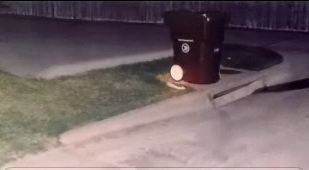
As it was the middle of the night, the chances of his being noticed were slim. After removing the shirt, he would have stuffed it into the storm drain, accidentally dropping the bloody sock (which he'd been using as a glove) as he did so. He'd have then run back to the house, with the intention of cleaning all the blood off the knife, leaving a bloody trail from the family room through to the garage and out the window, and then calling 911 to report a home invasion and murder. While approaching the house, however, he'd have heard Darlie's screams and realized that she was still alive, which forced a change of plans. Instead of re-entering via the garage, which would have looked extremely suspicious, he decided to run around to the front entrance and, as I indicated in the previous post, create the impression that he'd just run down the stairs. He might even have quietly gone up the stairs and then noisily ran down to create the illusion that he'd been upstairs all the time. Which is what Darlie chose to assume.
Here once again is the floor plan, indicating how easy it would have been for him to give the impression he'd just run downstairs, though in reality he'd entered via the front door:

Of course this is all speculation. There is no direct evidence implicating Darin, so even if Darlie's attorneys had provided a scenario similar to mine, they'd have had no way to prove it actually happened that way. As it seems to me, Darin is forever off the hook for this reason, there is probably no way he could be convicted of this crime. However, if her attorneys had been free to suggest the possibility that Darin could have done it, motivated by the prospect of collecting a considerable insurance payout, that would have made an effective argument for reasonable doubt, and she might very well have been found innocent. Unfortunately, as I understand it, reasonable doubt applies only to the trial itself and can't be used as an argument during any appeal. Burden of proof is reversed during an appeal, as there is no longer a presumption of innocence. The appellant must prove his or her innocence, which may, in this case, not be possible.
Darlie's only hope may be for a pardon from the Governor. However, while she has a great many supporters, it will probably be impossible for anyone with law enforcement experience to pardon her, as there is no credible evidence of an intruder, and as far as I can tell none of her supporters seems interested in suggesting that Darin could be the guilty party. What a tragedy!
As I demonstrated in my previous post, it's not all that difficult to come up with a scenario starring him as a self-absorbed, cold-blooded killer. In this post I'd like to add a few more wrinkles.
One very interesting piece of information I only learned of recently was the fact that Darin appeared on the scene naked from the waist up. While in itself there is nothing suspicious about that, the absence of a shirt could be a very important piece of the puzzle. If "the intruder" hadn't been wearing a shirt, Darlie would certainly have noticed that and reported it. She obviously saw someone wearing a shirt. And considering the nature of the assault, his shirt would have been covered in blood. The theory I outlined last time fails to take this into account. If Darin is the one, then his shirt would have been extremely bloody when he re-appeared to call the police. So what could have happened to that shirt?
As I now see it, Darin's plan must have been to return to the house and call the police as soon as possible. His only serious problem would have been the bloody shirt. He couldn't very well re-enter the house to call 911 while wearing that shirt and there was no convenient place to hide it. This would explain why "the intruder" immediately exited via the garage, as Darlie reported, rather than remaining in the house after assuming Darlie was either dead or dying. Darin would have needed to discard that shirt some place where no one could find it. I think he ran very quickly to the storm drain in the alley, only a couple of short blocks away, just next to the spot where the bloody sock was found:

As it was the middle of the night, the chances of his being noticed were slim. After removing the shirt, he would have stuffed it into the storm drain, accidentally dropping the bloody sock (which he'd been using as a glove) as he did so. He'd have then run back to the house, with the intention of cleaning all the blood off the knife, leaving a bloody trail from the family room through to the garage and out the window, and then calling 911 to report a home invasion and murder. While approaching the house, however, he'd have heard Darlie's screams and realized that she was still alive, which forced a change of plans. Instead of re-entering via the garage, which would have looked extremely suspicious, he decided to run around to the front entrance and, as I indicated in the previous post, create the impression that he'd just run down the stairs. He might even have quietly gone up the stairs and then noisily ran down to create the illusion that he'd been upstairs all the time. Which is what Darlie chose to assume.
Here once again is the floor plan, indicating how easy it would have been for him to give the impression he'd just run downstairs, though in reality he'd entered via the front door:

Of course this is all speculation. There is no direct evidence implicating Darin, so even if Darlie's attorneys had provided a scenario similar to mine, they'd have had no way to prove it actually happened that way. As it seems to me, Darin is forever off the hook for this reason, there is probably no way he could be convicted of this crime. However, if her attorneys had been free to suggest the possibility that Darin could have done it, motivated by the prospect of collecting a considerable insurance payout, that would have made an effective argument for reasonable doubt, and she might very well have been found innocent. Unfortunately, as I understand it, reasonable doubt applies only to the trial itself and can't be used as an argument during any appeal. Burden of proof is reversed during an appeal, as there is no longer a presumption of innocence. The appellant must prove his or her innocence, which may, in this case, not be possible.
Darlie's only hope may be for a pardon from the Governor. However, while she has a great many supporters, it will probably be impossible for anyone with law enforcement experience to pardon her, as there is no credible evidence of an intruder, and as far as I can tell none of her supporters seems interested in suggesting that Darin could be the guilty party. What a tragedy!
July 30, 2018
Darlie Routier: part 3
It's been reported that Darlie's husband Darin stated that, if Darlie had died, he'd be the one now sitting on death row. Think about that for a moment. Allow it to fully sink in. Because it's a literally mind blowing statement, a remarkable insight into the bizarre nature of this case. If Darlie Routier had died on the operating table, which was a real possibility since the knife that slashed her came within 2 millimeters of her carotid artery, then she would have been deemed a victim, along with her two boys -- and given the total lack of intruder evidence, the only possible perpetrator would have been Darin. How very strange. If she dies, she's a victim; if she lives, she's a murderess. If she lives, Darin is an innocent bystander; if she dies, he's a murderer.
I've been reading a lot about this case lately, and viewing some of the documentaries, and this extremely ironic aspect of the case is totally overlooked. If Darlie had died, Darin would have been the one put on trial and, if things had gone the way they went in Darlie's trial, HE would have been convicted of murder. Yet practically from day one, he was not considered a suspect. And one has to wonder why. Considering the seriousness of Darlie's throat wound, it's hard to rule out the possibility that she herself was the intended victim.
Could Darin have decided to kill Darlie to collect on her $250,000 life insurance policy? He'd been living above his means for years and was, at the time, desperately trying to get a loan. The prospect of collecting on a quarter of a million dollar insurance policy is a pretty powerful motive, while it's all but impossible to find a motive for Darlie to suddenly snap and stab her own children to death. Is it possible to put together a convincing scenario with Darin instead of Darlie as the perpetrator and Darlie as a victim? Pure speculation of course -- but let's give it a try:
As we know, Darin had recently contemplated the staging of a burglary as part of an insurance scam. This tells us how desperate he was for cash, and how willing he was to break the law in order to get some. So let's say that one day, out of sheer desperation, he decides that, instead of staging a burglary, he could stage the murder of his heavily insured wife by a would-be burglar. When alone in the house, he grabs a knife from the kitchen, walks into the garage and cuts a slit in a window screen to stage a point of entry. He then returns the knife to its rack in the kitchen and waits for Darlie and the children to come home. That night, he decides to make his move. He walks downstairs to the kitchen, takes a knife from the rack and quietly makes his way into the family room where Darlie and his two sons are fast asleep. It's possible that he could have prepared a paper towel soaked in chloroform or ether ahead of time. He'd have crept up from behind her, covered her face with the towel, and waited for her to lose consciousness. During this episode there could have been a struggle, which would explain the cut on her arm.
Once she was unconscious, Darin could have slit her throat without fear of her screaming and alerting the neighbors. Since he'd slashed so deeply into her throat, Darin might well have assumed that she was either dead or dying at that point, so his attention then turned to the two boys, who could have awakened during the struggle. Since they could identify him, they too would have to be killed. He stabs them both viciously, to make it look as though they'd been attacked by some monstrous psychopath.
Meanwhile, unbeknownst to Darin, Darlie is slowly reviving and in an extremely confused state of mind. Suffering from shock, she doesn't recall what happened and doesn't realize at first that her throat had been slashed. And since she'd been assaulted from behind, she has no way of knowing who stabbed her. She looks up and sees what she assumes to be an intruder. She can't identify him because his back is turned. And by the same token, Darin has no idea that Darlie is alive and regaining consciousness. Assuming that everyone in the family room is either dead or dying, he drops the knife and heads for the utility room and from there to the garage.
And at this point, I must admit, I find it difficult to speculate regarding what he would have been up to or what was on his mind. Perhaps he'd decided to make his way into the alley to plant that bloody sock. No need for him to run two blocks to plant it. He could have dropped it just outside the garage, as intruder evidence -- a stray dog might have got hold of it at some point, and carried it to the place where it was later found. Returning to the house, he would have overheard Darlie on the phone, hysterically trying to communicate with the 911 operator. Realizing to his horror that she was still alive, he would have had no choice but to forget about completing his staging, switching gears to play the innocent husband, "coming to the rescue" of his family. Quietly making his way back into the house from the front entrance, he could have given Darlie the impression that he'd just run downstairs after hearing her screams. As we can see from the floor plan, someone arriving via the front door could easily make it seem to someone in the kitchen as though he'd just emerged from the staircase:
While Darlie was distracted by her 911 call, Darin would then have thrown himself on top of one of the boys, pretending to render CPR, thus providing investigators with a reason why his victim's blood would be on his clothing. When the police arrive, he is, of course, "fully cooperative."
Since I'm new to this case, I can't be sure that the above scenario is fully consistent with all the evidence, so at this point I'm just tossing it out for whatever it may be worth, in the hope that someone reading here can offer a critique.
Regardless of how accurate my scenario might turn out to be, it does seem extremely strange that the authorities decided to rule Darin out so soon. Some light is shed on the situation by a writ of Habeas Corpus by Douglas Parks, a lawyer representing Darlie's appeal, dating, it would seem, from 2004. Some excerpts:
I've been reading a lot about this case lately, and viewing some of the documentaries, and this extremely ironic aspect of the case is totally overlooked. If Darlie had died, Darin would have been the one put on trial and, if things had gone the way they went in Darlie's trial, HE would have been convicted of murder. Yet practically from day one, he was not considered a suspect. And one has to wonder why. Considering the seriousness of Darlie's throat wound, it's hard to rule out the possibility that she herself was the intended victim.
Could Darin have decided to kill Darlie to collect on her $250,000 life insurance policy? He'd been living above his means for years and was, at the time, desperately trying to get a loan. The prospect of collecting on a quarter of a million dollar insurance policy is a pretty powerful motive, while it's all but impossible to find a motive for Darlie to suddenly snap and stab her own children to death. Is it possible to put together a convincing scenario with Darin instead of Darlie as the perpetrator and Darlie as a victim? Pure speculation of course -- but let's give it a try:
As we know, Darin had recently contemplated the staging of a burglary as part of an insurance scam. This tells us how desperate he was for cash, and how willing he was to break the law in order to get some. So let's say that one day, out of sheer desperation, he decides that, instead of staging a burglary, he could stage the murder of his heavily insured wife by a would-be burglar. When alone in the house, he grabs a knife from the kitchen, walks into the garage and cuts a slit in a window screen to stage a point of entry. He then returns the knife to its rack in the kitchen and waits for Darlie and the children to come home. That night, he decides to make his move. He walks downstairs to the kitchen, takes a knife from the rack and quietly makes his way into the family room where Darlie and his two sons are fast asleep. It's possible that he could have prepared a paper towel soaked in chloroform or ether ahead of time. He'd have crept up from behind her, covered her face with the towel, and waited for her to lose consciousness. During this episode there could have been a struggle, which would explain the cut on her arm.
Once she was unconscious, Darin could have slit her throat without fear of her screaming and alerting the neighbors. Since he'd slashed so deeply into her throat, Darin might well have assumed that she was either dead or dying at that point, so his attention then turned to the two boys, who could have awakened during the struggle. Since they could identify him, they too would have to be killed. He stabs them both viciously, to make it look as though they'd been attacked by some monstrous psychopath.
Meanwhile, unbeknownst to Darin, Darlie is slowly reviving and in an extremely confused state of mind. Suffering from shock, she doesn't recall what happened and doesn't realize at first that her throat had been slashed. And since she'd been assaulted from behind, she has no way of knowing who stabbed her. She looks up and sees what she assumes to be an intruder. She can't identify him because his back is turned. And by the same token, Darin has no idea that Darlie is alive and regaining consciousness. Assuming that everyone in the family room is either dead or dying, he drops the knife and heads for the utility room and from there to the garage.
And at this point, I must admit, I find it difficult to speculate regarding what he would have been up to or what was on his mind. Perhaps he'd decided to make his way into the alley to plant that bloody sock. No need for him to run two blocks to plant it. He could have dropped it just outside the garage, as intruder evidence -- a stray dog might have got hold of it at some point, and carried it to the place where it was later found. Returning to the house, he would have overheard Darlie on the phone, hysterically trying to communicate with the 911 operator. Realizing to his horror that she was still alive, he would have had no choice but to forget about completing his staging, switching gears to play the innocent husband, "coming to the rescue" of his family. Quietly making his way back into the house from the front entrance, he could have given Darlie the impression that he'd just run downstairs after hearing her screams. As we can see from the floor plan, someone arriving via the front door could easily make it seem to someone in the kitchen as though he'd just emerged from the staircase:
While Darlie was distracted by her 911 call, Darin would then have thrown himself on top of one of the boys, pretending to render CPR, thus providing investigators with a reason why his victim's blood would be on his clothing. When the police arrive, he is, of course, "fully cooperative."
Since I'm new to this case, I can't be sure that the above scenario is fully consistent with all the evidence, so at this point I'm just tossing it out for whatever it may be worth, in the hope that someone reading here can offer a critique.
Regardless of how accurate my scenario might turn out to be, it does seem extremely strange that the authorities decided to rule Darin out so soon. Some light is shed on the situation by a writ of Habeas Corpus by Douglas Parks, a lawyer representing Darlie's appeal, dating, it would seem, from 2004. Some excerpts:
The State’s misconduct is matched only by the unethical and unconstitutional actions of Petitioner’s own defense counsel, who, even though advised by her prior counsel that the husband was a possible perpetrator, agreed not to implicate Petitioner’s husband in her trial as a condition of being hired by the family to defend her. By completely foreclosing this line of defense, her counsel never learned or presented to the jury evidence that Darin Routier had arranged to have his car stolen in 1994 to collect insurance proceeds and for a period of months before the events on June 6, 1996, had inquired of relatives and associates whether they knew of anyone who would “burglarize” his home so that he could collect the insurance proceeds. . .
Defense Counsel’s Attorney-Client Relationship with Darin Routier and Employment Arrangement with the Routier Family Prevented Defense Counsel From Presenting an Effective Defense for Petitioner and From Effectively Cross-Examining Darin Routier at Trial.All I can say is: hmmmmmm . . .
Defense counsel was twice conflicted in this case. First, he represented Darin Routier in a matter substantially related to this case. Although the State had evidence implicating Darin Routier in the crimes with which Petitioner was charged, that concurrent representation of Petitioner’s husband prevented defense counsel from investigating Darin Routier and pursuing a viable defense strategy for Petitioner. Second, Darin Routier “told [defense counsel] that if we hired him, [he] did not want him to ‘go after’ [him]. [Defense counsel] agreed that, if hired to represent [Petitioner], he would not argue as part of the defense that [Darin Routier] was in any way responsible for the death of [his] children.” Routier Aff. ¶ 7. These obvious and irreconcilable conflicts of interest adversely affected his representation of Petitioner throughout her trial.

