Jones Loflin's Blog
November 11, 2025
Notifications: The Hidden Productivity Killer You Can Fix Today

Take a look at the above display. It’s from the dash of a car belonging to one of my friends. When I jumped in last week, I couldn’t help but notice all the little icons glowing across the screen.
“Wow,” I said. “What an incredibly busy day you’ve had.”
My friend laughed. “Oh, I don’t check my notifications. I just ignore them.”
“You ignore them?” I asked. “How do you manage that?”
“Well, I just go in and see what’s new every now and then.”
“Don’t you delete them when you’re done?”
“Nope. I just leave them there.”
(And yes—they manage their email the same way.) 📩
Now, I’ll admit, I’ve given notifications a hard time before. But the truth is, notifications aren’t the enemy. When used wisely, they can actually help us stay focused and aware of what’s most important in the moment. The real problem isn’t too many notifications—it’s unmanaged notifications.
Let’s look at how to fix that.
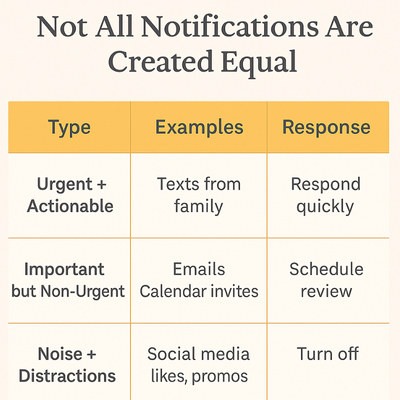
🔔 Not All Notifications Are Created EqualWe all live in a digital hive buzzing with notifications. Every ping, buzz, or banner is like a little bee trying to get our attention. Some are vital to the hive’s survival; others are just noise.
Here are a few types we all face daily:
Urgent + Actionable: Texts from family, reminders for meetings, or direct messages from coworkers. These deserve your attention quickly.
Important but Non-Urgent: Emails, calendar invites, or updates from platforms like LinkedIn or Teams. You should see them—but not instantly.
Noise + Distractions: Social media likes, app promotions, or “Your friend just posted!” alerts. These rarely move you closer to your goals and often pull you away.
Bees don’t chase every flower—they focus on the ones with real nectar. The same can apply for you.
 ⚙️ How to Customize Notifications to Work for You
If your devices are controlling your attention, it’s time to flip the script. Here’s how to make notifications serve you instead of sabotage you:
On your phone:
Use Focus Mode (iPhone) or Do Not Disturb / Priority Mode (Android) to allow only certain people or apps to break through.
Create custom “work,” “family,” or “personal” profiles to keep the right alerts at the right time.
In your email:
Set up filters or VIP lists so messages from key people stand out.
Use tools like Outlook’s Focused Inbox or Gmail’s Priority Inbox to automatically sort messages by importance.
On social media:
Turn off notifications for likes, comments, and random app updates.
Keep alerts only for direct messages or event reminders.
Apps to explore:
Freedom or OneSec can mute or delay notifications from distracting apps.
Digital Wellbeing (Android) and Screen Time (iPhone) show where your attention is really going and help you manage it better.
The goal isn’t to silence every sound or buzz—it’s to make sure each one has earned the right to interrupt you.
 🧭 Three Smart Ways to Manage Notifications
If you want to improve your focus this week, here are three simple practices:
Make notifications work for you, not against you.
Decide what you truly need to be reminded about. Texts from family? Absolutely. A meeting alert? You bet. Every social media ping? Probably not.
Review—don’t roam.
Randomly jumping in and out of apps to “see what’s new” is a time trap. Schedule two or three intentional times a day to check notifications and act accordingly.
Act once.
When you open notifications, don’t just glance and move on. Respond, delete, or schedule a time to handle it later. Leaving it sitting there clutters your device—and your mind.
Ignoring notifications doesn’t improve your focus. It just delays decisions and doubles your mental load. Every ignored alert becomes a tiny distraction you’ll face again later.
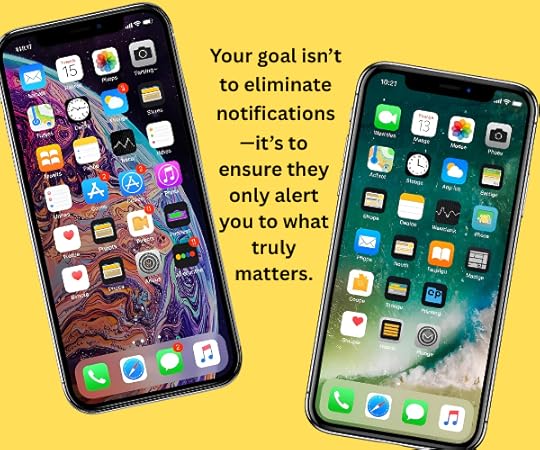
Your goal isn’t to eliminate notifications—it’s to ensure they only alert you to what truly matters.
Take five minutes today to review your settings. Decide which notifications deserve to make your phone buzz and which should stay silent.
You might just find that managing your digital hive helps your mental one thrive.
Explore Focused as a Bee for practical strategies to thrive in a distracted world, or subscribe to The Jones Zone for short weekly insights to help you make every moment count.


October 16, 2025
We’re All Faking “Fine”: Breaking Free From Pluralistic Ignorance

Do you ever look around and think, “Why does everyone else seem to have it together while I’m barely keeping up?”
You’re not alone—and ironically, that’s exactly what pluralistic ignorance is all about.
Pluralistic ignorance happens when everyone privately feels one way, but assumes everyone else feels differently, so they stay quiet. It’s the “everyone else must be fine” illusion. Maybe you’re overwhelmed, but since no one else says anything, you think you’re the problem. Meanwhile, everyone else is thinking the same thing.
That silence fuels burnout and isolation. You start carrying invisible pressure, pretending you’re okay because you assume everyone else is okay. And that adds another layer of stress—or what I’d call, another elephant in your circus. Now you’re trying to live up to a version of “fine” that isn’t even real.
How to Break Free from the IllusionIf you want to reduce the stress in your week caused by pluralistic ignorance, here are three practical ways to start:
1. Say the Quiet Part Out Loud
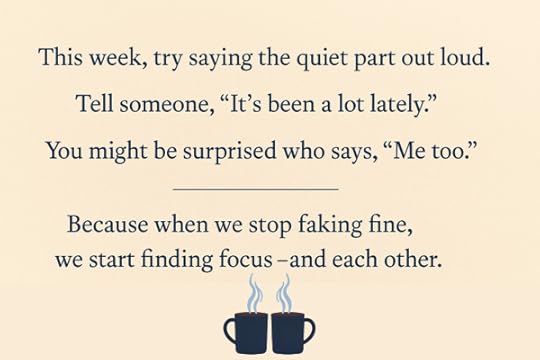
When you admit, “Hey, this week’s been a lot,” you give others permission to be honest too. Vulnerability lowers the collective pressure for everyone. It’s amazing how quickly others open up once someone goes first.
2. Ask Real Questions
Skip the surface-level “How are you?” and try asking, “What’s been hard for you this week?” Questions like that invite authentic conversation and remind people they’re not alone in the struggle. If you want to go even deeper as a leader, ask the Second Questions.
3. Normalize Limits
Healthy leaders and teams don’t pretend they’re superhuman—they model boundaries. That might mean ending work at a reasonable time, taking real breaks, or saying, “I need help.” Acknowledging limits isn’t weakness; it’s wisdom. It reminds everyone that time and energy are finite resources meant to be used with intention.
🌱 The Power of Being RealThe real danger of pluralistic ignorance is that it keeps us pretending. But when you have the courage to be real—to say, “Me too”—you help your team, your family, and even yourself find a healthier rhythm.
Maybe today’s the day you start saying what everyone else is quietly feeling. You might be surprised how many people breathe a sigh of relief when you do.
September 18, 2025
Don’t Wait For That 3AM Wake-Up Call
 The Chirp That Changed My Night
At 3:11 a.m. the smoke detector delivered its dreaded chirp—a reminder that the batteries hadn’t been replaced on schedule. Middle-of-the-night battery swaps are never fun, but they do often spark unexpected reflection. As the house grew quiet again, it was hard not to think about those smaller “chirps” encountered each day, the persistent signals that often go ignored. These little interruptions tend to steal not only rest, but focus and energy meant for more important tasks.
Little Chirps, Big DistractionsThe everyday list grows: overlooked chores, postponed responsibilities, errands left hanging. “I’ll get to it later” becomes the refrain, yet these tasks have a way of surfacing at precisely the wrong moment. Genuine focus, much like the diligence of a bee, calls for intentional action—addressing small issues before they become big distractions.
 Three Steps to Silence the Chirps
Here are three practical steps you can use to help you keep those chirps from disrupting your rest and focus:
1. Identify the Chirps
Taking time for a mental inventory often reveals a handful of neglected items—overdue calls, bills stacking up, household fixes waiting on attention. Unattended, these small things eventually demand attention when least expected.
2. Schedule a Time to Fix Them
Noticing the issues is only part of the solution. Making a plan to fix them, such as buying fresh batteries and replacing every detector at a set time, ensures they won’t interrupt again. Marking tasks on a calendar, instead of relying on memory, keeps those chirps at bay.
3. Treat Rest and Focus as Sacred
Uninterrupted rest is vital, and focus powers meaningful work. Preventative maintenance—handling tasks proactively—becomes an investment in future well-being. Protecting these moments means defending what matters most.
 Final Thought
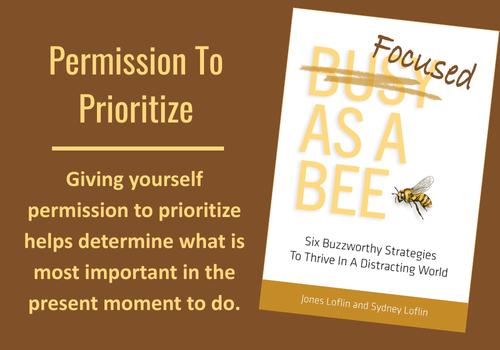
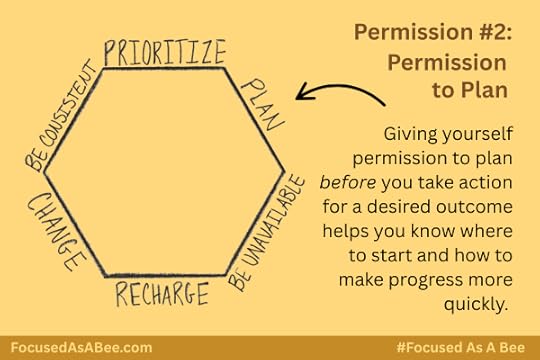
Chirps are universal, woven into our many routines and homes. The difference is made in choosing not to ignore them, working proactively to create space for energy and attention to thrive. We have to consciously give ourselves permission to focus, since we naturally give ourselves permission to be distracted. If you would like to discover more about giving yourself permission on how to stay “focused” and not “busy” or “distracted”, click here.
September 2, 2025
How To Stop Job Hugging From Crushing Your Joy

Have you heard about the new workplace phrase going around? It’s called job hugging.
In the past, people often jumped from one job to another called job hopping. Today, many are holding on to their current job like it’s the last chair in a game of musical chairs. With all the talk about AI, an uncertain economy, and fewer opportunities in the marketplace, I get it.
But here’s the problem: holding on too tightly can squeeze the joy out of your work.

If you feel stuck, you don’t have to let your days become joyless. Here are three simple ways to loosen your grip and bring more energy and excitement back to your work week.
1. Grow Where You’re PlantedMaybe you can’t change jobs right now. But you can change how you approach your current role.
Volunteer for a new project that stretches your skills.
Ask to shadow a teammate in another department.
Take an online class that builds a new ability.
Even small steps of growth make work more interesting and give you a sense of progress. Growth is a powerful joy booster.
“When we are no longer able to change a situation, we are challenged to change ourselves.”— Viktor Frankl 2. Strengthen Your Safety Net
Job hugging often feels scary because it seems like you have no other options. That’s why building your “safety net” is so important.
Invite a coworker to lunch and get to know them better.
Join a professional group in your field.
Connect with friends outside of work who lift you up.
The more relationships you have, the stronger your support system becomes. And when you know you have options, your stress level goes down.
3. Find Joy Outside of WorkIf all your happiness comes from your job, stress will hit harder. You need joy in other parts of your life, too.
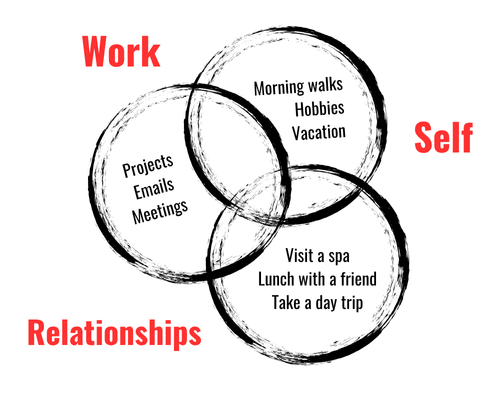
In my book Juggling Elephants, we talk about three rings: work, self, and relationships. If you only focus on the work ring, life gets out of balance.
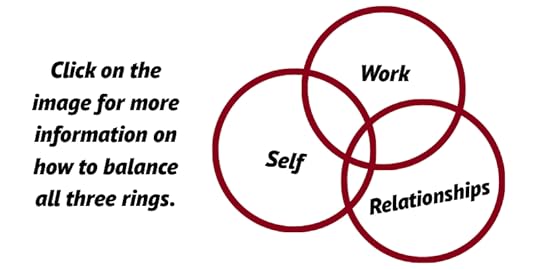
Some ideas to help you balance between your 3 rings might include:
Make time for a hobby you enjoy.
Spend an evening with family or friends who encourage you.
Go for a walk, plant a garden, or do something that recharges you.
When you find joy outside of work, your job doesn’t feel like it has to give you everything.
A Final ThoughtJob hugging doesn’t have to be a season of joyless living. With the right mindset, it can become a time of growth, stronger connections, and learning what resilience really looks like. And when the time comes to move on, you’ll be in a much healthier place to let go.
August 10, 2025
Have You Optimized Your Day Into Oblivion?
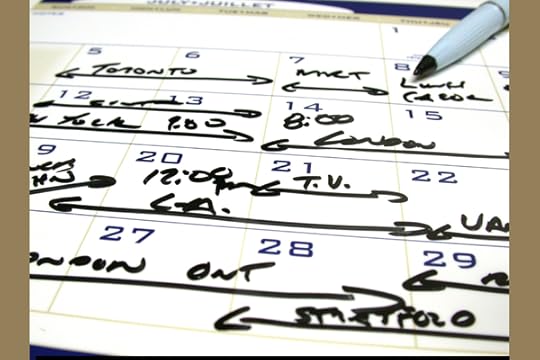
“If I could just stop time for a moment…”
It’s a phrase we’ve all thought—whether it’s in the middle of a chaotic day or when we finally stumble upon a quiet moment we wish would last longer. Of course, we know we can’t actually stop time. And truthfully, we can’t really save time either.
But what we can do is recover space in our day—by delegating more, building better routines, or simply letting go of tasks that don’t truly matter.
In one of my presentations, I ask participants to imagine they’ve just recovered 30 minutes in their day. Then I ask, “What are you going to do with that recovered time?”
You’d think the room would brighten with a flurry of light bulb moments and energized ideas.
Instead, I often hear something like, “I guess I’d just work more.”

That’s when I know I’ve hit a nerve.
We’ve become so obsessed with productivity hacks and squeezing more into each day that we’ve forgotten the original point: to create more space for what truly nourishes us and helps us be at our best. We end up more efficient…but not necessarily more fulfilled.

If that sounds familiar—if you’ve optimized your day into oblivion and you’re feeling more robotic than human—it might be time to rethink your relationship with time.
Here’s a simple 3-step process I encourage you to try.
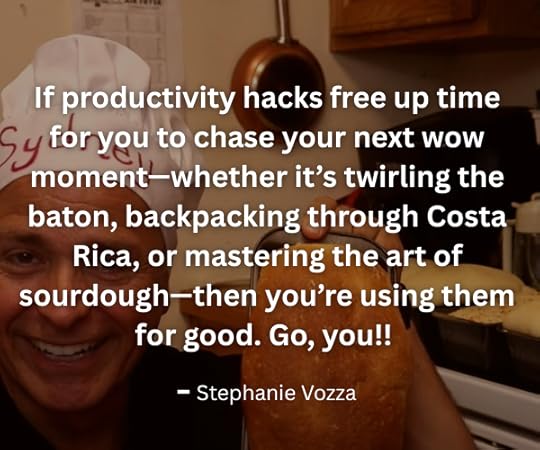
1. List Your “Wow” MomentsIn a powerful article for Fast Company, writer Stephanie Vozza encourages us to make a list of “wow” moments—those little things that make us feel alive, connected, or joyful. They aren’t grand events; they’re the small-but-mighty moments that light us up.
Break them into time blocks—15 minutes, 30 minutes, an hour. A short walk. A phone call with a friend. Time with a book that inspires you.
 2. Make a Less-More Chart
Grab a sheet of paper. Draw a line down the middle. On one side, list the tasks and activities you could spend less time on. On the other, write what you want to spend more time doing.
Ask yourself. “If I spent less time on this... what could I do more of that actually excites me?”
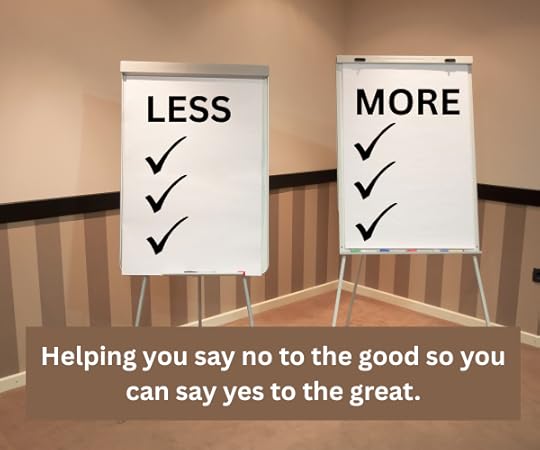
This chart becomes your personal productivity compass—helping you say no to the good so you can say yes to the great.
3. Let Your ‘Why’ Drive Your ProductivityOnce you're clear on what really matters to you, time-saving strategies take on a whole new purpose. You’re no longer just trying to be faster—you’re creating space for the things that bring you joy, connection, and energy.
And that’s when real motivation kicks in.
Don’t let your quest for efficiency steal the joy and connection from your day.
You don’t need to stop time. You just need to use it better.July 25, 2025
Blueberries or Tomatoes? The Juicy Truth About Leading People Well
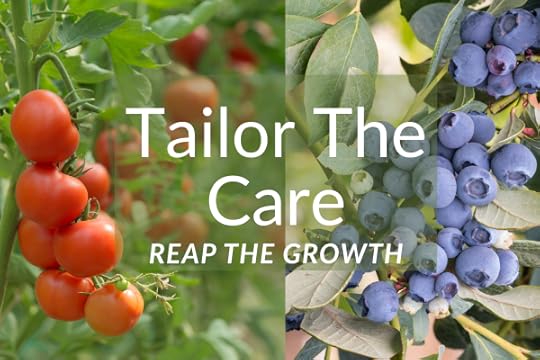
As a keynote speaker and author dedicated to helping leaders make the best choices with their time, I’ve found that some of my greatest leadership insights come from the backyard. Gardening has taught me so much—not just about cultivating fruit, but about cultivating people.
One of the clearest lessons? Leadership is a lot like growing tomatoes and blueberries.
The Tale of Two Plants: Blueberries vs. TomatoesIn my garden, I grow both tomatoes and blueberries. They’re delicious in their own way, but how they grow—and what they require from me—is remarkably different.
Blueberries are low-maintenance. Once planted in the right spot and watered early on, they mostly take care of themselves. You harvest the fruit each year and prune the plant after the season ends.
Tomatoes, on the other hand, are higher-maintenance. You often start with seeds or seedlings indoors. Then you move them outside and the real work begins: watering, fertilizing, watching for pests, and most importantly—providing support. Without staking or caging, tomato plants can’t hold the weight of their own fruit.
Both plants yield valuable results—but they need very different types of care.
People Grow Like Plants: Customizing LeadershipIt’s the same with your team.
Some team members are like blueberries—they thrive with independence and minimal oversight.
Others are like tomatoes—they need more guidance, encouragement, structure, and regular check-ins to grow at their best.
Your job as a leader is to recognize those needs and respond accordingly.
Three Leadership Lessons From the Garden1. Don’t Expect Everyone To Grow the Same Way
Tomatoes aren’t blueberries—and neither are your team members.
Ask yourself:
Am I expecting everyone to develop at the same rate or in the same way?
Instead, meet each person where they are and focus on their next step in growth—not someone else’s.
2. Prepare The Environment Before Planting
Growth doesn’t happen in a vacuum. For example:
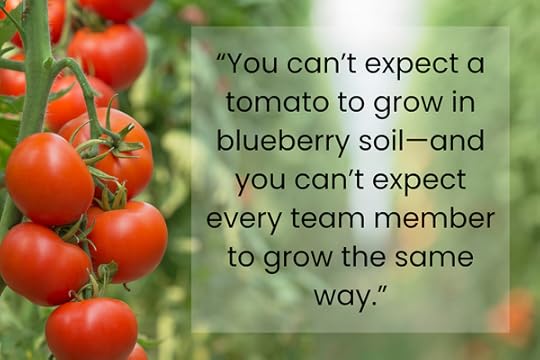
Blueberries need a soil pH of 4.5 to 5.
Tomatoes thrive in soil closer to 6 to 6.5.
Plant a tomato in blueberry soil, and it struggles. Similarly, if your team’s environment doesn’t match their needs, they won’t grow.
Ask yourself:
Does this person need more structure, clearer expectations, or more frequent feedback?
Or do they grow best with space and autonomy?
3. Know When To Step In—And When To Step Back
A thriving leader—like a good gardener—knows when to intervene and when to stay hands-off.
Sometimes, your team member needs direct guidance or help navigating a tough situation. Other times, the best thing you can do is step back, let them wrestle with the challenge, and debrief afterwards.
Leadership Is CultivationWhether you’re growing tomatoes, blueberries, or a diverse group of people, your goal is the same: growth.
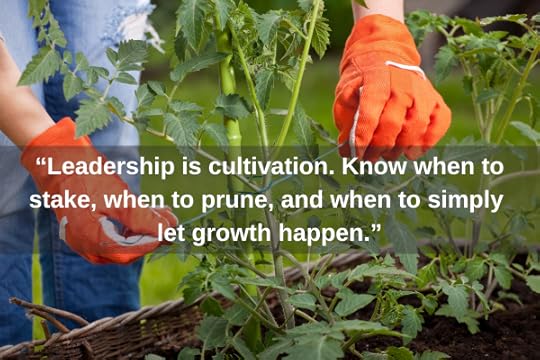
When you take time to understand what helps each team member thrive, you cultivate more than just productivity—you create a stronger, healthier team culture. And that leads to a richer harvest for everyone.
Action Steps To Take:Reflect: Who on your team needs more support right now? Who flourishes with freedom?
Adjust: Take one step to prepare the “soil” for someone’s success—whether that’s a one-on-one meeting, additional clarity, or removing a barrier.
Observe: In the week ahead, ask yourself: Do I need to step in—or step back? And don’t forget to debrief and celebrate the learning.
If you’re looking for more ways to GROW your team, check out my leadership book, Always Growing because:
June 27, 2025
Four Ways to Escape the Trap of the Infinite Workday

Recently, Microsoft released their Work Trends Index report for 2025. One phrase from that report is getting a lot of traction across the internet: “infinite workday.” It describes how our workdays now stretch from earlier in the morning to later in the evening, and for many of us, it can really feel like our workday is infinite.
As a keynote speaker and author, I’m passionate about helping people make the best choices with their time so they can truly thrive. If you’re feeling the weight of the infinite workday, here are four suggestions that have worked for me. Quick disclaimer: These are four suggestions that work for me. Find what works for you.
1. Get Out of Your Echo ChamberWho are you talking to about the challenges of your infinite workday? If you’re like most people, you probably talk to folks who say things like, “Yeah, that’s just the way life and work is these days,” or “I stayed up till 11:30 last night and was back at it at 4:00 a.m.” Those people are only confirming your suspicions.

Instead, try talking to people who have a very different perspective on how they get work done and about life in general. I intentionally have conversations with friends and colleagues each month who remind me that work can be done very differently. For example, I have a friend who works in a completely different industry and always finds time for hobbies and family—no matter how busy things get. Hearing their stories helps me see new possibilities for myself.
2. Create Healthier Boundaries Around Your TimeOne of the most effective ways to combat the infinite workday is to set clear boundaries. For me, this means not checking email until at least 8:00 a.m. Those early hours are sacred: I use them to build up mental, emotional, and physical energy so I can tackle my inbox more efficiently later.
If you’re not sure where to start, try this:
Set a “no work” window. Maybe it’s the first hour after you wake up, or the last hour before bed.
Turn off notifications. This simple step can help you stay present with your family or yourself.
Schedule downtime. Block out time for exercise, hobbies, or relaxation—and treat it as non-negotiable.
Use some painter’s tape! In my Jones Zone video, I share with you how using a little painter’s tape can help you block distractions, move into a deeper focus and set clear boundaries.
3. Plan for All Three RingsIf you’ve followed my work in Juggling Elephants, you know I suggest you have a work ring, a self ring, and a relationships ring. Which one are you planning most intently for? For most of us, it’s the work ring. And is it any wonder that at the end of the day you think, “Well, I’ll just work a little bit longer, I’ll work a little bit longer”?
If you haven’t planned something important for yourself or your relationships, it’s easy to just keep working. So, make sure you plan for all three rings. For example, schedule a workout (self), a dinner with friends (relationships), and your work tasks. That way, you’ll have something to look forward to that will help you step away from work.
 4. Find a Mantra or a Totem
Finally, find a mantra or a totem—something that reminds you that it’s not about working all the time. Here’s one for me: “There will always be more elephants.” I wrote that down a couple weeks ago on my notepad because I was feeling the pressure and needed to remind myself that work will always be there. I also have a vintage coffee cup from my aunt Liv. I got it from her house after she passed away a few years ago. She taught me so much about how relationships are important—it’s not just about work. Seeing that coffee cup helps me stop work when I should.
Take Action This WeekThe workday might feel infinite, but your time is not. Try one or more of these strategies this week. And remember, what works for me might not work for you—experiment and find your own path to balance.
If you’re interested in learning more, check out Juggling Elephants for deeper insights into balancing work, self, and relationships.
June 4, 2025
Stress Less, Live More: The 4 A’s to Reclaim Your Calm

In a world where stress, anxiety, and overwhelm seem like constant companions, finding practical strategies to navigate the chaos is essential. Recently, I’ve been diving into Stop Overthinking by Nick Trenton—a fantastic read packed with actionable ideas to help manage overthinking and the emotional fatigue that often comes with it.
One concept from the book that really stood out to me is the 4 A’s of Stress Management, originally developed by the Mayo Clinic. This timeless framework is especially useful for those of us who feel overloaded—whether professionally, personally, or both. Let’s explore how each “A” can guide you in reclaiming control and creating more mental space.
1. Avoid: Eliminate the UnnecessarySometimes, the best way to manage stress is by simply removing the source.
Think about the tasks or responsibilities that you’ve taken on out of obligation rather than necessity. Are you saying “yes” to things that don’t align with your priorities? Are there commitments that drain your time and energy with little return?
What can you delegate?
Where do you need to say “no”?
What can you eliminate during this season to make room for what truly matters?
Avoidance doesn’t mean ignoring responsibility—it means being intentional about where your time and energy go.
 2. Alter: Change What You Can
If you can’t avoid it, ask yourself: Can I change it?
Could you renegotiate deadlines?
Do you really need to be in every meeting on your calendar?
Have you clearly communicated your needs to others?
Alteration is about taking proactive steps to adjust your current reality so it works for you—not against you. It might require some difficult conversations or creative thinking, but it can make a massive difference in how you experience your day-to-day stress.
7 years ago I was inspired to change/alter some things in my life, and If you want to discover where I took my inspiration from click here. I’m very glad I did!
3. Accept: Embrace the Season You're InThere are times when no matter how much we try, some stressors can’t be avoided or altered. That’s when acceptance becomes your greatest tool.
This doesn’t mean giving up—it means giving yourself grace.
Maybe “done is better than perfect” for certain projects right now. Perhaps you don’t have the capacity to give 100% to everything—and that’s okay. The key is choosing where your best energy goes and giving yourself permission to let go of the rest.
Acceptance is about aligning your expectations with your current season—not some ideal version of what life should look like.
 4. Adapt: Build Resilience
Lastly, focus on building the kind of resilience that helps you not just survive, but thrive, even when the pressure is high.
Are you prioritizing sleep, hydration, and healthy nutrition?
Could regular exercise or movement boost your energy and mood?
Is it time to explore new tools or strategies for personal or professional organization?
Adaptation is about creating sustainable habits and systems that support you in times of stress. Whether it’s through lifestyle changes or learning new ways to work, these efforts pay off in long-term resilience.
Final ThoughtWhat I really love about the 4 A’s is how approachable and flexible the model is. It doesn’t ask you to do everything at once. It just invites you to take the next right step—to avoid, alter, accept, or adapt—based on your current needs and capacity.

Start with one “A” and build from there. You might be surprised how much lighter things begin to feel. Let me know which of the 4 A’s resonates most with your current season—I’d love to hear your thoughts.
May 12, 2025
Outgrow the Status Quo: What Bees Can Teach Us About Focus

This past weekend I got to engage in one of my favorite activities as a beekeeper.
I got to catch a swarm of bees.
If you haven’t seen it before, it’s wild. About half of the bees leave with a queen and set up somewhere temporarily while they’re looking for their new permanent home. In the case this weekend, it was in the branches of a cedar tree. It’s my opportunity as a beekeeper, to go put a box or a hive underneath them and then and try to entice them to go in before they fly away.
It looked really chaotic for a while.

Eventually they settled in. And now they have more room to grow and thrive in their new environment.
The experience always reminds me that sometimes we need to do the same. When our focus is frayed, when our motivation is gone, when we feel stuck, the answer isn’t always to push and then push even harder. Sometimes it’s to disrupt ourselves. Not recklessly, but with intention like the bees.
If you’re in that place right now, here are three ways to “swarm your status quo” and reset your focus:
1. Change Your Environment to Change Your FocusWhen bees swarm, it’s because their old hive no longer supports their growth. It’s overcrowded, resources are stretched, and there’s simply not enough space to thrive. So they leave. They start fresh somewhere new.
The same principle applies to us. If your physical or digital environment is cluttered, noisy, or just uninspiring, it’s likely stifling your focus.
What would a fresh start look like for you? Maybe it’s rearranging your workspace so it feels more open and inviting. Maybe it’s switching locations entirely: working at a library, a café, or even outside. Small adjustments like better lighting, a plant on your desk, or putting your phone in another room can create mental space you didn’t realize you were missing.
Our environment often speaks to our subconscious before we even realize it. When it signals calm, clarity, and purpose, our focus tends to follow.
 2. Break the Pattern Before It Breaks Your Focus
Routines can be powerful. They help us build momentum, create consistency, and reduce indecision fatigue. But sometimes, routines become ruts. If you feel like you're going through the motions without making real progress, that’s a sign it’s time to shake things up. What once felt productive can quietly turn into a pattern that holds you back. Maybe it’s trying a new productivity method, like the Pomodoro technique (working in short, focused sprints with breaks in between). What patterns could you start setting that would help you focus?
It could also mean doing something completely different for a day to reset your mental rhythm: take a long walk, start your morning without screens, or even do a task you’ve been putting off just to free up mental space.
Patterns are powerful, but only if they’re aligned with where you want to go. If they’re not, break them—and build new ones that actually serve you.
 3. Ask Better Questions to Get Better Answers
Back in the old hive, the bees sensed that something wasn’t working. It was crowded, overstressed, and unsustainable. They didn’t just keep going. They left. But they didn’t do it randomly—they followed cues and made collective decisions based on instinct and observation.
When was the last time you paused long enough to ask yourself the right questions?
It’s easy to power through the week on autopilot, only to realize we’ve been focusing on the wrong things. Try asking:
What’s draining more of my energy than it should?
What distractions have I let become part of my routine?
What task or goal actually deserves my full attention right now?
The quality of your questions determines the quality of your focus. Don’t ask, “Why can’t I focus?” Ask, “What’s in the way of my focus?” That shift can reveal surprising and powerful answers.
 Design Your Focus, Don’t Just Demand It
In moments when we feel stuck in our work or life, it’s tempting to double down and just try harder. But often, the answer isn’t more effort—it’s smarter design.
Like bees, sometimes we need to swarm. We need to disrupt ourselves—thoughtfully, intentionally—in order to move forward. New space, new habits, and new questions can lead us not just back to productivity, but to purpose.
May 2, 2025
The Master Chef’s Guide to Focus: How Managing Your Browser Tabs Can Boost Your Productivity

In a professional kitchen, no chef prepares a steak, a cake, and a casserole all at once with all the ingredients scattered across the counter. There’s a method: one recipe at a time, with only the ingredients needed for that specific dish.
The same principle applies to how we work — especially in the digital world. Every time we open multiple browser tabs in the name of “productivity,” we’re setting ourselves up for distraction. One tab for email, one for research, another for the calendar, and soon our screen resembles a digital junk drawer. It may feel like we’re staying on top of things, but more often, we’re just scattering our focus.

Studies consistently find that task switching-even something as simple as glancing at another tab-drains mental energy, increases the likelihood of errors, and prolongs the time it takes to complete tasks.
An example would be if you’re baking a cake: if you leave the batter to go chop onions for a casserole, then come back and wonder if you already added the baking powder, you’re likely to make a mistake. Similarly, every time you switch tabs, your brain must reorient itself, interrupting your flow and costing valuable time and attention.
A better approach is to have as few tabs open as possible so you don't get distracted by what else you could be cooking up. Here are three suggestions to help you be more of a master chef when it comes to focusing.
One Recipe At A Time
To avoid burning your productivity soufflé, think about the tasks that you need to work on. What is the one thing I need to accomplish right now? Then gather the ingredients and open only the tabs necessary to complete the task.

Example: If you’re drafting a report, keep only your document and the relevant research open. Resist the urge to open email or social media tabs until the task is complete.
Have A Recipe Card For Side Dishes
When a new thought pops up, perhaps a reminder to check a different project or send an email, resist the temptation to open a new tab immediately. Instead, jot it down on a sticky note or in a digital notepad. This preserves your focus while ensuring you don’t lose important ideas.
Example: Like a chef setting aside ingredients for a later dish, you’re parking your ideas for another time without cluttering your current workspace.
Clean Up As You Go
Once you complete a task, close the associated tabs intentionally. Take a moment to acknowledge the accomplishment before moving on to the next task and opening a new tab. This “clean as you go” approach keeps your digital workspace organized and your mind clear.
Example: After finishing a recipe, a chef cleans the counter before starting the next dish. Similarly, closing tabs clears your digital counter for what’s next.
The Science Behind the Strategy
The benefits of this approach are supported by research. Studies on task switching show that switching between tasks leads to slower responses and more errors compared to focusing on one task at a time. The American Psychological Association notes that multitasking increases cognitive load and the likelihood of mistakes because the brain must constantly reorient itself.

Final Thoughts: Focus Like a Master Chef
Next time you sit down to work, think like a master chef. Choose your recipe. the task at hand, gather only the necessary ingredients (tabs), and dedicate your attention to creating something exceptional. Focus is a skill that requires intention and practice, but the payoff is well worth it.
Once you’re comfortable keeping a tab on all your tabs, you may find yourself asking about all those inboxes you have. Click here for three quick suggestions on you can use to start pruning those for better productivity as well.