
Shelley Chappell's Blog
December 30, 2018
Closed
 Hi folks, I’m no longer updating this blog. If you’d like to get in touch with me, email shelleychappell@gmail.com.

December 19, 2018
 My new story can be found under
 November 29, 2018
It's that time of year!
It's that time of year - time for the Indie Authors' Advent Calendar! Sign up and get a daily email with a story and a bonus something extra from each of the authors for each day of December up to Christmas Day - or just pop in to the homepage and open each story on the Advent Calendar as each day's story becomes available. I'm looking forward to a bunch of new stories, all on the theme of SNOW! Thanks, as always, to Katherina Gerlach, for hosting and organising the calendar.
Visit and/or sign up here:
https://adventcalendar.katharinagerlach.com/
Visit and/or sign up here:
https://adventcalendar.katharinagerlach.com/
November 12, 2018
New Story - "The Time of Singing Has Come" on Kingdoms in the Wild
 After taking a long hiatus from writing over the last year, I am very happy to share the news that I have a new story available to read at
Kingdoms in the Wild
, an independent publishing platform showcasing "poetry + fiction by and for wide-eyed dreamers". (What a lovely description - I'm delighted to be included in that bunch!).
After taking a long hiatus from writing over the last year, I am very happy to share the news that I have a new story available to read at
Kingdoms in the Wild
, an independent publishing platform showcasing "poetry + fiction by and for wide-eyed dreamers". (What a lovely description - I'm delighted to be included in that bunch!). My story is "The Time of Singing Has Come". In the far future, humanity has split into two communities: the Ark, who strive to heal the ruined world, and the Flock, a winged human sub-species. Dunna, raised in a remote Ark, is enthralled by the song of the Flock.
Here's a teaser from the start:
I never see them, only the blurred edges of their shadows. I hear their singing. It keeps me awake during the long, hot nights when I cannot sleep with my shutters closed because the heat becomes too oppressive in the house, yet I cannot sleep with my shutters open because my heart is suppressed in my chest, beating to get out. Their singing makes it flutter like their wings.
When I walk through the garden in the mornings, I almost catch a glimpse: I step around a broad-leaved plant, hear broken whispers, the battering of wings, but all I see are lengthening silhouettes, and when my eyes try to follow, they are blinded by the sun.
My brothers think my longing is a sickness. They hate that I spend all afternoon before my harp, trying and failing to recapture the music that haunts my waking dreams.
... Read the rest on Kingdoms in the Wild.
I hope you enjoy my story and are able to take some time to explore the other stories and poems on Kingdoms in the Wild. Keep dreaming!
February 28, 2018
Sir Julius Vogel Awards - Finalist
Wonderful news – Wish Upon a Southern Star is a finalist in New Zealand’s Sir Julius Vogel Awards for Best Collected Work. A big thanks to those who nominated the collection for the award! Voting on the finalists is by members of SFFANZ (the Science Fiction and Fantasy Association of New Zealand) and the results will be announced at Easter time at ConClave3, the 39th New Zealand National Science Fiction and Fantasy Convention. To view the full list of finalists, visit http://www.sffanz.org.nz/sjv/sjvFinalists-2018.html.
January 14, 2018
Teaching Notes - Wish Upon a Southern Star
Teaching Notes for Wish Upon
a Southern Star are now available for download as a PDF below.
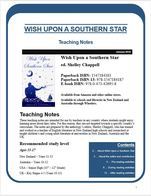 The 16-page Teaching Notes for Wish Upon a Southern Star contain pre-reading, during reading and after reading activities for a recommended study level of ages 15-17.
'Pre-reading' activities include starter activities (a discussion/writing starter and directions to a fun introductory quiz), activities for defining fairy tales, exploring the history of fairy tales (esp the tellers of fairy tales), comparing Charles Perrault and the Grimms' versions of Red Riding Hood and Cinderella, and exploring tale types using the Aarne-Thompson index. It also offers ways of approaching fairy tales with suggested activities for reader-response theory, feminist criticism and Marxist/class criticism approaches, among others.
The 'during reading' section offers questions for students to consider when approaching an anthology, guidance for keeping a reading journal, and generic questions on themes, plot and structure, setting, characterisation, narrative point of view and style to be applied to some or all of the stories as they read.
'After reading' provides 'ways in - sample questions' for each of the stories and the anthology as a whole, guidance on how to undertake a comparative analysis between an original tale and its retold version, and extension activities that include further reading and research, transactional writing, creative writing, and other creative endeavours.
I hope that these teaching notes will be helpful and I encourage teachers to adapt the notes to suit their teaching needs.
Copies of Wish Upon a Southern Star can be ordered from Amazon and other online stores. Schools and libraries in New Zealand and Australia may like to order via Wheelers.
Download the teaching notes here: [image error] wish_upon_a_southern_star_teaching_notes.pdfFile Size: 6798 kbFile Type: pdfDownload File
December 13, 2017
The Hunt - a free Christmas Story
For the last four years I've been very happy to contribute to Katharina Gerlach's Indie Author's Advent Calendar. The Calendar provides readers with a daily Christmas story from a range of authors up until Christmas Day. You don't have to sign up to be able to read the stories on the webpage, but if you'd like to sign up to the newsletter you'll get a bonus with each story and receive an ebook of all the stories in one bundle on Christmas day.
The challenge for this year's stories was to incorporate a tree. My story, "The Hunt," is available to read on day 13 of the calendar. Here is a snippet:
In Camerdown, every spring they hold a festival, the hunt for the White Stag. They say hunters come from all over the kingdom for a chance to claim its ghostly pelt and hang its crowning glory upon their wall. They crave the fame and the approbation that would follow. Every year for the last forty years, men on foot and men on horses have limped and stumbled through the wooded glens around Camerdown, bows and arrows ever at the ready, and every year for the last forty years all those men have carried home is a constellation of itchy bites, the heads and pelts of other unfortunate deer, and stories – stories of glimpses or encounters with the elusive white beast.
Lall has its own hunt to draw in strangers. ...
Read the rest of the story here. I hope you enjoy it!
If you'd like to read my stories for the Indie Authors' Advent Calendar from past years, visit my 'Shelley's Stories' page above and follow the links to Smashwords to read a free copy of "Eirlys and the Seven Naughty Children" (2014) and "The Longest Night" (2015).
The challenge for this year's stories was to incorporate a tree. My story, "The Hunt," is available to read on day 13 of the calendar. Here is a snippet:
In Camerdown, every spring they hold a festival, the hunt for the White Stag. They say hunters come from all over the kingdom for a chance to claim its ghostly pelt and hang its crowning glory upon their wall. They crave the fame and the approbation that would follow. Every year for the last forty years, men on foot and men on horses have limped and stumbled through the wooded glens around Camerdown, bows and arrows ever at the ready, and every year for the last forty years all those men have carried home is a constellation of itchy bites, the heads and pelts of other unfortunate deer, and stories – stories of glimpses or encounters with the elusive white beast.
Lall has its own hunt to draw in strangers. ...
Read the rest of the story here. I hope you enjoy it!
If you'd like to read my stories for the Indie Authors' Advent Calendar from past years, visit my 'Shelley's Stories' page above and follow the links to Smashwords to read a free copy of "Eirlys and the Seven Naughty Children" (2014) and "The Longest Night" (2015).
December 10, 2017
Review - Wish Upon a Southern Star
Want to know more about Wish Upon a Southern Star? Read a review by Lee Murray on the SpecFicNZ website.
November 12, 2017
Storytime Lane: A new literacy resource (Part 2)
This weekend I have the pleasure of interviewing Graham Davidson and Emily S. Smith about their new, large-scale project, Storytime Lane, described as an ‘out-of-the-box, one-stop shop’ literacy resource for young children, their parents and educators.
Storytime Lane will be a multi-media approach to storytelling that encompasses a YouTube channel showing regular storytelling webisodes, a corresponding website with free resources and activities, and an online store where adults can purchase the stories found 'in the lane.'
In Part One of the interview, view a teaser of the project and find out how Emily and Graham met, what got them so interested in literacy, and what skills each of them brings to Storytime Lane. Q. What exactly is a storytelling webisode? How is it different from a regular Youtube or TV episode?
EMILY: A Storytime Lane storytelling webisode will combine video of the character of Aunty Em reading the picture books [written and illustrated by Graham and Emily] in “real life” with full screen illustrations of the stories. These illustrations will include simple animated components and lip sync when characters speak. Throughout each webisode, Aunty Em breaks down the 4th wall by asking the viewers what they think of something that’s just happened, and pointing out different things in the story. The idea is to make the Storytime Lane videos more interactive for the children (and adults) watching.
Storytime Lane was created to be more than just YouTube videos or a TV episode. It is a multi-dimensional approach to storytelling, encompassing the YouTube channel, a corresponding website with free resources and activities that promote literacy and STEM (Science, Technology, Engineering and Mathematics) skills, and an online store where adults can purchase the stories found “in the lane” to share with the children in their lives. In this way, what is seen in each webisode is only a small part of the overall learning that can occur. By using the resources, such as Storytelling Stones or puppets, in conjunction with watching the videos and having adults share the books “in real life”, children are able to engage with the stories in a multitude of ways. This is what makes Storytime Lane different to a regular YouTube webisode or a TV episode.
GRA: Children have shorter attention spans than most adults, so the traditional half hour program format has little appeal to them, and the rigid programming schedules of free to air television don’t fit with modern lifestyles.
Webisodes are becoming popular marketing tools as they give control to the viewer as opposed to the broadcaster.
The other big benefit is that it allows children the opportunity to watch an episode multiple times, which will help them learn to associate the words they’re hearing with the words on the page. When they get a hard copy of one of our books, their familiarity with the story will make it easier for them to read the book for themselves.
Q. I understand that you are going to have an Auslan interpreter signing some of the stories in each of the webisodes. That sounds really amazing. Why did you choose this over the option of subtitles and how will it work visually for those watching the webisode?
GRA: This is Emily’s great passion, which I think is brilliant. So, I’ll defer to her to answer this one.
EMILY: Thanks, Graham. We really wanted Storytime Lane to be accessible to as many children as possible. The age group we are targeting (2-5 year olds) generally aren’t able to read. Now for hearing children who are watching the webisodes, this isn’t an issue. But for a child who is deaf, following the story becomes a little more challenging. By including an Auslan interpreter signing the stories rather than having subtitles, children who are deaf are able to follow the story in a language that they know and understand, as well as being able to use the illustrations for information. This makes the stories far more accessible to a broader range of children. I personally also think it’s really important to expose young children to diversity from a very young age so it is familiar to them, and they are comfortable with it. In seeing an individual signing the story, it opens up the opportunity for discussions with young children about why they are signing and how there are many different ways of communicating.
Visually, each webisode will have the video of Aunty Em telling the story, and the full screen illustrations, with the Auslan interpreter presented in a small frame in one of the corners of the video. This way, the viewer, whether they be hearing impaired or not, is able to have access to the text as it is spoken and signed.
Q. What kind of free resources and activities can people expect to find on the website? Will you be creating all of these yourselves and how do you intend them to be used?
EMILY: The resources and activities that will be available on the website will all have links to each story presented in the videos in some way. These include literacy resources such as print-outs for masks, puppets, and story-stones, activities related to STEM (Science, Technology, Engineering and Maths) such as simple coding algorithm games, matching card games, and “make your own” block puzzles, suggestions and instructions for art experiences, as well as physical movement games. The resources will be “make at home”, whereby parents, carers and educators can print off images and utilise easy-to-find items to create their own. All of the activities and resources will come with instructions and suggestions for how they can be used to encourage literacy and STEM understanding.
GRA: Between Emily’s experience with early childhood learning and my visual creative background, we’ve got the skill set to put together a broad range of these resources. They also give the kids a reason to keep coming back to the site and a sense of belonging by becoming members of the Storytime Lane kid’s club.
Q. At the online store adults can purchase the stories found ‘in the lane’. What does this mean? Will there be print versions of the webisodes available? How will these stories link in with the webisodes?
EMILY: The online store will provide links to online booksellers (such as Amazon, Booktopia and The Book Depository) where adults can purchase the picture books presented in the Storytime Lane webisodes, using a “print-on-demand” format. What this means is that parents, carers and educators can share the “real life”, hardcopy book with their children. Children can also use these books to “read along” with Aunty Em.
Q. When can we expect to see our first webisode and access the website and store?
GRA: We’ll be shooting the footage for the first five books on the same day, so we’ll be able to roll them out as quickly as I can get the illustrations and animation out. We’ll also be preparing a wide range of “how to” videos for the resources page.
The launch will be held at Wallsend Library on Wednesday, January 27th at 11am. And of course, everyone who’s interested is welcome to attend.
We’ve been extremely lucky to have the support of the Hunter Writers Centre, who have provided the location for shoot, organised the launch venue, and given us tremendous ongoing support.
Thank you, Emily and Graham, for talking with me about your project. I look forward to visiting Storytime Lane!
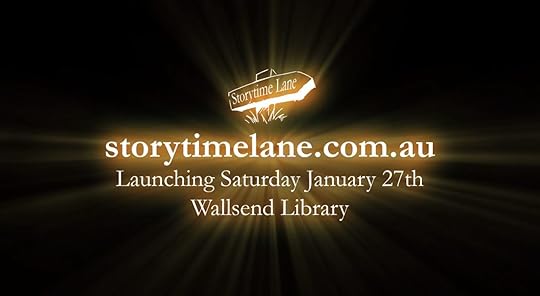
Storytime Lane will be a multi-media approach to storytelling that encompasses a YouTube channel showing regular storytelling webisodes, a corresponding website with free resources and activities, and an online store where adults can purchase the stories found 'in the lane.'
In Part One of the interview, view a teaser of the project and find out how Emily and Graham met, what got them so interested in literacy, and what skills each of them brings to Storytime Lane. Q. What exactly is a storytelling webisode? How is it different from a regular Youtube or TV episode?
EMILY: A Storytime Lane storytelling webisode will combine video of the character of Aunty Em reading the picture books [written and illustrated by Graham and Emily] in “real life” with full screen illustrations of the stories. These illustrations will include simple animated components and lip sync when characters speak. Throughout each webisode, Aunty Em breaks down the 4th wall by asking the viewers what they think of something that’s just happened, and pointing out different things in the story. The idea is to make the Storytime Lane videos more interactive for the children (and adults) watching.
Storytime Lane was created to be more than just YouTube videos or a TV episode. It is a multi-dimensional approach to storytelling, encompassing the YouTube channel, a corresponding website with free resources and activities that promote literacy and STEM (Science, Technology, Engineering and Mathematics) skills, and an online store where adults can purchase the stories found “in the lane” to share with the children in their lives. In this way, what is seen in each webisode is only a small part of the overall learning that can occur. By using the resources, such as Storytelling Stones or puppets, in conjunction with watching the videos and having adults share the books “in real life”, children are able to engage with the stories in a multitude of ways. This is what makes Storytime Lane different to a regular YouTube webisode or a TV episode.
GRA: Children have shorter attention spans than most adults, so the traditional half hour program format has little appeal to them, and the rigid programming schedules of free to air television don’t fit with modern lifestyles.
Webisodes are becoming popular marketing tools as they give control to the viewer as opposed to the broadcaster.
The other big benefit is that it allows children the opportunity to watch an episode multiple times, which will help them learn to associate the words they’re hearing with the words on the page. When they get a hard copy of one of our books, their familiarity with the story will make it easier for them to read the book for themselves.
Q. I understand that you are going to have an Auslan interpreter signing some of the stories in each of the webisodes. That sounds really amazing. Why did you choose this over the option of subtitles and how will it work visually for those watching the webisode?
GRA: This is Emily’s great passion, which I think is brilliant. So, I’ll defer to her to answer this one.
EMILY: Thanks, Graham. We really wanted Storytime Lane to be accessible to as many children as possible. The age group we are targeting (2-5 year olds) generally aren’t able to read. Now for hearing children who are watching the webisodes, this isn’t an issue. But for a child who is deaf, following the story becomes a little more challenging. By including an Auslan interpreter signing the stories rather than having subtitles, children who are deaf are able to follow the story in a language that they know and understand, as well as being able to use the illustrations for information. This makes the stories far more accessible to a broader range of children. I personally also think it’s really important to expose young children to diversity from a very young age so it is familiar to them, and they are comfortable with it. In seeing an individual signing the story, it opens up the opportunity for discussions with young children about why they are signing and how there are many different ways of communicating.
Visually, each webisode will have the video of Aunty Em telling the story, and the full screen illustrations, with the Auslan interpreter presented in a small frame in one of the corners of the video. This way, the viewer, whether they be hearing impaired or not, is able to have access to the text as it is spoken and signed.
Q. What kind of free resources and activities can people expect to find on the website? Will you be creating all of these yourselves and how do you intend them to be used?
EMILY: The resources and activities that will be available on the website will all have links to each story presented in the videos in some way. These include literacy resources such as print-outs for masks, puppets, and story-stones, activities related to STEM (Science, Technology, Engineering and Maths) such as simple coding algorithm games, matching card games, and “make your own” block puzzles, suggestions and instructions for art experiences, as well as physical movement games. The resources will be “make at home”, whereby parents, carers and educators can print off images and utilise easy-to-find items to create their own. All of the activities and resources will come with instructions and suggestions for how they can be used to encourage literacy and STEM understanding.
GRA: Between Emily’s experience with early childhood learning and my visual creative background, we’ve got the skill set to put together a broad range of these resources. They also give the kids a reason to keep coming back to the site and a sense of belonging by becoming members of the Storytime Lane kid’s club.
Q. At the online store adults can purchase the stories found ‘in the lane’. What does this mean? Will there be print versions of the webisodes available? How will these stories link in with the webisodes?
EMILY: The online store will provide links to online booksellers (such as Amazon, Booktopia and The Book Depository) where adults can purchase the picture books presented in the Storytime Lane webisodes, using a “print-on-demand” format. What this means is that parents, carers and educators can share the “real life”, hardcopy book with their children. Children can also use these books to “read along” with Aunty Em.
Q. When can we expect to see our first webisode and access the website and store?
GRA: We’ll be shooting the footage for the first five books on the same day, so we’ll be able to roll them out as quickly as I can get the illustrations and animation out. We’ll also be preparing a wide range of “how to” videos for the resources page.
The launch will be held at Wallsend Library on Wednesday, January 27th at 11am. And of course, everyone who’s interested is welcome to attend.
We’ve been extremely lucky to have the support of the Hunter Writers Centre, who have provided the location for shoot, organised the launch venue, and given us tremendous ongoing support.
Thank you, Emily and Graham, for talking with me about your project. I look forward to visiting Storytime Lane!
November 11, 2017
Storytime Lane: a new literacy resource
This weekend I have the pleasure of interviewing Graham Davidson and Emily S. Smith about their new, large-scale project, Storytime Lane, described as an ‘out-of-the-box, one-stop shop’ literacy resource for young children, their parents and educators.
Storytime Lane will be a multi-media approach to storytelling that encompasses a YouTube channel showing regular storytelling webisodes, a corresponding website with free resources and activities, and an online store where adults can purchase the stories found 'in the lane.'
You can view a teaser of the project here: https://vimeo.com/240103462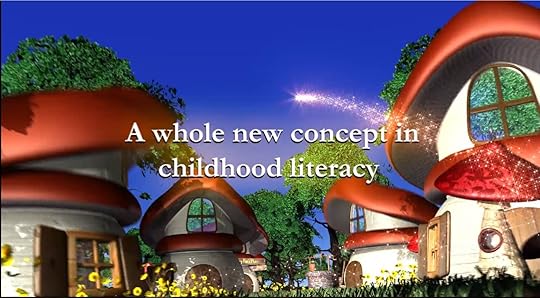
Q.Graham and Emily, how did the two of you meet and when/how did you come up with the idea for this project?
GRA: When I turned up to my first children’s writers’ group meeting, Emily was the only other one who was early, and we pretty much hit it off from the word go, both of us having a bit of an off the wall sense of humour.
It amazed me from that first meeting how Emily is almost like a contemporary Dr Seuss, able to turn out funny rhyme after funny rhyme … I refer to her as the rhyming factory these days.
EMILY: We met almost 2 years ago through the Hunter Writers’ Centre Children’s Writing Critique group, but the concept of Storytime Lane came about 6 months ago.
As an early childhood educator, I have always loved storytelling, and using various avenues to tell engaging stories for young children. I created a YouTube channel where I used self-made sock monkeys to tell stories for the children at my work (although this extended out to people from all over).
Graham had seen these very amateur videos and was very enthusiastic about the idea of visual storyelling. We got together and brainstormed some ideas, and Storytime Lane was born.
Q: What got each of you so interested in literacy issues?
GRA: I think when you become a parent, the importance of children’s literacy really hits you. It’s been interesting watching my own children’s approach to reading over the years. The daughter became a prolific reader from very early on and devours books like most kids devour lollies, whereas my son has never had much interest, so struggled with his early years at school. I came to realise from that experience the importance of encouraging kids to focus on the story aspect of books, so they can feel excited when they pick one up about what they may discover inside.
EMILY: I have always loved reading, right from the time I was very young. I realise now that I was very lucky to have been raised in a household that valued reading, one where I was exposed to picture books and storytelling from a very early age.
Throughout my career as an early childhood teacher, I have come across so much research that has stressed the importance of developing literacy skills and a love of literacy in the early years. It is clear that poor levels of literacy can have detrimental effects not just on the individual, but on society as a whole. Children who do not develop reading skills are on a lifetime trajectory of limited educational achievement and limited employment opportunities. As an educator, I feel like I have a duty to do whatever I can to help children develop a love of reading and an interest in literacy.
Q. What different skills and interests do each of you bring to the project?
GRA: Forty years working as a creative professional in advertising has left me with a diverse visual skill set. Much of that time has been spent animating and illustrating, which has obvious benefits when approaching children’s literacy. My understanding of marketing principles also has benefits with regarding encouraging kids to want to explore the world of books. I’d much rather use my talents to get kids excited about books than sell tyres or furniture to their parents.
EMILY: I think we are really lucky in this collaboration because our skills and interests complement each other so well for what we are trying to achieve. I feel very lucky to be working alongside Graham who brings a totally different element of creativity to the project.
I have spent the last 15 years of my life learning about early childhood education, and then implementing this knowledge in long day care settings. This has meant that I have had the joy of spending many hours engaging with young children, reading picture books, creating puppet stories, engaging in dramatic play, and learning about the interests and humour of young children and what makes them tick. There have been many times when parents have come to collect their child from care and the child has insisted that they stay to listen to the end of my story or puppet show, so I guess that means I’m doing something right. People have said that I’m an energetic over-actor, which young children really seem to appreciate.
I also love books and the English language in general. Picture books that rhyme have always been a favourite of mine, and so the majority of stories that I write (and read) are rhyming ones. There is so much learning that can take place through exposure to and interaction with rhyme and rhythm. I’ve found that these kinds of stories are also more memorable to the children- it’s amazing how much of the text they can recall.
In Part Two of this interview, find out how Auslan will be incorporated into Storytime Lane, what resources and activities will be available and when we can visit!
Storytime Lane will be a multi-media approach to storytelling that encompasses a YouTube channel showing regular storytelling webisodes, a corresponding website with free resources and activities, and an online store where adults can purchase the stories found 'in the lane.'
You can view a teaser of the project here: https://vimeo.com/240103462
Q.Graham and Emily, how did the two of you meet and when/how did you come up with the idea for this project?
GRA: When I turned up to my first children’s writers’ group meeting, Emily was the only other one who was early, and we pretty much hit it off from the word go, both of us having a bit of an off the wall sense of humour.
It amazed me from that first meeting how Emily is almost like a contemporary Dr Seuss, able to turn out funny rhyme after funny rhyme … I refer to her as the rhyming factory these days.
EMILY: We met almost 2 years ago through the Hunter Writers’ Centre Children’s Writing Critique group, but the concept of Storytime Lane came about 6 months ago.
As an early childhood educator, I have always loved storytelling, and using various avenues to tell engaging stories for young children. I created a YouTube channel where I used self-made sock monkeys to tell stories for the children at my work (although this extended out to people from all over).
Graham had seen these very amateur videos and was very enthusiastic about the idea of visual storyelling. We got together and brainstormed some ideas, and Storytime Lane was born.
Q: What got each of you so interested in literacy issues?
GRA: I think when you become a parent, the importance of children’s literacy really hits you. It’s been interesting watching my own children’s approach to reading over the years. The daughter became a prolific reader from very early on and devours books like most kids devour lollies, whereas my son has never had much interest, so struggled with his early years at school. I came to realise from that experience the importance of encouraging kids to focus on the story aspect of books, so they can feel excited when they pick one up about what they may discover inside.
EMILY: I have always loved reading, right from the time I was very young. I realise now that I was very lucky to have been raised in a household that valued reading, one where I was exposed to picture books and storytelling from a very early age.
Throughout my career as an early childhood teacher, I have come across so much research that has stressed the importance of developing literacy skills and a love of literacy in the early years. It is clear that poor levels of literacy can have detrimental effects not just on the individual, but on society as a whole. Children who do not develop reading skills are on a lifetime trajectory of limited educational achievement and limited employment opportunities. As an educator, I feel like I have a duty to do whatever I can to help children develop a love of reading and an interest in literacy.
Q. What different skills and interests do each of you bring to the project?
GRA: Forty years working as a creative professional in advertising has left me with a diverse visual skill set. Much of that time has been spent animating and illustrating, which has obvious benefits when approaching children’s literacy. My understanding of marketing principles also has benefits with regarding encouraging kids to want to explore the world of books. I’d much rather use my talents to get kids excited about books than sell tyres or furniture to their parents.
EMILY: I think we are really lucky in this collaboration because our skills and interests complement each other so well for what we are trying to achieve. I feel very lucky to be working alongside Graham who brings a totally different element of creativity to the project.
I have spent the last 15 years of my life learning about early childhood education, and then implementing this knowledge in long day care settings. This has meant that I have had the joy of spending many hours engaging with young children, reading picture books, creating puppet stories, engaging in dramatic play, and learning about the interests and humour of young children and what makes them tick. There have been many times when parents have come to collect their child from care and the child has insisted that they stay to listen to the end of my story or puppet show, so I guess that means I’m doing something right. People have said that I’m an energetic over-actor, which young children really seem to appreciate.
I also love books and the English language in general. Picture books that rhyme have always been a favourite of mine, and so the majority of stories that I write (and read) are rhyming ones. There is so much learning that can take place through exposure to and interaction with rhyme and rhythm. I’ve found that these kinds of stories are also more memorable to the children- it’s amazing how much of the text they can recall.
In Part Two of this interview, find out how Auslan will be incorporated into Storytime Lane, what resources and activities will be available and when we can visit!
Shelley Chappell's Blog

- Shelley Chappell's profile
- 23 followers
Shelley Chappell isn't a Goodreads Author
(yet),
but they
do have a blog,
so here are some recent posts imported from
their feed.
