Dale C. Jellison's Blog
November 2, 2024
Why I write?
Preface
I haven’t updated my blog website in a very long time because of my full-time work as an accountant and, to be honest, lack of motivation to write. It was only recently that I started thinking about posting entries and work on writing stories again.
I’m currently going through my notes and drafts I’ve written years ago to figure out where to (re)start. I’ll write more about where I am today and other thoughts and observations I’d like to share. I’ll also share blog entries I’ve written but never published here on my blog.
I would also like to note that, at the moment, some people will think the layout of my website is pretty bland and could use some work. I’d like to keep things simple, but eventually I’ll make significant improvements to the website. For now, I’m happy to post entries.
The following was going to be my first entry for the blog page back in 2015, but some reason I cannot recall, it never happened.
Entry date: March 30, 2015:
I wasn’t sure how to start my blog with my first entry – maybe an introduction or some lame “Hey, how are you doing?” entry. Then, I thought I should go with the flow of my mind.
I never had an interest in writing during my childhood, only when I was forced to write a story in school. English courses were never my best subject in school, but I got good grades most of the time.
My elementary school had an annual writing contest each year for the 4th and 5th-grade students, and the middle school also had this for the sixth graders. I don’t remember what I wrote in 4th and 5th grade, but I do remember writing “Blast to the Moon” in 6th grade. It was about me and a school friend going up in a rocket to the moon and eventually encountering troubles with our ship. I remember telling this story to my school friend, who probably had no interest in my telling it and quickly ditched me to play football. I was a weird kid. I didn’t win or place in the contest each year.
After high school, I began to take an interest in screenplay writing. I have always been fascinated with movie and television productions and the “behind-the-scenes” look at how the “magic” works. It started when the local television station filmed their show “KidsBits” at my elementary school on my eighth birthday in 1982. Steve Thomas hosted the show. He asked the kids in the audience if anyone had a birthday that day, and I got to be on camera, but I was wicked shy and didn’t say much. Unfortunately, when it was aired later in April of that year, my family was on vacation in California, and I never got to see the television show. This was before the VCR machine became popular. Trips to California and visits to Universal Studios and NBC Studios also influenced my interest in filmmaking.
I started writing screenplays as a hobby during the mid-1990s, studying screenplays of movies and shows. I wrote several screenplays based on my favorite television shows at the time. Eventually, I bought screenplay software and started writing movie scripts and drafting storylines for future screenplays. My focus was using deaf characters.
For a story idea, I wanted to pay homage to one of my favorite books from my youth, Lost on a Mountain In Maine. This storyline involving a deaf boy didn’t take long to write, and I finished the screenplay, Silence of the Wild, in two weeks. It was then suggested that I write this story into a novel. Life and other projects got in the way, and I didn’t write the book until many years later, which would eventually be self-published in February 2014 as Silence in the Wild: A Summer in Maine.
Today, when time allows, my writing consists mostly of novels and short stories. I have learned a lot since self-publishing my first novel. It’s a lot of hard work that requires patience, especially when you’re unable to secure a writer’s agent and a traditional publisher to ease the burden. But honestly, I’m glad I got turned down by agents (it’s a competitive environment for writers)—it allowed me to learn what it takes to publish a book. It’s difficult, I can tell you.
I write for many reasons. I want to share my experience growing up hearing impaired, send a positive message, and make a difference. Also, it can be relaxing to write what’s on your mind. Writing allows your creative mind to flow on paper.
Unfortunately, writing is not my full-time job. It doesn’t pay the bills, so I’ve resorted to only writing when I have time. Maybe someday I will be fortunate to earn a living writing and working on video projects. But, at the very least, I can be proud of the completed projects, published or not.
For this blog, I want to share some insights about life, observations, memories, quirks, and whatever is on my mind. This is a place where I can improve my writing, so please excuse any grammar errors.
So, welcome to Dale’s blog.
Dale C. Jellison authored Silence in the Wild: A Summer in Maine, a coming-of-age adventure set in 1986 about a deaf boy.


December 27, 2020
The reality of self-publishing (for some authors, if not many)
First, I want to thank everyone who purchased and have read Silence in the Wild. It means a lot to me that people are taking out time to read the novel.
I’ll get right to the point: self-publishing is hard work.
When self-publishing, the author does most of the work or hires out tasks to people who specialize in proofreading, marketing, or even preparing books to publish. Because of money constraints, I chose to do everything myself the best I can. Traditional publishing and getting an agent, if you’re lucky to secure both, takes a lot of the weight off your shoulders.
The marketing aspect of my novel Silence in the Wild is a bit tricky for me because I needed to find the audience. I am not very good at marketing, so I researched solutions, knowing full well I may not have any success in my attempts to sell my book. I kept my expectations lower than a gopher’s hole this time round after published the first edition back in 2014.
Here are some marketing examples my time was spent on: using FaceBook ads for a week with no results. Posting on social media (few results). And I asked people to share my social media posts and spread the word, with minimal results.
Another method was mailing, a well-designed and well-thought-out flyer to bookstores in Maine, New Hampshire, Massachusetts, and Vermont. I mailed to nearly 100 bookstores, large and small. I could have emailed the flyer, but I wanted something physically in the buyer’s hands.
The results from the flyer campaign? Two bookstores ordered one copy via Ingram, a book distributor. Yes, only two (2) copies of Silence in the Wild either been sold or on display in two out of the ninety-eight bookstores. After the cost (flyers, envelope, postage) minus the two books’ royalty, this project yielded a loss of $198.40.
It is disappointing, but I completely understand many independent bookstores are struggling this year due to the state governments’ pandemic restrictions. Some do not want the risk of stocking books from unknown self-published authors. And, again, I am just not very good at marketing.
So, how many books have I sold since releasing the 2nd edition of Silence in the Wild in June 2020? Eleven.
Yes, ten paperback copies and one digital copy.
I am at peace with this and have moved on from marketing this book, which will still be available for purchase. I have other projects and my career as an accountant in a managerial role to focus my energy on.
For the last twelve or so years, I have learned to fail forward (i.e., learn from an experience and move on). So, please, do not feel bad for me.
If I write another novel, I will take what I learn from the first book and do better. I believe practice makes progress. Nobody is perfect.
August 30, 2020
Tost san fhiántas – leabhar a dó? (Silence in the Wild – Book two?)
Will there be a sequel to Silence in the Wild? Maybe.
I have an idea for a story that follows Jake and Paddy on a new adventure, but there are a lot of “gaps” in the storyline. I must give readers an exciting story, and I won’t write and publish a novel if I am not happy with the flow.
If I can find a way to make the story work, it will pick up a year after Jake’s ordeal in the wilderness for a chapter or two. Then it will fast forward to his new adventure, and his best friend, Paddy, will be along for the ride along with several other characters in the first book.
Any more clues? Look at the subject header of this post.
Unrelated, there is a different story that I began writing about eighteen years ago that I feel strongly about and would like to get it published. It has been collecting dust for a long time. I still need to continue to write and edit it. It is just a matter of finding time in between work and other stuff.
I also have one story I finished writing twenty years ago that I shelved. I did nothing with it because I feel it should be re-written. It’s just a matter of finding the time and be in the right mindset. I shared the story with a friend I’ve known since elementary school, and she liked it. Despite the positive feedback, I still want to rewrite it.
I wish I could write full-time and travel the world by plane, train, boat, and RV and meet people of different cultures, but these are not in the cards right now.
Have a great Sunday.
August 28, 2020
Something, something, something Silence in the Wild
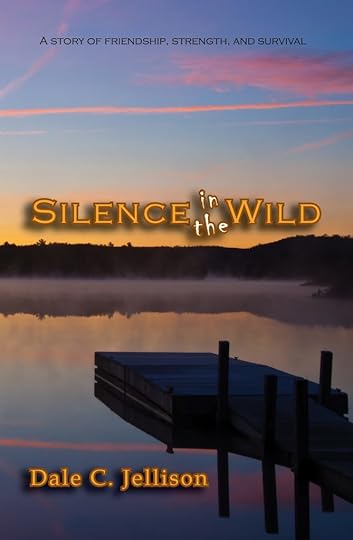
I want to take a moment to thank everyone who bought a copy of Silence in the Wild. It means a lot to me.
If you have a moment, please leave a review with the on-line retail store you purchased the novel or with Goodreads. To make it easy, please select one of the following:
If you stumbled onto this website for the first time….Hi, how are ya? If you like to read books, would you be kind and please buy a copy of Silence of the Wild?

If you can, please support your local independent bookshop. In most cases, they do not have the paperback in stock but can order it for you. Sure, this involves waiting for a copy to come in, but you are supporting them. I know a lot of bookshop owners are struggling to stay afloat during these trying times, so any support by buying a book or two will help them.
I understand that not everyone can afford to buy a copy. So don’t worry if you cannot support my projects right now. The paperback and e-book will be available for the long-term on many on-line retail shops, including Barnes & Noble, Indiebound, Amazon, to name a few.
Also, the hardcover edition is on hold for the time being. Right now, I am looking at releasing a limited edition hardcover book of Silence in the Wild by late November in time for the holiday seasons. I will provide an update soon.
June 20, 2020
First.
Hello, and welcome to my new website!
There is not much to see at the moment, but I am hoping to add new and old content soon. I will be posting blog entries now and then, and share my thoughts and observations. It is my goal to keep this family-friendly, and will not be discussing the politics of today.
I also hope to produce video content, so please stay tune for that.
In the meantime, please be kind to others.
Thank you for your support.
January 28, 2016
30 years ago – a remembrance
Tuesday, January 28, 1986, is a day forever etched in my heart and mind. I was eleven years old, two months away from turning twelve. I had recovered from a very nasty flu five days prior. The New England Patriots fans were still recovering from the loss against the Chicago Bears in Super Bowl XX two days before. It was a huge deal because it was the Patriots’ first Super Bowl. Both the junior and senior high schools held a pep rally in the gym on the Friday before Super Bowl Sunday. Unfortunately, along with a dozen or so students, I missed it because of the flu that went around. Darn flu.
January 28, 1986, started as an exciting day for many people and me in the State of New Hampshire. After numerous delays, the Space Shuttle Challenger was to lift off shortly after 11:30 in the morning from Cape Canaveral, Florida, carrying Christa McAuliffe from Concord, New Hampshire, only a half-hour drive from my hometown in Raymond. She was chosen out of 11,000 applicants to be the first teacher in space.
I have been following NASA and their space program off and on since the first launch of Space Shuttle Columbia in 1981. As a child, I was fascinated by anything that flies. I would often watch the news, and they’d air video footage from space, whether inside the space shuttle or during a spacewalk. It was neat to see what humans can do out in space.
“I touch the future. I teach.” – Christa McAuliffe
Leading up to January 28th, I followed the news about Christa McAuliffe as she went through the training and did various tasks in preparation for her trip to space. She was on several national television programs, where she talked about her plans about sharing her experiences when she returns from space. I had thought about how great it would be if she visited my school.
At eleven o’clock in the morning, my classmates and I followed our teacher, Mrs. Smith, to the media center before the launch. Ms. Thomas and her class soon joined us. We were the only two groups in the media center to watch the launch of Space Shuttle Challenger. We all sat on the floor with the television on the stage in front of us. The television already turned on to WMUR Channel Nine, the closest television station we could pick up on the antenna. Mind you; this was before cable television. WMUR was already on the air, broadcasting from Cape Canaveral, Florida, with live footage of Space Shuttle Challenger perched on LaunchPad 39B.
We waited with anticipation. Then shortly after 11:30 am, the voices of NASA’s flight controllers became active in preparation for a go-to launch, with the news commentators chiming in every so often.
Around 11:38 am, as the countdown was heard, the shuttle’s main engines ignited, and then the SRBs (Solid Rocket Boosters) ignited, lifting Challenger off the launch pad. The shuttle rolled and headed downrange. Many of us in the media center cheered. The roaring sound of the SRBs filled the room. My eyes glued to the television as Challenger soared in the sky, carrying the first teacher to space, a New Hampshire resident. What a proud moment.
As Challenger continued to soar into the sky, it grew smaller and smaller on the television. Then I heard the commander’s voice, “Roger, go at throttle up.” A close-up camera view of the space shuttle filled the television screen. Thanks to this modern technology, it was the first time I saw a close-up of the space shuttle far up in the sky. Then all of a sudden, a huge orange fireball enveloped the space shuttle.
“Flight controllers here are looking very carefully at the situation. Obviously a major malfunction.” – NASA
At first, I had no idea what was happening. Was this the way it was supposed to work? Through the eyes of an eleven-year-old, it just didn’t seem right. I looked at the teachers, and they both had a shocked look on their faces. They knew something went wrong. I looked back at the television screen and saw scattered pieces of debris falling to the ocean. I wasn’t sure what to think or how to react. The commentators on the television were stunned, trying to explain to the viewers what had happened.
The reality is – at one minute and thirteen seconds after lift-off, Space Shuttle Challenger exploded miles over the Atlantic Ocean. Commentators on TV were speculating many theories. They thought that a self-contained box should have flown back down with the astronauts safely inside, but that wasn’t the case. I was hoping that all the astronauts would survive this.
We sat there for the rest of the afternoon watching the news coverage of this horrific tragedy. As word got around to the other teachers in the school, more students came and sat with us. About forty-five minutes after the explosion, the high school principal announced over the P.A. about the tragedy.
The more I kept listening to the commentators, the more I felt that the astronauts were dead. WMUR also had local coverage. They replayed footage at Concord High School, where Christa had worked, of the cheers of their students’ applause in the auditorium, some throwing confetti in the air. Then two minutes later, silence – absolute silence – as they stared at the television. I remember the video footage of a Concord Police cruiser parked in front of the McAuliffe’s home and the footage of students leaving Concord High School early.
After school, I rode the bus home, still stunned and confused. I sat in the living room and watched the news on the television for the rest of the afternoon until my parents came home from work. We talked about it some, trying to make some sense out of this tragedy. Later that evening, my family watched a re-broadcast footage from earlier that afternoon of President Ronald Reagan giving a touching speech, honoring the astronauts’ lives.
“We will never forget them, nor the last time we saw them, this morning, as they prepared for the journey and waved goodbye and ‘slipped the surly bonds of Earth’ to ‘touch the face of God.” – President Ronald Reagan.
Three days later, the entire sixth-grade class gathered in one of the larger classrooms, and we watched the memorial service for the seven astronauts at Johnson Space Center live on tv. I was still trying to comprehend everything that had happened, as I am sure many kids were then. It was my first experience witnessing a national tragedy, and it hit very close to home.
“Reach for the stars.” – Christa McAuliffe
January 23, 2016
What’s the hurry?
Everywhere I go, I see people hurrying from one place to another or rushing to get stuff done, ignoring the little things along the way. Not having patience often goes hand in hand with hurrying.
I must confess I used to rush and hurry to and from places. Over the last few years, I have become drawn to slowing down and not being in a hurry wherever I go. It was hard at first, but as I learned to take my time, I began to see little things or pay attention to people going by.
Also, by slowing down and paying attention, I see other people hurrying in a store, and they don’t stop and have a conversation other than a subtle “Hi,” and off they go. In a way, I can see that hurrying can be a little offensive to others. So, what’s the hurry?
Have you ever driven quickly from one traffic light to the next? Notice the driver in the other lane rushing by and then stopping at the next red traffic light? When you finally get to the red light, are you waiting long for the light to turn green, unlike the other driver? Was there a time difference between the two? How much effort did you or your car put in compared to the other driver? I found less effort by not rushing.
Some would argue that “every minute counts” and “make the most of it.” Well, I agree. It is possible to make every minute count while not being in a hurry. I’ve noticed things I wouldn’t have recognized before by not hurrying. Whether it is catching a sign that you didn’t see there back, and it is not always a physical road sign – it can be a beautiful bird perching nearby, the shape of the clouds, a spiritual sign, or a piece of art that you passed by too many times but never bother to take the time to appreciate it. It’s the little things that count, too!
It can also be rewarding not to be in a hurry. Last month, I traveled on an airline and connected through Phoenix. Because of the weather conditions at my destination, my connecting flight had a weight restriction and could only carry 42 passengers out of the 76 seats on the CRJ-900 aircraft. I was among the passengers denied boarding. The small airport I was flying to has a shorter runway than most regional airports, and when it is wet, certain regional aircraft types cannot land there with a full load, so they can only fly with less weight; fewer passengers, luggage, and cargo.
After the flight left without us, I quietly stood in the back of the gate area, off to the side near the counter, and waited, not in a hurry of wanting to be rebooked. I observed several unhappy passengers giving the gate agents a hard time, nearly demanding. Then, two men in business suits were smiling and joking with the gate agents, obviously not in a hurry.
The gate agent who was re-booking the stranded passengers saw me, called me over, and kindly told me that he was taking care of me and I could grab lunch, then come back, and he’d have my new boarding pass ready for the next flight. I told him it was no problem and to take his time. I even offered to fly to another city near the intended destination if they needed me to. He appreciated the offer but said he would take care of me. I treated the gate agent with kindness and respect.
I wasn’t hungry but wandered around briefly, then sat down and waited at the gate. The gate agent returned and gave me a new boarding pass with an assigned first-class seat, a paper check for denied boarding compensation, and a priority gate tag for my carry-on luggage. On the next flight, the two businessmen and I were sitting in first class while the two (re-booked) unhappy passengers were seated in the back in the economy.
You see, patience and not hurrying could help you get better results (or rewards) from a situation. I could go on and on, but the point of this essay is that I found life less stressful by slowing down, appreciating the people or things around us, and not being in a hurry.
What’s the hurry?
Everywhere I go, I see people in a hurry from getting one place to another or rushing to get stuff done, ignoring the little things along the way, sometimes people. Not having patience often goes hand in hand with hurrying.
I must confess I used to be one rushing and hurrying to and from places. Over the last few years, I became drawn to the idea of slowing down and not be in a hurry wherever I go. It was hard to do at first, but as I learn to take my time, I began to see little things or pay attention to people going by. Also, by slowing down and paying attention, I see other people hurrying in a store that they don’t stop and have a conversation, other than a subtle “Hi,” and off they go. In a way, I can see that hurrying can be a little offensive to others. So, what’s the hurry?
Ever drove not in a hurry from one traffic light to the next light? Noticed the driver in the other lane rushing by then stopped at the next red traffic light? When you finally get to the red light, are you waiting long for the light to turn green, unlike the other driver? Was there a time difference between the two? Compare to the other driver, how much effort did you or your car put in? I found less effort by not rushing.
Some would argue that “every minute counts” and “make the most of it.” Well, I agree. It is possible to make every minute count while not being in a hurry. By not hurrying, I’ve noticed things I wouldn’t have recognized before. Whether it is noticing a sign that you didn’t see there before, and it is not always a physical road sign – it can be a beautiful bird perching nearby, the shape of the clouds, a spiritual sign, or a piece of art that you passed by too many times but never bother to take the time to appreciate it. It’s the little things that count, too!
It’s also can be rewarding not being in a hurry. Last month, I traveled on an airline and connected through Phoenix. Because of the weather conditions at my destination, my connecting flight had a weight restriction and could only carry 42 passengers out of the 76 seats on the CRJ-900 aircraft. I was among the passengers denied boarding. The small airport I was flying to has a shorter runway than most regional airports, and when it is wet, certain regional aircraft types cannot land there with a full load, so they can only fly with less weight; fewer passengers, luggage, and cargo.
After the flight left without us, I quietly stood in the back of the gate area, off to the side near the counter, and waited, not in a hurry of wanting to be rebooked. I observed several unhappy passengers giving the gate agents a hard time, nearly demanding. Then there were two men in business suits smiling and joking with the gate agents, obviously not in a hurry. The gate agent who was rebooking the stranded passengers saw me, called me over, and kindly told me that he was taking care of me and I could grab lunch then come back and he’ll have my new boarding pass ready for the next flight. I told him no problem and to take his time. I even offered to fly to another city near the intended destination if they needed me to. He appreciated the offer, but he said he would take care of me. I treated the gate agent with kindness and respect.
I wasn’t hungry but wandered around for a bit, then sat down and waited at the gate area. The gate agent returned and gave me a new boarding pass with an assigned first-class seat, a check for denied boarding compensation, and a priority gate tag for my carry-on luggage. On the next flight, the two businessmen and I were sitting in the first-class while the two (re-booked) unhappy passengers sat in the back in the economy. You see, having patience and not hurrying could help you get better results (or rewards) out of a situation.
I could go on and on, but the point is to this essay: I found life to be less stressful by slowing down and appreciating the people or things around us and not be in a hurry.
January 19, 2016
Exit Stage Right
In my younger years, from middle school to high school, I was involved in theatre plays, either with the school drama club or the local theatre. I mostly did backstage and lighting, also an actor in several high school plays. We did Grease, West Side Story, The Outsiders, ones that I can remember.
My favorite play I was involved with was You’re Good Man, Charlie Brown in April 1990, put on by the local theatre group. It was an all-adult cast, and I was the only kid in the production crew, doing some backstage work, set building, but mostly lighting. I just turned fifteen years old before the performance ran Friday, Saturday, and Sunday evenings for two weeks. Rehearsals were fun, and there were plenty of antics, especially among the cast.
After the first weekend performances, we even had an evening rehearsal where we turned it into improv and did whatever we wanted, crew included, as we did the entire play from beginning to end. It was a hilarious evening, to say the least.
It was a great cast and crew, and everyone made me part of the group despite being the “kid.” After a month and a half of being involved with this play, I was sad it had to come to an end. I felt at home doing theatre work.
After school started in the fall of 1990, Ardell Welch, a wonderful, talented woman who had done a lot of theatre work with the school district and the theatre groups in the seacoast area of New Hampshire, asked me to get involved with producing a drama play from scratch, which would be put on by the high school students, about topics facing teenagers, such as drug abuse, drinking, bullying, and teenage pregnancy. I worked with her many times before, and she entrusted me with this project and the role of the stage manager.
I helped Ardell with the groundwork by working on plots, setting the scenes, and covering topics in each scene. There, Decisions? was born. The play focused on a new boy to the high school and a bit of a nerd. In the beginning, he would get bullied, but over time, he would lose his nerd status and started to hang with the wrong crowd. We threw in “b” scenes between the main story to cover teenage topics not related to the main character.
Once Ardell and I, along with a few other students, had the scenes on paper, we handed them to the student actors and let them improvise the scenes. Mind you; we didn’t hand them a script; the entire cast and crew worked together and came up with the “script.” We worked through each scene from beginning to end and made adjustments along the way.
It was a fun experience building a play from scratch and watched it evolve. It made me love theatre even more. The play was well-received that we went to other schools in neighboring towns and performed there.
Decisions? was brought back the following school year, and we needed someone to play the principal, so I experienced my first time acting in that role, on top of being the stage manager and lighting. Again, we performed at neighboring schools.
After that, I did a few other plays then stepped away from doing anything theatre. Because of my migraine issues I was dealing with throughout the latter high school years, I had to cut back on stuff that I was doing besides my school work, so I wasn’t overworking myself. Since then, I hadn’t thought much about theatre for a long time.
Twenty-five years later, looking back at all the theatre work I did, I miss it.
Greatly.
Many memories came back to me after I attended several Broadway musical performances in Denver, Colorado. I saw The Lion King in November and A Christmas Story: The Musical a couple of days before Christmas. I had such a great time watching the performances that I felt right at home. I wanted to be part of it. It was a feeling I hadn’t felt in such a long time. In a way, I had an epiphany. I asked myself why I wasn’t involved in theatre again, whether it was acting or backstage, or even film & tv. I always had a great fascination with film, tv, and theatre productions, so why wasn’t I doing something in this industry? I think fear in trying to step outside my comfort zone played a big role. Instead, I chose the easy route with a career in accounting. Not that it was a bad thing.
Now, while still having a career in accounting and working on other projects, I’m exploring the possibility of returning to theatre and taking acting and voice classes in the evenings. I’m researching the different options. I’m not talking about doing Broadway shows, which is a huge, huge leap (Seriously, it’s a nice thought, but let’s be realistic here) but looking into a regional theatre; where I can start new, learn along the way, and build my experience to bigger opportunities. We’ll see. I’m going to take it one step at a time. I’ll write more about this at some point.
“Nothing great happens when you hold back.”
January 1, 2016
The judge’s verdict is in…
This past November, I was going through my emails and came across one from Writer’s Digest, a surprise, to say the least.
Earlier this year, I submitted Silence in the Wild: A Summer in Maine to a contest Writer’s Digest put on for Self-published books. I figured it was worth a shot. The winner’s list came out last month, and I wasn’t on it – no big deal.
The email from the Writer’s Digest contained the competition judge’s commentary on my novel. I wasn’t expecting this. After reading the email, it boosted my confidence about the story and the work I put into this, along with four revised editions. You see, self-doubt has been getting the best of me lately because I didn’t sell a huge lot of copies since it first came out in February 2014. Marketing and getting the word out about the book proved more difficult when you’re self-publishing a book.
But all in all, I’m learning from this whole experience and applying it to future projects.
While some friends and family members said it’s a good story, I wanted true confirmation from someone in the industry. Well, I got it in the email from Writer’s Digest, which included the judge’s commentary.
Here’s some snippets from that email I like to share:
“Books are evaluated on a scale of 1 to 5, with 1 meaning “needs improvement” and 5 meaning “outstanding.”
Structure, Organization, and Pacing: 4Spelling, Punctuation, and Grammar: 5Production Quality and Cover Design: 5Plot and Story Appeal: 4Character Appeal and Development: 4Voice and Writing Style: 4Judge’s Commentary:
“I was very pleased to discover that the protagonist of Silence in the Wild is a deaf boy named Jake for the simple reason that the deaf are underrepresented in literature. I appreciate that the author establishes the difficult circumstances surrounding Jake’s life and the time period he is in. I liked Jake’s friendship with Paddy, the boy from Ireland who is also at Camp Pawtuckaway. Paddy’s collapse was dramatic and Jake’s rescue touching. The reader roots for Jake and his friend. I followed Jake’s solitary adventure in the woods with interest. The wolf was a great touch. I also liked the presence of the grandfather in this story of a boy’s discovering what he is capable of, and that he is never really alone.”
Boom!
I’m pleased with the judge’s feedback. She added constructive criticism in improving some areas, which I appreciated. It confirmed my desire to re-write the first few chapters and expand the last chapter.
So, eventually, in a year or two, there will be a new edition of SITW. No timeline on when that will be published.
Silence in the Wild: A Summer in Maine’s current edition is available on Amazon and Kindle