Holland Rae's Blog
February 23, 2021
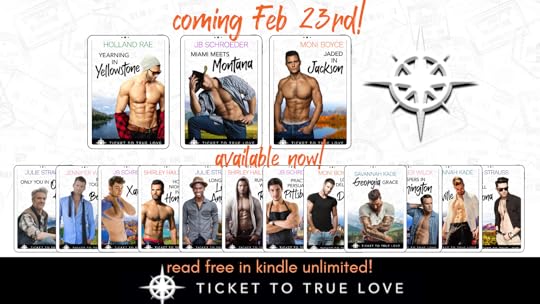
Yearning in Yellowstone is LIVE!
Do you believe in the legend of True Springs?
It was supposed to be a summer road trip in an RV with old friends. She never expected the adventure to be love.
Rhiannon Havener is in desperate need of a break. If she doesn’t straighten out her hot mess of a work life, she’ll implode. When her twin sister and best friends suggest a road trip, she knows she needs to be on board. But finding out who she is when she’s not at full speed turns out to be terrifying.
Nick Greenly isn’t running away from anything, despite what his family thinks. For him, life is about taking every opportunity that comes his way—on his own terms. But all that changes when his peaceful motorcycle trip is interrupted by a lost puppy that needs him…and the woman who might just be the one he needs.
Big skies may call to both of them, but work is waiting for Rhiannon and Nick has never claimed one place as home. They only have a few days to decide what’s worth risking and what they’re willing to live without…or they might just find that what matters most is already gone.
Ticket to True Love is a steamy contemporary romance series about new beginnings, second chances, and finding true love in unexpected places. Fall in love all over the world with bestselling and award winning authors JB Schroeder, Savannah Kade, Moni Boyce, Shirley Hailstock, Holland Rae, Julie Strauss & Jennifer Wilck. Start your next romance with Yearning in Yellowstone now!
Read Yearning in Yellowstone in
Kindle Unlimited today!


August 3, 2020
Time for a Break
The truth is, I can’t do it all.
As creative professionals living in a chaotic world, we can feel a lot of pressure to complete every project, accept every opportunity, and allow our personal and professional lives to cross over more than they should. Today, I’m telling you that I can’t do it all.
I’ve been running this blog for a very long time. It’s a special place for me, a way to share my experiences and lessons on writing, books, the industry and the world at large. It’s come with me from Boston to New Jersey to Nashville, and I’m grateful to each and every single one of you who came along for the right. But right now, my journey is taking a little bit of a different direction.
As of August 31st, I’ll be starting a graduate degree track through the Harvard Extension School in the field of environmental sustainability. My intention is to marry my background in journalism and communication with a new science discipline and go into environmental reporting with a focus on intersectional feminism. It’s a lot. And while I couldn’t be more excited about this new path or grateful to those who have been supporting me as I make these big choices, I’d be lying if I said I wasn’t a little nervous too.
So I’m taking these few weeks before school starts to find some balance and to reduce the amount of responsibilities that call my attention away from my current goals. As it is, I will still be working as a full time freelancer, running a startup company, and keeping up with the demands of two author names. A lesson I often preach and do not follow myself—balance is key.
At this time, the hours I spent writing will be more valuable in my current creative projects and for school, when it begins. So I’m not saying good-bye. I’m saying au revoir. I’m saying I’ll be back on here sometimes, when I can and when it’s appropriate, but I won’t be spending as much time talking about writing. For now, my focus really needs to be on doing it.
[image error]
I hope you won’t think me overly forward if I leave you with these writing lessons I’ve learned in my time as an author, journalist, and freelancer.
Truly, it’s been a pleasure running this blog as long as I have and I do look forward to the day when regular updates are able to be a priority for me. What I hope you’ll take away is that you’re all at the right place in your creative journey for this moment in time—and that I’m so grateful to you for reading my thoughts and hearing my experiences over these years. A few parting lessons for the road.
Your career is entirely your own. Don’t waste time by comparing it to other people. Writing is a business. A creative business, but treat it like a business and you’ll find professional success. A good editor is worth her weight in gold. Treat her well and never let her go. Reading is as essential to writing as putting words to the page. The first draft doesn’t need to be good. It just needs to be done.
And the last one, the one I’m taking to heart now as I begin this exciting new journey—you never know where writing will take you. Be open to new opportunities, embrace your passions, and don’t be afraid to take risks. Give yourself something to write about.
Cheers to the next amazing step in the journey and all the love in art and words.
Your friend,
Holland
July 27, 2020
I Hate You, I Want You, I Love You
“What’s my problem, Mila?” he asked, all the more intimidating and enticing for the lowness of his voice. “What’s my problem, tell me. I want to know.”
The above quote is from my current work in progress, In My Sights, and though it doesn’t squarely follow the hate-to-love trope, there’s a lot to be dissected from even that short excerpt. There’s tension, a sense of veiled power that’s about to snap, and when it does you just know it’s going to be hot. My heroine and hero are reconnected after years apart and they’re pissed at each other. And God, it’s fun to write.
But why? What draws us time and again to this trope? Hate-to-love is surprisingly tricky to write, and you have to be carefully toeing the line, but we keep coming back? Why?
The tension. Ooh baby, we love that tension.
[image error]
See, the romance genre is built on tension. Without tension, sexual, emotional or both, there is nothing to raise the stakes. For a romance story to take place, we need both external and internal conflict. I can’t kiss him because: the house is about to explode. I can’t kiss him because: he’s a playboy and I don’t want to get my heart broken.
Tension is a built from both external and internal conflict interrupting the easy route to a happily ever after. The first time they’re interrupted, it’s because he’s turned her away, afraid he’ll hurt her in the end. (After all, he never learned how to love.) The second time they’re interrupted, it’s because their safe house has been discovered and bullets are flying. The will-they-won’t-they, one-step-forward-two- steps-back heightens our frustration and desire to see the hero and heroine end up together, until it’s all the more satisfying at the end. (Can anyone think of an appropriate metaphor here?)
The hate/love tension adds to all of this. For one, quipping, angry, flirtatious banter is the best. He just pushes her buttons. He can’t help himself. Doesn’t know why he does it. Until one day he realizes that he can’t get enough of that sexy flush on her face when she’s pissed at him and he’ll do anything to turn her bright eyes that shade of gold.
Banter is one of my all time favorite things to read and write, especially when over-the-top, intended-to-piss-you-off flirtations are involved. God, I love it. (I don’t hate this one too, sorry.)
[image error]But it goes deeper than that. Because, though a cliche, it’s often true what they say: There’s a fine line between love and hate. Because that hate, visceral, potent, wild, running through your veins, that’s passion in a different form. That’s caged, animalistic need. And ya know what else is an animalistic need. Slowly chipping away at a character’s control until that anger is transformed is one of the most satisfying things to do as a writer.
And it’s emotional too. Because when you care that passionately about a person, even if it’s the wrong kind of passionately to start, there’s potential. Your feelings, where they’re regarded, go deep. And they might go even deeper if you could just let them, let your defenses down so you can go after what you want.
Love/hate tropes are also a fantastic way to develop character. Suzanne Brockmann does a lot of this with her characters of Sam Starrett and Alyssa Locke. As they oscillate between desire and anger, the characters begin to reveal themselves. Alyssa’s a black woman working in the FBI, who really is good enough to be part of the SEALs. Sam is a good old boy cowboy with something to prove and mouth you wouldn’t kiss your mama with. (Kiss to unlock Tragic Past story #1.)
[image error]
Watching the way their feelings change for each other as new revelations come to light is as much part of character building as knowing their backstory or their deepest fears. The path from hate to love can be instructive and interesting and very telling.
In Maya Banks’ KGI series, we get to see an unfolding and teased along romance between a young Kelly sister, Rusty, and the local Sheriff, Sean. (She hasn’t given us the story yet and it’s killing all of us!) But Sean’s inner need to keep Rusty safe includes keeping her safe from himself, which hopefully he will realize is a foolish perspective. (I need to know!!)
There’s a reason the love/hate trope is so ubiquitous. Just look at the proliferation of Harry Potter/Draco Malfoy romances when FanFiction first landed on the internet. Love and hate run a close parallel, and we’re all just waiting for the bomb to go off.
Of course, proceed with caution. After all, I have people I hate in my life that I genuinely hate and wouldn’t consider sleeping even for socialized secondary education for the masses. It’s important to keep The Line in mind, and know when not to cross it.
But don’t be afraid to push. Stick ‘em in a broom closet. Lock them in the safehouse. Make them suffer. Your characters and your readers will thank you for it.
What are your thoughts on the enemies to lovers trope? Let me know in the comments below! 
July 20, 2020
Now and Then: Writing Contemporary and Historical Novels
A Jack of all trades is a master of none, but oftentimes better than a master of one
I recently engaged in a lively family discussion about misquoted idioms. As with curiosity killed the cat, but satisfaction brought it back, the modern concept has come to mean the antithesis of the original phrase. Isn’t language fascinating? (And more than a little annoying.)
As a writer, I always thought I’d focus my stories in one genre. Historical was my plan from the beginning, which I now can admit was largely influenced by how much historical romance I read at the time. Still, contemporary stories wiggled around in my head until I gave them life, and soon I found that I was writing in several genres, erotic and more traditional romance in both the historical and modern age. I wrote BDSM novellas and menage novels and pirates stories and everything in between. And along the way, I’ve come to favor certain elements of writing both then and now. Here are some of my favorite parts of writing historical and contemporary romance.
Contemporary
It’s a Lot Easier to Be a Woman
One of the biggest challenges of writing historical romance is that you have to work within the confines of society at the time. Of course, we can push the rules, we always do, but there are still some facts of history we can’t change. In one of my recent releases, my editor and I worked for nearly a week to find some way for a widowed duchess to still play at sovereign of her land, because historically speaking, it would never have been allowed.
In modern books, women obviously still face challenges, but they’re more nuanced and often less illegal, and I can give my heroines some truly kickass jobs and lifestyles they otherwise don’t get. There’s also the whole question of career path because after awhile, it gets kinda dull writing about women of leisure.
Touched for the Very First Time
I don’t like writing virgin heroines. I have and I probably will again, but mostly because historical romance often demands it. If a character hasn’t been married before, (and I write a lot of widows for this reason,) there are very few good reasons for her to have any experience. Perhaps she’s been kissed once or twice, but that’s usually all you’re allowed to get away with.
[image error]
When I write modern women, however, that nonsense doesn’t pose a problem. Not only is it fairly expected that by late twenties or early thirties, my heroine will have had sex, but she also has a much more expansive sex education. There’s no question about protection or birth control, it’s a requirement. She knows women are supposed to feel pleasure and she expects it. The equality in the bedroom is often reflected outside of it, and that’s very important.
Use Your Words
You never know how much you swear until you read your own writing. Yeah, I curse a lot. But it’s not just about that – proper ladies of society never swore, of course. It’s about all language. When I’m writing historical novels, I have to check idioms and word origins all the time. Often, the writing will sound anachronistic and you can’t tell why, and that’s when you remember that people didn’t use contractions back then and also those words weren’t invented yet.
[image error]It’s challenging. Especially in the age of technology, modern communication is moving faster than ever and the meaning behind words is changing at a totally wild rate. There’s a lot to keep in mind, but it’s much easier to write in the language you speak now than one your great, great, great, great grandparents would have spoken.
Historical
Alone at Last
My all-time most favorite thing about writing historical romance is that the tension is built in. Sexual tension doesn’t come from dry-humping on a dance floor, but from secretive glances across a crowded room, from accidentally getting locked in a closet together and God forbid anyone find you. Every word has a hidden meaning, every shared eye-contact is loaded and there’s so much potential for disaster. I positively live for it. [image error]
There’s also the addition here of reasons people end up in arranged/forced marriages and that adds even more to the heightening tension and drama. These days, if you sleep with someone you didn’t mean to sleep with, chances are that you’ll never see them again. In the Regency eras, chances were much better that you would marry them.
Leave Your Card
Modern communication is great! We’re constantly in touch with each other, in case of emergency, good news or anything in between. We can text, Tweet, message and more, which means the whole romance plot as a series of miscommunications becomes a lot more complicated. After all, if we see something odd or inappropriate or proof of a lie, we can simply text our significant other and ask for an explanation. If we miss an event we were supposed to attend, we can shoot off a quick message to explain why, instead of leaving the other person feeling abandoned.
[image error]Modern communication is great, but romance lives for miscommunication. Historical takes away the phone and the messages and the online stalking of your blind date and limits communication to calling cards, letters and face to face visits. This makes the whole miscommunication so, so much easier.
Use Your Words
Yeah, I know, I was just bitching about how hard it is to write historical novels. But the truth is, I’m a gigantic nerd and absolutely love researching things I don’t know. So while it slows down my pace a little bit, I’m actually a huge fan of word origins and historical idiom searches. After all, you write every day, you learn something new every day.
I love writing in multiple genres. It’s more challenging to market, maybe, but I get to learn something new from each different story. How do people communicate in a polyamorous relationship? How might a duchess have been exposed to BDSM? These are fun and unique challenges and I like exploring history, language, and sexuality through the years.
What about you? What’s your favorite genre to read and your favorite to write? Do you buy authors who write more than one genre? Share your thoughts in your comments below!
July 16, 2020
13 Stages of Writing a Novel
1.The greatest idea in the world comes to you.
[image error]
2. You spend several days just thinking about every wonderful and perfect part of your unwritten manuscript.
[image error]
3. You start the researching process.
[image error]
4. Outline! Outline! Outline!
[image error]
5. Start Writing!
[image error]
6. Hit a major plot snag.
[image error]
7. Panic.
[image error]
8. Eat.
[image error]
9. Inspiration returns! Sprint to the finish line!
[image error]
10. Time to edit this masterpiece!
[image error]
11. Question your decision to ever become a writer.
[image error]
12. Throw your computer out the window.
[image error]
13. The greatest idea in the world comes to you.
[image error]
July 6, 2020
So Much More Than Frenemies
I think there was a time when pop culture and mass media realized that women could be mean. They discovered the secret like it was the Holy Grail and turned it into a trope that would never die. The Mean Girl. The Villainess. The Bitch. The Witch. The Slut. The Prude. Girl on girl hate has become a ubiquitous theme in romantic comedies, novels, television shows and nearly anything catering to the pre-teen, thus creating a never ending cycle of vicious gossip, bullying and tormenting.
Modern romance fights that tide.
Not all of it. I’ll be the first to say that romance, by the very nature of it being heavily dominated by women, has its fair share of catty name-calling, under breath mumbling and bathroom stall scrawling. But it has a lot that’s not that too.
Female friendships, or rather, female relationships, sisters, daughters, grandmas, neighbors, are a rock that has given womankind strength throughout the millennia. It has held them together in their own domestic sphere and far beyond, it has provided support, love, camaraderie and solidarity. And romance gets that, understands that women supporting each other is part of being a woman, and if you’re going to write woman’s stories, you need to write that.
[image error]
These female friendships are one of the most important elements of the romance genre. For one, they are a rare medium that passes the Bechdel Test, a standard designed to answer some fundamental questions. 1) Does the story include more than one woman? 2) Do the women speak to each other? 3) Do the women speak to each other about something other than a man? The caveat of whether or not the women are named, first and last, is often added in as well.
Of course, this standard is somewhat flawed. Most media has male heroes and protagonists, thus making the not talking about a man element a little more challenging. But it’s a great place to start when determining the feminism level of a novel, and most romance passes it. Women discuss recipes, family and children. They debate careers, art and politics. They talk food, travel and dreams. Women supporting each other is a fundamental element of our lives.
Highlighting these female relationships is also important because of what the romance novel represents. While many scoff at the simplicity – boy meets girl, they fall in love and live happily ever after, most good romance strives to, and succeeds at, avoiding the idea of the heroine finding her happiness solely because of a man. Ideally, romance follows the journey of two people finding themselves, following their dreams and understanding their true potential together.
Gone are the days of gallant heroes sweeping damsels in distress off their feet and showing them their worth. Most romance heroines understand their worth, or find it over the course of the story for reasons other than the hero. Romance is not about that timeless trope of realizing you’re good enough because a man tells you. No, our heroines find confidence, power and their own sense of worth either with the hero or all on their own. The happily ever after is as much hers, and often his, as it is theirs.
[image error]
And so much of that is derived from the other women they share the story with, women who can come in the form of domestic goddesses–celebrate the traditionally feminine!– powerhouse career friends, warriors or peacekeepers. Seeing our heroines interact with other women is another insight into how they live their lives, open their hearts and share themselves in a way that has nothing to do with romantic love.
In the interest of clarity, this topic does get a little more complicated when discussing male/male romances, given that there is no heroine, but that doesn’t mean supporting characters don’t get their own space. Characters who identify as female also deserve these all important relationships, though the industry still struggles to put that kind of inclusive fiction on the market.
Of course, there is always room for improvement, in and out of romance. In a perfect world, we’d do away with that crabs-in-a-barrel mentality instilled in women from a young age. In a perfect world, we’d cheer each other’s successes, comfort each other’s failures and help collectively push toward the future together. For now, romance is a good place to start. (And the only thing better is sharing a great romance novel with a friend!)
July 2, 2020
Why I DNF
I know, it sounds dirty. But DNF stands for ‘Did Not Finish’ and I don’t do it often. In fact, I didn’t even do it while I was reading this most recent book, by a famous, renowned romance novelist, whose work I’ve enjoyed in the past, but whose latest release is, in my opinion largely problematic.
[image error]
Part of the reason I read books all the way through is because I have a really big Goodreads goal for the year and I don’t want to put down books I’ve already started. (I’m not embarrassed to admit that.) I also will finish problematic or frustrating reads because it teaches me how to avoid making the same mistakes. As an author, I think it’s important to read books that aren’t perfect so we can perform more effectively in our own stories.
That said, there are a few things that will make me put a book down.
Character Voice
This is so hard to truly pinpoint, but I put down a book that everyone loved because the heroine was a millennial and the writer very clearly wasn’t. Her heroine was bland and stupid and it was clear that the author thought she was doing a good job of capturing how young women in the twenties think. There was an excessive amount of ‘trying to be down with the cool kids’ in the way she and the hero text-messaged and it was all cringe-worthy. If I’m being fair to the author, there were significant other reasons I put this book down and never looked back, but an unlikable heroine that insulted me as a person was definitely one of them.
Toxic Relationships
We need look no further than 50 Shades of Grey for stories like these. The romance industry is behemoth and there’s a vast expanse of the kind of stories you’ll come across. That said, I’ve read erotic BDSM menage romances with absolute trust, communication and respect between the characters, where even when one of the characters is tied up by the wrists and ankles and gagged and blindfolded, I still always believe they are safe and have agency. There is no excuse for toxic relationships between the hero and the heroine in romance (or hero and hero, heroine and heroine, onward, upward and forward.)
Shitty Men
[image error]
Let’s be honest, there was 1) enough shitty men in the world already and 2) enough shitty men in fiction, that I don’t need to read about it in my books. Okay, if the story arc is some redemptive he learned to embrace his insecurities to find love, I might be convinced. But I’ve put down books where there are chapters of first-person hero rambling about how many women he’s slept with and who he’s bullying the hospital cafeteria and how he can’t wait to get laid and tap that. These kinds of bad behaviors are hard to come back from and really unenjoyable to read.
Stereotypical Women
When I say stereotypical women, what I mean is that the author has bought into the idea that women can only play a few roles in life: the virgin, the whore, the bitch, la di da di da. These stories usually involve some sort of caricature of women cat-fighting, almost always over a man, and try to embrace the ‘universal truths of womanhood’ by getting as far as feeling guilty about eating an extra slice of pizza. We deserve more than two-dimensional characters.
Books With Fewer Than Two Women
[image error]
Seriously? Like, this should be a non-issue. Women make up more than 50% of the population. There were more women on the field in most major wars than there were men–even though they weren’t allowed to fight.
Women have been around since the beginning of time and erasing our existence in media is something I refuse to support in the books I read. Hard stop. Even in my queer romances, I still write more than one woman in the book, because, oh hey, I have more than one woman in my life and I’m pretty sure most other people–including my queer friends–do too.
Non-Existent, Stereotypical or Sexy Lamp Characters of Color
The Sexy-Lamp test usually refers to women, but the idea remains the same. If your character of color or female character could be replaced by a piece of decorative furniture, they are not a real character. Oh, but it’s not historically accurate…I’m sorry, I didn’t realize people of color were invented in the 1990s. As with women, people of color are part of history, society, culture and the modern day (crazy, I know) and we write better, richer, fuller stories when we represent the world around us.
There are other, sillier reasons I tend to put books down and I’m sure more important ones that will come to me later down the line, but there are the reasons that really hit me hard. In the book I Didn’t Put Down But Should Have the hero comments on something the heroine ate, (it’s not a magic trick if she’s over a size four!) and the heroine has a cat-fighting arch-enemy that routinely acts like being mean, cruel and rude is part of her sassy personality. These are problematic behaviors and writings that I now know to avoid in my work because I don’t like the way it makes me feel as a reader.
We read for many, many reasons. As authors, we read for enjoyment, inspiration, and education. And we can learn just as much from the books that we don’t like as we can from the books that we do. Sometimes more.
June 22, 2020
Don’t Start at the Beginning
Sometimes, the beginning is the easy part. In fact, sometimes it’s the only part I know. Story inspiration comes to me in myriad ways, snippets of dialogue, a flash of a setting, a character’s tragic backstory. Sometimes it is wide brushes of character arc and plot, other times it is a conversation shared on the run, in a dingy basement or a locked closet as a serial killer stalks outside. Sometimes it is even the beginning.
But most times it isn’t. And, as wonderful as my character’s tragic backstory or hushed conversation might be, none of that matters an iota if I don’t get the beginning right.
Because, show of hands, who has put down a book because you didn’t like the first chapter, page, paragraph, or sentence.

The beginning of your book is so much more than an introduction to your story. It is an introduction to you as the writer – a chance for your reader to find out what to expect, your tone, your approach, your pacing. If done properly, the beginning of your book will introduce you to the reader and either make them like you or trust you. Or both. But it doesn’t have to be both. Take Lolita for example. Or Fear and Loathing in Las Vegas. Do we like the narrator or the protagonist? No. But we trust that the author knows what they’re doing and we continue reading.
Simple. No pressure, right? It’s just the future of your book’s success and potentially your success as an author that hinges on getting this opening right. Well, you can breathe – it’s easier to edit the beginning of a book than you might think. In fact, it’s a pretty common occurrence to chop whole sections from the start, to push out prologues or introductions, to shove the story from history to action. Sometimes it takes a weak beginning to truly understand where your book is meant to start.
There, pressure off.
Don’t believe me? A recent release of mine suffered from a weak beginning. Before it went to final edits, this book had undergone about four major story arc changes, and that ended up being part of the problem. When I’d first started writing, I didn’t know what the book was actually about. By the end, I understood that my hero wakes up hungover at a house party and wonders about his life intro didn’t set up for the strength or pace of the rest of the story.
This was actually the last major element we changed – and this book underwent character name changes, that’s how deep I delved into rewrites. Nothing stayed the same. So when my editor explained that the intro was weak, there was no question. It had to go.
The revised version was actually her idea. Forget man sits and thinks. Get into the action. The action, as per her suggestion, ended up being my hero having a stress seizure mid-sex.
Now, which opening is more exciting?
Niccolo cracked one eye open and then the other. He didn’t exactly hear the creaking of his own eyelids but he certainly felt it. The sunshine streaming in through the open sliding door was enough to rattle the currently few contents of his head, and even the distant noise of birds chirping somewhere off in the lavish garden made him want to crawl into a hole and hibernate.
Or
“That’s it, baby. Take my cock deeper. Fuck, yes.”
Nadia wrapped her lips around him, and Nicco groaned. He threaded his hand through her short hair and tugged to slide her farther down his length. Nicco tried for a deep breath, attempting to leash his control before release, but he couldn’t quite get that lungful of air in. His mind shorted and panic stroked the back of his neck, making his shoulders clench.
Does this turn off some readers? Maybe. Most of my reviews have mentioned it. But the book is erotic romance and, though potentially surprising, this introduction is not inappropriate to the genre. Not only does it get your attention, but it both starts in media res and identifies the tone, pace and heat level of the novel from the get-go.
Of course, not every book is going to start off with a blowjob gone bad. But there are certainly ways to hit some fundamental elements of starting a book off the right way. Here are a few tips and tricks to inspire your best beginning – and remember, editing is the route to success. Don’t worry if you don’t get it right the first time. No one ever does.
Don’t start at the beginning

But… but it’s the beginning. No. It’s not. Your book’s beginning is not the beginning of the story. These characters, these settings, these events, they were set into motion well before the book takes place. Your characters are doing things, living their lives, healing, loving, working, before we meet them.
No, your book doesn’t begin at the beginning and it shouldn’t. Beginning is boring, beginning is backstory and heavy exposition, beginning is the stuff that should be weaved in carefully and slowly throughout the rest of the book. I’m listening to a book right now where I didn’t even realize I didn’t know the narrator’s name until an hour in. It didn’t matter. Don’t start at the beginning. The beginning comes later.
In media res
Right, okay, don’t start at the beginning. Start right in the thick of things. In Media Res literally translates into in the middle of things. Does it have to be a firefight or page 45 of The Kama Sutra? Of course not. I’ve had characters dealing with the aftermath of phone calls in dark apartments and sitting on their horse looking out over the fields. By the middle of things, I mean the antithesis of starting at the beginning. Drop us into these character’s lives, rather than giving us their history first.
Daydreams, nightmares, and memories, oh my!
Fuck the dream intro. Yeah, this one deserves a good ol’ expletive. For one, you’ve gone ahead and established a world for your reader that doesn’t exist. More importantly, though, you’ve lost their trust. They thought they were starting with you in one place and you pulled the rug out from under their feet. Daydreams, nightmares, memories, it’s a false setting and you have to earn the right to do that and show your reader you respect them.
Wake up call
Unless your character is waking up as a gigantic insect, your character’s morning routine is about the most boring part of their day. Do you want to set the tone of your book as boring? Or do you want to give your readers a chance to enjoy what you have to offer? Don’t start at the beginning and don’t start at the beginning of the day.
You Talkin’ To Me?
Dialogue is always going to be a strong opening – if your dialogue is interesting and says something. Again, using my opening for the example, shocked, horrified or intrigued, the book starts in a pretty unmistakable place. Dialogue not only give us a chance to hook our readers through intrigue, but it also introduces characters and the narrator to the reader. Everyone speaks differently, so the tone of the opening line will reflect a character’s personality, effectively killing several birds with one stone. Still, dialogue needs to serve a purpose and it’s not always the right way to start a book.
There are many things to consider in your beginning. A character’s personality is always an interesting way to hook readers – do they swear, do they flirt, do they cower? Exploring the landscape and setting is another, and there are many more.
When starting your book it is important to remember that beginnings, whether fairly or not, will determine if your reader hangs on to find out the rest or drops you in the did not finish pile. Yes, they are fundamental to writing a book. Still, it’s equally as important to remember that they can change and might, in fact, be the very last thing you write. Don’t worry about getting it perfect the first time. Instead, open your blank document and set to work however you think your book should start.
Just don’t begin at the beginning. 
June 15, 2020
Our Own Worst Enemy
Yes, I’m defending romance novels again. But it’s a little different this time, I swear! (I hope.) See, recently I’ve been coercing my new neighbor into reading romance novels. She’s been alive for more than three decades and she’s never enjoyed a single romance novel until me, so yay! Small victories.
Unfortunately, as she is not educated in the ways of darling heroines and respectful heroes, there’s a lot she has to unlearn too. So yesterday, I had to fight not to cringe when she says,
“I like that the women don’t just wait around to be saved. They like, do stuff.”
[image error]
Okay, I fudged the quote a little bit, but the point remains. How is it that women who would love and enjoy our genre to the fullest (she’s now on her third romance, can I get an amen) are so thoroughly convinced that the heroines are all waiting around in their gilded towers, hoping to be rescued by some dashing prince?
Honestly, I’d hazard that my life-reads of romance novels is somewhere in the thousands, and I cannot say I’ve ever read a romance novel where the heroine sat around twiddling her thumbs waiting for a two-dimensional character with no name, (looking you, Prince Charming… ) to give her a new life.
Do heroes leave our heroines lives better, you bet your ass. But that’s not the point. The point is, she makes her own decisions. She climbs out of her own tower. She chases her own dreams. If any of those things happen to cause an interaction between her and hero, fine. A-okay. To be expected. But if we removed our hero entirely from the story, the heroine would still exist as a fully-fledged character with goals, ambitions, and behaviors all her own.
[image error]
Which makes it extra frustrating that potential romance-lovers have this notion that we’re all waiting for our handsome lovers to give us a better life. Yes, our lovers should give us a better life, only in so much we have support, respect, and love. But the rest of it, the title or the wealth or the opportunity that comes along with the hero, it’s all window-dressing. That’s the part that’s fantasy. That’s the part where we can say, my student-loans-paying-ass would much prefer to have a rich hero and since I’m writing him, he can be wealthier than Midas. I know that part isn’t real.
But the relationship between the characters is real and the heroine is real. Are there women in the world that want to be rescued? Sure. That’s part of a larger discussion on the patriarchy and internalized misogyny we don’t have time for right now. But for generations, women have been fighting to have their voices heard, their actions respected, their relationships equal. Romance has always been a leader of that fight. It has always worked in tandem with movements toward equality and respect.
Our heroines are not waiting to be rescued. They’re forming armies and storming the castle to take what rightfully belongs to them — agency. Now, just to spread the word of that gospel as far as possible.
June 8, 2020
A Panel on Intersectional Feminism in the Romance Novel
This panel was hosted in summer of 2018, before I moved to Nashville. I briefly considered making edits to this post, but the truth is that more remains the same than has changed in these years of fighting for equal representation, opportunity, and support, and so I left it as it was initially written.
I hope you’ll take the time to listen to what these incredible authors had to say and to apply their insight and experiences to your own position in publishing and in the greater world.
I have been professionally writing romance novels for about four and half years. In that time, I’ve come to appreciate romance as not only a feminist genre, but the feminist genre, complete with women in positions of power, healthy, supportive female friendships and a celebration of sex and sexuality at every stage – whether behind closed doors, as in the works of some of our authors today, or rich with high heat and erotic language, as with others.
Originally, this panel was intended to focus on that feminism. But as Elaine and I spoke, events were unfolding within the romance genre that made a truth many authors had faced for far too long, inescapable at both an industry and personal level. We considered ourselves a feminist genre but, apparently, only for some women, only for some heroines and only for some authors. And if we are not feminist for everyone, we are not feminist at all.
This was a short section of my script introducing five amazing writers on a panel this past weekend that focused on intersectional feminism. The introduction goes on to discuss The State of Racial Diversity in Romance Publishing Report from The Ripped Bodice bookstore and the statistics on how many authors of colors have finaled in or won the annual RITA award in romance. These are not happy numbers to look at – and that is the reason I gathered this group of authors to discuss how we change the narrative and level the playing field.
Though turnout to the event was small, we had an online audience of over 500 viewers, with many replays in the days since the panel. The authors I interviewed are now discussing a potential retreat, where we can spend several days speaking on issues we tried to cover in a matter of 90 minutes.
[image error]
And we covered quite a lot. Intersectional feminism means different things for different people but at its core, it is about identity, privilege, access and how the world views you.
As a white woman in the romance novel world, I am allowed through many gates, as a woman in the outside world, I am barred at the door. There are many crisscrossing levels of intersectionality, including race, religion, sexuality, legal status, and region of origin and yet, romance, a genre long accustomed to calling itself progressive and feminist, is still struggling desperately to give value, voice, and opportunity to stories that do not look like mine, to heroines that do not look like me.
Our panelists, five authors from the New York City chapter of the Romance Writers of America organization, discussed large ideas and actionable steps. We covered themes like solidarity between the queer author communities and communities of authors of color and how all stories from authors of color must contain a struggle or darkness that is never requested from white authors. We spoke about how readers, writers, and industry professionals must all make moves to seek out, support, review, and share these books and authors, and how we can make the genre better by making room at the table for everyone.
I invite you to watch the panel and consider how you might take these steps in your own reading and writing habits. The truth is that acknowledging privilege is uncomfortable, but looking back and knowing that I did nothing to make a change will be far worse. Women, as a whole, have long faced micro and macroaggression in everything from the workplace to the playground and it is time we understand and utilize that empathy to strive for inclusivity and representation for all.
If you are interested in hosting a similar panel in your own hometown or community, please be in touch with me. Otherwise, speak with the bookstore, libraries and book clubs. Host authors of color on your websites or in your newsletters. Share their new releases. Review on Amazon. Together, we can make a romance genre that is truly feminist for everyone.
VIEW THE PANEL RECORDING HERE!