
Ian Coates's Blog
June 9, 2025
A Plea: Why We Should Read For Pleasure
The start of this year saw loads of stats about reading being tossed around, so I thought I’d try to pull together some of their conclusions into a short blog. Many of the figures shocked and upset me; I’d be interested to know what you think.
The joy of reading to children[image error]Pexels.com" data-medium-file="https://iancoatesthrillers.wordpress...." data-large-file="https://iancoatesthrillers.wordpress...." width="300" height="199" src="https://iancoatesthrillers.wordpress...." alt="" class="wp-image-746" srcset="https://iancoatesthrillers.wordpress.... 300w, https://iancoatesthrillers.wordpress.... 597w, https://iancoatesthrillers.wordpress.... 150w" sizes="(max-width: 300px) 100vw, 300px" />Photo by Lina Kivaka on Pexels.comAs an adamant book lover, the reports that upset me most were those showing that so many mums and dads don’t read to their kids. For example, one study1 reckoned that barely 40% of parents with children under four find it fun to read to their child, whereas a decade or so ago, that figure was 64%. That’s a massive drop. I’ve got a young granddaughter, and it’s lovely to sit with her and read a story book, or to see her parents doing the same; that little girl already has her firm favourites that she wants read time and time again.
Not reading to our children means they won’t grow up enjoying it. Reading becomes associated solely with school work and with being tested, and where’s the enjoyment in that? Those boys and girls will grow into adults who are deprived of one of life’s great pleasures. I think my love of reading stems from how Mum used to read to me once I was tucked up in bed. I think she enjoyed the stories as much as I did! Enid Blyton’s adventures were definitely our favourites, which we used to get from the library. This was well after I could read for myself, which is a point in itself. The report I’ve already referred to also showed that some parents stop reading to their children once the child can read for themselves because they think continuing will discourage them from reading independently. “Don’t stop!” says the report. “It doesn’t discourage them.” In fact, a Consumer Insights director is quoted as saying that children who are read to daily at home are three times more likely to choose to read independently than those who are only read to once a week.
Why reading helps children develop[image error]Pexels.com" data-medium-file="https://iancoatesthrillers.wordpress...." data-large-file="https://iancoatesthrillers.wordpress...." width="300" height="215" src="https://iancoatesthrillers.wordpress...." alt="" class="wp-image-748" srcset="https://iancoatesthrillers.wordpress.... 300w, https://iancoatesthrillers.wordpress.... 600w, https://iancoatesthrillers.wordpress.... 150w" sizes="(max-width: 300px) 100vw, 300px" />Photo by meo on Pexels.comBut why is reading to children such a good thing? I find this next bit fascinating. A study2 was done on pre-school children by monitoring changes in blood oxygen levels in different parts of their brains to see the effect of being read to. One time, the children listened to someone sitting beside them reading a book to them; on another occasion, the children followed a similar story by watching it being told on a screen. The results showed that the right temporal lobe of the children’s brains were noticeably more active when they were being read to in-person than when listening to a story from a screen. That’s the part of the brain associated with things like social interaction and understanding other people’s thoughts. In other words, reading to a child rather than letting them watch a screen is highly beneficial to their social development.
Parents’ views on reading to children[image error]Pexels.com" data-medium-file="https://iancoatesthrillers.wordpress...." data-large-file="https://iancoatesthrillers.wordpress...." width="200" height="299" src="https://iancoatesthrillers.wordpress...." alt="" class="wp-image-752" srcset="https://iancoatesthrillers.wordpress.... 200w, https://iancoatesthrillers.wordpress.... 400w, https://iancoatesthrillers.wordpress.... 100w" sizes="(max-width: 200px) 100vw, 200px" />Photo by August de Richelieu on Pexels.comWhat’s alarming is that another recent report3 revealed that over half of all parents don’t think they need to introduce children to books before they start school. What? Are you kidding me? Those parents thought that their children didn’t need to know how to use physical paper books. Perhaps even worse, teachers report that parents increasingly don’t co-operate when a child is sent home with a storybook to read, and the parents are asked to give the teacher feedback in a notebook. Those parents complained it felt like the child was being given homework, and they didn’t want their kids having to do homework at such a young age. No! Reading a story isn’t homework, it’s fun! Argggh!
Fewer adults now read for pleasureAnd that lack of keenness to read works its way up the age range. One recent survey4 showed that only one in three children between 8 and 18 years old now enjoy reading in their spare time. That’s down a lot since last year. Figures from another report5 showed that 40% of UK adults haven’t read or listened to a book in the past twelve months. That’s so sad!
The benefits of readingSo, what are they all missing out on? The above survey4 concluded that their report “records the worst level [of reading for pleasure] in nearly twenty years. Children and young people’s enjoyment of reading is at a crisis point.” But so what? What are the benefits of reading that they’re not getting?
[image error]Pexels.com" data-medium-file="https://iancoatesthrillers.wordpress...." data-large-file="https://iancoatesthrillers.wordpress...." loading="lazy" width="300" height="199" src="https://iancoatesthrillers.wordpress...." alt="" class="wp-image-750" srcset="https://iancoatesthrillers.wordpress.... 300w, https://iancoatesthrillers.wordpress.... 597w, https://iancoatesthrillers.wordpress.... 150w" sizes="(max-width: 300px) 100vw, 300px" />Photo by cottonbro studio on Pexels.comWell, how about confidence for one thing? The same survey looked at children aged 8 to 18 and found that over a quarter of those who at least occasionally read for pleasure were more confident than their peers.
Reading also gives children a way to experience new worlds and understand issues that they otherwise wouldn’t be exposed to.
Reading is a way to relax and escape, which is increasingly important in modern society, to adults as well as children. My dad, who had a demanding and stressful job, used to read in bed each night, saying it allowed his brain to calm down so he could sleep. I remember often seeing him snoring gently, still propped up, with a paperback dropped on the blankets and his glasses slipping down his nose.
There are many other benefits, too. Various university studies have looked at what reading for pleasure gives us. For example, nearly a fifth of all readers say it stops them feeling lonely. Other studies show that people with higher levels of literary skills have a stronger sense of belonging to society. Regular readers suffer less from stress and depression, with reading shown to provide stronger relaxation than watching TV. Studies revealed that readers are better at coping with difficult situations and have better sleep patterns, and adults who read for at least half an hour a week were twenty percent more likely to have greater satisfaction with life than those who don’t.
We all ought to be reading for pleasureWith stats like that, why wouldn’t more of us be keen to put down the TV remote and pick up a good paperback? And the desire to read for pleasure needs to develop as children, even before a child can read for themselves. For parents everywhere, here’s a plea: read with your children, encourage them, instil in them the pleasure it brings. Then, when they’re older, they’ll reap all the benefits.
1A joint study by the book data people Nielsen and the publisher HarperCollins.
2Published in Developmental Science, reported by Psypost, psychology & neuroscience discovery.
3Kindred Squared charity’s annual survey on how ready young children are to start school.
4National Literary Trust survey
5By YouGuv
Ian Coates graduated with honours in electronics and often uses his experience of working in high-tech industries to give his thrillers an authentic backdrop. Although he followed a career in technology, his first love has always been books, particularly exciting page-turners about spies, blackmailers, and assassins.
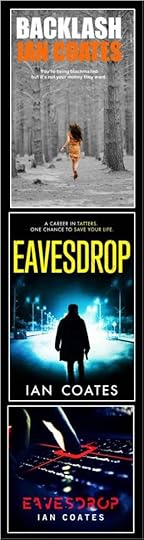
He won his first writing competition at the age of 14 with a crime novella. His debut thriller, Eavesdrop, was short listed in a Tibor Jones Page Tuner competition and was one of the winners in the centenary Writers’ and Artists’ Yearbook novel writing competition. Eavesdrop was published in paperback in 2014 by Bad Day Books, Assent Publishing’s thriller imprint, and Audible Studios subsequently released it as an audio book. Backlash is his second novel, which was the runner-up in the 2024 Writers College Global Writing Competition. It is published by Wallace Publishing.
Ian lives with his wife in Worcestershire, England and is a member of the International Thriller Writers Association and the Society of Authors. A percentage of the proceeds from his thrillers supports the British Science Association charity.


March 25, 2025
How Walking Boosts Creativity
I thought it was just me. Now, though, I realise I’m in auspicious company. I’ve always found that walking frees up my mind. Many a walk has helped me solve a plot problem that I’d been struggling with; out of apparently nowhere have come exciting thriller titles, lovely descriptions, snappy opening sentences, and interesting metaphors. What I didn’t appreciate is that there’s a scientific reason for this, and many creative people have adopted walking as a way to generate innovative ideas.
[image error]Pexels.com" data-medium-file="https://iancoatesthrillers.wordpress...." data-large-file="https://iancoatesthrillers.wordpress...." width="300" height="199" src="https://iancoatesthrillers.wordpress...." alt="" class="wp-image-725" srcset="https://iancoatesthrillers.wordpress.... 300w, https://iancoatesthrillers.wordpress.... 597w, https://iancoatesthrillers.wordpress.... 150w" sizes="(max-width: 300px) 100vw, 300px" />Photo by Tamar Willoughby on Pexels.comFor example, Steve Jobbs, Apple’s co-founder, was known for his “walking meetings” and was often seen walking round Apple’s campus while brainstorming ideas with chief engineer Jony Ive. The famous nineteenth century Philosopher, composer, and poet Friedrich Nietzsche wrote in Twilight of the Idols that “All truly great thoughts are conceived while walking.” Authors, in particular, have found walking to be a great way to get creativity flowing. In the book A Moveable Feast, Ernest Hemmingway records “I would walk along the quais… when I was trying to think something out.” And coming more up to date, J K Rowling, is quoted on Goodreads as saying that there’s “nothing like a night time stroll to give you ideas.” This process of boosting creativity by walking was summed up by Henry Thoreau, when he wrote, “Me thinks that the moment my legs began to move, my thoughts began to flow” (thanks to the writingandwellness blog for that quote).
Studies Into the Link Between Walking and CreativityStanford University performed a fascinating study on this topic in 2014, under the title Give your Ideas More Legs. They proved that walking does, indeed, boost creativity, and surprisingly also demonstrated that the environment has no impact: those walking indoors on a treadmill facing a blank wall had their creativity boosted by the same amount as those who walked outside. They also found that the benefit of walking lasted afterwards for up to fifteen minutes.
[image error]Pexels.com" data-medium-file="https://iancoatesthrillers.wordpress...." data-large-file="https://iancoatesthrillers.wordpress...." width="300" height="199" src="https://iancoatesthrillers.wordpress...." alt="" class="wp-image-731" srcset="https://iancoatesthrillers.wordpress.... 300w, https://iancoatesthrillers.wordpress.... 597w, https://iancoatesthrillers.wordpress.... 150w" sizes="(max-width: 300px) 100vw, 300px" />Photo by KATRIN BOLOVTSOVA on Pexels.comTo do their experiment, they had three groups of volunteers. In one group, participants were pushed in a wheelchair round a set route on campus; in another, they walked round the same route; those in the final group walked on treadmills indoors. During one test, they were asked to think up alternative uses of a specific object, and a point was awarded for each idea that no other participant thought of. In another test, participants were instructed to create complex analogies for a set of phrases. The result was that every single person who walked outside during the test was able to generate at least one unique analogy, compared to only half of the participants who remained seated. The overall result concluded that walking boosted creativity on average by 60%.
Another interesting finding from Stanford’s experiments was that, although walking clearly boosted creativity, it didn’t help with focussed thinking. In one test, the participants were asked to think of a word that linked three others. For example, if the three words were cottage, Swiss, and cake, the answer would be “cheese”. Getting to the answer does not require creativity; instead, it applies logical analysis and a comparison of word meanings. The result was that doing this test while walking actually degraded their ability at focussed thinking.
Neuroimaging Demonstrates Effect of Walking on the Brain[image error]Pexels.com" data-medium-file="https://iancoatesthrillers.wordpress...." data-large-file="https://iancoatesthrillers.wordpress...." width="300" height="215" src="https://iancoatesthrillers.wordpress...." alt="" class="wp-image-729" srcset="https://iancoatesthrillers.wordpress.... 300w, https://iancoatesthrillers.wordpress.... 600w, https://iancoatesthrillers.wordpress.... 150w" sizes="(max-width: 300px) 100vw, 300px" />Photo by meo on Pexels.comSo, walking boosts creativity, not focussed thinking. But is there a scientific explanation for these correlations? Studies of neuron activity in the brain demonstrate there is. In a separate study, written up under the brilliant title, Joggin The Noggin, it was found that walking and jogging reduces neuron activity in the prefrontal cortex, the area of the brain responsible for decision making and logical reasoning. With that area’s effect suppressed, creative thoughts are able to flow more freely, thereby boosting creativity.
Avoid Complex Walking Routes if Boosting Creativity[image error]Pexels.com" data-medium-file="https://iancoatesthrillers.wordpress...." data-large-file="https://iancoatesthrillers.wordpress...." loading="lazy" width="300" height="184" src="https://iancoatesthrillers.wordpress...." alt="" class="wp-image-732" srcset="https://iancoatesthrillers.wordpress.... 300w, https://iancoatesthrillers.wordpress.... 600w, https://iancoatesthrillers.wordpress.... 150w" sizes="(max-width: 300px) 100vw, 300px" />Photo by ClickerHappy on Pexels.comOne additional thing these sorts of tests found was that if the walk is in a busy area, where the person needs to continually avoid other pedestrians and obstacles, cross busy roads, etc., the effect on creativity was significantly reduced. So, if you want to get your creative juices flowing, go out for a walk, but if you’re in a city, find a park; don’t try wandering round London’s busy streets.
General Health Benefits of WalkingAnd let’s not forget the health benefits of a brisk walk. According to the NHS web pages, thirty minutes a day help to lower blood pressure, counter depression and dementia, lower the risk of osteoarthritis, and even reduce the risk of cancers. So, I’ll put my keyboard away right now, get up from my desk, and head out for a peaceful walk before writing the next chapter of my new thriller.
Ian Coates graduated with honours in electronics and often uses his experience of working in high-tech industries to give his thrillers an authentic backdrop. Although he followed a career in technology, his first love has always been books, particularly exciting page-turners about spies, blackmailers, and assassins.
He won his first writing competition at the age of 14 with a crime novella. His debut thriller, Eavesdrop, was short listed in a Tibor Jones Page Tuner competition and was one of the winners in the centenary Writers’ and Artists’ Yearbook novel writing competition. Eavesdrop was published in paperback in 2014 by Bad Day Books, Assent Publishing’s thriller imprint, and Audible Studios subsequently released it as an audio book. Backlash is his second novel, which was the runner-up in the 2024 Writers College Global Writing Competition. It is published by Wallace Publishing.
Ian lives with his wife in Worcestershire, England and is a member of the International Thriller Writers Association and the Society of Authors. A percentage of the proceeds from his thrillers supports the British Science Association charity.
January 24, 2025
The Art of Book Covers
The old saying is wrong. Or, at least, it’s misleading. They say we shouldn’t judge a book by its cover, but the only truth is that we shouldn’t judge the quality of a book’s content by what’s on the front. After all, the cover is perhaps the most important aspect when it comes to selling a novel. Think of how busy an Amazon web page can be when you browse for a particular type of book. In some places, a single page displays sixteen book covers. If you’re anything like me, when you’re scrolling page after page, that means your eye dwells on each image for less than a second. In that tiny amount of time, your brain needs to decide whether or not you’re going to click on it to find out more or move on. That cover needs to do its job and do it well!
So what can a book cover convey in that split-second?
Cover Art for Different Book Genres[image error]Pexels.com" data-medium-file="https://iancoatesthrillers.wordpress...." data-large-file="https://iancoatesthrillers.wordpress...." width="300" height="199" src="https://iancoatesthrillers.wordpress...." alt="" class="wp-image-700" srcset="https://iancoatesthrillers.wordpress.... 300w, https://iancoatesthrillers.wordpress.... 597w, https://iancoatesthrillers.wordpress.... 150w" sizes="(max-width: 300px) 100vw, 300px" />Photo by Leah Newhouse on Pexels.comThe most obvious thing you can gain from a book’s cover is its genre. There are certain unwritten “rules” that designers apply to the image. For instance, a domestic thriller will often have a picture of a house on the cover, or at least a window. A historic novel will include something that indicates the time period in which the book is set, perhaps by the clothes a person in the image is wearing, or by the style of a vehicle or building. A book set during World War II will probably have a fighter or bomber in the sky, or someone wearing RAF uniform or something similar. There will be something in that image to subconsciously convey information that instantly tells us that it’s a historic novel, even if we don’t realise so at a glance. A science fiction book will have either a spaceship or a planet on the cover; that’s virtually a law.
And so on. There’s a lot you can tell from the cover image.
Is the image a photo or a painting? The cover of a cosy mystery will normally be a painting instead of a photograph. Again, it cleverly signals the style of the story without us realising.
The Need for a Strong Focal Point
When I received the first draft of the cover art for my latest thriller, Backlash, from the publishers, I could tell something wasn’t quite right. In the story, the female protagonist is being blackmailed and is soon running for her life, so the artist had tried to include both aspects in the image. We had agreed we’d go for a woman running away through some trees, but the artist also added a suitcase of money lower down in the image to try to add an indication of the blackmail. We soon realised it didn’t work. The reason? Because the eye was drawn, first to the woman, but then also to the case of money. The brain couldn’t decide which to look at. The consequence was that, when someone was browsing quickly, the time committed to analysing that particular cover was halved because the brain had to focus on two items rather than just one. When there’s already only a fraction of a second available, reducing it even further means the potential reader probably moves on.
When the cover has a single solid focal point, it receives the maximum attention it can while the reader scrolls down the webpage, thereby maximising the chances that he or she will pause. If the image is also striking and interesting, they will pause longer, processing what they are looking at and deciding if the book might be of interest.
Eye Movement across a Book Cover[image error]Pexels.com" data-medium-file="https://iancoatesthrillers.wordpress...." data-large-file="https://iancoatesthrillers.wordpress...." width="234" height="300" src="https://iancoatesthrillers.wordpress...." alt="" class="wp-image-698" srcset="https://iancoatesthrillers.wordpress.... 234w, https://iancoatesthrillers.wordpress.... 468w, https://iancoatesthrillers.wordpress.... 117w" sizes="(max-width: 234px) 100vw, 234px" />Photo by Pixabay on Pexels.comAnother interesting thing to consider is how the eye scans a cover. Because, in the West, we learn to read from left to right and top to bottom, that tends to be how we scan a book cover. A good cover therefore needs to follow that flow rather than disrupting it, with elements in the picture running from top-left to bottom-right that draw you to its focal point. However, if objects or text are placed in the image in positions that draw the eye away from that natural flow, it takes longer to process the image because of the distractions they cause. Again, that results in less time to assess what is being seen.
I saw some studies performed a little while ago in which various cover layouts were tested to see the impact on sales. They found that having two images on the cover rather than just one resulted in lower sales (presumably because it created two focal points, as discussed above). It was also seen that having something half way down that acted as a barrier also caused lower sales. For example, having a line of text or a horizontal coloured bar half way down causes the eye to hesitate as it scrolls from top-left to bottom-right, which again means less time is available to assess whether this is a book the reader might be interested in. It’s all down to that split-second scan.
Choice of Font for a Book Cover[image error]Pexels.com" data-medium-file="https://iancoatesthrillers.wordpress...." data-large-file="https://iancoatesthrillers.wordpress...." loading="lazy" width="300" height="225" src="https://iancoatesthrillers.wordpress...." alt="" class="wp-image-702" srcset="https://iancoatesthrillers.wordpress.... 300w, https://iancoatesthrillers.wordpress.... 600w, https://iancoatesthrillers.wordpress.... 150w" sizes="(max-width: 300px) 100vw, 300px" />Photo by Brett Jordan on Pexels.comThe choice of font is also important because it carries a subliminal message. When my first thriller, Eavesdrop, was relaunched with a new cover a few years ago, the cover artist explained that there were only a couple of fonts employed for thrillers. Readers are used to seeing a particular font, and, although we don’t realise it, the font hints at the book’s genre. Look at a horror book and see how much the font differs from one used for a romance or a cat-detective mystery!
Colours Used in Novel CoversOne thing that strikes me by looking at my bookshelves is how the background colour used for thriller covers has changed over time. In the seventies, it looks like they were predominantly white; later they became generally black. The current trend appears to be a washed-out blue.
Although the most commonly-used background colour seems to change with time, there always seems to be a differentiation between the major genres. A romance is unlikely to use the same background colour as a war thriller or a sci-fi novel. Similarly, cosy mysteries tend to use much lighter colour schemes than a gritty thriller. It all helps to convey a feeling about the kind of story that resides behind the cover.
A/B Testing of Book Covers[image error]Pexels.com" data-medium-file="https://iancoatesthrillers.wordpress...." data-large-file="https://iancoatesthrillers.wordpress...." loading="lazy" width="300" height="199" src="https://iancoatesthrillers.wordpress...." alt="" class="wp-image-695" srcset="https://iancoatesthrillers.wordpress.... 300w, https://iancoatesthrillers.wordpress.... 597w, https://iancoatesthrillers.wordpress.... 150w" sizes="(max-width: 300px) 100vw, 300px" />Photo by Maria Stewart on Pexels.comCover artists sometimes run what are called A/B tests on a book cover. This is where the only thing changed is the cover, and the number of times the book cover is clicked on a site such as Amazon is recorded for both options to see which cover works best. It’s something that can only be done with e-books, of course, where mouse clicks can be measured and it’s quick and easy to change the cover image. The results have led to a much greater understanding of how a potential reader scans the cover to decide whether the book is worth investigation.
Ian Coates graduated with honours in electronics and often uses his experience of working in high-tech industries to give his thrillers an authentic backdrop. Although he followed a career in technology, his first love has always been books, particularly exciting page-turners about spies, blackmailers, and assassins.
He won his first writing competition at the age of 14 with a crime novella. His debut thriller, Eavesdrop, was short listed in a Tibor Jones Page Tuner competition and was one of the winners in the centenary Writers’ and Artists’ Yearbook novel writing competition. Eavesdrop was published in paperback in 2014 by Bad Day Books, Assent Publishing’s thriller imprint, and Audible Studios subsequently released it as an audio book. Backlash is his second novel, which was the runner-up in the 2024 Writers College Global Writing Competition. It is published by Wallace Publishing.
Ian lives with his wife in Worcestershire, England and is a member of the International Thriller Writers Association and the Society of Authors. A percentage of the proceeds from his thrillers supports the British Science Association charity.
December 17, 2024
A Tense, Fast-Paced Crime Thriller Released Today
 View on AmazonBacklash – an exciting new crime thriller
You’re being blackmailed.
But it isn’t your money they want.
Instead, you’re forced to pass the blackmailer’s threats to his more dangerous victims. Now it’s you who’s acting as blackmailer.
But what will you do when an arms dealer decides he won’t pay and it’s you he’s determined to kill?
Young interior designer Trish McGowan’s life and career are thrown into chaos. After narrowly surviving a bomb blast that destroys her shop, she finds herself running for her life. She quickly realises tracking down her blackmailer, the mysterious Argus, and trying to get his help is the only way she’ll manage to stay alive. But an experienced criminal who wants to remain anonymous isn’t easy to find.
And he might be hiding in plain sight right in front of her.
As the arms dealer’s noose starts to close around McGowan, she uncovers two more of Argus’ victims, and they form an uneasy alliance to stop the blackmail once and for all.
Available in paperback and Kindle, published by Wallace Publishing
View on AmazonTo find out more about Ian Coates and his thrillers, go to his website at iancoatesthrillers.co.uk
November 15, 2024
Do Thrillers Need to Use Profanities?
Thrillers strive for realism, but does that mean they need to be full of profanities, cussing, and swearing? In real life, the tough characters in thrillers would almost certainly litter their speech with the f-word, so it’s reasonable to ask whether thrillers should do the same, especially in dialogue and inner thoughts. You might say that, without it, the book becomes unrealistic, but is that really true? Can a good exciting thriller keep you gripped throughout without filling its characters’ mouths with swear words?
Speech in Thrillers Isn’t Realistic Anyway[image error]Pexels.com" data-medium-file="https://iancoatesthrillers.wordpress...." data-large-file="https://iancoatesthrillers.wordpress...." src="https://iancoatesthrillers.wordpress...." alt="" class="wp-image-654" srcset="https://iancoatesthrillers.wordpress.... 200w, https://iancoatesthrillers.wordpress.... 400w, https://iancoatesthrillers.wordpress.... 100w" sizes="(max-width: 200px) 100vw, 200px" />Photo by cottonbro studio on Pexels.comOne of the first lessons that new fiction writers are taught is that written speech is never the same as real-world speech; in fact it mustn’t be, or the reader would quickly be bored and discard the book. To a non-writer that may sound stupid, but think about it: if you recorded a conversation and then wrote it down word-for-word, if would be full of repetition, ums and ahs, mega-long sentences, sentences that stop midway and then start again, and so on. Go and try it! Written down, it looks nothing like speech you would find in a book.
One of the most important keys to writing good fiction is to learn how to write good dialogue. It must sound as though it is real when, in reality, it isn’t. In which case, does it need to be full of the f-word?
I think the answer is “no”, as do some high-profile thriller writers that we’ll mention shortly. If written well, dialogue can omit such profanities and still feel genuine. “Written well” is the key, however. To have an SAS sergeant say, ‘Oh bother and dang it, that shouldn’t have happened,’ would be ridiculous; the reader would throw that book in the bin in disgust. What the thriller writer needs to do, then, is to carefully craft the dialogue and add tiny descriptions of what the character is doing and feeling to show the character’s reaction. If that’s done well, the emotion can be shown without adding profanities to his/her dialogue. And all without the reader noticing the mechanics of how it was done.
Is the Use of Profanities Lazy Writing?[image error]Pexels.com" data-medium-file="https://iancoatesthrillers.wordpress...." data-large-file="https://iancoatesthrillers.wordpress...." src="https://iancoatesthrillers.wordpress...." alt="" class="wp-image-655" srcset="https://iancoatesthrillers.wordpress.... 300w, https://iancoatesthrillers.wordpress.... 597w, https://iancoatesthrillers.wordpress.... 150w" sizes="(max-width: 300px) 100vw, 300px" />Photo by Suvan Chowdhury on Pexels.comAnd writing like that is hard work! It takes skill and a lot of effort to craft dialogue that feels realistic and to add a few carefully chosen words here and there to show the character’s exasperation. The reader’s brain unconsciously fills in the gaps and sees the character’s reaction without the writer resorting to adding swearing. It is therefore often said that overusing profanities is a sign of lazy writing.
Think about stand-up comedians. Some will litter their act with the f-word and similar profanities. It generates a laugh from the audience, which is why they do it. However, that is a laugh generated by shock rather than humour. It could be considered a lazy way to get a laugh. Fiction writing is no different.
What is a Profanity anyway?While doing some research for this blog, I was shocked by one thing I read. What counts as a profanity? I like to think that my own thrillers are “clean”, but I found that, to some readers, even my writing would not count. I was horrified to realise that an occasional word that I did not class as swearing was there in my fiction. So what constitutes a profanity?
P.J. Parish, writing on this topic in the Kill Zone blog, quotes from John McWhorter’s book Nine Nasty Words. One example she pulls out of McWorther’s book is how the word “damn” has changed over the centuries. Some people today (especially in the US) consider it a swear word, which shocked me. Apparently, the reason is that it was originally “God damn you”, which people refused to say because it was cursing. Over time, it became shorted to just “damn” and no longer carries its original meaning of asking God to curse someone. Now, it’s simply a “bark of annoyance” as McWorther put it. In my mind, it is therefore not swearing but, because of its origin, some readers still consider it to be so.
Top Thriller Writers Who Avoid ProfanitiesI recently read a brilliantly exciting and tense thriller. I thoroughly enjoyed it and actually commented on how realistic it felt when writing a review. It was only afterwards that I thought, ‘I don’t think there was a word of swearing in there.’ I might be wrong and I didn’t go back to check, but it points out that such writing is possible. So I wondered what best-selling thriller writers avoid profanities in their work.
[image error]Pexels.com" data-medium-file="https://iancoatesthrillers.wordpress...." data-large-file="https://iancoatesthrillers.wordpress...." src="https://iancoatesthrillers.wordpress...." alt="" class="wp-image-657" srcset="https://iancoatesthrillers.wordpress.... 300w, https://iancoatesthrillers.wordpress.... 597w, https://iancoatesthrillers.wordpress.... 150w" sizes="(max-width: 300px) 100vw, 300px" />Photo by picjumbo.com on Pexels.comAnd I’m not talking cosy-thrillers here. A “cosy” is a subgenre specially designed to be free of anything that might upset. And no-one claims a “cosy” is realistic. I’m referring in this blog to high-action, adrenaline-fuelled, tense thrillers.
How about Lee Child, probably one of the highest profile thriller writers? In interviews, he’s reported as saying that, although he swears freely in daily life, he didn’t put such words into Jack Reacher’s mouth. If anyone needs proof that an exciting action-packed thriller can work effectively without resorting to profanities, then surely there it is.
Another best selling thriller writer is Harlan Coben. He, too, is given the accolade by reviewers of not putting swear words into the mouth of his characters. So, yes, it is possible to write a good, realistic, exciting and tense thriller without resorting to swear words.
Addition of Profanities When a Book Converts to ScreenWhen a book gets converted to screen, though, things can change. It’s common for authors to have very little say in what happens when the film script is written. A film may say “based on the book by…” but that doesn’t mean the level of swearing stays the same as the book. I was shocked when watching a modern adaptation of an Agatha Christie novel to find some of the characters using the f-word. I’m sure Dame Agatha would not have written such a thing!
Do Sensibilities to Swearing Differ Between Countries?[image error]Pexels.com" data-medium-file="https://iancoatesthrillers.wordpress...." data-large-file="https://iancoatesthrillers.wordpress...." src="https://iancoatesthrillers.wordpress...." alt="" class="wp-image-659" srcset="https://iancoatesthrillers.wordpress.... 300w, https://iancoatesthrillers.wordpress.... 597w, https://iancoatesthrillers.wordpress.... 150w" sizes="(max-width: 300px) 100vw, 300px" />Photo by Pixabay on Pexels.comI was listening recently to a panel discussion between half a dozen thriller writers. The majority were American, but one was British. When she was asked about how it worked for a British author to have their book converted for sale in the America, she commented that her US publisher asked her to reduce the number of profanities in her book. She explained that, while the average Brit doesn’t bat an eyelid at swearing in a thriller, US readers seem far less accepting.
Counting Swear WordsMany top thriller writers who use lots of profanities in the work comment that they get complaints about it. The laugh, though, is that those readers sometimes go to the extreme of counting the exact number used. What I don’t understand is that, if those readers are truly offended by too many swear words in what they’re reading, why don’t they simply put that book aside? An upset reader going through with a highlighter pen to find every “bad word” to make a tally sounds rather non sequitur!
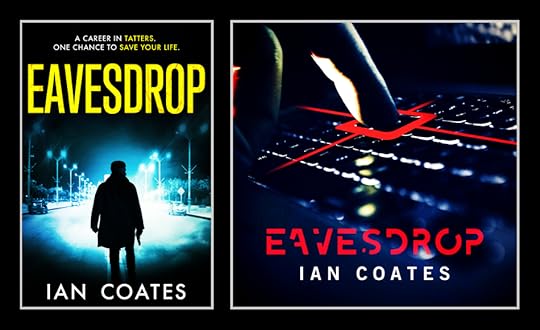
Ian Coates is the author of a thriller, Eavesdrop, first published by Bad Day Books, the suspense and thriller imprint of Assent Publishing. He worked in the high tech electronics industry for 30 years, where he specialised in the design of radio communication equipment. His intimate knowledge of that environment always triggered his imagination to think about the mysterious world of spies, and allowed him to bring a unique authenticity to his thriller. Ian is proud to support the British Science Association and donates a proportion of his book proceeds to that charity. He lives and writes in Worcestershire, England, and is a member of the Society of Authors and the International Thriller Writers Association.
His second thriller, Backlash, will be released later his year.
November 10, 2024
Win a Paperback Thriller
Love thrillers? Want reviews of some of the best thrillers straight into your email inbox each month or so? Would you like recommendations on want thriller to read next?
Sign up for the free Great Thrillers Club newsletter to enter the draw to win the fast-paced international paperback thriller, Eavesdrop. (sorry, UK only due to postal costs!)
Sign up now: https://www.iancoatesthrillers.co.uk/PrizeDraw
If you want to check out typical newsletters first, you can read some archived ones here: https://www.iancoatesthrillers.co.uk/Newsletter

August 22, 2024
What’s All This Cryptocurrency Stuff About?
In modern thrillers, we sometimes witness criminals using cryptocurrency. In my work-in-progress novel, the protagonist uses it to pay a fixer to obtain documents he needs to apply for a visa that will get him into China on a false passport. But why is cryptocurrency so suited for criminals, and how does the whole thing work anyway? In this short blog, we’ll take a brief look at the basics of cryptocurrency to try to explain what it’s all about in a very simplified way.
How Cryptocurrency Differs From Traditional Currency[image error]Pexels.com" data-medium-file="https://iancoatesthrillers.wordpress...." data-large-file="https://iancoatesthrillers.wordpress...." tabindex="0" role="button" width="300" height="225" src="https://iancoatesthrillers.wordpress...." alt="" class="wp-image-634" style="width:322px;height:auto" />Photo by energepic.com on Pexels.comThe main difference between traditional currencies (e.g. dollars or sterling) and cryptocurrency lies in how the transactions are recorded. If you go into a shop and buy a mobile phone, the shop’s card reader contacts your bank, checks you have sufficient funds, confirms your card isn’t blocked, and then electronically transfers money from your bank account to the shop’s. Details of that transaction are then stored on the bank’s electronic ledger. All traditional financial transactions around the world are recorded centrally by banks unless they are purely made using cash. In cryptocurrency, however, there is no central system recording the transactions. Instead, the ledger of transactions is distributed between private computer servers around the world. More on how that works in a moment.
In cryptocurrency, the distributed ledger of financial transactions is called a “blockchain” (because it’s a chain of blocks). Each block is a record of an individual transaction that includes the sender and recipient’s electronic addresses, a timestamp, the amount transferred, and the location of the preceding transaction in the chain. Those details are heavily encrypted and turned into a single string of ‘1’s and ‘0’s.
Why Do Criminals Love Cryptocurrency?Because there is no centralised ledger held by bricks-and-mortar banks that someone can inspect, it’s virtually impossible to work out the identities of the sender and recipient. Cryptocurrency is therefore one of the most anonymous methods for transferring money. Furthermore, unlike traditional currencies, there are no international country borders to cross. Money can therefore move as anonymously from London to Adelaide as easily as it can within a single country. The opportunities to use this for money laundering or secret payments are therefore very attractive.
What is Crypto Mining?Okay, so let’s get back to how cryptocurrency works. The key is something known as “crypto mining”. Remember that the ledger of transactions is distributed between computer servers around the world. When a user wants to make a transaction, people who want to get involved in hosting blocks in the ledger’s chain make a bid for the right to record it. For each transaction, a unique and very difficult mathematical puzzle is set. To bid for the right to record the transaction, you aim to get an answer that’s as close as possible to the solution as quickly as possible. If you achieve that faster than anyone else who’s bidding, you have proved that your computer server has the best processing power and is therefore up to the job of becoming part of the ledger (the blockchain), and you therefore get to add the transaction to the ledger. Other computers in the network check your answer to validate you’re correct. Small disclaimer: the whole thing’s actually a bit more involved than I’ve just described, but hopefully that’s enough to give you the gist of how cryptocurrency mining works.

But why should those people bother to do all this work just to be able to host blocks in the chain, especially as the computer system required is very expensive and very power-hungry? That’s the really clever bit (at least, I think it is!): the person who wins the right to host the transaction is rewarded with a piece of cryptocurrency. In this way, the cryptocurrency system is self-funding. Because they are rewarded by some more cryptocurrency, their work has resulted in more cryptocurrency being in circulation, which is why the work done is referred to as “mining”: just as a diamond miner digs up a diamond and thereby introduces another diamond into the world, so a cryptocurrency miner causes a new coin to enter circulation.
If the number of available miners decreases, the amount of cryptocurrency offered for someone to store a transaction increases, thus persuading more miners back into the system. In that way, the system self-regulates to ensure sufficient miners are available for cryptocurrency to work.
Can the Blockchain break?But what if one of the computer systems that created a block in the chain breaks? That’s not a problem because every cryptocurrency miner has to store a copy of the complete blockchain (the ledger), not just the block they added. When a new transaction (a block) is added to the chain, the new block is broadcast, allowing other servers on the system to validate the addition and take a copy. There are therefore thousands of copies of the blockchain around the world, so one computer server failing can’t disrupt the system.
The way so many copies of the blockchain are stored non-centrally like this also makes it effectively impossible for a hacker to insert a fraudulent transaction into the chain or to change an existing transaction, thus ensuring security.
What is Bitcoin? [image error]Pexels.com" data-medium-file="https://iancoatesthrillers.wordpress...." data-large-file="https://iancoatesthrillers.wordpress...." tabindex="0" role="button" width="300" height="199" src="https://iancoatesthrillers.wordpress...." alt="" class="wp-image-638" style="width:223px;height:auto" />Photo by Karolina Kaboompics on Pexels.comThe first working cryptocurrency system – called Bitcoin – was launched in 2009, although the idea of how such a system might work was published twenty years earlier by a computer engineer called Wei Dai. Since the rollout of Bitcoin, other cryptocurrencies have been born such as Litecoin and Ethereum. Today, well over a thousand are in operation.
How Do I Store My Cryptocurrency?To use cryptocurrency, you’ll first need to get a cryptocurrency wallet. This is normally in the form of a software app; there are several to choose from. The wallet holds the encryption keys that are unique to you and confirm your identity.
You then need to create an account with that wallet provider. With that in place, you can buy your chosen cryptocurrency through the wallet app using, for example, a credit or debit card, and receive payment from other cryptocurrency users.
[image error]Pexels.com" data-medium-file="https://iancoatesthrillers.wordpress...." data-large-file="https://iancoatesthrillers.wordpress...." tabindex="0" role="button" loading="lazy" width="200" height="299" src="https://iancoatesthrillers.wordpress...." alt="" class="wp-image-640" style="width:190px;height:auto" />Photo by Karolina Kaboompics on Pexels.comNote that your wallet doesn’t actually hold your currency (so the term “wallet” is a bit of a misnomer). Instead, it stores the encryption keys that are used when one of your transactions is entered on the blockchain. To see your balance, your wallet reads the blockchain from the network and picks out your transactions. When you “send” someone cryptocurrency, the system uses your encryption keys and those of the recipient to add the transaction block into the blockchain; no money is actually transferred between wallets.
An alternative to using an app is to store your wallet on a memory stick. When you want to make a transaction, you need to insert your wallet into a computer and run software to send or accept cryptocurrency. It’s more secure from the perspective that it can’t be hacked and, even if someone knows your password, a hacker still can’t steal your money. The downside is that, if you lose the memory stick, you’ve lost all your currency; there’s no getting it back.
It’s common for users to have both types of wallet – an always-connected app for day-to-day use, and a memory stick wallet to act as a secure vault. Currency from the app is then transferred to the memory stick wallet for safe keeping to stop it building up in the app.
How Cryptocurrency Miners Can Use Malware[image error]Pexels.com" data-medium-file="https://iancoatesthrillers.wordpress...." data-large-file="https://iancoatesthrillers.wordpress...." tabindex="0" role="button" loading="lazy" width="200" height="299" src="https://iancoatesthrillers.wordpress...." alt="" class="wp-image-642" />Photo by Mati Mango on Pexels.comOf course, it’s a sad aspect of human nature that systems like this attract people who want to make money illegally at the expense of others. One way this can occur is in the cryptocurrency mining process. As we said earlier, hosting blocks of the ledger’s chain requires extremely powerful power-hungry equipment, which costs the miner money. If a miner can use other people’s equipment, they have a chance of bidding to host transactions without heavy costs. They do this by spreading malware that takes over your PC and uses it in parallel with many others to help perform the necessary calculations. If they can share the work required to make a calculation across enough PCs, they can perform the mathematical processes required without owning or powering the biggest and best computer server. So, if your PC ever becomes incredibly slow, you might unknowingly be helping a scammer do a bit of cryptocurrency mining!
An alternative way to illegally make money with cryptocurrency is to have the equipment but to steal the electricity to run it. In the UK, there’s a TV detective series called Death in Paradise. In one episode, a man died in circumstances that looked like he was trying to connect jump leads to an electricity substation in order to steal electricity to power his computer server to do cryptocurrency mining. Did you see that show? It was partly what prompted me to write this blog to explain how cryptocurrency works.
Other Uses of a BlockchainSince the creation of cryptocurrency, some companies have started to use blockchain technology for other things to make the most of its security benefits. For example, a property company in California has started to use one for property transactions to protect against fraud. A New York organisation is using a blockchain to protect internet-of-things devices against hacking (the internet-of-things is the term for devices that autonomously communicate with each other over the internet). A Danish pharmaceutical company uses blockchain technology to securely collect and store patient data from its clinical trials. And so the list goes on, ever growing.
Ian Coates is the author of a thriller, Eavesdrop, first published by Bad Day Books, the suspense and thriller imprint of Assent Publishing. He worked in the high tech electronics industry for 30 years, where he specialised in the design of radio communication equipment. His intimate knowledge of that environment always triggered his imagination to think about the mysterious world of spies, and allowed him to bring a unique authenticity to his thriller. Ian is proud to support the British Science Association and donates a proportion of his book proceeds to that charity. He lives and writes in Worcestershire, England, and is a member of the Society of Authors and the International Thriller Writers Association.
His second thriller, Backlash, will be released later his year.
May 16, 2024
Has the Pace of Thrillers Changed Over Time?
Rereading thrillers that you enjoyed forty or more years ago can bring a surprise. You might remember them as fast-paced stories that kept you tightly gripped page after page. Yet read them again today, and they can seem slow; the start can feel as though it drags; the prose may seem languid. The same applies to older films, with each scene seeming very drawn-out. So, why the change in pacing, and is it true that all older thrillers are slower than today’s?
Readers’ Attention Spans Have Shrunk[image error]Pexels.com" data-medium-file="https://iancoatesthrillers.wordpress...." data-large-file="https://iancoatesthrillers.wordpress...." width="200" height="299" src="https://iancoatesthrillers.wordpress...." alt="" class="wp-image-609" srcset="https://iancoatesthrillers.wordpress.... 200w, https://iancoatesthrillers.wordpress.... 400w, https://iancoatesthrillers.wordpress.... 100w" sizes="(max-width: 200px) 100vw, 200px" />Photo by Alexander Dummer on Pexels.comIt’s commonly said that twenty-first century adults have a much shorter attention span than their forebears. Studies performed over several decades on how long people dwell on one particular computer window before scrolling to something else seem to support this. They showed that our attention span has dropped from an average of around 2.5 minutes in 2004 to 1.2 minutes in 2012, and to 47 seconds in 2016. Figures differ between studies and the age of participants, but the figure for this decade is even lower.
This must have an impact on how long readers are prepared to spend “looking” at one particular scene in their head before wanting it to move on to the next one. Hence, books need to increase their pace to satisfy the reader.
Chapter Length Can Impact a Thriller’s Pace[image error]Pexels.com" data-medium-file="https://iancoatesthrillers.wordpress...." data-large-file="https://iancoatesthrillers.wordpress...." width="200" height="299" src="https://iancoatesthrillers.wordpress...." alt="" class="wp-image-615" srcset="https://iancoatesthrillers.wordpress.... 200w, https://iancoatesthrillers.wordpress.... 400w, https://iancoatesthrillers.wordpress.... 100w" sizes="(max-width: 200px) 100vw, 200px" />Photo by Luis Quintero on Pexels.comSomething else you may have noticed is shorter chapters. Occasionally, a reader may come across one that isn’t even a page long. That’s also a modern trend. Older books probably used longer chapters because of the way they were often serialised. Think, for example, of the Sherlock Holmes stories. They were serialised in The Strand magazine in the 1890s, so each episode had to be of a set length. Arthur Conan Doyle was therefore constrained by the format in which he was published. With such restrictions gone, the modern author is free to structure the book as (s)he wishes.
Shorter chapters increase the sense of pace. As we turn from one chapter to the next, it feels as though we are travelling quickly through the story, simply because our brain uses the chapter divisions to track our progress through the novel.
Style of Writing Affects a Novel’s PaceOther changes in modern writing have also served to increase pace. Authors of yesteryear tended to use perfect grammar, and this undoubtedly affected pace. MS Word will accusingly put a squiggly green line beneath what it detects as a “sentence fragment”, yet modern authors know how and when to break such rules. And they do so with abandon. Shorter sentences carry more punch. They’re dramatic. They’re attention grabbing.
And as for starting with a conjunction such as “but” or “and”! This is now far more common than in days gone by, and the result is prose that feels faster. Over several sentences, it can build up a rhythm like a runaway train, which I suspect increases the reader’s excitement.
So, changes in style too, have impacted a thriller’s feeling of pace.
Modern Writing Omits the Obvious[image error]Pexels.com" data-medium-file="https://iancoatesthrillers.wordpress...." data-large-file="https://iancoatesthrillers.wordpress...." width="300" height="199" src="https://iancoatesthrillers.wordpress...." alt="" class="wp-image-617" srcset="https://iancoatesthrillers.wordpress.... 300w, https://iancoatesthrillers.wordpress.... 597w, https://iancoatesthrillers.wordpress.... 150w" sizes="(max-width: 300px) 100vw, 300px" />Photo by fauxels on Pexels.comHave you noticed the way people meet and separate from each other in older stories? I enjoy listening to the dramatisations of Francis Durbridge’s Paul Temple mysteries, where a meeting between characters normally starts with a round of “good mornings” and ends with an echo of “Goodbye”. Modern fiction tends to dispense with such niceties. The reader knows they are there, so nothing is missed by their omission. Chopping out those obvious pieces of interaction speeds up the scene, adding pace to the chapter.
Modern Thrillers Use Less Internal DialogueThe use of internal dialogue seems to have changed over the years as well. Modern thrillers tend to have very little, with it restricted to a single exclamation or a very short sentence; older novels may well have included multiple paragraphs of internal dialogue. This is perhaps a hang-over from the days of Shakespeare’s plays, where lengthy soliloquies were necessary to explain what was happening.
The result? More rapid changes between scenes and therefore a sense of increased pace.
Some ExceptionsThere are always some exceptions, of course, authors who led the way. Adam Hall is one novelist who comes to mind (well, actually, it’s Elleston Trevor*; Hall was his penname). He’s famous for his Quiller spy series, written from 1965 onwards. He was that period’s master of fast-paced action, an expert at cliffhangers, and an author who never wasted a word with such niceties as “good morning” or “goodbye.” He spearheaded an increase in pace, and his thrillers have lasted the test of time as a result. Give it another fifty years, though, and his, too, may start to feel sluggish if the current rate of change continues.
*to be totally accurate, Elleston Trevor was christened Trevor Smith but changed his name.
Ian Coates is the author of a thriller, Eavesdrop, first published by Bad Day Books, the suspense and thriller imprint of Assent Publishing. He worked in the high tech electronics industry for 30 years, where he specialised in the design of radio communication equipment. His intimate knowledge of that environment always triggered his imagination to think about the mysterious world of spies, and allowed him to bring a unique authenticity to his thriller. Ian is proud to support the British Science Association and donates a proportion of his book proceeds to that charity. He lives and writes in Worcestershire, England, and is a member of the Society of Authors and the International Thriller Writers Association.
His second thriller, Backlash, will be released later his year.
January 23, 2024
Where Do Writers’ Ideas Come From?
One of the most common questions a writer gets asked is, ‘Where do your ideas come from?’ So for this month’s blog, we’re going to delve into how thriller authors gain inspiration for their stories.
A Writer’s Ideas Come from Observation[image error]Pexels.com" data-medium-file="https://iancoatesthrillers.files.word..." data-large-file="https://iancoatesthrillers.files.word..." width="200" height="299" src="https://iancoatesthrillers.files.word..." alt="" class="wp-image-590" srcset="https://iancoatesthrillers.files.word... 200w, https://iancoatesthrillers.files.word... 400w, https://iancoatesthrillers.files.word... 100w" sizes="(max-width: 200px) 100vw, 200px" />Photo by Annushka Ahuja on Pexels.comFor most, it seems it’s a question of keeping eyes and ears open at all times to observe everything going on around them and letting their imagination run wild. The result can be the germ of an idea for the next novel. Take Lee Child, for instance. In an interview for Pactcoffee, he commented, “You could say a writer’s whole life is research. Everything I read or see or experience is packed away for future use.” David Baldachi agrees. He reckons that ideas come from everywhere. He said that he “watches life, listens intently… being naturally curious uncovers storylines everywhere.”
My second thriller, Backlash, came about in a similar way. On a lunch break from work, I was strolling along the towpath of the Grand Union Canal. There were always a few canal boats moored along the bank and, on this particular day, a woman was sitting in the stern of one of them smoking. What caught my eye was what she was perched on – a huge bottle of Calor Gas. Immediately, my imagination was running wild. What if it leaked? What if someone deliberately make it leak, knowing she would sit there to smoke? What if the bottle had been in the cabin and she was outside smoking? And so the opening of Backlash was born.
Some Book Ideas Come from Real-Life CrimeIn some cases, story ideas arise from reports of real-life police investigations. The crime writer Philippa East gave an example when she was interviewed for the Scarborough Mysteries Blog. “I definitely draw a lot of story ideas from true crime TV shows and podcasts,” she said. She described having heard how the death of a charismatic and sociable thirty-year old woman had somehow gone unnoticed for almost three years. How could that happen to someone who would regularly be out with friends? That was what fired-up her imagination? How? Why? The result: a crime novel.
[image error]Pexels.com" data-medium-file="https://iancoatesthrillers.files.word..." data-large-file="https://iancoatesthrillers.files.word..." width="200" height="299" src="https://iancoatesthrillers.files.word..." alt="" class="wp-image-592" srcset="https://iancoatesthrillers.files.word... 200w, https://iancoatesthrillers.files.word... 400w, https://iancoatesthrillers.files.word... 100w" sizes="(max-width: 200px) 100vw, 200px" />Photo by cottonbro studio on Pexels.comAnother crime writer, Ian Rankin, also admits to being inspired by true events. On the Writers Write website, he recalled how the idea for one of his novels came after hearing a man in a pub describe how someone was found dead on an oil rig tied to a chair with a plastic bag taped over his head.
Sarah Vaughan comments on how she read an interview in which the interviewee said she had nine locks on the front door and a panic button beside her bed. “Really?” thought Vaughan and immediately wanted to write a story about an MP living under that level of threat.
When An Authors Asks “What If…?”James Buckler says he always keeps a notebook and pen to hand to jot down all the ideas that arise, “hoping that one of then will turn out to be a worthy seed for a book”. He says a lot of his inspiration comes from reading lots of newspapers and news sites from around the world and keeping up to date with current affairs. Authors love to keep asking themselves, “What if…?”
On the Roaring Bookworm blog, TM Logan describes how he was Head of Communications for a large university and had to field a question from The Guardian about a national investigation into the scale of sexual harassment in higher education. He says the probing questions he received got him thinking: what if a victim was so desperate for a solution that she would resort to desperate measures?
SJ Watson adds more to the “What if…?” process by saying it’s also “What kind of person would that happen to?” His view is that the two must work in parallel.
An Author’s Chaos of Too Many IdeasFor some writers, these plot ideas come so thick and fast that it causes chaos. Debbie Young says “My problem is not shortage of ideas but shortage of time to turn them into stories”! Lucky person!
[image error]Pexels.com" data-medium-file="https://iancoatesthrillers.files.word..." data-large-file="https://iancoatesthrillers.files.word..." width="300" height="199" src="https://iancoatesthrillers.files.word..." alt="" class="wp-image-594" style="width:373px;height:auto" srcset="https://iancoatesthrillers.files.word... 300w, https://iancoatesthrillers.files.word... 597w, https://iancoatesthrillers.files.word... 150w" sizes="(max-width: 300px) 100vw, 300px" />Photo by cottonbro studio on Pexels.comGreg Herren describes the way ideas arise as a “creative ADHD”, with his mind and imagination “bounding all over the place.” He has filing cabinets stuffed full with notes and ideas. When he researches a topic for a book, he says he inevitably goes down worm holes that give him more ideas. Like Young, he says, “I’ll never be able to write all the books I want to or have ideas for.”
It’s unusual for ideas to immediately become a novel, though. They normally need to coalesce in one’s memory, to stew and combine. Val McDermid explains that an idea “rolls about for at least a year before it’s formed into a story arc.”
For some writers, this continuous stream of fresh ideas can be a big distraction. Lou Holly, interviewed for The Book Folks blog, said that he’ll sometimes be in the middle of writing one novel when he gets an idea for another story and starts making notes. Suddenly, he finds himself writing the new one, with the original left on the backburner.
In a way, I suppose that’s how my current work-in-progress thriller came about. I like to base my novels in the world of the high-tech electronics industry because that’s what I’m familiar with. I thought it would be good to base a story around the theme of counterfeit electronics goods. I started reading round the subject and one book I studied dealt with counterfeiting in general. One chapter described how people sometimes died because of counterfeit medicines. My mind was off and racing. Here was a far better idea than I had started with. The novel immediately changed direction and became far more powerful.
Inspiration from the Writer’s Day Job[image error]Pexels.com" data-medium-file="https://iancoatesthrillers.files.word..." data-large-file="https://iancoatesthrillers.files.word..." loading="lazy" width="300" height="201" src="https://iancoatesthrillers.files.word..." alt="" class="wp-image-597" srcset="https://iancoatesthrillers.files.word... 300w, https://iancoatesthrillers.files.word... 600w, https://iancoatesthrillers.files.word... 150w" sizes="(max-width: 300px) 100vw, 300px" />Photo by James Anthony on Pexels.comSome writers become inspired by their non-writing jobs, although this is not as common as I would have expected. The famous crime novelist Dick Francis always based his books in the world of horse racing, taking ideas from his time as a championship jockey, only starting writing after injury forced his retirement from the sport. All his memories of living and working in that environment inspired his novels.
For me, too, this is where the inspiration came from for my first published thriller, Eavesdrop. After graduation, I joined a company as an engineer designing radio communication equipment. Another team was working on an encrypted walkie-talkie, and seeing what they were doing fired my imagination. Could there be some way to circumvent the encryption? Who would want to do so and why? How could someone afford the cost of doing what was necessary? My novel about a threat to Middle East peace was born.
Go and Start Day DreamingLet’s end with a quote from Neil Gaiman: “You get ideas from daydreaming, you get ideas from being bored. You get ideas all the time. The only difference between writers and other people is that we notice when we’re doing it.”
Sounds like it’s time to go and daydream over a cup of coffee.
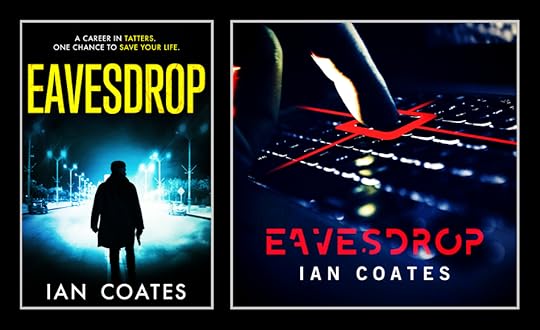
Ian Coates is the author of a thriller, Eavesdrop, first published by Bad Day Books, the suspense and thriller imprint of Assent Publishing. He worked in the high tech electronics industry for 30 years, where he specialised in the design of radio communication equipment. His intimate knowledge of that environment always triggered his imagination to think about the mysterious world of spies, and allowed him to bring a unique authenticity to his thriller. Ian is proud to support the British Science Association and donates a proportion of his book proceeds to that charity. He lives and writes in Worcestershire, England, and is a member of the Society of Authors and the International Thriller Writers Association.
His second thriller, Backlash, will be released later his year.
November 23, 2023
What is AI, and How Does it Affect Writers?
Everyone’s heard of Artificial Intelligence (AI) and how it’s changing the world, but what is it? How does it work? And, importantly, how does it affect authors?
What is Artificial Intelligence (AI)?AI is basically a computer system that attempts to simulate human intelligence. The key is that it learns by itself by consuming massive amounts of data – reading everything on the internet – and looking for patterns in what it sees. By understanding the patterns it finds and applying statistics, it can then produce something of its own with a similar pattern.
[image error]Pexels.com" data-medium-file="https://iancoatesthrillers.files.word..." data-large-file="https://iancoatesthrillers.files.word..." width="300" height="199" src="https://iancoatesthrillers.files.word..." alt="" class="wp-image-573" srcset="https://iancoatesthrillers.files.word... 300w, https://iancoatesthrillers.files.word... 597w, https://iancoatesthrillers.files.word... 150w" sizes="(max-width: 300px) 100vw, 300px" />Photo by Tara Winstead on Pexels.comThis learning process is crucial. Simpler AI systems are trained by being provided with lots of data, with a human telling the system what it’s looking at. For instance, it might be shown many pictures of cats, and many pictures of dogs, and it is told what’s in each picture. It then looks for patterns and commonalities in the pictures, and works out how to differentiate a cat from a dog. More sophisticated artificial intelligence systems have the ability to learn by themselves, not requiring what it processes to have been pre-labelled by a human. Those systems are described as “Deep Learning”.
To see how an AI system can learn, consider the example of a help desk’s chatbot, which can be trained by reading transcripts of millions of real-life customer exchanges to learn how a human replies to different questions. Then, if someone asks it a similar sort of question, it knows the way in which to answer. The important point to note is that it doesn’t just copy a reply it’s seen a human use, but generates its own reply based on the question being asked, the context in which the question arose, how it’s being asked, and its own knowledge of how similar questions have been answered in the past that have been seen to satisfy the customer.
And, crucially, the system continues to learn: if it gives an answer but the customer clearly isn’t happy with its response, it learns how to do better in the future by seeing how the customer responded and what they asked next.
But the input to an Artificial Intelligence system doesn’t have to be text or speech. AI can also analyse millions of paintings to spot patterns in what it sees, and then produce its own work by using similar patterns itself. It “just” needs some prompts to get it started to tell it the kind of image to produce, and away it goes (prompts are similar to the questions a chatbot receives). A little later in this blog, I share my experience using artificial intelligence to create an image for a book’s front cover, and how an author used it to create a novel.
How does Artificial Intelligence (AI) Work?So, how do these AI systems manage this?
Artificial Intelligence software is structured in a similar fashion to the human brain. Like the way the brain’s 86 million neurons interconnect in groups and can be triggered by various inputs, so the computer processes data by passing it to groups of “nodes” that interconnect in a giant mesh. Each node analyses the data in its own way, producing a value as the result of that analysis. If that value exceeds a certain threshold, that node triggers, and passes data to other nodes for them to analyse in their own way.
The nodes are grouped in layers, similar to the human brain as shown in this simplified example:

Nodes in the input layer process the incoming data and pass information on to the nodes in the middle, which analyse it further before sending it to the output layer. The output layer then collates all their analyses and produces an output.
These groups of layers of nodes are called “neural networks”, and provide a way to classify the input data at incredible speeds. Using this technique to analyse images that would take a human several hours, for example, would take a computerised neural network only a few minutes. A deep-learning network may have millions of interconnected nodes, grouped in up to 50 different layers.
The most common AI tool currently in use is ChatGPT. The suffix tells us a lot about how it works: The “G” tells us that it’s generative, i.e. it can generate output text. The “P” tells us that it has been pre-trained and has used deep learning to analyse lots of data by itself to find its own patterns in what it has consumed. Perhaps the most interesting suffix is the “T”, which tells us it uses what is called a “transformative architecture”. This is key to the speed and accuracy of the system, and was a method first introduced in 2017. The input text is not read from left to right as we would, but the text is broken into chunks, which are all examined simultaneously. The system then decides which words are the most important, and the AI algorithm then gives more attention to those than to the other words in the text.
From its analysis and training, it then decides on the most appropriate response.
When it comes to using AI to create something (e.g. a picture or some text), one of the most important aspects of using AI to understand is the importance of the prompts the system is given as the input to its analysis. The computer analyses the prompt, seeks to understand it, and then produces a response that it thinks is the most appropriate, given the content, structure, and context of the prompt. There are some examples of prompts later, when we look at using AI to create a novel and a suitable front cover image.
What’s Artificial Intelligence (AI) Used For?Artificial intelligence has more applications that I could name here. The most common are probably speech recognition, predictive text, chatbots, grammar checking, and image analysis. I read an article recently that described how AI was being used to improve safety on the Devon railway network near Dawlish: cameras monitor the cliffs and track, with AI analysing the images to detect hazards such as rock falls, and alerting a central control room if anything is found.
[image error]Pexels.com" data-medium-file="https://iancoatesthrillers.files.word..." data-large-file="https://iancoatesthrillers.files.word..." width="200" height="299" src="https://iancoatesthrillers.files.word..." alt="" class="wp-image-575" srcset="https://iancoatesthrillers.files.word... 200w, https://iancoatesthrillers.files.word... 400w, https://iancoatesthrillers.files.word... 100w" sizes="(max-width: 200px) 100vw, 200px" />Photo by cottonbro studio on Pexels.comArtificial Intelligence is a very powerful tool for image processing, and is now more accurate (and much faster) than humans. It can learn what something normally looks like, and then identify any anomalies. Medical science is benefitting greatly from its ability to analyse MRI and X-ray images to spot cancers.
Similar techniques provide a key component for self-drive cars, by analysing the environment around it using cameras and other sensors, and checking what it “sees” for hazards, road signs, other vehicles, etc.
Work on Artificial Intelligence started in the 1940s, when scientists were studying how our brains use interactions between neurons to make decisions, but it wasn’t until 1989 that a neural network was first used to train a computer. Its first application was to recognise hand-written postcodes on envelopes to help automate postal sorting in the US.
These days, the place we’re most likely to come into contact with AI is the chatbot, which is increasingly used on websites to provide a first-level of “Contact Us”. The customer types in a question, and artificial intelligence analyses the text to work out what is being asked. It can then provide an answer from its accumulated knowledge in a way that sounds like a human answering your question. Although “connect me to a human” can sometimes be the best text to enter!
Can Artificial Intelligence (AI) Write a Novel?The big question for authors, though, is whether AI will ever be able to create a readable novel. Currently, it can’t do this by itself – or, at least, it can’t produce work of any quality by itself. Some publishers have recently been forced to close their doors to unsolicited submissions because they’ve been inundated with articles and short stories generated by artificial intelligence. The quality is so bad that they can’t be used, but each submission needs to be read; publishers have been unable to cope with the sudden surge in these submissions. And this is bad news for writers because many authors rely on being able to submit freely to such companies for their livelihood.
[image error]Pexels.com" data-medium-file="https://iancoatesthrillers.files.word..." data-large-file="https://iancoatesthrillers.files.word..." loading="lazy" width="300" height="150" src="https://iancoatesthrillers.files.word..." alt="" class="wp-image-577" srcset="https://iancoatesthrillers.files.word... 300w, https://iancoatesthrillers.files.word... 600w, https://iancoatesthrillers.files.word... 150w" sizes="(max-width: 300px) 100vw, 300px" />Photo by Pixabay on Pexels.comOne author, Stephen Marche, decided to see if he could use AI to write a quality novel. It turned out it took loads of work, and was heavily reliant on breaking it down into small chunks and being very clever with the prompts that were used, including the style of writing you ask it to mimic.
The Society of Authors reported on his experimentation recently, and noted that Marche explained that, to write a novel in the style of Raymond Chandler, asking AI to write in that style simply resulted in “a very pale photocopy of Raymond Chandler.” Instead, he said it worked out to be better to ask AI to “write something about a murder scene in the style of Chinese nature poetry, then make it active, then make it conversational, then Select All and put it in the style of Ernest Hemmingway.” Hmmm… it sounds like he had to do a lot of experimentation to get that right!
How to use Artificial Intelligence (AI) to Create Cover ArtworkUsing Artificial Intelligence to create an image for the book’s cover, though, seems somewhat simpler. To see how easy it is to use AI to create the artwork for a book cover, I went to the FOTOR website and selected their “Text to Image” option. I was then able to enter a text prompt to start their artificial intelligence working for me. I decided to try to create an image that could be used for the front cover of a thriller, so entered the prompt “scared woman running through trees”. The AI system analysed my text and produce a couple of suggested pictures, although the result wasn’t really what I was looking for:

They looked too much like cartoon images, and I didn’t want snow, so I then added a “negative prompt” of “snow cartoon” to tell it the type of picture to avoid. I also wanted just one figure, not several, and I wanted it to look more like a photo than a painting, so I modified my initial prompt to be “one scared woman running through trees photo”. This was immediately a lot better:

However, I wanted the woman to be running away from the imaginary camera into the woods rather than towards me, so I added an additional prompt of “running away”. I also decided I wanted it to be more misty (so I added a prompt of “foggy”), and that she should be wearing a red coat rather than a jogging outfit to give the impression she was running away from something rather than just out for exercise. With new prompts added, I asked it to generate the new image:

It was now much better, but she had been left wearing what looked like trainers or running shoes, which I didn’t like. Also, I wanted more trees, and for the image to have a green tinge. And what would it look like if she was running with a holdall, I wondered? With additional prompts added, it gave something close to what I was looking for:

It still wasn’t perfect, but it was clear that, with a little more finessing, I would be able to get a suitable image that could then be imported into something like Canva to create a thriller’s front cover. And it took only a few minutes.
One thing was clear: the skill in using the tool came from entering the best positive and negative prompts. It seemed to me that, yes, it would give self-published authors an easy way to generate their own front covers, but it would also provide professional artists with a powerful tool they could use in their work. At the moment, at least, it wouldn’t be making those professionals redundant – not until AI could read a complete novel, analyse it, understand it, pick out the key points, and then make a decision on the artwork by itself.
The concern with this, though, is what was used to train the artificial intelligence. It has viewed trillions of images to be able to understand what I was asking for. Where did those images come from? And here’s the moral dilemma – if an artist spends time and effort to create the artwork for a book’s front cover, who’s allowed to use it? The publisher is given the right to put it on the front cover of a book, but is a third party (i.e. the company developing the AI system) allowed to use that artist’s work for free in order to teach its computer what a typical cover looks like?
What is the Impact of Artificial Intelligence (AI) on Authors?And this is where one of the problems arises for authors. The system of copyright is crucial for an author’s income, but there are many pirate sites on the web that have managed to get hold of books and illegally provide them for free. I know of three sites, for example, that have pirate copies of Eavesdrop, my own thriller.
When AI is trained, it reads and analyses everything it can find and learns from it. That means it has read my book for free and benefitted from it. As it has from millions of other books illegally available. The knowledge it has gained from reading them is then used to generate its own works, from which it can gain revenue. My book – and that of probably every other author – has been used to generate income for someone else, and we poor authors – without which it couldn’t work – received no recompense for that. As a result, there are currently many legal cases in progress, with groups of authors taking the AI companies to court over these copyright abuses.
The Society of Authors is working hard on this issue on behalf of authors, to try to find a way to make the system fairer. Time will tell whether a solution can be found.
Ian Coates is the author of a thriller, Eavesdrop, first published by Bad Day Books, the suspense and thriller imprint of Assent Publishing. He worked in the high tech electronics industry for 30 years, where he specialised in the design of radio communication equipment. His intimate knowledge of that environment always triggered his imagination to think about the mysterious world of spies, and allowed him to bring a unique authenticity to his thriller. Ian is proud to support the British Science Association and donates a proportion of his book proceeds to that charity. He lives and writes in Worcestershire, England, and is a member of the Society of Authors and the International Thriller Writers Association.



![[image error]Pexels.com](https://iancoatesthrillers.wordpress.com/wp-content/uploads/2025/06/pexels-photo-1741230.jpeg)
![[image error]Pexels.com](https://iancoatesthrillers.wordpress.com/wp-content/uploads/2025/06/pexels-photo-724994.jpeg)
![[image error]Pexels.com](https://iancoatesthrillers.wordpress.com/wp-content/uploads/2025/06/pexels-photo-4260314.jpeg)
![[image error]Pexels.com](https://iancoatesthrillers.wordpress.com/wp-content/uploads/2025/06/pexels-photo-4866043.jpeg)
![[image error]Pexels.com](https://iancoatesthrillers.wordpress.com/wp-content/uploads/2025/03/pexels-photo-951886.jpeg)
![[image error]Pexels.com](https://iancoatesthrillers.wordpress.com/wp-content/uploads/2025/03/pexels-photo-6192337.jpeg)
![[image error]Pexels.com](https://iancoatesthrillers.wordpress.com/wp-content/uploads/2025/03/pexels-photo-724994.jpeg)
![[image error]Pexels.com](https://iancoatesthrillers.wordpress.com/wp-content/uploads/2025/03/victoria-station-busy-people-victoria-735795.jpeg)
![[image error]Pexels.com](https://iancoatesthrillers.wordpress.com/wp-content/uploads/2025/01/pexels-photo-1666320.jpeg)
![[image error]Pexels.com](https://iancoatesthrillers.wordpress.com/wp-content/uploads/2025/01/eye-eyelashes-face-woman-63320.jpeg)
![[image error]Pexels.com](https://iancoatesthrillers.wordpress.com/wp-content/uploads/2025/01/pexels-photo-5266319.jpeg)
![[image error]Pexels.com](https://iancoatesthrillers.wordpress.com/wp-content/uploads/2025/01/pexels-photo-3946013.jpeg)
![[image error]Pexels.com](https://iancoatesthrillers.wordpress.com/wp-content/uploads/2024/11/pexels-photo-3201718.jpeg)
![[image error]Pexels.com](https://iancoatesthrillers.wordpress.com/wp-content/uploads/2024/11/pexels-photo-144429.jpeg)
![[image error]Pexels.com](https://iancoatesthrillers.wordpress.com/wp-content/uploads/2024/11/pexels-photo-210661.jpeg)
![[image error]Pexels.com](https://iancoatesthrillers.wordpress.com/wp-content/uploads/2024/11/pexels-photo-269724.jpeg)
![[image error]Pexels.com](https://iancoatesthrillers.wordpress.com/wp-content/uploads/2024/08/pexels-photo-2988232.jpeg)
![[image error]Pexels.com](https://iancoatesthrillers.wordpress.com/wp-content/uploads/2024/08/pexels-photo-5980856.jpeg)
![[image error]Pexels.com](https://iancoatesthrillers.wordpress.com/wp-content/uploads/2024/08/pexels-photo-4386433.jpeg)
![[image error]Pexels.com](https://iancoatesthrillers.wordpress.com/wp-content/uploads/2024/08/pexels-photo-5952647.jpeg)
![[image error]Pexels.com](https://iancoatesthrillers.wordpress.com/wp-content/uploads/2024/05/pexels-photo-133021.jpeg)
![[image error]Pexels.com](https://iancoatesthrillers.wordpress.com/wp-content/uploads/2024/05/pexels-photo-1759524.jpeg)
![[image error]Pexels.com](https://iancoatesthrillers.wordpress.com/wp-content/uploads/2024/05/pexels-photo-3182824.jpeg)
![[image error]Pexels.com](https://iancoatesthrillers.files.wordpress.com/2024/01/pexels-photo-8114405.jpeg)
![[image error]Pexels.com](https://iancoatesthrillers.files.wordpress.com/2024/01/pexels-photo-10464545.jpeg)
![[image error]Pexels.com](https://iancoatesthrillers.files.wordpress.com/2024/01/pexels-photo-5185074.jpeg)
![[image error]Pexels.com](https://iancoatesthrillers.files.wordpress.com/2024/01/pexels-photo-11341149.jpeg)
![[image error]Pexels.com](https://iancoatesthrillers.files.wordpress.com/2023/11/pexels-photo-8386440.jpeg)
![[image error]Pexels.com](https://iancoatesthrillers.files.wordpress.com/2023/11/pexels-photo-5723875.jpeg)
![[image error]Pexels.com](https://iancoatesthrillers.files.wordpress.com/2023/11/pexels-photo-267586.jpeg)