Neil Bailey's Blog
November 28, 2018
New website
My original Blogger websites are no longer being updated. Please visit my new site
www.neilmbailey.com for the latest news on my writing and books.
Neil
www.neilmbailey.com for the latest news on my writing and books.
Neil


August 1, 2016
Starting point
It wasn’t initially going to be a novel.
I told people it was but that was too scary a place to begin at.
My original plan was to write a series of loosely connected short stories. I planned to take a minor character from the first story and use them as the protagonist of the second, someone from the second taking centre stage in the third, all the way through to the final story featuring the lead from the opening chapter again. It seemed like a good idea, a way of writing a longer story almost by stealth without the daunting prospect of having to plan and write a novel from scratch. After all, I was new at this game, not having attempted fiction in thirty years or so. Let’s not get ahead of ourselves.
So much for that plan.
The first short story worked out okay (email me if you’d like to read it) but I wasn’t happy with its pacing and, although some of the dialogue was fun, I didn’t find it that rewarding to write. I felt I had a lot to learn still, and needed some help. An attempt at the second was similarly frustrating: it was better but longer and again the pacing let it down. The third never got beyond a dozen pages before I realised I didn’t have a clue where it was going, even if it did start well.
And it felt like I was treading water, shying away from the real challenge.
So I parked the short story collection, for now at least (I still think it’s a cool idea) and started a few creative writing courses to try to learn more of the craft. My first was a one-day workshop with best selling novelist Kate Mosse at The Guardian, the second was a more substantial twelve-week online course with Random House, and that’s where the story that would become my first novel started to take shape.
I told people it was but that was too scary a place to begin at.
My original plan was to write a series of loosely connected short stories. I planned to take a minor character from the first story and use them as the protagonist of the second, someone from the second taking centre stage in the third, all the way through to the final story featuring the lead from the opening chapter again. It seemed like a good idea, a way of writing a longer story almost by stealth without the daunting prospect of having to plan and write a novel from scratch. After all, I was new at this game, not having attempted fiction in thirty years or so. Let’s not get ahead of ourselves.
So much for that plan.
The first short story worked out okay (email me if you’d like to read it) but I wasn’t happy with its pacing and, although some of the dialogue was fun, I didn’t find it that rewarding to write. I felt I had a lot to learn still, and needed some help. An attempt at the second was similarly frustrating: it was better but longer and again the pacing let it down. The third never got beyond a dozen pages before I realised I didn’t have a clue where it was going, even if it did start well.
And it felt like I was treading water, shying away from the real challenge.
So I parked the short story collection, for now at least (I still think it’s a cool idea) and started a few creative writing courses to try to learn more of the craft. My first was a one-day workshop with best selling novelist Kate Mosse at The Guardian, the second was a more substantial twelve-week online course with Random House, and that’s where the story that would become my first novel started to take shape.
July 28, 2016
And onto the shelf (Into Print, part two)
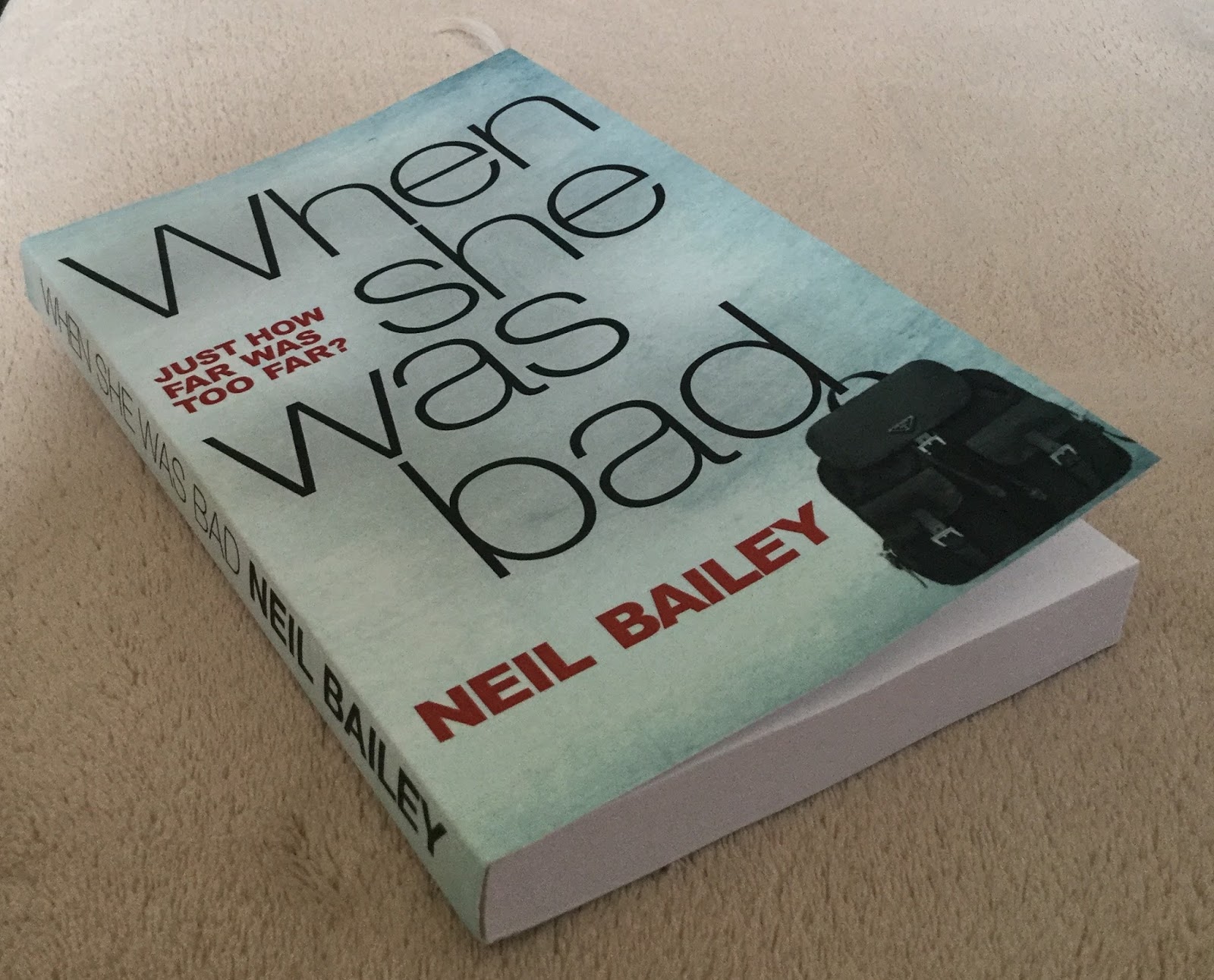
 These days there are various options available for printing books ‘on demand’, i.e. when a customer order the book a copy is printed, bound and shipped to them within a matter of hours. Quite remarkable - the days of expensive ‘Vanity Publishing’ printing are now long gone.I found that Amazon has a company called CreateSpace. They do all kinds of things but the service I wanted was their trade book publishing. (They also offer a number of design services which I didn’t need as I know my way around preparing PDF files for professional production.) The main CreateSpace service is based in the US, but copies for the UK and EU are printed and shipped from Bedford, so only copies bought direct from CreateSpace incur hefty shipping costs. I didn’t research other companies as the testimonials for CS were excellent.
Once I had the final, final version of my text I had to get my pages ready for print. I’d written When She Was Bad in Microsoft Word and could have produced PDFs directly from my final draft, but Word isn’t a professional publishing tool and is known to have a number of annoying idiosyncrasies with its PDF export. It also lacks typesetting essentials such as full kerning and ligature controls. I wanted my book to look as good as it possibly could so I completed the pages using Adobe InDesign, laying out my text into an 8x5in template. I set the book in 11pt Baskerville and removed the automatic hyphenation (neater to manually hyphenate a word and only then if absolutely necessary). I then went through all 260 pages tidying away any widows or orphans (short lines at the top or bottom of a page) and ensuring all the text on each page was neat, compact but not too crowded. I haven’t worked as a sub editor for over 25 years but it is easy work when it’s your own words you’re fitting.CreateSpace details its PDF requirements on the site but I didn’t find the margins, trim and bleed instructions particularly helpful. My wife Jenny, a designer by trade, had to slightly rework the cover she’d designed for the Kindle edition for the paperback sizing, and added a back cover and the spine and barcode panels. We needed to use a higher resolution picture of a Prada rucksack for the print version (300dpi rather than the 72dpi that had been okay for Kindle) and ended up using a different bag for print.I added additional text on copyright, a few blank pages front and back, and an Author’s Q&A I did with a friend. CreateSpace provided the required ISBN free, which was included in their barcode. All done. I uploaded it to CreateSpace and they performed a full check at their end. One small correction was required and then I clicked the magic button to order a proof copy. The proof copy was $4.21 and the postage was $14.38 as I wanted it that week (I just couldn’t wait!), so that was $18.59 (£14.13) for my very first copy of my very first book.As CreateSpace is an Amazon company it was on sale on all their sites almost immediately and they do all that ‘Look Inside’ and ‘Sample magic’ for me. The price you can charge is dictated by page size and page count and I wanted to keep it low reasonably low. I set it at £7.99 here and $9.99/€9.99 elsewhere. I make roughly the same royalty on the paperback as I do on the £1.99/$2.99 Kindle edition - £1.29 a copy. I can buy copies for myself via CreateSpace for $4.21 each, but they ship from the US so it’s not not that great a saving for me from the UK price unless I buy in volume.At the time of writing I’ve sold 80 copies, with another dozen I’ve bought and distributed myself. As the Kindle version is cheaper and was available first it accounts for the majority of sales, but I’m hoping the paperback will pick up some momentum once I start marketing it.It’s been a great thrill putting my first novel on my shelf - I can’t recommend it highly enough, well worth the fourteen quid it took to get it there. I’m happy to answer any questions anyone may have on what I’ve done.
July 27, 2016
Getting into print (Part One)
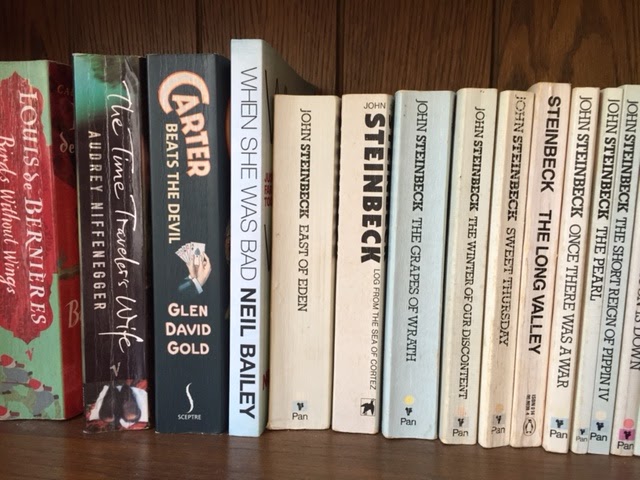
 When we moved house last one of the removal men took one look at the room packed to the ceiling with boxes labelled BOOKS and gasped “Bloody hell ... have you guys never heard of a Kindle?!”
He had a point - over the years our bookshelves have expanded and groaned under the growing masses of hardbacks and paperbacks of every description. Most have been read but are unlikely to be re-read. Many have been loved and treasured but by no means all, and some remain unread and are quite likely to stay that way whilst they sit there, never quite attractive enough to be next by the bedside.
There’s no rational way to justify them. I’ve got a Kindle, we’ve got iPads and laptops and smart phones. But...
Books. Real books. Gotta love ‘em, can’t live without them.
I’ve nothing against eBooks - they’re just so convenient to buy and carry and make so much logical sense. You can read them across multiple devices and can change the typeface to suit your needs and have a zillion great features that print can never do. And as a rule they’re generally cheaper than the paper varieties too (even if they do incur VAT in the UK whereas physical books don’t).
But they’re not really books, are they? Like music on Spotify and movies on Netflix, you never really feel like they’re real.
I can look at my books on the shelf and recall where I was, when I was, when I read them, but I don’t do that with an eBook. Something’s not there. There’s a disconnect. I’ve even been known, if enjoying a book on the Kindle, to stop reading it half way through and then buy the paperback before continuing it.
I may have a problem, but I’m sure I’m not alone.
So when I published the first edition of When She Was Bad on Kindle it felt like a great achievement. It was fantastic that I could share it with friends who had been supportive during all of the work I put into it. Jenny read it on her iPad, Tina read it on her Kindle, friends weren’t just buying it to support me but were actually reading and enjoying it.
But it still didn’t feel like a real book.
One of the neat things about the Kindle edition is that I could revise it at no cost to either me or the kind people who had already paid for it. I knew that there would be typos, possibly plot problems too - with self-publishing, there’s no experienced Editors acting as a safety net to wheedle out the faults and fix them - and I was able to incorporate early feedback and issue a ‘fixed’ version distributed a few weeks after the initial eBook had been launched.
But it still wasn’t real.
I still wasn’t in ‘print’.
But now that the text was as good as I could make it, I needed to put some ink on paper.
[This article will be concluded in Part Two before the end of July]
July 25, 2016
Introducing 'Becker'
The Random House course starts with creating a character. The first week’s exercises were all designed to help students give form and substance to a new fictional character that we would flesh out and develop over the entire course. I had nothing in my locker so I was starting from scratch - others on the course already had characters and even novels already in mind. Me, I had nothing.
I’ve always found heroes quite vanilla and dull, so I came up with an unlikeable anti-hero, ‘Becker’, to give me a little more licence to make things interesting. I was probably just trying to do something different, but it seemed to work for me. Becker (the name soon changed) was arrogant, materialistic, self-centred and deeply unpleasant. You may not like him, but any emotional response is better than none, and starting at a low point gave him plenty of opportunity to become a better person. For speed (the course went at quite a pace and deadlines were every few days) I had an actor in mind to help me quickly develop the character’s appearance and speech patterns. Every little helps.
The first sentence I wrote for the course is still the opening of the novel’s latest draft:
It turns out I was.
I’ve always found heroes quite vanilla and dull, so I came up with an unlikeable anti-hero, ‘Becker’, to give me a little more licence to make things interesting. I was probably just trying to do something different, but it seemed to work for me. Becker (the name soon changed) was arrogant, materialistic, self-centred and deeply unpleasant. You may not like him, but any emotional response is better than none, and starting at a low point gave him plenty of opportunity to become a better person. For speed (the course went at quite a pace and deadlines were every few days) I had an actor in mind to help me quickly develop the character’s appearance and speech patterns. Every little helps.
The first sentence I wrote for the course is still the opening of the novel’s latest draft:
Before I found the man who would change my life, I found his bag.I think it’s a neat opening (an Editor at Random House said it was ‘wonderful’ - it isn’t, but it ain’t bad) and, inadvertently, it actually introduces us to two characters: the man, and the person whose life he transforms. In that first week I didn’t have a clue who that second person was but hopefully I could use each course submission to develop both my anti-hero and the narrator, their relationship and character arcs. And maybe, just maybe, an idea for a story. If I was lucky.
It turns out I was.
July 19, 2016
Wanted - one John Watson
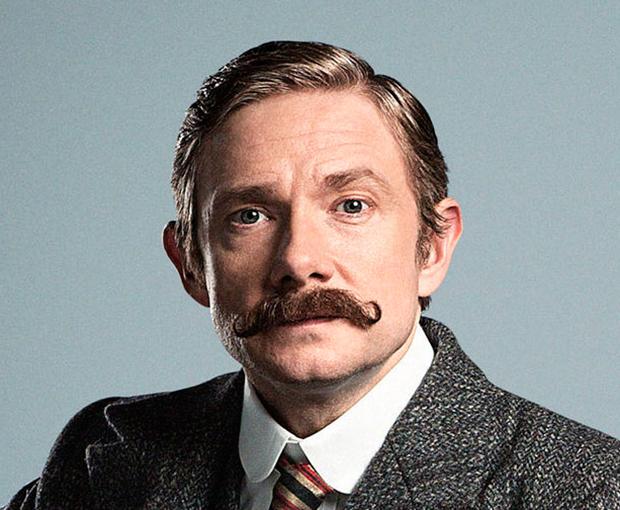 Once I had my protagonist I needed a companion for my anti-hero, someone who would act as a surrogate for the reader, who would be as surprised or shocked or confused or amused as the reader was. (There’s no doubting that Sherlock Holmes is a great character, but he wouldn’t be quite so amazing if we weren’t seeing him through the admiring and sometimes critical eyes of Dr John Watson.)
I planned to write the story from a first person perspective and almost by accident that gave me my second character, one who, much to my surprise, actually became my favourite in the story - Claire MacDonald.
Writing Claire, the 23-year-old who steals Barclay’s rucksack at Waterloo station, is no small challenge for me: I’ve never attempted a strong female character before, let alone as a lead, but on my Creative Writing course I found that her ‘voice’ came naturally and she proved pretty straightforward to write, a distinctive, feisty but flawed character, more identifiable than Barclay. It’s true what they say - work at it and the characters really do write themselves. Here’s a conversation from one of the course exercises that didn’t make it into the novel. Claire and Barclay getting to know each other over dinner:
“I find it difficult to make new friends, like I’m being disloyal to absent friends,” I said.
“I don’t have that problem.”
“You make friends easily?”
“No, I meant I have no loyalty issues. I’m not very loyal to anyone,” he said.
“You’d make a rubbish dog.”
“Don’t mention dogs.” He didn’t laugh.
“No. Sorry. Delicate subject,” I said. “I do get lonely though sometimes, especially the evenings.” Confession time. It just slipped out.
“Who doesn’t?” Was he being sympathetic or sarcastic? I couldn’t tell.
“You don’t strike me as the lonely type.”
“Everyone is lonely. It’s just that some of us find it difficult to admit to it. I’d like to think I’m a loner but sometimes...”
And he left it there, hanging. Looking back on it, that was the nearest I ever got to a confession out of him about him being unhappy. With Barclay it was all front, all bravado. But deep down, further down where he didn’t let you dig, there was a lonely, unhappy little boy still. Spoiled rotten, unprincipled, sad even. The bugger just wouldn’t admit to it.A bit revealed about Barclay, a bit about Claire. It seemed to work.
As the course progressed I found myself having to work harder on establishing Claire than Barclay; I didn’t want her to be passive in the story I was starting to concoct and was keen to make her as realistic as I could. I knew I’d got close when I wrote something and someone else on the course exclaimed ‘But the Claire I know wouldn’t do that!’ Success!
Claire lived!
July 18, 2016
The First Draft underway
 I finished the Random House Creative Writing course at the end of November 2015. From it I had around 22 500-word pieces and a short story, all featuring my two main characters, Barclay and Claire. These pieces would be the starting point for a novel, the story of Claire’s fall from grace after meeting the enigmatic Barclay and being dragged into his nasty, sordid world. Although I had an ending to the story in mind I didn’t at that stage worry about how the characters would get there as I wanted to see where the story went as I learned how to write - I didn’t want to just be joining the dots each day as that would be boring and routine.
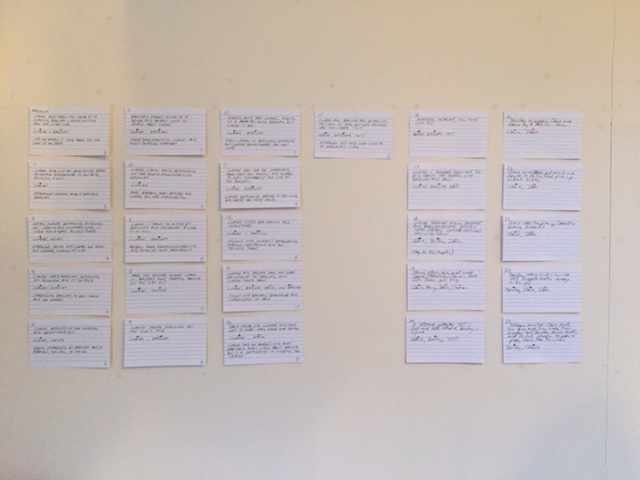
I mapped out the pieces I had from on the wall and identified where I needed to add scenes, characters and storylines for my initial draft. Anything used from the course would need expanding or rewriting but I felt I already had the bare bones of a half-decent story.
I was working four days a week, writing in the morning and spending the afternoon revising and planning the next day’s work. My initial plan was to get a completed first draft of around 200 pages by Easter, with an expectation that the final draft would be around 300 pages and I’d publish that by the end of 2016. On a good day I’d get between five and ten pages down that I was reasonably happy with. On a bad day I’d write, re-write, lose all my confidence and go to bed wondering if Time Inc. had any openings I could apply for.
Fortunately the bad days were easily outnumbered by the good, and by Christmas I was about halfway there, just a few pages short of the page 100 milestone.
July 4, 2016
The car's the star
A few people have asked me about the cars featured in When She Was Bad so here they are for all the petrolheads missing their weekly Top Gear fix.
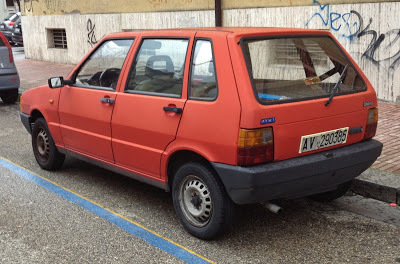 Claire’s Fiat Uno
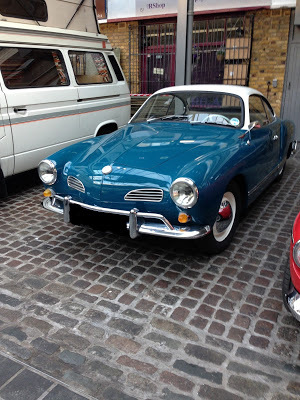 The VW Karmann Ghia
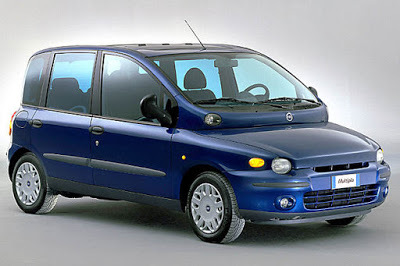 The Fiat Multipla
 Claire’s Fiat Uno
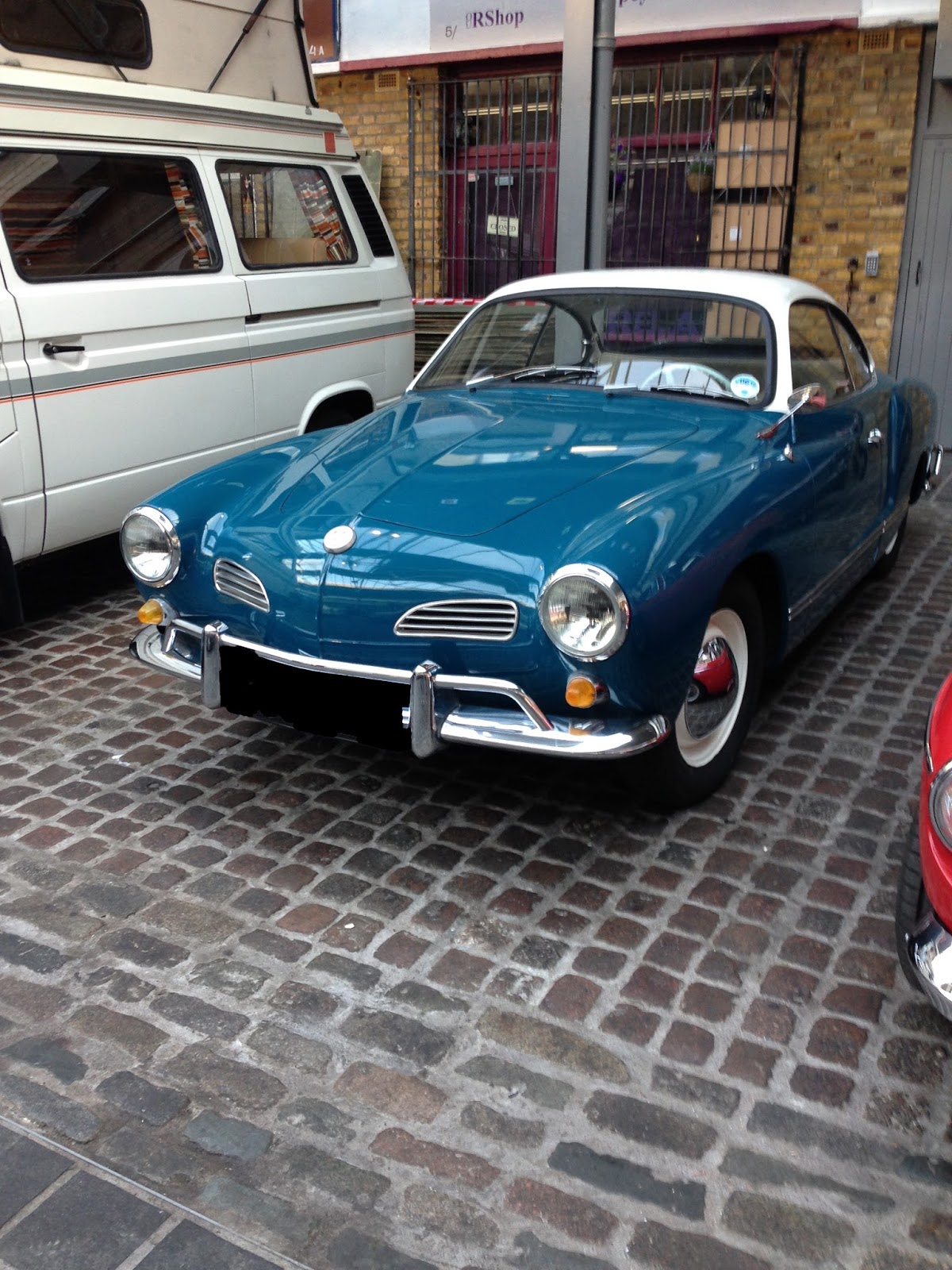 The VW Karmann Ghia
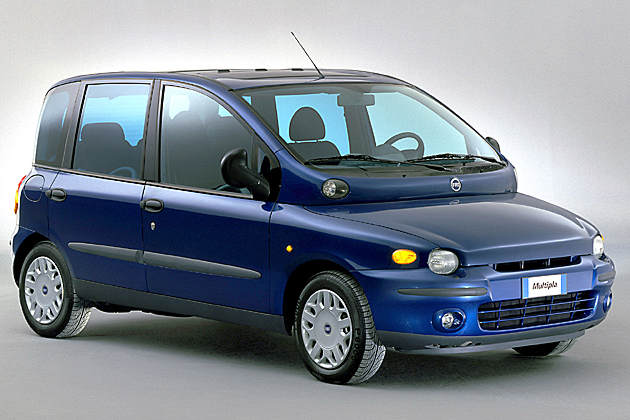 The Fiat Multipla
June 30, 2016
Author Q&A
Karen Myers and I have written an author’s Q&A which will be included in the paperback edition of When She Was Bad when it’s released in July. Here it is for those who have already purchased the Kindle version:
Karen Myers: What came first, the plot or the characters and why?Neil: The character of Barclay came first. I was on the Random House Creative Writing course and the opening exercise was to create a character and introduced them through an object. I chose a bag, and that was the start of Barclay. That’s still the opening of the first chapter, although I had no idea it would become a novel at that stage. I needed someone to find the bag but had no idea who. I decided it would open more possibilities if it was a woman and so I came up with Claire and it sort of snowballed from there.It was an interesting way to start a book but I think in future I’ll start with the story. I didn’t have the details of the plot worked out fully until I finished my second draft – the first draft wandered all over the place as I explored the characters more than the story.
Did you set out to write something with a twist or did it develop that way?Neil: It just developed that way. I do like a story with a good twist so I was hoping I could squeeze one in somehow but wasn’t going to force it. In earlier drafts the twist was revealed much earlier but in the later versions I thought it would be fun to have it exposed at the story’s climax. Some readers say they saw it coming, others were taken by surprise. The end of the story is told at quite a pace and it just seemed to fit and didn’t feel too contrived.
It’s clear that some aspects of the plot come from experience, i.e. there’s local colour. But how much research did you have to do for locations, journeys, cars etc?Neil: ‘Don’t let your research show,’ my course editor Barbara Henderson told me so I did that by doing as little research as possible!I live in Greenwich and know Deptford and the Docklands well, but I wanted to steer clear of the famous landmarks in the area. One issue was ensuring I used locations without CCTV cameras – modern technology can be a nightmare when you’re writing a crime thriller – but I found that even in Docklands it was pretty easy to find areas with no cameras and poor lighting at night.The only car I knew personally was the Karmann Ghia, which is owned by my neighbour, Graeme. I haven’t been in an Uno or Multipla for years and you don’t actually see many Unos around these days. I based Claire’s experiences on some posts and comments on Fiat drivers’ forums. I did do all the journeys described, but in my less-interesting VW Golf, and at 3pm rather than 3am!
You’re a 50-something man, the main protagonist is a 20-something woman. You found her voice, so how?Neil: It came naturally. I surprised myself to be truthful – I think she’s my favourite character in the book and that old cliché about stories writing themselves is certainly true in Claire’s case. There were a few times in the editing process when I had to change some of Claire’s references as they were not what a 25-year-old would be familiar with, but her actual ‘voice’ came easily.
I was left wanting more of some of the characters, and to know more of their back-story. Were you writing them with book two in mind, in terms of who would live or be free to see another day?Neil: I always wanted to leave things open at the end but resisted the temptation to leave it on a cliffhanger – I had toyed with the idea of Claire finding herself pregnant (by Tom) at the end but decided against it as it felt a bit cheap and it would mean any future stories would involve a baby, which I really didn't want.I have plenty of background and supporting material on file I will use in the second book. There’s a lot more to Barclay than discovered by Claire in When She Was Bad and it’ll be fun exploring that in the next one (and beyond).
The style is very visual with lots of popular culture and product references. Do those come from your own preferences or did you use them as you thought Claire would see the world?Neil: I’ve never owned anything by Prada or Fiat but I do love Apple products even if I do sometimes think life would be simpler with an old Nokia phone that just does calls and texts. I think the dominance of brands and mass culture is just the time we live in and that’s how kids in their twenties view things now.
It’s also quite cinematic, given the dialogue, the pace and the way it paints pictures. Do you see yourself as a screenwriter?Neil: I’m just getting used to describing myself as a ‘writer’, and I’m happy trying my hand at novels and short stories for now. My dialogue and action scenes are quite cinematic but there’s no ulterior motive in writing that way except that it’s an effective way of making the reader turn the pages faster.
If so, who would you cast in the film or TV version?Neil: I wrote Barclay with Benedict Cumberbatch (as Sherlock) in mind. Claire I pictured as Claire Foy but she can be whoever the reader wants her to be and I deliberately didn’t describe her appearance. My wife has suggested that Tom is Jude Law and I quite like that but I had a (young) Tom Hollander in mind as I wrote it. TNT would be the guy who plays The Mountain in Game of Thrones.
As a first-time author, how did you approach the task of writing? Computer or longhand? Storyboard? Short bursts or long days?Neil: I’m new at this game so I’ve been making it up as I go along. This book started with the RH course I mentioned, which resulted in around two dozen short pieces which I then used as the basis for the first part of the initial draft. As the story developed though most were dropped as they didn’t fit in the story or its evolving style. A few survive: the prologue, the opening chapters, the visits to both families at Christmas. I type faster than I can handwrite, so I tend to only pick up the pen when I’m sketching out rough ideas. I edit drafts by hand though.I did try using the authoring software Scrivener for the planning, but found it too complicated for what I was attempting to do. In the end I covered my office’s wall with hand-written postcard outlines before finalising them with PowerPoint (a slide per chapter). I wrote it in Microsoft Word – I tried other writing tools but Word is still the best for writing and editing. The print edition was finished using InDesign.
I understand you started your career as a journalist. Do you have non-fiction in you too?Neil: Possibly, but it’s not something I’m interested in at the moment.
Karen Myers: What came first, the plot or the characters and why?Neil: The character of Barclay came first. I was on the Random House Creative Writing course and the opening exercise was to create a character and introduced them through an object. I chose a bag, and that was the start of Barclay. That’s still the opening of the first chapter, although I had no idea it would become a novel at that stage. I needed someone to find the bag but had no idea who. I decided it would open more possibilities if it was a woman and so I came up with Claire and it sort of snowballed from there.It was an interesting way to start a book but I think in future I’ll start with the story. I didn’t have the details of the plot worked out fully until I finished my second draft – the first draft wandered all over the place as I explored the characters more than the story.
Did you set out to write something with a twist or did it develop that way?Neil: It just developed that way. I do like a story with a good twist so I was hoping I could squeeze one in somehow but wasn’t going to force it. In earlier drafts the twist was revealed much earlier but in the later versions I thought it would be fun to have it exposed at the story’s climax. Some readers say they saw it coming, others were taken by surprise. The end of the story is told at quite a pace and it just seemed to fit and didn’t feel too contrived.
It’s clear that some aspects of the plot come from experience, i.e. there’s local colour. But how much research did you have to do for locations, journeys, cars etc?Neil: ‘Don’t let your research show,’ my course editor Barbara Henderson told me so I did that by doing as little research as possible!I live in Greenwich and know Deptford and the Docklands well, but I wanted to steer clear of the famous landmarks in the area. One issue was ensuring I used locations without CCTV cameras – modern technology can be a nightmare when you’re writing a crime thriller – but I found that even in Docklands it was pretty easy to find areas with no cameras and poor lighting at night.The only car I knew personally was the Karmann Ghia, which is owned by my neighbour, Graeme. I haven’t been in an Uno or Multipla for years and you don’t actually see many Unos around these days. I based Claire’s experiences on some posts and comments on Fiat drivers’ forums. I did do all the journeys described, but in my less-interesting VW Golf, and at 3pm rather than 3am!
You’re a 50-something man, the main protagonist is a 20-something woman. You found her voice, so how?Neil: It came naturally. I surprised myself to be truthful – I think she’s my favourite character in the book and that old cliché about stories writing themselves is certainly true in Claire’s case. There were a few times in the editing process when I had to change some of Claire’s references as they were not what a 25-year-old would be familiar with, but her actual ‘voice’ came easily.
I was left wanting more of some of the characters, and to know more of their back-story. Were you writing them with book two in mind, in terms of who would live or be free to see another day?Neil: I always wanted to leave things open at the end but resisted the temptation to leave it on a cliffhanger – I had toyed with the idea of Claire finding herself pregnant (by Tom) at the end but decided against it as it felt a bit cheap and it would mean any future stories would involve a baby, which I really didn't want.I have plenty of background and supporting material on file I will use in the second book. There’s a lot more to Barclay than discovered by Claire in When She Was Bad and it’ll be fun exploring that in the next one (and beyond).
The style is very visual with lots of popular culture and product references. Do those come from your own preferences or did you use them as you thought Claire would see the world?Neil: I’ve never owned anything by Prada or Fiat but I do love Apple products even if I do sometimes think life would be simpler with an old Nokia phone that just does calls and texts. I think the dominance of brands and mass culture is just the time we live in and that’s how kids in their twenties view things now.
It’s also quite cinematic, given the dialogue, the pace and the way it paints pictures. Do you see yourself as a screenwriter?Neil: I’m just getting used to describing myself as a ‘writer’, and I’m happy trying my hand at novels and short stories for now. My dialogue and action scenes are quite cinematic but there’s no ulterior motive in writing that way except that it’s an effective way of making the reader turn the pages faster.
If so, who would you cast in the film or TV version?Neil: I wrote Barclay with Benedict Cumberbatch (as Sherlock) in mind. Claire I pictured as Claire Foy but she can be whoever the reader wants her to be and I deliberately didn’t describe her appearance. My wife has suggested that Tom is Jude Law and I quite like that but I had a (young) Tom Hollander in mind as I wrote it. TNT would be the guy who plays The Mountain in Game of Thrones.
As a first-time author, how did you approach the task of writing? Computer or longhand? Storyboard? Short bursts or long days?Neil: I’m new at this game so I’ve been making it up as I go along. This book started with the RH course I mentioned, which resulted in around two dozen short pieces which I then used as the basis for the first part of the initial draft. As the story developed though most were dropped as they didn’t fit in the story or its evolving style. A few survive: the prologue, the opening chapters, the visits to both families at Christmas. I type faster than I can handwrite, so I tend to only pick up the pen when I’m sketching out rough ideas. I edit drafts by hand though.I did try using the authoring software Scrivener for the planning, but found it too complicated for what I was attempting to do. In the end I covered my office’s wall with hand-written postcard outlines before finalising them with PowerPoint (a slide per chapter). I wrote it in Microsoft Word – I tried other writing tools but Word is still the best for writing and editing. The print edition was finished using InDesign.
I understand you started your career as a journalist. Do you have non-fiction in you too?Neil: Possibly, but it’s not something I’m interested in at the moment.
June 27, 2016
When She Was Bad update now available
Unfortunately there were a few typos and other small errors in the initial Kindle release of When She Was Bad. Sadly these are inevitable with self-publishing and hopefully they haven’t proven too distracting to early readers. Maybe that first release should be renamed When Neil’s Proofreading Was Bad...
With the help of Jenny ‘Hawkeye’ Bailey, Tina ‘Sherlock’ Pugh, Nit-picking Paul Price and Dan Detail-Smith I’ve made a number of small corrections and a free update is now available. The story is exactly the same and only some individual words and punctuation errors have been changed - don’t feel compelled to update if you’re happy with what you’ve got. Any new purchases from hereon will be the updated version.
If you want the update, please go to your Amazon home page on your computer (you can’t do it from the device) and select Manage Your Content and Devices from the Your Account drop down menu. To the right of When She Was Bad you’ll see the Update Available button. Click this and then Update and the new version will replace the old in your Amazon library. This will then automatically load when you next open the book on your device(s).
Fingers crossed, the updated version will be available as a paperback edition shortly. It will be on Amazon for £4.99 in the UK (not sure about US pricing yet).
With the help of Jenny ‘Hawkeye’ Bailey, Tina ‘Sherlock’ Pugh, Nit-picking Paul Price and Dan Detail-Smith I’ve made a number of small corrections and a free update is now available. The story is exactly the same and only some individual words and punctuation errors have been changed - don’t feel compelled to update if you’re happy with what you’ve got. Any new purchases from hereon will be the updated version.
If you want the update, please go to your Amazon home page on your computer (you can’t do it from the device) and select Manage Your Content and Devices from the Your Account drop down menu. To the right of When She Was Bad you’ll see the Update Available button. Click this and then Update and the new version will replace the old in your Amazon library. This will then automatically load when you next open the book on your device(s).
Fingers crossed, the updated version will be available as a paperback edition shortly. It will be on Amazon for £4.99 in the UK (not sure about US pricing yet).