Victoria Dougherty's Blog
April 11, 2026
Nobody Knows Anything

Yesterday, we had a flurry of missile activity after twelve days of relative peace. With the deadline for Iran to open the Strait of Hormuz looming, we went to bed unsure of what we’d wake up to. Both my husband and I were so depleted that we slept through the grating emergency alert that came through our phones at three in the morning. Then we woke up to yet another ceasefire. I guess that’s good news. At least for now.
The hardest part isn’t the danger in all of this. It’s that nobody knows anything. Not journalists, or academics and pundits, not politicians. Some lie outright about what they know, while others are guessing, wish-casting, reporting accurately on information that turns out to be wrong. People we trust in security and in the military have told us, not quite meaning it as comfort, that our own read of the situation is probably as accurate as anything out there. Watch the daily lists of missile and drone attacks in the region, they said. See whether they’re going up or down. Or staying stubbornly the same. That’s what we have. That, and each other.
Even on the quiet days—and there are quiet days, genuinely lovely ones, the weather here right now is almost absurdly beautiful—the stress is just under the skin. Like one of those deep itches that feels like it’s in the bone and can’t be scratched to any real satisfaction, no matter how you try.
That uncertainty pulls people together. Friends whose spouses have already evacuated come for dinner and stay for hours. We’ve offered our place to people who live near potential targets—the Google offices and a few other spots that have been called out by name by the Iranian regime. I’m not always sure who is comforting whom. Maybe that’s the whole point. It feels genuinely good to be together, the particular good of people who understand without having to be told.
There’s also—and I want to be honest about this—a strangeness to not being able to make plans. A prison-like quality. A flatness that isn’t dramatic, just suspended, waiting on something that may or may not arrive and that you cannot do anything useful about. And then, underneath that, something I notice in myself with mild suspicion: a kind of thrill. The way uncertainty sharpens things, reminds you how quickly everything can turn. I catch this feeling and give it a side-eye, not entirely sure what to make of it.
What’s more difficult to express is that I feel homeless. Qatar isn’t my home and won’t ever be. And Virginia—twenty years of it, the roads I knew, the particular smells of every season, the dinners with our children and their friends—isn’t available to me right now. I hold both of those things at once and they don’t resolve, and I’ve mostly stopped waiting for them to. There’s a loneliness in it and also, strangely, a kind of peace. It reminds me of when my youngest daughter was ill. I was surrounded by love—completely surrounded, friends and family doing everything they could—and I still had to go through it alone. The people who love you can sit beside you. They can’t sit inside it with you.
Writing helps. It lets me think out loud in the only way that actually works for me, my own weird meditation practice. I’ve even caught myself wondering whether I’ll miss the excitement once this is over, God willing. Two seconds of that thought was enough. No. I prefer the illusion of control, even knowing that’s mostly what it is.
And then there’s the hour between four and five in the morning. I wake up, take a sip of water, promise myself I’m going right back to sleep—and that promise, or maybe just the making of it, seems to be the signal. The worrying blooms. I think about our kids and the stress my husband is under. Whether we’ll end up evacuating and what that will mean. What if key infrastructure gets hit, or the airspace closes again. The Saudis could shut down their border, making it impossible to leave from anywhere. What if, what if, what if. Jack calls it my “awfulizing.” I comb through every worst-case scenario, one by one, methodical as someone picking lice—until I exhaust myself back to sleep.
Then daylight comes and somehow things seem better again. Not so bad at all, in fact. I make coffee. I go to the gym. And we do it again.


March 11, 2026
Thank You For What’s Next: A War, a Lunar New Year Feast, and a Small Prayer
 The view from my friend’s house.
Life in Doha right now looks almost exactly like it did before the bombings.
I realize that might sound strange coming from someone living about a hundred miles from Iran during a war, and whose city is being intermittently targeted. But it’s the truth.
For one thing, it’s Ramadan. Which means that during the day, Doha is quieter than usual anyway. Most restaurants are closed until sunset, work hours are shortened, and because people are fasting, there simply aren’t that many people wandering around during the day. If you didn’t know better, you might think the stillness was just the rhythm of the holy month.
Several times a day, though, our phones buzz with alerts from the Ministry of Interior. Sometimes they tell us to shelter in place because the threat level has been elevated. This usually means that missiles have been fired in our direction and Patriot missiles are being fired back to intercept them. Other times they arrive with the reassuring bureaucratic calm of a High School principal— “The Ministry of Interior calls on citizens, residents, and visitors to report any unusual or suspicious behavior related to the current developments…” “Family awareness plays a fundamental role in reassuring children…” “Upon hearing the sound of explosions, remain calm and act responsibly…” and so on.
Civilization, even in moments like this, runs largely on instructions.
In the meantime, we check in on our friends, and they check in on us. Almost everyone I know seems to be watching either Tehran or The Handmaid’s Tale right now. Make of that what you will.
But television shows are not enough. It’s been a little over a week since the war started, and already people are getting restless.
One night this week—Thursday, which here feels like Friday because the weekend in Qatar runs Friday and Saturday—a friend sent a message to a WhatsApp group inviting us to what she called a “celebration of friendship” in the neighboring city of Lusail. It was at a restaurant which is about a ten minute drive from where we live, and would mark only the second time we’d been out of our neighborhood since the war began.
This sounded both charming and ambitious—mildly heroic, even—given that most people were still inclined to shelter in place. Or at least limit their excursions to what’s absolutely necessary.
But despite our own apprehensions, the invitation was too tempting to pass on. Dinner parties, as you’ve probably noticed if you read this publication, are just about my favorite thing in the world.
Our friend who was organizing the event is from Taiwan and had persuaded a Chinese place that she loves to make for us a late Lunar New Year feast. She reserved a table for ten and my husband and I wondered if we might be the only people who dared to show up. As it turns out, everyone showed up.
We didn’t know most of the people there, which under normal circumstances would be a lot of work. But these are not normal circumstances. Despite being the only table in the restaurant, we made up for the emptiness with our enthusiasm.
Dishes began arriving almost immediately—dumplings first, delicate and scalding-hot, then Peking duck carved into glossy slices. At some point a slightly sweet, faintly floral soup arrived, showcasing a single rice ball floating solemnly in the center like a tiny moon.
If this were any other Thursday night, this would have been the moment when everyone fell silent in order to eat. Instead, nobody stopped talking. Not even for a second.
Chopsticks moved quickly, snapping up food, while the conversation surged as if we’d all been waiting days to say everything that was suddenly coming out at once. And I guess we had.
We talked about the war, of course. It would have been strange not to. But we also talked about artificial intelligence and its proper uses, a local Qatar natural history group that organizes lectures and desert outings, the wonders of Sri Lanka, and bird-watching in the Gulf (which I learned is apparently a far more serious and competitive activity than I had previously imagined).
All the while, the dumplings vanished, the duck disappeared almost as soon as it touched the table, and the lovely soup with the floating rice ball was inhaled with impressive efficiency—without interrupting the conversation for even a moment.
The mood was different from an ordinary dinner party, though it took me a little while to understand how.
People were eager to connect, and genuinely grateful to be at a table with friends and strangers alike. Happy to do something so ordinary at a moment when ordinary life felt fragile.
By the time we left, we were all stuffed to the gills and restored—physically from the food, and spiritually from the company. We felt ready to face another day of this.
Because the curious truth about living near a war, and in a city that’s been deemed a target by one of the warring factions, is that daily life becomes filled with an uncomfortable mixture of boredom and excitement. I spend much of the day feeling like I want to crawl out of my skin.
It reminds me a little of the early days of COVID.
Schools are closed. Many people are working remotely. The outside world feels simultaneously close and far away. I find myself spending an unhealthy amount of time refreshing the news, even though I know perfectly well that doing so will not improve my understanding of events or my mental health.
I find it difficult to concentrate on anything else.
At this very moment, in fact, I should be writing a chapter of my new novel. Instead, I’m writing about the war because my mind keeps circling back.
Normally, writing fiction isn’t like this for me. I’m not a writer who agonizes over the blank page or suffers from writer’s block. I genuinely love the work. Ideas usually arrive with a kind of eager momentum.
That momentum is still there, but it’s rougher now. My attention wanders and sentences land on the page with a little less grace than I’m used to.
Outside, the skies have remained unseasonably cloudy from all of the missile activity across the region. Not from smoke, but from seeding the atmosphere with enough particulates to soften the sunlight. Oddly, it has made the weather more pleasant for this time of year.
Lemonade from lemons.
And in the midst of all of this, we’ve received the most extraordinary kindness from people—friends, family, even acquaintances we barely know. Texts, calls, emails. People asking if we’re safe, inquiring if they can check in on our college-aged children in America to make sure they feel supported. Messages full of humor and encouragement and genuine care.
Times like this remind you how fundamentally decent most people are.
If wishes were changes, I would certainly wish that particular reminder had not arrived attached to a war. But that part of the equation is not something I can control.
What I can control is what I offer the people around me. Gratitude, attention, kindness, even when I’m not feeling capable of them.
Years ago, when our youngest daughter was born with a catastrophic illness—she’s doing wonderfully now, I’m happy to report—my husband developed the habit of taking my hands and saying a small prayer.
“Thank you for what’s next.”
I’ve always loved that prayer.
It isn’t the kind that sounds like you’re placing an order from a catalog. It doesn’t presume to know what’s coming or that it’ll be what you hoped for. It acknowledges something simpler and harder—that whatever happens next will require something from us.
Courage, perhaps. Or patience. Or compassion. Maybe all three.
“Thank you for what’s next” is a way of accepting that responsibility. Of recognizing that even in uncertain times—especially in uncertain times—we still have the chance to learn, grow, and take care of one another.
And whenever possible, to sit down at a table with friends and celebrate the simple things that make life worth living.

February 23, 2026
My Grandfather Spit His Teeth Out and Kept Playing

I don’t watch hockey anymore. I’m not even sure why. But I watched it as a girl, mostly—no, exclusively—because my grandfather did. My grandfather (Deda, I called him) wasn’t just any fan. He was an Olympic hockey player who skated for the Czech national team in the 1936 Games when he was fifteen-years-old. He may have been the youngest hockey player to ever compete in the Olympics at the time. I can’t swear to it. Don’t hold me to it. But my grandmother said it was true.
When he and my grandmother escaped communist Czechoslovakia and made their way to America in the early 1950s, he played briefly for the New York Rangers before hanging up his skates. He was in his early thirties by then, which was considered geriatric for the sport. No one would insure him. So he retired, and that was that. He never complained about having to take a job at a factory after his glory days came to an end. He didn’t even brag about having had those glory days.
But hockey was always part of our family mythology. The stories lived in our house like furniture — permanent, beloved, a little battered.
My grandmother loved to tell the story — and I mean loved it, the way you love a story that makes the person you adore sound like a total badass — of the time my grandfather got his two front teeth knocked out mid-game. He skated past her in the stands, spit his teeth at her, called out Find them! and kept playing. She dropped to her knees and hunted both bloody teeth down and put them in her purse. Later, a pioneering dentist modeled false teeth after my grandfather’s real ones and screwed them into his gums. This was the early 1940s and that dentist was an artist. If you didn’t know, you’d never have guessed.
Deda also had a scar on his calf the size of a large, juicy plum — a deep hollow where an opposing player (a Swede, I think) had shoved a hockey stick into his leg during a fight. I used to touch it as a kid. It was amazing and gross and it came with a story. One that made my grandfather seem like the kind of man who could take on any villain — a burglar, a bully, it didn’t matter — and not just win, but make him beg for mercy.
In 1980, when the American team beat the Russians in the “Miracle on Ice” — I had never seen my grandfather so happy. He walked around for a solid month with a smile he couldn’t put away. Deda was a good-natured man—always—but this was something different. He was in love happy. Just won the lottery happy. The tumor was benign happy. In my house, we hated the Russians. Watching them lose was pure joy — vindication for everything they’d taken from us.
So when Jack Hughes scored the winning goal for the Americans at the Olympics this week, I couldn’t stop thinking about my grandfather. I missed him in ways I haven’t in years.
That man would have called me and gone through the whole game play by play, giggling in between the best parts. He would have sent me all of the most iconic photos and articles on the win and walked on clouds for weeks.
I’m fucking crying writing this.
What really got me — what slayed me — was watching those young men hold up Johnny Gaudreau’s jersey. Gaudreau was a left wing, like my grandfather. He was killed last year, hit by a drunk driver, and his parents, his wife, and his three kids were in the stands. There’s no word for what it means to watch people win something like that for someone they loved. Someone who should have been there, and was, I believe with my whole heart, there in spirit.
I know something about cheering for someone who isn’t in the room anymore. This whole Olympic hockey triumph brought me straight back to being a little girl. Sitting in Deda’s La-Z-Boy — he always made room for me, always — watching a game that moved so fast and rough across the screen. I remembered how he cooked me hot lunches every day I walked over from school, because you could do that then, just leave campus and show up in your grandmother’s kitchen and be back before the bell. I remembered how he washed my car by hand every time I came home from college. The way he loved me and my grandmother showed me what a man should be. I went looking for someone like him, and I found one. I hope I’ve raised my son to be one, too.
I wish he could have been here to watch the game with my son, carrying on the tradition. Instead, I cheered loud and hard for the both of us.
Go USA!
January 31, 2026
Night of the Mother is here!
What if you couldn’t tell which thoughts were yours?

Night of the Mother is about a woman fighting for her soul while a voice inside her head—her own voice—whispers that she’s already lost it. That she’s transforming into something that murders. That feeds on cruelty. That would hurt everyone she loves and feel pleasure in it.
Is it true? Is she actually becoming monstrous? Or is something manipulating her into believing it?
Twila Stith can’t tell anymore. Every instinct becomes suspect. Every choice might be corruption disguised as healing.
You’ve always been hungry for the wrong things. Look how many people are dead because of you. Maybe you’re not fighting the darkness. Maybe you ARE the darkness.
Present tense, no distance—you’re trapped in Twila’s skull as she fights for her humanity while something inside her head rewrites her reality, wearing her face, speaking in her voice.
Martin is there, and he loves her. She knows she loves him back—feels it bone-deep—but she’s terrified she’s becoming something that would destroy him. That she’s rotting everyone she touches from the inside and can’t stop it.
The magic is Appalachian gothic. Visceral, graphic, rooted in folklore. The horror doesn’t pull punches.
The stakes: Can you stay human when you can’t trust your own mind? When grief makes you vulnerable to voices that sound like wisdom? When you’re terrified the corruption isn’t happening—it’s already happened?
If you read Night of the Moon Witch, you know what’s at stake. If you haven’t—Book 1 is FREE February 1-3. Start there, then come to Book 2.
Night of the Mother is out now.

And for personal essays about ex-pat life in the Middle East, as well as original Gothic tales, including exclusive Appalachian Moon Witch Chronicles short stories and poetry, follow me on Substack!
You’ll get stories like this:

January 8, 2026
Some Monsters Are Made: Announcing “Night of the Mother”
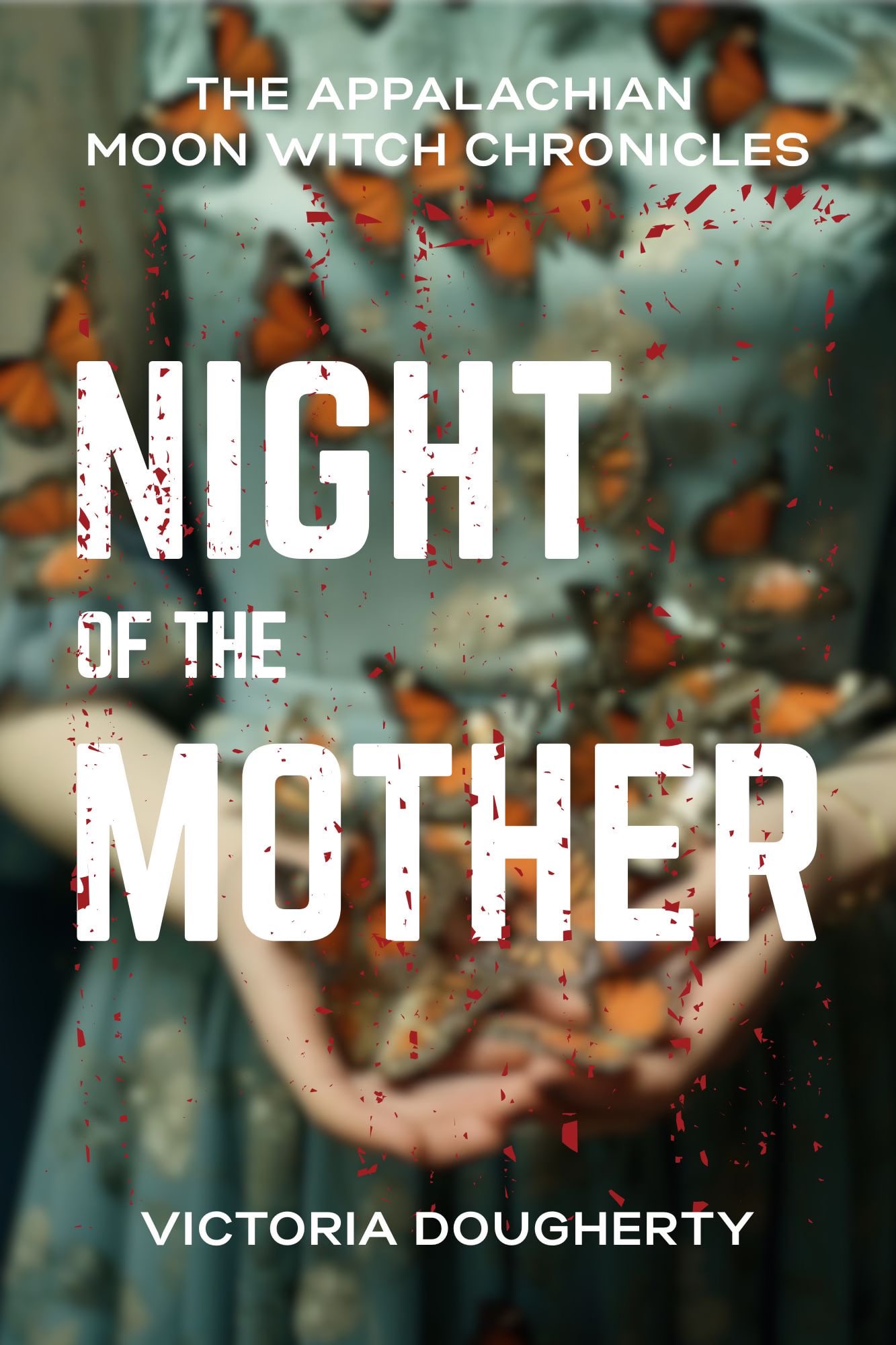
In Appalachian Virginia, some debts get paid in blood, and some histories refuse to stay buried. Old magic runs deep in the red clay, curses pass down like heirlooms, and the moon witches who’ve protected these mountains for centuries know that some protections exact a terrible price. Poetry becomes prophecy here. Love stories turn lethal. And the dead don’t always stay buried where you left them.
This is Night of the Mother, Book Two of the Appalachian Moon Witch Chronicles.
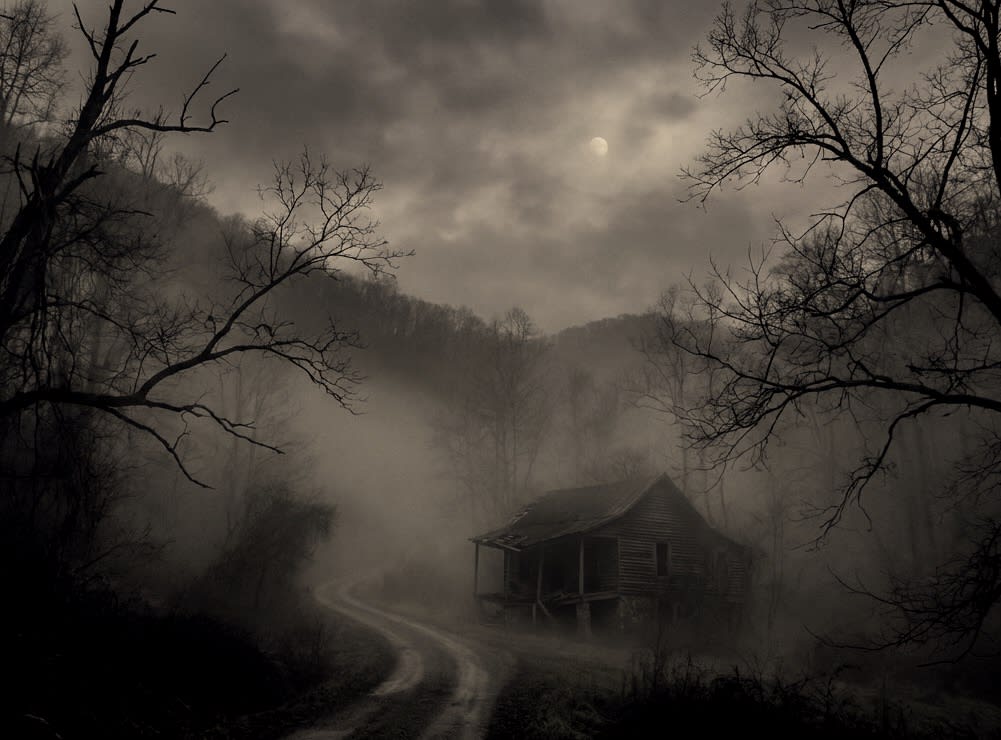
In the shadowed hollows of Appalachian Virginia, the past doesn’t stay buried.
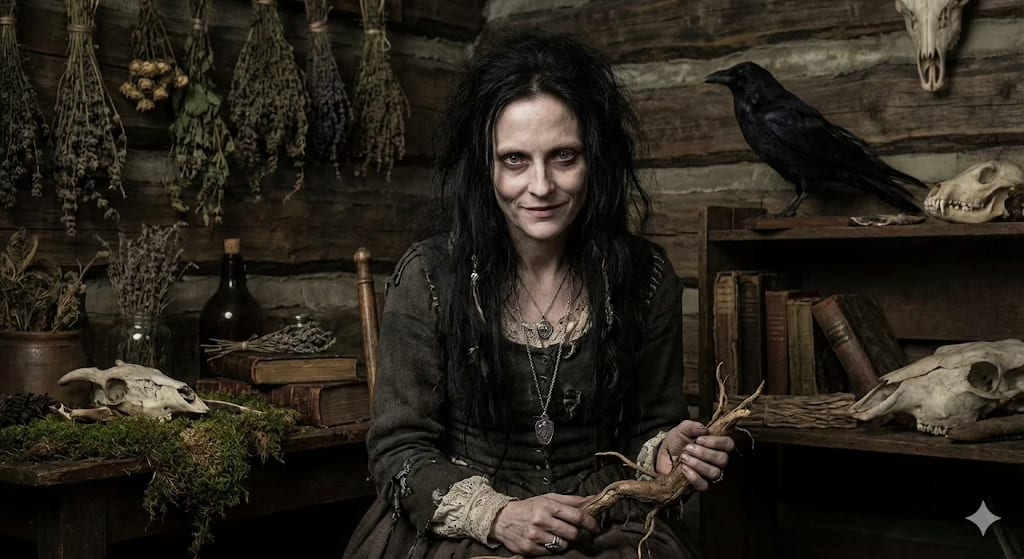
Twila’s memories were stolen when she was eight years old—a dark spell that split her soul in two and erased centuries of her life as a moon witch. She survived, barely. The only person who remembers what she lost is Martin—her lover across lifetimes, the one constant in centuries she can no longer recall. Together, they’ve begun piecing her life back together.
But the witch who destroyed Twila has returned to finish what she started.
When Twila and Martin inherit an estate steeped in secrets—ancient archives, abandoned monasteries, and journals chronicling generations of moon witches—protections guarding the hollows begin to fail. Corrupted spirits rise, people begin vanishing, and Twila realizes the witch isn’t just hunting her—she’s rewriting history itself with blood magic.
As Twila searches the journals for answers, she uncovers truths that shatter everything she thought she knew about her family, her power, and the woman who abandoned her.
Because some monsters aren’t born.
They’re made by the people who should have loved them most.

Night of the Mother launches January 31st, but you can secure your copy now. Pre-order today and escape January’s cold for something far more dangerous—where Appalachian folk horror meets gothic romance, where the past doesn’t just haunt you, it hunts you down. Pre-order Night of the Mother here!
Paid subscribers to my Substack will not only get an exclusive excerpt, but monthly Appalachian Moon Witch Chronicles short stories! (By the way, there’s a free subscription, too)
January 1, 2026
I Wanted to Be Carol Burnett. I Became a Gothic Novelist Instead. Same Thing.
It’s that time of year when we’re all supposed to announce our intentions—lose weight, learn Italian, finally write that novel. But I’ve been thinking less about what I want to become this year and more about what’s already been quietly shaping me all along.
Living an ocean away from home, in my case Doha, Qatar, has a way of making a person reckon with her own mythology. The stories you tell yourself about who you are become either anchor or albatross. I’ve been asking myself: what dreams survived the crossing? Which ones are still whispering in my ear when I’m writing about witches and exile and the price of reinvention?
A few years ago, I wrote about childhood dreams—not the ones we achieve, but the ones that become our invisible companions, the friends who keep asking dangerous questions throughout our lives. I’m circling back to it now because I think New Year’s resolutions have it backwards. We don’t need to become someone new. We need to listen to who we’ve always been trying to become.
Here’s what I mean.
Dateline, June 8, 2016
Recently, I had a long and winding talk with friends about childhood dreams. We each told our story, prompted by a “Question of the Week,” which is the way we keep in close touch during the course of our busy lives. All of us are bound to answer, unless there’s a tsunami or something.
“So, I asked, What was your childhood dream?”
My friend Ellen chimed in immediately. She has always wanted to be a writer and is one. Fiction has been a constant in her life – throughout moves, changes in relationships, child-rearing and illness. It has never left her side and she cannot imagine herself doing anything else. Not even when she was a kid, and her friends wanted to be fairies, firemen or just super rich. When it was Ellen’s turn to float out her heart’s desire, she always said “writer.”
However, Ellen was the exception.
What was so interesting was how the rest of us did not end up actually pursuing our childhood dream, but somehow that dream informed our careers, our sensibilities and lifestyles. The dream may not have been a constant, like it has been for Ellen, but more a constant companion. That friend who’s always whispering, “Wanna go on a road trip?” “Are you going to go all the way with him?” “Let’s ditch school and go to the beach!”
When I was a kid, I wanted to be Carol Burnett more than anything else in the world. I watched her variety show every week, memorized her skits, wrote my own – even filmed a few of them on an old Super 8 camera (it wasn’t old then). Being funny, making people laugh seemed an honorable profession to me, one as worthwhile and noble as being a doctor or a teacher. At my darkest times, during my most Charlie Brown childhood moments, Carol was always there for me. And I wanted to do what she did – make people feel good afer a rough day or year.
Of course, my comedy dreams were not exclusively altruistic. I loved watching people spit strawberry milk out of their noses after one of my cracks, disrupting class, earning a smack on the head from Sister Margaret Ann. She was built like a wrestler, and her meaty palms were powerful – but it was so worth the headache, the ringing in my ears.
To this day, being called funny is the highest compliment I can receive. So much better than being told I look beautiful. When asked by a mutual friend what first attracted my husband to me, he said, “She had a real sense of humor. Most women I’ve gone out with like laughing at jokes but never make any.”
That made my heart flutter.
Yet somehow, even though becoming Carol Burnett was without question my fondest dream, I became a novelist who writes thrilling gothic adventures, epic, heart-wrenching stories dripping with mystery, spy-craft, atmosphere, even horror. All very serious stuff.
But I can’t deny that there’s a deep current of humor in everything I’ve ever written. Even my most somber essays—about death or faith or true love—tend to be embroidered with some manner of joke. I guess because of Carol and her influence on me, I cannot stand taking myself too seriously. In even the greatest heartbreak, I leave room for the absurd, the ironic, or downright hilarious, and have little tolerance for victim culture. Not because I don’t acknowledge that victims exist and that their pain is real, it’s that I feel succumbing to victimhood is toxic. As unhealthy as smoking five packs of cigarettes a day and washing them down with a fifth of vodka.
I see good humor as a trait of good character, not just a fun personality feature. During the course of my life, a person with no sense of humor has typically been my natural enemy in the wild. We circle each other carefully, and usually end up just backing away.
But while chasing off the sullen and tedious, my childhood dream has sucked into my orbit people who share my world view, and don’t even blink when I tell them that Carol Burnett has had the greatest influence on my life. Not Gandhi, not Martin Luther King, but Carol. They not only understand, but say, “I totally see that!”
Because they have had a similar journey.
My friends Nick and Jess both took some of the best parts of their respective childhood dreams and helped calibrate them for their growth and changing needs.
Jessica wanted to be a movie star, but became a tech entrepreneur instead. Those are seemingly unrelated careers on the surface of things, but if you could see how Jess lights up any room she enters you’d understand. She loves making the pitch, and hatches approximately three life-changing, sh*t-disturbing schemes a day. She is a charismatic and ethical leader.
“You are a movie star,” I told her.
Her husband, Nick, wanted to be a baseball player, but now writes baseball mysteries. His alter ego, Johnny Adcock, is an aging major league pitcher who supplements his diminishing baseball salary with high-priced gum shoe work – helping rich friends being blackmailed by murderous gold-diggers and such. By writing baseball mysteries, Nick has gotten to hang out with a crew of baseball players he’s interviewed for research. He’s played ball with them, drank with them, lived vicariously through them.
And maybe that’s what I’ve hit on here. The vicarious part. My friends and I—all creative people like writers, actors, and entrepreneurs—are a curious combination of wallflower and leader. We desire an inexorable amount of control not only over our own lives, but the lives or our characters or products, made-up people and gadgets we endeavor to use as avatars for our worldview, for being able to affect a mood, a belief, perhaps a childhood dream of someone else’s.
Of course, not everyone has allowed their childhood dream to stick around, and share space with their more practical choices.
We all have friends who wanted to be musicians, scientists, chefs and never took one recognizable step in that direction. They seemed to have no invisible companion standing on their shoulder and telling them to take the dive. Not surprisingly, their dream died, and when you ask them about it now, they just sort of shrug or change the subject. Perhaps it’s because they’re unsatisfied with the path they chose, and don’t want to talk about it. Or maybe their childhood dream really did lose its allure. Like a second grade crush – based on a freckle-faced cousin’s ability to eat a worm without flinching – their dream became a bit embarrassing once they’d grown up a little bit. As a result, what they became in adulthood was a reaction to the old dream, an opposing stance.
Whatever the case, whether we fulfill them, absorb and repurpose them, or reject them outright, childhood dreams give so much more than mere career direction. They leave their mark. Some might say a scar. As for me, they are a fond memory, like a first kiss. I remember the taste of his lips, the thrill, the way his hand stroked my back and inched its way under my t-shirt just to feel my sun-kissed skin. But even that kiss, as intoxicating as it was, doesn’t compare to the way my husband leans into me and looks into my eyes, holding me tight. That’s the stuff truly realized dreams are made of.
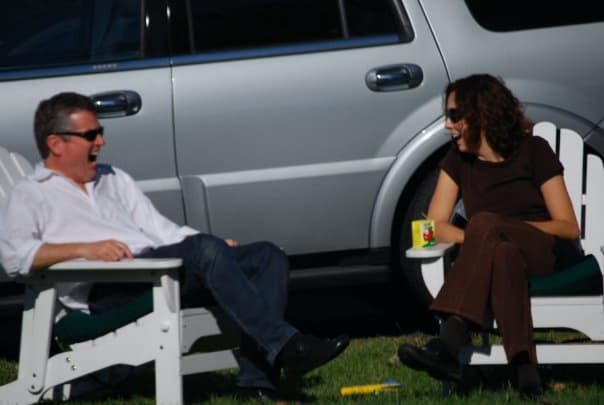 Me and my guy
December 13, 2025
A Gothic Carol: Twelve Offerings
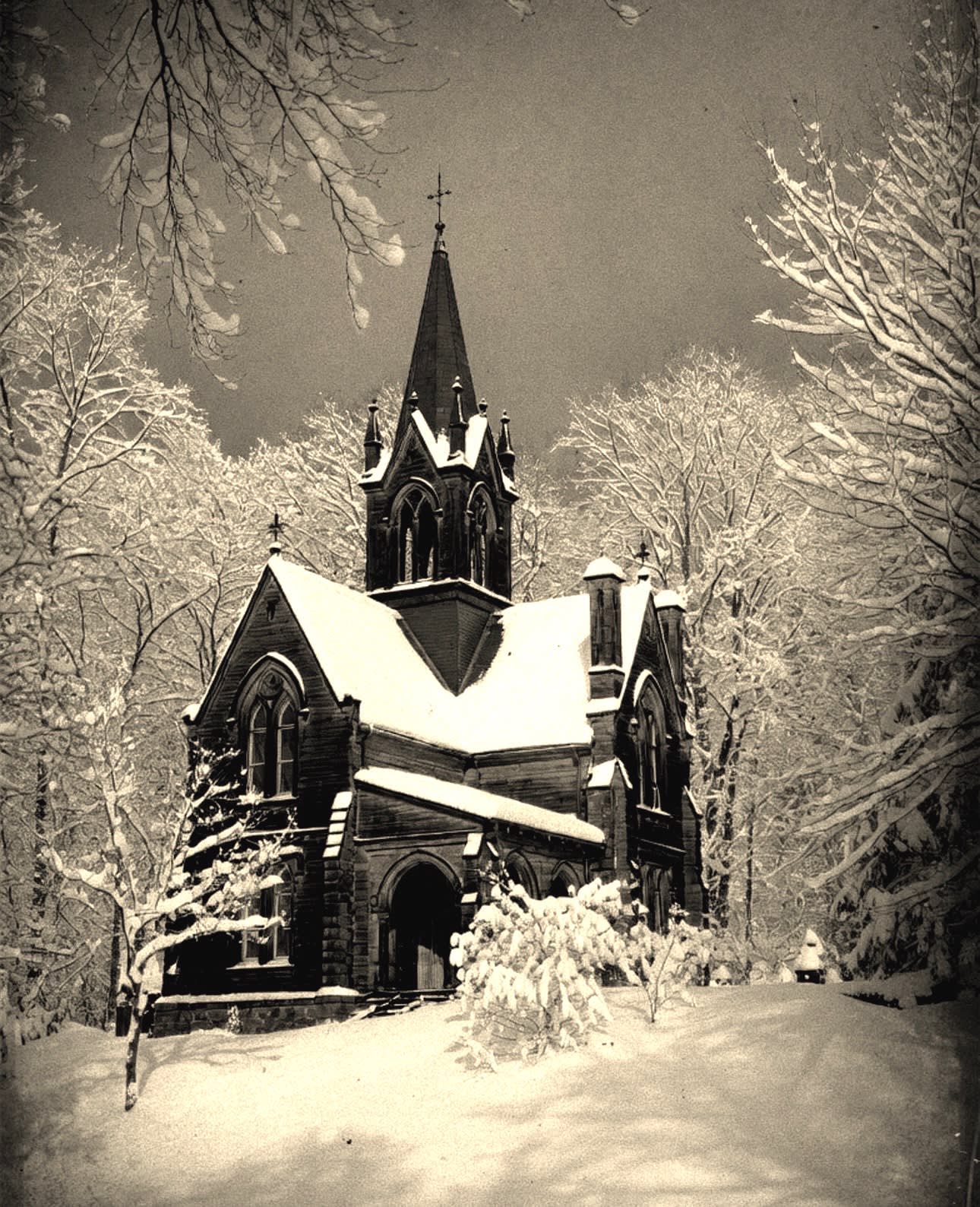
Here we are again—that liminal stretch between autumn’s death and winter’s full arrival, when the veil thins and the ghosts get chatty.
I’m writing this from Virginia, where snow dusts the Blue Ridge Mountains like bone ash on dark earth, but my mind keeps circling back to Doha. That’s where I’ve put an ocean between myself and my origin story and have finally heard my own ghosts clearly enough to write their names.
This year, instead of the usual holiday glitter and forced cheer, I’m offering you twelve gifts from someone (me) who writes about lovers who destroy each other beautifully, killers with complicated motives, curses that skip generations, and destinies that refuse to be outrun.
You can sing this to “The Twelve Days of Christmas” if you want, though it might come out sounding more like a murder ballad. Or just let it accumulate—in your heart, in your marrow—over these next twelve days, twelve months.
On the first day of Christmas, your true love this somewhat humble author who writes about gothic an awful lot gives you a pileated woodpecker—that wild prehistoric thing with its blood-red crest, perched on the bare branch of a dead oak. When it calls, it sounds unhinged, like laughter from a woman who’s finally stopped pretending to be sane. It hammers at dead wood looking for what’s hidden underneath. Some things refuse to be domesticated, refuse to be anything but exactly what they are—feral and red-crested and unrepentant.
On the second day of Christmas, I add two glasses of wine so dark it looks like something you’d bleed out after a curse, plus two Cold War secrets whispered in Prague basements and Doha hotel rooms, the kind that make love stories lethal and betrayals inevitable. Also, our Boston Terrier is sprawled belly-up on the couch like he’s been poisoned by a jealous lover. He knows nothing about espionage, but he’d absolutely sell state secrets for a piece of cheese.
And a pileated woodpecker—still hammering at that dead oak.
On the third day of Christmas, a gothic horror trilogy about Appalachian women who inherit curses the way other families inherit china patterns. Lovers who can’t tell the difference between devotion and destruction. It’s fiction, except for the parts that aren’t. Turns out you can’t write about generational silence without exorcising some of your own ghosts in the process.
Two glasses of wine dark as hexed blood, and that woodpecker—still unhinged, still hammering.
On the fourth day of Christmas, dear readers, you get four whispers of devotion—the kind you breathe into someone’s hair at 3 AM when you can’t sleep because love feels like it might kill you, the kind that sound like prayers or confessions depending on how the story ends.
A trilogy of inherited curses, two glasses of wine dark as a witch’s work, and that red-crested woodpecker, relentless on its dead branch.
On the fifth day of Christmas, a benediction of sorts—five hymns sung in empty churches where the acoustics make even broken voices sound like they’re touching something holy! Carols written when winter meant you might not survive until spring, when every prayer was also a plea bargain with death. Unapologetically sentimental, the way all the best Christmas music presents itself.
Four whispers at 3 AM, a trilogy of women who inherit damnation, two glasses of wine that taste like consequences, and that woodpecker—laughing like madness on a bare branch.
On the sixth day of Christmas—watch out! Six love letters that should never have been written—where every word is a small betrayal, where devotion and destruction tangle until you can’t tell which impulse is driving the pen. Letters that ruin marriages, end careers, get people killed. Letters that say “I love you” and “I’ll destroy us both” in the same breath.
Five hymns in empty churches! Four 3 AM confessions, a trilogy of inherited damnation, two glasses of hexed wine, and that woodpecker—wild and red and unrepentant.
On the seventh day of Christmas (deep breath)—seven women with faces like cameos and hearts like open wounds. Women who move through rooms like they’re already ghosts, who wear their grief like expensive perfume. Their beauty is the kind that makes you ache, their sadness so exquisite it feels like a privilege just to witness it. They love the way winter loves—completely, fatally, with no promise of spring.
Six love letters written in ruin, five hymns touching heaven! Four whispers that sound like prayers, a trilogy where love looks like murder, two glasses of wine dark as cursed blood, and that woodpecker—hammering at dead wood, looking for what’s hidden.
On the eighth day of Christmas, moon witch lovers, you get eight phases of the moon shining on snow-covered alleys where every footprint looks like it might lead to something you shouldn’t follow. Winter light that makes ordinary streets look like they belong to a different century, where you can almost see the ghosts of all the sorry souls who walked these paths before you—carrying their secrets, their sorrows, their impossible loves through the same cold dark.
Seven women who love like winter, six letters written in betrayal, five hymns in empty churches! Four confessions at 3 AM, a trilogy of women who inherit curses like heirlooms, two glasses of wine that taste like consequences, and that woodpecker—still wild, still hammering.
On the ninth day of Christmas, get ready for nine kisses that taste like devotion and ruin in equal measure. A lover whose hands shake when they touch you—not from nerves but from the effort of holding back everything they want to do. Pure of heart but corrupted by desire, reverent and ravenous at once. These are the kisses that damn you softly, that you’d follow straight into hell because at least you’d be burning together.
Eight moon phases on haunted alleys, seven women beautiful in their sorrow, six love letters that end in disaster, five hymns sung by broken voices! Four whispers in darkness, a trilogy where devotion looks like destruction, two glasses of wine dark as witchcraft, and that woodpecker—laughing like something unhinged on its dead branch.
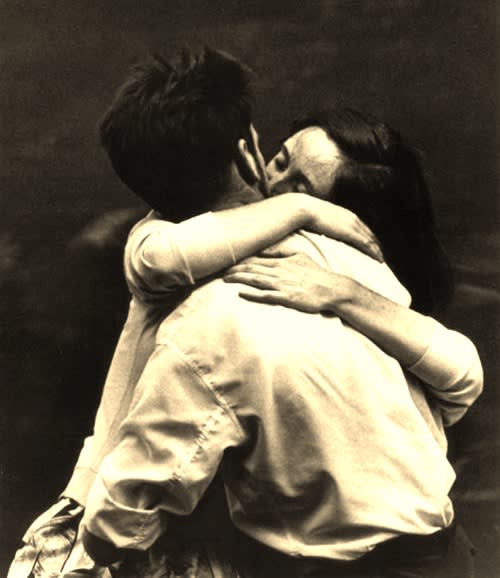
On the tenth day of Christmas, this gothic romantic offers you ten lines of prose from a certain novel about Appalachian witches and love that requires blood:
It was a deep kiss—the kind I’ve been good at avoiding, because the only other person to ever kiss me like that was Beckett. I was the queen of bridging into a different kind of kiss, like a dirty one that turns into sex. Only I didn’t this time. At first, I just let him do it, cherishing the feeling of giving in, of drinking up every gesture. The way he held my face at first, then slipped his hand to the back of my head and pulled me in deeper. It was a kiss that spoke of time and passion and grief. At some point, I found myself leaning in, kissing him back like I never wanted it to end. Kissing him with the longing of all the love I’d missed and couldn’t put my finger on. But as soon as I gave in to that I started shaking, and as much as I tried, I couldn’t stop. I wondered what I might’ve done if he’d kissed me like this on the first night I saw him here.
Nine kisses that damn you softly, eight moon phases haunting winter streets, seven women wearing grief like perfume, six love letters written in ruin, five hymns in empty churches! Four confessions breathed at 3 AM, a trilogy of inherited damnation, two glasses of wine dark as a curse, and that woodpecker—red-crested and relentless.
On the eleventh day of Christmas (almost there!), I wish for you eleven prayers answered in ways you didn’t see coming—the kind that arrive unexpected and absolutely necessary. Because I believe in magic without irony, in miracles that show up wearing ordinary clothes, in the grace that finds you when you finally stop pretending you can survive alone.
Ten lines that cut to bone, nine kisses tasting of devotion and ruin, eight moon phases on haunted streets, seven women beautiful in their grief, six letters that say “I love you” and “I’ll destroy us both” in the same breath, five hymns sung by broken voices! Four whispers in darkness, a trilogy where love requires blood, two glasses of wine dark as witchcraft, and that woodpecker—wild and unrepentant on its dead oak branch.
And on the twelfth day of Christmas, may twelve cold winds blow—not the gentle kind, but the ones that strip you down to what you actually are:
One wind for the past you’re still carrying, another for the present you’re afraid to fully inhabit, and one for the future you keep postponing. One wind for those you’ve loved beautifully, and another for those you’ve lost to death or the slower erosion of silence. One wind for dreams you’ve buried, and one for the ones you’re finally brave enough to pursue. One wind for the child you were before the world taught you to be careful, and another for the elder you’re becoming through every scar and revelation. One wind for the mentors who saw something in you before you saw it yourself, and another for the teachers who broke you open in ways that felt like cruelty but turned out to be necessary. And the coldest wind—the one that matters most—for the actions you’ll take this year when no one’s watching, when it would be easier to look away, when choosing courage over comfort will cost you something you’re not sure you can afford to lose.
And, of course…
Eleven prayers arriving like ghosts, ten lines of prose that make you grateful for the wound, nine kisses that taste like ruin and devotion, eight moon phases haunting winter alleys, seven women who love the way winter loves—fatally, with no promise of spring—six love letters that should never have been written, five hymns in empty churches touching something holy! Four whispers of devotion at 3 AM, a trilogy about women who inherit curses like china patterns, two glasses of wine so dark it looks like something you’d bleed out after a curse, and that pileated woodpecker—still there on its dead oak branch, wild and red-crested and unrepentant, hammering at dead wood looking for what’s hidden underneath.
These are my gifts: stories and wine, ghosts and love letters, kisses that damn you softly and hymns sung by broken voices, the view from exile and the ache of homecoming.
The accumulation matters. Not just over twelve days, but twelve months, twelve years. The way devotion accrues.
I wish you the merriest and the brightest—and not in the Hallmark way.

November 26, 2025
Cold Annual List of Undying Gratitude
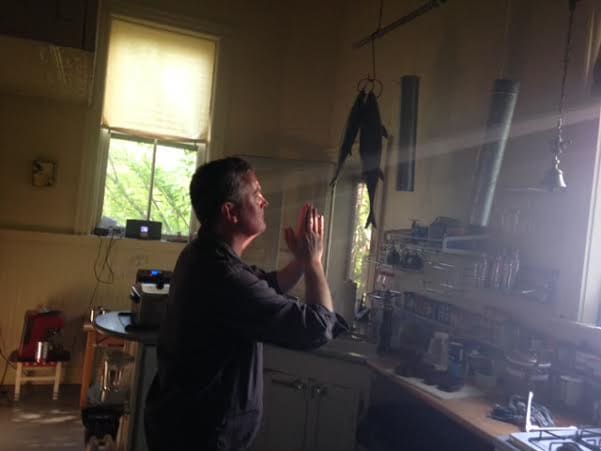 My husband giving thanks to the afternoon light a few years ago.
This is my quirky, annual list of things for which I’m grateful. Maybe you’ll find some of the items a bit oddball—I can’t deny that unlikely things have made my list in years past. Like a swarm of flies that congregated at my office window, and the spooky sound of footsteps at night, when no one else is home. Those might not make everyone’s list the way chocolate cupcakes and puppy kisses do.
Hopefully, regardless of whether you share my tastes in gratitude, this list will make you feel a bit warm and fuzzy inside, have you twisting up your face in laughter or confusion, and contemplating the good enough, the pretty damned good, and the great.
Let’s get started:
I’m grateful for the framed family pictures we brought with us on our move to Doha, Qatar. Our son’s friend Gabe, who is like family, gifted us a session with a photographer friend of his mom’s. Now our children and our dog stare back at us from black and white prints hung all over our apartment, reminding us of the twenty glorious years we spent raising our family in Virginia.
Thank you.

I’m grateful for dreams—the ones we scheme for during the day and the ones that ambush us at night, making us fly wingless above clouds or run with wild beasts, bringing just enough magic to make the impossible seem worth attempting.
I’m also thankful for breezes—whether they’re the cool, shivery fall ones back home, or the warm desert gusts that blow through my hair in Middle East. I just love those. And for Virginia country gentlemen, who say, “Yes, Ma’am” and “No, ma’am” with an almost imperceptible nod of the head, as well as the Doha patriarchs in their white, neck-to-ankle thobes, who seem to float down the street like ghosts. I love the way they stop to twist and wrap their head scarves like elaborate hairstyles.
And I love old Persian rugs, and new music introduced to me by my children: singers and songwriters like Tyler Childers and Lana Del Rey. They freshen my tastes, encouraging my mind and heart to remain open.
I’m grateful for the view from my Doha terrace—especially when a boat growls across the marina below. I’m so happy we thought to have our antique lanterns shipped over from Virginia, too. We light them for dinner parties, evening cocktails—any old time—and they dress up every occasion. I’m grateful for a perfect Manhattan, and a glass of warm milk. My nineteen-eighty-six map of the Prague metro, which includes the old names of some of the stops that have long since been changed: Cosmonautova, Leninova—communist names from before the 1989 Velvet Revolution changed the world.
I’m ever so appreciative of old homes and new beginnings, too. For oceans, for lakes, for streams, for puddles. For a teaspoon of fresh cream and a heaping dollop of the whipped stuff.
I love intricate spider’s webs and wavy glass, new technology and analog, worn quilts and freshly washed sheets, the ache of missing a loved one, and the joy of our reunion. And yes, I love to dance on tables, as I’ve recently rediscovered as an empty-nester— one who shimmied her way across a long woody at Octoberfest a few weeks ago.
 First official night as an empty nester (not the table-dancing night)
I’m utterly nourished by the mere presence of my children, even if they’re not saying much and we’re just taking up space together. And there’s nothing quite like cuddling with my dog, Barney. I miss him, but I’m so grateful that our daughter is taking good care of our youngest family member.
My children’s friends are people for whom I am truly thankful. They’re kind, funny, oddball at times, and most importantly, they’re good. They have my kids’ backs and I hope they know we have theirs.
I love the decaying beauty of abandoned spaces. Potbelly stoves and match sticks. Black and white movies and Instagram reels. Air conditioning—unequivocally yes! Falling back in love with my husband after a few years of just having to push on through the muck of life (absolutely sublime). Speaking of which—my husband’s new beard is just the best! I’m ever so grateful that he grew it. Makes him look slightly dangerous, like if Ernest Hemingway were a Bond villain.
Full moons that inspire stories are divine. Fresh pears and fresh garlic are perfect, although not necessarily taken together. I don’t like champagne, but I’m so grateful it exists and makes other people happy. And I love to reminisce about my late brother-in-law’s raspy and snarling Scottish brogue, one that’s in complete contravention to his sentimental heart. God rest your soul, Alistair.
I’m inspired by and feel such gratitude for my strange, sometimes tentative faith: the way it surges for no known reason, and becomes frail as glass thread on other days. I’ve been told doubt is what keeps faith a living entity within our hearts and I believe that.

I must also pay tribute here to stinky cheese, love poets, clear skies, ceiling fans, war stories, modern medicine, inventors, builders, and makers, orchids, soldiers, priests, siblings, raucous laughter, dirty jokes, witch costumes, scary stories, Bugs Bunny, wild, curly hair, tasteful nudes, mosquito repellent, lip gloss, a full belly, a full heart, the end of an ordeal, the beginning of a new chapter, sturdy flip flops, hot hummus (who knew how good it is?), fresh blue-green grass, the Big Dipper, vintage pick-up trucks, old-fashioned movie houses, and that corn chip smell that comes from a dog’s paw.
Last, but never, ever least, I’m grateful for all of you who are reading this. Now it’s your turn.
And by the way, my friends. As a big THANK YOU, Night of the Moon Witch is FREE on Amazon today and tomorrow (Thursday, Nov 27 and Friday, November 28). I hate Black Friday chaos, but I love y’all.

November 9, 2025
How My Brother Taught Me to Love Ghosts

On our shelves were a handful of worn, black and white picture books of the old country. Czechoslovakia. Prague. This was where my people were from, and not in some distant past—my mother had escaped communism when she was pregnant with me, taking my eight-year-old brother with her. I grew up outside of Chicago, in a house with a sunken living room, riding a banana seat bicycle down streets that could have been in any American suburb. But those photographs held a different inheritance entirely.
My brother remembered. He gave me Prague as a gothic dream made of shadow and stone—a city that looked as though it remembered every sin ever whispered in its streets. In the stories he told me, the spires of St. Vitus clawed at the sky, and the Vltava River moved beneath its bridges like a dark pulse. Gas lamps burned in the fog, turning cobblestones to scales of gold and black. Even laughter sounded haunted there, echoing off baroque façades that leaned too close, as if listening.
The Czech countryside he described was no less eerie in its beauty. Ancient woods and rolling fields stitched together by mist. Every forest dark and close, every village with its bell tower leaning a little toward heaven, as if in apology for all the blood shed on its soil—the conquerors who had raged there over the centuries. At dusk, the air turned blue and metallic, and the rivers shined like veins under the land’s pale skin.
A master storyteller, he fed me his own weird little tales about creatures and dark enchantments, ones I snacked on like sugared sins—too pretty to resist, too wicked to stop at just one.
He was training my imagination, though neither of us knew it then. Teaching me to find home not in the landscape I could touch, but in the one I could only imagine.
Then, when I was seven, he read me Bram Stoker’s Dracula.
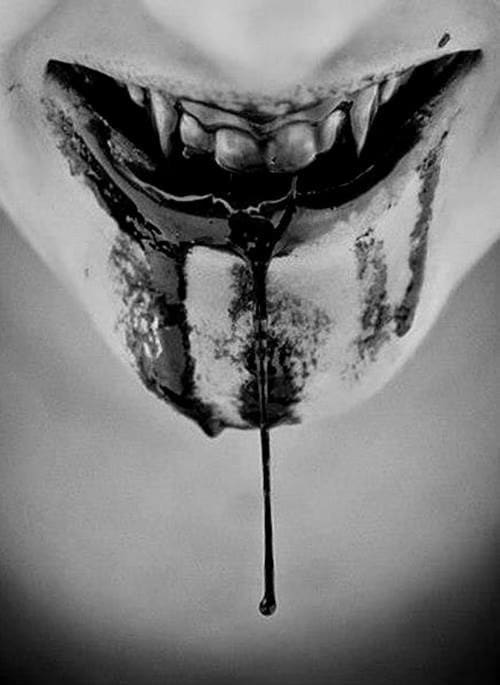
The story took me beyond the atmospherics I’d grown to see as a birthright I’d been robbed of and introduced me to a character who was erudite and manly in the classical sense, but also entirely corrupted. A man who had begun his life as a king, a warrior, but who had been reduced to predator, to parasite—something that could only take and never truly possess. The tragedy of his downfall stretched beyond his human life, sucking his very soul into its vortex, leaving him with an unquenchable appetite for a life he was no longer able to enjoy.
In one of the most understated and haunting moments of the novel, when Jonathan Harker and Quincy Morris drive a stake through the vampire’s heart, I remember barely being able to breathe. Stoker writes:
“It was like a miracle; but before our very eyes, and almost in the drawing of a breath, the whole body crumbled into dust and passed from our sight. I shall be glad as long as I live that even in that moment of final dissolution, there was in the face a look of peace, such as I never could have imagined might have rested there.”
It’s a moment rarely discussed in the public, commercial conversations about the story and its many adaptations. Yet to me, it was the most powerful moment of the novel. One that has stuck with me all my life and made its way into every story I’ve ever written—Cold War thrillers haunted by real ghosts, ancient lovers hunted by their own history, and my most literal manifestation of this fixation: an occult horror and gothic romance series set in the heart of Appalachian Virginia.
That moment also informed my own move to Prague in my twenties. And when I arrived, I saw straight off that my brother’s impressions, those black and white photographs in our picture books, were not depicting some romanticized version distorted by longing. Prague is a city that makes you believe beauty might be a kind of haunting, and haunting a kind of prayer. I was finally inhabiting the landscape I’d been longing for, and it was exactly what I’d been promised.
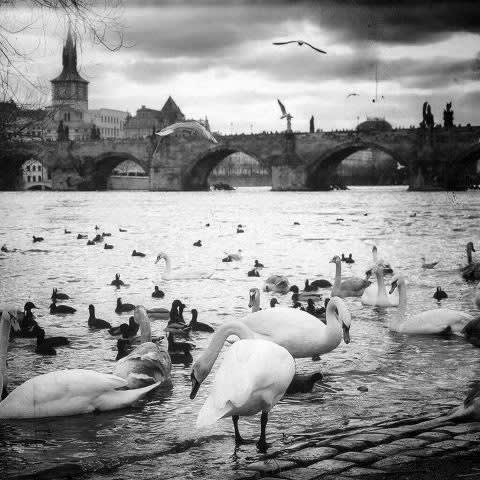 Photo by Mark Baker
That revelation has followed me everywhere since. It took root in the red clay soil of Virginia, where for twenty years we raised our family. Now it’s digging its fingers into the sands of Qatar, where my husband and I are learning to be empty-nesters while our children build their lives an ocean away.
The gothic has never left my work. I’ve made Appalachia a place where beauty and terror walk hand in hand, where family history becomes mythology, where the past doesn’t just haunt but actively shapes the present. My love for my children now lives in a place of longing, suspended in the space between visits across oceans, while my husband and I reclaim what was once reserved only for us—intimate dinners, adventures and curiosities, our faith in each other and in infinity itself.
Nothing could feel more natural.
It’s in these transitions—trading mountain rhythms for desert winds, presence for absence, proximity for perpetual longing—that I realize the gothic isn’t just what I love. It’s how I’ve learned to love. Through shadows, through absence, through stories told about places I can’t easily reach.
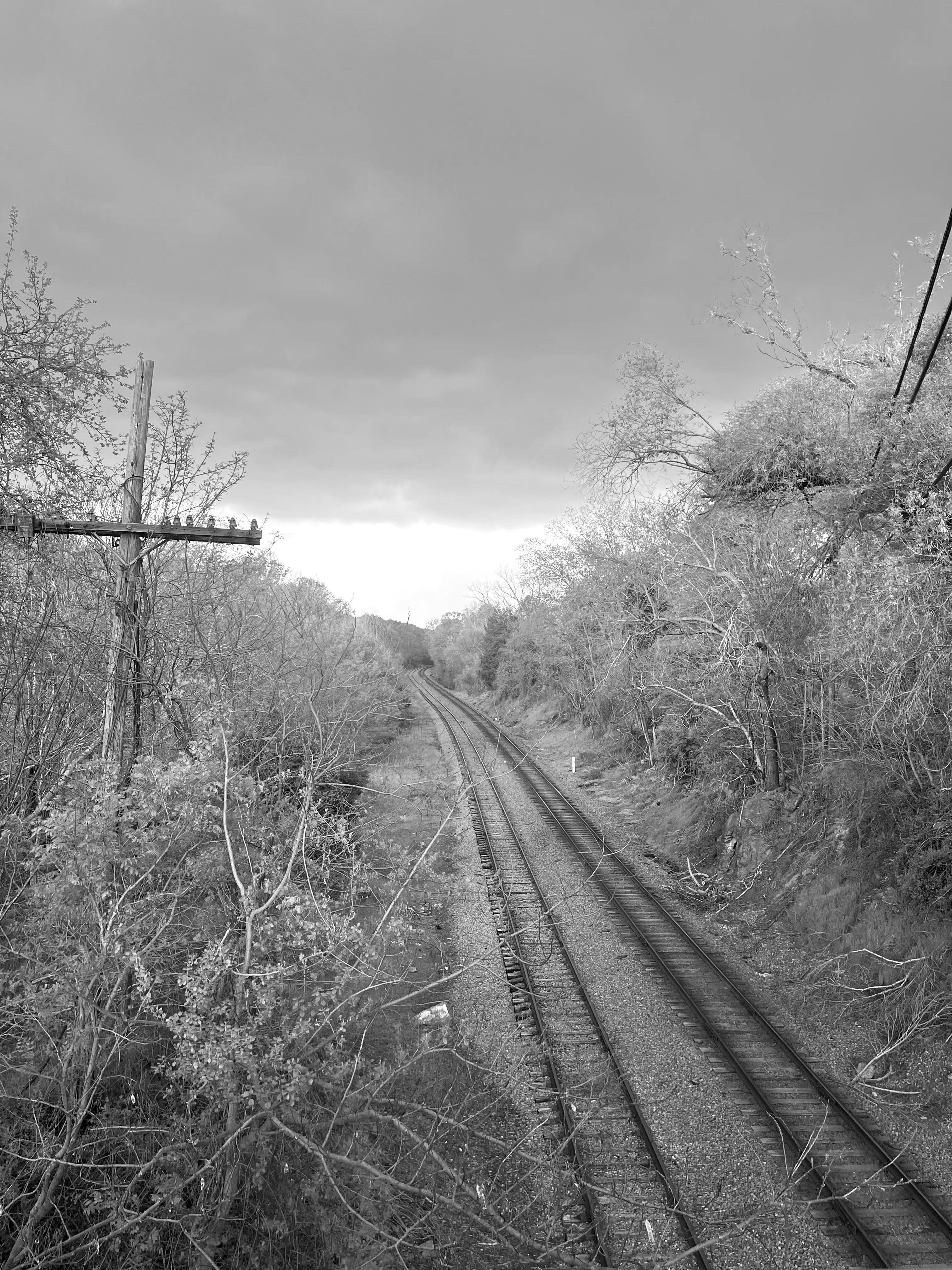
My brother taught me this. Not just an aesthetic, but a way of holding what we can’t possess. We all have our Dracula moments—that flash of peace in dissolution, the recognition that some beauty only exists in loss, some redemption only comes through ending. He gave me a homeland I never inhabited as a child, and in doing so, taught me that longing itself could be a kind of home. That the ache of distance becomes its own country, one where what we love grows more vivid precisely because we can’t hold it.
The gothic became the architecture of my longing. And longing became the architecture of everything I’ve built since.

October 1, 2025
A Different Kind of Witch Hunt: Night of the Moon Witch Goes FREE This Week!
Twila thought grief was the worst thing that could consume a family. She was wrong…

Listen, I know you come here for thrillers—for the kind of stories where someone’s always running, where the threat is human and the stakes are survival. I respect that. That’s why I write the books I write for you.
But sometimes a writer needs to let something darker out of the cage.
From October 1st-3rd, my gothic horror novel Night of the Moon Witch will be FREE on Amazon. It’s not a thriller. It’s something older, stranger, and considerably more unhinged.
The Bramwell women don’t hunt spies or chase assassins. They are the thing that makes killers look tame. They created mountains, traveled through time, and paid for their power in currencies that would make your average serial killer weep. This is a story about generational curses, family secrets so catastrophic they warped reality, and a love that survived being completely erased from memory.
If you’ve been with me through the psychological twists of my thriller novels, you know I don’t do simple. I don’t do safe. Night of the Moon Witch takes that instinct and drags it into the woods where the old gods still remember their names.
It’s Appalachian gothic horror—all chimney smoke, red clay, bloodlines that predate the Republic, and magic that costs everything.
Fair warning: This isn’t a cozy mystery with a witch protagonist. This is visceral, violent, and unapologetically dark. But if you trust me to take you to uncomfortable places—and you have, book after book—then you’ll want to see what I did when I stopped holding back entirely.
Download it before October 3rd. Consider it my Halloween gift to the readers who’ve followed me into every dark corner I’ve explored.
Your ghosts are waiting.