Terri Deno's Blog
April 13, 2021
Excerpt: Just My Luck
Adele Parks has brought her #1 Sunday Times sensation, JUST MY LUCK (MIRA Trade Paperback; April 6, 2021; $17.99) to the US!
Be careful what you wish for...
After spending happy hours, parenting classes and barbeques together for the last 15 years, Lexi and Jake Greenwood have celebrated and shared almost everything with the Pearsons and the Heathcotes, including their lottery numbers. Then one night, the unthinkable happens. Someone has been telling lies – lies dark enough to burn bridges and tear the tight group of friends apart. When the Greenwoods win a stunning $23 million in the lottery with their group’s numbers shortly after their dramatic falling out, the Heathcotes and Pearsons believe they’re entitled to part of the prize... and the three couples will do anything to claim what is theirs.
Reader beware: the last chapter will change everything.
A compulsively readable portrait of the fragility of friendship, the corrosiveness of sudden wealth, and the dark side of good luck, Adele Parks’ latest domestic thriller will make you think twice about trying your hand at the lottery.

Chapter 1
Saturday, April 20
I can’t face going straight home to Jake. I’m not ready to deal with this. I need to try to process it first. But how? Where do I start? I have no idea. The blankness in my mind terrifies me.
I always know what to do. I always have a solution, a way of tackling something, giving it a happy spin. I’m Lexi Greenwood, the woman everyone knows of as the fixer, the smiler—some might even slightly snidely call me a do-gooder. Lexi Greenwood, wife, mother, friend.
You think you know someone. But you don’t know anyone, not really. You never can.
I need a drink. I drive to our local. Sod it, I’ll leave the car at the pub and walk home, pick it up in the morning. I order a glass of red wine, a large one, and then I look for a seat tucked away in the corner where I can down my drink alone. It’s Easter weekend, and a rare hot one. The place is packed. As I thread my way through the heaving bar, a number of neighbors raise a glass, gesturing to me to join them; they ask after the kids and Jake. Everyone else in the pub seems celebratory, buoyant. I feel detached. Lost. That’s the thing about living in a small village—you recognize everyone. Sometimes that reassures me, sometimes it’s inconvenient. I politely and apologetically deflect their friendly overtures and continue in my search for a solitary spot. Saturday vibes are all around me, but I feel nothing other than stunned, stressed, isolated.
You think you know someone.
What does this mean for our group? Our frimily. Friends that are like family. What a joke. Blatantly, we’re not friends anymore. I’ve been trying to hide from the facts for some time, hoping there was a misunderstanding, an explanation; nothing can explain away this.
I told Jake I’d only be a short while, and I should text him to say I’ll be longer. I reach for my phone and realize in my haste to leave the house I haven’t brought it with me. Jake will be wondering where I am. I don’t care. I down my wine. The acidity hits my throat, a shock and a relief at once. Then I go to the bar to order a second.
The local pub is only a ten-minute walk away from our home, but by the time I attempt the walk back, the red wine has taken effect. Unfortunately, I am feeling the sort of drunk that nurtures paranoia and fury rather than a light head or heart. What can I do to right this wrong? I have to do something. I can’t carry on as normal, pretending I know nothing of it. Can I?
As I approach home, I see Jake at the window, peering out. I barely recognize him. He looks taut, tense. On spotting me, he runs to fling open the front door.
“Lexi, Lexi, quickly come in here,” he hiss-whispers, clearly agitated. “Where have you been? Why didn’t you take your phone? I’ve been calling you. I needed to get hold of you.”
What now? My first thoughts turn to our son. “Is it Logan? Has he hurt himself?” I ask anxiously. As I’m already teetering on the edge, my head quickly goes to a dark place. Split skulls, broken bones. A dash to the hospital isn’t unheard-of. Thirteen-year-old Logan has daredevil tendencies and the sort of mentality that thinks shimmying down a drainpipe is a reasonable way to exit his bedroom in order to go outside and kick a football about. My fifteen-year-old daughter, Emily, rarely causes me a moment’s concern.
“No, no, he’s fine. Both the kids are in their rooms. It’s… Look, come inside, I can’t tell you out here.” Jake is practically bouncing up and down on the balls of his feet. I can’t read him. My head is too fuzzy with wine and full of rage and disgust. I resent Jake for causing more drama, although he has no idea what shit I’m dealing with. I’ve never seen him quite this way before. If I touched him, I might get an electric shock; he oozes a dangerous energy. I follow my husband into the house. He is hurrying, urging me to speed up. I slow down, deliberately obtuse. In the hallway he turns to me, takes a deep breath, runs his hands through his hair but won’t—can’t—meet my eyes. For a crazy moment I think he is about to confess to having an affair. “Okay, just tell me, did you buy a lottery ticket this week?” he asks.
“Yes.” I have bought a lottery ticket every week for the last fifteen years. Despite all the bother last week, I have stuck to my habit.
Jake takes in another deep breath, sucking all the oxygen from the hallway. “Okay, and did you—” He breaks off, finally drags his eyes to meet mine. I’m not sure what I see in his gaze, an almost painful longing, fear and panic. Yet at the same time there is hope there, too. “Did you pick the usual numbers?”
“Yes.”
His jaw is still set tight. “You have the ticket?”
“Yes.”
“You’re sure?”
“Yes, it’s pinned on the noticeboard in the kitchen. Why? What’s going on?”
“Fuck.” Jake lets out a breath that has the power of a storm. He falls back against the hall wall for a second, and then he rallies, grabs my hand and pulls me into the room that was designed to be a dining room but has ended up being a sort of study slash dumping ground. A place where the children sometimes do their homework, where I tackle paying the household bills, and where towering piles of ironing, punctured footballs and old trainers hide out. Jake sits down in front of the computer and starts to quickly open various tabs.
“I wasn’t sure that we even had a ticket, but when you were late back and the film I was watching had finished, I couldn’t resist checking. I don’t know why. Habit, I suppose. And look.”
“What?” I can’t quite work out what he’s on about. It might be the wine, or it might be because my head is still full of betrayal and deceit, but I can’t seem to climb into his moment. I turn to the screen. The lottery website. Brash and loud. A clash of bright colors and fonts.
The numbers glare at me from the computer—1, 8, 20, 29, 49, 58. Numbers I am so familiar with, yet they seem peculiar and unbelievable.
“I don’t understand. Is this a joke?”
“No, Lexi. No! It’s for real. We’ve only gone and won the bloody lottery!”
Excerpted from Just My Luck by Adele Parks, Copyright © 2021 by Adele Parks.
Published by MIRA Books

Buy Links:


April 12, 2021
Excerpt: The Last Bookshop in London
Inspired by the true World War II history of the only bookshop to survive the Blitz, a sweeping story of wartime loss, romance, and the enduring power of literature, perfect for fans of The Paris Wife and The Lilac Girls
London, autumn 1940: the Blitz has only just begun when Grace Bennett arrives in London to find the city she’s spent a lifetime dreaming about now cast in the clouds of war, and all of her plans unraveling at the seams. After accepting a job at a charming bookshop nestled in the heart of the city, a haven for literary-minded locals, she feels like a fish out of water – she’s never been much of a reader, after all.
As the bombs rain down on the city night after night, a devastating air raid leaves London’s literary center in ruins, and the libraries and shops of Paternoster Row are destroyed in a firestorm. But against all odds, one bookshop miraculously survives. Through blackouts and air raids, Grace continues staffing the shop, discovering a newfound comfort in the power of words and storytelling to unite her community in ways she never imagined, a power that triumphs even the darkest nights of war-torn London.

August 1939 London, England
GRACE BENNETT HAD ALWAYS DREAMED OF SOMEDAY living in London. Never did she imagine it would become her only option, especially not on the eve of war.
The train pulled to a stop within Farringdon Station, its name clearly marked on the wall inside a strip of blue set within a red circle. People hovered on the platform, as eager to get on as those within were to get off. They wore smartly cut clothing in the chic styles of city life. Far more sophisticated than in Drayton, Norfolk.
Equal parts nerves and eagerness vibrated about inside Grace. “We’ve arrived.” She looked at Viv beside her.
Her friend clicked the top on her lipstick tube closed and gave a freshly applied vermillion smile. Viv glanced out the window, her gaze skimming the checkerboard of advertisements lining the curved wall. “After so many years of wishing we could be in London.” Her hand caught Grace’s in a quick squeeze. “Here we are.”
Back when they were mere girls, Viv had first mentioned the notion of moving away from dull Drayton for a far more exciting life in the city. It had been a wild concept then, to leave their slow-moving, familiar existence in the country for the bustling, fast-paced pulse of London. Never had Grace considered it might someday become a necessity.
But then, there was nothing left in Drayton for Grace anymore. At least nothing she cared to return to.
The ladies rose from their plush seats and took hold of their luggage. Each had only one case with them, faded things, beaten down more by age than use. Both were stuffed to the point of near-bursting and were not only impossibly heavy, but awkward to manage around the gas mask boxes slung over their shoulders. The ghastly things had to be brought with them everywhere, per the government, to ensure they’d be protected in the event of a gas attack.
Lucky for them, Britton Street was only a two-minute walk away, or so Mrs. Weatherford had said.
Her mother’s childhood friend had a room to let, one she’d offered a year ago when Grace’s mother first passed. The terms had been generous—two months for free while Grace acquired a job and even then, the rent would be discounted thereafter. Despite Grace’s longing to go to London, and despite Viv’s enthusiastic encouragement, Grace had remained in Drayton for nearly a year after in an attempt to pick up the pieces of her broken existence.
That was before she learned the house she’d lived in since her birth truly belonged to her uncle. Before he moved in with his overbearing wife and five children. Before life as she knew it shattered even further apart.
There was no room for Grace in her own home, a point her aunt had been eager to note often. What had once been a place of comfort and love became a place Grace felt unwelcome. When her aunt finally had the temerity to tell Grace to leave, she knew she had no other options.
Writing the letter to Mrs. Weatherford the previous month to see if the opportunity still held was one of the hardest things Grace had ever done. It had been a surrender to the challenges she faced, a terrible, soul-crushing failure. A capitulation that had rendered her the greatest failure.
Grace had never possessed much courage. Even now, she wondered if she would have managed her way to London had Viv not insisted they go together.
Trepidation knotted through her as they waited for the train’s gleaming metal doors to part and unveil a whole new world.
“Everything will be brilliant,” Viv whispered under her breath. “It will all be so much better, Grace. I promise.”
The air-powered doors of the electric train hissed open and they stepped onto the platform amid the push and pull of people coming and going all at once. Then the doors shushed closed behind them, and the gust of the train’s departure tugged at their skirts and hair.
An advert for Chesterfields on the far wall displayed a handsome lifeguard smoking a cigarette while another poster beside it called on the men of London to join the service.
It wasn’t only a reminder of a war their country might soon face, but how living in the city presented a greater element of danger. If Hitler meant to take Britain, he would likely set his sights on London.
“Oh, Grace, look!” Viv exclaimed.
Grace turned from the poster toward the metal stairs, which glided upward on an unseen belt, disappearing somewhere above the arched ceiling. Into the city of their dreams.
The advert was quickly forgotten as she and Viv rushed toward the escalator and tried to tamp down their delight as it effortlessly carried them up, up, up.
Viv’s shoulders squeezed upward with barely restrained happiness. “Didn’t I tell you this would be amazing?”
The enormity of it hit Grace all at once. After years of dreaming and planning, here they were in London.
Away from Grace’s bully of an uncle, out from under the thumb of Viv’s strict parents.
Despite all of Grace’s troubles, she and Viv swept out of the station like caged songbirds ready to finally spread their wings.
Buildings rose into the sky all around, making Grace block the sun with the palm of her hand to see their tops. Several nearby shops greeted them with brightly painted signs touting sandwiches, hairdressers and a chemist. On the streets, lorries rattled by and a double-decker bus rumbled in the opposite direction, its painted side as red and glossy as Viv’s nails.
It was all Grace could do to keep from grasping her friend’s arm and squealing for her to look. Viv was taking it in too, with wide, sparkling eyes. She appeared as much an awed country girl as Grace, albeit in a fashionable dress with her perfectly styled auburn curls.
Grace was not as chic. Though she’d worn her best dress for the occasion, its hem fell just past her knees, and the waist nipped in with a slim black belt that matched her low heels. While not as stylish as Viv’s black-and-white polka-dot dress, the pale blue cotton set off Grace’s gray eyes and complemented her fair hair.
Viv had sewn it for her, of course. But then, Viv had always seen to both of them with an eye set toward grander aspirations. Throughout their friendship, they had spent hours sewing dresses and rolling their hair, years of reading Woman and Woman’s Life on fashion and etiquette and then making countless corrections to ensure they “lost the Drayton” from their speech.
Now, Viv looked like she could grace one of those magazine covers with her high cheekbones and long-lashed brown eyes.
They joined the flurry of people rushing to and fro, heaving the bulk of their suitcases from one hand to the other as Grace led the way toward Britton Street. Thankfully, the directions Mrs. Weatherford had sent in their last correspondence had been detailed and easy to follow.
What had been missing from the account, however, were all the signs of war.
More advertisements, some calling for men to do their part, with others prompting people to disregard Hitler and his threats and still book their summer holidays. Just across the street, a wall of sandbags framed a doorway with a black-and-white sign proclaiming it to be a Public Air Raid Shelter.
Excerpted from The Last Bookshop in London @ 2021 by Madeline Martin, used with permission by Hanover Square Press.

Madeline Martin is a USA TODAY bestselling author of historical romance novels filled with twists and turns, adventure, steamy romance, empowered heroines and the men who are strong enough to love them.
Social Links:
Website: http://www.madelinemartin.com/
Facebook: https://facebook.com/madelinemartinauthor
Twitter: https://twitter.com/madelinemmartin
Instagram: https://instagram.com/madelinemmartin
Pintrest: https://pinterest.com/madelinemartin9
Buy Links:
Amazon: http://hyperurl.co/lbsilprintamz
Barnes & Noble: https://www.barnesandnoble.com/w/the-last-bookshop-in-london-madeline-martin/1137772028
IndieBound: http://hyperurl.co/lbsilibprint
Libro.fm: https://libro.fm/audiobooks/9781488211362-the-last-bookshop-in-london
Books-A-Million: http://hyperurl.co/lbsilbam
Target: http://hyperurl.co/lbsiltpb
Kobo: http://hyperurl.co/lbsilkobo
AppleBooks: http://hyperurl.co/lbsilib
Google Play: http://hyperurl.co/lbsilgp
April 6, 2021
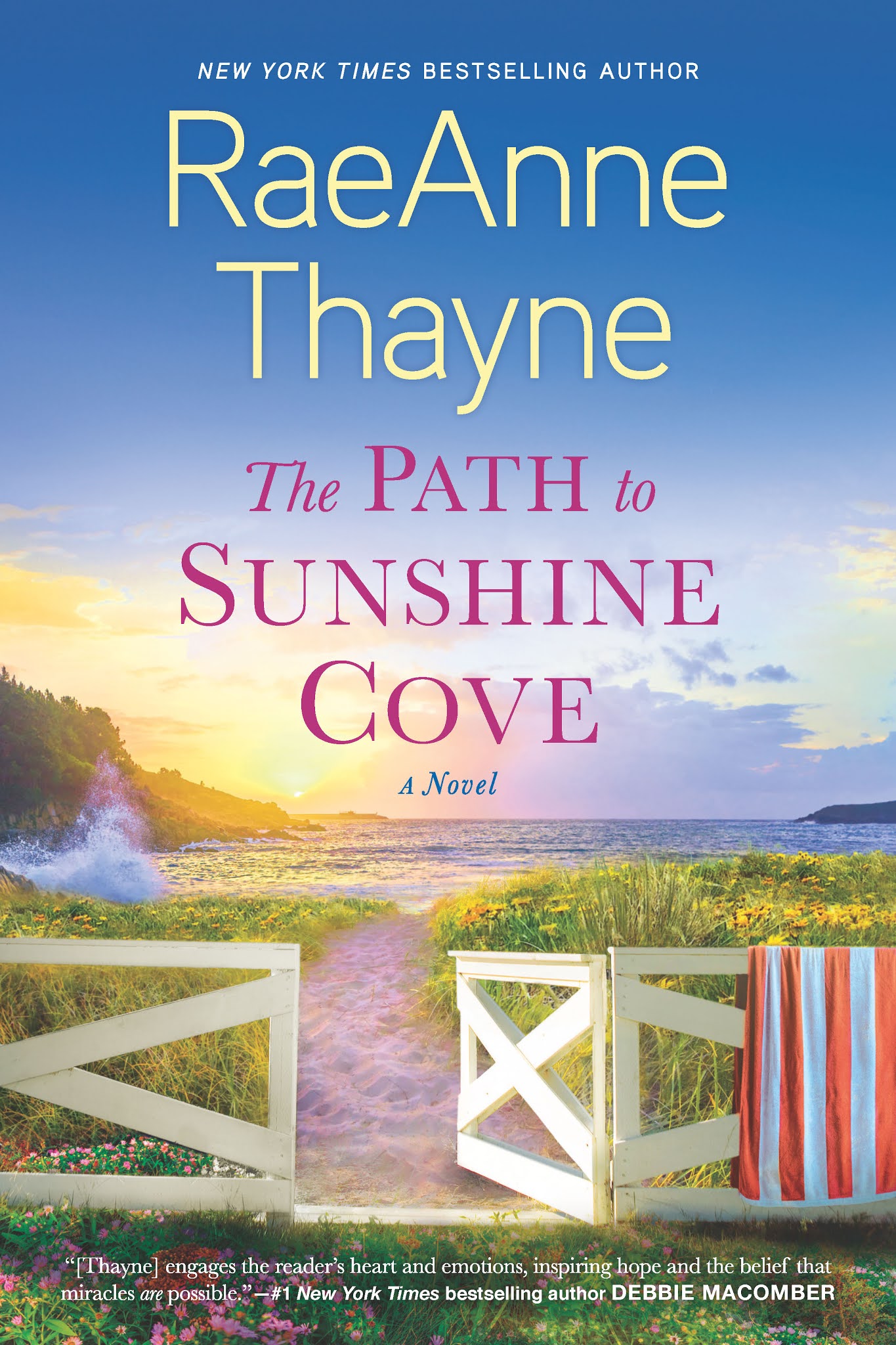
Excerpt: The Path to Sunshine Cove
She knows what’s best for everyone but herself…
With a past like hers, Jessica Clayton feels safer in a life spent on the road. She’s made a career out of helping others downsize—because she’s learned the hard way that the less “stuff,” the better, a policy she applies equally to her relationships. But a new client is taking Jess back to Cape Sanctuary, a town she once called home…and that her little sister, Rachel, still does. The years apart haven’t made a dent in the guilt Jess still carries after a handgun took the lives of both their parents and changed everything between them.
While Jess couldn’t wait to put the miles between her and Cape Sanctuary, Rachel put down roots, content for the world—and her sister—to think she has a picture-perfect life. But with the demands of her youngest child’s disability, Rachel’s marriage has begun to fray at the seams. She needs her sister now more than ever, yet she’s learned from painful experience that Jessica doesn’t do family, and she shouldn’t count on her now.
Against her judgment, Jess finds herself becoming attached—to her sister and her family, even to her client’s interfering son, Nate—and it’s time to put everything on the line. Does she continue running from her painful past, or stay put and make room for the love and joy that come along with it?
Chapter One
If not for all of the emotional baggage cluttering up her Airstream, this wouldn’t be a bad place to park for a few days.
As Jess Clayton drove through the quiet streets of Cape Sanctuary on a beautiful May afternoon, she couldn’t help being charmed anew by the Northern California beach town vibes.
She had been here before, of course. Several times. Her sister lived just down that street there, in a large two-story cottage with gables, a bay window and a lush flower garden. Rachel loved it here. Every time Jess came to town, she was reminded why. What was not to love? Cape Sanctuary was a town defined by whimsical houses, overflowing gardens, wind chimes and Japanese fishing balls.
And, of course, the gorgeous coastline, marked by redwoods, rock formations, cliffs.
She drove past Juniper Way, her sister’s street, but didn’t turn down. Not yet. She would see Rachel, Cody and the kids soon, after she was settled.
They were the whole reason she was here, after all. She didn’t see her nieces and nephew enough, only on the rare holidays and birthdays that she could arrange a visit. When a prospective client reached out from the same town as Rachel and her family, Jess saw it as a golden opportunity to spend more time with the kids.
And her sister, of course.
She sighed as she made her way to her destination, Sunshine Cove, still a mile away, according to her navigation system.
Rachel was the reason for all that baggage she was towing along. Jess loved her younger sister dearly but their relationship was like a messy tangle of electric wires, some of them live and still sparking.
She would be in Cape Sanctuary for two weeks on this job. Maybe she would finally have the chance to sort things out with Rachel and achieve some kind of peace.
The road rose, climbing through a stand of redwoods and coastal pine, with houses tucked in here and there before the view to the ocean opened up again
. In five hundred feet, your destination is on the right: 2135 Seaview Road.
She couldn’t argue with Siri on this one. That was a spectacular view. The Pacific glistened in the afternoon sunlight, with only a few feathery clouds above the horizon line. She turned at the orca-shaped mailbox Eleanor Whitaker had told her to seek. Through more coastal pine, she could see the house. She recognized it from the pictures her client had sent. One level, made of stone and cedar, the house looked as if it had grown out of the landscape fully formed.
She knew the house was more than five thousand square feet, built at the turn of the century by a wealthy ranching and logging family in the area. It featured seven bedrooms and eight bathrooms, all of which she would come to know well over the next two weeks.
From the picture Eleanor had sent, Jess knew Whitaker House was beautiful. Elegant. Comfortable. Warm.
The kind of place where Jess had once dreamed of living, free of shouting, chaos, pain.
She could see, tucked into the trees overlooking the ocean, a smaller house on the property that was almost a miniature of the big house, with the same cedar and stone exterior as well as windows that gleamed in the afternoon sun.
A big dark blue pickup truck was parked there but she couldn’t see anyone around.
Jess pulled her own rig over to the side of the driveway in case anyone needed to come in and out, then scouted around for a place she could unhitch.
From their phone call earlier that morning as she was driving, she knew Eleanor wouldn’t be here, that she had taken her teenage granddaughter into a nearby town to an orthodontist appointment and then to catch a movie they had both been wanting to see.
Make yourself at home and set up anywhere that works, Eleanor had said.
As she cased the property, she instantly found the spot a hundred yards from the house that would give her a perfect view of the water, almost as if it had been created exactly for her twenty-four-foot 1993 Airstream, affectionately nicknamed Vera by Jess’s business partner.
This job was meant to be. She had already bonded with Eleanor Whitaker over their weeks of email and phone correspondence. This view sealed the deal.
When she was done working each day, she could go to sleep to the restful sound of the ocean. She climbed back in her pickup and backed the trailer with the ease of long practice. Some people struggled with trailering but Jess didn’t. The seven years she had spent as a driver in the military still served her well.
When the Airstream was in a good spot, she hopped out and was reaching in the back of the pickup for the chocks when an angry male voice drifted across the manicured lawn to her.
“Hey. This is private property. You can’t park that here!”
She instinctively wrapped her hand around the chock. Angry male voices always brought out the warrior princess in her. She could blame both her childhood and those years in the army when she had to go toe to toe with people twice her weight and a foot taller.
The chock was heavy and could do real damage in the right hands.
Hers.
“I have permission to be here,” she said, her voice cool but polite.
He frowned. “Permission? That’s impossible.”
“I assure you, it’s not.”
“This is my mother’s property. She would have told me if she had given somebody permission to camp here.”
Ah. This must be Nathaniel Whitaker, Eleanor’s son. Her client had mentioned that he lived in another house on the property and would probably be in and out as Jess went about her work.
Hadn’t Eleanor told him Jess was coming?
She relaxed her grip on the chock but didn’t release it. “You must be Nathaniel. Eleanor has told me about you.”
Her words didn’t have an impact on his expression. If anything, his glower intensified, his frown now edged with confusion that she knew his name.
Despite his sour expression, she couldn’t help noticing he was an extraordinarily good-looking man. Eleanor hadn’t mentioned that her son had dark hair, stormy blue eyes, a square jawline. Or that his green T-shirt with a logo over the right breast pocket that read Whitaker Construction clung to his muscles.
Jess found it extremely inconvenient that Nathaniel Whitaker happened to hit every single one of her personal yum buttons.
“Who are you?” he demanded. “And how do you know my mother?”
Ah. This was tricky. Eleanor was her client. She must have had her own reasons for not telling her son Jess was showing up. Jess felt compelled to honor those reasons. Until she could talk to the woman, Jess didn’t feel right about giving more information to Nate than his own mother had
. “My name is Jess Clayton. Your mother knows I planned to arrive today. I have her permission to set up anywhere. I thought this would work well.”
Beautifully, actually. The more time she looked around, the better she liked it. A twisting path down to the ocean started just a few yards away, leading down to what looked like a protected cove.
“Set up for what? Why are you here?”
“You really should ask your mother,” she said. It would be so much better if he could hear the explanation from Eleanor.
“I just tried to call her when I saw you pulling in. She’s not answering.”
“Probably in the middle of the movie. She told me she and Sophie were going to a matinee after the orthodontist.”
If she thought this further knowledge about his family would set Nate’s mind at ease, she was sadly mistaken. His gaze narrowed further. “How the hell do you know my daughter had an orthodontist appointment?”
“Your mom happened to mention it.”
“Funny, the things my mother told you. I talk to her several times a day, every day, and she hasn’t said a word to me about a strange woman setting up a trailer in the side yard. Tell me again what you’re doing here?”
She wanted to be finishing her trailer setup so she could unhitch and go into town for groceries. She would rather not be engaged in a confrontation with a strange man, no matter how hot, who didn’t need to know every detail of his mother’s life.
Why hadn’t Eleanor told him already? It’s not as if the woman could keep their efforts a secret for long.
Still, it was not up to Jess to spill the dirt.
“I’m afraid that’s between me and your mother. You really need to get the answer to that question from her.”
“Sorry, ma’am, but that’s not good enough. Right now, you’re trespassing. If you don’t move this out of here, I’m calling the police. The chief happens to be a good friend of mine.”
“Yes, I know.” Done with this discussion, Jess reached down to wedge the chock behind the passenger-side wheel. “You play poker with him every other Friday night. Your mother told me.”
“What else did she tell you?” He had moved beyond suspicion to outright hostility. She probably shouldn’t have said anything about the poker. She certainly wouldn’t want someone she didn’t know poking into her business. If he hadn’t been so blasted good-looking, she might have been able to handle this whole thing better.
She forced a smile, trying to take a different tack. “I assure you, Eleanor knows I’m coming, as I said. She told me to settle in and make myself comfortable until she gets home. You can try calling her again.”
Or you can accept that maybe I’m telling the truth and give me a break here. I’ve been driving for hours. I’m tired and hungry and I would really like to make a sandwich, which I can’t do with you standing there like a bouncer at a nightclub in a bad part of town.
“I’ve tried multiple times. She’s not answering. You’re probably right, her phone is probably on silent.”
“Look, when Eleanor and Sophie come back from the movie, she can tell you what’s going on. Until then, I would really like to finish setting up here.”
“No matter what I say?”
She didn’t want to challenge him but she was starving.
“This is your mother’s house and she invited me here,” she said simply. “It will be easy enough to prove that once Eleanor returns. If I’m lying for some unknown reason and just happened to make an extraordinarily lucky guess about your mom and a daughter named Sophie who had an orthodontist appointment today, you and the entire Cape Sanctuary police force can boot me out.”
He didn’t look at all appeased, his features still suspicious. She couldn’t really blame him. He was only trying to protect those he loved. She would probably do the same in his shoes.
“Would you like a sandwich?” she said, trying another tack. “I make a mean PB and J.”
For the first time, she saw a glimmer of surprise on his expression, as if he couldn’t quite believe she had the audacity to ask. “No, I wouldn’t like a sandwich.”
“Suit yourself. I’ve had a long day already and I’m ready for some food. And I need to see how Vera survived the drive.”
As she might have expected, his frown deepened. “Who is Vera?”
She patted the skin on the Airstream. “It was, um, a pleasure to meet you, Nathaniel.”
“Nate,” he muttered. “Nobody but my mother calls me Nathaniel.”
“Nate, then.”
She nodded and without waiting for him to argue, she slipped into the trailer and closed the door firmly behind her.
The curtains were still closed from the drive and she didn’t want to open them yet to the afternoon sunlight. Not when Nate Whitaker might still be lurking outside.
Instead, she sank onto the sofa that doubled as her office, dining room and guest space, astonished and dismayed to find her hands were shaking.
What was that about? She had a familiar itchiness between her shoulder blades and could feel a little crash as her adrenaline subsided.
Nate Whitaker wasn’t a threat to her. Yes, he might be angry right now but he wouldn’t hurt her. She already felt like his mother was an old and dear friend. Eleanor surely couldn’t have a son who was prone to random violence.
Instinct told her he wouldn’t physically hurt her, yet Jess still had the strangest feeling that Nate posed some kind of danger to her.
Ah well. She likely wouldn’t have much to do with the man. She was here to help Eleanor, not to fraternize with the woman’s gorgeous offspring.
She only had to make sure she didn’t lose sight of her twin objectives here in Cape Sanctuary—spending time with her sister’s family and helping her client—and she would be fine.
Excerpted from The Path to Sunshine Cove by RaeAnne Thayne Copyright © RaeAnne Thayne. Published by HQN Books.

Author Bio: New York Times bestselling author RaeAnne Thayne finds inspiration in the beautiful northern Utah mountains where she lives with her family. Her books have won numerous honors, including six RITA Award nominations from Romance Writers of America and Career Achievement and Romance Pioneer awards from RT Book Reviews. She loves to hear from readers and can be reached through her website at www.raeannethayne.com.
Social Links:
Author Website
Twitter: @raeannethayne
Facebook: @AuthorRaeAnneThayne
Instagram: @raeannethayne
Goodreads
BUY LINKS:
Harlequin
Indiebound
Amazon
Barnes & Noble
Books-A-Million
Walmart
iBooks
Kobo
x
March 30, 2021
Excerpt: The Bookstore on the Beach
For fans of Elin Hilderbrand and Mary Kay Andrews, comes New York Times bestselling author Brenda Novak's newest standalone work of women's fiction, a big, sweeping novel about family and the ties that bind and challenge us. In this novel, three generations of women from the same family share a house and work together at a bookstore in Colonial Beach over the course of a summer.
How do you start a new chapter when you haven’t closed the book on the last one?
Eighteen months ago, Autumn Divac’s husband went missing. Her desperate search has yielded no answers—she still has no idea where he went or why. After being happily married for twenty years, she can’t imagine moving forward without him, but for the sake of their two teenage children, she has to try.
Autumn takes her kids home for the summer to the charming beachside town where she was raised. She seeks comfort by working alongside her mother and aunt at their quaint bookshop, only to learn that her daughter is facing a life change neither of them saw coming and her mother has been hiding a terrible secret for years. And when she runs into Quinn Vanderbilt—the boy who stole her heart in high school—old feelings start to bubble up again. Is she free to love him, or should she hold out hope for her husband’s return? She can only trust her heart…and hope it won’t lead her astray.

CHAPTER 1
Tuesday, June 8
Today her daughter was returning for the summer. Mary Langford gazed eagerly out at the street in front of her small bookstore, looking for a glimpse of Autumn’s car and, when she saw nothing except a large family going into the ice cream parlor at the end of the block, checked her watch. Three-thirty. Autumn had called at lunchtime to say that she and the kids were making good time. They probably wouldn’t be much longer.
“You’ve been quiet today,” Laurie commented from where she sat behind the counter, straightening the pens, tape, stapler and bookmarks.
Mary turned from the large front window she’d recently decorated with posters of the hottest new releases. “I worry when she’s on the road for so long.”
“She’ll make it, and it’ll be great to see her and the kids. They haven’t been back since Christmas, have they?”
“No.” She picked up the feather duster and began cleaning shelves—a never-ending job at Beach Front Books, which she and Laurie owned as 50/50 partners. Autumn lived in Tampa, Florida, far enough away that it wasn’t easy to get together when Taylor and Caden were in school. “And I doubt they’ll come back for the holidays this year.” Fortunately, they were more consistent about returning for the summer—except for last summer, of course, which was understandable. Mary hoped she’d be able to count on that continuing, but with the kids getting older, nothing was certain. Taylor had only one more year of high school before heading off to college. Caden had two. Mary feared this might be the last time, for a while, they’d all be together in Sable Beach.
“You could go visit them,” Laurie pointed out.
Autumn had invited her many times. Remembering the arguments her refusal had sparked over the years caused Mary’s stomach to churn. She wanted to go to Tampa, wanted to make it so that her daughter wouldn’t have to do all the traveling. Autumn had been going through so much lately. But the thought of venturing into unfamiliar territory filled Mary with dread. Other than to go to Richmond occasionally, which was the closest big city, she hadn’t left the sleepy Virginia Beach town she called home in thirty-five years. “Yes, but you know me. This is the only place I feel safe.”
Laurie rocked back on the tall stool. “Well, if the fear hasn’t gone away by now, I guess it’s not going to.”
“No. I don’t talk about it anymore, but the past is as real to me now as it’s ever been.”
Although the store had been busy earlier, what with the influx of tourists for the season, foot traffic had slowed. When that happened, they often talked more than they worked. Beach Front Books wasn’t Laurie’s sole source of income. Her husband, Christopher Conklin, was a talented artist. He painted all kinds of seascapes, and while he wasn’t in any prestigious galleries, he sold his paintings in a section they reserved for him in the store as well as online.
But Mary, who’d never been married, had no other support. Beach Front Books didn’t make a large profit, but no one loved the escape that books provided more than she did, and the store garnered enough business that she could eke out a living. That was all that mattered to her.
“Autumn gets so mad that I won’t go out and see the world. Visit. Travel. That sort of thing,” she murmured, wishing she didn’t have the scars and limitations that had, at times, put such a strain on their relationship. “She keeps saying I’m too young to live like an old lady.”
“She has a point.”
Mary sighed. “I’m not young anymore.”
“What are you talking about? You’re nine years younger than me. Fifty-four is not old.”
That was true, but she’d had to grow up far sooner than most people. “I feel ancient.”
“Next year, you should go to Tampa, if they ask you.”
She shook her head. “I can’t.”
“Maybe you’ll prove that you can.”
Mary couldn’t help bristling. She didn’t like it when Laurie pushed her. “No.”
“Autumn doesn’t understand, Mary. That’s what causes almost every fight you have with her.”
“I know. And I feel bad about that. But there’s nothing I can do.”
Laurie lowered her voice. “You could tell her the truth…”
“Absolutely not,” Mary snapped. “Why would I ever do that?”
“There are reasons. And you know it. We’ve talked about this before,” Laurie said, remaining calm, as always. That was one of the many things Mary liked about her—she was steady and patient, and that steadiness somehow helped Mary cope when old feelings and memories began to resurface.
In this instance, Laurie might also be right. Mary could feel the past rising up from its deep slumber. Maybe it was time to tell Autumn.
But there were just as many reasons not to—compelling reasons. And the thought of revealing the past, seeing it all through her daughter’s eyes, made Mary feel ill. “I can’t broach that subject right now, not with what she’s been dealing with the past year and a half. Besides, it’s been so long it’s almost as if it happened to someone else,” she said, mentally shoving those dark years into the deepest recesses of her mind. “I want to stay as far away from that subject as possible.”
Laurie didn’t call her out on the contradiction her statement created. And Mary was glad. She couldn’t have explained how it could be real and frightening and always present and yet she could feel oddly removed from it at the same time.
“Except that it didn’t happen to someone else,” Laurie responded sadly. “It happened to you.”
* * *
The scent of the ocean, more than anything else, told Autumn she was home. She lowered her window as soon as she rolled into town and breathed deeply, letting the salt air fill her lungs.
“What are you doing?” Taylor held her long brown hair in one hand to keep it from whipping across her face as she looked over from the passenger seat.
Autumn smiled, which was something she knew her children hadn’t seen her do enough of lately. “Just getting a little air.”
“You hate it when I roll down my window,” Caden grumbled from the backseat.
“I’m hoping I won’t be so irritable anymore.” For the past eighteen months, Autumn had been mired in the nightmare that had overtaken her life. She almost hadn’t come to Sable Beach because of it. But when her children had each pleaded with her, separately, to ask if they could spend the summer with “Mimi” like they used to, she knew they needed some normalcy in their lives—needed to retain at least one of their parents. Her grief and preoccupation with her husband’s disappearance had probably made them feel as though she’d gone missing, too—at least the mother they’d known before. She hoped by returning to the place that held so many wonderful memories for them all, they’d be able to heal and reconnect.
It wasn’t as if she could do anything more for Nick, anyway. That was the ugly reality. She’d exhausted every viable lead and still had no idea where he was. If he was dead, she had to figure out a way to go on without him for the sake of their children.
The second she spotted the bookstore, the nostalgia that welled up—along with memories of a simpler, easier time—nearly brought her to tears. When she was a little girl, she’d spent so many hours following her mother through the narrow aisles of that quaint shop, which looked like something from the crooked, narrow streets of Victorian London, dusting bookshelves or reading in the nook her mother had created for her.
She’d spent just as much time at Beach Front Books when she was a teenager, only then she was stocking shelves, ordering inventory, working the register—and, again, reading, but this time sitting on the stool behind the counter while waiting for her next customer.
God, it was good to be back. As hard as she could be on her mother for her unreasonable fears and idiosyncrasies, she couldn’t wait to see her. Until this moment, she hadn’t realized just how much she missed her mother. So what if Mary was almost agoraphobic with her unwillingness to leave her little bungalow a block away from the sea? She was always there, waiting to welcome Autumn home. Maybe Autumn had never had a father, or the little brother or sister she’d secretly longed for, but she was lucky enough to have the enduring love of a good mother.
“There it is.” She pointed to the bookstore as she slowed to look for a place to park.
“We’re not going to the beach house?” Caden asked, looking up from whatever he’d been doing on his phone.
“Not right now. First, we’re stopping to see Mimi and Aunt Laurie. Then we’ll take our stuff over to the house.”
A glance in the rearview mirror showed her his scowl. “I hope it won’t be too late to go to the beach,” he said.
“I’m sure we can manage to get there before dark,” she responded as she wedged her white Volvo SUV between a red convertible and a gray sedan and grabbed her purse.
Taylor spoke, causing her to pause with her hand on the door latch. “You already seem different.”
“In what way?” Autumn asked.
“Less uptight. Not so sad.”
“Coming here makes me happy,” she admitted.
“Then why were we going to skip it again?” Caden asked.
Autumn twisted around to look at him. “You know why.”
A pained expression claimed her daughter’s face. “Does this mean you’re letting go?”
“Of Dad? Of course she’s letting go,” Caden answered, the hard edge to his voice suggesting he considered the question to be a stupid one. “Dad’s dead.”
“Don’t say that!” Taylor snapped. “We don’t know it’s true. He could be coming back.”
“It’s been eighteen months, Tay,” Caden responded. “He would’ve come back by now if he could.”
“Stop it, both of you.” Autumn didn’t want them getting into an argument right before they saw her mother. They were at each other’s throats so often lately; it drove her crazy to constantly have to play referee. But she could hardly blame them. They’d lost their father, and they didn’t know how or why. And she had no explanation. “Life’s been hard enough lately,” she added. “Let’s not make it any harder.”
“Then you tell her,” Caden said. “Dad’s dead, and we have to move on. Right? Isn’t that the truth? Go ahead and say it—you are letting go.”
Was she? Is that what this trip signified? If not, how much longer should she hold on? And would holding on be best for them? She couldn’t imagine her kids would want to spend another eighteen months swallowed up by grief and consumed with seeking answers they may never find. Taylor was seventeen, going to be a senior and starting to investigate colleges. Caden was only a year behind her. Surely, they would prefer to look forward and not back.
Regardless, Autumn wasn’t sure she could continue to search, not like she had. She was exhausted—mentally and physically. She’d put everything she had into the past year and a half, and it hadn’t made a damn bit of difference. That was the most disheartening part of it.
“I’m continuing to hold out hope,” she said, even though everyone she’d talked to, including the FBI, insisted her husband must be dead. It was difficult to see the idyllic, two-parent upbringing she was trying to give her kids—something she’d never had herself—fall apart that quickly and easily, and the heartbreak, loneliness and frustration of looking for Nick, with no results, created such a downward spiral for her. She knew it had been just as painful for her children. That was why maybe she should let go—to provide the best quality of life for them as possible.
“What does that mean? Are you going to keep looking for him?” Caden pressed. “Is that how you’re going to spend the summer?”
He could tell something had changed, that coming here signified a difference, and he wanted to reach the bottom line. But Autumn wasn’t ready to admit that she’d failed. Not with as many times as she’d tried to comfort them by promising she’d have answers eventually.
She opened her mouth to try to explain what she was thinking in the gentlest possible way when she spotted her mother. Mary had come out of the store and was waving at them.
“There’s your grandmother,” she said.
Thankfully, her children let the conversation lapse and got out of the car.
“Hi, Mimi.” With his long strides, Caden reached Mary first. Although he wasn’t yet fully grown, he was already six-one. And Taylor was five foot ten. They were both tall, like their father.
Mary gave each of the kids a big hug and exclaimed about how grown-up they both were and how excited she was to see them before turning to Autumn.
“You’ve lost weight,” she murmured gently, a hint of worry belying her smile before they embraced.
“I’m okay, Mom.” Autumn could smell a hint of the bookstore on Mary’s clothes and realized that was another scent she’d never forget. It represented her childhood and all the great stories she’d read growing up. She’d once hoped to read every book in the store. She hadn’t quite made it, thanks to new releases and fluctuating inventory, but she’d read more books than most people. She still considered books to be a big part of her life. “It’s good to be home.”
“Laurie’s dying to see you. Let’s go in and say hello,” Mary said and held the door.
As soon as the bell sounded, Laurie hurried out from behind the register. “There you are! It’s a good thing you came when you did. I was afraid it would drive your mother crazy waiting for you. She’s been so anxious for you to arrive. We both have.”
Taylor allowed her aunt to give her an exuberant squeeze. “I’m glad we got to come this year. Where’s Uncle Chris?”
“Probably on the beach somewhere, painting. You know how he is once the weather warms up—just like a child, eager to get outdoors.”
They took a few minutes to visit the small section of the store dedicated to Christopher’s work so they could admire his latest paintings. Autumn was especially enamored with one he’d done of the bookstore that portrayed a child out front, hanging on to her mother with one hand and carrying a stack of books with the other. That child could’ve been her once upon a time. She almost wondered if his memory of her had inspired it, which was why she decided, if that painting didn’t sell before she left, she’d buy it herself and take it back to Tampa.
Fortunately, she had the money. As a corporate attorney, Nick had always done well financially. After the first few years of their marriage, which he spent finishing school, they’d rarely had to scrimp. But it was what he’d inherited when his father passed away that’d really set them up. After Sergey’s death, Autumn had quit working as a loan officer for a local bank and, for the past ten years, had focused on her family, her home, gardening and cooking. Her financial situation was also one of the reasons she rejected the idea that Nick might’ve left her for another woman, a possibility that had been suggested to her many, many times. Why would he leave his children, too, and walk away without a cent? Sure, they’d had their struggles, especially in recent years, when his work seemed to take more and more of his time and attention, but neither of them had ever mentioned separating.
“This is amazing,” she exclaimed as she continued to study the little girl in the painting. “I love Chris’s work.”
“The last original he donated to charity went for six thousand dollars,” Laurie announced proudly.
“Who bought it?” Autumn asked. If whoever it was lived in Sable Beach, chances were good she’d know him or her.
“Mike Vanderbilt, over at The Daily Catch. He was drunk when he got into a bidding war for it, and now it’s hanging in his restaurant. I think he’s glad to have it, but I imagine he also sees it as a reminder not to raise his paddle when he’s been drinking.”
They all laughed to think of the barrel-chested and good-natured Mike letting alcohol bring out his competitive nature.
“His wife must be doing well, then,” Autumn said. “She’s still in remission?”
Laurie shot Mary a surprised glance, and it was Mary who answered. “I’m afraid not. She was when he bought that painting, but they received word just a couple of months ago that Beth’s breast cancer has come back.”
“Oh no,” Autumn cried. Everyone knew the owners of The Daily Catch. They did a lot for the community. And it was her favorite restaurant. When she was home, she ate there all the time. “What’s her prognosis?”
“Not good. That’s why Quinn has moved home from that little town in upstate New York. He helps his father with the restaurant these days. I’m sure he’s also here to spend time with his mother before…well, before he has to say goodbye to her for good.”
“Quinn’s home?” Autumn said. She wasn’t expecting that; the mention of his name knocked her a little off-kilter. When he was a senior and she was a junior, she’d given him her virginity in the elaborate tree house that was in his backyard, even though he hadn’t been nearly as interested in being with her as she was him. And then he’d broken her heart by getting back together with his girlfriend, the same woman he married five years later. “So his wife and kids are here now, too?”
“No, he doesn’t have any kids,” Laurie said, chiming in again. “And he and Sarah—what was her maiden name?”
“Vizii,” Autumn supplied.
“Yes. Vizii. They divorced almost two years ago. You didn’t know?”
“How would I?” She’d seen nothing about it on social media, but then, Quinn had never been on social media, and she’d never been able to find Sarah, either—not that she’d checked recently because she hadn’t. “I haven’t seen him since he was working as a lifeguard at the beach after his first year of college and he had to swim out and save me from drowning.” She didn’t add that she’d faked the whole episode just to get his attention. She was mortified about that now and cringed at how obvious it must’ve been to him.
“I’m surprised the gossip didn’t reach you all the way down in Tampa,” Laurie said. “For a while, it was about the only thing anyone around here could talk about.”
But who would tell her? Her mother wasn’t much for gossip, which was ironic, considering she’d lived in Sable Beach for so long. The town where Autumn had been raised took talking about their friends and neighbors to a whole new level.
“Why would his divorce be such big news?” she asked. Besides being one of the most popular boys in school, Quinn had been handsome, athletic and at the top of his class—undoubtedly one of Sable Beach’s finest. But still. Divorce was so commonplace it was hardly remarkable anymore. And Quinn was thirty-nine. He’d been gone from this place—except for when he visited his folks—for twenty-one years. How could what was going on in his life be such a hot topic?
Laurie tilted her head toward Taylor and Caden in such a way that Autumn understood she was hesitant to speak in front of them. “There were some…extenuating circumstances. Have your mother tell you about it later.”
“I want to hear,” Caden protested.
“Why? We don’t even know him.” Taylor jumped in before Autumn could respond, then Caden snapped at her to shut up and they started arguing again.
“Don’t make Mimi regret inviting us.” Autumn rolled her eyes to show how weary she was of this behavior.
“Should we go over and get you settled in?” Mary asked. “Laurie offered to close the store tonight, so I’m free to start dinner while you unpack.”
“Sure,” Autumn said. Once Caden and Taylor got to the beach, maybe they’d mellow out and fall into the same companionable rhythm they usually achieved when they came to Sable Beach.
Her mother’s house seemed the same, except that its shingle siding was now white instead of green. It had needed a fresh coat of paint, and the white looked clean and crisp. But as much as she loved the update, Autumn was relieved to find that nothing else had changed. Visiting Mary was like going back in time. Not many people could do that twenty years after they’d left home.
Because it was such a small cottage, Caden had to sleep on the couch, Taylor took Autumn’s old room next to Mary’s, and the three of them shared the only bathroom, which was off the hallway. Autumn slept above the detached garage, where she had her own bed and bath, thanks to Nick. Because he’d typically had to work when she brought the kids, he’d never spent more than a few days at a time in Sable Beach. That had caused more than a few arguments over the years, so she’d readily agreed when he’d insisted they have their own space for when he did come. She’d thought it might mean he’d accompany them more often, or stay a little longer when he did. It made no difference in the end, but he was the one who’d hired an architect to create the plans to finish off the top of the garage, even though it had been Autumn who’d picked out the finishes and colors.
A wave of melancholy washed over her as she left the kids with her mother to get settled in at the main house, let herself into the garage and climbed the narrow stairs at the back to the apartment, where she’d be living for the next few months, by herself. As often as she’d been here over the years, it felt strange to know that Nick would not be visiting. At times, she was still so lost without him.
“Where are you?” she whispered as she walked around, touching the things he’d touched. She’d come for Christmas without him, but she and Taylor had shared her old room in the house. They could do that for a week or so but not for three months—not without wanting to turn around and head straight home.
She stopped in front of the dresser, where her mother had put a picture of her family. She’d known her husband was getting involved in something secretive, that a friend who was with the FBI had recruited him for his knowledge of Ukraine. Because his parents had emigrated from there, he’d known the language, was familiar with the customs and still had a few relatives in the country. That made him useful in what had become a very troubled region.
Although he couldn’t tell her exactly what he was doing for the government, she guessed he was working in counterterrorism, probably trying to infiltrate various radical groups. She’d read that the FBI sometimes used civilians who were particularly adept with computers, or had some specific knowledge or ability, to assist them.
Maybe he’d become a full-fledged spy, and whoever was on the other side had discovered his activities. The FBI claimed they hadn’t sent him to Ukraine to begin with, but she’d discovered that he’d flown into Kyiv before disappearing and had no idea why he’d go there if not at their request. If he wanted to reacquaint himself with his uncle and cousins, he would’ve told her. Besides, the family he had there claimed they hadn’t heard from him. She’d traveled halfway across the world to speak to them face-to-face—not that the long, tiring trip had accomplished anything.
She lifted her suitcase onto the bed and was unpacking her clothes when her mother came up. “The kids would like to go to the beach before we have dinner, but I told them I’d rather they not go alone.”
“Mom, they’re sixteen and seventeen,” she said. “Kids that age go to the beach by themselves all the time.”
“Still. I don’t mind walking down with them.”
That was her mother’s polite way of saying she was afraid they wouldn’t be safe and felt the need to watch over them. Mary had always been overprotective. But Autumn managed not to say anything. What would it hurt for their Mimi to walk down to the water with them? There was no need to transfer the suffocation she’d felt to her children, especially because they’d had to put up with so much less of it. “Okay.”
“Would you like us to wait for you?”
“No, I’ll find you in a few minutes.”
With a nod, her mother turned to leave but paused before descending the stairs. “It can’t be easy for you to stay out here, knowing that Nick won’t be coming. Would you rather we make other arrangements, like we did at Christmas? Have you stay in the house with us?”
Unless Nick suddenly showed up, she’d have to brave it at some point, wouldn’t she? It might as well be now. “No. There’s not enough room. Taylor and I both need our space.”
“If you’re sure.”
“Mom?”
She looked up. “Yes?”
“Before you go, tell me what Laurie was referring to at the bookshop.”
“About…”
“Quinn and Sarah,” she said.
“Oh. No one really knows exactly what happened,” her mother said.
“There must’ve been a story circulating.” And she was eager to focus on something besides her own troubles for a change. She could see Nick’s rain boots in the corner of the room and knew there would probably come a time—in the not-too-distant future—when she would have to make the difficult decision about what to do with them.
She couldn’t even imagine that. But she had a whole houseful of his belongings in Tampa, and if he didn’t come back, she’d have to decide what to do with all of it. Should she box it up and put it in storage? Stubbornly continue to wait? And if so, for how long?
Her mother seemed as reluctant as ever to repeat gossip, but she must’ve understood that what’d happened to Quinn might create a good distraction, because she finally relented. “Sarah claims he was having an affair, which caused her to fly into a jealous rage and stab him.”
This was not what Autumn had expected. “Did you say stab him?”
Her mother frowned. “I’m afraid so.”
“But…he must be okay. Laurie said he was here, helping his father run the restaurant.”
“She didn’t hit anything vital, thank goodness. But I heard he spent a few days in the hospital, so his wounds weren’t superficial, either.”
Autumn whistled as she imagined how bad their marriage must’ve been for something like that to happen. “I thought they’d be happy together. They dated for so long before they got married. It’s not as if they didn’t know each other well.” She sank onto the bed next to her suitcase. “Did he admit to cheating?”
“Not that I know of.”
“But you think he did—cheat, I mean.”
“I wouldn’t be surprised. Something had to have made her react so violently.”
Mary never gave the benefit of the doubt to a man. Autumn had noticed this before and assumed her father was to blame. Although Mary refused to talk about the past—went rigid as soon as Autumn mentioned her father—there were times, more of them as she got older, when she found herself wondering who he was and what he was like. Before Nick went missing, she’d told her mother that she was tempted to try to look him up, and Mary had been so appalled—that Autumn would have any interest in him when he was such a “bad person”—that she’d dropped the idea.
It was something she thought she might like to revisit, though. Times had changed. Nowadays, a simple DNA test could possibly tell her a great deal. And there were moments when she felt she should be allowed to fill in those blanks.
But she hated to proceed without her mother’s blessing. She owed Mary a degree of loyalty for being the parent who’d stuck with her.
Finished unpacking, she put her empty suitcase in the closet while trying to ignore Nick’s snorkel gear, which was also in there, changed into her bathing suit and cover-up, slipped on her flip-flops and grabbed her beach bag. She was on her way down the stairs when she heard her phone buzz with an incoming call.
Assuming it would be her mother or one of her children, wondering what was taking her so long, she dug it out of her bag so that she could answer. But according to Caller ID, the person attempting to reach her wasn’t a member of the family. It was Lyaksandro Olynyk, the Ukrainian private investigator she’d hired to look for Nick.
It was seven hours later in that part of the world. Why would he be calling her in the middle of the night?
Excerpted from The Bookstore on the Beach by Brenda Novak, Copyright © 2021 by Brenda Novak, Inc. Published by MIRA Books.

Brenda Novak, a New York Times and USA Today bestselling author, has penned over sixty novels. She is a five-time nominee for the RITA Award and has won the National Reader's Choice, the Bookseller's Best, the Bookbuyer's Best, and many other awards. She also runs Brenda Novak for the Cure, a charity to raise money for diabetes research (her youngest son has this disease). To date, she’s raised $2.5 million. For more about Brenda, please visit www.brendanovak.com.
March 16, 2021
Excerpt: THE JIGSAW MAN by Nadine Matheson
In THE JIGSAW MAN (March 16, 2021; Hanover Square Press), Detective Inspector Anjelica Henley has a lot to deal with on her first day back her from leave from the Serial Crimes Unit of Scotland Yard. After nearly becoming a victim of the vicious serial killer, The Jigsaw Man, just before he was put behind bars, she also has to contend with the subtle digs and microaggressions that come with being the unit’s only black female detective. Add a new trainee and a rocky marriage to the mix, and DI Henley nearly has a full plate. Until the first call comes in...
Along the Thames, a fan of the Jigsaw Man and copycat killer has scattered two dismembered bodies along the shores like a jigsaw puzzle. When DI Henley sees one of the victims, a young black woman, is already being written off by her colleagues, she makes it her mission to solve the case, driving her to seek help from the original Jigsaw Man himself, Peter Oliver. Oliver, however, is determined to get to his copycat before Henley can, and sets into motion a series of events that puts Henley and her family in the crosshairs of two monstrous serial killers.

_
Chapter Two
‘How long have we got until the tide comes in?’ Henley was facing the river watching the small waves crashing against the derelict pier. She checked her watch. Nearly two hours had passed since the first 999 call.
‘I checked online, and high tide is at 9.55 a.m.’ Ramouter replied as he stepped around a half-submerged car tire, his eyes glazed with anxiety. ‘Low tide was at 3.15. Sunrise was at 6.32. A three-hour window for someone to dump whoever this is and hope that someone would find it before the tide comes in?’
‘Maybe,’ Henley acknowledged. ‘But for all we know it could have been dumped after sunrise or was dumped earlier upstream before being washed up here.’ She inspected the glass façade of the Borthwick Wharf, empty commercial spaces and work units that opened to the terrace and lacked security cameras. Henley doubted that the local council would have extended their own CCTV cameras to this part of the street. They had been neglecting this part of Deptford for as long as she could remember.
‘Has it been touched?’ Henley asked Anthony who had appeared at her side.
‘As far as I’m aware, it’s in situ. It wasn’t touched by the woman who found it. Matei, your builder, said that he hadn’t touched the legs but unhelpfully, it’s covered in his vomit. I had a quick look at the arms that were found downstream before I came here. From the looks of things, the treasure hunters may have prodded around a bit.’
‘There’s always one.’
The wind dropped and the air softly crackled with the electricity generated from the substation nearby.
‘We’re isolating the recovery of evidence to the direct path from the alleyway to the torso,’ said Anthony. ‘I doubt very much that whoever it was sat here and had a coffee afterwards.’
‘They may not have had a coffee, but if we go with Ramouter’s theory and the body parts have been dumped then whoever it was certainly knows the river,’ Henley replied. ‘We’ll let you get on. Ramouter and I are going to take a walk.’
‘Where are we going?’ asked Ramouter.
‘To meet Eastwood.’
‘And you want to walk it?’
Henley did her best to push aside her frustration when Ramouter pulled out his phone. ‘Google maps says that Greenwich pier is almost a mile away,’ he said.
‘Your body-part dumper isn’t the only one who knows the river,’ Anthony shouted out as Henley began to walk determinedly along the riverbank.
The gold scepters on the twin domed roofs of the Old Royal Naval College pierced the cloudless sky. The bare masts of the restored Cutty Sark completed the historical panoramic view that Greenwich was known for. It was a resplendent, whitewashed version of history that contrasted with the sewage that washed ashore. Henley stopped walking when she realized that she could no longer hear the sounds of Ramouter’s leather soles slipping on wet pebbles.
‘Where are you from?’ Henley asked, waiting for Ramouter to take off his jacket and loosen his tie. She moved closer towards the moss-covered river wall as the tide began to encroach.
‘Born in West Bromwich. Moved to Bradford when I was twelve.’ Ramouter tried to brush off the bits of mud that had stuck to his trousers, but they only smeared more. ‘Lots of moors, no rivers. Surely it would have been quicker in the car.’
‘This is quicker. Unless you fancy sitting in traffic for the next half hour while they raise the Creek Road Bridge.’
‘You know this area well?’
Henley ignored the question. She didn’t see the point in telling him that she could have walked this path with her eyes closed. That this small part of South-East London was ingrained in her. ‘Whoever dumped the torso would have taken this route. It doesn’t make any sense to come down here, go back up to the street level and then drive up to Watergate Street. Out of sight, below street level. Lighting would have been minimal.’
‘Body parts are heavy though,’ Ramouter tried to quicken his step to catch up with Henley. ‘The human head weighs at least eight pounds.’
‘I know.’ Henley pulled out her mobile phone, which had started to ring. She saw who it was and ignored the call.
‘Head, torso, arms, legs. That’s at least six individual body parts.’
‘I know that also. So, tell me, what point are you making?’ Henley waited for Ramouter to reach her before maneuvering him towards the river wall as though she was chaperoning a child.
‘I’m just saying that that’s a lot of dead weight to be carrying around at three in morning.’ Ramouter paused and placed his hand against the wall, trying to catch his breath.
Henley didn’t openly express her agreement. She fished out a black hair band from her jacket pocket and pulled her thick black curls into a ponytail. She had forgotten how much energy it took to walk across the gradient slope of the riverbank. Worse, she felt mentally unprepared for the job ahead, with a trainee struggling behind her who had no idea this was her first time as senior investigator in almost a year.
‘It’s a bit grim, isn’t it?’ DC Roxanne Eastwood shouted out as Henley finally reached the first crime scene. ‘Morning, Ramouter. Not a bad gig for your first day.’
Henley had always thought that Eastwood actually looked and carried herself like a detective. Now, Eastwood was poised on the riverbank, the sleeves of her jacket rolled up with her notebook in her hand. She had come prepared for the river and was wearing a pair of jeans and trainers that had seen better days.
‘Morning, Eastie. How does it feel to be out of the office?’ Henley asked, her eyes drifting to a crime scene investigator who was putting an arm into a black bag.
‘I should be asking you that,’ said Eastwood, with a look of concern.
Henley silently appreciated the empathy and placed her hand on Eastwood’s shoulder.
‘But since you asked, it’s bloody terrible. I think I’ve got sunburn.’ Eastwood rubbed a hand over her reddening forehead. ‘Forensics are going to be wrapping up in a bit. Not that there’s much for them to do. Bag it and tag it.’
‘Where’s Mr Thomas?’
‘Ah, our illustrious treasure hunter. Last time I saw him he was heading towards the shops. Said that he needed to get some water for his dog.’ Eastwood shook her head, obviously not believing a word of it. ‘I’ve got an officer keeping an eye on him. I wouldn’t be surprised if he’d already uploaded pictures of his find onto Instagram.’
‘I want him taken back to the station. Ramouter can take another statement from him.’ Henley said it purposely so that Ramouter would sense she was in control. ‘If he’s like most mudlarkers, he would have been out here first thing this morning waiting for the tide to go out. Where exactly were the arms found?’
‘Just over there.’ Eastwood pulled down her sunglasses and pointed towards the foamed waves created by a passing river bus. The tide had already come in where X had once marked the spot. A sense of urgency filled the air as the river regained its territory.
‘Did he say anything else?’
‘Only that he found the second arm about three feet away from the first.’
‘It’s a sick trail of breadcrumbs,’ said Henley.
‘You’re telling me and before you ask about CCTV, there’re loads of cameras—’
‘But none aimed at this part of the river.’
‘Exactly.’
Henley’s mobile phone began to ring. She pulled it out and answered. After a quick chat, she ended the call.
‘That was Dr Linh Choi. You wouldn’t have met her yet but she’s our go-to forensic pathologist. She’s just arrived,’ Henley explained to Ramouter. She wiped away the sweat from the back of her neck.
‘So, we’ve got two arms, both legs and a torso,’ said Ramouter. ‘Where’s the head?’
Good question. Henley thought of the places between the two locations. A primary school, two nurseries and an adventure playground among the flats and houses. The last thing she needed was to find a head in the kids’ sandpit.
‘Can I have a quick look?’ Henley asked the assistant from Anthony’s CSI team, who had just bagged up the arm and was scribbling in her notebook.
‘Sure.’ The assistant unzipped the bag and pushed the plastic apart.
‘Fuck,’ Henley said under her breath. Her heartbeat quickened, her stomach flipped.
‘Oh,’ said Ramouter as he peered over Henley’s shoulder. One arm was covered with gravel. Slivers of seaweed criss-crossed old scars. The second arm. Slender wrist, the ring finger slightly longer than the index, broken fingernails. Black skin. Henley could hear Pellacia’s words from earlier ringing in her ears.
‘Too early to say if it belongs to the same victim or if it’s more than just one.’
‘Call DSI Pellacia,’ Henley told Ramouter. ‘Tell him that we’ve got two possible murder victims.’
Excerpted from The Jigsaw Man by Nadine Matheson, Copyright © 2021 by Nadine Matheson
Published by Hanover Square Press
_

Author Bio:
Nadine Matheson is a criminal defense attorney and winner of the City University Crime Writing competition. She lives in London, UK.Twitter: @NadineMatheson
Facebook: @NadineMathesonWriter
Instagram: @QueenNads
You can purchase The Jigsaw Man from these sellers:
March 9, 2021
Excerpt: Meant to Be by Jude Deveraux

An inspiring new family saga by New York Times bestselling author Jude Deveraux
Two headstrong sisters are bound by tradition but long to forge their own path.
It’s 1972 and times are changing. In the small farming community of Mason, Kansas, Vera and Kelly Exton are known for their ambitions. Vera is an activist who wants to join her boyfriend in the Peace Corps. But she is doing her duty caring for her widowed mother and younger sister until Kelly is firmly established. Kelly is studying to become a veterinarian. She plans to marry her childhood sweetheart and eventually take over his father’s veterinary practice.
But it’s a tumultuous time and neither sister is entirely happy with the path that’s been laid out for her. As each evaluates her options, everything shifts. Do you do what’s right for yourself or what others want? By having the courage to follow their hearts these women will change lives for the better and the effects will be felt by the generations that follow. Meant to Be delivers an emotional, smart, funny and wise lesson about the importance of being true to yourself.
CHAPTER ONE
Mason, Kansas May 1972
Adam is back.
Vera Exton couldn’t get that thought out of her head. The man she had always loved, the man who held the keys to her future, was finally home.
She was on the front porch of her family home. As always, she was surrounded by newspapers and magazines. She paid to have the New York Times sent to her. That it arrived three days late didn’t matter. At least she got to see what was going on in the world. The world. Not just Kansas, not just the US, but everywhere.
In college, she’d majored in political science, with a minor in geography. She knew where the Republic of Vanuatu was, where Rajasthan, India, was. She could tell Bhutan from Nepal by a single photo. She’d studied languages on her own and knew a smattering of several. Rhodesia, she thought. Madagascar. She’d send her sister photos of herself with a lemur when she got there. Kelly would like that.
Vera closed her eyes, leaning back in the old chair that her mother had bought at a craft fair. It had been made by someone local, using local materials. That was the difference between them. Her mother and her sister prided themselves on “local,” while Vera could only see the world.
“And now it’s all going to begin,” she whispered, and opened her eyes.
Bending, she began stacking the newspapers and magazines. Her mother complained about the mess that always surrounded Vera. “We can hardly walk through a room,” her mother often said, frowning. Since her husband died two years ago, Nella Exton did little but frown.
If Kelly was around, she helped Vera clean up. Or helped Vera do anything, for Kelly was deeply glad her big sister was there and doing what everyone expected her to do.
When Kelly mentioned her gratitude, their mother just sniffed. “She’s the eldest child, so of course she takes care of things.” Even though the sisters were only ten months apart, to their mother Vera was to take on the family’s responsibilities, so she was doing what she was supposed to do. There was no other choice.
But Kelly didn’t feel that way. In what people tended to call “the drug culture,” many kids ran away, never to be seen again. The idea of “family obligations” was becoming obsolete. But not to Vera.
She had postponed the future she’d dreamed of, had studied for, to give her sister what she wanted and Kelly was ever thankful, grateful and appreciative.
For all her sister’s appreciation, right now all Vera could think of was that Adam’s return meant the ordeal of staying at home was over.
He’d arrived just in time for his father’s funeral, as there’d been delays on the long flight from Africa. Vera had searched the newspapers to find out what was going on in Kenya. During the years he’d been away, Adam’s letters were full of stories of floods and bridges collapsing, infestations and diseases with exotic names. His letters had made her heart pound with excitement. She’d read them to her mother and sister, then was shocked by the horror on their faces. “But doesn’t it sound wonderful?” Vera would ask.
Nella said a flat no, and Kelly would say, “If you like that sort of thing.” Then she’d pick up a few of her animals and feed them or groom them or whatever she did with them.
Vera had seen Adam after the service, but she’d not spoken to him. He was surrounded by people offering condolences. His father, Burke Hatten, had been a big shot in the county. “Ask Burke” was a common catchphrase.
In Vera’s opinion, the man thought he knew much more than he did, which is why he and his eldest son had always butted heads. Burke’s temper and his son’s matching one was why Adam had run off to join the Peace Corps.
Well, that and Vera’s endless talk of how she was joining the second she finished college. She’d begged Adam to go with her, but he’d always said no. He said he’d be waiting for her in Kansas when she grew tired of moving about the world and came home.
Funny how things work out, she thought as she stacked the papers. Adam had the big fight with his dad and had run off to the Peace Corps. Vera had planned to join him, but her father had died suddenly, leaving no one to care for the farm. To Vera, the solution was to sell the farm, but Nella had refused to leave the place. In just a few weeks, everything changed. Vera had agreed to stay behind until Kelly finished veterinary school. The new plan was that as soon as Kelly graduated, Vera would join Adam wherever the Peace Corps had sent him.
Now everything was going to change again. Burke Hatten’s horse threw him and he’d died instantly, so Adam had returned. But this time when he left the country to go back to his job in Africa, Vera wouldn’t be kissing him goodbye. They’d leave together. The goodbyes would be to her mother and sister, to the farm, to her job at the travel agency. Goodbye to the town of Mason. The world she’d been reading about was out there and calling to her.
At last, she was going to answer its call.
Excerpted from Meant to Be by Jude Deveraux Copyright © Jude Deveraux. Published by HQN Books.

Jude Deveraux is the author of forty-three New York Times bestsellers, including For All Time, Moonlight in the Morning, and A Knight in Shining Armor. She was honored with a Romantic Times Pioneer Award in 2013 for her distinguished career. To date, there are more than sixty million copies of her books in print worldwide.
Author Website: https://judedeveraux.com/
TWITTER: https://twitter.com/JudeDeveraux1
Facebook: https://www.facebook.com/JudeDeveraux
Insta: https://www.instagram.com/judedeveraux/
Goodreads: https://www.goodreads.com/author/show/28574.Jude_Deveraux
You can purchase Meant to Be from these sellers:
March 2, 2021
Excerpt: To Catch a Dream by Audrey Carlan

Please enjoy this excerpt of To Catch a Dream by Audrey Carlan:
PROLOGUE
Ten years ago…
Tears track down my face as Tahsuda, my Toko, which is the Comanche word for “grandfather,” hands me a large stack of pink envelopes tied with a ribbon. My mother’s beautiful handwriting is visible on the top. He hands another stack to my eighteen-year-old sister, Suda Kaye.
“From my Catori, for her Taabe and Huutsuu,” he begins, using the Comanche nicknames my mother gave us. “To have a piece of her on their birthdays. One for today, and one for each birthday and important moment in your life to come. I shall leave you to your peace but know I am here for you, forevermore.” Tahsuda puts his hands together under his worn red-and-black poncho and nods his head forward. His long, silky black hair gleams a dark midnight blue in the rays of the sunlight that streak through our bedroom window. His hair is so much like my mother’s I have to swallow down the sob that aches to come out in a flood of misery and grief.
Misery because I am so angry at her for all the time we could have had together. Grief because she left this world six months ago, and today, on my twentieth birthday and Suda Kaye’s eighteenth, we are facing our entire lives without her. This wasn’t another one of her many adventures. We’d grown used to the routine. She’d skip around the house, packing her battered suitcase while she told us all about what she hoped to see and do on her travels. While she fluttered around the globe, we stayed behind and went to school, dropped off for an undetermined amount of time at the reservation where our grandfather lived. Months later, with a smile on her face and a song in her heart, she’d reenter our lives as though she’d never even left.
At least she’d come back.
As much as I hated our mother’s wanderlust, I always knew eventually she’d find her way home. Her weary feet would be tired, and she’d come dancing into Toko’s home with grand tales about a world I didn’t ever care to see. I didn’t want to go anywhere that made me up and leave my family for months on end. Them always wondering where I was, who I was with and whether or not I was okay.
No way. That was not me. And it never would be.
I finger the ribbon on the stack of envelopes and take mine to the papasan chair in the corner of our shared room. Suda Kaye stretches out on her twin bed. We live in a two-bedroom apartment in Pueblo. Suda Kaye has just graduated high school. I attend the local community college.
The one thing Catori Ross never imagined could happen to her was illness. In all her plans to travel the globe, to experience absolutely everything she could, she didn’t factor in time to get regular checkups. Since she didn’t tend to get sick, Mom hadn’t been to a doctor in a solid decade before she started to feel unwell. After three solid months of lethargy and depression—two things our mother never was— the first round of tests gave us the first blow.
Cancer.
Stage four.
She believed with her whole heart that she could beat it, but as Toko says, cancer took both his wife and his daughter. He says it was written in the stars. That was the reason he never gave Mom hell about her traveling and leaving us with him. He always said a person must do what their heart wants. Dreams are not only for the sleeping. They are meant to be chased and caught.
Our mother lived. Chased every dream with a hunger that could never be quenched. I fear my sister will do the same.
Suda Kaye sits against her headboard as I cuddle into the chair. I untie the ribbon and then set all but the top letter to the side. The first envelope has today’s date on it and her nickname for me. Taabe, which means “sun” in Comanche. Mom called me her sun because I am light everywhere, while she and my sister were dark. Mom was full-blooded Native American like Toko. Suda Kaye and I are half, and we each have different fathers. I got a lot of my coloring from my father, Adam Ross. Like Dad, my hair is golden blond and I have his ice-blue eyes. Though my high cheekbones, the shape of my eyes and my full lips are my mother’s. Suda Kaye has dark, espresso-colored hair, amber eyes and will one day have a knockout figure. She already is growing into her womanly hourglass shape—full bosom, long legs and rounded hips. Me, I have the tall, lanky, athletic build. Still, there is no denying our heritage even with the play on light and dark in our coloring.
We are Catori’s daughters, a vibrant mix of her and our biological fathers. Though Suda Kaye and I don’t know much about her real dad. We just know what Mom told us much later in life—that she had made a mistake. She and her husband—my father, Adam—had been going through a rough time and separated for a year. In that year she’d gone on an adventure and come back pregnant with my sister. I was only two when she was born so none of that had ever mattered to me one way or the other. My father treated Suda Kaye mostly the same, which also didn’t matter because he wasn’t around much, either, always deployed someplace far away.
I thumb the envelope and run my fingers across her pretty handwriting.
I miss you, Mom.
Taking a full deep breath, I ease back against my chair and open the first letter.
Evie, my golden Taabe,
Never in a million years did I think I’d be in this situation. Gone from you and your sister in a way that I cannot come back from. I know you’ve always hated my need to wander, as it took me away from you and Suda Kaye, but you were never far from my mind or my heart. Never unloved.
I had to chase my dreams, Taabe. One day, you’ll understand.
My greatest hope is that you know my love for you transcends any reality, location or final destination. It is as the sun, shining brightly each day. Never ending, always warm, forever shedding light onto you and your sister.
With me gone, without the burden of having to take care of me and Suda Kaye, I want you to think long and hard about what it is you want in life. Just you. Think big. Live out loud.
What is still out there to explore?
Where in the world do you see yourself visiting? What new journey have you wished to undertake?
Think of all the beauty I’ve shared through my stories and photos over the years. Those experiences are a huge part of me. And I’m so grateful I had them. It gave me the ability to open your eyes to the fact that anything in life is possible.
My only regret was having to leave you and your sister behind. Though I hope now, you will take time out for yourself.
Evie, you are so grounded. Your feet firmly rooted to God’s green earth. Pull those roots, my lovely girl. Break away from all that keeps you still and give yourself an experience unlike any other. Perhaps then you will understand my need to go, to feel the wind in my hair, the sand between my toes, the gravel under my boots. I lived every moment to the fullest and I want that for you so deeply.
Please take the inheritance I left you and use it to live.
See the world, my precious girl.
With all my love,
Mom
I grind down on my teeth and wipe my nose with the back of my hand. I fold my letter into thirds and stuff it back into the envelope. Clearing my throat, I flatten my hand along the front before lifting it to my nose and inhaling the familiar scent of citrus with a hint of patchouli.
“Smells like her.” I clear my throat as a traitorous tear slides down my cheek.
Suda Kaye sniffs her letter and smiles sadly. “Mom always said if you’re going to smell like anything, let it be natural. Fruit and spice.”
“And everything nice!” I chuckle, then sigh as the weight of everything in my letter festers in my heart and soul, mixing with the intense sorrow I haven’t shaken off in the six months since she passed.
“I miss her. Sometimes I pretend she’s just gone off on another one of her adventures, you know? Then I can be pissed off and plan out all the catty things I’m going to say to her when she finally returns with a suitcase full of dirty clothes and presents to smooth over the hurt.”
My sister gasps and her stunning amber eyes fill with more tears. “Evie, she didn’t want to leave…”
I fist my hands, rekindling the anger that never seems to disappear when I think of all the years we might have had with her. “Not this time, Kaye, but what about all the other times? Years and years of time lost. And for what?” I huff and stand, pacing our small room with Mom’s letters plastered to my chest like a well-loved teddy bear. “Fun. Wild experiences. Adventures! It killed her. This need to see the greener grass on the other side.” Scowling, I point at myself. “Well, that won’t be me. No way. No how. I’ve got my feet firmly planted on terra firma. I’m going to finish school, get my bachelor’s in finance, then my master’s, and make something of myself. And I’m going to be happy!”
How I’m going to be happy without my mother in my life, I don’t know. I never knew how to fill the hole she left with each adventure she took. It just seemed that the void got bigger and bigger. But my mother…she was such a glorious woman, an incredible presence when she was there. She could easily fill up that gaping wound that I call my heart each and every time she came back.
Finding that the pacing isn’t doing much, I toss my stack of letters onto the chair and drop onto the bed next to Kaye, face planted dramatically in the crook of my arms, my nose touching the mattress as I breathe deeply and try my best not to break down in front of my baby sister.
Slowly, she strokes my hair in long, soothing sweeps of her hand. Once I’ve gotten myself under control emotionally—for now, that is—I turn over.
“What did your letter say?” I ask. Kaye licks her lips and glances away. We don’t have any secrets from one another, but I can tell this is one she’d rather keep from me. Eventually she caves and hands me her letter. Pulling myself up, I sit cross-legged and read out loud.
“‘Suda Kaye, my little huutsuu.’” I cover my mouth and close my eyes. The last word comes out as a croak. Mom’s nickname for Suda Kaye meant “little bird” in Comanche. Huutsuu to my Taabe. My sister has always been the one up for a grand adventure. She could make going grocery shopping the highlight of anyone’s week with her dramatic flair and interest in all things. Same goes for a laundromat, the car wash, a walk around the neighborhood. Always something to experience, to see, hear, sense. My sister soaks up life like a sponge until she’s wrung out, and then starts all over again. That apple did not fall far from the tree, much to my dismay.
She smiles wide. “Always and forever, Taabe,” she responds. Not wanting to make Suda Kaye more emotional, I quickly read her letter. With every sentence my heart sinks. Basically, Mom has told my sister to leave home. To get in her car and travel the world, starting with the States. To leave me in order to allow me to find my own calling, without the worry of my baby sister there to hold me back. My stomach churns and acid creeps up my throat as I read the last couple sentences that tell her that if Camden, Suda Kaye’s longtime boyfriend, truly loves her, he will set her free.
My hands shake as I pass it back to her, my entire body stiff as a board. I feel as though I’ve been staked through the heart and left for dead.
My mother wants my sister—my best friend—to leave me.
To go away for as long as it took for Mom to find herself.
“You’re not going to do it, are you?” I ask, the fear clear in my tone.
She bites down on the side of her cheek and nods.
“Kaye…you can’t do that. What about Camden? He won’t understand. A guy like that…the life he wants to give you. No way. You just…” I let out a breath, grab my sister’s hands and squeeze, trying to transfer all the worry and fear I’ll experience with her leaving me behind. And yet I don’t say a word. In this moment, she has to make the choice that’s right for her.
I swallow down the lump of emotion swelling in my throat and whisper, “What are you going to do?” She stares into my eyes, right through to my soul, and says the five words I never wanted to hear from her.
“I’m going to fly free.”
I close my eyes, lean forward to kiss her forehead. “I love you, Suda Kaye.” It’s the only thing I can say. It’s raw, honest and life-changing.
“You know you could come with me?” Her voice fills with hope, but the last thing she needs is me tying her down, trying to run her life for her. Mom made that very clear in her letter. Heck, she made it clear in mine.
Shaking my head, I cup her soft cheek. “You have to make your own choices.”
She nods, folds up her letter, puts it back in the envelope and then ties up the stack in a bundle once more.
My sister, not one to let grass grow under her feet, pulls the big suitcase from under her bed that Mom gave her for graduation and sets it on the comforter. Methodically, without saying a word, I help my sister pack her things. The last item she puts on top of her clothes is a picture of me, Mom and her, taken last year before Mom became too sick. It had been a good day; we’d had a picnic in the park. Laughing, snacking and listening to our mother share one story after another.
I knew then that those good days would be few and far between, so I encouraged her storytelling, while Suda Kaye ate up every ounce as though it were her very favorite dish.
Holding hands, I walk my sister to her car and put her suitcase in the trunk.
“Do you know where you’ll go after you see Camden?” I ask, knowing she wouldn’t leave without seeing him first.
She smiles and shrugs. “We’re in the middle of the country. I’m going to pick a direction and just keep driving until I get too tired. Then I’ll stop and decide where I’m meant to be next.”
“You call me. I’ll come get you anywhere, any place. No matter w-what.” My voice shakes as I pull her into my arms and inhale her fragrance—cherry-scented shampoo and lotion. I allow the scent to imprint on my memory bank for I know I’ll need it in the lonely months, maybe even years, to come.
Suda Kaye walks around her car and opens the driver’s side door. “Miss me,” she says, and the deluge of tears falls from my eyes like a waterfall.
“Miss me more,” I whisper, and hold up my hand.
She mimics the gesture, placing her palm against mine. “Always.”
Then I watch for a long time as my sister’s taillights eventually fade and disappear into the black night. Before long, I look up into the open sky and the wealth of sparkling stars blanketing the sky like diamonds over black velvet.
I pick a star and make the same wish I’ve been making since I was a child. “One of these days, I wish someone I love would stay.”
Excerpted from To Catch a Dream by Audrey Carlan Copyright © Audrey Carlan. Published by HQN Books.
Audrey Carlan is a #1 New York Times, USA Today, and Wall Street Journal bestselling author of over 40 novels, including the worldwide phenomenon Calendar Girl serial, and her books have been translated into more than 30 languages across the globe. Audrey lives in the California Valley with her two children and the love of her life.
Author Website: https://audreycarlan.com/
TWITTER: @AudreyCarlan
Facebook: https://www.facebook.com/AudreyCarlan/
Insta: https://www.instagram.com/audreycarlan/?hl=en
Goodreads: https://www.goodreads.com/author/show/7831156.Audrey_Carlan
You can purchase To Catch a Dream from these sellers:
February 27, 2021
Exclusive Excerpt: Honey Girl by Morgan Rogers
Please enjoy the following excerpt of Honey Girl by Morgan Rogers.

Book Summary:
HONEY GIRL (Park Row Books; February 23, 2021; $17.99) by Morgan Rogers is a stunning #ownvoices debut, a charming, lyrical, and introspective romantic coming-of-age story about Grace Porter – millennial, Black woman, astronomy Ph.D. – who wakes up after a wild night in Vegas married to a woman she doesn’t know.
Strait-laced and structured all her life, Porter now faces life without a plan for the first time ever. Between her disappointed military father, the competitive job market, and a consuming sense of aimlessness, finding and falling in love with her wife across the country seems to be the only right answer. But Porter’s problems are just as big in Brooklyn as they are anywhere else, and she realizes she’s going to have to face adulthood whether she’s ready or not.
One
Grace wakes up slow like molasses. The only difference is molasses is sweet, and this—the dry mouth and the pounding headache—is sour. She wakes up to the blinding desert sun, to heat that infiltrates the windows and warms her brown skin, even in late March.
Her alarm buzzes as the champagne-bubble dream pops.
Grace wakes in Las Vegas instead of her apartment in Portland, and she groans.
She’s still in last night’s clothes, ripped high-waisted jeans and a cropped, white BRIDE t-shirt she didn’t pack. The bed is warm, which isn’t surprising. But as Grace moves, shifts and tries to remember how to work her limbs, she notices it’s a different kind of warm. The bed, the covers, the smooth cotton pillowcase beside her, is body-warm. Sleep-warm.
The hotel bed smells like sea-salt and spell herbs. The kind people cut up and put in tea, in bottles, soaking into oil and sealed with a little chant. It smells like kitchen magic.
She finds the will to roll over into the warm patch. Her memories begin to trickle in from the night before like a movie in rewind. There were bright lights and too-sweet drinks and one club after another. There was a girl with rose-pink cheeks and pitch-black hair and, yes, sea-salt and sage behind her ears and over the soft, veiny parts of her wrists. Her name clings to the tip of Grace’s tongue but does not pull free.
The movie in Grace’s head fast-forwards. The girl’s hand stayed clutched in hers for the rest of the night. Her mouth was pretty pink. She clung to Grace’s elbow and whispered, “Stay with me,” when Agnes and Ximena decided to go back to the hotel.
Stay with me, she said, and Grace did. Follow me, she said, like Grace was used to doing. Follow your alarm. Follow your schedule. Follow your rubric. Follow your graduation plan. Follow a salt and sage girl through a city of lights and find yourself at the steps of a church.
Maybe it wasn’t a church. It didn’t seem like one. A place with fake flowers and red carpet and a man in a white suit. A fake priest. Two girls giggled through champagne bubbles and said yes. Grace covers her eyes and sees it play out.
“Jesus,” she mutters, sitting up suddenly and clutching the sheets to keep herself steady.
She gets up, knees wobbling. “Get it together, Grace Porter.” Her throat is dry and her tongue sticks to the roof of her mouth. “You are hungover. Whatever you think happened, didn’t happen.” She looks down at her t-shirt and lets out a shaky screech into her palms. “It couldn’t have happened, because you are smart, and organized, and careful. None of those things would lead to a wedding. A wedding!”
“Didn’t happen,” she murmurs, trying to make up the bed. It’s a fruitless task, but making up the bed makes sense, and everything else doesn’t. She pulls at the sheets, and three things float to the floor like feathers.
A piece of hotel-branded memo paper. A business card. A photograph.
Grace picks up the glossy photograph first. It is perfectly rectangular, like someone took the time to cut it carefully with scissors.
In it, the plastic church from her blurry memories. The church with its wine-colored carpet and fake flowers. There is no Elvis at this wedding, but there is a man, a fake priest, with slicked back hair and rhinestones around his eyes.
In it, Grace is tall and brown and narrow, and her gold, spiraling curls hang past her shoulders. She is smiling bright. It makes her face hurt now, to know she can smile like that, can be that happy surrounded by things she cannot remember.
Across from her, their hands intertwined, is the girl. In the picture, her cheeks are just as rose-pink. Her hair is just as pitch-black as an empty night sky. She is smiling, much like Grace is smiling. On her left hand, a black ring encircles her finger, the one meant for ceremonies like this.
Grace, hungover and wary of this new reality, lifts her own left hand. There, on the same finger, a gold ring. This part evaded her memories, forever lost in sticky-sweet alcohol. But there is it, a ring. A permanent and binding and claiming ring.
“What the hell did you do, Porter?” she says, tracing it around her finger.
She picks up the business card, smaller and somehow more intimate, next. It smells like the right side of the bed. Sea salt. Sage. Crushed herbs. Star anise. It is a good smell.
On the front, a simple title:
ARE YOU THERE?
brooklyn’s late night show for lonely creatures
& the supernatural. Sometimes both.
99.7 FM
She picks up the hotel stationery. The cramped writing is barely legible, like it was written in a hurry.
I know who I am, but who are you? I woke up during the sunrise, and your hair and your skin and the freckles on your nose glowed like gold. Honey-gold. I think you are my wife, and I will call you Honey Girl. Consider this a calling card, if you ever need a—I don’t know how these things work. A friend? A—
Wife, it says, but crossed out.
A partner. Or. I don’t know. I have to go. But I think I had fun, and I think I was happy. I don’t think I would get married if I wasn’t. I hope you were, too.
What is it they say? What happens in Vegas, stays in Vegas? Well, I can’t stay.
Maybe one day you’ll come find me, Honey Girl. Until then, you can follow the sound of my voice. Are you listening?
Excerpted from Honey Girl by Morgan Rogers, Copyright © 2021 by Morgan Rogers
Published by Park Row Books

Morgan Rogers is a queer black millennial. She writes books for queer girls that are looking for their place in the world. She lives in Maryland and has a Shih Tzu named Nico and a cat named Grace that she would love to write into a story one day. HONEY GIRL is her debut novel.
Twitter: @garnetmorgue
Instagram: @garnetmorgue

You can purchase your copy of Honey Girl from these retailers:
February 15, 2021
Review: Speculate: A Collection of Microlit
 Speculate: A Collection of Microlit by Eugen Bacon
My rating: 4 of 5 stars
Speculate is a collection that is hard to define, but intriguing to read. It's microlit, it's poetry, it's a back and forth that breaks many boundaries of the ordinary literary work. On top of that, it has a layer of speculative fiction that gets you out of your comfort zone and lets your imagination take a completely different direction.
This is the kind of collection that you can easily read on piece each day and let it sink in. You wouldn't want to rush it because it is so full of imagery and a back and forth between the two authors that make you want to think about what's going on in the piece. I like that the authors also switch places halfway through the book to get a different perspective on who creates the image and who reacts to it. I would recommend this collection for anyone who wants something a little different or anyone who likes to read short pieces.
*Book provided by NetGalley
View all my reviews
February 10, 2021
Review: Book Title Generator: A Proven System in Naming Your Book
 Book Title Generator: A Proven System in Naming Your Book by Scott Lorenz
My rating: 4 of 5 stars
Book titles can make or break a book. This is something that a writer has put a lot of work into, and in an increasingly vast landscape of reading material, it is vital that the title catch the attention of the intended audience. Book Title Generator is here to help with common sense advice to get a title that not only works with the subject of your book, but also with the many marketing tools that authors have at their disposal to get a book seen.
Although this is a short guide, it gives any author the information they need to find the book title that is right for them, and also provides helpful tips on how a good title can work to their advantage with SEO and other marketing tools. A recommended guide for someone who is looking to get just the right title for their next writing accomplishment.
*Book provided by NetGalley
View all my reviews