Maria C. Trujillo's Blog
September 26, 2019
ART HI-LIGHT(s): Marta Minjuin
I had never heard of Marta Minujín before visiting the New Museum’s exhibition, La Menusuna: Reloaded, whose experimental and surreal qualities at once allured and overwhelmed me with an urge to escape her labyrinth of immersive spaces. When Minujín created the 16-room installation at the Center of Visual Arts of the Instituto Torcuato di Tella in Buenos Aires in 1965, it set off a shock wave across the capital. Decades later, in New York City, Minujín’s ephemeral artworks continue to connect and surprise visitors, as well as test their personal boundaries.
Born in Buenos Aires in 1943, Marta Minujín studied fine art at the Escuela de Bellas Artes Manuel Belgrano and art education at the Escuela Superior de Bellas Artes. Against the backdrop of Fascist dictatorships, the artist developed a distrust of collectible art objects that pushed her to create avant-garde artworks: soft sculpture, performance art, installations, and video. Minujín describes her philosophy in a video interview with the Tate Modern: “The artist should feel the reality, show it, and destroy the piece of art so that they do not become a slave to the market.” Throughout her long career, she has continued to focus on capturing a moment as well as curating an experience for the viewer or participants rather than the permanence of the artwork.
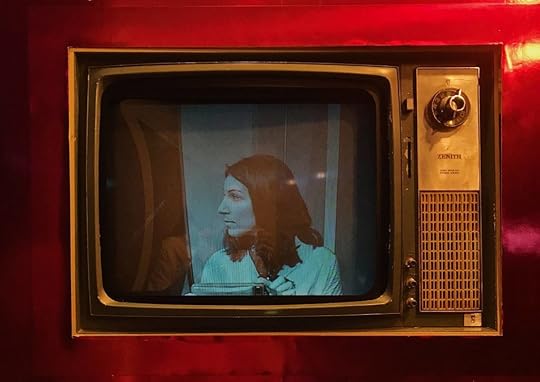
The title of the original large-scale installation, La Menesunda, alluded to an Argentine slang word that refers to commotion or a state of confusion. Minujín collaborated with artist Ruben Santonin, to build “things” – not paintings or sculptures. In the same Tate Modern interview, Minujín discusses the work’s first installation, “We came with an idea that was completely outrageous, to reproduce Buenos Aires from an artists’ point of view. It attracted so many people because the idea of participation was new, it was the first time that it was very successful.” Minujín’s ability to disorient and attract visitors is as real now as it was in 1965.
When I arrived at the New Museum, my colleagues and I quickly walked through the stanchions toward the exhibition, barely glancing at the advisory warning at its entrance. As a museum educator, I assumed the wall text was overly cautious – it was not. We first went up a tiny staircase that led to retro TV screens set into an iridescent red wall. Monitors recorded visitors as they entered the stair’s platform while simultaneously playing newsreels from 1965 Buenos Aires.
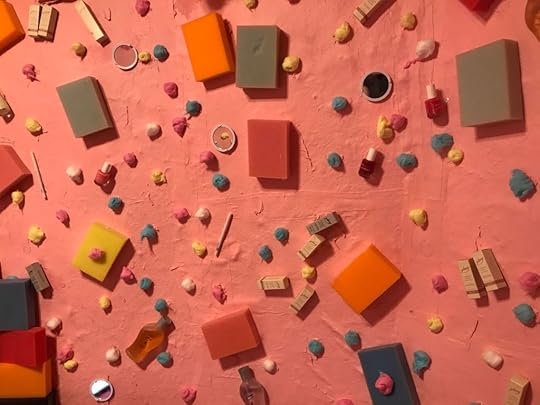
We then moved down into a bedroom where a couple cuddled on a bed at the visitors’ eye level. My colleague could not help asking, “Are you two part of the exhibition?” Like serious performers, they pretended to be oblivious to us despite our intimate proximity. A few more steps down and we were in a cavernous pink room with 1960s cosmetics splayed all over the walls. A beautician asked us if we wanted to get our nails painted or experience a makeover. I opted for the strong Argentine perfume.


August 8, 2019
ART SPACE(s): Black Rock Senegal Residency
The twenty-foot high wooden entrance to the Black Rock Senegal Residency program is an empowering portal for artists from different disciplines, as it allows them to tap into their creativity and experience Dakar, the capital of Senegal; and for several of the 16 artists recently admitted to the residency, it may also be their first introduction to Africa. Initiated by the acclaimed artist Kehinde Wiley, the residency program is designed to highlight designers from the continent and forge an enlightening safe space where they can interact with and react to one another.
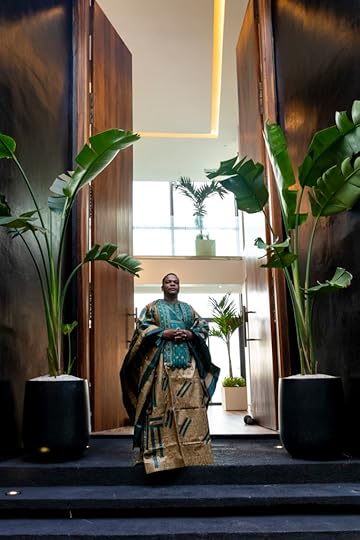 Kehinde Wiley, Black Rock Opening Ceremony © 2019 Kehinde Wiley. Used by Permission. Photographer: Kylie Corwin.
On March 19th, Kehinde Wiley announced the beginning of his Black Rock Senegal artist residency. The artist’s extensive oeuvre, which includes President Barack Obama’s official portrait, pushed the artist to break down walls in the art world and build new opportunities for other artists to flourish. Wiley’s international success affords him a position to support and appreciate emerging or working artists on the fringe of popular culture through this space. According to the residency program’s official mission statement, its goal is to “support new artistic creation by promoting conversations and collaborations that are multigenerational, cross-cultural, international, and cross-disciplinary. Black Rock takes its physical location as a point of departure to incite change in the global discourse around Africa in the context of creative evolution.”
Named after the volcanic rocks that border’s the creative complex overlooking Dakar’s Yoff Bay, the artists will be housed in two of the grey buildings designed by Senegalese architect Abib Djenne. Residents can enjoy innovational cuisine, an infinity pool, language instruction, a stipend, art supplies, and their own studio spaces. Additionally, a base studio for Wiley is carved into the complex, allowing him to take and give inspiration to visiting artists.
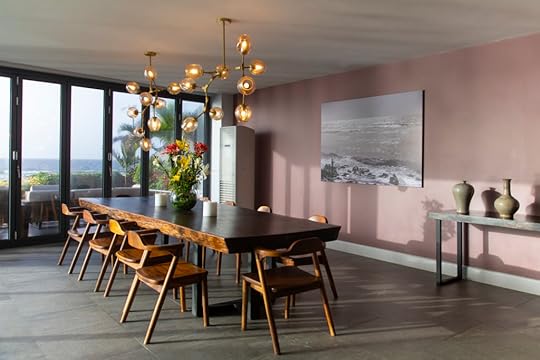 Black Rock Dining Room Featuring Photograph by Dwayne Rodgers ©2019 Kehinde Wiley. Used by Permission. Photographer: Kylie Corwin
With over seven hundred applicants, the selection committee of established and renowned creatives worked together to select the sixteen artists for the upcoming year’s residency program. The panel included artists Mickalene Thomas and Carrie Mae Weems; Thelma Golden, the director and chief curator of the Studio Museum in Harlem; Christine Riding, the head of the curatorial department at the National Gallery in London; Thomas Lax, curator of performance and media art at the Museum of Modern Art in New York; and Swizz Beatz, an artist, collector, and music producer. The sixteen artists chosen for this unparalleled opportunity will rotate from August 2019 to April 2020.
Continue reading at Art Critique…
Featured image: Volcanic Rocks on the Coast Outside of Black Rock © 2019 Kehinde Wiley. Used by Permission. Photographer: Mamadou Gomis.
July 29, 2019
ART HI-LIGHT(s): Fridamania & Art Museums
Apart from attracting increasing popularity in its own right, Frida Kahlo’s evolution from Mexican artist and wife of Diego Rivera to a pop-culture icon has created a fertile landscape for art museums to engage with diverse members of their communities. No other artist seems quite as revered and commercialized at the same time. Where does this intense Fridamana come from?
Kahlo was born in 1907, on the eve of the Mexican Revolution. She identified as a Mestizo: someone of half indigenous and half European ancestry. The artist lived most of her life with her family in a neoclassical mansion, affectionately called Casa Azul; she would return there during her final years. Poor health dogged much of the artist’s life. She contracted polio at a young age, suffered a car/trolley accident, and underwent invasive surgeries that incapacitated the artist for long periods. It was this misfortune that turned Kahlo to painting during the time she spent recuperating.
The artist met her husband, Diego Rivera, while attending art school and was soon married in 1929. While Rivera’s popularity had overshadowed her own in the1930s, the roots of the spiraling trend of people appropriating her work originated in this same period through the pen of Andre Breton. Shortly upon arriving in Mexico, the surrealist advocate became fascinated by her work; after seeing her 1938 painting What the Water Gave Me, he proclaimed her to be a “natural surrealist,” a label she struggled to shrug off throughout her career. During an interview with Time magazine in 1953, Kahlo said, “They thought I was a surrealist, but I wasn’t, I never painted dreams. I painted my own reality.” However, some movers and shakers in the art world used the surrealist tag to make her work more digestible and refined for foreign palates – a Mexican artist for international tastes.
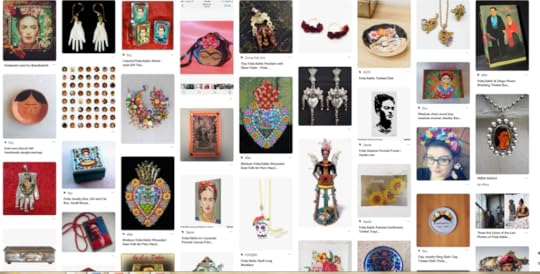
Having been thrust into the international spotlight, Frida began to curate her public image. She chose the aspects of her life others could see and established the filter through which they viewed it – the persona of someone one more Mexican than Mexico. The artist did not want to blend in; she wanted to be seen. Almost all her paintings contain self-representation that ranged in both quantity – some contain several symbolic references while others convey few – and degree of abstraction.
Since her death in 1954, her popularity has steadily risen and has culminated in her status as an icon. She has been hailed by fashion aficionados for her costume, reclaimed by feminists as an edgy woman artist, and adopted by the LGBTQ community for her sexual and gender fluidity – even Madonna has claimed her as a personal hero. In becoming a relatable figure for so many groups, it is no wonder that today we live in a world of Fridomania. Key chains, board books, nail polish, dolls, mugs, shirts, and costumes infused with Kahlomania are just a few of the products people can purchase online or even in their local shopping areas.
Continue reading at Art Critique…
June 26, 2019
ART DEBATE(S): Pay Transparency for Museum Workers
The view of salaries as a taboo subject in the art world may be a thing of the past, thanks to several brave keyboards. Since the end of May, employees in art organizations have continued to anonymously disclose their salaries in a google spreadsheet that aims to provide transparency for the benefit of all museum workers. As of the publication of this article, there are over 2,500 entries from cultural institutions across the world.
The spreadsheet not only tracks the locations and specific institutions but also starting and current salaries. Other employment criteria, such as years of experience, gender, and benefits, have also clarified additional components of compensation through this enlightening resource. According to the New York-based art publication Hyperallergic, Michelle Millar Fisher, an Assistant Curator at the Philadelphia Museum of Art, initiated this crowd-sourced spreadsheet. She was motivated by the efforts of similar organizations – such as POWart, whose mission is to be “the first comprehensive salary survey focused exclusively on the visual arts, spanning the for-profit and nonprofit sectors.”
What is it that drives low museum and gallery salaries, and how can we use this google document to effect change? Art museums are heavily reliant on the private sector for financial support. Government funding for cultural institutions in the United States continues to decline, forcing museums to look elsewhere for funding. While museums are struggling for capital, this dilemma does not explain or justify the pay gap between leadership and other skilled employees working in art organizations.
Art museums have downsized their staff and increasingly outsource jobs that were performed in-house. While contractors charge significantly more than their former staff would, this expediency relieves institutions from the burden of paying annual salaries or providing benefits. Grant or patron-funded temporary positions or fellowships are now standard tools that museums use to populate their workforce. These positions are framed as prestigious but offer the less-than-certain prospect for future employment.
[image error]Photo by Echo Grid. Louvre Museum, Paris.
Securing a position in art museums is exceptionally competitive. There are a plethora of highly educated applicants with graduate degrees in fine art, museum studies, and art history; these job-hopefuls seek employment in one of the few institutions outside of academia that offer it. Many museum workers are often fearful of negotiating salaries. They are concerned about losing a job offer to another applicant with similar credentials, but who is willing to take less due to mounting student loan pressure and the scarcity of jobs. When bringing on new staff, museums will often refer to the lowest salaries of employees working there to lower salary expectations: because they are underpaid for their skill set, the potential candidate needs to be satisfied with less as well.
The growing spreadsheet highlights not only the pay gap between jobs but also the inconsistency in the compensation received for the same job. There are over 135 entries for Assistant/Associate Curator positions with salaries ranging from $27,000 to $90,000. The highest paid employees often work as directors or senior development officers. According to a 2017 survey conducted by the Association of Museum Directors, the average salary of a director was $233,398, while that of a Deputy Director was $142,994.
Low wages in rapidly growing cities that have not come to terms with rising cost-of-living have forced my colleagues to find second jobs on the weekends or creating side-hustles to make ends meet. “I’ve been an adjunct, a nanny, a cook – and lots of other things to support myself,” Fisher explained to Hyperallergic. “All of us in the arts have had to take other jobs, and that will likely always be the case.”
May 23, 2019
ART HI-LIGHT(s): Julio Anaya Cabanding
I came across Julio Anaya Cabanding’s work and immediately fell for his urban masterpieces. Below is an article I wrote for Art Critique that describes his painting interventions, artistic process, and reproduction of “stolen images.”
Spanish Artist Julio Anaya Cabanding challenges the meaning of Western masterpieces by presenting them as displaced trompe l’oeil reproductions in urban spaces. The artist leaves the comfort of his studio to create ephemeral works in abandoned locations; this intentional act alters the traditional artwork’s integral relationship with viewers and the museum. How do art spaces affect a visitor’s perception of the work hanging before them? Cabanding’s painting interventions and photographic documentation question preconceptions of the value of classical works by removing them from the white wall to areas on the fringe – places where they may not be seen at all or only encountered by chance.
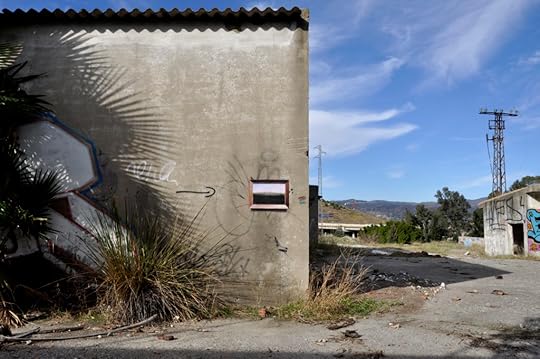 Julio Anaya Cabanding. Casper David Friedrich, Greens to Greifswald Pictorial intervention. Malaga, Spain. 2017
Julio Anaya Cabanding was born in 1987 in Malaga, Spain. At the early age of six, his parents took him to a drawing academy where he drew and painted until he was twelve. After a brief study of geography, he continued his studies of the Fine Arts at the University of Málaga, where he earned his degree in 2018. Shortly after graduation, Cabanding has not only prepared for upcoming fairs and international exhibitions but is also busy with a waitlist of collectors who discovered his paintings through Instagram. The artist is currently in residence at La Térmica cultural center in Málaga.
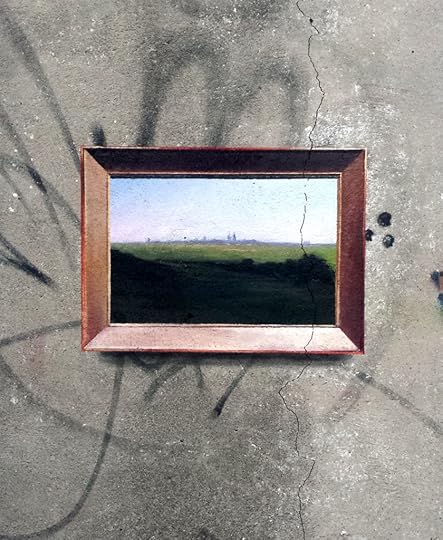 Julio Anaya Cabanding. Casper David Friedrich, Greens to Greifswald Pictorial intervention. Malaga, Spain. 2017
Cabanding explains his choice to reproduce iconic paintings in his artist statement: “I am interested in resorting to these paintings because they are icons of the pictorial tradition and considered works of art that any person, with more or less knowledge of the art world, accepts and identifies as art in capital letters, associated with the great museums and institutions.” He uses street walls and scraps of cardboard to frame the famous artworks. The artist not only pays homage to the masterpiece he chooses but also democratizes them by bringing them into the public sphere.
May 20, 2019
ART SPACE(S): Cathédrale Notre-Dame de Paris
Below is an excerpt of an article I wrote for Art Critique regarding the aftermath of the fire that burned Notre Dame’s wooden roof, spire, and masterpieces. I keep kicking myself for not taking more photographs of Notre Dame’s ceiling or Rose Window during my last trip to Paris.
The lesson to be learned is that nothing lasts forever; we should appreciate the artwork and historical monuments we have, while we have them. The Cathedral of Notre Dame needed saving and restoration decades before the fire of April 15. My hope is that cities with monuments and objects embedded in our cultural heritage can learn from this mistake and finds ways to financially support history.
Although Île de la Cité’s Notre Dame withstood looting, vandalizing during the French Revolution and bomb threats in both world wars, the fire on Monday, April 15 caused the most damage during the cathedral’s 854 years of history. While the cultural heritage site’s most famous relic, a part of the thorny crown that Jesus Christ is believed to have worn during the crucifixion, survived, many masterpieces, including the Rose Window, will need extensive restoration.
Commissioned by the Pope Alexander III, construction on Notre Dame began in 1163. Cathedrals of this caliber often undergo renovations, alterations, and additions as the centuries tick by, creating a pastiche of architectural elements from different centuries. The roof was the oldest section of the monument. Craftsmen built the ceiling from five thousand oak trees during the 13th century; burned to cinders, the “forest of trees” suffered the brunt of last week’s fire.
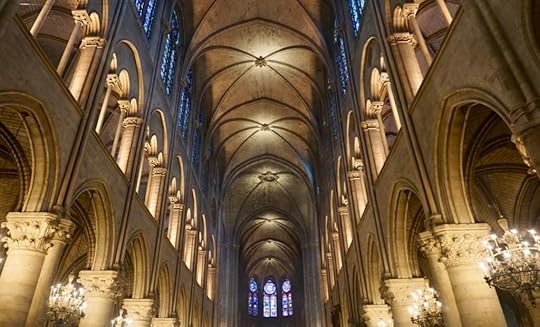
While other artworks and architectural elements can be repaired or replaced, the roof cannot. According to an official that spoke to The New York Times, there are no longer oak trees tall enough in France to replicate the roof. A few prestigious architects are already facing this challenge by submitting proposals for a glass roof or other high-tech solutions meant to, as President Emmanuel Macron said, create a structure “more beautiful than before.”
Perhaps the most dramatic moment of the Notre Dame fire was when the flames reached the wooden spire and met its fiery doom. The original spire dated back to the 13th century but was lost in 1792. It was then replaced in the mid-19-century. Even more damage may have transpired if the copper statues of the Twelve Apostles and four New Testament evangelists had not been removed a week earlier for restoration.
Sculptures along with a series of large paintings depicting scenes from the New Testament’s Acts of the Apostles and the 8,000-pipe organ, suffered extensive water damage during the fire. Officials speaking on behalf of the objects are confident that they will be restored. Accounts differ on the state of the famed Rose window; nets now cover the stained glass panels to limit the destruction. Early reports painted a grim picture, describing the iron casing as melted into the glasswork. More recent details suggest that the damage is less catastrophic, and experts have been consulted for its restoration.
March 13, 2019
ART SHOP: Children’s Edition
After working as a museum art educator for five years, I developed a few favorite art supplies and gift ideas. Nowadays there is a huge STEM (science, technology, engineering, and math) push in public schools. Art museums, prefer to emphasize the STEA(art)M approach – highlighting the interdisciplinary impact art and creativity can have on any career. While concerns increase that artificial intelligence will take over many jobs; creativity is a skill that machines are still unable to replicate.
I believe this passionately: that we don’t grow into creativity, we grow out of it. Or rather, we get educated out if it. – Ken Robinson (Educator)
This post does not focus on a particular age group but for all those young at heart. There should be a little something for everyone who wants to roll up their sleeves, learn something, or make a thoughtful gift.
ART BOOKS
[image error]
Books are a sure way to get those innovative juices flowing. Not only do they help with literacy, but the subject matter and illustrations help form the connections that are vital for creativity. Here are a few interesting reads for young minds.
Women in Art: 50 Fearless Creatives Who Inspired the World by Rachel Ignotofsky
The Great Big Art History Colouring Book by Annabelle Von Sperber
The Art Book for Children by Editors of Phaidon Press
Lines That Wiggle by Candace Whitman & Steve Wilson
ARTIST MASCOT
[image error]
I received this doll from a dear friend shortly after my daughter was born. She doesn’t understand who Frieda Kahlo is yet; but because she has this doll, she knows how to say her name and plays with her. One day, she’ll want to learn more about her. Perhaps my daughter will appreciate the imagination and feeling inherent in her paintings and use that inspiration in her own life. The fabric artist Kahrianne Kerr also makes dolls after pop culture figures, but she makes a great one of artist Yayoi Kasuma. You can also build your doll out of felt or fabric. Artistic mascots work just as well for adults!
ART CONSTRUCTION
[image error]
These are some of my favorite art supplies to use for kids. Some of these items may be familiar to families that frequent family artmaking at museums. The items listed below are affordable, flexible, and most importantly, engaging. While working at many intergenerational artmaking programs, I found that adults were deeper immersed in the activity – dedicating more time than most children to their projects.
Twisteez: Brightly colored sculpture and craft wire akin to pipe cleaners, but not as sharp.
Smart-Fab Fabric: A fun alternative to felt that is more elastic and lightweight.
Model Magic: A non-toxic sculpting material that dries within 24-hours and mixes color well.
SENSORY
[image error]
Making art is not only about painting. Artworks can be composed of sound or found objects. Our ability to remember and learn is heightened by a multisensory approach –involving visual, auditory, and kinesthetic-tactile pathways together. Children stay engaged with an activity if there are various points of entry or different ways of making.
Finger Crayons: Bulbous crayons ideal for the tiniest fingers. They require more movement than regular crayons and are a great way to start learning.
Kinetic Sand: Is a fun, colorful, and less messy approach to sand. Children and adults can build epic sand castles without worrying about gritty hands or finding sand around the house for years.
Sound: When artists like Susan Phillipsz make sound pieces, the focus of the artwork is on the vibrations and experience. The sound is an essential element to many contemporary pieces. Kickstart kids awareness by making them instruments with rubber bands, cans, and cardboard. If you’re feeling less DIY, this set is a great alternative.
*Tip: Try recording the child’s music session and play it back to them.*
EXHIBITION TICKETS
[image error]
Becoming a creative person is directly linked to having new experiences – seeing and experiencing novel ideas, places, objects. A trip to any science, natural history, children, or art museum will give children and their guardians’ food for thought. It may not show immediately, but repeated visits are often the most impactful learning tools. Buying or gifting a museum membership will help spark this curious spirit in the young minds you cherish.
DIY GIFTS
[image error]
Before I had a child, I was an aunt. I often gifted them presents that were more hands-on rather than an action figure or a video game. There are even more options now for DIY packages that develop children’s motor skills, ingenuity, and logic. Some brands offer subscription boxes, but Seedlings products are my go-to brand when it comes to interactive gifts. In gifting these tinkering gifts, you are also gifting a creative experience.
March 8, 2019
ART DEBATE(s): Three “A”s for Feminism
What it means to be a woman has evolved over the centuries and continues to mature. No longer are we or should be defined by our organs, social status, dress, or orientation. To be a woman in 2019 requires tenacity and compassion – solidarity for your fellow women and our steady upward climb to equality in rights, pay, and esteem. Today, I’ll be going over three artful “A”s to spark the feminist spirit stirring in men and women: approach, artwork, and activist. I hope many of you can animate your communities, whether at home or in the streets, to think about how far women have come in their quest for equality and the obstacles still ahead. Fighting!
APPROACH
[image error]Barbara Kruger, Your Gaze Hits the Side of My Face, 1981.
There are several approaches to art history. Scholars often pick a method or two from which they unpack an artwork’s meaning and circumstances – perspectives include formalism, psychoanalysis, and post-colonialism. The feminist methodology arose behind the footsteps of the Feminist art movement that emerged in the 1960s; this lens of art criticism analyzes the visual portrayal of women in art as well as artworks created by women artists. Feminist art critics and historians approach art with different questions in an attempt to realize their meaning both during the time of the artworks’ creation and now. Try being a feminist art historian! Ask yourselves these questions next time you approach an artwork.
Does the artist identify as a woman or a man?
What year was the artwork created and what were women’s social circumstances?
How is a woman’s gaze different from a man’s? How does your interpretation of the artwork differ from those of your friends?
What defines the sexualization of the female figure? What role, if any, does it play in the artwork?
ARTWORK
Judy Chicago is best known for her feminist approach to her art practice. The artist (b.1939) also identifies herself as a feminist, educator, and author. In her revered artwork, The Dinner Party, 1979, visitors can visit this complex multimedia project – a symbolic history of women in the Western world sitting down to break bread together. Her work lays a foundation for women artists, celebrates achievements of other pioneers, and reveals the barriers that still remain.
Chicago began her Atmospheres series at the end of the 1960s. In order to create a spectacular, bold feminist statement, she produced performances made of smoke, flares, and color; these pieces, impossible to ignore, set the deserts of California ablaze with art until 1974. Her Atmospheres work reignited in 2012 but on a larger scale. A Purple Poem for Miami is her sixth art performance in seven years.
The narrative of landscape and land art had been dominated by men,” said Chicago in an interview with New York Magazine. “Atmospheres came from the desire to insert a feminine perspective into the conversation and to soften and feminize the environment.”
In transforming the landscape through her purple nebula, Judy Chicago is sending a message that women have a voice in the contemporary art conversation. The work is part of an exhibition supported by the Institute of Contemporary Art Miami (ICA).
ACTIVISTS
[image error]Guerrilla Girls, Women Get Resentful, 2018.
Since 1985, the Guerrilla Girls, a group of feminist artists, work to confront pop culture, mass media, and art institutions – raising awareness of the too often dearth of diversity and lack of inclusion. Over 50 artists have worn gorilla masks to expose biases and injustice across through humor and spectacle.
Our anonymity keeps the focus on the issues, and away from who we might be: we could be anyone and we are everywhere. We believe in intersectional feminism that fights discrimination and supports human rights for all people and all genders. – The Guerilla Girls
The activist collective utilizes posters, stickers, videos, books, and performance to share their artwork and calls to action around the globe. Over the course of three decades, Guerrilla Girls pointedly revealed the upsidedown world of art and the marginalization of other cultural groups, not just women. Check out the feminist art group’s calendar for upcoming events and exhibitions.
[image error]Guerrilla Girls, The Advantages of Being a Woman Artist, 1987.
Interested in learning more? Check out the links below for people, places, and artworks referenced in this article.
Feminist Art Movement Overview
March 4, 2019
ART HI-LIGHT(s): Jordan Casteel’s “Returning the Gaze”
The Denver Art Museum welcomes home an acclaimed local artist striving for social justice causes, and diversity in portraiture. Returning the Gaze is Jordan Casteel’s first major museum exhibition; it includes 30 paintings ranging from 2014 – 2018. Through these larger-than-life artworks, the artist portrays people in her community and unsung heroes of color. The intense use of line and hue juxtaposed against intimate or revealing settings encourage the viewer to gaze back at the person and empathize with Casteel’s portraits.
Jordan Casteel (b.1989) grew up in Denver Colorado. In 2011, she moved to Decatur, GA to study Studio Art at Agnes Scott College. The artist then went on to secure an MFA in Painting and Printmaking from Yale School of Art, New Haven, CT. Casteel, who currently lives and works out of New York, NY, looked to her close family members and friends as the first subjects of her paintings. When asked why she began to focus on black men in her body of work, she replied, “I felt the world didn’t see and know them as I see and know them: as my brothers, as my father, as friends, as lovers.”
February 28, 2019
ARTIST(s) INTERVIEW: Mathew Tom
I met Mathew Tom’s artwork several years before their creator. My best friend and I were traveling to London to visit another dear friend and talented artist, Radhika Agarwala. Mathew and Radhika were both students in Goldsmiths’ MFA program. We arrived the night of a graduate exhibition opening. While walking around the vast graduate studio space, I was immediately impressed with Mathew’s artwork. I admired how the artist softened the masculinity of his subjects and the delicacy of its composition; it gave me the impression that the sitter could be none other than an intimate friend.
In the picture below, I stand before one of Tom’s paintings from the MFA exhibition eight years ago. The initial series of monochromatic portraits juxtaposed with soft pink hues marked the beginning of his current track as a contemporary artist living and working in New York City; Tom defined his painting style – strong use of shading, concentrated color palettes, and smooth contours.
[image error]Me in front of Mathew Tom’s portrait of Devendra Banhart, 2010. Photograph by Cristina Molina.
Tom’s recent exhibition, Pure Land at the Christine Park Gallery combined his early interest in simplicity with his renewed curiosity in its ability to foster harmony. The artist’s belief in paintings magical ability to transcend religion, language, and traditions is evident through Pure Land. The paintings’ subjects are distilled to their simplest state to create a sense of peace; but in doing so, they also become democratic. The subjects are presented without setting, icons, or references.
The viewer does not know if the painted hand gesture is meant to be religious or if the woman in the portrait is wealthy. Through the subjects pure presentation, the artworks become approachable and relatable – allowing the viewer to rest their gaze without fear that they are missing something. We are open to accept the central image for what it is and to infer what we may. To find out more please read Matthew Tom’s enlightening interview below.
What is your greatest challenge as an artist?
The greatest challenge is simply surviving as an artist honestly. I kind of need everything to be perfect. I need a studio, time, and money. So it’s really a struggle getting all that in place.
How has your recent art exhibition, The Pure Land, affected your practice?
For this exhibition, I tried to simplify my painting practice. Before, I would be focused on combining smaller images to create a complex piece. For these paintings, I did the opposite. I would crop and edit detailed smaller works and then magnify them to change their presence and meaning. I am interested in the idea of a painting as an object of worship. So I thought by simplifying them it might create a zen-like experience.
[image error]Installation View of Pure Land. Photograph by Dan Bradica. Image courtesy of Christine Park Gallery.
What is the concept behind the title of your exhibition, The Pure Land?
I have long been interested in Buddhism – there is a branch called Pure Land Buddhism. By praying to Buddha Amitabha, he will take you to his world, and together with him, you can spend eternity trying to become enlightened.
I think this idea is really interesting – in that there is a place where you can be at peace working towards your goals forever. I wanted to name my exhibition, The Pure Land, as this exhibition represents my heaven. I included all my interests and tried to make a peaceful place through these pieces.
[image error]Stigmata (After Hans Memling), 2018. Photograph by Dan Bradica. Image courtesy of Christine Park Gallery.
Which artists, writers, or events inspire your latest body of work?
Besides making art, my greatest passion is looking at art. I try to go to every type of art exhibition, but my primary interest is classical artworks. I spend hours every day searching through museum collections to find the perfect images. I like to collect these images, and over time, certain ones will still be fresh in my mind. I believe that paintings can have some supernatural power. I think that is why certain images are repeated over and over throughout history. It transcends geography and religion. A pair of praying hands can fit equally in a Japanese woodcut as a German medieval painting.
[image error]Installation View of Pure Land. Photograph by Dan Bradica. Image courtesy of Christine Park Gallery.
How do you develop your ideas into finished artworks (artistic process)?
I believe that painting is very much mystical or even magic. Even though I have a plan coming into each work, as soon as the brush hits the canvas, it gains a life of its own, and I try to contain it. I am always intrigued by how the final painting is always somehow outside of my control.
[image error]Young Woman (After 1930s Chinese Insect Repellent Poster), 2018. Photograph by Dan Bradica. Image courtesy of Christine Park Gallery.
What are some upcoming projects you are excited about?
I will be showing my paintings at the Dallas Art Fair in April so I am excited about having the opportunity to show in Texas. I am curious about the response to some of my pieces there.
[image error]Scholar’s Garden detail, 2019. Image courtesy of Mathew Tom.
More about Mathew Tom:
Mathew Tom received his MFA from Goldsmith in 2011. Three years later, he was the Starr Fellowship Artist-in-Residence at the Royal Academy School, London. Tom currently teaches at the School of the Visual Arts (SVA) in New York and is represented by Christine Park Gallery.
See the links below for more information: