Hidemi Woods's Blog
November 27, 2025
a call from hell
I’ve got voice mail from my mother. Her dismal voice made me creep all over. Since her calls almost always aim to hurt me, I’m used to receiving bad messages. But her tone was new low this time and I had to brace myself. I guessed it was either she conceived a new bitter idea to strike a blow at me or she turned the brunt of her daily anger toward me. Nevertheless, there was a slight possibility that the call was about some emergency, such as my father was taken to the hospital or something. I didn’t want to spend any more nervous minutes worrying what was that all about as much as I didn’t want to return a call. I decided to face the fear and called her back with sweaty palms.
She started with trivial social chattering and suddenly burst into wailing. I couldn’t believe my ear that was hearing my mother crying hard on the other side of the line. I had seen her crying only twice before. The first time was when I was too little to understand the matter. A relative of ours was driving us home from my mother’s parents’ home. While she was talking to him in the car, she burst into tears and he consoled her. The second time was when I failed the entrance examination of a renowned junior high school. She suggested that we took a bath together and started crying in a bath tub, saying, “I’m so disappointed!” again and again. Even as a 12-years-old, I realized how hugely I blew it and I was terrified at my failure. And this was the third time. I was astonished as much.
I asked her what happened, and she confessed that my younger sister had begun to live with my parents. I have no idea why, but she had concealed it from me for about a year. My sister had been my mother’s favorite. Unlike me, she did everything as my mother told her to do. She was the pride of my mother who always bragged about her to me as if it had been a proof that doing as she told was the key to success. That pride of hers had worked abroad in a managing position at one of major hotel chains. But she quit the job and returned to Japan a year ago. Soon after she started living with my parents, the relationship between them got atrocious. My sister blamed my mother harshly for having parted with the land and the house that had been inherited for generations, and for messing up her life by telling her to do the wrong way.
That wasn’t surprised me because those things are the norm for a person like my mother whose lifework is to make people around her unhappy by telling a lie on an every possible occasion she gets. I was rather surprised that my sister had gotten along well with her for such a long time until now without noticing her malice. Then, new surprises easily topped it. My sister’s constant rebukes to my mother didn’t stop just there. According to her, my sister had made her cook, wash, clean, shop, do all chores with authoritative commands. She also had piled up the trash inside my parents’ condo, making it eat up almost all the rooms so that my parents barely had space to sleep. They hadn’t have enough time to sleep either because she demanded that they be up and wait until she came home in the middle of the night. When my sister found anything that wasn’t as she liked, she would throw things or abusive words at my parents.
My mother admitted on the phone, crying, “I’m in hell.” Her countless evil tactics have only led herself to a horrible life so far. Although she married for my father’s money, she failed the family business and lost everything. She sold the family’s big house and moved into a small condo that she had despised all her life. When I met her two years ago, she said, “This is what means ‘as a man sows, so shall he reap.’” in an unusually regrettable tone. I had never imagined her life would have any room left to get even worse than that like this. I wonder when she is ever forgiven. I know she has done too much evil and has been burned by unquenchable fire, but I feel compassion for her for the first time in my life. It’s so pitiful for her if the day she is forgiven will really never come.
But wait. It’s my mother with whom I’ve been dealing here. Don’t forget she’s a world-class liar. No one can tell which part of her story is true and which part is an act. It’s even possible that everything is bogus and simply her new scheme to bog me down in some way. It took me some time after I hung up the phone to come to myself and remind myself of the facts above. I might have fallen for it at least for a while…
Episode from
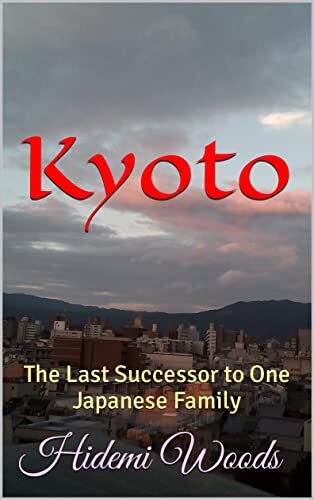
Travel to Kyoto: Singer, Songwriter and Author from Kyoto, Japan by Hidemi Woods


November 25, 2025
Hidemi Woods author
Over the various obstructs, I finally passed through the ticket gate and saw my former high school teacher at the train station. I recognized her right away and she did the same to me among the crowd of passengers getting on and off the train although we hadn’t seen each other in decades.
Even before we exchanged greetings, our hands were squeezed in one another’s. We settled in a cafe in front of the station. The long gap dissipated instantly and we were talking as we had been in a high school classroom. We talked about what we had been doing all these years to catch up. As I listened to her, I realized why she was a rare teacher with whom I got along oddly well in my high school days and why I had kept in touch with her by Christmas cards. She was a person who was similar to me.
When I talked about how I had turned my back on Japanese music industry and moved my business to US, she easily understood. She also once looked for a way to get out of Japan and live abroad. It didn’t happen because her work, teaching Japanese classic literature, wasn’t so global-oriented. Just as I’ve felt, she felt her way of thinking and living didn’t fit well into Japanese intolerant society.
One example was that she wanted to keep and use her last name instead of her husband’s when she got married, but the Japanese law didn’t allow it. She had patiently waited for the new bill to be enacted, only to see it revoked every time. She wearied of Japanese inclination to disregard differences and couldn’t agree with implicit pressure to be the same as a Japanese. I wasn’t sure if it was the reason but she said most of her past students with whom she still got in touch lived abroad at one time or other like myself.
Now I knew we were alike, and we had suffered from the same thing in the different field. She listened to me so joyfully while I was talking about myself, but that grave fact lingered on in my mind – I haven’t achieved anything. I had nothing to show off, and didn’t have audacity to forge stories. What I was telling her was all true in which there was no success. I couldn’t wipe off the thought that I might be disappointing her, in this very moment. I had brought my first physical book, ‘An Old Tree in Kyoto’ as a gift for her since she was my literature teacher. I only could do that much. When I handed it to her, she was very pleased.
Actually, she was pleased so much that she asked me to inscribe the book for her. Up until the point to meet her, there were too many incidents I panicked at, but none of those was in this magnitude. I seriously panicked. I had never inscribed a book before, let alone I had never imagined that would happen to me. The day came without any warning, out of the utter blue. I couldn’t think of anything, and absolutely had no idea what to write. She said gleefully, “Write something.” I froze. I just couldn’t figure out how to do it.
I tried to remember the scenes of a book signing in the movies and TV dramas. An autograph, that was what I came up with. Sadly, I didn’t have mine as I’m too obscure. In conclusion, I had nothing worthy to write. I said to her apologetically, “I don’t have an autograph because I’m not famous.” In contrast to my grave note, she replied frankly, “Oh, no, no, I’m not asking for your autograph. That’s okay.”
I was cornered. An inscription is supposed to be meaningful because of someone’s achievements. In my concept, it’s not what an unimportant person gives. I noticed sweat slowly came down to my brow. I held a pen in my hand, my book before me, still as a stone. There was no escape. It was time to throw away all the remaining pride I had clung to and confess. “Teacher, neither my music nor my book sells. I’ve never inscribed a book. I’m completely nobody.” Although I uttered it on the verge of crying for embarrassment, she gave me a vacant look as if she didn’t get what I was talking about. “I don’t care,” she said. “I just want you to write something on your book to commemorate this incredibly happy day of mine.” Her eyes were twinkling with sheer joy.
I made an inscription with my trembling hand. I was too tense and nervous to remember what I wrote. I can’t recall to date while I have a vague memory of scribbling her name, something about remembrance of a happy reunion, the date, and signing Hidemi Woods. What I remember vividly is the sensation I had when I finished writing. I felt as if I had officially become an author and that book signing was its ceremony. I handed back my book to my teacher, weirdly confident like a different person.
We said goodbye at the ticket gate of the train station. When I was leaving, she said, “If I were your parent, I would be very proud of my daughter.” After the decades’ gap, she taught me something again…
Episode from
Travel to Kyoto: Singer, Songwriter and Author from Kyoto, Japan by Hidemi Woods
November 22, 2025
Locked up in The Hospital

Nephritis confined me in the hospital during the summer break when I was in the fourth grade living in Kyoto, Japan. Although I didn’t feel so sick, the doctor ordered me to be inactive all the time. Inside a six-bed pediatric ward and a hallway between the nurse station and the hospital kitchen was the allowed portion for me to move around. When I needed to go beyond it, a nurse put me in a wheelchair. Within a couple of days, I thought I would be bored to death, not from nephritis. I walked back and forth along my restricted stretch on the hallway many times a day, which also bored me quickly. One of my daily routines was to go take a tray meal of an unseasoned diet three times a day from the hospital kitchen on the furthest end of the allowed stretch. Next to the kitchen was a small recreation room that was carpeted and had a television. Watching TV was banned for some reason, and I used the room to blow bubbles. My mother brought me a bubble blower on one of her visits and I played with it out of the ward window. One day, I found out that bubbles remained for some time on the carpeted surface and that fascinated me. I blew as many bubbles as I could on the carpet in the recreation room and got me surrounded by glittering bubbles. I was obsessed with it as the room looked like a dreamland or heaven. That became my main pastime during my lockup and made the carpet so soggy and drenched that nobody could sit on it anymore.
One night in those hospital days, I woke up to the disturbing noise in the small hours. Doctors and nurses were hastily coming in and going out of my ward. They gathered around a girl whose bed was right across mine. She uttered in a faint voice, “It hurts, it hurts.” repeatedly. The curtains had been drawn around her bed and I had no idea what was going on, but at least I sensed something bad was happening to the girl. Next morning, I found her and her bed gone somewhere. I asked a nurse where she went, and she told me that the girl moved to a two-bed ward on the same floor. I understood that the number of beds in a ward corresponded with the patient’s condition. The fewer the beds were, the worse the condition was. A chart was made in my head. If a patient in a six-bed ward recovered, the one would be released from the hospital. But if a patient got worse, the one would be sent to a two-bed ward. And if a patient moved to a private room, the one would be close to death.
Out of boredom and curiosity, I decided to explore the further back of the pediatric floor. I sneaked into the banned area beyond my allowed stretch of the hallway. I turned the corner over the hospital kitchen for the first time. There was also a long hallway with wards on both sides, but it was a lot different from the one in front of my ward. Probably because it was far from the nurse station or the kitchen, this hallway was oddly quiet. It was completely empty with nobody walking and as still as a picture. Tense air filled the stretch like down the hallway in that hotel in ‘The Shining’. A room number and the name of the occupant were put up beside each ward door. I slowly walked along the two-bed wards and further down to the section with the private rooms. Although I was just walking down the hallway, a strange fear had gradually grown inside me that I was walking toward death, closer and closer. Then, a name tag on one private room caught my eyes and I froze on the spot. It was my name written on it. I gasped with surprise, confusion, and horror. I couldn’t grasp what it was. Had my private room been already prepared secretly? Was I being moved here soon? Had my condition turned so bad? I peered at the name tag with my heart thumping hard, and noticed one of the Chinese characters used for the name was different from mine while the pronunciation was the same. The patient had the same name as mine with one different Chinese character. Instead of relief though, I felt I saw what I shouldn’t have seen…
Episode from
The Japanese Girl’s Days: Locked up in The Hospital by Hidemi WoodsNovember 20, 2025
a heavy gate
On the day that I would meet my former high school teacher for the first time in decades, I commenced a journey by train from the hotel I stayed to the station of our rendezvous.
I had made a detailed plan beforehand for this train trip since quite a few transfers were involved along the way and the area was unfamiliar to me. I took the first train and repeatedly looked over the note I had taken for which train of what time at which station to catch. The plan was perfect.
Now that I got on the first train right on schedule, all I needed to do was just moving the rest of the way according to the note. The train arrived at the station where I was to make the first transfer. I was standing in front of the car door to get off when the train stopped. Oddly, the automatic door wouldn’t open. I was waiting for a while until I heard the departure bell ring and noticed a sign saying ‘This Door Doesn’t Open. Use One at Opposite End of Car’ I panicked instantly. The train was about to depart and I had to reach the opposite end of this long car. I dashed down the aisle like a sprinter while all the passengers were startled at my frenzied run. I was barely in time to get off. As I passed a close call of the day, I transferred to the other train line with a relief.
Then, the bigger trial assaulted me on the platform of that line. An electric board that shows the upcoming trains in the green light had turned all red. It indicated that all the trains were delayed severely by heavy rain and the next train was cancelled. My jaw dropped. I didn’t see that coming as it wasn’t raining at all here.
Plus, the next train that had been cancelled was the very train I was going to take. What are odds that the exact train I was taking is the only train cancelled among all? Taking that train was crucial because I had more transfers to make on the way ahead. Missing that train would disrupt the whole connections. A big piece to complete my journey fell off and my perfect plan came to naught unexpectedly quickly.
Now I was officially in a panic mode. I tried to come up with an alternative, thinking hard about which train to take instead and where to transfer to get to my destination. When I frantically looked through information boards on the platform, a delayed, out-of-schedule train came in. Its destination was a big famous terminal that I thought would take me somewhere from. I hopped on it, and found out that the train to which I was going to transfer later would also stop at the terminal.
If I had caught it there, I still could have made it on time for the planned appointment. As soon as the train arrived at the terminal, I was a dashing sprinter again, rolling down and up the stairs to move between the platforms like a cartoon character. When I zipped by a businessman in a flash in the middle of a flight, my bag somehow caught his umbrella. I found myself running dangling an umbrella. I ran down to him who gaped at me, returned his umbrella, ran up again, reached the platform and jumped in the train.
Inside, I realized that the train wasn’t what I had planned to take but the one happened to be there after a few hours’ delay. It didn’t depart on schedule, which meant I didn’t have to dash around the terminal like a maniac. This unknown train turned out to go straight to my destination without transfer. In a very weird way, I made up for the disruptive schedule with each delayed train and arrived almost on time.
I stepped out of the train, completely exhausted. I wondered why I had to endure great hardship like this in order just to reunite with my former teacher. It wasn’t such a long distance. I simply wanted to see my teacher and bridge the decades’ gap. It was supposed to be easy, but it wasn’t. I saw the reason why I had never tried to see her up until now. I wasn’t brave enough to show myself to her. I had believed I ought to be successful when I met her again. I hadn’t had the courage to admit that I haven’t achieved anything and I was still nothing. To see her, I needed to verify what I’ve done in my life so far and get over my foolish pride that I had held onto for a long time.
In this trip, I challenged it. This trying journey to see her signified a long difficult way to accept who I am. I struggled around, but reached after all in an accidental way. Over the ticket gate at the station, I spotted her waiting for me smiling…
Episode from
Travel to Kyoto: Singer, Songwriter and Author from Kyoto, Japan by Hidemi Woods
November 18, 2025
a long journey
I have been estranged from my friends for a long time. There are only three people with whom I keep in touch by a Christmas card once a year. They are my kindergarten teacher and two high school teachers. I feel a lifelong obligation to those three for each reason.
I came across one of the two high school teachers when I was a senior. She had just graduated from a university and started teaching at my school as a new teacher. She taught Japanese classics and I was one of her first students. The Japanese classics class consisted of a mere dozen students who selected the subject to prepare for the entrance examination of a university or a college. As the class was unusually small and the new teacher was young and friendly, it soon became like a big family. It was as if we had a weekly family gathering that happened to have a specific topic of Japanese classics, rather than a school class.
In my dismal and miserable high school life, the class was a chink of light. It was the only place at school where I could breathe and came to life. I took the initiative in having fun. Mostly my target was the new teacher. I pulled various pranks on her at every class, such as all students hid in the cupboards and she walked in the empty classroom, perplexed.
On a perfect sunny day, I suggested having the class outside and she taught us in the schoolyard like a picnic. I tried what hadn’t been done at my school before and she just cracked up every time. It seemed I was really good at making her laugh.
The whole class eventually laughed all the time, and the old strict teacher who had her class next room often came in to tell us to shut up. She sometimes called my teacher out to the hallway and reprimanded her.
Nevertheless, my teacher never hushed us, and continued laughing at my jokes and having fun together. She helped me with those bright hours in my dark last year of high school and I’m thankful for that forever. She quit and moved to the other school when I graduated.
We have exchanged New Year cards or Christmas cards ever since. While I write simple season’s greetings on them, she somehow knows and writes what I want to hear most. For instance, toward the end of the year in which I’d had a hard time and felt discouraged, her Christmas card said ‘Hang in there! Things are turning better!’ and made me wonder how she could ever know.
We somewhat have a lot in common with the way of living, too. In those years, most Japanese women got married and quit working when they did. While I work and stay single, she also continued teaching at school and didn’t change her last name to her husband’s when she got married as the Japanese tradition goes. Without seeing her in decades, I’ve felt strange bond with her.
Last year, my parents moved and their new address startled me. By pure coincidence, it’s weirdly close to the teacher’s. I mentioned about it on the Christmas card to her and then things developed quickly. During my latest trip for a visit to my parents’, we had a chance to meet each other for the first time since I was a teenager.
The hotel I stayed in on the trip was located in Osaka because I flew in this time instead of using a train. From Osaka to the station we would meet though, it was a two-hour train ride with several transfers. It would be a long trip but we would bridge a decades’ gap in two hours.
I thought of the gap, and suddenly came to myself. Shouldn’t a reunion with one’s former teacher be an opportunity to show some achievement for gratitude? I had forgotten about it because the process to this meeting had strangely gone smoothly as if it had been happening automatically out of my will. I had tried and worked hard all those years, but achieved nothing, no money, no fame. I recalled I had said to her that I would become a musician when I last spoke to her. During the course of life, I did. But that’s it. I haven’t gotten anything to show to her. I wondered if our reunion might be an embarrassment where a teacher would see her student’s unfruitful result of many years…
Episode from
Travel to Kyoto: Singer, Songwriter and Author from Kyoto, Japan by Hidemi Woods
November 15, 2025
The Singer-songwriter

My childhood diet was very healthy. That may be the reason why I was such a skinny kid, contrary to how I am today.
I was born in a farmer’s family in Kyoto, an old city in Japan. My family used to be almost self-sufficient. We mainly ate the leftover vegetables of eggplant and spinach that weren’t fit to be sold at the market because of flaws. We also planted rice and other vegetables such as onions, potatoes, carrots, radishes, burdocks and green peppers, not for sale but exclusively for our daily meals. We kept barnyard fowls that provided fresh eggs every morning. Our breakfasts and lunches were almost always row egg mixed with rice and soy sauce, pickled vegetables and too-weak miso soup.
A natural life may sound beautiful and relaxing, but it’s not in reality. Our fowls would holler screaming crows at dawn every day which would induce the clamorous barking of dogs in the neighborhood. Sometimes, one of our fowls that I named and fed every day like my pets was missing, and we had chicken on the table at dinner that evening. It took time for me to realize I was eating my pet fowl while I was worried about its whereabouts. Sometimes, I did witness my grandfather choked and plucked our fowl.
Since we didn’t have to buy vegetables, we had large servings at meals. Unfortunately, all vegetable meals of ours tasted horrible because we had to pay for seasonings or cooking oil and we were stingy enough to refrain them. Everything on our table was flavorless and bland. It never stimulated my appetite and I stayed skinny. As time passed, shops had been appearing in the rural area around our house. Also, my grandfather began to loosen his tight reign of the household and my mother had been able to have some discretion to go shopping and spend money. Our self-sufficiency was rapidly falling. Foods from outside tasted awesome. My appetite finally came out of its long hibernation. I was hooked by ham and mayonnaise in particular, and became chubby in no time.
Of all the terribly-tasted foods that my grandfather had long eaten, he picked yogurt as the worst. When he saw my sister eat it everyday, he asked for one out of curiosity. He said he had never had such an awful food in his life. After I left home for my music career and started living by myself in Tokyo, he often asked my father to take him to my apartment that was far from Kyoto. He wanted to see what was like to live alone there. My father didn’t feel like taking on such a bother for him and used a clever repelling. He told my grandfather that I was eating pizza everyday in Tokyo.
Of course he knew both that I wasn’t and that my grandfather didn’t know what pizza was. He explained to my grandfather that a food called pizza was oily round bread covered with sour sticky substance called cheese that was stringy and trailed threads to a mouth at every bite. And he added a threat, “You would eat that thing in her small apartment. Can you do that?” My grandfather replied in horror, “Why should I eat such a thing rotten enough to pull threads? I can’t ever go to Tokyo.” That pizza description cleanly stopped my grandfather’s repetitive request.
When I returned home for a visit once, my grandfather asked me a question at dinner time. Pointing the four corners of the dining room and drawing invisible lines in the air with his chopsticks, he said, “Your entire apartment is merely about this size, isn’t it?” As I replied it was about right, he asked, “How come you chose to do all what is necessary to live in such a small space and eat stringy rotten foods with threads although you have a spacious house and nice foods here? Is music worth that much? I don’t understand at all.” He looked unconvinced. As for me, while I had a certain amount of hardship, I had a far better life with tasty foods and freedom compared to the one that I had had in this house. Nevertheless, I didn’t utter those words. I said nothing and pour sake for him into his small empty cup, instead.
Episode from
The Singer-songwriter: How a Japanese Girl Became an Artist by Hidemi Woods [Click to Buy at Amazon.com]November 13, 2025
a demon’s new home
I visited my parents for the first time since their financial difficulty made them sell their house and move into an old condominium. It situated only two train stations away from Kyoto but in the different prefecture, which meant they were kicked out of their hometown too.
The moment I met them there, I noticed a big change. Both of them had turned into different persons. They used to be grumpy, gloomy and nagging all the time. But now, they were cheerful and lively. It was as if demons living inside my parents had departed and they regained consciousness. I felt like I saw my good old parents whom I’d known when I was little for the first time in decades. Even their faces had been changed somehow.
My father was raving about his days of exploring his new town with childlike excitement. As he had been raised and lived as a successor of the family that had continued for generations on the same land, he had never imagined moving to a different place let alone actually moved out of the house. He moved to a new place for the first time in his life and realized how comfortable it could be. Because our house had stood in an old uncivilized area of Kyoto, everything here seemed modern and incredibly convenient to him. He rapturously talked about his new daily life of shopping at a discount store and eating at McDonald’s. He even mentioned that he intended to start new hobbies such as drawing or English conversation. I had never seen him so positive. It seemed he enjoyed his first freedom.
My mother also talked about how much she liked the view from the balcony and how convenient to live in a compact apartment instead of a large house she used to live in. Only, she added every time lamentably, “But I had never imagined myself ending up my life in a small apartment.”
I know too well how far the reality diverged from her plan. As a young girl, she planned to live a rich life whatever it took. So she got married with my father whom she didn’t love, and endured living with and taking care of my grandparents, all for money. In return, she believed she would live luxuriously in a mansion until she died.
When I was a child, I often heard her say, “How stupid women who marry for love are! They live in a small apartment. But look where I live!” As it turned out, though, she found herself living in an apartment, being old without either love or money. “I should reap what I have sown,” she murmured with a cynical smile.
My new changed parents didn’t attack me, which they used to do every time. Not a single complaint came out of their mouths. When I was leaving, my mother looked as if she would miss me. My father walked with me to the train station to see me off. In addition, he slipped me some money and told me to eat something good with it. All those things couldn’t be explained unless demons stopped possessing them.
I got on the bullet train from Kyoto toward home and uttered “I’d like to come to Kyoto again.” That was what I’d never said before in my life. But I should have been careful about a wish. My wish to travel to Kyoto came true too quickly.
The very next day I returned to my apartment, my partner’s brother called him to let him know his father passed away. Since his father also lived in Kyoto, I traveled back to Kyoto with my partner for the funeral only two days later. And then, three weeks later, I went down to Kyoto yet again with my partner to place the ashes of his father in the grave. I decided never to say ‘I’d like to go to Kyoto’ ever again.
After his father’s death, my partner’s brother suddenly changed from a tender and modest man to a completely different person. He came up with a scheme to have a small inheritance all to himself, instead of dividing it with my partner as his father had told to. A demon which left my parents chose him as its new home and moved in…
Episode from
Travel to Kyoto: Singer, Songwriter and Author from Kyoto, Japan by Hidemi Woods
November 11, 2025
the crane
The hotel I checked in on my trip to Kyoto gave me a discount coupon for the buffet breakfast and I had it next morning at the restaurant. The buffet had Japanese expensive dishes in addition to the familiar Western breakfast dishes, which made up the most luxurious buffet breakfast I’d ever had.
As there were many foreign guests around, it produced an international atmosphere. One of the walls of the restaurant was the glass window from the ceiling to the floor. Beyond it was a small Japanese garden that had a pond with many red-and-white-colored koi fish.
When I was eating delicious breakfast and thinking I hadn’t known that Kyoto had a fabulous place like this, something out of the window caught my eyes. A tall, sleek, beautiful crane came flying from somewhere and landed in the garden. Its height was about half of mine and its color was mainly white mixed with silver and black. It stood just five feet away from me separated by the window, watching the koi fish in the pond with its cool eyes. I was close enough to see each of its feathers clearly. I had never been this near to a crane before. It didn’t try to fly away but stood still majestically.
There’s a myth in Japan that a crane lives one thousand years. Since it is regarded as the embodiment of celebration, kimonos for a wedding or the New Year have crane patterns. The crane standing in the garden also looked as if it had lived for a long time and the restaurant was somehow filled with a sense of awe in the air.
Because this trip was the first one after my family sold and left its land that had been inherited from my ancestors over for one thousand years from generation to generation, I felt the spirit of the land finally got freedom, took the shape of the crane and flew away. And it came here to say goodbye to me. I was convinced that parting with the land was the right thing to do. It set each of my family free after all.
The crane kept staring at the koi fish a long while and suddenly crouched as if it decided to pounce. I was thrilled to see if it would eat expensive colored koi fish that often cost thousands of dollars, but it returned to its previous calm position and stood straight. It repeated those moves several times and then flew away without attacking the koi fish. Goodbye, gorgeous crane. Goodbye, my ancestors’ land and its spirit.
I was going to visit my parents on that day. Visiting them usually ends horribly and I had been quite worried about it this time too. But seeing the crane was auspicious and made me feel that the visit would go well. After the mystic breakfast, I was headed for a strange town where the condominium that my parents had moved in located…
Episode from
Travel to Kyoto: Singer, Songwriter and Author from Kyoto, Japan by Hidemi Woods
November 6, 2025
the new Kyoto
Kindle and Audiobook available at Amazon.com
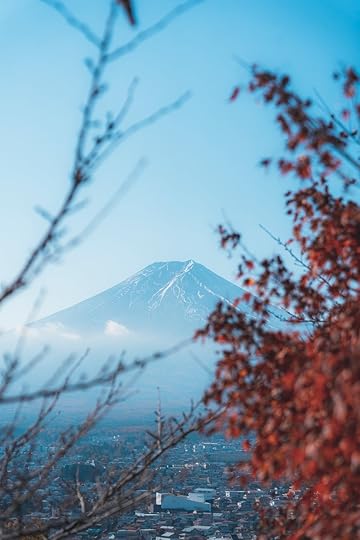
When I spent 40 minutes aboard the bullet train bound for Kyoto from Tokyo, an alarming notion popped into my head. “Did I miss Mt. Fuji?” It’s around this time that Mt. Fuji comes into view closely in the bullet train window.
Somehow Mt. Fuji is a special mountain for Japanese people. It’s said that seeing the first sunrise of the year from the top of Mt. Fuji brings a happy new year. Many of them want to climb it once during their lifetime. They regard it as something holy and good luck.
I myself try to see it every time I take a bullet train to Kyoto, and pray to it for a good trip. It was cloudy and rain looked imminent on that day of my latest trip to Kyoto. Whether the train already passed Mt. Fuji or it wasn’t visible because of thick clouds was uncertain. The outcome of the trip depended on Mt. Fuji. I felt that this trip might end terribly if I couldn’t see it, and I looked for it frantically.
“There it is!” Above the dark clouds, its top section poked out clearly. “I see it! A nice trip is assured!” I was relieved and in high spirits. While I jinx it when I don’t see it, however, I’ve had horrible trips even when I saw a clear Mt. Fuji. Although I duly understand an outcome of a trip doesn’t have to do with whether I see it or not, there’s a reason why I’m nervous enough to pray to the mountain.
A trip to Kyoto means homecoming and meeting my parents. Three out of every four visits, they give me a hard time. They insult me, deny me and complain everything about me. I sometimes feel my life is in danger when I’m with them because of their relentless attacks. Not to be strangled by them while I’m sleeping, I avoid spending the night at my parents’ home and stay at a hotel instead.
I would rather not visit and see them, but I know it would make things worse. I couldn’t imagine how this particular trip would go especially as it was my first visit since my parents sold their house. They could no longer afford to keep their large house and its land inherited by our ancestors. Their financial crunch made them sell it where my family had lived for over 1000 years. They moved out to a small, old condominium outside Kyoto.
Thinking about the situation they were now in, I couldn’t imagine their state of mind other than being nasty. The bullet train slid into Kyoto Station after two and a half hours. I stepped out on the platform for the first time as a complete tourist who didn’t have a house or a family there. To my surprise, Kyoto looked different. I couldn’t tell what and how, but it was decisively different from Kyoto I had known. It used to look grim and gloomy as if it was possessed by an evil spirit. But now it was filled with clean fresh air and looked bright. I would see all but mean people, but they also turned into nice people with smiles.
I checked in a hotel and looked out the window. Rows of old gray houses were there. I used to think Kyoto was an ugly city with those somber houses, but I found myself looking at even them as a tasteful view. I’d never thought having the house I grew up in torn down and parting with my ancestor’s land would change the city itself altogether. Or maybe, it was me that changed…
Episode from
Travel to Kyoto: Singer, Songwriter and Author from Kyoto, Japan by Hidemi Woods
October 30, 2025
a wise shopper
I’m always impressed by the size of houses that appear in TV shows and movies of U.S. Even when the setting is for a poor family, they live in a mansion by Japanese standards. That’s why the story is often confusing when the house tries to tell how much its inhabitants go through hardship. Japanese people live in tiny space as much, including myself of course.
One of my favorite pastimes is bargain-hunting. I like searching for goods that are marked down by 80 percent or more and getting them. When I’m out for a store, I keep my eyes peeled for a cart or shelves of bargain items and pounce on like a hyena. Those items usually have a small sticker of the discounted price over the price tag where the list price had been shown. Some of them have a layer of numerous stickers as they got discounted more and more repeatedly. I peel the sticker off carefully to look at the former list price and to see how much it’s reduced. Sometimes the reduction is huge, which means I hit the jackpot. Imagining there are people who got it at the list price, I feel like I’m a wise shopper and it would be foolish if I didn’t get it. So I buy things dirt cheap, most of which are clothes.
Back in my apartment, I squeeze the catch into my closet. The closet is already full with those discounted items and hangers are no longer necessary for my clothes because they are sandwiched each other too tightly to drop. I use many cardboard boxes to store my stuff that make my tiny apartment even smaller. My apartment doesn’t have a walk-in closet, but it seems like my apartment itself has turned into one and I live inside it.
I can’t throw them away because it would make a profit of a discount a loss. A number of my cardboard boxes are growing and I don’t catch up. I can’t find one particular item when I really need it. Although I know I have gotten it and stowed somewhere, I rummage around and just can’t find it. And that item shows up from somewhere when I least need it. And it’s gone again somehow when I need it. As I repeat that, I can’t tell why and what for I got it in the first place.
The other day, I made a firm resolution to clear some space in my apartment by putting my stuff in order closely. It was a troublesome job but I tried to make my apartment bigger and look better. It worked to some degree and my living environment was improved a little. Only a few days later, I needed a scarf when I was going out. And I couldn’t remember which cardboard box I had stored my scarves in and where I put the box. I again pulled back out numerous boxes and opened them. I couldn’t find it. All my scarves that I had collected through the years by bargain-hunting was sucked into a black hole in the galaxy far, far away and disappeared. I wonder how many years will pass until I see them again…
Episode from Hidemi Woods
Visit HidemiWoods.com