
Kari August's Blog
January 25, 2017
Rocky Mountain National Park
Rocky Mountain National Park received a record number of visitors last year, which makes any environmental regulations that will be dropped even more scary.


The Loop
Thank goodness there will be a couple more election cycles before the first shovel is dug for the new approved loop. The fact that the council rejected allowing a public vote on the issue tells all the nasty details one should know. Visit www.estestruth.org for information and to express your opinion.
January 31, 2016
Here are the top reasons to visit Estes Park this winter:...
Here are the top reasons to visit Estes Park this winter:
You have the place virtually to yourself
You get great reductions on hotel rooms
The place has not been ruined by the loop yet
You have the place virtually to yourself
You get great reductions on hotel rooms
The place has not been ruined by the loop yet
The Stupid Loop
The proposed loop project for diverting streets in Estes Park into one way thoroughfares is now being considered for its impact on the environment. If approved, funding should be an issue especially concerning changing the bridges into flood proof structures. Yippee, anything that can stop this insane project so that the charm of Estes Park is ruined by their miniversion of a big city beltway I applaud.
September 21, 2015
Thanks for the support
The Arrival of Richard III is selling now to fans of Estes Park and the former King. I appreciate it!
The Loop
Can anybody seriously be interested in the new traffic pattern? The congestion it will supposedly relieve is minor compared to what most tourists experience in their home states. Leave the place be.
July 4, 2015
The Arrival of Richard III is now available at Amazo...
The Arrival of Richard III is now available at Amazon books and at MacDonald's bookshop in Estes Park. Fans of Estes Park and the surrounding region should enjoy the familiar mentions in the novel.
The Arrival of Richard III
The Arrival of Richard III is a romping tale set in Estes Park in which medieval and modern man comically clash. Read more:
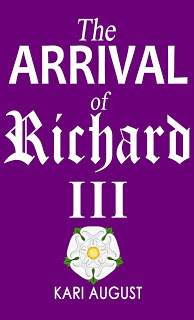 God owes King Richard III a favor. He chooses to travel to the twenty-first century to repair his reputation. After more than five hundred years of Tudor-inspired propaganda, Richard's name is in tatters. Reviled for crimes he never committed, he has his work cut out for him. He needs help and decides his distant cousin Ned York is just the person to assist him.
But mild-mannered Ned has problems of his own. Recently fired from his prestigious law firm due to a mistake by his ex-girlfriend, Ned is trying to figure out what to do with his life. The last thing he needs is some cousin he's never met, with a wacky story to tell, arriving at his doorstep in Estes Park. Nevertheless, Ned finds he is unable to resist Richard's plea for support and begins an adventure that turns his life even more upside down . . . while discovering Lindsey, the love of his life.
If only Lindsey can get around the fact that she thinks Ned is a little kooky. After all, Ned has now become convinced that Richard is actually the real king come back to life.
 God owes King Richard III a favor. He chooses to travel to the twenty-first century to repair his reputation. After more than five hundred years of Tudor-inspired propaganda, Richard's name is in tatters. Reviled for crimes he never committed, he has his work cut out for him. He needs help and decides his distant cousin Ned York is just the person to assist him.
But mild-mannered Ned has problems of his own. Recently fired from his prestigious law firm due to a mistake by his ex-girlfriend, Ned is trying to figure out what to do with his life. The last thing he needs is some cousin he's never met, with a wacky story to tell, arriving at his doorstep in Estes Park. Nevertheless, Ned finds he is unable to resist Richard's plea for support and begins an adventure that turns his life even more upside down . . . while discovering Lindsey, the love of his life.
If only Lindsey can get around the fact that she thinks Ned is a little kooky. After all, Ned has now become convinced that Richard is actually the real king come back to life.
June 25, 2015
Why Rocky Mountain National Park is Unique
Rocky Mountain National Park is one of the most beautiful places on earth. With a rich history and rare wildlife, the park has more to offer than just outstanding views. Below are the top five reasons Rocky Mountain National Park is unique.
One: RMNP is one of the oldest parks in the United States. In fact, 2015 denotes the park's one hundredth year anniversary. As with other national parks, the formation of RMNP was not without its controversies. Land valued for mining, logging and cattle ranching, besides containing private properties, did not easily become a national park without a battle.
Two: The rare boreal toad and "special" trout exist in the park. Once considered extinct, a population of greenback cutthroat trout was discovered in the Big Thompson River of RMNP in the 1950's. Now Colorado's state fish, an effort to repopulate Colorado's lakes and streams has been underway for years. Okay, there have been some mishaps and confusion surrounding the greenback. In fact, recent genetic research has revealed that the only true population of greenback trout live in a creek southwest of Colorado Springs. Luckily a hotel owner in the 1880's stocked the waterway for tourists with the species. So now the trout in RMNP might be reclassified. But the park still plays host to a variety of unusual flowers and fauna, such as pikas who cannot survive at temperatures above seventy.
Three: The longest, highest altitude highway in the United States is in Rocky Mountain National Park. Trail Ridge Road, built in the 1930's as part of Highway 34, spans approximately fifty miles between the towns of Estes Park and Grand Lake through the park. With an elevation reaching over 12,000 feet, it winds its way through tundra and crosses the continental divide. Closed in the winter due to snowdrifts sometimes exceeding twenty feet, the road is a delight for summer visitors. A few words of warning if you plan to drive the road. Leave early, at least before ten, during heavy tourist months and do not go if breathtaking heights and views make you squeamish.
Four: RMNP respects the sounds of silence. One just has to love the local League of Women Voters who pestered the federal government relentlessly until finally in 1998 touring aviation over the park was banned. In fact, RMNP is the only national park where tourist choppers and small planes are not allowed to intervene with the sounds of nature. Only higher flying commercial aviation is allowed over the park. This is a big deal. Consider the fact that places such as the Grand Canyon can have hundreds of tourist trap flights per day, disturbing the animals and visitors on the ground.
Five: RMNP has been a tourist destination for about ten thousand years. Hey, modern man wasn't the only one who thought this place was great. In fact, researchers believe there were regular seasonal visits to the park for hunting and camping, with primitive man arriving from the surrounding regional meadows and valleys, packing projectile points in their "backpacks." More recently, as in the last three hundred years, the Utes and Arapaho enjoyed the park's setting. And what better recommendation than that can you give.
One: RMNP is one of the oldest parks in the United States. In fact, 2015 denotes the park's one hundredth year anniversary. As with other national parks, the formation of RMNP was not without its controversies. Land valued for mining, logging and cattle ranching, besides containing private properties, did not easily become a national park without a battle.
Two: The rare boreal toad and "special" trout exist in the park. Once considered extinct, a population of greenback cutthroat trout was discovered in the Big Thompson River of RMNP in the 1950's. Now Colorado's state fish, an effort to repopulate Colorado's lakes and streams has been underway for years. Okay, there have been some mishaps and confusion surrounding the greenback. In fact, recent genetic research has revealed that the only true population of greenback trout live in a creek southwest of Colorado Springs. Luckily a hotel owner in the 1880's stocked the waterway for tourists with the species. So now the trout in RMNP might be reclassified. But the park still plays host to a variety of unusual flowers and fauna, such as pikas who cannot survive at temperatures above seventy.
Three: The longest, highest altitude highway in the United States is in Rocky Mountain National Park. Trail Ridge Road, built in the 1930's as part of Highway 34, spans approximately fifty miles between the towns of Estes Park and Grand Lake through the park. With an elevation reaching over 12,000 feet, it winds its way through tundra and crosses the continental divide. Closed in the winter due to snowdrifts sometimes exceeding twenty feet, the road is a delight for summer visitors. A few words of warning if you plan to drive the road. Leave early, at least before ten, during heavy tourist months and do not go if breathtaking heights and views make you squeamish.
Four: RMNP respects the sounds of silence. One just has to love the local League of Women Voters who pestered the federal government relentlessly until finally in 1998 touring aviation over the park was banned. In fact, RMNP is the only national park where tourist choppers and small planes are not allowed to intervene with the sounds of nature. Only higher flying commercial aviation is allowed over the park. This is a big deal. Consider the fact that places such as the Grand Canyon can have hundreds of tourist trap flights per day, disturbing the animals and visitors on the ground.
Five: RMNP has been a tourist destination for about ten thousand years. Hey, modern man wasn't the only one who thought this place was great. In fact, researchers believe there were regular seasonal visits to the park for hunting and camping, with primitive man arriving from the surrounding regional meadows and valleys, packing projectile points in their "backpacks." More recently, as in the last three hundred years, the Utes and Arapaho enjoyed the park's setting. And what better recommendation than that can you give.
History of Estes Park with Gossip, believe what you want
Estes Park has a long history of hosting tourists. In fact, primitive artifacts, dating back thousands of years, have been found in the surrounding area. Believed to be a summer camping, hunting and spiritual destination by primitive man, the area was then visited in the last three hundred years by the Ute, Arapaho and Cheyenne, among other recent tribes.
The first permanent Caucasian settlers were the Estes family in the 1860's. Bringing six of their thirteen children to Colorado, Joel and Patsy established a home on land now covered by Lake Estes. Isolated at first, they owned cattle and played host to an increasing number of straggling visitors. They eventually left after a particularly hard winter just a few years later.
By the 1870's, Griffith Evans and his family had moved into the original homestead. Griff, who had an exuberant Welsh personality, also owned cattle, but built up the tourist industry with guest cabins and by offering guided fishing, hiking and hunting excursions. One of the frequent visitors was a nearby neighbor, Rocky Mountain Jim, who, believe it or not, was an educated and cultured mountain man-type, with a gift for stories and gab. And also, a bad temper at times.
Trouble came when Griff sold his homestead to the wealthy, pompous fourth Earl of Dunraven. Mountain Jim did not appreciate that Dunraven was now determined to turn the region into his own game preserve and made his opinion known. Jim lost the battle and Dunraven pursued an illegal land scheme to build up his own acreage until local settlers, including Alexander MacGregor, had had enough.
But before Dunraven had to admit defeat concerning his private preserve, he built a magnificent hotel along Fish Creek. The married Dunraven brought his mistresses and special wealthy guests to his mountain paradise for riding and game hunting. One can only imagine how weird it must have seemed to locals living a frontier life then viewing English riders jumping fences on well-bred mounts. Rumor has it that once Duraven was kicked out of his own hotel for indecent behavior with his mistress at the time. In any case, he was known for living a wild life style. He apparently quickly became bored with Estes Park, after not being allowed to pursue his own preserve, and wrote a derogatory letter about the lack of good help in his hotel. He rarely visited and eventually sold his land, possibly because he was having tax troubles, to businessman F.O. Stanley, of steamer car fame. Dunraven's hotel burned down in 1911. F.O. Stanley not only built his own grand hotel which hosts guests to this day, particularly those interested in its ghost legends, but also improved the roads and infrastructure of the town.
Though many of the original settlers in the 1870's planned on cattle ranching, they quickly learned that there was money to be had hosting the ever-increasing number of tourists to the town. Guest lodges began to flourish. The wildlife did not. By the end of the 1800's, grizzly bears, wolves and bison had been hunted from the region.
By the 1900's a group of individuals, including Enos Mills, began campaigning for a national park, a huge feat since miners, loggers, and cattle ranchers opposed the idea. Enos Mills was considered an early conservationist, though he would probably not qualify under today's standards since he sold orphaned bear cubs to the Denver zoo after their mother was killed under questionable circumstances. Finally in 1915, Rocky Mountain National Park was established. By then, Enos Mills was considered such a cantankerous individual that he was estranged from family and former friends.
The 1940's brought major public work projects such as the building of Lake Estes and the dam for water and power. One can only shudder at the thought of the environmental and historical destruction involved with the projects.
But mother nature also changed Estes Park. The major flooding in 1976, 1982, and 2013, not only brought renovations to the downtown area, but cost significant loss of life.
Nonetheless, Estes Park remains, as always, a favorite tourist destination.
The first permanent Caucasian settlers were the Estes family in the 1860's. Bringing six of their thirteen children to Colorado, Joel and Patsy established a home on land now covered by Lake Estes. Isolated at first, they owned cattle and played host to an increasing number of straggling visitors. They eventually left after a particularly hard winter just a few years later.
By the 1870's, Griffith Evans and his family had moved into the original homestead. Griff, who had an exuberant Welsh personality, also owned cattle, but built up the tourist industry with guest cabins and by offering guided fishing, hiking and hunting excursions. One of the frequent visitors was a nearby neighbor, Rocky Mountain Jim, who, believe it or not, was an educated and cultured mountain man-type, with a gift for stories and gab. And also, a bad temper at times.
Trouble came when Griff sold his homestead to the wealthy, pompous fourth Earl of Dunraven. Mountain Jim did not appreciate that Dunraven was now determined to turn the region into his own game preserve and made his opinion known. Jim lost the battle and Dunraven pursued an illegal land scheme to build up his own acreage until local settlers, including Alexander MacGregor, had had enough.
But before Dunraven had to admit defeat concerning his private preserve, he built a magnificent hotel along Fish Creek. The married Dunraven brought his mistresses and special wealthy guests to his mountain paradise for riding and game hunting. One can only imagine how weird it must have seemed to locals living a frontier life then viewing English riders jumping fences on well-bred mounts. Rumor has it that once Duraven was kicked out of his own hotel for indecent behavior with his mistress at the time. In any case, he was known for living a wild life style. He apparently quickly became bored with Estes Park, after not being allowed to pursue his own preserve, and wrote a derogatory letter about the lack of good help in his hotel. He rarely visited and eventually sold his land, possibly because he was having tax troubles, to businessman F.O. Stanley, of steamer car fame. Dunraven's hotel burned down in 1911. F.O. Stanley not only built his own grand hotel which hosts guests to this day, particularly those interested in its ghost legends, but also improved the roads and infrastructure of the town.
Though many of the original settlers in the 1870's planned on cattle ranching, they quickly learned that there was money to be had hosting the ever-increasing number of tourists to the town. Guest lodges began to flourish. The wildlife did not. By the end of the 1800's, grizzly bears, wolves and bison had been hunted from the region.
By the 1900's a group of individuals, including Enos Mills, began campaigning for a national park, a huge feat since miners, loggers, and cattle ranchers opposed the idea. Enos Mills was considered an early conservationist, though he would probably not qualify under today's standards since he sold orphaned bear cubs to the Denver zoo after their mother was killed under questionable circumstances. Finally in 1915, Rocky Mountain National Park was established. By then, Enos Mills was considered such a cantankerous individual that he was estranged from family and former friends.
The 1940's brought major public work projects such as the building of Lake Estes and the dam for water and power. One can only shudder at the thought of the environmental and historical destruction involved with the projects.
But mother nature also changed Estes Park. The major flooding in 1976, 1982, and 2013, not only brought renovations to the downtown area, but cost significant loss of life.
Nonetheless, Estes Park remains, as always, a favorite tourist destination.


