Emma Lea's Blog
May 10, 2025
10 Years of Emma Lea
Ten years ago, I hit “publish” on my very first romance novel. My heart was pounding, my expectations were modest, but my dreams were impossibly big. I had no idea that moment would change my life.
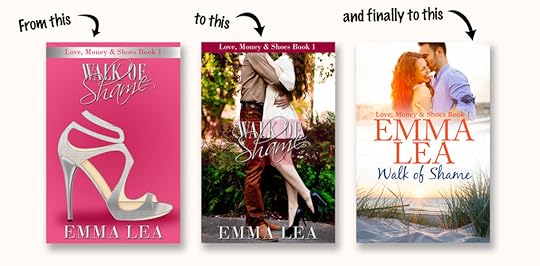
The evolution of a book cover – my first book, Walk of Shame
A decade—and 70 of stories—later, I’ve learned more than I ever expected. About writing. About business. About readers. And, most importantly, about myself.
1. Romance isn’t a Dirty Word
Romance books get trashed constantly. They are accused of being poor quality, giving women unrealistic expectations, and of being “mommy p*rn”. But, for me, romance books have been my safe space. I have always read romance, but in the early 2010s, I was going through a particularly difficult time and romance books were there for me. They helped me deal with my anxiety and depression and grief through that time. But, beyond that, they also taught me that it was okay for me to expect more. It was okay for me to want more. And most importantly, they taught me it was okay to take up space. It seems to me that women are constantly being told to make themselves smaller – their body size, their voices, and their expectations. Romance books taught me that it was okay to be a different shape, be loud, be unconventional, and to expect to be treated with care and consideration.
2. Writing Romance can be Life-Changing
And I don’t mean financially, although, for sure, there are authors out there whose lives have been changed by the money they make. I have the utmost respect for those authors, because it isn’t easy to make a living in this business. But writing romance changed my life because I learned so much about myself. I can look back at my early work and compare it to my later work and see the progression. I am a different person. I am more confident. I have more conviction about my opinions and I am more open-minded. Those two last things seem to be contradictory, but being open-minded it has given me more conviction about the importance of diversity, tolerance and just being a decent human being.
3. Readers Are Everything
I started writing for myself. I wrote because it gave me an outlet for all the emotions that were swirling around in my head. It gave me a way to make sense of the complicated world I lived in. But that changed the day I got my first reader email. Romance readers are loyal, vocal, and full of heart. They’ve taught me what resonates, what surprises them, and what they want more of. Listening to them doesn’t mean compromising my voice—it means honouring the people you’re connecting with.
4. The Market Changes—And So Have I
Trends shift and people change. What worked in 2015 might flop in 2025. But I’ve evolved too. Along the way I have adapted: tropes, cover styles, release strategies, but also themes. It is important to me that my words say something beyond just a great story. I am a firm believer that stories and real life are symbiotic—they influence each other. The current state of the world will influence what is being written but the things that are being written also have the ability to influence the current state of the world. I want my words to add to the conversation.
5. Write What You Love, But Know the Landscape
Yes, passion matters. Yes, I need to write the stories burning inside me. But also, I need to understand the landscape. What are reader expectations? What do readers want to read now? Why is romantasy and dystopian romance so popular now? What does it say about the world we live in and why people need to escape into these fictional worlds? And how can my voice add to this? It doesn’t mean I will stop writing the things I’ve always written, there is still a place for those, it just means I get to branch out and try something new. And that’s exciting.
6. Burnout is Real. Boundaries are Necessary.
Writing full-time is a dream come true—but it’s not always dreamy. Deadlines (especially self-imposed ones), reader expectations, and comparison can burn you out fast. I’ve learned that the hard way. So now I take breaks, protect my creativity, and forgive myself when I need to pause. I spent years writing fast until I couldn’t do it anymore. The well dried up and I was at a loss. I thought my career was over. Slowly I’ve been clawing my way back. I’ve also learned that I need more than just writing in my life. This is why I went to university. It’s why I do art classes. It’s very easy to make my whole identity about being an author, but that’s not how good stories are made. If I don’t experience things outside being an author, how can I write about them?
7. Community Over Competition
Other authors are not my competition—they’re my colleagues. Finding fellow authors who understand the unique highs and lows of this career saved me more than once. Sharing knowledge, lifting each other up, and celebrating each other’s wins makes this journey so much richer. This was why I went to university, because I want to share my experience with emerging writers. This is why I work at Queensland Writers Centre, because I get to spend time with other writers and build community. Writing can be such a solo experience, it’s really great to meet other people and share the unique experience of being an author with them.
8. Every Book is a New Beginning
You never “arrive” in this business. There’s always a new book to write, a new reader to reach, a new story to tell. Some books take off. Others barely make a ripple. But each one taught me something, and that keeps me going. Each new book is a chance for me to experience another life. There is a quote by George R. R. Martin that says, ‘A reader lives a thousand lives before they die. The man who never reads lives only one.’ I like to think this applies to authors as well. Writing feels like living the life of my characters and I will get to be a whole lot of different people with different jobs and families and experiences from the comfort of my office chair.
9. Imposter Syndrome Doesn’t Go Away—I’ve Just Gotten Louder Than It
Even after ten years, I still sometimes question whether I’m “good enough.” That little voice doesn’t vanish, but I’ve learned to out-talk it. I remind myself of reader messages, milestones, and the fact that I’ve kept showing up to the page. Confidence isn’t a feeling—it’s a choice you make again and again. Comparison is the thief of joy, and I’ve learned rather than comparing myself to other authors, to be grateful that I am privileged enough to be able to do a job I love. And if I am an imposter, then I’m a pretty good one. I also remind myself that someone somewhere made the decision to make ‘Sharknado’ so maybe my books aren’t so bad after all.
10. My Definition of Success Has Changed (and That’s Okay)
When I started, success meant making a bestseller list. Then it was hitting a certain income goal. Later, it became writing full-time. Each time I hit a milestone, I discovered new versions of fulfillment—creative freedom, writing what I love, hearing from readers whose lives were touched. My ideas of success have evolved as I did. Money and fame, although they’d be nice additions to my life, don’t motivate me. Writing does. Writing the story of my heart and sharing it with my readers is what keeps me telling my stories to the world.
Final Thoughts
Ten years later, I’m still in love—with writing, with romance, and with the wild, wonderful world of self-publishing. It hasn’t always been easy, but it’s always been worth it.
Here’s to the next ten years—and all the stories still to come.
Want to keep track of all the books you’ve read by me? Here are two handy downloads. One is a cute bookshelf that you can colour in, the other is a simple check list. They’re both free and can be printed out or filled in on your tablet.
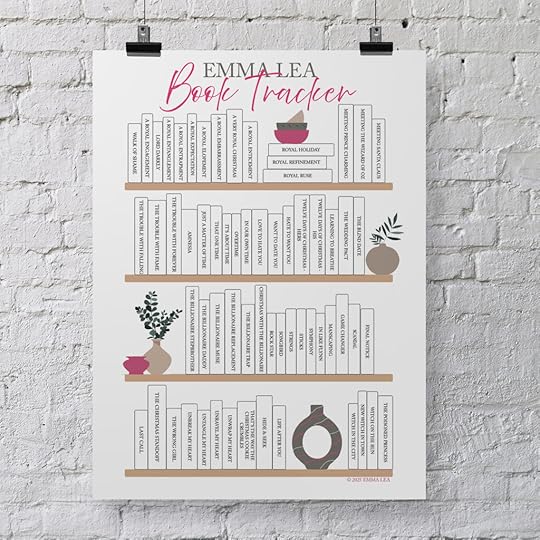 Book Tracker copyDownload
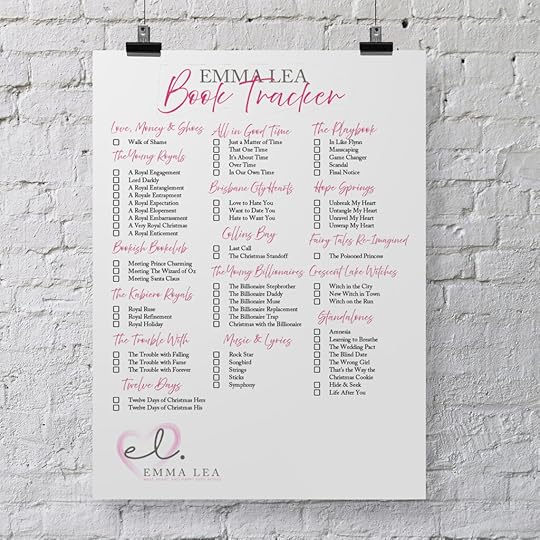 Book List May 2025Download
emmalea
Emma Lea is an independently published contemporary romance author. She has sold over 500,000 books since beginning her career in 2014. Emma was a finalist for the Romantic Book of the Year in 2020 and 2022 and a finalist for the Romance Writers of Australia short story competition in 2018. She is currently studying a Bachelor of Arts majoring in Creative Writing and English at the University of the Sunshine Coast with the view of one day mentoring other authors through the publishing journey. She lives on the Sunshine Coast with her husband, and in her spare time she binge-watches K-dramas.


January 10, 2025
10 Types of Writer’s Block
I’ve got writer’s block. It’s not my first time. I’ve been writing and independently publishing for ten years, and I’ve written over sixty books—over 4 million words—but I’ve still had times of writer’s block…which is why I decided to write this.
There are some people that don’t think writer’s block is a real thing and…well…I think they have a point. Writer’s block can sometimes be used as an excuse, but I believe if you can’t write—for whatever reason—then it’s writer’s block, even if you want to call it something else.
So what is writer’s block?According to the Merriam-Webster Dictionary, writer’s block is a psychological reticence that prevents a writer from writing. I am loath to disagree with Merriam-Webster, but I would like to add that my definition is anything that stops you from writing is writer’s block.
With that in mind, and my current state of writer’s block, I started to think about the different reasons why someone might not be able to write. It started with the very selfish reason of trying to work out why I couldn’t write, but then I thought it might help others, so…here we are.
Below is a list of 10 types of writer’s block. This is not meant to be an exhaustive list, but I have had personal experience with each of these ten types.
I’ve tried to explain them the best I can and added some solutions that may help, but this all comes with a caveat. There is an old proverb that says ‘the same boiling water that hardens eggs, softens potatoes’ which means…well…everyone is different and as such, different things will work differently for different people (and how many times can I use the word different into that sentence haha).
This is not a prescription. These are tools you can try, but if they don’t work for you, then that’s fine. Maybe trying one tool will actually reveal another, more useful tool.
10 Types of Writer’s Block1. Blank Page ParalysisThe dreaded blank page. This could be a problem when you first sit down to a new book, or it might just be a new chapter. Whatever it is, the blank page is scary. How are you going to fill it? There are ways to prevent this, but that’s not much help when you’re staring at a blank page with nothing in your brain. So what do you do? Just write. Don’t yell at me! I know, I know, it sounds ridiculous. But I’m serious. Just write. ANYTHING. Nonsense. Gibberish. Random stream of consciousness rubbish. Write about what you hear, smell, see, feel. Just get some words on the page so it is no longer blank. Follow your thoughts. Free write. Fill the page. It just might be enough to unblock your inspiration.
2. Just VibesHave you ever got a great idea for a story but…there is no actual story? You know what you want it to feel like, you know how you want your readers to react, but you have nothing else. No characters, no world, no plot…just vibes. This one takes some homework and if you’re a pantser then you will not like what I’m going to say. When all you’ve got is ‘just vibes’, then you need to do a bit of world-building. Think about the ‘vibes’ and then put characters into it. What kind of world fits the vibe? For you pantsers, you don’t need to get super detailed, but you do need some rough outlines or a framework to build your story on. Just spend some time in your vibes and let the world and the characters form around you. When you know who your story is about, then it will be easier to know what it is about.
3. No One’s Getting Any ActionAnd by that, I mean, you have fully fleshed out characters, but they are just standing around and not doing anything. You have no plot. Even a character-based story needs, well, a story. Spend some time putting your characters in different scenarios, put them in uncomfortable situations and see what happens. Get to know your characters. What are their weaknesses. What are their sore spots, trigger points. Push them. Be mean to them. Find out what they need to heal, to make them whole. Or kill one of them and see what happens to the others…mwa-ha-ha!
4. BoredomThis is a tricky one. Sometimes you think you’re bored with your story, but you’re really blocked by one of the other types. Or maybe you have shiny-new-thing syndrome (I have to admit that I suffer from this a lot). But sometimes you’ve spent so much time with your story that you are actually bored. You’ve probably read it five million times and the spark is no longer there. That does not necessarily mean your story is boring, even if you feel like it is. My advice is to back away slowly. Put your story in the metaphorical drawer and leave it alone. Start writing something else. Anything else. A blog post (hehe) or a short story or a recipe or a poem or a song or start that new story you’ve been thinking about. But give yourself a time limit. Give it a week or too, maybe a month at the most and then go back to your original story. Sit down with it and read it through from the start and you just might find the spark you need.
5. Standing at a CrossroadsYou have reached a point in your story when you need to make a decision about what your characters should do next. This can cause you to freeze up and not be able to write because you’re afraid of making the wrong decision. That is the key. Worrying that you’re going to choose the wrong way. But that’s the great thing about writing. Even if you decide to go left and it doesn’t work, you can go back to the crossroad and go right, or straight ahead or…whatever. So, my advice is to just pick one road and write boldly in that direction. You will soon know if it is not working, if that is the case then you can go back and try something else. The words on the page are not permanent. It might hurt a little bit to discard those hard-won words but in the end your story will benefit. And don’t forget, you can save those words in another file and use them later if you need to.
6. Too Many Tabs OpenFor those not familiar with this phrase, having too many tabs open refers to being overwhelmed…like when you have lots of webpages open on your computer and it slows everything down. This is another one that I am often the victim of. I have a busy brain and while I am an author, I am also studying at university and working as well as being an artist and being part of a family. I have an over-active imagination, I catastrophise, and I am a chronic over-thinker which means I always have several tabs open at the same time and quite often I have too many tabs open. When I identify this as my problem, I know it’s time to take a break. Go for a walk, or meditate, or do some yoga, or maybe just sleep. In my experience I know that sustaining too many tabs open can lead to burn out, which takes a lot longer to recover from. Taking time out can sometimes feel counterproductive, especially if you are on a deadline, but it will help in the long run. Doing physical activity also has the added benefit of clearing the cobwebs from the brain – the deep breathing helps that results from a bit of physical exertion helps too.
7. No TimeSome people might argue that not having time is not the same as writer’s block but let me refer those people to my definition above. Anything that stops you writing is writer’s block. I can’t give you more hours in the day, but if you find that you never seem to have time to write, it might be a good idea to do a time audit. Where do you spend your time? Spend a couple of days or a week noting exactly what you do for each hour of the day. Think of hours in the day as money. How much money do you have to spend? Where do you spend this money? This can be confronting, but once you know where you spend your time, you can make decisions about tweaking your routine to make some time for your writing. Is there something you can cut out of your routine so you have time to write? This might not always be possible. I know in the last few months I have just not had time to write because of study and work commitments. If you find the same, then let yourself off the hook. Don’t feel guilty about not writing. Understand that this might just be a season in your life.
8. RoadblockHave you written yourself into a corner with no way out? It is very tempting to use deus ex machina to get your character out of it, but that’s kind of cheating and readers will always notice. If you’ve reached a dead-end, then maybe it’s time to backtrack. Did you miss a turn? Is there something that needs to happen first? If you have a brilliant idea to get yourself out of your dilemma but it feels too deus ex machina, then maybe you just need to foreshadow it. Go back and subtly seed your solution throughout, so when you get to that part, the resolution doesn’t feel like it came from nowhere.
9. End of the RoadThis is not the same as a roadblock. This is when the road literally ends…like on the movie Speed when the bus is on that bridge, but then they discover the bridge isn’t complete…yeah…it’s the end of the road. What does this look like in your story? There is no more plot. You haven’t reached the end of the story, but there is no more forward momentum. The solution for this kind of goes against the way I write. I write very linearly—from start to finish—but I have found that when I am experiencing this end of the road feeling I need to break my own rules and skip forward to the end. If I know how the story is going to end, then I can work backwards to discover the steps I need to get there.
10. Black HoleI have found this the scariest of all the writer’s blocks. I have often questioned whether my ability to write has dried up, I’ve used it all, my career is over. The vacuum of the black hole, the absolute void feels like it is sucking my soul dry. Let me encourage you that there is a way out of the black hole…you just need to fill it. Your creative well is empty. It’s time to start refilling it. Read or listen to books, listen to podcasts or music, watch your favourite movies, series, documentaries. Whatever it is, whatever inspires you, do that. It might be taking a walk in nature, or around the city. It might be people watching or bird watching or sitting on the beach and just watching the waves roll in. It might be taking to the waves with a surfboard or going snorkelling or having a massage or a facial. This is the time to be gentle with yourself. Look inside and see what you need, what will fill your creative well
ProcrastinationA note about procrastination…it is not the reason you can’t write, it is a symptom of writer’s block. If you find yourself cleaning the house or scrolling on your phone instead of writing, then you know you’re blocked and it’s time to investigate why you’re blocked. I have found that stacking the dishwasher or doing something mundane can help me find my way out of my block, but I need to be intentional about it. If I’m cleaning to avoid writing, then it won’t help. But if I use cleaning as a way to interrogate why I’m blocked and maybe problem solve, doing something mundane like stacking the dishwasher can help my brain work through the problem.
So that’s my list…can you see yourself in any of those or maybe it has helped you identify another type of writer’s block? Has any of my solutions given you a spark? I hope so. My solutions might not work exactly the same way for you, but I hope it has helped give you ideas of ways to tackle your own blocks. Did you have a lightbulb moment? Drop it in the comments. It just might help someone else.

emmalea
Emma Lea is an independently published contemporary romance author. She has sold over 500,000 books since beginning her career in 2014. Emma was a finalist for the Romantic Book of the Year in 2020 and 2022 and a finalist for the Romance Writers of Australia short story competition in 2018. She is currently studying a Bachelor of Arts majoring in Creative Writing and English at the University of the Sunshine Coast with the view of one day mentoring other authors through the publishing journey. She lives on the Sunshine Coast with her husband, and in her spare time she binge-watches K-dramas.
June 14, 2021
Mind Map Categories
As I mentioned in my last post, I use specific categories when I’m creating my mind map. Most of them a pretty self-explanatory, but there are some you might not be familiar with.
Let’s start with the easier ones first.
Story Garden Mind Map
This is where we plant the seeds from our Story Seeds brain dump.
Characters
These are the main character/s of your story. It could be one, two, or fifty (although fifty is a little extreme  )
)
For the purposes of my story (which is a romance with two main characters) I have Scarlett and Archer.
If you are doing a mind map for an entire series of books, then you would list all your characters here, but I’m just doing it for one book, so I’ll stick with my two MCs.
You don’t need to list side characters here, you can put them into the character mind map when you start drilling down, this is just the top-level mind map.
Location/Setting
This is where your story is going to take place. It could be a town name or a country or a planetary system.
My story is set in Australia in a small town called Hope Springs, so that’s what I put here. If you have several locations and/or your story is set in a different time or universe, then you could list it here.
Tropes
I know some writers look down on tropes, but when you are writing marketable, popular fiction, your readers are going to look for the tropes they like. Tropes are not bad, and they can really help to tighten your story if used correctly. It’s important to know what tropes you want to explore (or subvert) because it helps you to hit the relevant story and emotional beats that your readers will be looking for.
Now we move into the more complex categories…or at least the ones you might be less familiar with (or maybe you know what they are in an abstract sense but you haven’t given them a label).
Themes
Themes are a little more difficult to pin down…or maybe not. Maybe you already know what themes you want to explore in your story. A lot of the time the theme doesn’t really hit until after the story is written, but if you already know it, then jot it down. Sometimes a reader will pull a theme from a story that the writer didn’t even know they’d put in there.
Themes should be a seasoning, not the main ingredient.
Knowing your theme can help you be more intentional in your writing, but be careful. Themes should be subtle. Don’t bash your reader over the head with them. You want your reader to walk away from your story feeling like they’ve discovered something about themselves or the world, but you don’t want them to feel like they’ve been preached to.
Main Conflict
Conflict is probably one of the most important things about your story. Yes, characters and plot are important but if there is no conflict then there is no story.
Conflict can often be misconstrued. It doesn’t necessarily mean the characters hate each other or are constantly at odds. Conflict can come from all sorts of places.
I write romance, so for me, the story is all about the characters. The characters need to evolve throughout the book. They need to grow and change and for that to happen they need conflict.
It took me a long time to understand the concept of story conflict. I am usually conflict-averse in my real life. But a story without conflict is about as interesting as watching paint dry. There needs to be tension, but it doesn’t need to be negative tension.
According to Google, this is what the word conflict means:
noun: conflict; plural noun: conflicts
/ˈkɒnflɪkt/
a serious disagreement or argument, typically a protracted one.
“the eternal conflict between the sexes”
a prolonged armed struggle.
“regional conflicts”
a state of mind in which a person experiences a clash of opposing feelings or needs.
“bewildered by her own inner conflict, she could only stand there feeling vulnerable”
a serious incompatibility between two or more opinions, principles, or interests.
“there was a conflict between his business and domestic life”
Too often, when looking at story, we focus on the first two meanings; a serious disagreement or argument and a prolonged armed struggle. But how does that fit into a romance? Sure, an enemies to lovers story can be great, but we don’t want to see the characters continually at odds with one another. For me, conflict in story is more about the last two meanings of conflict—the internal conflict or the conflict between the life the character has opposed to the life they want.
The main conflict of the story is your main plot point. What is your story about? My story is about two people who come from two different worlds and how they can each change so they can be together. The conflict comes from what they believe about themselves and the life they’re living and who they want to be and what they really want their life to look like.
*Warning–author opinion following*
One thing I’ve noticed about some romance stories (or stories with romantic elements) is that the conflict too often comes from a so-called ‘love triangle’ that isn’t really a love triangle at all. Love triangles are absolutely a valid trope in romance and a much-loved one by readers, but if your ‘love triangle’ is only there to introduce additional conflict between your characters, then maybe it’s not needed. Having conflicting feelings about a love interest is one way to have conflict in a romance but it is not the only way. Neither is having a scorned ex. Sure, these can be useful in your story, but keep in mind there are many other ways to show conflict between two people other than just having a third party involved.
*End rant*
Misbeliefs
The characters’ misbeliefs are the next most important thing in writing an engaging story. We want our characters to change over the course of the story. They need to grow. But in order for them to grow, they need to have some flaws to start with.
What is a misbelief? This is something the character believes about themselves or the world they live in—a core belief––that isn’t true. Not only do they believe this but that belief has an effect on their daily life.
How do you find a character’s misbelief? You need to look at what is holding a character back from achieving their goals. Or perhaps it was something that happened in their past that makes them think a certain way about themselves or the world. For example; a teacher or parent told this character that they were not smart enough to achieve anything in their life. Consequently, the character has gone through their life believing that they will never amount to anything.
Misbeliefs feed the main conflict of the story
We all have misbeliefs about ourselves. These are the self-limiting beliefs that hold us back. In the case of our characters, these misbeliefs also feed into the main conflict of the story. My characters both believe that the worlds they live in are enough for them, even though they dream of something more. Scarlett doesn’t think anyone can love her if she isn’t the famous pop star Ruby, and Archer believes that his small town is enough and that his family could never survive without him if he was to chase a bigger dream. With them both thinking this way, they can’t possibly see how they could exist in the other’s world and they don’t see a way for them to be together.
Metamorphosis
This is the flip side of the coin to the character’s misbelief. This is the person we want them to be at the end of the story. This is the goal of the story. If you know where you want your character to be at the end, then it can help you hit the right beats along the way through the story.
Think about what your character’s world would look like if they achieved their goals. If they could overcome their limiting misbeliefs, what type of character would they be? Where would they be? What would they be doing?
Character Mind Map
Some of the categories overlap with the Story Garden Mind Map. You can just copy them over, or you can dig a little deeper into each one, teasing out more details.
Do one of these for each main character.
Family/Friends
This is where you list the relevant members of the character’s family and friends and any little distinguishing characteristics that are relevant to the story. If there are side characters who are neither family nor friend, list them here but be sure to mark down how they fit into the story.
Career
This is pretty self-explanatory. What is your character’s career? What do they do for a living or not do? How do they spend their days?
Fears
This is not just about being afraid of spiders (unless your character needs to defeat an army of spiders to achieve their goal, of course…or, your character is a spider but thinks all spiders are bad and so therefore thinks they are bad and will never be the hero…).
Fears and misbeliefs go hand in hand in sabotaging the characters goals. As in our example in the Misbeliefs section, we have a character who believes they are not smart enough to ever achieve anything (misbelief) so they are afraid to even try because they are afraid of proving everybody right (fear) which means they can never become the trial lawyer they so desperately want to be (goal). The misbelief feeds the fear and the fear feeds the misbelief keeping our character away from what they really want in life. They don’t try because they’re afraid and therefore they never achieve anything proving the misbelief correct. It is a self-fulfilling prophecy.
Misbelief feeds fear and fear feeds misbelief
In my story, Scarlett has a misbelief that no one will love her if she isn’t the famous pop star Ruby and her fear is being alone for the rest of her life, but her goal is to find someone who loves all of her, not just the famous part of her. This creates a cycle where she is afraid to let anyone get to know the real Scarlett, because her misbelief tells her no one will love the ‘real’ Scarlett, therefore she feels alone and unable to attain her goal.
For Archer, his misbelief is that his family can’t survive without him. His goal was to be a police detective in the city, but he had to give that up to look after his family and now he believes that there is no way he can leave his small town and his family. His fear is that if he leaves his family, something bad will happen like it did last time he went after his dream. He can’t become the detective he always wanted to be because he can’t let go of the fear of leaving his family.
Fears can both manifest out of a character’s misbelief or be the cause of the characters misbelief.
Goals
All characters need a goal. There needs to be something they want, even if they never believe they will ever achieve it. It can be something simple, for example; in the 1991 movie Hudson Hawk (starring Bruce Willis) all he wants is a cappuccino, but stuff keeps happening to keep him from his goal. That might be an over-simplified explanation of the plot, but it is a stated goal of the character and something the movie returns to.
As with conflict, if your character doesn’t have a goal, you don’t really have a story. In the very basic of terms, a story is a character overcoming the obstacles (conflict) standing between them and their goal. That goal can be as simple as a character wanting to have a quiet cappuccino or sleep in or even build a multi-billion dollar company in order to crush the man who killed their father (the basic plot of Itaewon Class).
As I am a romance writer, you would think that the goal of all my characters is to fall in love, but that is not necessarily the case. In fact, most of my characters’ goals have nothing to do with love.
Story goals and character goals aren’t always the same thing.
The story goal of a romance book is for the characters to get their happy-ever-after, but that doesn’t mean it is the character’s goal. In a lot of cases, the story goal runs contrary to the character’s goal (creating interesting conflict). While we, as the reader, want to see the character achieve their goals, we also want more from them. We want them to achieve more than their, often materialistic, goals. We want to see them evolve and change, which might mean they don’t achieve their original goal at all.
Back Story
We’ve all heard that we shouldn’t info dump backstory into our books, but that doesn’t mean you shouldn’t know at least some of your character’s back story. A the very least, you should know what caused their misbeliefs and fears. You should know about their immediate relationships. This doesn’t need to end up as pages of exposition in your manuscript, but it does help you create a character who is more than just a cardboard cut-out. You also don’t have to write pages and pages of their life from birth in your production journal (you can if you want, but you don’t have to). Just a couple of sentences that explains who your character is and why they are the way they are is enough to get you started.
If you’re anything like me, once you start writing your story, your characters start to take on a life of their own and you learn more about them as you write, so you can come back and add to this as you go.
Physical Description
Again, pretty self-explanatory but essential for making sure your story has good continuity. You don’t want your character’s green eyes to suddenly turn violet in chapter seven (unless of course there’s a reason ).
Misbeliefs
We covered this in the previous section, but on the character mind map you can go into a little bit more depth. It’s also handy to have a copy here for when you are writing and need to check on something.
Location Mind Map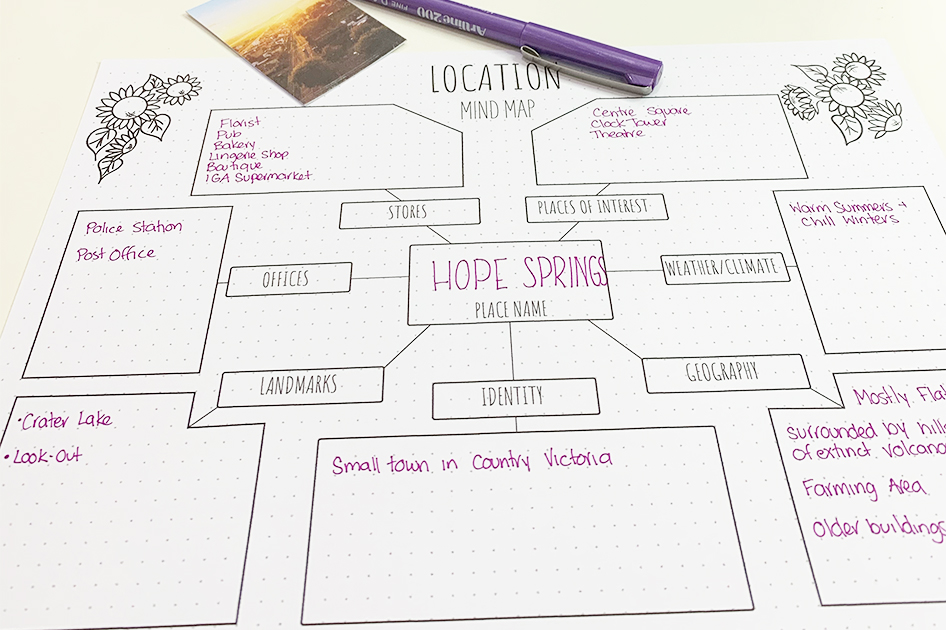
These are probably easy for you to work out, but I’ll go through them anyway.
Stores/Shops
As the name says, these are the stores/shops that appear in your story. You might think it is overkill to list these, but there have been times when I’m writing the fourth book in a series and have to search through the other three books to find the name of that one shop where something happened. Having an easily accessible list of these places helps with continuity and works as a handy quick reference for things you might forget.
Offices
This category exists for the same reasons as listed above but also to help ground your story in reality. Your book might be set in a small town, does it have a post office? A police station? A local attorney? A newspaper office?
Places of Interest
Not necessarily tourist places of interest, put places of interest within the story for example; the character’s house. What does it look like? Where is in the town?
Or maybe it is something like a particular road or alley where something happens.
Again, this might be something that you come back to once you start writing. You story could lead you to a place where a significant plot point happens, here is where you can make a note of it for future reference.
Weather/Climate/Season
I am terrible at determining the season for my story. I always forget (unless it is relevant to the story for example, a Christmas story). It is important for me to set the time of year in advance so my characters dress appropriately.
But this can also be used to determine what the climate is for the region of your location. For example, is it the northern hemisphere or the southern hemisphere? Is it set in a region with a lot of snowfall or a desert or on a tropical island?
Maybe your story is post-apocalyptic, and the weather is messed up and they experience violent storms.
All these things help to inform on your world building, and it is a good idea to make these decisions early or at least keep a list of relevant information as your story develops.
Geography and Topography
Where does your location sit relevant to the rest of your world? Is it mountainous? Is it flat and desolate? Does it have access to a water source? Is it accessible by car?
In my story, I chose a real place in Victoria and then changed it to suit my needs. Hope Springs isn’t an actual town, but I based it on a regional Victorian town which is in an area of extinct volcanoes. The extinct volcanoes don’t really inform my story at all, except for the fact that there is a great lookout and an amazing crater lake, both of which my characters can make use of, but it gives depth to the location and makes it feel more real. The idea of basing my town on an already existing one helps to ground my story in the present and in Australia and I can use surrounding landmarks and attractions in my story, limiting my need for extensive world building.
Why not use a real town? By using a made-up town, I avoid the problem of offending readers who might live in that town. I also avoid the problem of getting the details wrong.
Identity
How does your location identify itself? That might sound like a strange question, but it all helps with your world building. My story is set in a small town and it identifies as a small, close-knit community. Maybe you’ve set your story in a high-rise…how do the residents see the building? Is it an oasis away from the unwashed masses of humanity? Or is it like a prison they fear they will never escape from.
Knowing how your location identifies—or how your characters think of the location—helps set the mood of your story.
Landmarks
What are the local landmarks of your location?
Landmarks are great for giving your reader a sense of place, especially if you don’t have a handy map in the front of your book. In my town, there is a centre square. Just reading those words already helps you imagine what my town looks like.
Knowing landmarks also helps with continuity. I’ve said this a few times now, but it is really important, especially over a series of books. You might be writing your books several weeks, months, or years apart and not think these small details matter, but a reader might consume the entire series all at once and they will absolutely notice the little incongruencies.
These are just the categories I use (or am using for my current project). You can add categories to suit your story—that’s the beauty of this system. If you’re writing a fantasy book, you could have a category for magic. In the Story Garden mind map you could list all the magic powers available in your world and then in the character mind map you could list the powers that specific character has and how they work. If you are using a hard magic system, you could even do a mind map for each magic power to further refine the rules and limitations.
If you’re writing a good versus evil story, you could have a category for your antagonist or The Big Bad. I would even give them their own character mind map too. This gives you a place to refine their motivations and build them into a fully fleshed out character. Villains are characters too!
For a murder mystery you could include a category for the clues and red herrings.
A political drama could have a category for each of the political parties or even have a mind map for each political party which lists their objectives and their political manoeuvrings.
The beauty of using mind maps like this is that they are so completely customisable. You can take them down to a very granular level or keep them very surface level depending on how you work.
Remember that mind maps and the categories you use need to serve you. Only do as much or as little as you need. They are a tool, not a prescription. And don’t forget you can come back to them at any time during your writing process if you need to refine your story.
So what happens after you create a mind map?
Stay tuned for the next blog post on the Emotional Arc.
May 31, 2021
Evolution of a Story
Sitting down to write a book can be overwhelming. Even for me, after writing 57 novels and short stories, starting a new book is daunting. I feel like I’m back at the beginning all over again and don’t know what I’m doing or where to start.
Over the last six years that I’ve been writing, I’ve gone from complete discovery writer (or pantser—writing from the seat of your pants) where I have no plan and just a vague idea where the story is going, to a plotter, and then back to somewhere in between, and I’ve discovered that my process can change from one book to another depending on my state of mind when I sit down to write.
I have to admit, sitting down to write a detailed outline of my book does not fill me with joy. I have done it and then by the time I come to write the book, I’m bored with it. But sitting down to write a book with no plan at all (as I did for my first ten books or so) also does not fill me with joy. I love beginning new stories and the idea of discovery writing is exciting, but I know, after that initial beginning, I will lose my way.
After struggling to find my ideal process, I have decided that there is no ideal process. Each book I write needs different energy…or my state of mind at the beginning of each book needs a different jumping off point. But, being the person that I am, I do need some sort of process otherwise I fret over everything and I worry that the story I want to write won’t turn out to be the story that I do write.
I have read a lot of books on story structure and plotting and watched countless YouTube videos and read lots of blogs. There are as many ways to plot a book as there are writers who write them. What works for me is a combination of all of it, and even that changes from book to book.
As an experiment, I thought it would be fun to blog about the writing process I use for writing my next book. I have just finished the second book in The Kabiero Royals series and I’m in the beginning stages of writing the third book in the Hope Springs series. So why not open my office door and pull back the curtain and show you how I write.
Start at the Beginning
I don’t mean the beginning of the story.
One of the things I’ve realised is that my stories evolve. They don’t come into my head fully formed.
Some stories start with an opening scene. That’s what happened when I got the idea for Walk of Shame. I just had this idea for a scene where a woman wakes up in a strange hotel with no memory of the night before (not in a scary way).
Other times the characters appear in my head and demand I tell their story, as happened with Rock Star. Nate strolled up to me and started whining about how his career was going down the gurgler while Stevie’s was sky-rocketing.
And still other times, it’s a trope I want to explore or a theme I want to write about. No two stories come to me in the same way and not all story ideas make it into a book.
For my latest story, Unravel My Heart, I already had the characters. This will be the third book in the Hope Springs series, so I already have the world established and the characters, but I didn’t have a story.
And that is the crux. Ideas are a dime a dozen. But how do you turn an idea into a story?
Project Planner
I cannot hold an entire story in my brain…some people might be able to, but I can’t…and I’ve tried, believe me.
I also love to Bullet Journal, but I could never seem to shoe-horn my story planning into my journal. I like things to be in order, but I don’t always think in an orderly way and putting things into my Bullet Journal that were out of order just…let’s just say it made my brain sad.
My solution? A ring binder. I decided the best way to combine my project planning and my love of bullet journaling would be to create a separate bullet journal just for my project planning and to use a ring binder so I could create things out of order and then organise them. It was a revolutionary thought…for me, anyway.
How does it work?
One of the core take-aways I use from the Bullet Journals system is the idea of ‘spreads.’ (If you want to know more about Bullet Journaling read about it here.) I love Bullet Journal spreads. They can be for whatever you like, so in my project planner I can have spreads for characters and setting and scenes and conflicts and…you get the idea. And because they are in a ring binder, I can create a spread for whatever is in my head at any particular time and then just slot into the correct section of the binder without worrying that it is out of order (my brain is weird, I know).
Another thing I love about my Bullet Journal is the dot-grid page. But how could I use a dot grid in my binder? Can I buy dot grid pages? Can I create one myself? In doing a five-second Google search I discovered there is a web page that generates a dot grid page in any size you need that you can download and print.
*A tip for printing. Don’t use normal printer paper…well, you can, but I advise you to use a thicker quality paper. I like 160gsm paper because when I use my Tombow or Crayola Supertip markers, they don’t bleed through the page.
*A tip for using markers. Make sure you use water-based markers. Alcohol based markers will bleed through even 160gsm paper.
What are these spreads and how do I use them?
The beauty of using a project planner is that the spreads can be whatever you need them to be depending on the book you’re writing. Writing a book with a magic system? You can have a spread detailing how the magic works in your world. Have eight POV characters? You can create a spread for each one.
You can also use it to plan a series. Use it to outline your over-arching story arc, the story arc for each book, the characters, the world building etc.
As for what spreads I use, I’m going to detail them below. You can use them or not, this is just my system. The beauty of a project planner is that it is customisable to your needs.
Story Seeds
As I said earlier, stories evolve and for them to evolve, they need to start somewhere.
In the past, these story seeds have rattled around in my brain until I could put them into some sort of order, but this time around, I decided to try something different.
I have never been a big proponent of ‘brain dumping’ or ‘mind mapping’ mostly because I never really understood how to use them. So I did some research (thank you YouTube) and discovered something…I can actually use these two things and I might even quite like them after all.
Behold, the Story Seed Spread!

This is pretty much just a brain dump of all the ideas rattling around in my brain and cluttering it up.
A brain dump is different from brainstorming in that instead of trying to come up with ideas, you are just downloading all the ideas you already have.
The Story Seed Spread is literally a piece of paper for you to write down everything about your story idea. You don’t have to organise it in any particular way (that comes later) you just have to empty your brain onto the page. No pressure.
Mind Mapping
After you download all your ideas, now is the time to start organising them. This is where mind mapping comes in.
I started with some general categories and then using my Story Seeds spread, I start to sort my ideas into the appropriate categories. This sparks some more ideas too and if I can’t find a place for them on the Mind Map spread, they can go on the Story Seeds spread and I can come back to them later.
Start with the name of the book in the centre and then surround it with the categories you want to explore. For me, I use these categories: Characters, Location/Setting, Tropes, Themes, Main Conflict, Metamorphosis, Misbeliefs.
*I will go into a more detailed explanation of these categories in the next blog post.
Drilling Down
After the initial Mind Mapping, it’s time to start developing or drilling down into the ideas and expanding on them.
I started with another Mind Map, this one only focused on one of the main characters. I start with the character’s name in the centre and then break out the different categories; Family, Career, Fears, Goals, Back Story, Physical Description, and Misbeliefs.
Next I did a Mind Map for the Location of the story and used the following categories: Stores/Shops, Places of Interest, Weather/Climate/Season, Geography, Identity, Landmarks, Offices.
Profile Pages
From these Mind Maps I can then create profile cards for the individual characters and the location. This forms the base of what is commonly called a ‘Story Bible’ or ‘Series Bible.’ These are the things you want to keep on hand so you can see at a glance what Cassidy’s eye colour is or how tall Brad is (you get the idea).
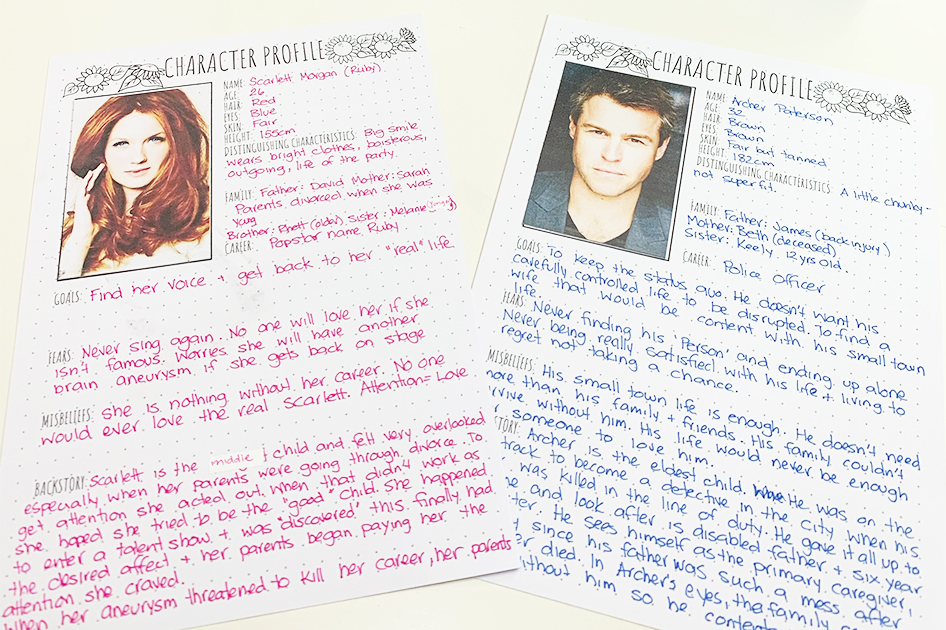
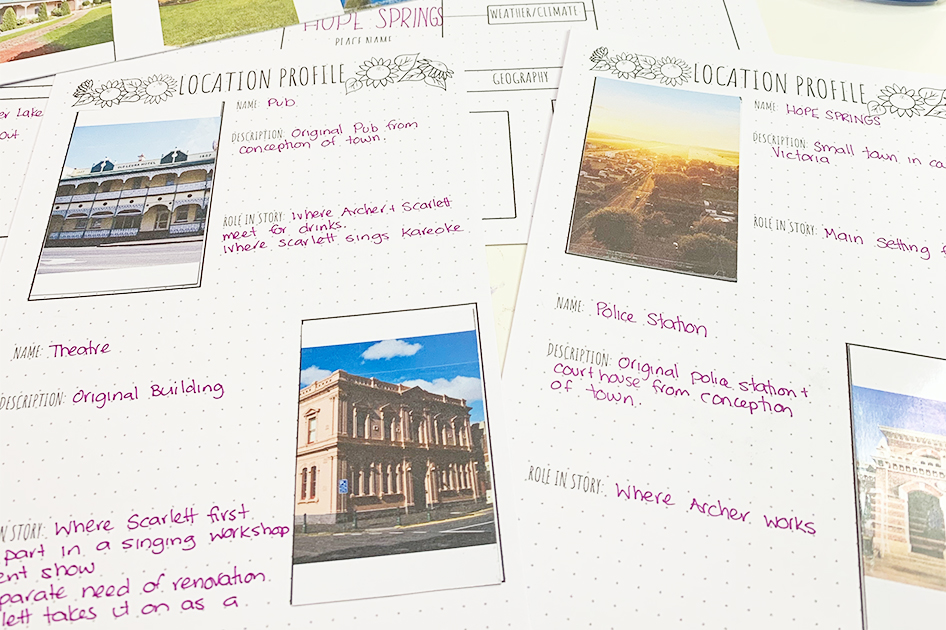
I keep a copy of these profiles in the binder of my Scrivener file so I can just click over to them when I’m writing to check details (if you’ve never used Scrivener or don’t know what it is, it is a writing software specifically designed for authors and it is amazing. Click this link to check it out)
Putting it Together
All of this groundwork forms the foundation of the story I’m growing. You can do all this is a couple of hours and although it may seem a little repetitive, I find that with each iteration, I discover more about my characters and my story.
But in saying that, this doesn’t have to be completed to start writing. Oftentimes, I will start writing without a plan, just some story seeds and a vague idea. The beauty of this is that you can do it at any point in your process. You can start writing and write until you hit a roadblock. Then you can come back and develop the idea further before heading off into writing again. Or you might just want to start by brain dumping all your ideas and then start writing before coming back to refine the story more.
This is also not the end of my planning process. These are just the initial stages, but more on that next time.
Helpful Links:
(some of these may contain affiliate links)
Books I’ve Read on Writing Craft
Writing with Jenna Moreci (YouTube Channel)
Brandon Sanderson (YouTube Channel)
February 2, 2021
January Update
As we head into February, I thought it would be a good time to see what everyone has been reading this month!
How’s your 21 Books to Read in 2021 Challenge going?
I read a total of 29 books in January…14 of them were audiobooks! I’ve just discovered audiobooks (okay, not ‘just discovered’ but this is the first time I’ve actually signed up to an app to listen to them). I’m having my own audiobook produced at the moment, so what started out as a bit of researched has morphed into a bit of an obsession  . I listen through Scribd and I love it (Scribd are not paying me to say this. I genuinely love their platform). I can be driving or cleaning the house or cooking or painting or just lying on the couch and listening to a book.
Of all those 29 books, not all of them have ended up on my 21 Books to read in 2021 sheet, though. I’ve only filled in 9 spots so far.
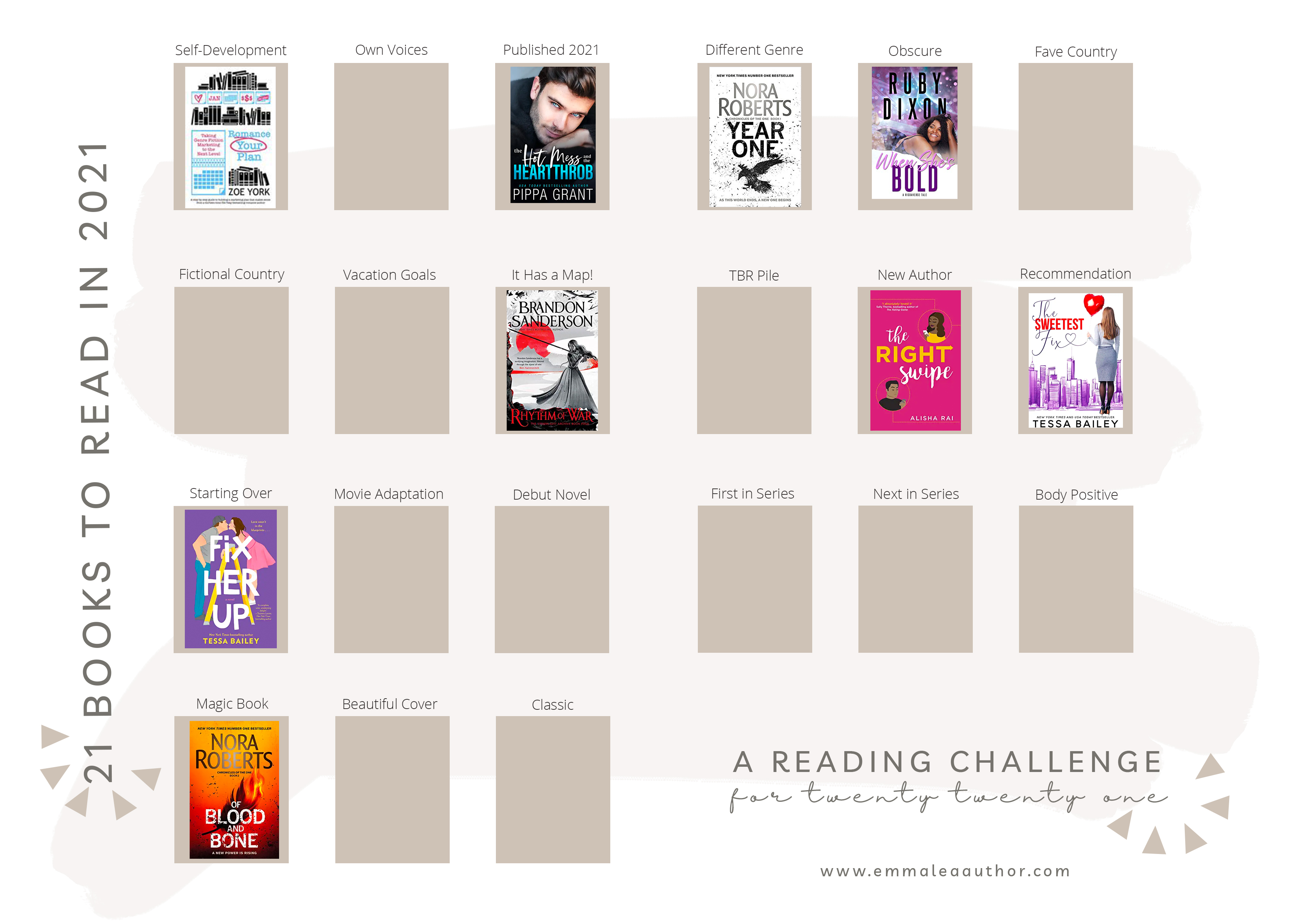
Give me some suggestions to fill in my empty spots! I’m always looking for new authors.
So what are you reading? Let me know in the comments what books you’ve been devouring so far this year.
January 4, 2021
21 Books to Read in 2021
Have you ever felt like you’re in a reading rut?
Last year I read 258 books. It’s a lot, I know, but what can I say? Reading is both part of my job and the way I relax. I don’t watch a lot of television, but I read at night while my husband watches his shows. I read for research and I read for pleasure but sometimes I find myself reading without…direction or I find myself reading the same thing over and over again and then I get bored. I get in a rut.
That’s the reason I like reading challenges and why I decided to create one of my own. I know there are a hundred and one reading challenges out there in the world, but what’s another one?
21 Books to read in 2021. Catchy name, right?
If you’re a prolific reader like I am then 21 books doesn’t seem like much, but why not use this challenge to supplement your reading choices? (I also plan to do another reading challenge mid-year) And if you maybe don’t read as much as I do, 21 books is a great stretch goal.

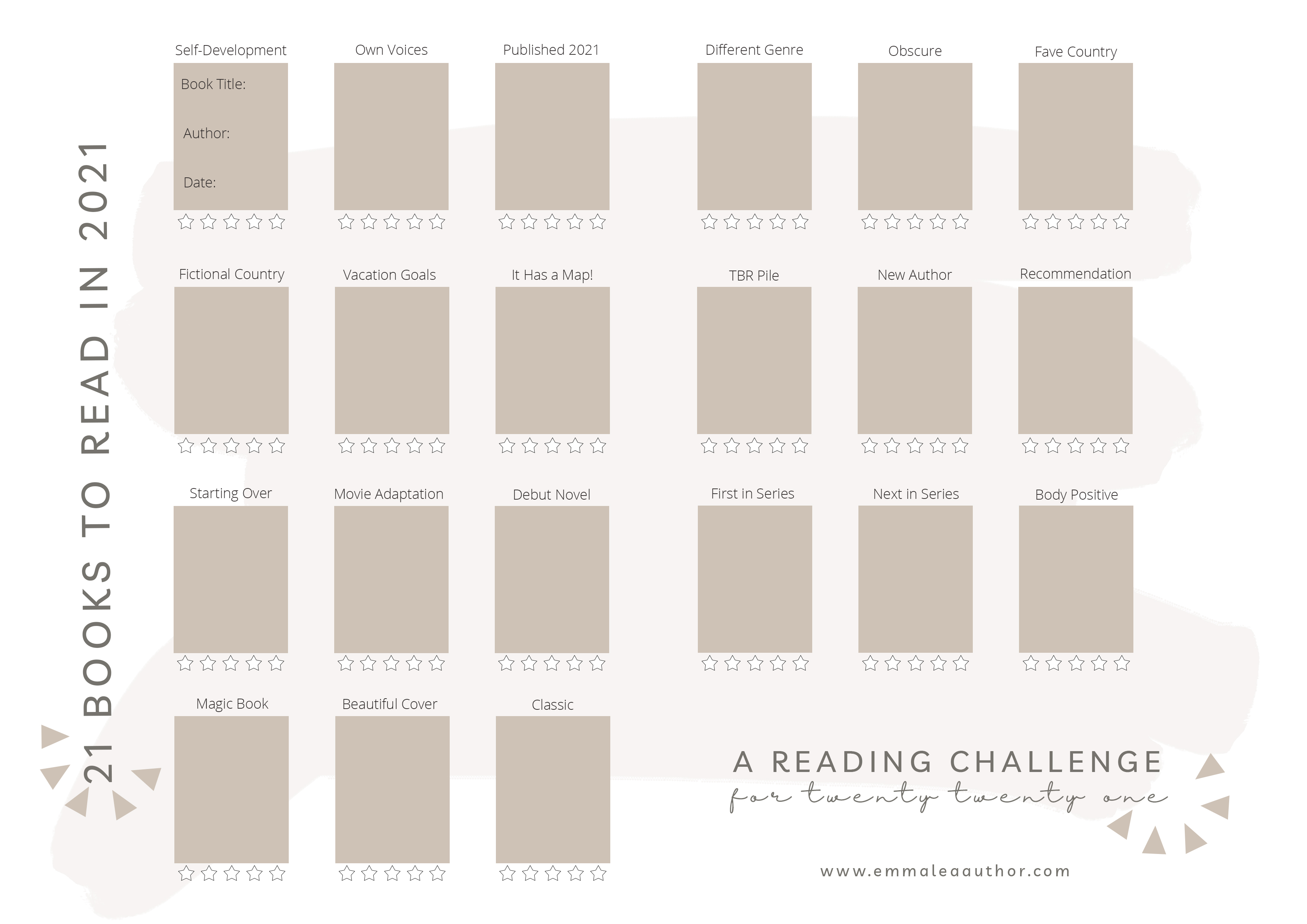
Here is the challenge! And here are some notes and some recommendations for you too.
(the books below contain affiliate links which means I get a small commission if you purchase from the link provided.)
21 Books to Read in 2021
These can be read in any order! And the same book can sometimes fit more than one category, but it’s more fun if you try to match a different book with each one.
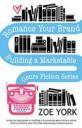
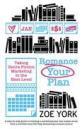
Self-Development – This one is pretty self-explanatory. It can be a professional development book or a personal development book, the choice is yours. I have just finished reading ‘Romance Your Plan’ by Zoe York, a book about marketing for authors.
Own Voices – Books written by authors of colour or authors from the LBGTQIA community.

Published in 2021 – Try and find a book published this year.
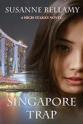
Different Genre – Do you always read romance? Why not try reading a mystery or a thriller?
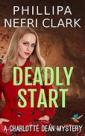
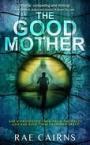
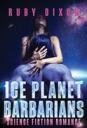
An Obscure Sub-Genre – Using the example above, do you normally read contemporary romance? Why not try a space-opera/sci-fi romance? Or a time-travel/alternate timeline romance?
Favourite Country – Is France your favourite country? Read a book set in Paris. Or maybe Italy is more your style. Why not read a book set in Tuscany?Fictional Country – Read a book set in a made-up country like maybe one of my Royal booksVacation Goals – Is there somewhere you’ve always wanted to go for a vacation? Read a book set there…bonus points if it is also a book about a vacation.A Book with a Map – I love a good map. If you need some inspiration, try The Way of Kings by Brandon Sanderson or Lana Perchercyck’s Deadly Seven series.
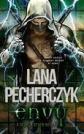
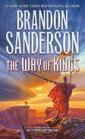
TBR Pile – You know you have a To Be Read pile lurking in your bookshelves or on your e-reader, now is the time to dust one of those off and give it a read.New Author – This doesn’t have to be a brand-new baby author, just a new-to-you author. There are thousands of authors out there and I know how easy it is to just keep reading the same few authors, but take a chance on someone new! You’ve got nothing to lose.Recommendation – I know you’ve been recommended books before ( I have recommended a few to you in this post) so it’s time to take a chance on one of those recommendations.Starting Over – New beginnings, fresh starts, beginning again, these all make for fabulous stories. I am currently reading ‘Virgin River’ by Robin Carr about a nurse practitioner who takes a job in a tiny mountain town so she can start over.
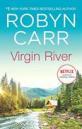
Movie Adaptation – Movie or series adaptation…it doesn’t matter if you’ve already seen the movie or the series, although I do recommend reading the book first.
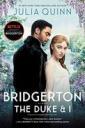
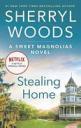
A debut Novel – This doesn’t have to be a book published this year, it can be any debut novel. My debut novel is ‘Walk of Shame’ if you want to check it out.First in Series – Go back to the very beginning (or start at the very beginning) of a series.Next in Series – Now read the next book…or the next book in any series.Body Positive Book – We’ve read enough ‘ugly duckling’ and ‘makeover’ stories, why not read a book where the heroine (or the hero) is perfect just. The way they are?A Magic Book – Don’t worry, you don’t have to read an epic fantasy…or maybe you want to read an epic fantasy, if so, go right ahead. Any book with a little bit of the unexplained in it can fit this category.Beautiful Cover – We’re told to never judge a book by its cover, but we all do it anyway. I’m giving you permission to choose a book simply because it has a beautiful cover!
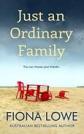
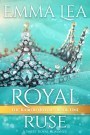
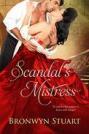
A Classic – A classic or an adaptation of a classic…a fairy tale retelling or a Pride & Prejudice retelling or the complete works of Shakespeare, you choose.
To make tracking your reading easier, I created this printable tracker. Fill in the individual squares with the book title, author, and date you read the book – or print out tiny replicas of the book covers to glue in the space. It even has a space to give each book a star rating. You can print the sheet out and tuck it into your ebook reader cover or stick it in your journal…it will be like playing bingo but with books!
Reading-Challenge-PrintoutDownload
Click the link below to go to an online Reading List I created for some inspiration…check back regularly because I will be adding to it.
21 Books Reading List
Check back here each month to find out what I’ve been reading and to grab some more recommendations!
Happy reading!
Emma xxx
March 14, 2020
The World is a Dumpster Fire
We all know that 2020 has so far been…well, crap quite honestly. And with so much bad going on around us, I want to spread a little bit of good…hope…love…happily-ever-afters.
Romance books are the answer.
No, romance books are not going to cure the world but they can give us hope and a little piece of sanctuary when everything around us feels ravaged and harsh.
I reached out to my friends in romancelandia and asked for recommendations and below is a list of books that might just give you that little bit of sanctuary you may need right now.
Some of these books are on sale for a limited time, some are not quite out yet but you can pre-order them, and some are free, and some are normal price, and some are Amazon exclusive (and free if you subscribe to Kindle Unlimited)*. It is a list of possibilities for you to escape into when you need a break from real life.
Some of these books are sweet romances, some are sexy romances, some are historical romances, some are paranormal romances, and some are kinky romances. I love all romance so I’ll let you choose which one is your favourite 
February 13, 2020
Happy Valentine’s Day!
I know Valentine’s Day isn’t always everybody’s favourite day, but I love it…and not just because I’m a romance author 
November 30, 2019
Emma’s December 2019 Photo-a-Day Challenge
I love photo challenges! I set myself one when I was on my road trip and it was an excellent way to capture memories that I could stick in my travel journal.
This year has gone by so quick and as we enter the final month of the decade 
October 17, 2019
Frocktober Friday Frock Up
Another Friday and another fabulous frock from my past. But before I tell you about it, here are this weeks facts about Ovarian Cancer you might not know…
While cells in our body usually grow in a controlled and organised fashion, when they grow abnormally, they form a growth or tumour which can be benign or malignant. Benign tumours are not cancerous and do not spread. Ovarian cancer is a malignant tumour in one or both ovaries, which can continue to spread through the body if not treated. Did you know that Frocktober started with eight women sitting around a table in a 24-hour diner in Geelong? Their first Frocktober event held in 2007 raised $200.Symptoms are often vague and the warning signs associated with the disease—discomfort or pain in the abdomen or pelvis; feeling swollen or bloated; appetite loss or feeling full quickly; tiredness, and unexplained changes in weight—rarely set off alarm bells. As a result, women or their doctors sometimes mistakenly attribute the symptoms to other gastrointestinal problems or common female complaints, and delay taking further steps.Over 50% of the community incorrectly believes a Pap smear will diagnose ovarian cancer. Each year, around 1,600 Australian women are diagnosed with ovarian cancer.Ovarian cancer is the eighth most commonly diagnosed cancer in Australian females, but the most lethal gynaecological cancer.Recent research suggests that many ovarian cancers start in the fallopian tubes. It should not be confused with cervical cancer which originates in the cervix.
Want to help raise funds and awareness for the Ovarian Cancer Research Foundation? You can donate by clicking the link below:
https://www.frocktober.org.au/my-fundraising/447/emma-lea
Now about my frock…this was back in the nineties and just look at those puffed sleeves! It was made for me by a good friend of my mum’s and it was for my mum’s wedding. The one and only time I was a bridesmaid!
[image error]
I even had my shoes covered in matching fabric and the flowers on my shoes matched the flowers in my hair. And it was obviously in my signature colour…PINK!