Ellis Arcwolf's Blog
November 21, 2016
When You're Not Having Fun

There are habits that are hard to break, and there are lessons that are hard to take. If you struggle with writing at times, then you're like me. Maybe you haven't heard the lesson, maybe you're still internalizing it. Here it is in its most basic form.
If you're not having fun writing it, your reader won't have fun reading it.
For a long time after I heard those words, I still let myself get stuck in a scene. The main character would be doing something—making breakfast, preparing for an adventure, shopping—because that's what naturally followed in the story. The story demanded a shopping-for-supplies scene. I sat static, shuffling my feet through the torturous sequence of menial tasks and exposition. When I finished the scene, I knew it stunk.
I should've trusted myself from the beginning. I slouched through the scene because I wasn't having fun writing it. What fun could someone have reading something that it felt like work to write? If you can, try to add elements to the scene to make it more interesting. If you can't, write a different scene instead. The important thing is that you write, and if you're not having fun writing, you're going to get stuck. Your reader, luckily, has the option of skimming through that crap. You don't. You'll have to pour through it later when you edit the scene again and again, trying to add the elements that you would've had to add anyway, or cutting the scene altogether because it's boring and you know it.
If you're not having fun writing it, your reader won't have fun reading it.
Now that it's happened to me again this NaNoWriMo, I've given myself a moment to sit with those words and really work to internalize them. After this moment is over, I'm going to return to that scene and cut it altogether. Then I'm gonna move on to a scene that's a little more fun—the one that follows.


November 8, 2016
Valuing Your Time
When your schedule's as full as mine, it's really hard to stick to a writing everyday routine. This isn't an excuse, but it's a challenge to overcome. Most of us try to portion time out from activities we don't particularly enjoy to pad our writing time. Unfortunately, we must engage in those unpleasant activities for some reason. While we may not enjoy them, we value them.
value
tr.v. val·ued, val·u·ing, val·ues

You can imagine value as expressing any of those four definitions. For example, consider your own time. No matter where you live, you have to clean it on occasion. You have to take out the trash, wash the dishes, sweep and mop, and you have to do your own laundry. How much would you pay yourself an hour for that kind of work? How much time would it take you to do the work, given your level of skill?

I'm not particularly efficient at cleaning, and I'm a bit of a perfectionist. If I tried to clean my entire home, I know that it would take me about four to six hours (depending on how much of the house I'm doing). Given how much I'm paid for my work as a counselor, I'd like to be paid at least $15 an hour for the work of house cleaning. That amounts to between $60 and $90.
Now that I know how much I value that cleaning time, I know whether I can afford to hire someone to do it for me. Because I share costs with my housemate, I spend about $59 a month to have people come to my house and clean it for me. That's a bargain, given that my fastest hypothetical time would have cost me $60.
Obviously, I value the time that I or someone else spends cleaning the house. I enjoy having a clean home. Who doesn't? I appraise a clean home highly. By spending money rather than time, I save four to six hours and $1 to $31. One unpleasant activity gone. So what do I do with all that extra time?
That's the question that I know have to answer. I want it to be writing, but the temptation to fill that time with other pleasurable activities is high. That's because, generally, we have a lot of things we enjoy doing--spending time with friends, watching television, surfing the Internet, etc. So we don't just have to find out what we value about the time we spend doing unpleasant activities, we must also find what we value about the time we spend doing pleasant ones.
What do you value about your time with friends? For me, they are my rock. My soul remains fixated to this earth because of the people around me. They are indispensable to me, and I think that this is the time that I value the most. Give that the cost of losing this time is too high, I prioritize this the most.

What do I value about my time watching television? I gotta have my shows. But maybe not all my shows? I could trim the amount of television I watch, since the marginal utility of television decreases quickly, especially when I let myself become trapped watching shows of mediocre quality or less. This is a pleasurable activity that I could manage to take some time out of to focus on other tasks that I also find pleasurable.
What do I value about browsing the Internet? Much of the same. I'm both educated and entertained by the Internet. There's no end to what I can do when I'm sitting in front of a computer with wifi capability. Because of the breadth of this activity, I think I need to spend more time cataloging exactly what I'm doing with my time on the Internet. Once I've figured out what I spend my time doing, I can look at each of those activities and appraise them accordingly.
All that time I save, once I've gone through these calculations, will be time I can use to engage in writing. To get those words done and beat NaNoWriMo's 50,000-word challenge. I thought I'd share some of the thoughts running through my head this morning. Now get out there, vote, and then get to somewhere comfortable and do some writing. If you're like me, it'll do you a world of good on this very stressful day.
November 6, 2016
Day Six and 5,000 In
It's Day 6, and I'm doing acceptably. I'm not where I should be, but I'm not too far behind. Here's the latest graph of my accomplishments in NaNoWriMo so far.
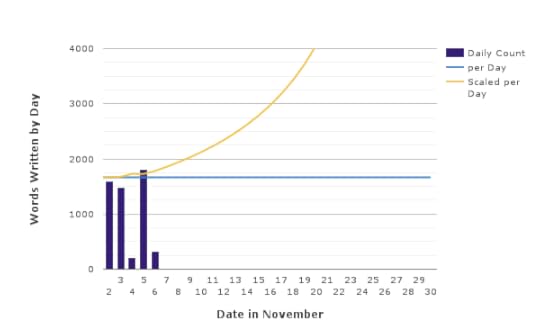
Yesterday was the first day that I made both my per Day and Scaled per Day goals. The per Day goal is always 1,667 words per day, which is 50,000 words divided by 30 days rounded up. This means that yesterday is the only day that I've been on track towards the goal of 50,000 words by November 30th. I'll have to make more time to write if I plan to win NaNoWriMo this year.
You'll notice that the Scaled per Day line curves upward. This is because the curve assumes that I write nothing over the course of the month. So if I took the rest of my time off from writing until November 15th, on that day, and every day after that until the 30th, I'd have to write 2785 words per day to win NaNoWriMo.
I really love graphs. And math. I've been a big nerd my whole life, and I'm not ashamed of it. In fact, I'm gonna show you my current overall graph:
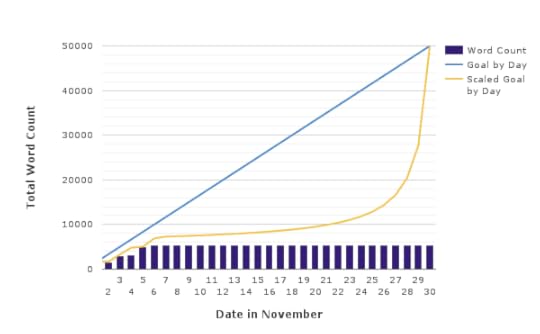
This is the same idea, but using overall word count data rather than daily word count data. The Goal by Day is where I should be if I had successfully written 1,667 words per day, every single day. By midnight tonight, I should have broken the 10,000-word mark. More likely, I won't be there just yet. I would at least try to have my Scaled Goal by Day met by tonight: 6,904 words. Slow and easy wins this race, and I know that I don't have to kill myself to win NaNoWriMo. I only have to commit myself to having more productive days than not.
Being a writer is a matter of writing everyday, no matter what the subject matter. That's the lesson that I have found it hardest to learn, but it's the most important one.
October 29, 2016
Comic Con and NaNoWriMo
I went to Comic Con this year, joining two panels for discussions about villains and diversity, respectively. I can't describe exactly how nervous I was. I might have been so nervous that I became numb to the anxiety, but my friends could tell that I was shuddering. Marvelous.
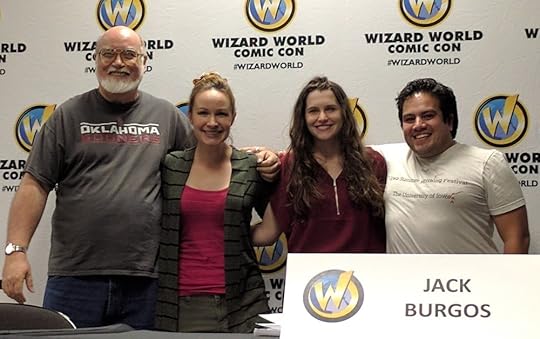
(left to right) R. A. Jones, Genese Davis, Shannon A. Thompson, Jack Burgos.
I had a right to be nervous! This was my first time serving as a panelist at a convention as large as Wizard World's. While one of my panels was alongside authors I knew, the first of them was with a group of authors I could only recognize from their work: Genese Davis, author of The Holder's Dominion; Shannon A. Thompson, author of Bad Bloods and The Timely Death Trilogy; and R. A. Jones, author of comics such as Wolverine/Captain America. I was also excited. This group was lively, intelligent, and thoughtful; I enjoyed working with them so much.
This Comic Con I learned that a powerful underground fandom has formed based around the new Ghostbusters film, which I am encouraging as much as I can. And I learned that patience is the most difficult skill to build and maintain. I have a lot of published short stories, but I am deeply envious of all of my friends and colleagues with novels of their own. Published and ready for distribution. I want to support them, but I also want novels of my own. It's so important to keep reading, and reading what your friends are doing is the best way to keep an eye on the industry while also widening the range of writing skills you possess.
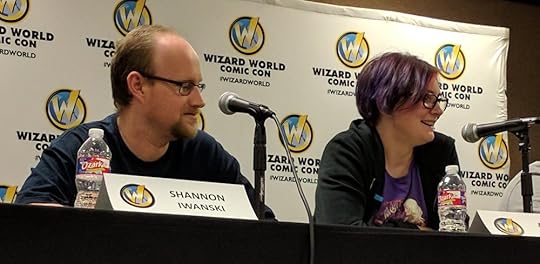
I am very fortunate to be surrounded by such skilled people.
November 1st is only a few days away, and with it comes NaNoWriMo. I'm gonna keep an ongoing chart of my progress as I work on completing Book 2 in the Stormborn series. That's gonna be fun, but it'll also keep me excited. 50,000. We're doing it this year. Even if it means I wind up writing part of Book 3.
September 4, 2016
Why I Hate Writing by Hand
I've been doing a lot of self-improvement lately. You know, trying to become more productive and what not. Part of this process has involved journaling, which I'm told is supposed to be awesome. Moreover, I've been told how wonderful writing by hand can be for—well, just about everything. One of my friends has shocked and awed us with the fact that he writes all of his novels' first drafts by hand. To the point that he's convinced others to try it too.
I hate it.
It's not writing-by-hand's fault. I'm not sure whose fault it is. When I was a four-year-old, learning how to write for the very first time, I could hardly have been expected to make good decisions. One of the worst decisions I may have ever made was the choice to hold a pencil in an extremely awkward way.
Here's my confession:
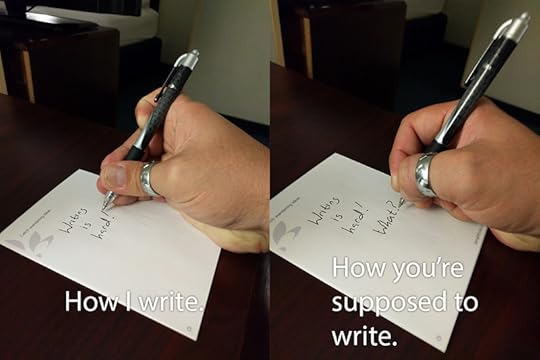
Nearly thirty years later, I can see that I chose poorly. The way I hold a pen is not designed for long-term writing. I guess I was stubborn enough at age four that the adults in my life decided to let me be. Consequently, I can write about a paragraph or two before my hand starts to hurt. I'm a sprinter when it comes to writing by hand; novel-writing is like cross country running. There's no way that's happening for me.
I've considered relearning how to write. I used to be a peck typist. I didn't have to hunt for the keys; I basically have the QWERTY layout memorized after thirty years of using keyboards. By the end of high school, I was typing by using my left index finger, my right index and middle fingers, and both thumbs. I was pretty good—but I was never going to get better. There's a skill ceiling as long as you need to look at the keyboard.
My freshman year of college, I decided I was going to teach myself how to touch type. I told my IRC chat friends that, for a few months, I might type like an amateur, and I asked them to be patient with me. At the end of one month I was already touch typing faster than I had ever pecked. Today I can type about 72 words per minute.
I haven't needed to write as much as I've needed to type, so the pressure to correct the way I write has never been there. I don't know that it'll ever be. At 33 years of age, considering the way technology is moving, there isn't a lot of incentive for me to learn how to write differently. I just can't rationalize choosing to write like a kindergartener for the years it's going to take for me to write enough to develop an adult's level of handwriting again. For much of the same reason I don't expect I'll ever sit down and relearn how to write in cursive comfortably.
What do you think? Should I give it the old college try anyway (again)? Should I continue journaling on paper or switch to a Word document? Should I stick to writing on paper only when I really need to memorize something? Should I practice my cursive writing? Let me know in the comments.
August 9, 2016
Book of Blasphemous Words Open for Submissions!
It's here! It's here! A Murder of Storytellers has opened submissions for Book of Blasphemous Words. I've been salivating for this anthology, and I'm so excited to see it in print! Even more excited to write a short story for it. Book of Blasphemous Words is edited by CJ Miles IV.
If you want to contribute to making this anthology great, you've gotta get in on this. And do it early! I've mirrored the basic info for the anthology submissions process below. Check it out, then follow the link to submit your piece to A Murder of Storytellers via Submittable.
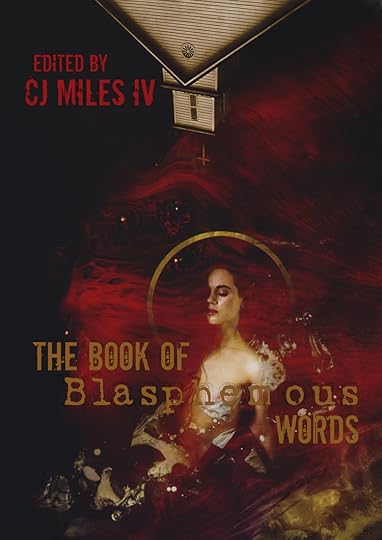
Deadline: October 31, 2016
Payment: $15 and contributor’s copy
Theme: Not so long ago, human beings were cursed with fear. They clamored for hope in a world of boundless suffering and death. They called out to the heavens and summoned gods. They crafted religions that would serve as a candle against the howling night.
That which alights must also burn.
A zealot spits venomous words from his pulpit, his congregation listening and nodding, their disgust with their neighbors boiling into a riotous rage. A girl returns from Bible Camp nine-months pregnant with God’s child—images of a golden flame pressing on her chest, paralyzing her, flood her nightmares. Heaven replaces its angels with automata, dispensing salvation and damnation with callous efficiency.
Book of Blasphemous Words is a weird fiction, horror, and speculative fiction anthology about humanity’s relationship with its gods. When we answer the call for salvation from the bondage of the material—when we believe in gods—we reach a hand into the unknown and risk losing it to something peckish. When we forget the power of the hearth, we risk a conflagration that can return civilization to the dirt whence it has come.
Simultaneous Submissions: Sure, but please let us know immediately if it was accepted somewhere else.
Multiple Submissions: Yes
Reprints: Yes, but let us know where it has been previously printed and make sure you have the rights to have it reprinted.
Word Count: Up to 10k words.
Formatting: This is a very good guide if you have any questions. You can't really go wrong with it. But, if you don't feel like reading that, here's the down and dirty of it.
Italicize italics. Do not underline.Don't use spaces to lead paragraphs. Use tab or, even better, the formatting options to get the indent.For scene breaks, use either "#" or "***".Use an easy to read font, like Arial or Times New Roman in a reasonable size (about 12 point).Double space your work.Submission
Please make sure to include a synopsis of the piece in your cover letter. If you're not sure how to do that, here's a good collection of articles to learn from. Yes, even it's poetry or flash. Just a quick line or two helps us out a lot.
Aside from that, just be yourself. Tell us anything you think we should know about you or your work. What inspired you to write this? How did you find us? What's your favorite part about this work? Who inspires you?
Once you've done all that, go ahead and click this button:
Go to Submittable
July 5, 2016
Oh Genre, My Genre
"You are what you eat." We've all heard someone tell us that. But it might be that we are what we consume, whether that be food, literature, or souls. Richard Thomas had us look at what we've consumed, and we did:
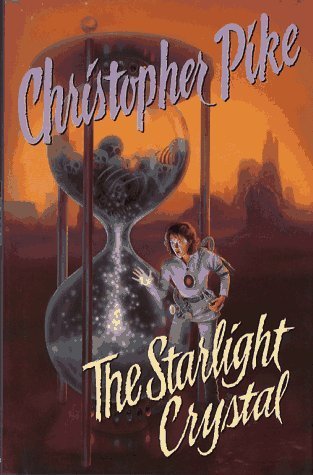
Favorite Authors: Madeleine L'Engle, Christopher Pike, Friedrich Nietzsche, Jonathan Swift, Chuck Palahniuk, and Neil Gaiman.Favorite Books: The Starlight Crystal by Christopher Pike, A Swiftly Tilting Planet by Madeleine L'Engle, Zen and the Art of Motorcycle Maintenance by Robert M. Pirsig, Invisible Monsters by Chuck Palahniuk, and American Gods by Neil Gaiman.Favorite Movies: The Matrix, Captain America: Civil War, Cabin in the Woods, and Raiders of the Lost Ark.Favorite Television Shows: Buffy the Vampire Slayer, Star Trek: Deep Space Nine, Stargate: SG-1, and Breaking Bad.
When we looked at our influences, it was easy to see that I was attracted to fantastical stories with philosophical or psychological themes. Much of the fiction I love sprinkles its story with humor. Dialogue is sharp-witted and informal. And there's a deep sense of nostalgia or romanticism towards the past. Madeleine L'Engle's stories were timeless in scope—the magical past and the rational present collided and worked in tandem to push back an evil primordial. Christopher Pike and Friedrich Nietzsche both explore eternal recurrence in their stories—where time is a circle, and everything that has occurred will re-occur ad infinitum. In Pike's horror novels, there is always a sense that love is a crucial spoke in the rolling wheel of time. Nietzsche is a poet. He's like Plato, but funnier and more transgressive—which it turns out I love. Jonathan Swift and Chuck Palahniuk—I'm convinced—are literary twins born in different times. Both transgressive in their own times, they manage to peel the aesthetic l from the rotting carcass of the grotesque. Neil Gaiman is able to weave ancient lore into contemporary stories that are beautiful and gritty and a delight to read. Pirsig's Zen and the Art of Motorcycle Maintenance is a philosophical and psychological exploration into the mind of a man cleaved in two by an idea—the nature of Quality.

I assume most people have at least heard of my other influences. The Matrix is a stylized rendition of an old argument between Plato and Aristotle—whether the best things are or whether they become. Captain America: Civil War is a fantastic movie that explores the relationship between security and freedom, and between revenge and justice. Cabin in the Woods is a speculative horror piece asking the question "What if all horror movies were true? And what if there was a reason for all the clichés we rail against?" Raiders of the Lost Ark is a classic adventure story, with a helping of romance and a thrilling story about an archaeologist competing with the Third Reich in his search for the Ark of the Covenant. The humor in this movie lies in both the action and in the dialogue—from Indiana Jones's abruptly short showdown with the black-garbed swordsman to Sallah's comically self-evident revelation that Indiana had been given "bad dates."
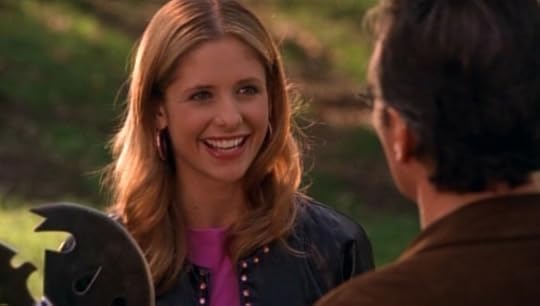
Buffy the Vampire Slayer's witty dialogue and innovative take on old horror tropes are great. But Adrean and I think that Joss Whedon affected us as writers more deeply because the main characters of the show were our age. While I was a grade behind Buffy, she started high school in Sunnydale on the same year that I entered North Miami Senior High as a freshman. The timbre of their dialogue became the timbre of my generation's. It became mine, as much as I became its. Stargate: SG-1 also had fast-paced, sharp dialogue. Its main plot revolved around two warriors, a scientist, and an archaeologist exploring the galaxy, blending science and magic, the new and the ancient, into their stories. As in Star Trek: Deep Space Nine, where the ancient and powerful gods of Bajor, the Prophets, play a major role in shaping the sociopolitical future of the nations of the Alpha and Beta Quadrants, Stargate: SG-1 displays a romantic nostalgia for the past while valuing the future for its own merits. Breaking Bad is transgressive, tragic television at its finest. One man's hubris brings the lives of everyone around him crashing down. Sometimes literally.
I'm not telling you what these titles are about; I'm telling you what I took from them. I learned that I'm an author of transgressive speculative fiction, occasionally skirting the edge of literary fiction. Now I know where to look for my literary brothers and sisters, and how to improve my skills by learning from what they do right—and also from what they don't.
June 27, 2016
A Week at the University of Iowa

Omicron Delta Kappa, odk.org.
There was a huge part of me, when I graduated from Tulane University with a Bachelor's in English and a concentration in Creative Writing, that wanted to go on to get my MFA. My writing professor and mentor, Paula Morris, had put my eye on the University of Iowa, and I placed it atop a pedestal. The University of Iowa became my dream school, and I planned to go there—right after I finished my year or two of teaching math in New York City.
The 2008 Recession toppled that house of cards. What I built after that was made of grittier stuff.
Richard Thomas, whatdoesnotkillme.com
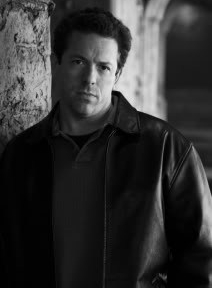
Today I'm a counselor and a writer, and I still got to go to the University of Iowa for its annual Iowa Summer Writing Festival. To be taught by the exceptionally likable, intelligent, thoughtful, and talented Richard Thomas. Being his student is a little like being in front of the Crawler in Jeff VanderMeer's Annihilation—although enthralling instead of repulsive, and just about as unsettling.
Each afternoon, Richard had lessons prepared for us that were one-fifth lecture, one-fifth seminar, two-fifths workshop, and one-fifth psychoemotional processing. Richard didn't just teach us about dark fiction. He taught us about why it allures us with its shadowy fingers. He made us examine our own fears, engage with them, and create magic with them in yoke. And his infectious amiability made even the most socially anxious among us into writers eager to share our work.
After this week, I feel like I know myself a little more as an artist. Richard ended the week with a sort of impromptu baptism, where we each learned a great deal about genre and where we fit into the larger literary world. I know that other people are also doing what I'm doing. I know who they are, I know that some are better than me, and I know that I can learn from them. I've got a community, we read each other's work, and we make each other better as we each improve.
This is what I never quite fully understood about the fact that writers must be readers. The relationship between readers and writers is not bidirectional. Writers must be readers first.
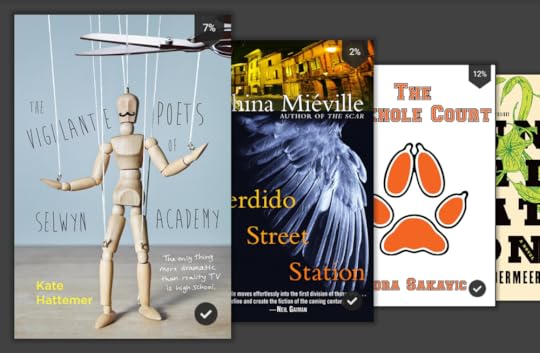
My book list is growing. Immensely. I don't think I've ever read several books simultaneously (except for school), but it's actually not terribly hard to keep the stories separated when they're all amazing. As of this moment, I'm reading The Foxhole Court by Nora Sakavic, Perdido Street Station by China Miéville, and The Vigilante Poets of Selwyn Academy by Kate Hattemer, each coming highly recommended and related to my genre. I have so many books to read after this, that I think I'll be busy for a while. I'm also subscribing to some literature magazines to keep up-to-date on what my genre's up to.
June 8, 2016
The Oculus in Clavi
This blog post and others like it represent fictional characters, places, or groups existing within the universe of Stormborn. They will serve as supplemental material to the serial novellas.

The sigil of the Oculus in Clavi, adopted November 12, 1944, at Sète.
The Oculus in Clavi formed in Languedoc as part of the Albigensian Crusade in 1202, following the murder of Pierre de Castelnau. It began as an organization composed of Catholic magi to hunt down and kill Cathar magi in the south of France. When Pope Gregory IX handed authority over the Inquisition to mortals during the 13th century, witches and non-magi were removed from the Oculus in Clavi and labeled heretics.
The Oculus in Clavi hunted non-Catholic witches throughout Europe until the 15th-century, when magi who used Kabbalic practices began to be targeted by the Church in France and Spain. A bloodless coup followed within the organization, leading to its separation from the Catholic Church in 1494. After the Act of Supremacy of 1534, established by King Henry VIII of England, the Oculus in Clavi in England became known as the Eye in the Lock. The mainland European branches of the Oculus in Clavi retained their Latin name.
The Eye in the Lock spread to North America along with the European colonists. The American Revolutionary War led to a schism within the North American and English branches of the Eye in the Lock. When the United States formed, the North American branch changed its name back to Oculus in Clavi, further strengthening its alliance with its founding branch in France. The magical nation of Terra Nova formed across the new American states, with the authority of the American Oculus in Clavi set forth in its founding document.
After the American Civil War and Canadian Independence, the American branch of the Oculus in Clavi and the British Eye in the Lock became allies. Eastern Canada joined Terra Nova, spreading the authority of the American Oculus in Clavi all the way to the Arctic. During the Reconstruction Era, the American Oculus in Clavi was also the first of its branches to allow witches to join its ranks in four centuries.
During World War II, the American Oculus in Clavi and the British Eye in the Lock's alliance strengthened. The English and Latin names began to be used interchangeably on both continents. The democratized structure of the American Oculus in Clavi spread as far as West Germany, stopping at the Iron Curtain, where the Soviet Volsek—the Russian analogue to the Oculus in Clavi—retained control until 1992.
Today, the Oculus in Clavi has branches throughout most of the magical nations of the Western world, with some exceptions in Latin America and Eastern Europe. It functions as a magical intelligence and counterintelligence agency. Although the Oculus in Clavi remains largely unified and holds world summits every ten years in the beautiful Mediterranean city of Sète, its branches are known to spy on one another regularly. Its stated purpose is to protect both the magical and mortal worlds from the combined threats of reckless magic use and daemonic influence.
June 2, 2016
I Believe in Freedom of Speech...Unless You Disagree With Me
The author I mentioned in my last post replied to me! I'm so honored. Here's what he said:
My last post showing a quote from a 2010 protest in Morgan Hill, California received some criticism because of the age of the post and the fact the school system eventually allowed shirts with flags.
When I first retorted to the author, I did laugh away the fact that the Cinco de Mayo event he described was six years old. I also mentioned that the Morgan Hill Unified School District had distanced themselves from the Live Oak Hill High School administrators by stating publicly that the school system does not disallow the wearing of patriotic clothing. Of course, he missed the larger point.
The title of his new post is "Freedom of Speech-Apply it Both Ways." He starts it this way:
Freedom of speech must be applied to both liberals and conservatives fairly. So says The Old White Guy.
I couldn't agree with him more. Freedom of Speech is a right granted to American citizens under the First Amendment of the U.S. Constitution. It's a rather simple statement that has had a remarkable effect on our society. Here's the language of the text:
Congress shall make no law respecting an establishment of religion, or prohibiting the free exercise thereof; or abridging the freedom of speech, or of the press; [emphasis mine] or the right of the people peaceably to assemble, and to petition the government for a redress of grievances.
— https://www.law.cornell.edu/constitut...
Such a simple set of ten words, yet so powerful that it has sparked discussion, dissent, and heated arguments for the past 224 years.
But all you have to do is look at the headlines to see that the same things are going on everyday. I quote an article from the Washington Times. ‘A new “challenge” in support of a wanted Georgia college student and New Black Panther Party member encourages individuals to desecrate the U.S. flag.’ (Which by the way is unfortunately legal under the Constitution) [emphasis mine]
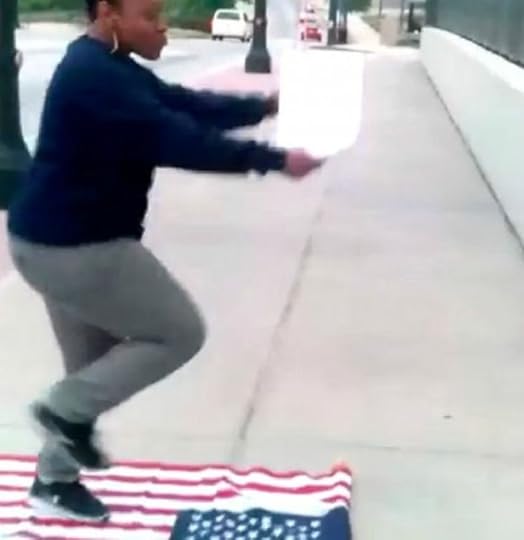
Pictured: A proud American exercising her freedom of speech.
Wait what? OK, kudos for sourcing, but gimme a second. How does one say, in the same breath, that freedom of speech is an inalienable right while also claiming that "unfortunately" it is legal under the U.S. Constitution to desecrate the flag?
As Palestinian-American writer Yousef Munayyer says, "Freedom of speech does not mean freedom from its consequences." Freedom of speech, put simply, allows Americans to say whatever they want—with a few exceptions—without fearing punishment from the state. Over the course of its 224 years of existence, this right has been clarified again and again at the highest levels of our government, in order to ensure that every single person in the United States feels free to criticize the government (and others) without facing fines or prosecution.
But you can't say whatever you want and expect that people aren't going to criticize you for it. As I write this, I understand that there are a great many Americans that disagree with me, fundamentally, on many issues. Some of these Americans may use their own platforms to criticize me. That is their right. I don't get to claim a violation of my freedom of speech because someone on the Internet thinks that my blog posts are ridiculous. Private companies and private persons are not bound by the First Amendment; the states and the federal government are. Freedom of speech is guaranteed. Freedom from consequences never is.
That having been said, let's move on to the issue of flag desecration. This is an interesting subject that sparks a great deal of debate, especially during times of civil strife in this country's past and present.
The right to desecrate the flag of the United States has been protected by the Supreme Court on multiple occasions. While the U.S. House of Representatives has attempted multiple times to pass a constitutional amendment that gives Congress the power to prohibit the desecration of Old Glory, it keeps failing. The last time an attempt was made on this right was in 2006, and the amendment failed in the U.S. Senate by one vote.
Laws prohibiting the desecration of the U.S. flag date back to 1968, when Congress passed legislation to prohibit Vietnam War protesters from burning the flag during their demonstrations. A number of different states, including Texas, followed suit, penning statues against flag desecration into their penal codes. (Sorry for picking on Texas so much but, seriously, get your act together, guys!) In 1984, Gregory Lee Johnson was charged with the desecration of the U.S. flag, which was defined in the Texas Penal Code as a venerated object. He was sentenced to one year in prison and a $2,000 fine. Thus began the landmark Supreme Court case Texas v. Johnson, another case of the author failing to do his reading.
The Supreme Court held that Johnson's conviction was inconsistent with the First Amendment of the United States. Why? Because...
Under the circumstances, Johnson’s burning of the flag constituted expressive conduct, permitting him to invoke the First Amendment. The State conceded that the conduct was expressive. Occurring as it did at the end of a demonstration coinciding with the Republican National Convention, the expressive, overtly political nature of the conduct was both intentional and overwhelmingly apparent.
— https://www.law.cornell.edu/supremeco...
But that's insufficient. As in Dariano v. Morgan Hill Unified School District, an individual's freedom of expression can be limited if, say, that individual's expression amounts to "fighting words"—legally, words or actions expressed for the purpose of inciting violence from their target. There's a test that the Supreme Court uses to determine whether a law or regulation set forth by the state has violated someone's First Amendment rights. If it passes the test, then it does not violate the First Amendment. This test was put into place during another landmark case, United States v. O'Brien, and it goes like so:
The regulation must be within the constitutional power of the government to enact.The regulation must further an important or substantial government interest (e.g., keeping the peace).That interest must be unrelated to the suppression of speech.The regulation must prohibit no more speech than is essential to further that interest.In Texas v. Johnson, the Supreme Court determined that...
Texas has not asserted an interest in support of Johnson’s conviction that is unrelated to the suppression of expression and would therefore permit application of the test set forth in United States v. O’Brien, whereby an important governmental interest in regulating nonspeech can justify incidental limitations on First Amendment freedoms when speech and nonspeech elements are combined in the same course of conduct. An interest in preventing breaches of the peace is not implicated on this record. Expression may not be prohibited on the basis that an audience that takes serious offense to the expression may disturb the peace, since the Government cannot assume that every expression of a provocative idea will incite a riot, but must look to the actual circumstances surrounding the expression [emphasis mine]. Johnson’s expression of dissatisfaction with the Federal Government’s policies also does not fall within the class of “fighting words” likely to be seen as a direct personal insult or an invitation to exchange fisticuffs. This Court’s holding does not forbid a State to prevent “imminent lawless action” and, in fact, Texas has a law specifically prohibiting breaches of the peace. Texas’ interest in preserving the flag as a symbol of nationhood and national unity is related to expression in this case and, thus, falls outside the O’Brien test.
— https://www.law.cornell.edu/supremeco...
I think the following words by Chief Justice Earl Warren are just perfect.
The Government may not prohibit the verbal or nonverbal expression of an idea merely because society finds the idea offensive or disagreeable, even where our flag is involved. Nor may a State foster its own view of the flag by prohibiting expressive conduct relating to it, since the Government may not permit designated symbols to be used to communicate a limited set of messages. Moreover, this Court will not create an exception to these principles protected by the First Amendment for the American flag alone.
— https://www.law.cornell.edu/supremeco...
And it shouldn't. Because that wouldn't be in the spirit of the First Amendment. Let's remember that the First Amendment was designed for the purpose of protecting people from the state, specifically when said people wish to criticize the state. That's speech. That's freedom. It's a right that people fought and died for, as the author is fond of reminding us. The author appears to believe that an exception should be created for the rule because he finds flag stomping personally offensive.
That's not how rights work.
The sad thing about this is that liberals are lauding the protesters who frequently stomp on the flag at Trump rallies. Yet at the same time, criticize Trump supporters for voicing their outrage. People have died bravely, so idiots like these can stick their fingers in the air and slander our flag and our country.
There's a number of people going from Trump rally to Trump rally with a giant American flag and stomping on it in protest. It's called the "Fuck Your Flag Tour," directed by a group that calls itself "FukYoFlag," which formed in 2015. They hold that stepping on the U.S. flag is a way of protesting the killings of Black men by police officers throughout the country. They don't only protest at Trump rallies because they believe that Democratic presidential candidate Hillary Clinton stands for the same imperial system that the FukYoFlag group decries.
But are they lauded by liberals, as the author claims? Casey Abbott Payne, who runs the #BlackLivesMatter Milwaukee Facebook group, stated, point blank, that:
The flag stomping is, in my opinion, misdirected energy. It is from a group of people who are, justifiably, angry and don’t feel as though they have any other way to be heard. I believe that their act of stomping on the flag only displays the power of our flag. Whether they know it or not, they are also making a display of how awesome our country is, even though we have a dark past (all countries have a dark past).
— http://www.foxnews.com/politics/2016/...
And I think she's right. Most liberals have a deeply held respect for Old Glory. I would never stomp on a flag. I would never wear it either because (a) it's disrespectful to the flag and (b) it's tacky. But as I said yesterday, strawmen are easier to argue against than facts. In general, liberals do not support FukYoFlag and their tactics, but we can empathize with them. Maybe empathy is what's missing here.
Another question comes to mind. Are the members of FukYoFlag bad actors? Take a look at the following video, and decide for yourself:
The representative for the group says that, until there is freedom and respect for all people, regardless of the color of their skin, the symbol that is the U.S. flag is "bullshit." It's not a crazy message. If one takes the time to listen to what they're saying instead of reacting to what they're doing, one might see that these are reasonable individuals, hugely frustrated with a system that has been harming them for a very, very long time. If their actions are offensive to you, that's the point. They're trying to get attention. And it's working.
So maybe they're not such idiots after all.